Category Archives: On the Road

Visiting Varanasi – finally!

As we kick off our fifth year in India, I knew it was time to stop avoiding Varanasi.

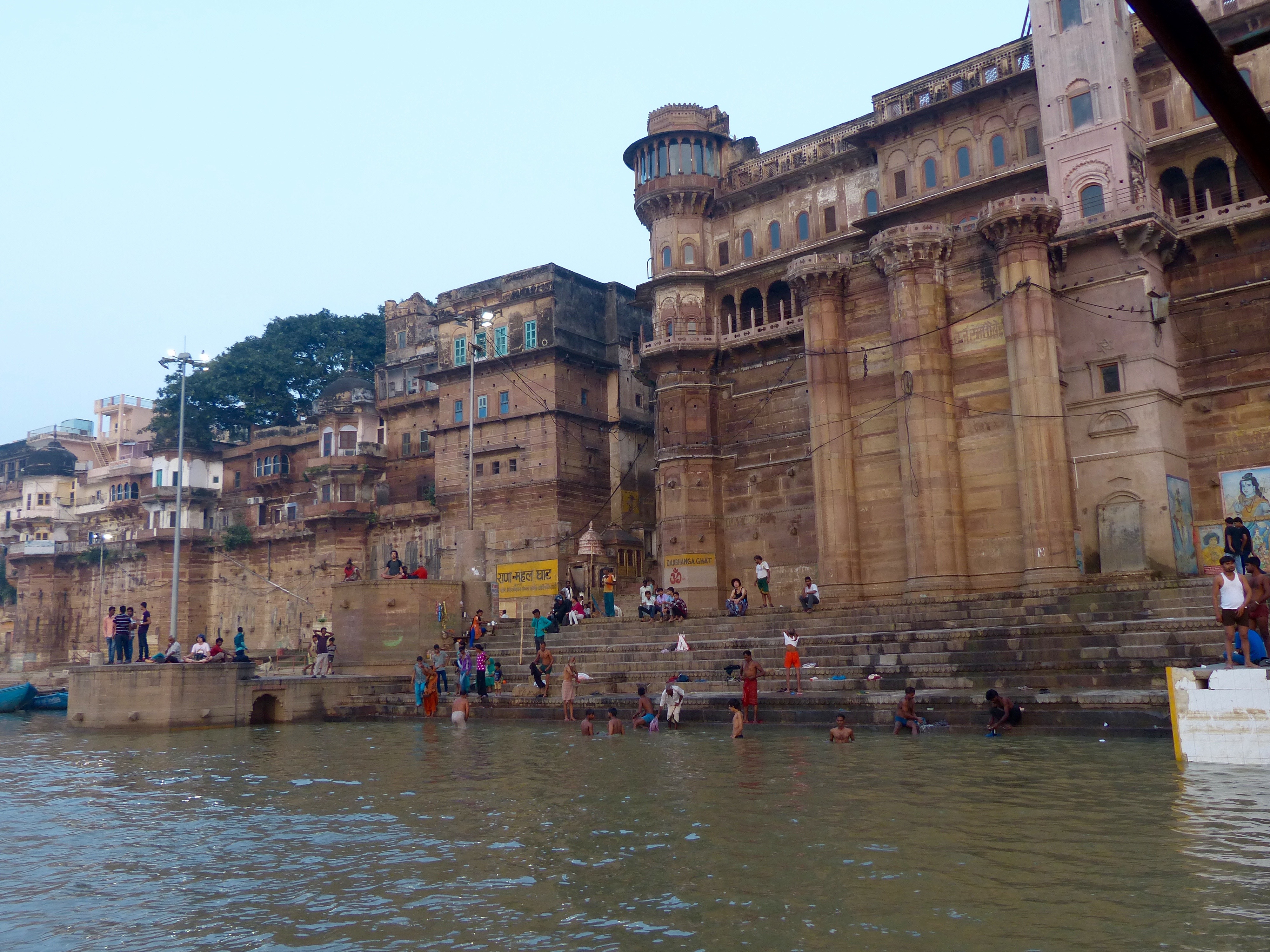
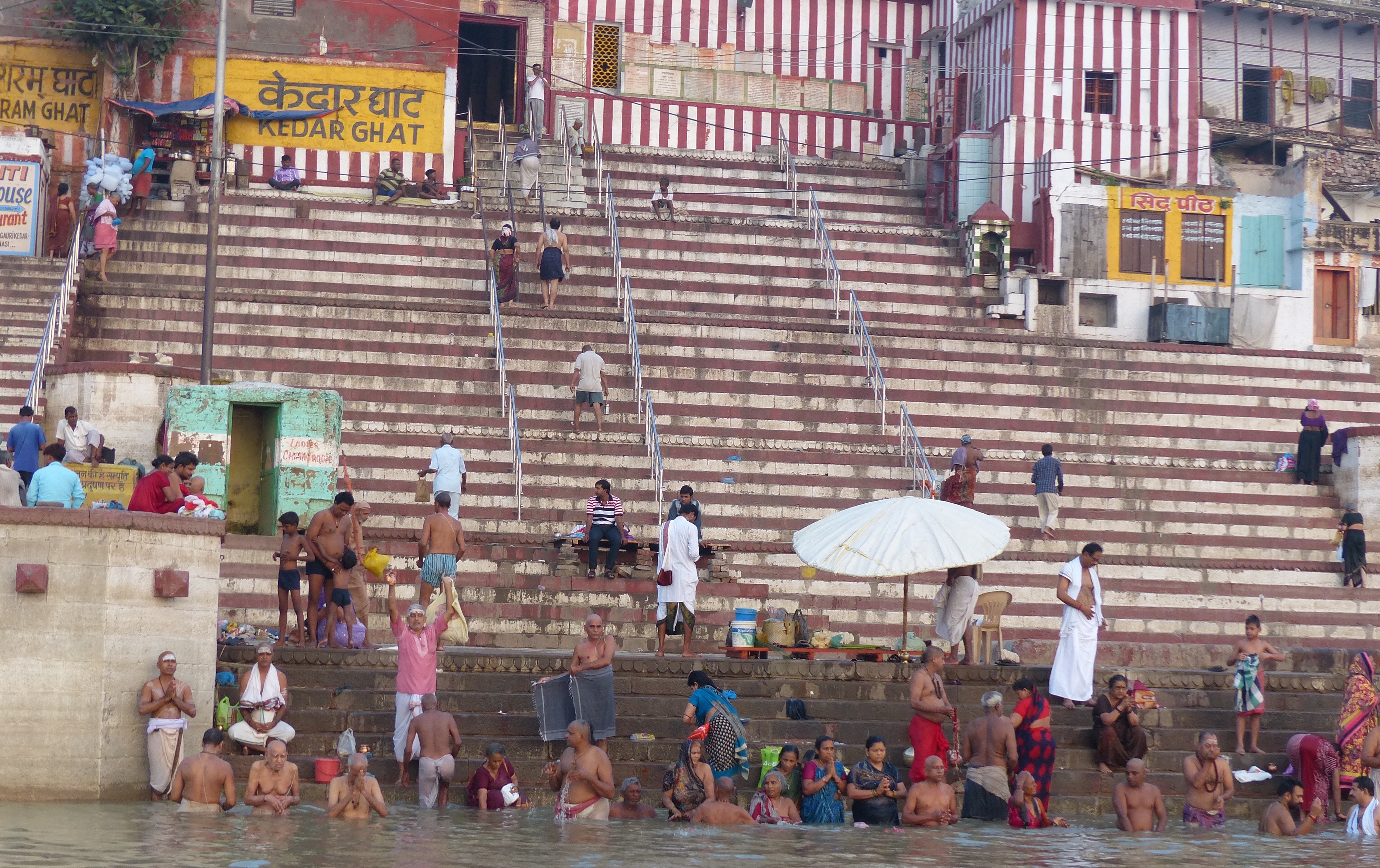
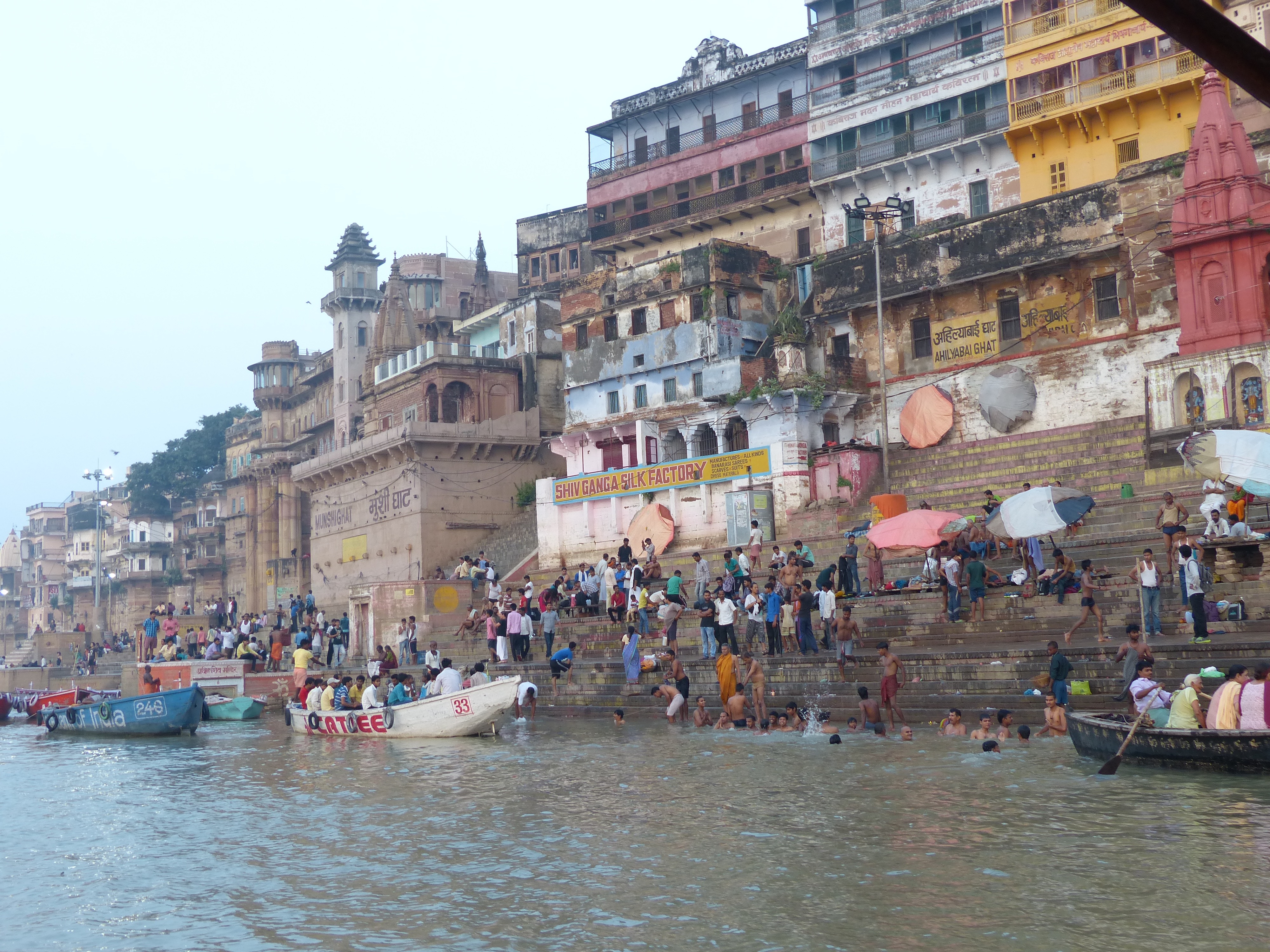
A key destination for any serious tourist to the subcontinent, this North Indian city dedicated to the god Shiva is also a place of holy pilgrimage for Hindus. They believe a bath in the sacred Ganges River will purify them, and moksha – a kind of salvation or liberation from the cycle of life – comes to those who die here. In fact, the elderly move to state-subsidized ashrams in Varanasi to wait out the last months or years of their lives, walking down the steep steps to the Ganges each day for a sin-absolving dip. The dead burn on funeral pyres along the shore, their ashes swept into the river.

It all sounded a little overwhelming, and frankly, when holidays roll around in New Delhi, I feel the need to escape the chaos. However, we don’t know how much longer we’ll live in India, and there are significant locations I don’t want to miss. Invited to join a group traveling to Varanasi last weekend, I knew it was time to check out one of the oldest continuously inhabited cities in the world.

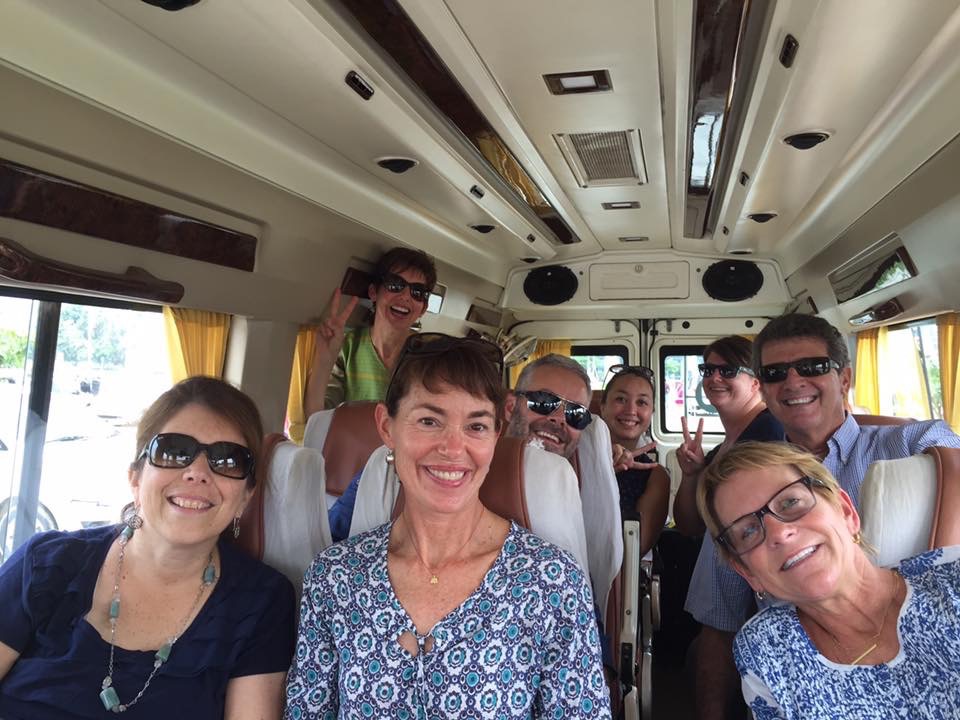
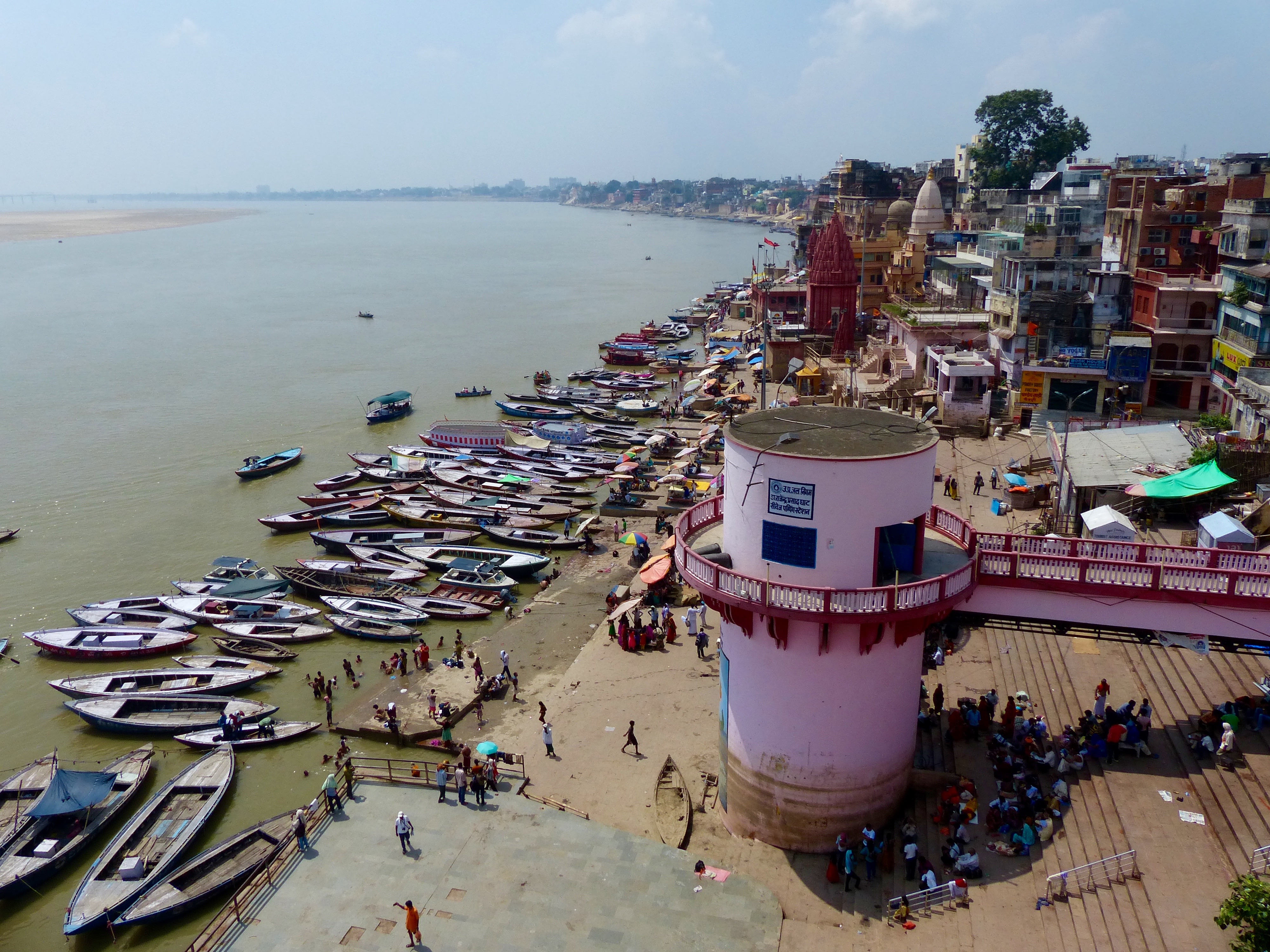
After a short flight and about an hour in a van, our group of eight teachers reached the Ganges River in Varanasi Saturday afternoon.
IMG_0904

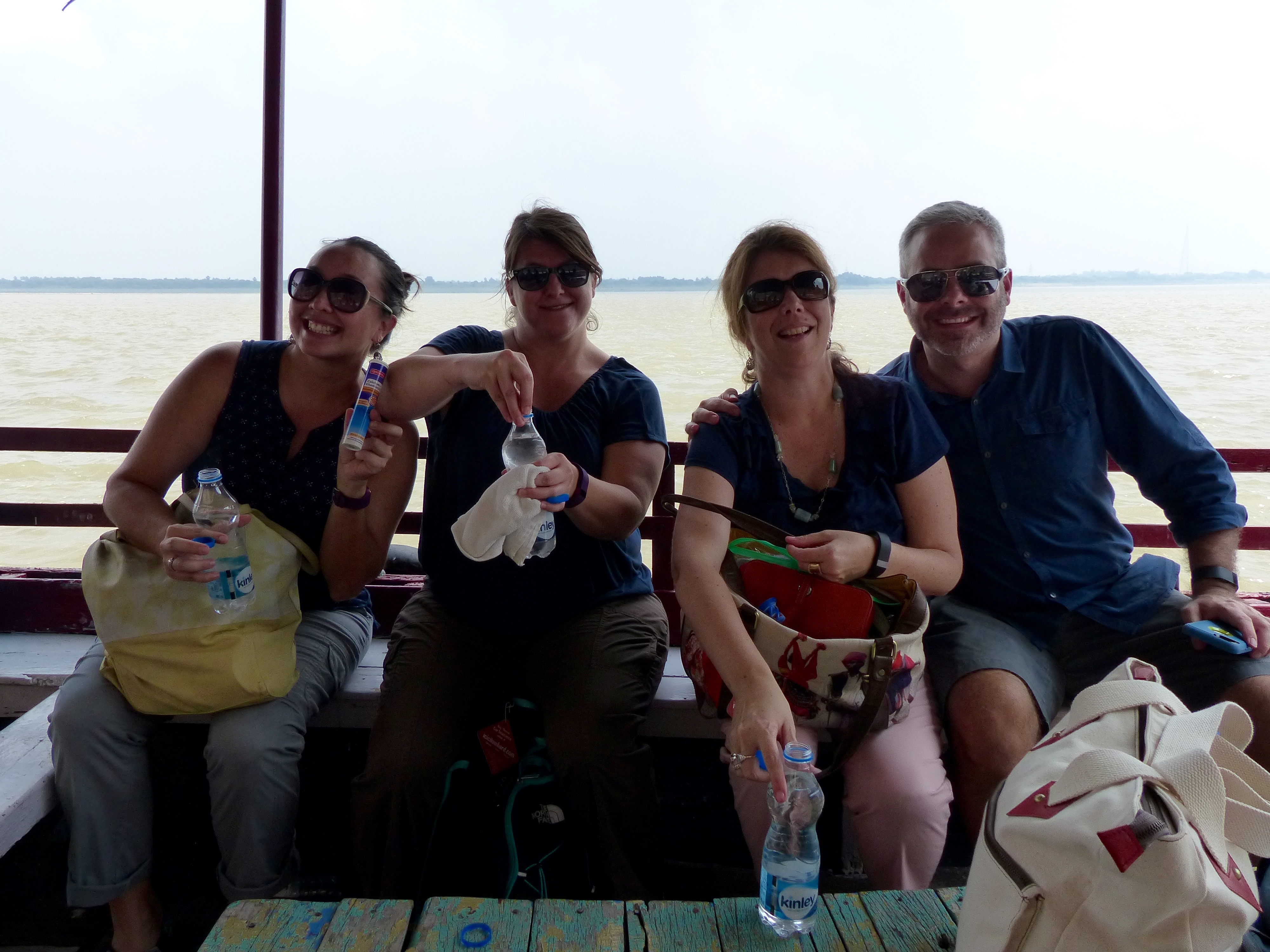
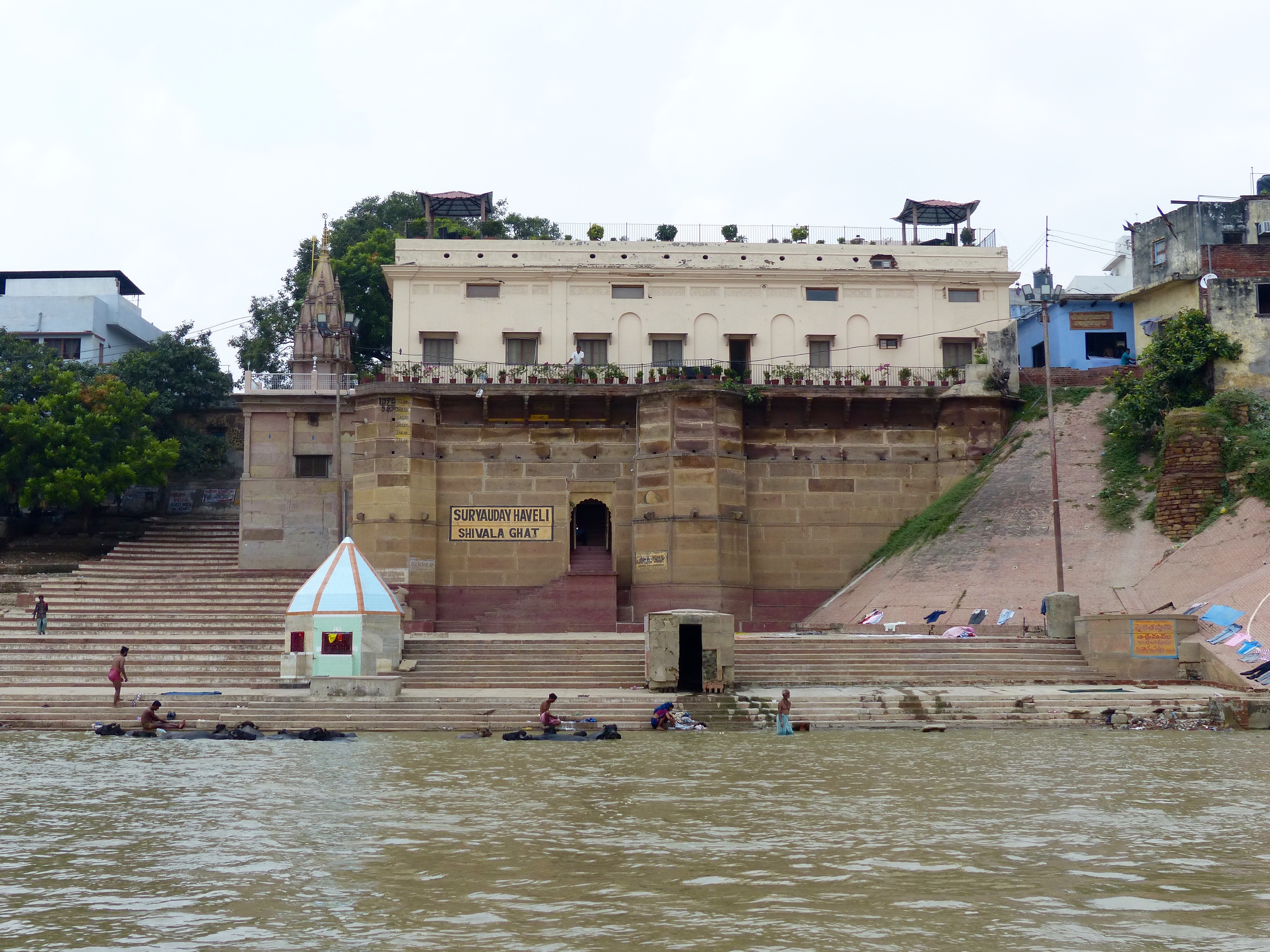
We piled into a wooden motor boat and put-putted upstream to our hotel, Suryauday Haveli.
P1060995

I tried to find some historical information about this beautiful riverfront structure, but every website parrots the blurb on the hotel’s home page (Benaras is another name for Varanasi):

Suryauday Haveli on Shivala Ghats is a reflection of the spirit of the holy city of Benaras. The Haveli traces its history back to the early 20th century. It was built by the Royal Family of Nepal as a retreat for the aged. It’s now been painstakingly put together again to provide the best ghat experience in Benaras.
P1070004

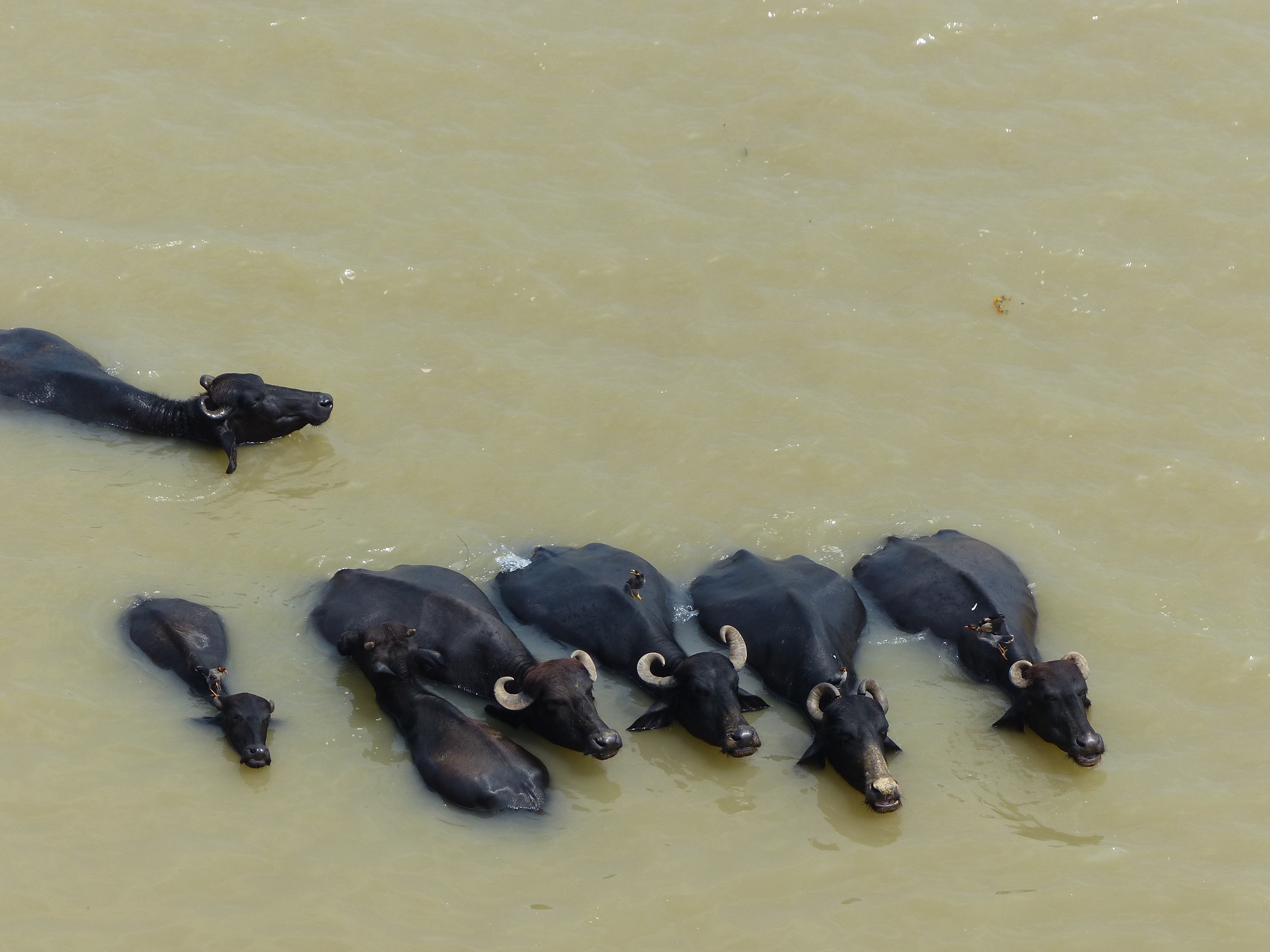
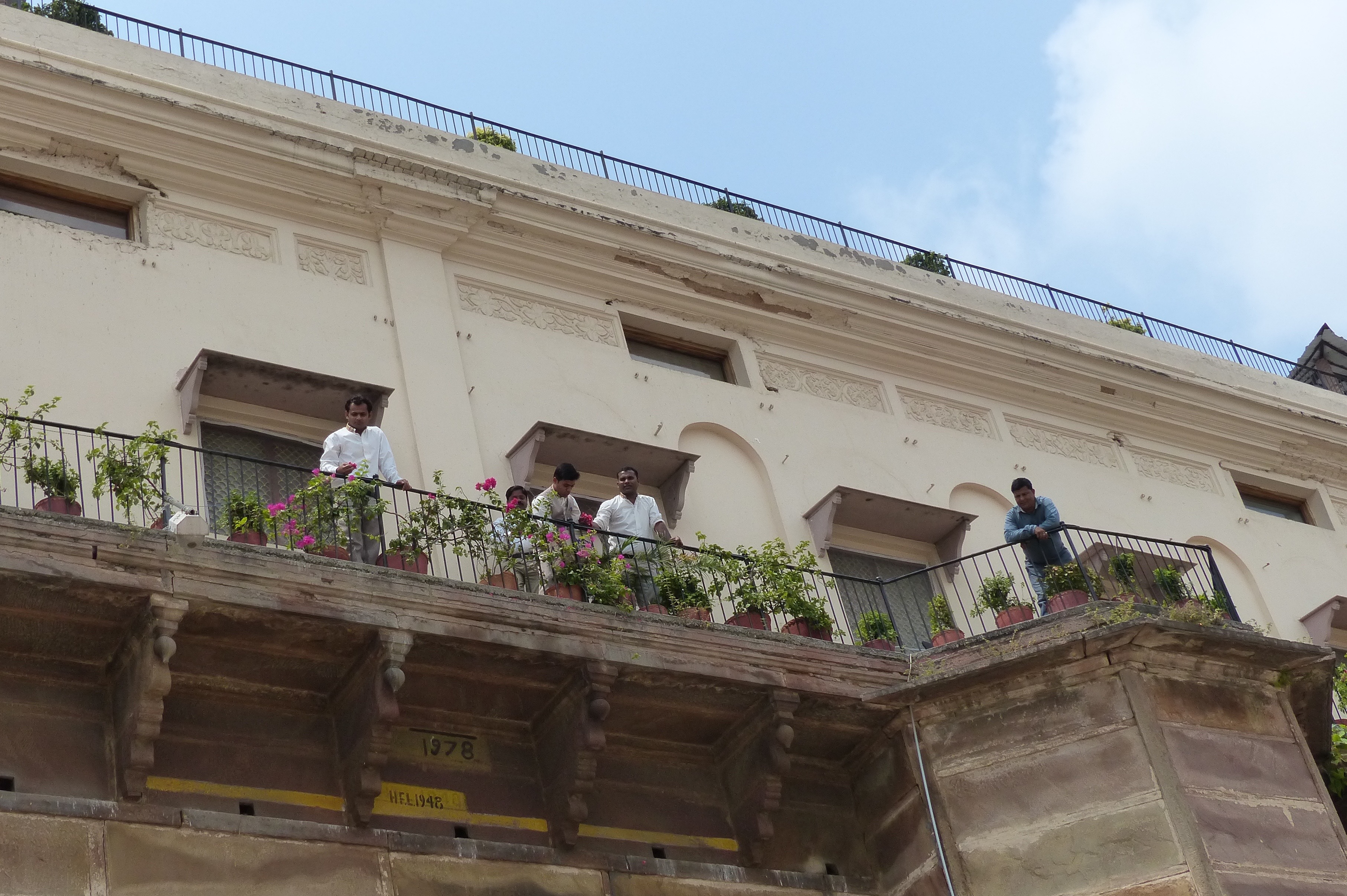
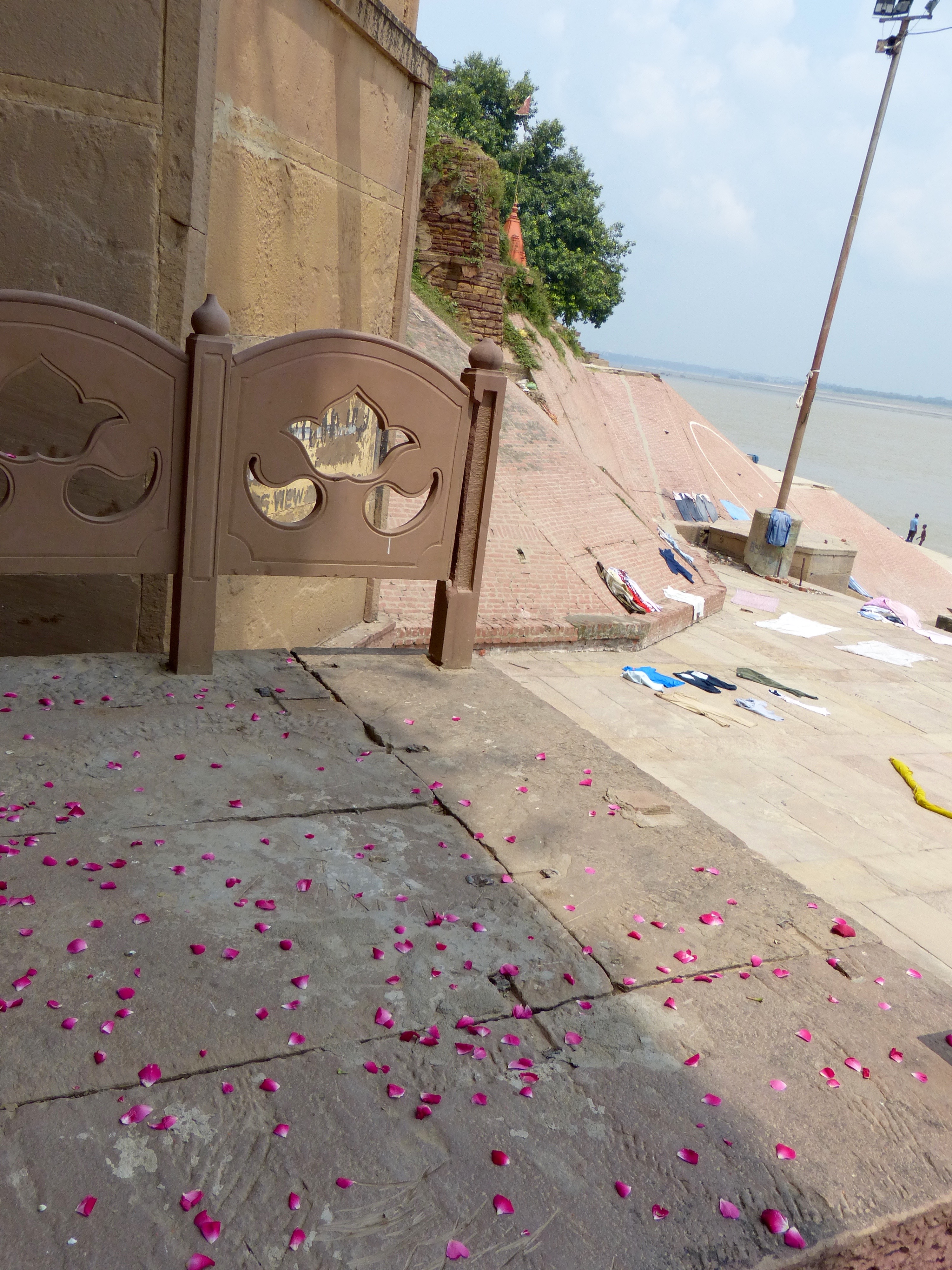
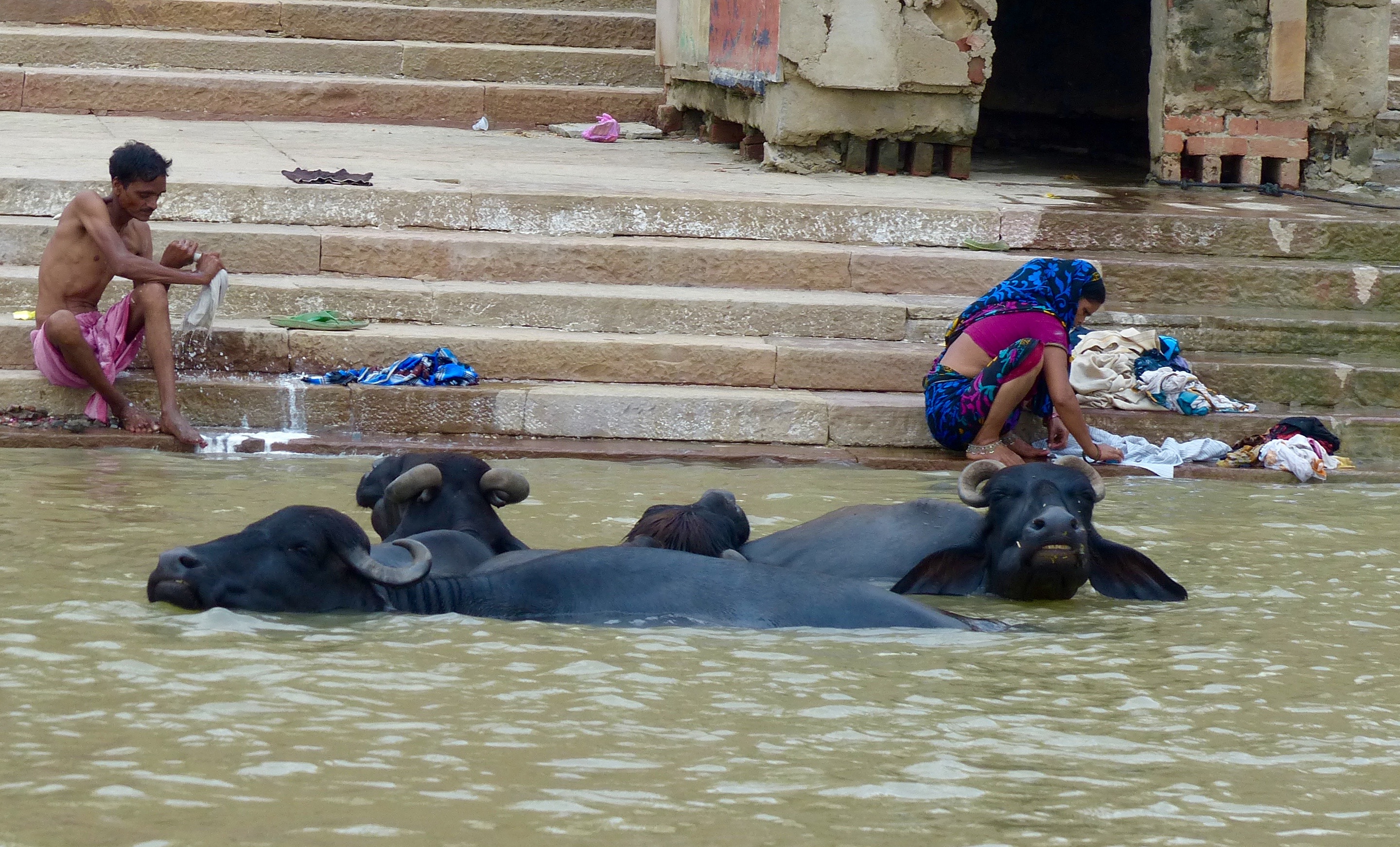
Ghat refers to the series of steps that lead from the building to the water. Suryauday Haveli is located at Shivala Ghat, which fortunately (and unlike many other ghats), didn’t have too many stairs. It did, however, feature a little herd of waterbuffalo cooling off ears-deep in the holy water. The hotel staff welcomed us with a shower of rose petals from the balcony.
P1070005

P1070021

P1070011

P1070013

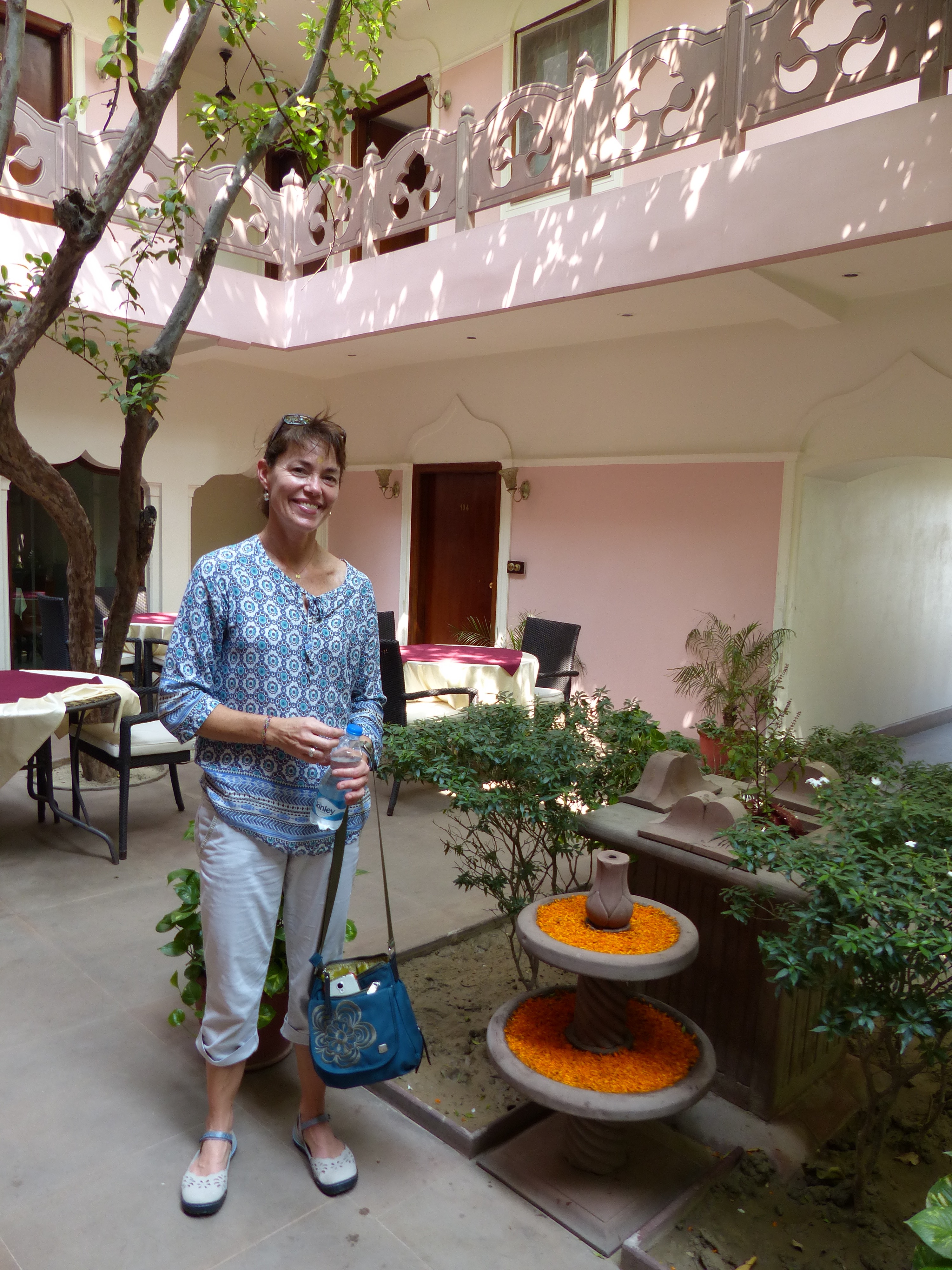
Our rooms all faced the river and opened to a courtyard shaded by trees and decorated with marigold blossoms.
Here’s Sarah, my roomie for the weekend.
P1070023

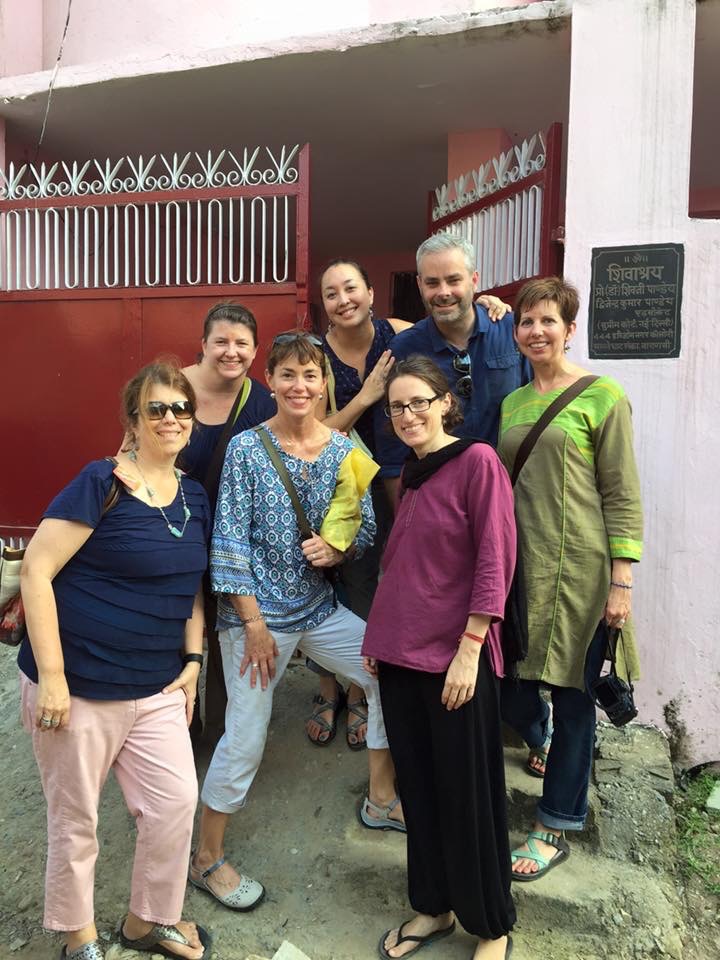
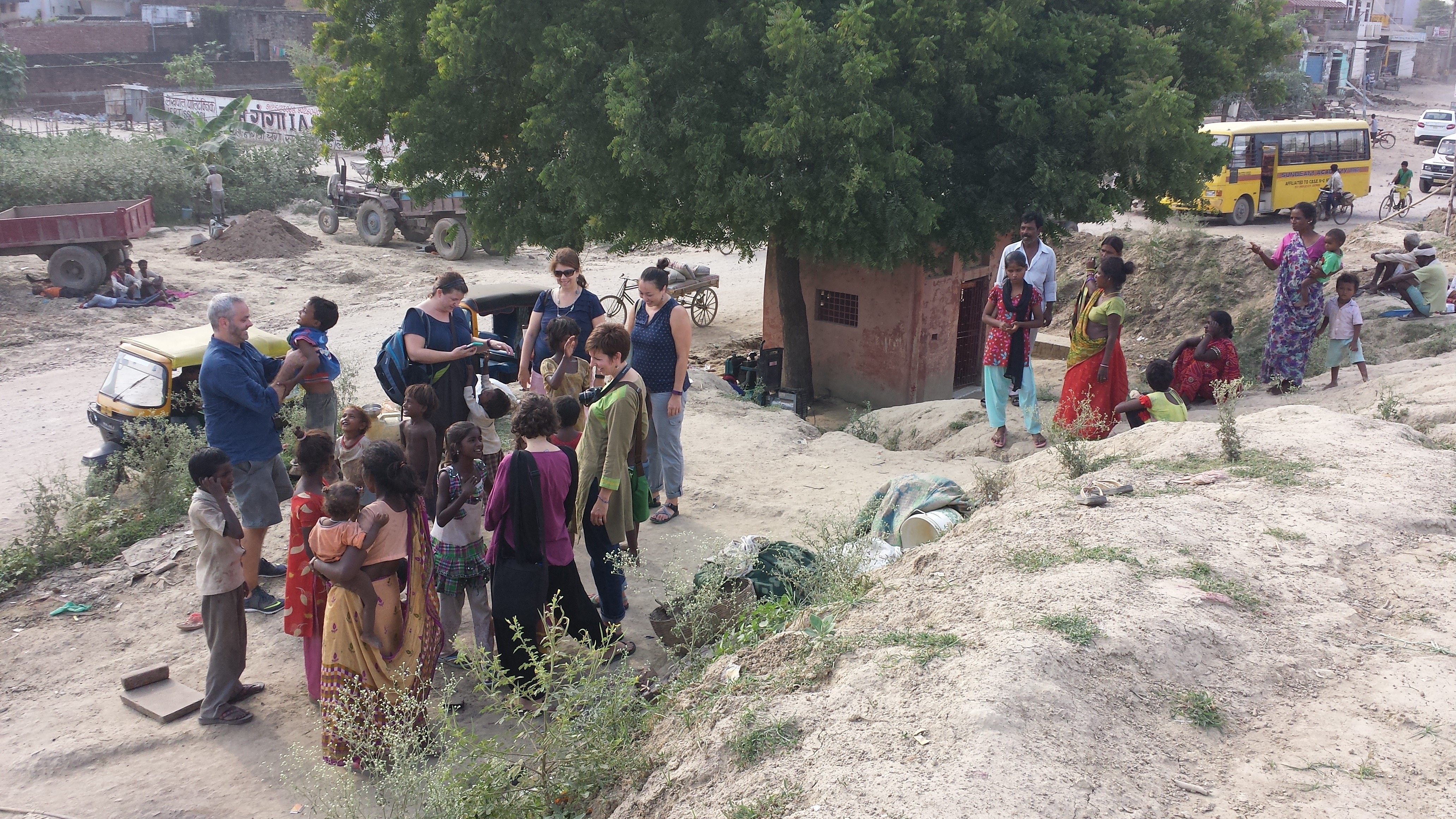
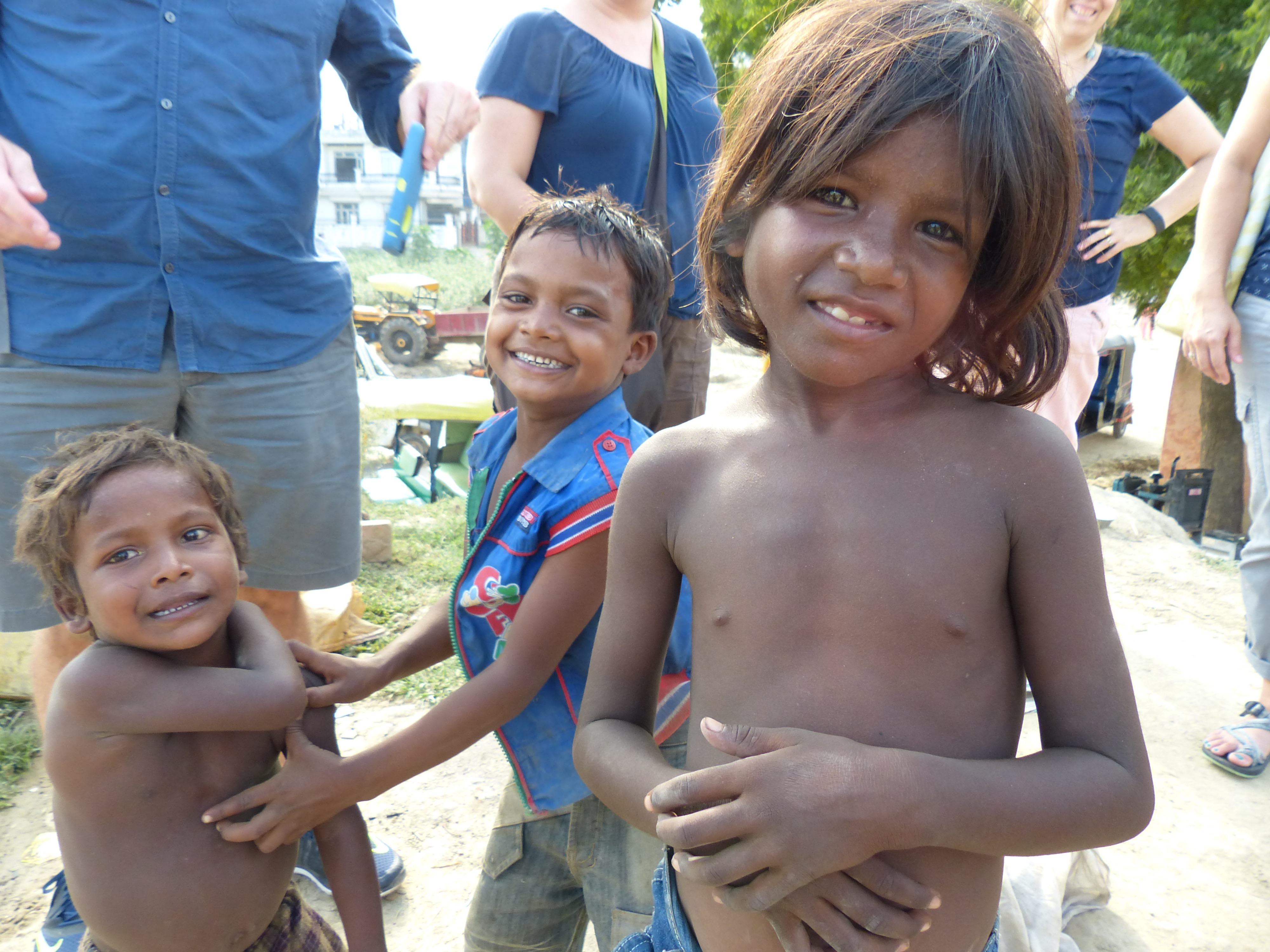
After awhile, we met up with former AES teacher, Jill, who started Lotus Foundation here to provide education, health care and job training to children and young adults from the Varanasi slums. On the way to see her school and hostel, we stopped to meet some of the children who benefit. As soon as we climbed out of the auto rickshaws at the banks of the Ganges, children and their mothers approached to meet the strangers and chat with Jill. The little ones immediately engaged us in jumping and clapping, despite the language barrier. We snapped photos and showed them the images, which triggered hysterical giggling. We also visited Jill’s humble school, where up to 20 students receive a free education, and her small hostel, where a few young girls can sleep safely. Her foundation is presently busy with renovations as they prepare to open a guesthouse and restaurant, offering job training to people living in poverty.
play with kids

P1070040

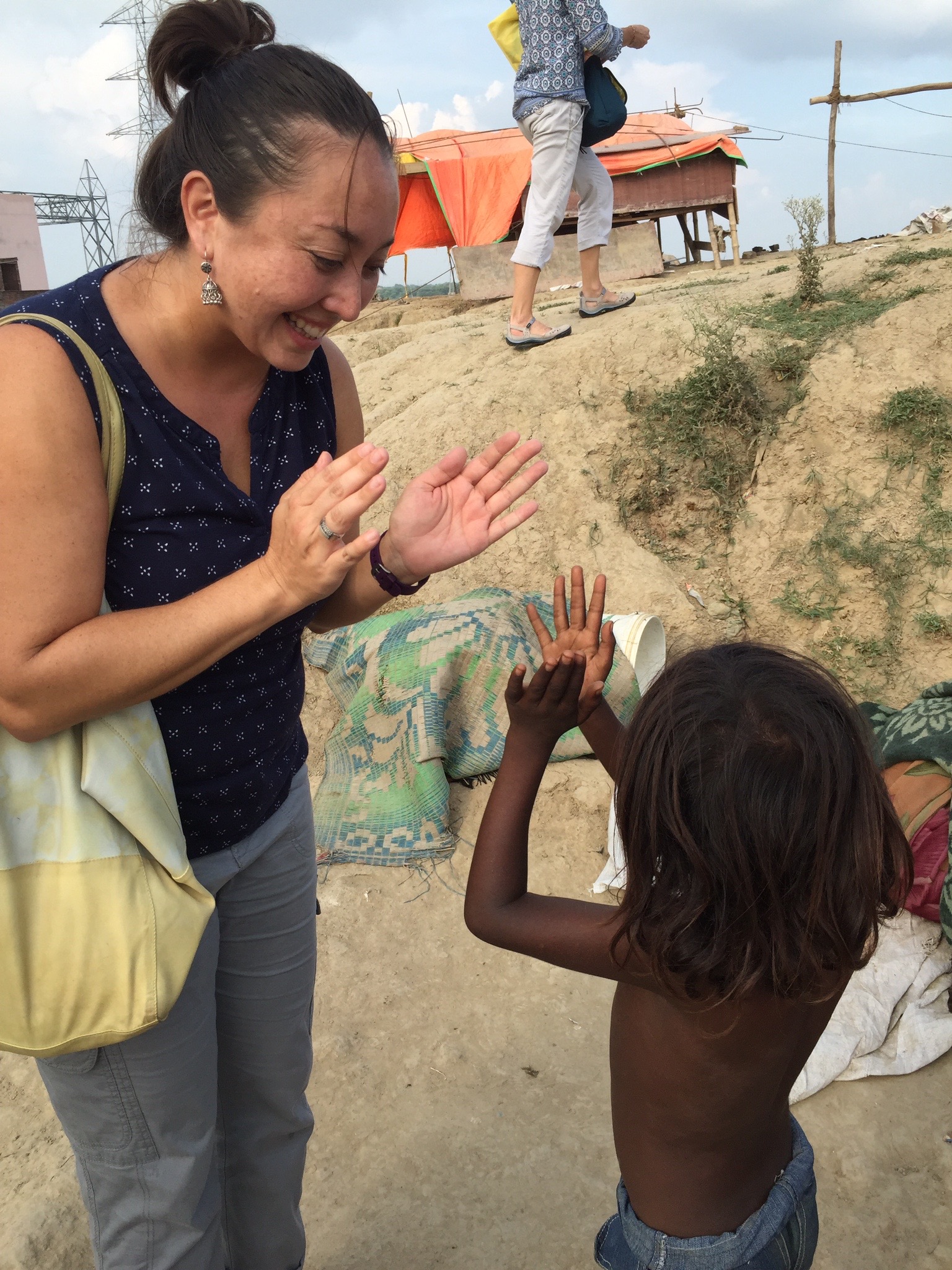
Marina plays a clapping game with Radha.
IMG_0014

Jill shares a laugh with little Veer.
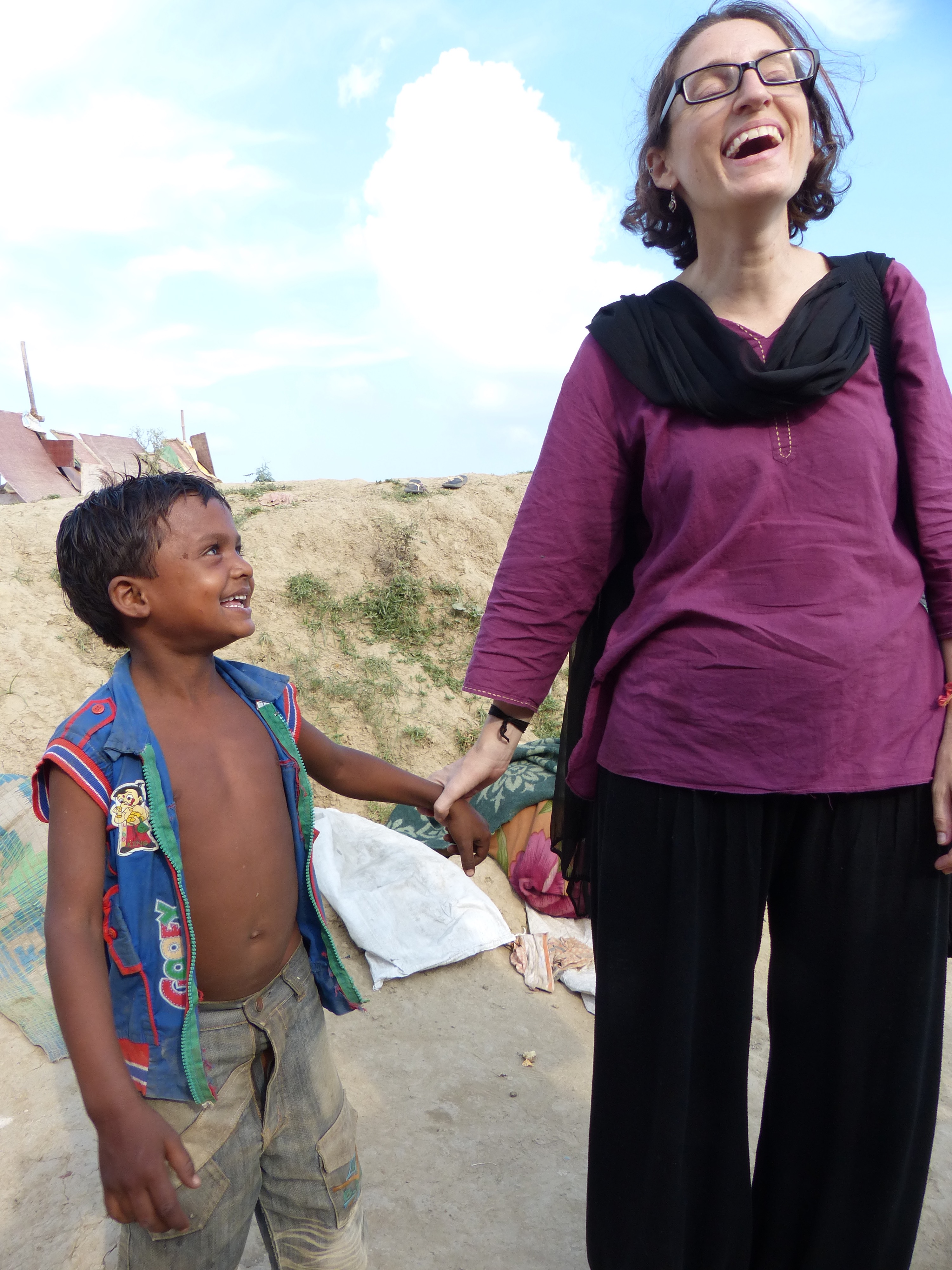
P1070034 (1)

Showing my photos to the kids was hilarious.
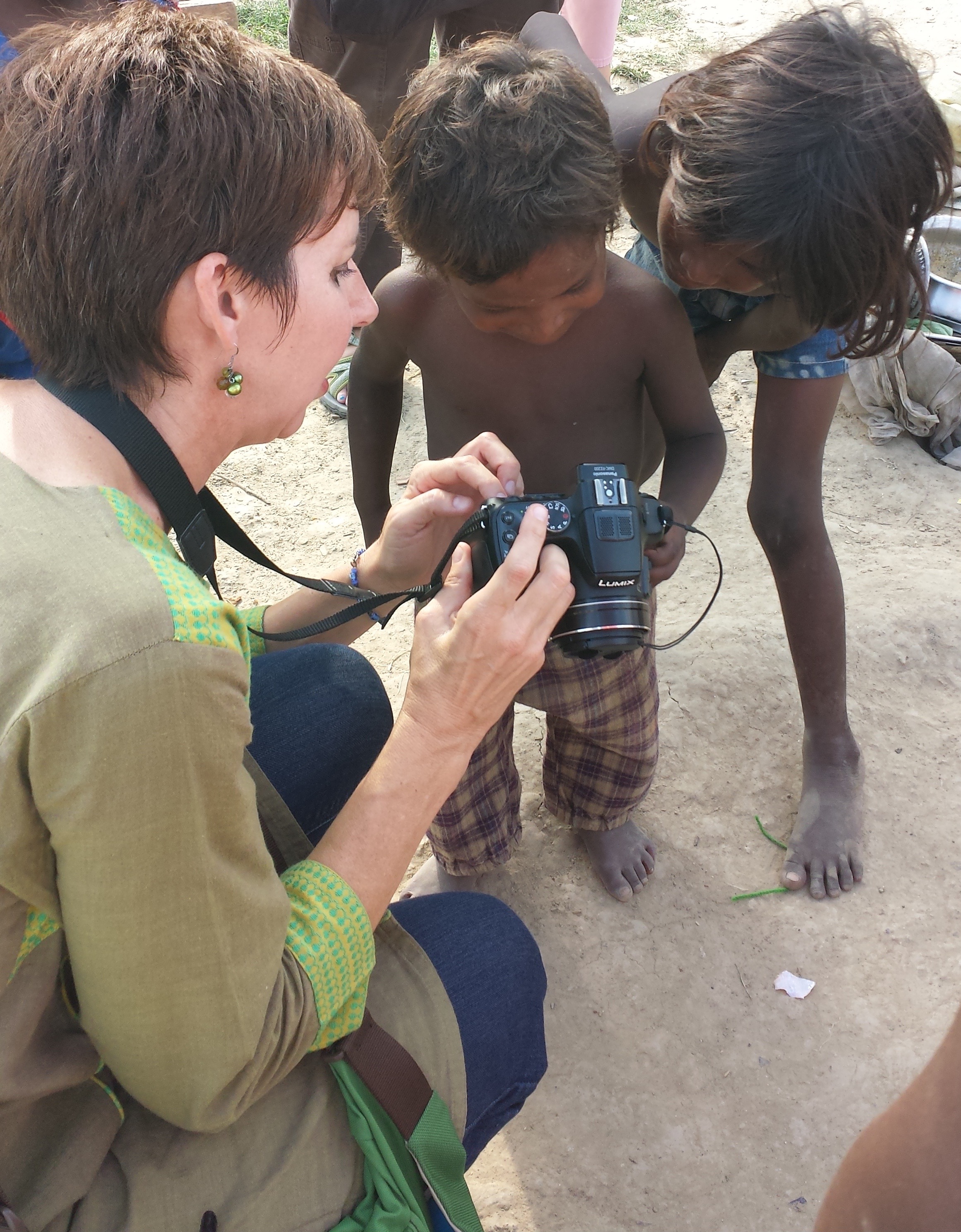
20150912_154308 (1)

Posing in front of Jill’s school.
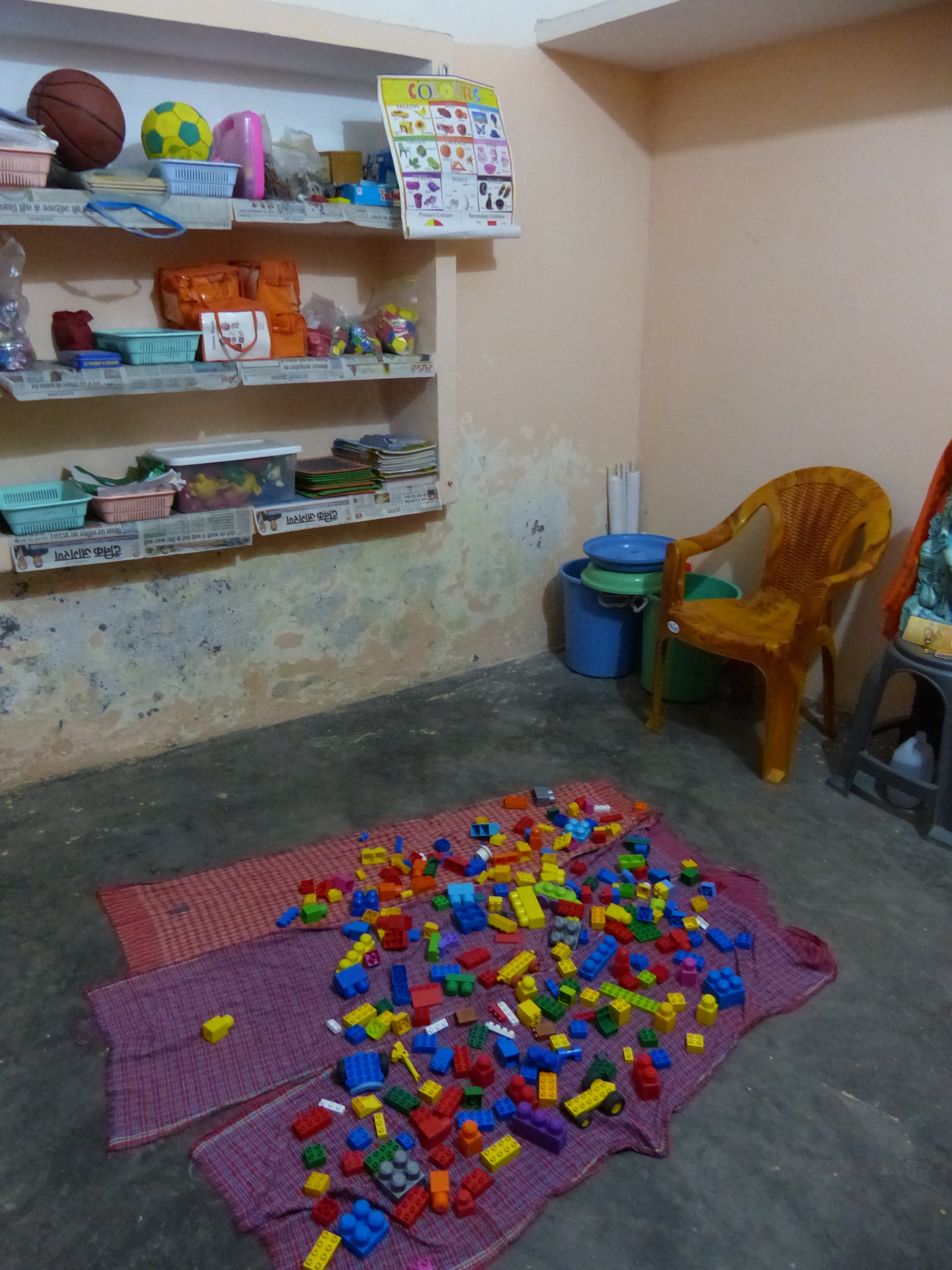
IMG_0906

The playroom. Kids do most of their learning in another room, sitting on mats.
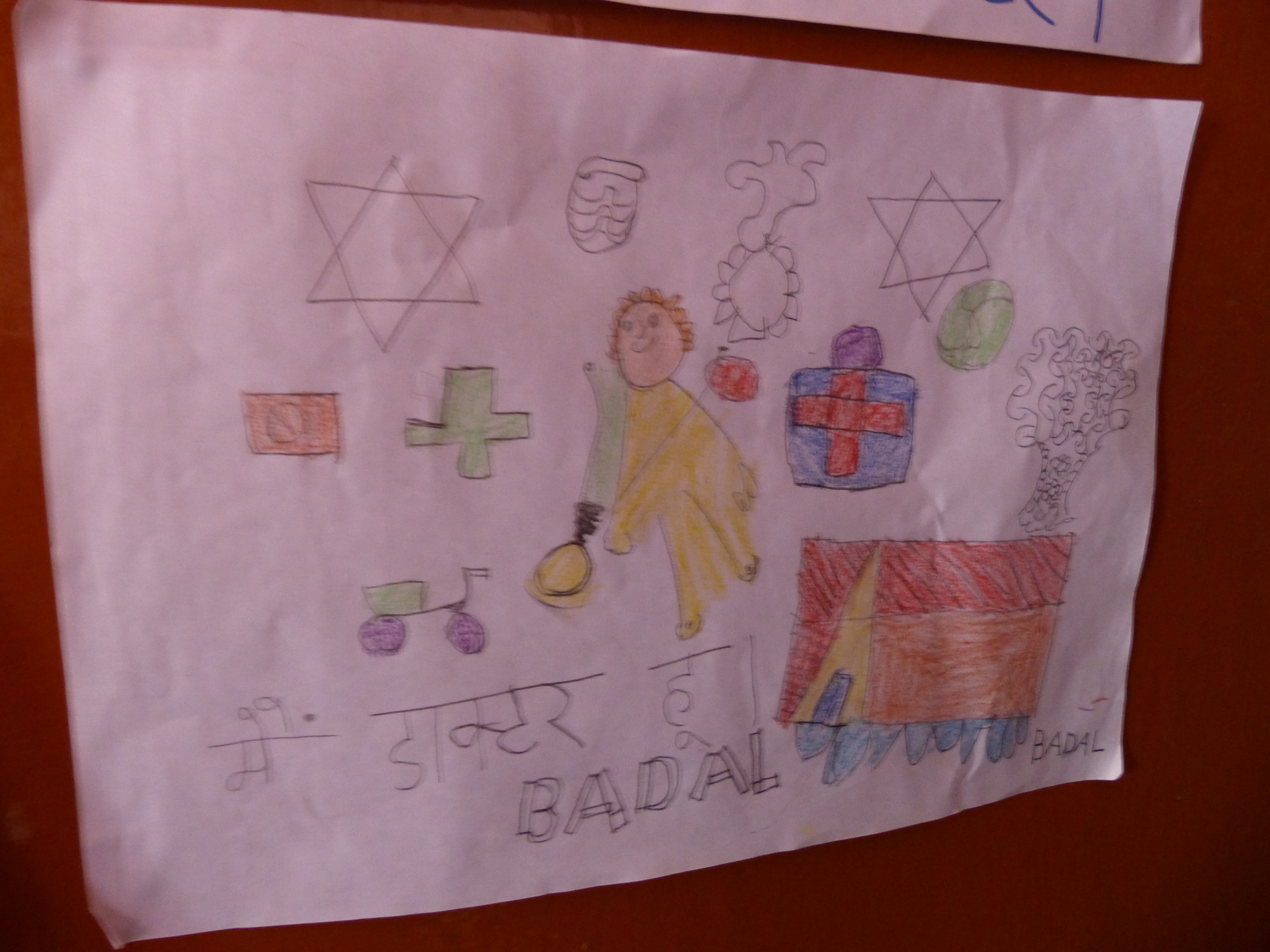
P1070056

Badal wrote in Hindi, “I am a doctor.”
P1070057

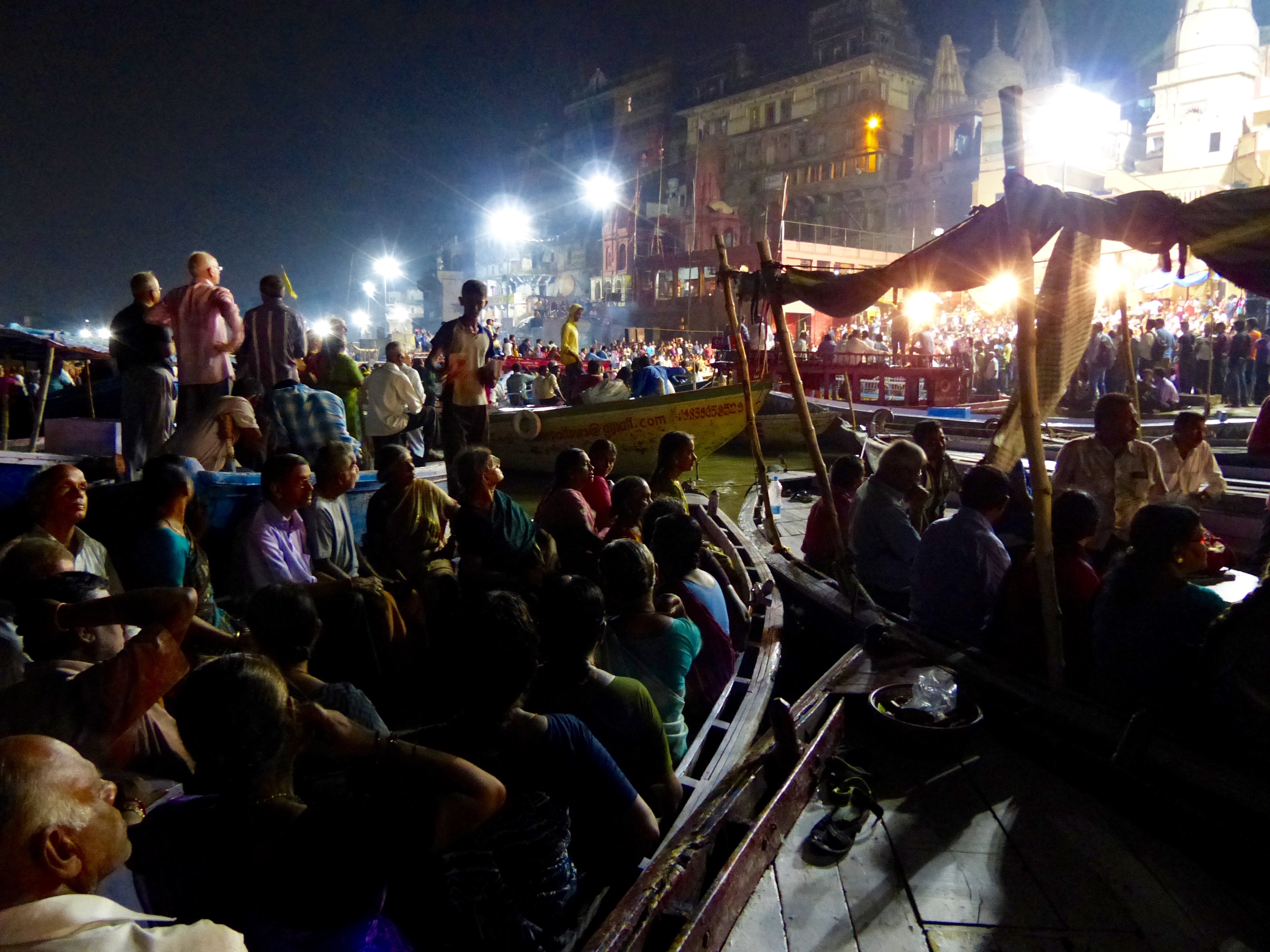
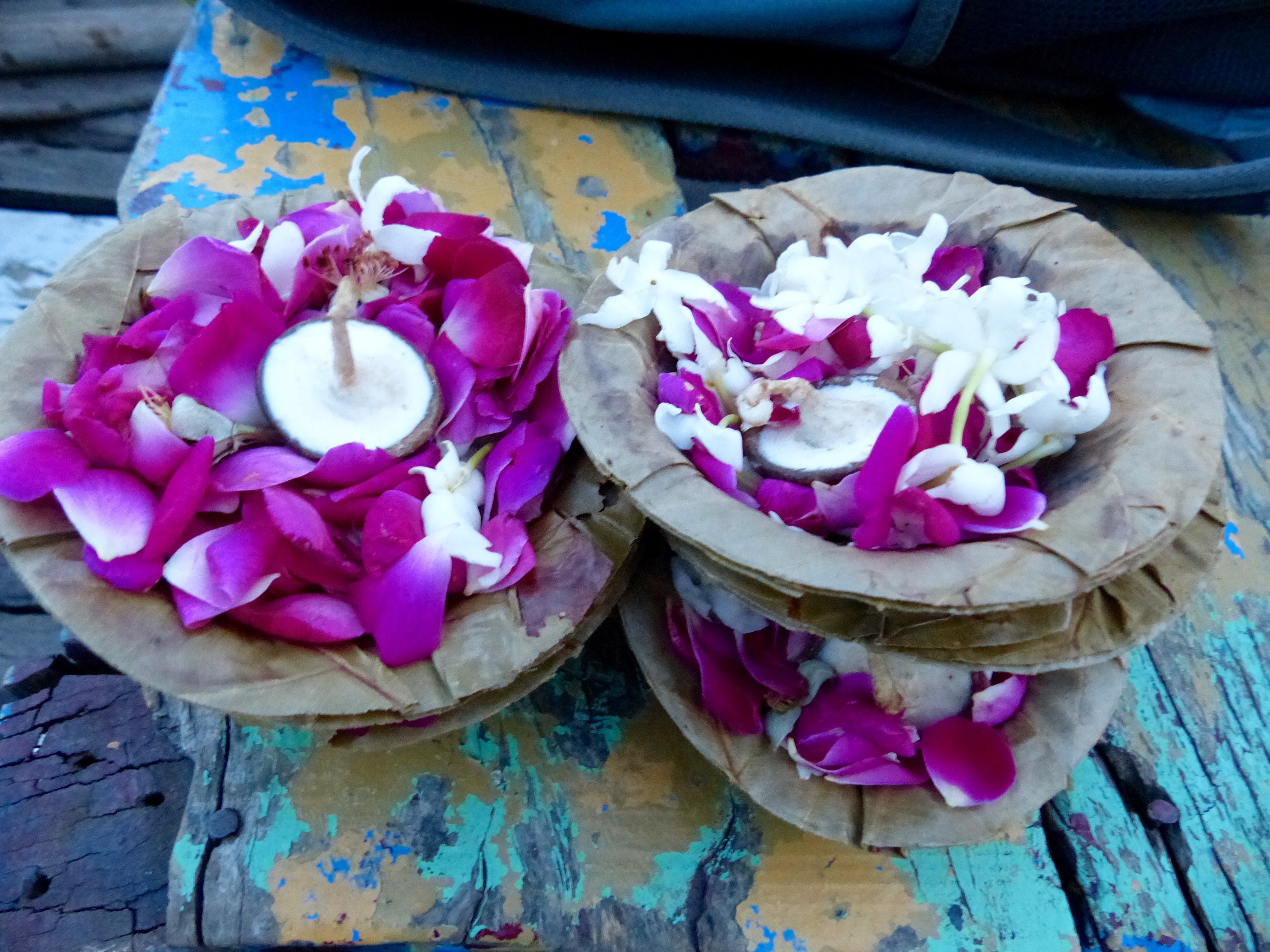
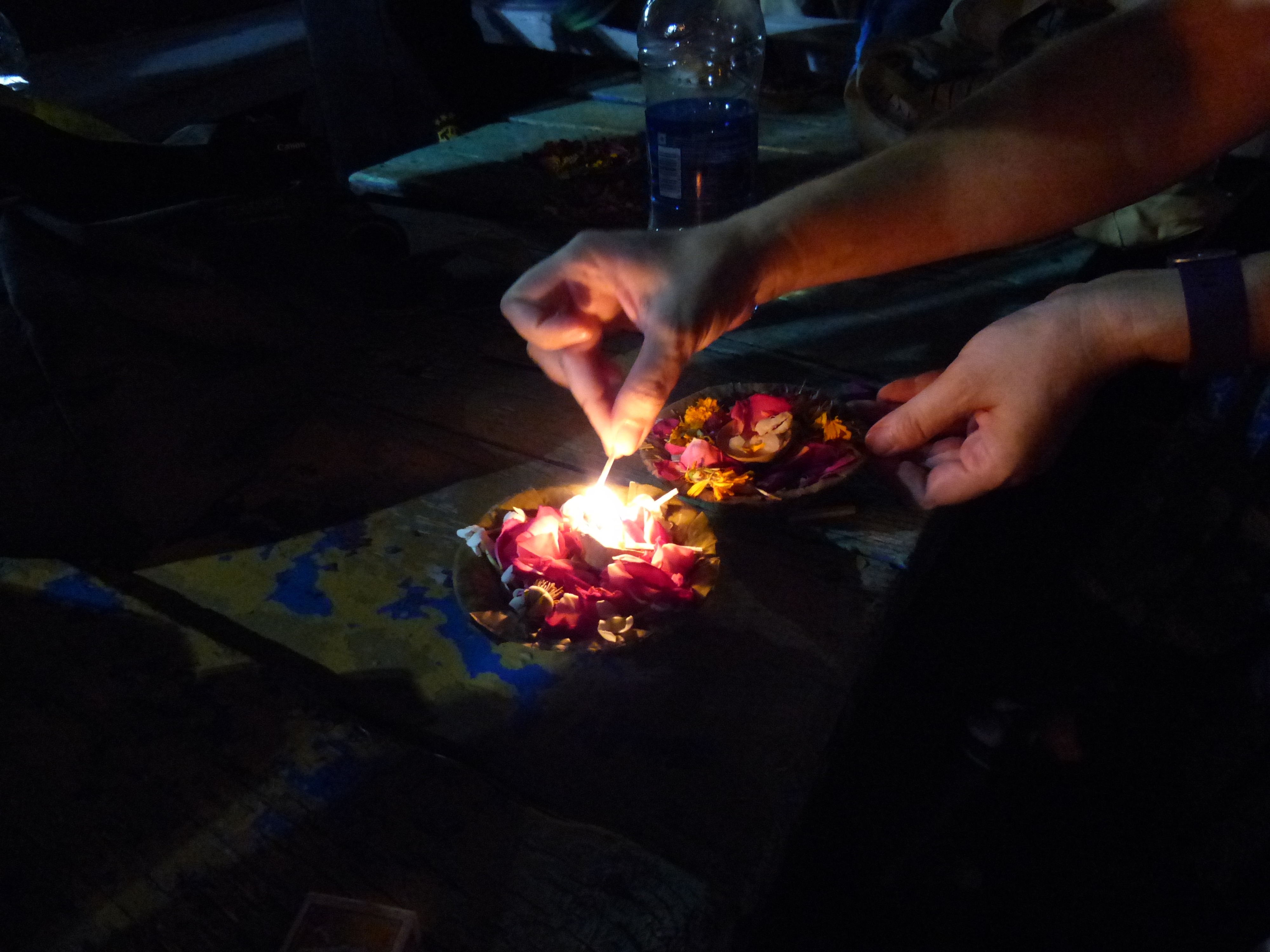
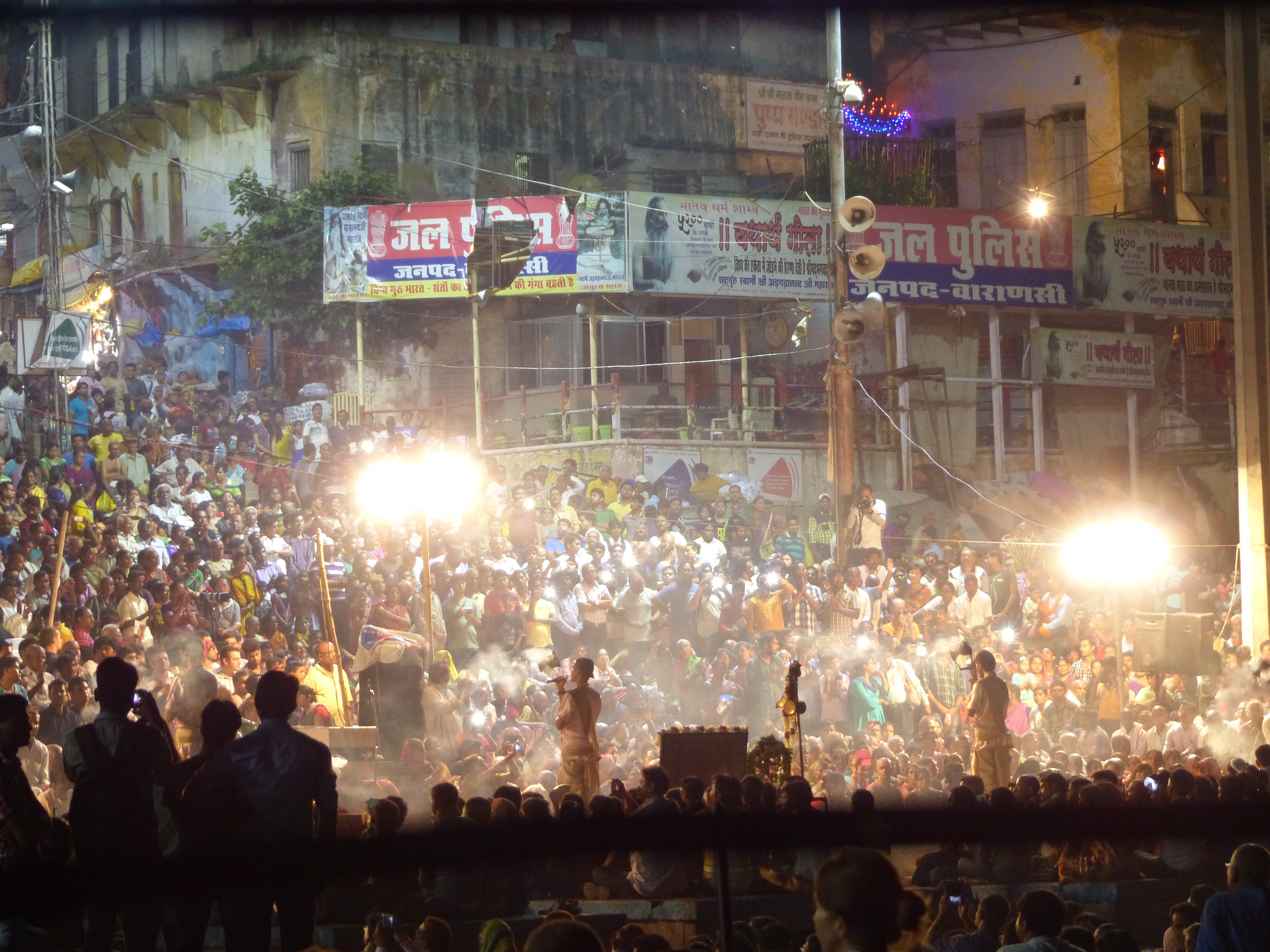
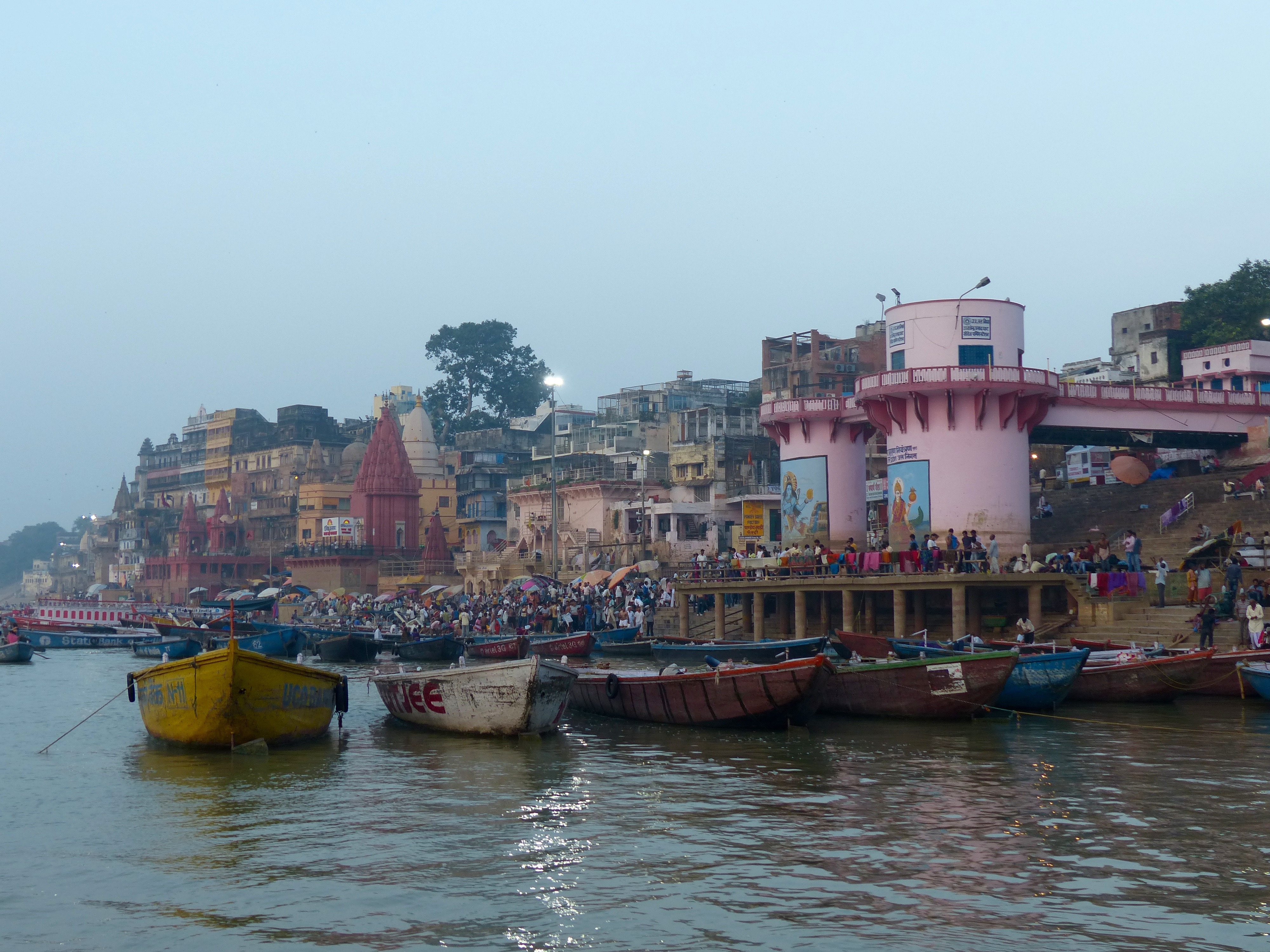
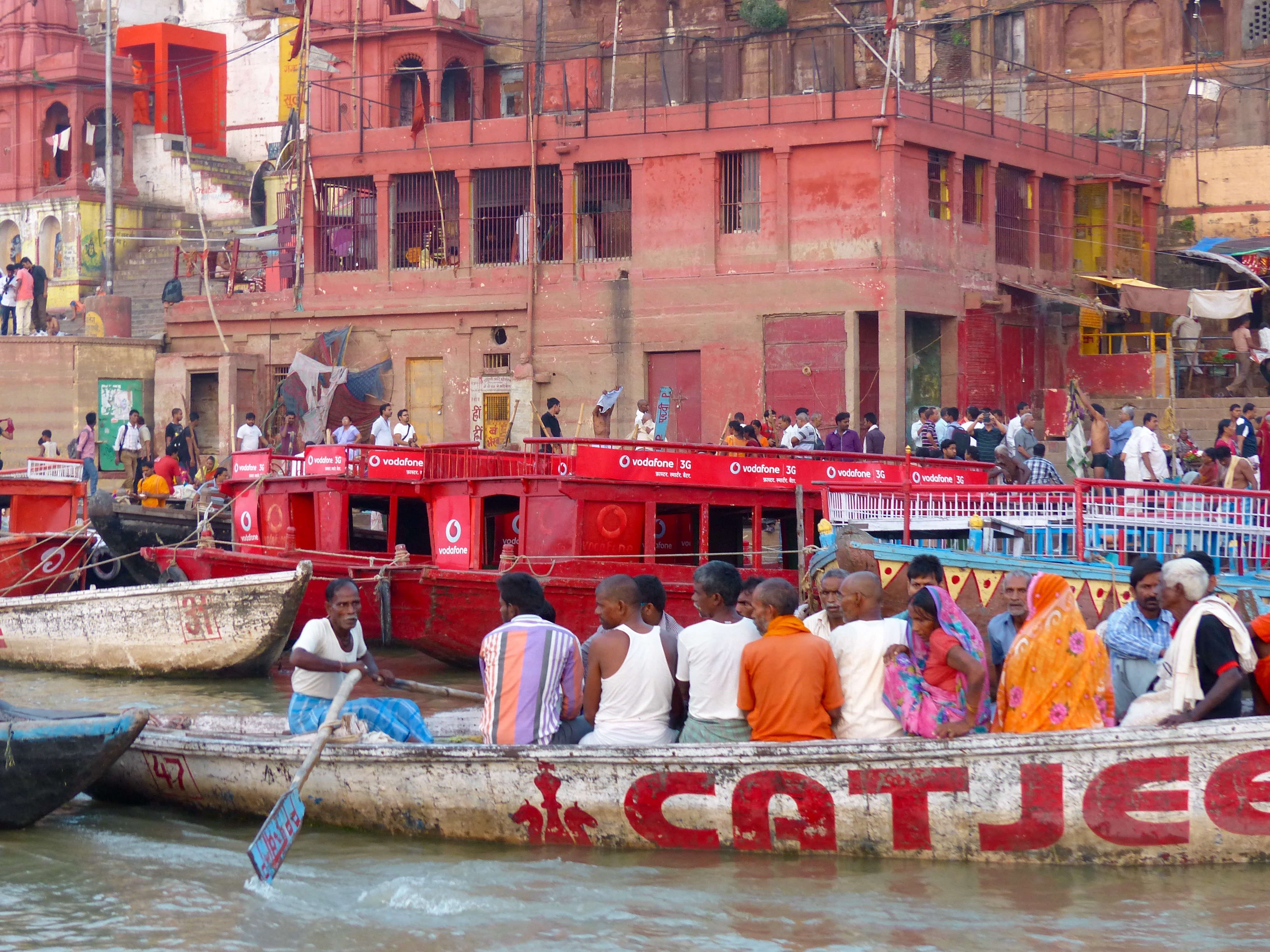
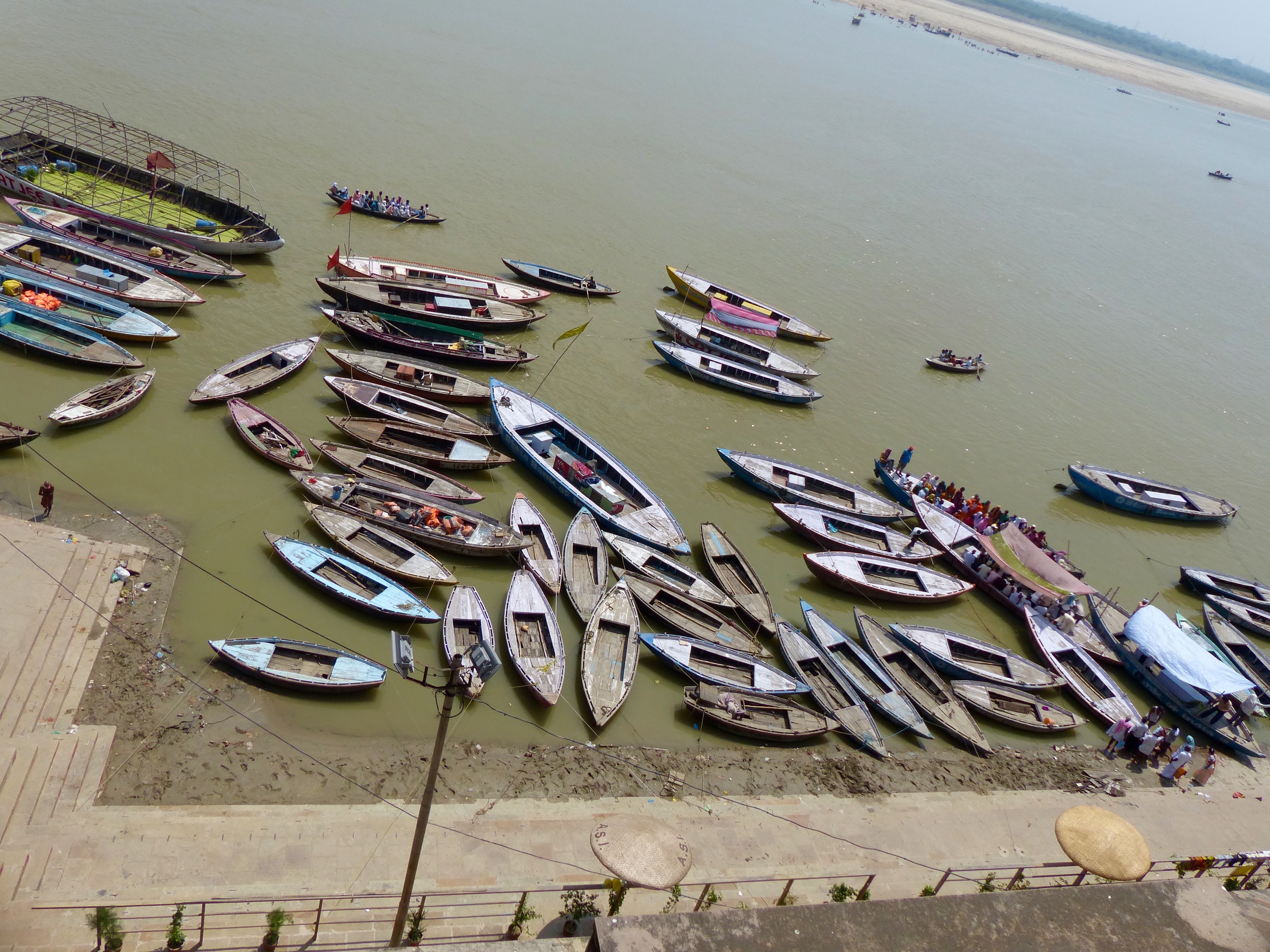
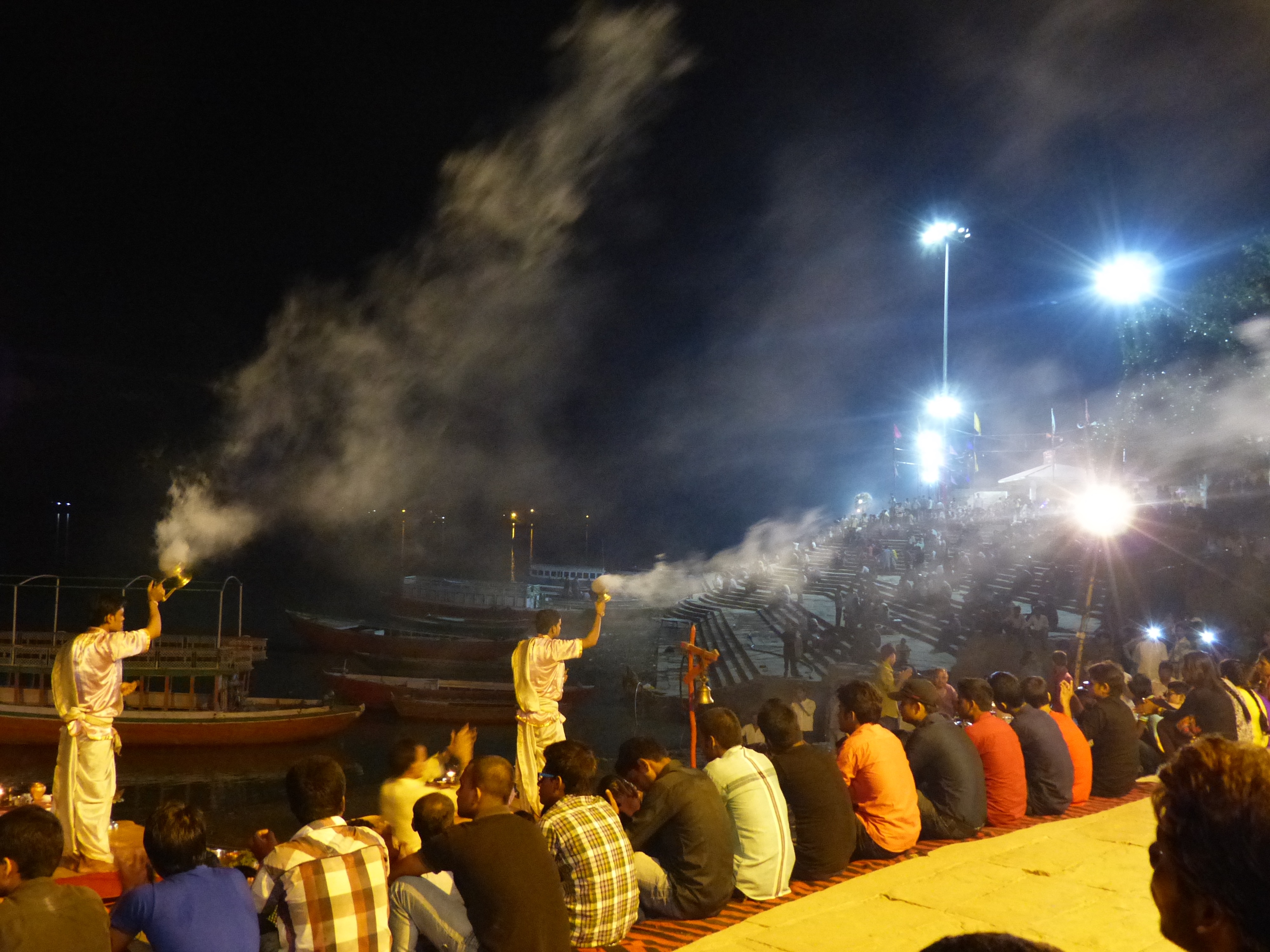
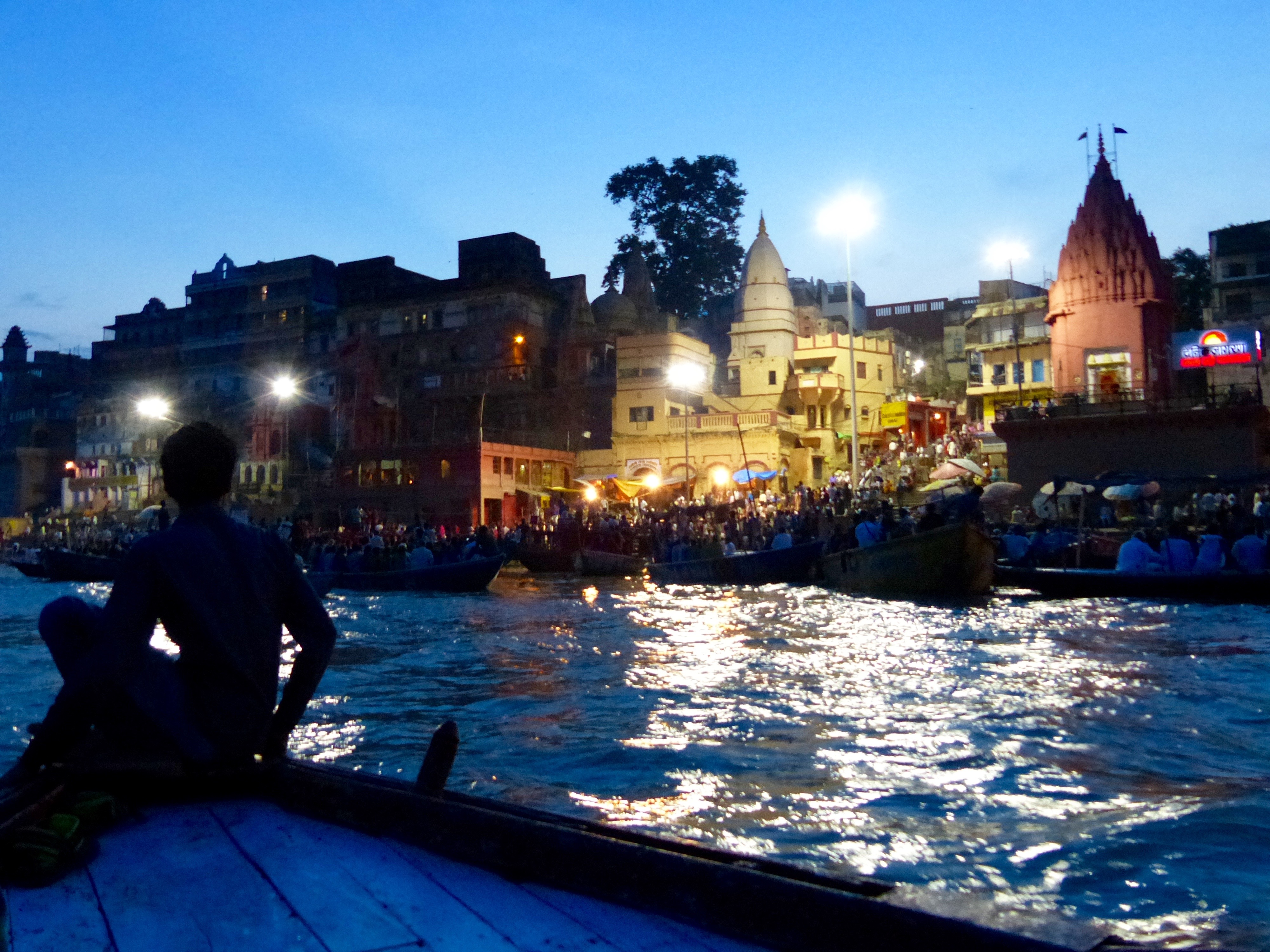
At sunset, our hotel offered a complimentary boat ride to see the ceremony at the Dashashwamedh Ghat, the main and most lively ghat on the river. The shore was already crowded with boats when we arrived, so we pulled up alongside them and waited for the ceremony. The nightly aarti – which honors the river goddess – features blowing of a conch shell, incense burning, waving lamps of fire, bell ringing, clapping and chanting. Although we really couldn’t see the action, I always love the energy of people at a religious pilgrimage site, and I often found myself facing the crowd to see their reaction to the aarti. Eventually, our guide, Sanjay, told us to light our offering and drop it into the water. I had hoped to see hundreds of candles floating on the Ganges, but the current quickly swept them away.
P1070070

P1070085

P1070062

P1070098

P1070094

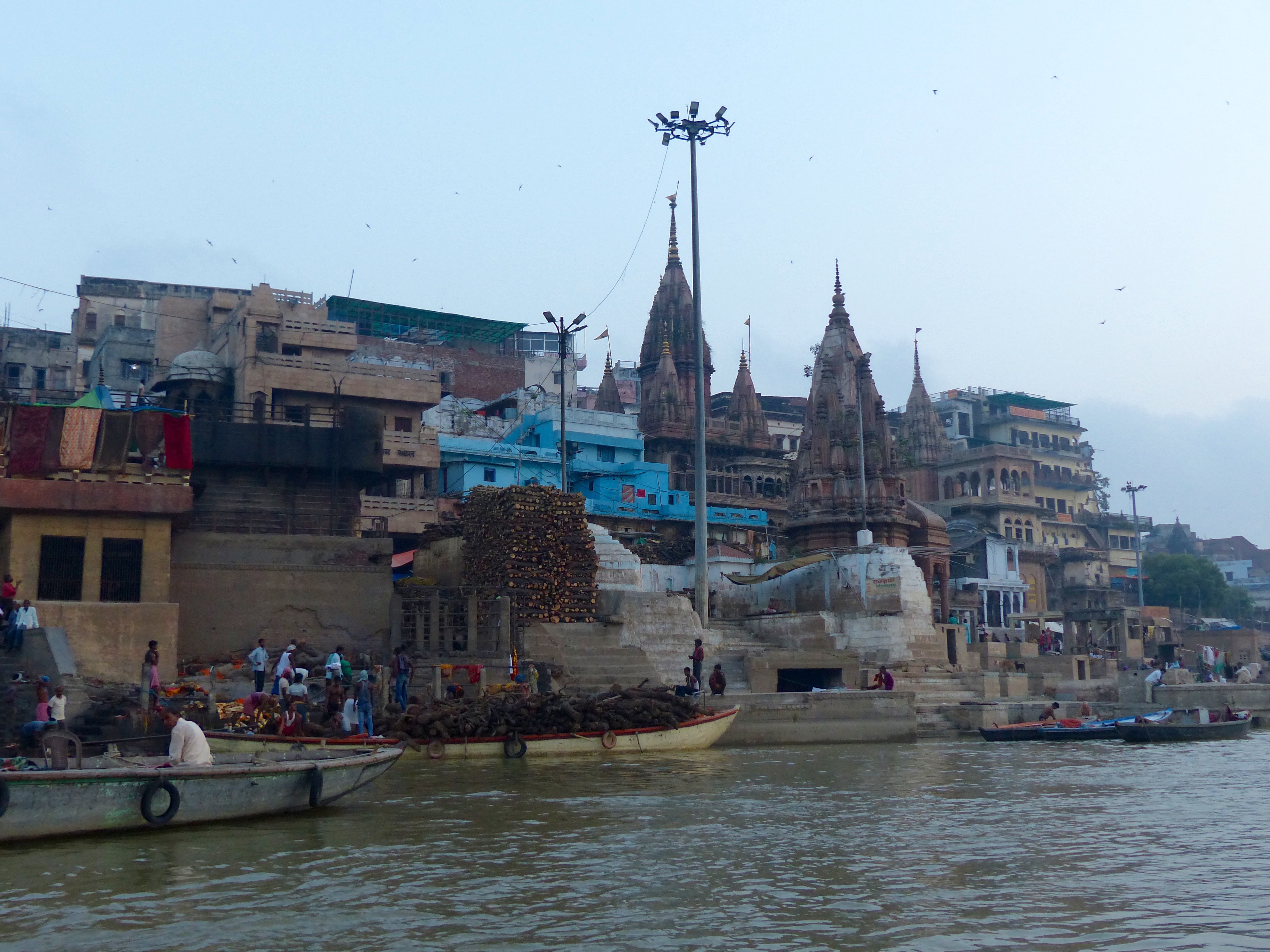
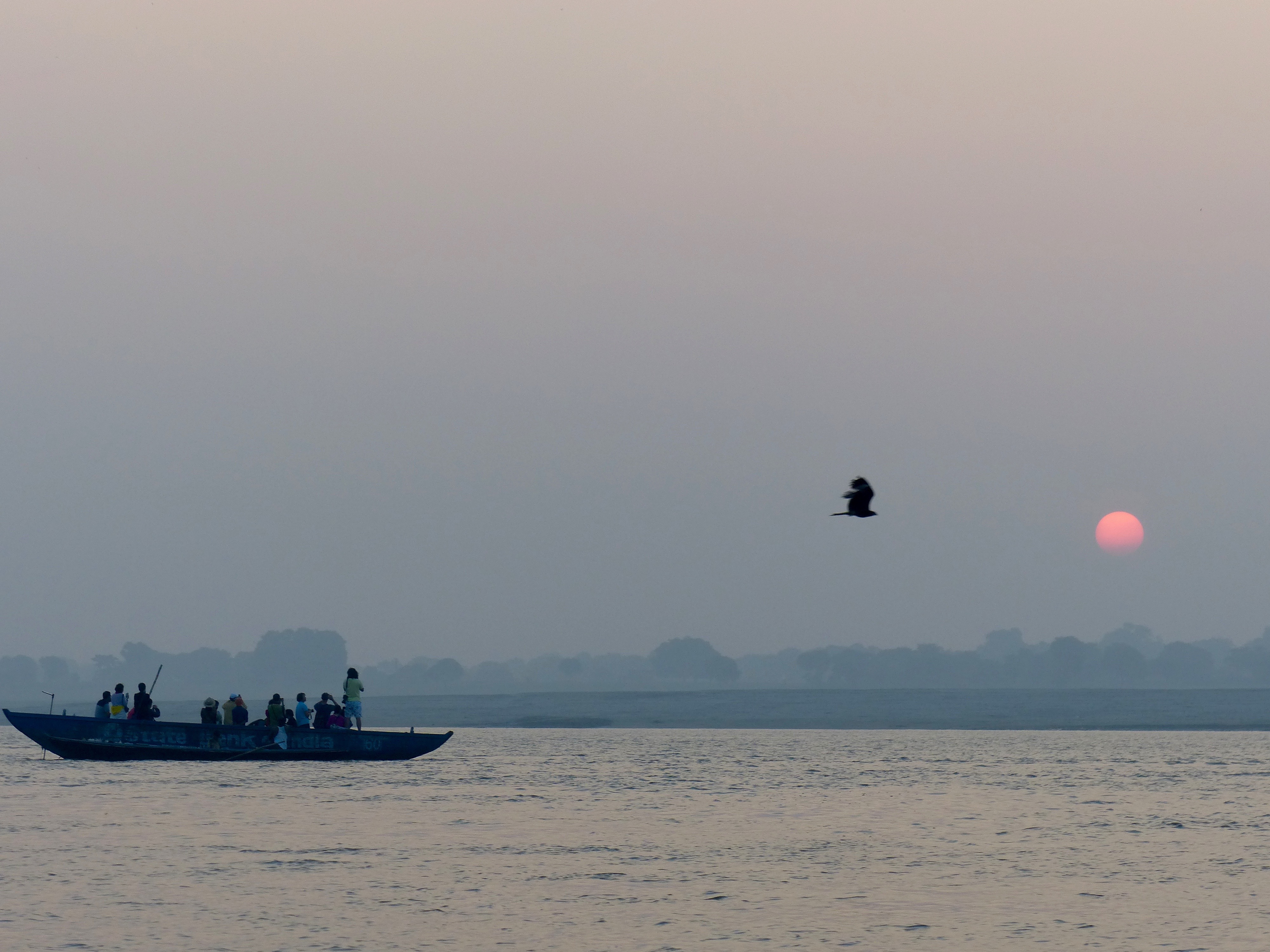
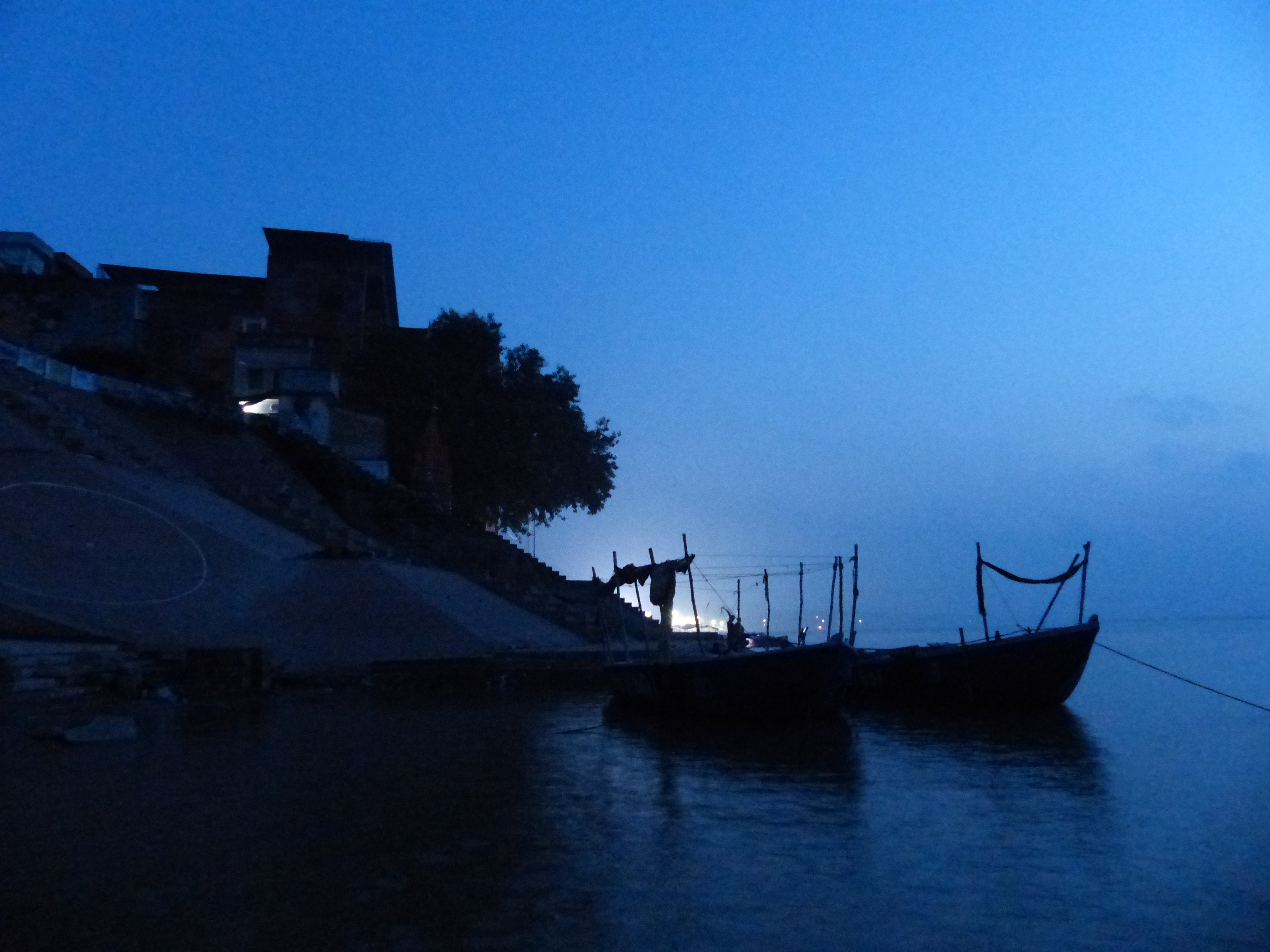
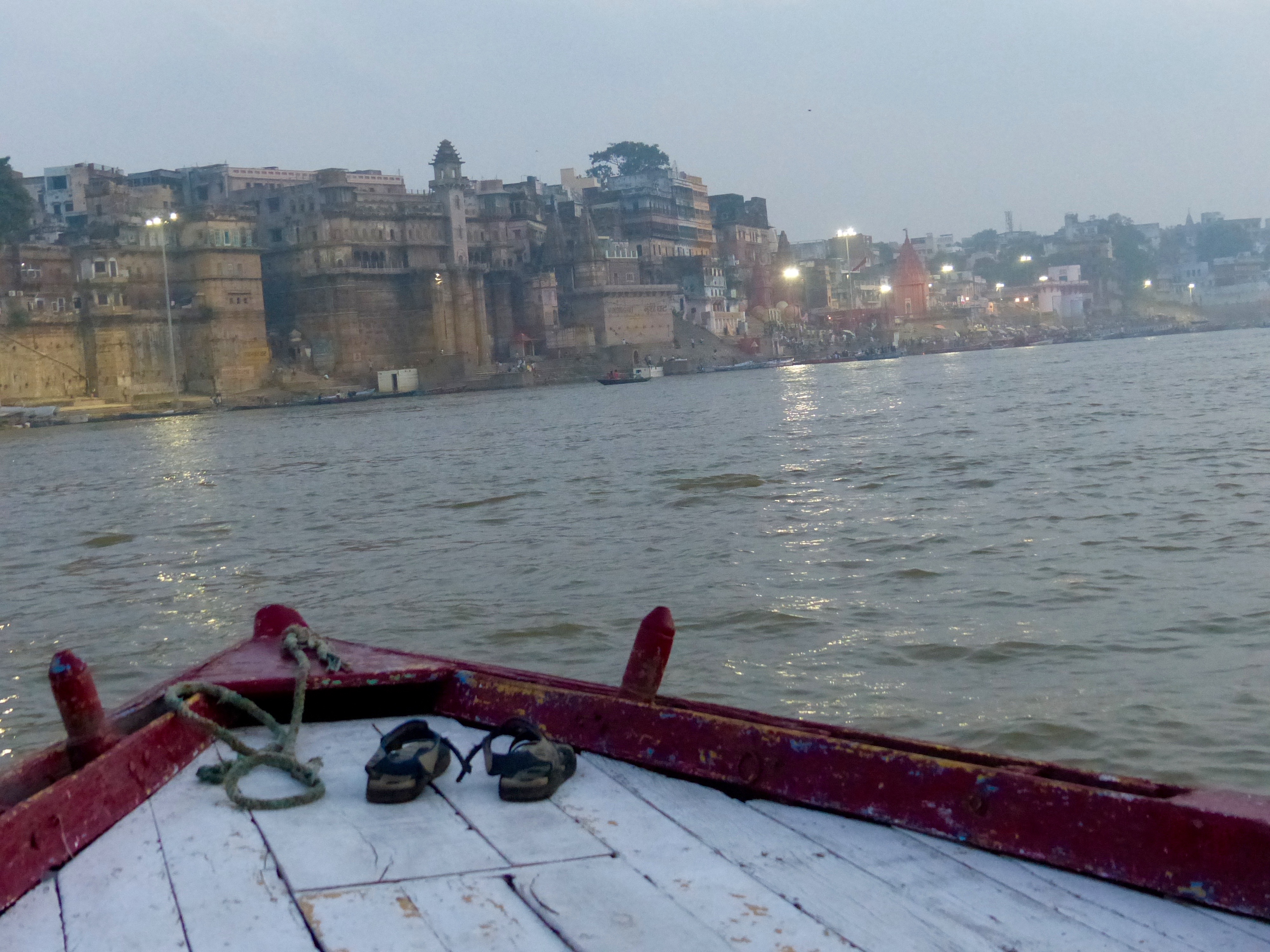
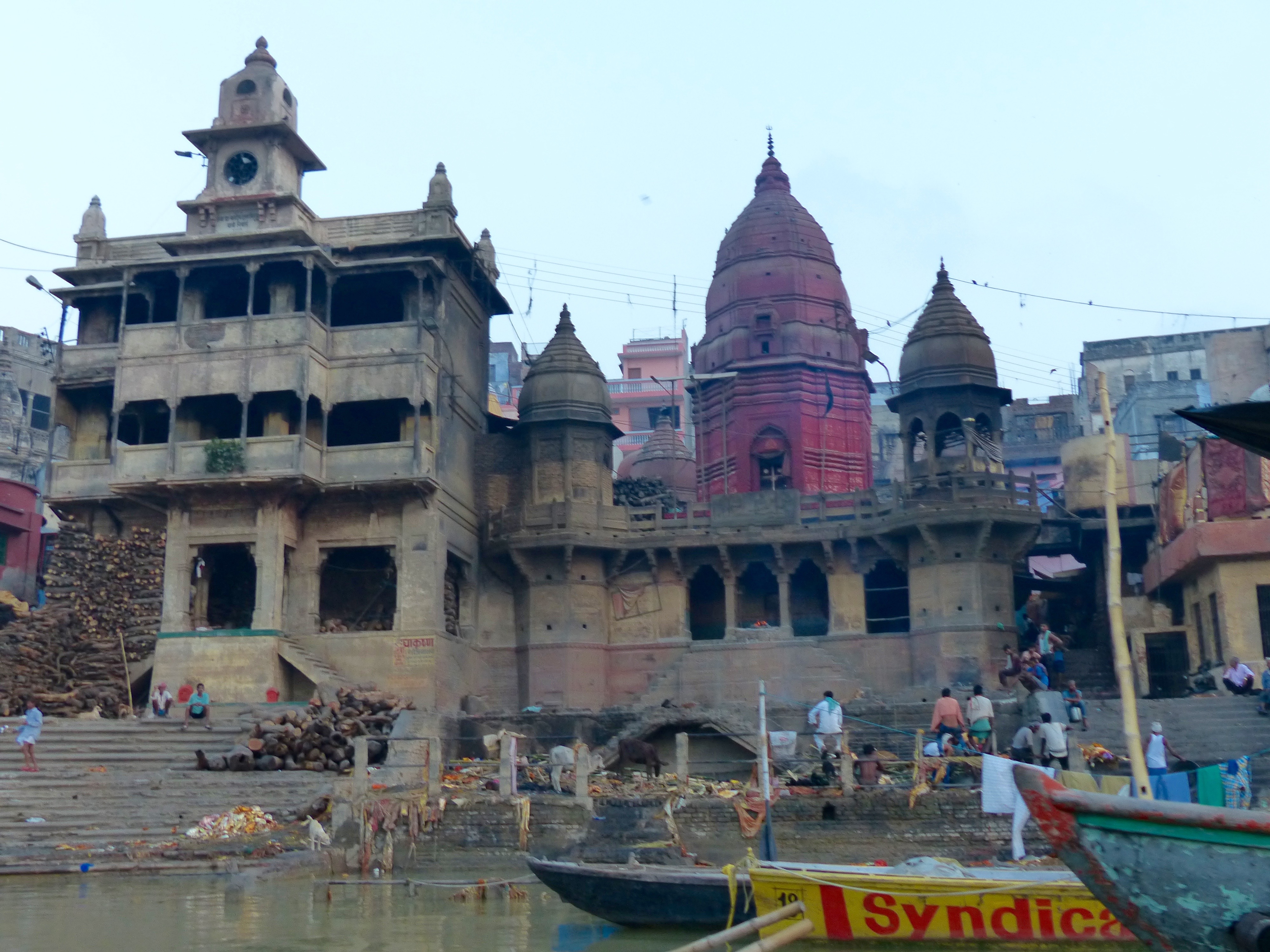
The next morning, a few of us met Sanjay again at 5 a.m. for a sunrise cruise. We slowly motored along the quiet shoreline to the Manikarnika Ghat. Although a body lay in wait on the ghat steps, the workers were mainly cleaning up from the previous day, sweeping, stacking wood, sorting through ashes.
According to Lonely Planet,

Manikarnika Ghat, the main burning ghat, is the most auspicious place for a Hindu to be cremated. Dead bodies are handled by outcasts known as doms, and are carried through the alleyways of the old city to the holy Ganges on a bamboo stretcher swathed in cloth. The corpse is doused in the Ganges prior to cremation. Huge piles of firewood are stacked along the top of the ghat; every log is carefully weighed on giant scales so that the price of cremation can be calculated. Each type of wood has its own price, sandalwood being the most expensive. There is an art to using just enough wood to completely incinerate a corpse. You can watch cremations but always show reverence by behaving respectfully.
P1070114

P1070124

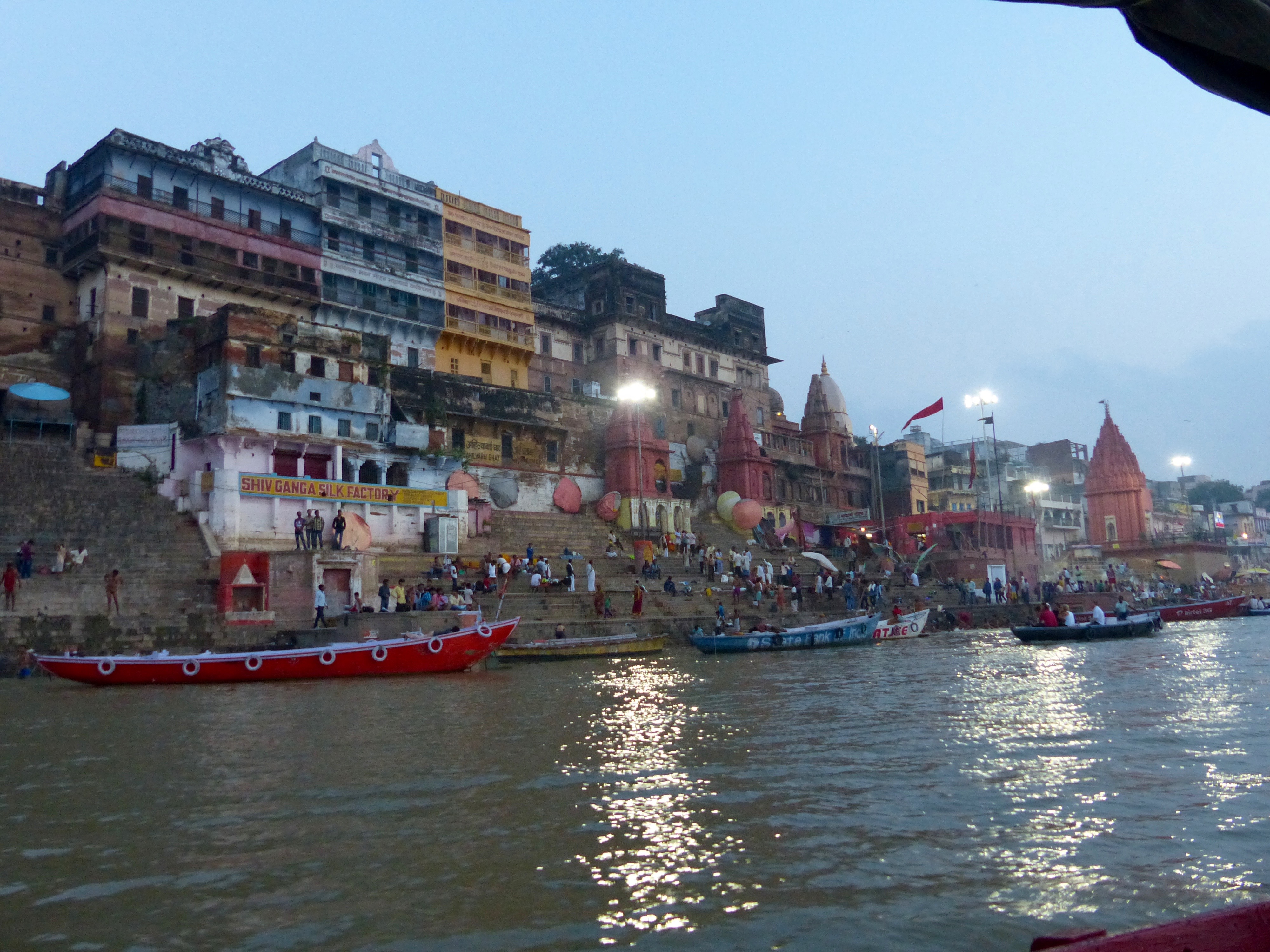
The early birds were already starting to show up at the bathing ghats.
P1070128

Stacks of wood fill the building and line the steps at Manikarnika Ghat.
P1070141

Workers unload wood from a boat.
P1070142

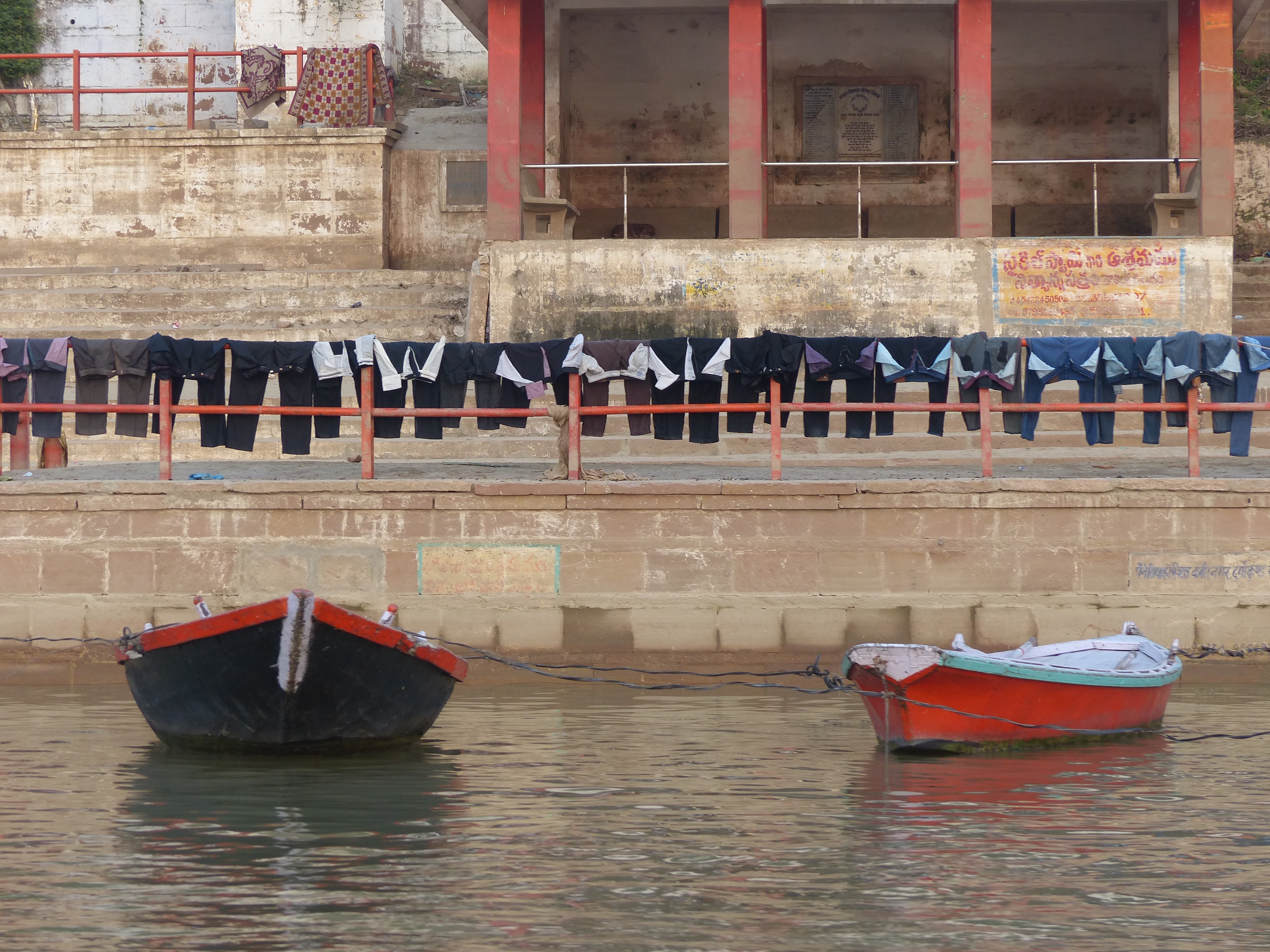
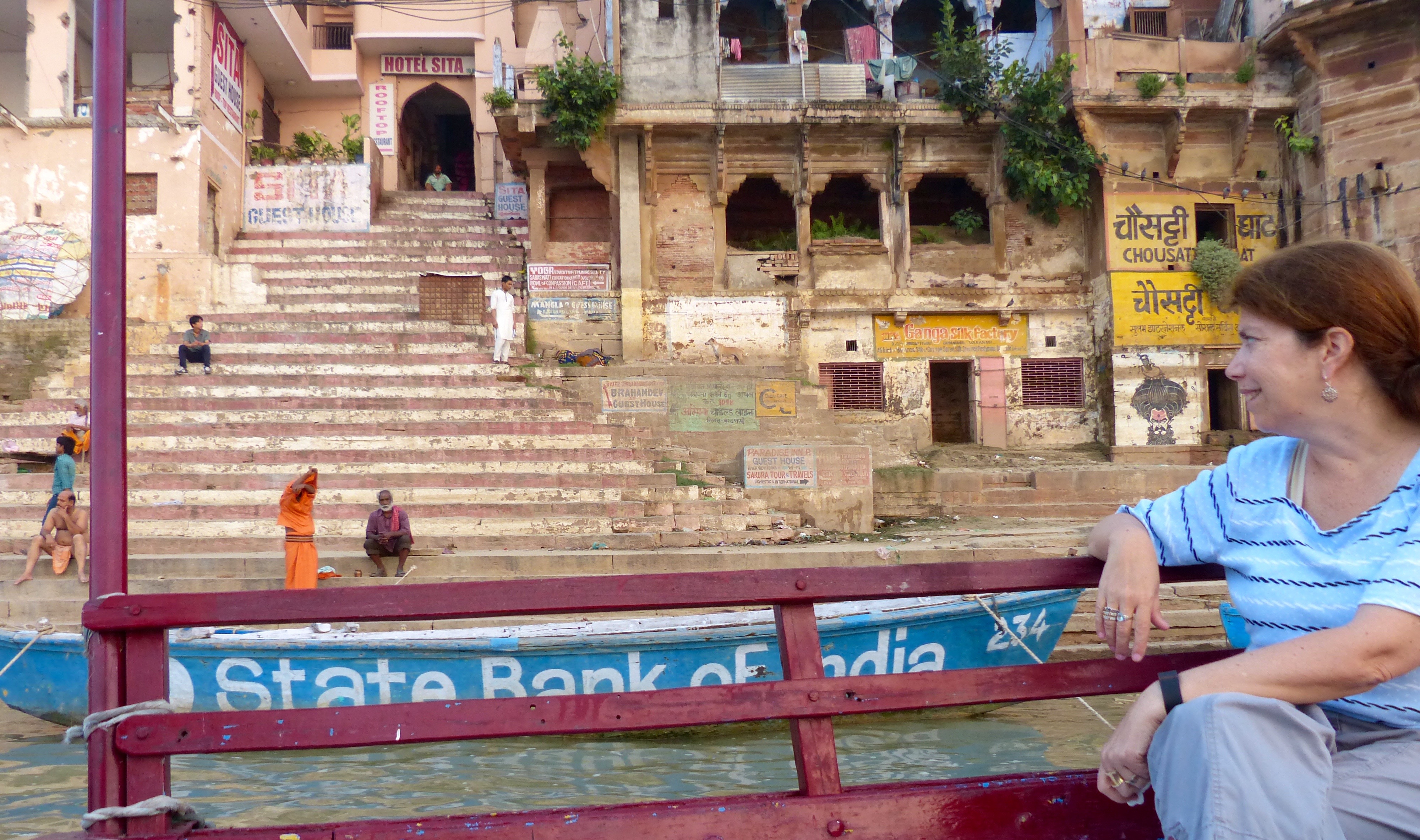
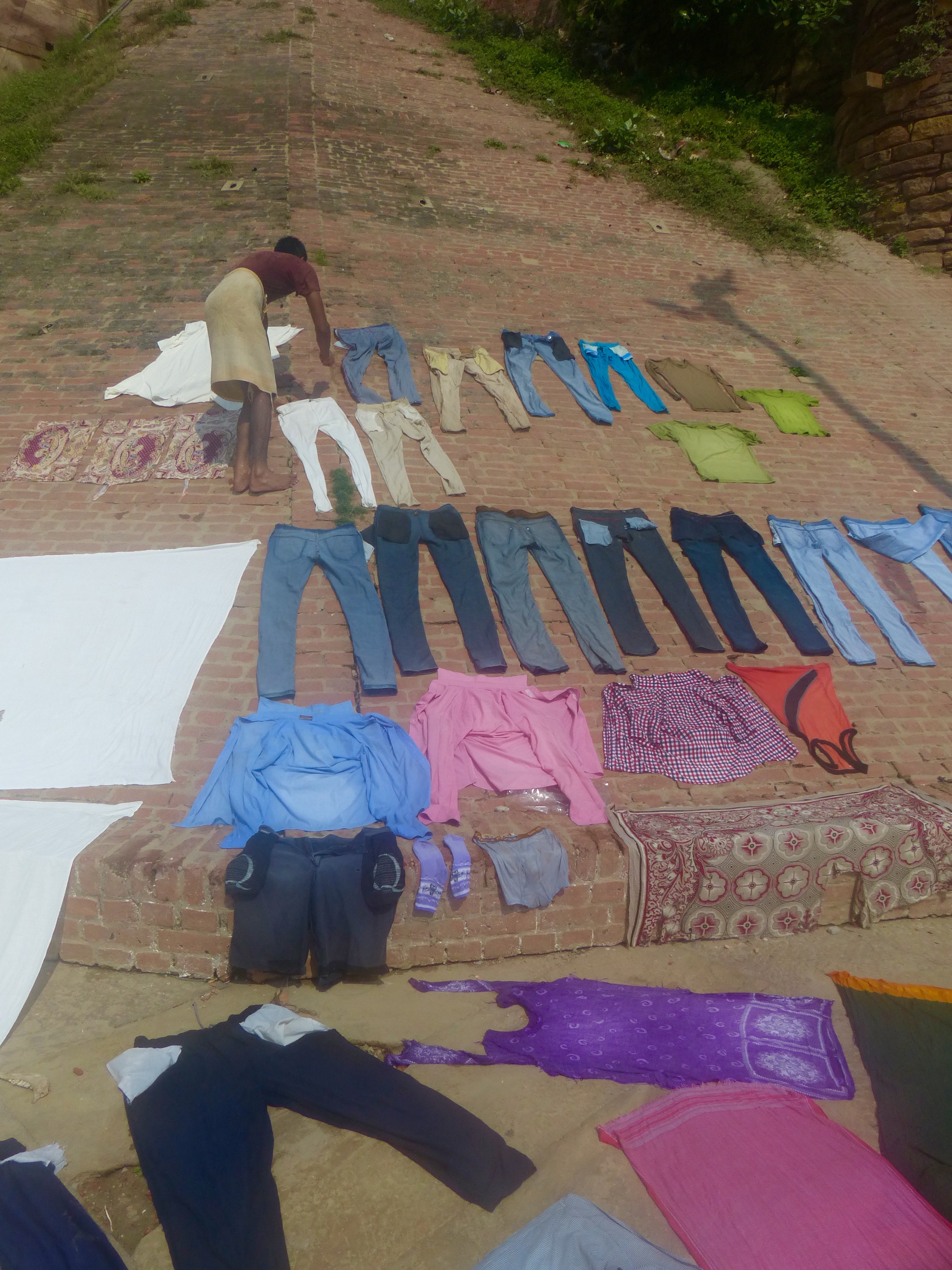
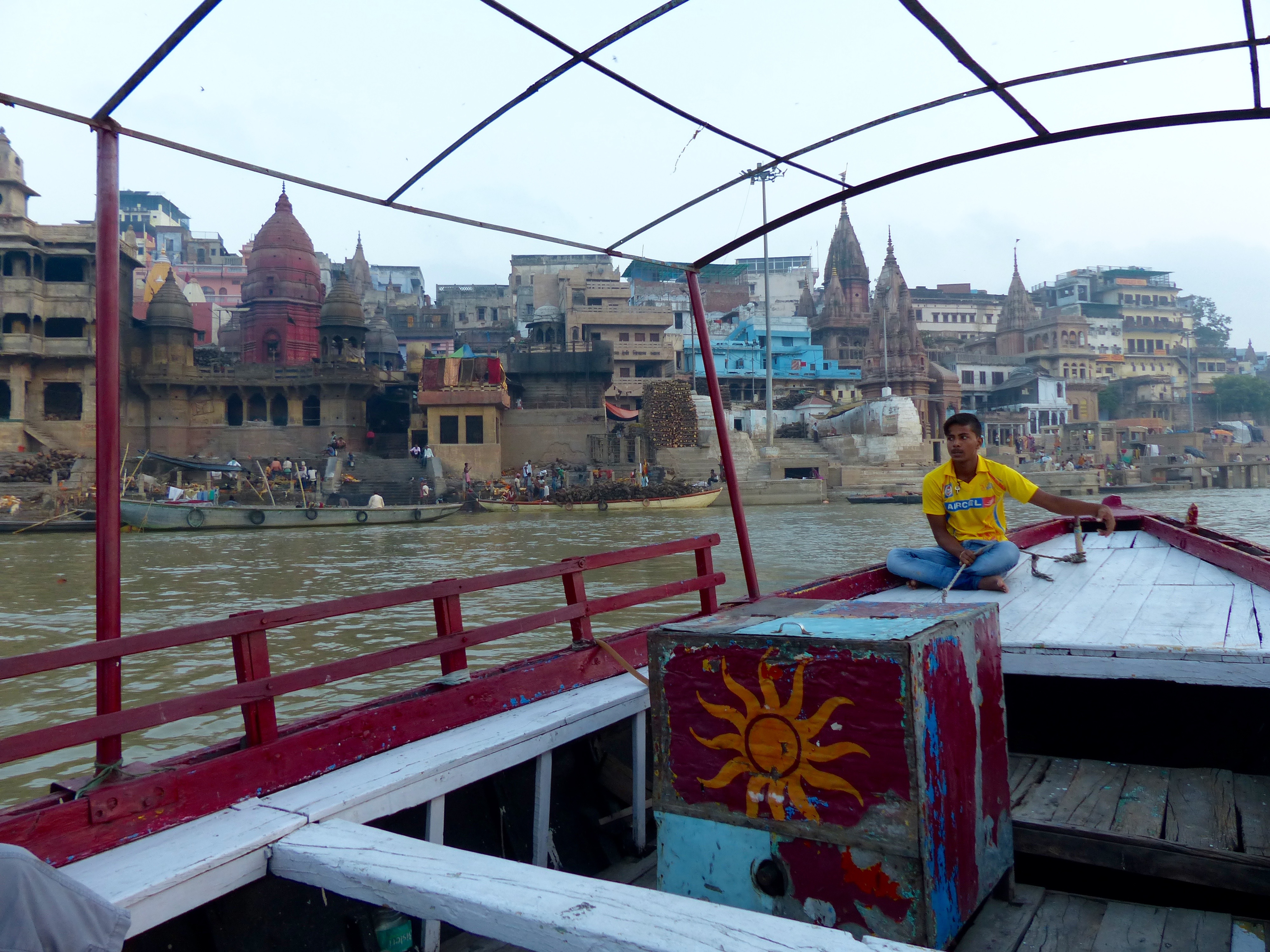
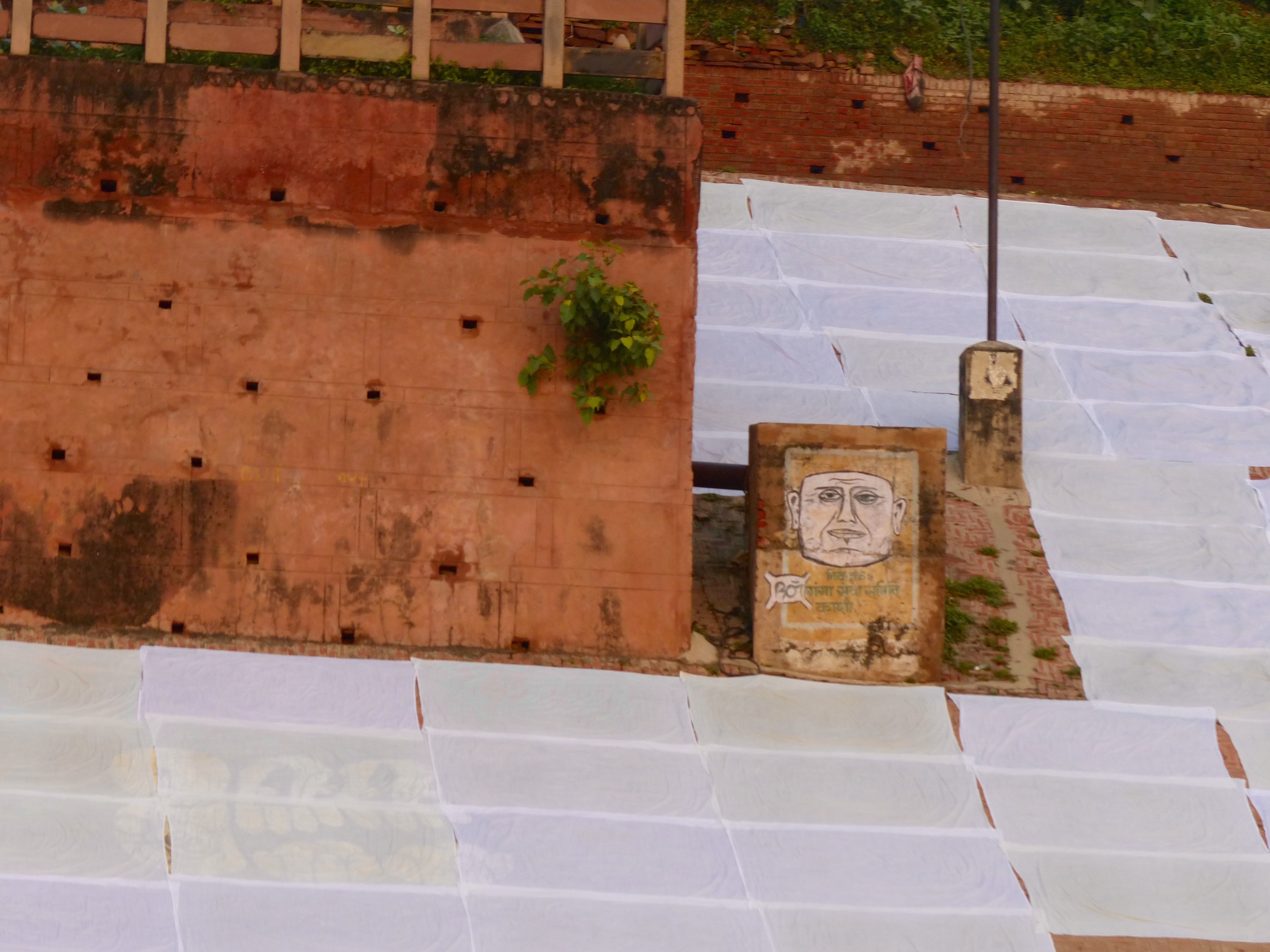
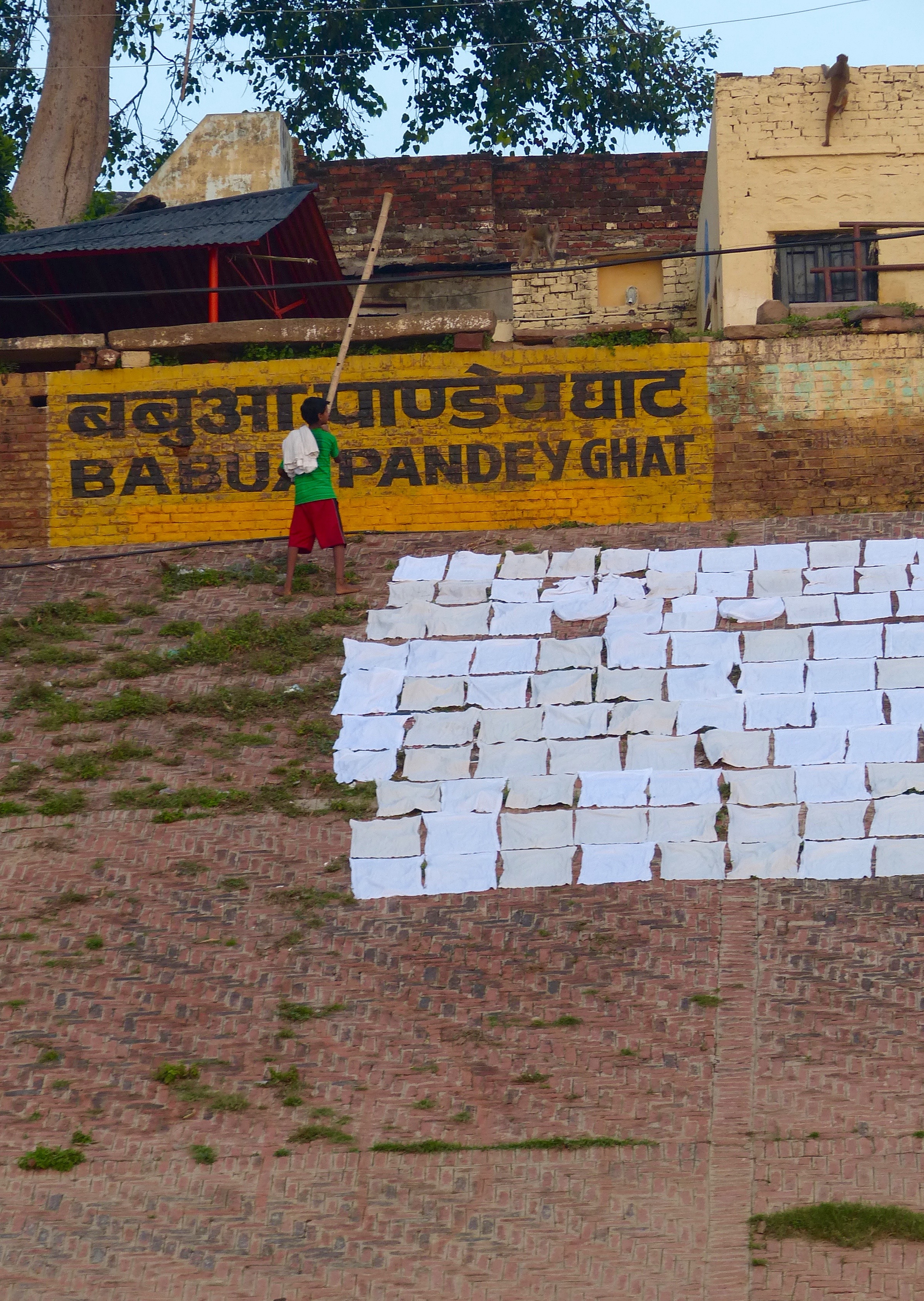
Boating back to our hotel, we watched the riverbanks come to life. Bathers soaped up their bodies, young men gleefully flipped into the water, and elderly couples stood chin deep while chanting. Ladies in colorful saris ladled water over their babies. Dhobis beat their river-washed laundry on the ghat steps and then put it out to dry in the relentless sun, spread on the steep stone hillsides or hung from railings. Small fires burned at the Harishchandra Ghat, a secondary cremation center near our hotel.

18-year-old Sanjay pilots the boat and shares stories about Varanasi.
P1070143

P1070146

Pants drying in the sun.
P1070180

White sheets spread out on the brick walls were “hospital laundry,” Sanjay said.
P1070168

It’s no small feat to keep the monkeys off your clean sheets!
P1070167

P1070149

P1070162

P1070176

P1070157

P1070155

Maureen soaks it all up.
P1070163

After an extended breakfast (with delicious coffee, courtesy of Maureen’s Miracle Coffee Maker), our group headed out for a walk along the river.

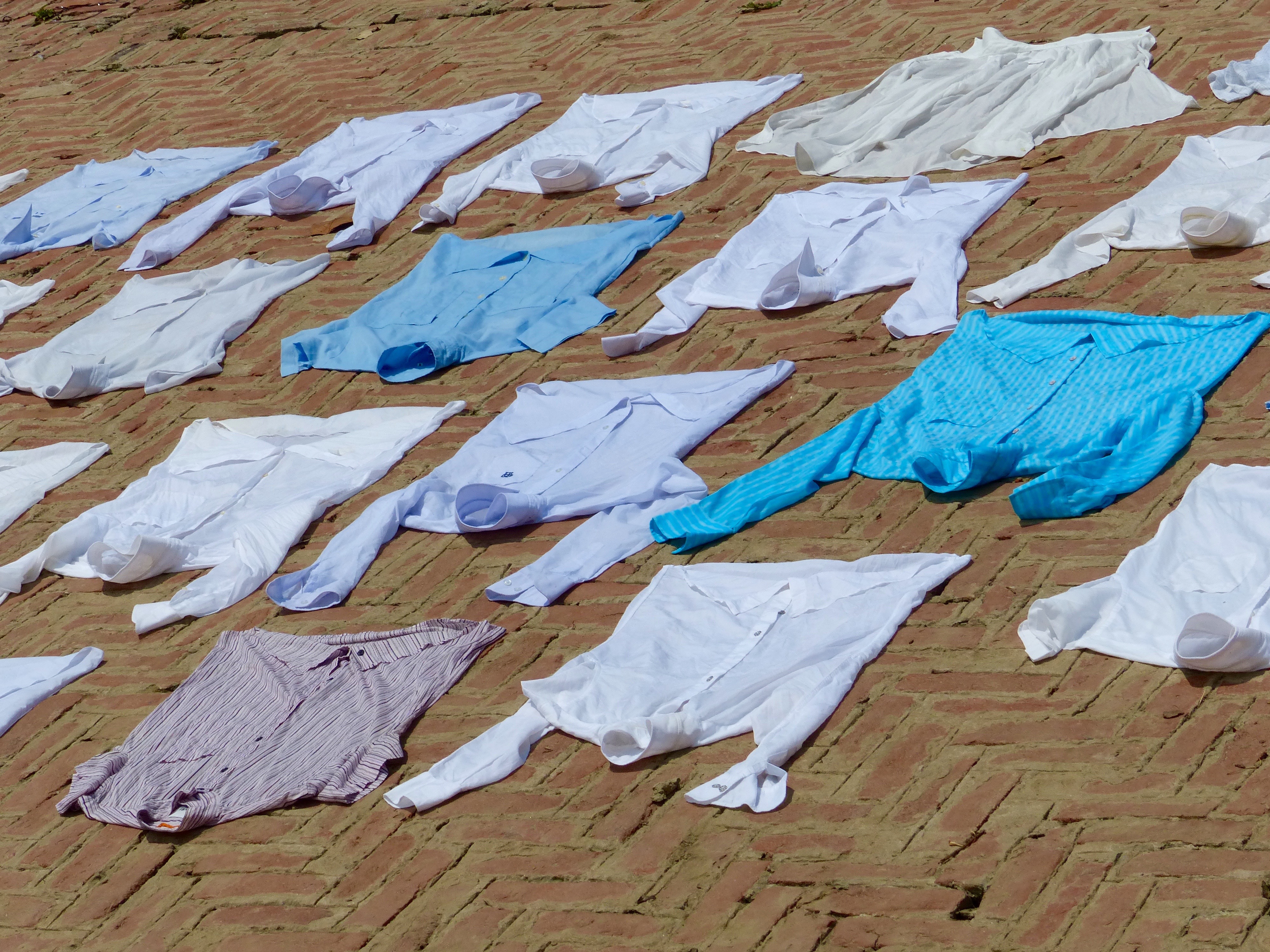
More laundry. I just loved it.
P1070208

P1070190

A little slice of life at Dashashwamedh Ghat. I was sweating my face off, but those ladies look remarkably cool in their saris.
P1070211

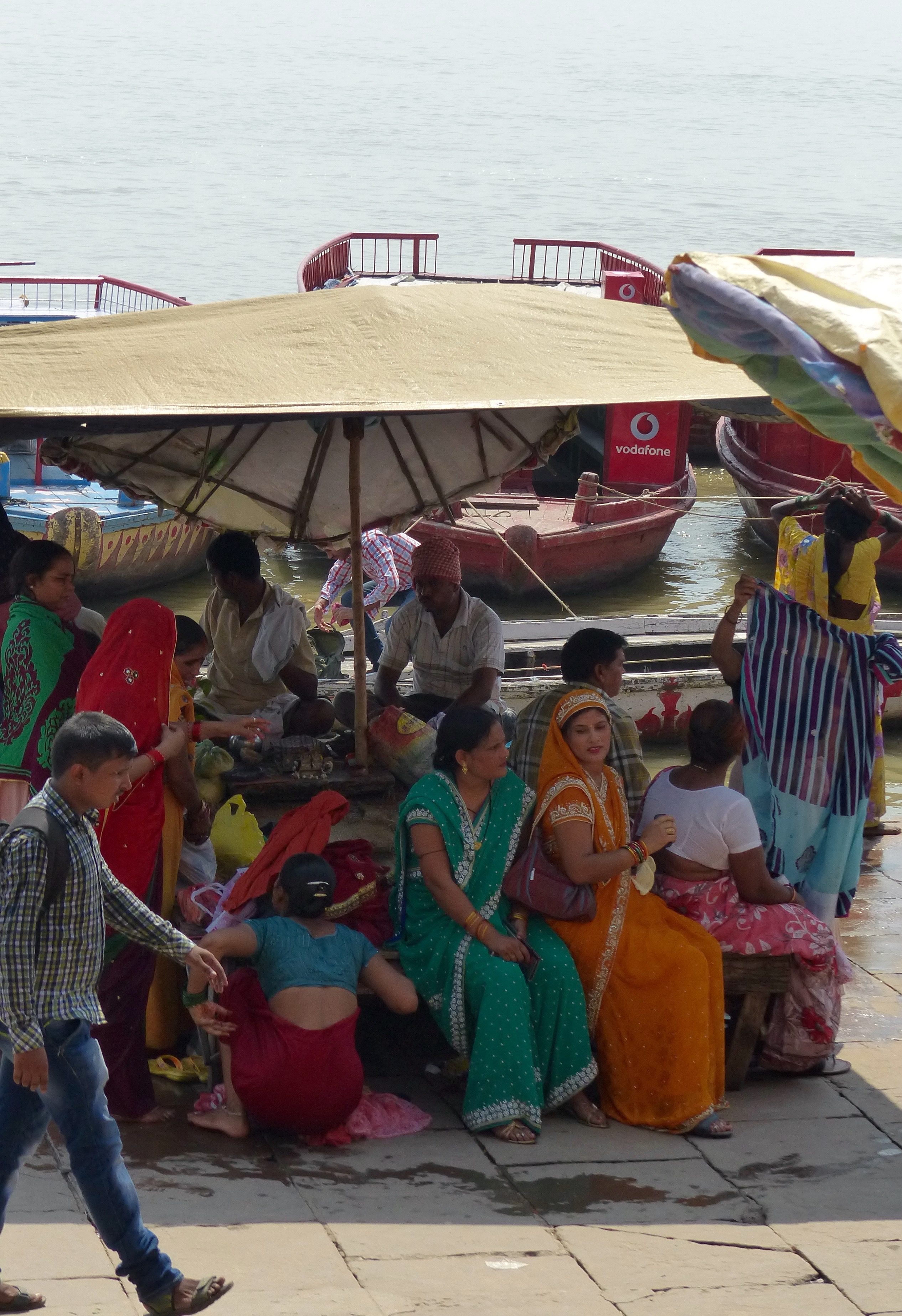
Sarah and I broke off from the group to check out the Kedareswara Temple, a squat red-and-white striped structure at the top of a long flight of alternating red- and white-painted stairs. I read conflicting and confusing stories about this temple’s history, but here’s one version from the webindia123 website, with a few edits:

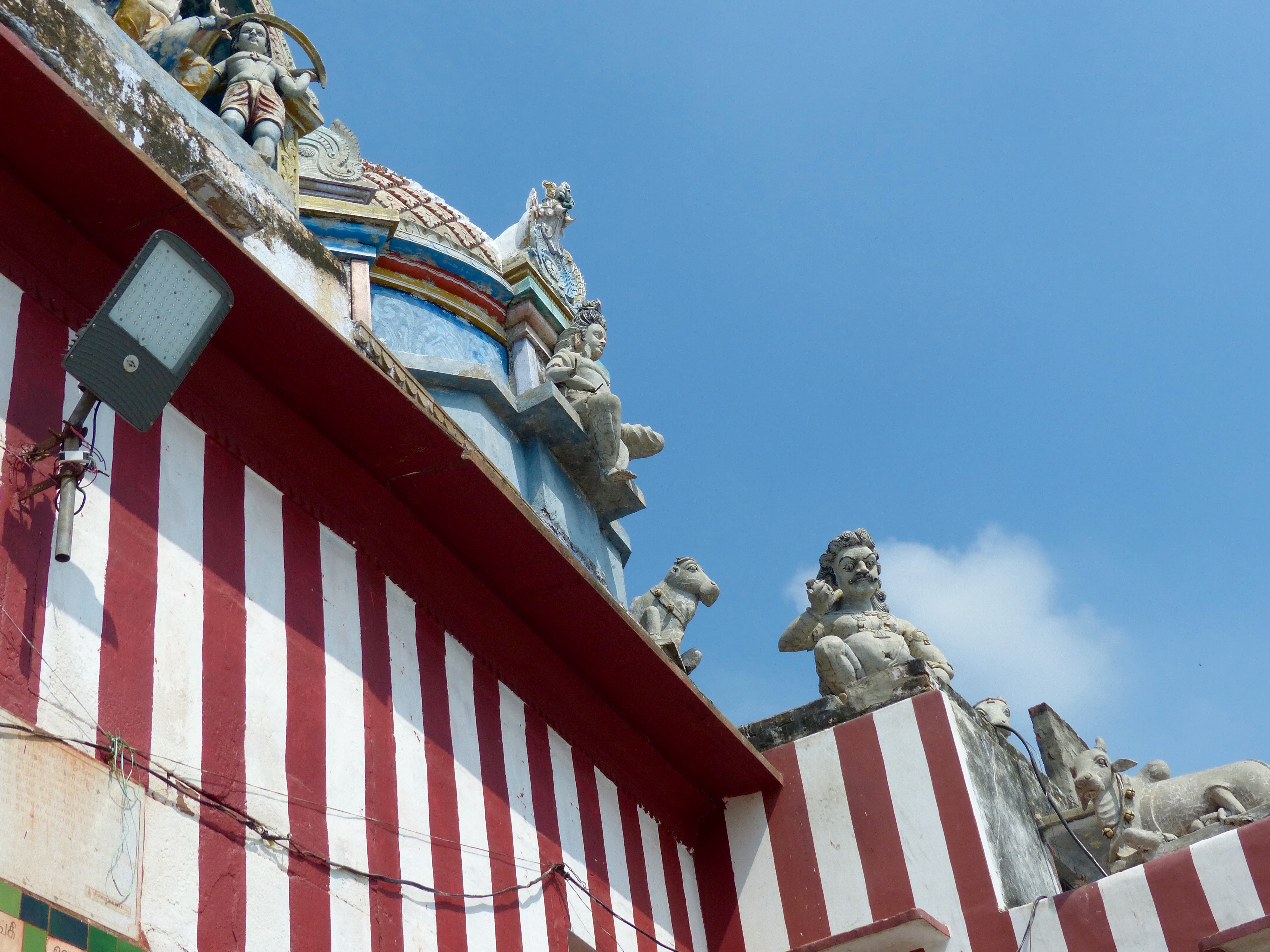
Kedareshvara alias Kedareshwar temple, dedicated to Lord Shiva is a river temple situated right on the banks of the Ganga at the top of Kedar Ghat. The stone Shiva lingam is said to have appeared spontaneously and a visit to this temple is believed to give one the fruits of a visit to the great Kedareshvara Temple at Himalayas. Legends has it that a pure hearted devotee of Lord Shiva prayed for a chance to visit the famous Kedareshvara temple in the Himalayas. Pleased by the devotion, instead of bringing him to the mountain, the Lord brought his lingam which is emerged out of a plate of rice and lentils, to the devotee. It is this lingam that can be seen on the rough surface of the natural stone.
P1070201

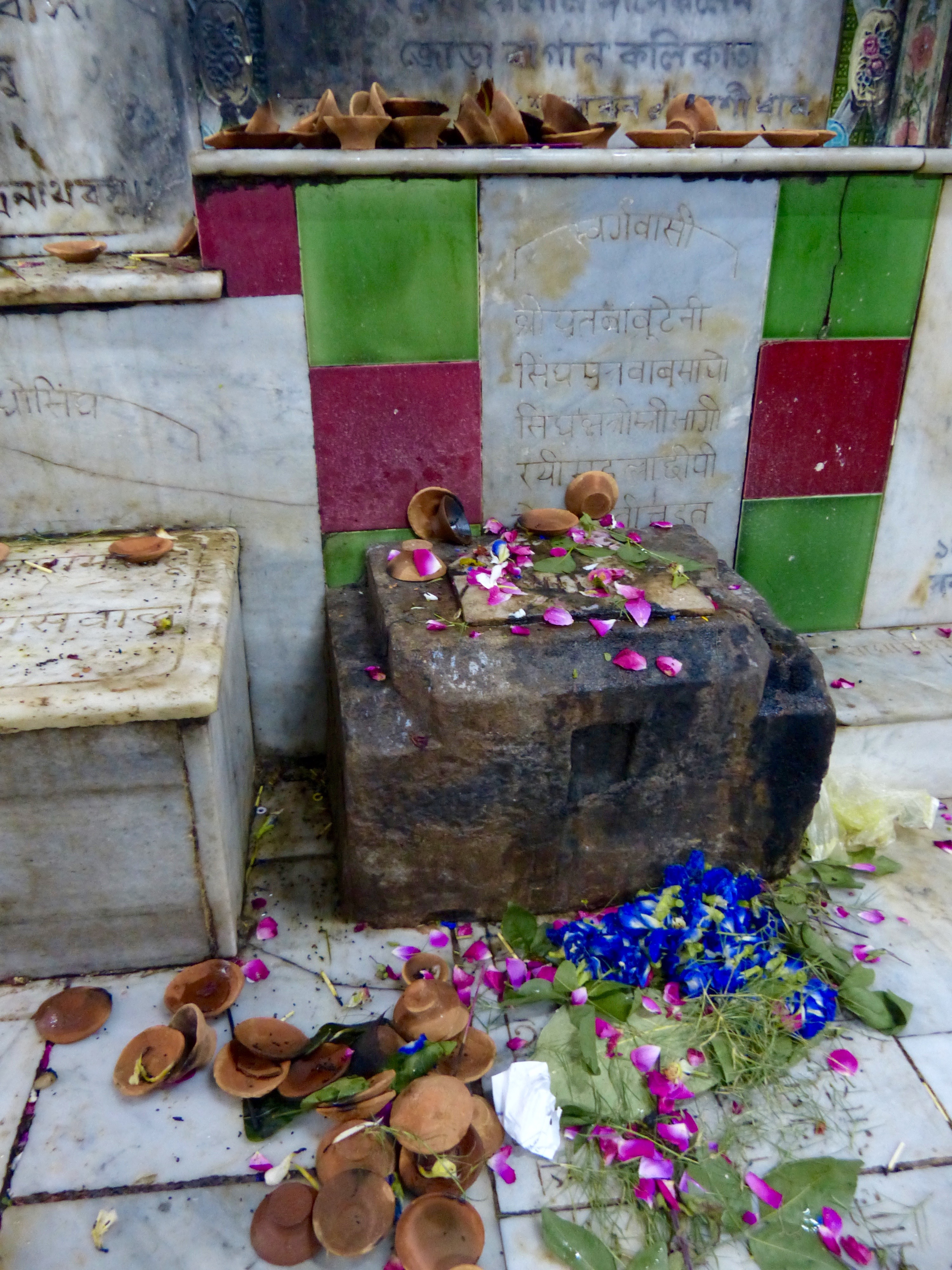
The remains of temple offerings. This was the only photo I snapped before I was scolded, “No camera!”
P1070199

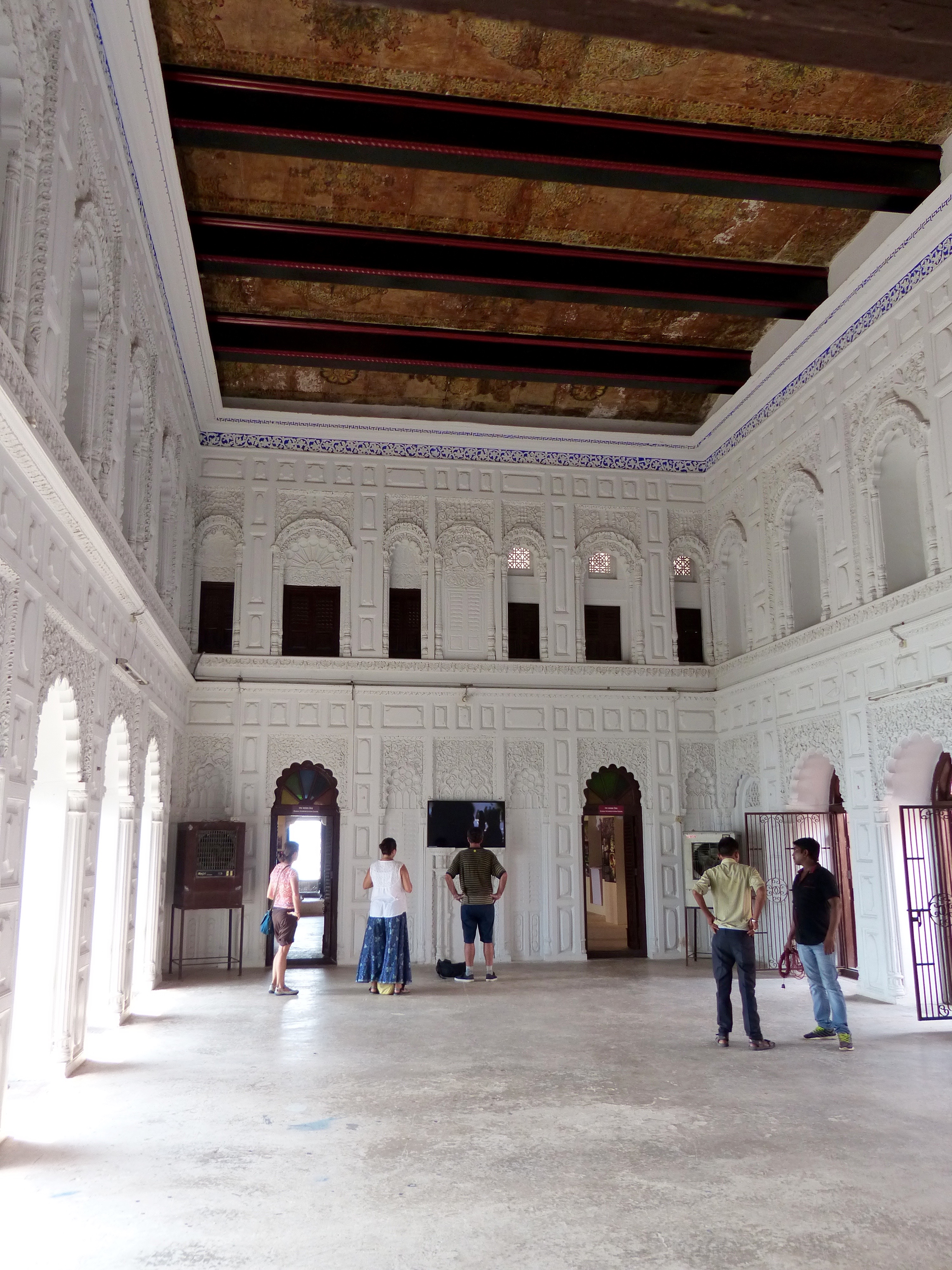
By the time we met up again with the rest of our group at the Man Mahal Palace, we were all soaked in sweat and completely exhausted, depleted by temperatures hovering around 100F and relative humidity at 87 percent.

The palace was built around 1600 by Raja Man Singh, the king of Amber. More than 100 years later, Sawai Jai Singh II added on to the palace’s masonry observatory. According to The Archaeological Survey of India, Sawai Jai Singh II, a great astronomer and founder of the city of Jaipur, installed “instruments for calculating time, preparing lunar and solar calendars and studying the movements, distances, and angles of inclination of the stars, planets and other heavenly bodies.”

We lingered in the palace’s cross breezes, checking out photography exhibits and information about the astronomical observatory. Mark actually lay down on the cool stone floor to watch a looping TV video about the Ganges River.
P1070219

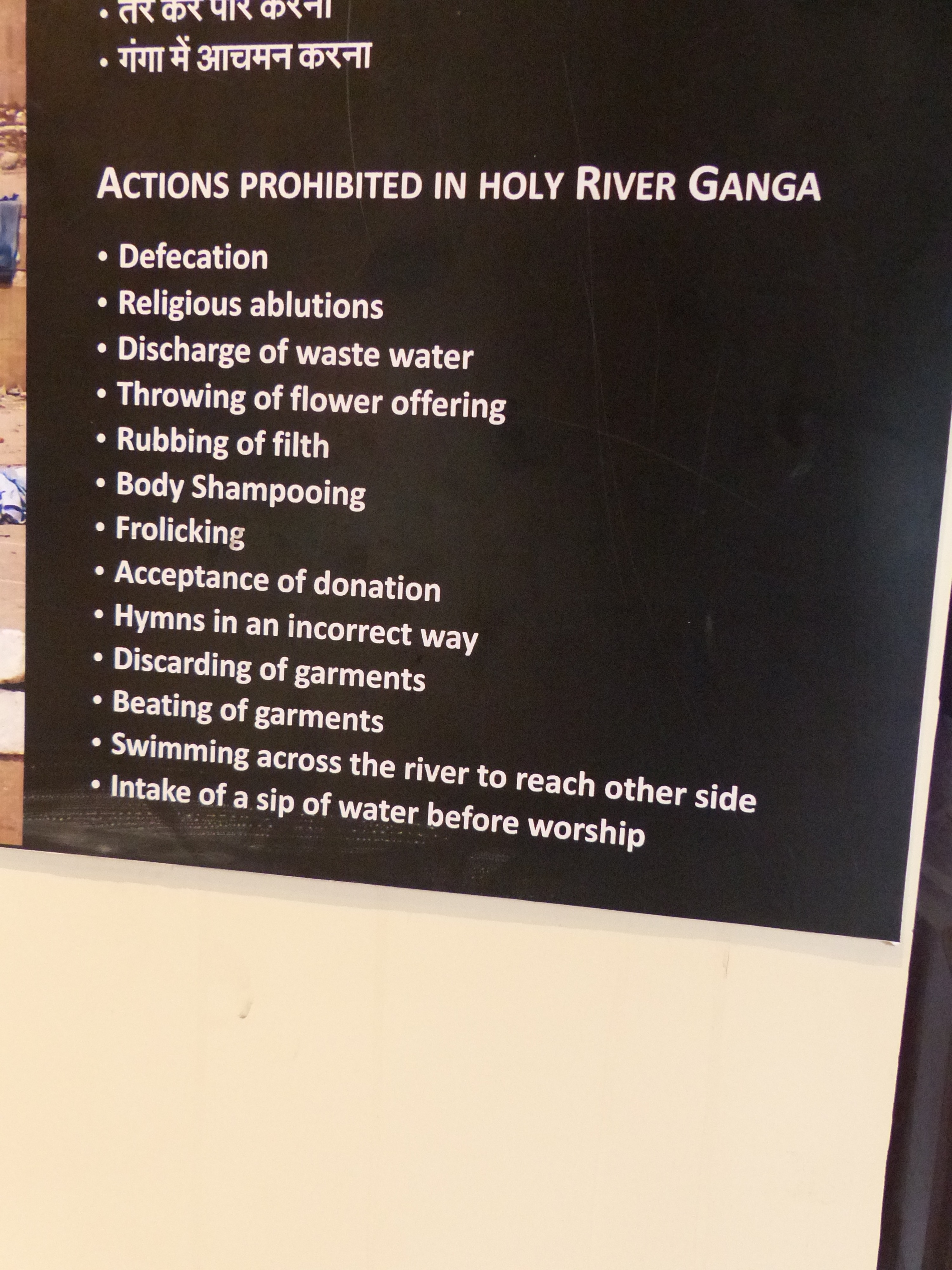
This sign was part of a Ganges River exhibit in the palace. During our walks and boat rides, we witnessed many of these “prohibited actions.” As Jill said, there’s little hope for the river as long as the city continues to pump it full of sewage, so these unenforced rules hardly matter. Read more in this bleak article from Down to Earth.
P1070220

Finally, we prepared to leave, and Craig asked a worker how to find the Thatheri Market.
“Up,” the guy answered, gesturing toward some steps.
“We just go up the street?” we probed.
“No, upstairs,” he said. “Observatory.”
Oh, yeah! The whole reason we had paid the Rps 100 ($1.50) admission fee! Clearly, we were dehydrated and not thinking straight.

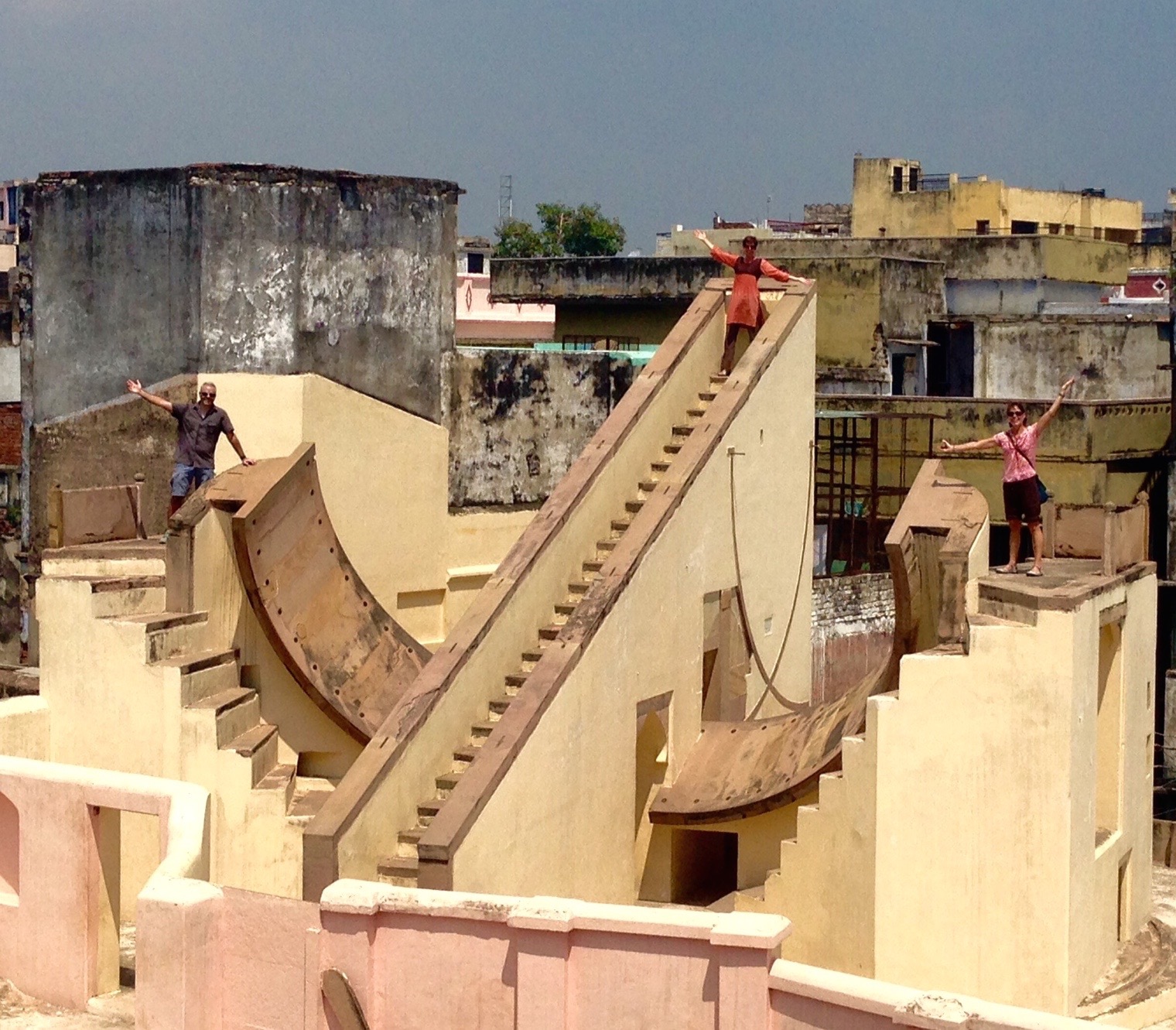
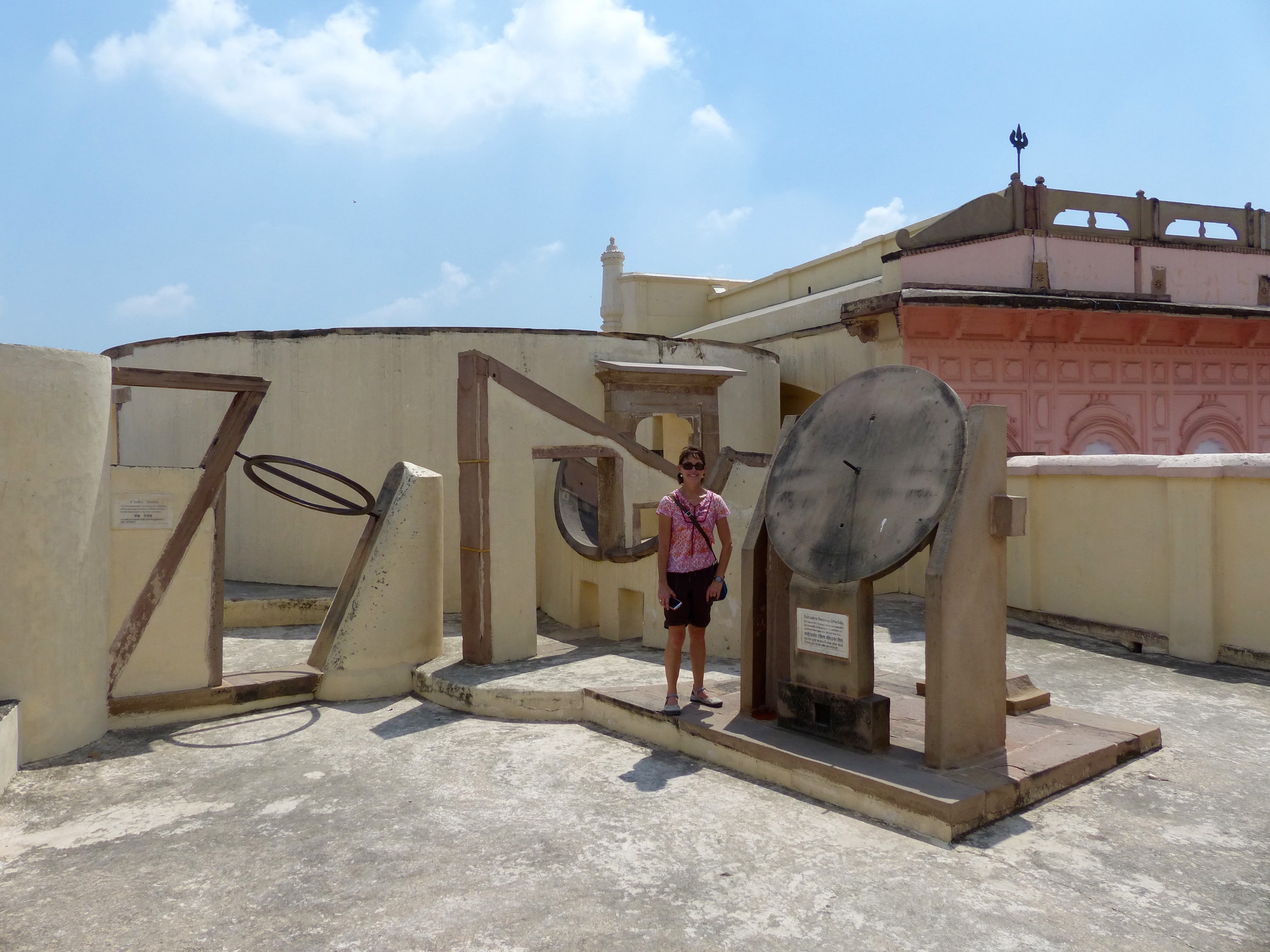
We climbed the steps to the observatory and checked out the hulking instruments and the fantastic views. (The sun dial’s time was just one minute off from Craig’s phone. Amazing.) This site is one of five masonry observatories constructed by Sawai Jai Singh II, including one in Delhi. They are known as Jantar Mantar, which ASI says is “a corrupt form of Yantra-Mantra, meaning the calculation with the help of instruments.”

(Tony and I visited the Delhi Jantar Mantar a couple years ago. You can read about it here: Celebrating 20 Years With an Imperial Anniversary.)

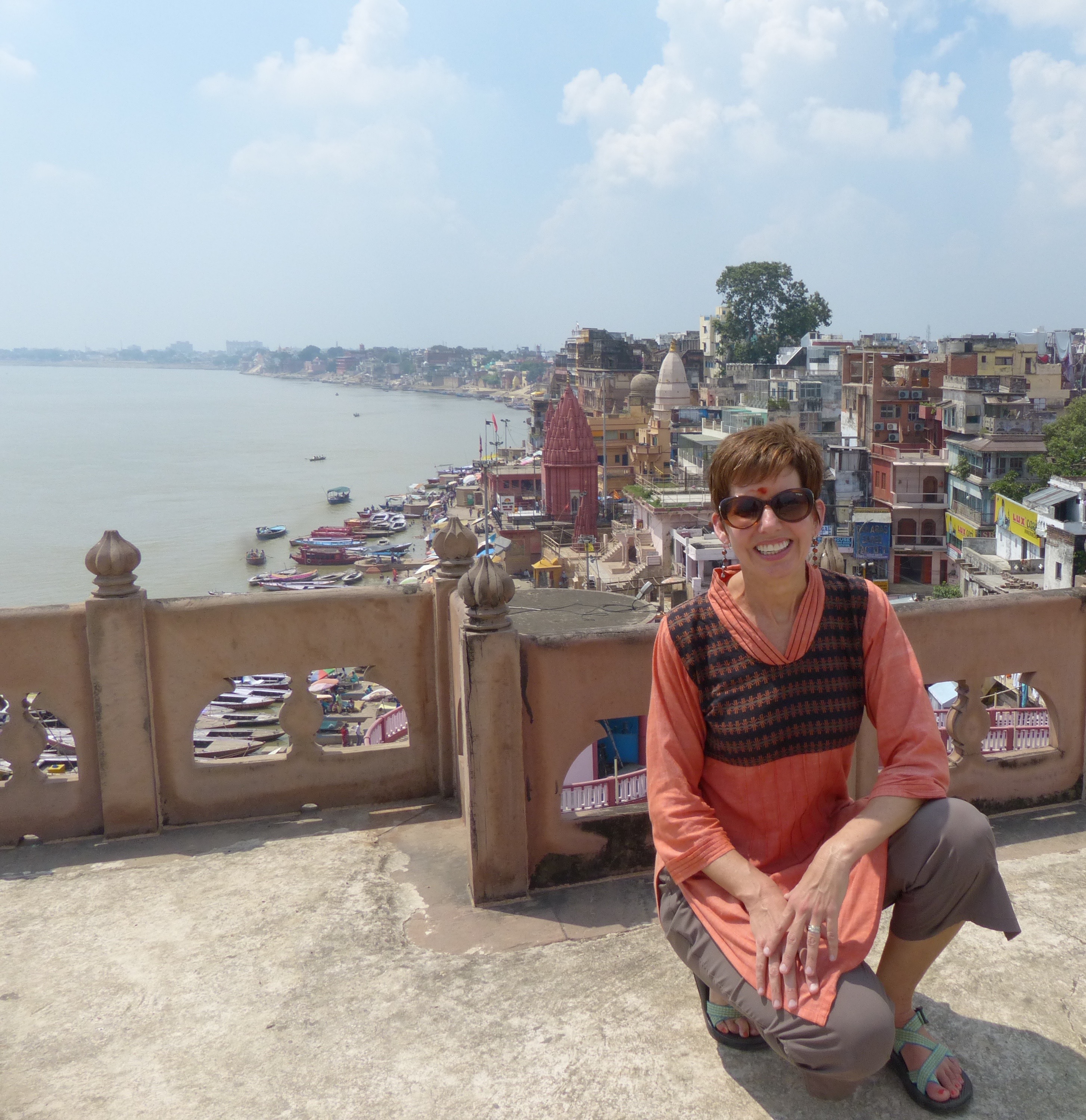
Views from the palace rooftop.
P1070223

P1070225

P1070234

Posing with the sun dial and the samrat yantra – aka “the supreme instrument” or, as we dubbed it, “stairs to nowhere.” The samrat yantra was an instrument for telling time and the coordinates of celestial objects.
P1070233

IMG_0010

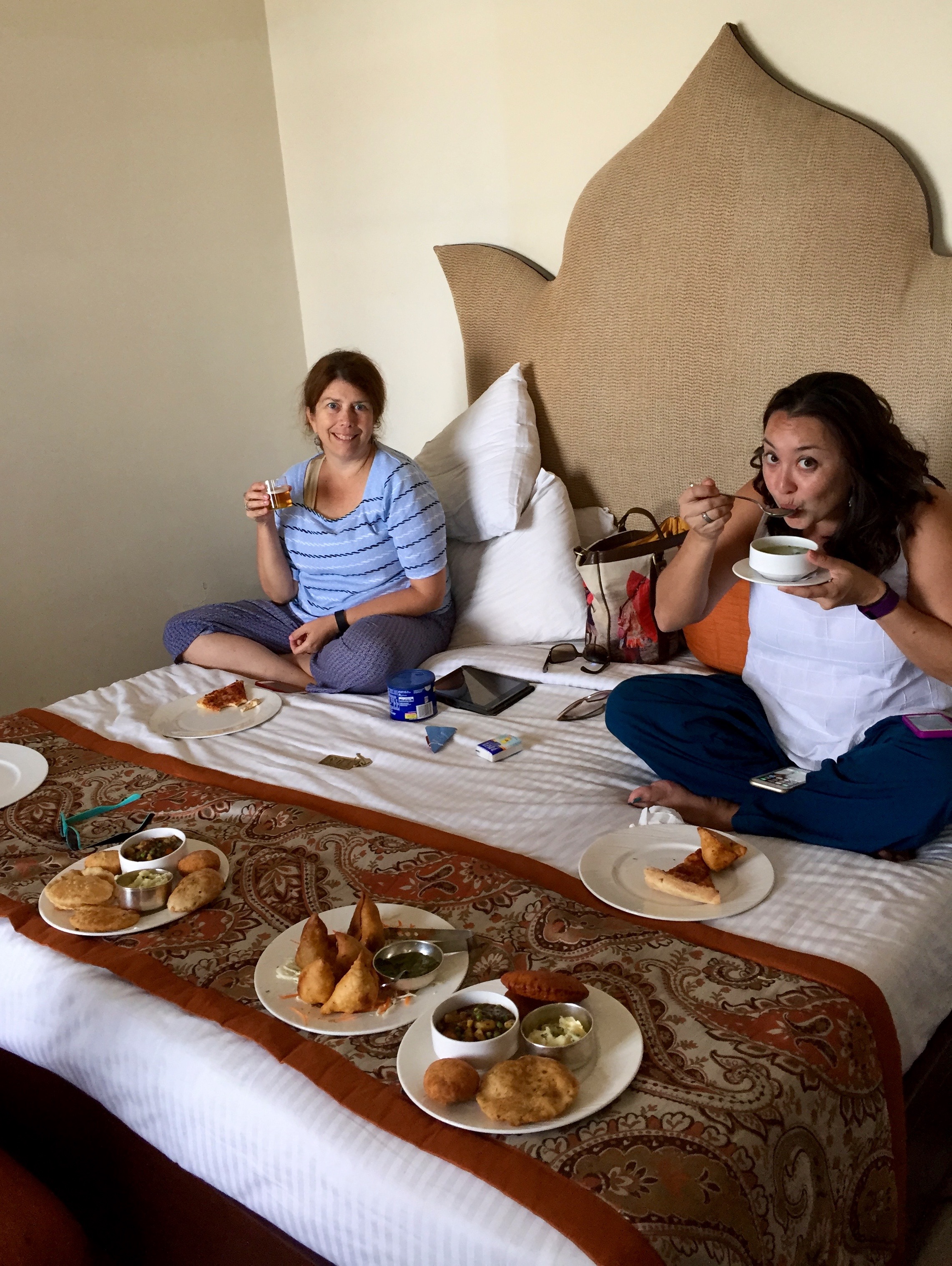
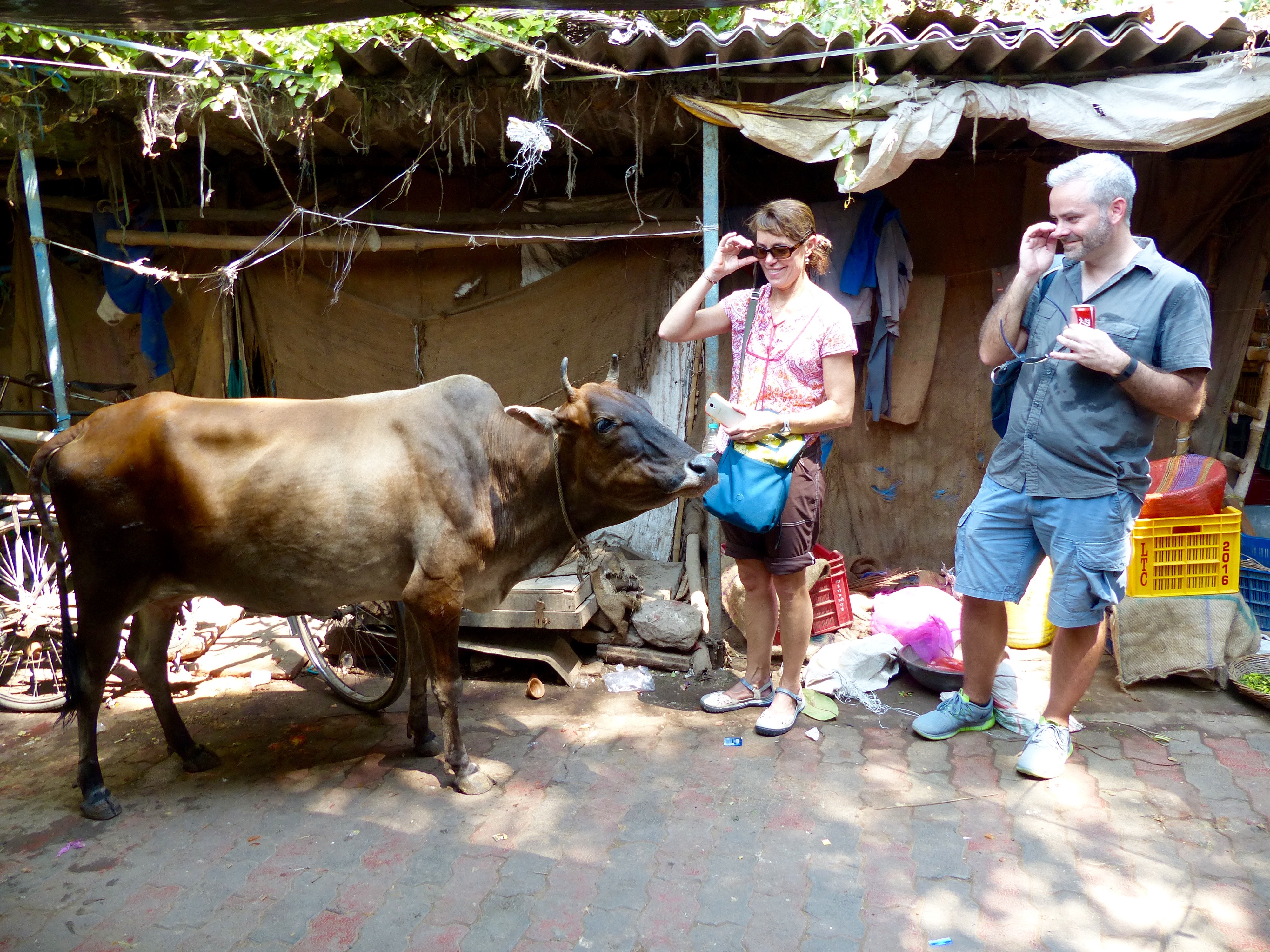
We climbed around the observatory for awhile and then checked out the nearby market area. After watching this cow steal a potato from a vendor and after searching in vain for a Varanasi magnet for Craig, we took bicycle rickshaws back to our hotel and ordered both Dominos pizza and room service for a huge lunch banquet in Maureen’s room.
P1070238

IMG_0908

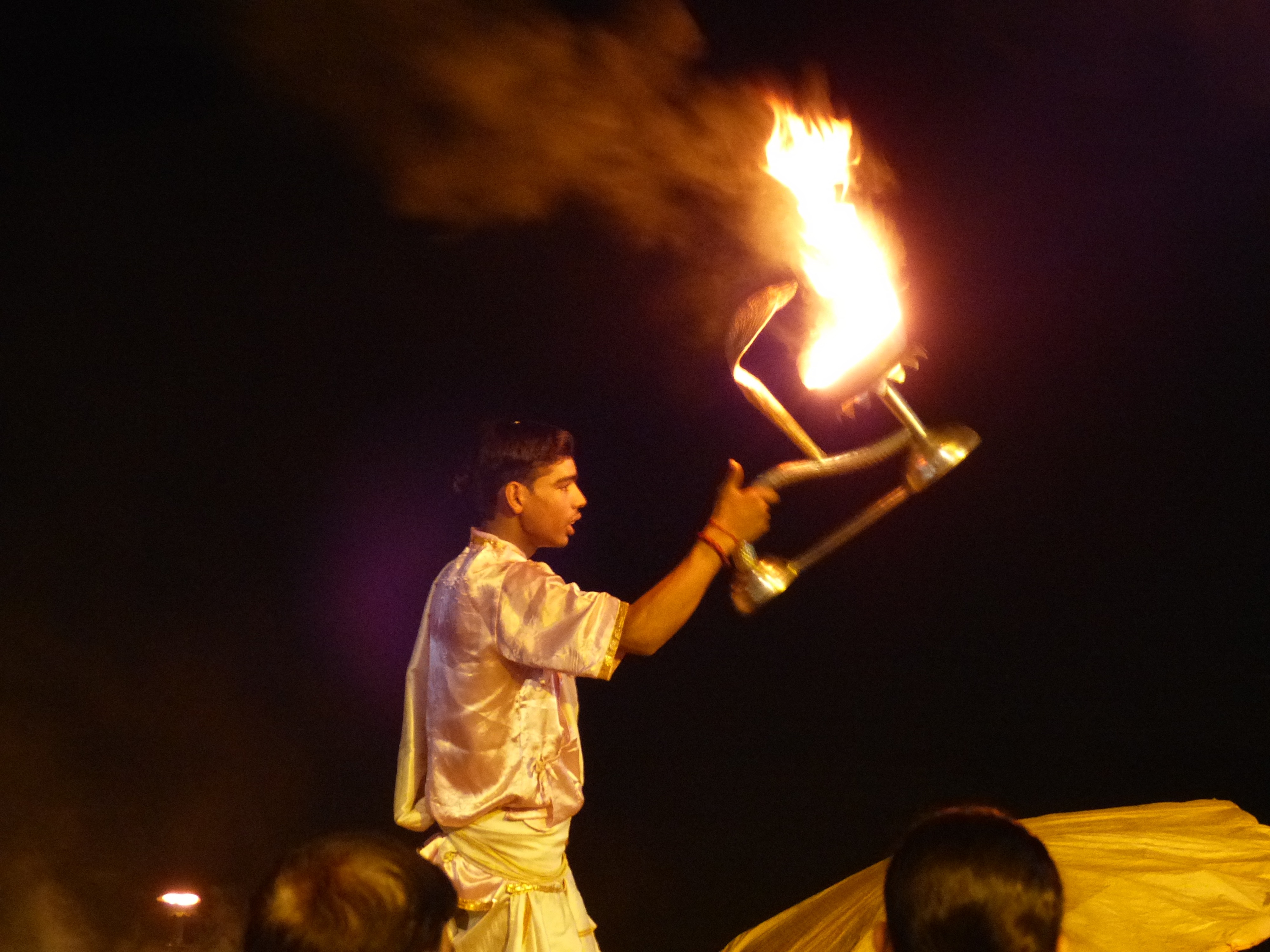
Jill met us again later for another aarti. This time, we visited Assi Ghat and watched the ceremony from the shore, sitting on the stone steps close to the action.
P1070260

P1070248

Overall, I found the hype about Varanasi to be mostly unfounded.

True, the river was distressingly polluted. But the pilgrims who stepped or leapt into its murky water believed at that moment that it was pure and powerful. We couldn’t help but feel their visceral joy.

True, the weather was oppressive. But we returned each day to a historic hotel with air conditioning, water pressure and dry clothes. Just another reminder of how fortunate we were.

True, there was no avoiding the reality of death (both human and bovine, it turned out). But those who watched their loved ones burn at the river’s edge didn’t cry. In their eyes, this event was a gift: death had brought salvation through the glory of the holy Ganges. That’s a pretty powerful experience to witness. (I don’t know if the same rules applied for the dead water buffalo.)

With so many more adventures to be had in India, I am unlikely to re-visit Varanasi. However, I can honestly say it is a special place, not to be missed.
Family Traditions: Ocean City, New Jersey

Some of my earliest memories place me in a small house at the end of the boardwalk in Ocean City, New Jersey, looking out the window at the beach while Great Uncle Herb offered me half a banana … listening as Great Aunt Iris reported on the newspaper’s tide and current tables … walking clumsily through deep sand full of prickers from the dune bushes … rinsing off sand and salt water in the cabana shower outside.

During my trip to the shore in July, I rode a bike along the boardwalk to that house. It’s still there – although no longer in the family, and it’s avoided the fate of many older homes that have been demolished and rebuilt as large multi-unit rentals. We actually rented one of those homes for our weeklong visit. I shared one floor of a house with my parents; my sister Kate, her husband, and three young boys; and my sister, Megan, and her two kids. My brother, Mike, and his wife and baby rented a nearby house to share with his in-laws.

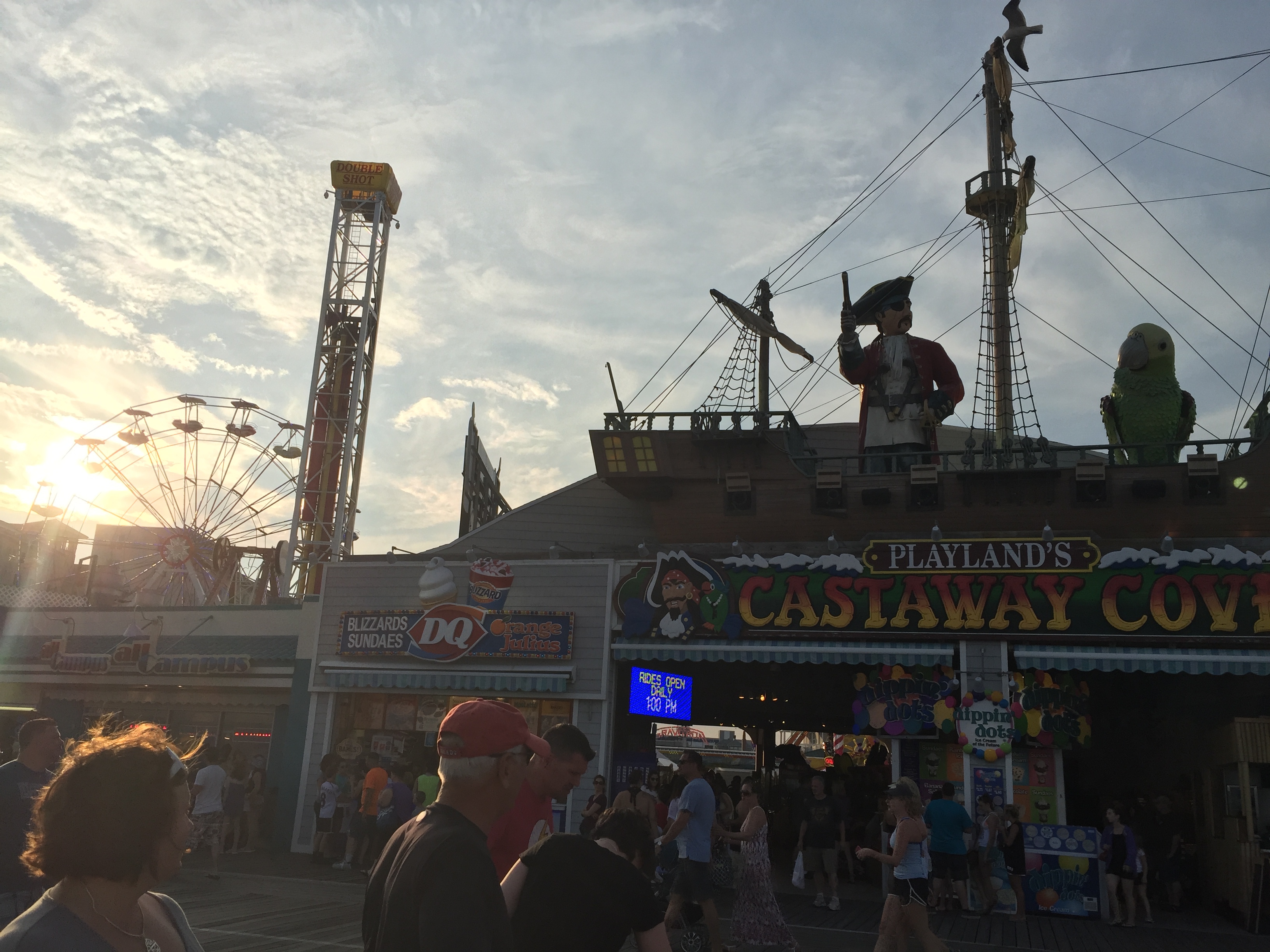
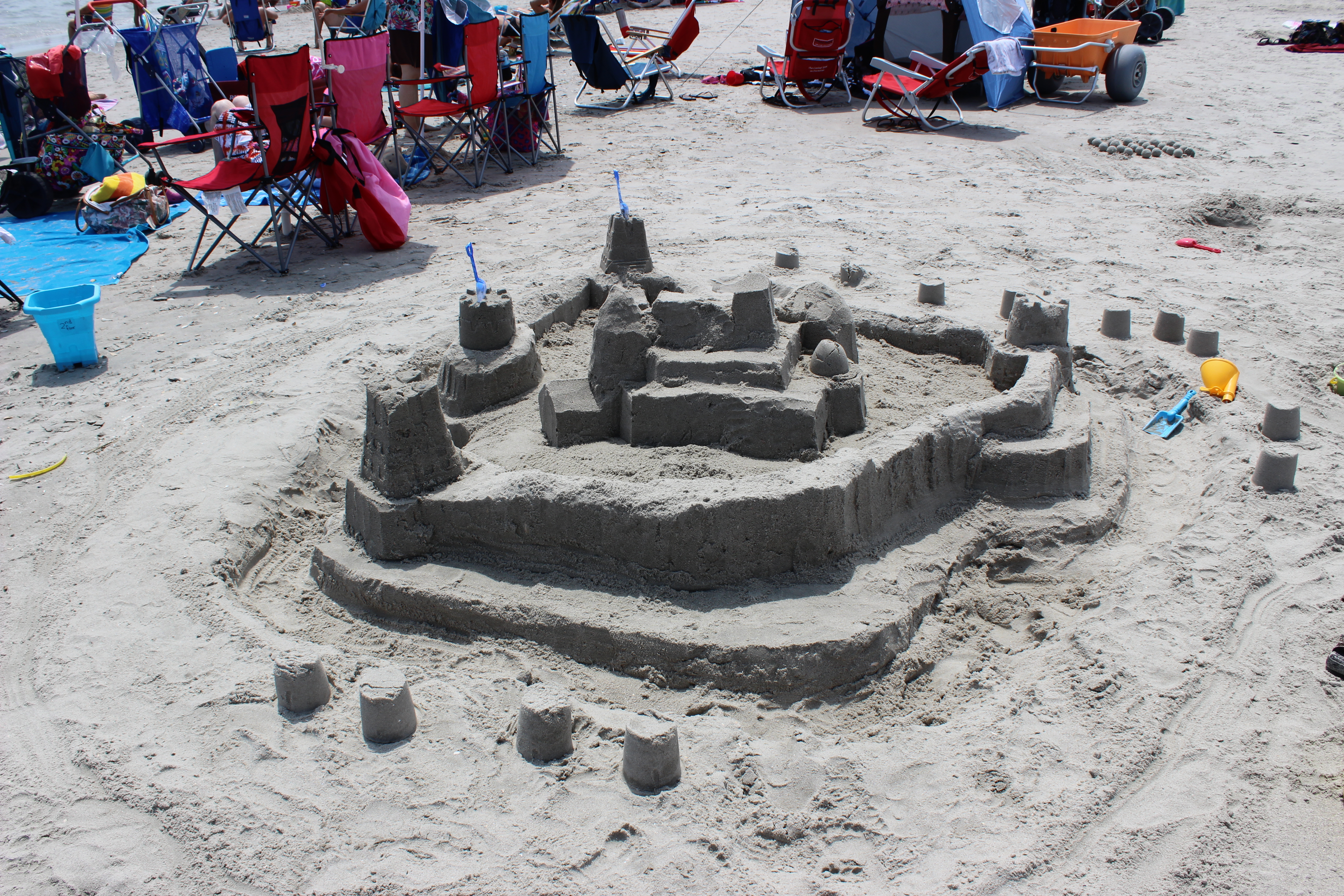
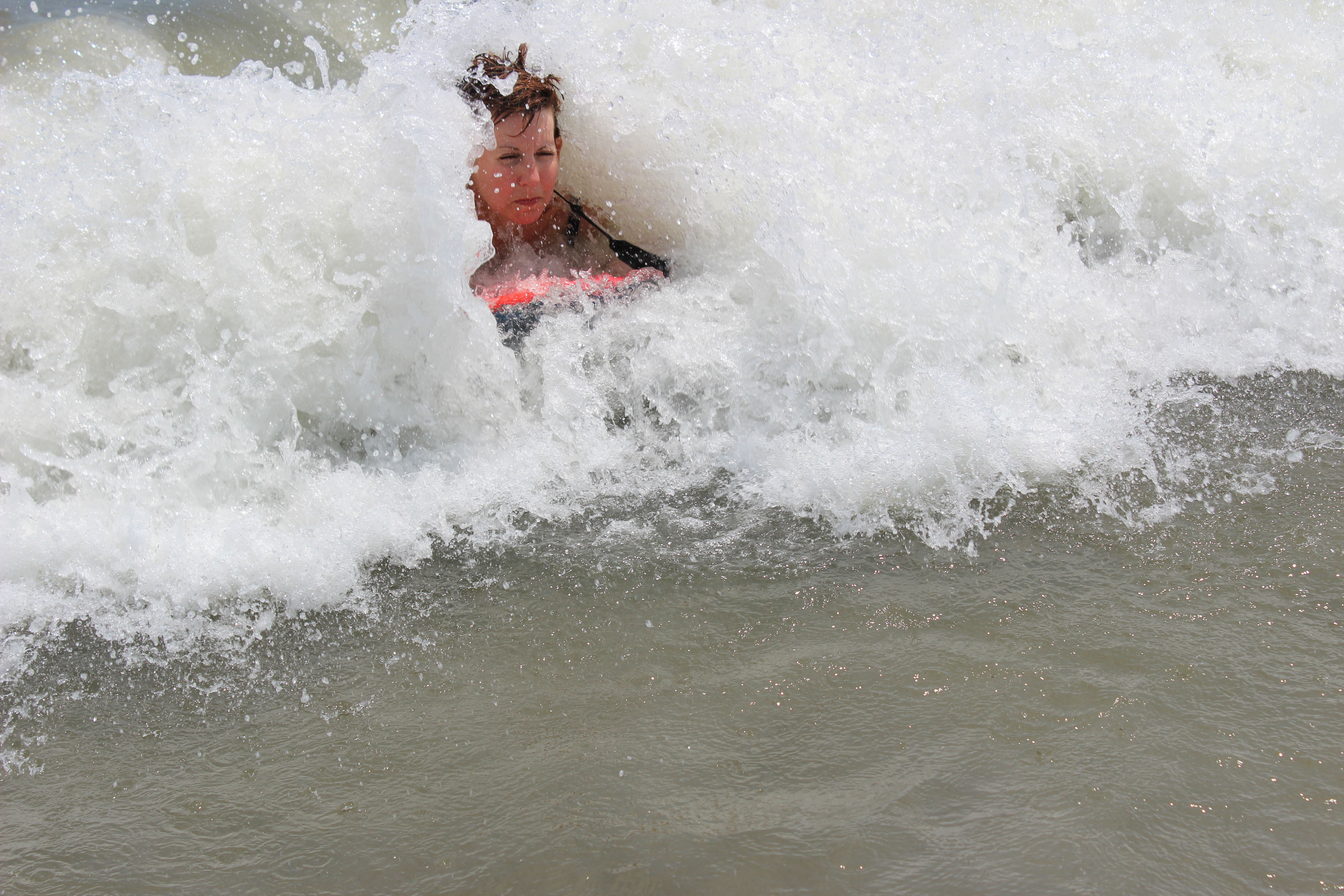
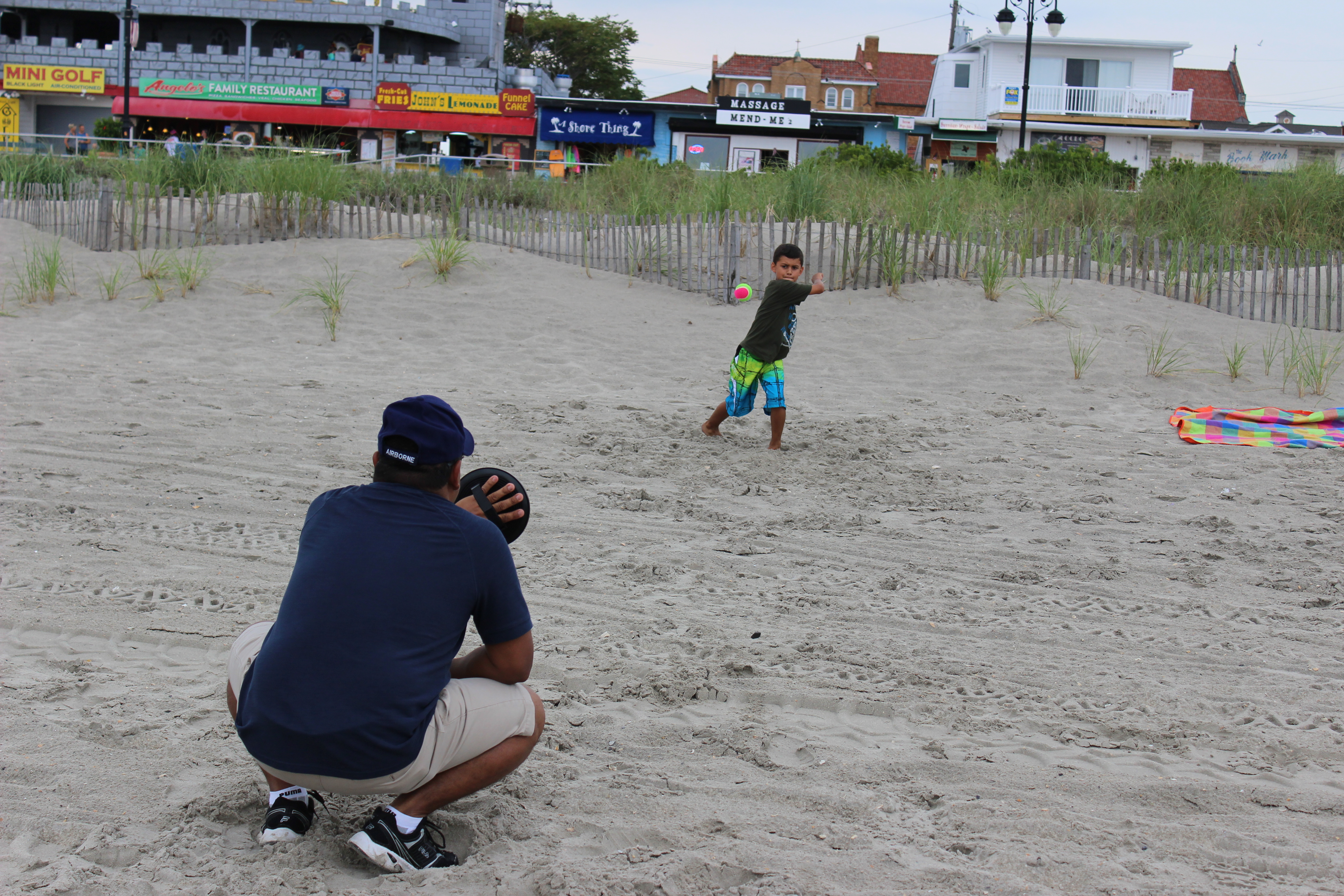
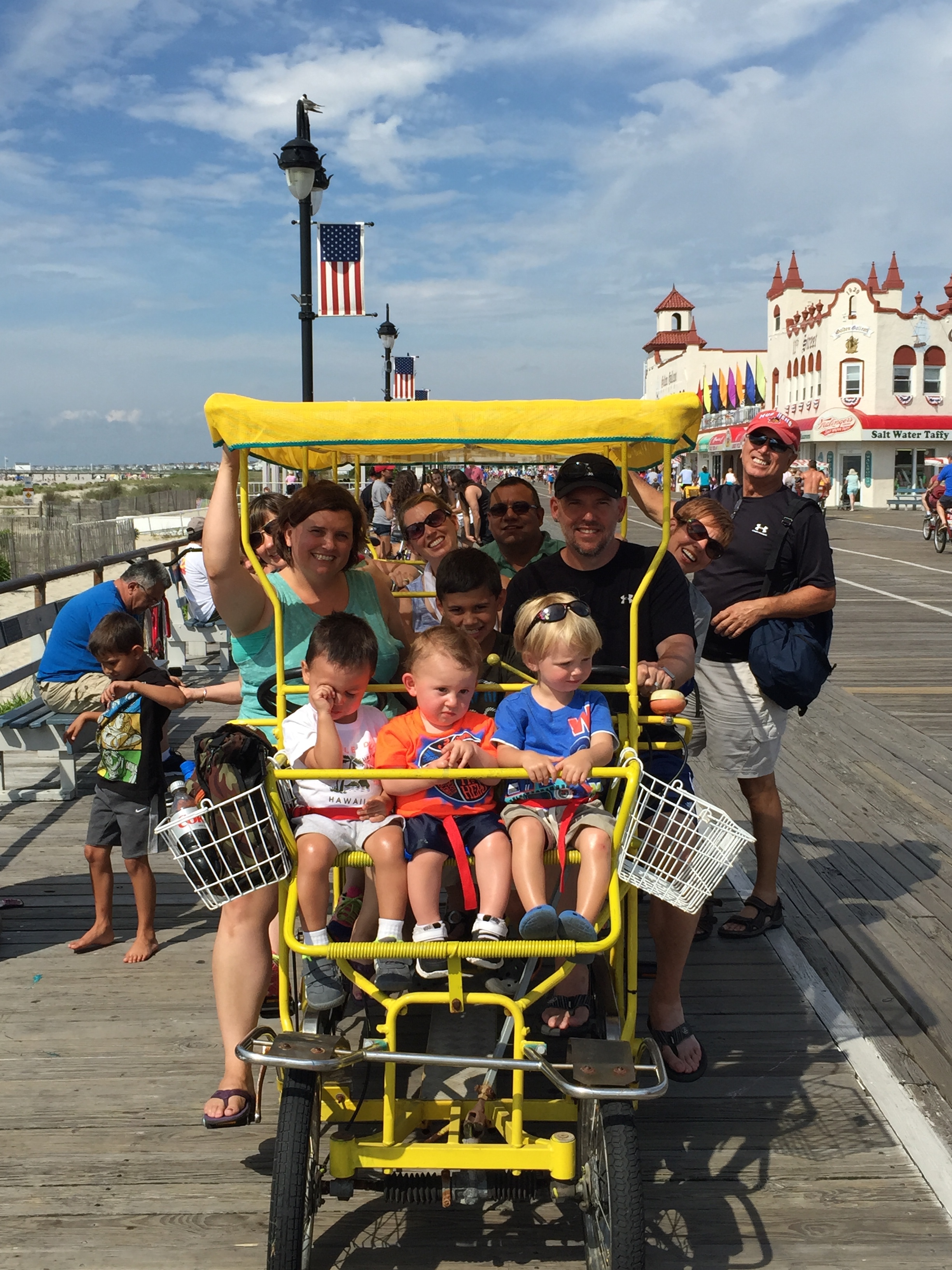
In the grip of nostalgia, we tried to do it all: beach time, boogie boarding in the ocean, sand castle construction, early morning bike rides, breakfast at Uncle Bill’s Pancake House, arcade games and rides and miniature golf on the boardwalk, ice cream and cheesesteaks and sticky buns and pizza and crab legs, beach combing for shells, crabbing off the 34th Street dock, and cramming the whole family onto a rented surrey (for a short ride on the boardwalk, but mostly for the photos).

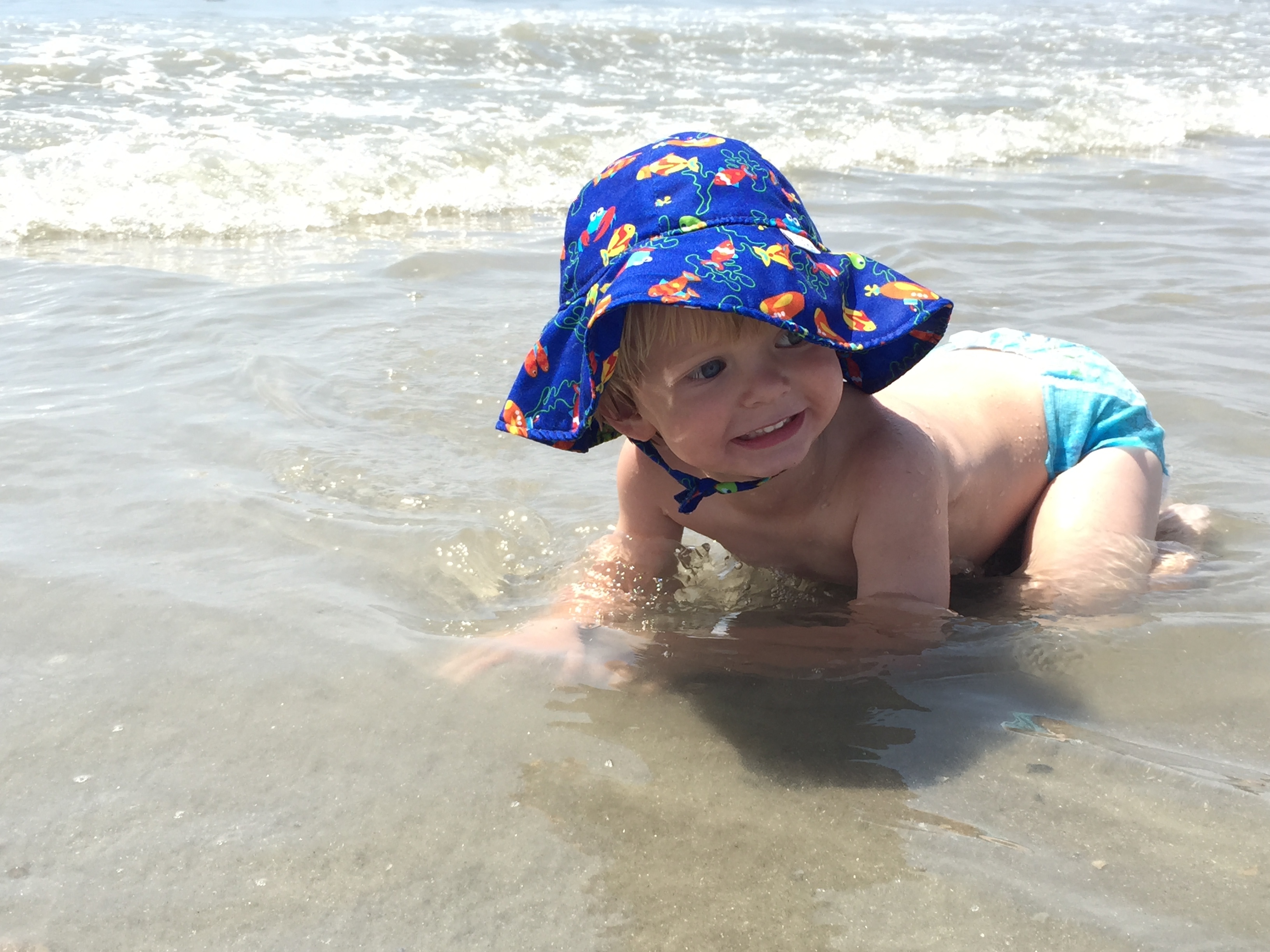
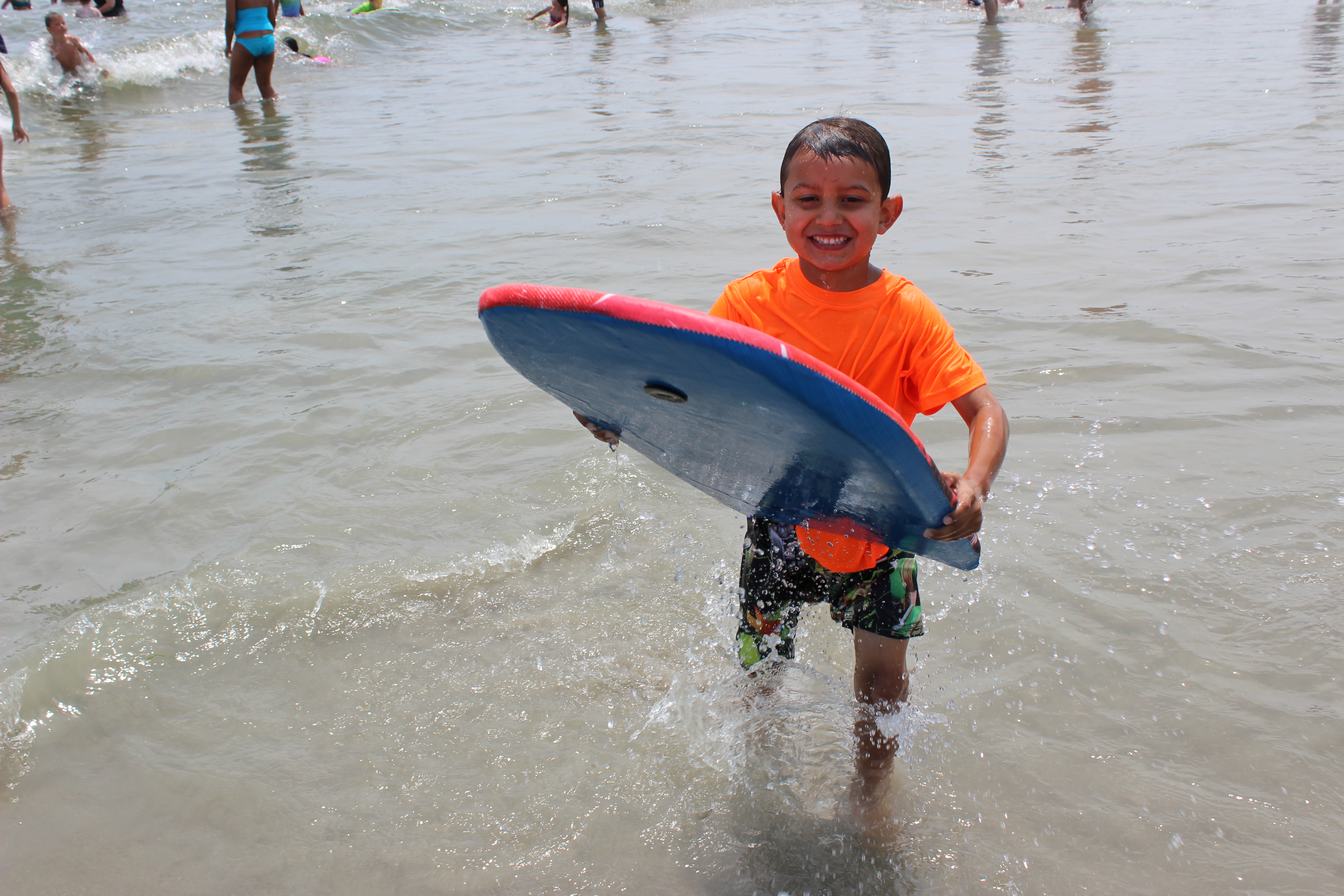
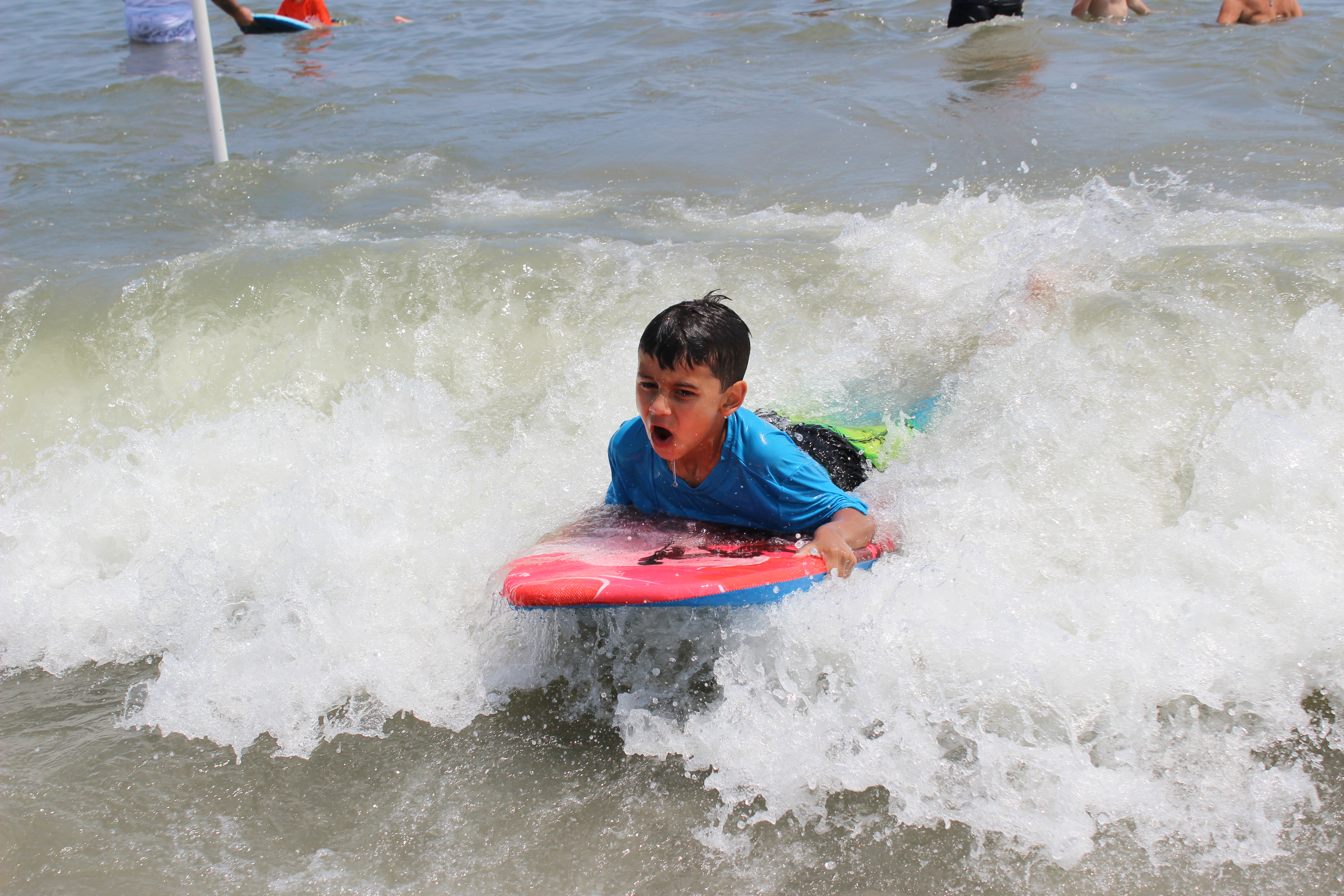
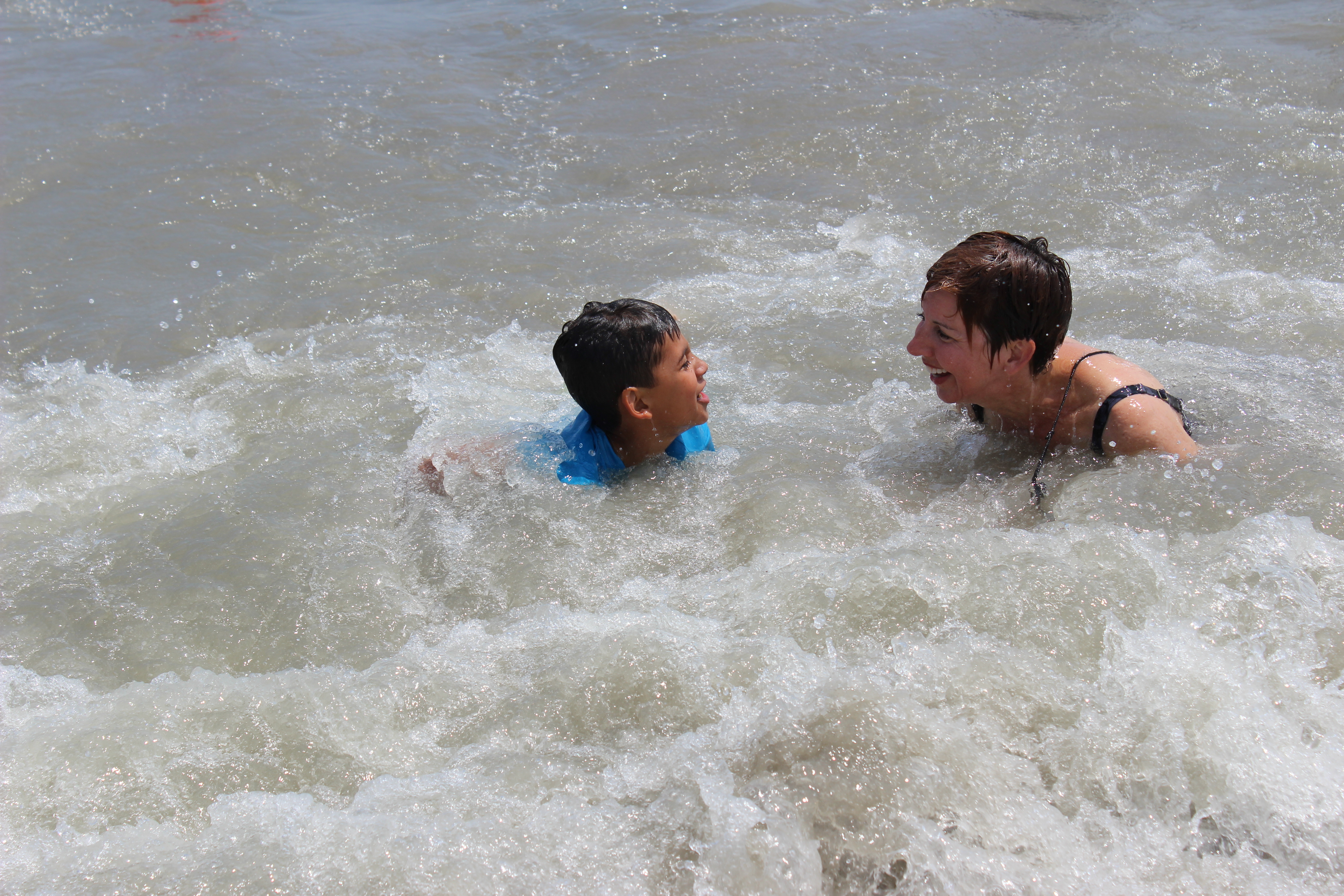
I can’t count how many times during this week I paused to tell myself, “Remember this moment,” especially when my little nephews expressed unrestrained joy at being in this place. My face ached with laughter while boogie boarding with 8-year-old Nico or splashing in the surf with dare-devil Will, who is not yet three. My heart swelled when little Max danced to the boardwalk band and 6-year-old Paul rode his first roller-coaster with his adored cousin, Jake.

My brother always makes the ridiculous just a little bit more so, as evidenced by our surrey ride. “Let’s pull up next to random strangers and sing ‘Surrey With the Fringe on Top,'” he begged. And so we did.
IMG_0601

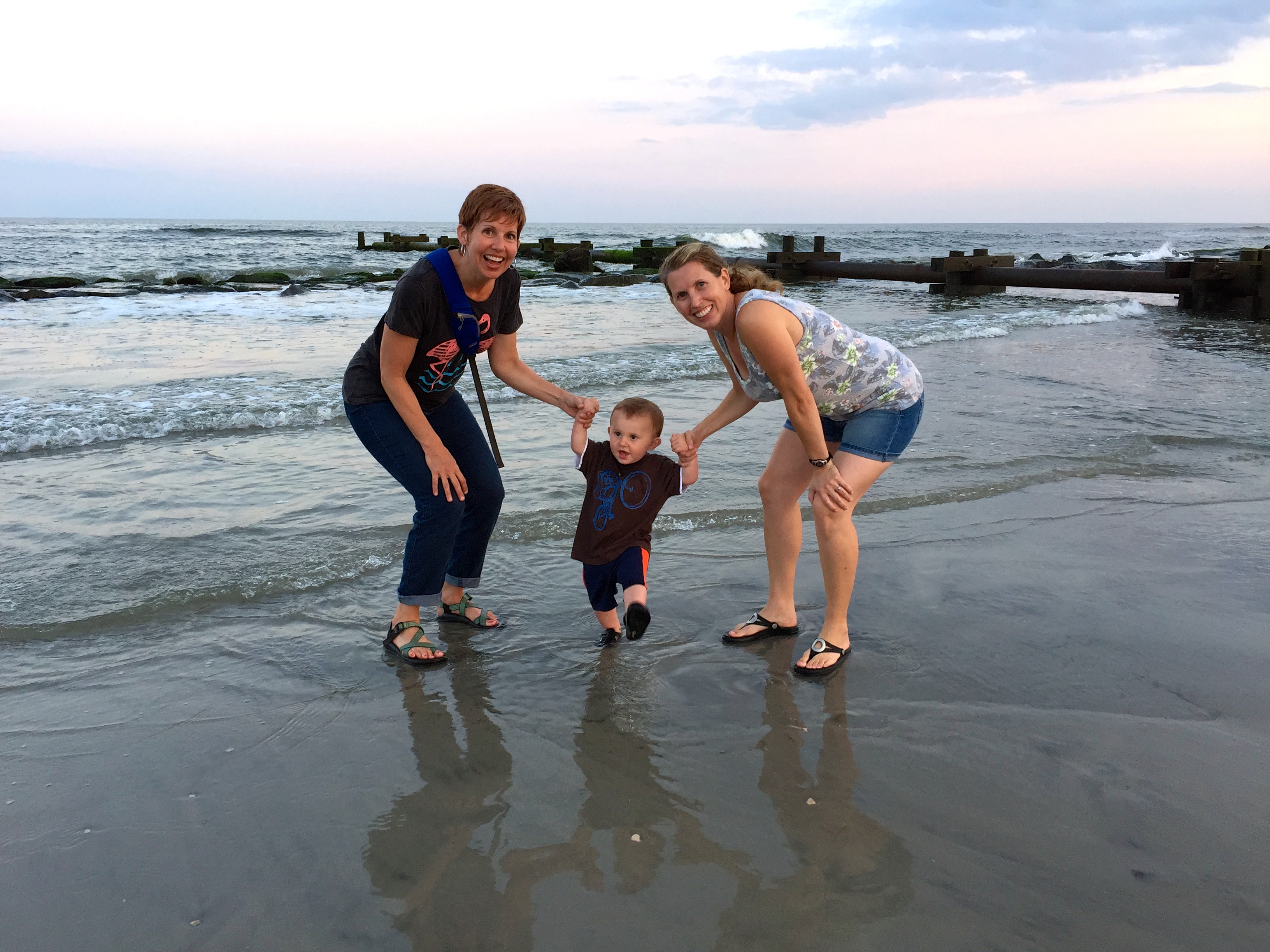
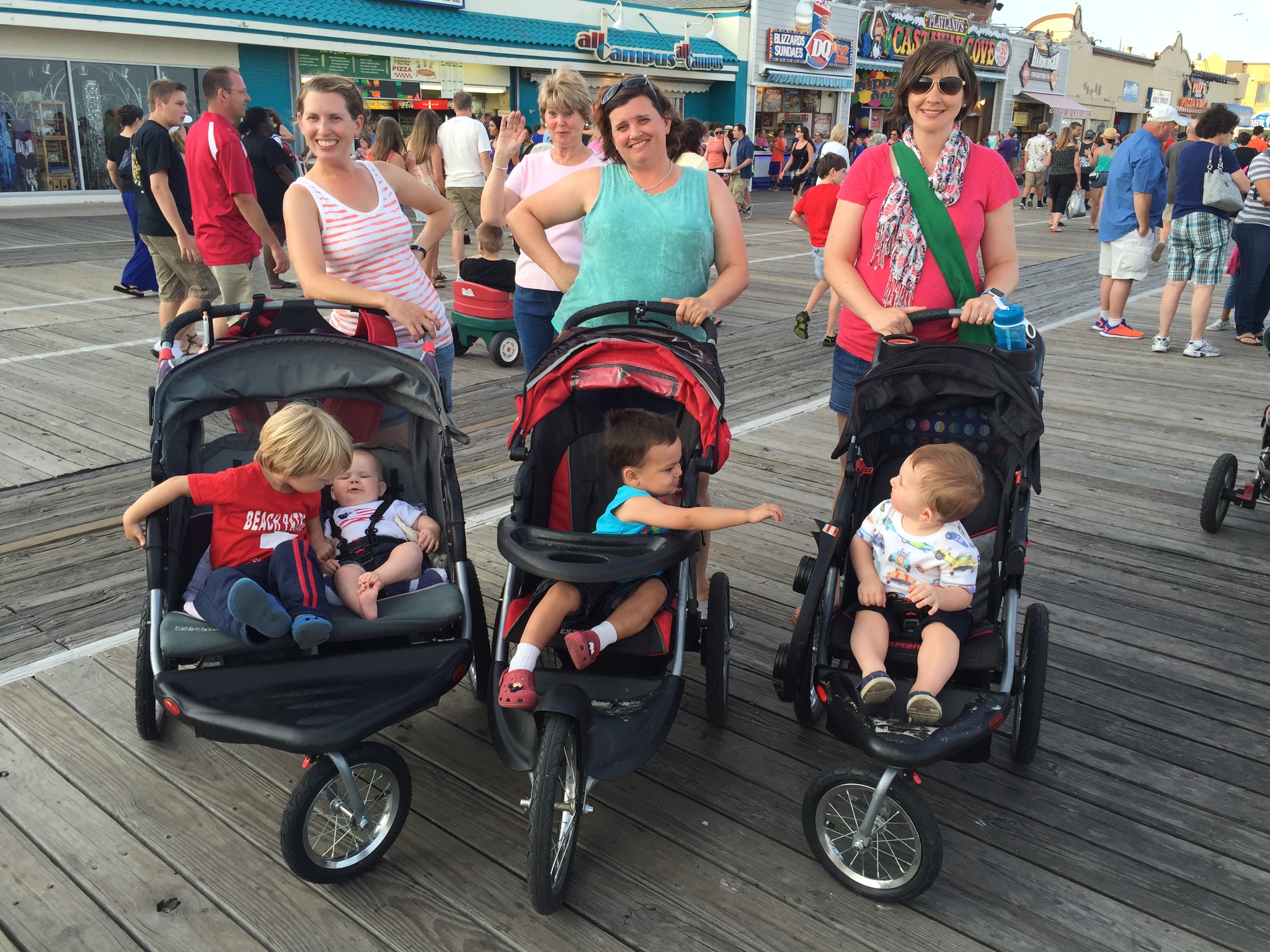
Mamas and babies on the boardwalk (photobombed by my mother).
IMG_0351_2

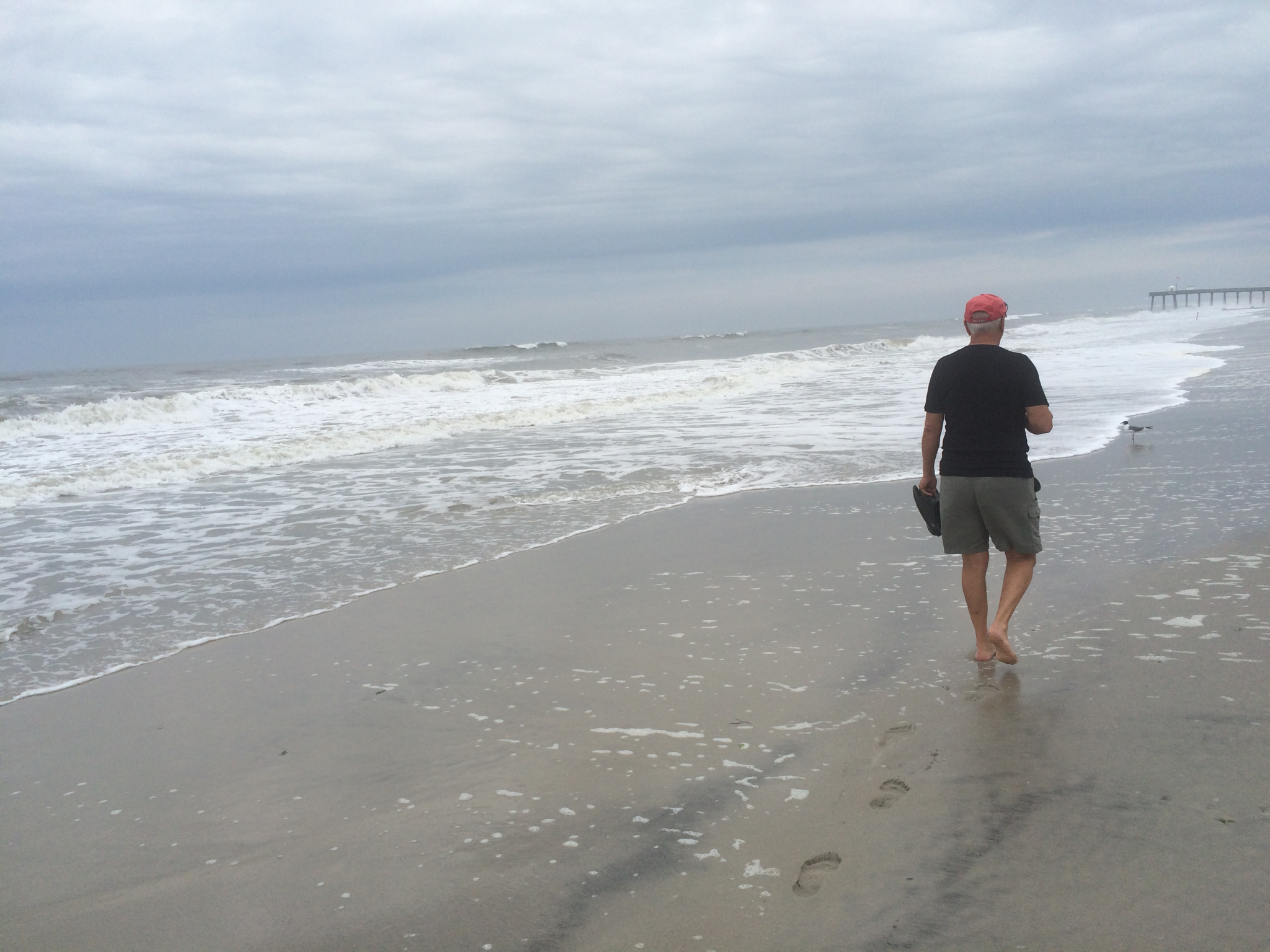
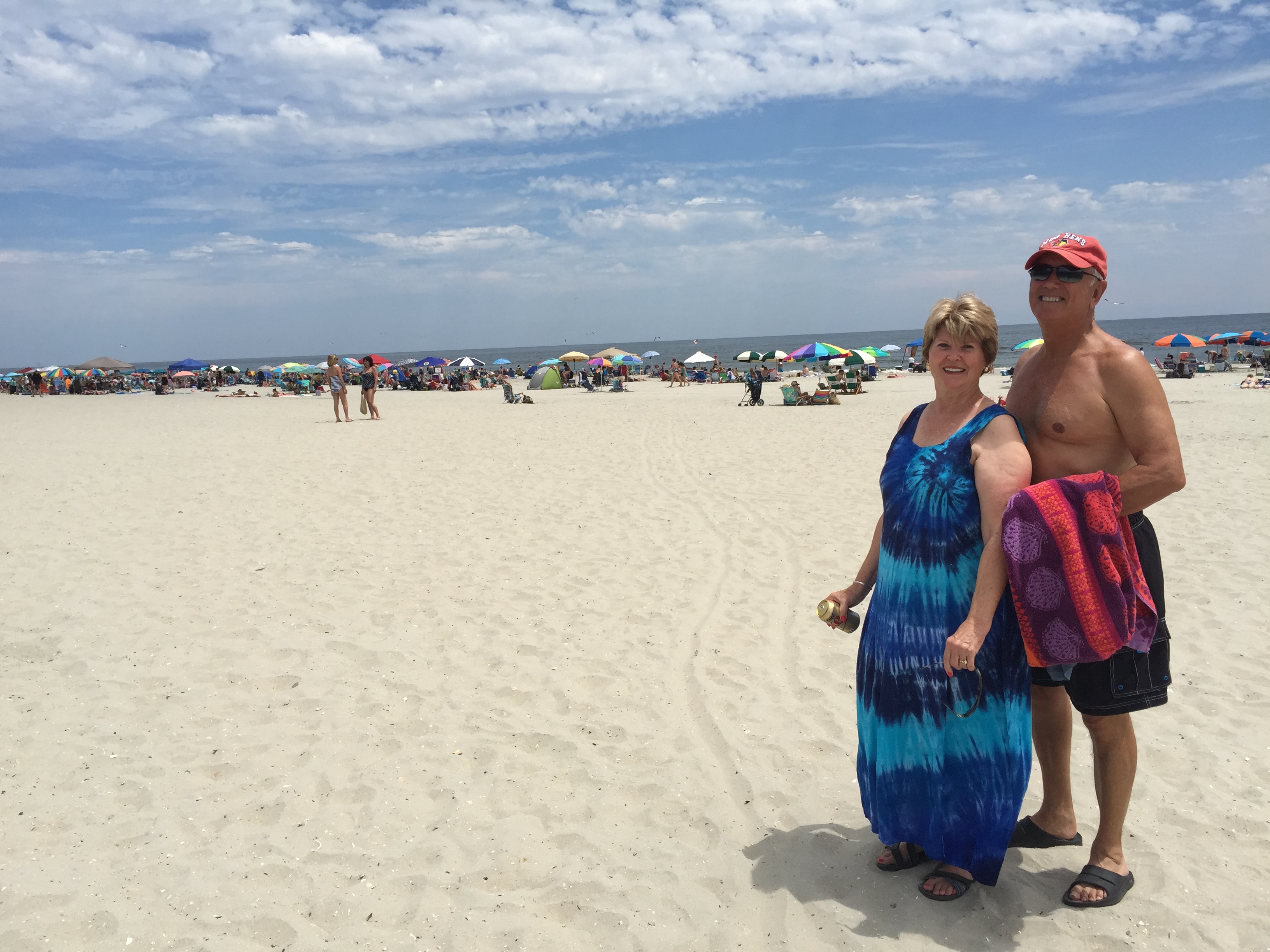
Early morning walk on the beach with my dad.
IMG_7243_2

The Ocean City, NJ, boardwalk.
IMG_0559

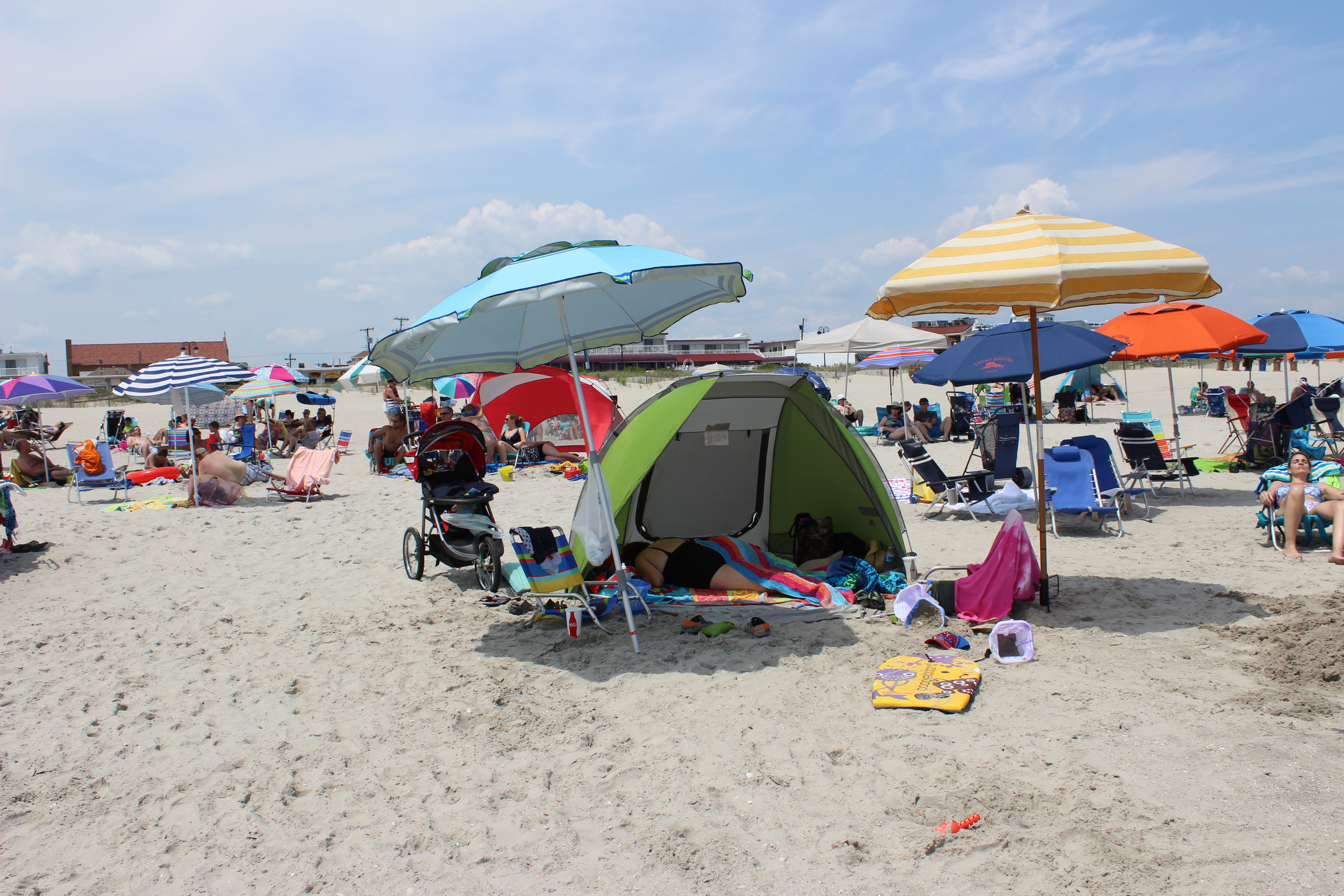
Beach time!
IMG_0632

IMG_2809

IMG_2815

IMG_0509

IMG_0444

IMG_2827

IMG_2866

IMG_2860

IMG_2864

IMG_3025

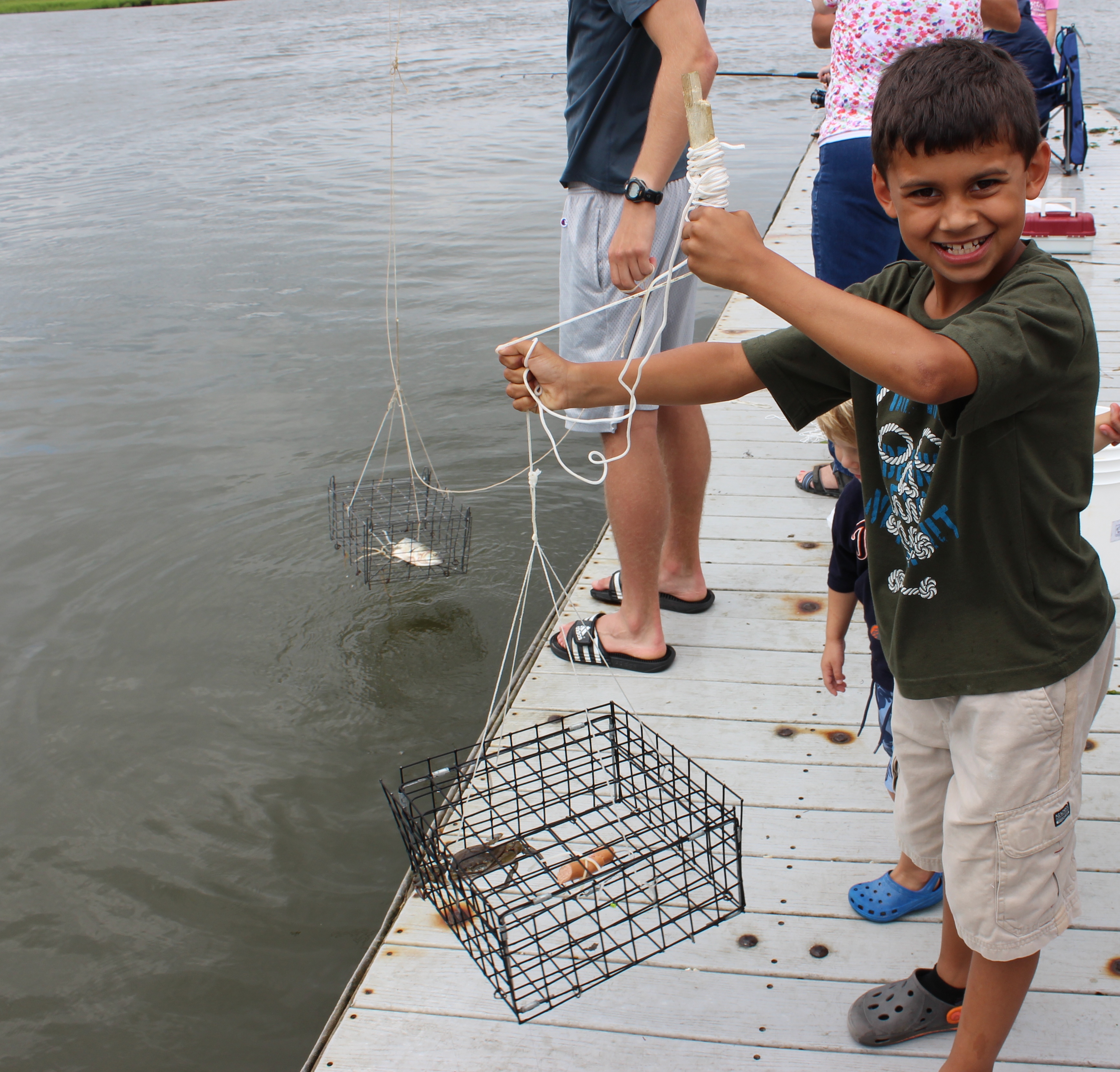
Our highly unsuccessful crabbing attempt yielded one crab. We used traps baited with hot dogs. We learned a different technique from a fellow crabber, who hung a chicken neck from a string and then scooped up the crab with a net. Later, Mike and Summer’s family reported catching piles of crabs that way!
IMG_2974

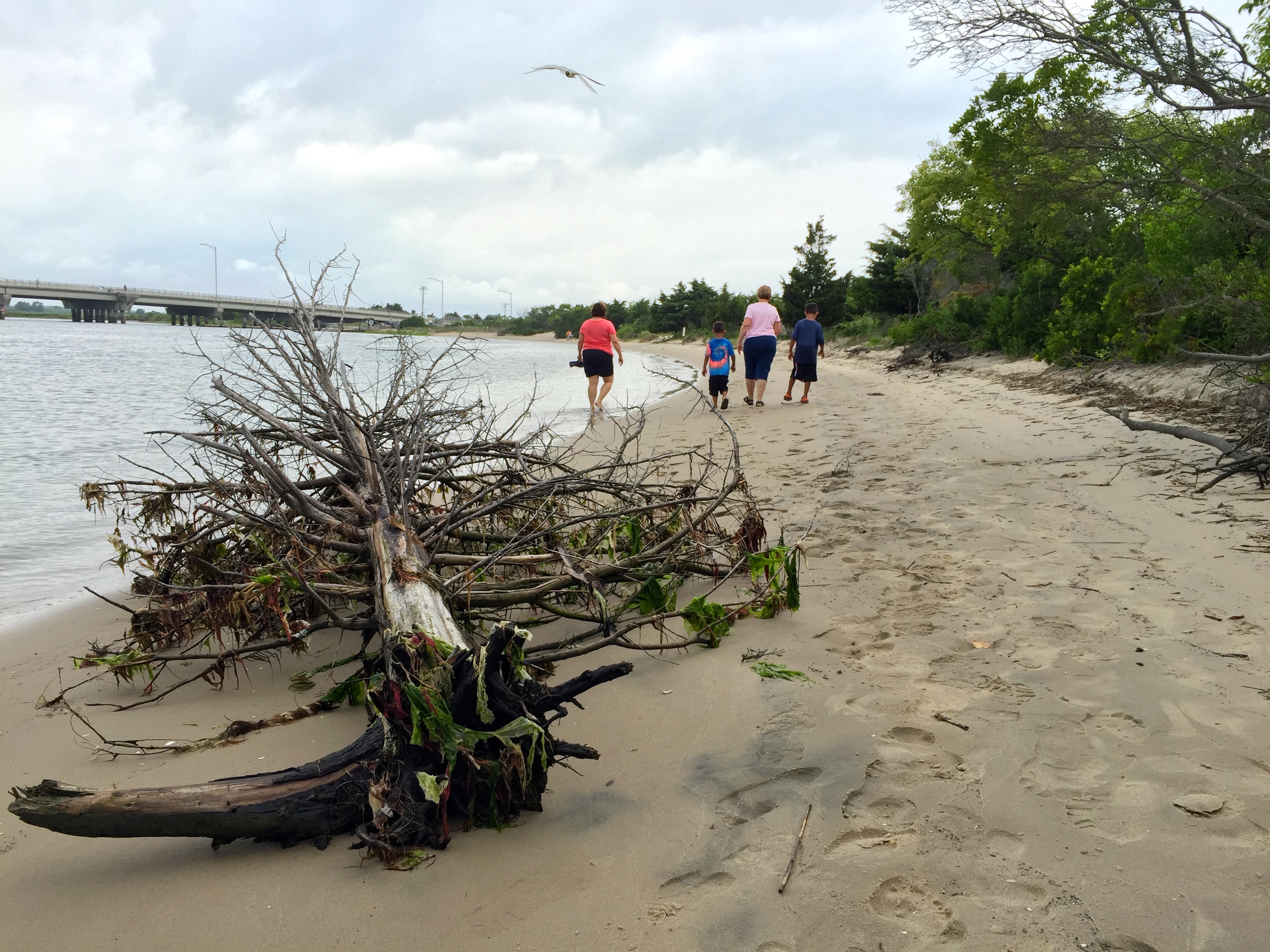
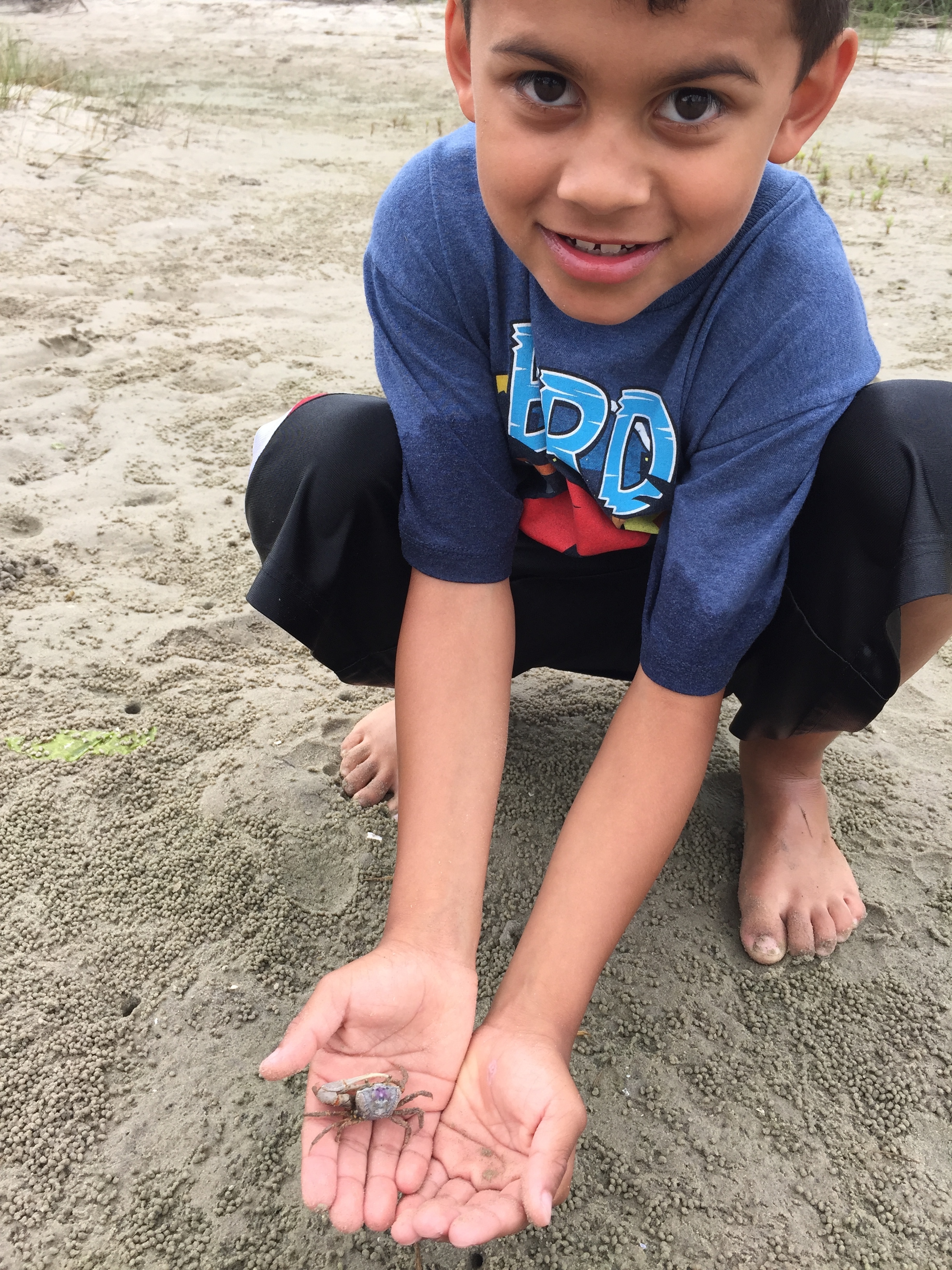
At Corson’s Inlet, we found many large clam shells, a live horseshoe crab, a couple jellyfish and hundreds of hyper-clawed fiddler crabs.
IMG_0656

IMG_0652

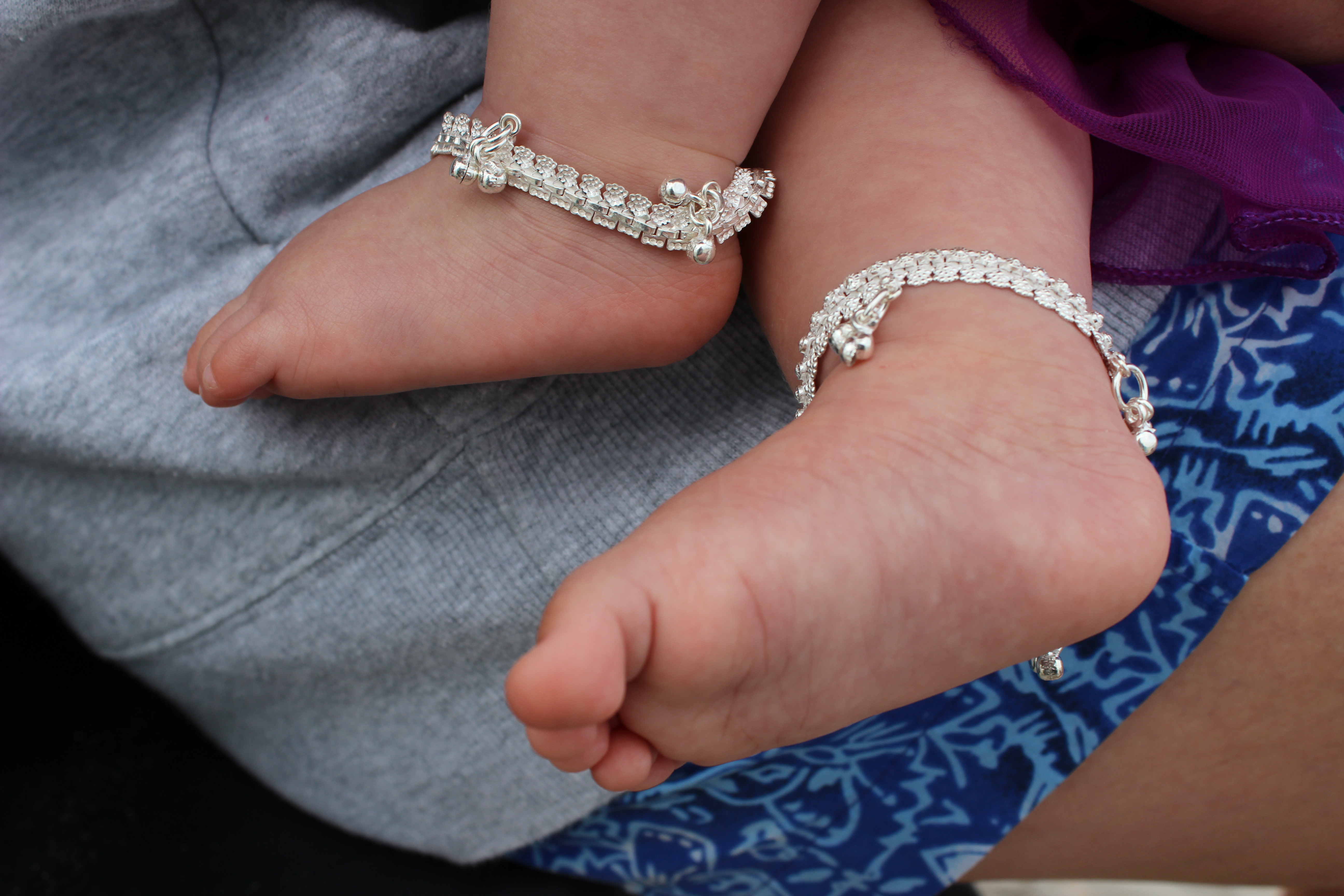
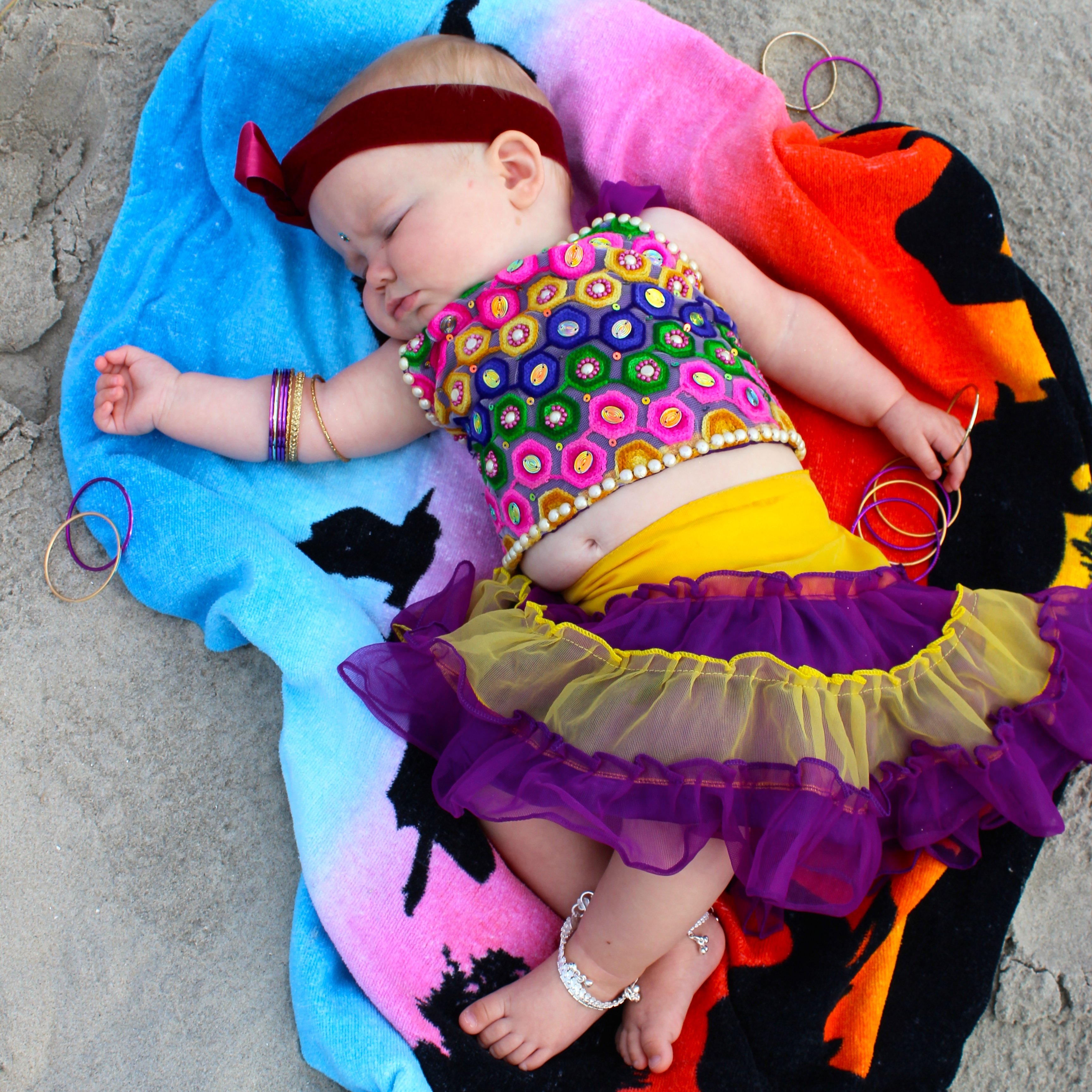
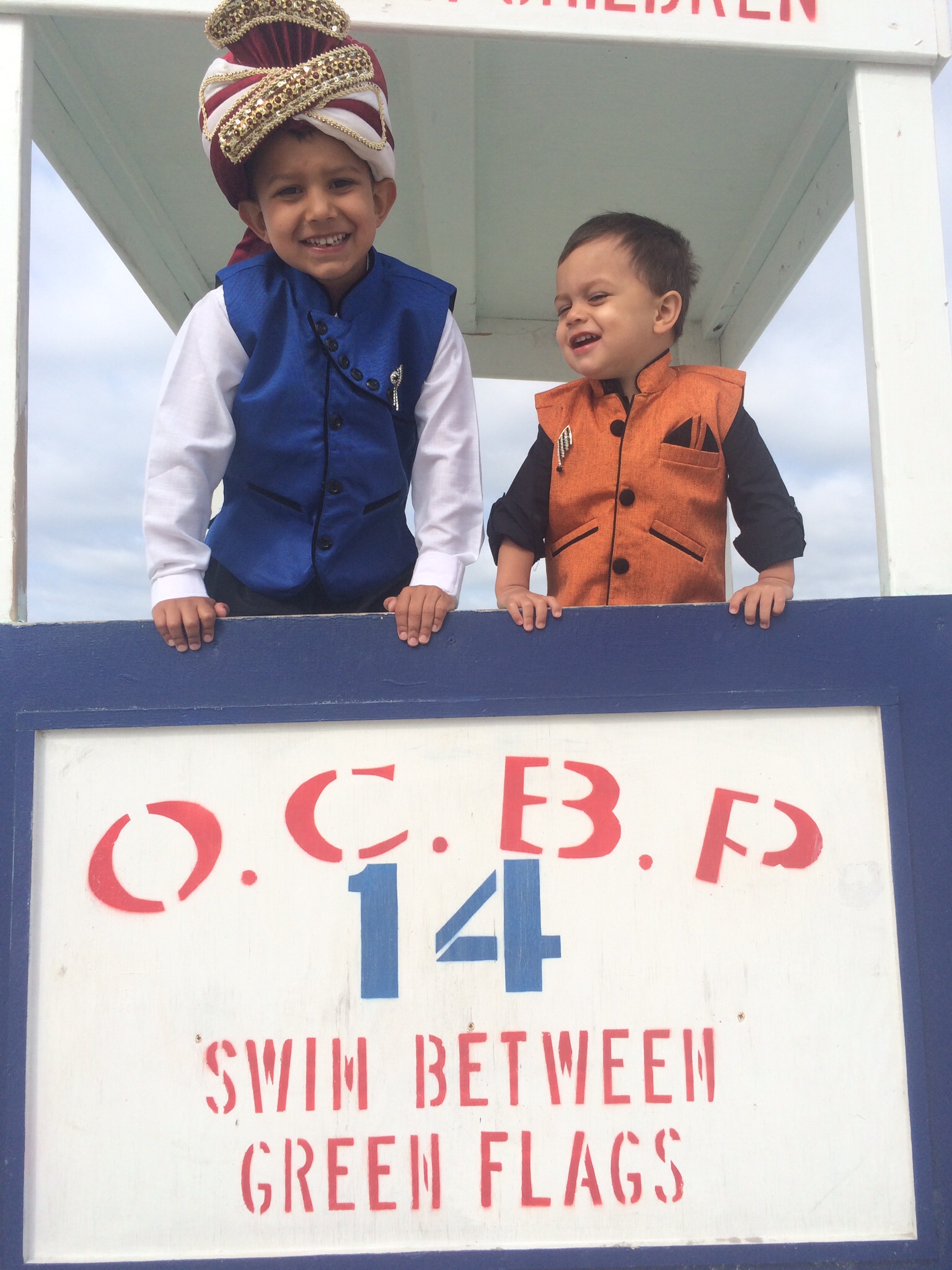
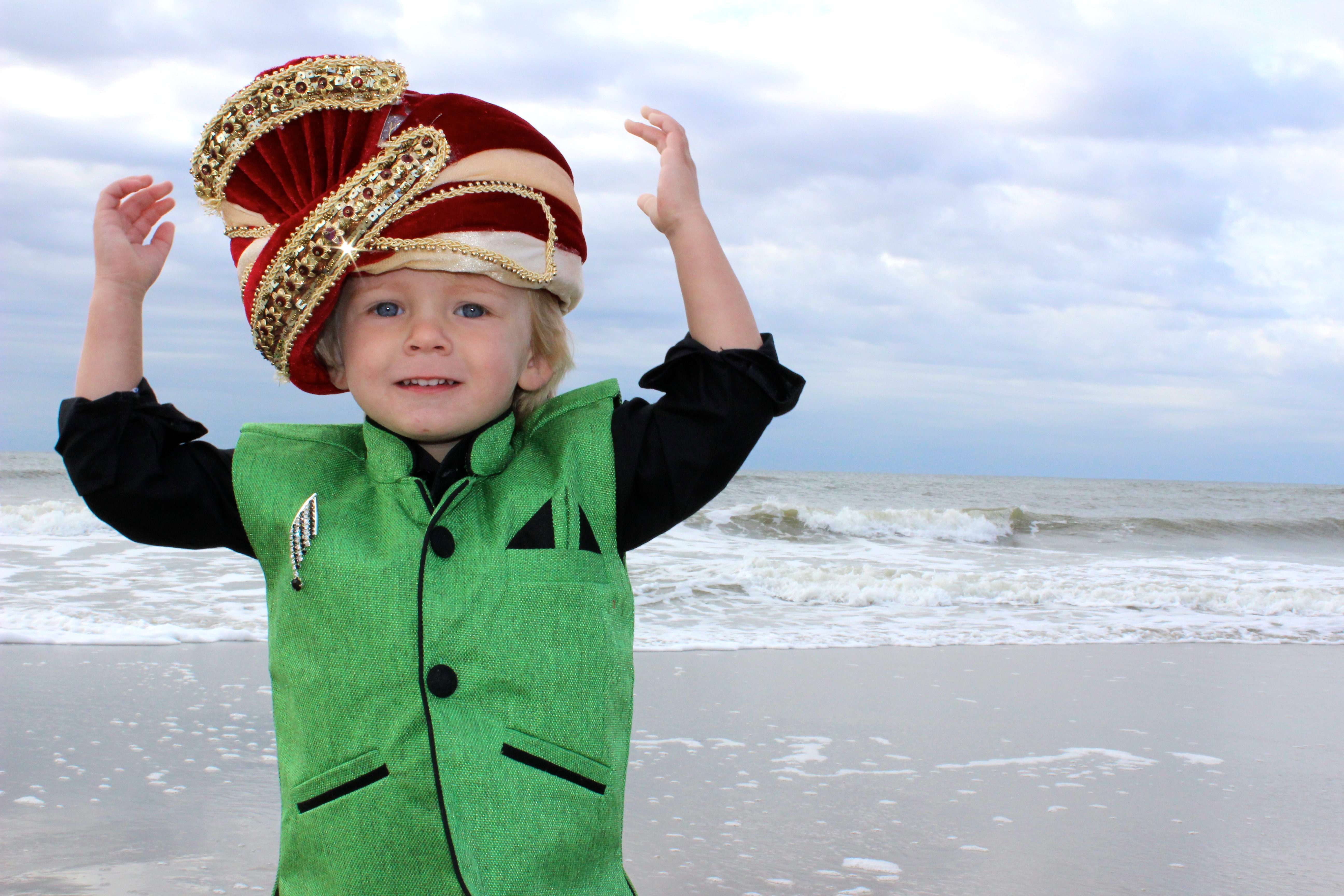
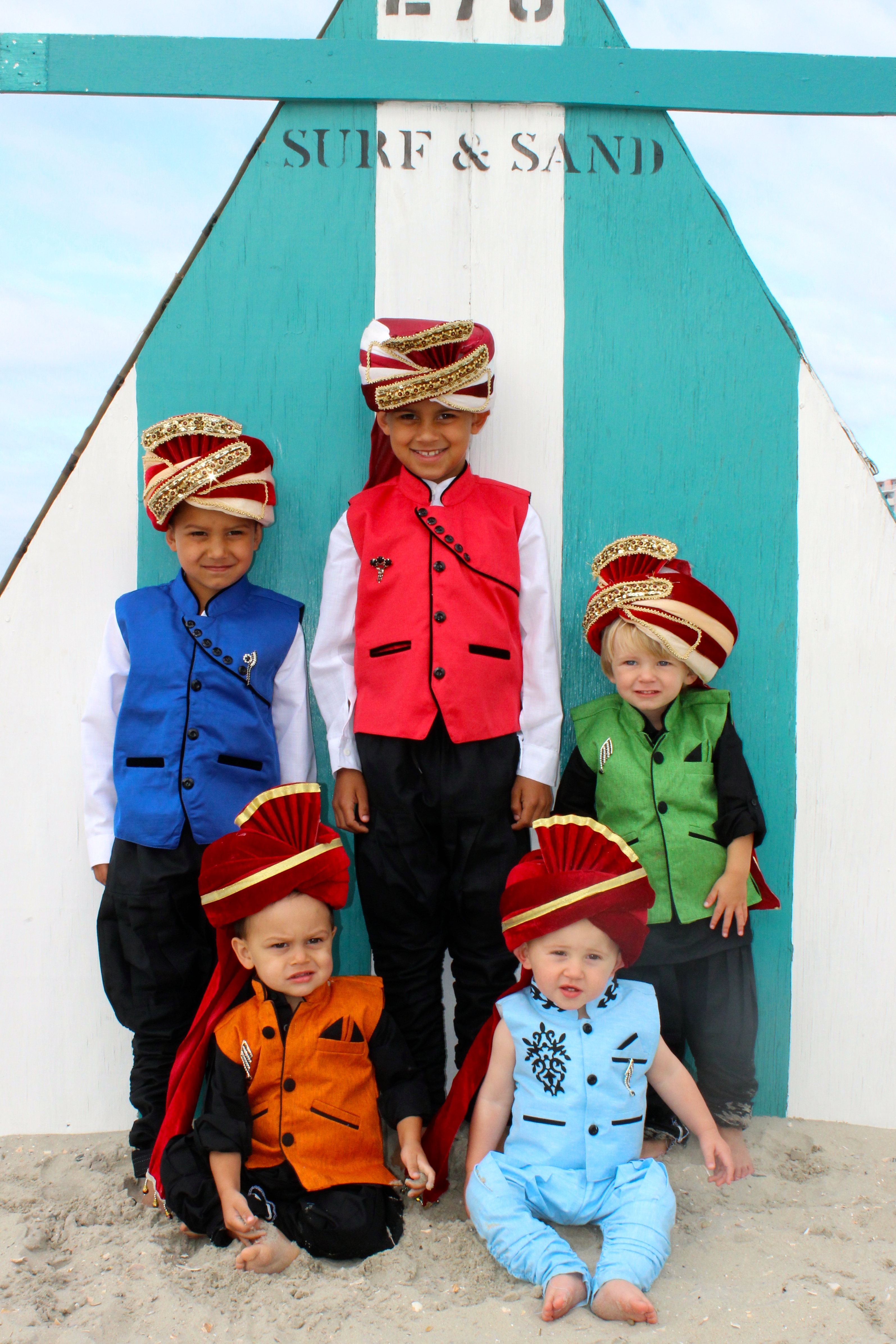
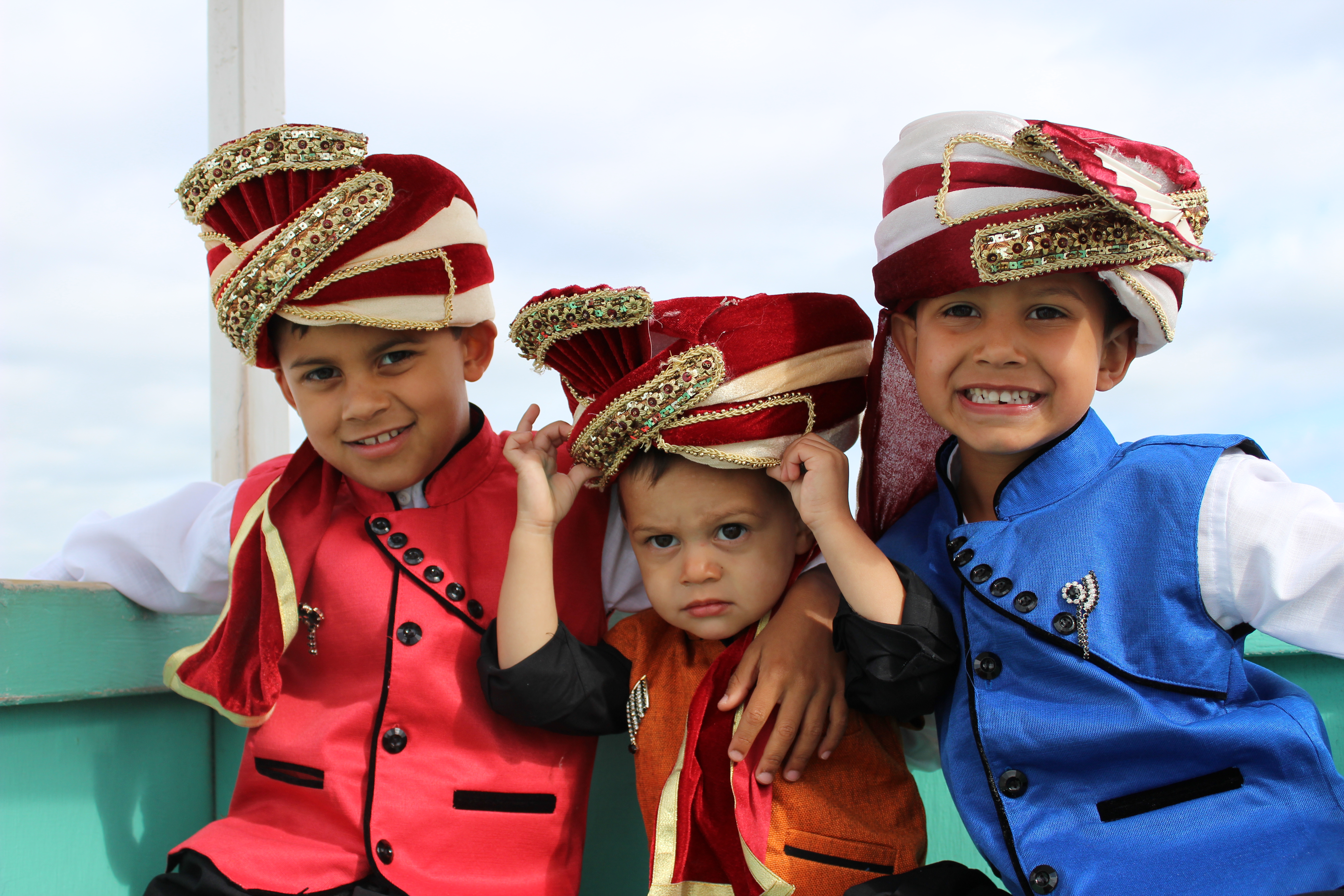
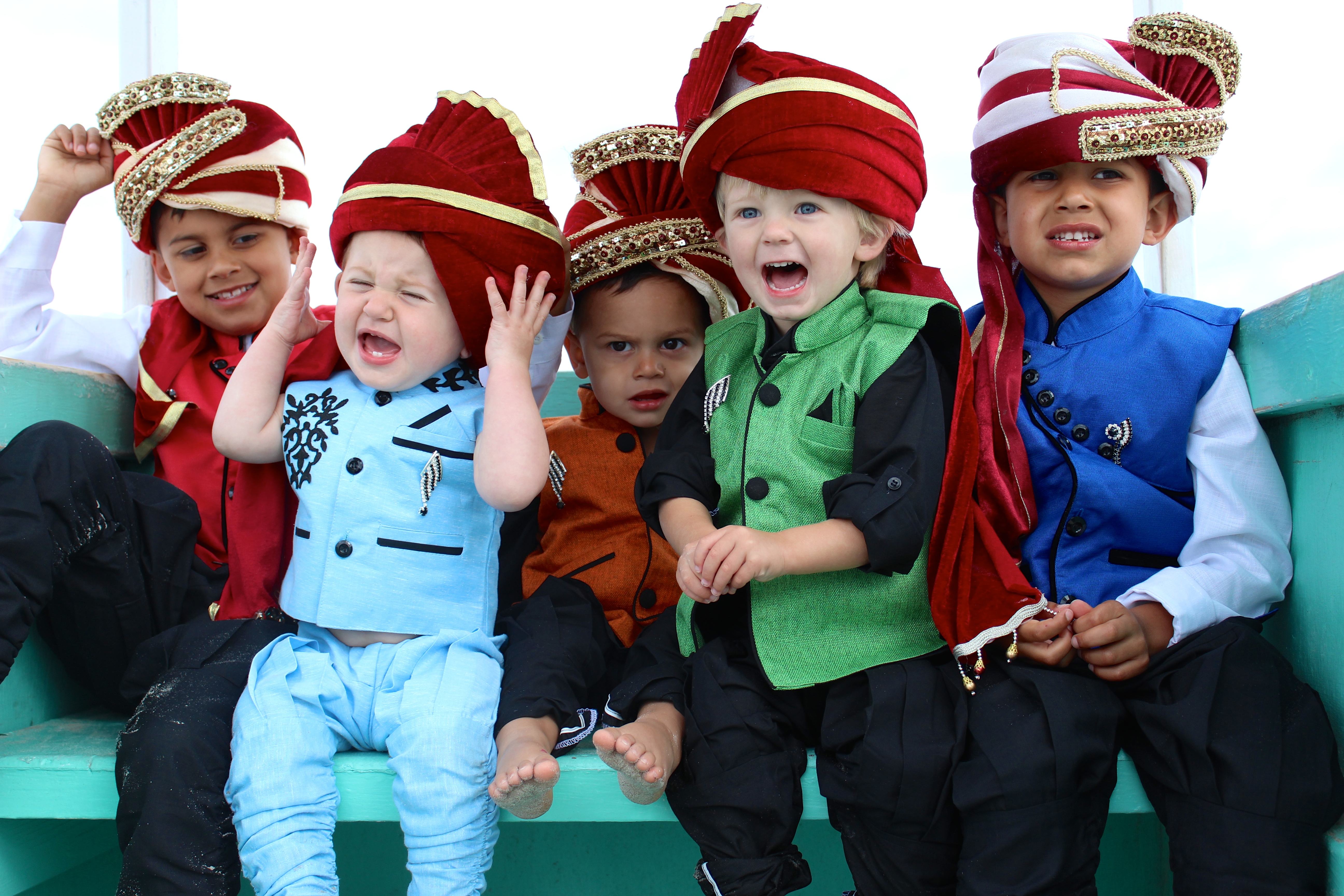
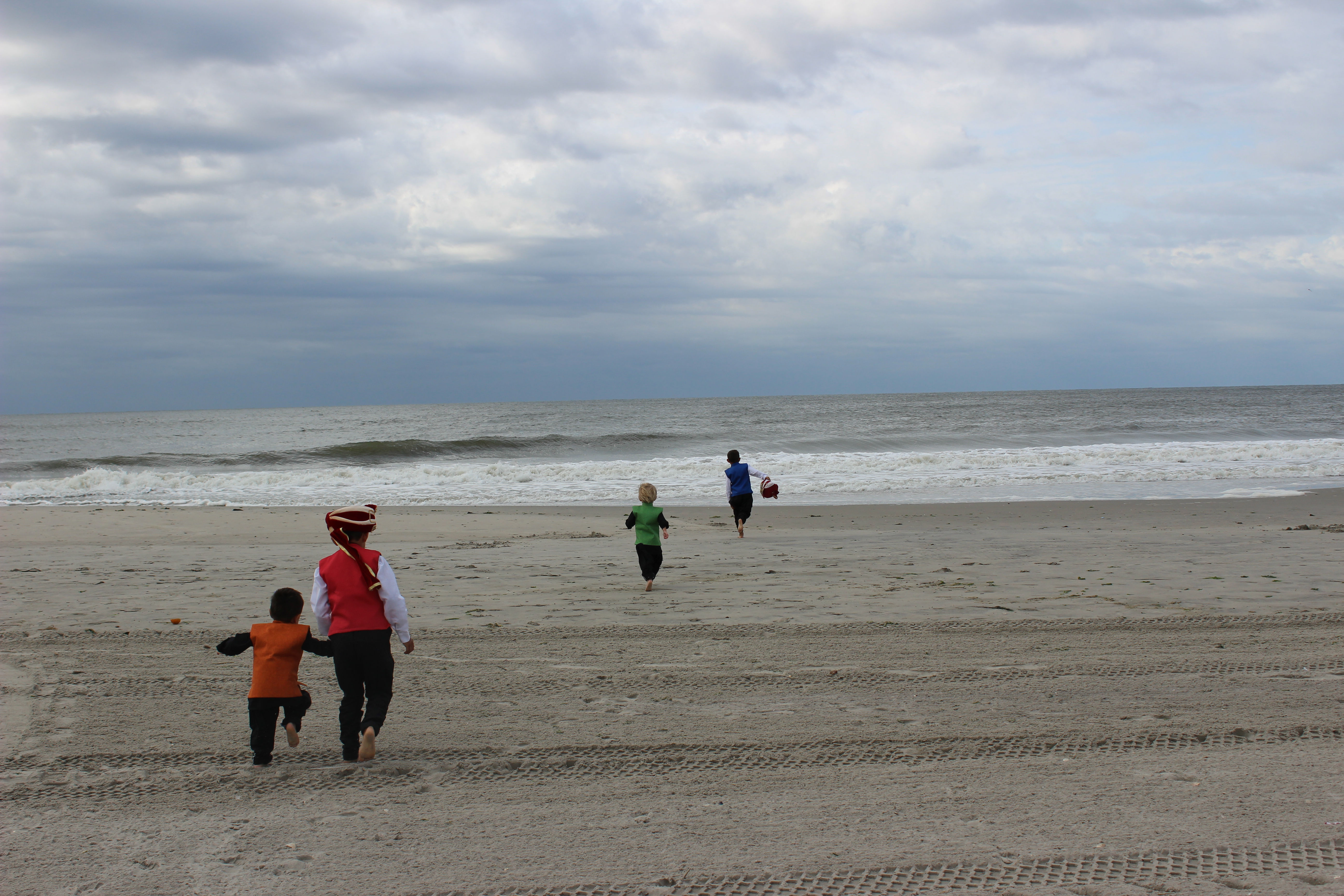
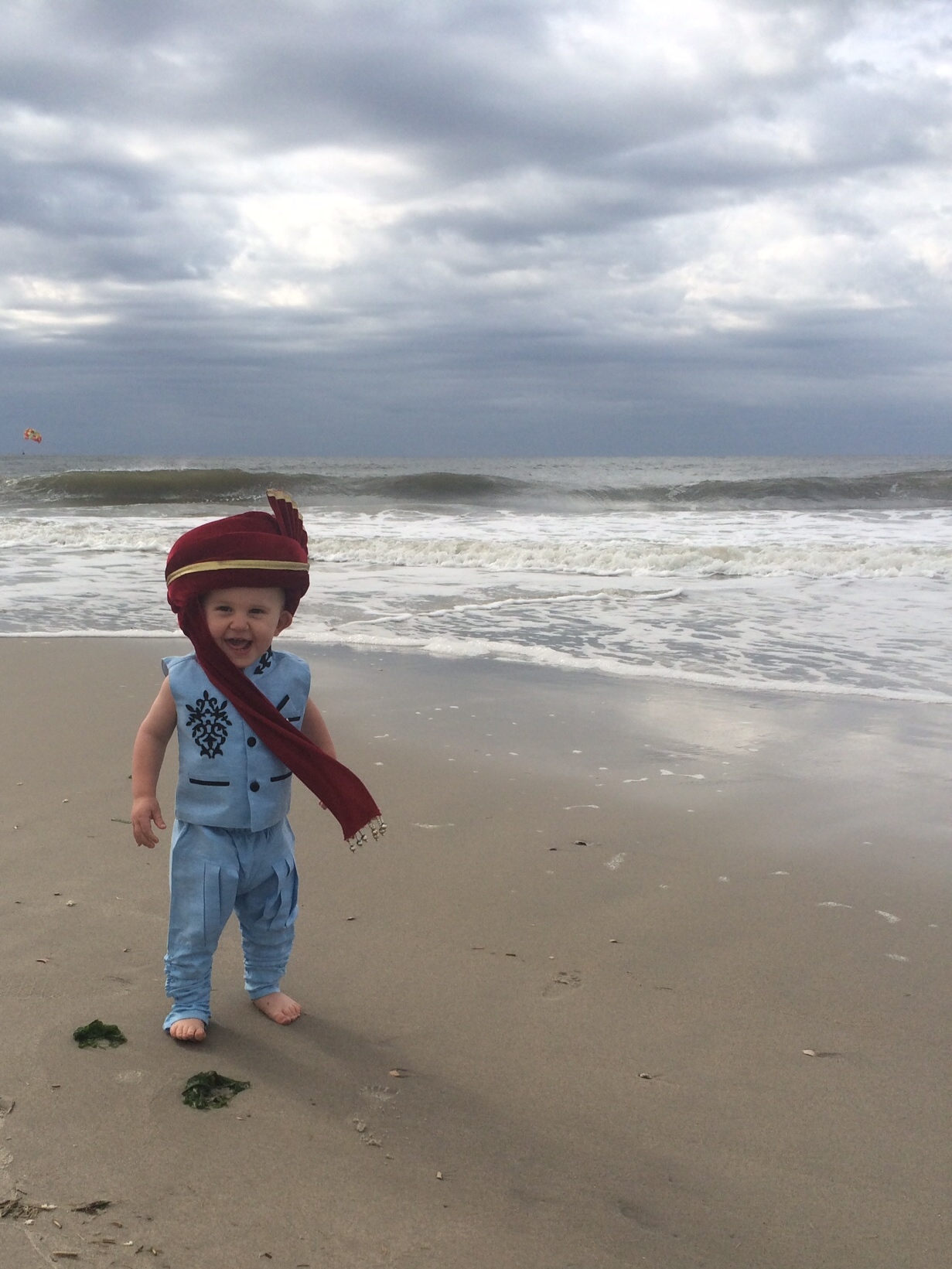
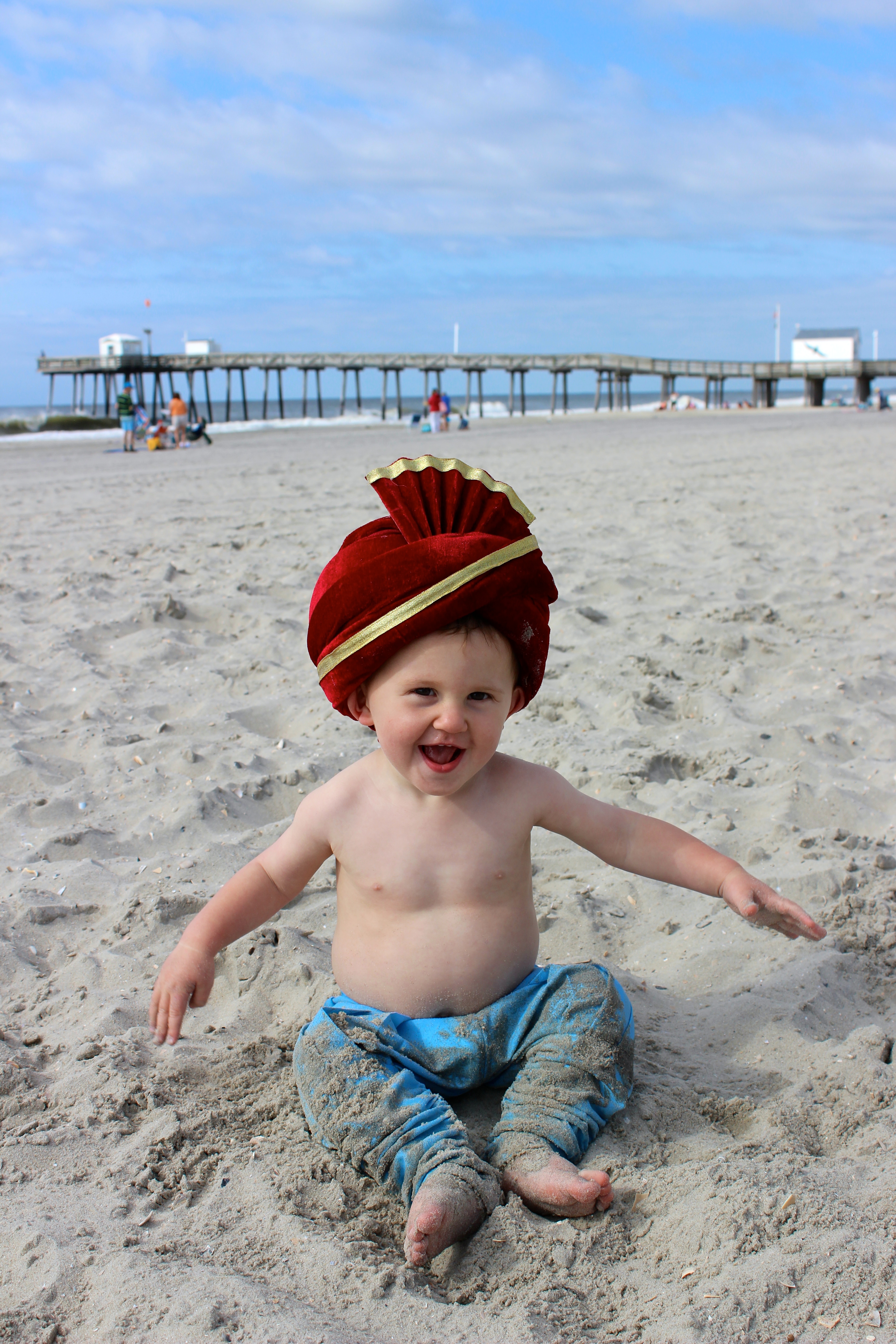
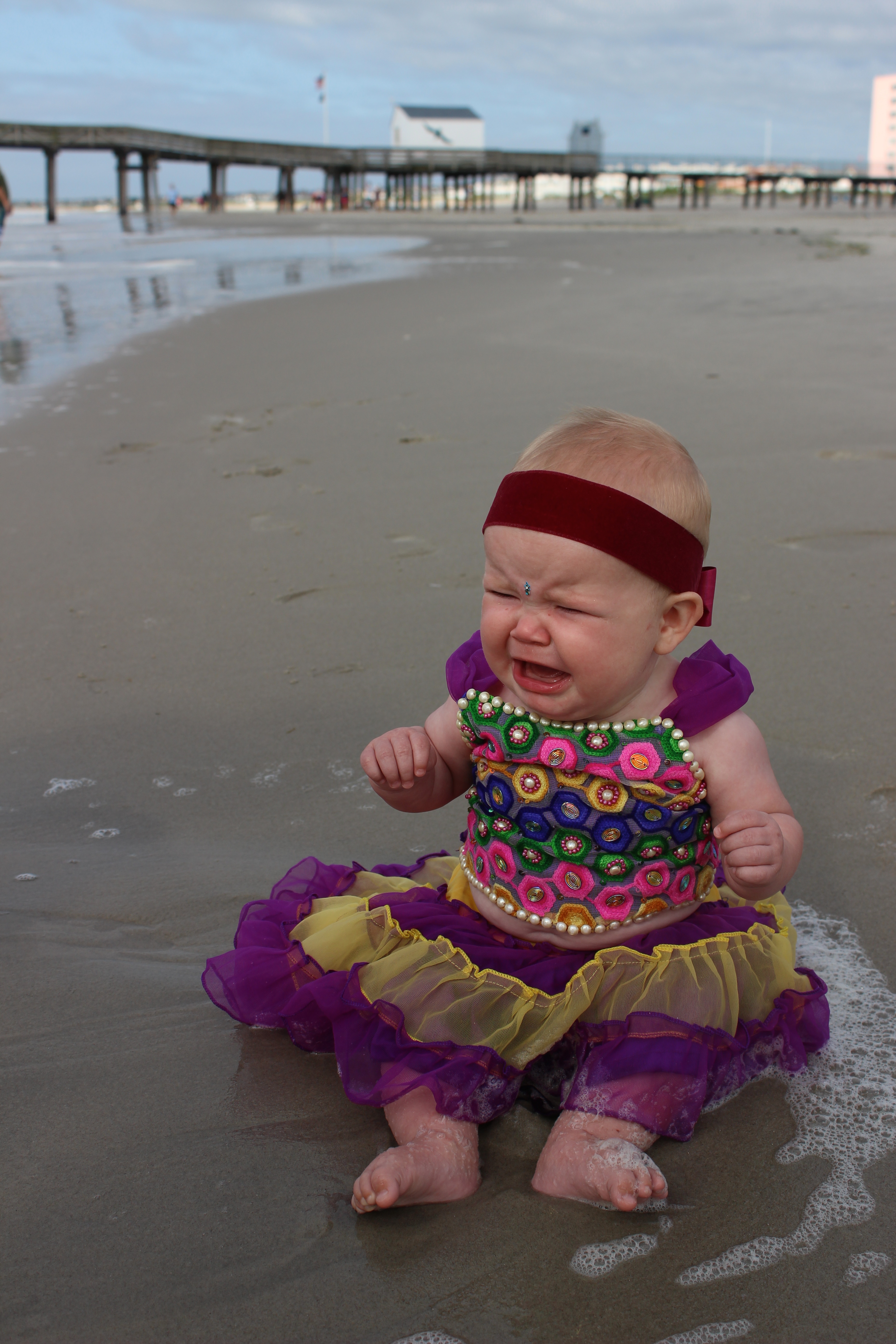
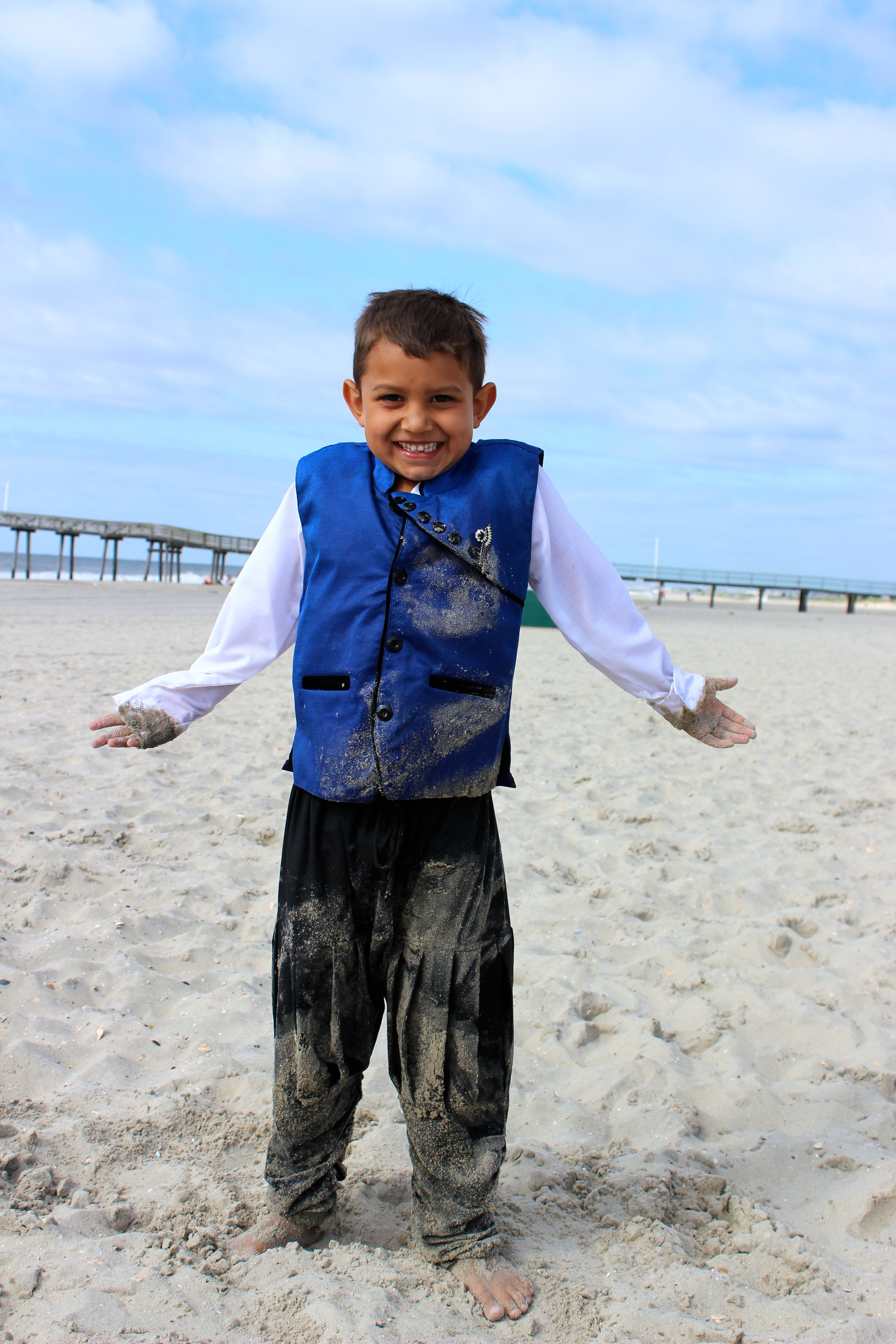
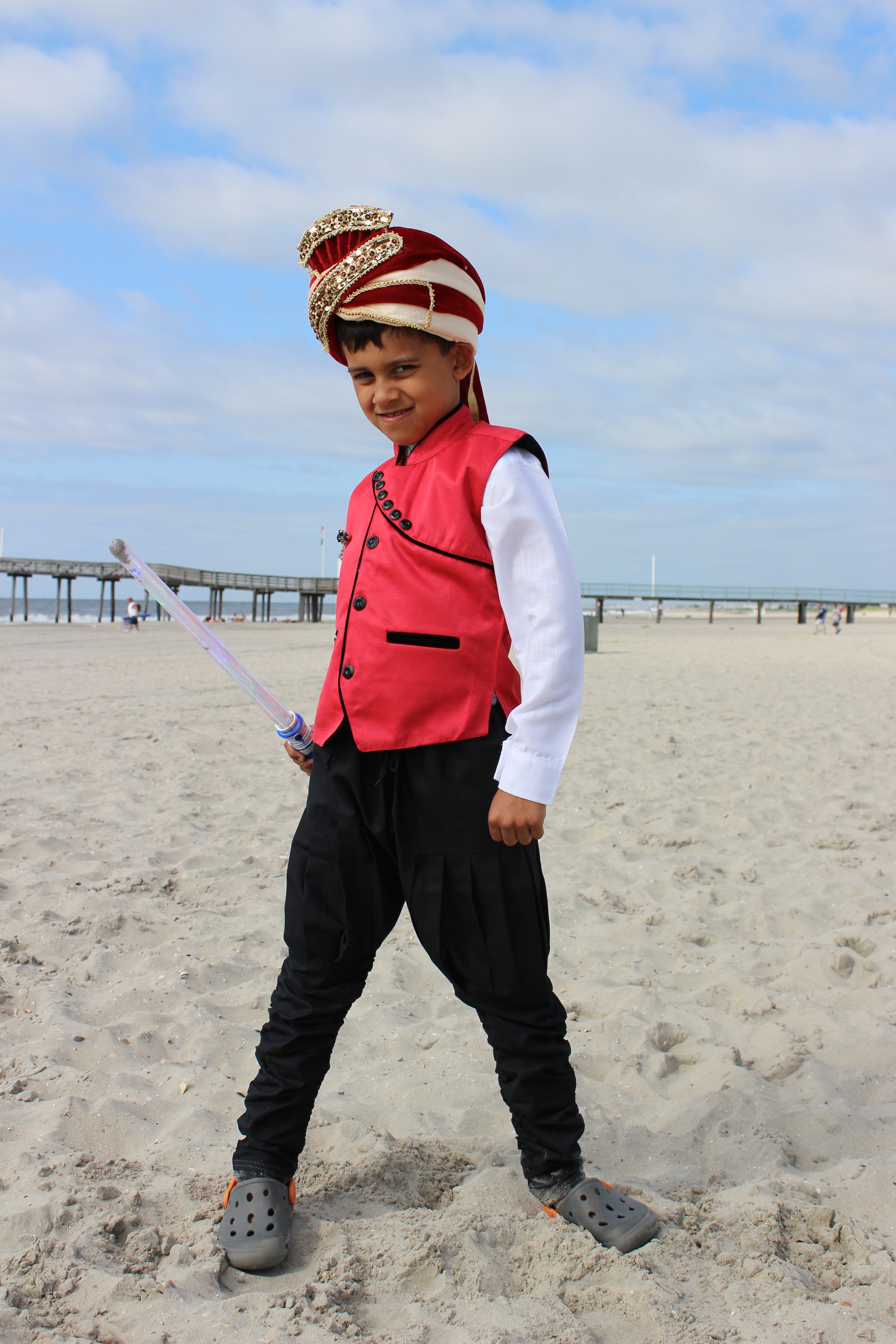
I have been wanting a picture of all five nephews and the one baby niece, but a normal family photo just wouldn’t cut it for this crew. I brought home costumes from India and staged a photo shoot one morning at the beach. Nico immediately morphed into a Mughal prince and chose regal poses rather than frolicking in the water like the other boys. The toddlers were surprisingly compliant, keeping their turbans on for the most part. Baby Annesley slept through the whole thing, unfortunately, and awoke just when the boys were too riled up for more group shots. All in all, pretty successful!

Bollywood at the beach!
IMG_3131

IMG_3141

IMG_0571_2

IMG_3153

IMG_3175

IMG_3198

IMG_3214

IMG_3188

IMG_0547

IMG_3248

IMG_3296

IMG_3273

IMG_3297

IMG_3300

A serious drawback of living abroad is that gatherings with extended family are rare. I have relatives scattered around the world, and there’s simply no time to see them all regularly. And so I felt deeply grateful for visits from my mother’s side of the family, who all live in the Philadelphia area.

Sisters: Aunt Iris and my mom.
IMG_0760

Cousin Amy with her husband, Billy, and their three boys, Jake, Dylan and Alex.
IMG_0696

Cousin Karen and her two boys, Robbie and Mario, spent the day at the beach with us. Here she is with my nephew Jack.
IMG_0758

Uncle Bill and his friend, Judy, also hung out with us that day. Seriously, nobody took any photos of them? Geez.

Funny how nostalgia and family connections can make you love a place. I’ve been to nicer beaches, cleaner boardwalks, and classier coastal towns. But my heart belongs “at the shoo-wah” in Ocean City, NJ.

New Delhi Book Club Does Door County

As an international teacher, I sometimes struggle to find friends who are not international teachers. My teacher friends are great, don’t get me wrong, but I also love to learn the stories of interesting people with experiences quite different from my own.

That’s why I felt particularly fortunate to join a small book club in New Delhi comprising a diverse group of fascinating ladies – a nurse, an actress, a scientist, a dancer … and more. We met monthly to discuss and recommend (or not) whatever each of us had read recently, and we maintained a lending library of books donated by the group. Occasionally, we joined a few other ladies for a dramatic reading of a play. Although their husbands’ jobs brought them to Delhi and, unfortunately, took them away again last year, these women all left their marks on the community and on my heart. I have missed the camaraderie, reflective conversations and laughter.

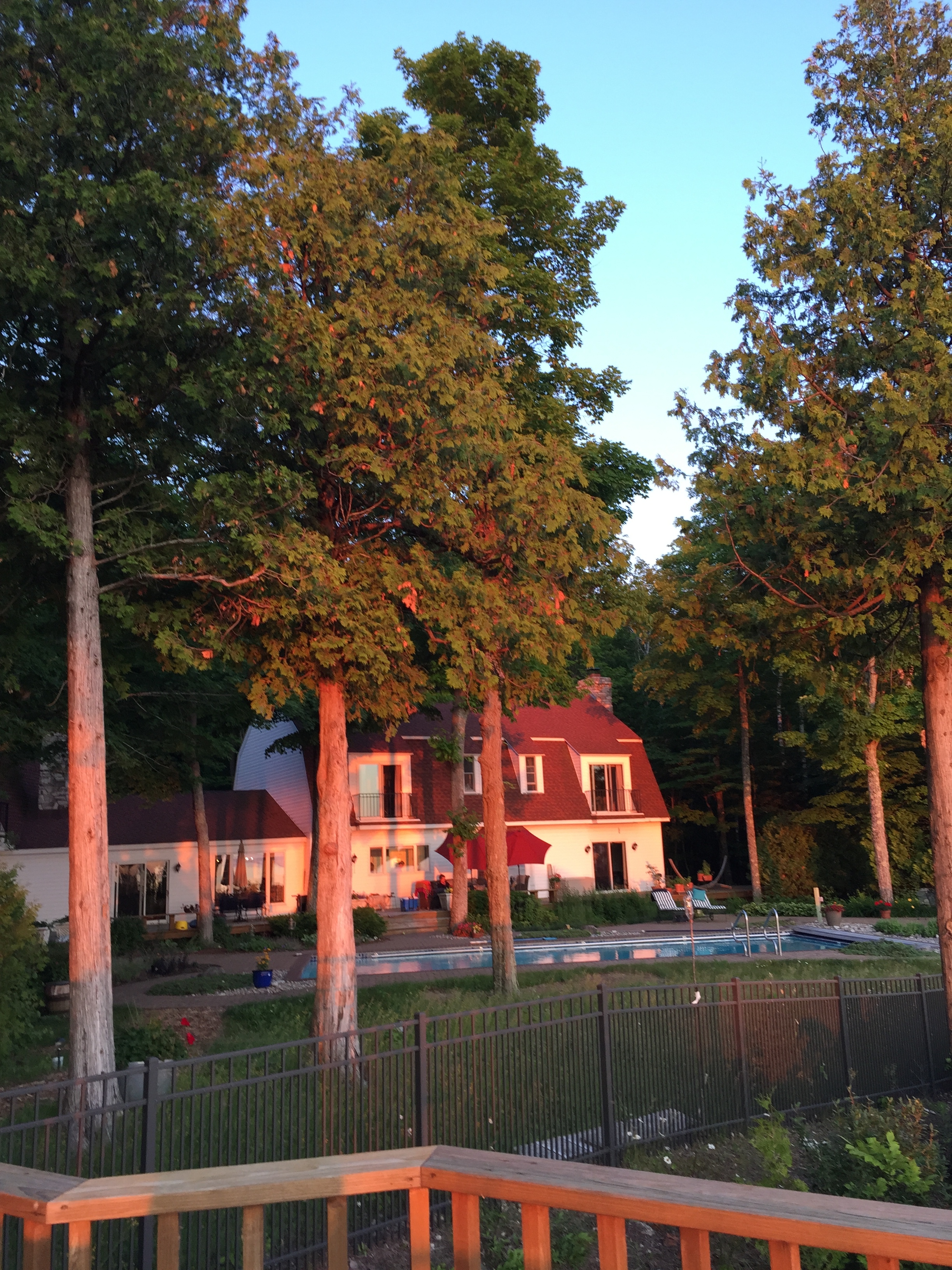
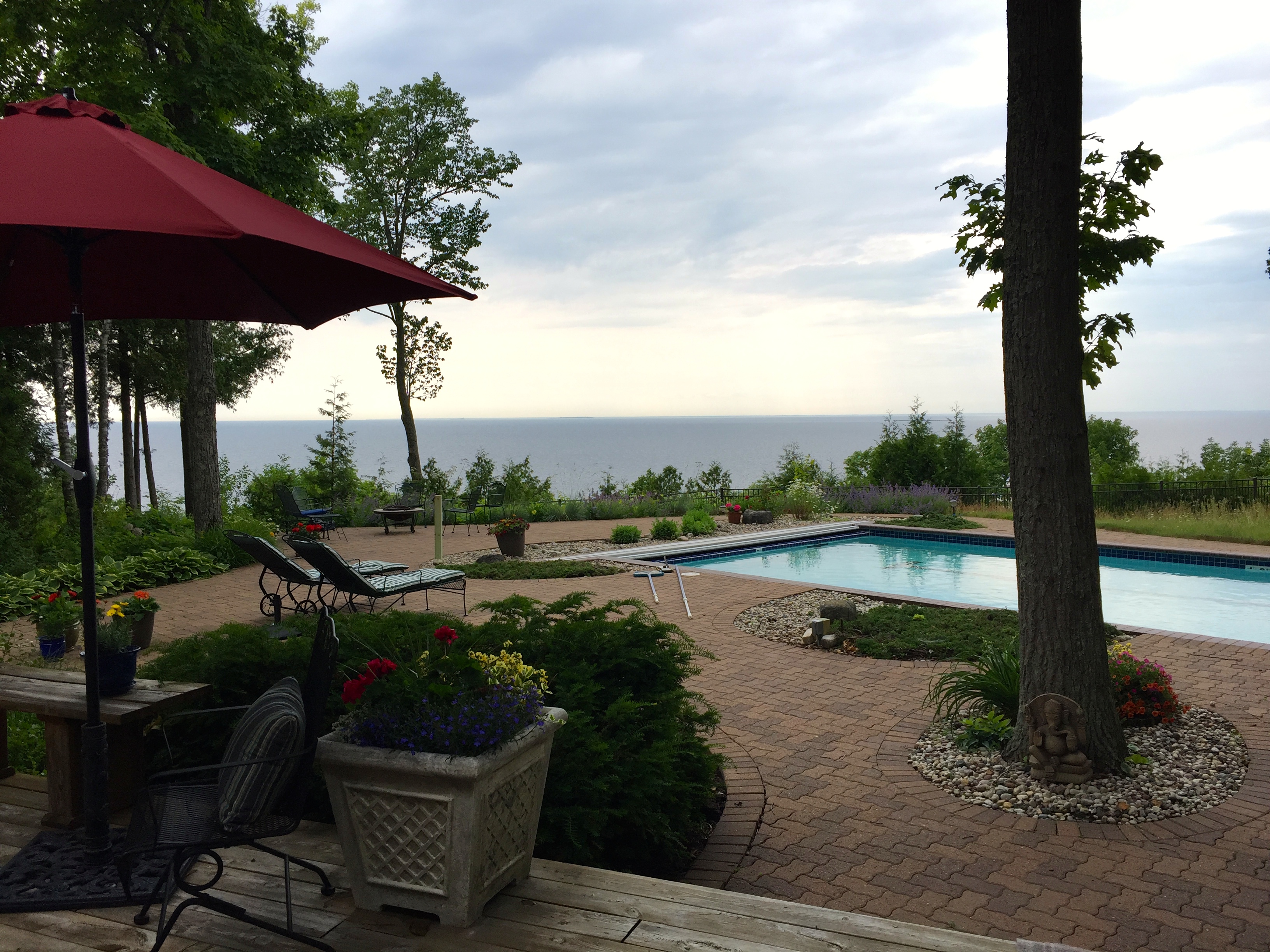
In fact, I don’t think I realized how much I missed them until a plan was hatched to hold a summer reunion. Not everyone could make it, but a few of us did, and we had a wonderful time hanging out at Sue’s home in artsy-fartsy Door County, Wisconsin, June 25-28. Sue’s husband is presently working in Afghanistan with the U.S. Agency for International Development while she settles into their retirement home (which they bought sight unseen while living in India). The house sits high on a hill overlooking Lake Michigan with a steep staircase leading down to the wooded waterfront. It was idyllic.

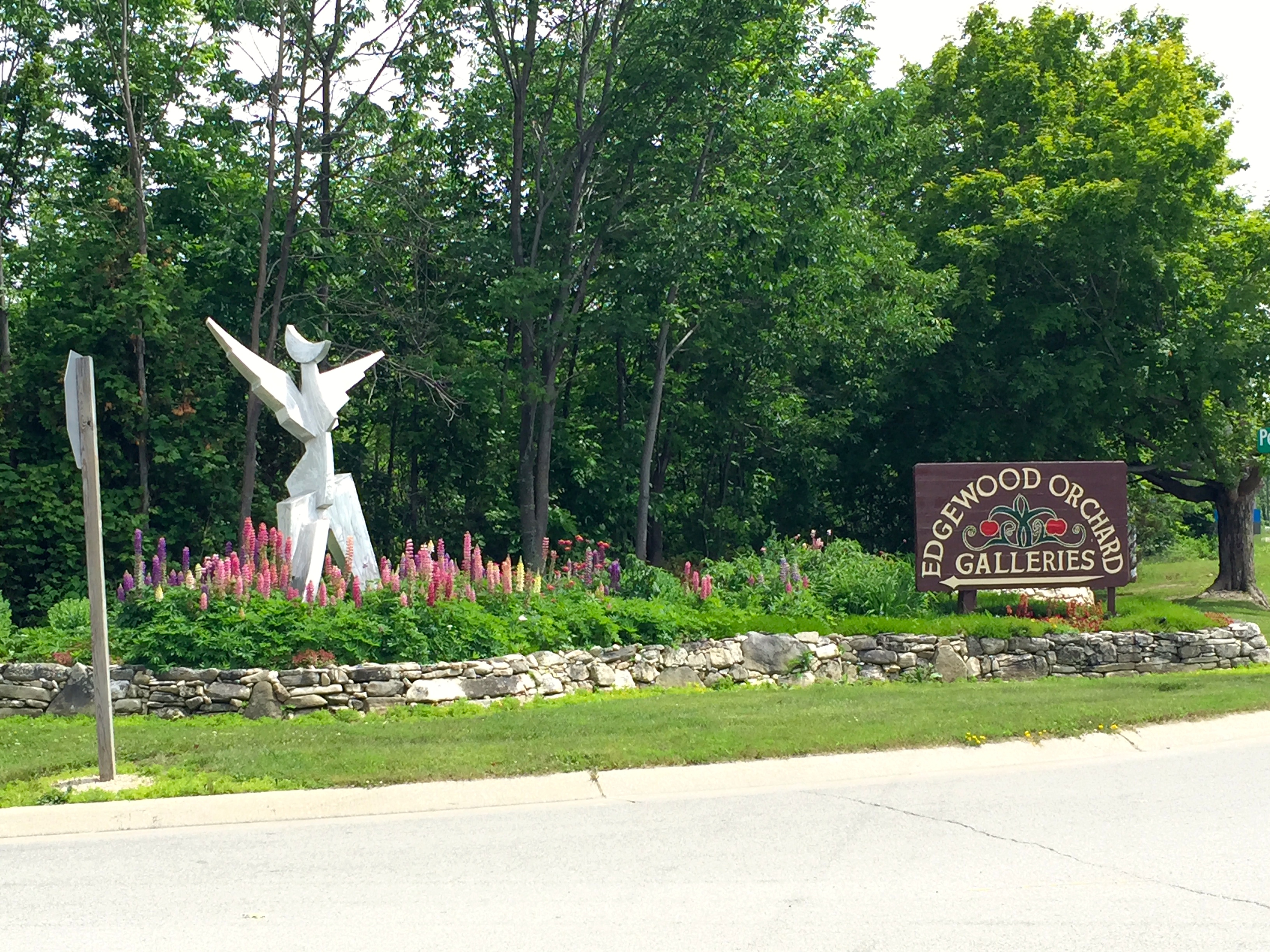
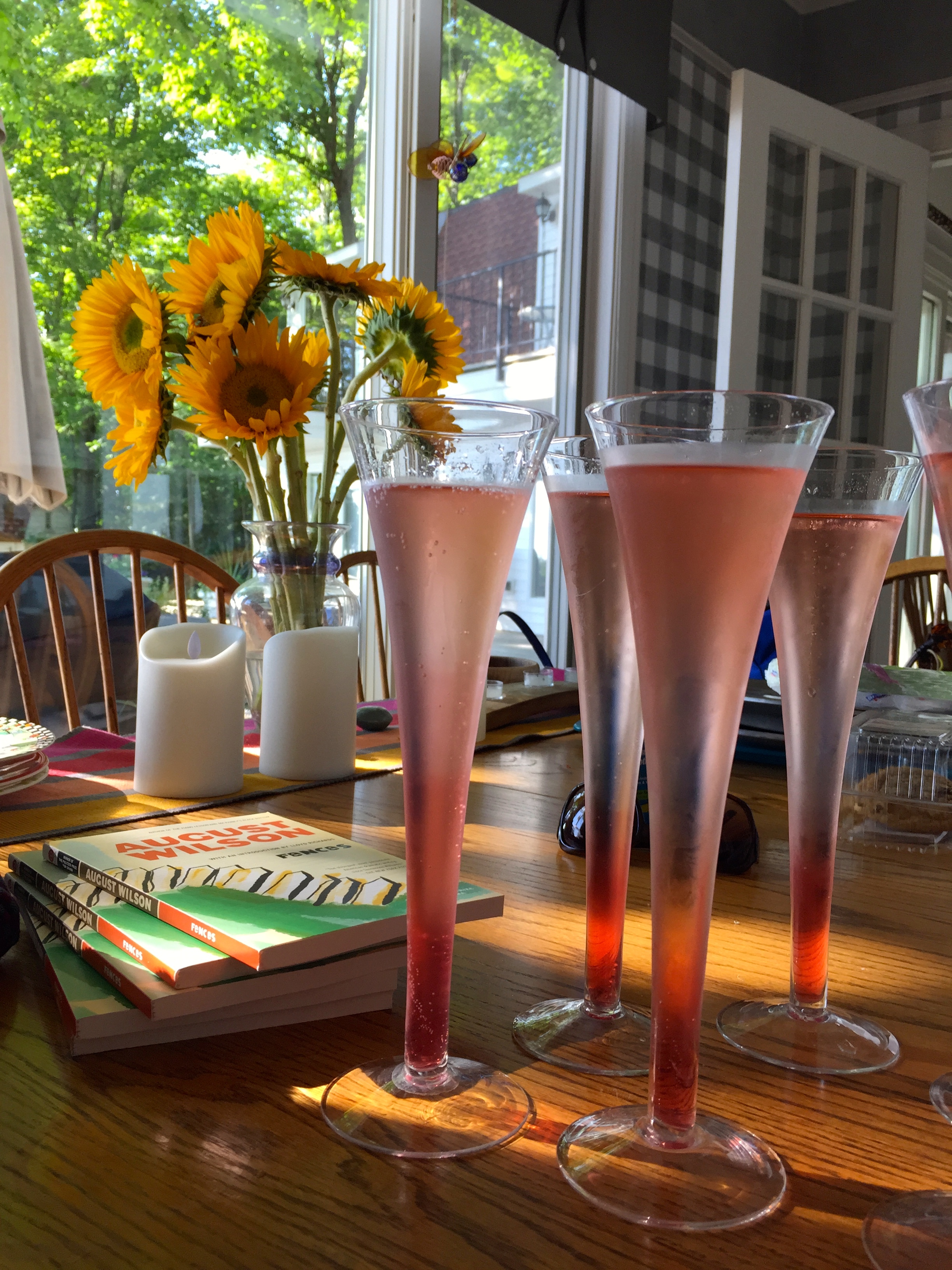
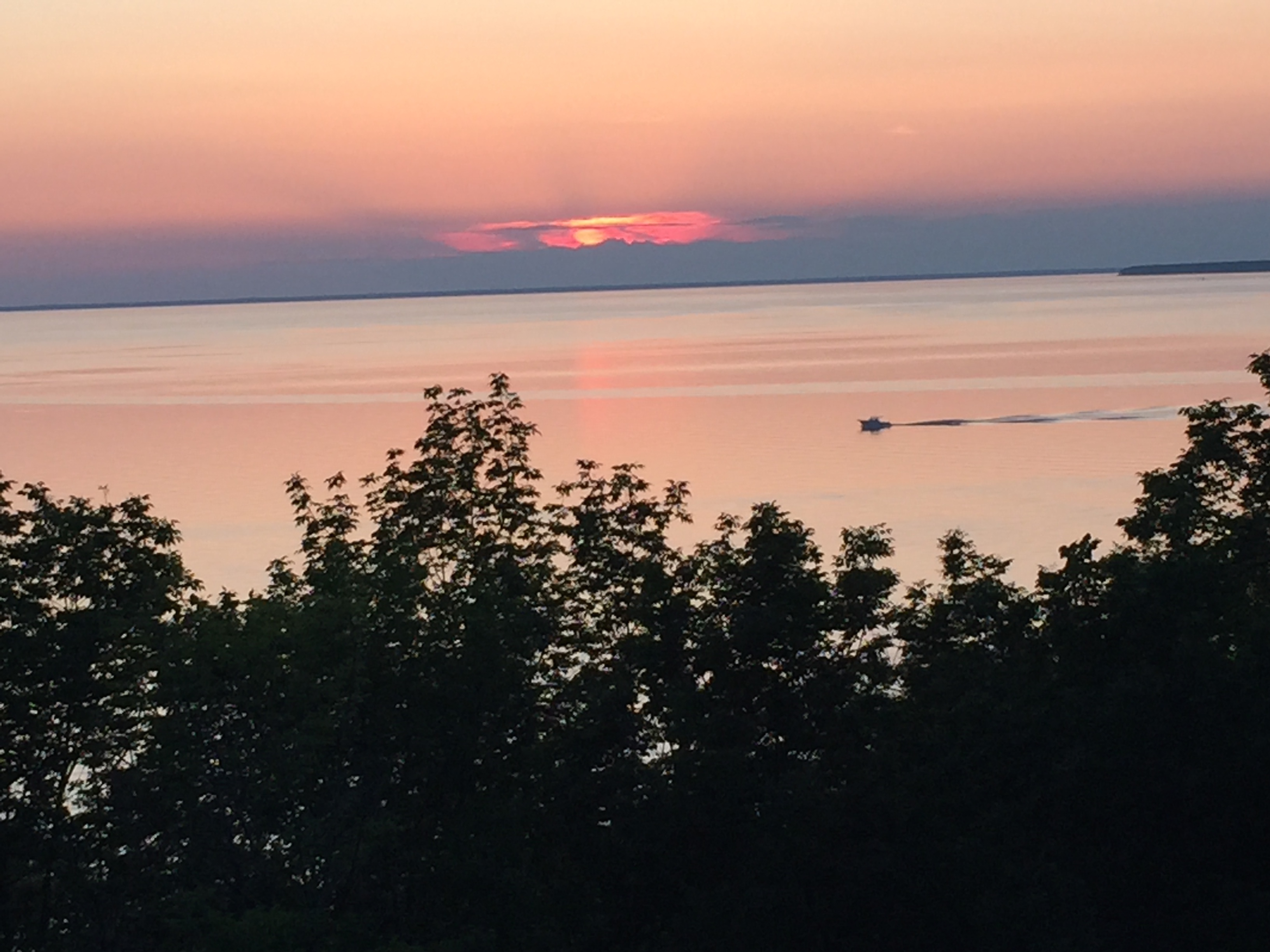
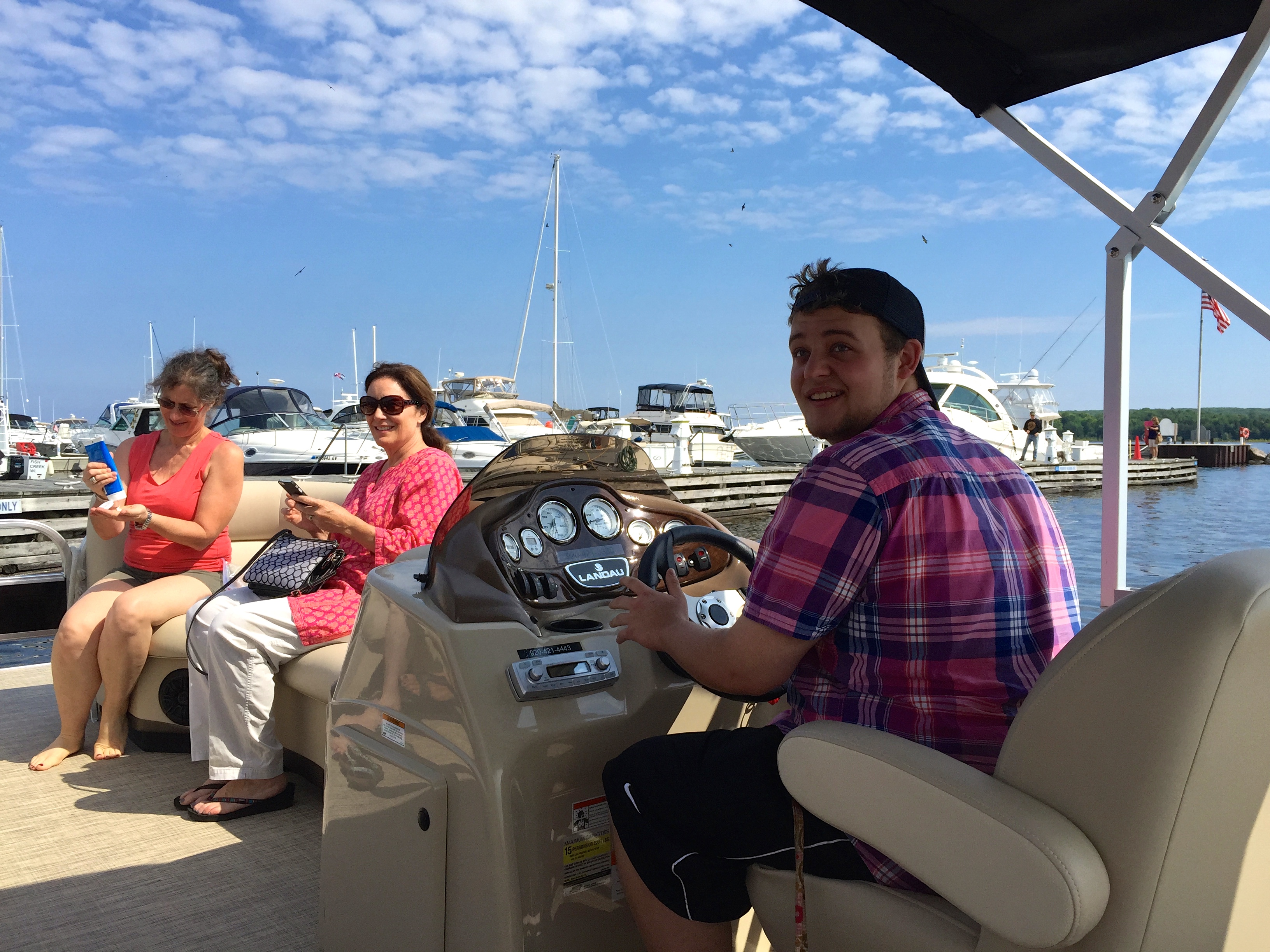
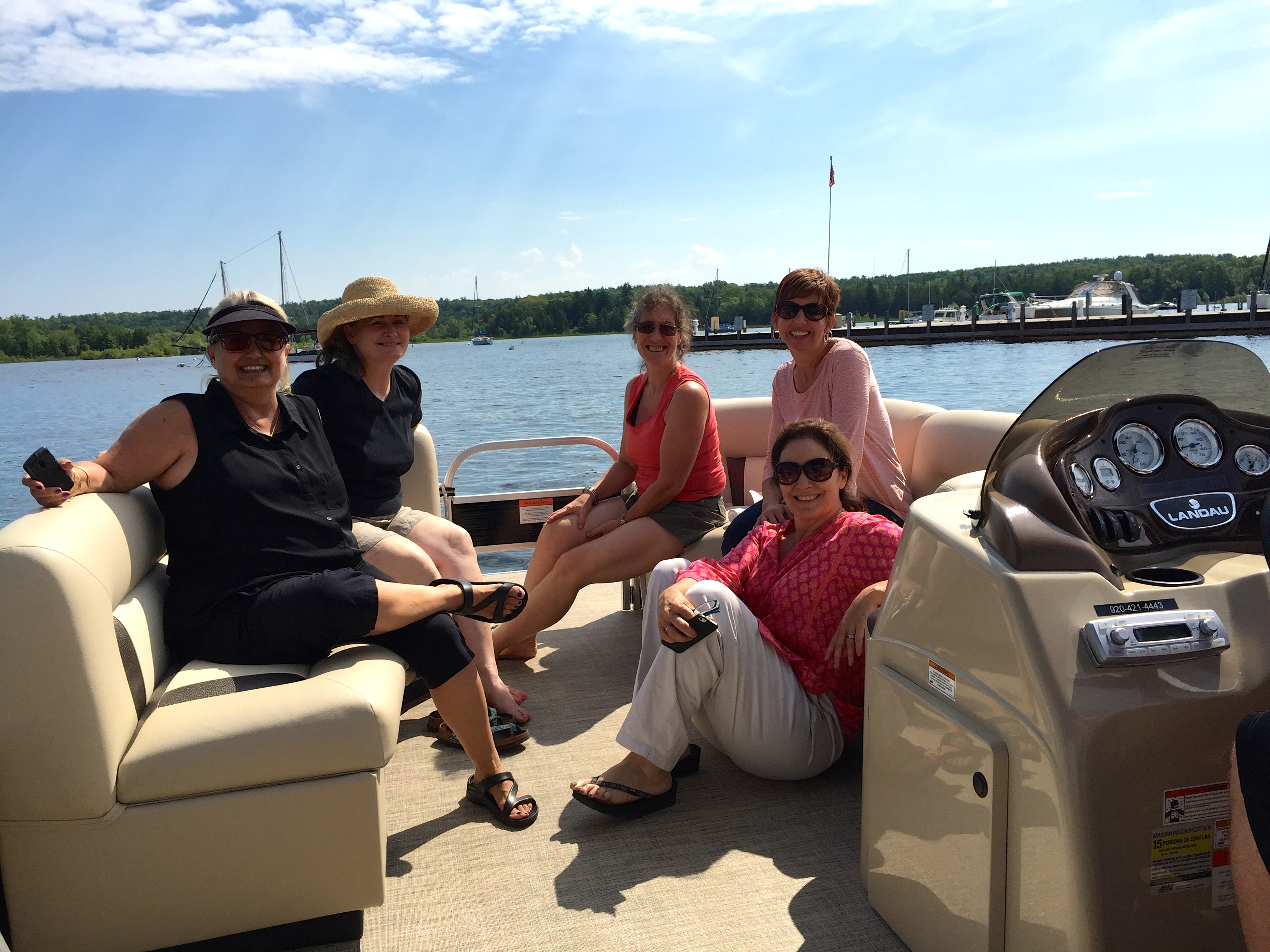
Each morning, we lounged poolside with coffee and breakfast treats, re-connecting and catching up. Over the four days, we also walked to the Edgewood Orchard Galleries, where I bought a sculpture for my own lake house; took a bumpy ride on Lake Michigan in a rented pontoon boat piloted by Sue’s son, Brent; participated in a dramatic reading of “Fences” by August Wilson; held an official book club meeting (see the book recommendations at the end of this post); and visited a food fair and an art show. Cocktails in hand, we returned to the backyard in the evenings to watch the sun set.

IMG_0137

IMG_0144

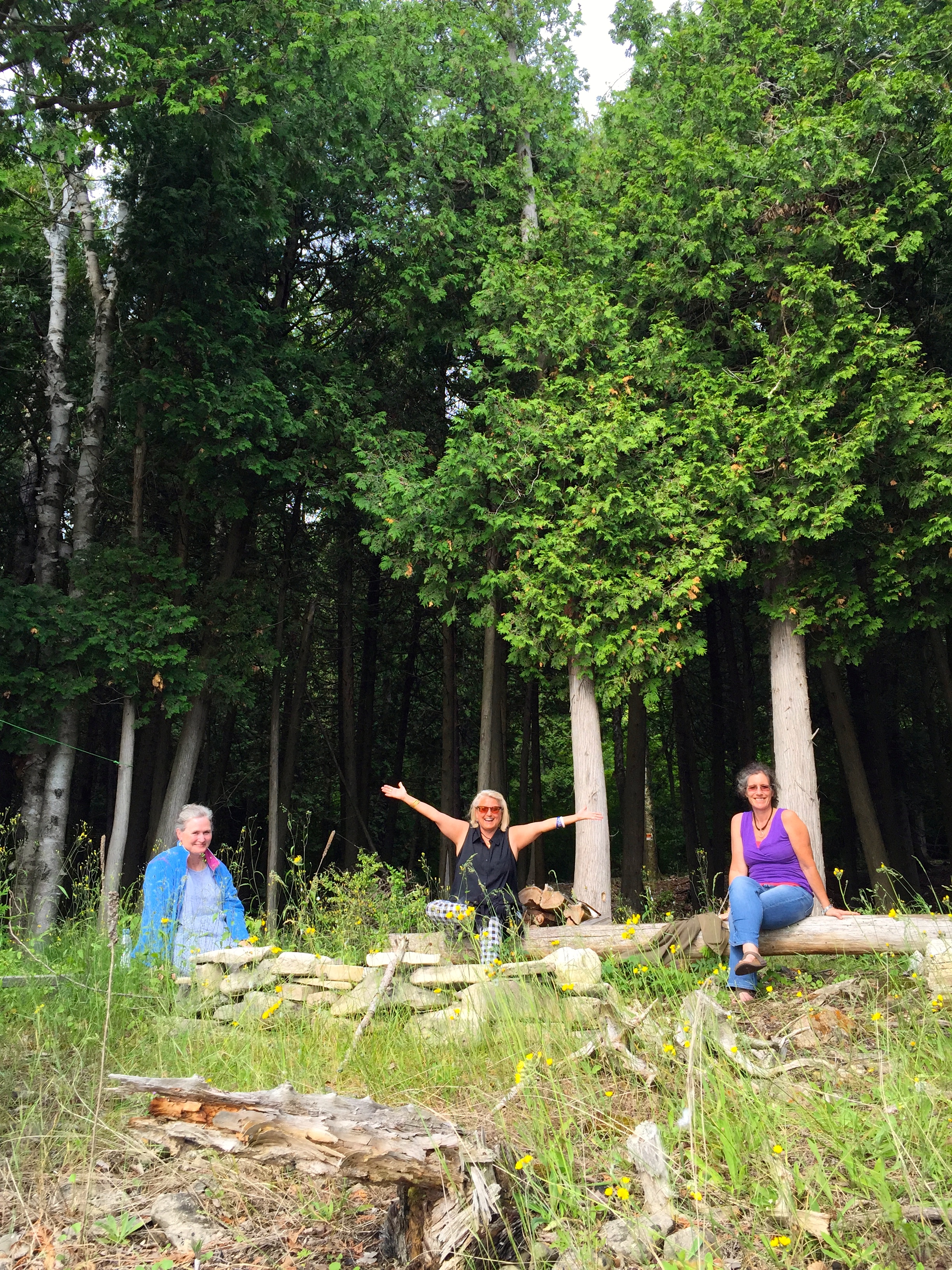
Adrienne, Catherine, Henrietta and I clambered down to the lakefront.
IMG_0147

Brent deftly handled the pontoon boat on choppy water, steering us to glassy Horseshoe Bay, where we lingered for a picnic lunch.
IMG_0150

IMG_0155

IMG_0362

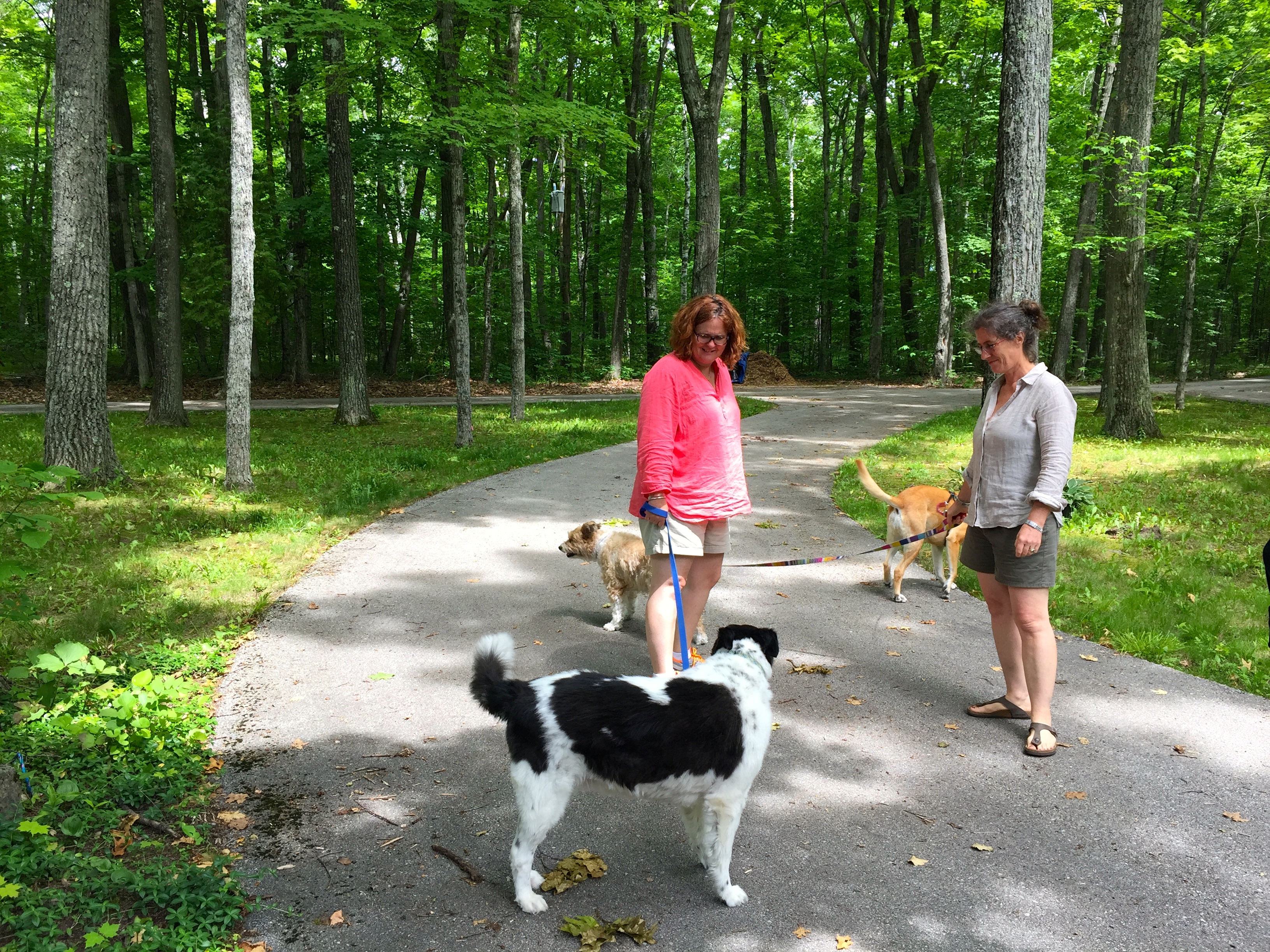
Monique and Henri take the dogs out for a walk to the art gallery.
IMG_0164

IMG_0165

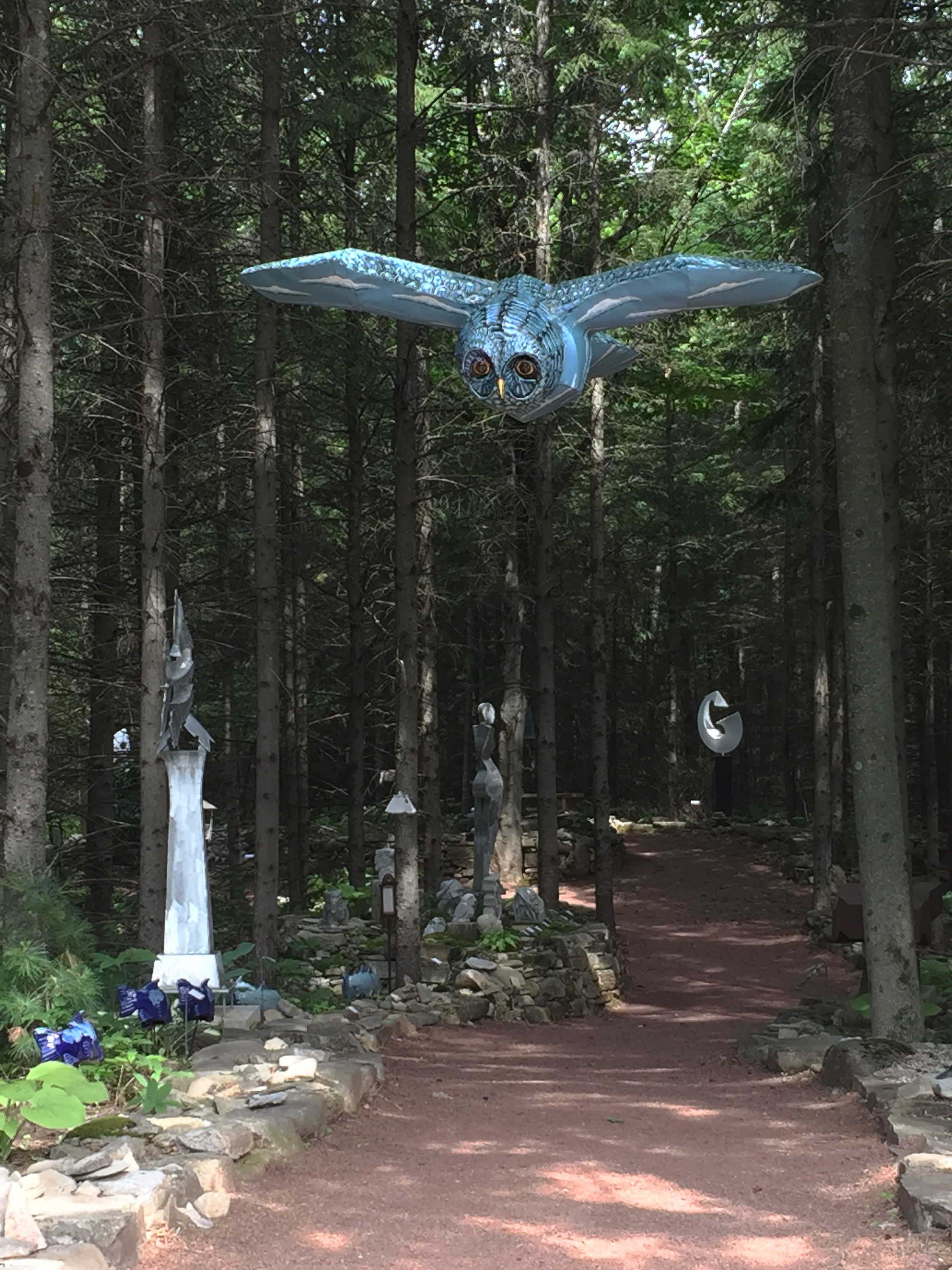
The gallery featured an art-lined path through the woods.
IMG_0183

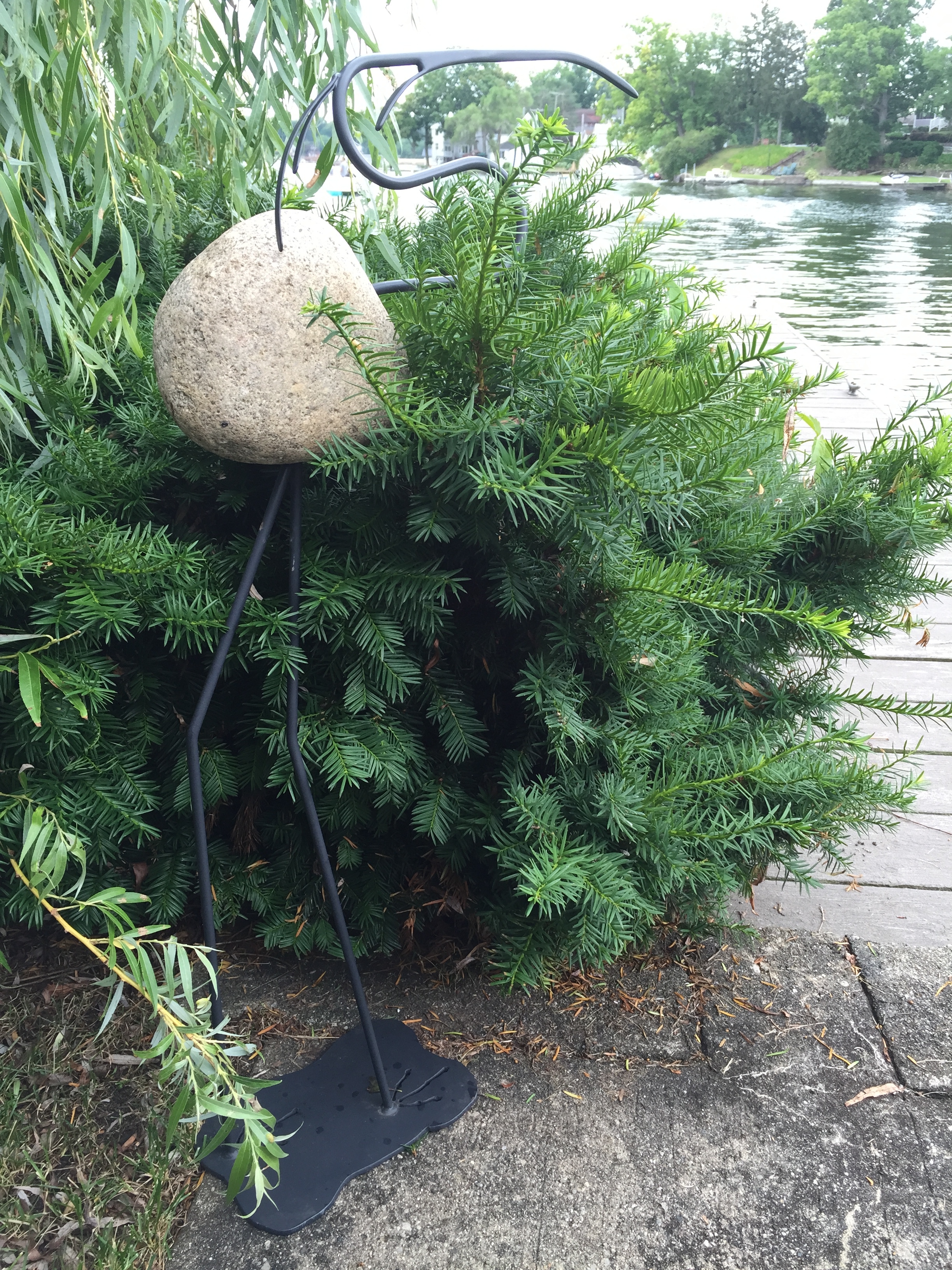
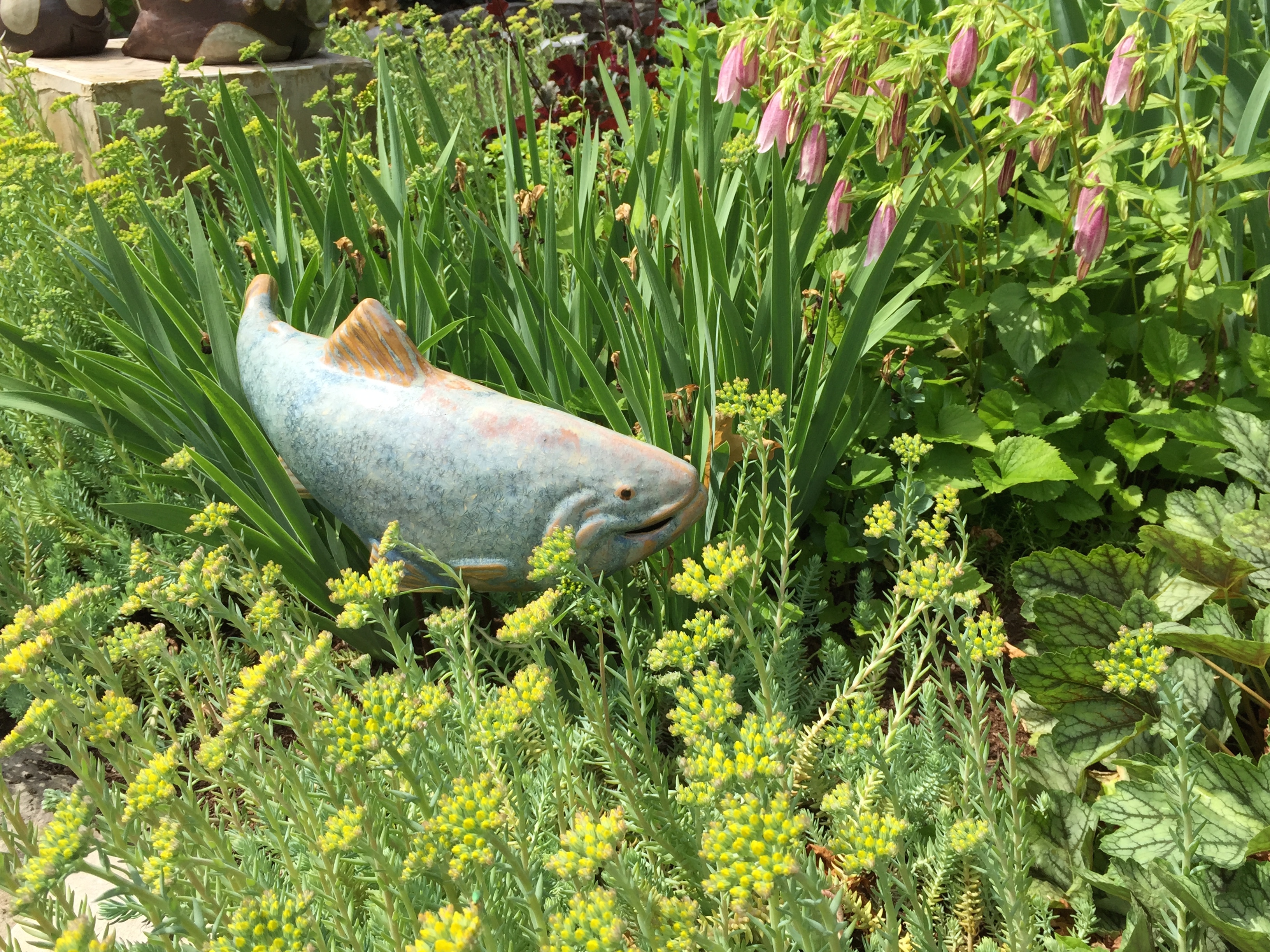
I bought this sculpture of an ibis, which the gallery shipped to our Michigan house. Here she is at Lake Orion.
IMG_0320

We bought this fish for Sue as a thank-you gift.
IMG_0186

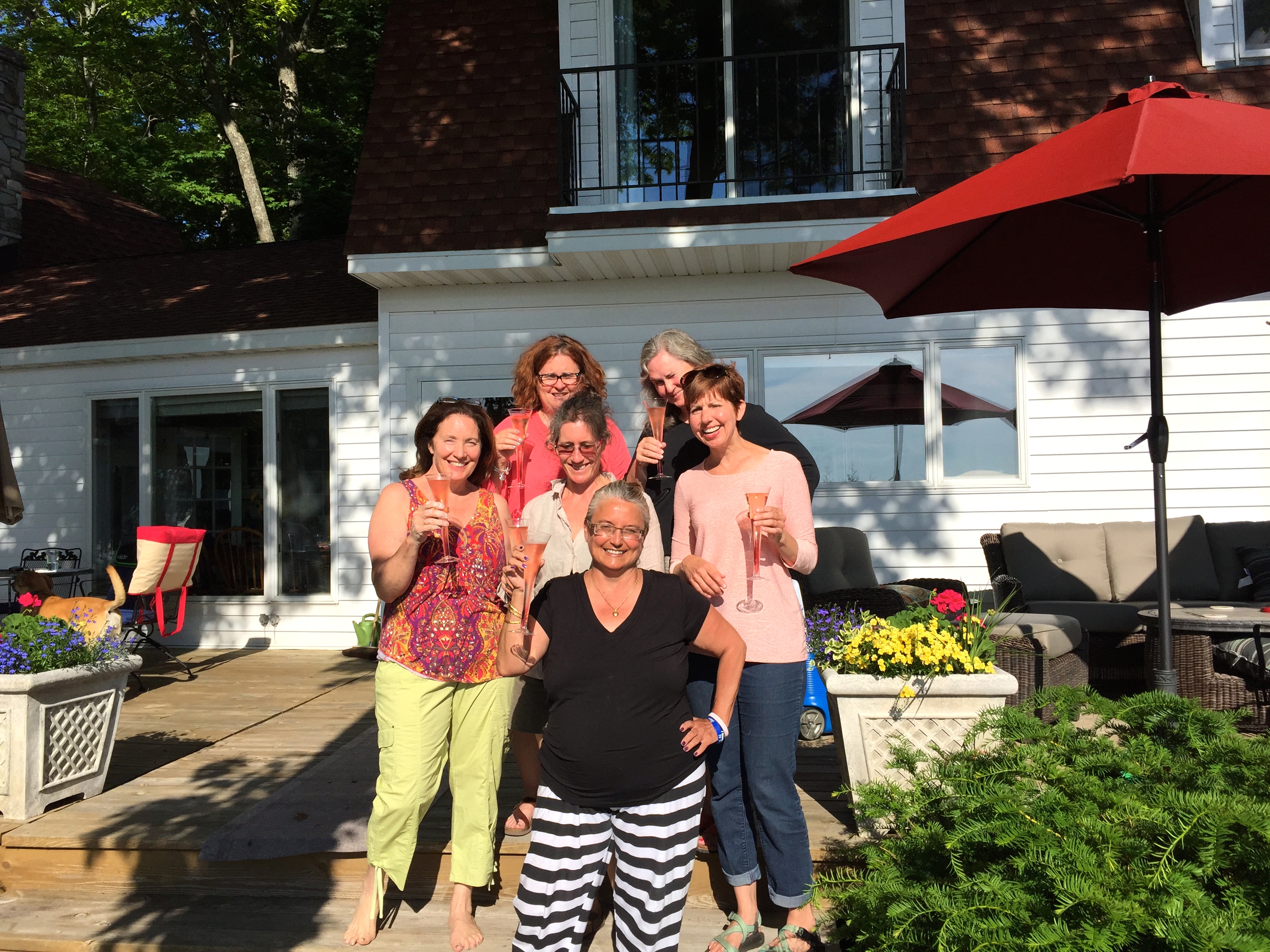
Afternoon cocktails prepared by Adrienne!
IMG_0199

Back to front, left to right: Monique, Adrienne, Sue, Henri, me, Catherine.
IMG_0200

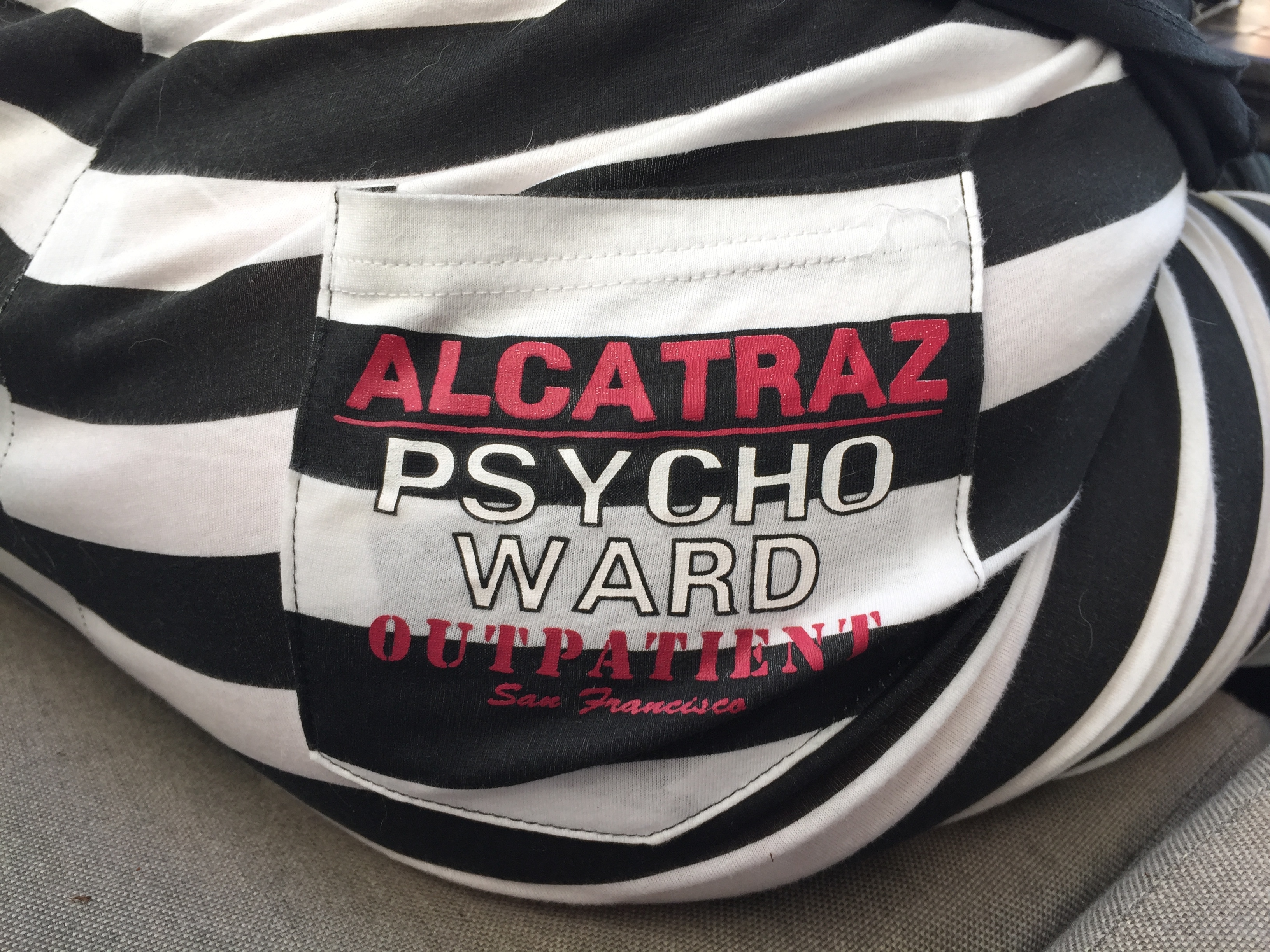
Catherine’s party pants.
IMG_0202

Henri and me at Gills Rock, the tip of Wisconsin’s mitten thumb peninsula.
IMG_0221

My motto.
IMG_0224

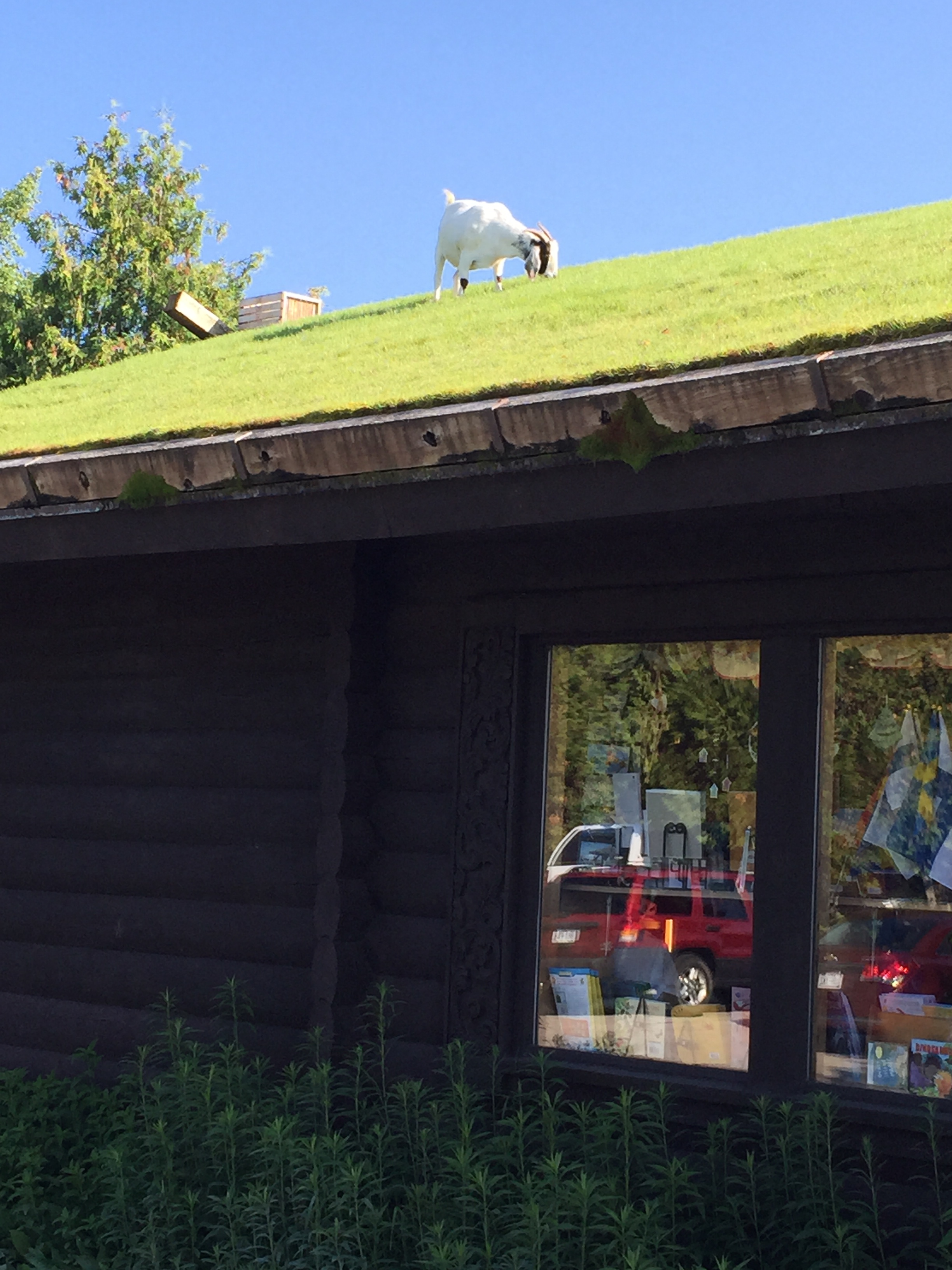
Brent took a summer job at Al Johnson’s Swedish Restaurant, where he herds the goats off the sod roof at night.
IMG_0225

Reading “Fences,” August Wilson’s Pulitzer Prize-winning play about black Americans in the 1950s.
IMG_0245

Sunset.
IMG_0251

IMG_0266

Here’s the list of books we discussed. Fiction and non-fiction, old and new … in no order.
Beautiful Ruins – Jess Walter
The Saffron Kitchen – Yasmin Crowther
Don’t Let Him Know– Sandip Roy
A Dog’s Gift – Bob Drury
The Martian – Andy Weir
The Hemlock Cup: Socrates, Athens and the Search for the Good Life– Bettany Hughes
The Children Act – Ian McEwan
Squatting with Dignity – Kumar Alok
Mornings on Horseback: The Story of an Extraordinary Family, a Vanished Way of Life and the Unique Child Who Became Theodore Roosevelt – David McCullough
The Expats – Chris Pavone
Mrs. Lincoln and Mrs. Keckly: The Remarkable Story of the Friendship Between a First Lady and a Former Slave – Jennifer Fleischner
A House Divided – Pearl S. Buck
Imperial Woman: The Story of the Last Empress of China – Pearl S. Buck
The Child Who Never Grew – Pearl S. Buck
Various books by Leon Uris
Clara and Mr. Tiffany – Susan Vreeland
The Great Bridge: The Epic Story of the Building of the Brooklyn Bridge – David McCullough
The Former People: The Final Days of the Russian Aristocracy – Douglas Smith
The Lunar Chronicles – Marisa Meyer
The Devil in the White City – Erik Larson
In the Garden of the Beasts -Erik Larson
Thunderstruck – Erik Larson
The Storied Life of A. J. Fikry – Gabrielle Zevin
I’ll Give you the Sun – Jandy Nelson
All the Light We Cannot See– Anthony Doerr
Catering to Nobody – Diane Mott Davidson
The Girl on the Train – Paula Hawkins
To be Sung Underwater – Tom McNeal
Wild – Cheryl Strayed
The Orphan Train – Christina Baker Kline
Quiet: The Power of Introverts in a World That Can’t Stop Talking – Susan Cain
The Cherry Harvest – Lucy Sanna
The Passion of Artemesia – Susan Vreeland
FDR – Jean Edward Smith
We Band of Angels: The Untold Story of the American Women Trapped on Bataan – Elizabeth Norman
I Served on Bataan – Juanita Redmond
Wild Swans – Jung Chang
Pillars of the Earth – Ken Follett

Until we meet again, happy reading!

Spring Break Part 2 : Paris

After learning and playing in Istanbul, I was ready for the second part of my holiday: Paris! I waited at the Paris airport on March 24 for Tony to arrive from Delhi, and then we caught a taxi to meet up with our friends, Paul and Sepi. We worked with them in Shanghai, and now they’ve joined us at AES in Delhi. Sepi’s nephew, an international artist, keeps an apartment in Paris, and he was kind enough to let us crash there while he was out of town. The only French I remember from high school is “Où est la vache?” which means “Where is the cow?” Not useful in the big city, unfortunately. Good thing Sepi and Paul speak French.

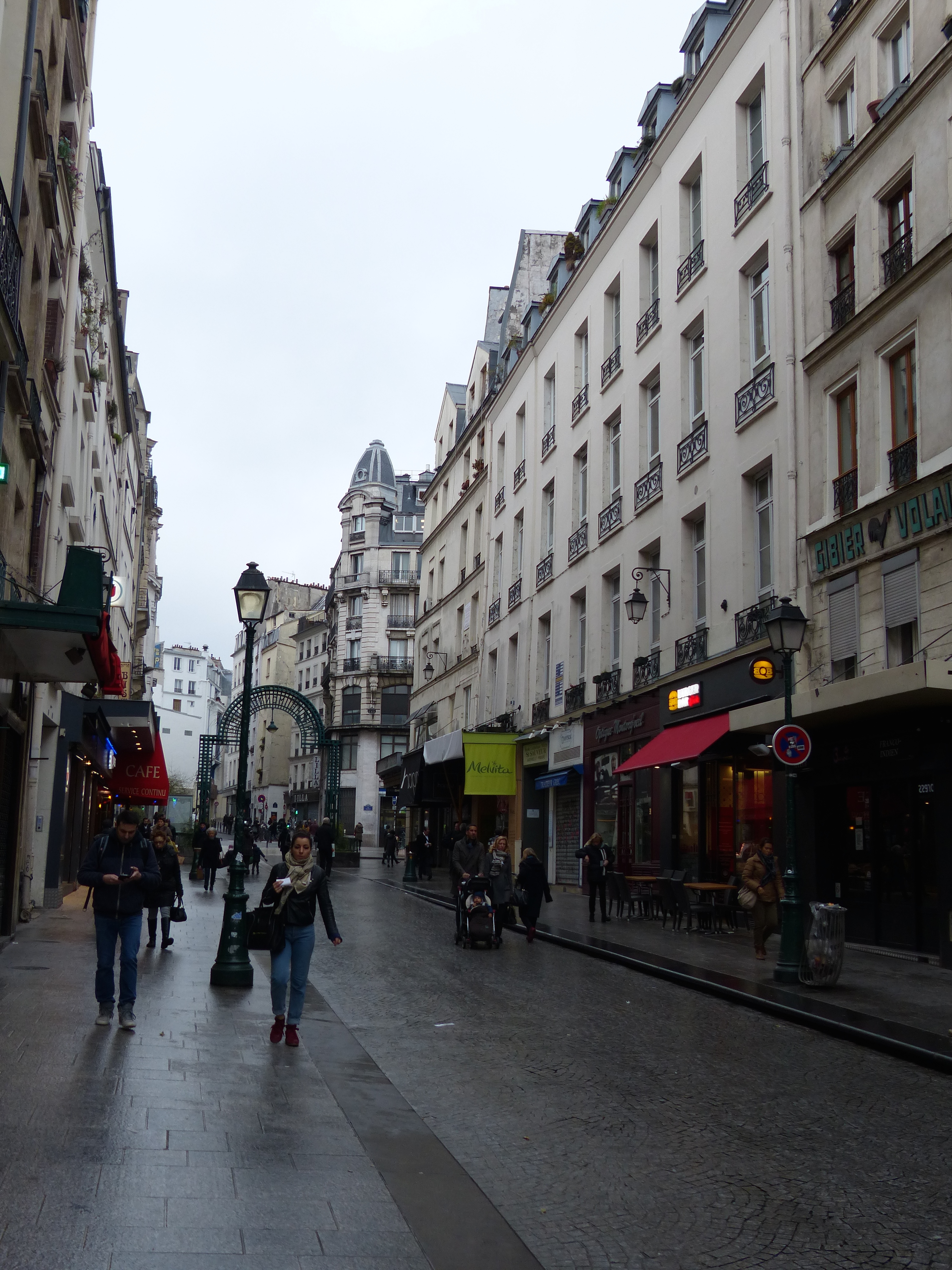
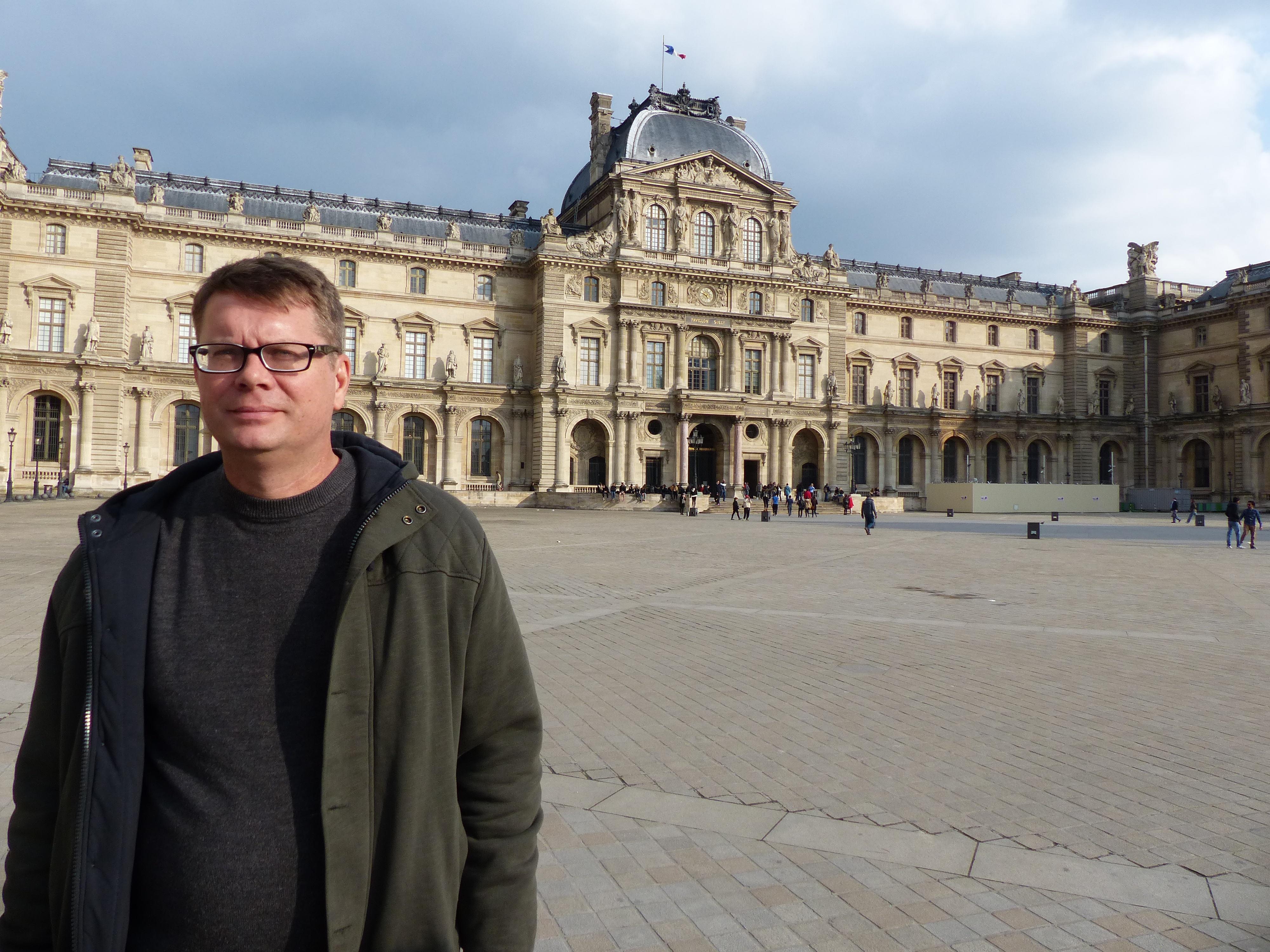
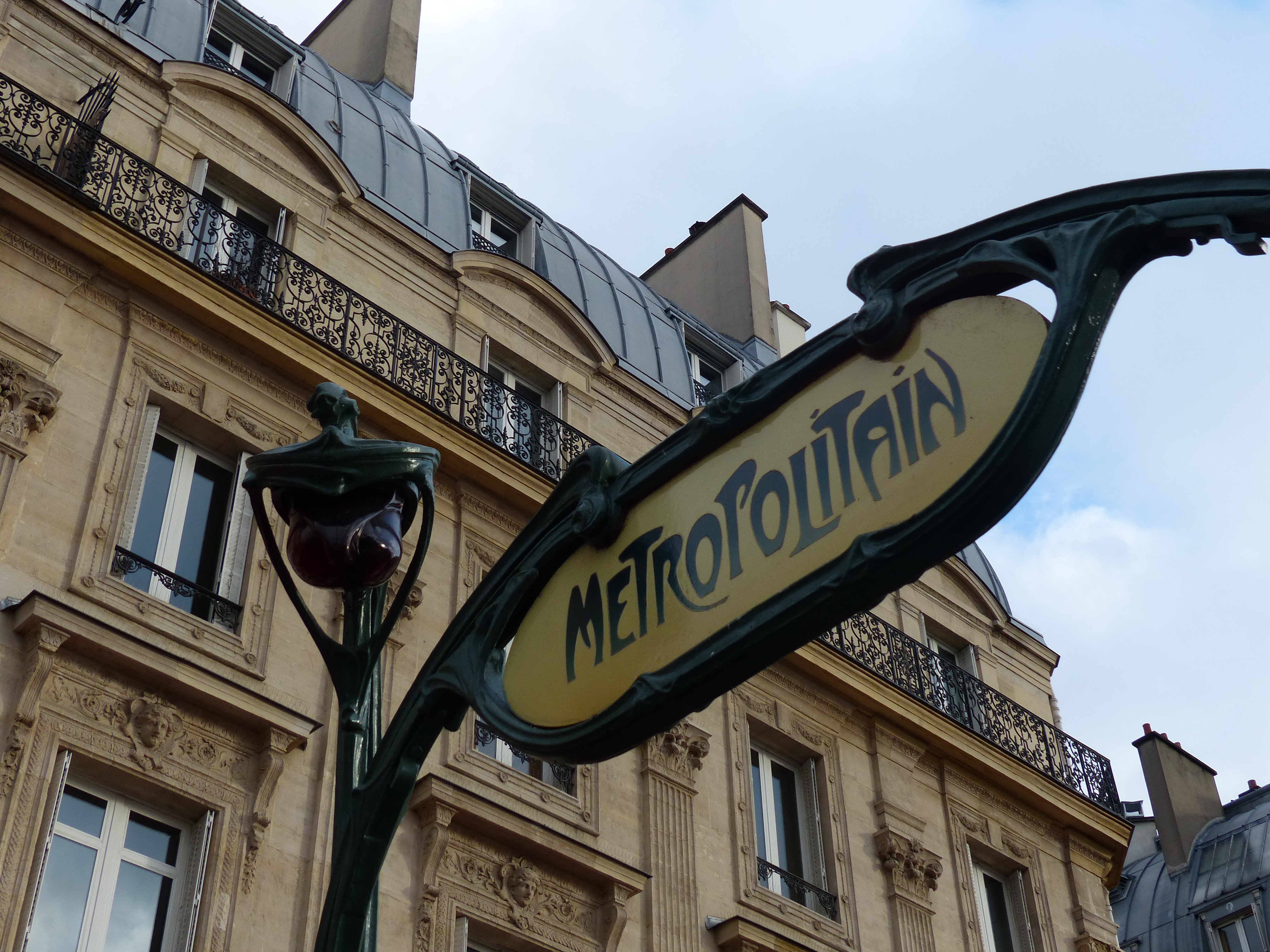
Our Paris home was located on rue du Louvre. For those of you who don’t speak French as well as I do, that means “street of the Louvre.” In other words, we were just a block from the freakin’ Louvre Museum. Every day, we stepped through the courtyard’s iron gate into a charming neighborhood with endless options for shopping and eating. Despite the cold drizzly weather, we felt giddy dining outside under the heat lamps and watching Parisians saunter by (often with a baguette under one arm and a little dog on a leash, I kid you not).

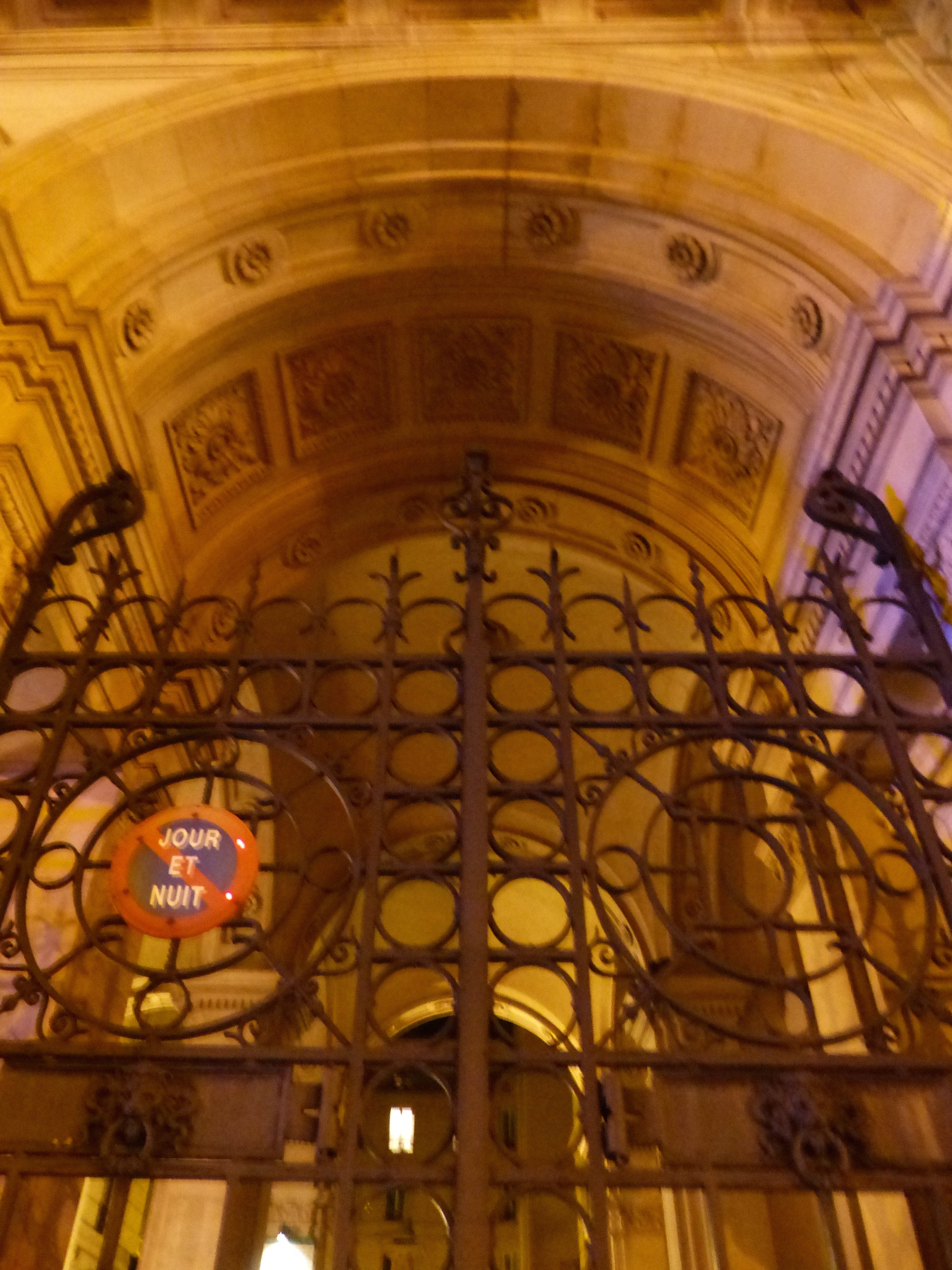
The gate to our courtyard.
P1060629

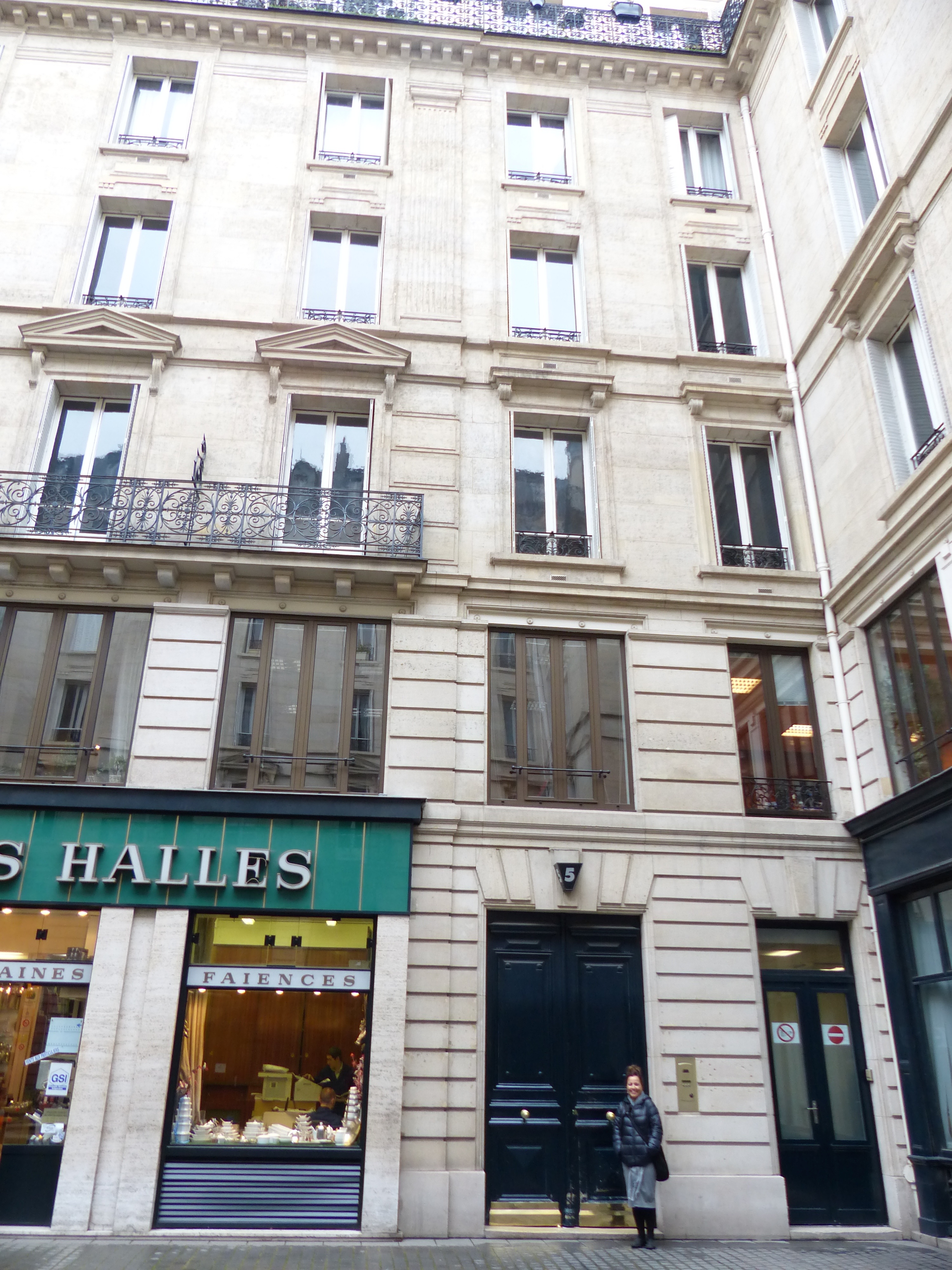
Sepi in front of our apartment building.
P1060452

Our ‘hood.
P1060454

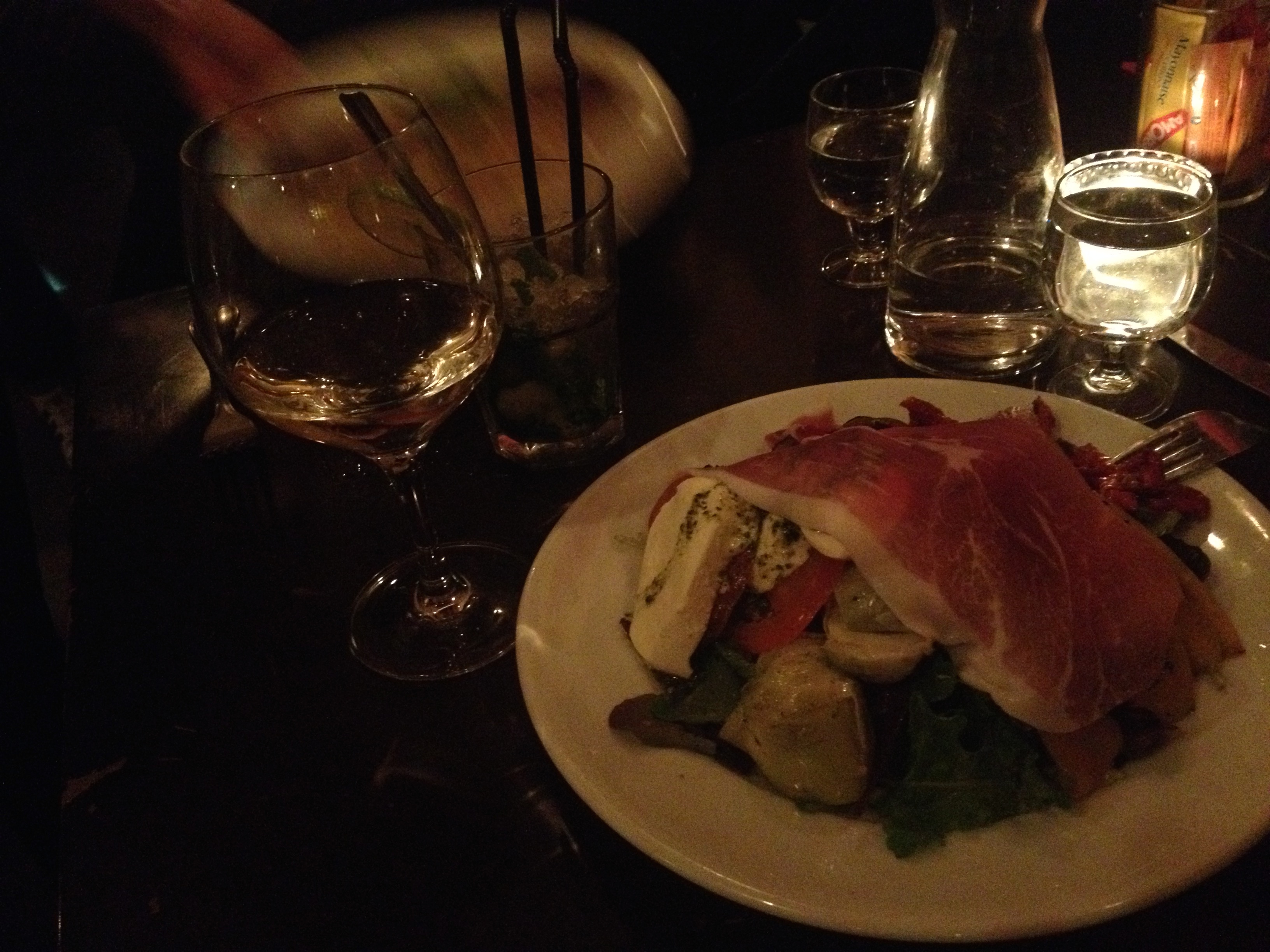
We ate many delectable meals at a neighborhood restaurant called Au Rocher de Cancale. According to Lonely Planet, “This 19th-century timber-lined restaurant (first opened in 1804 at No 59) is the last remaining legacy of the old oyster market. You can feast on oysters and seafood from Cancale (in Brittany) as well as other plats du jour.” I did not feast on oysters, but I did have some fantastic scallops and – more than once – this salad, which still gives me goosebumps of joy. Unless you live in a country that doesn’t regularly eat pork, you can’t fully appreciate that beautiful slice of prosciutto.
IMG_2610

One of our favorite parts of this trip was just WALKING. We walked everywhere. Such a treat.

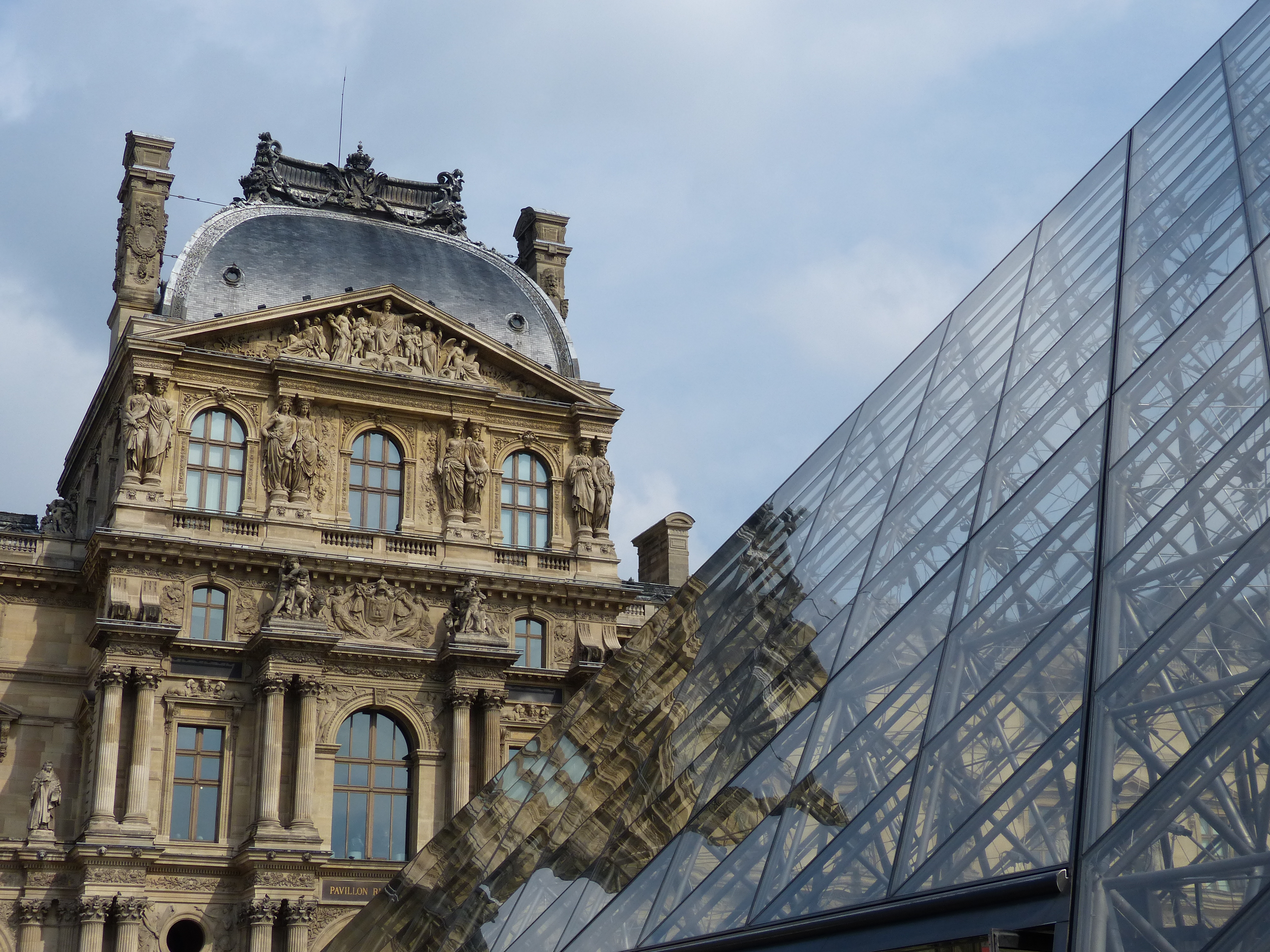
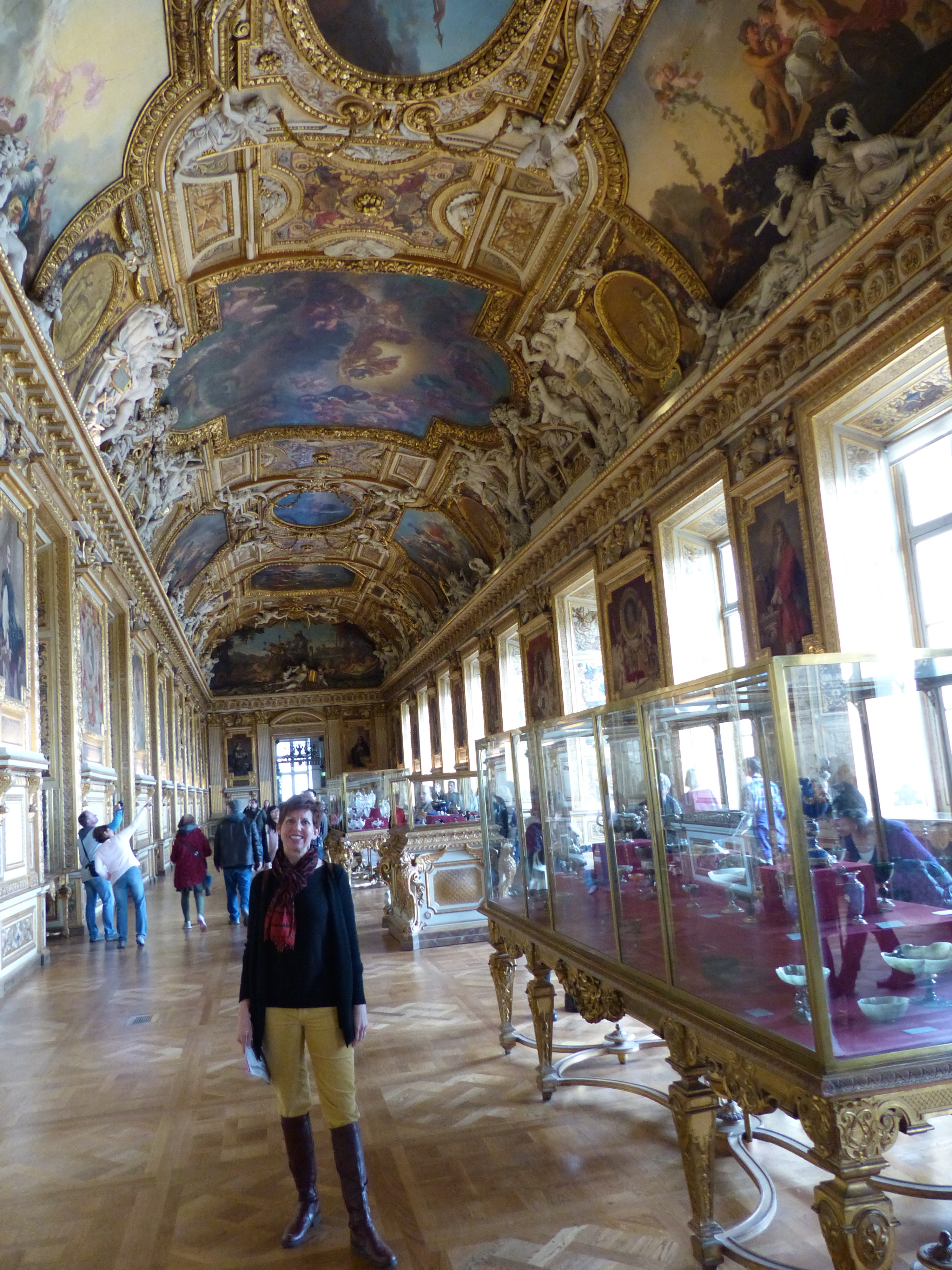
Tony and I spent a day at the Louvre (while Sepi and Paul explored other museums). The Louvre started as a fortress in 1190 to protect the capital from the Anglo-Norman threat but lost its defensive role as the city grew beyond its walls. It later served as a residence for a succession of kings, who linked the Louvre to the nearby Tuileries palace, demolished wings and built new ones, hired architects and designers to overhaul exteriors and interiors, and otherwise renovated and updated the sprawling palace. After Louis XIV moved to Versailles, he designated the Louvre as a sculpture gallery and exhibition space. According to the Louvre’s website, “The demolition of the Tuileries in 1882 marked the birth of the modern Louvre. The palace ceased to be the seat of power and was devoted almost entirely to culture. … Slowly but surely, the museum began to take over the whole of the vast complex of buildings.”

A few fun facts:
* The museum was evacuated, except for its heaviest pieces, at the outbreak of World War II in 1939. Nazi officials ordered the Louvre re-opened but found only sculptures covered in burlap bags.
* In 1981, President Francois Mitterand announced plans to restore the whole palace to function entirely as a museum.
* The glass Pyramid, built by I.M. Pei, opened in 1989 as the entrance to the museum. Here’s an interesting New York Times article about the inauguration.
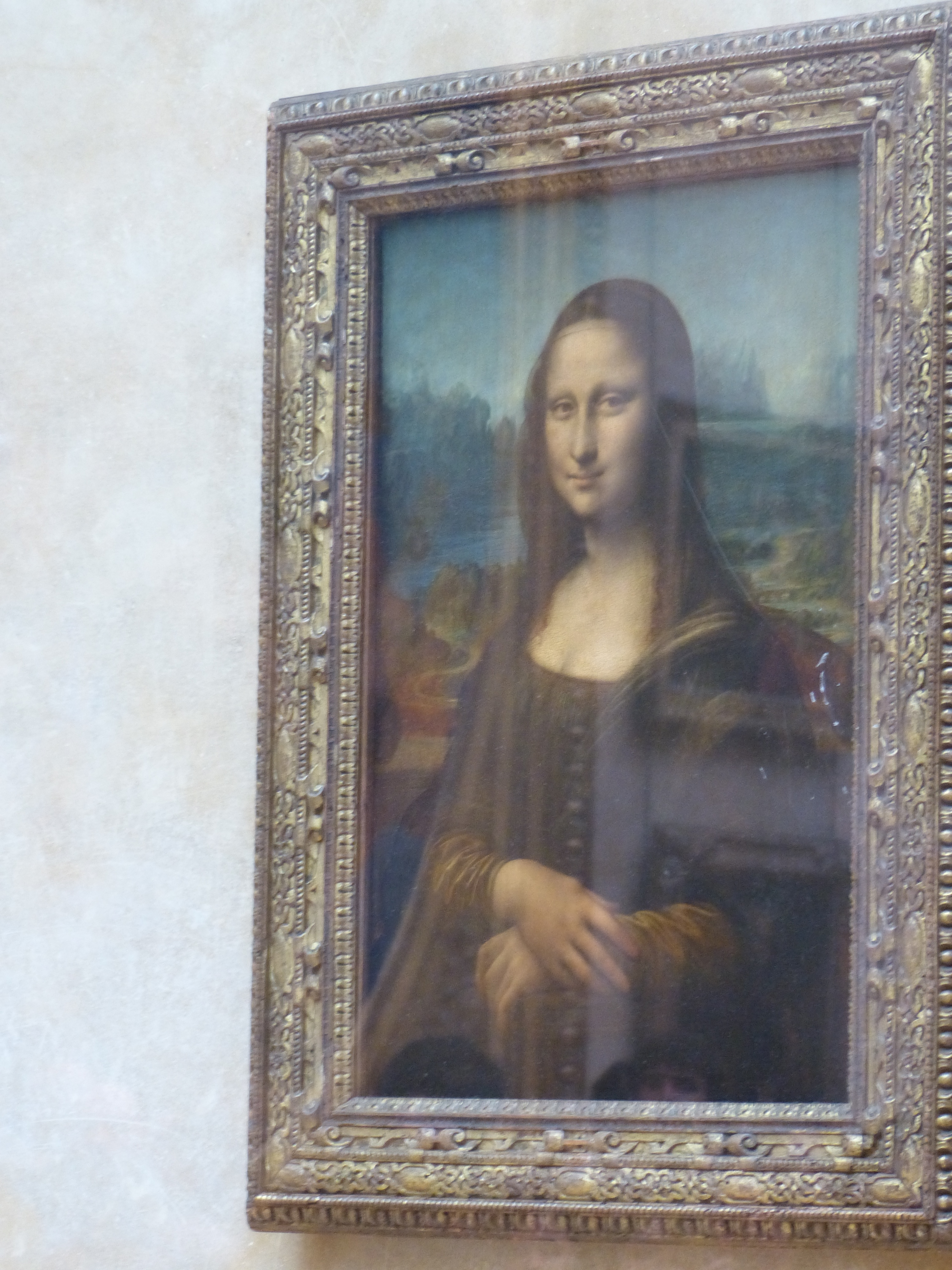
* The Mona Lisa hasn’t always been on display in the Louvre. According to Six Things You May Not Know About the Louvre, Napolean Bonaparte hung the painting in his bedroom for awhile. Also, it was stolen from the Louvre in 1911 and recovered two years later; hence the guards and bullet-proof glass.

As for the collection of masterpieces in the Louvre, its simply too vast and fantastic to describe. With more than 35,000 pieces of art spread out over 650,000 square feet of gallery space, it’s overwhelming. We obviously didn’t see it all in our daylong visit.

P1060516

P1060471

P1060506

P1060477

P1060485

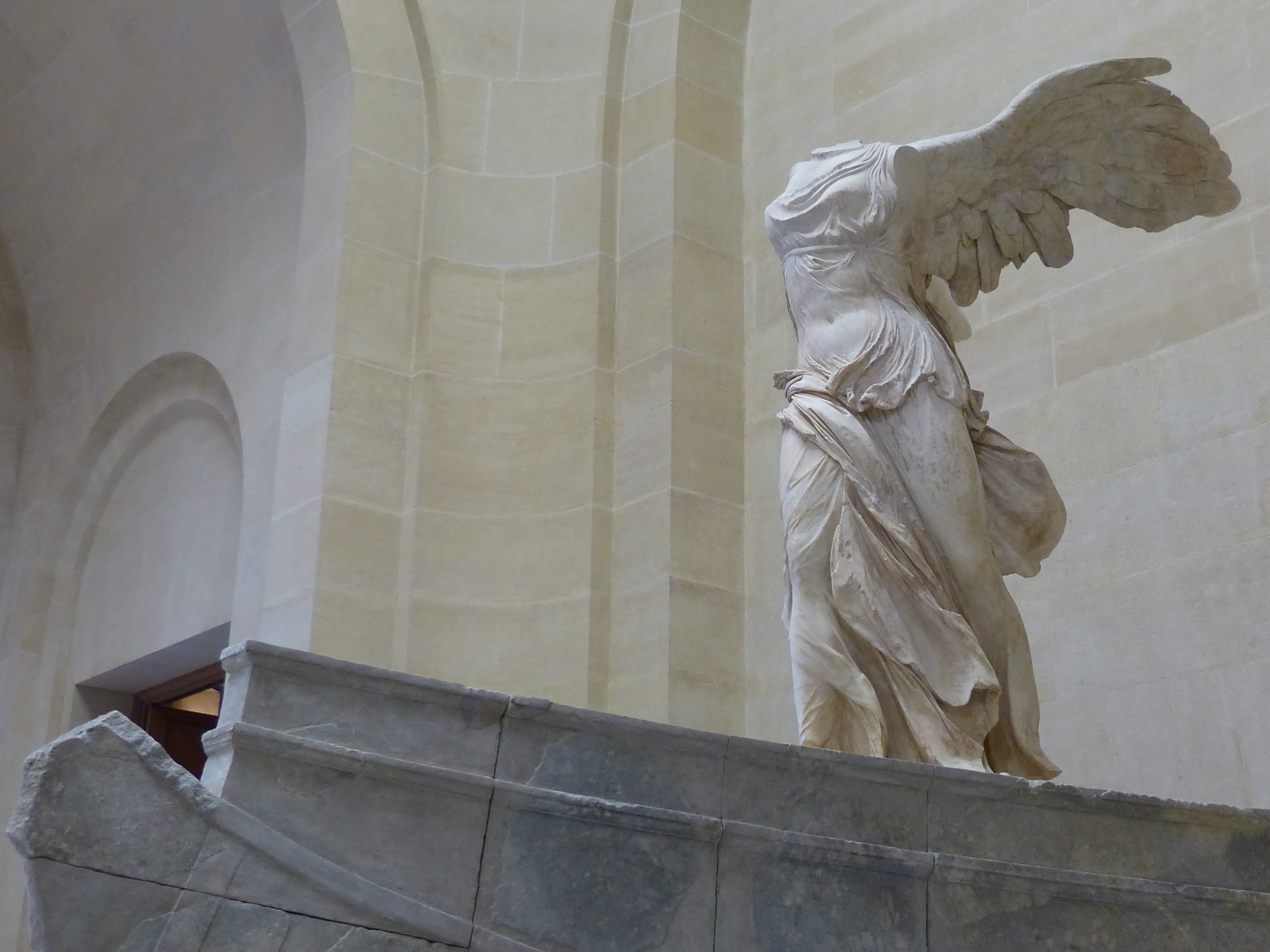
Whenever Tony and I visit a museum, we each pick one favorite object we would like to steal. I chose the Winged Victory of Samothrace, a 2,200-year-old sculpture of the goddess Victory found on a Greek island in 1863. It’s not a very original choice, as it’s listed as one of the top five things to see at the Louvre. However, newly restored, her white marble gleams as she leans into the wind to announce a naval battle triumph. Even headless, she exudes a spirit of sexy optimism and power with her wings outspread and her tunic whipping around her legs. I think she’d make a nice addition to our lakefront landscape. Here’s way more information about the sculpture from the Louvre’s website, and here’s an interesting Wall Street Journal article on the controversy surrounding her restoration.

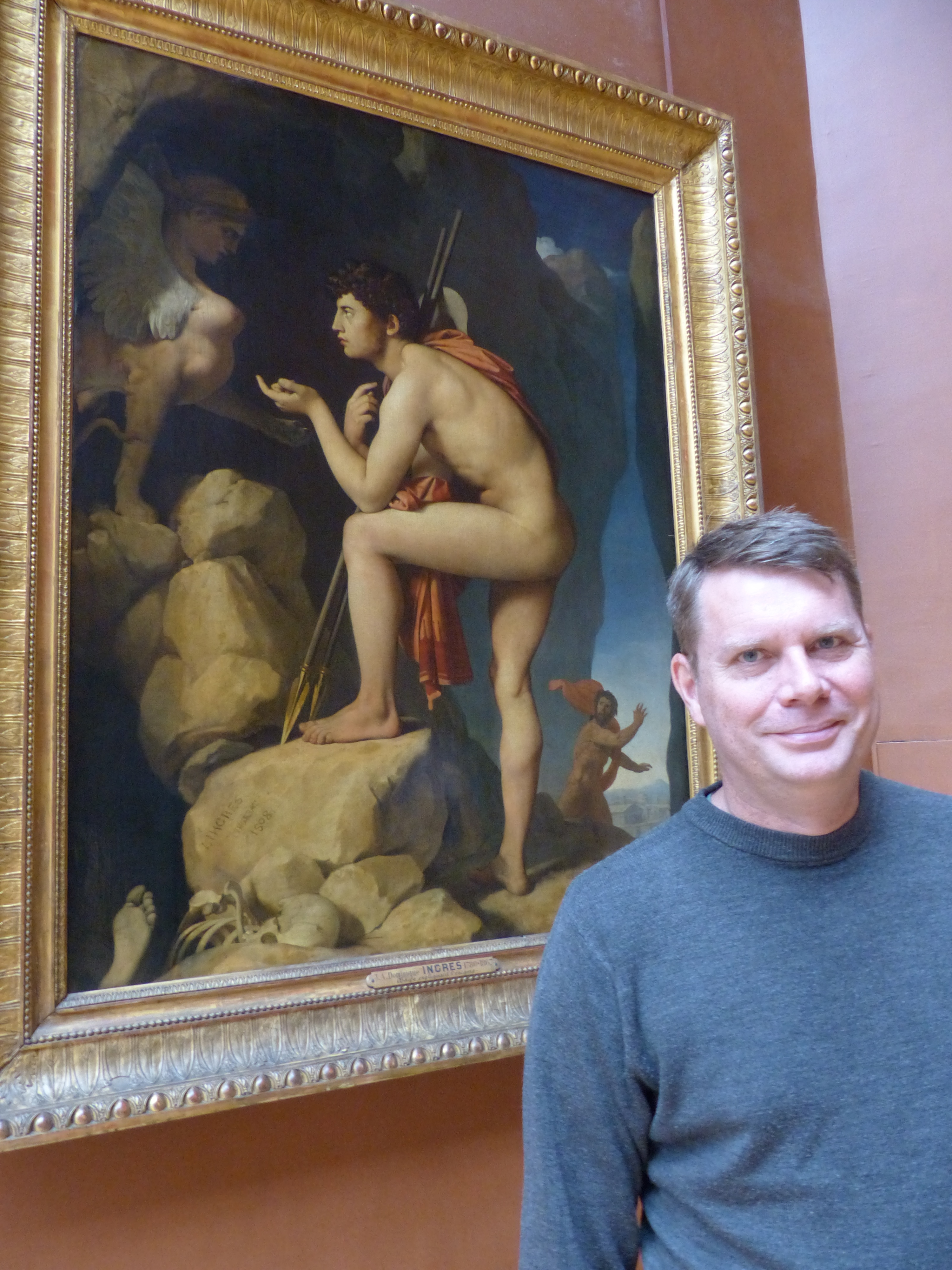
Tony chose a painting, Oedipus and the Sphinx, by Jean Auguste Dominique Ingres. It’s not something I would necessarily want hanging in my living room, but my sweet English teacher husband was enamored. As we stood there, he explained that the Sphinx – a monster comprising the head and chest of a woman, body of a lion and wings of a bird – posed a riddle to everyone trying to pass through this region of Thebes, with death as the punishment for a wrong answer. Tony even knew the riddle – “What is it that has a voice and walks on four legs in the morning, on two at noon, and on three in the evening?” – and the answer: man. Oedipus knew the answer, too, noting that man crawls on all fours as a child (morning), walks on two legs as an adult (noon), and uses a cane in old age (evening).
So, who won? Which would you steal?
My choice:
P1060481

Or Tony’s?
P1060490

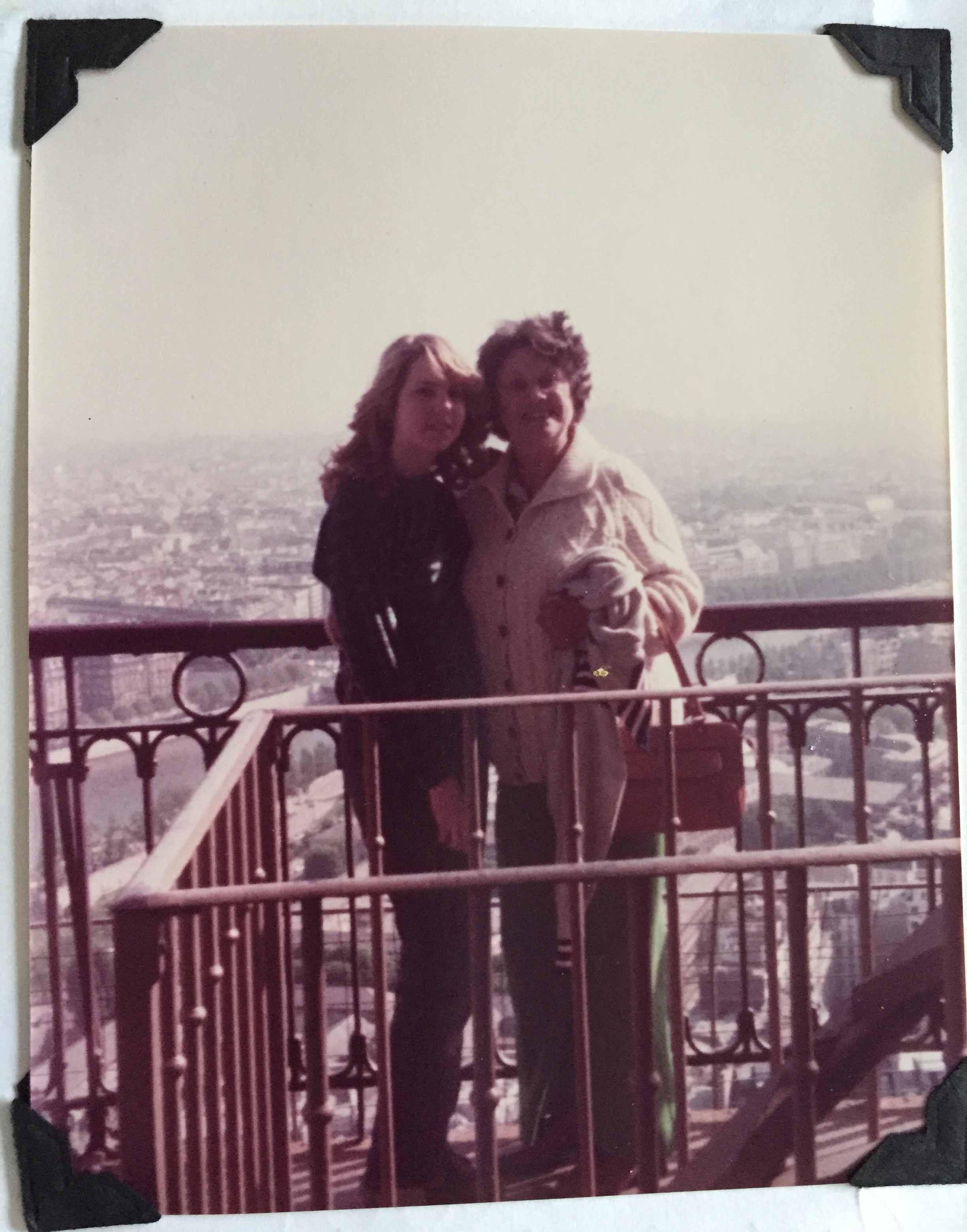
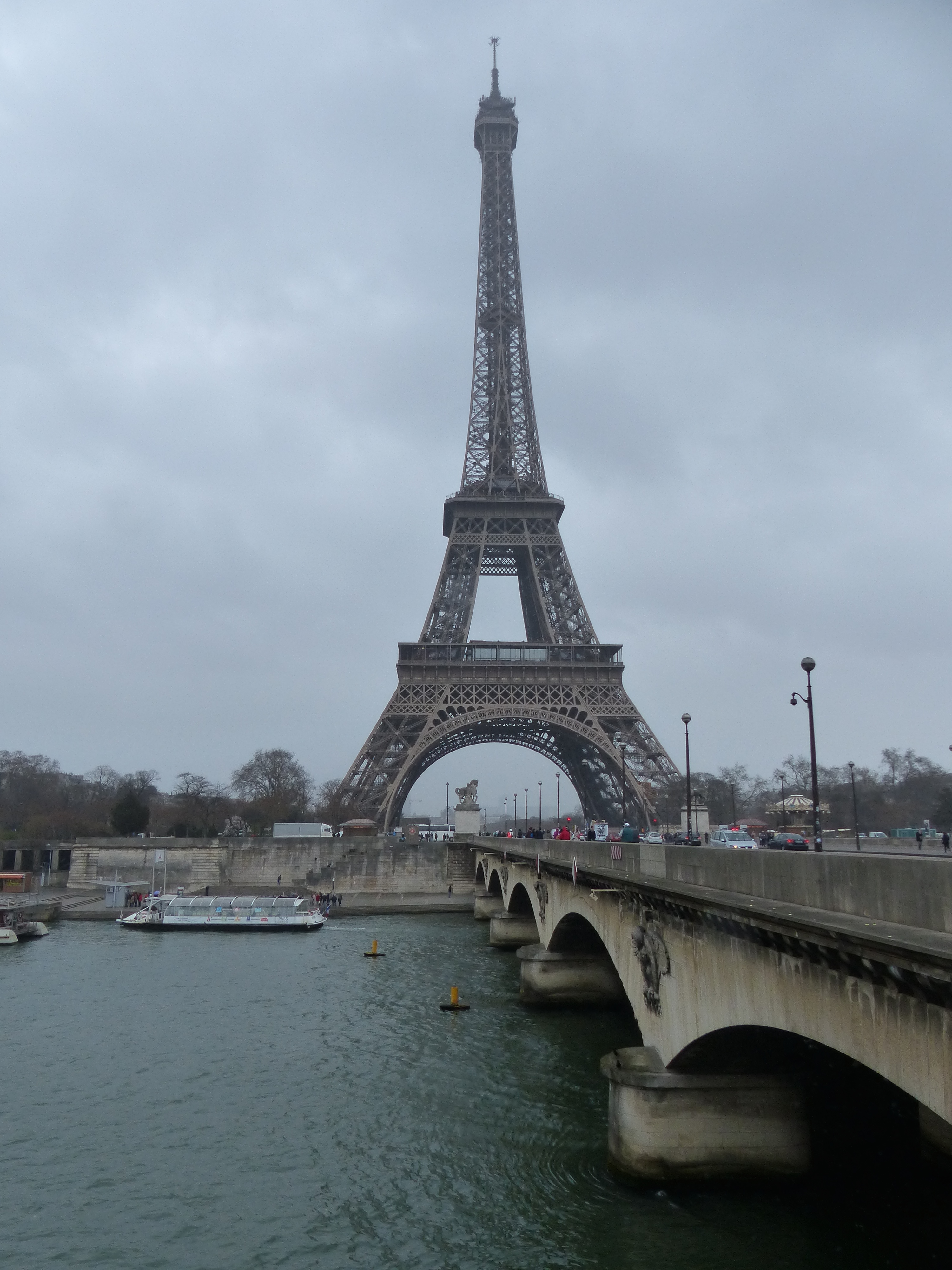
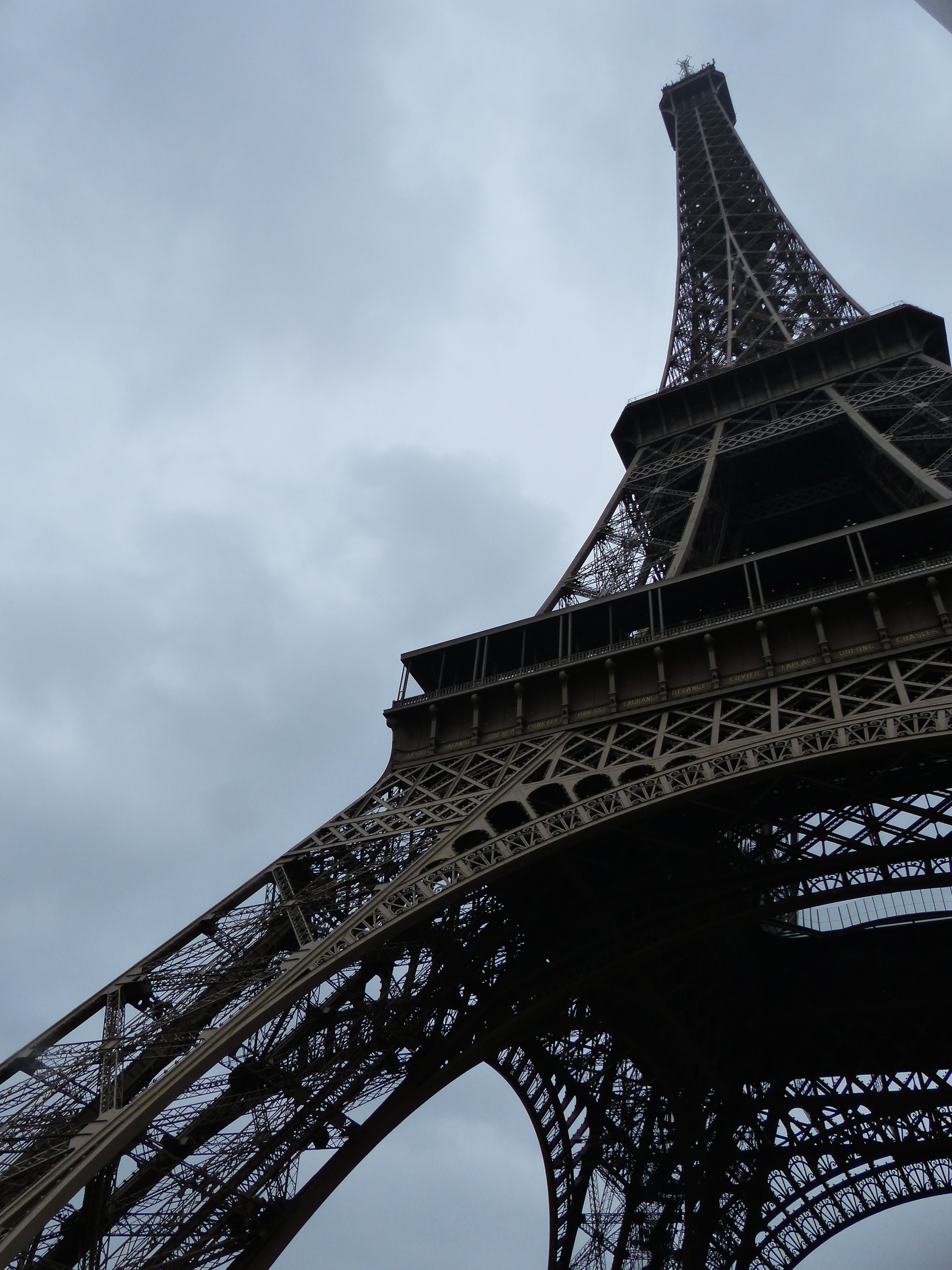
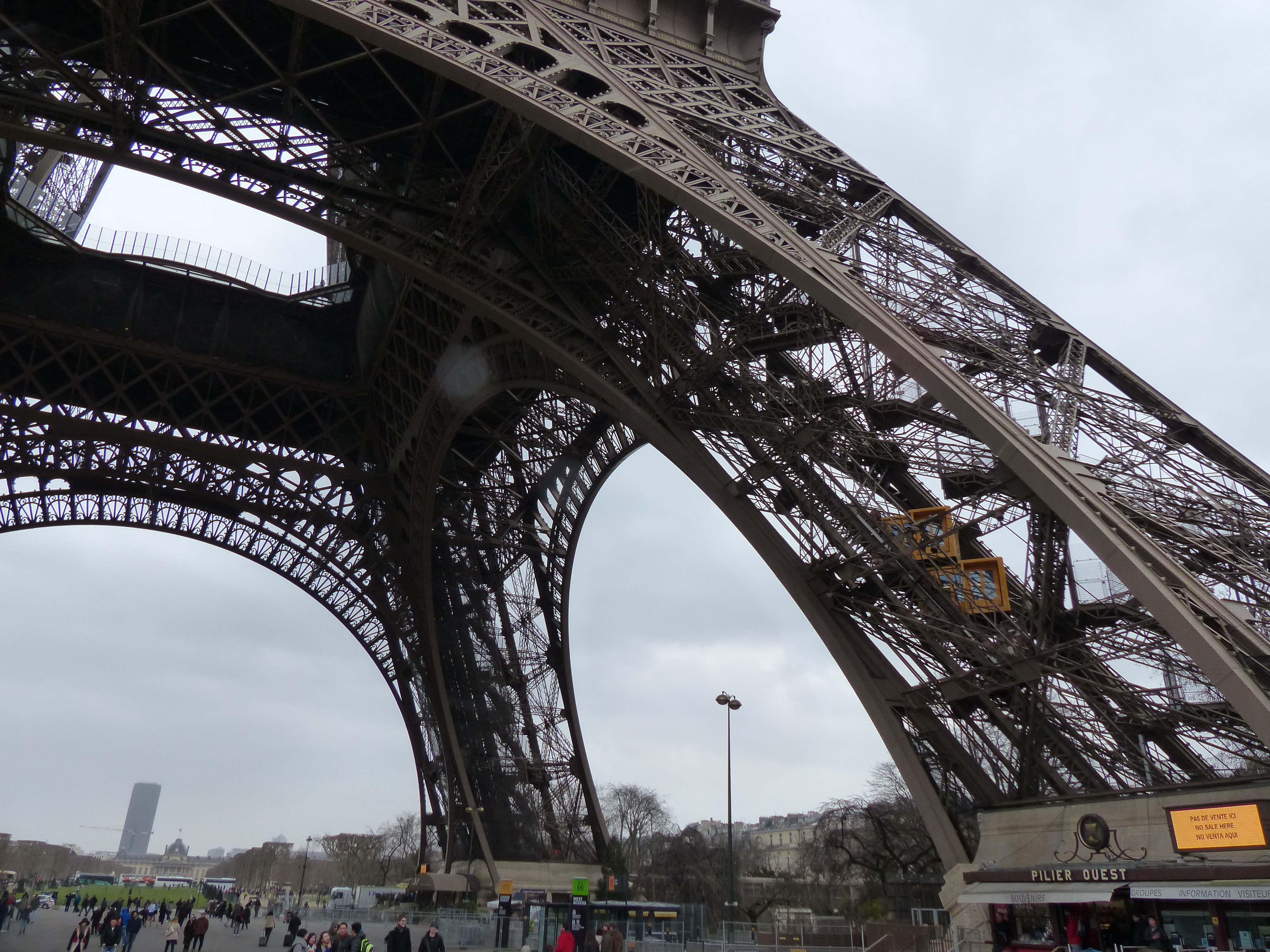
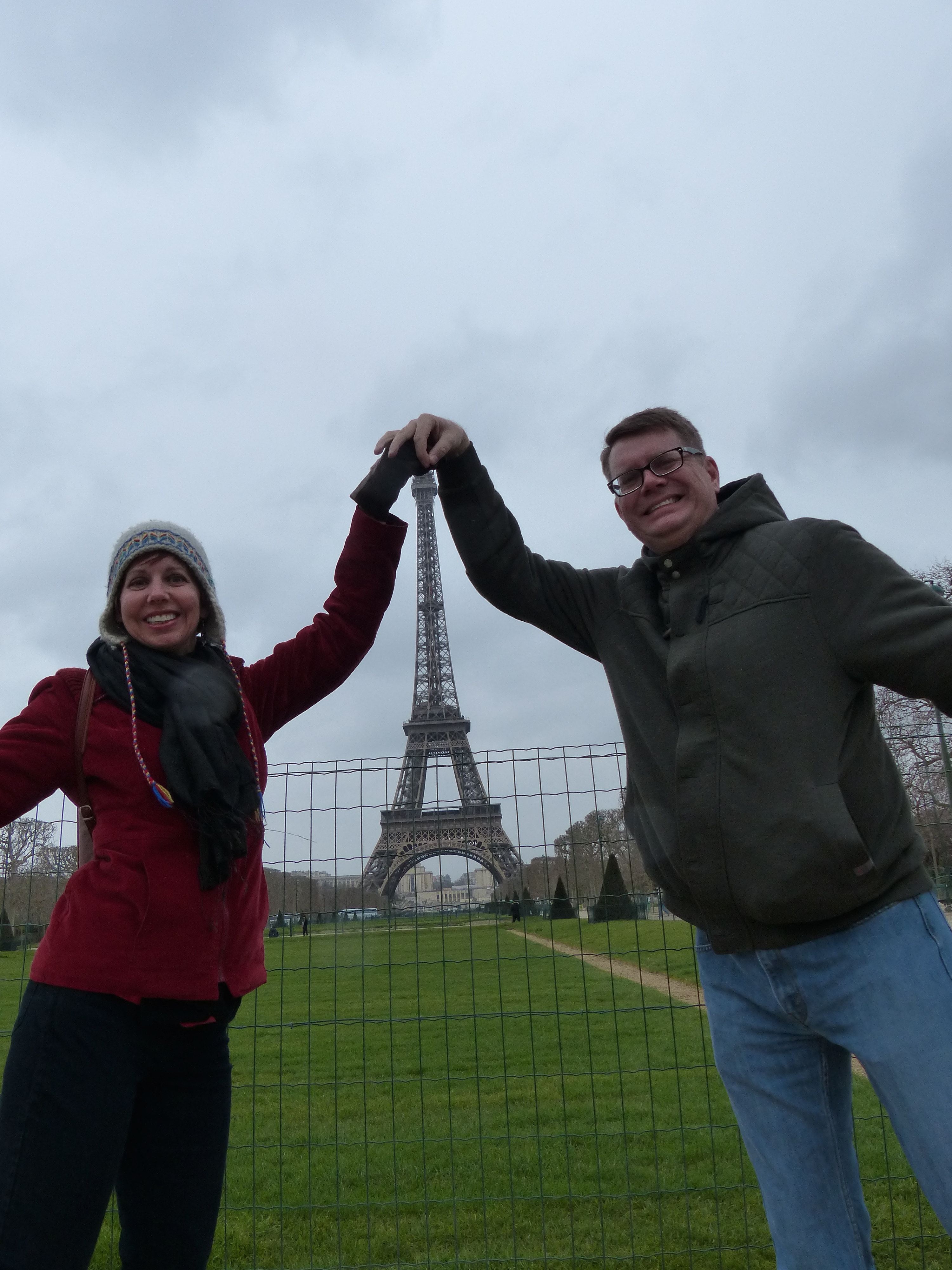
One sprinkly day, we took the Metro to the Eiffel Tower. We ducked into a café to wait out the rain (and enjoy a cup of tea), but the weather just got worse. Still, I was rather fixated on the artsy industrial angles of the tower and took about 975 photos, wiping drizzle off my lens after almost every shot. Warm Sharon always wants to get to the highest point of any tall tourist destination, but Cold Sharon couldn’t be bothered and took consolation in knowing she did it as a teenager. Here’s proof – with my Nana on the second floor of the Eiffel Tower in 1982.
IMG_0060

I’m a little bummed that we didn’t take the tour, though, so here’s the scoop from the official Eiffel Tower website:

The Eiffel Tower was built by Gustave Eiffel for the 1889 Exposition Universelle, which was to celebrate the 100th year anniversary of the French Revolution. Its construction in 2 years, 2 months and 5 days was a veritable technical and architectural achievement. “Utopia achieved”, a symbol of technological prowess, at the end of the 19th Century it was a demonstration of French engineering personified by Gustave Eiffel, and a defining moment of the industrial era. It was met immediately with tremendous success.
Only intended to last 20 years, it was saved by the scientific experiments that Eiffel encouraged, and in particular by the first radio transmissions, followed by telecommunications. For example, the radio signals from the Pantheon Tower in 1898; it served as a military radio post in 1903; it transmitted the first public radio programme in 1925, and then broadcast television up to TNT more recently.
Since the 1980s, the monument has regularly been renovated, restored and adapted for an ever-growing public. A universal Tower of Babel, almost 250 million visitors regardless of age or origin have come from all over the planet to see it since its opening in 1889. As France’s symbol in the world, and the showcase of Paris, today it welcomes almost 7 million visitors a year (around 75% of whom are foreigners), making it the most visited monument that you have to pay for in the world.
P1060524

P1060552

P1060550

P1060548

P1060532

Sepi and I actually huddled by a sign to escape the stinging rain. We’re such babies.
DSC00298

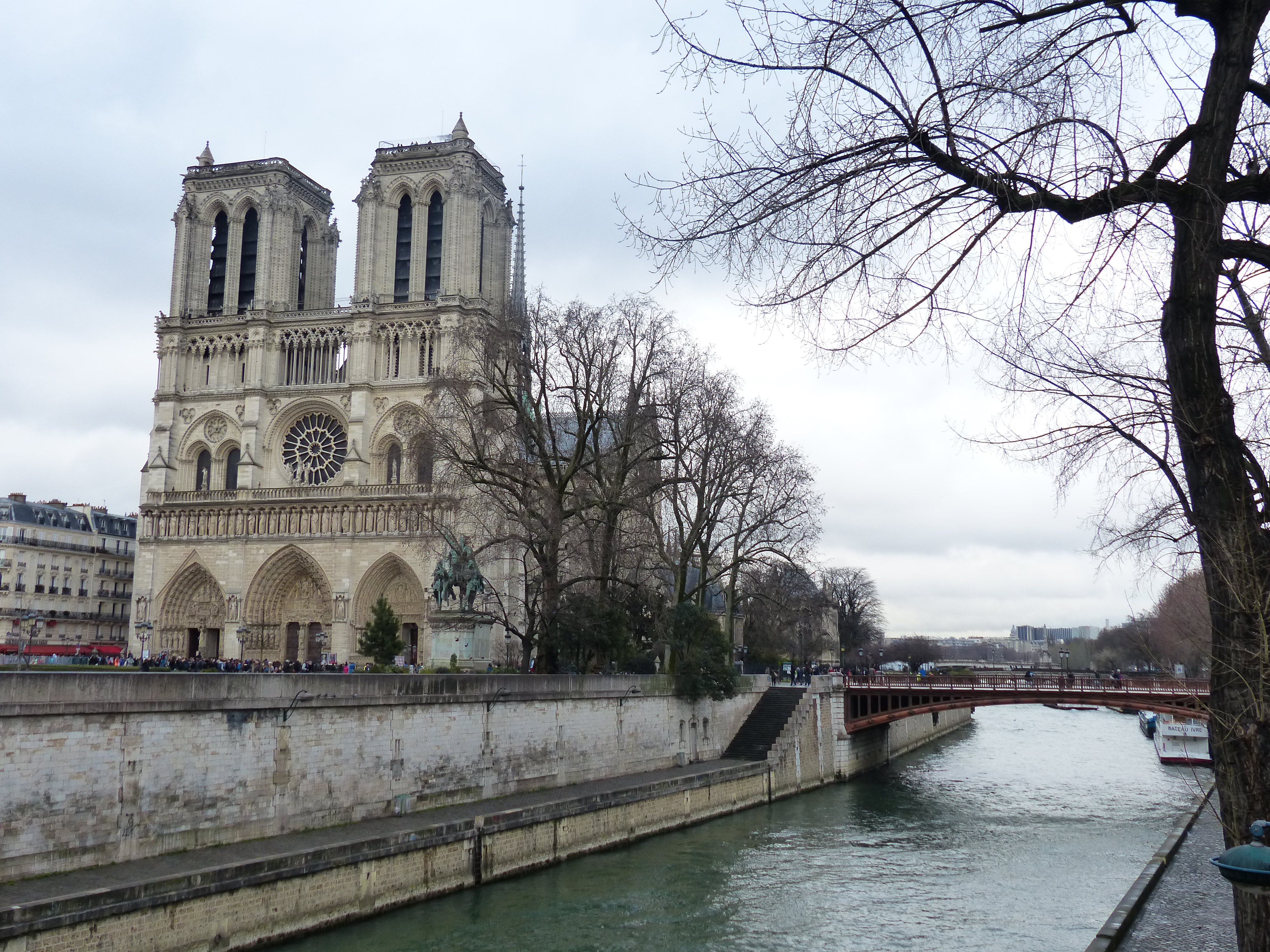
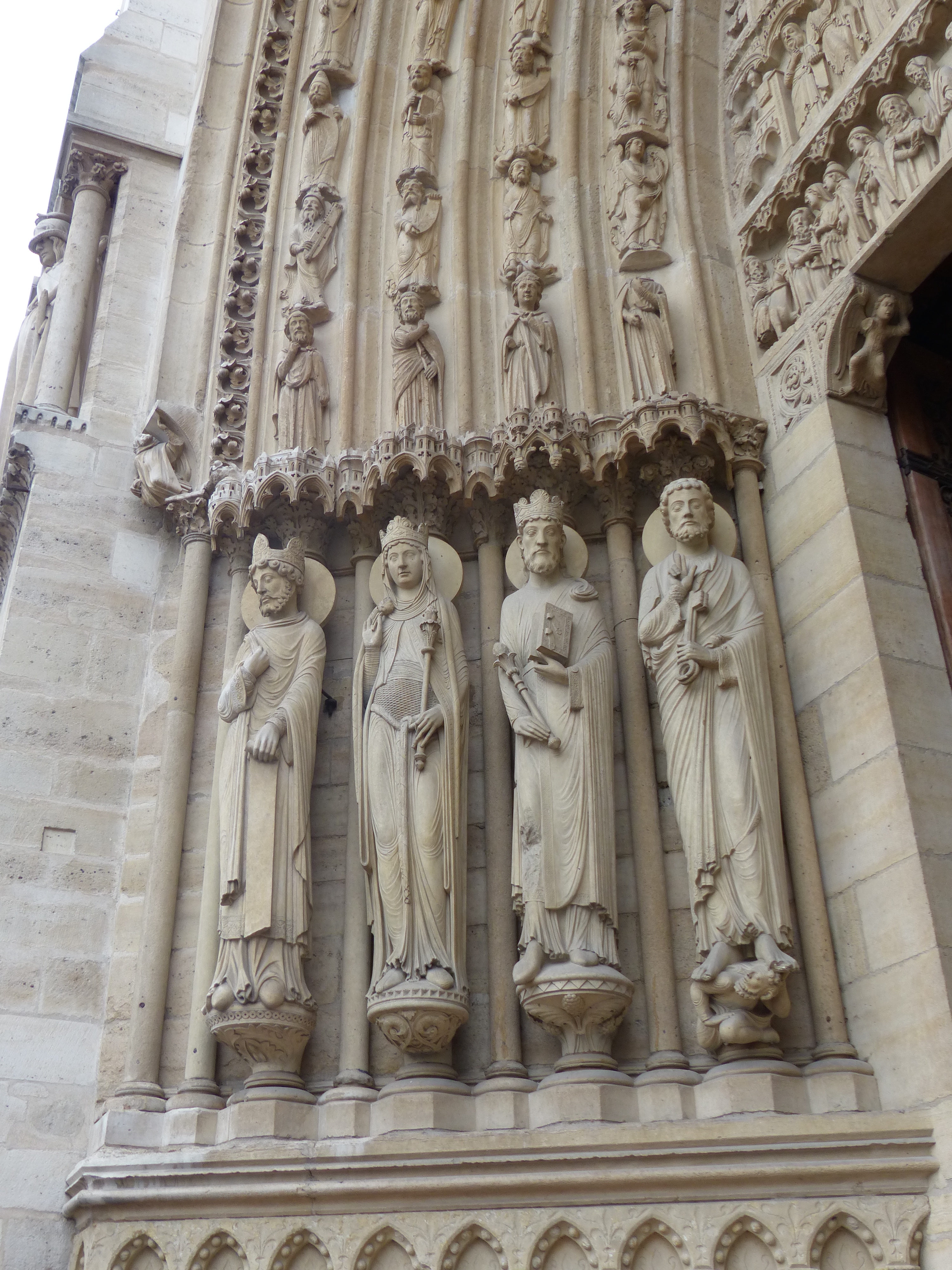
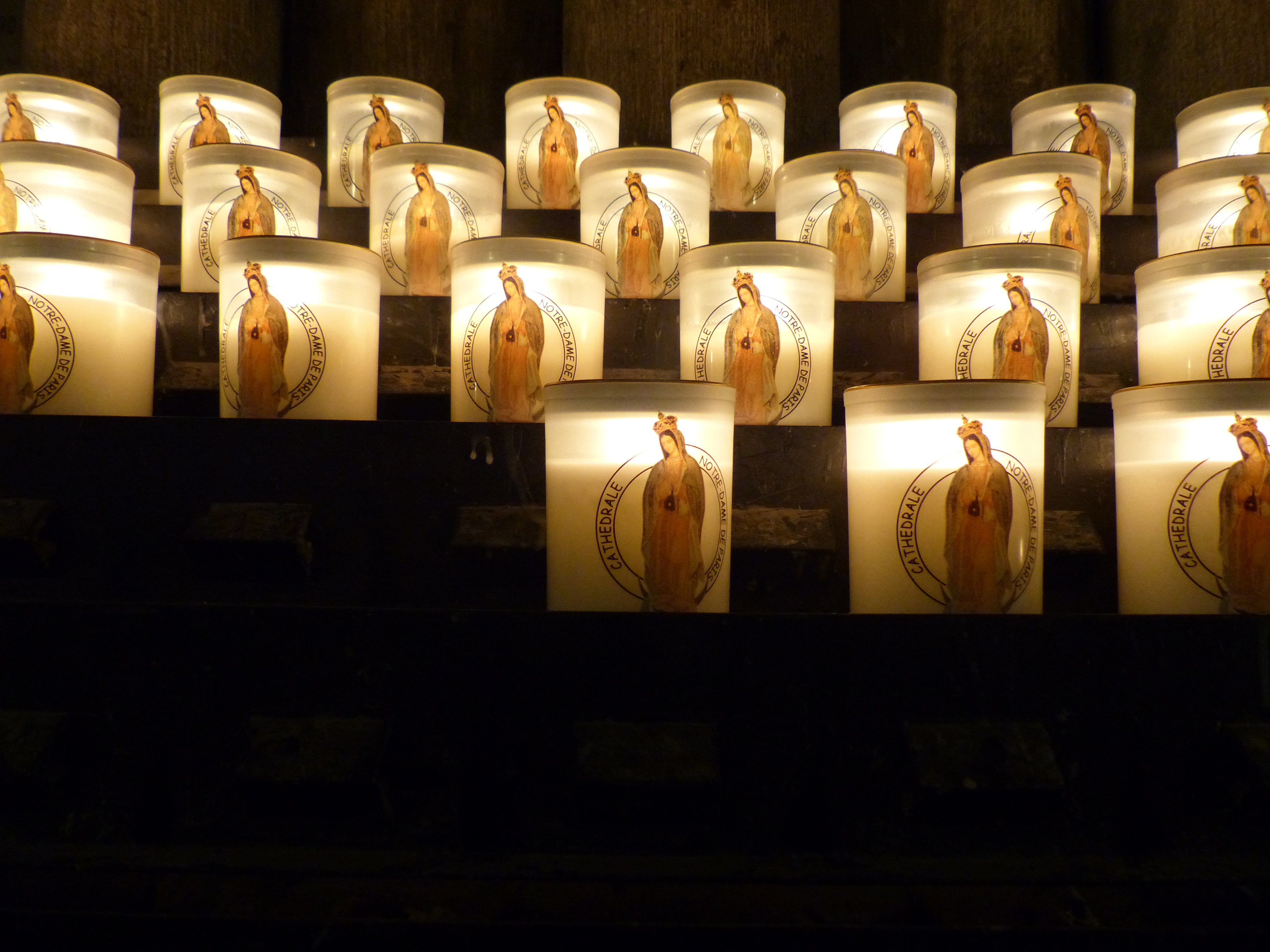
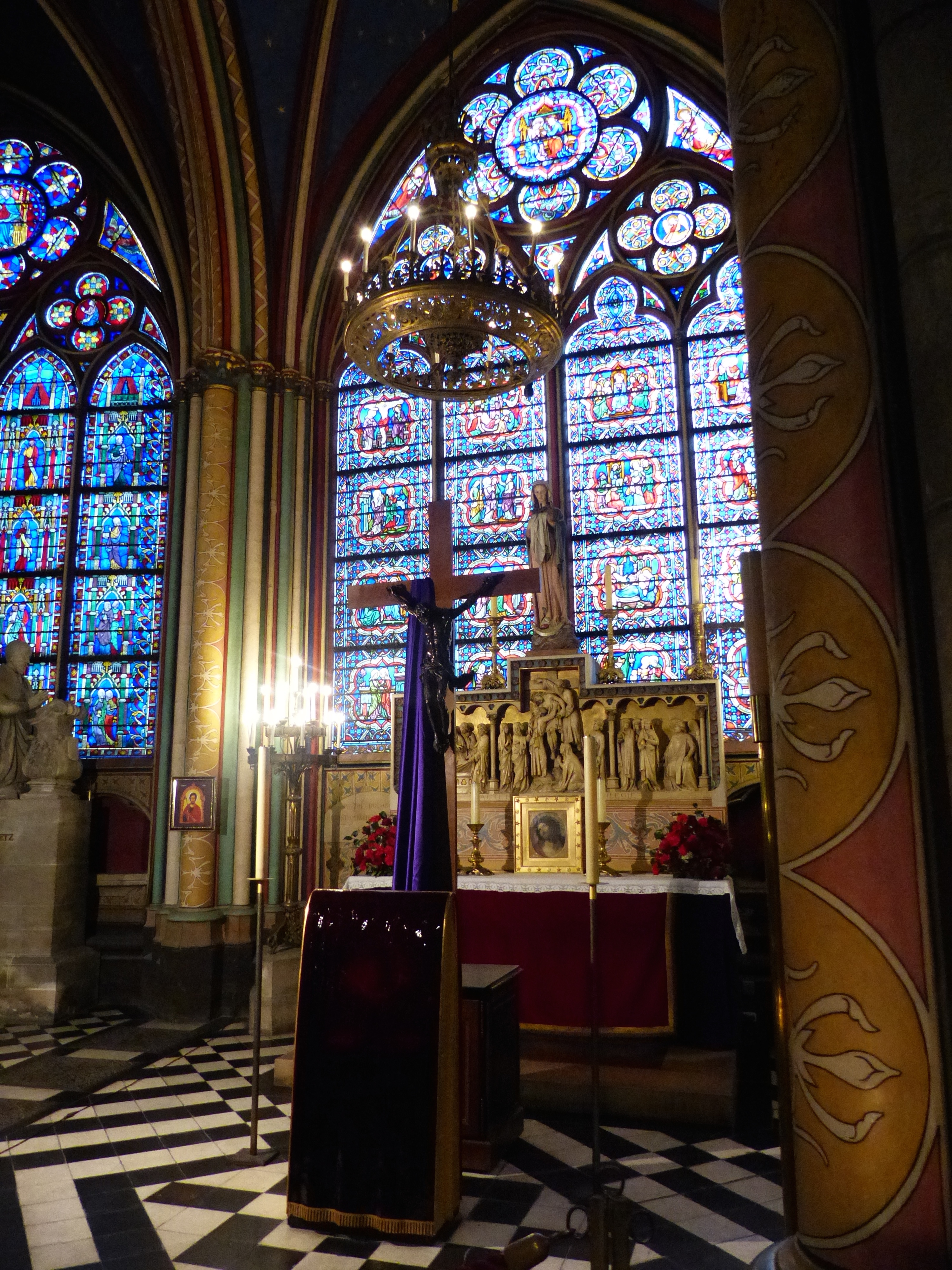
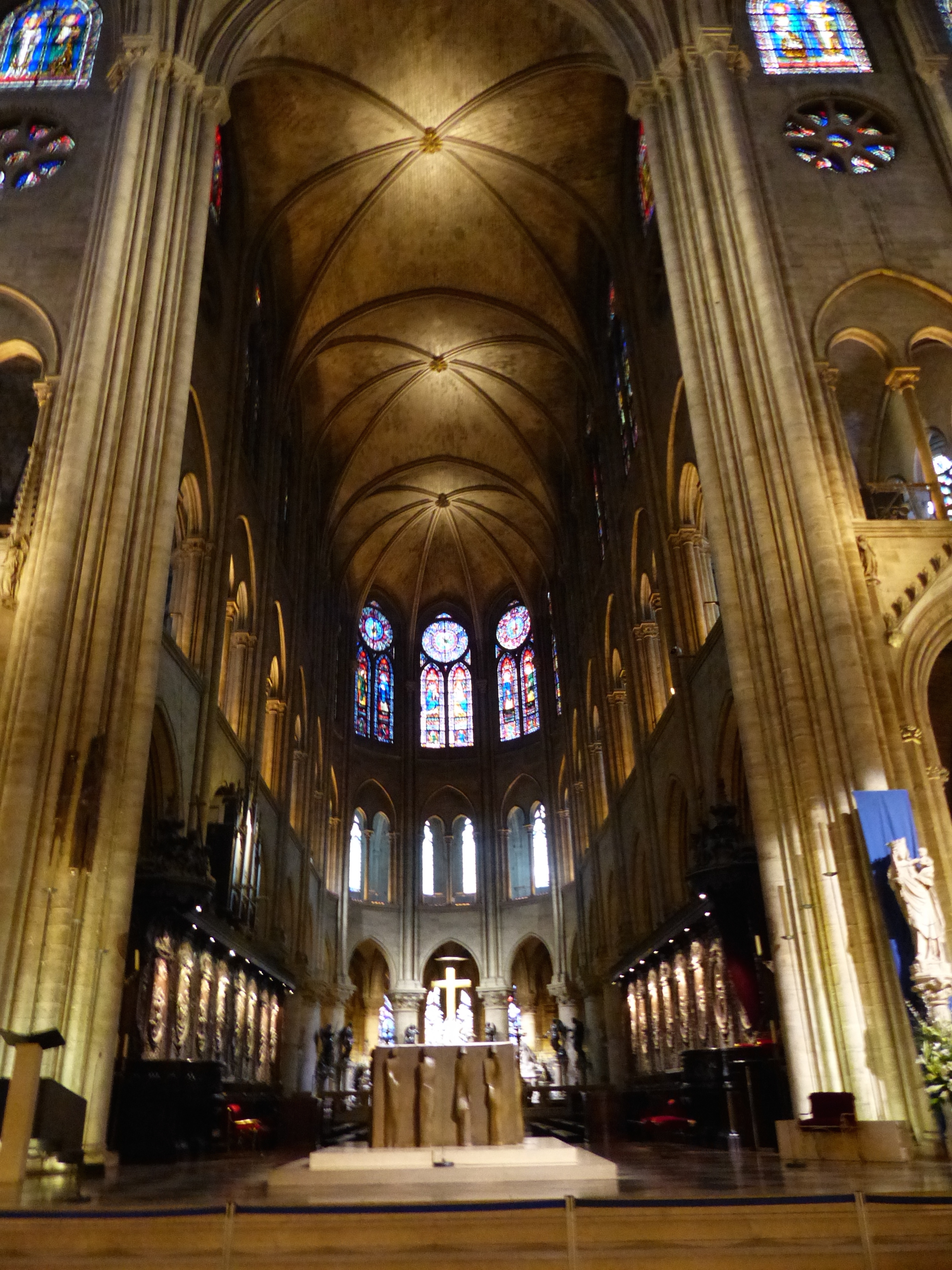
From the Eiffel Tower, we took the Metro to the Notre Dame Cathedral. The Notre Dame was built starting in 1163 on the Île de la Cité, a natural island in the Seine and the seat of power in medieval times. You can visit the towers (387 steps to the top), and you know I wanted to do that! But the lines were long, and the rain was cold. So … instead, we walked through the church and then popped into a café for more tea and pastries. Notice a pattern?

Joan of Arc was burned at the stake in 1431 but declared a martyr in 1456 and beatified at Notre Dame by Pope Pius X in 1909. As for the hunchback? Well, Victor Hugo invented the character of Quasimoto and wrote his book as a way of promoting the church’s traditional architecture and gothic restoration. However, researchers have found evidence of a huchbacked sculptor who worked at the Notre Dame in the 1820s – about the time Hugo was working on his novel. Coincidence?

P1060584

P1060555

P1060573

P1060561

P1060569

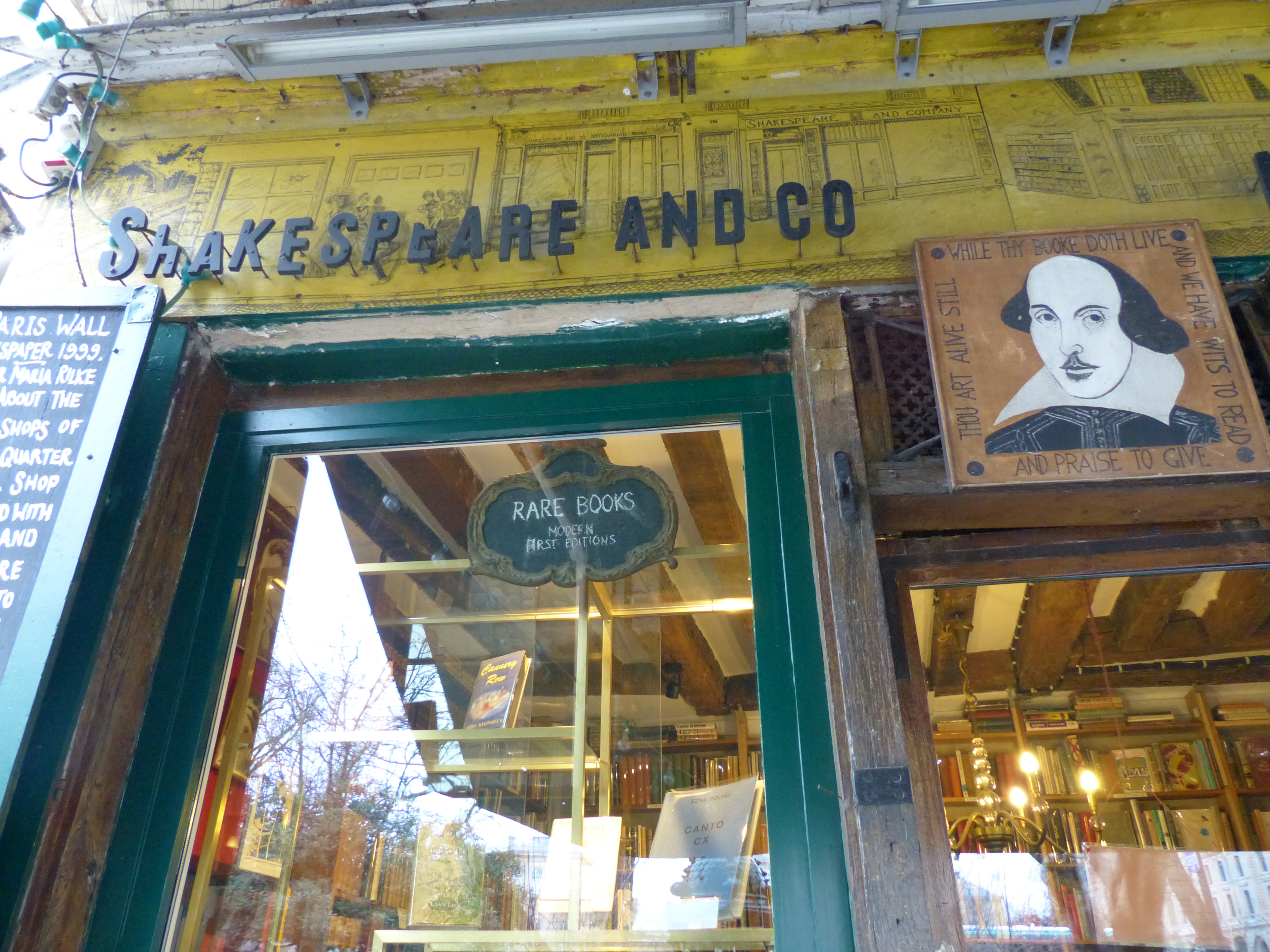
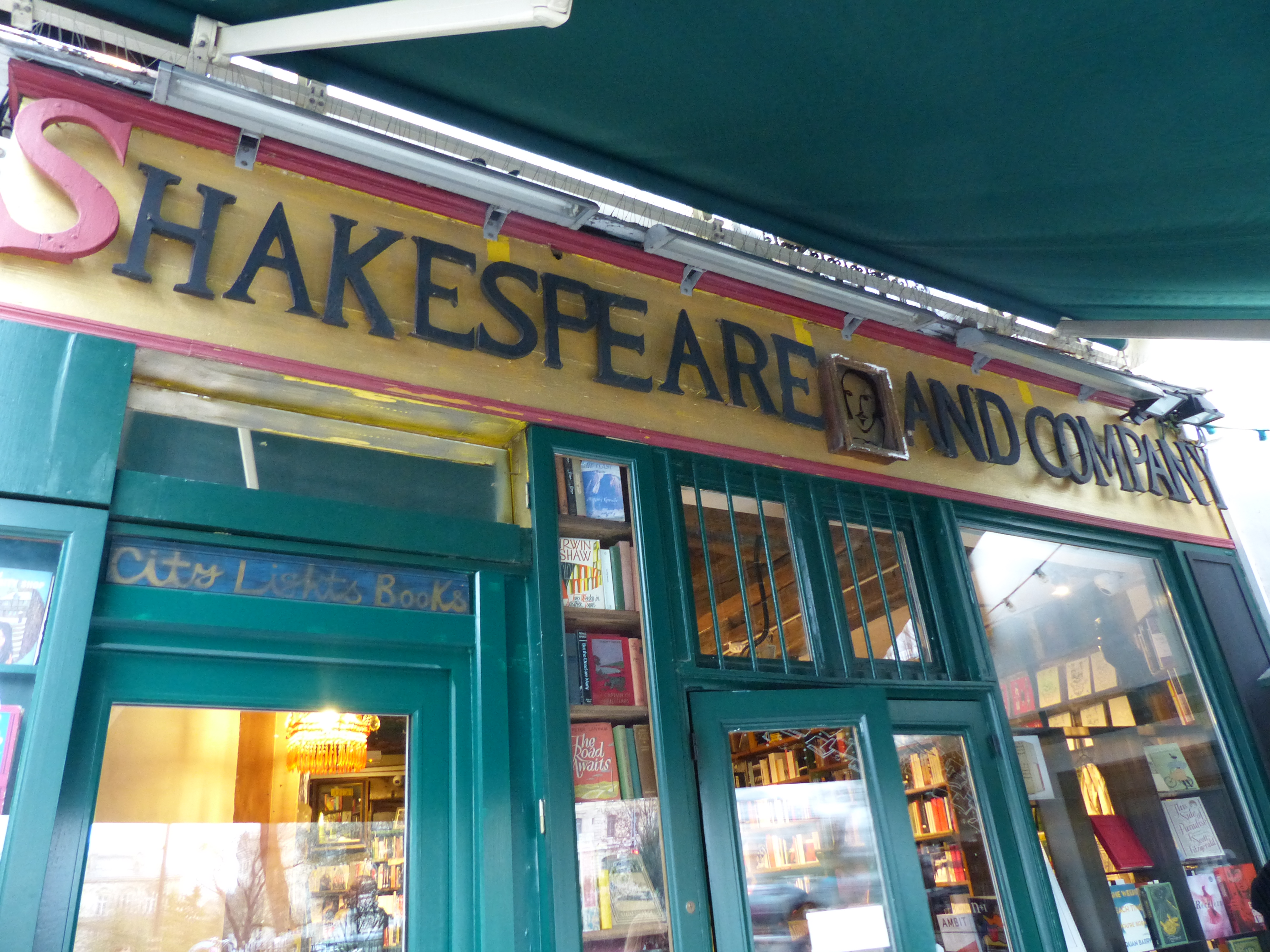
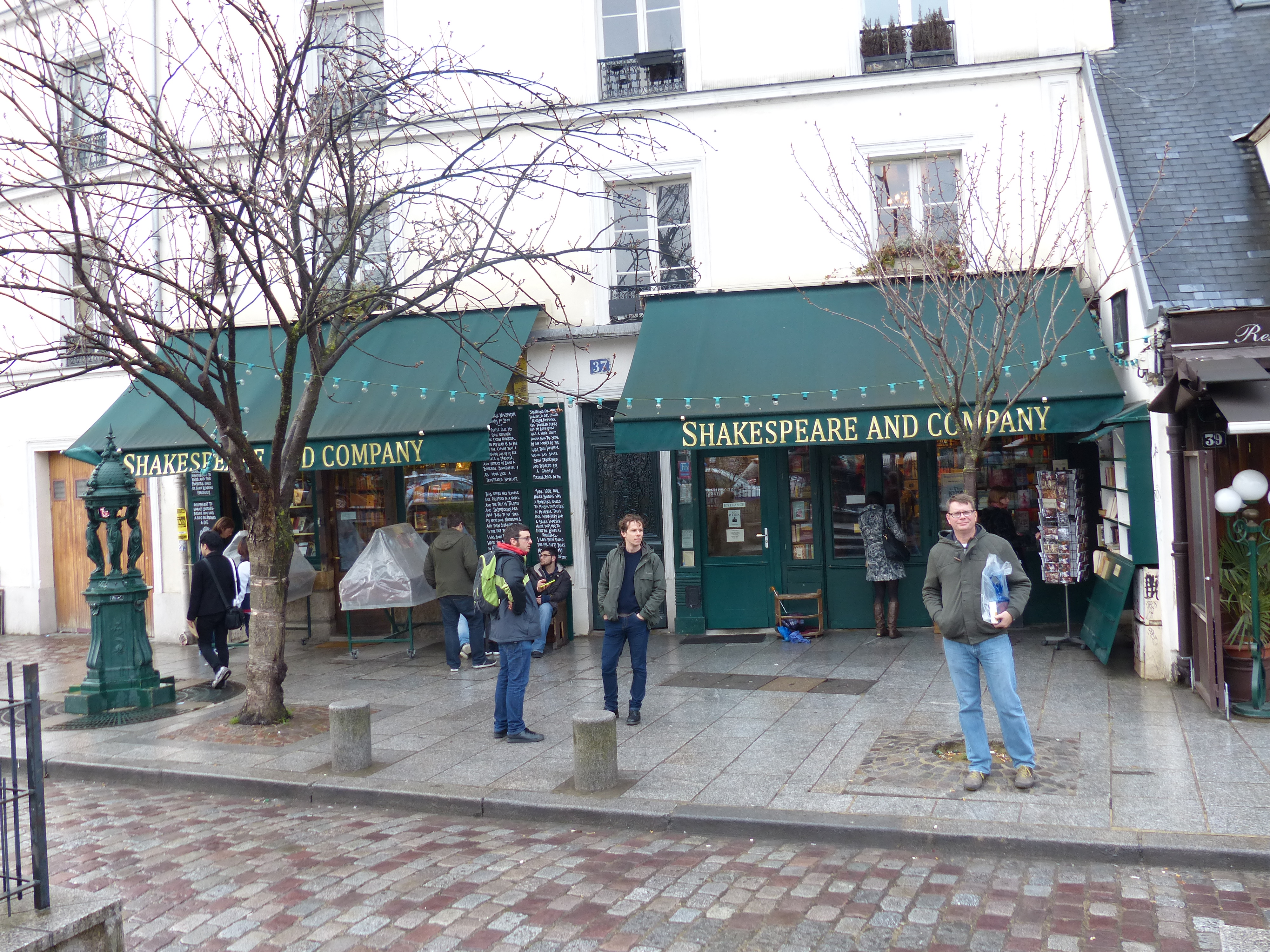
I had read the fascinating Vanity Fair article, “In a Bookstore in Paris,” last fall about Shakespeare and Company. The opening blurb says, “Perhaps the most famous independent bookstore in the world, Shakespeare and Company can feel like something of a literary utopia, where money takes a backseat and generations of writers—Allen Ginsberg, Henry Miller, Anaïs Nin, William Styron, Martin Amis, Zadie Smith, Dave Eggers, among others—have found a Paris home. Chronicling the life of its late owner, the eccentric, irascible, and visionary George Whitman, Bruce Handy meets Shakespeare’s greatest asset in the age of Amazon: Whitman’s daughter, Sylvia.”

Guess what happens to be just a short walk from the Notre Dame?
P1060577

P1060575

P1060580

Knowing the bookstore’s history made it all the more special. We wedged ourselves into the various nooks to browse the books, chuckled at the whimsical signs, and fantasized about bumping into Hemingway or even Frank Sinatra. Sure, there were too many tourists so we felt rushed. We couldn’t plop down on a sofa to chat about the brilliant writers who may have sat on that very same sofa. Tony bought a beautiful hardback copy of Les Misérables, which the cashier stamped with the Shakespeare and Company logo. We snapped a few photos from the street (no pictures allowed inside, dang it). Pretty special.
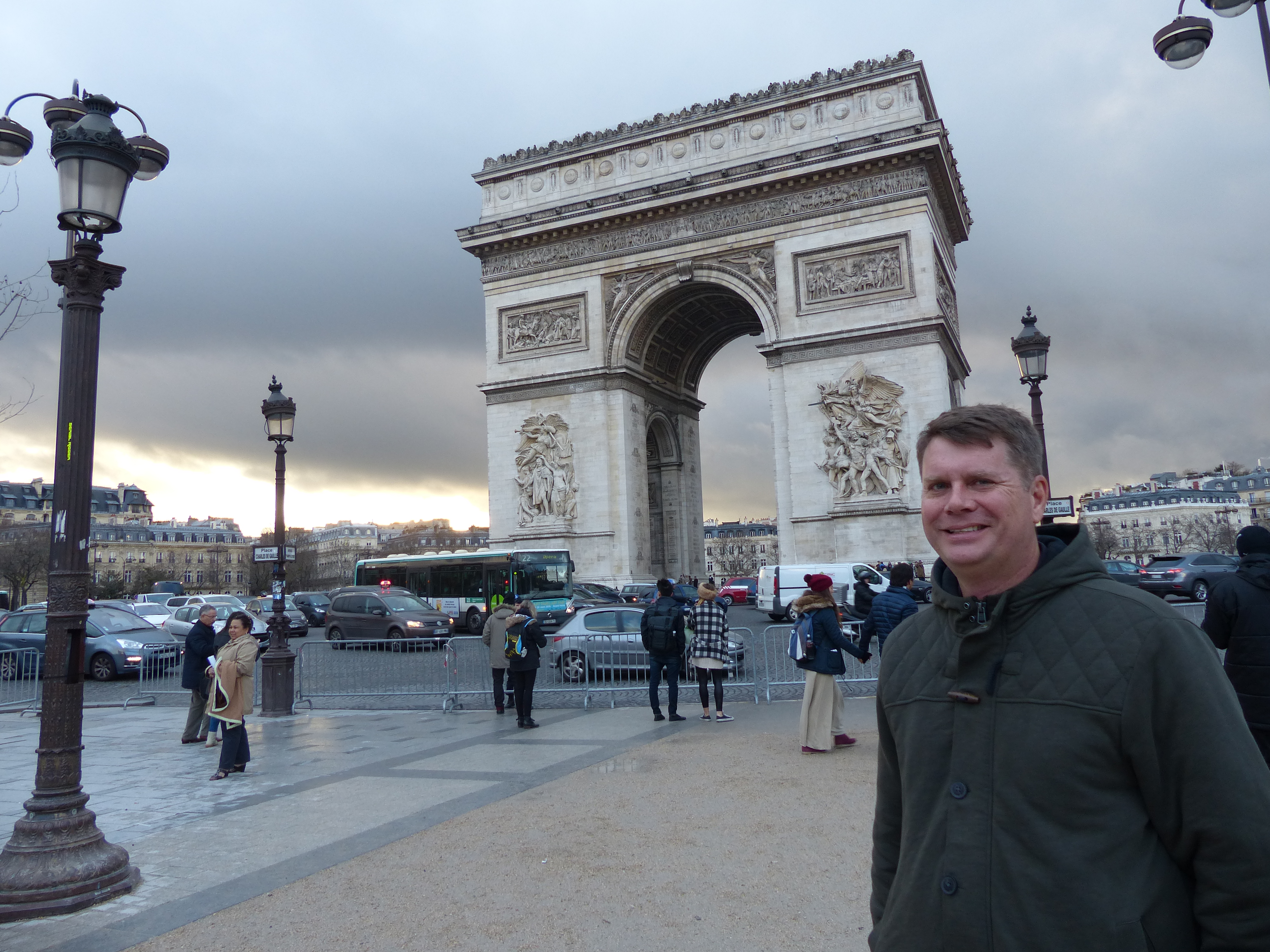
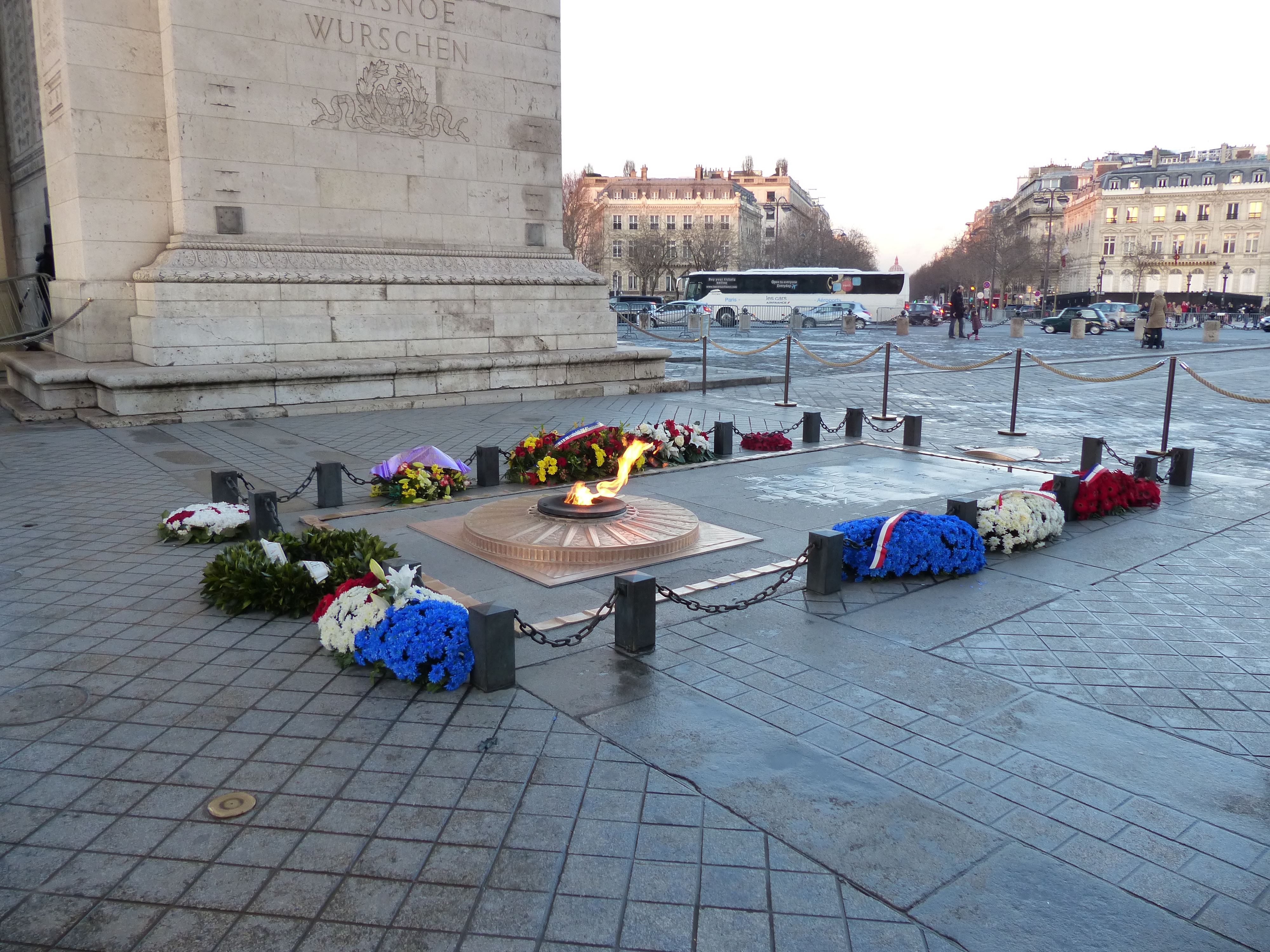
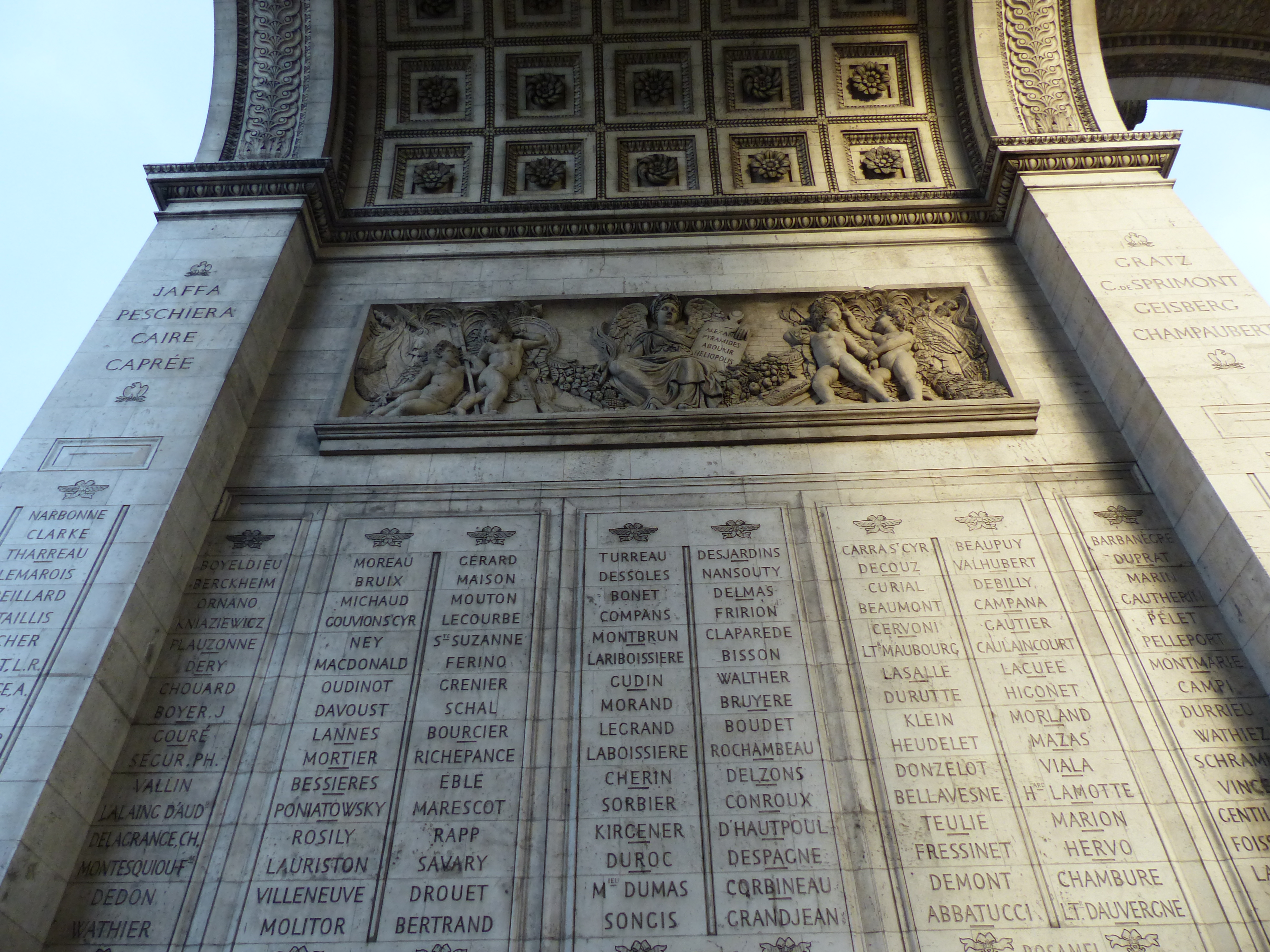
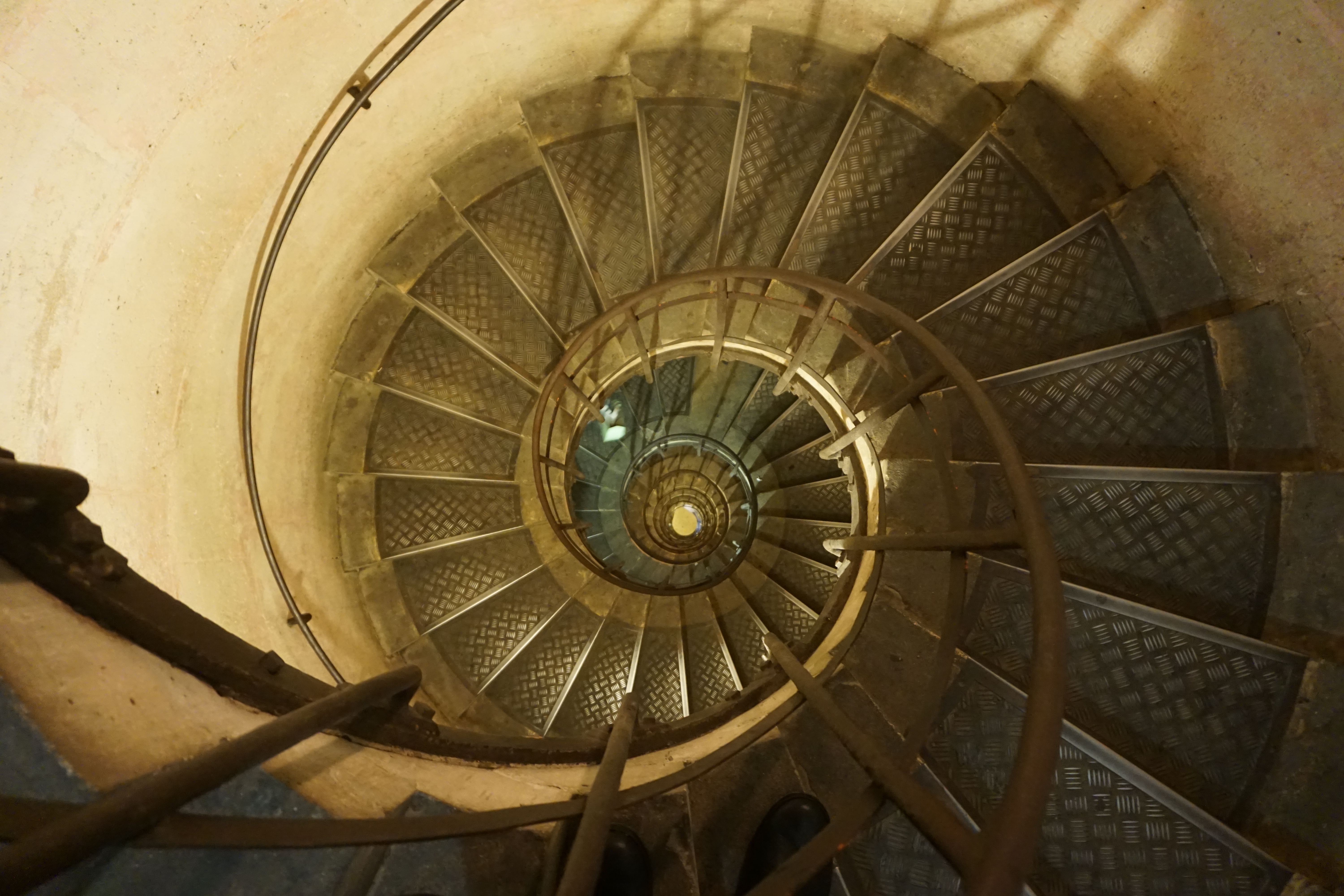
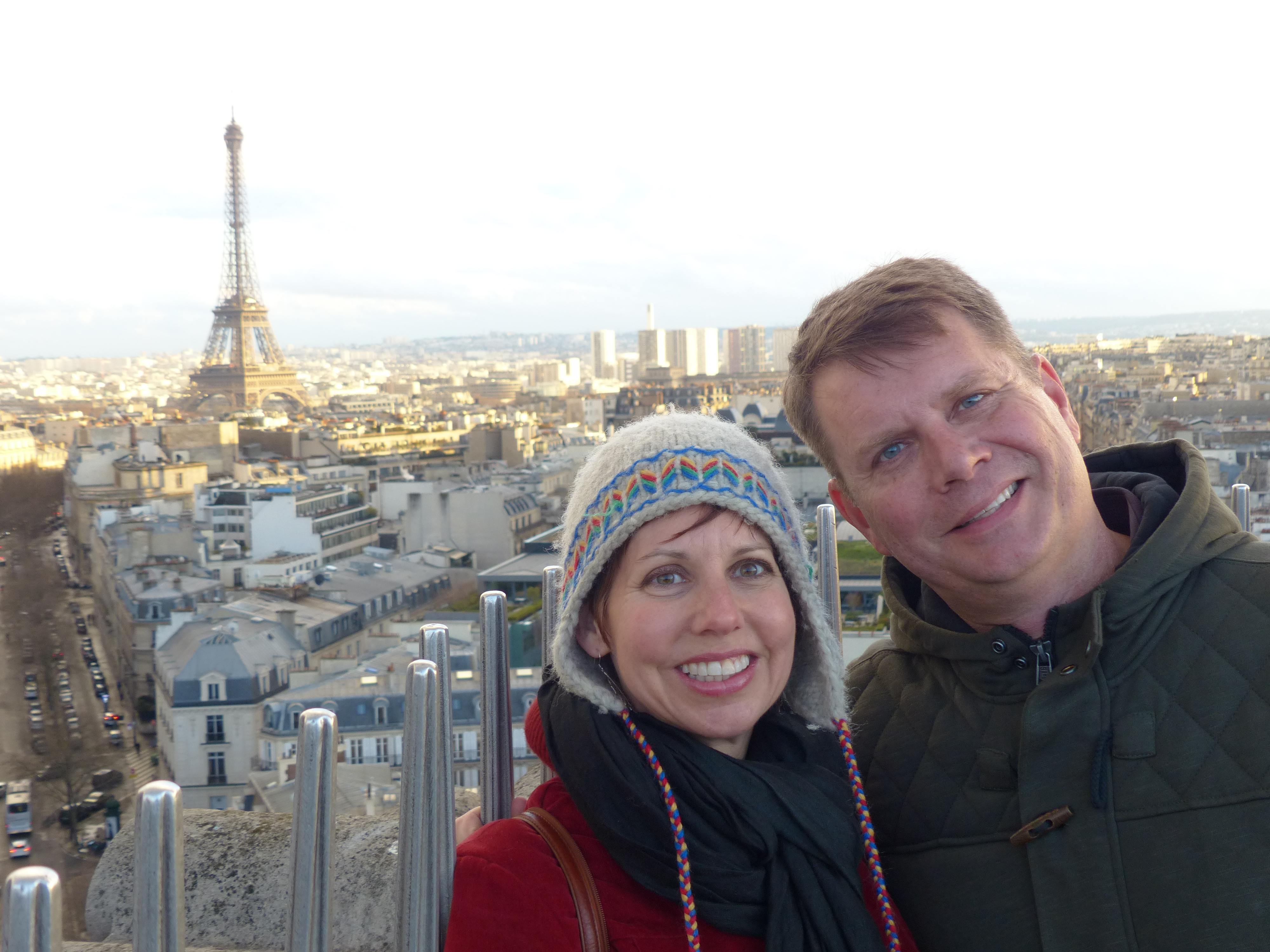
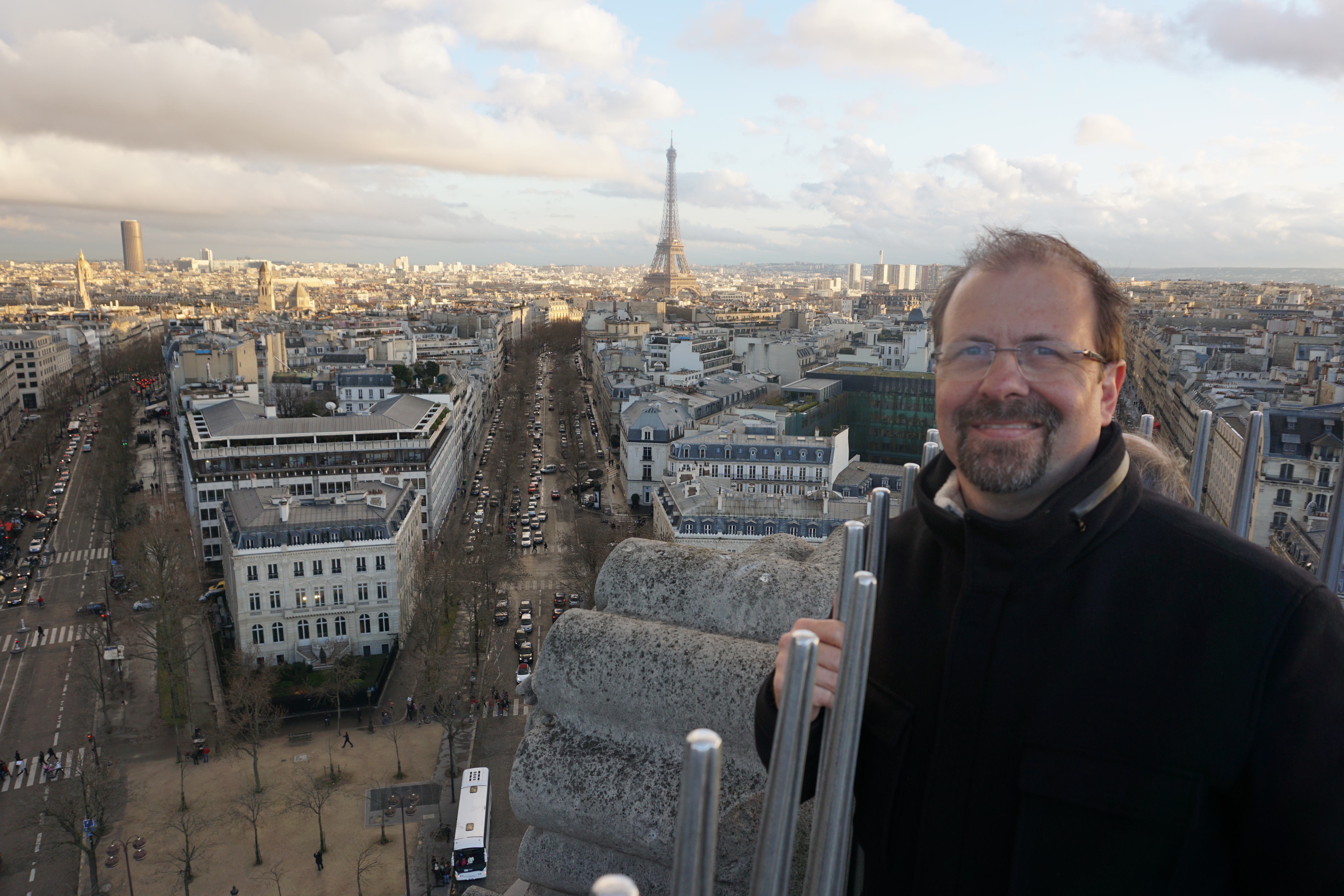
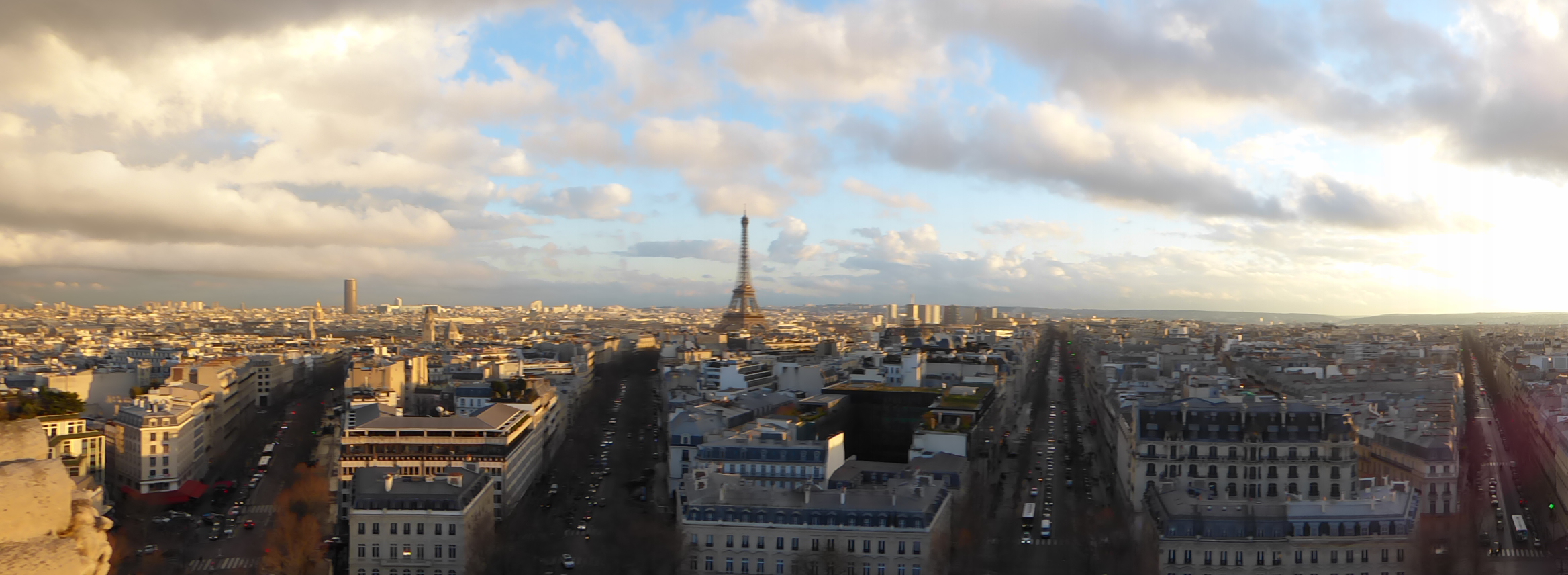
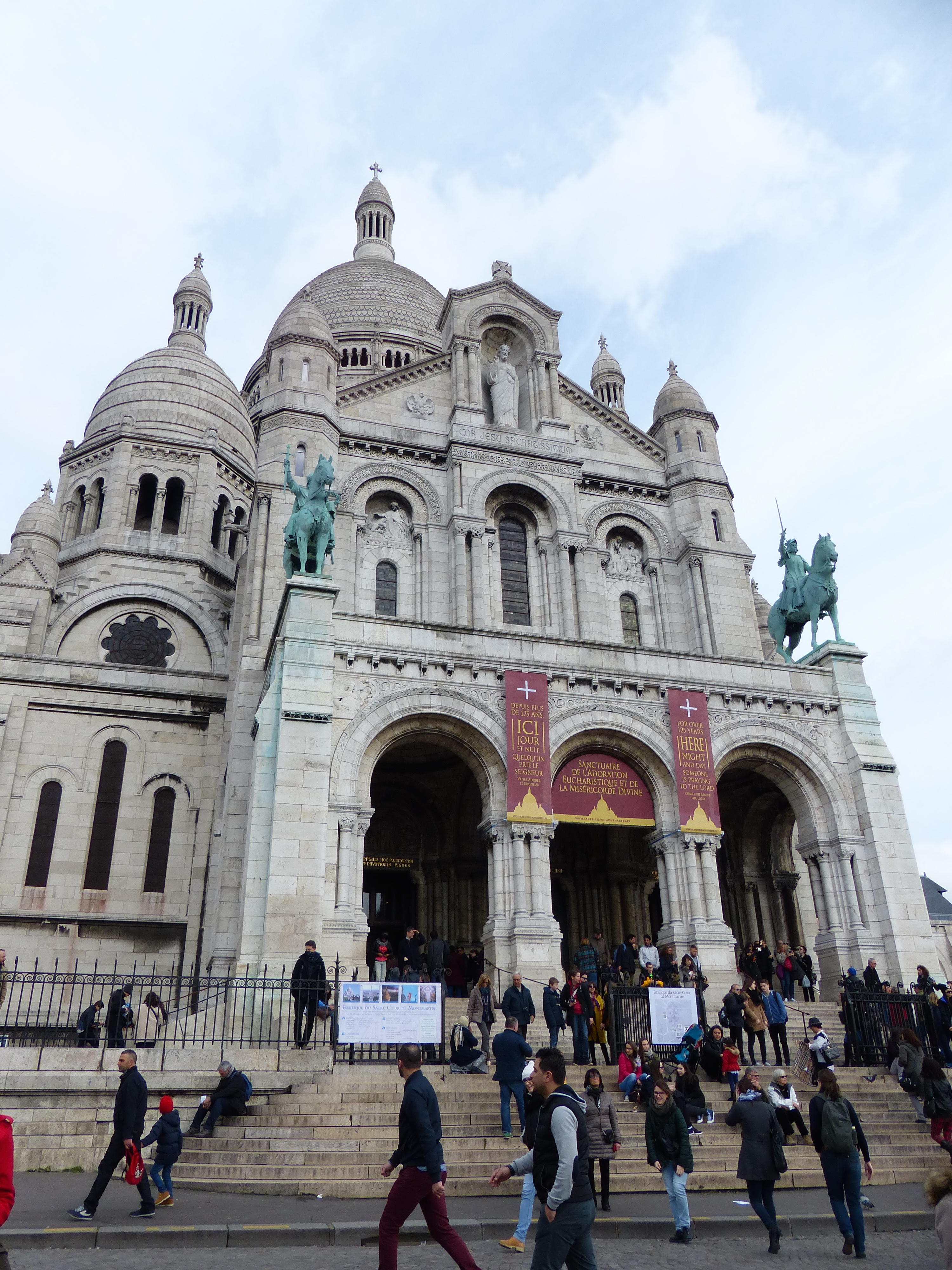
Another metro ride took us to the Arc de Triomphe, just in time for the rekindling of the Memorial Flame, a daily ritual since 1923 that pays tribute to the unknown soldiers who died in World War I and II. Napolean began construction of this “triumphal arch” at the western end of the Champs-Élysées starting on his birthday in 1806. The arch honors those who died in battle during the Napoleonic wars. A break in the rain gave me my first chance of the day to get a bird’s eye view of Paris. Paul, Tony and I climbed the 284 stairs to a magnificent surprise. The clouds parted, and sunshine filtered through to illuminate the city. Spectacular!

P1060591

P1060599

P1060624

P1060606

DSC00317

P1060613

DSC00313

P1060618

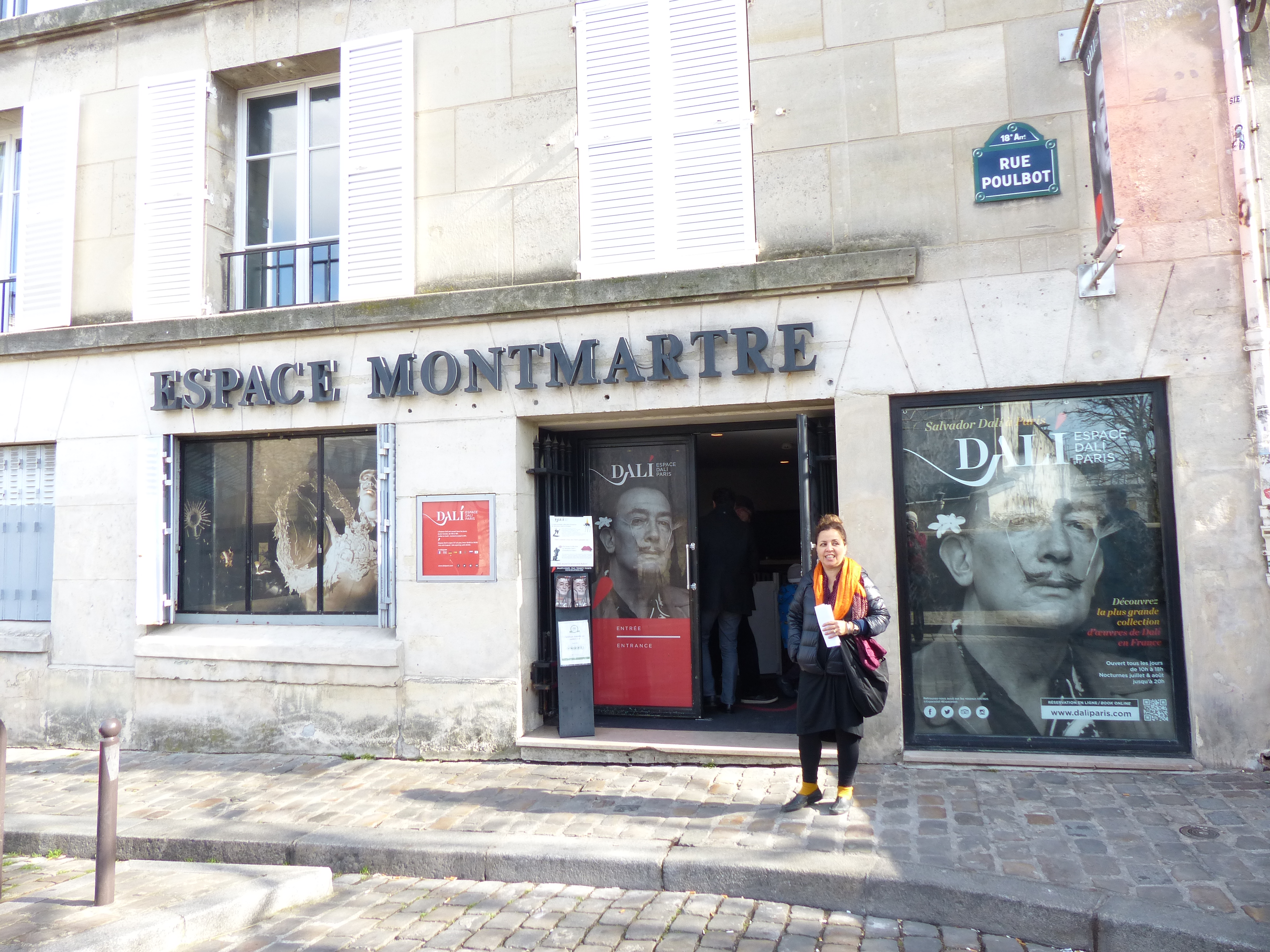
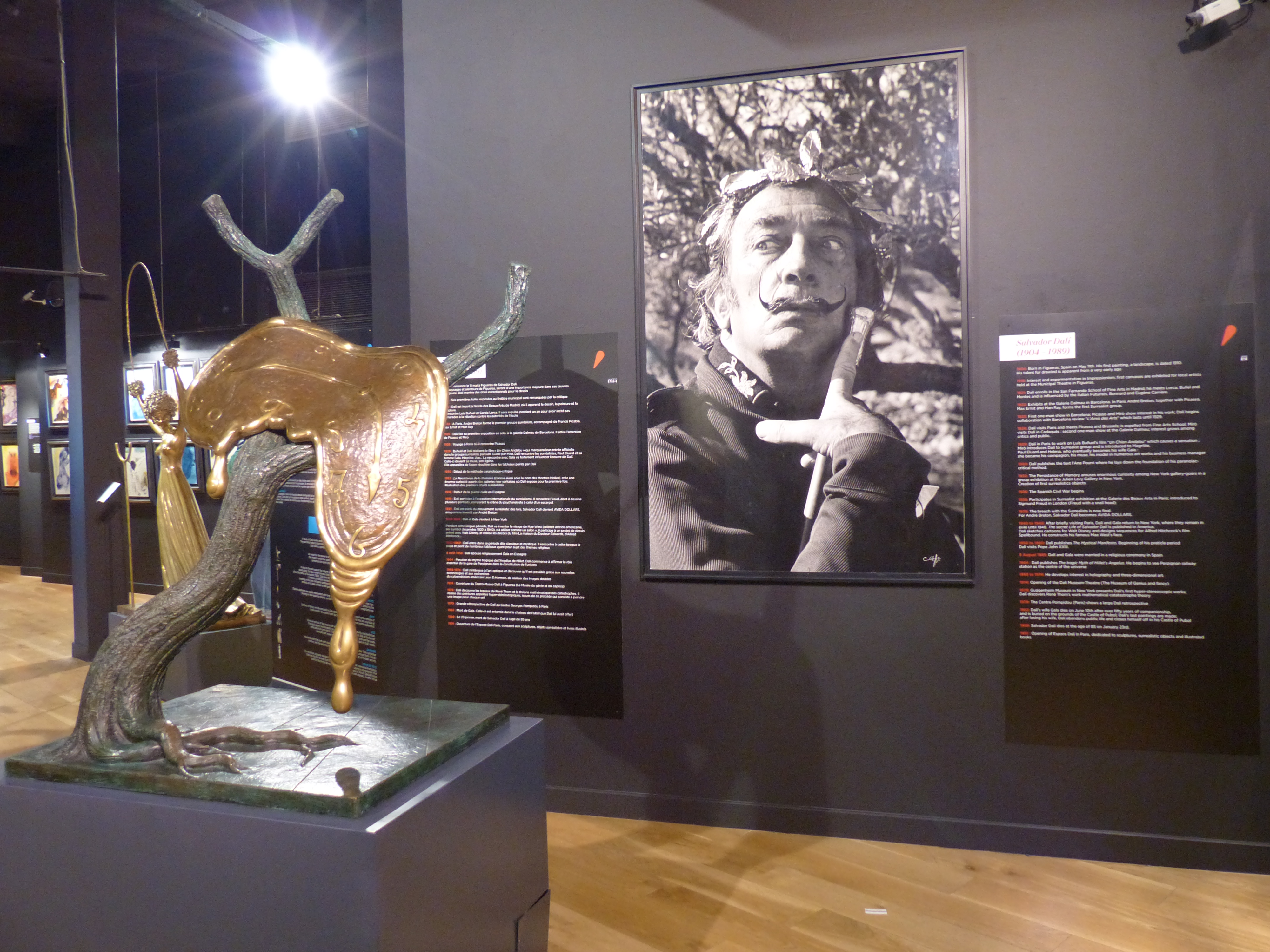
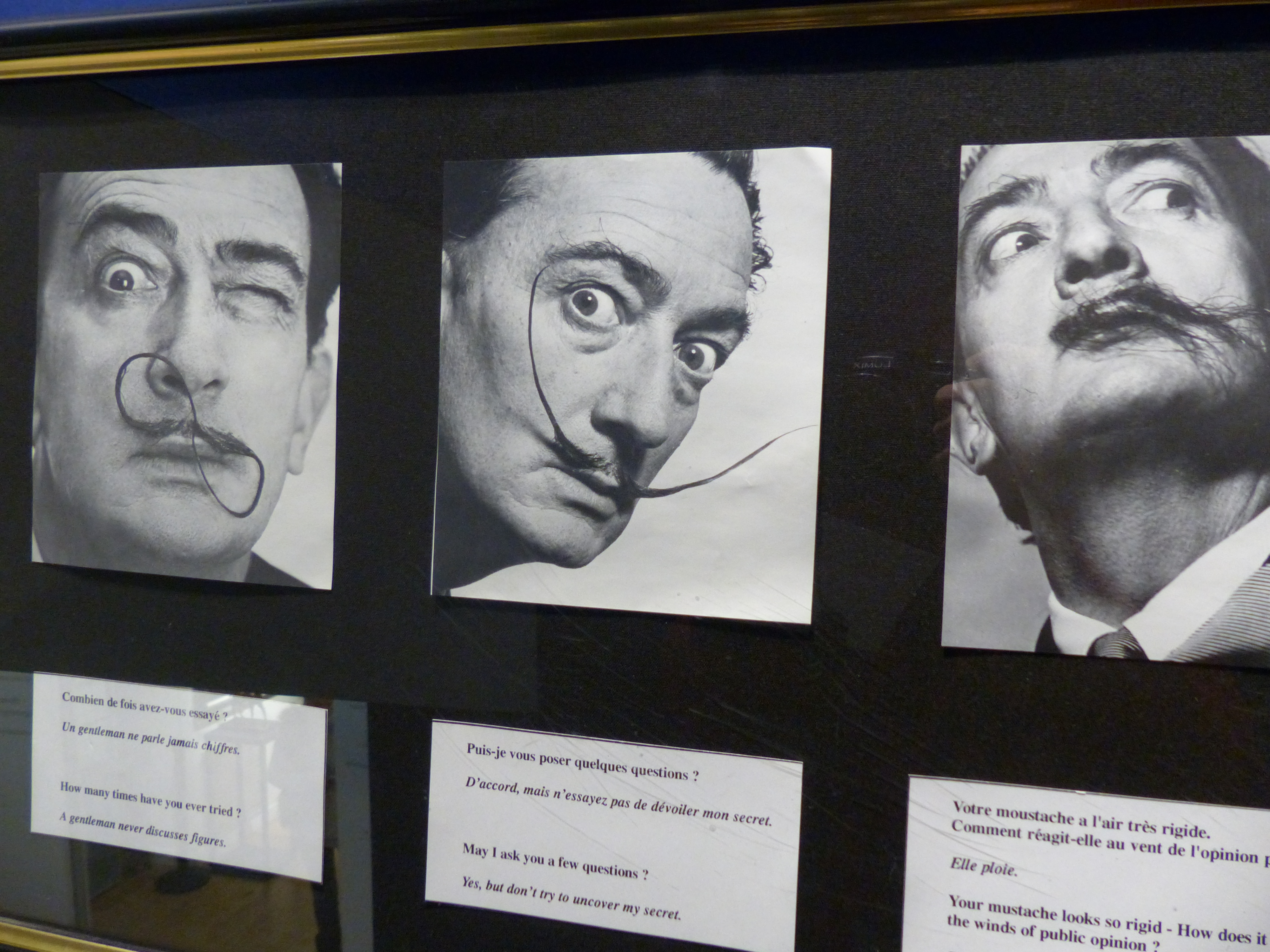
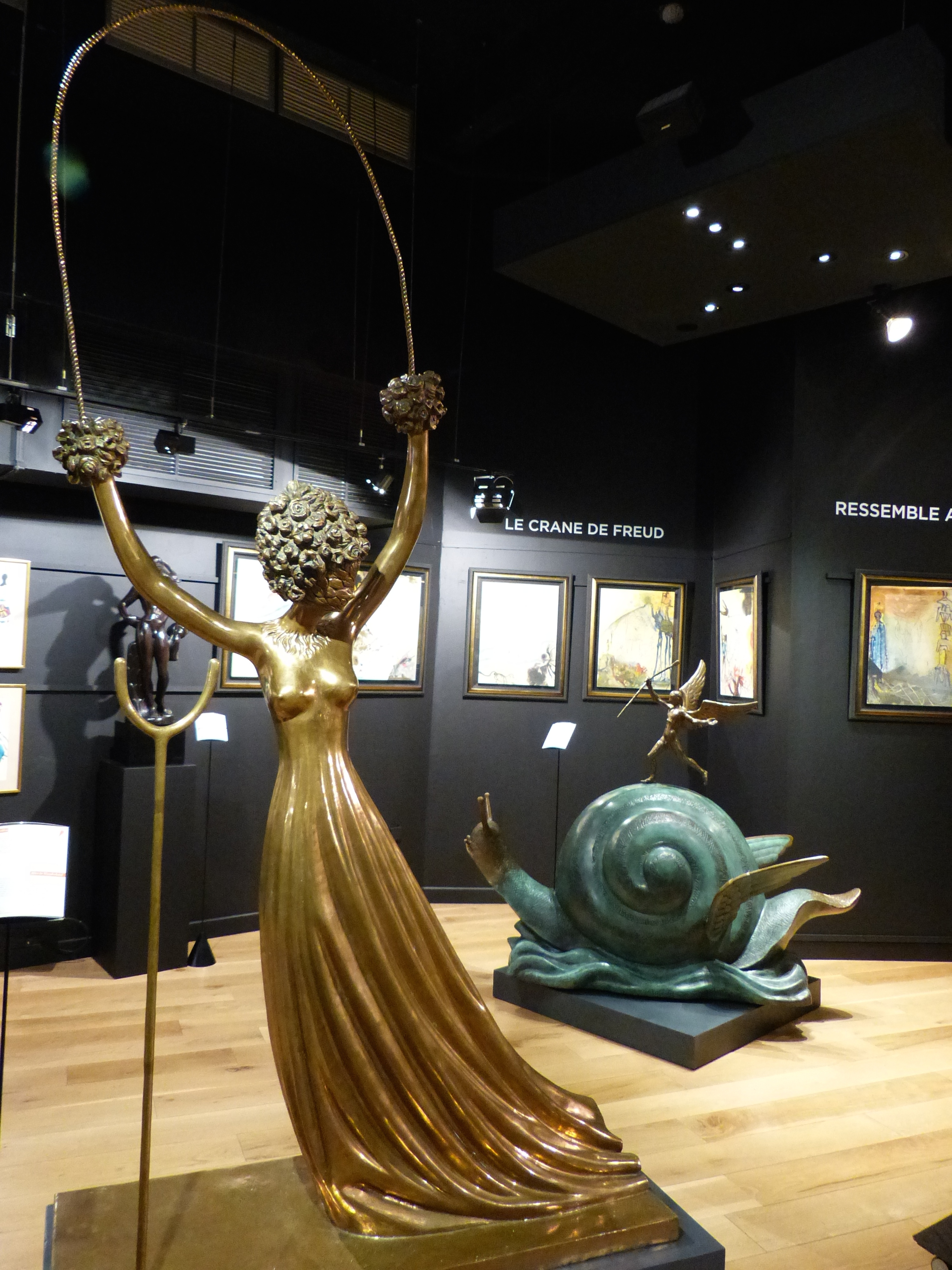
We spent most of the next day in Montmartre. After a leisurely breakfast, we walked to Espace Dalí, a gallery Sepi had visited during a tour with her art students earlier this year. The audio tour offered fascinating insights about Salvador Dali’s life and art. I knew about his surrealist paintings, particularly the molten watches in his painting, The Persistence of Memory. However, I had no idea he was such a tinkerer who tried his hand at all forms of creative expression, nor did I know he was named after his dead brother and desperately fought for his own identity.
P1060630

P1060633

P1060642

P1060644

Tony loved this sculpture of Alice in Wonderland.
P1060640
The sign read, “For Dali, Alice symbolized eternal childhood with the naivety and irrefutable logic of children that struggle against the confusion in the world.” Tony said it reminded him of all the painters and romantic poets who tried so hard to retain the sense of wonder they had as children. “When I teach, that’s what I want my kids to do: Look at the world with wonder,” he said. (He also made a snarky comment about how much he loves art depicting children at play and how much he doesn’t love real children at play.)
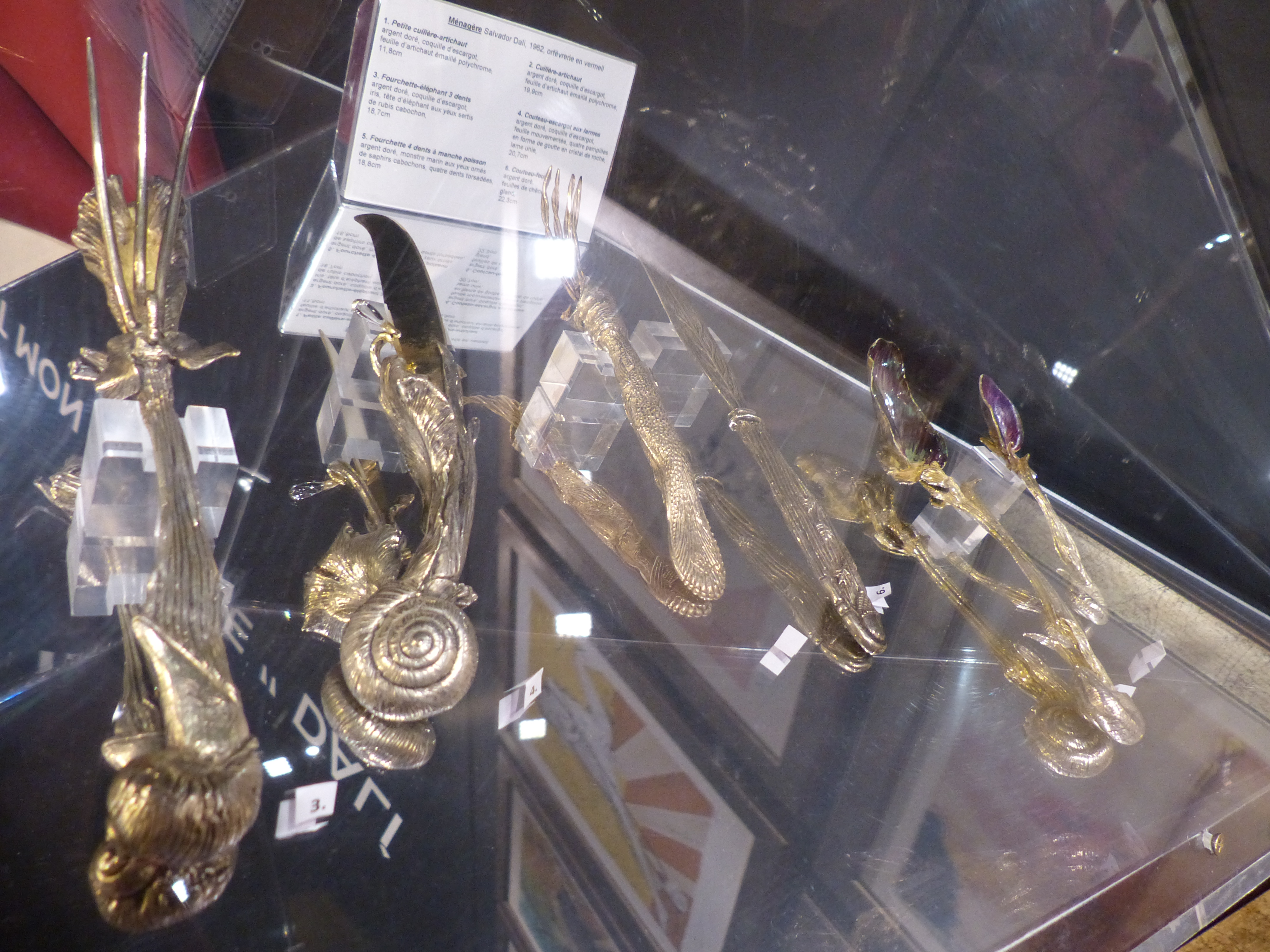
For me, the most steal-worthy artwork in the gallery was a no-brainer. I was completely smitten by Ménagère, a set of silver-gilt cutlery. The names are as dreamy as the pieces themselves:
* Fourchette 4 dents à manche poisson (Four tooth fork with a fish handle)
* Fourchette-éléphant 3 dents (Elephant fork with three teeth)
* Couteau escargot aux larmes (Snail knife with tears)
* Cocteau feuille (leaf knife)
* Petite cuillère-artichaut (small artichoke spoon)
* Cuillère-artichaut (artichoke spoon)
P1060636

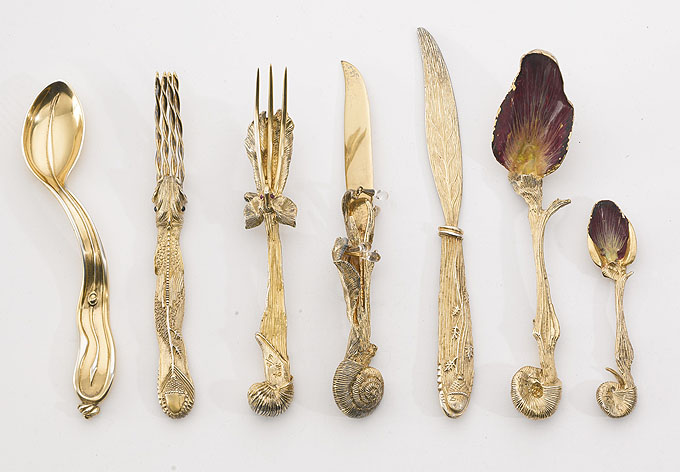
Here’s a clearer photo of a similar set from the website, The Cutlery Review.
Salvador-Dali-Ménagère
I’ve always been a fan of functional art. According to Sotheby’s, this set last sold for $28,125.

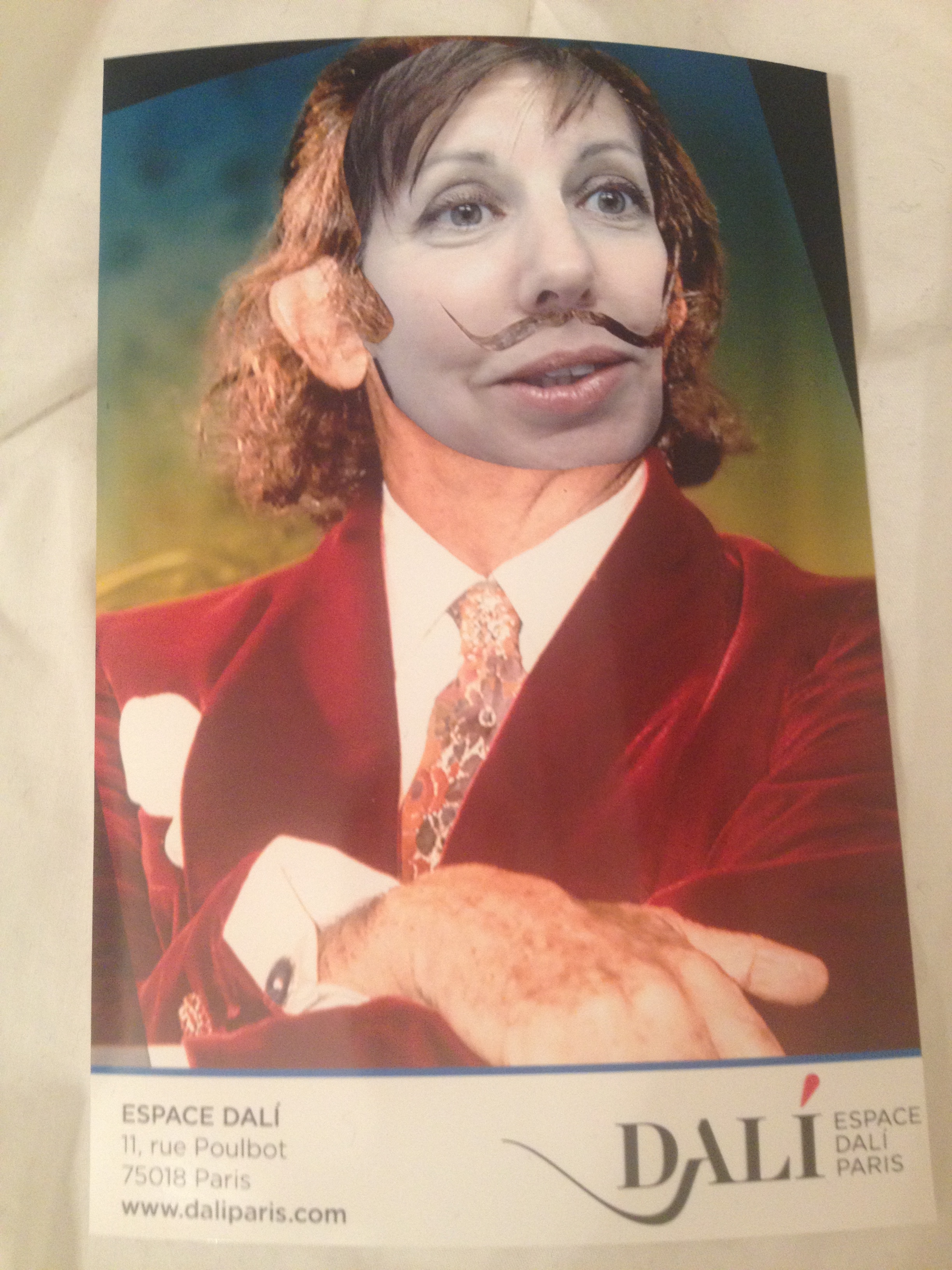
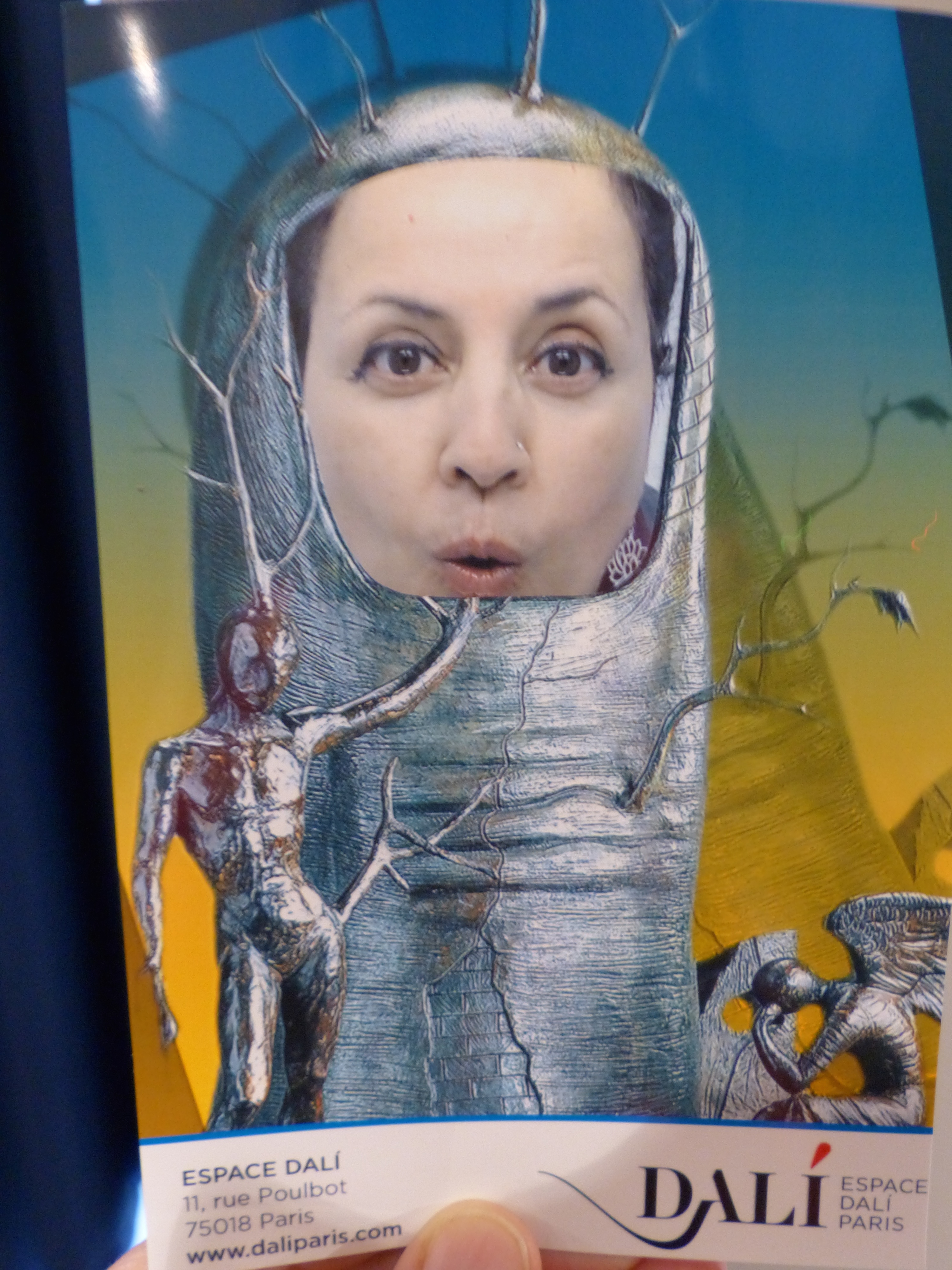
Sepi and I each took a turn in the photo booth that inserted your face into a Dali masterpiece. So classy.
IMG_2609

P1060643

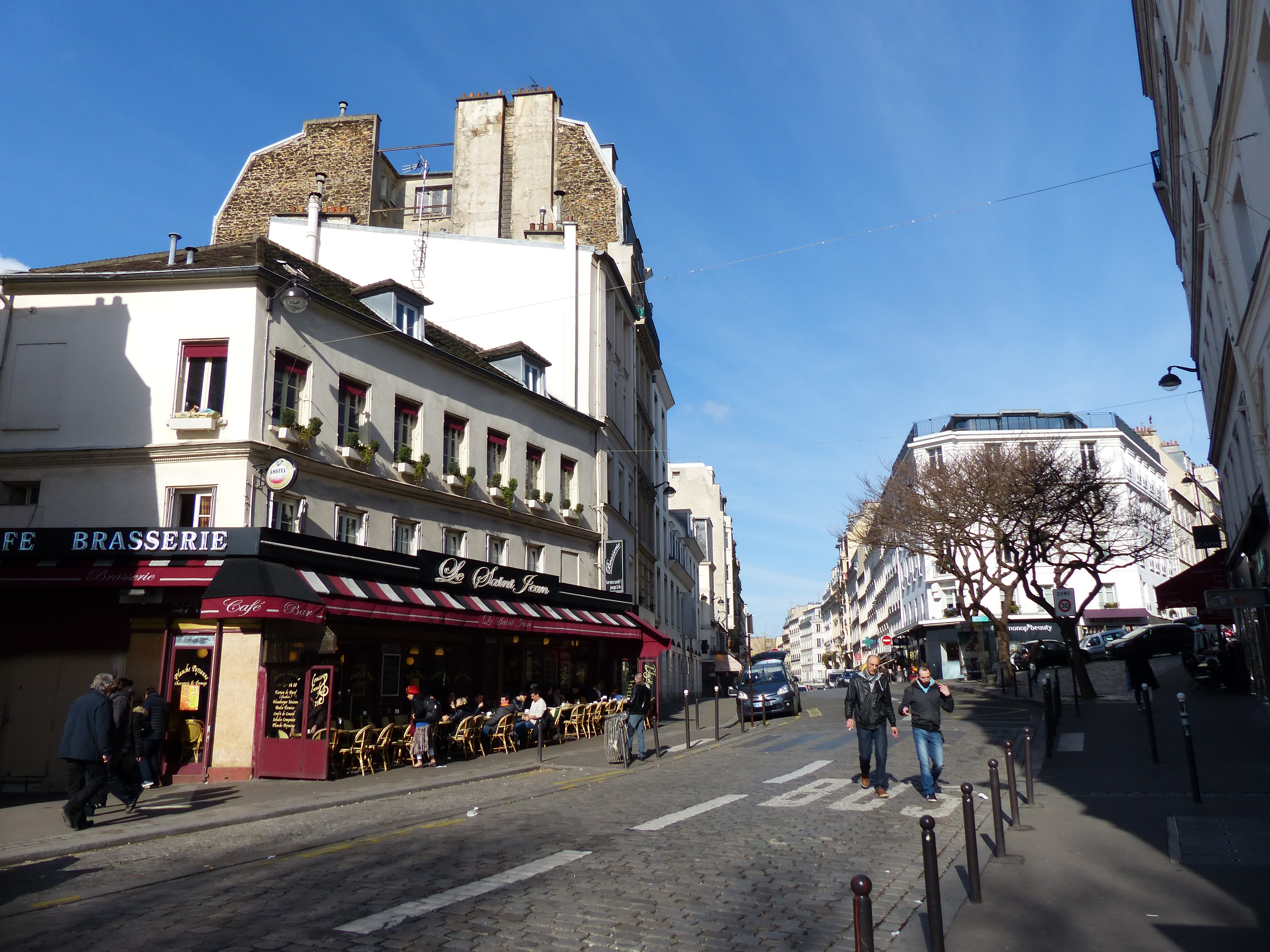
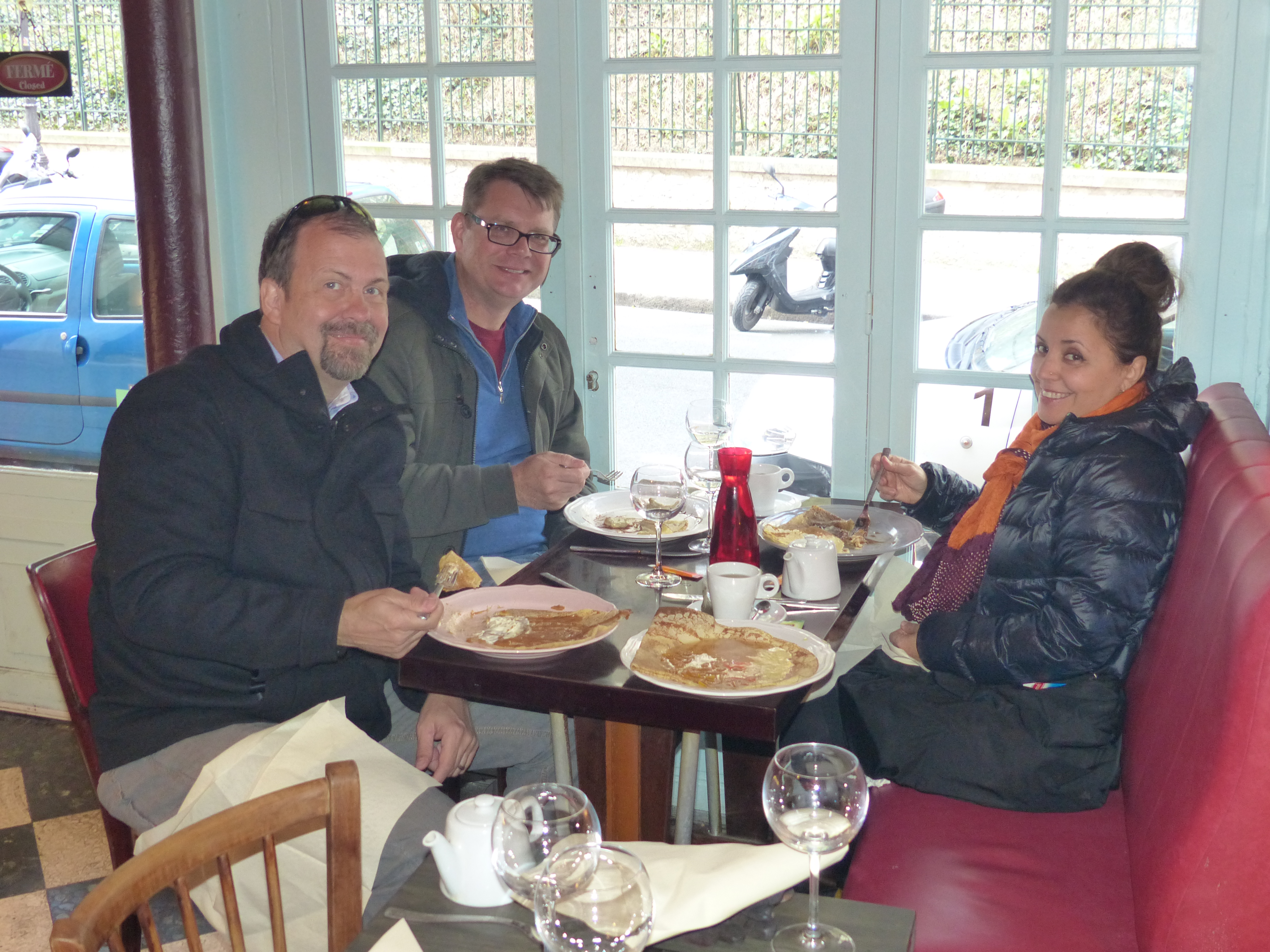
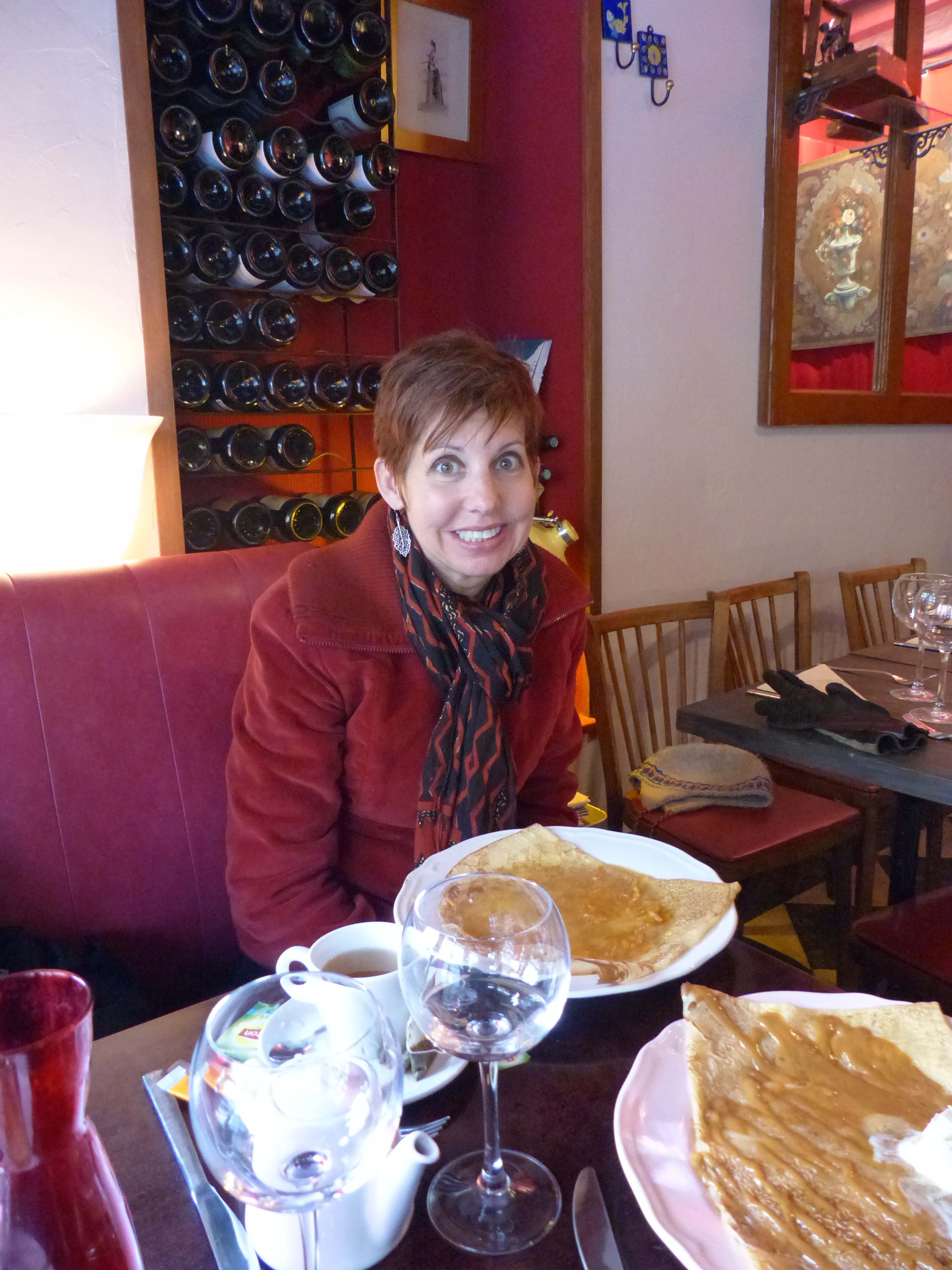
Montmartre is bursting with art. Former residents include Dali, Picasso and Van Gogh. Now artists display their paintings and offer to crank out a quick portrait just around the corner from the stunning Basilica of the Sacré Cœur. Frankly, this historic district deserved more of our attention, but instead we spotted a crêperie, and who can visit Paris without eating crêpes? So in the crêpes vs. culture competition, crêpes won. And they were delicious.
P1060652

P1060654

P1060658

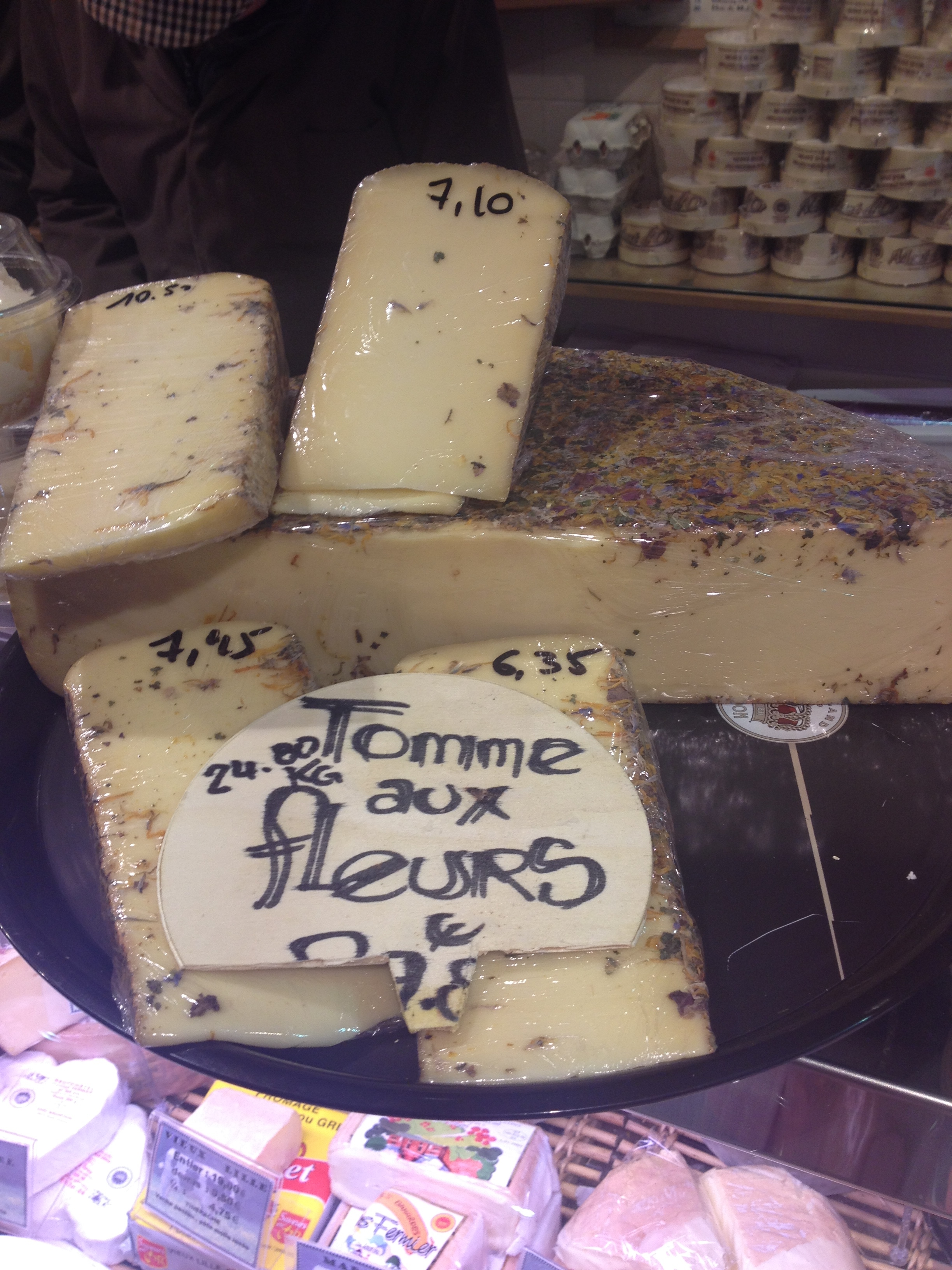
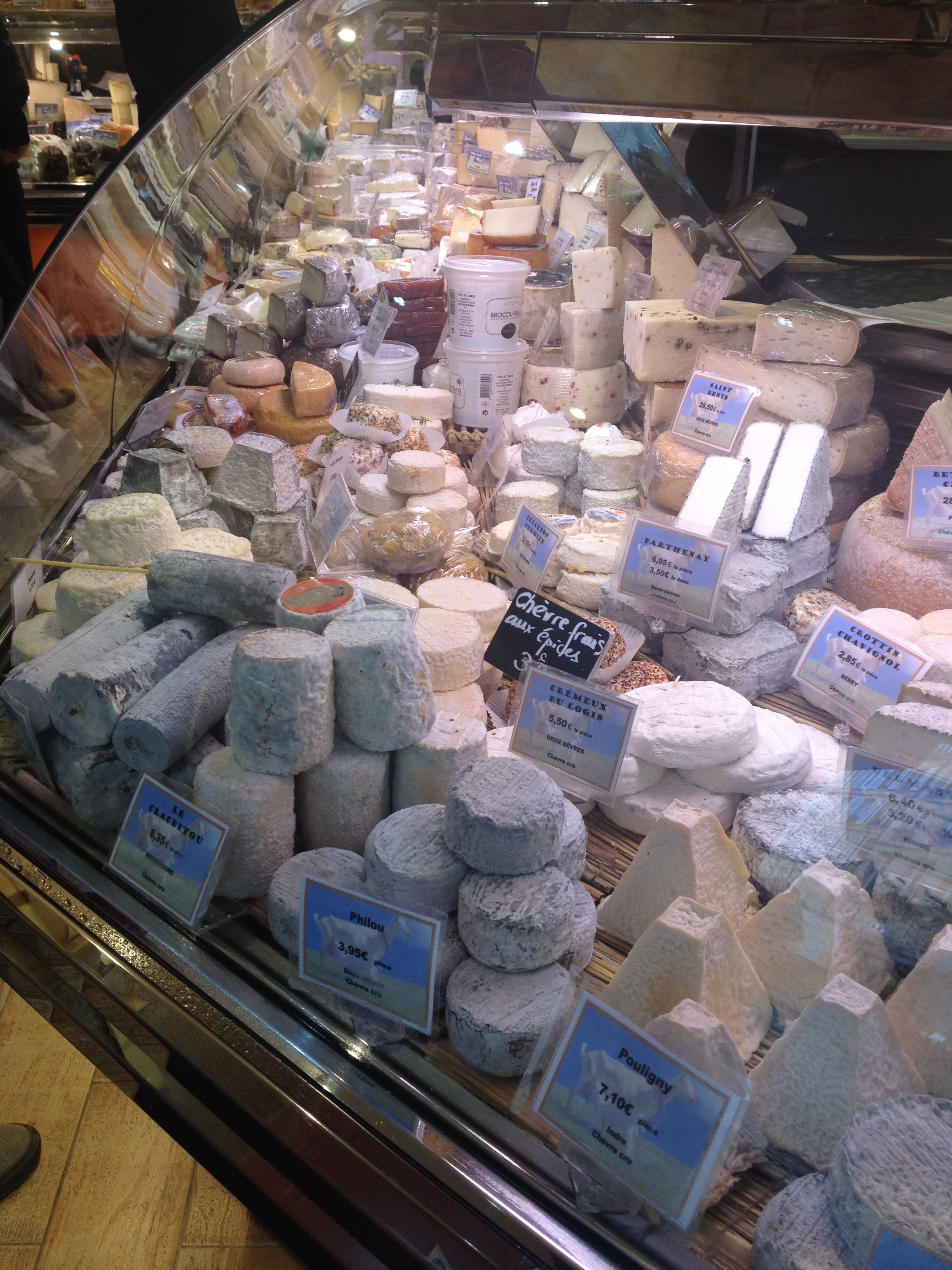
Our last day in Paris was bittersweet. We returned yet again to Au Rocher de Cancale for breakfast of croissants, coffee and eggs and then poked around the local shops for special treats to take back to India. Of course, my first priority was cheese, followed closely by wine and chocolate.
IMG_2611

IMG_2612

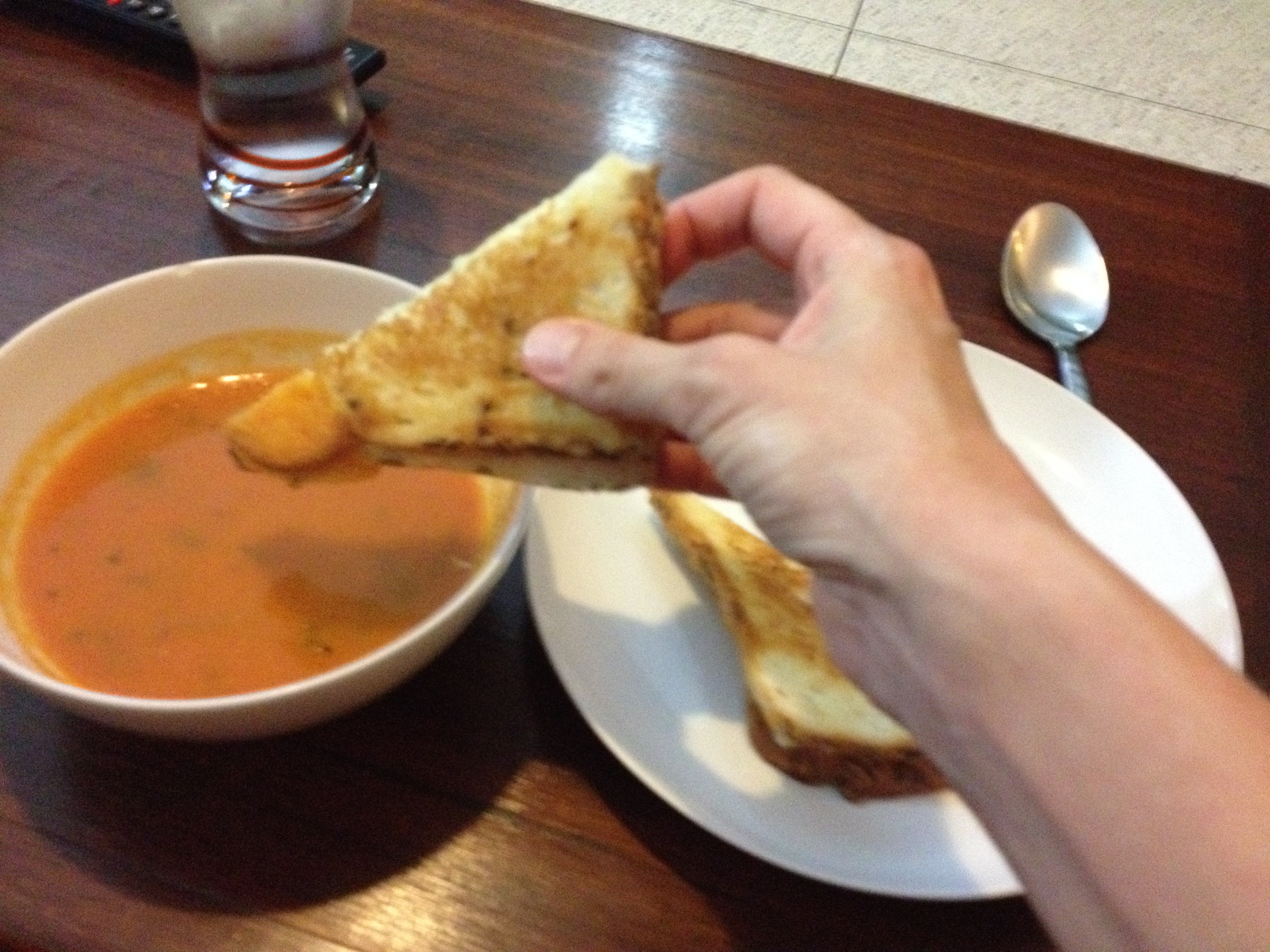
I had every intention of saving our delicious French cheese for a dinner party, but let’s face it, Tony and I are not very good at sharing.

Best. Grilled cheese sandwich. Ever.
IMG_2616

Thanks to Sepi and Paul for sharing Paris with us!

Spring Break Part 1: NESA and Istanbul

Still catching up … geez.

I got an early start on Spring Break with a trip to Istanbul in mid-March for the NESA Spring Educator’s Conference, where I participated in a 5-day certification course in Adaptive Schools. The workshop focused on developing collaborative teams, a big part of my job as an English as an Additional Language coordinator at my school. On the first day, I realized right away how desperately I wanted to develop my skillset in coaching, facilitating meetings, dealing with conflict, and otherwise fostering a culture of collaboration at our school. AES sent a big group to the workshop, so we were able to debrief and reflect together. This was among the best professional development I have ever experienced, and our workshop leaders Bob Garmstrom and Carolyn McKanders illuminated me about the power of individuals on collaborative teams. I worry that the fast pace of school life back in Delhi has kept me from practicing what I learned, but I hope to kick off the school year in August with a more deliberate approach with my Adaptive Schools book in hand.

Here, Bob breaks a board with his hand in response to AES teacher Susan’s demonstration of taekwondo.
11073129_10202602745308110_7356918055425531526_n

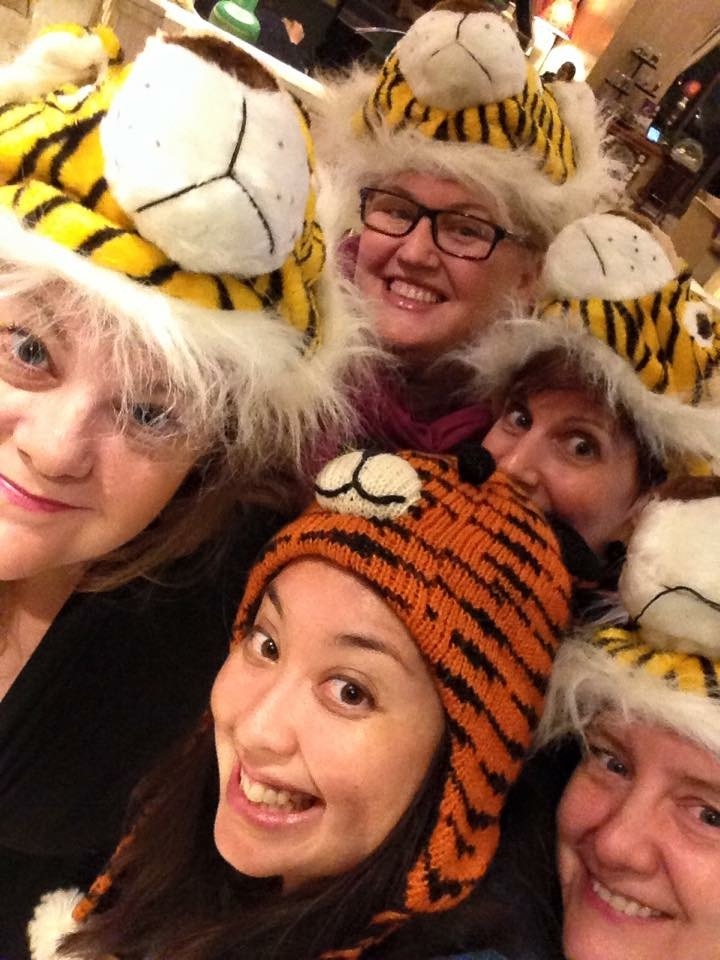
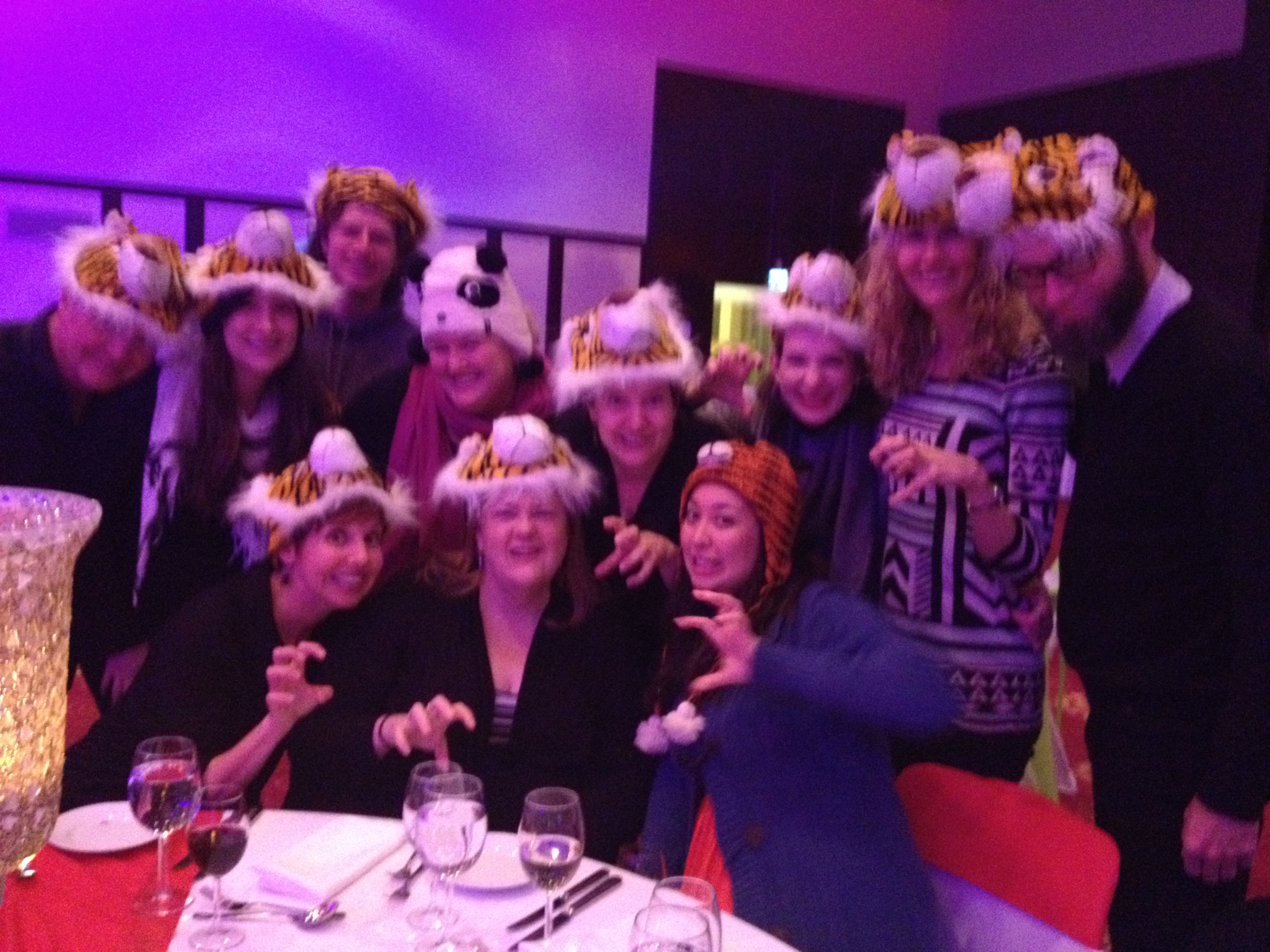
For its banquet theme one night, NESA encouraged everyone to wear a fun hat. Our AES group honored our school mascot by wearing tiger hats. We looked pretty fierce.
IMG_2607

IMG_2598

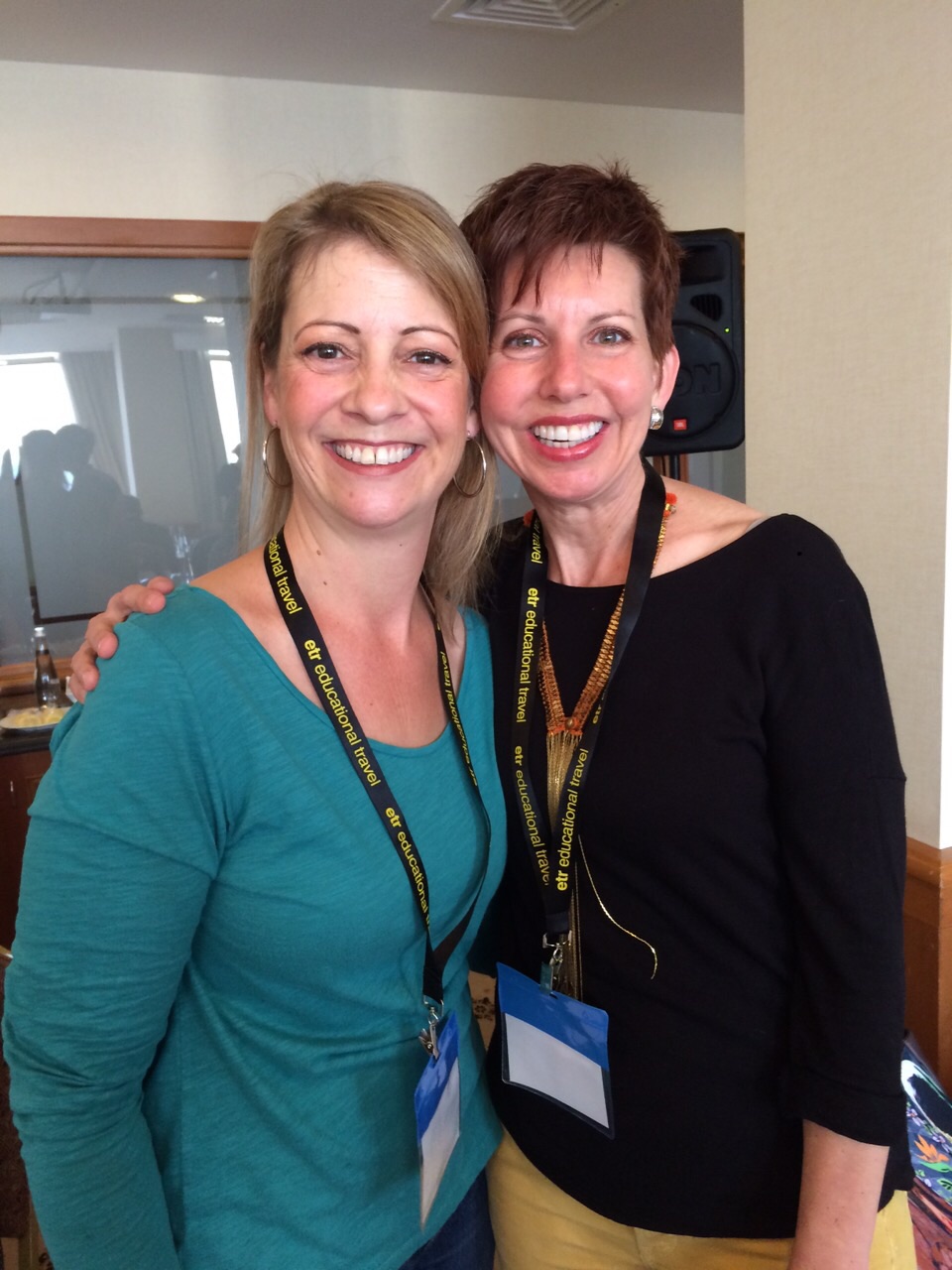
One highlight of these international conferences is that you inevitably run into old friends from previous schools. I was thrilled to spend a little time with Sarah, a BFF from Shanghai American School who now works in Dubai.
IMG_2593

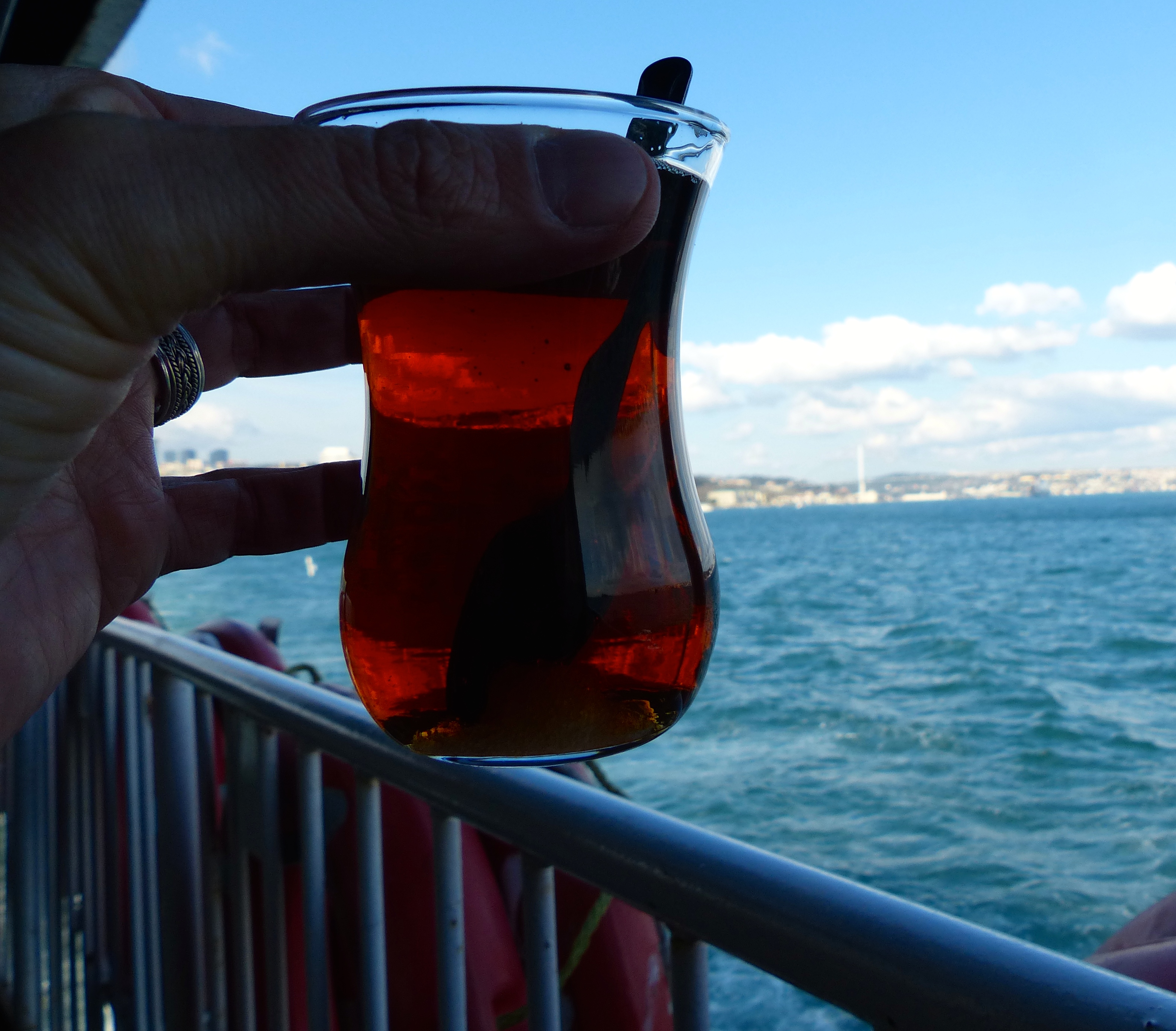
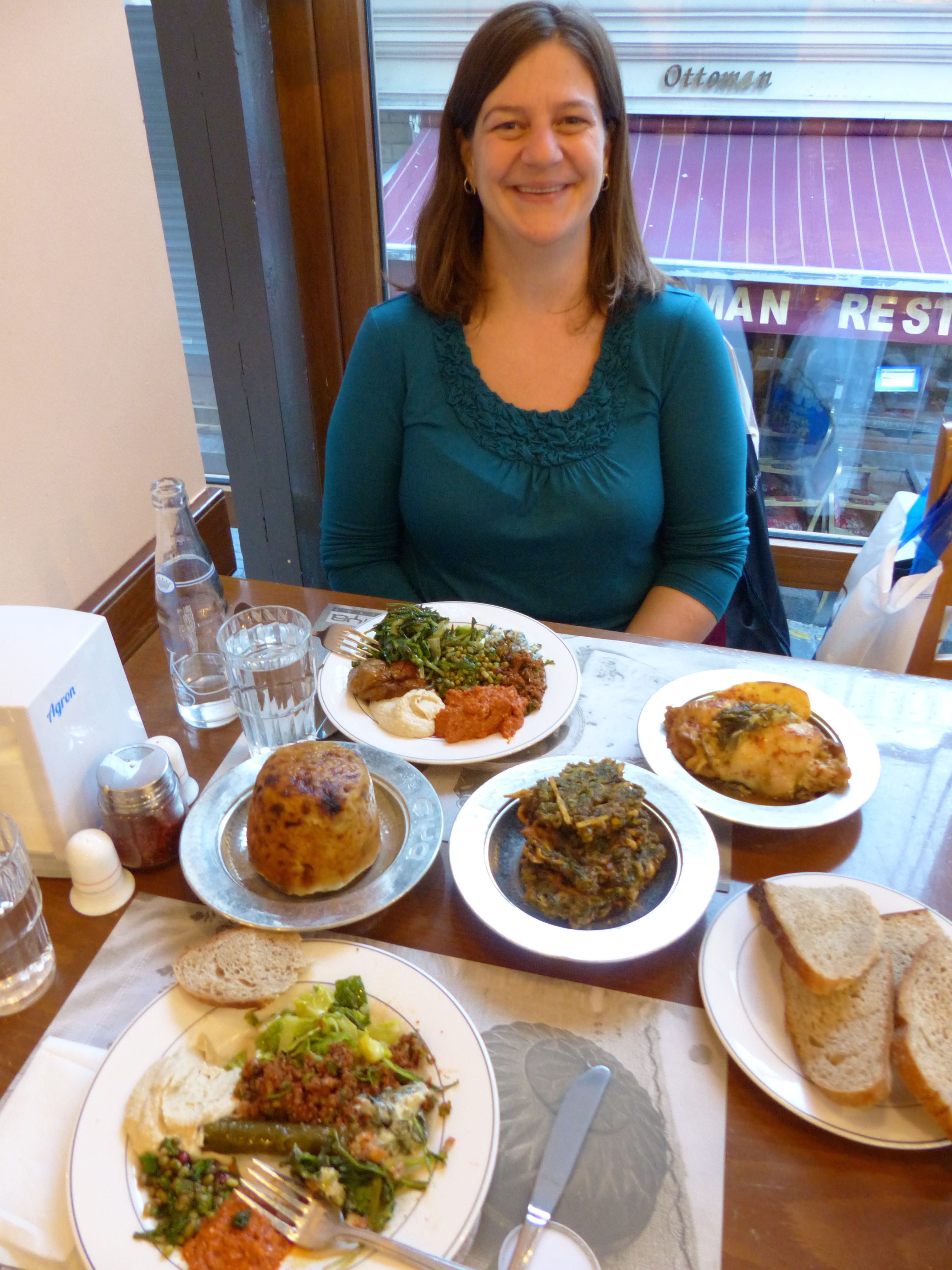
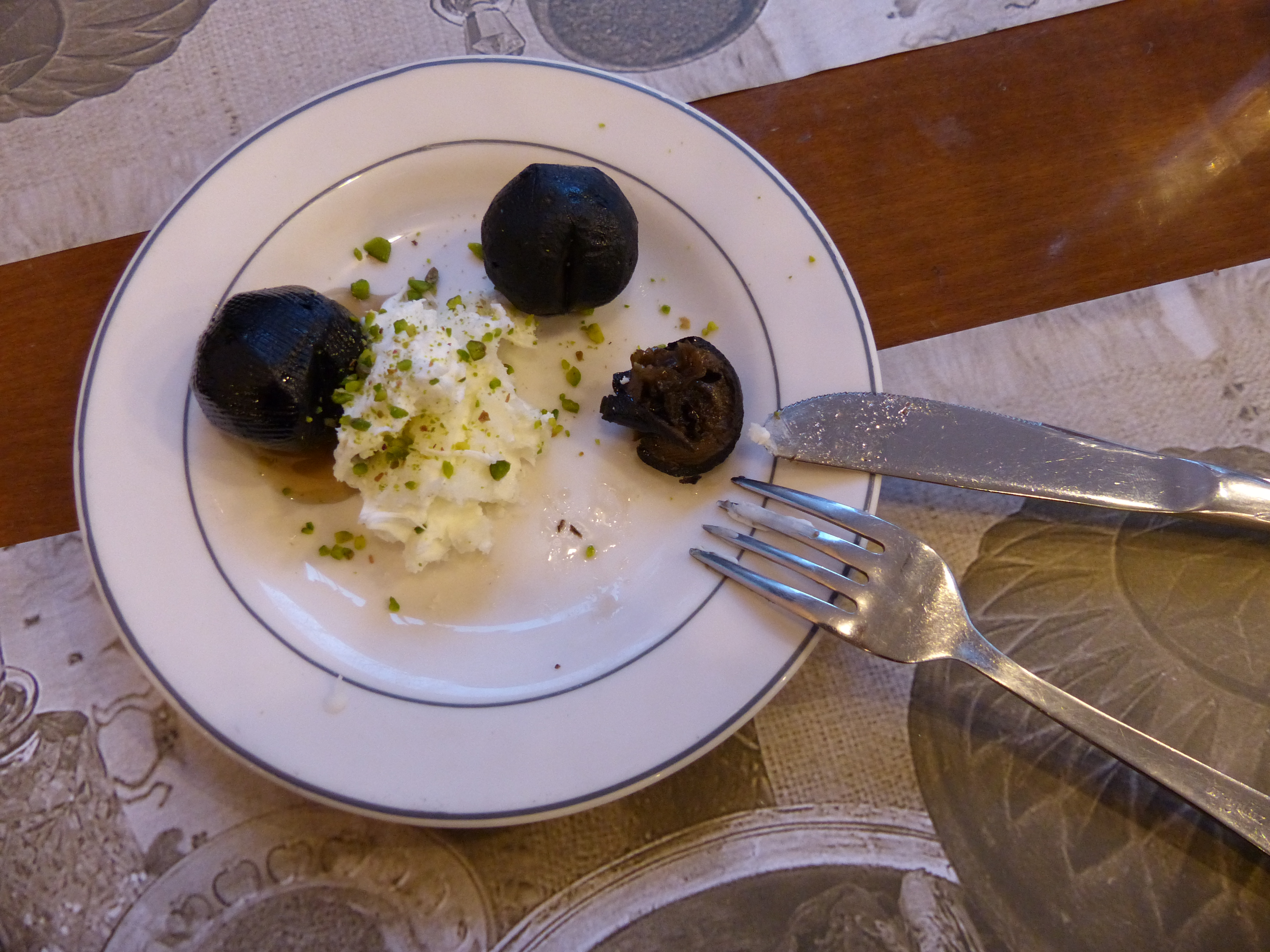
Of course, Istanbul wasn’t all about professional growth. We lived there from 2001-2005, and it’s our favorite city in the world. Unfortunately, Tony was off in Rajasthan with a group of students, so he couldn’t join me for this visit. However, I caught up with two special friends – Tracey and Ece. I enjoyed a glass of tea on the ferry from Europe to Asia, where I met Tracey in Kadiköy. We went for a walk around our old stomping grounds in Moda, and she introduced me to Çiya Sofrasi, a restaurant I had read about in the New Yorker. The food was dreamy, including a weird dessert of candied whole walnuts – in the shell – with clotted cream. After dinner, we took a dolmus (small bus) back to her apartment so I could meet her adorable little son, Zach. Our time together passed too quickly.
P1060435

P1060450

P1060451

Ece, another dear friend from our days in Turkey, met me for lunch in another favorite destination: Bagdat Cadessi. We spent the afternoon together, and she drove me back across the Bosphorus – magical in the misty rain – to my hotel on the European side. The daughter of an Army officer, she had access to an “orduevi” or military house, which was right next to my hotel and featured a bar with a view of the city. We had a drink in the bar and then headed down to the restaurant for kebabs. Effervescent as always, Ece brought me up to date with her goings on and the disheartening state of Turkish politics. We reminisced about old times and speculated about the future. My life is richer with her in it.
IMG_4587

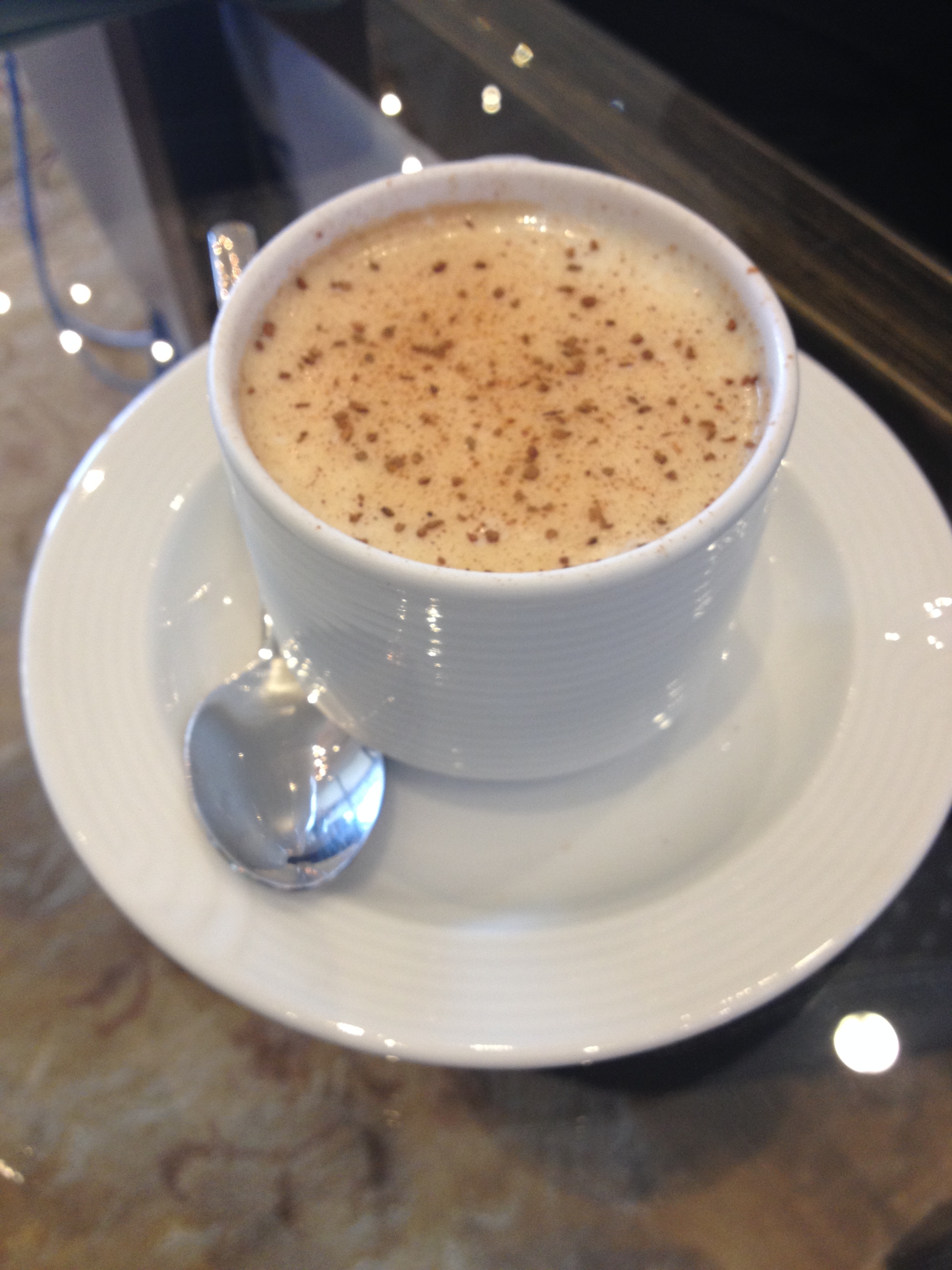
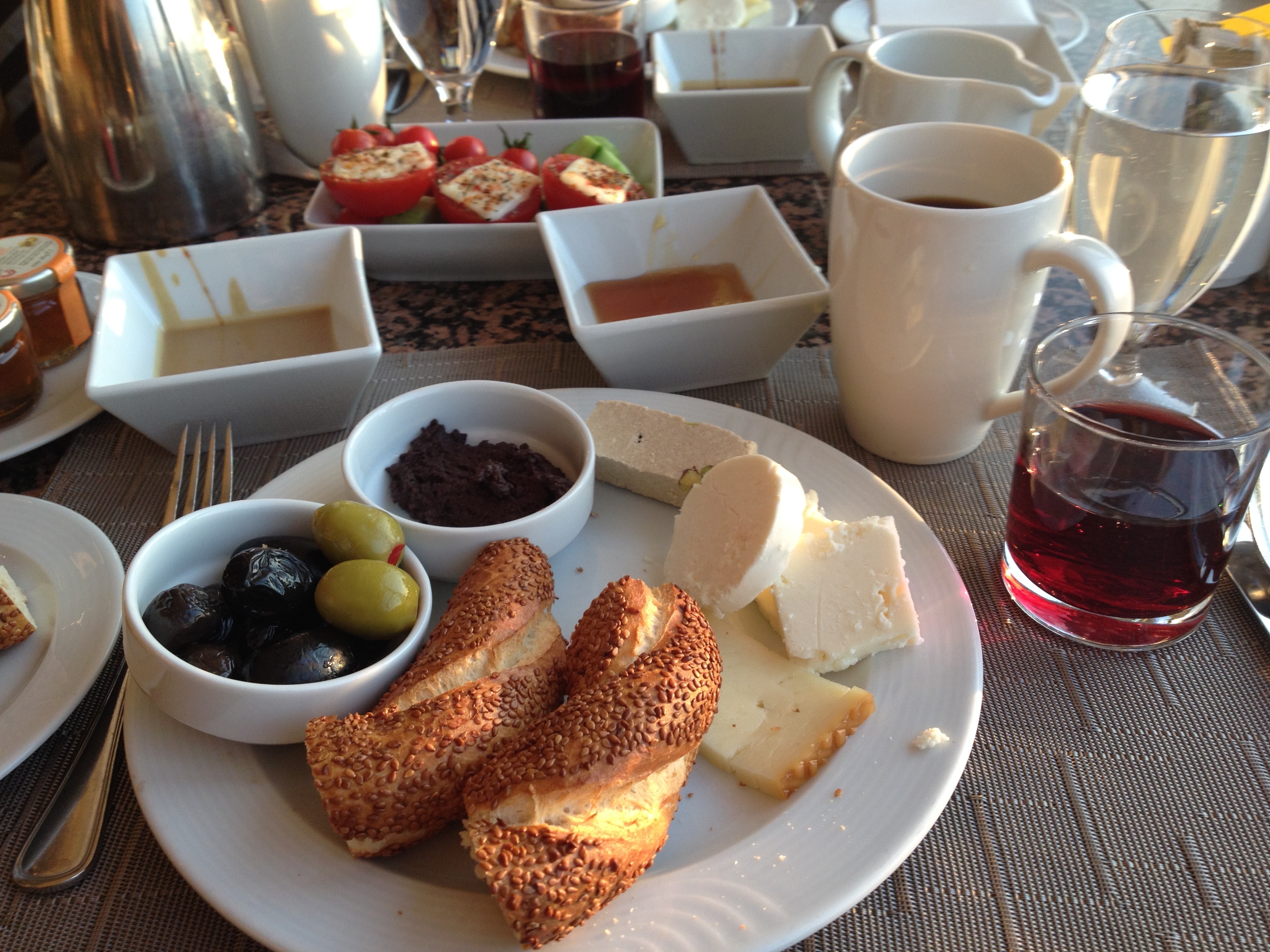
During the week, I devoured all my favorite Turkish treats: dolma midye (stuffed mussels), mezes (small servings of hot and cold salads), simit (sesame seed-coated bagel-ish bread), beyaz peynir (cheese), olives, Iskendar kebab, visne suyu (cherry juice), locum (Turkish delight), sahlep (a hot drink made from the orchid tuber), döner sandwiches … well, the list goes on.
IMG_2591

11048769_10152817309511006_4119009403743109511_n

11019410_10152812117811006_3516076173396458407_n

IMG_2592

Hanging out at the durum stands. The guy making the peace sign was our sandwich maker.
10391427_10153145833260406_5124445877576073985_n

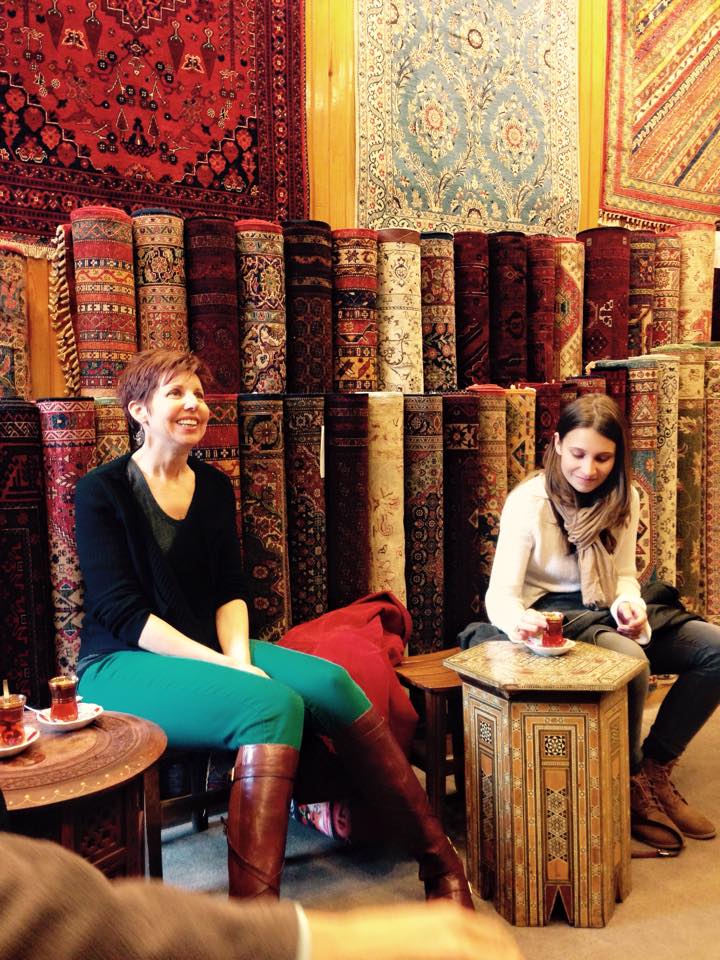
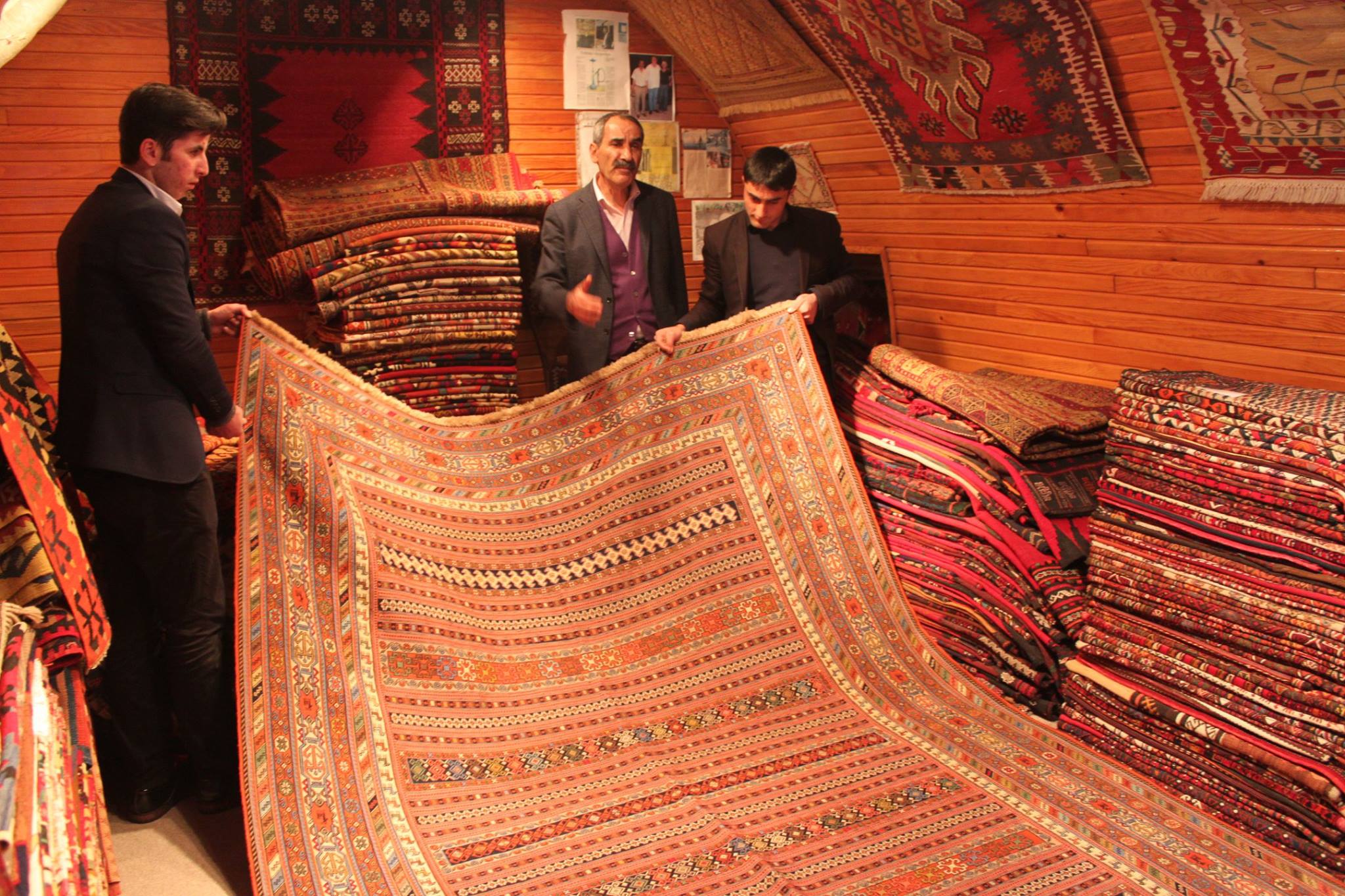
I introduced some of my Delhi friends to Huseyin, my favorite carpet seller, who has shops in and near the Arasta Bazaar. Here, we sip tea and check out the carpets at Harem 49. I had no plans to purchase anything, but isn’t it always that way?
10940412_10152817310166006_1892427029045107576_n

Here’s my new kilim.
11041910_10152756130877654_6526732674706171374_o

Bangkok dejá vu times two

Still playing catch-up…

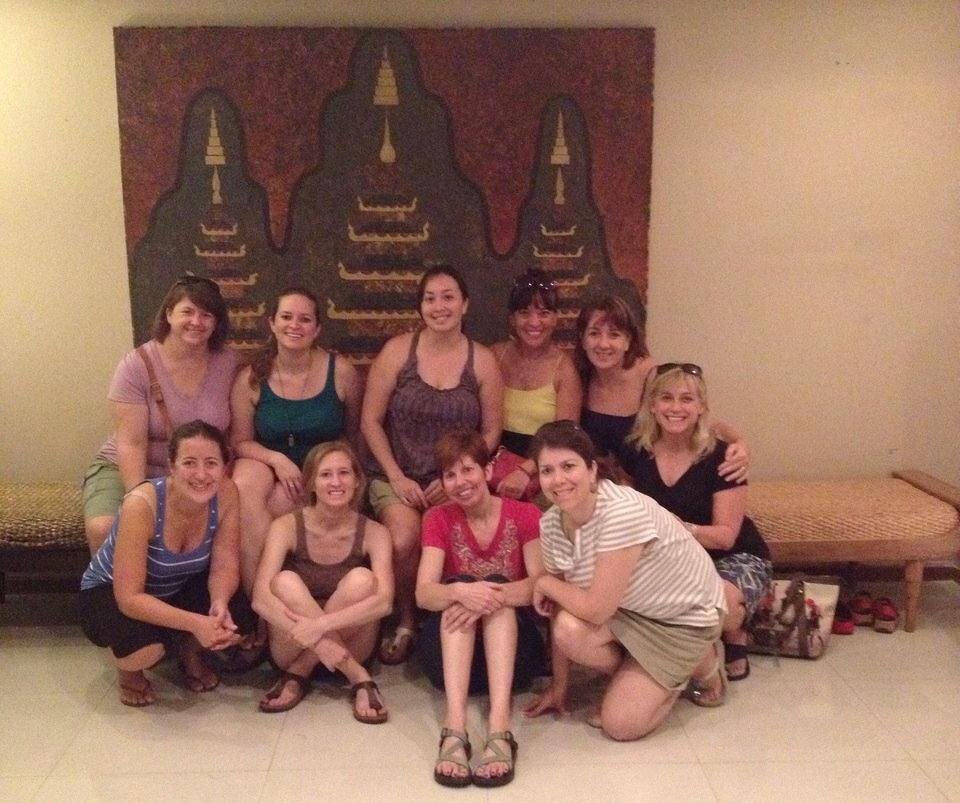
I heeded the siren’s call of Bangkok twice this spring: both for medical reasons and just for fun. Many international teachers, including the Dents, visit Bumrungrad International Hospital in Bangkok for their annual check-ups and other health concerns. In fact, Tony and I were just there in November. When I heard a group of friends were planning a medical weekend at the end of February, I jumped on board. I spent two weeks with this group in Washington, D.C., last May, waiting for our new Indian visas so we could return to Delhi. The experience was stressful but bonding. How could I resist a get-away to relive those memories and create new ones? There was plenty of street food, shopping and laughter. Three big reasons to visit Bangkok. And so, I did it again at the end of April. This time, a different group of ladies was celebrating the impending nuptials of of our friend, Kathryn. I arrived a day early to visit Bumrungrad. Three doctors, two ultrasounds, an X-ray and an MRI later, I found out some good news but also some bad news: I probably need foot surgery. Rats! When the rest of the ladies showed up, we crashed at a cute little guesthouse and ate our way through the city. A fun night of bachelorette party silliness and dancing was followed by two hours of pampering at the Health Land spa (oh, yeah, we did that the day before, too). Man, I love this city.

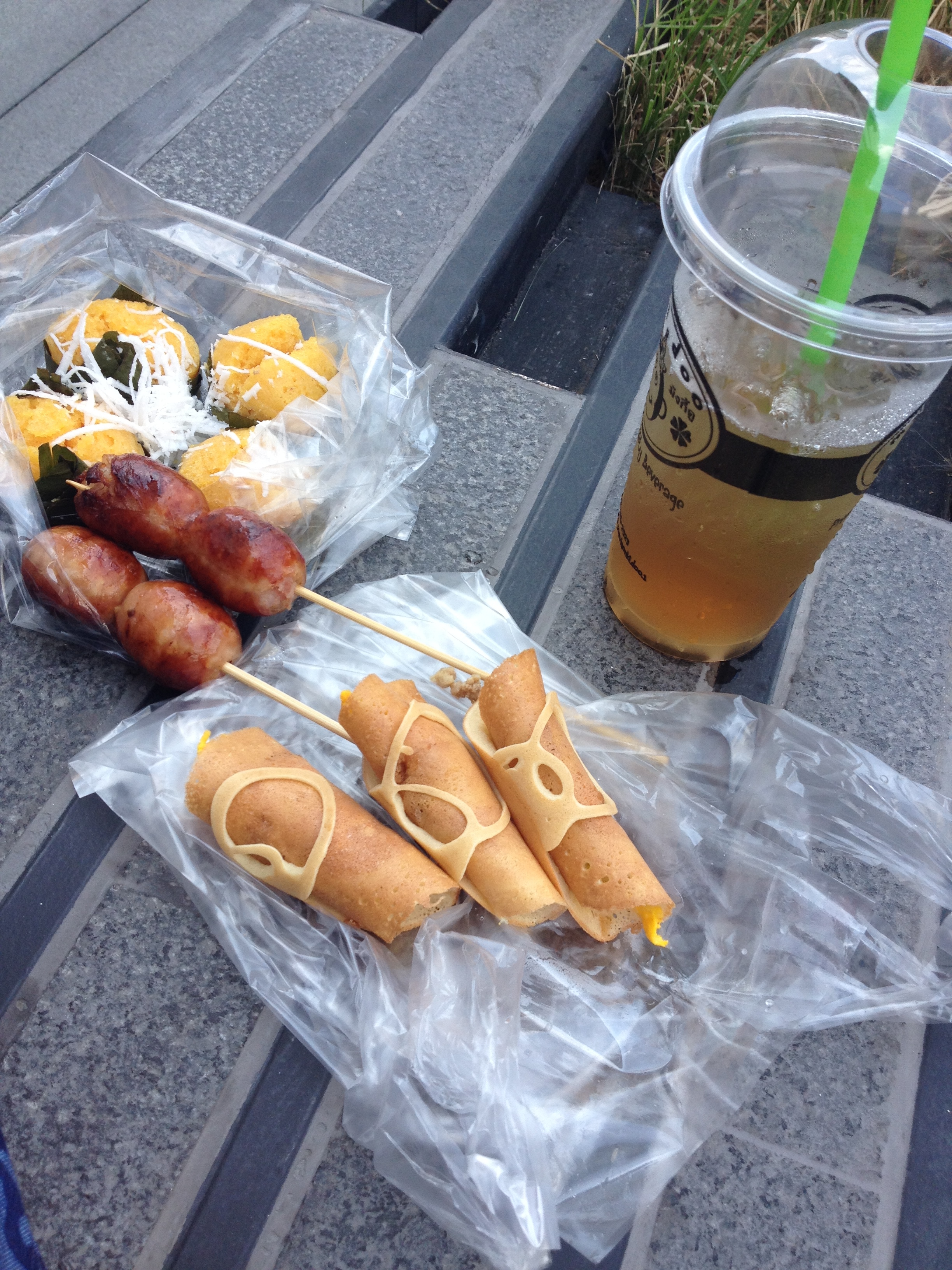
BKK Visit 1 – streetfood breakfast. I wanted to cry from joy.
IMG_2562

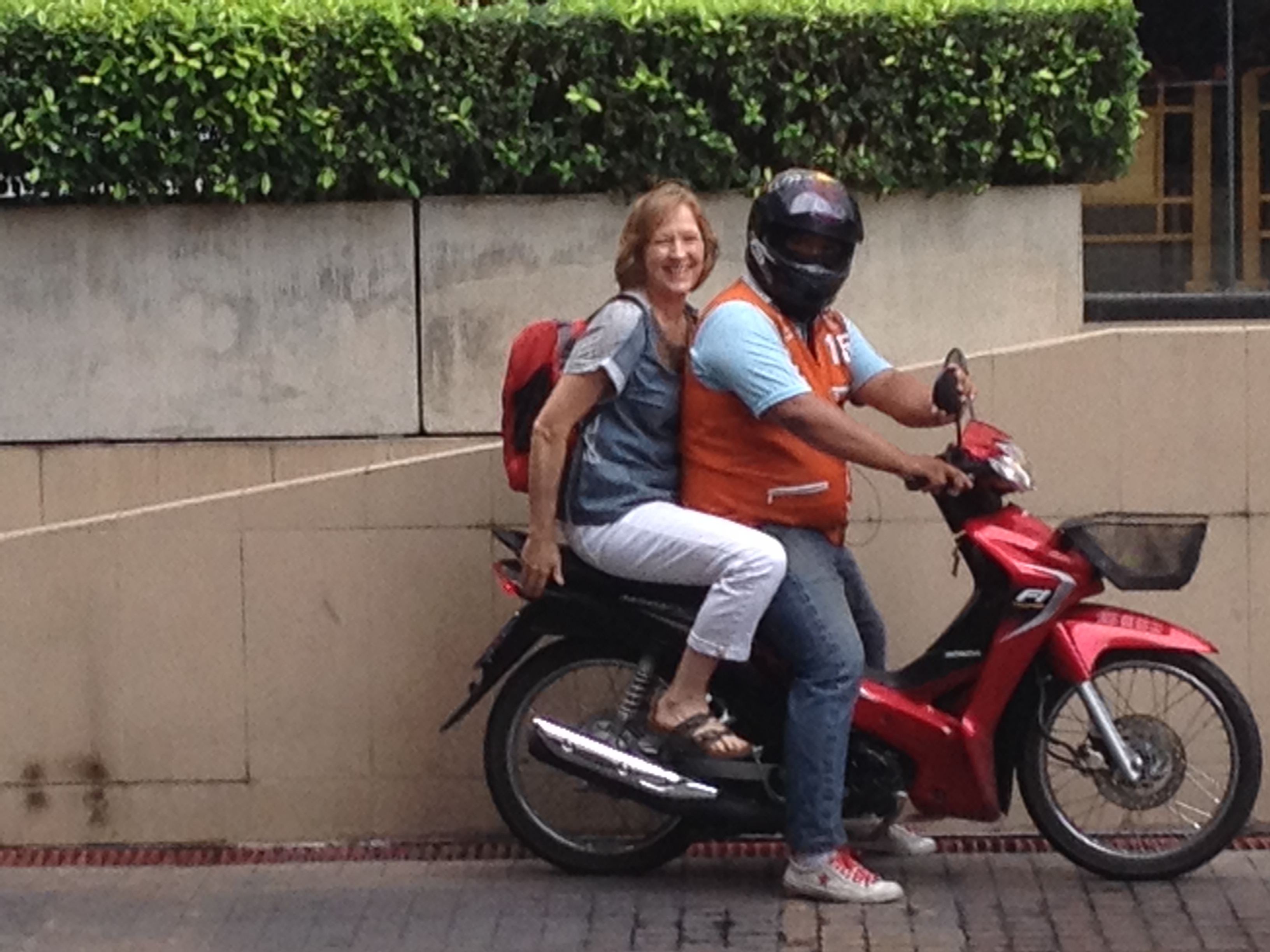
BKK Visit 1 – Karen catches a motorcycle taxi to the hospital.
IMG_2556

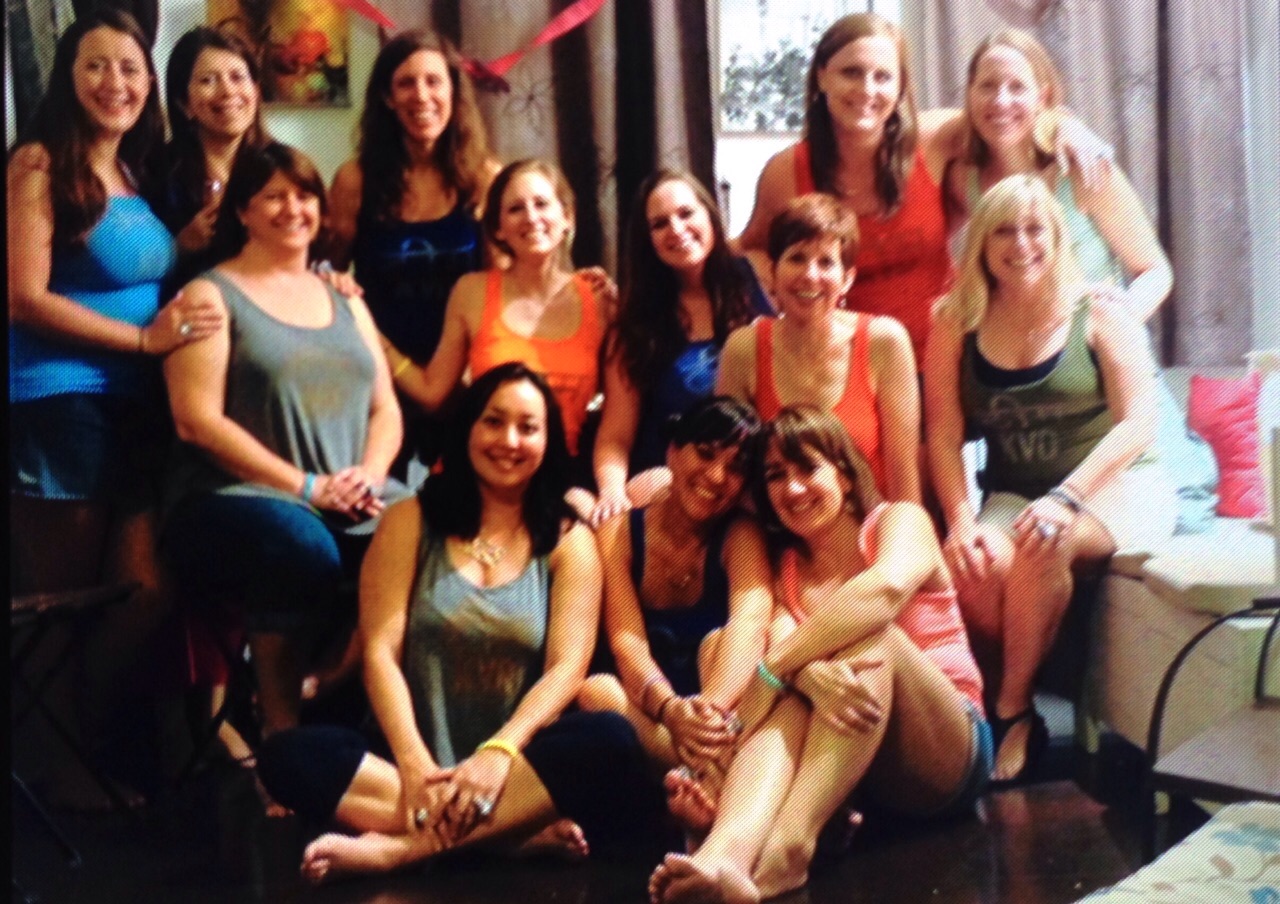
BKK Visit 2 – Ready to hit the town in our matching tank tops spray painted with Kathryn’s initials in English and Hindi.
IMG_2719

BKK Visit 2 – At the spa-aaaaah.
IMG_2687

Taipei Get-Away: filling up my brain, belly and heart

Sometimes you visit a place and get exactly what you need at that moment in time.

In just four days, Taipei met my needs for academic discourse, nature, reconnection with special friends, whimsy, foodie lust, culture, local kindness and expat bonding. That was a lot to accomplish in such a short visit. I headed back to Delhi Tuesday feeling energized professionally and personally.

I was in Taipei (along with Marianna and Jeni, two other EAL teachers at our school) for a professional development workshop on WIDA tools. According to its website,

WIDA advances academic language development and academic achievement for linguistically diverse students through high quality standards, assessments, research, and professional development for educators.

Although WIDA primarily targets the 36 states in its U.S. consortium, this particular workshop was tailored for the 150+ schools in the WIDA International Schools Consortium. When I worked at Shanghai American School, we piloted WIDA’s international work, and I’ve been deepening my understanding ever since. The Taipei symposium’s organizers included Margo Gottlieb, WIDA Lead Developer and one of the founders; Jon Nordmeyer, a teacher at the International School of Bangkok who will join the WIDA staff next year to coordinate its international consortium (He was also my EAL supervisor in both Istanbul and Shanghai!); and Virginia Blais, an insightful and inquisitive EAL teacher at Taipei American School. They designed the workshop around conversations, which led to heaps of revelations and excited sharing of ideas with teachers from all over the world.

unnamed

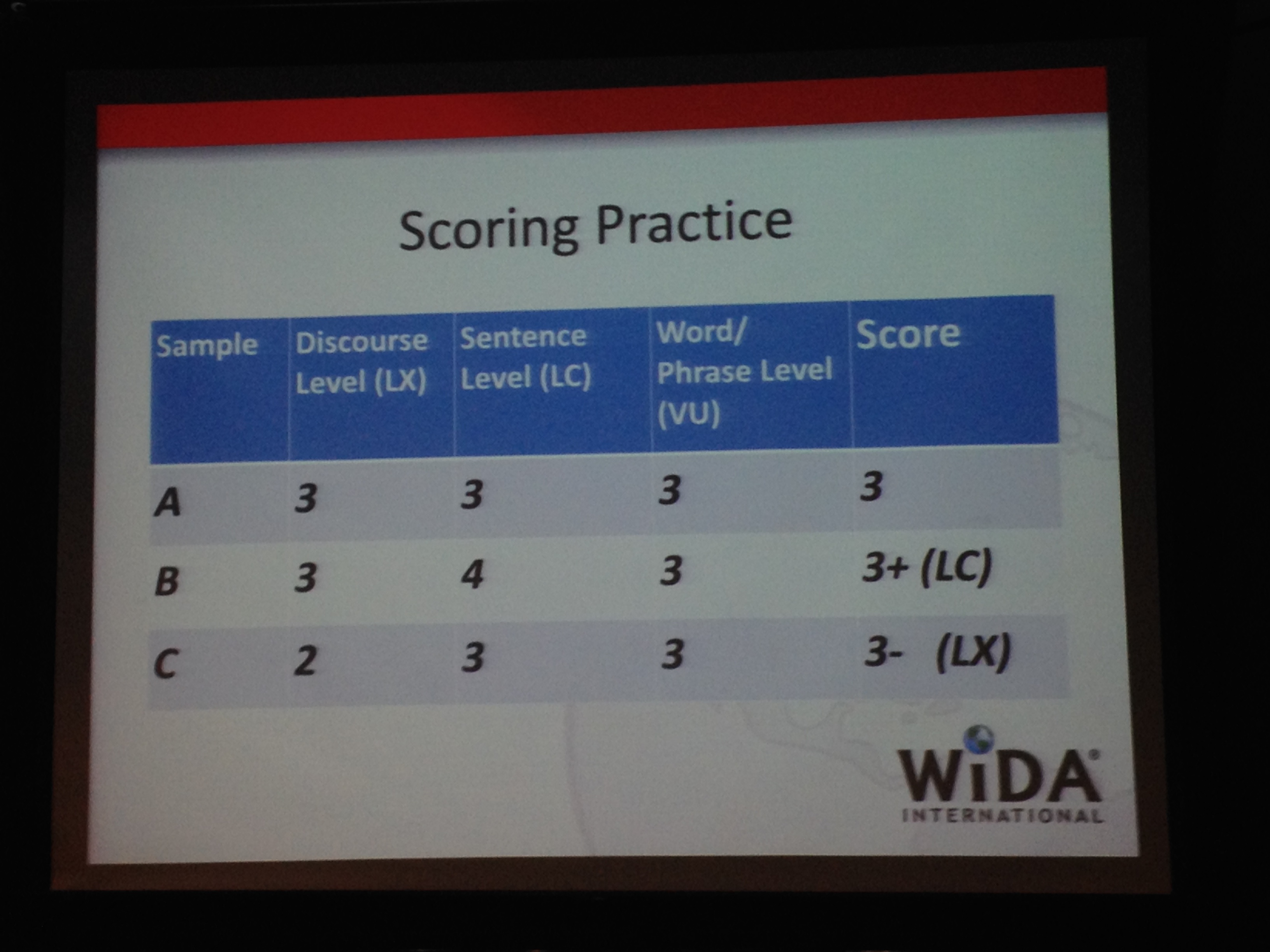
An exercise in using the WIDA rubric to score writing helped participants better understand the criteria and process. Loved it!
IMG_2481

Professional development led me to Taipei, but the city definitely won me over.

While Delhi abounds with gardens, public parks, tree-lined avenues and even the wonderful Aravelli Biodiversity Park right around the corner from our house, the toxic air pollution and dust-coated leaves act as powerful incentives to stay inside during the winter months. My workshop took place at Taipei American School, just a 15-minute drive from Yangmingshan National Park. Lonely Planet echoes my thoughts:

How fortunate Taipei is to have this diverse park at its doorstep, complete with forested mountains, hot springs, rolling grass hills, and some handsome lodgings and restaurants. The park covers 114.55 sq km, with a top elevation of 1120m, and is easily accessible from the downtown area by frequent buses.

I didn’t have time to hike, but I did have time to enjoy one of the hot springs. (See my previous post: Soaking my cares away in Taipei.)

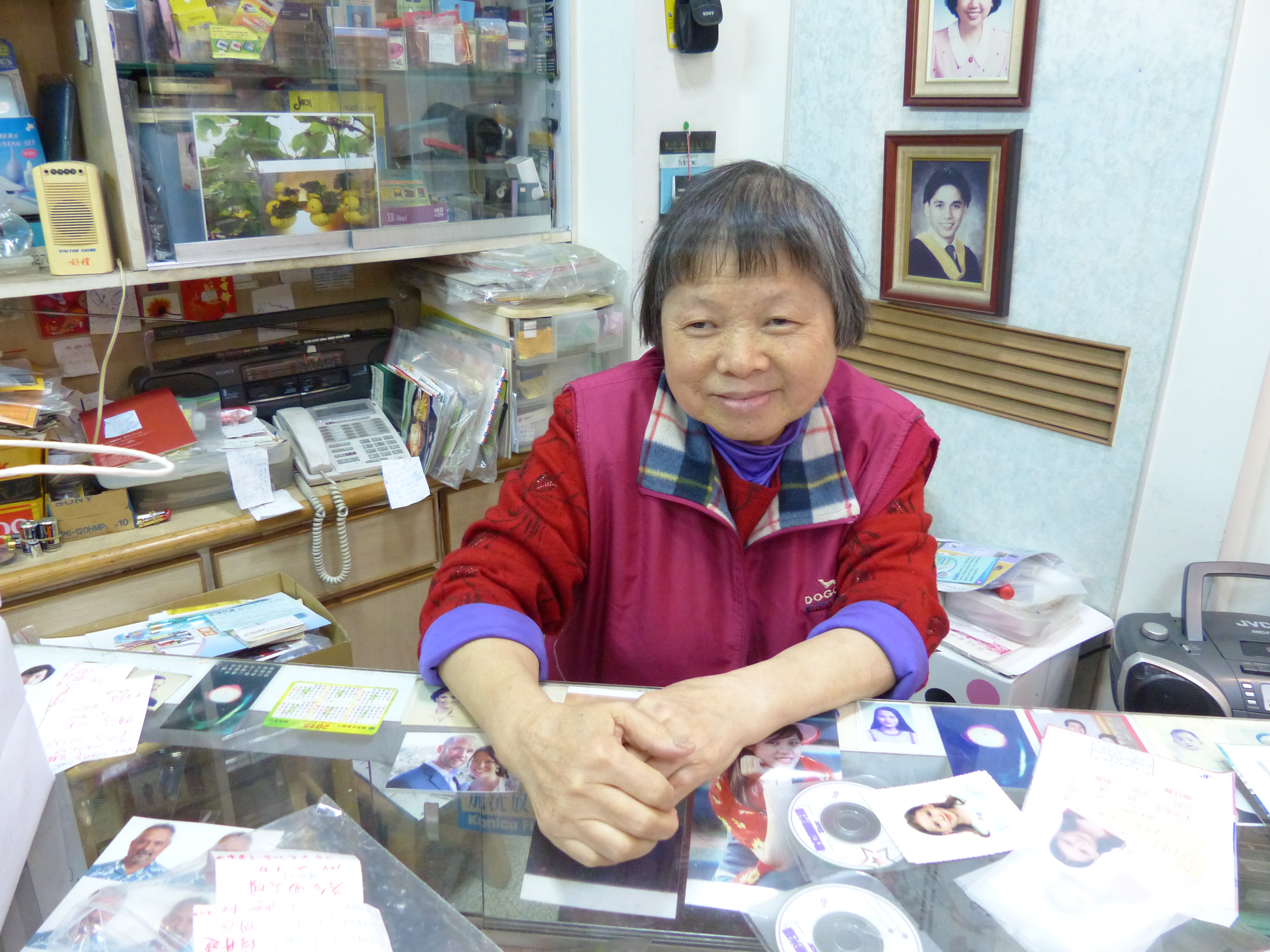
On our drive up to the hot springs, we stopped to take a photo, but my camera wouldn’t shoot. I took it to a camera shop near the hotel. The shopkeeper, who was about 4 feet tall and sweet as could be, told me she had operated that shop for 50 years. She had to order a part and repair my camera in just three days, which she did. I popped in Monday morning to check on the progress, and she froze, eyes wide open. She obviously panicked that she had confused my departure time. “I’m just touching base,” I said. “I don’t leave till tomorrow morning.” She grabbed my arm and squeaked, “Don’t scare me like that!” Sure enough, later that evening, my camera was fixed and cleaned – good as new. Her cheerful attitude and eagerness to help were typical of the people I encountered in Taipei.
P1060429

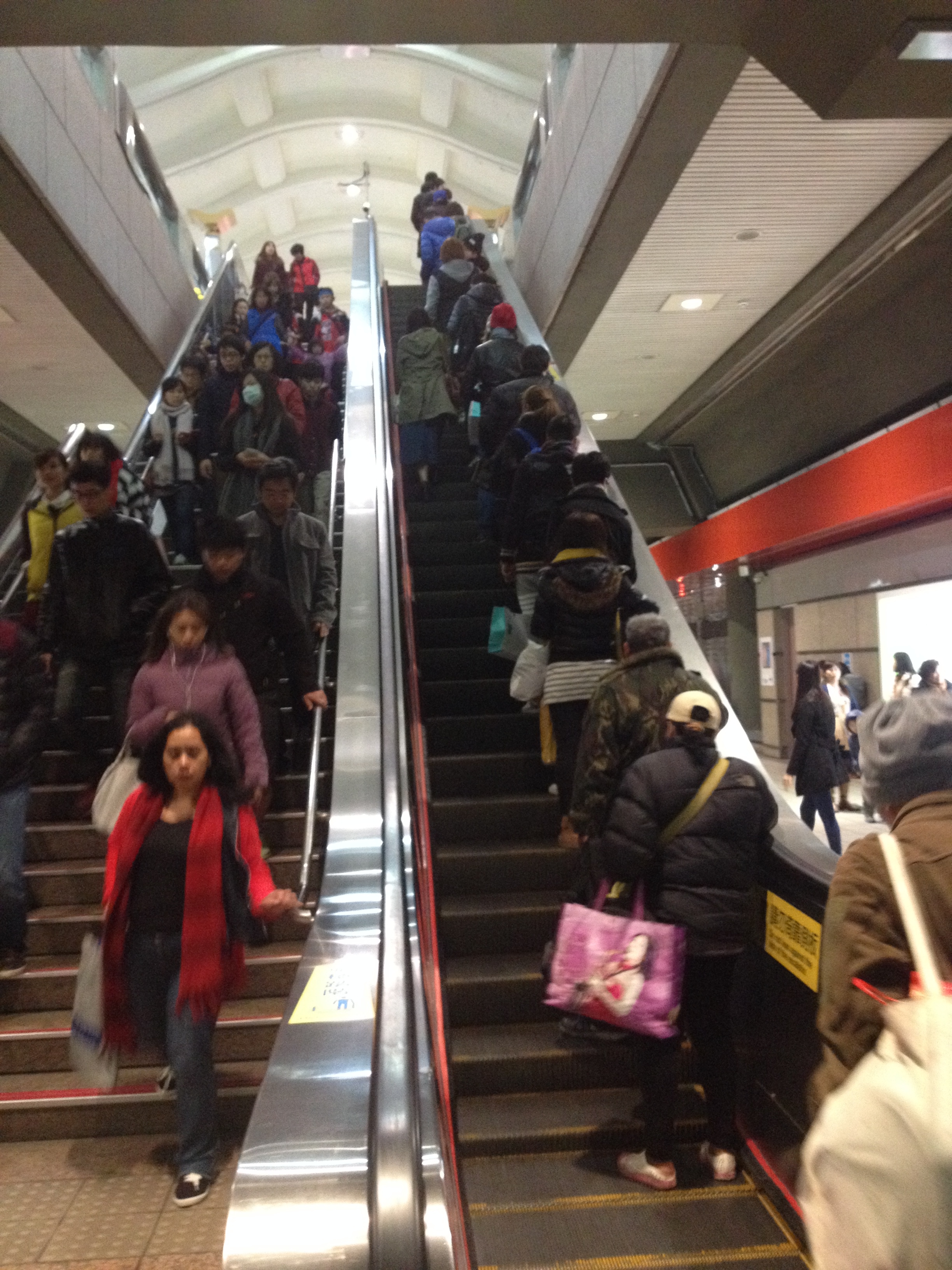
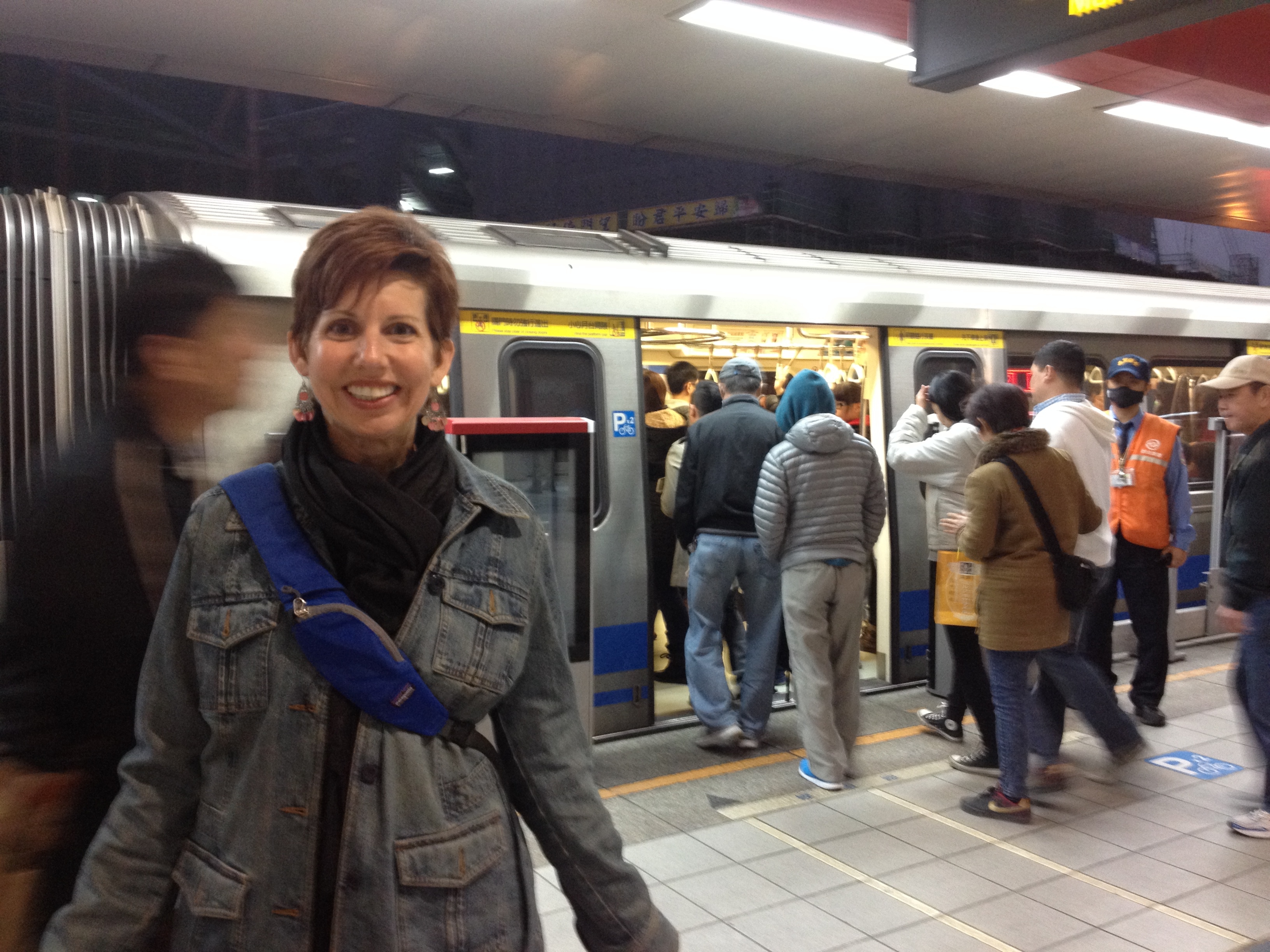
Having spent four years in Shanghai, I enjoyed the familiar vibe in Taipei, but the easy-going pace was a far cry from mainland China. At the metro, I stared in awe at the people who (a) lined up to take the escalator and (b) scooted over the right so people could pass on the left. The crowd also lined up to get on the train, leaving room for others to disembark. Not the China I know!
IMG_2464

IMG_2468

IMG_2463

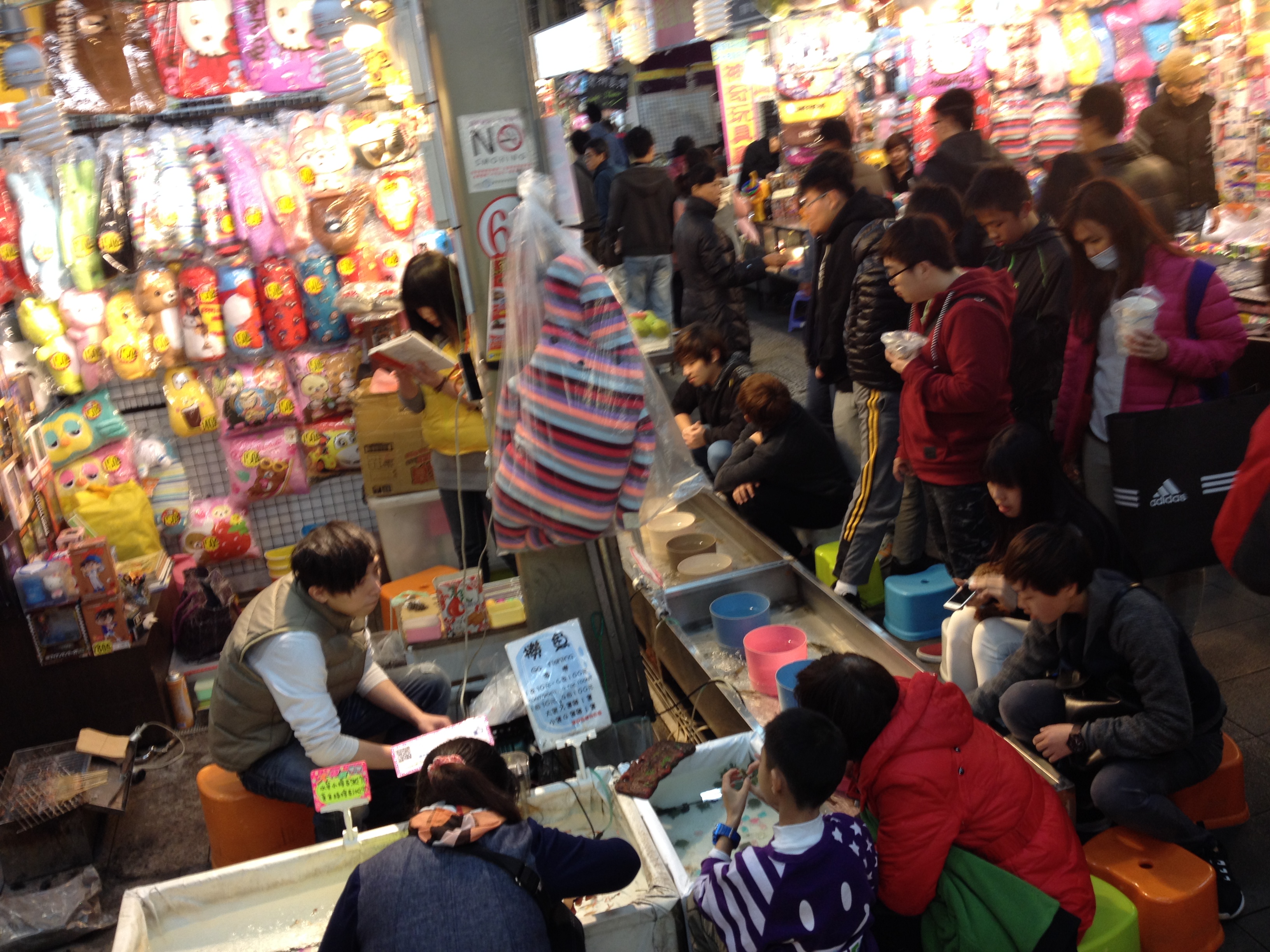
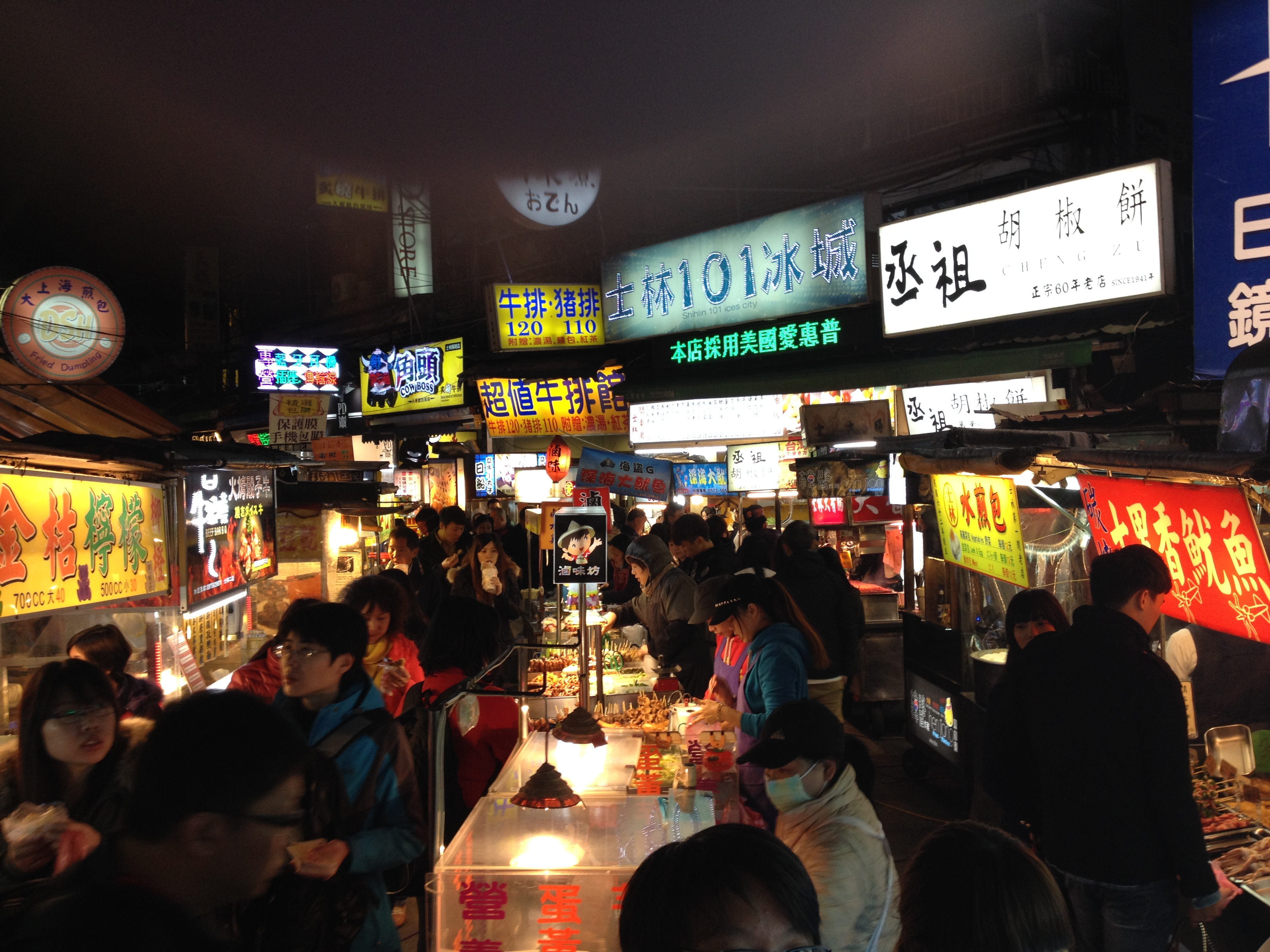
Another highlight of our visit: Paul and Lisa, friends of friends and teachers at Taipei American School, took Marianna, Jeni and me to the Shilin Night Market. It was mind-bogglingly fabulous.
IMG_2459

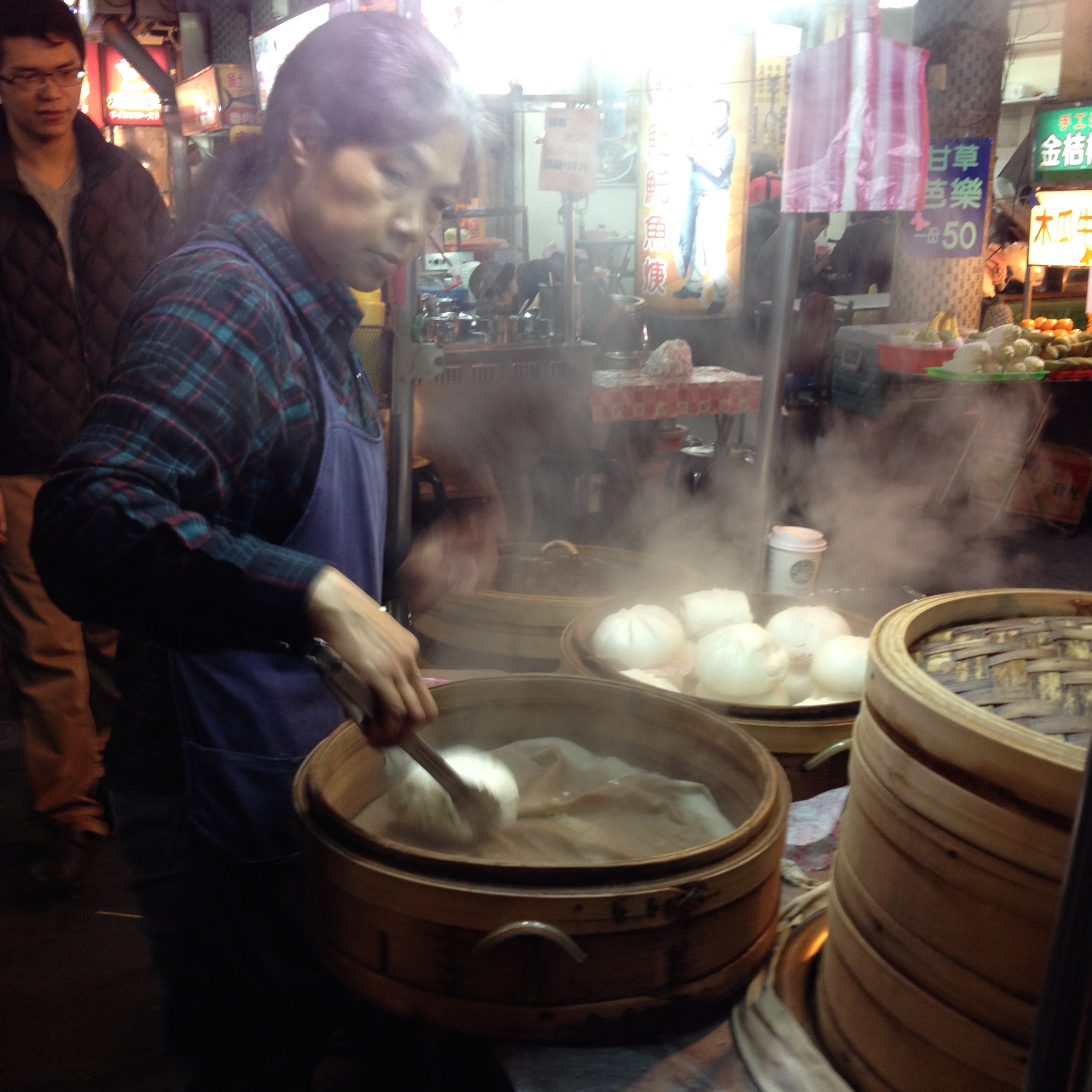
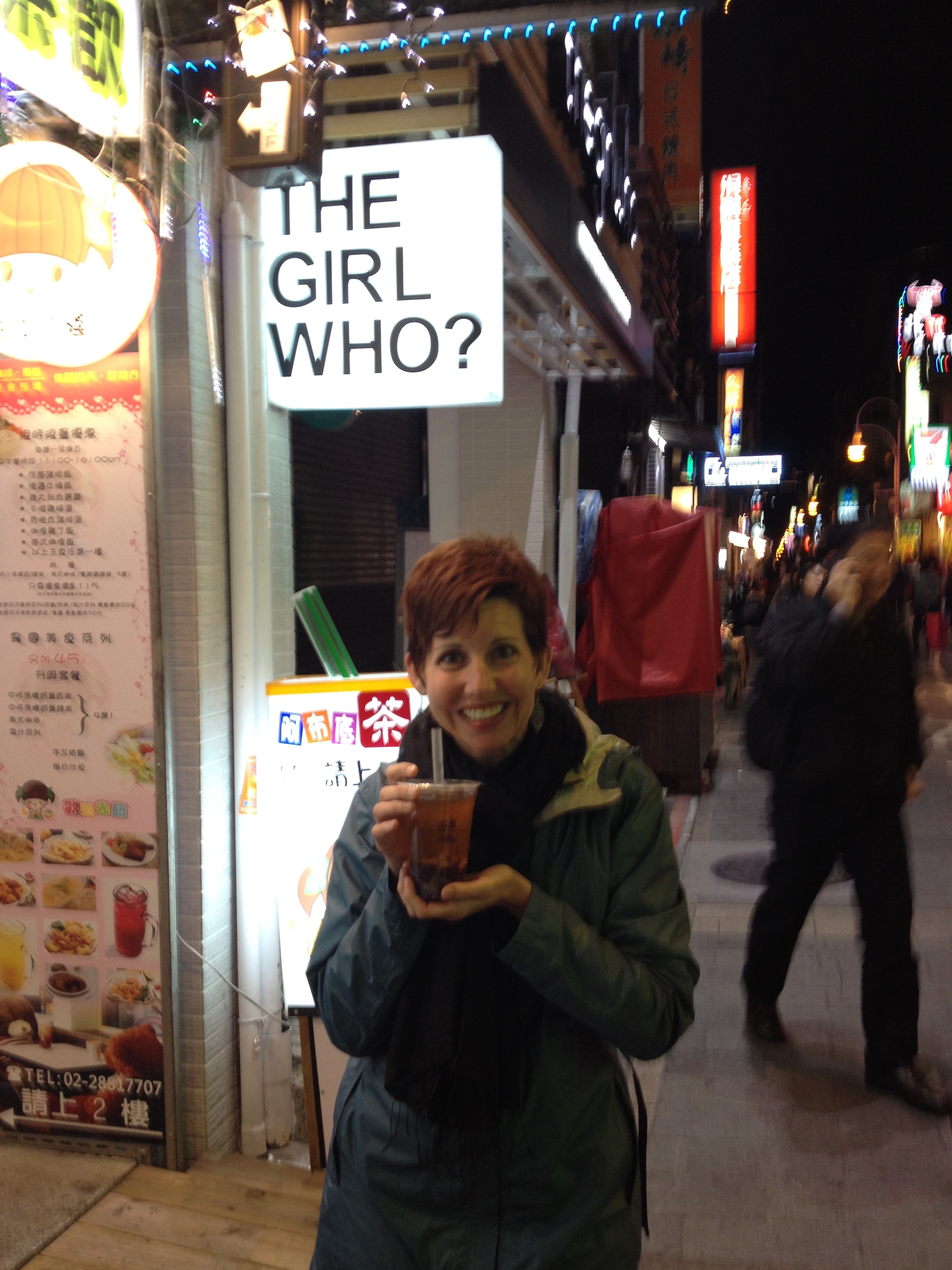
So many food options! I got a delicious bubble tea and some steamed pork buns. Yum!
IMG_2454

IMG_2429

Shrimp fishing. If you catch any, the booth workers will cook ’em up for you to eat on the spot.
IMG_2448

IMG_2430

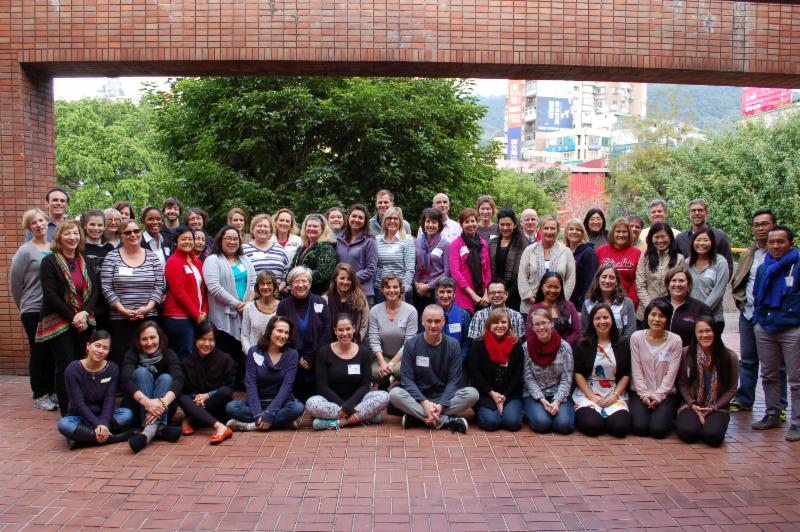
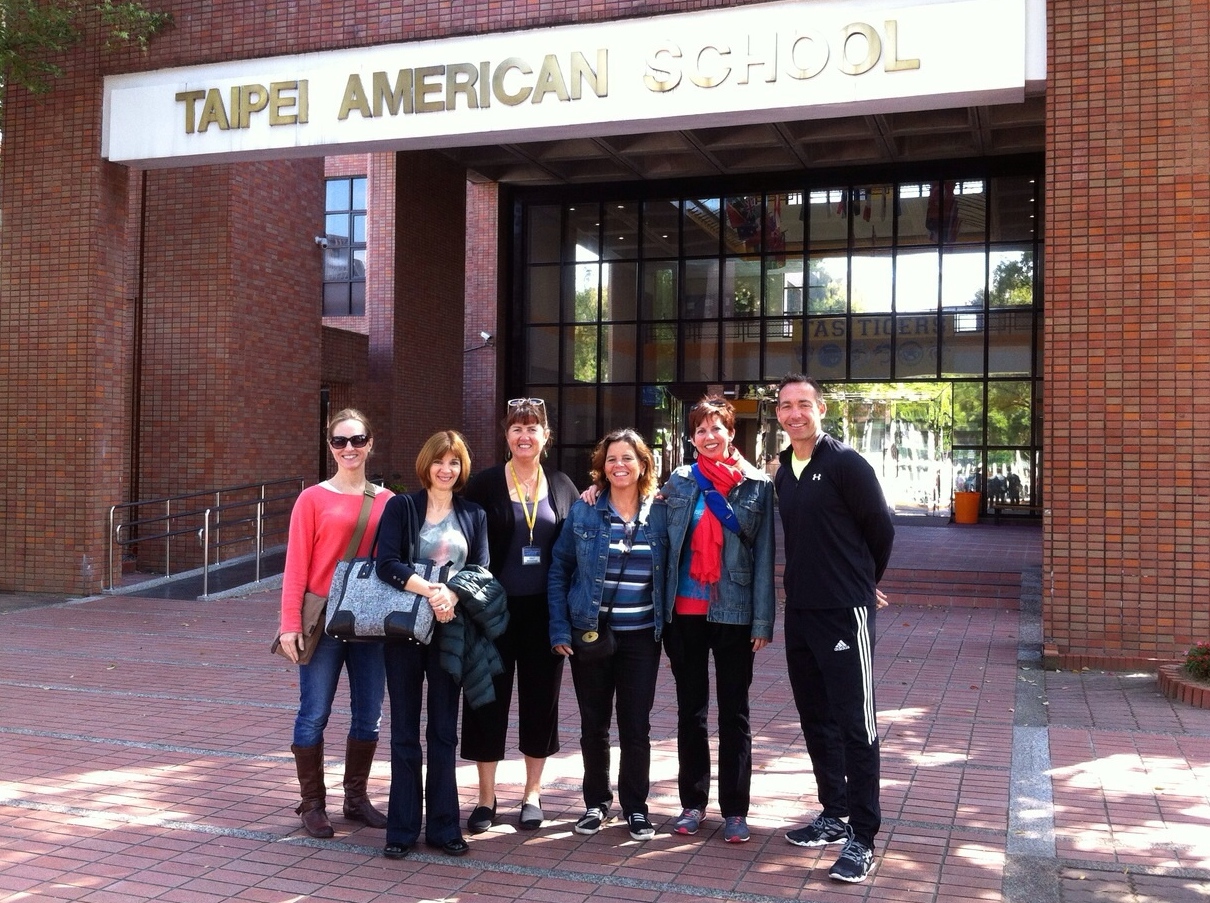
The most special part of my weekend, however, was a mini-reunion with some of my favorite friends who worked with us at Shanghai American School (2005-2009). Kimbra and Elaine traveled from Shanghai; Kathy and Colleen traveled from Hong Kong; and Kristi and Julian live about 3 minutes from Taipei American School. (You may remember Col from her recent trip to India!) They came to town just to hang out, which was such a treat. I love how we reminisce about old times but also make new memories together.

Julian gave us a tour of the school.
IMG_2515

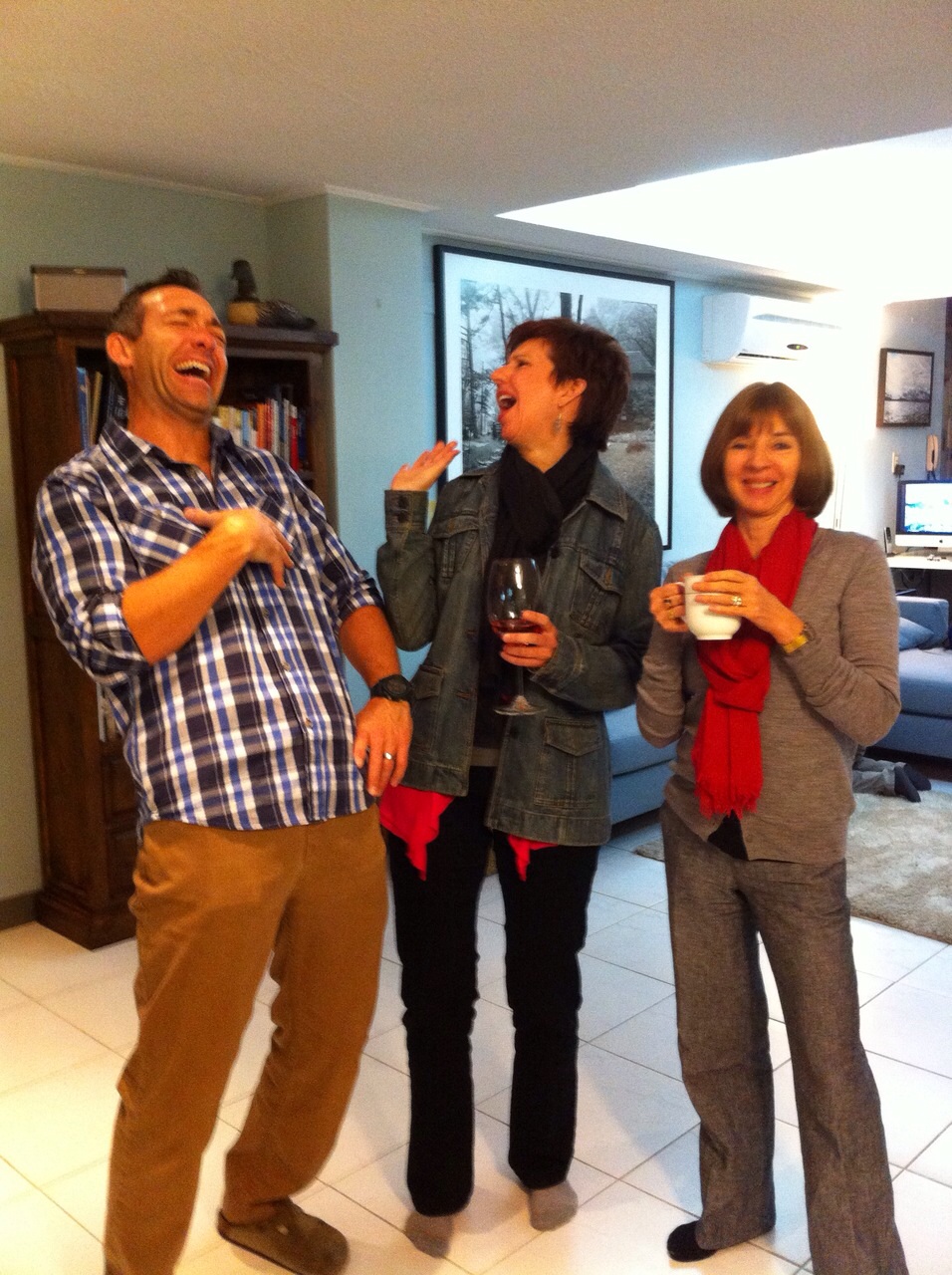
At Kristi and Julian’s house, Kathy told us to “act natural.”
IMG_2501

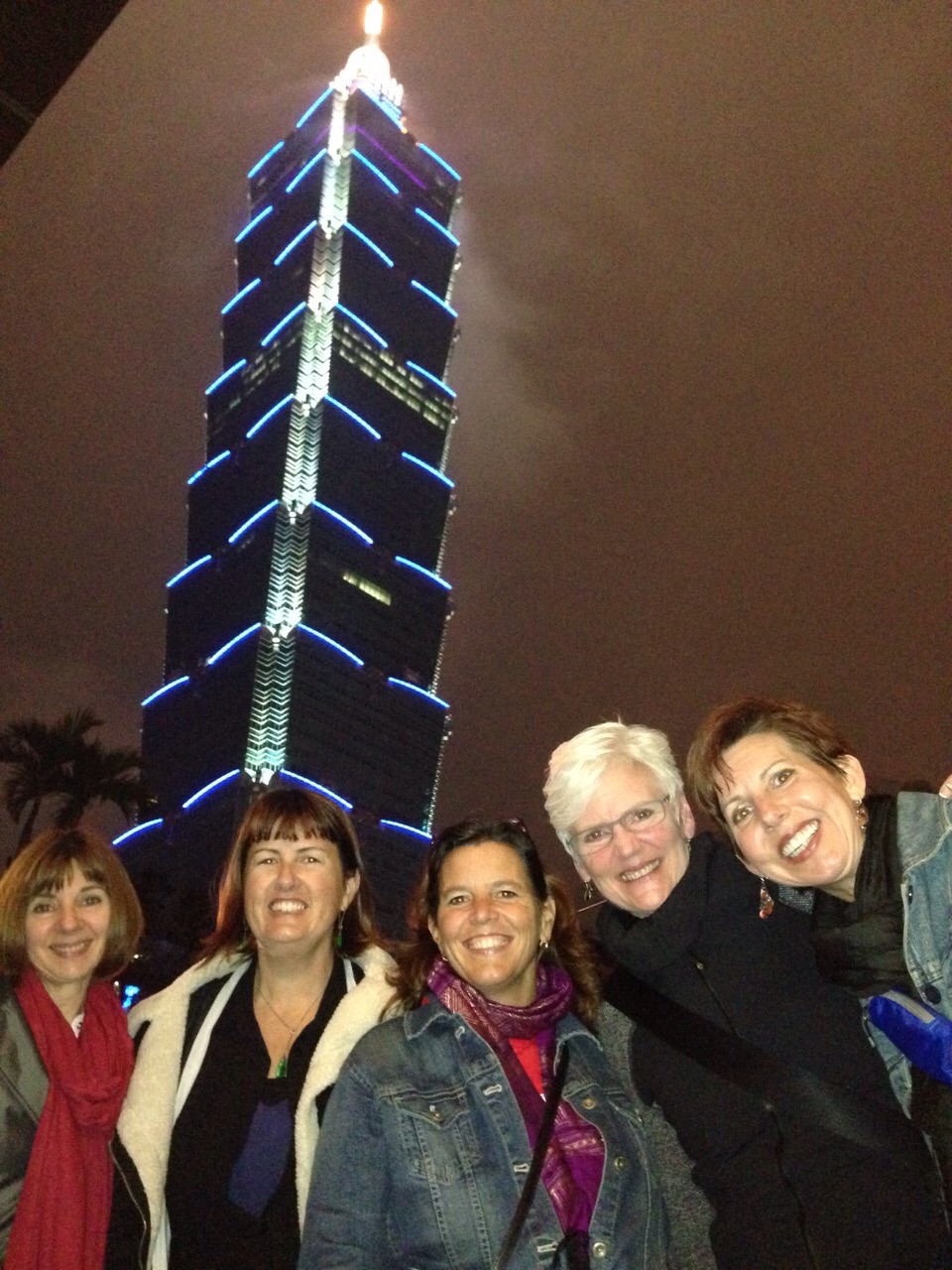
Posing with Taipei 101, which was the world’s tallest building back in 2004.
IMG_2499

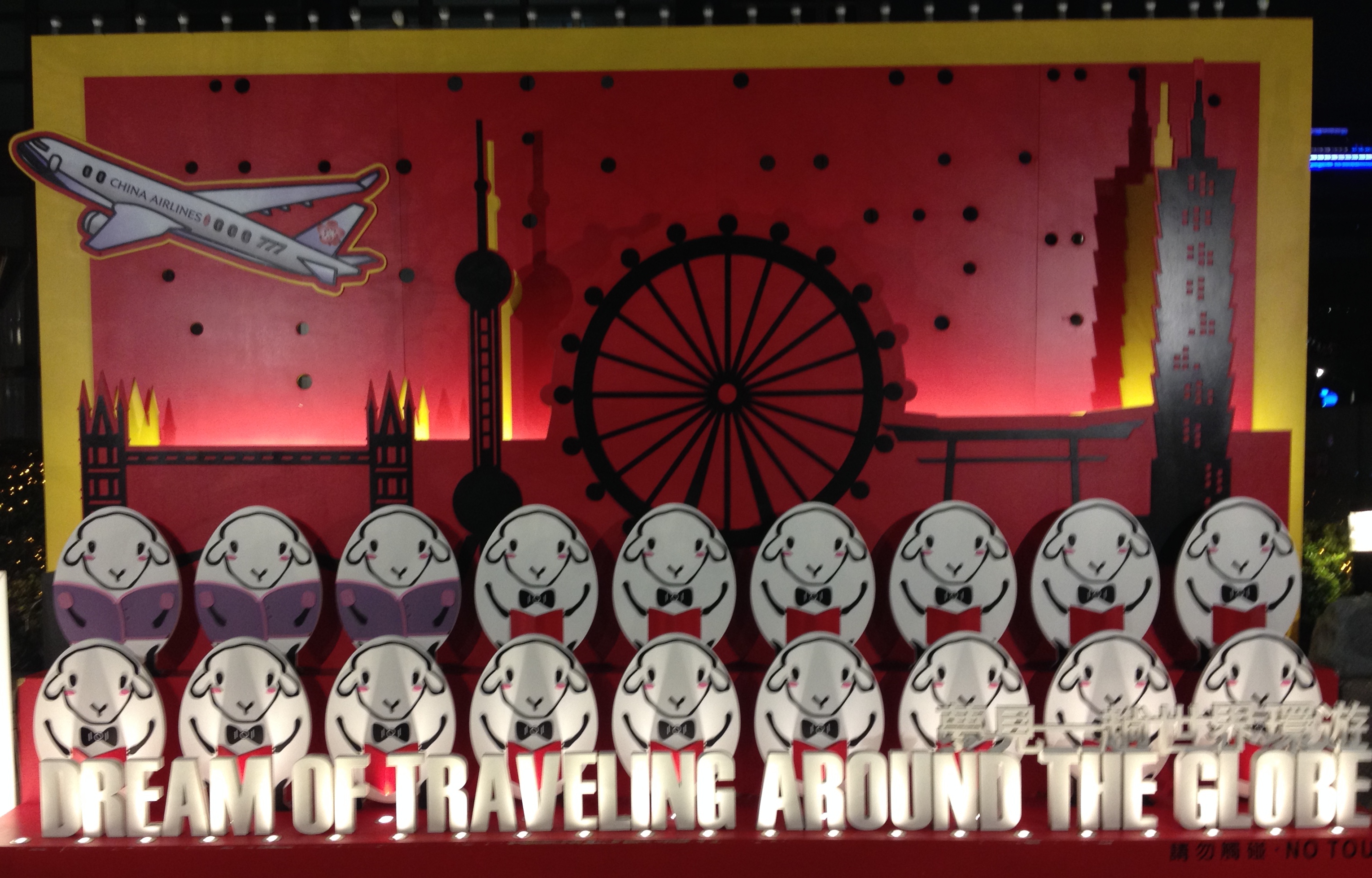
As we head into the Year of the Ram – which is my Chinese Zodiac sign, I choose to follow the advice from this cheesy display.
IMG_2472

Check out the Taipei Trends website for more reasons to love this city.

Soaking my cares away in Taipei

Word of the Day: Fumarole
A fumarole (Latin fumus, smoke) is an opening in a planet’s crust, often in the neighborhood of volcanoes, which emits steam and gases such as carbon dioxide, sulfur dioxide, hydrogen chloride, and hydrogen sulfide. – Wikipedia

I was, in fact, “in the neighborhood of volcanoes” today in Beitou, a Taipei suburb at the base of Yangming Mountain in Taiwan. I felt profoundly grateful for those lovely fumaroles, which are among three conditions for forming natural hot springs, according to the Yangmingshan National Park website. In addition, to fumaroles, you need an underground supply of hot water and hydrostatic pressure to force it upwards. “In Yangmingshan National Park, the distribution of hot springs and fumaroles is controlled by a sandstone formation that underlies the 13 geothermal areas. Forces inside the earth’s crust cause the rock to rupture,” the website says.

Well, that’s all very science-y and fascinating. But do you know what’s even more wonderful? Soaking with your blissed-out friends in a bubbling sulfur vat of relaxation.
IMG_2415

I’m in Taipei with Delhi friends Marianna and Jeni for a work conference, but I’m also meeting up with a group of besties from my Shanghai days. We first popped in on Kristi, who now lives in Taipei with her husband, Julian, and two adorable little boys. Her lovely apartment/art studio is right around the corner from our hotel. After a short visit yesterday, she offered to take us to the hot springs. Yes, please!

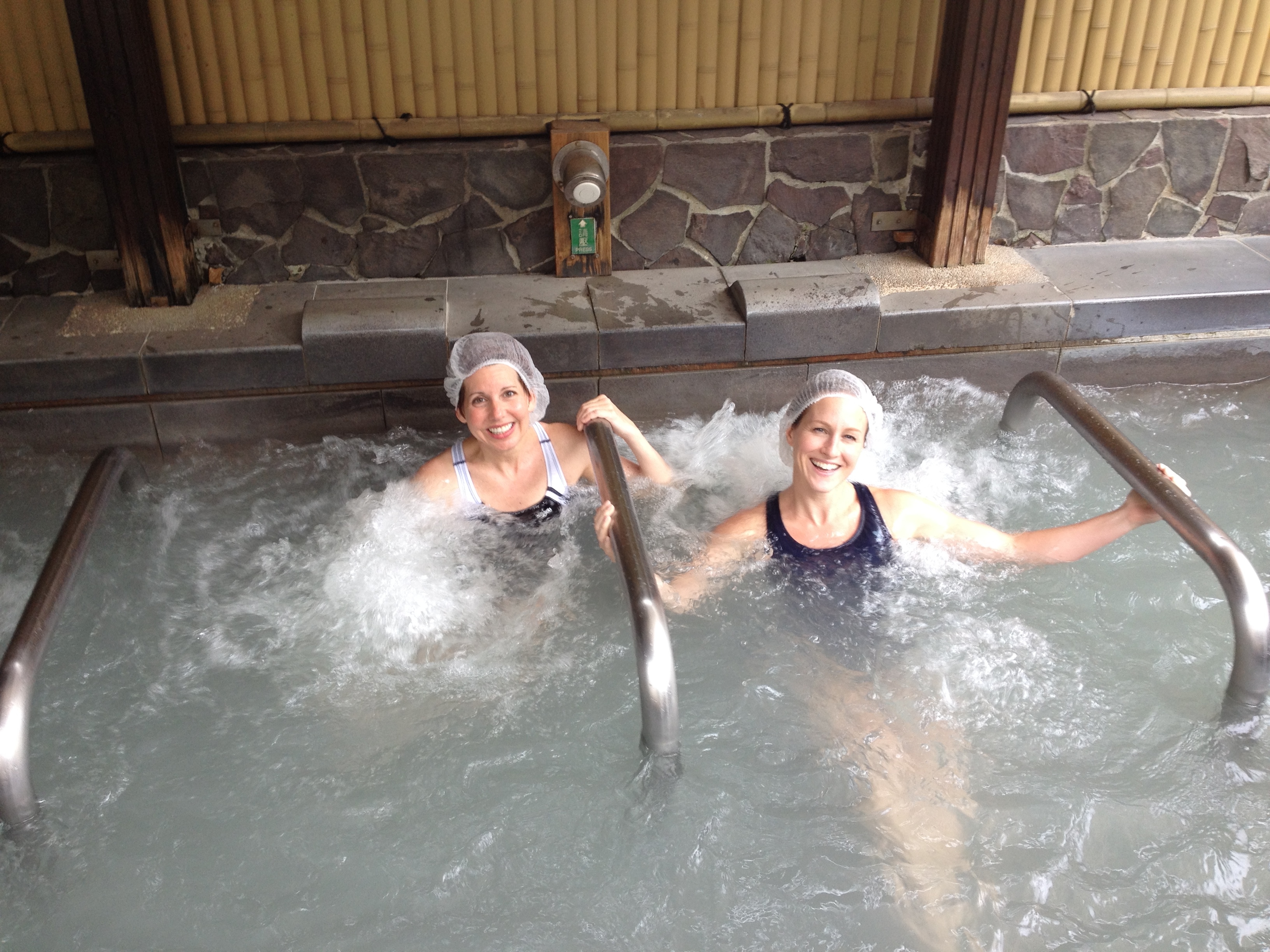
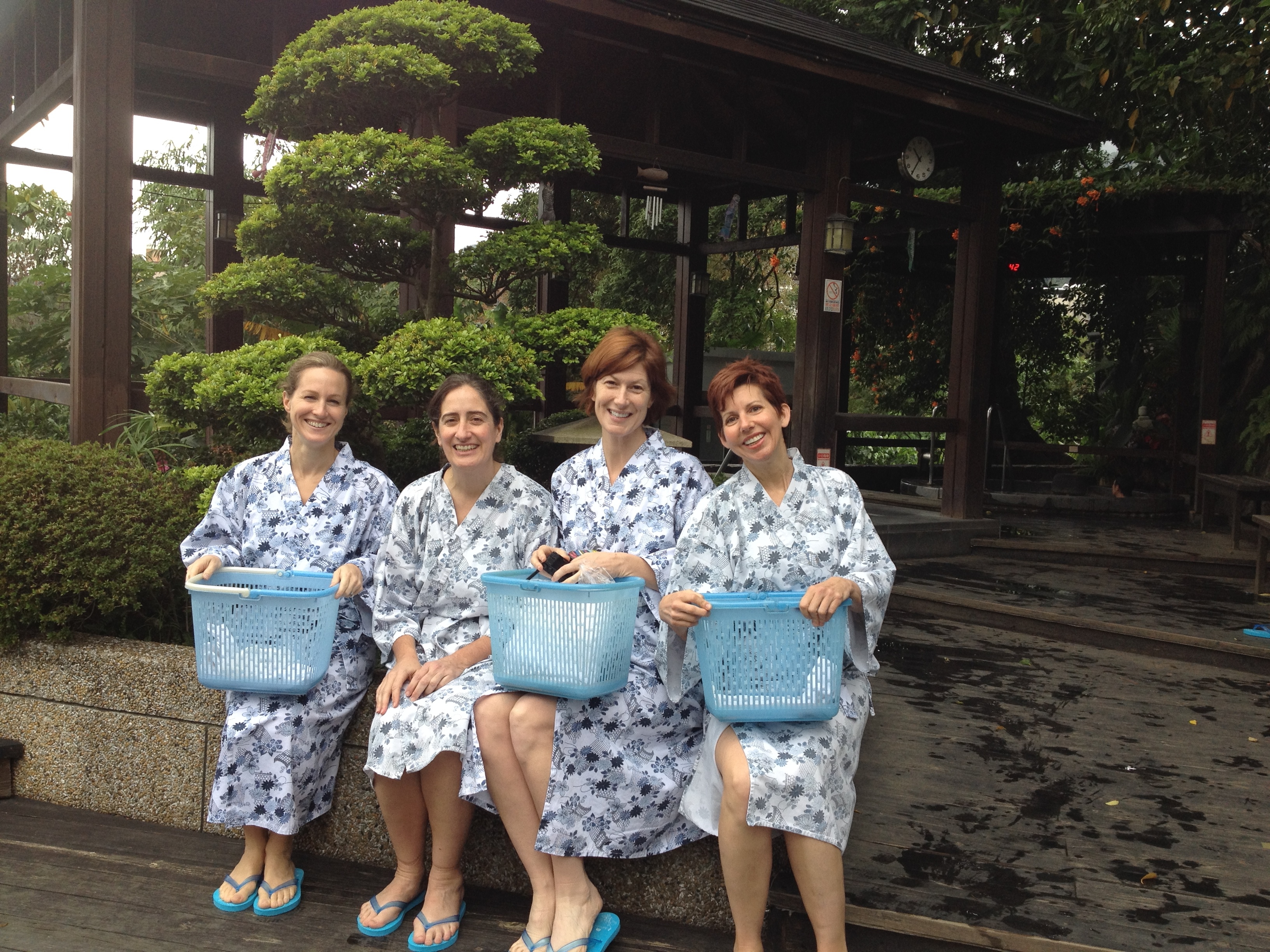
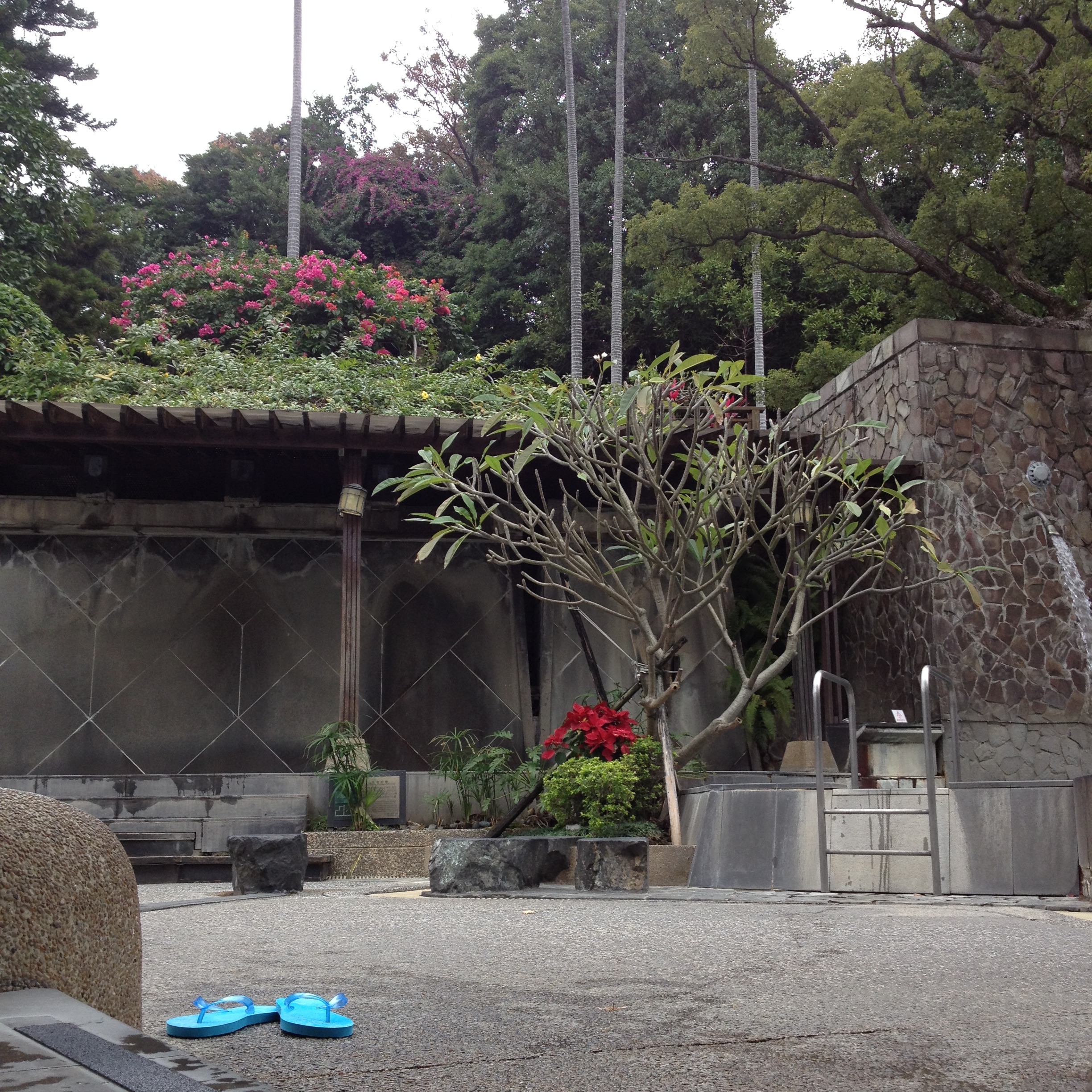
Kristi picked us up this morning, and we walked across the street to Jake’s Country Kitchen for blueberry pancakes. After a short drive up the mountain, we arrived at Spring City Resort, where we paid 700 New Taiwan Dollars, or about $22. Outside, we each exchanged our ticket for a blue plastic basket containing a couple towels, a cotton robe, flip flops, a locker key and a weird stretchy band that morphed into a disposable swim cap. The locker room, located up a short flight of rock steps, was clean and simple. We donned our swimsuits and robes and headed back down to the sulfur pools.
IMG_2410

While ruling Taiwan (1895-1945), the Japanese discovered the perfect place to recreate their beloved hot springs culture: the hillsides of Taipei. Although the area turned a bit sleazy for awhile, gentrification and a direct metro line from the city center have created an upscale leisure destination.

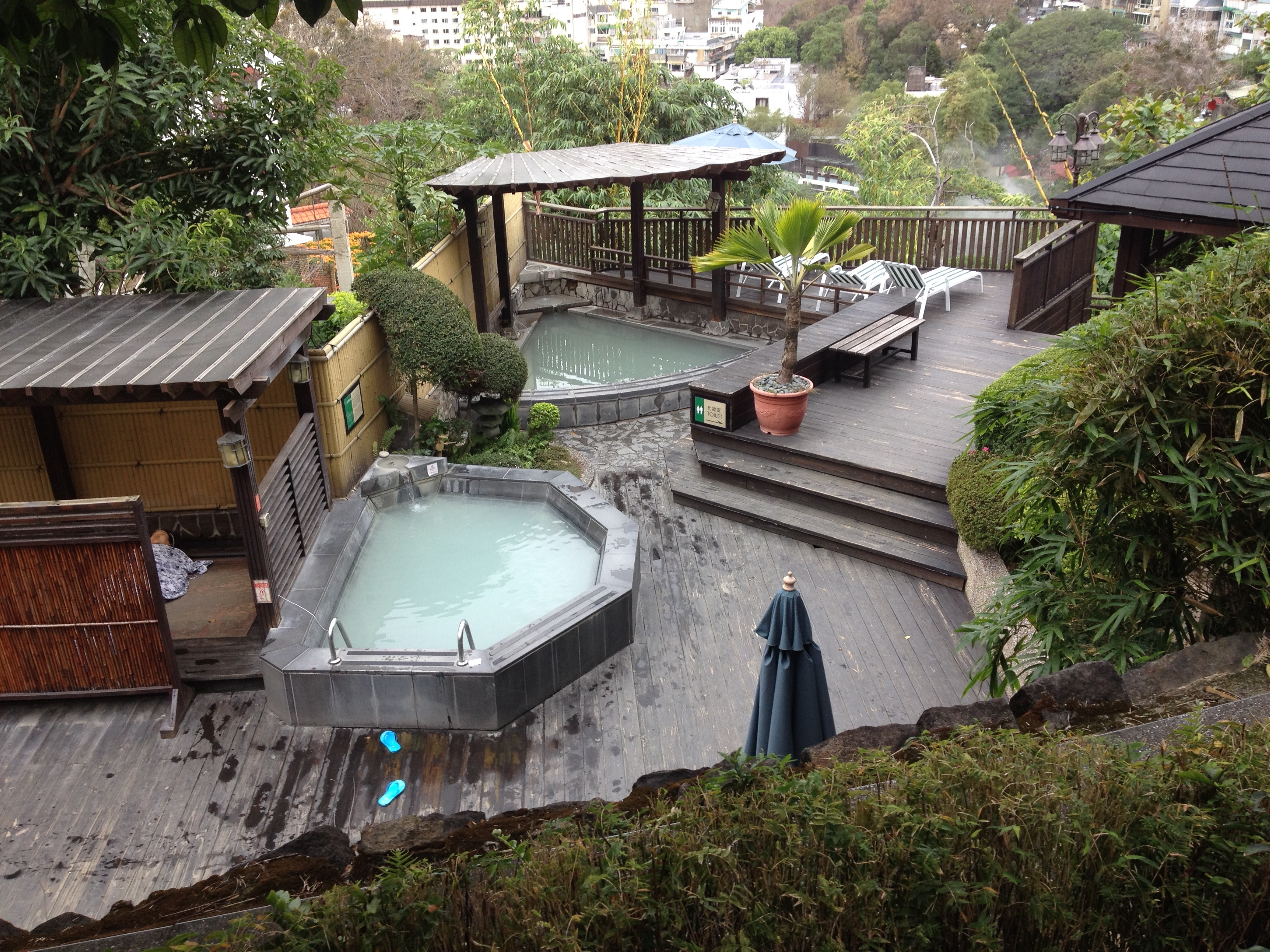
The small pools at Spring City Resort featured signs that clarified specific therapeutic targets, such as “body slimming” or “alleviating frozen shoulders and promoting sleeps.” They ranged in size, depth, angle of jets, and temperature with the hottest water at 42°C or 107°F and the coldest unrecorded by me because there was no way I was getting in there. Shaded by flowering trees and surrounded by rock gardens, I felt the rejuvenating power of this mountain oasis.
IMG_2409

IMG_2423

IMG_2418

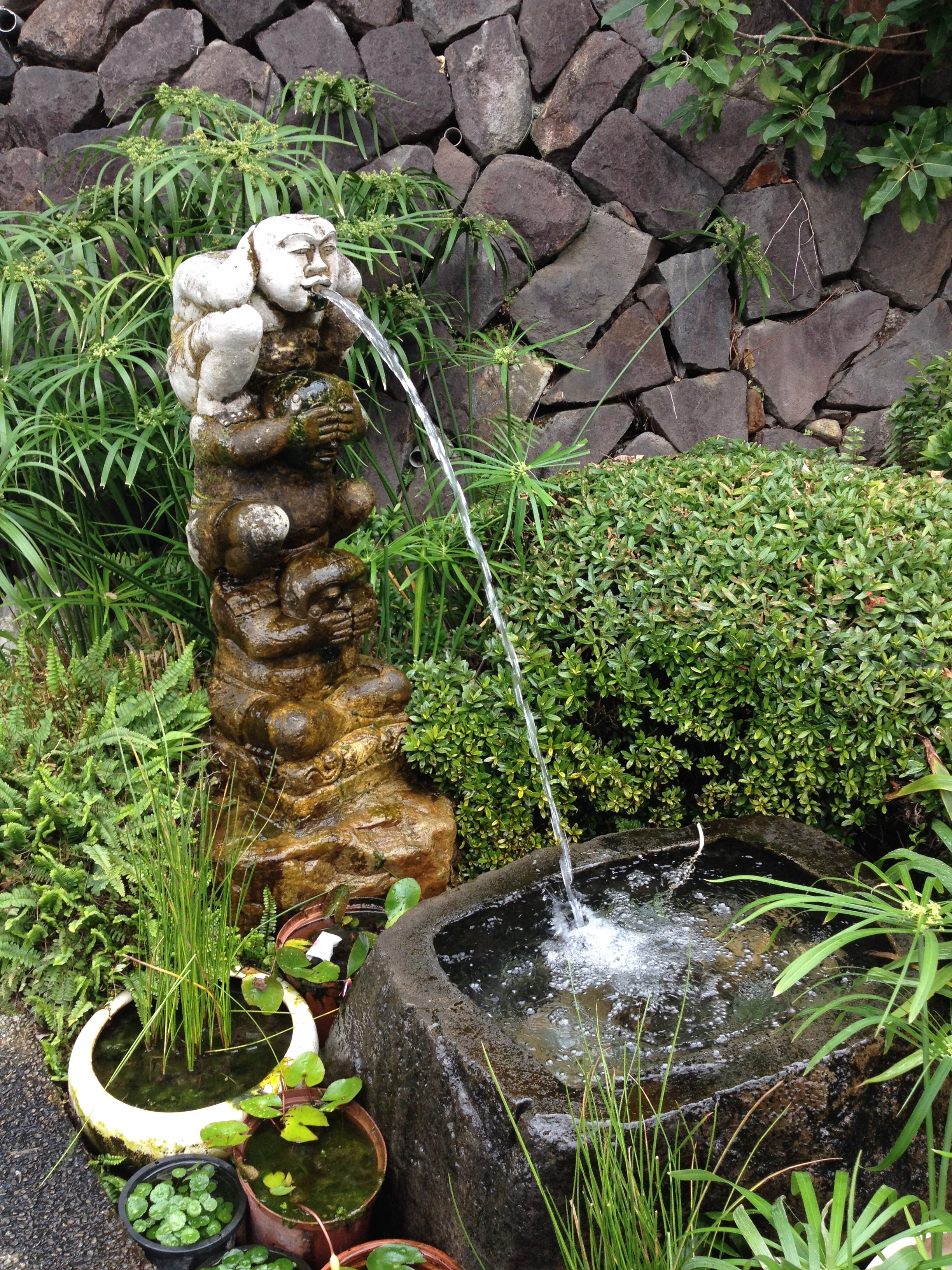
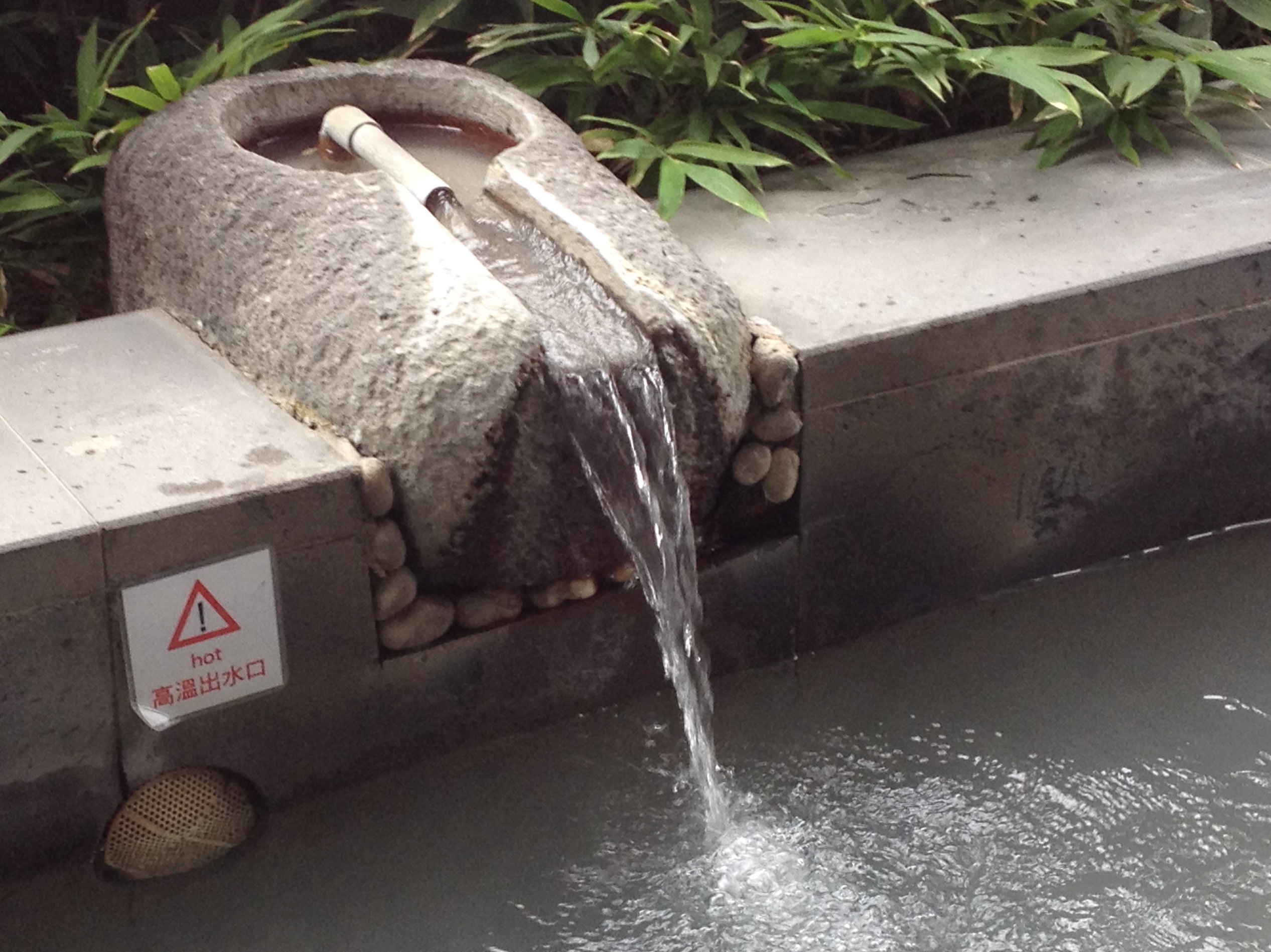
Fresh spring water poured into each pool through a stone spout, nearly impossible to resist touching – thank goodness for the warning sign.
IMG_2413

A stone slab, protected from the breeze by a bamboo screen, was heated by the hot water underneath and provided a nice dry spot to take a break from the pruning effect. After popping in and out of several pools, we showered, dressed and drove back down the mountain so Kristi could pick up her kids from school by 1:30. You really couldn’t ask for a more relaxing way to start the day!

Desert Castles & Amman – Jordan Journey, Day 12

Our last full day in Amman, and we had more castle storming to do!

(For those of you who don’t get it, Tony and I are just a wee bit obsessed with “The Princess Bride,” so every time we visit a castle, we feel compelled to quote the movie: “Have fun storming the castle!”)

In fact, the castles weren’t castles at all. George drove us east today to check out what are commonly called “desert castles” or “desert palaces” but are most likely rural retreats for the hoi polloi of the 8th-century Umayyad Dynasty. Actually, nobody knows for certain why these structures were built. According to the government website, The Hashemite Kingdom of Jordan:

There are various theories about the purpose of the desert palaces, yet the lack of a defensive architectural design suggests that most were built as recreational retreats. The early Arab rulers’ love of the desert led them to build or take over these castles, which appear to have been surrounded by artificial oases with fruit, vegetables and animals for hunting. Other theories suggest that they came to the desert to avoid epidemics which plagued the big cities, or to maintain links with their fellow Bedouin, the bedrock of their power.

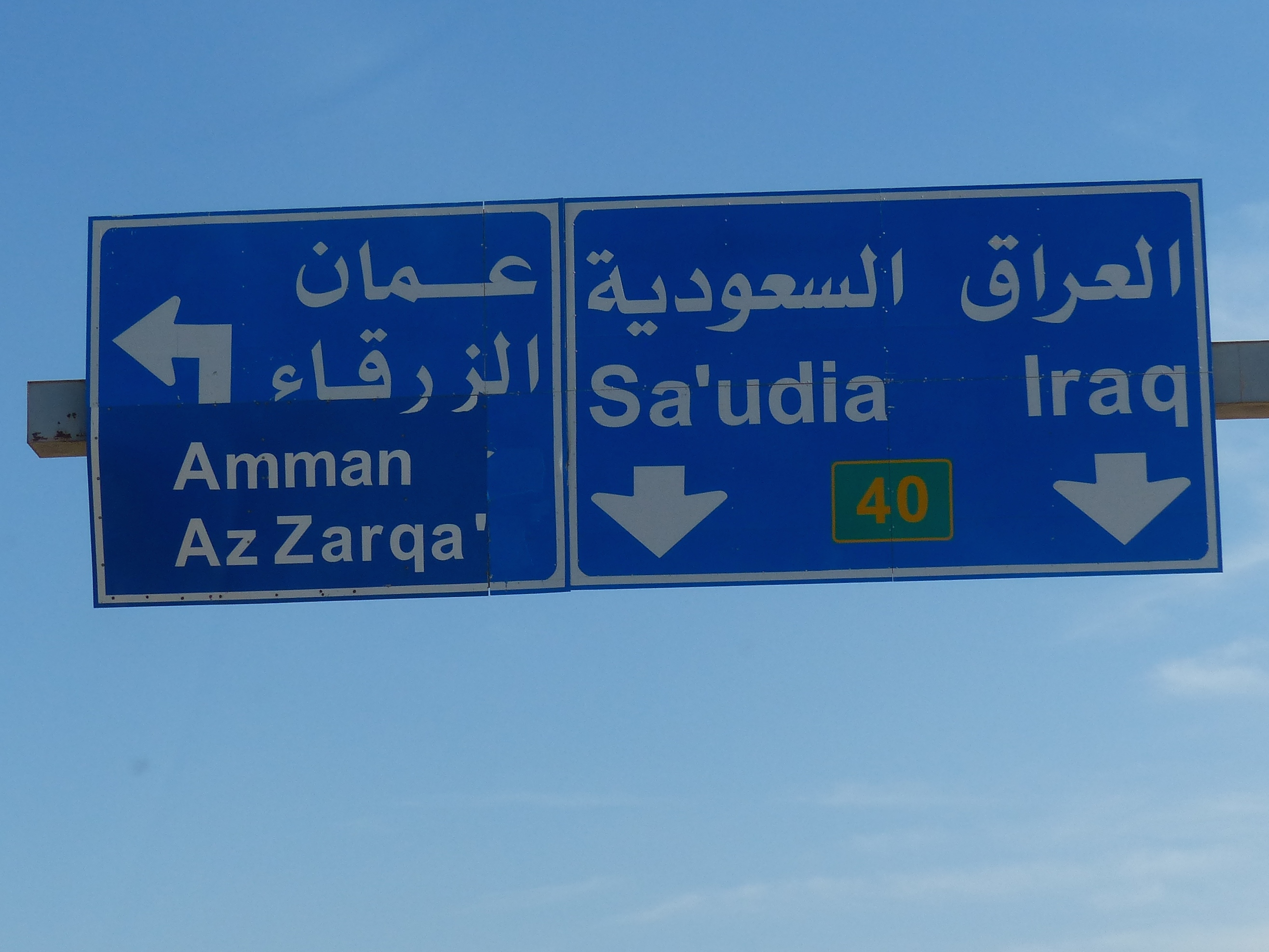
We spent the morning near the Saudi Arabian border visiting three sites.
P1060394

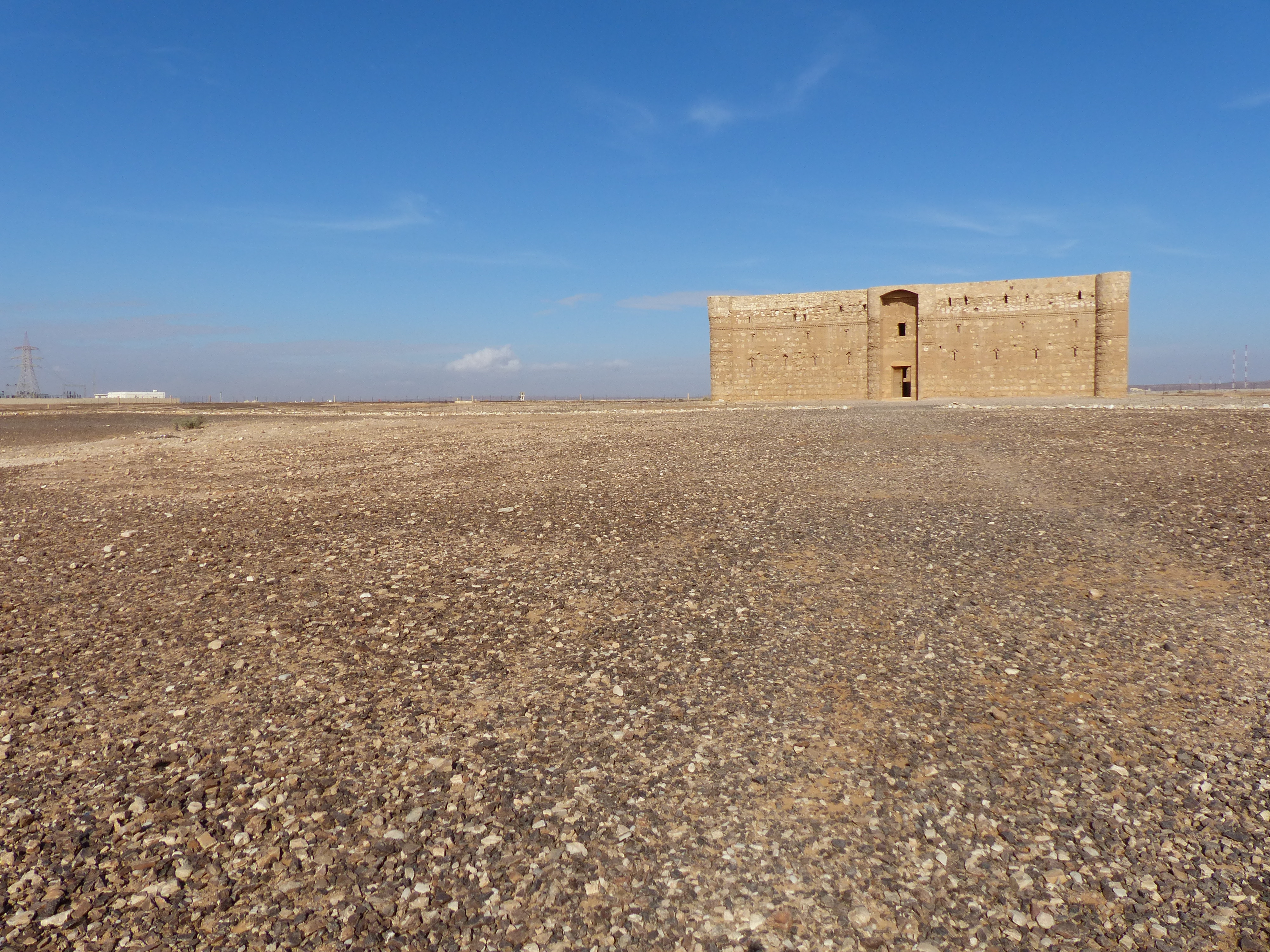
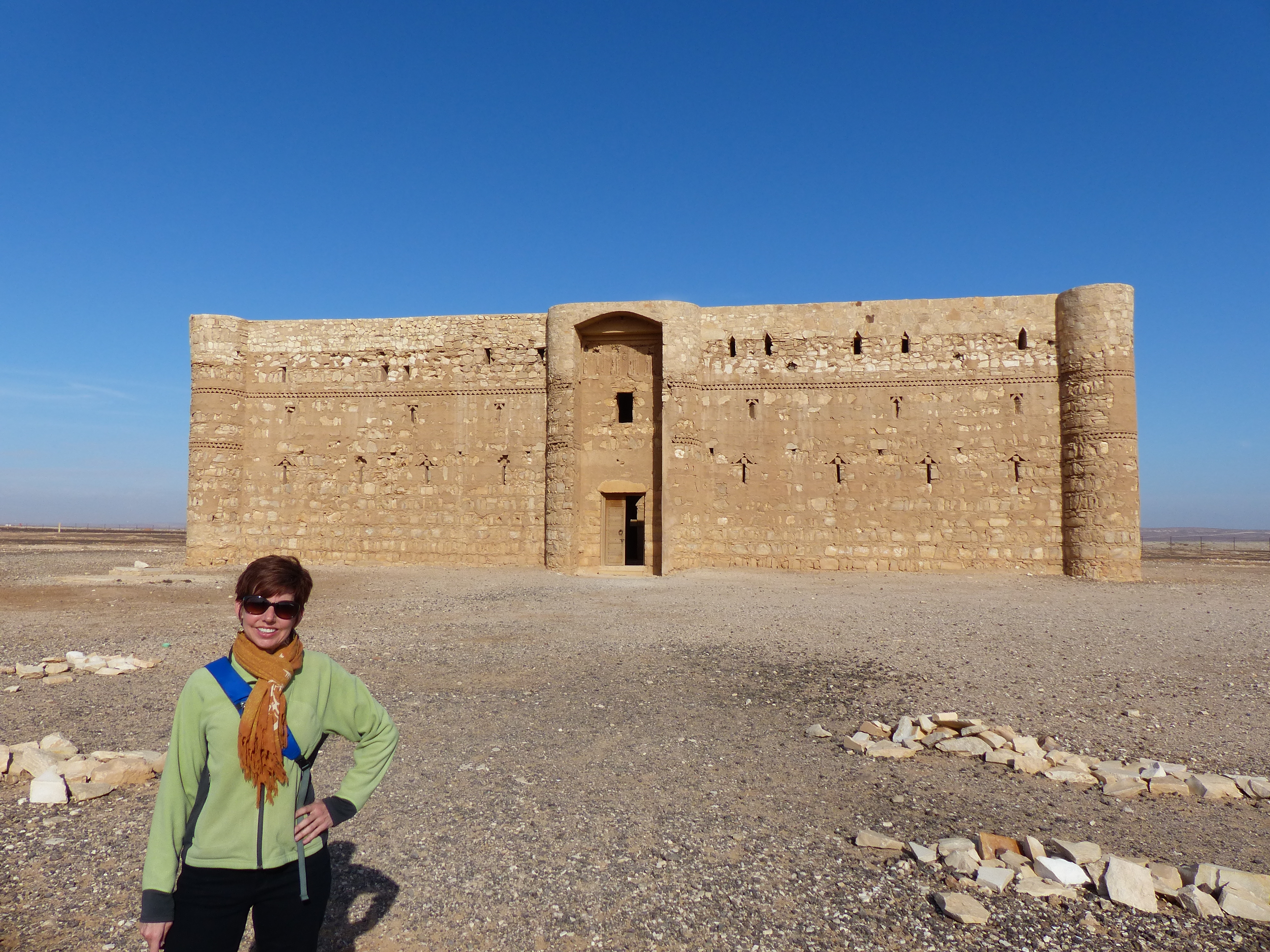
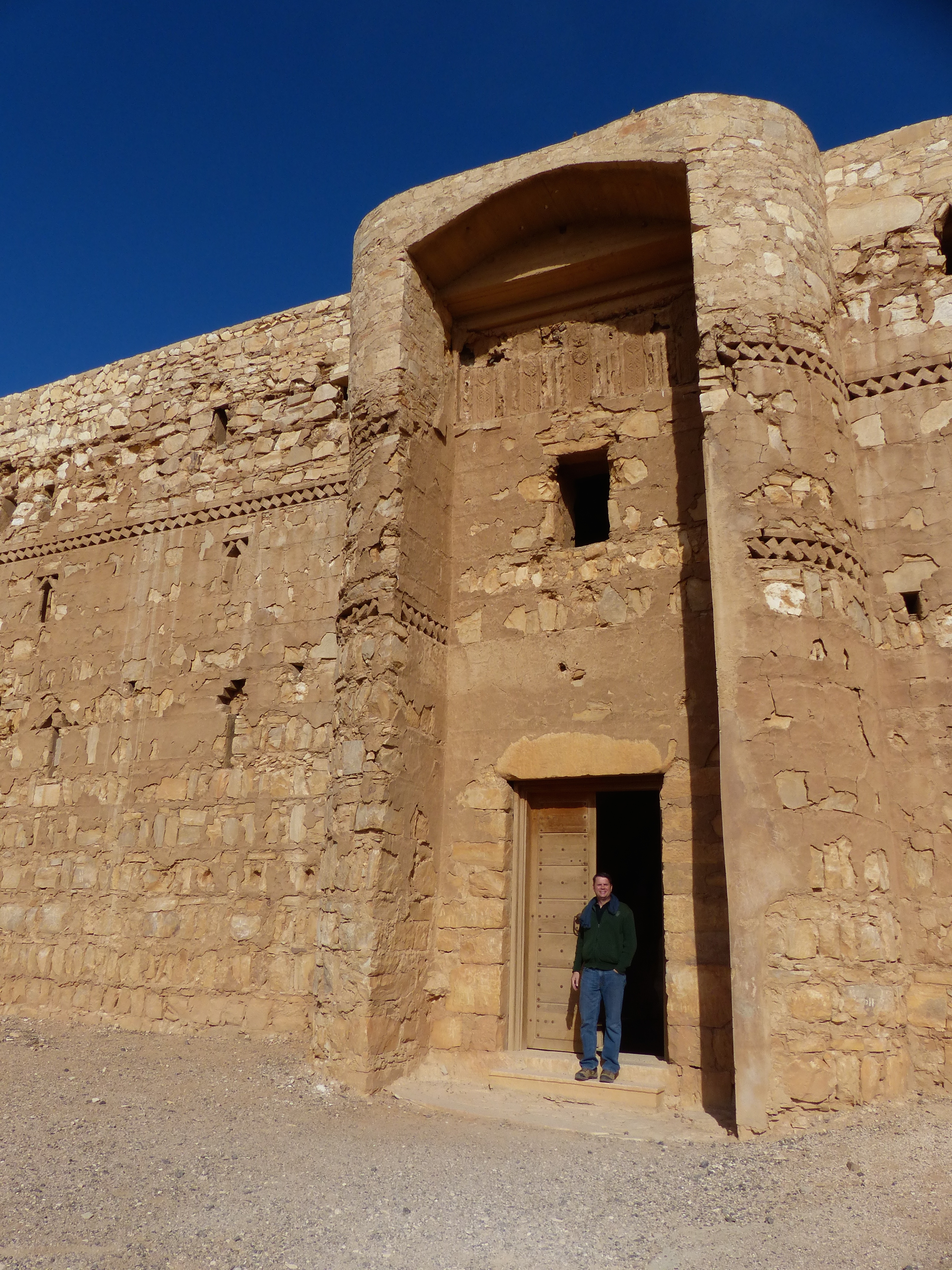
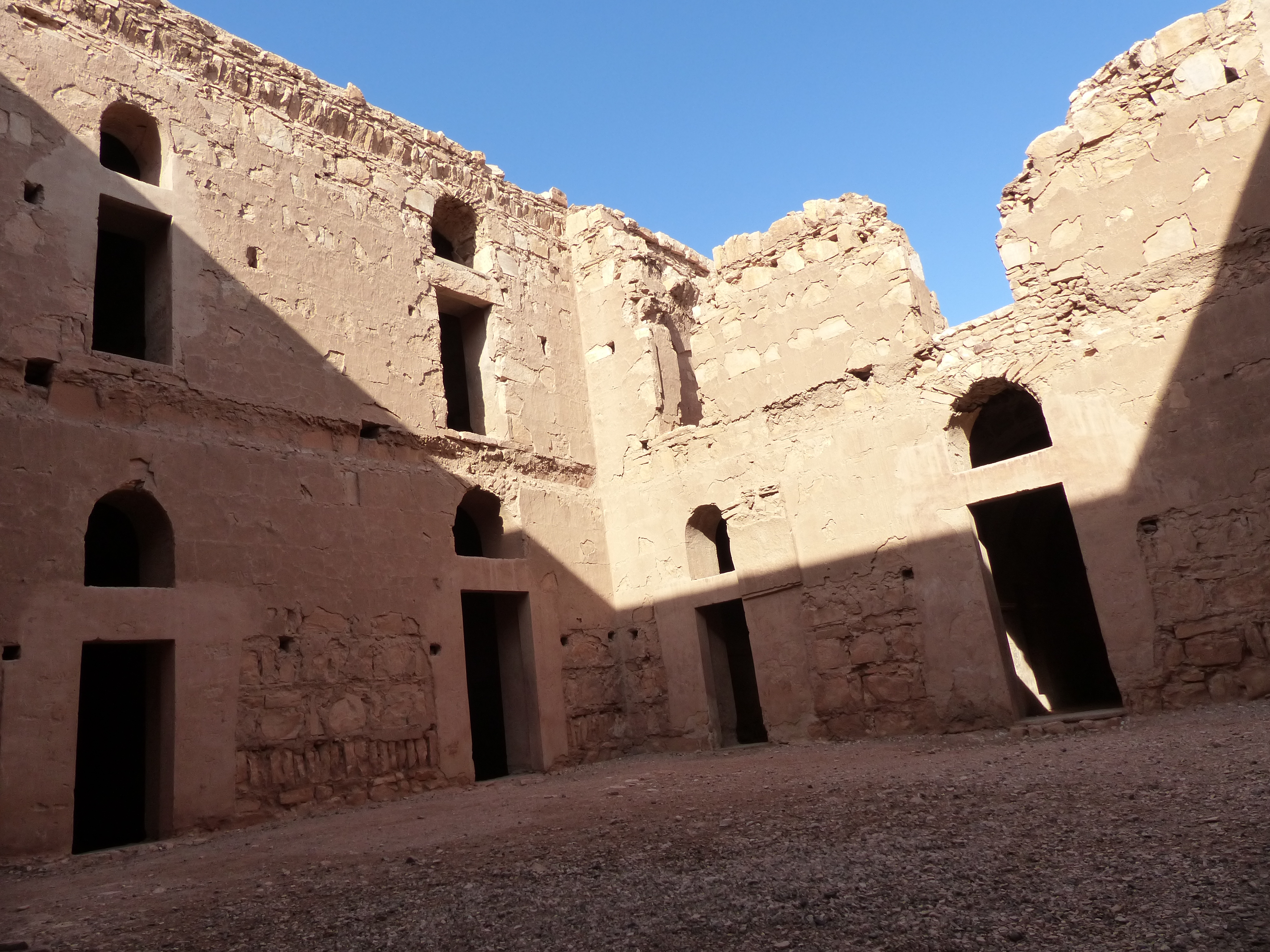
Qasr Al Kharaneh
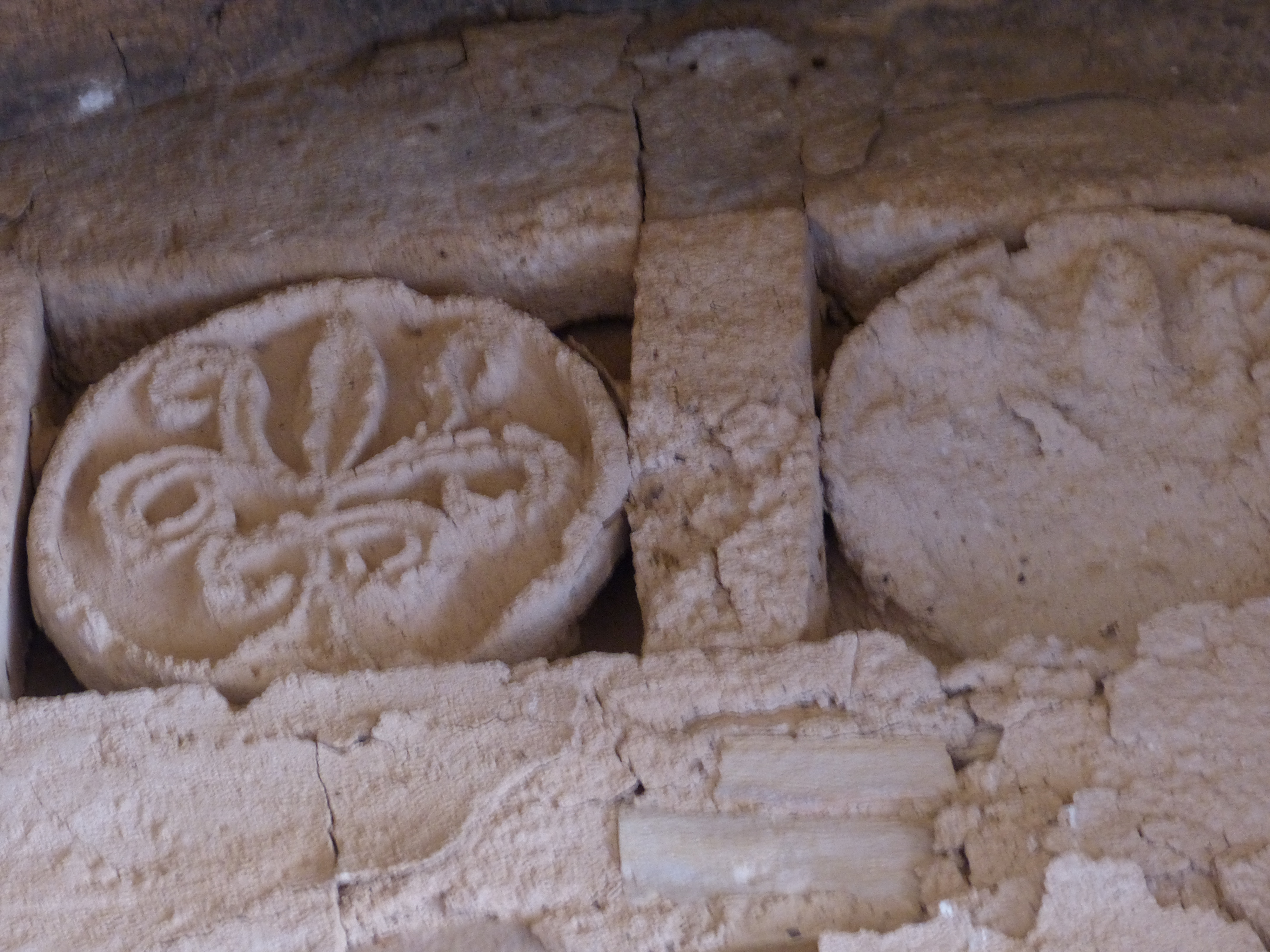
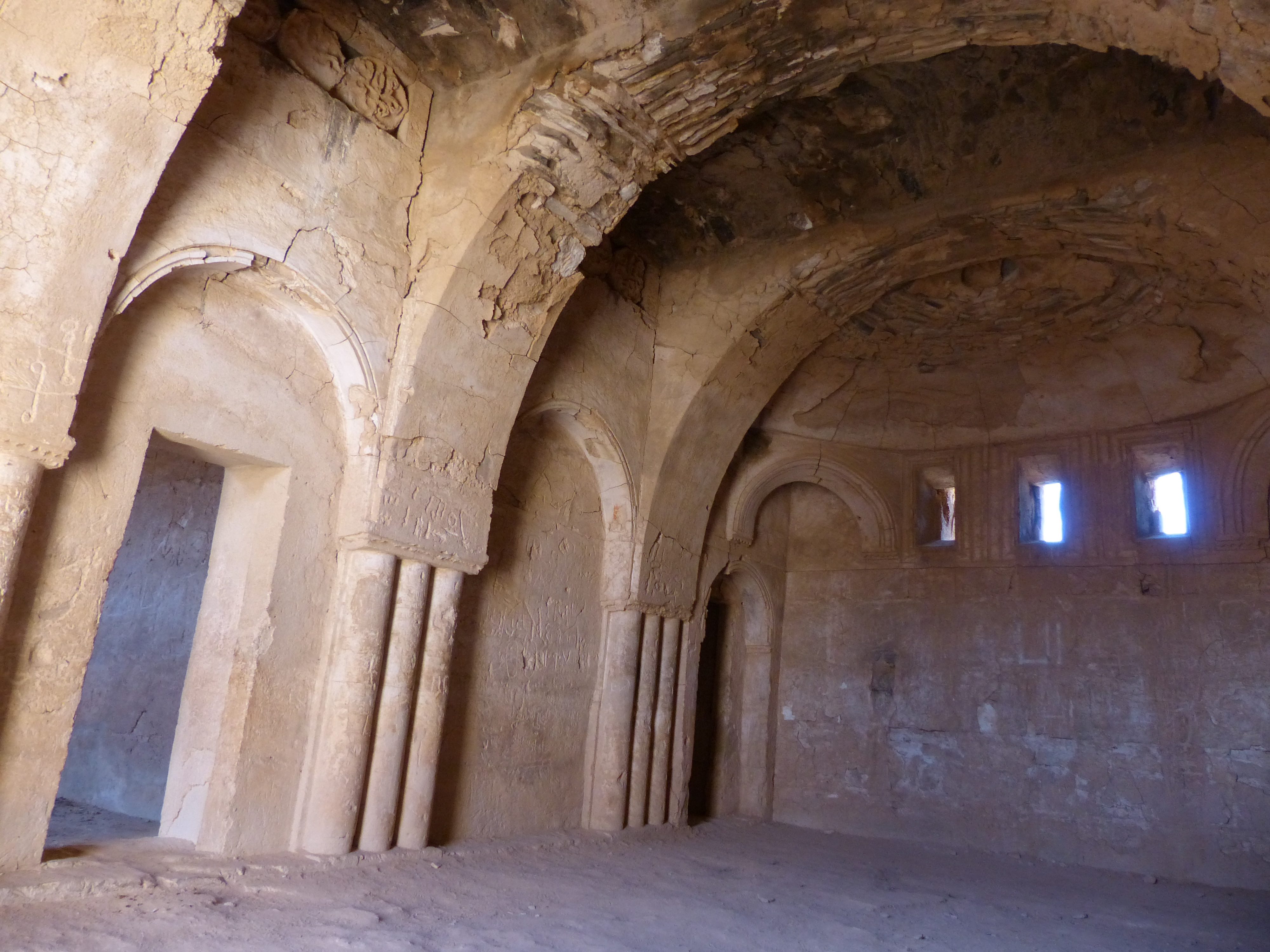
Scholars think this “castle” was probably an inn or caravanserai for camel trains passing through the area. Built in 710 AD, it has features of a defensive fortress, such as arrow slits and towers, but those may have been merely cosmetic.

P1060369

P1060354

P1060356

P1060358

P1060366

P1060365

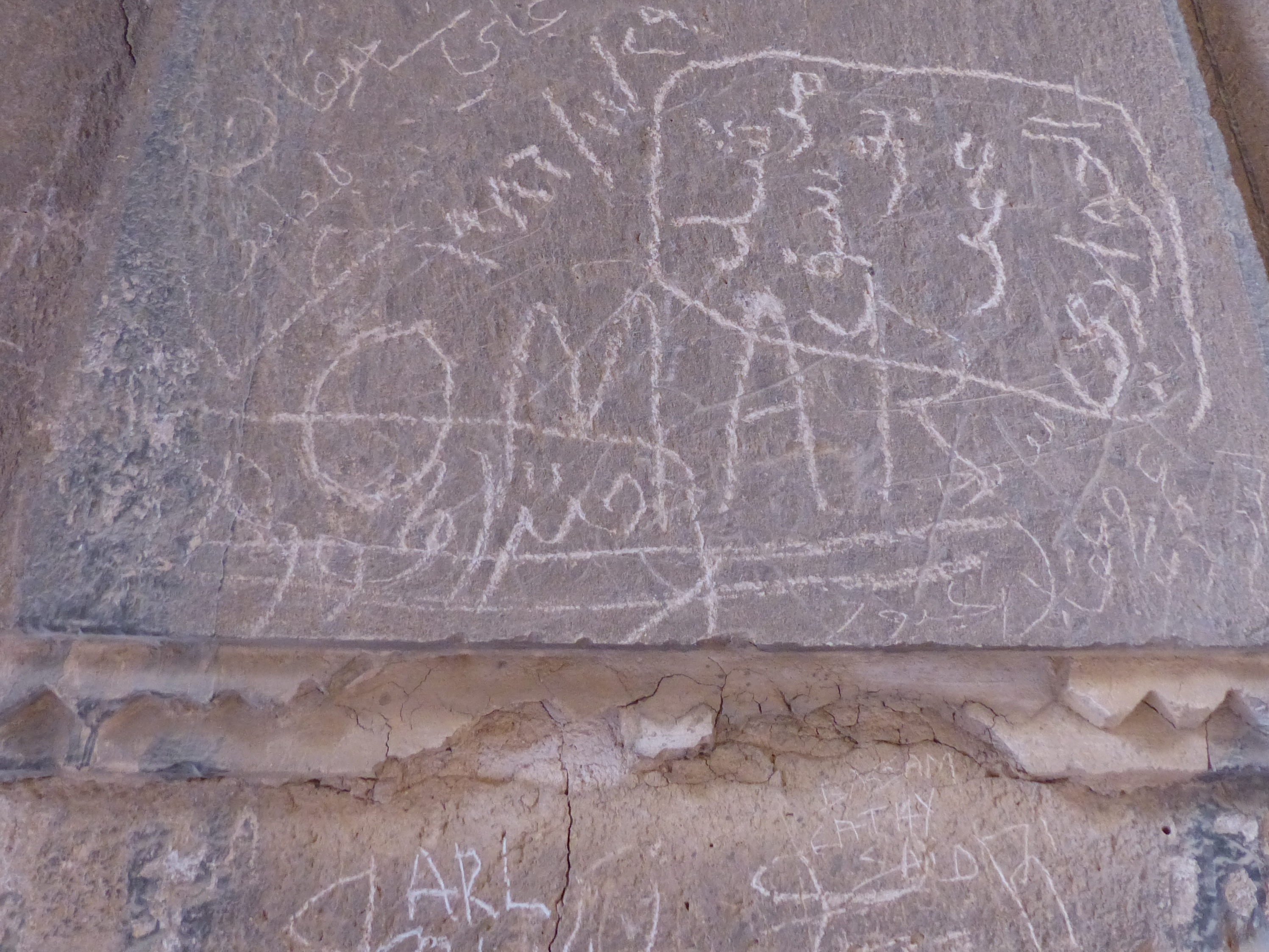
It saddens me when tourists deface historical buildings. In one tiny space, we saw graffiti in Arabic, English and Italian.
P1060360

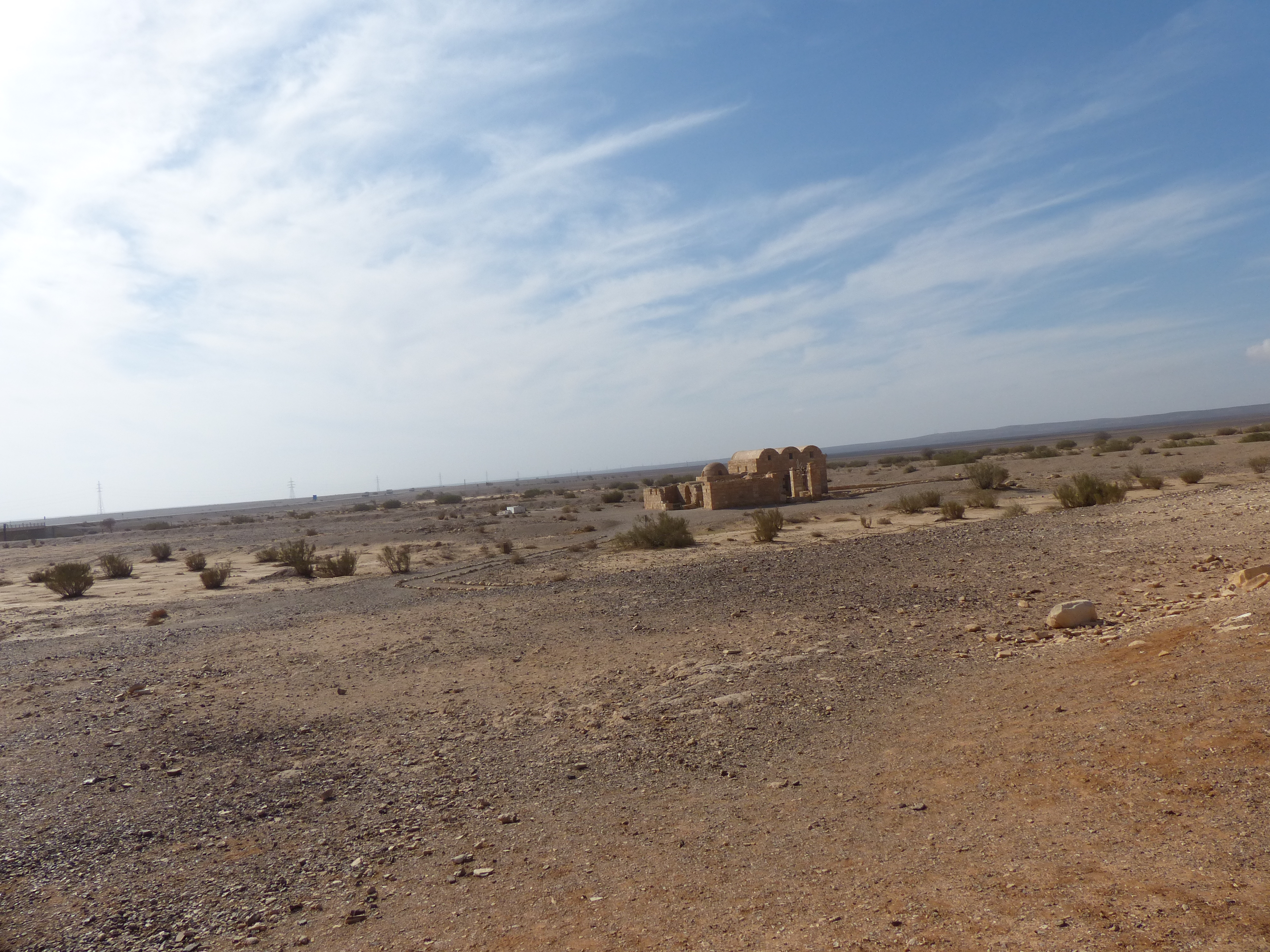
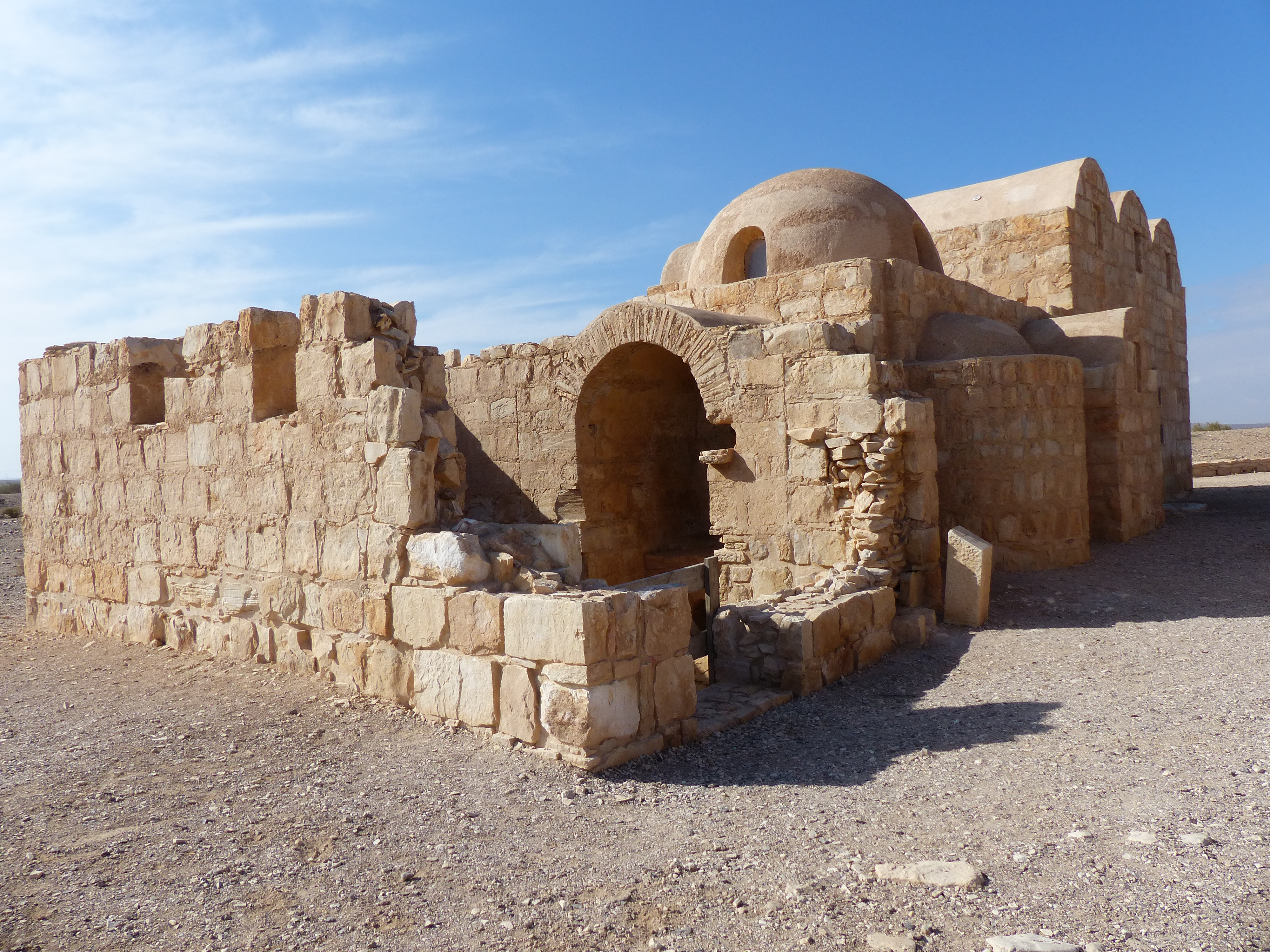
Qasra Amra
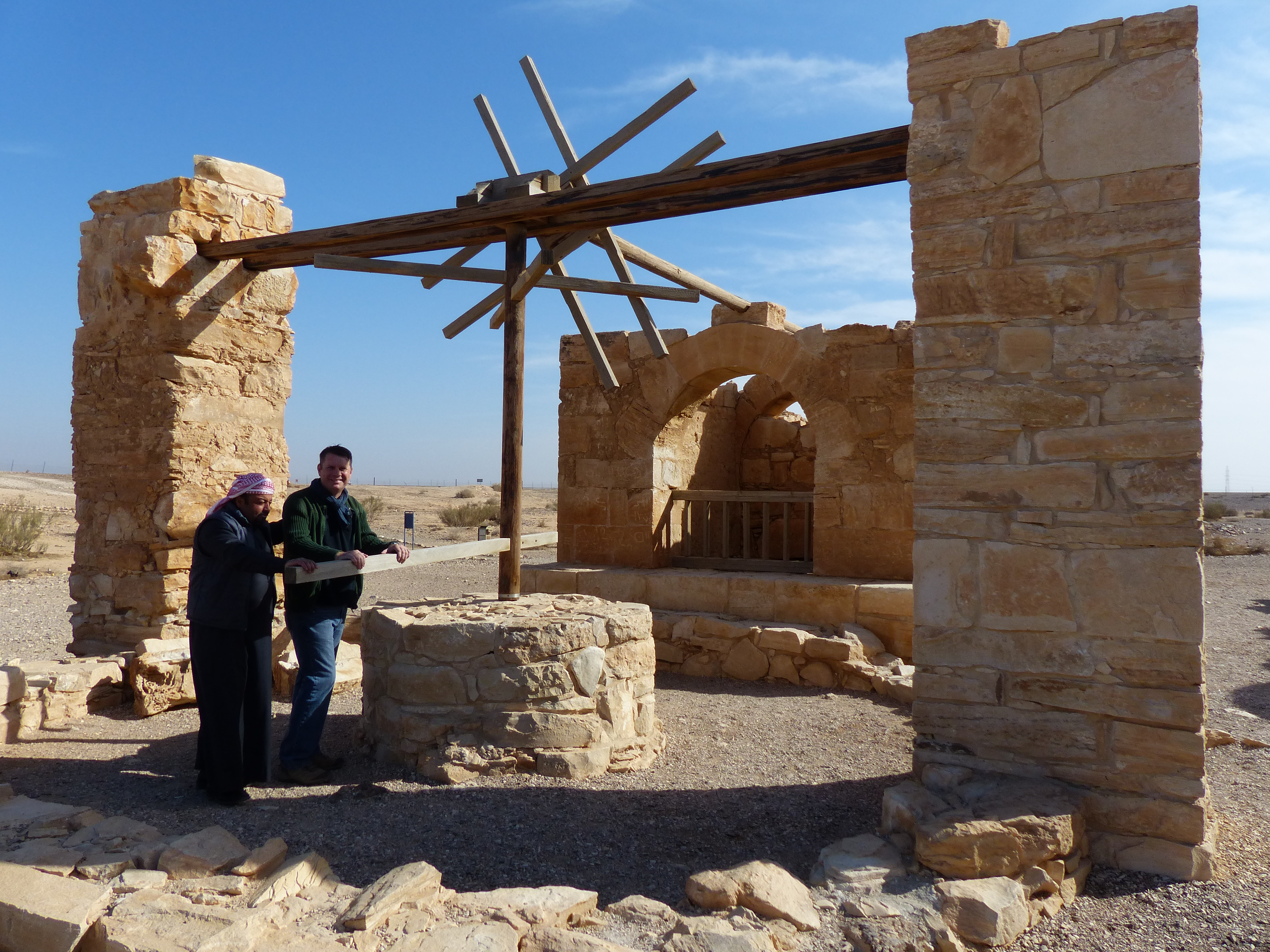
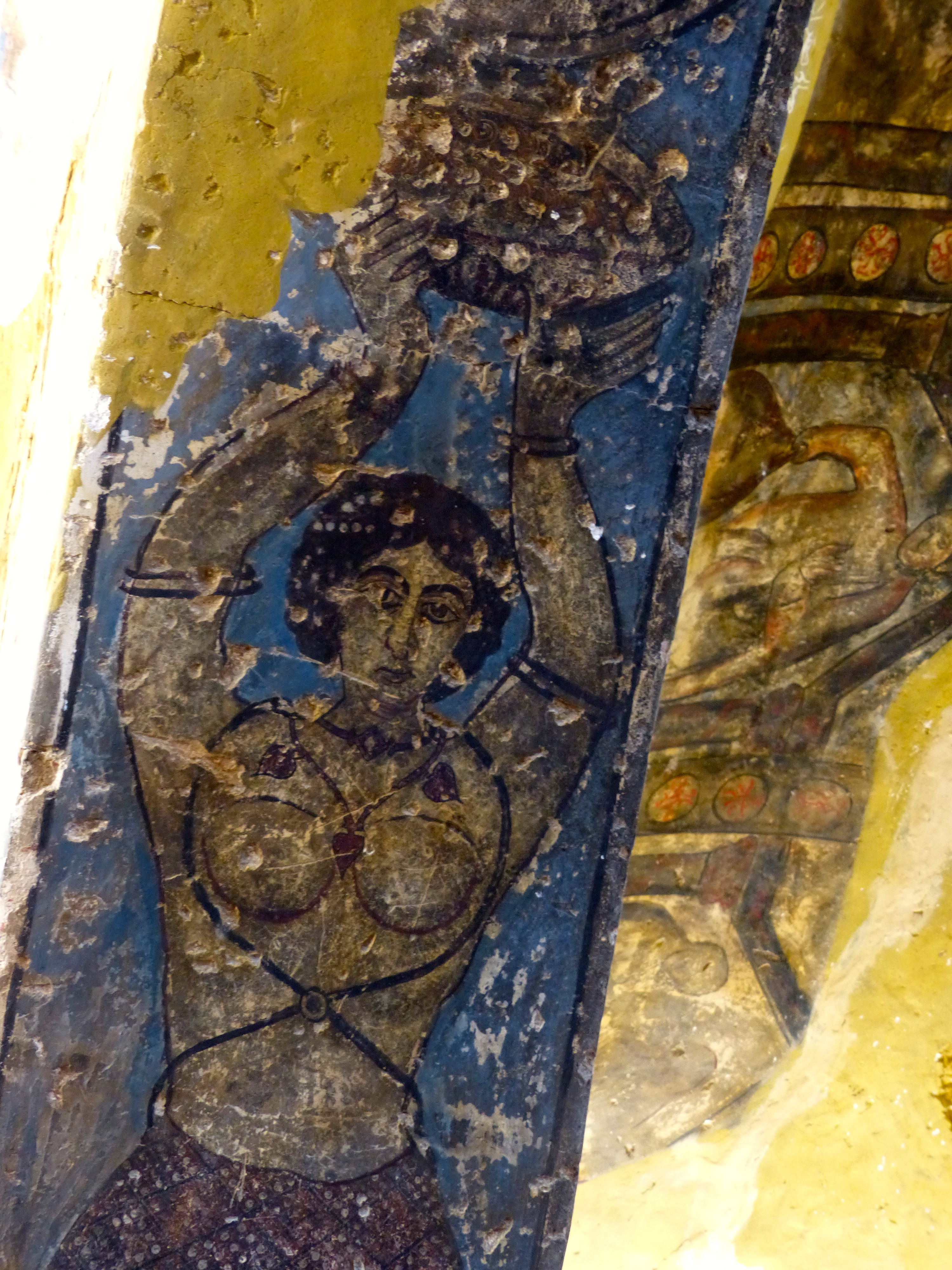
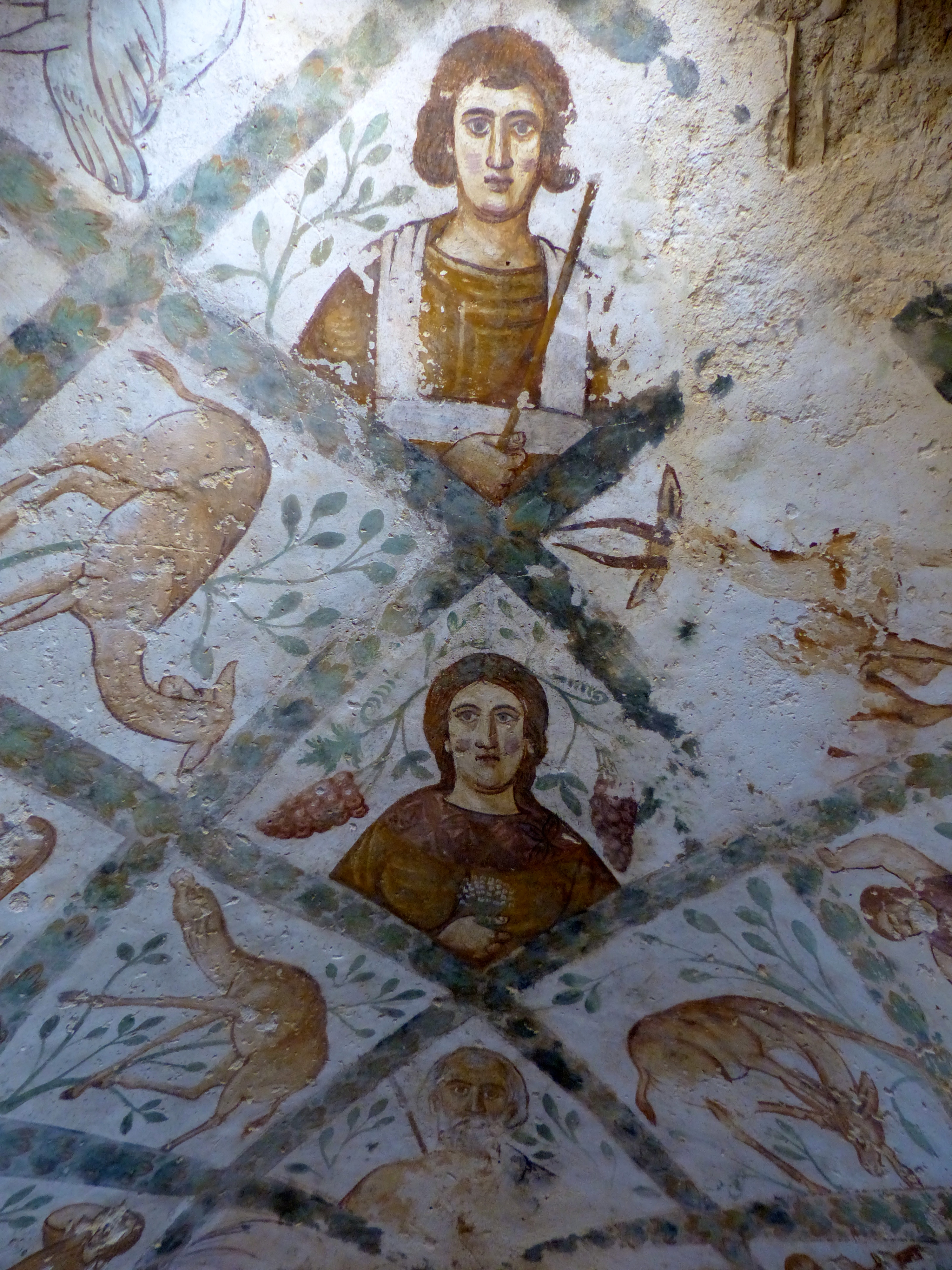
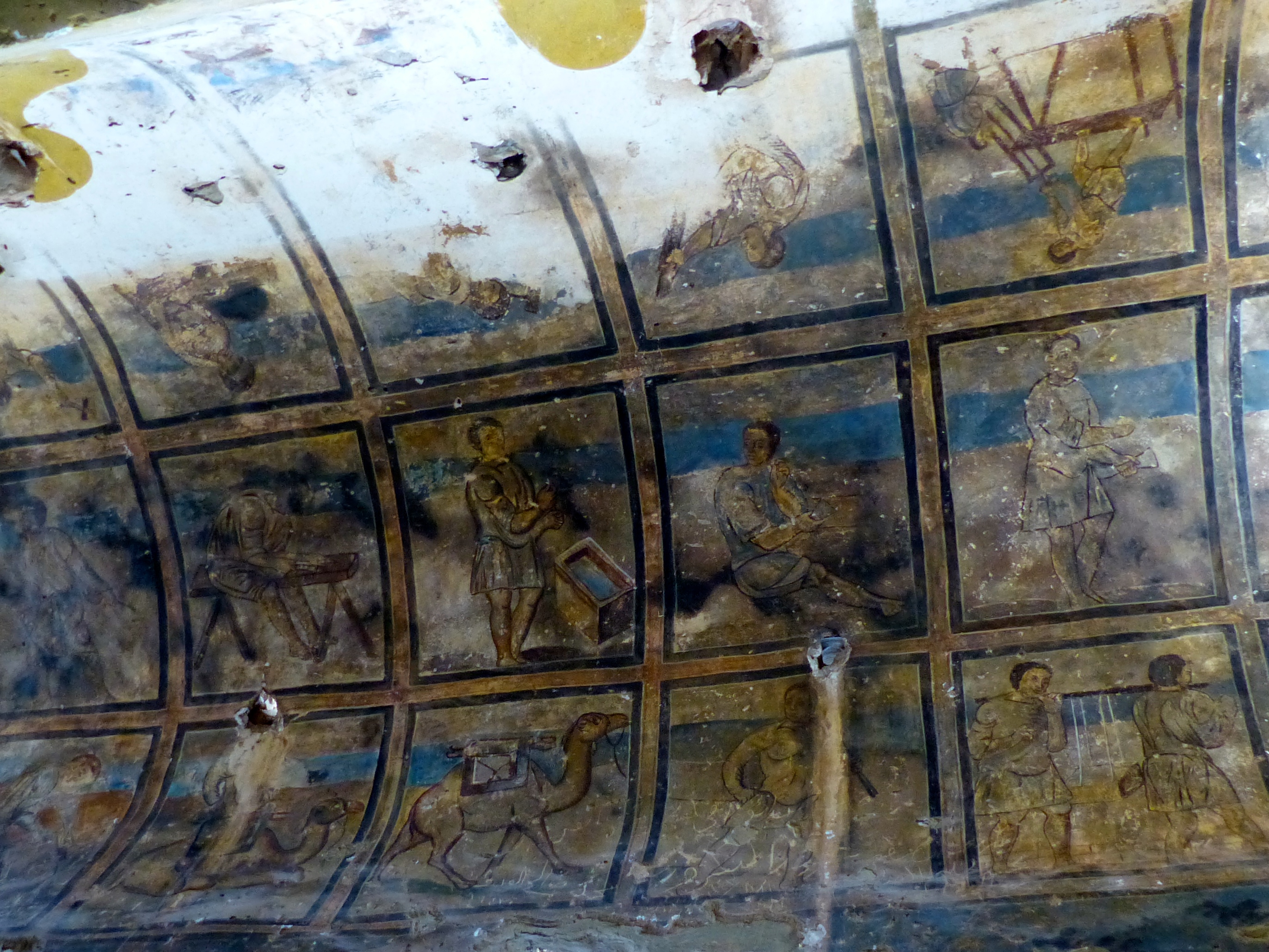
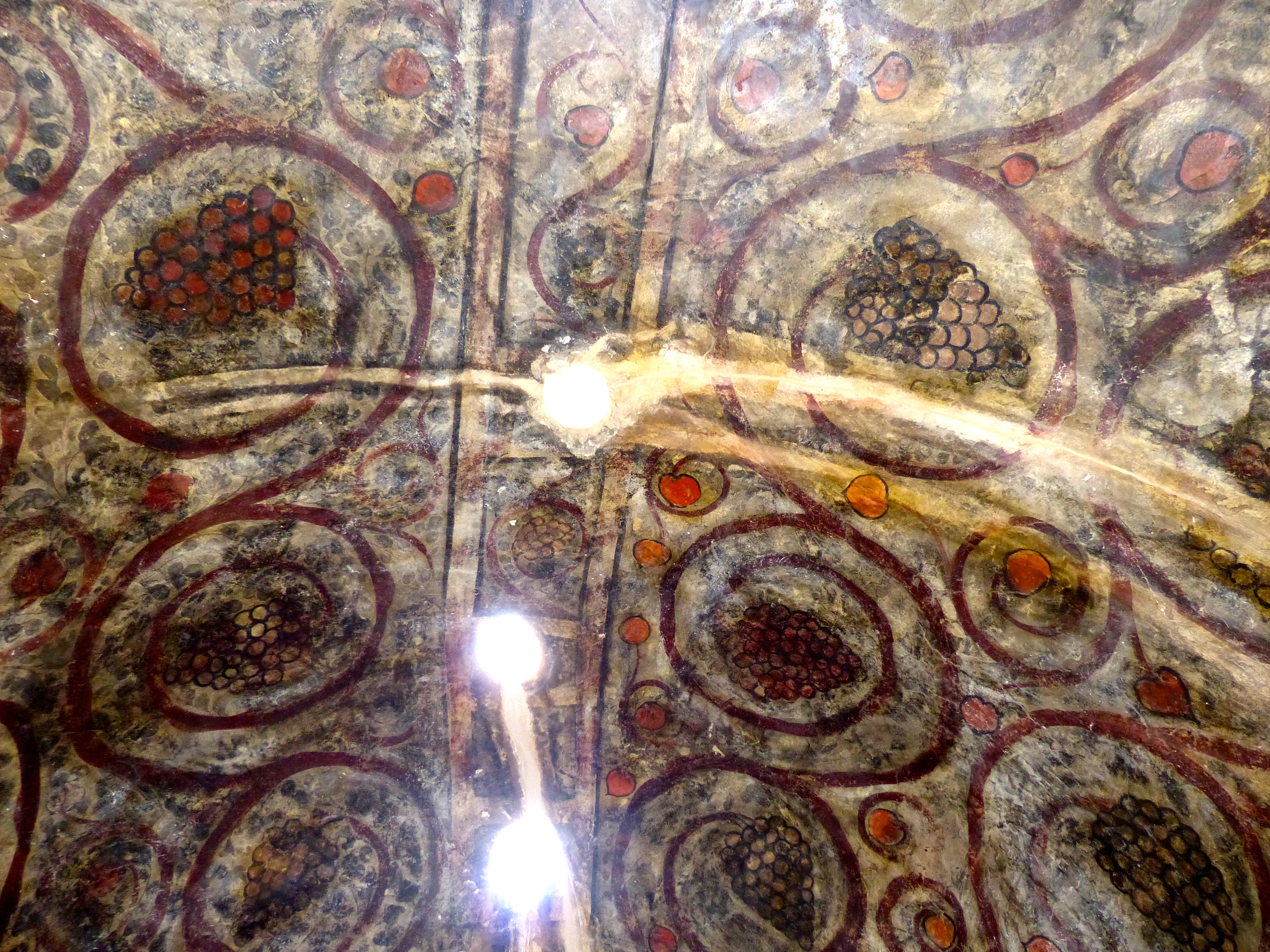
After the first structure, I had expectations of unassuming rustic buildings in our desert castle tour. Imagine my surprise when a friendly greeter unlocked this “castle” to reveal colorful frescoes, mosaic floors and a domed hamam! Ali explained that the region used to get a lot of rain. At least, I think that’s what he was saying. He held his hand at chest level and said, “Here water. Today here water no.” He then modeled how a donkey would have turned the wheel (“No donkey, so I am donkey,” he said.) to draw water from a very deep well, which has now run dry. The water then poured into a storage area and flowed into the bath area of the main building.

The Jordan Jubilee website says:

It is believed that it was built between 711 and 715 by one of the Omayyed caliphs, who had also built the great mosque bearing their name in Damascus and the Dome of the Rock in Jerusalem. These great buildings were ornamented with gorgeous mosaics: in contrast, the bath-house, the private retreat of the caliphs, was decorated with frescoes of luxurious flowers and fruit, naked musicians, hunting scenes and some of the scenes of their conquest of neighbouring lands

P1060393

P1060388

P1060390

P1060387

P1060383

P1060382

P1060377

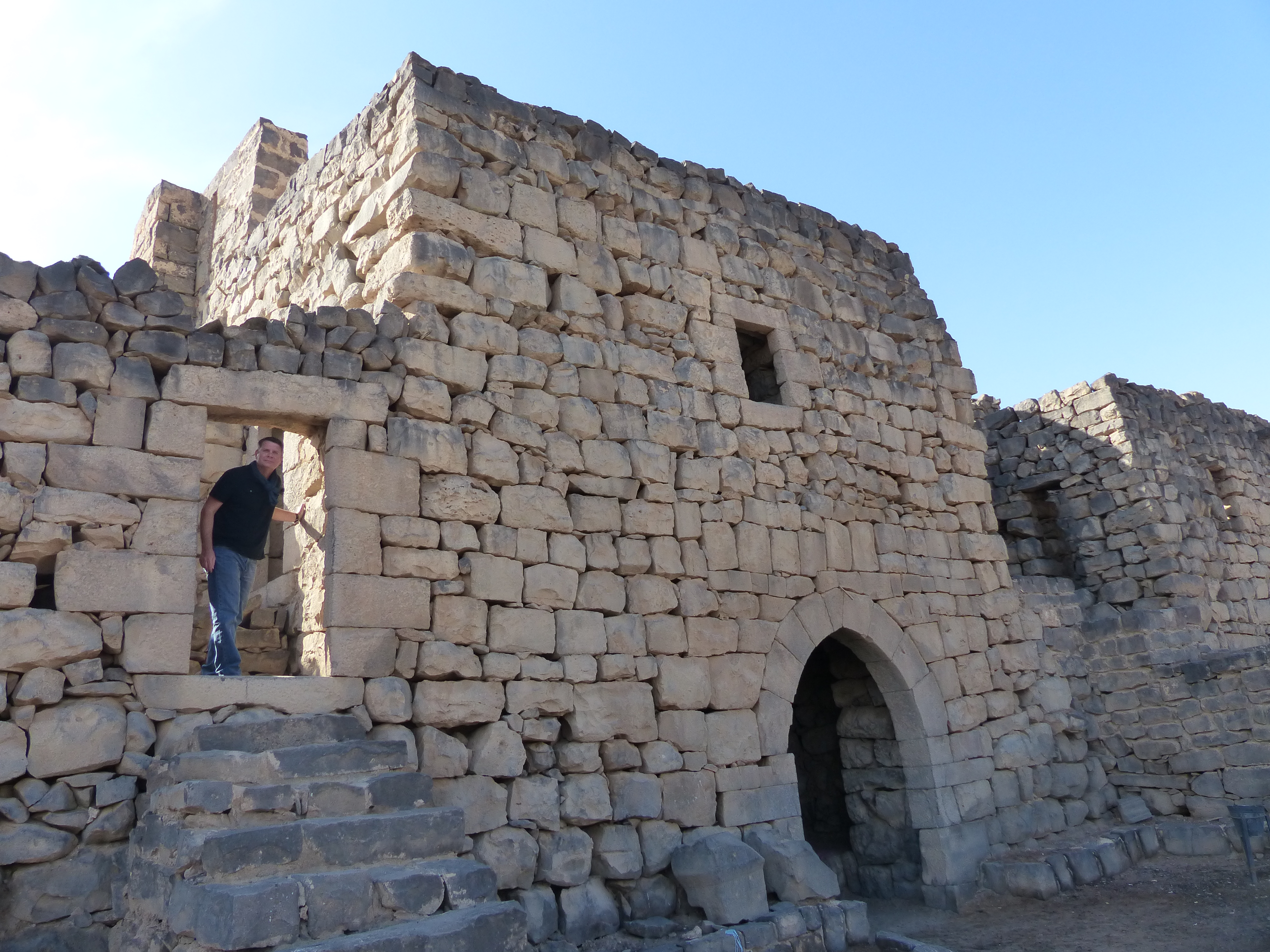
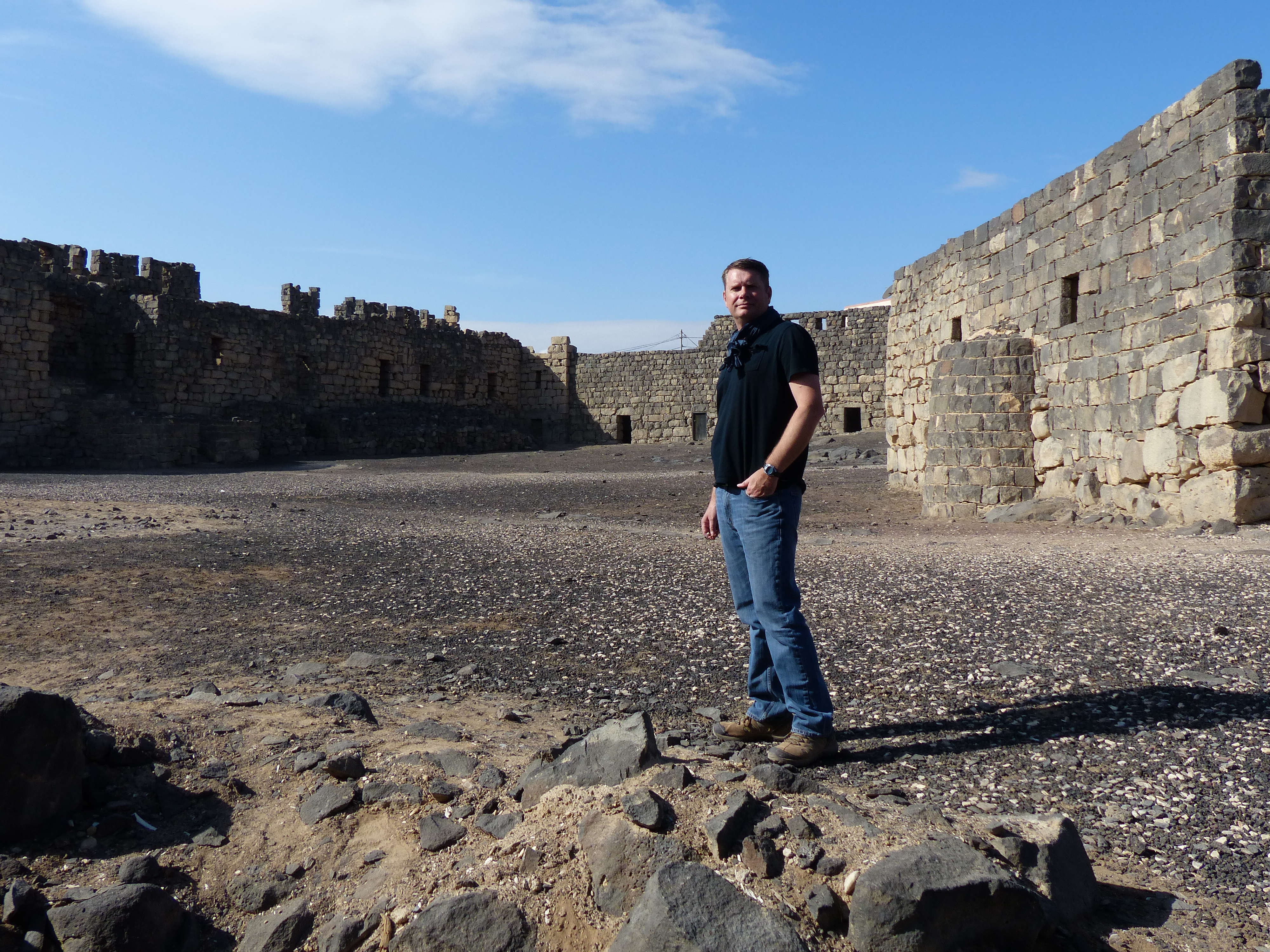
Qasr Azraq
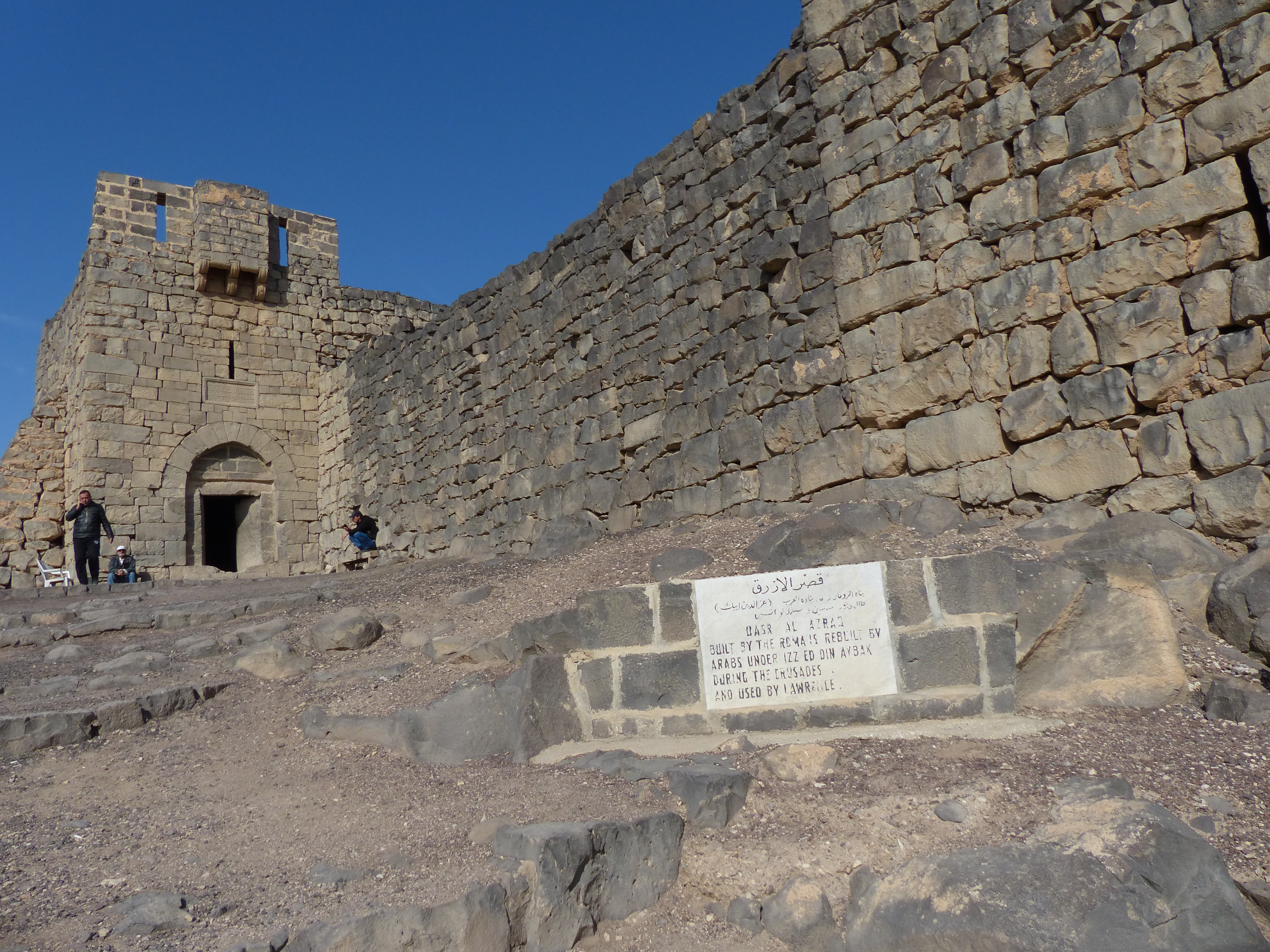
This “castle” really was a Roman fortress, built in 300 AD and modified in 1237 AD by the Mamluks. However, now it resembles a pile of basalt rubble with a few recognizable features, such as a mosque and small rooms with original stone doors. It’s another stop on the “Lawrence of Arabia tour,” but this one is verified. He stayed for about three weeks in 1917 in the room above the entrance.
P1060396

P1060398

P1060403

Castles, consider yourselves stormed!

Amman Citadel
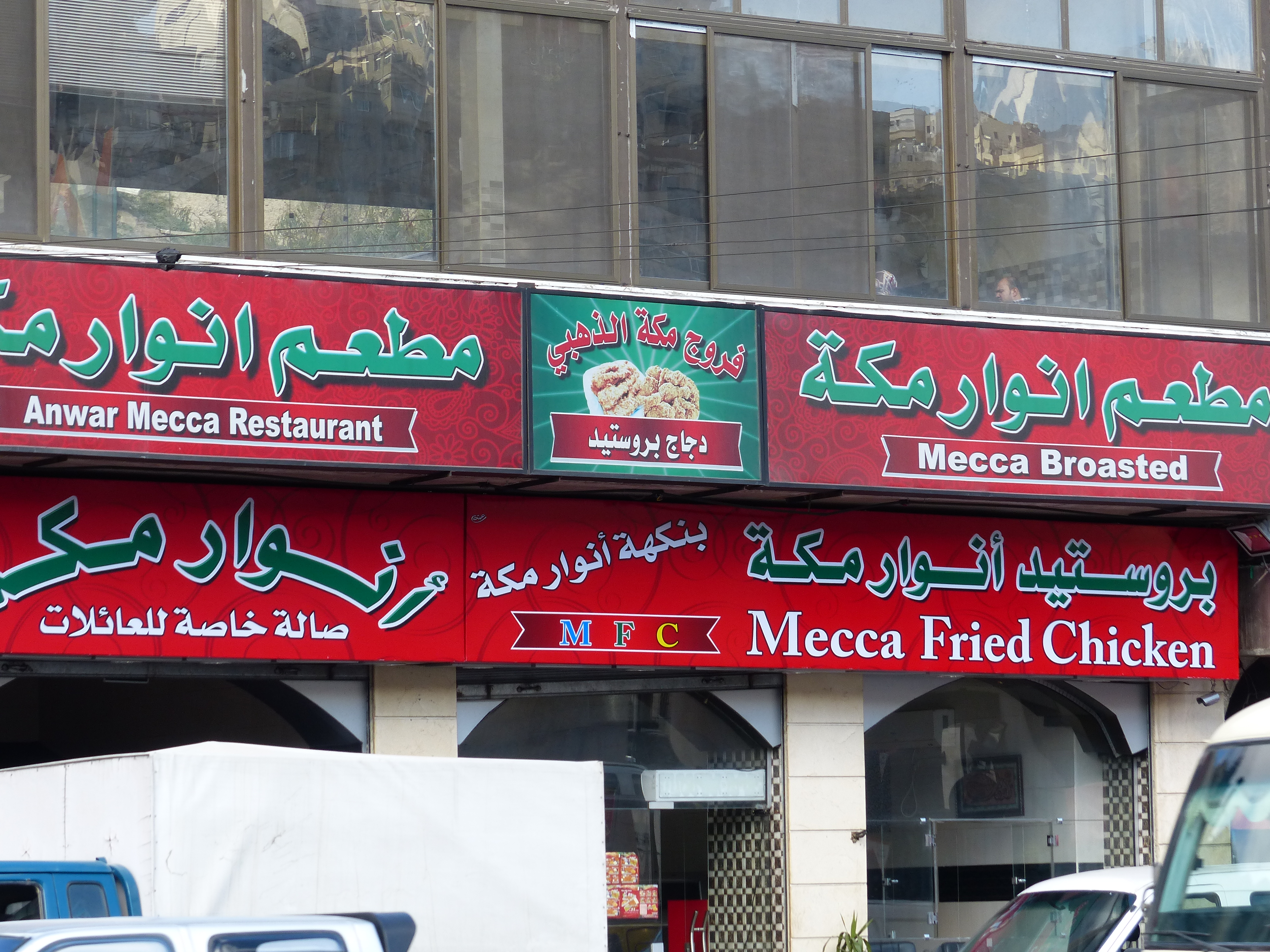
George popped into MFC – Mecca Fried Chicken (!) – to pick up sandwiches for lunch, and then he dropped us off at the Amman Citadel, on the top of Jebel al-Qala’a (about 850m above sea level).
P1060405

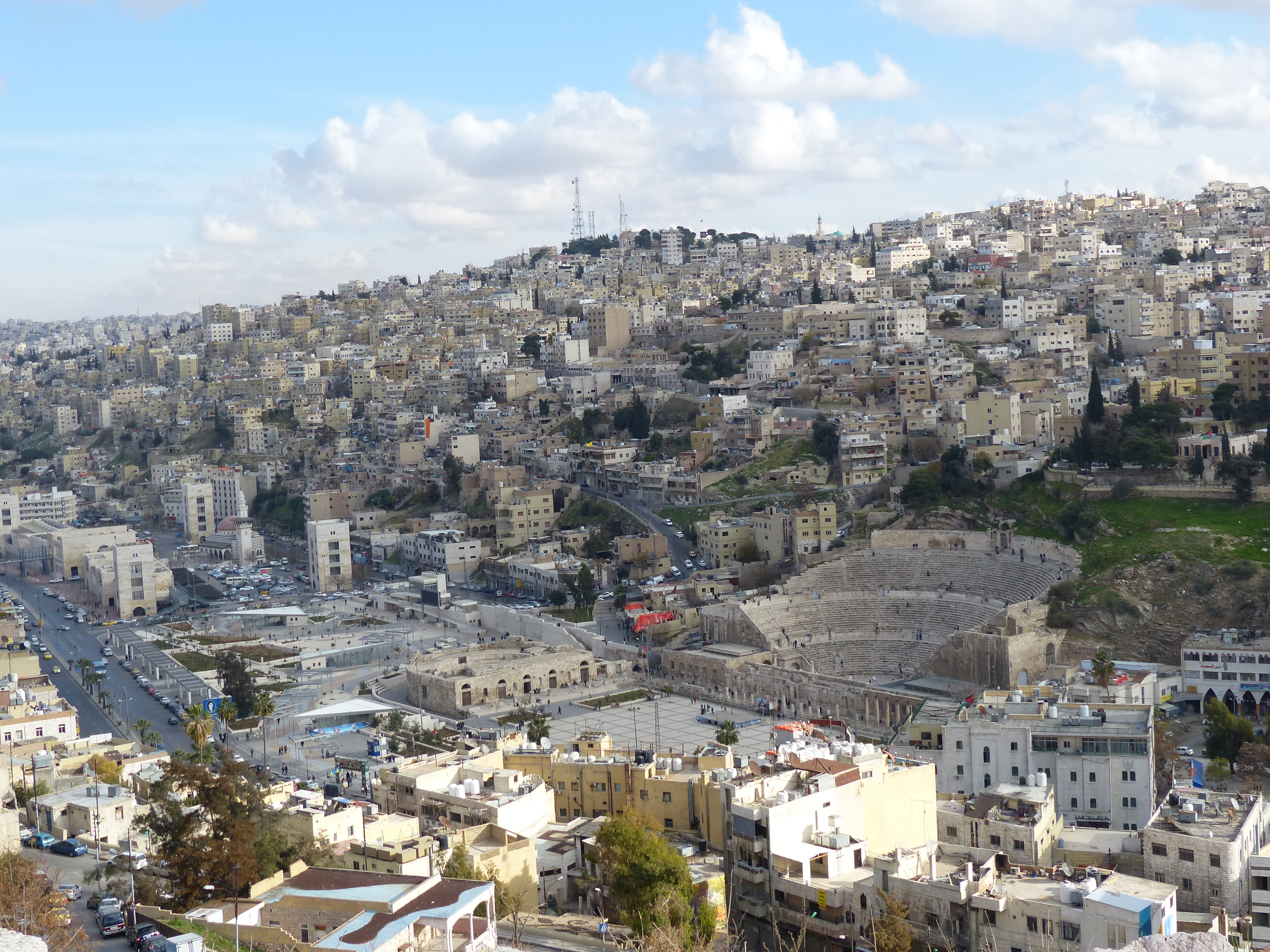
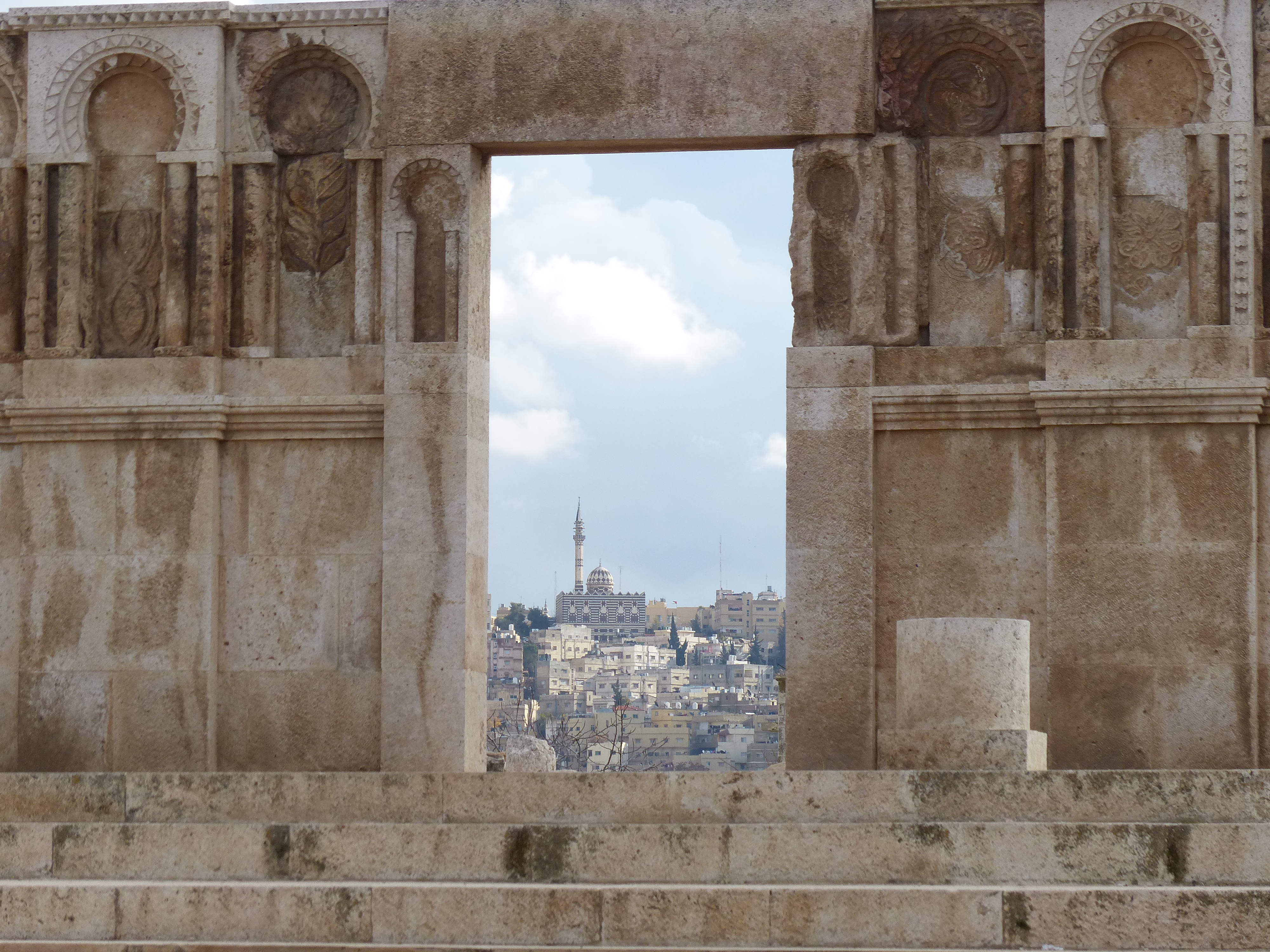
We sat on a bench overlooking the city sprawled out below, eating our sandwiches in a chilly breeze. I’m fascinated at the juxtaposition of ancient and modern, especially when they literally butt up against each other. From our perch, we saw tourists climbing around the 2nd-century Roman theatre wedged into a hill spilling over with 21st-century buildings.
P1060410

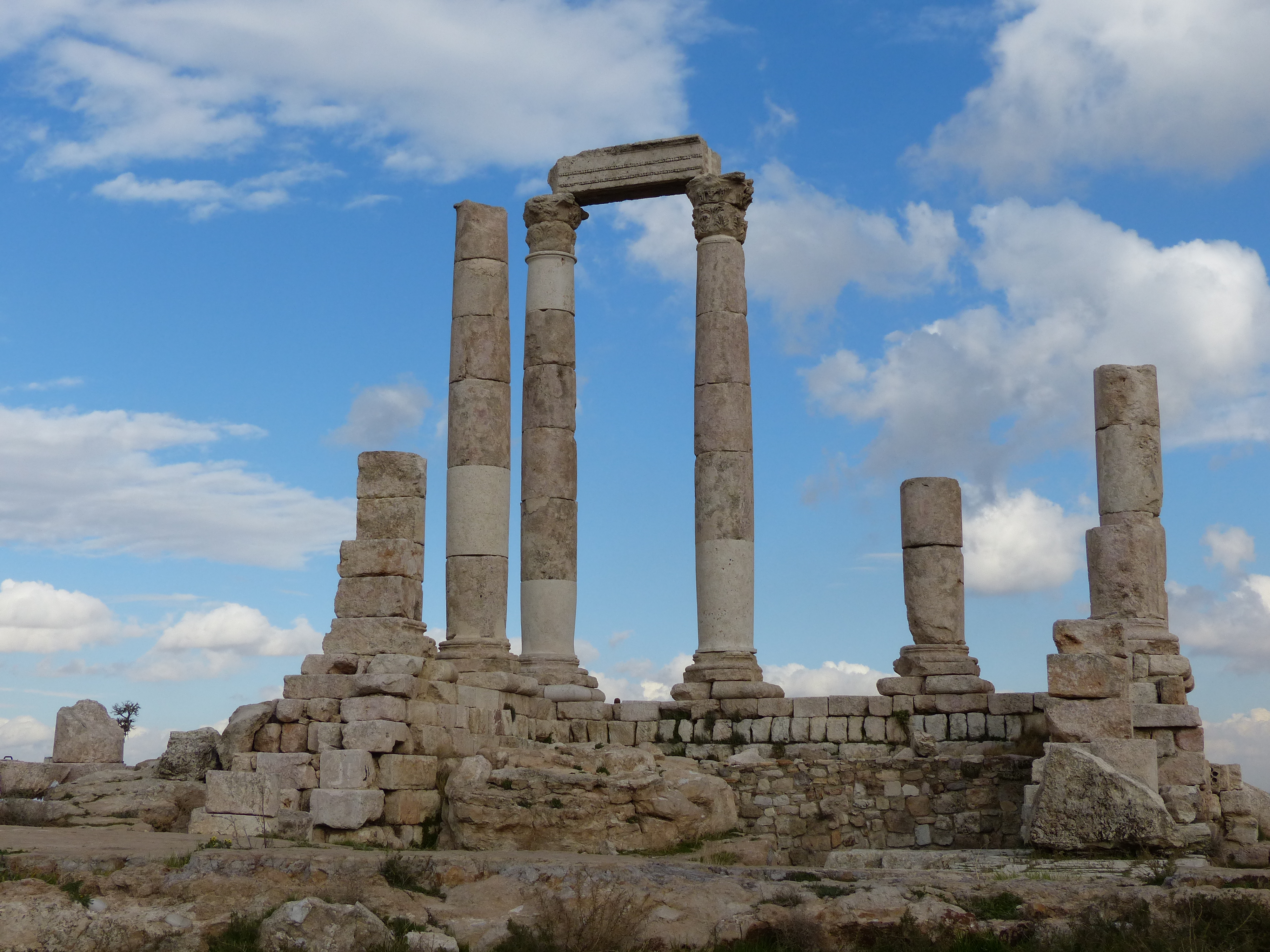
Humans have settled on this hill for the last 18,000 years, but the ruins that remain are mostly Roman and early Islamic. Known as Rabbath-Ammon in ancient times, it was renamed Philadelphia after Greek occupation in the 4th century. Arab rulers in the 7th century changed the name back to Amman. Excavation has been ongoing since the 1920s and there’s still much left unearthed.

Archaeologists think this was a temple for the worship of Hercules.
P1060411

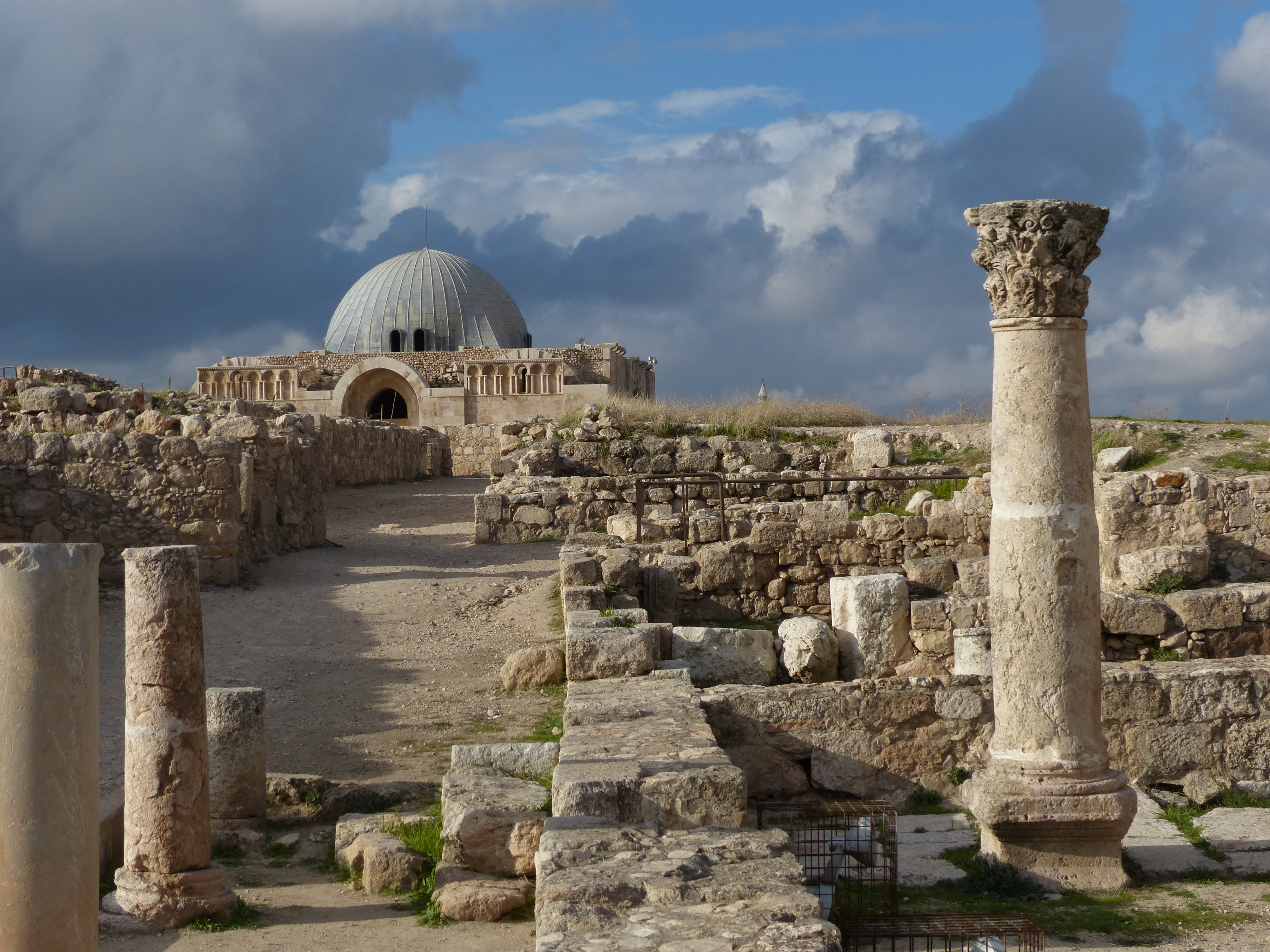
The Umayyad Palace was built around 720 AD and destroyed in an earthquake just 30 years later. The domed audience hall is the most intact building and has been restored extensively by Spanish archaeologists.
P1060413

P1060416

If it hadn’t been our last day in Jordan and Tony hadn’t been feeling so cruddy, we could have spent much more time exploring the Citadel and other historical sites in downtown Amman. Instead, I snapped a few pictures and took my poor sick hubby back to the hotel to rest up for the trip back to India.

Ajloun Castle & Jerash – Jordan Journey, Day 11

After a day of doing absolutely nothing in hopes Tony would get over his cough (he didn’t), we decided to storm the castle. George took us north to Ajloun, where the rocky landscape of Amman gave way to … well, more rocks, but also rolling hills of patchwork farms, olive groves and forests. He said the area was a popular hiking and picnicking destination for locals, especially in the spring when wildflowers bloom. Today was cloudy and chilly, perfect weather for exploring a 12th-century castle on the top of a mountain.

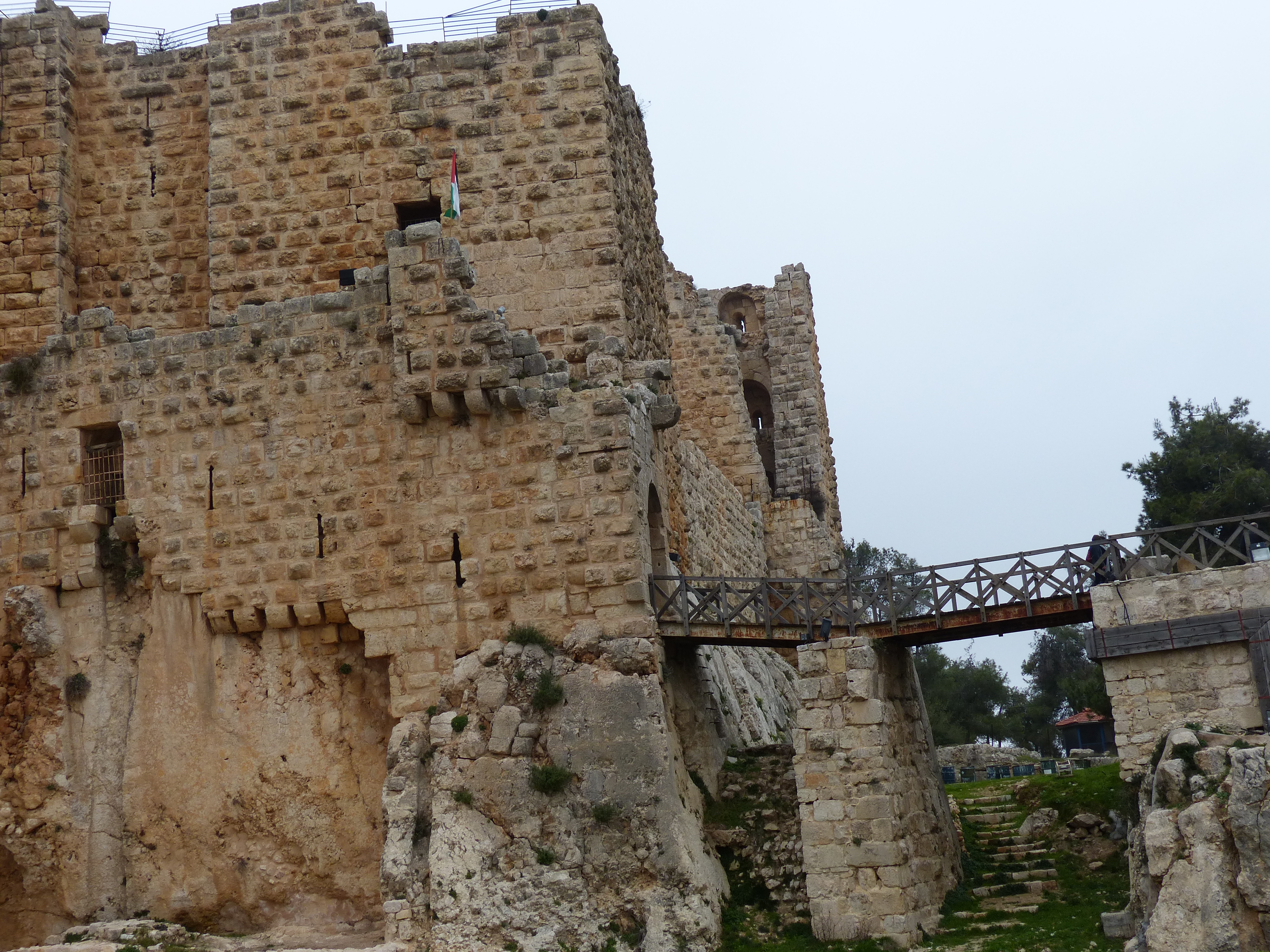
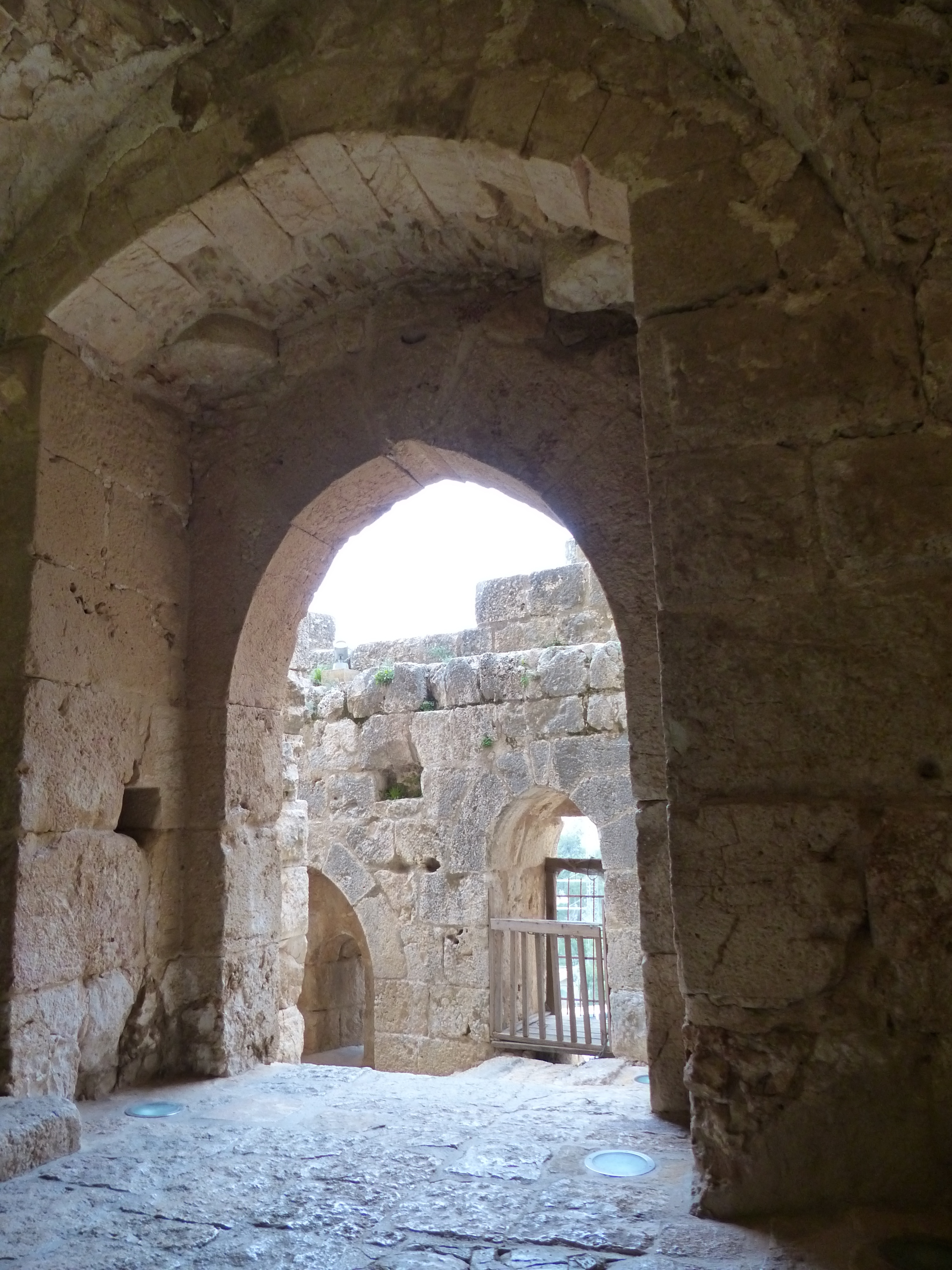
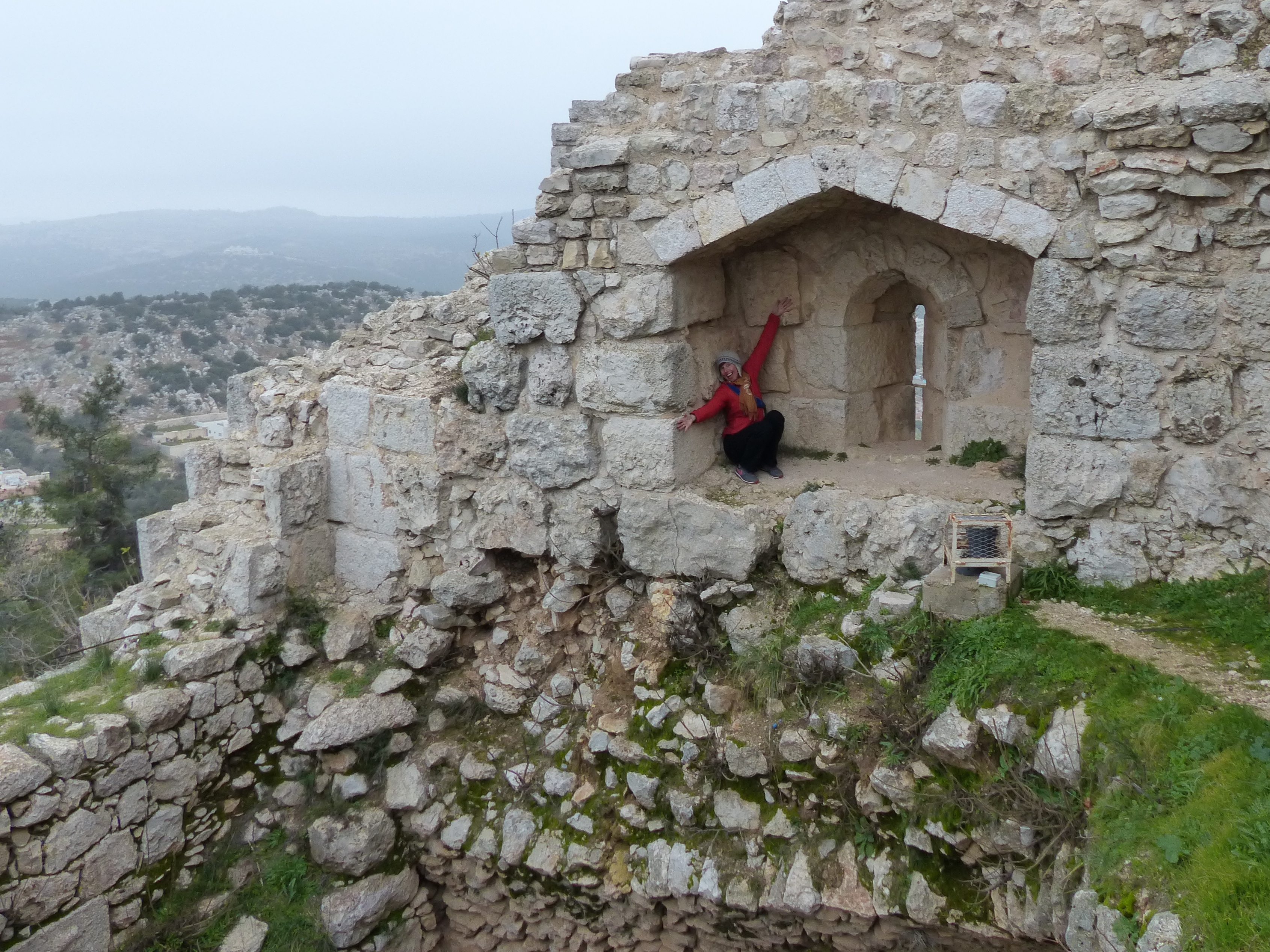
Ajloun Castle sits on a hill called Jabal Auf, offering a 360-degree view of the surrounding countryside. Construction started in 1184 on the site of an old monastery, and the castle was expanded and rebuilt through the 1200s. The castle was one in a chain of fortresses that used pigeon post, which could send a message from Damascus to Cairo in one day, according to the Lonely Planet guide to Ajloun. After the crusader threat subsided, the castle was used by Mongols, Mamluks, Ottomans and eventually local villagers. Remember the Swiss explorer, Johann Ludwig Burckhardt, the guy who “discovered” Petra for the western world? Well, it turns out he also “discovered” Ajloun Castle!
P1060274

P1060254

P1060263

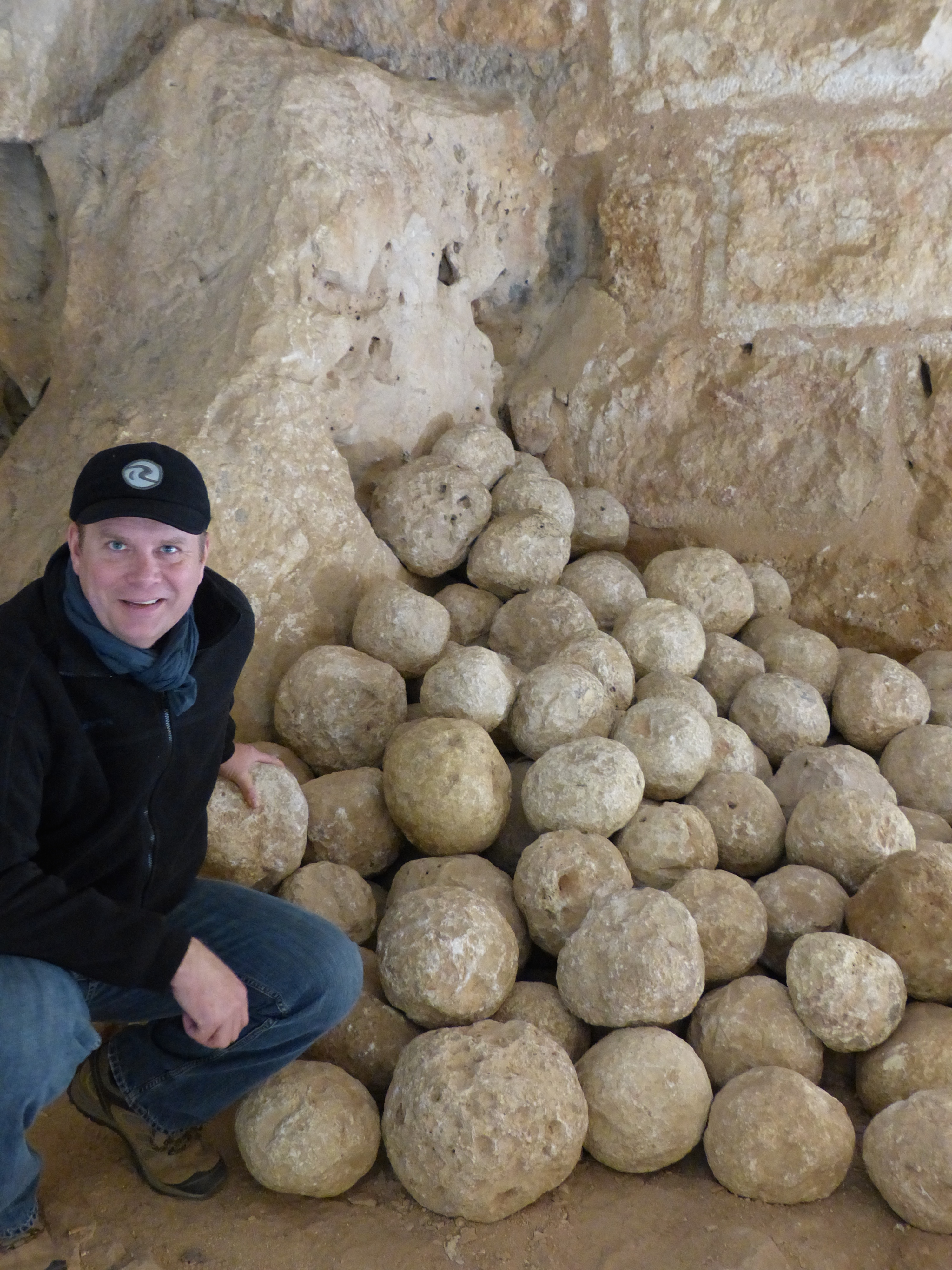
We found a stash of catapult balls and saw the gap where castle dwellers would dump boiling oil on invaders.
P1060270

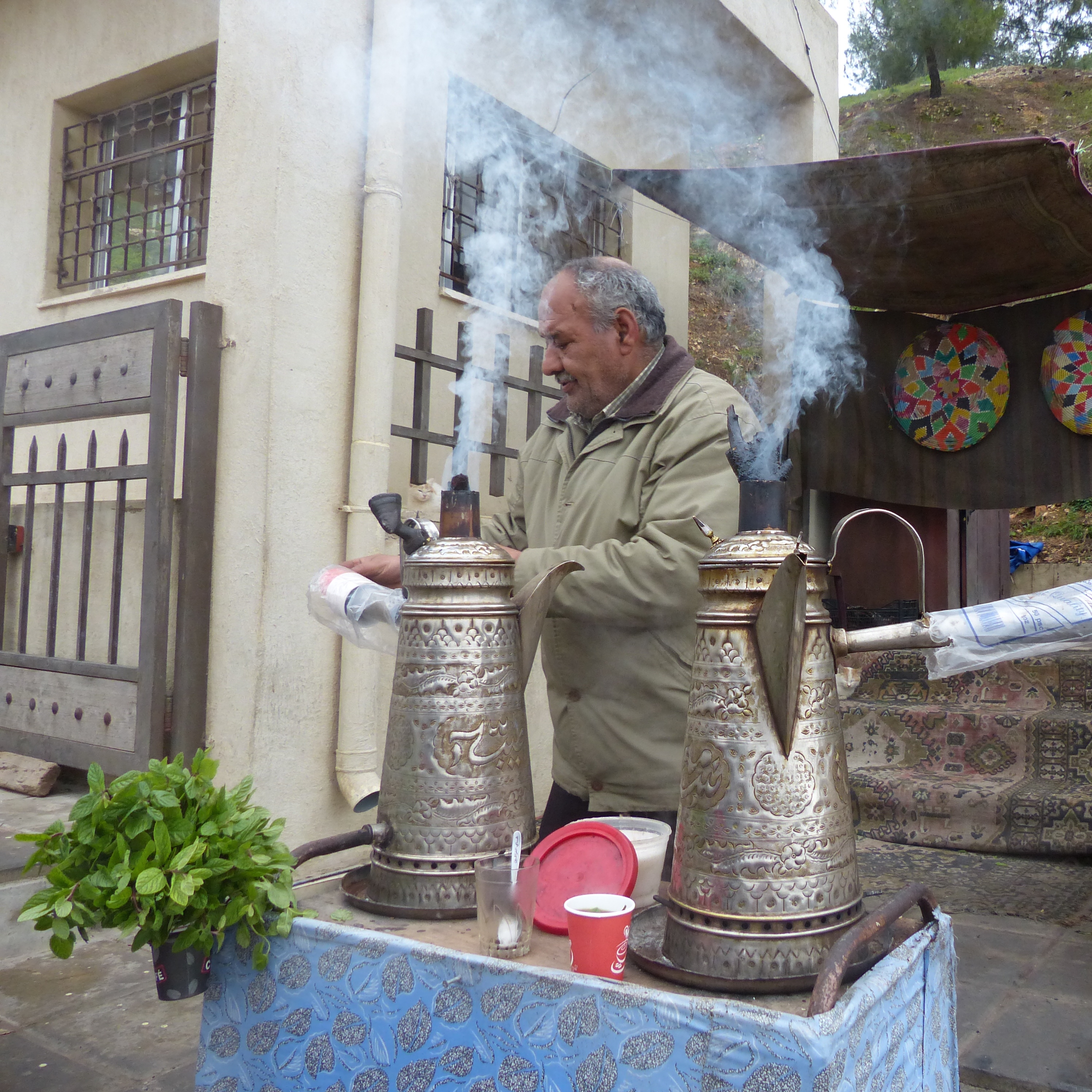
Leaving the castle, I bought some tea from this man, mainly because his teapots were so freakin’ beautiful.
P1060276

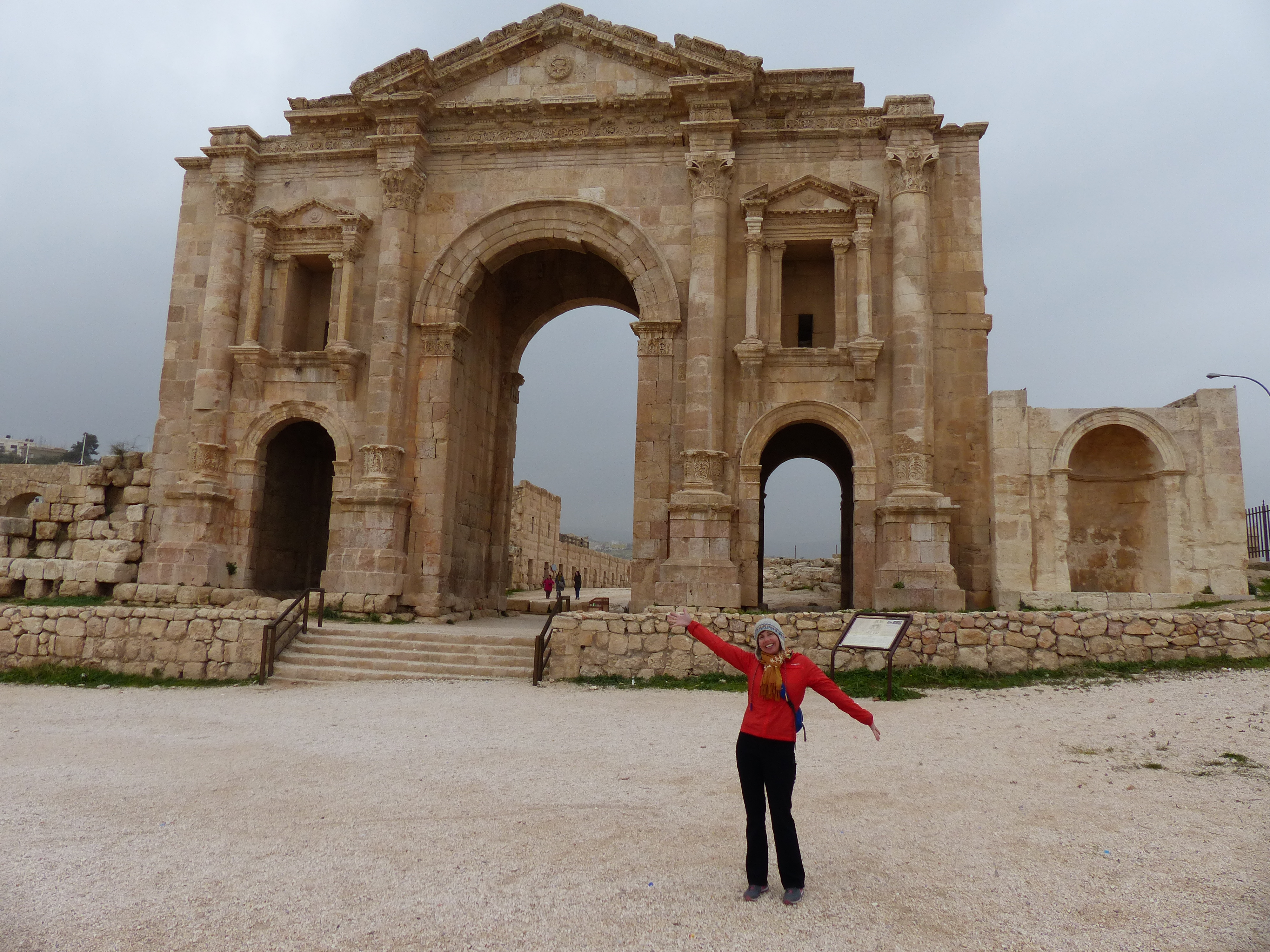
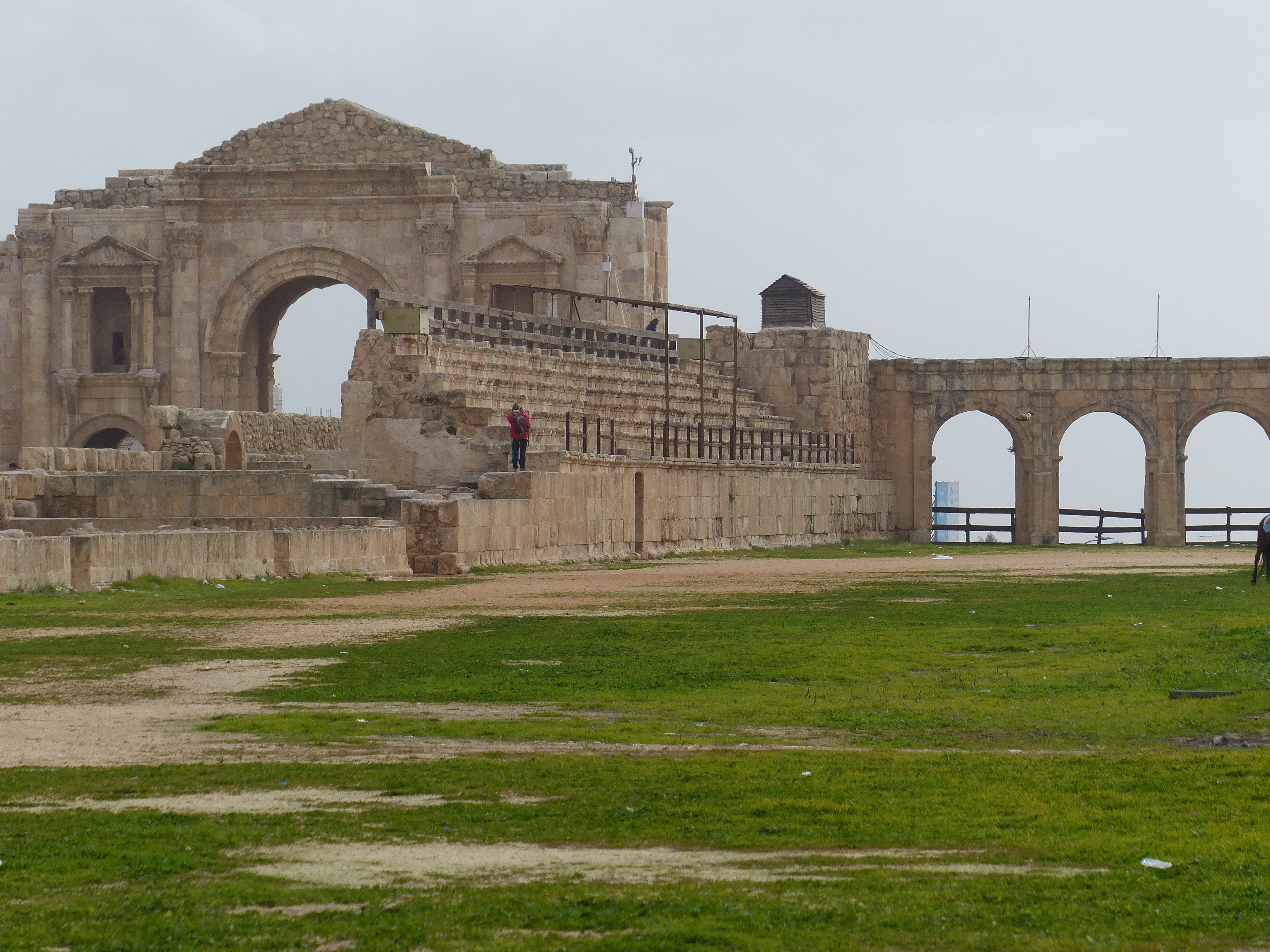
After lunch, George drove us to Jerash. I knew this was the site of ancient ruins, but again my poor preparation for this trip served us well. We walked through the impressive Hadrian’s Gate and the small Hippodrome feeling somewhat blasé.
P1060285

P1060291

I mean, how many Hippodromes can a girl see and still get excited?
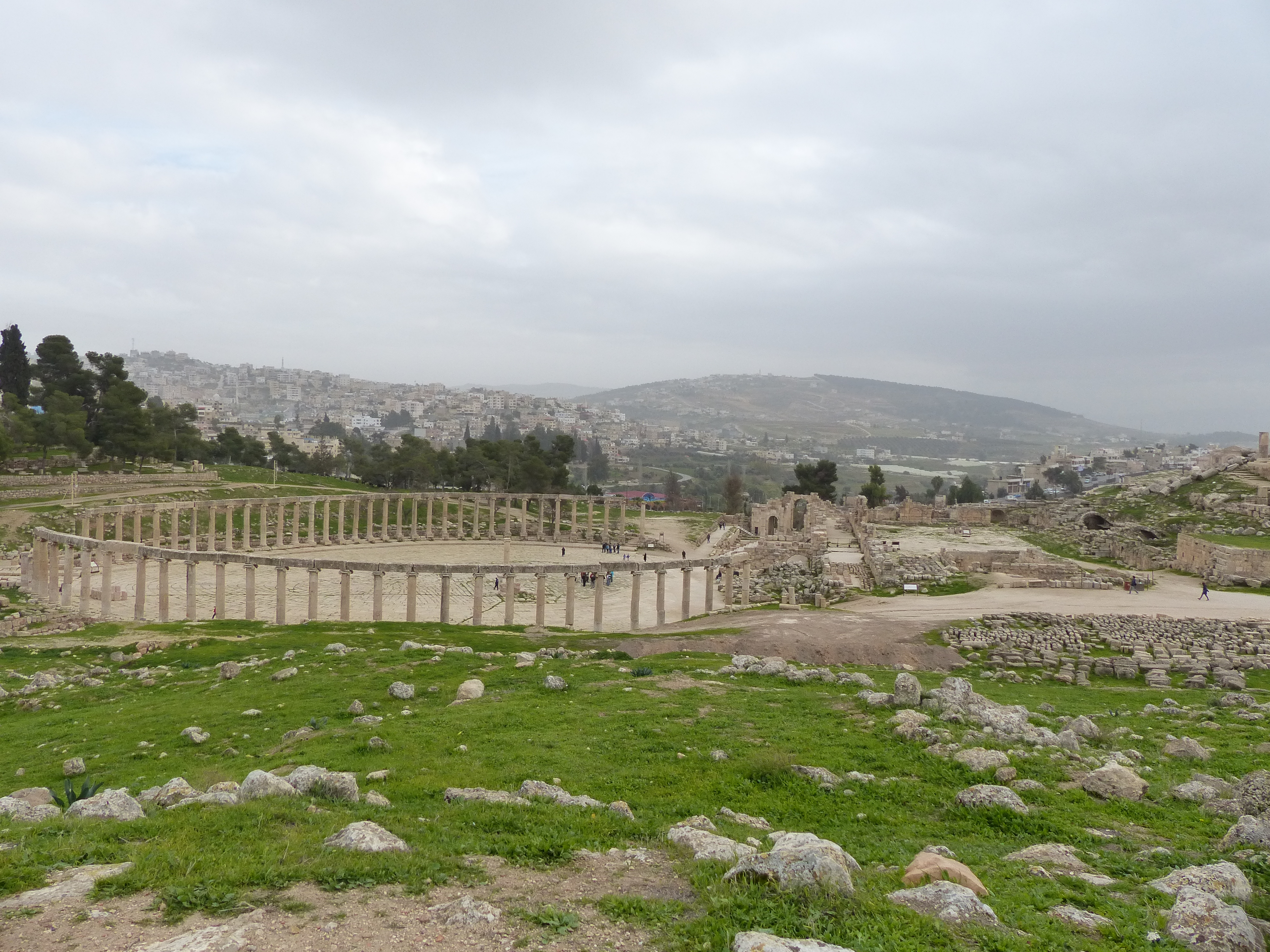
“This is where they raced the hippos,” Tony said. We were still giggling when we crested a hill and saw this.
What the WHAT??!!
P1060324

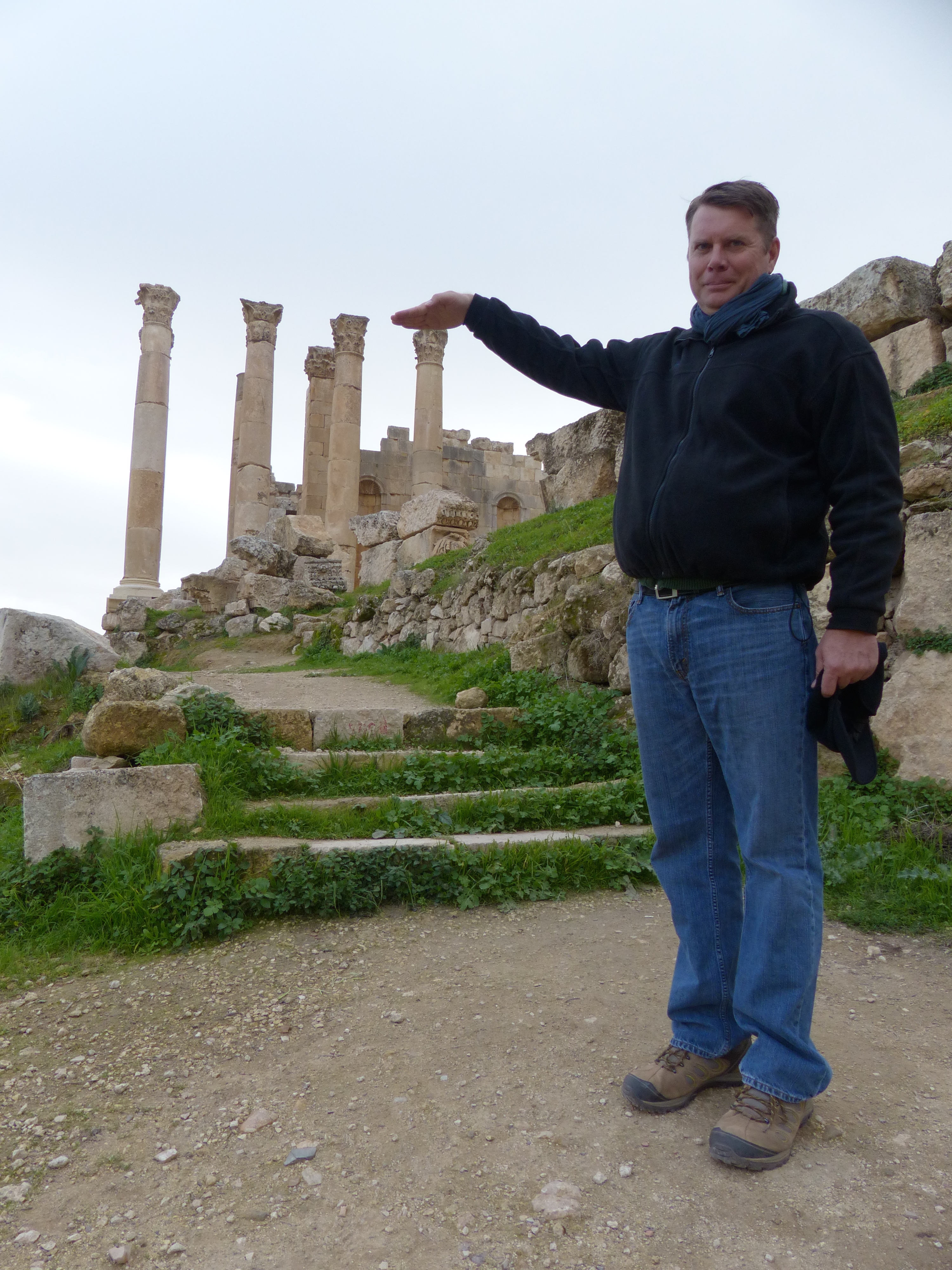
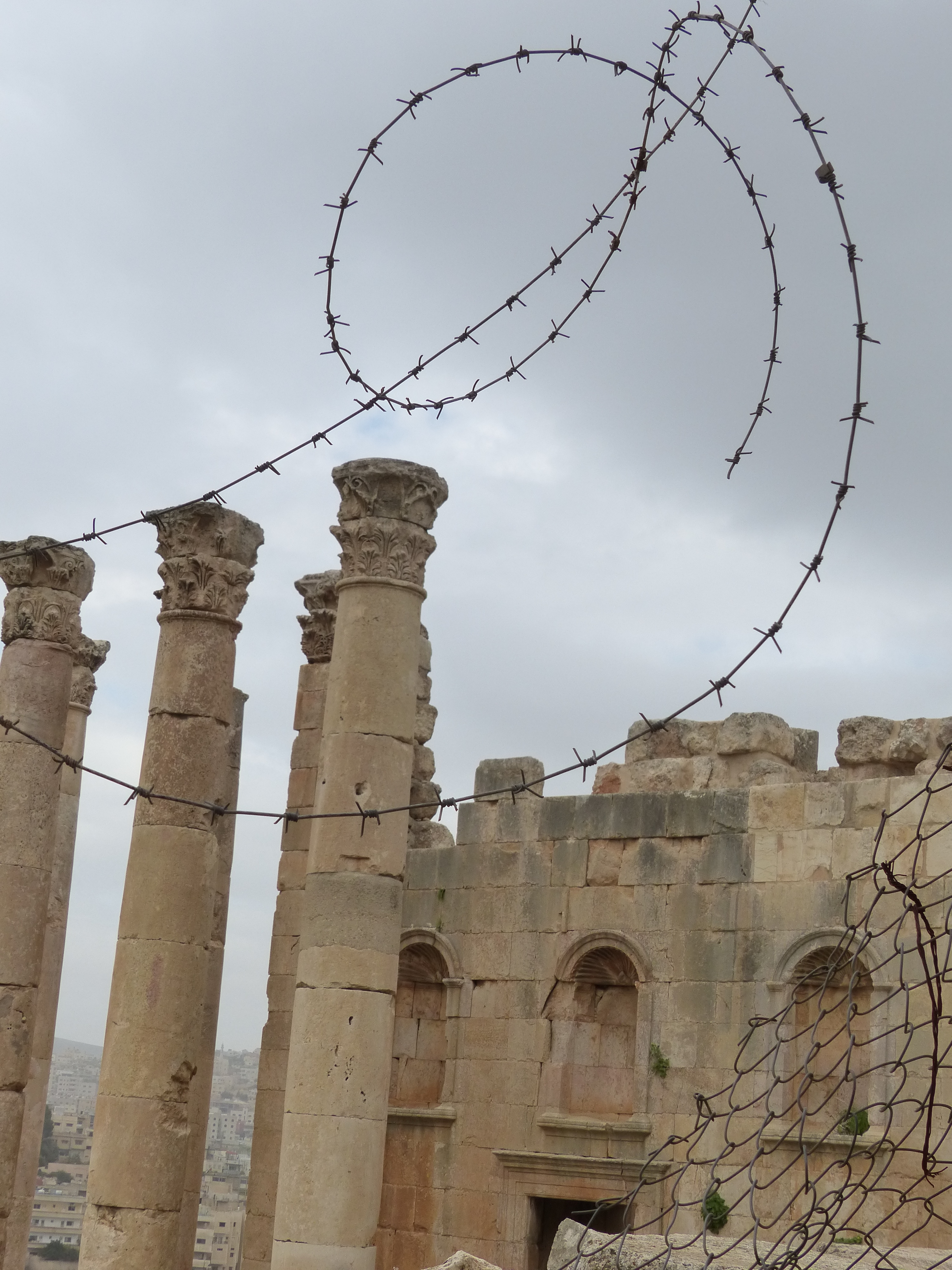
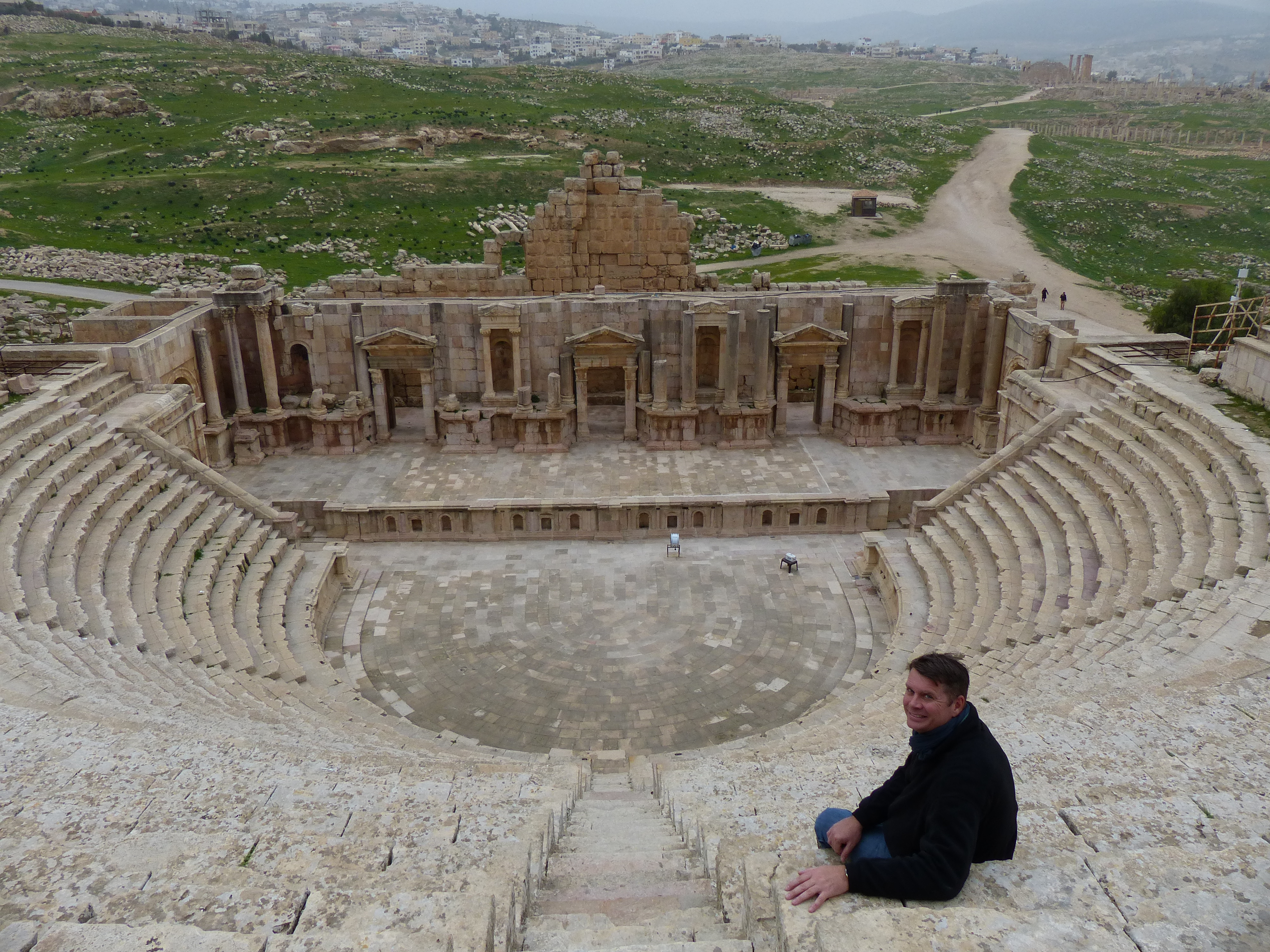
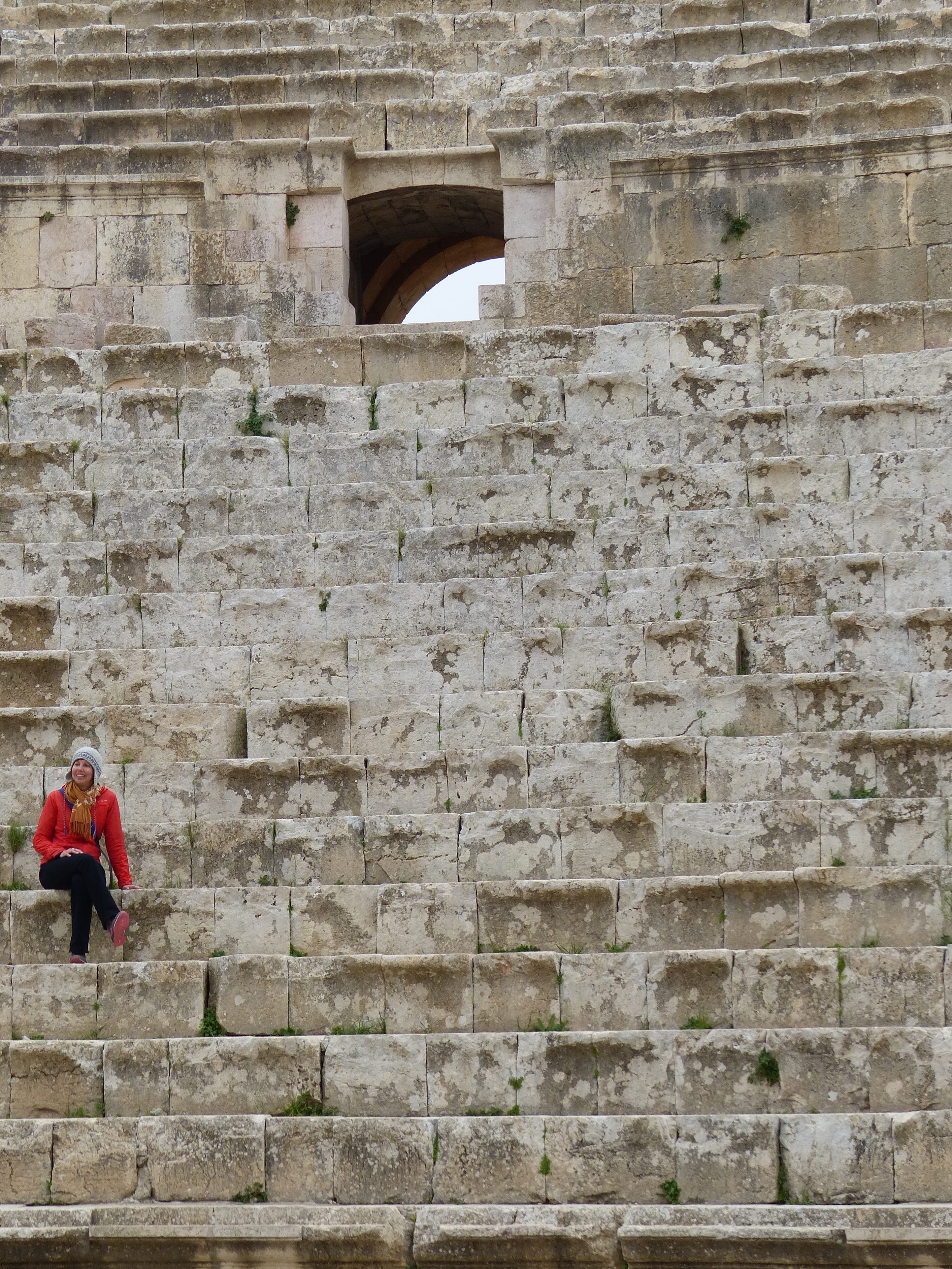
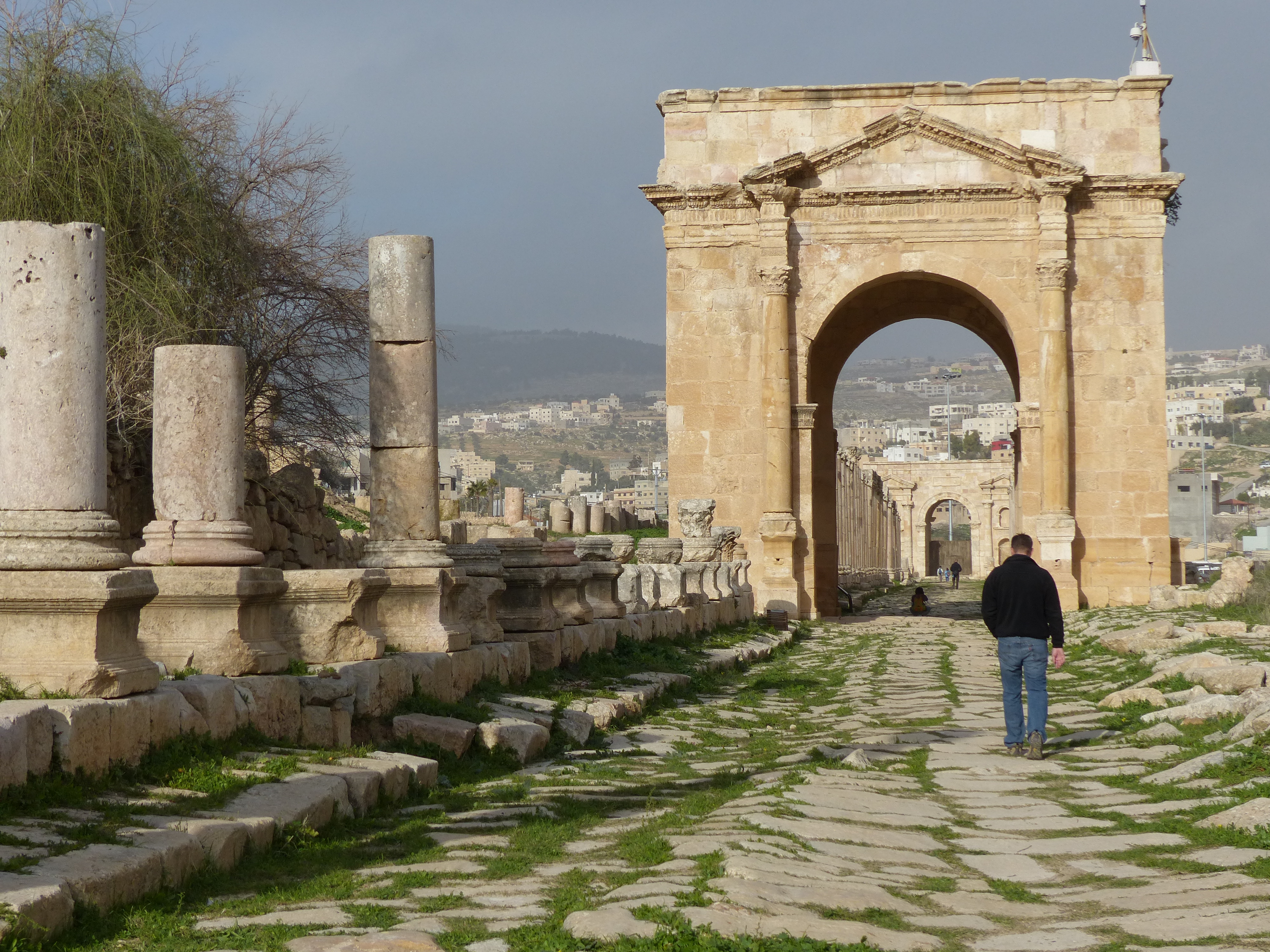
That photo doesn’t even begin to capture the sight. We were standing in the middle of a 2,000-year-old Roman city, and it was easy to imagine it full of life back when it was called Gerasa by its 20,000 residents. We strolled through the plazas and up the colonnaded streets, climbed into the nosebleed section of the gorgeously intact theatre, channeled the excitement of ancient worshippers at the Temple of Artemis, marveled at the infrastructure (including old manhole covers leading to the underground sewer system), lost count of the Byzantine churches, and desperately tried to wrap our heads around the history of this city.

Founded around 170 BC in the fertile mountains east of the Jordan River, Jerash experienced its ups and downs under the Romans, Byzantines and Muslims until an earthquake in 749 wreaked havoc, leaving the city deserted for about 1,000 years. A group of European explorers, including – you guessed it, Burckhardt! – visited the ruins at the beginning of the 19th century, and archaeologists have continued to study the area ever since. Check out the Rough Guide to Jerash for more details.

P1060301

P1060310

P1060314

P1060319

P1060336

P1060344

P1060347

P1060350

P1060349