Category Archives: On the Road

Thanksgiving Tiger Hunt – Ranthambore National Park

A scroll through last weekend’s Facebook photos revealed a cornucopia of Thanksgiving parties and reunions enjoyed by our American friends and family around the world. As for us, Thanksgiving meant an Indian buffet and Rajasthani entertainment on the lawn of our hotel in Sawai Madhopur, five hours southwest of Delhi by train. We traveled with a few other families from school, and we all felt grateful for the fresher air and relative peace.

Here’s a little history about the the park from the website Sanctuary Asia:

The Ranthambhore Fort, occupied for years by Raja Hamir, has lent its name to the Tiger Reserve. A Hindu battlement, it has seen a series of Muslim rulers try unsuccessfully to lay siege to it, including Allaudin Khilji in 1301.The army of the Moghul Emperor Akbar camped here (1558-1569) and the Akbar Namah records the menu that the generals were served when they had a meal under the famous banyan tree that visitors can still see at the base of the ramparts.
The park area itself was once the hunting preserve of the Maharajas of Jaipur and many tiger shoots took place here including an infamous visit in the early sixties when a tiger was set up to be shot by Queen Elizabeth II.The Ranthambhore Park earned Sanctuary status in 1958 and when Project Tiger was launched in 1973, it really began to receive the protection it deserved. Placed under the care of the now-famous Fateh Singh Rathore, by the 80s the park had earned itself the distinction of being one of the world’s best-known tiger forests.
The first real signs of ecological renewal were the scores of once-dry pools, streams and rivulets that began running full of water all year long. This helped native plants to re-establish themselves. A major side-benefit of Ranthambhore’s return to health was the ground water recharge service performed by the forest, which helped restock wells in surrounding villages.

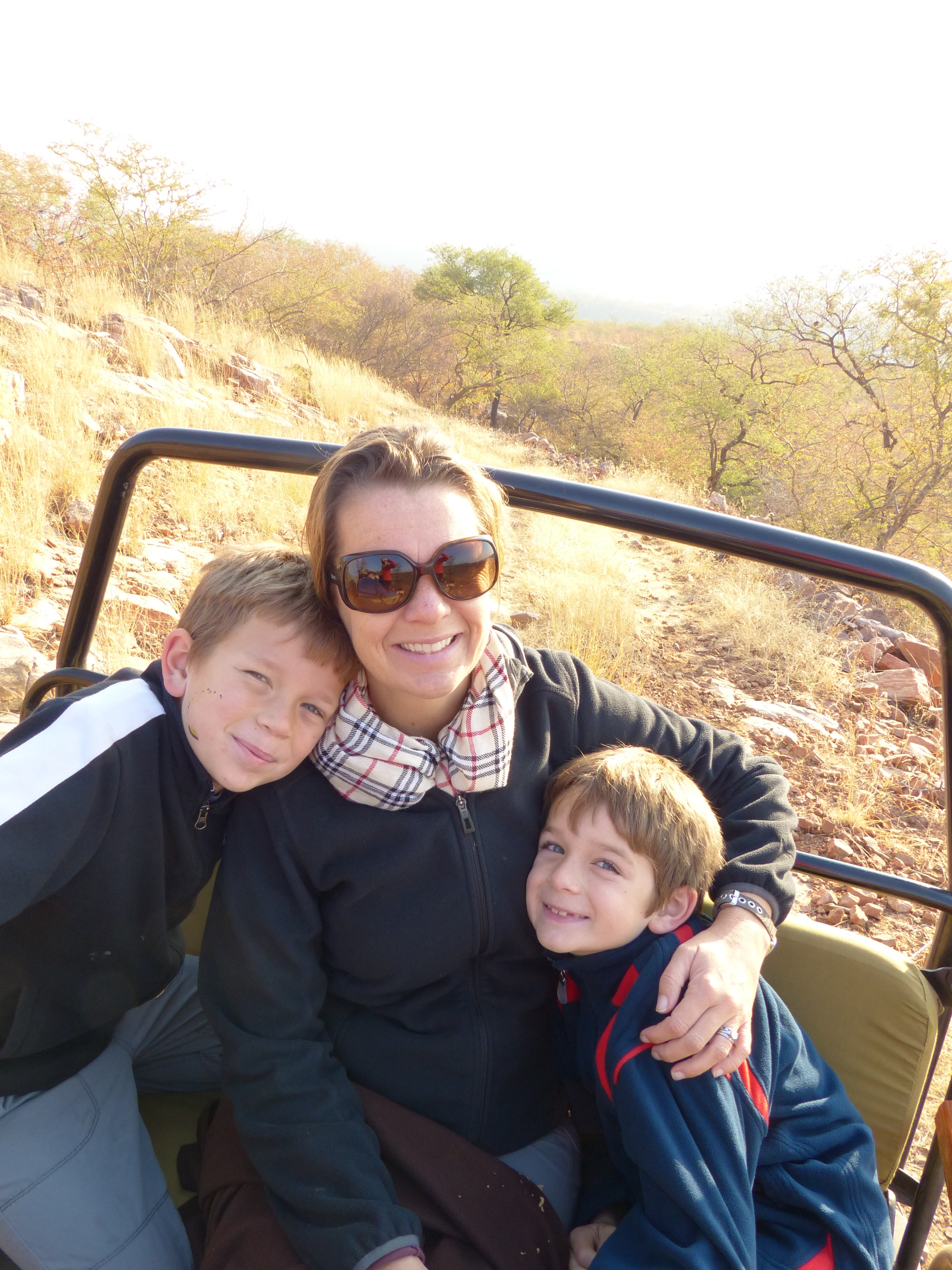
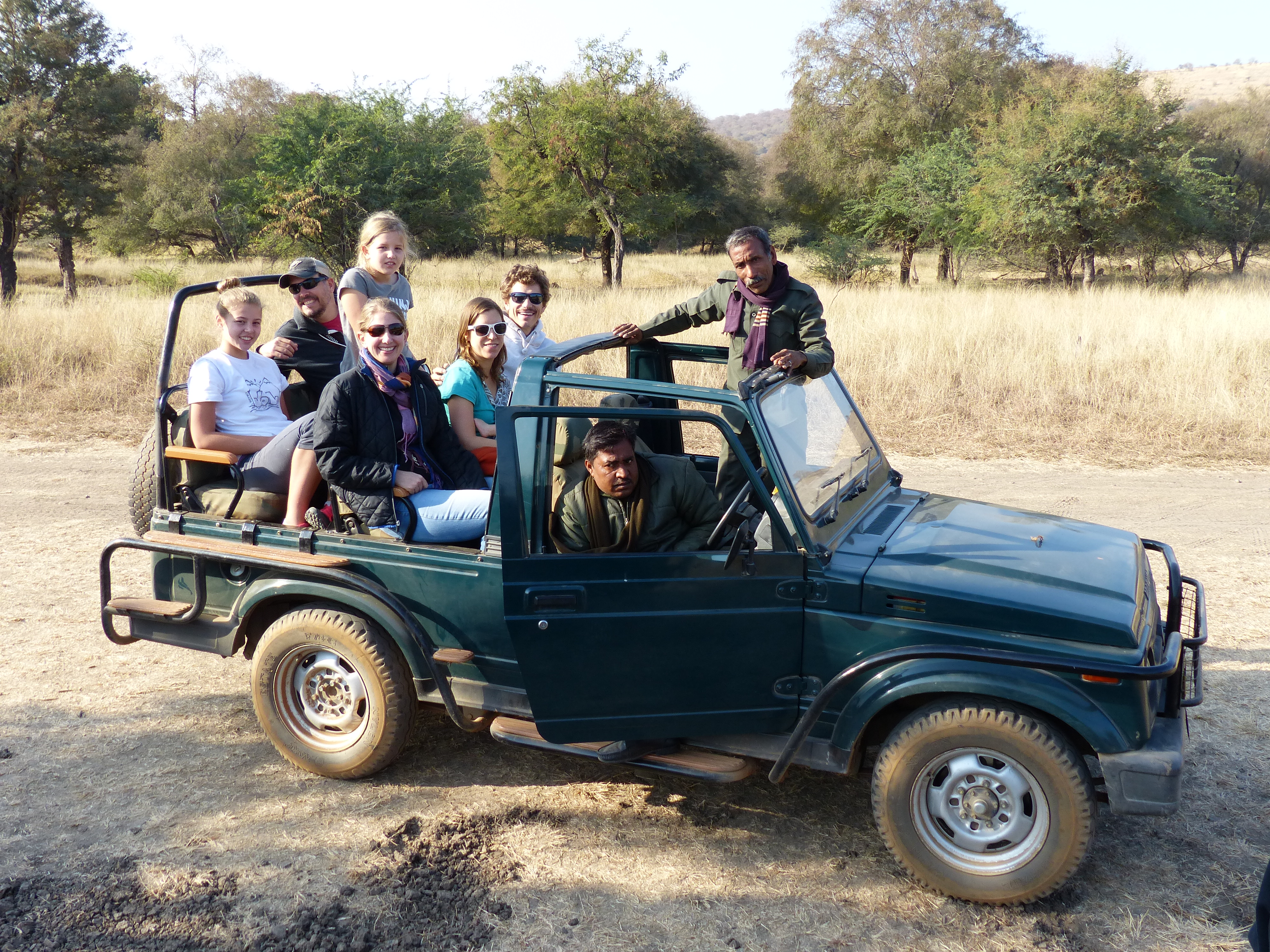
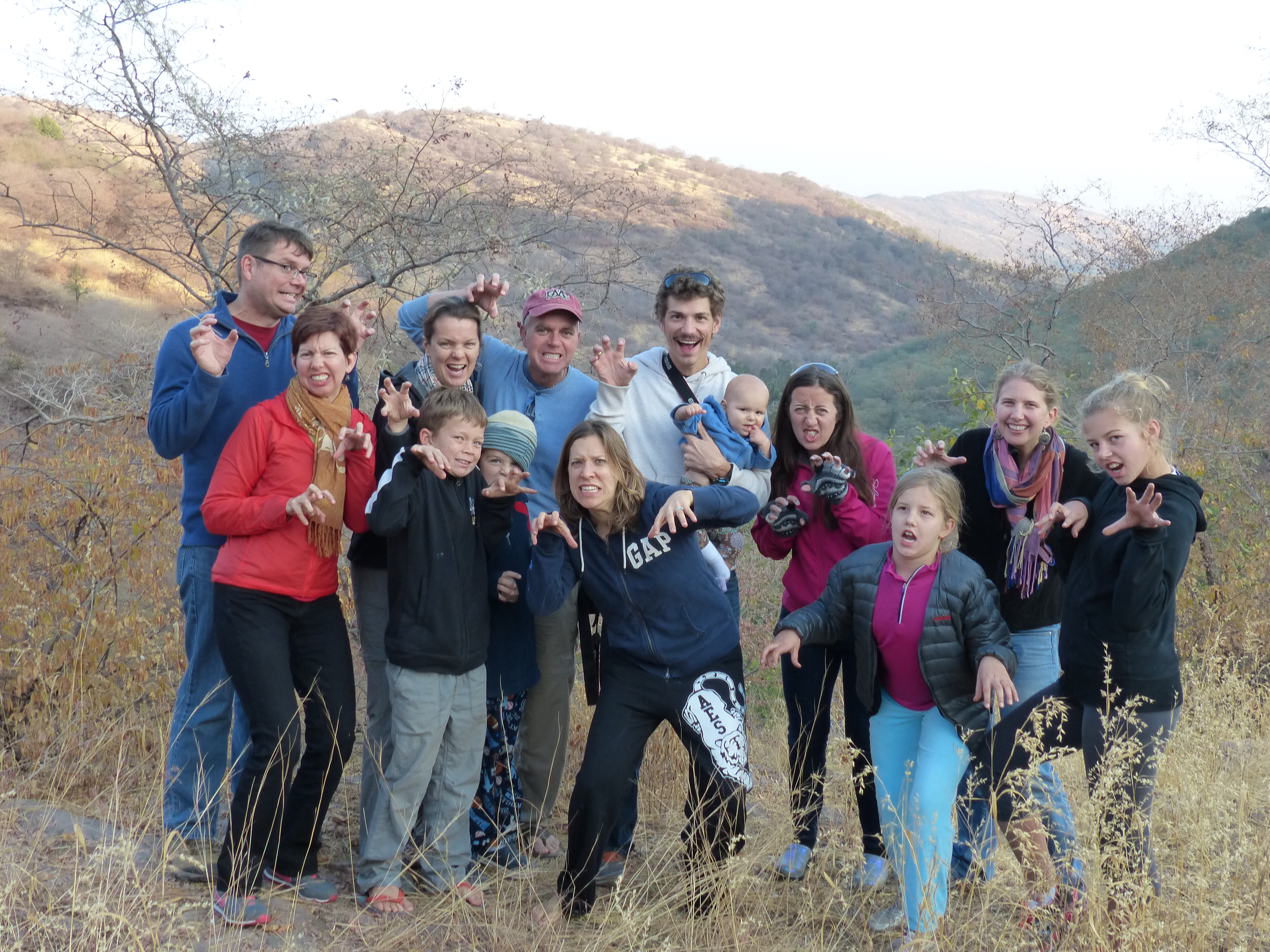
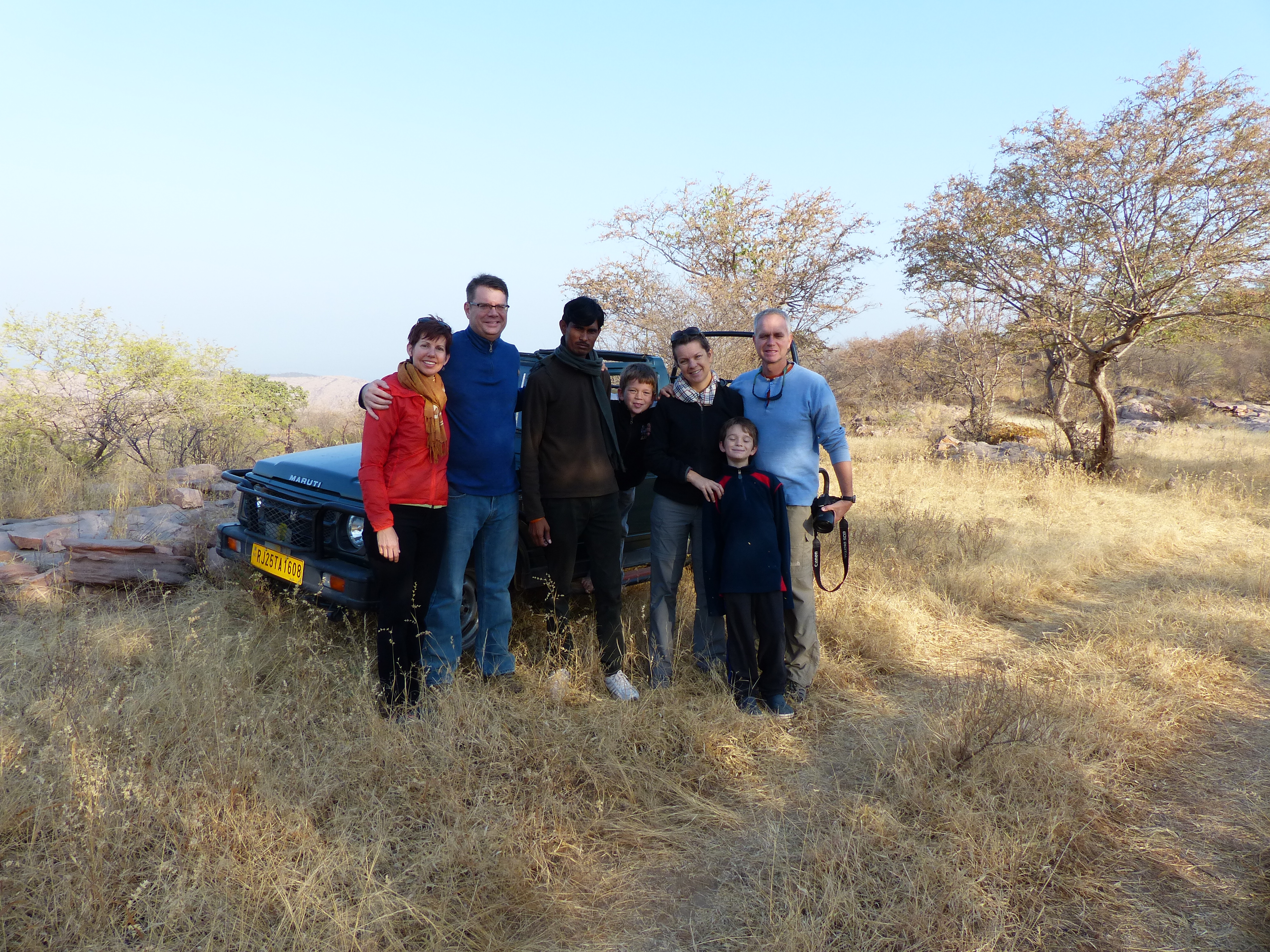
For our safaris, we split into two jeeps. The Dents rode with the Rosenfields: Kristen and Jonah, and their two boys, Asa and Liam. In the other jeep: the Gregors and the Curreys. Alicia Brown skipped the first two safaris to rest her weary tummy.

Tiger hunters!
P1050649

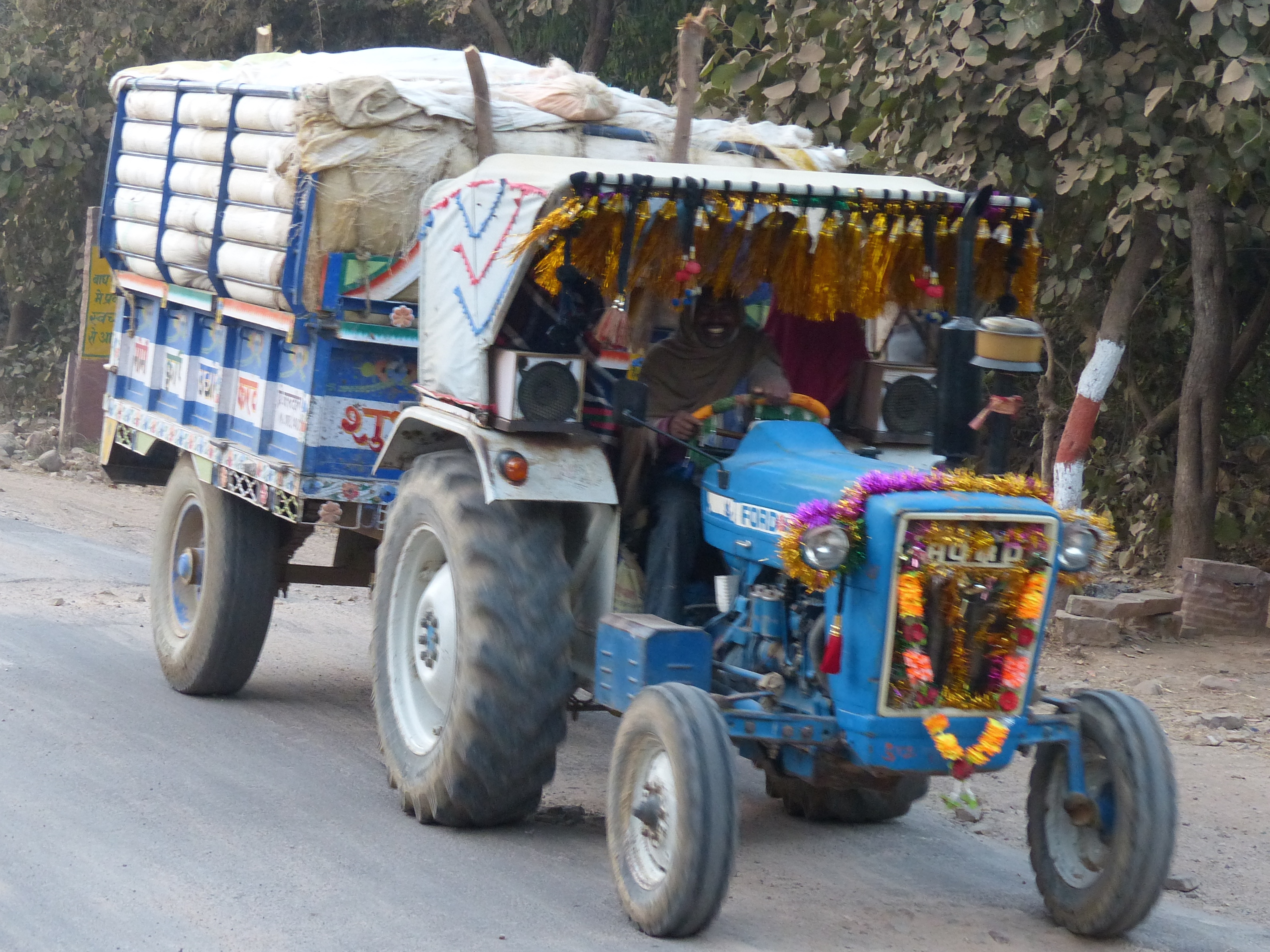
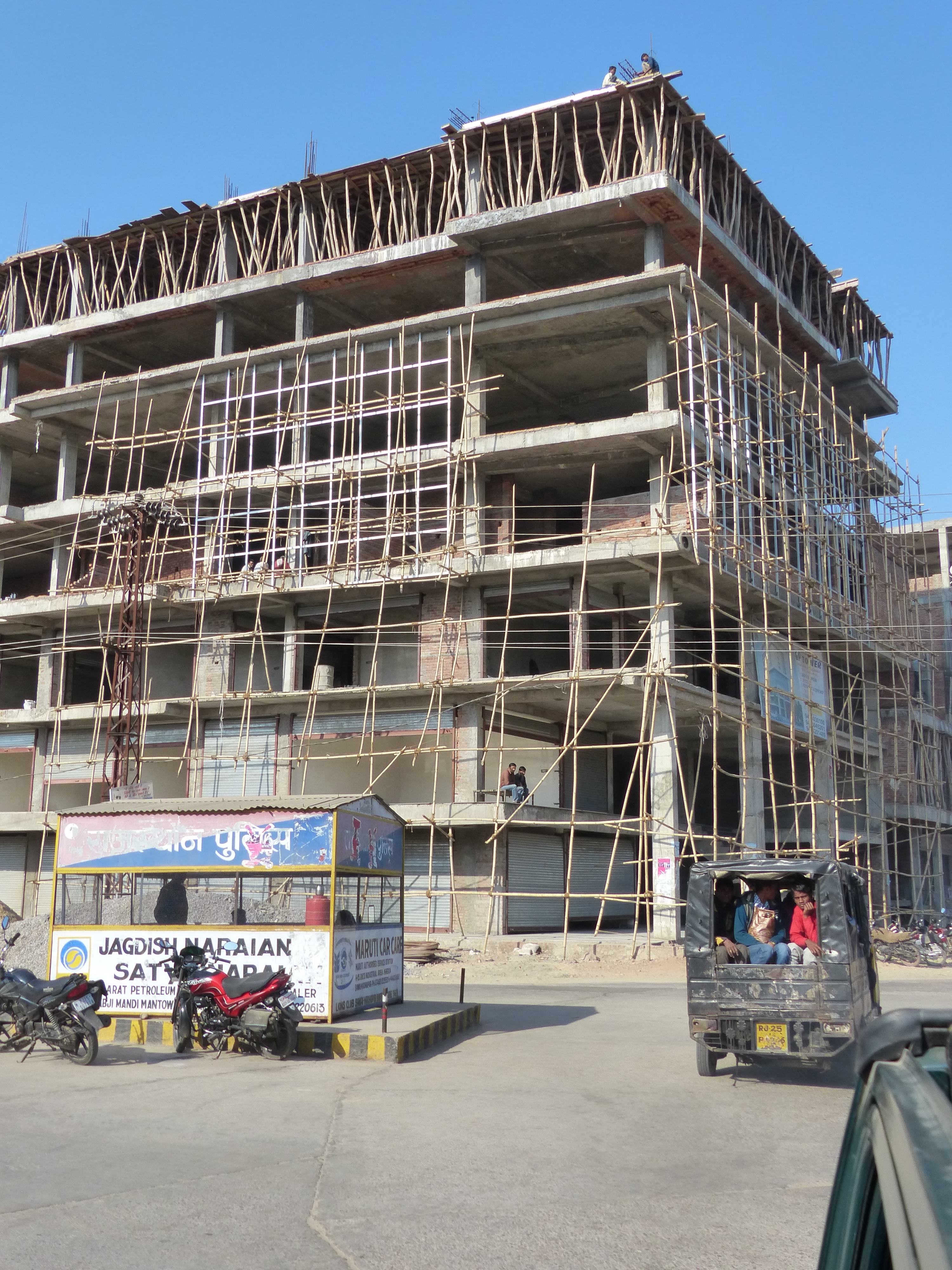
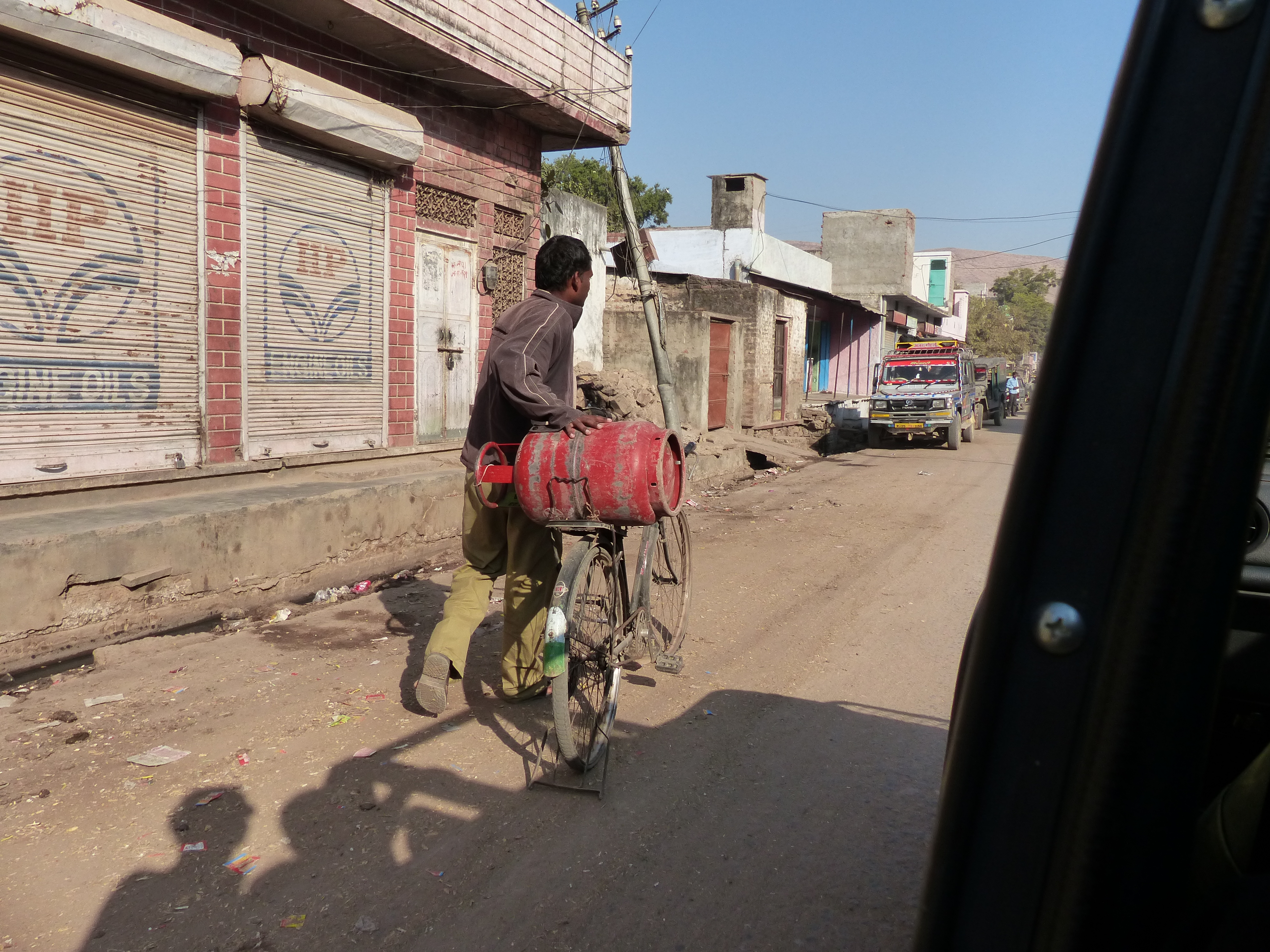
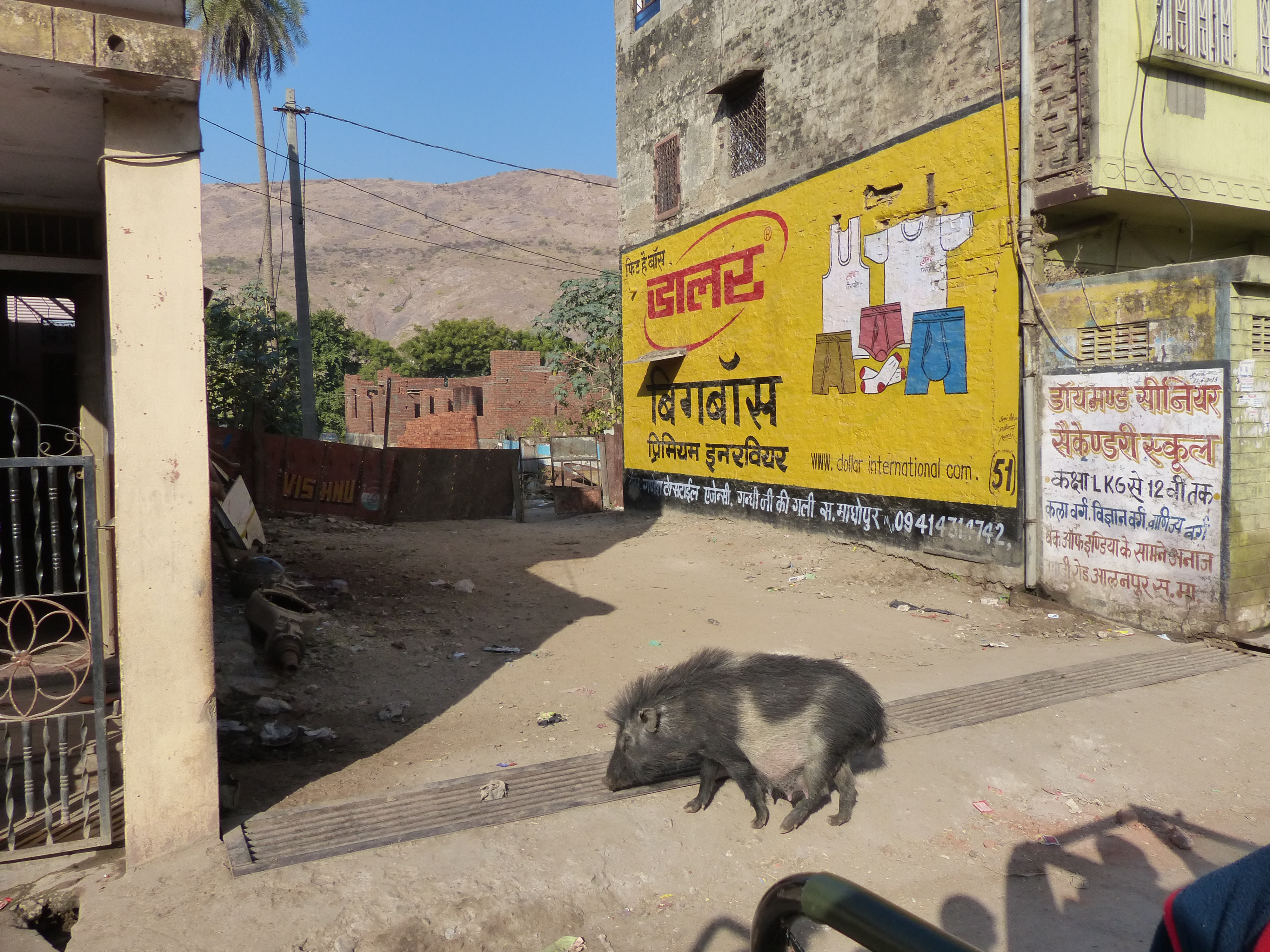
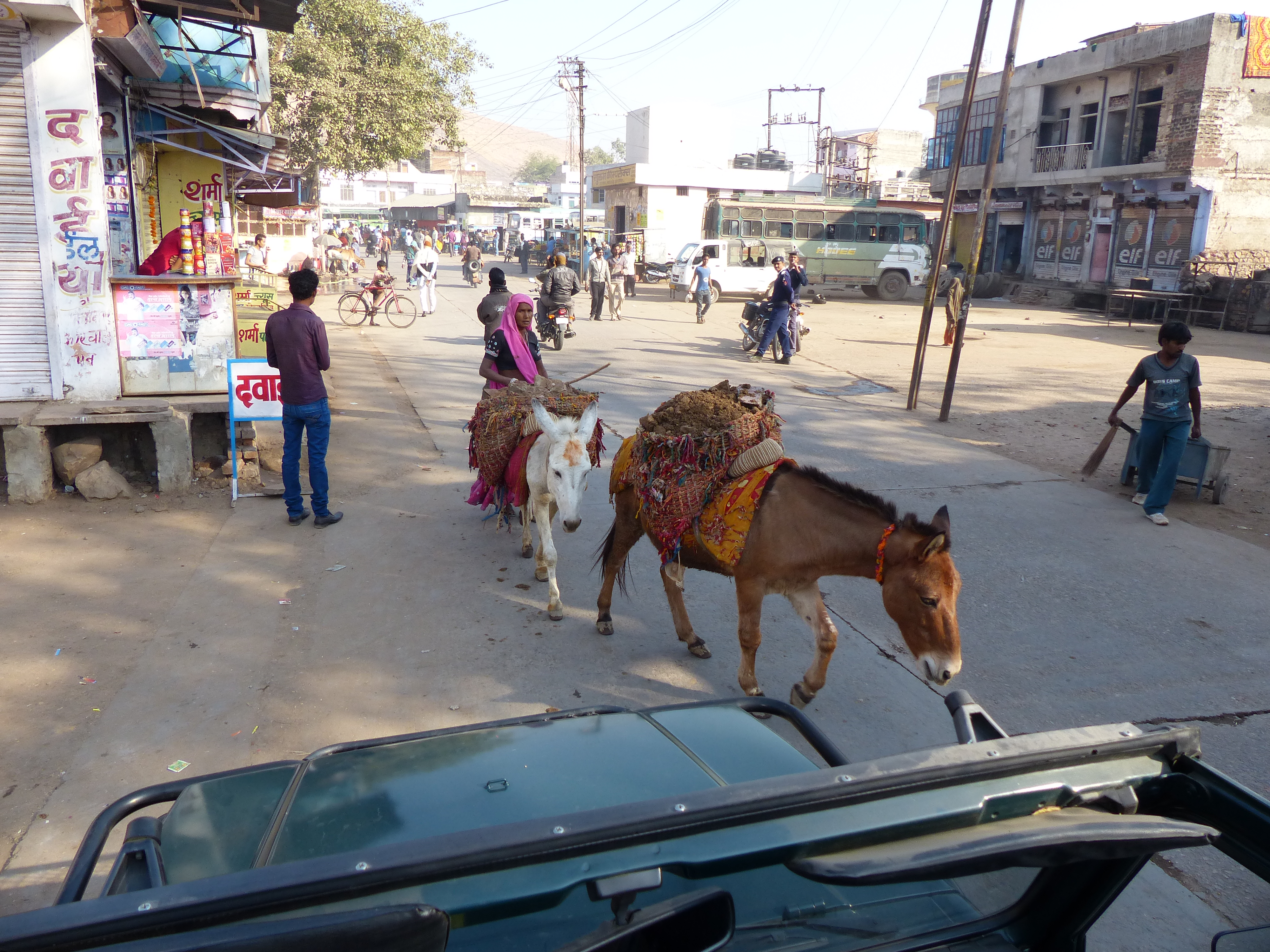
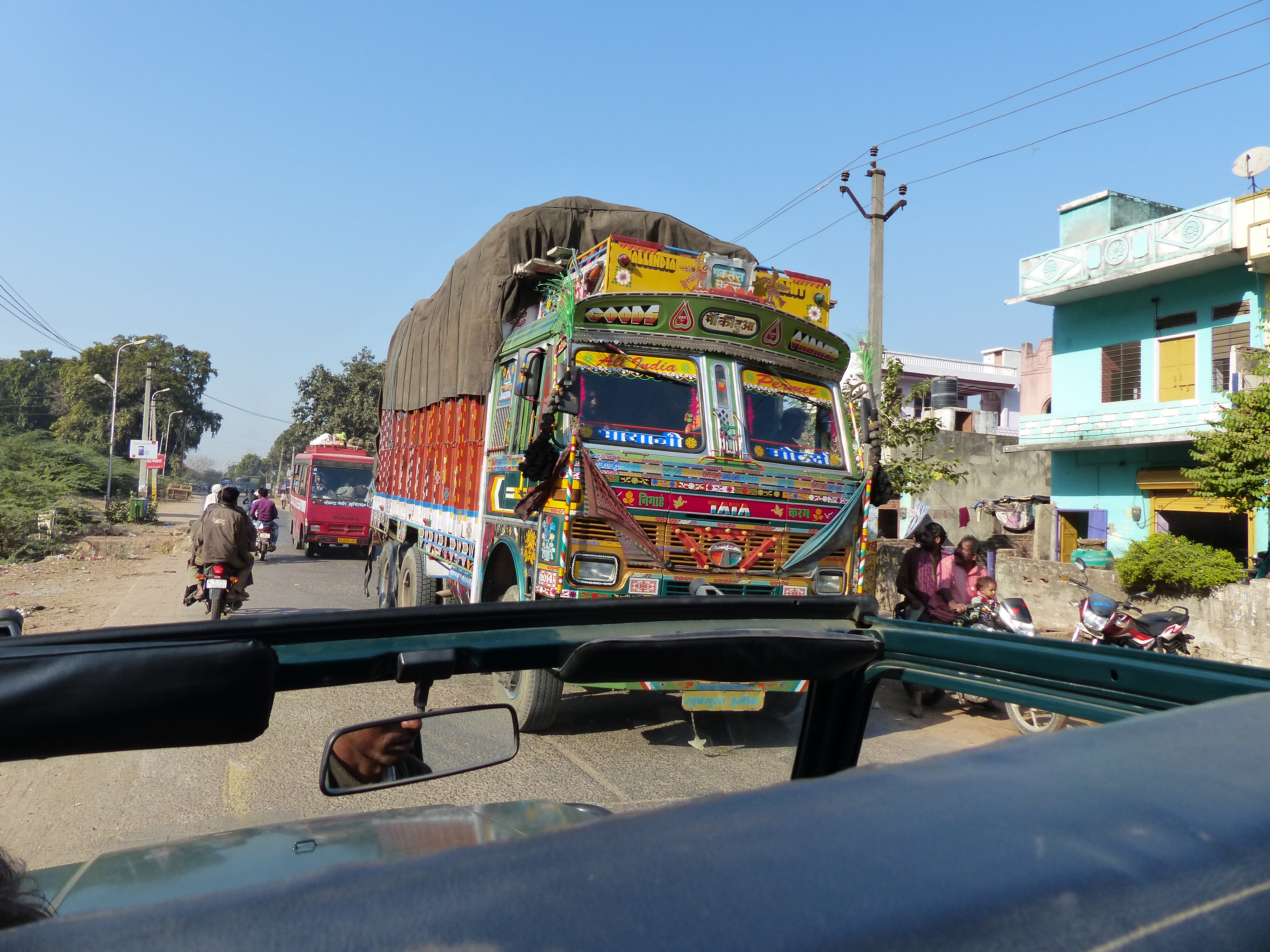
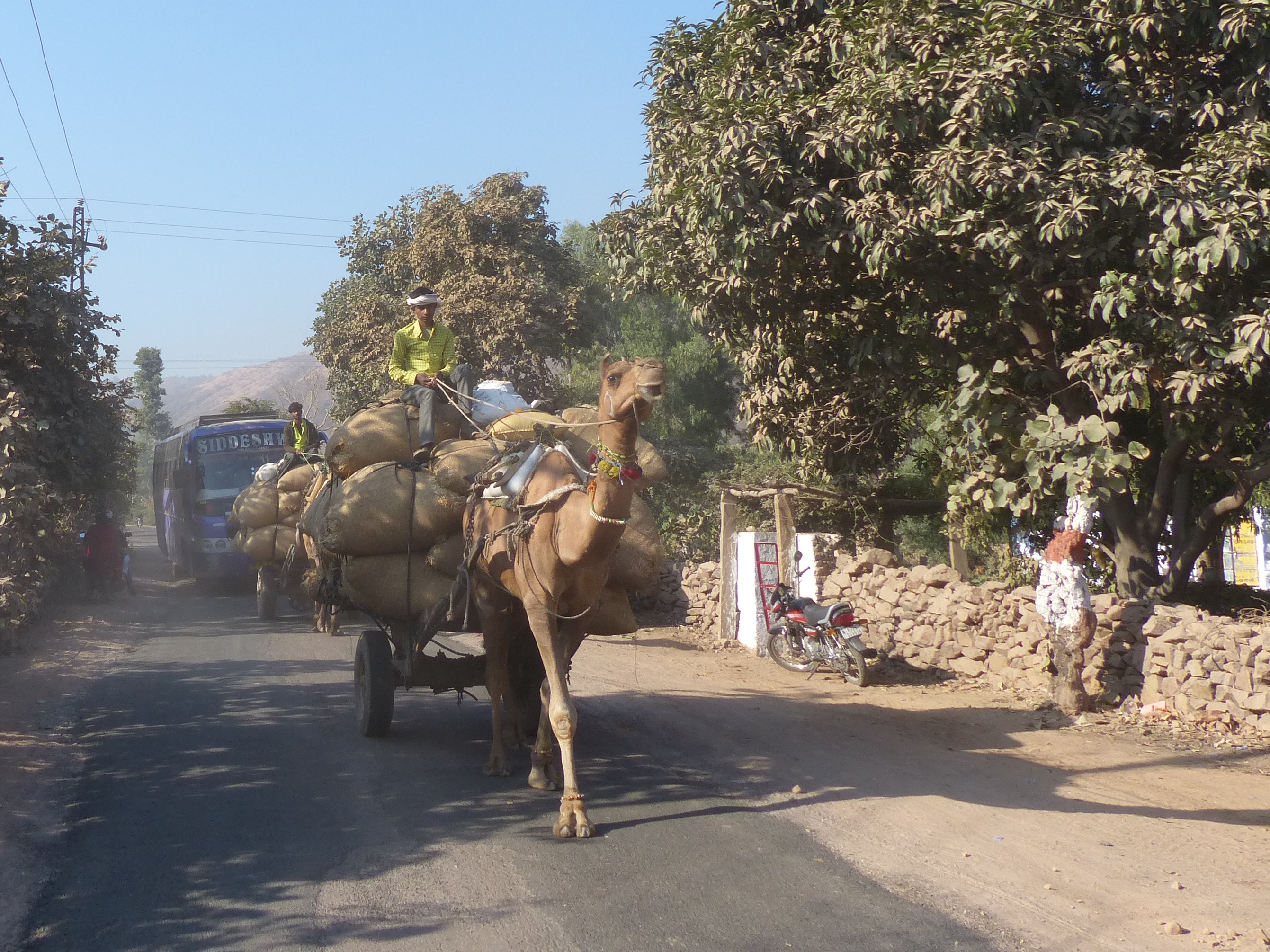
To reach the tiger park, we rolled through the city streets for a drive-by glimpse of daily life. Flaunting designs shaved into their fur or painted with dye, camels hauled carts loaded with bricks and marble slabs. Psychedelically decorated trucks – every inch adorned with colorful designs, sanskrit wishes, huge pompons and pleasantries such as “Horn Please” in elegant script – blared tinny music or parked roadside with their hoods up. Smiling faces pressed against the glass or hung out the windows of overstuffed buses with additional passengers waving from the rooftop. Where the path narrowed and traffic bottlenecked, piles of trash attracted boars, goats, cows, dogs and monkeys. Donkeys carrying baskets of dirt wove between the cars, and villagers carried on with their routines.
P1050666

P1050636

P1050556

P1050526

P1050669

P1050537

P1050541

P1050542

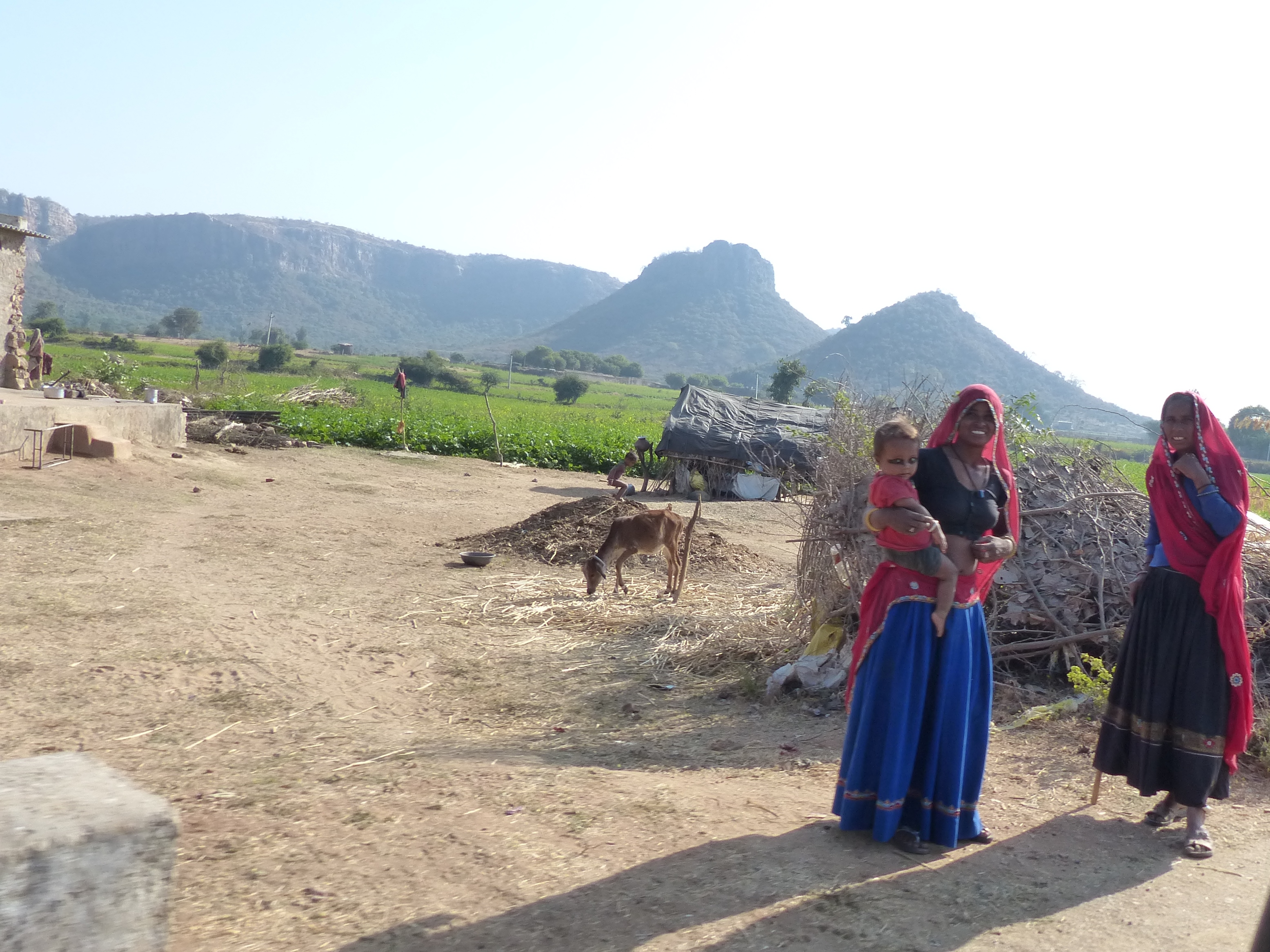
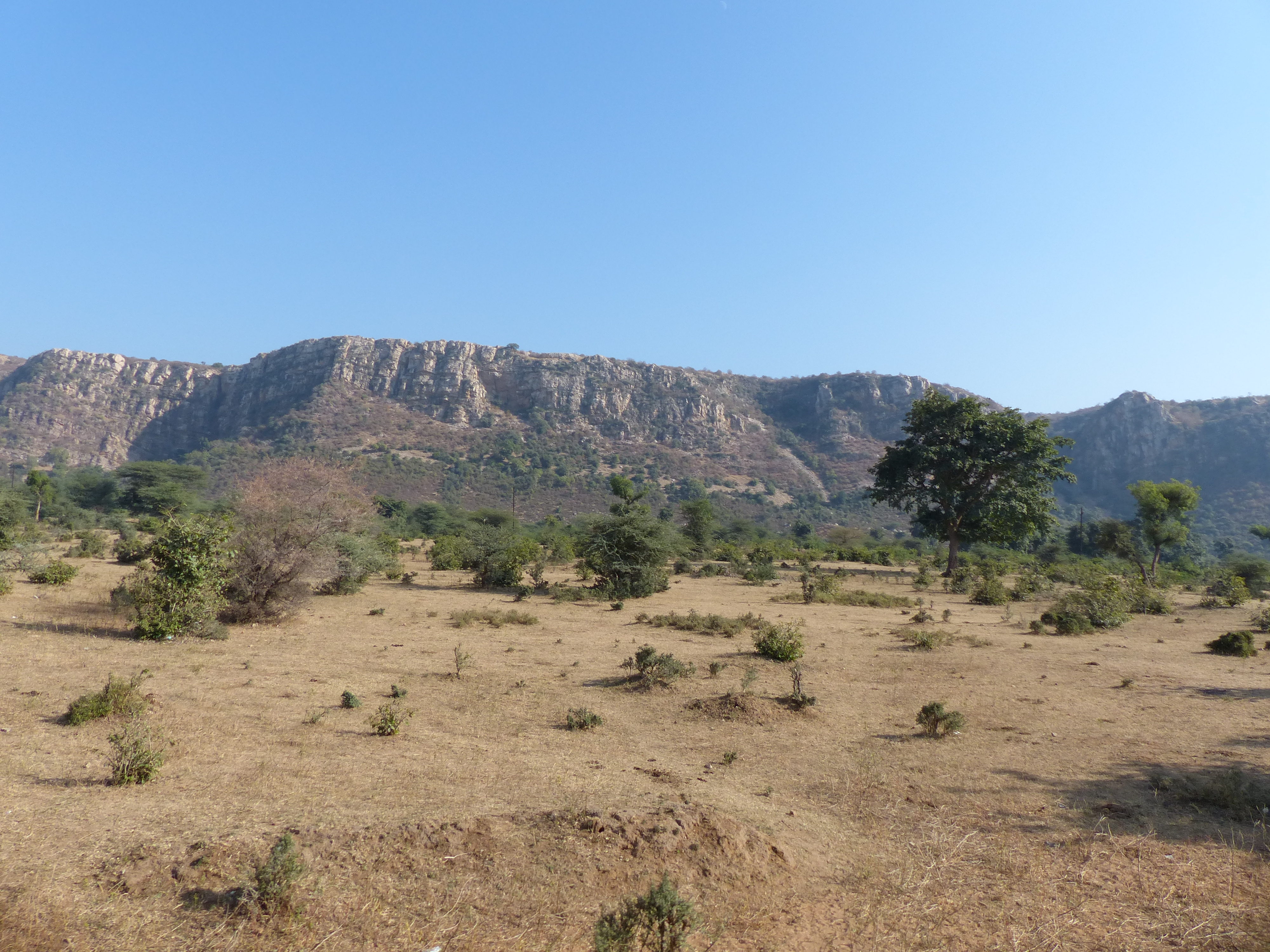
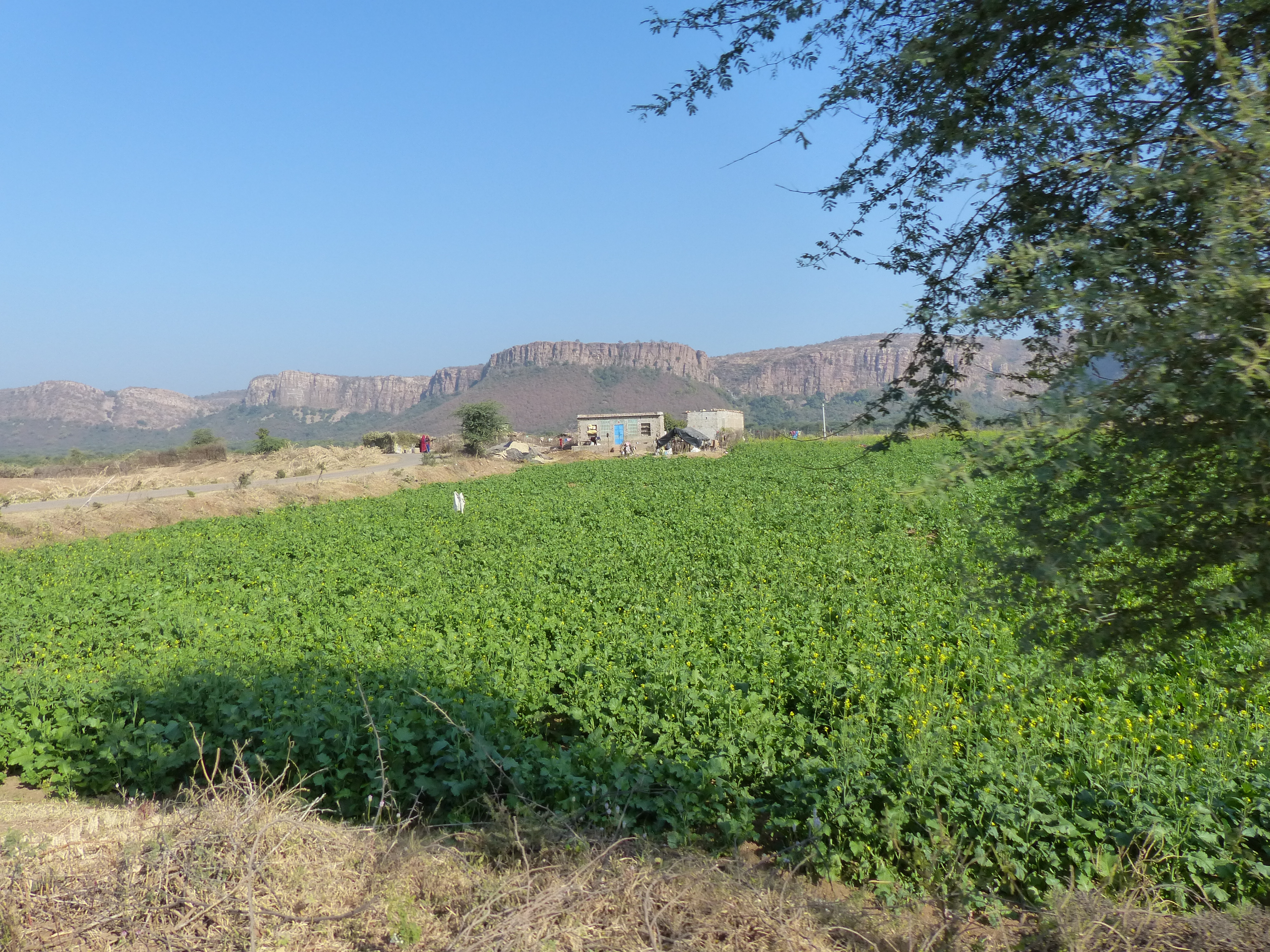
Out in the countryside, the scenery changed dramatically. Deforested farmland and pastures bumped up against the rugged hills of the Aravelli range, one of the oldest mountain ranges in the world and the same ridge that peters out near our home in Delhi.
P1050572

P1050571

P1050557

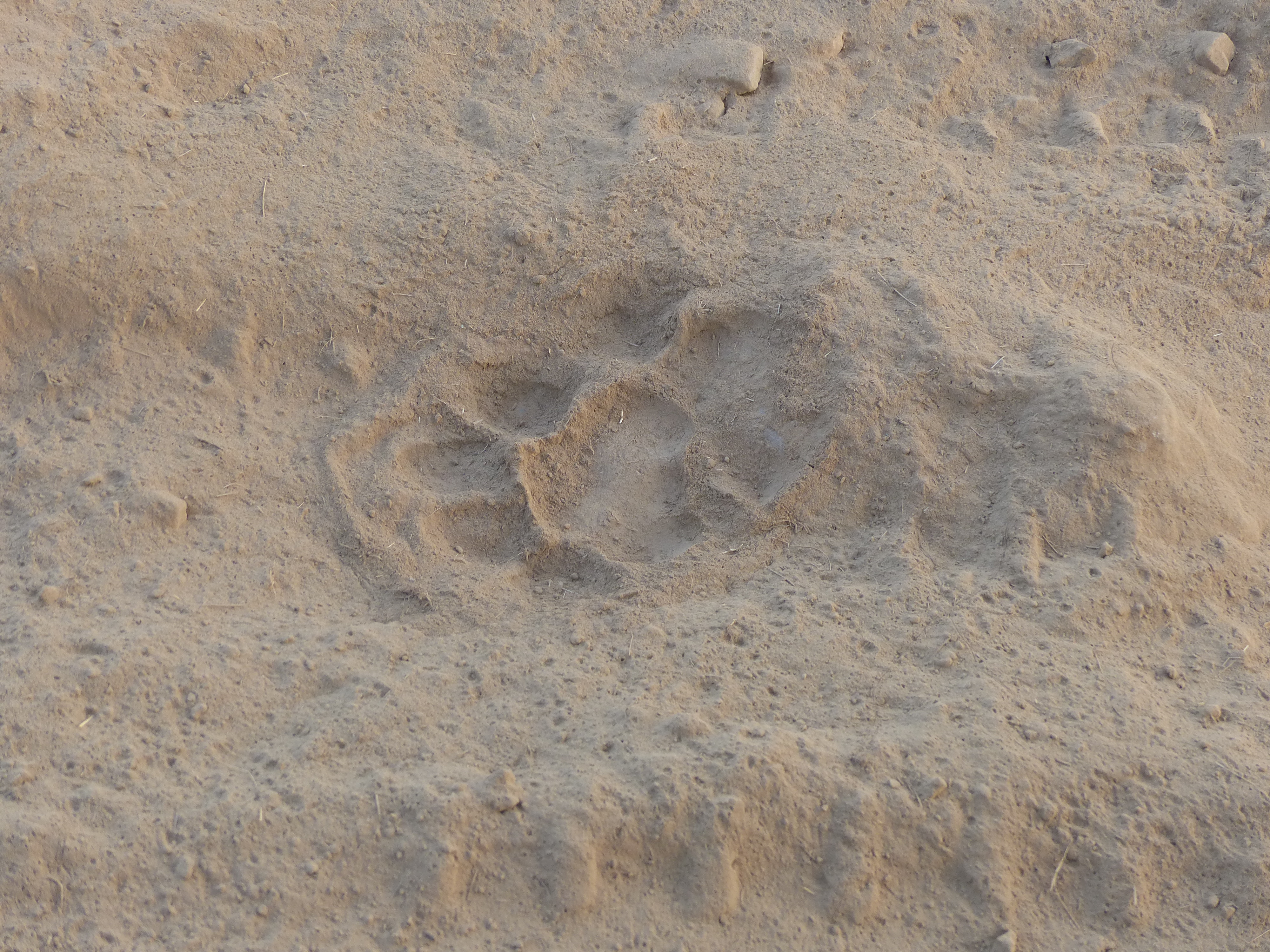
On our first safari, Friday morning, we spotted tiger prints in the dirt but no tigers in District 6.
P1050462

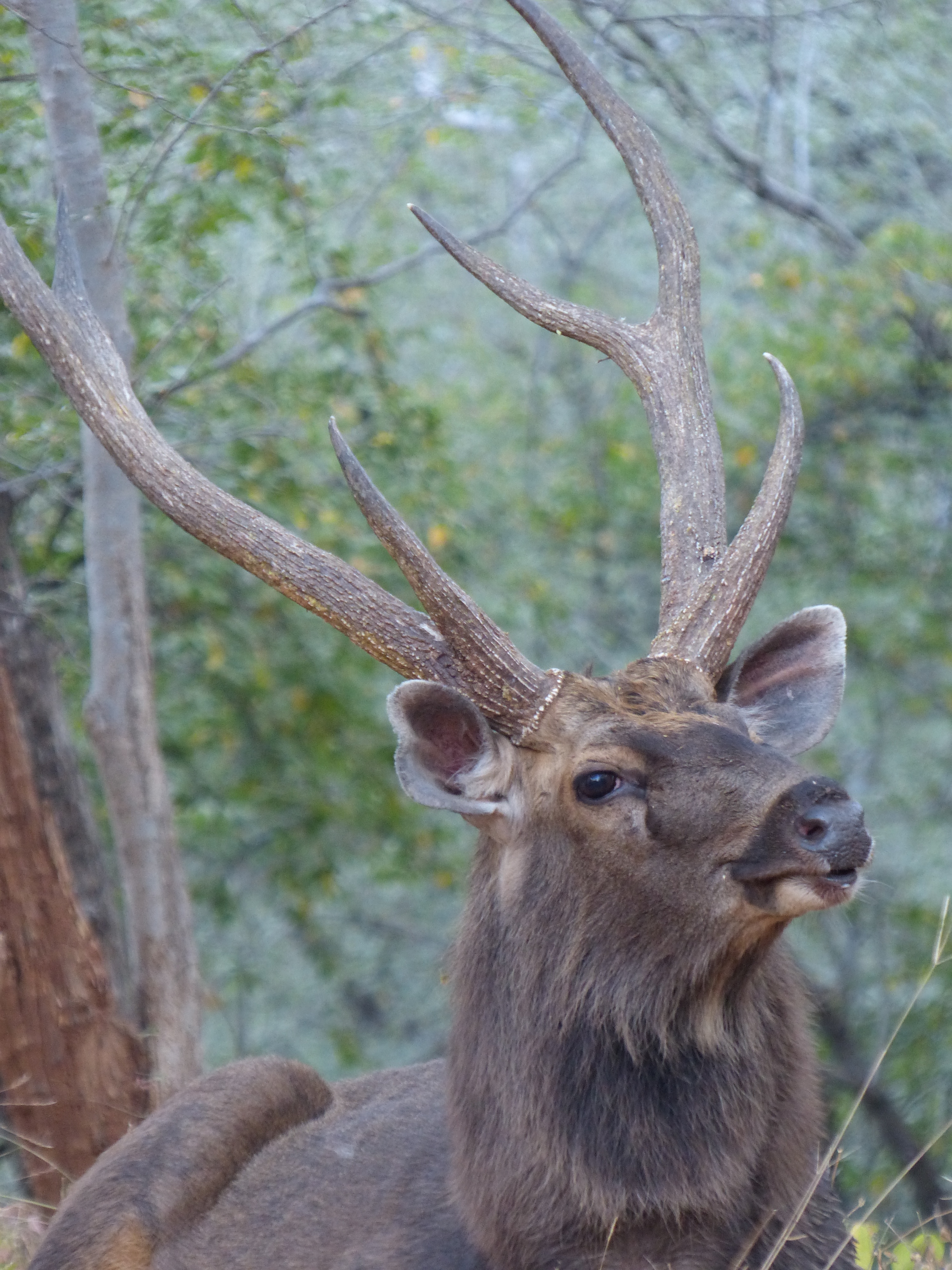
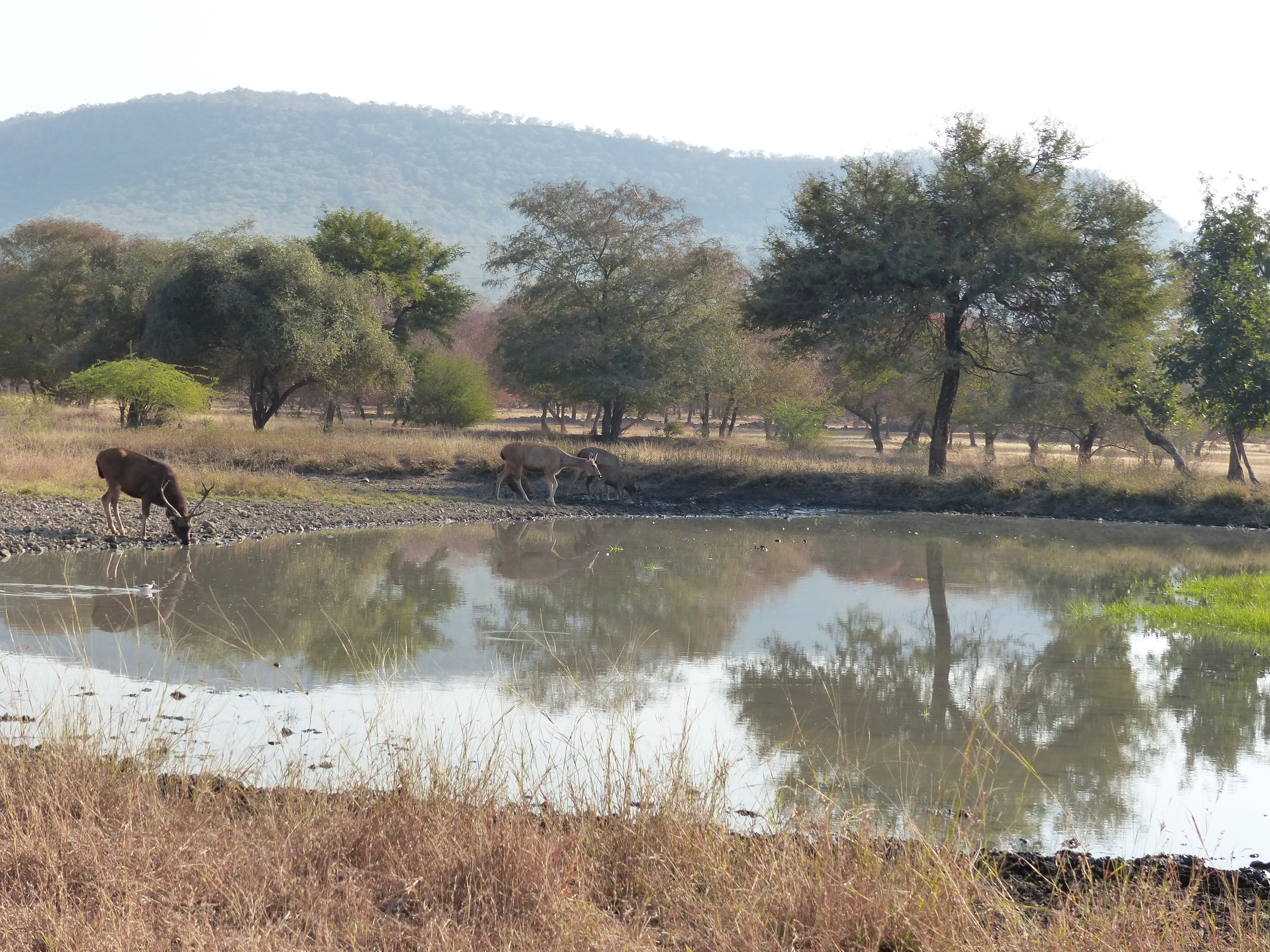
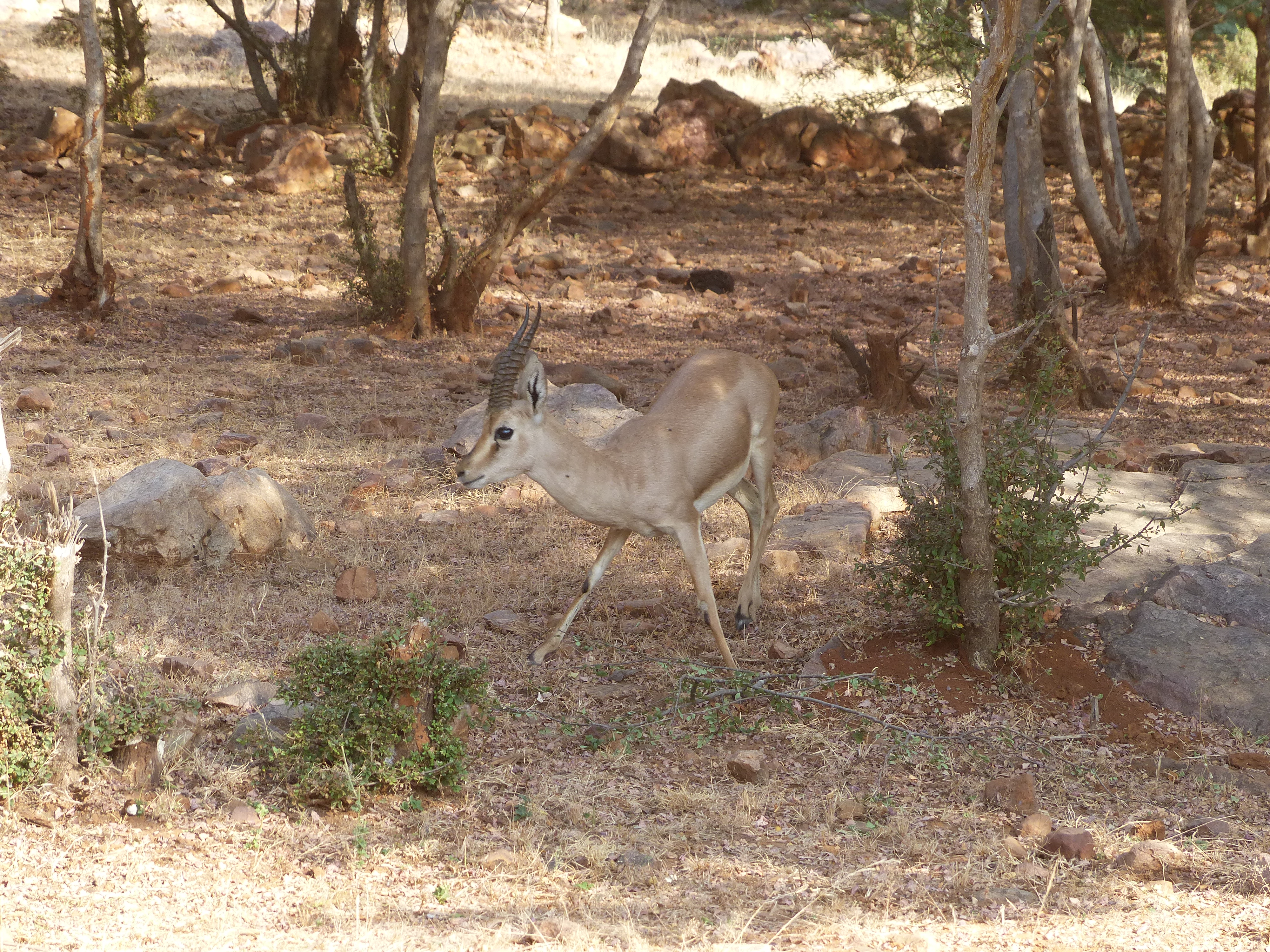
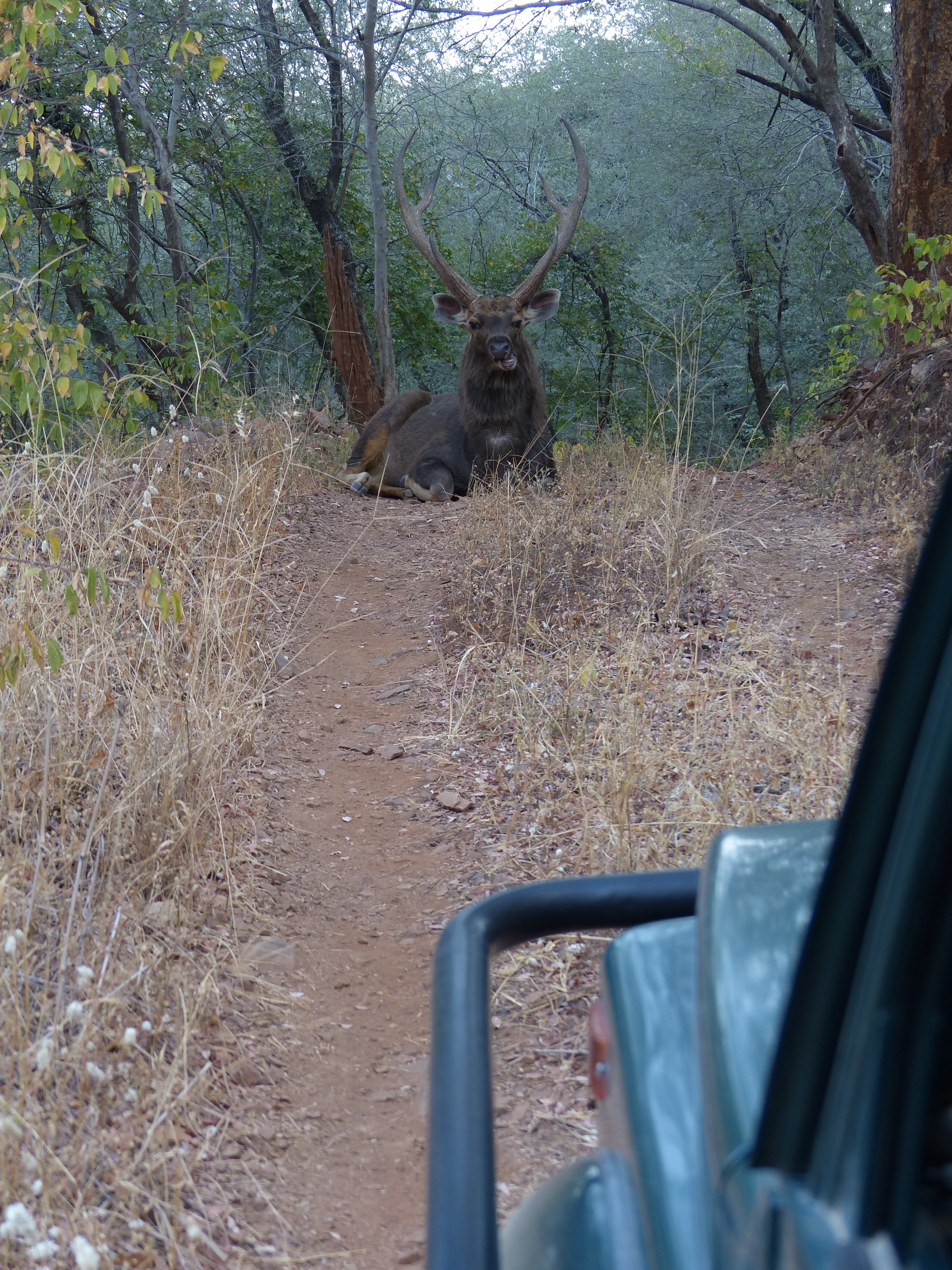
We bumped through a stunning landscape turned golden by the rising sun and saw other interesting mammals, such as spotted deer, nilgai and antelope. Cresting a hill, we encountered this guy, a sambar deer. He sat calmly, staring at us and chewing nonchalantly with no clear intention to move out of the road until the driver revved the engine and rolled forward a bit. Still nonplussed, the deer slowly stood and stepped off the road into the woods.
P1050468

P1050476

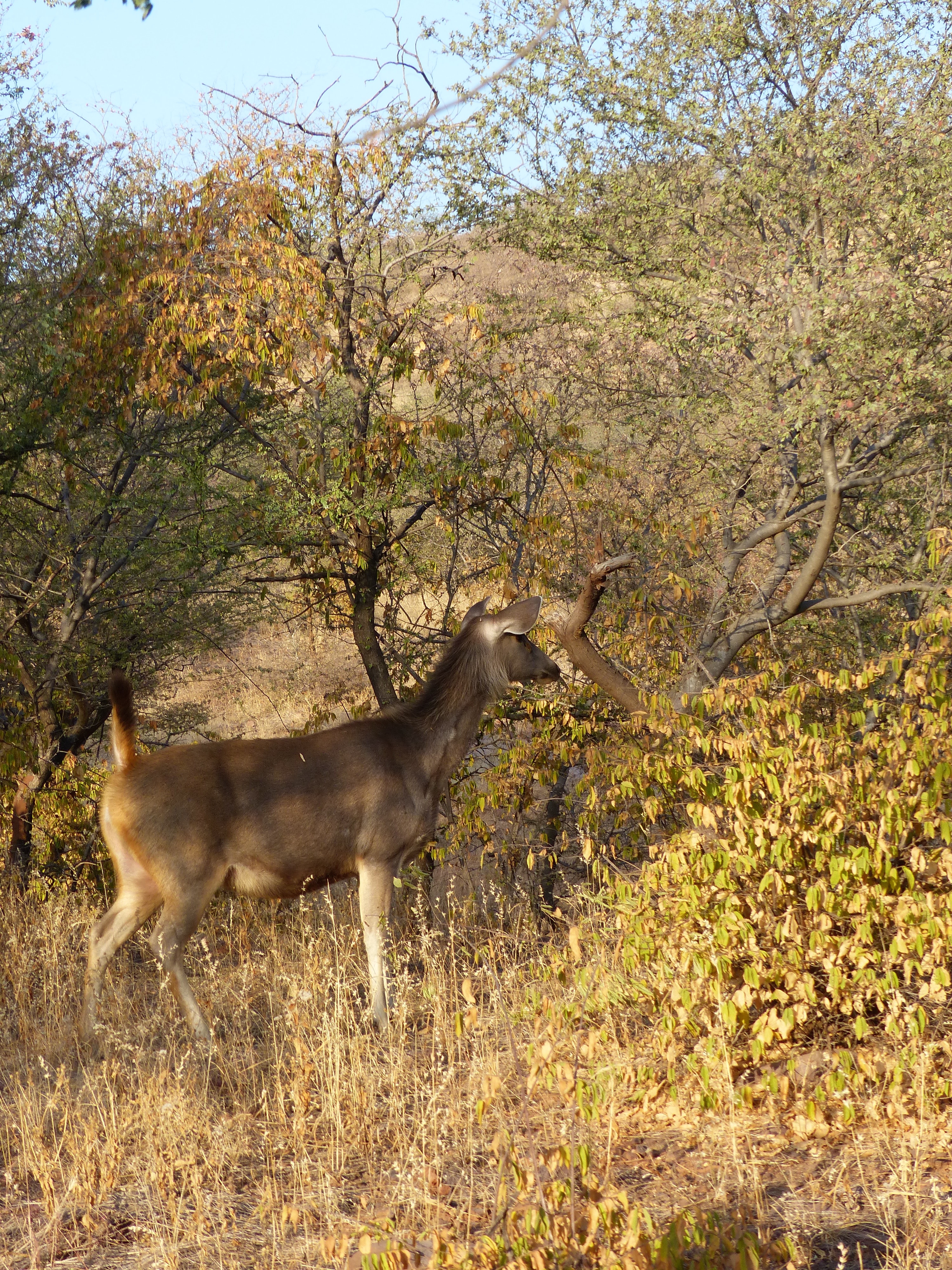
Our guide explained two ways they track tigers in the park: footprints and warning sounds. We had seen the footprints, and soon passed a small deer running in the opposite direction of a sharp barking sound. A large gray nilgai was warning the other animals that danger lurked nearby. The nilgai stood alert at the edge of a cliff, looking down into the valley.
P1050481

Occasionally it stomped a foot aggressively and startled us with its sudden barks. Eventually, a gray-and-black striped hyena scurried into view, only for a moment, and then both animals sped away in opposite direction. Afraid I’d miss it, I didn’t even raise my camera. “This is only the third time I have seen a hyena in my whole career,” the guide said. Small consolation for no tigers, but we’ll take it!
Our hyena looked just like these guys (which I found on the website Look At India.)

ranthambore hyena

Other shots from the morning safari.
P1050488

P1050494

P1050498

P1050510

P1050519

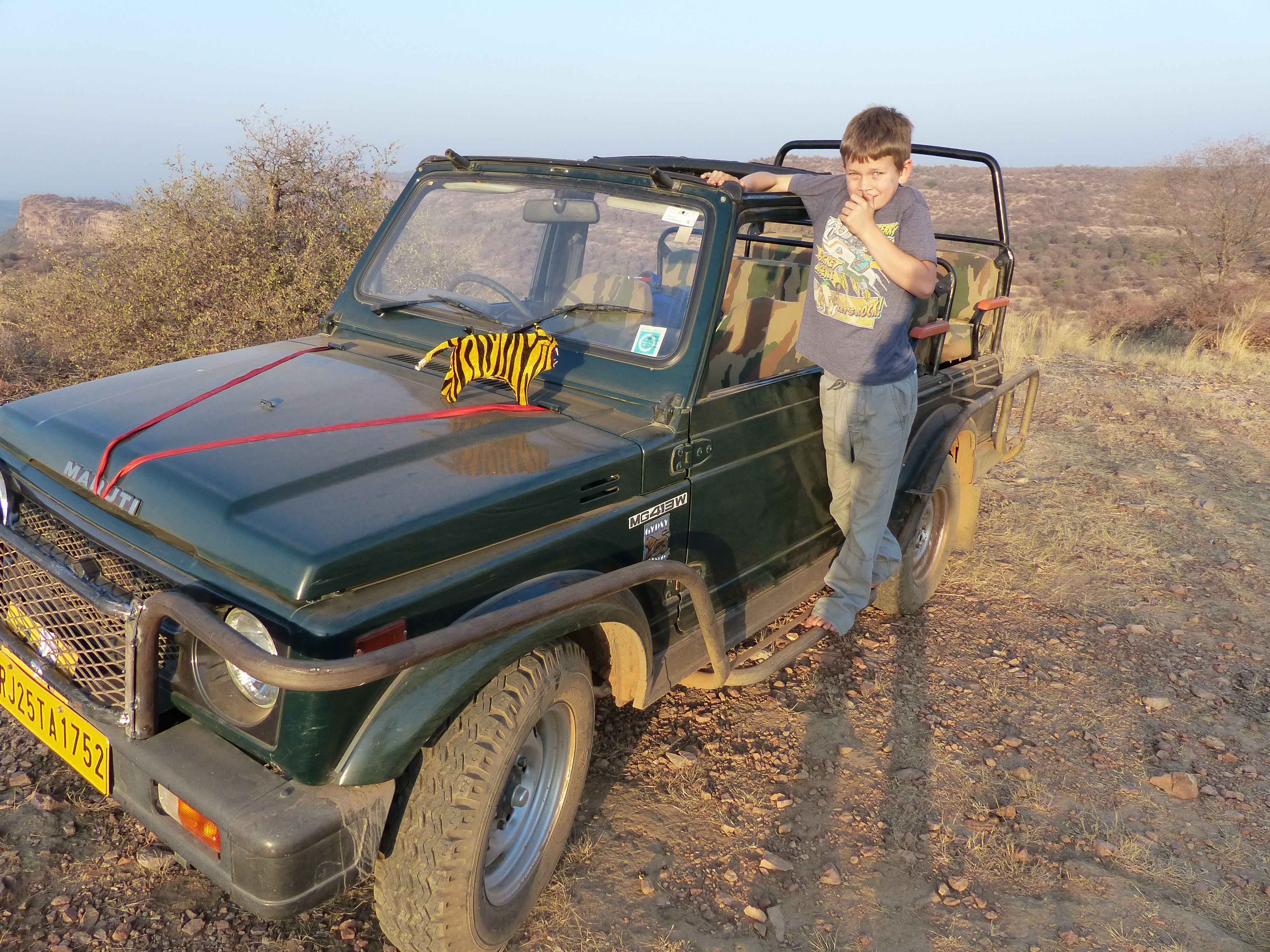
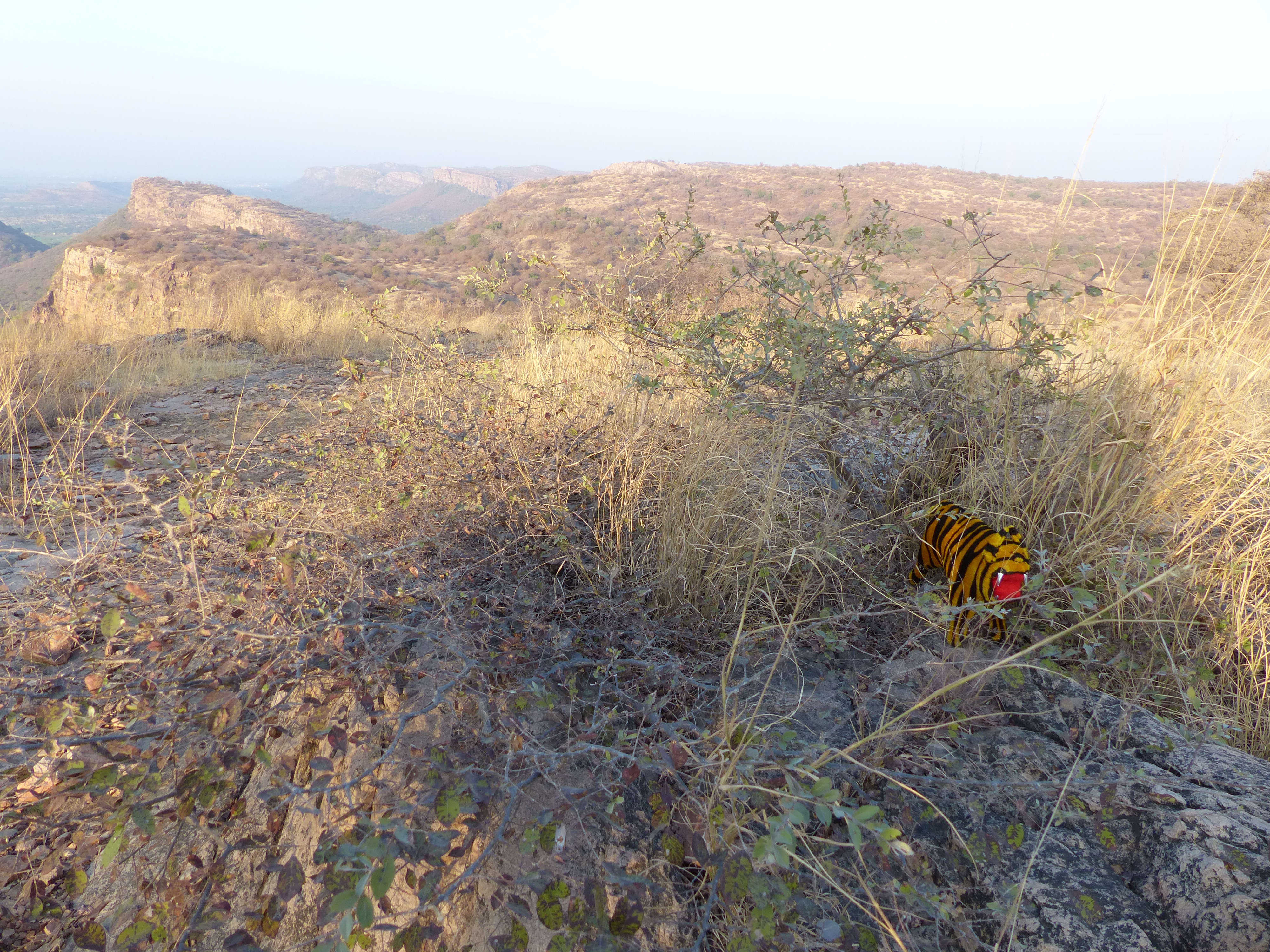
Safari number two, Friday afternoon in District 8, we spotted only one tiger. (I bought him from the puppet maker after the show Thursday night.)
P1050598

P1050599

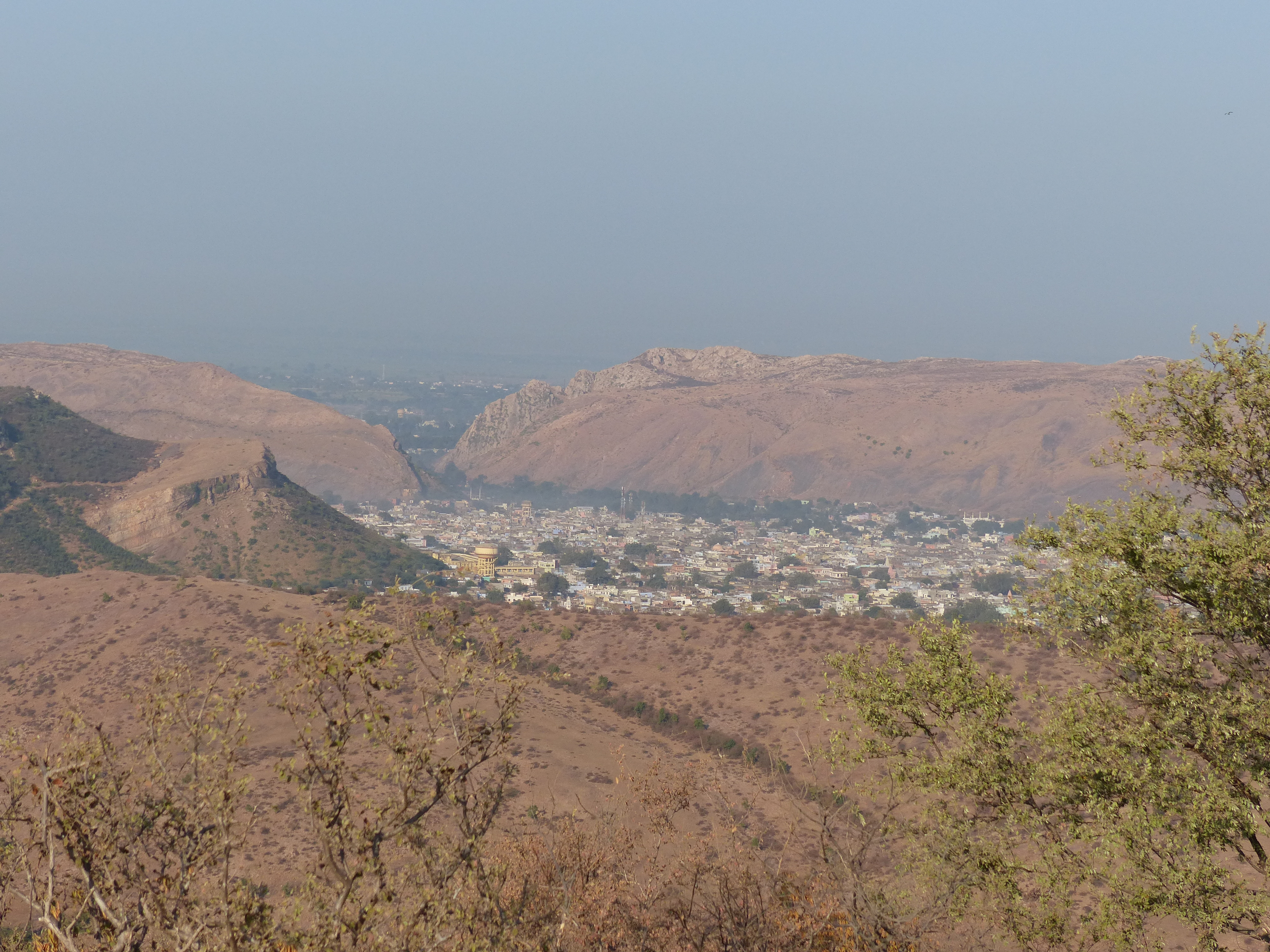
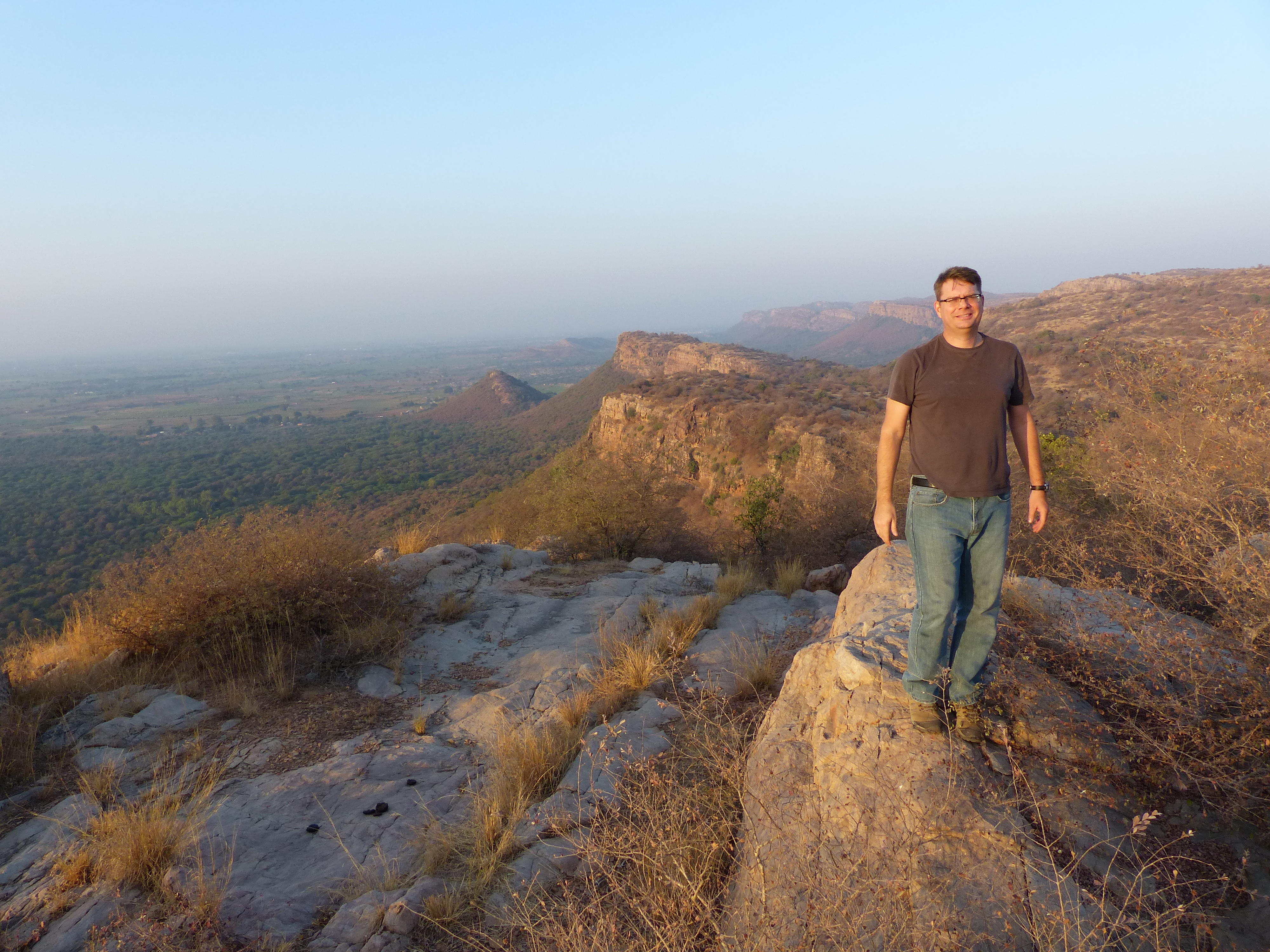
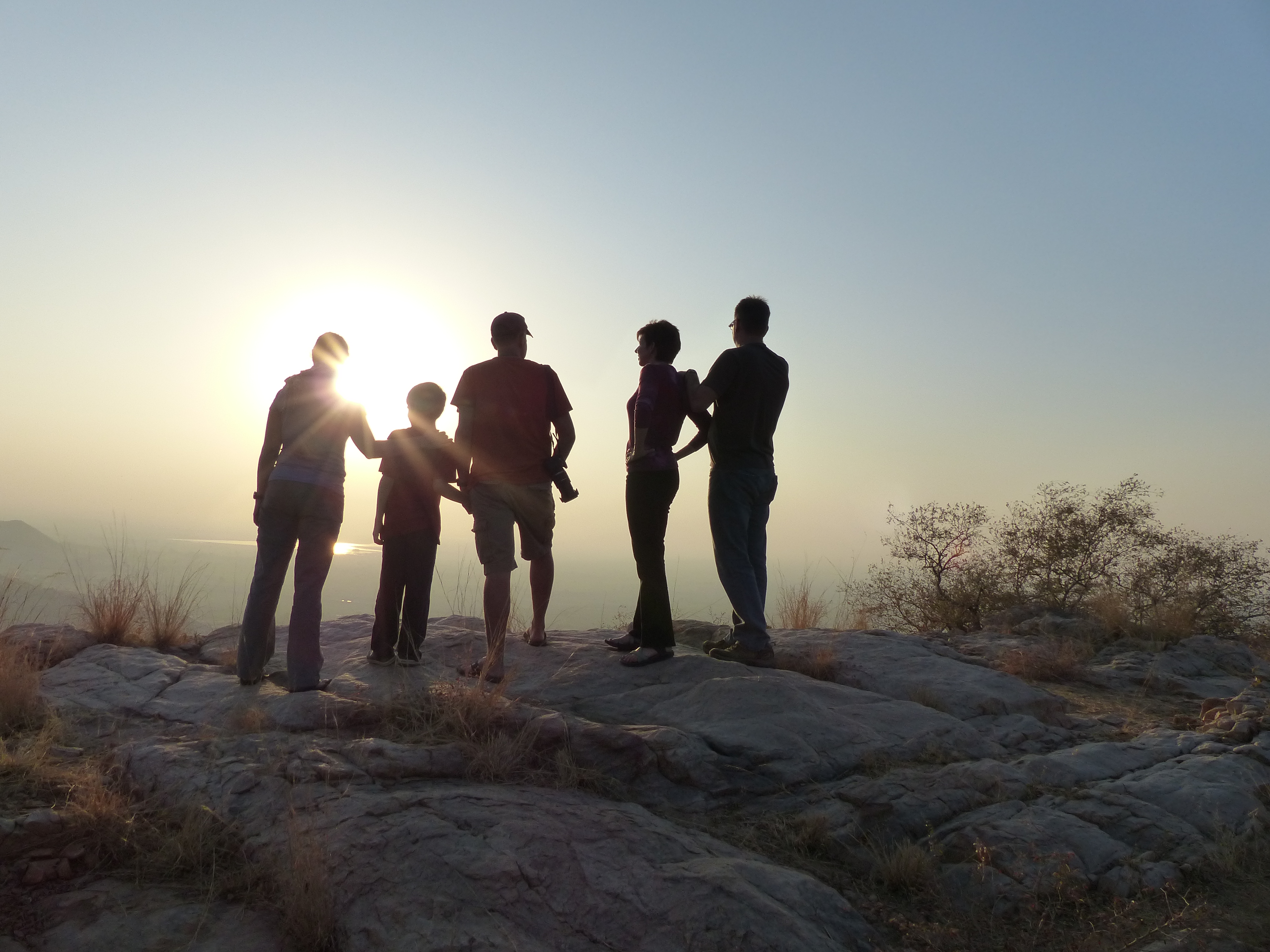
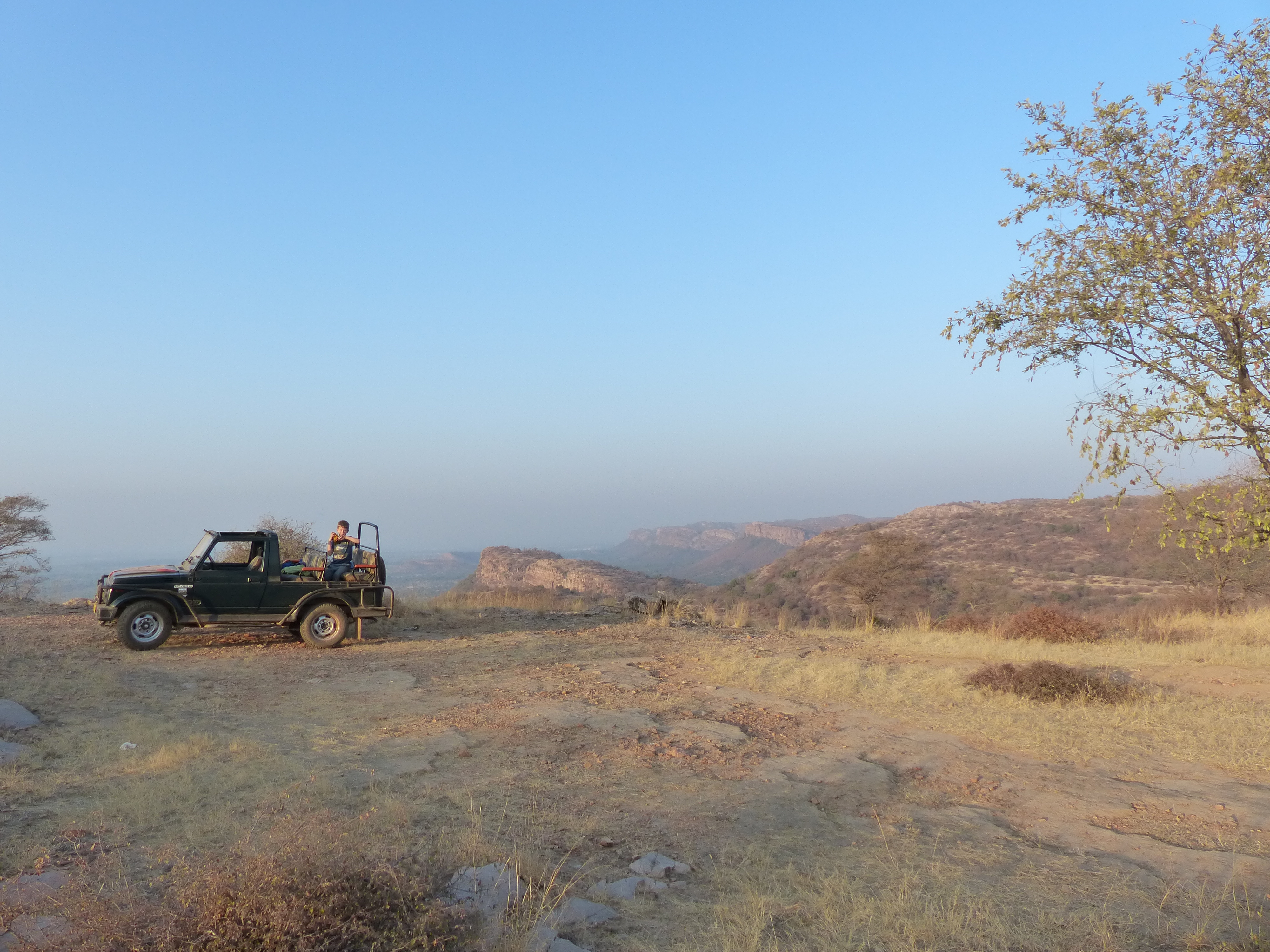
We enjoyed the view from this mountaintop.
P1050600

P1050607

P1050606

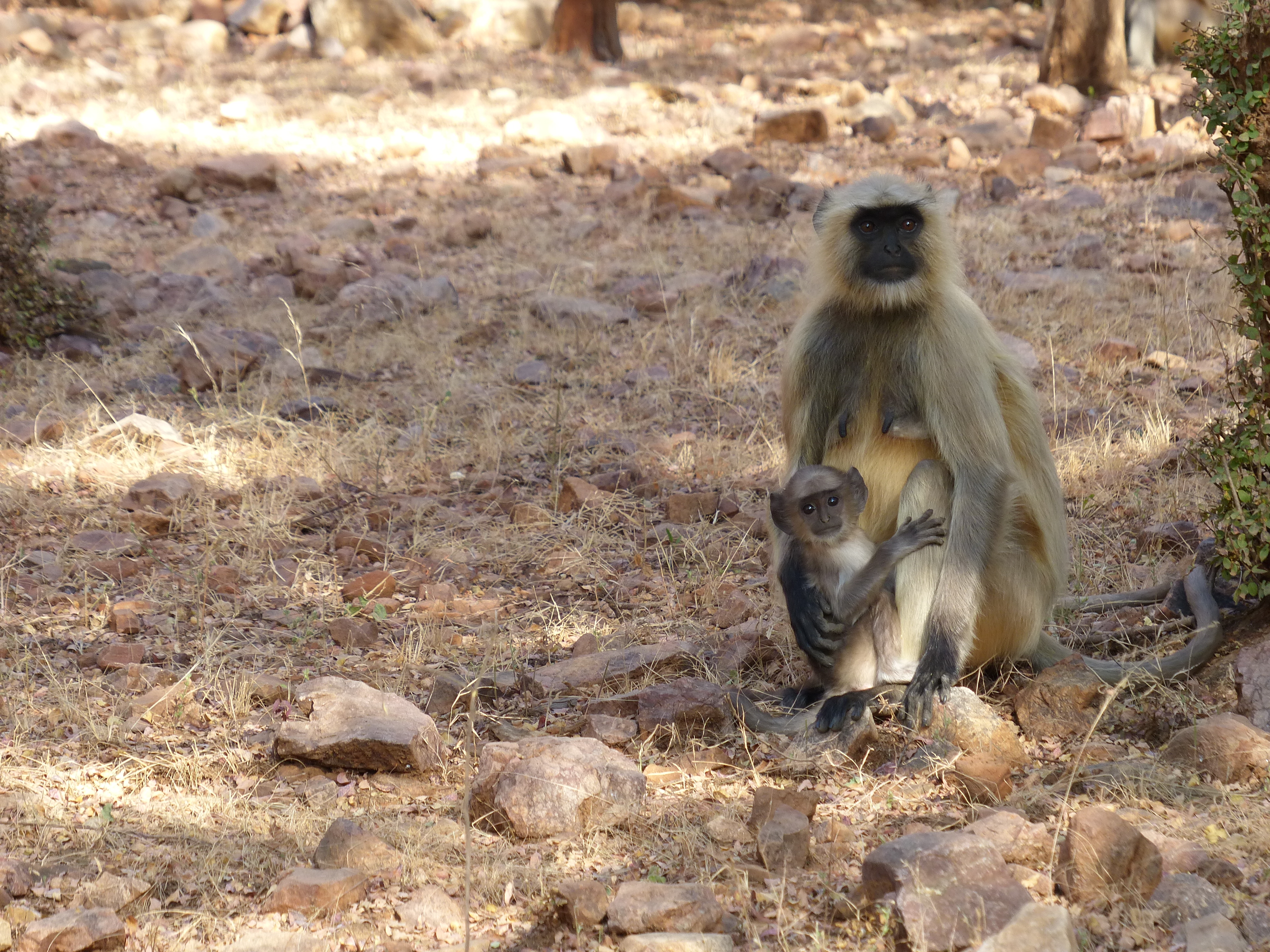
Otherwise, we saw some langur monkeys and a few other mammals.
P1050590

P1050586

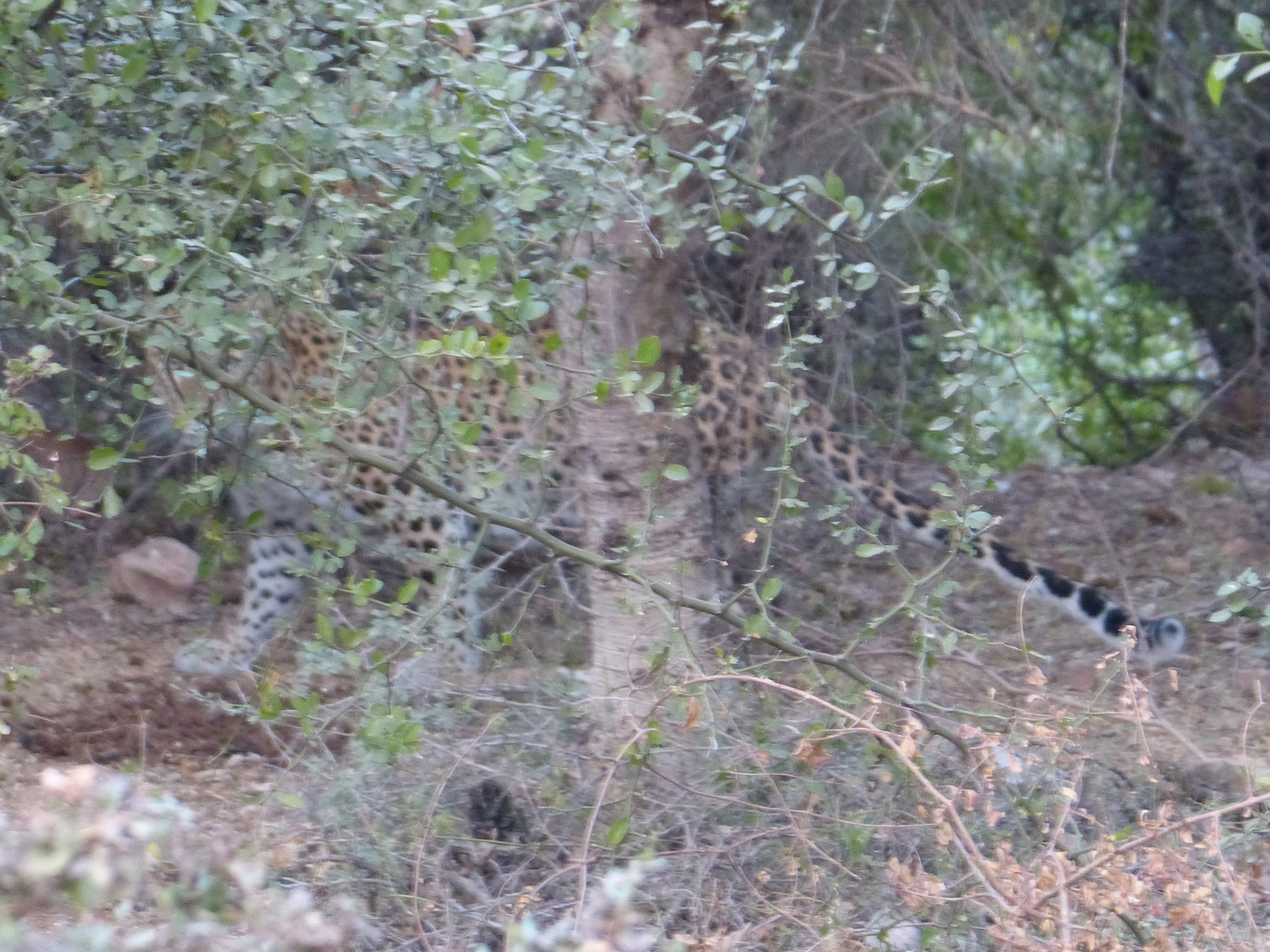
Just as we were heading out of the park, Kristen leaned forward, tapped the driver on the shoulder and said, “I just saw a leopard, and I am not even kidding.” Completely calm. We backed up, and sure enough, there he was! Camouflaged in the leafy dusk, he paused momentarily before slinking away. This was the only semi-clear shot I took.
P1050618

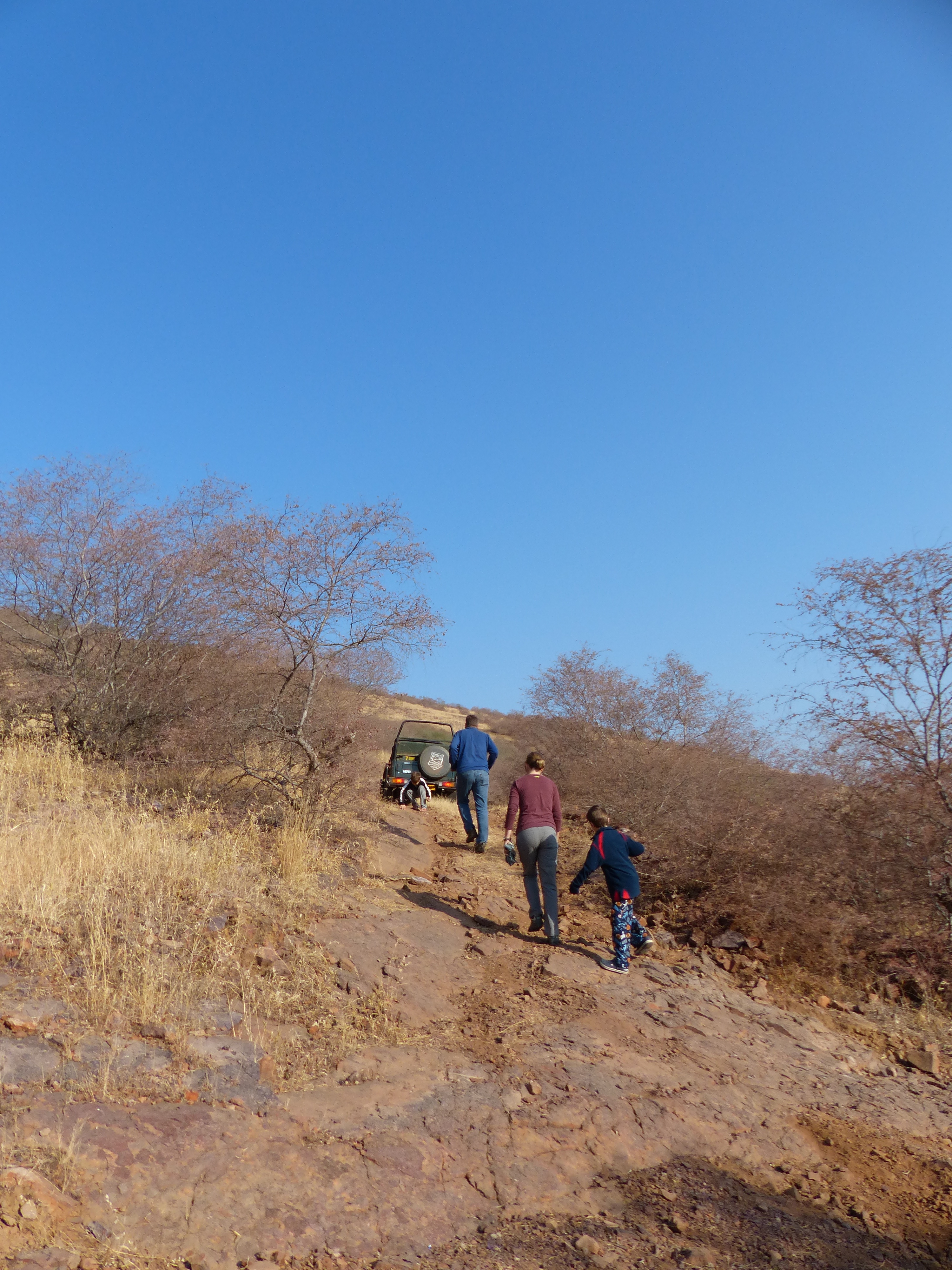
Safari number three, Saturday morning, took us to District 7, where we continued not to spot any tigers. We did, however, experience some fairly dangerous driving maneuvers. We opted to risk tiger attack and walk up this short hill rather than risk rolling off the mountain in the jeep.
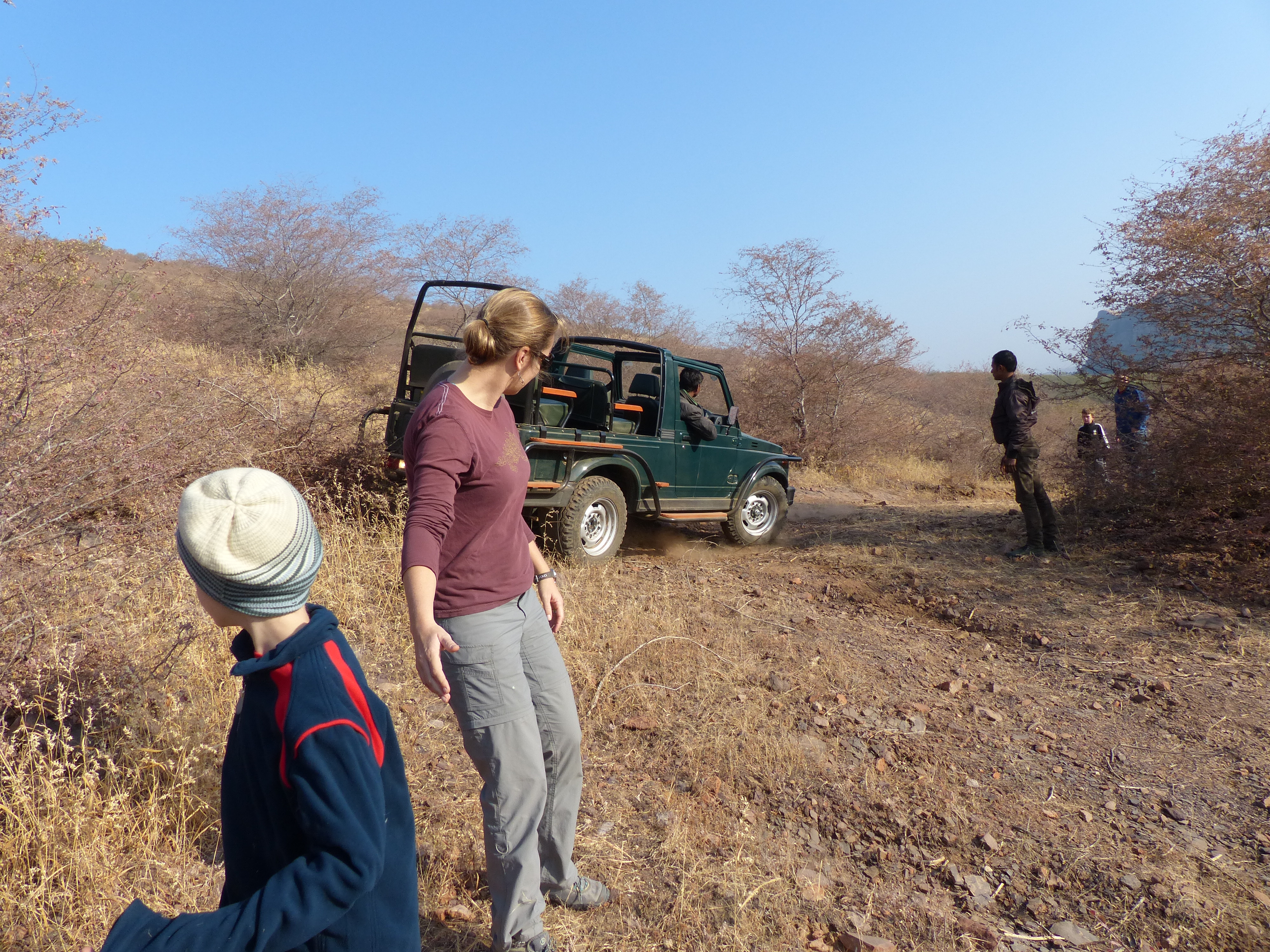
P1050657

P1050659

At the end of our safari, we pulled up to this gate to leave the park. Unfortunately, it was locked. Our guide explained: “The man who has the key in his pocket is not here.” Oh. OK.
So we waited. After awhile, someone arrived to unlock the gate, and we headed back to the hotel.
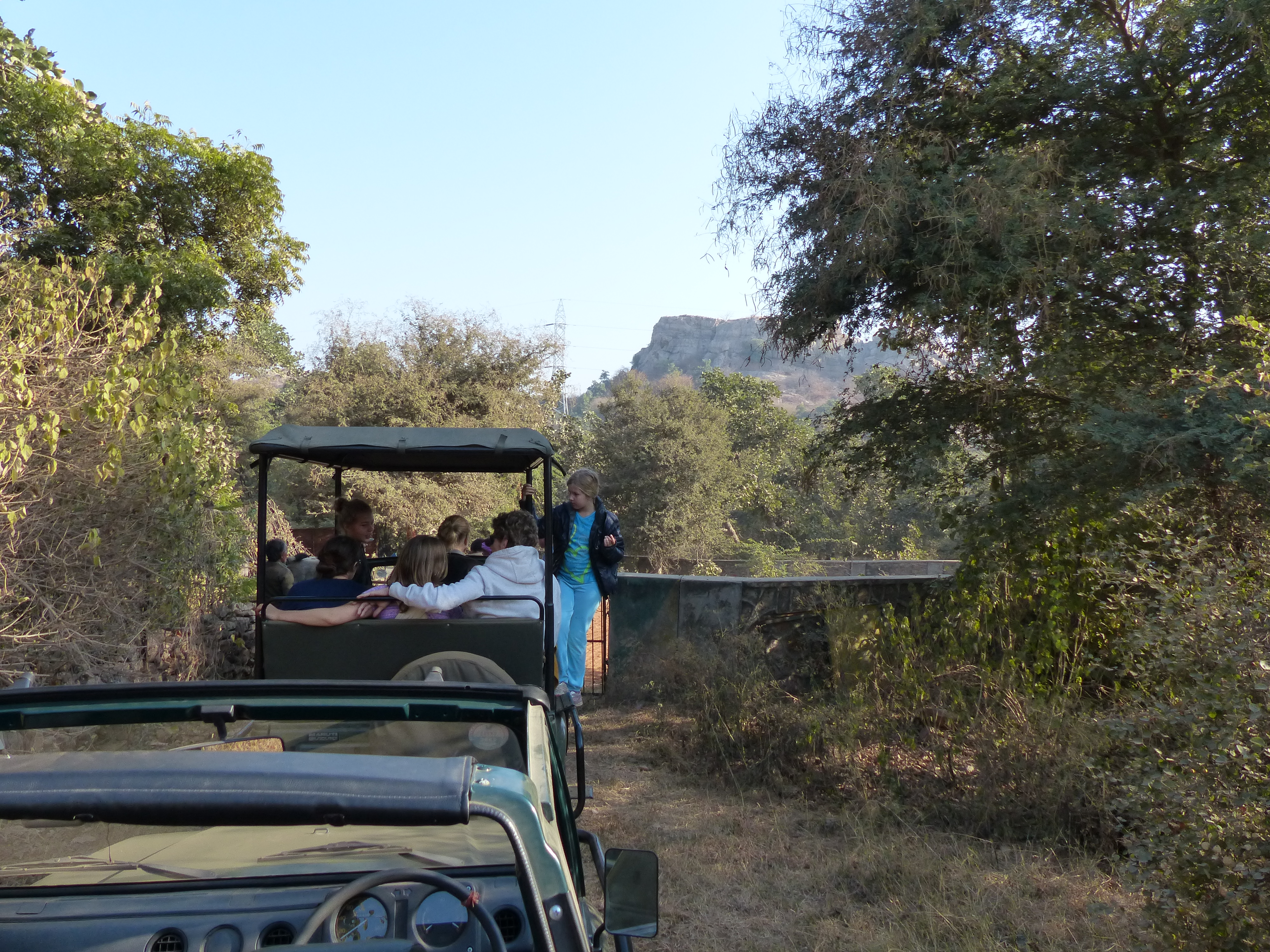
P1050663

As our two jeeps arrived at our hotel, someone shouted, “There’s a tiger on the main road!” Our drivers immediately whipped the jeeps around and sped back out. This was possibly the most dangerous 10 minutes of my life. We drove ridiculously fast with no seatbelts in an open jeep, nearly popping out altogether every time we hit a pothole or speedbump, cresting hills in the wrong lane, swerving around pedestrians and slower vehicles at breakneck speed. Although several of us thought the tiger would be sitting next to the “main road” in town (a scary proposition!), it turned out the tiger was seen on the main road inside the park. By the time we arrived, other jeeploads shared the news of his escape into the forest. It’s really no surprise that we didn’t see a tiger. One of our guides said there are only about 56 in the whole park.

The train ride home was pleasant enough for Tony and me. Upgraded to second class, we had our own tiny compartment in a tranquil car. The rest of our group – back in “steerage,” as Liv called it – crammed into a compartment with four bunks and no curtain. Everyone in their train car seemed to be talking at full volume, and an overly friendly Rajasthani man desperately wanted to be their BFF. Yikes.

Overall, I loved Ranthambore. I always relish Rajasthan’s colors and chaos, but this trip rejuvenated me like no other domestic journey in recent memory. Nature, clean air, comfy beds, fun people. All good.

Bangkok Weekend

This blogpost is about a month overdue, but here you go.

When Tony informed me he had registered for an education conference in Bangkok the first weekend in October, I said, “I’m tagging along.” We took advantage of the 4-day holiday at school to visit Bumrungrad International Hospital for our annual check-ups, and then Tony spent his days learning about technology integration while I got massages, shopped, walked around Bangkok and caught up with a friend. Here is a quick run-down of Bangkok moments that made me smile:

* We celebrated our 22nd anniversary with dinner at one of our favorite restaurants, Soul Food.
IMG_2159

I’m embarrassed to admit our eagerness to visit this restaurant stemmed in part from knowing an excellent pet store is next door. Our babies needed some toys! Guess where we spent more money: the pet store or the restaurant? Here’s a hint.
IMG_2242

* While getting a facial at the Divana Spa, the music made me giggle. The instrumental mix included “Flight of the Bumblebees,” a marching band standard I couldn’t name, “Let Him Live” from Les Miserables, and a few Katy Perry songs..

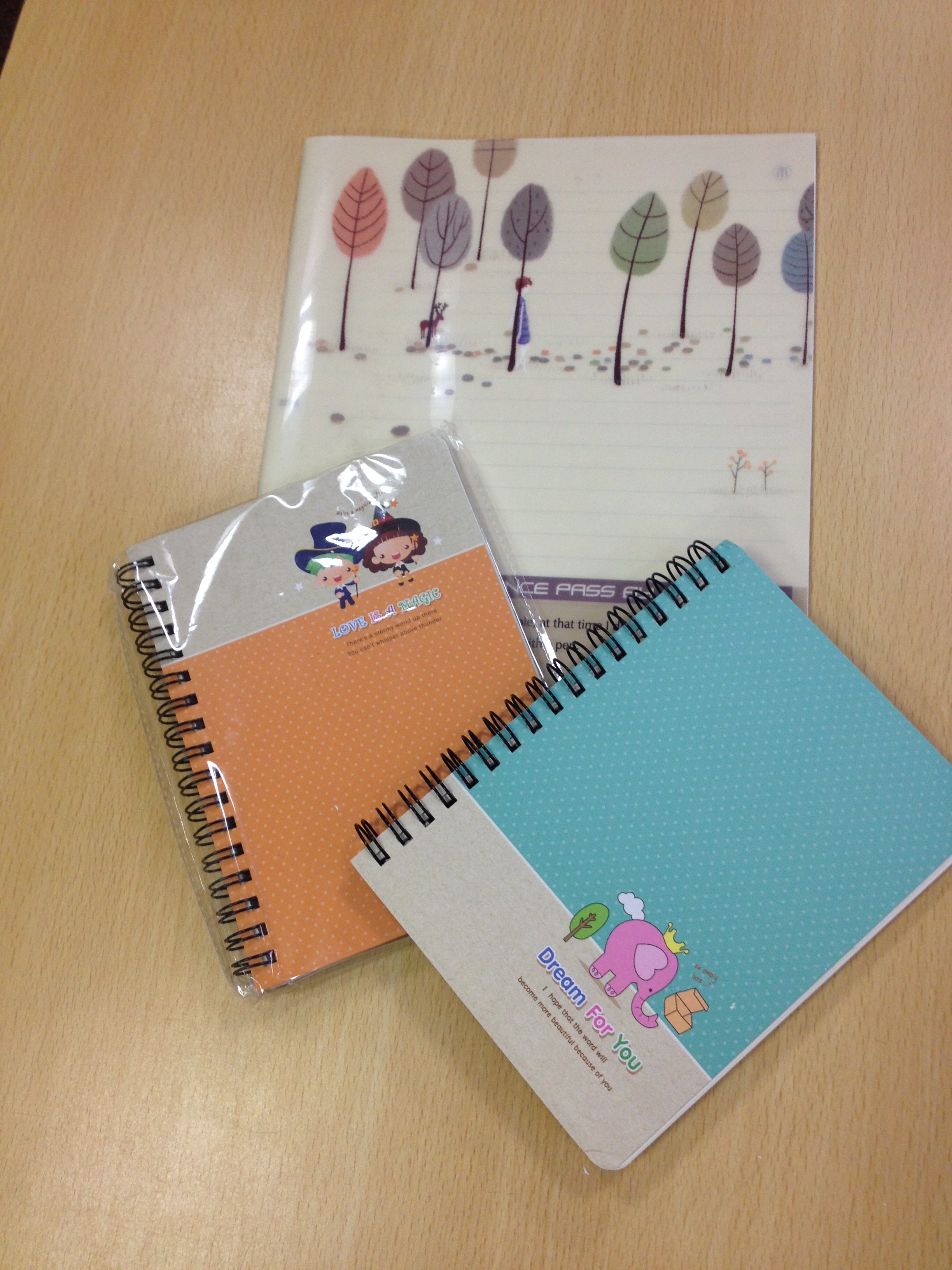
* There’s something so alluring about a blank notebook, but like icing on the cake, Thai notebooks often feature gobbledy-gook English blurbs on the cover. Irresistible!
IMG_2214

IMG_2211

IMG_2212

IMG_2213

* My friend and teaching mentor, Miriam, met me for lunch at Central Chidlom mall. This is no ordinary food court. The Food Loft features an open kitchen concept with a plethora of delicious options in a hipster setting. Perfect for hanging out for a long chat, which we did. Our “lunch” lasted for four hours!
Screen Shot 2014-11-06 at 10.19.47 AM

* Having a discussion about menopause feels awkward enough. Add to the mix an older Thai gynecologist with limited English. She dropped all her ending sounds and dragged out the long vowels in a high-pitched nasally drone – but with a lovely smile on her face. She discouraged the use of hormones and told me I could control the symptoms with some lifestyle changes. It sounded like this. “Heah in da Eee, we yoo naycha hawmohhh. We exa-sighhh. We ee vegtabohh rainbohhh. Seven cuh-law of vegtabohhh.” (Here in the East, we use natural hormones. We exercise. We eat vegetable rainbow. Seven colors of vegtables.) Fortunately, I saw a second doctor who said, “Yeah, I’m on this hormone, too. If you run out, write me an email and I’ll have the pharmacy send you some refills.” Whew.
Girls Get-away: Udaipur

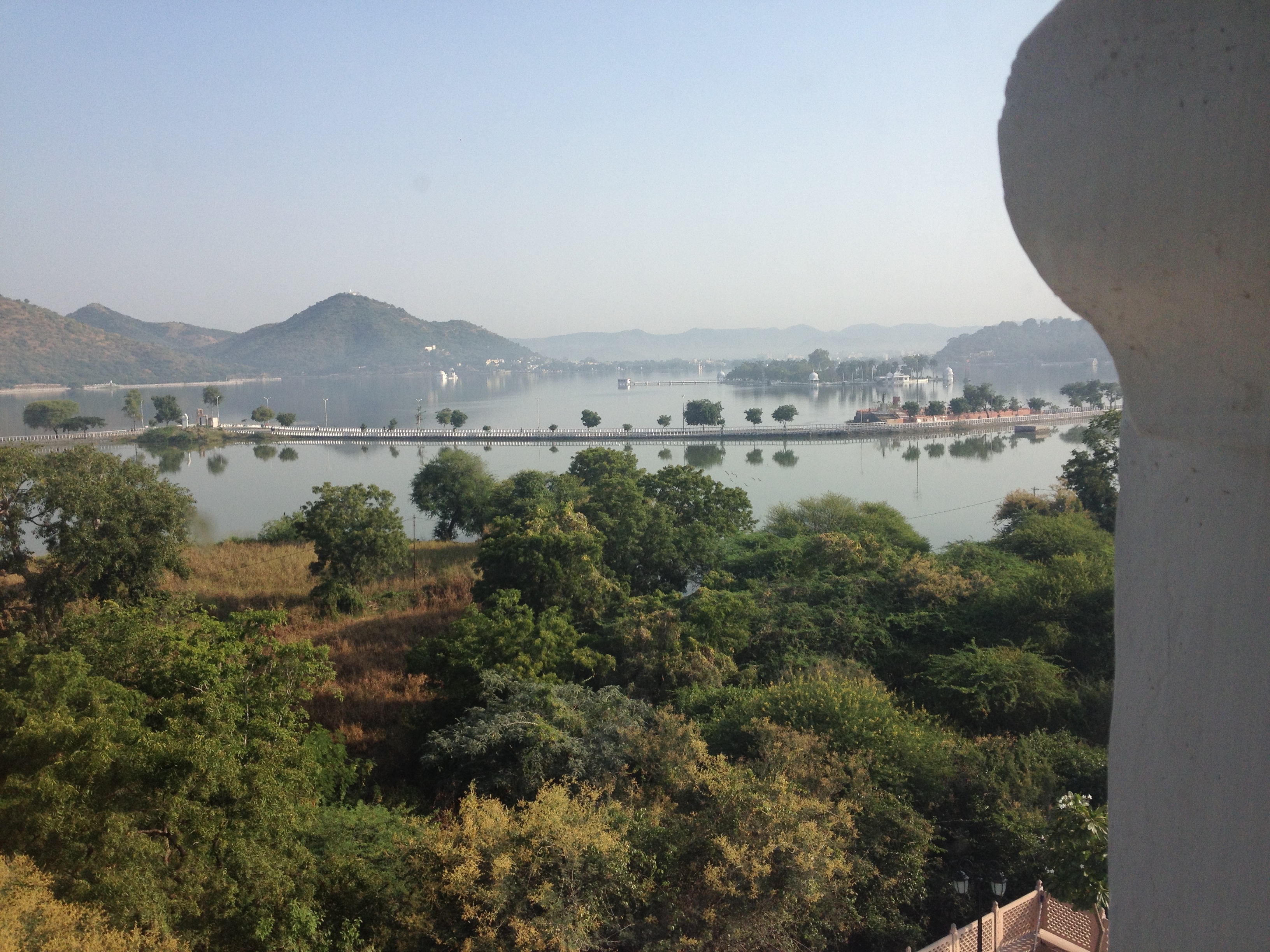
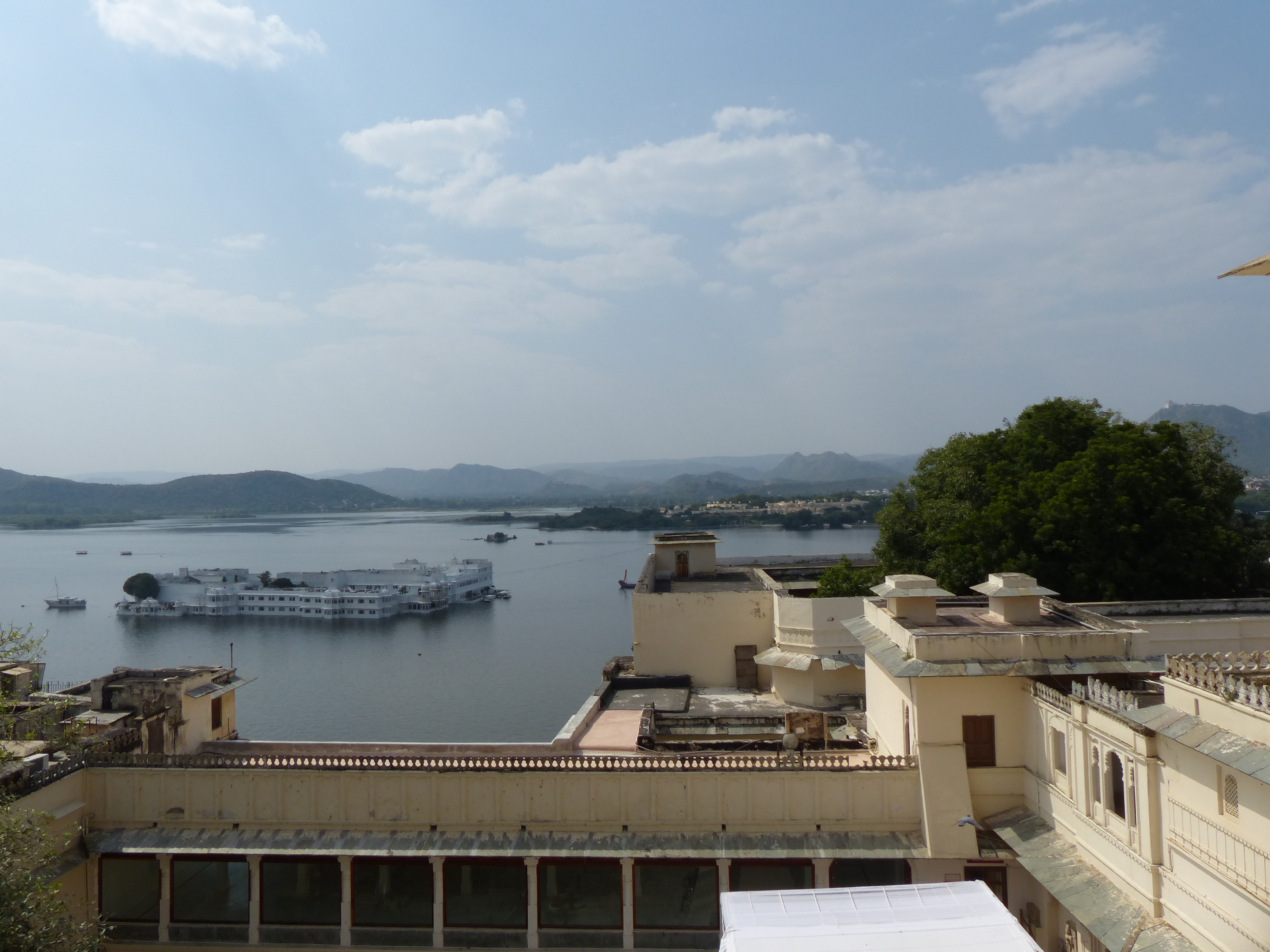
Just an hour’s flight from Delhi, and I awoke to this view.
IMG_2209

I spent the Diwali weekend in Udaipur with friends from Shanghai, Colleen and Ronna, and their daughters. Col now works in Hong Kong, but Ronna joined the AES staff this year, so we’re colleagues again. Small world!

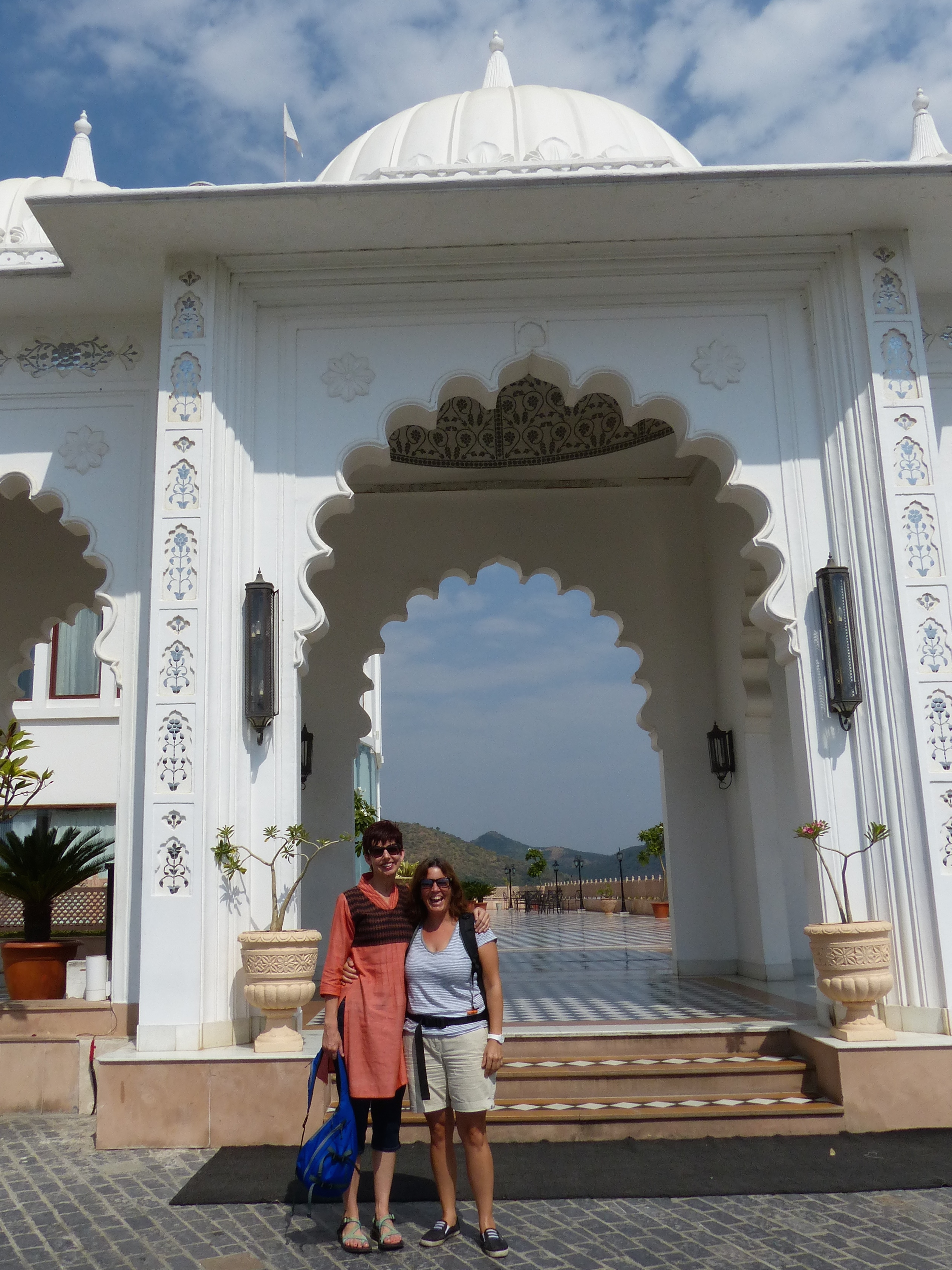
We stayed at the Radisson Blu, which overlooked the Fateh Sagar Lake.
P1050057

Although relatively peaceful by India standards, the pool and restaurant were completely overrun by young children. Fortunately, we were upgraded to suites and had plenty of room to spread out and lounge. We escaped from the noisy restaurant to enjoy leisurely breakfasts outside under a canopy of morning glory.

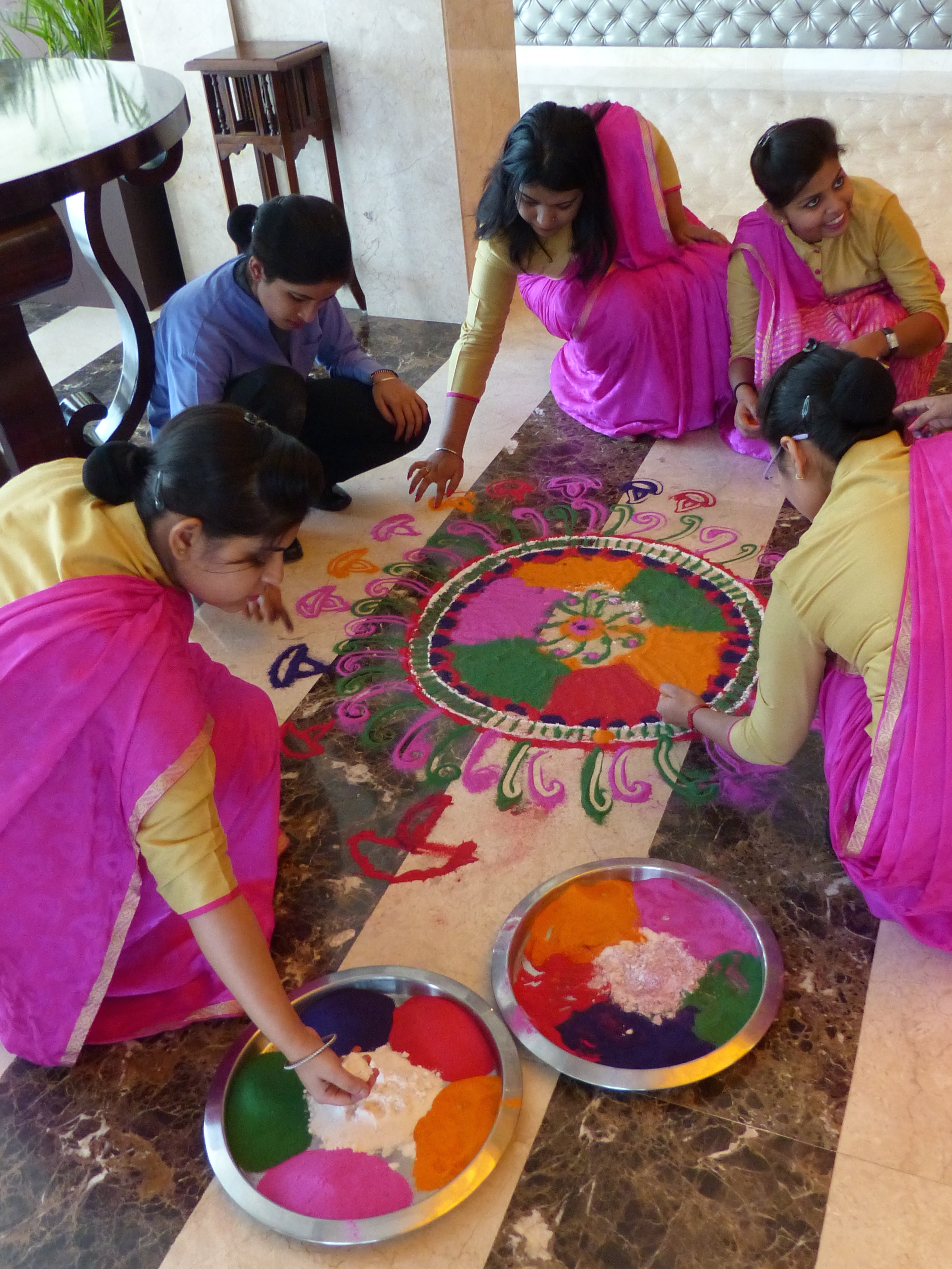
The staff created Diwali rangoli in the lobby, and we were told to vote on our favorite.
“I like them both,” I said. “I can’t pick.”
“You must,” said a bossy supervisor.
P1050047

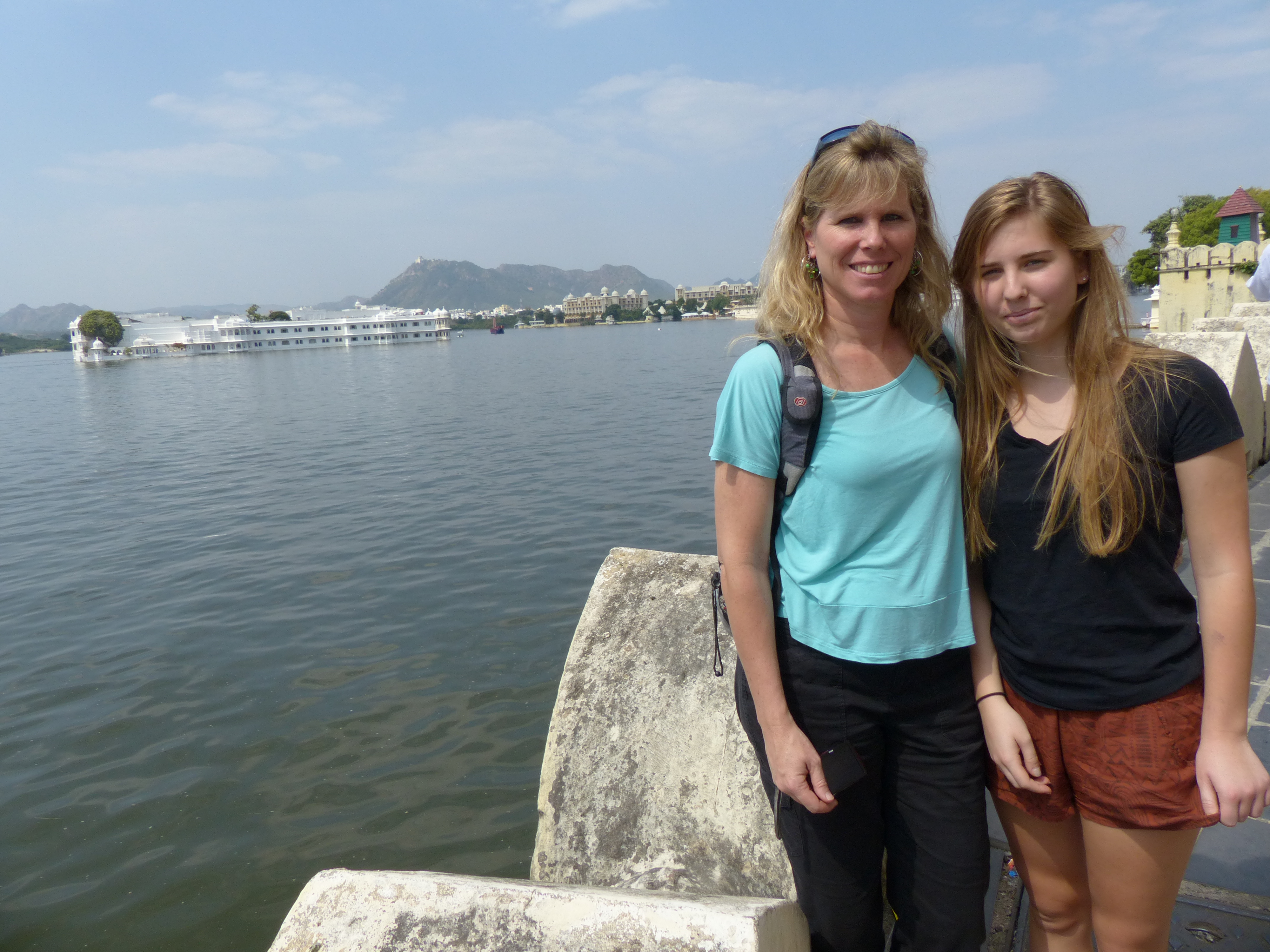
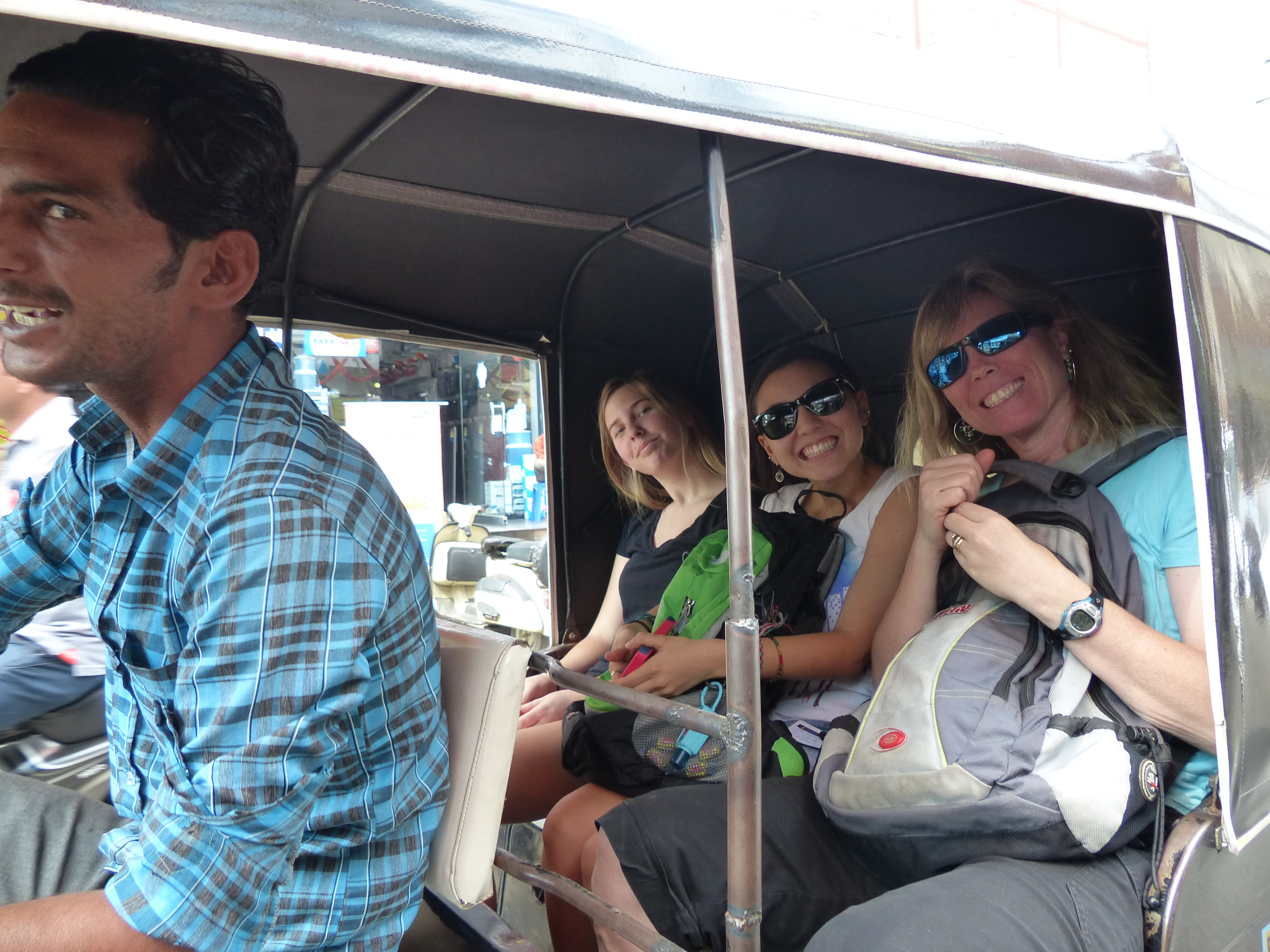
On our first day, we caught a couple tuk-tuks to the City Palace. Walking to the gate, we had a nice view of the Lake Palace, now a Taj Hotel. A rich lady who attends my yoga class in Delhi had encouraged me to stay there. Last I checked, the cheapest room was about $730 a night … so … yeah.

Ronna and Ava.
P1050080

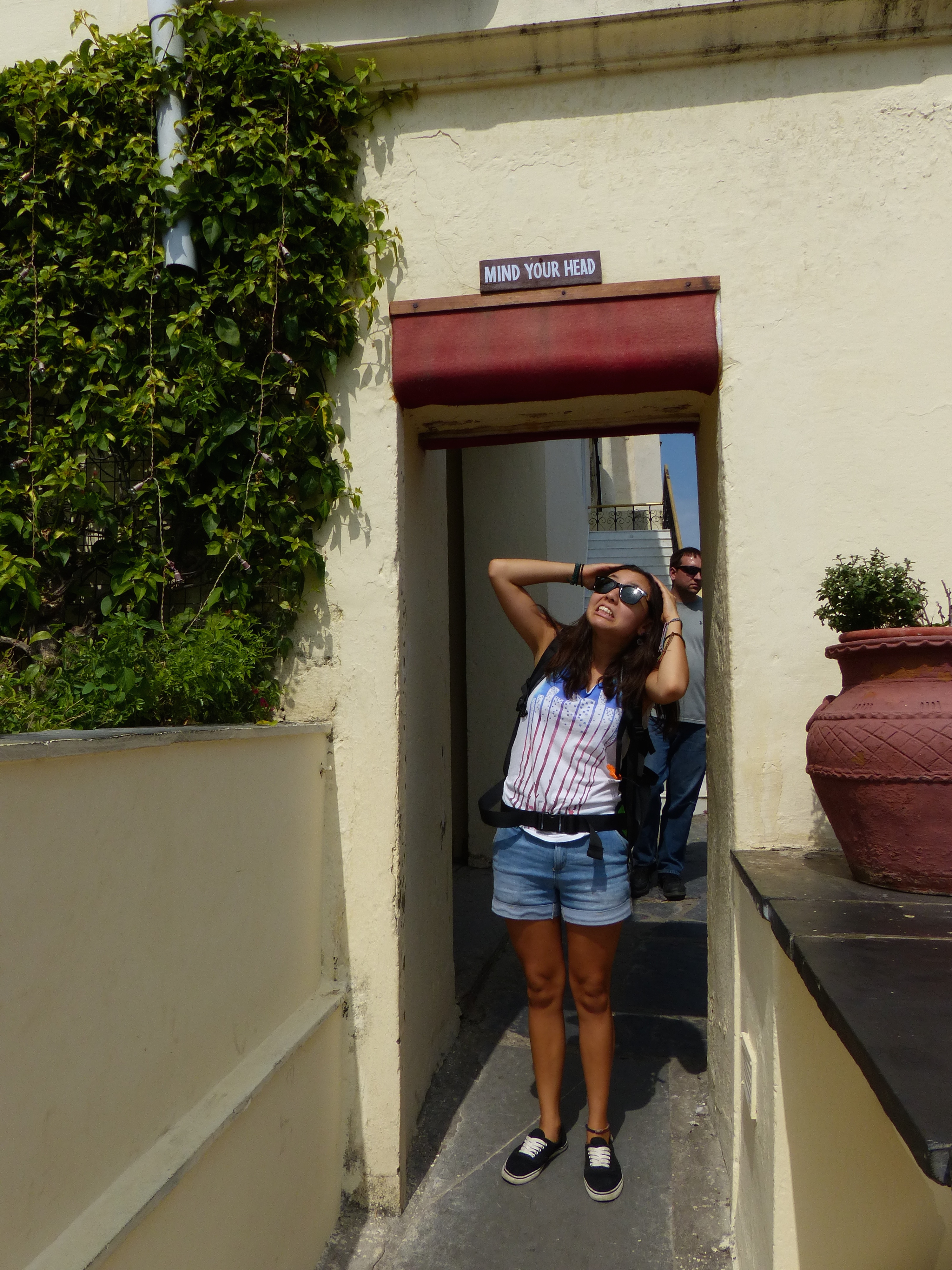
Brenna, you teeny thing, no need to “mind your head.”
P1050087

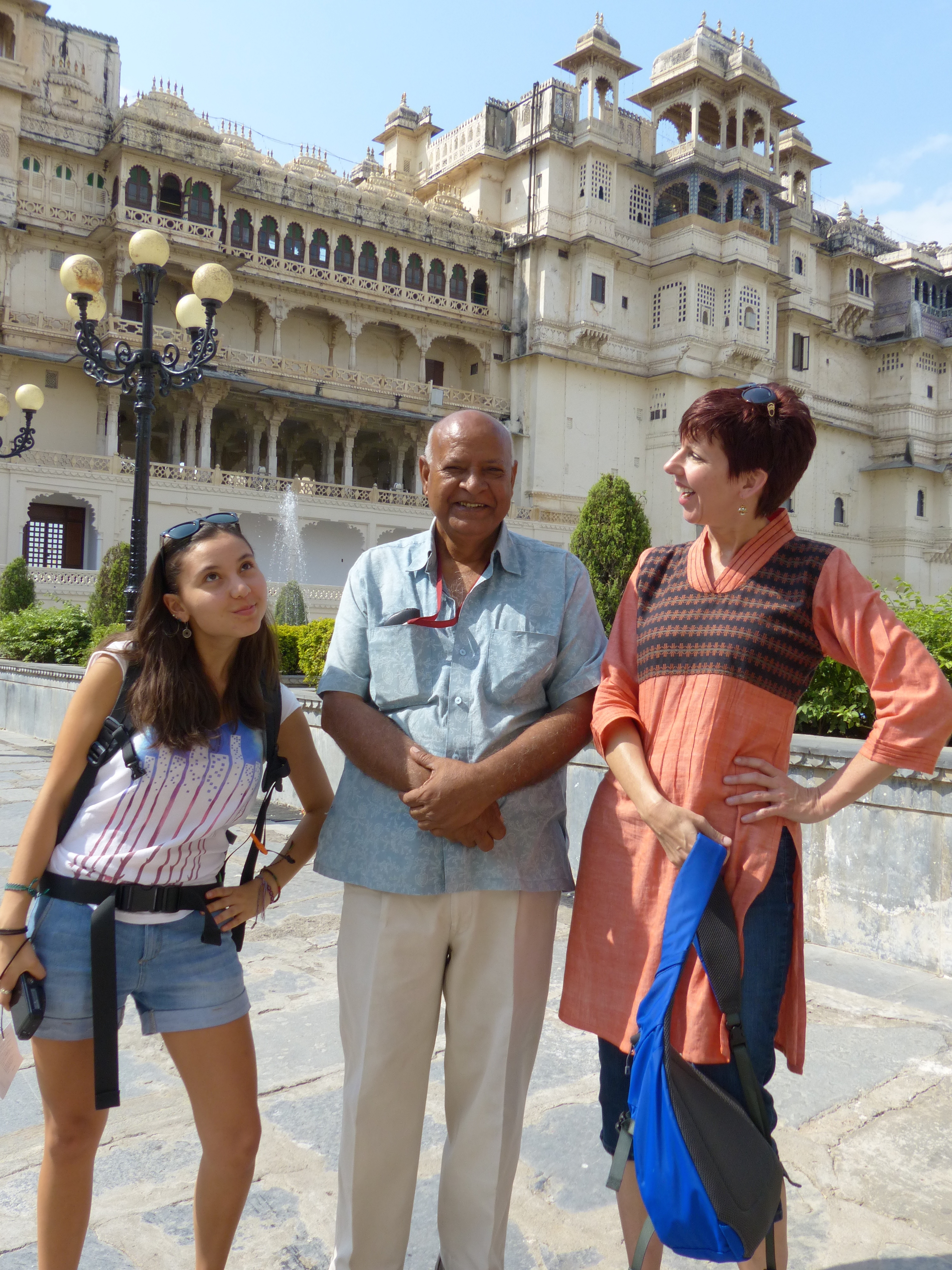
I couldn’t resist hiring a guide at the gate. I am, after all, The Guide Hog. (See my previous post about my Guide Hog Jr.)
P1050147

P1050089

Here’s what we learned: Maharana Udai Singh, 53rd ruler of the Mewar Dynasty, founded the city of Udaipur after a holy man advised him to build his palace on the hill. He started construction of the palace complex in 1559 on the east bank of Lake Pichola, and successive kings added on to the palace for the next 300+ years.

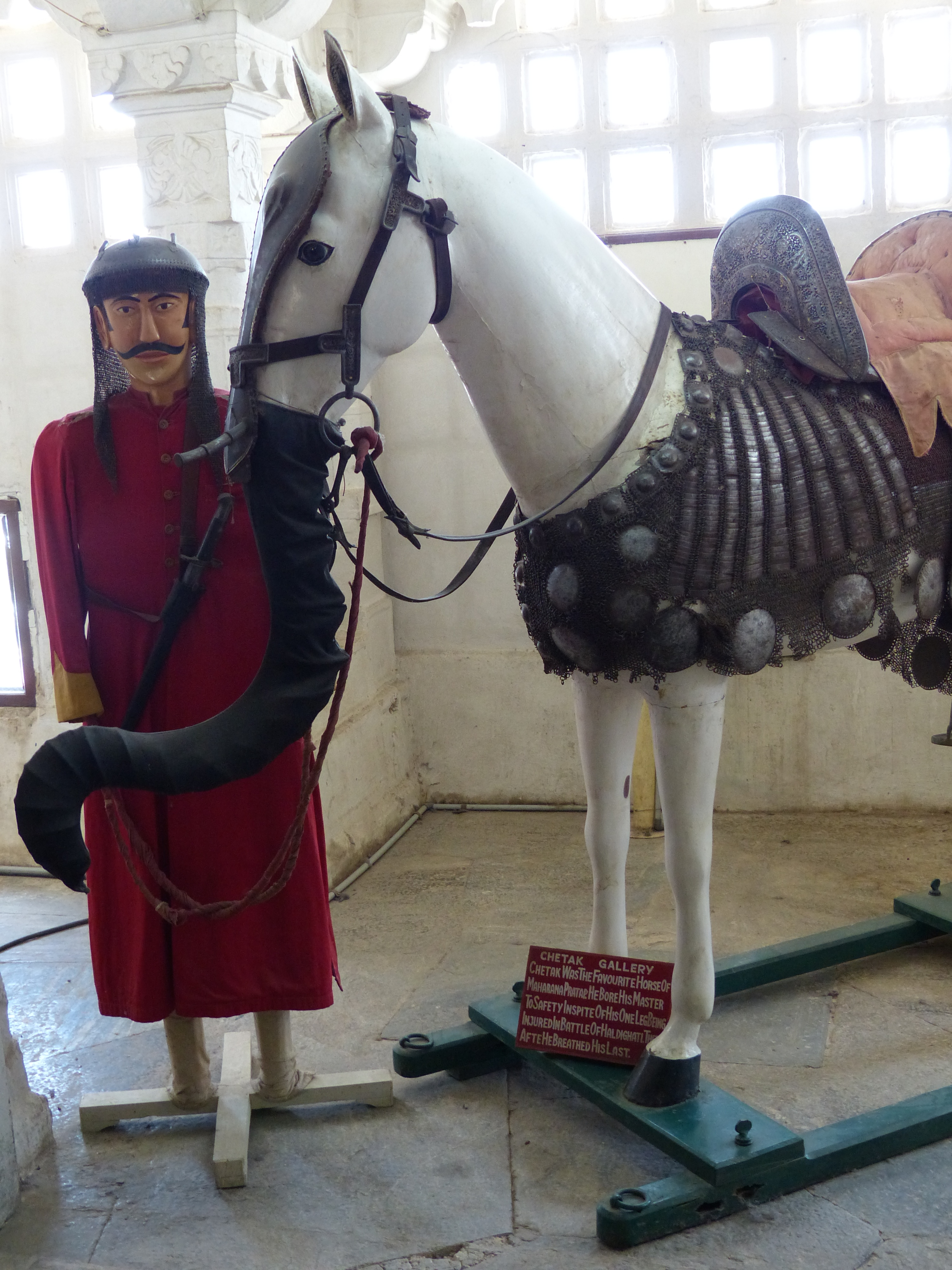
Just nine years after moving to Udaipur, Udai Singh lost his kingdom to Mughal Emperor Akbar (grandfather of Shahjahan, who build the Taj Mahal). In 1572, Udai Singh’s son Pratap led a Rajput army against Akbar’s forces in the legendary Battle of Haldighati. The palace museum features paintings of this battle, as well as a statue of Pratap’s horse, Chetak, wearing an elephant mask. Our guide, Mr. Singh, explained that in battle, neither horses nor elephants will charge a baby elephant. So Chetak’s disguise bought time for his rider. Chetak died in the battle, but despite being fatally wounded, he carried Pratap to safety. The Rajputs later won back their freedom and territory from the Mughals.
P1050094

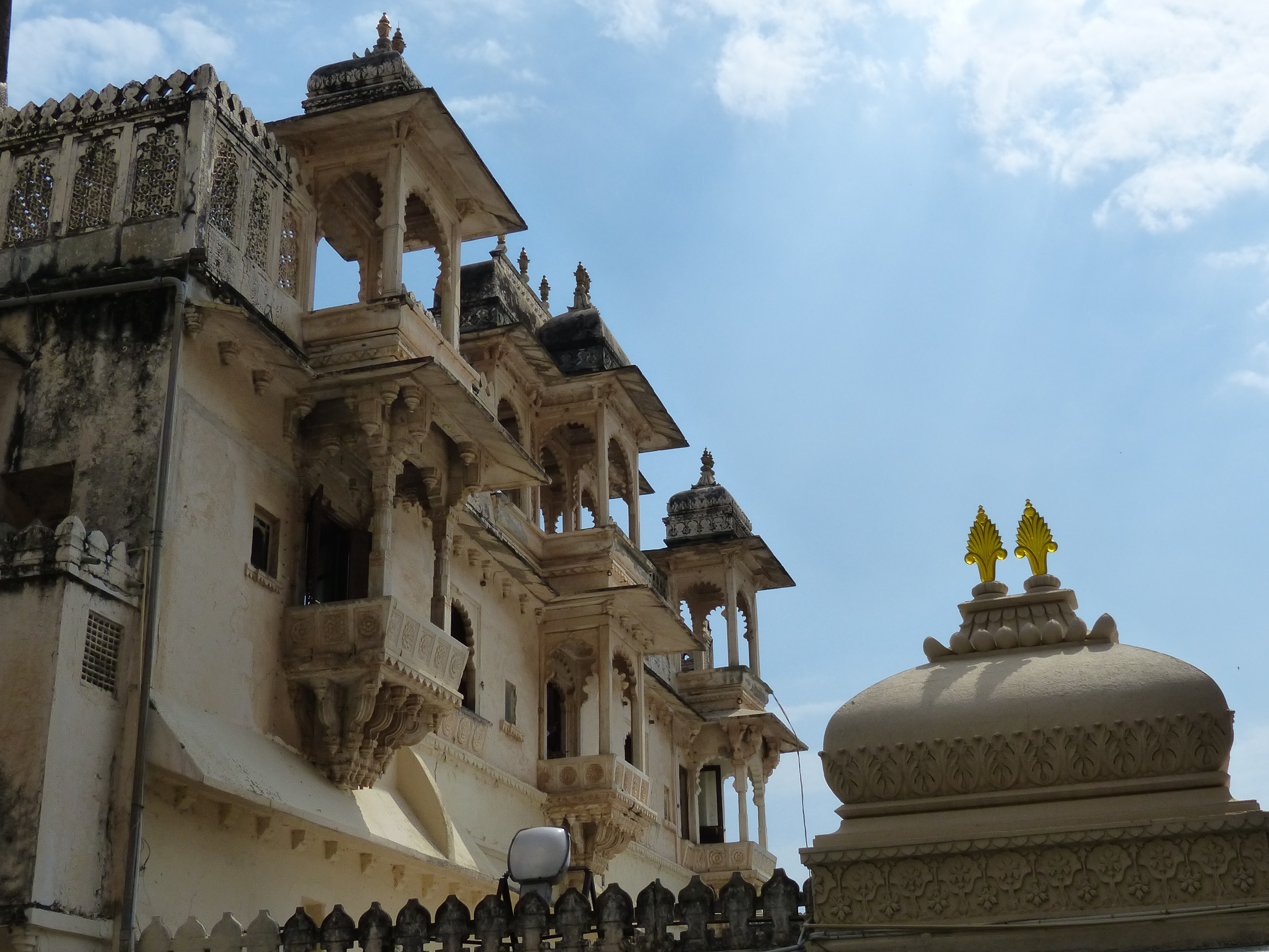
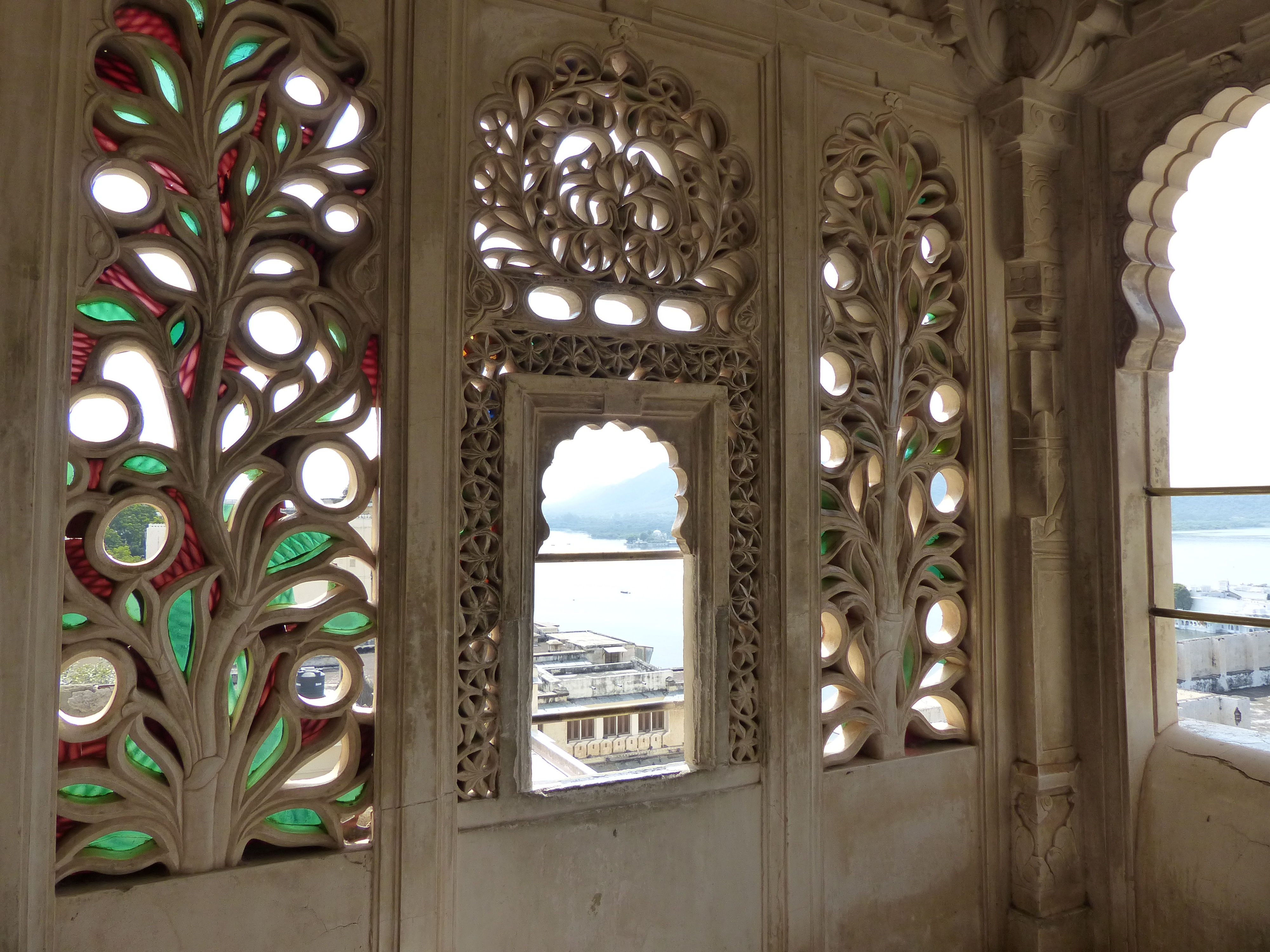
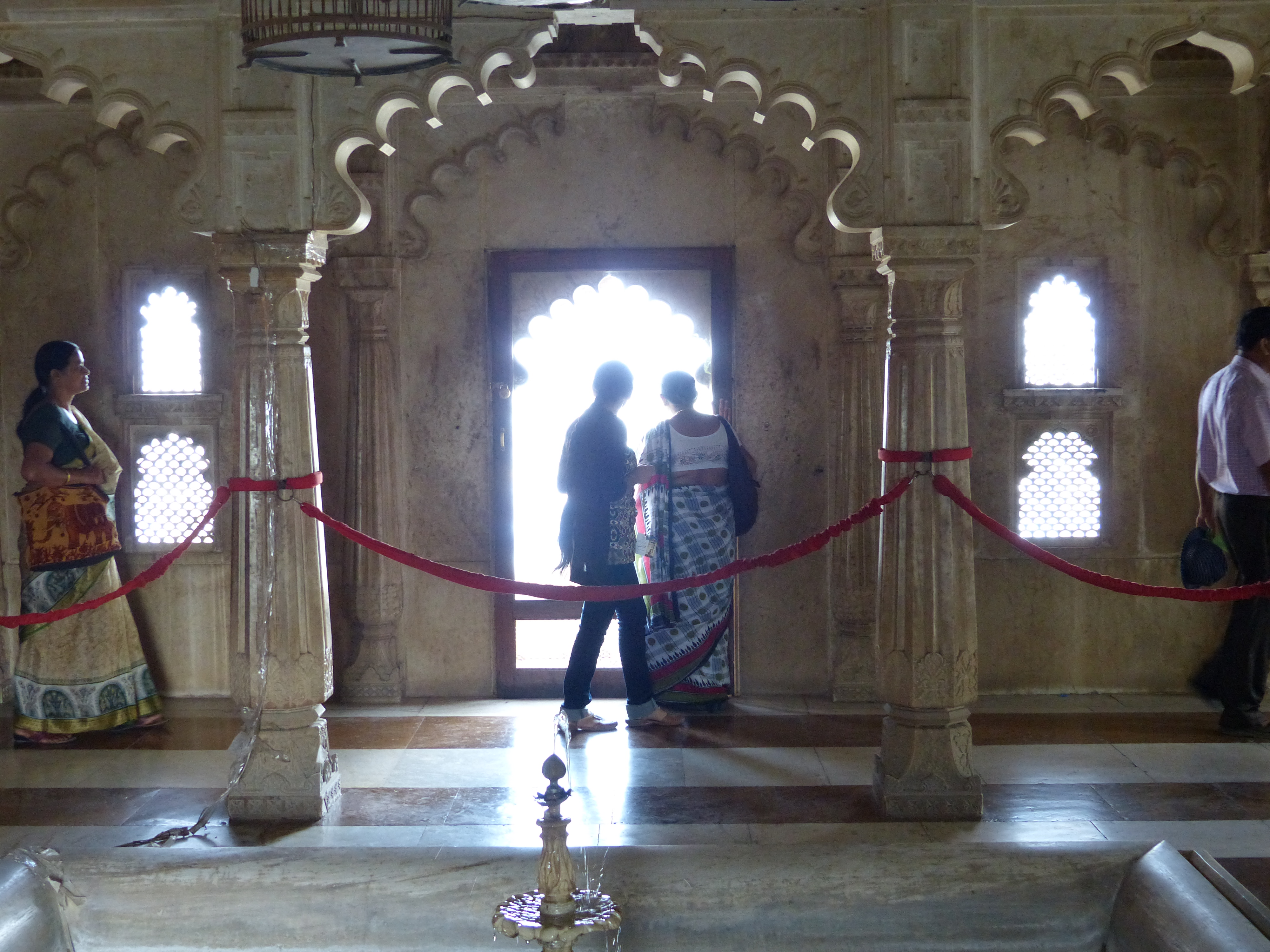
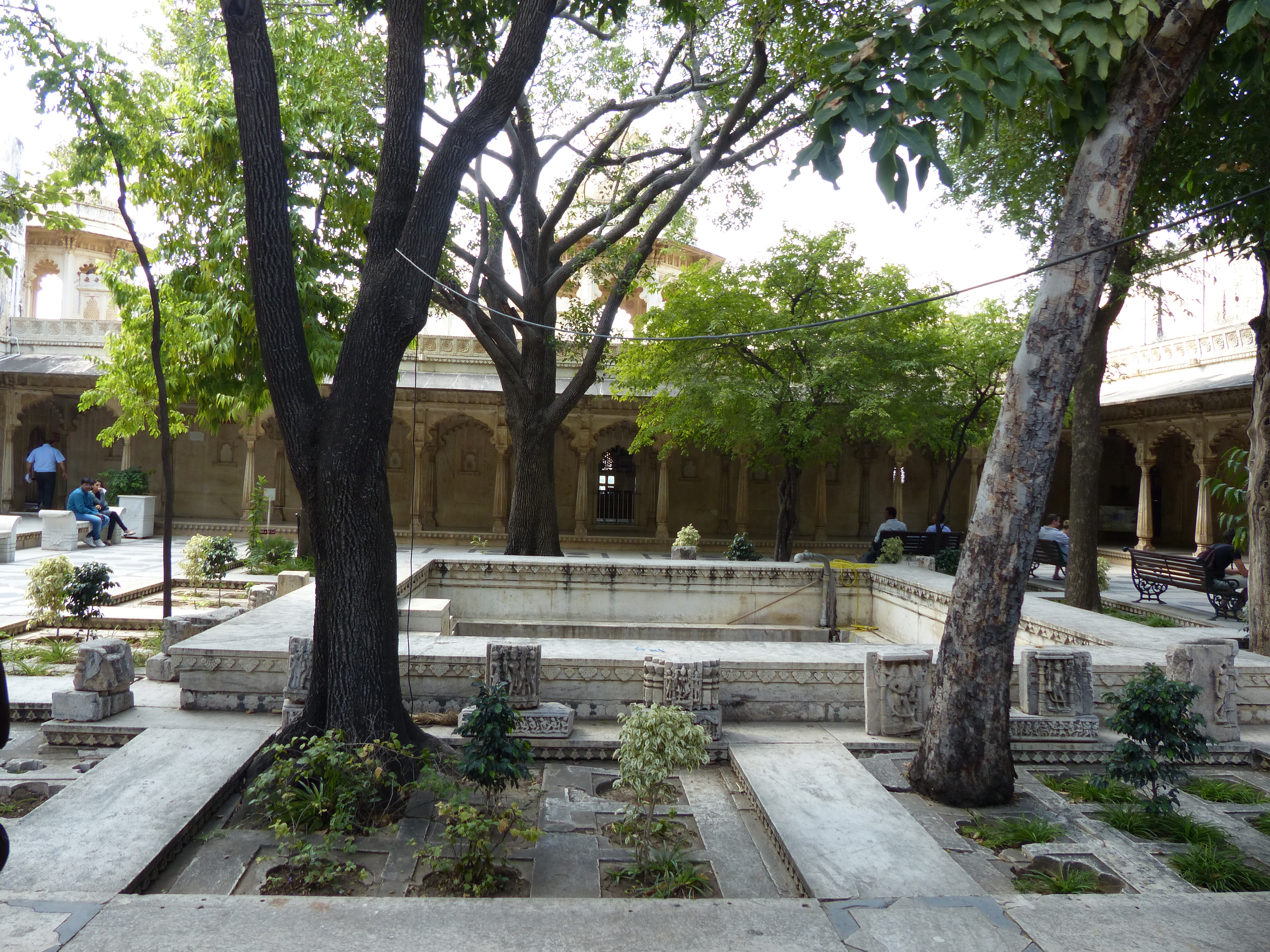
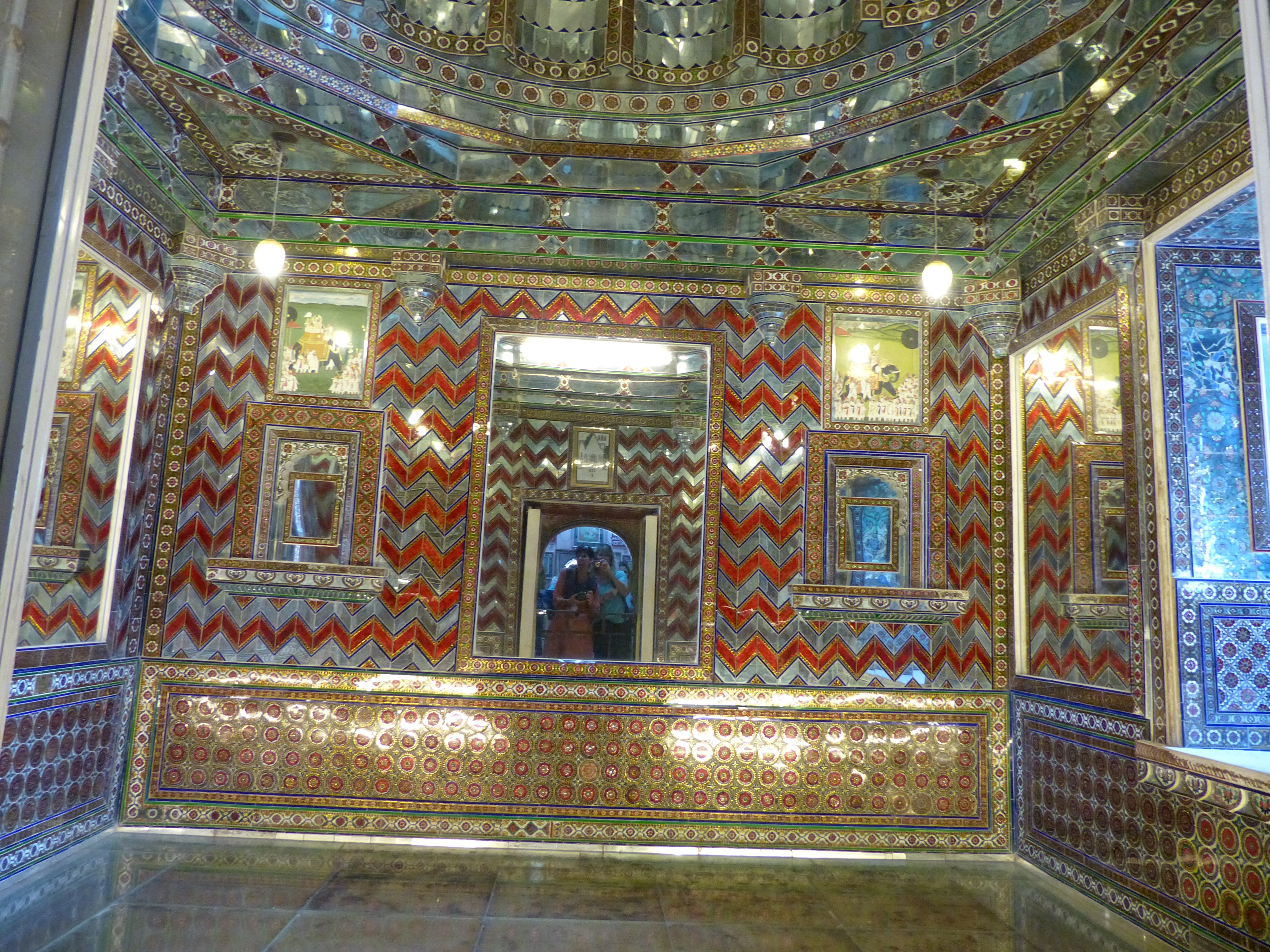
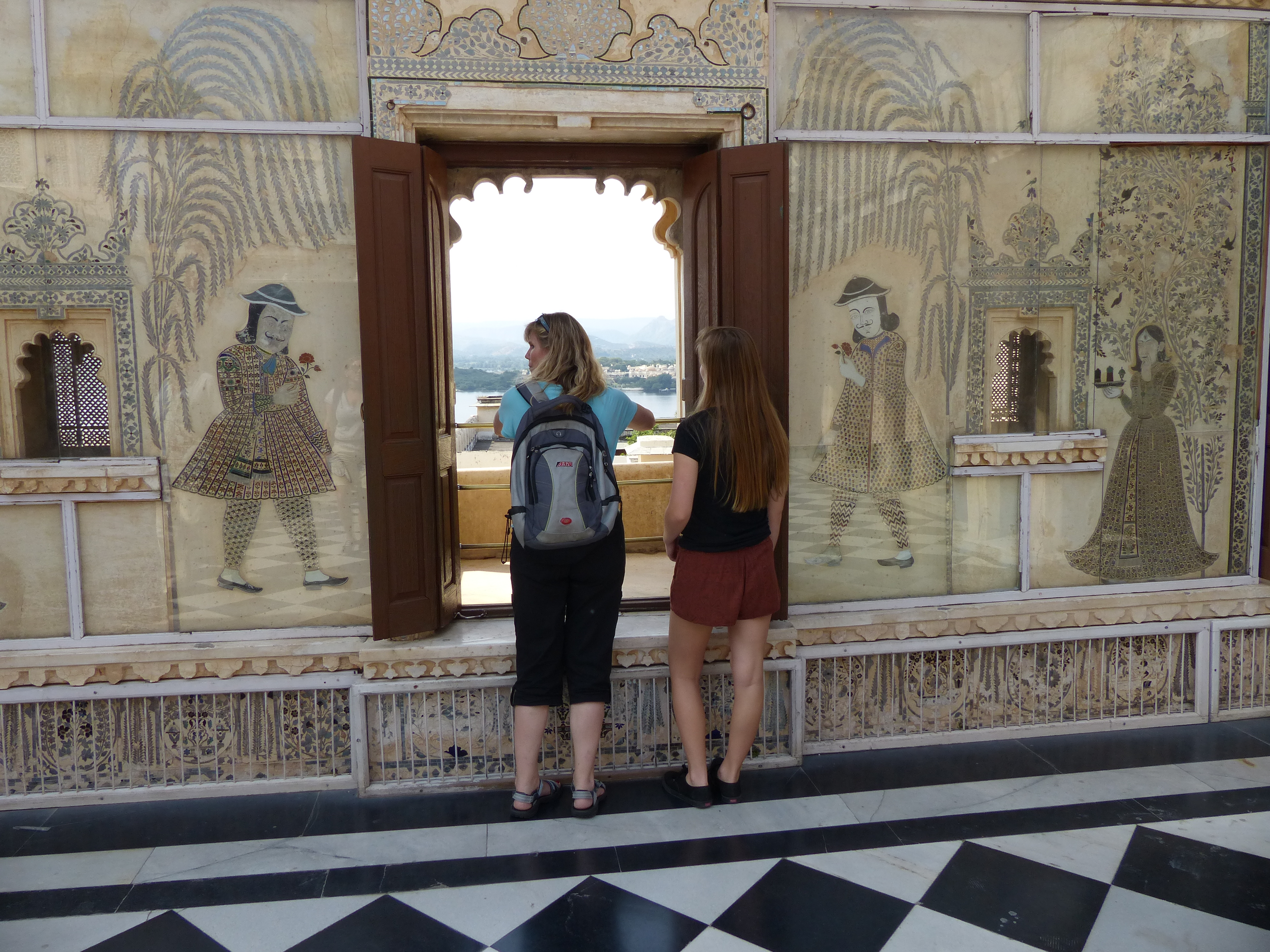
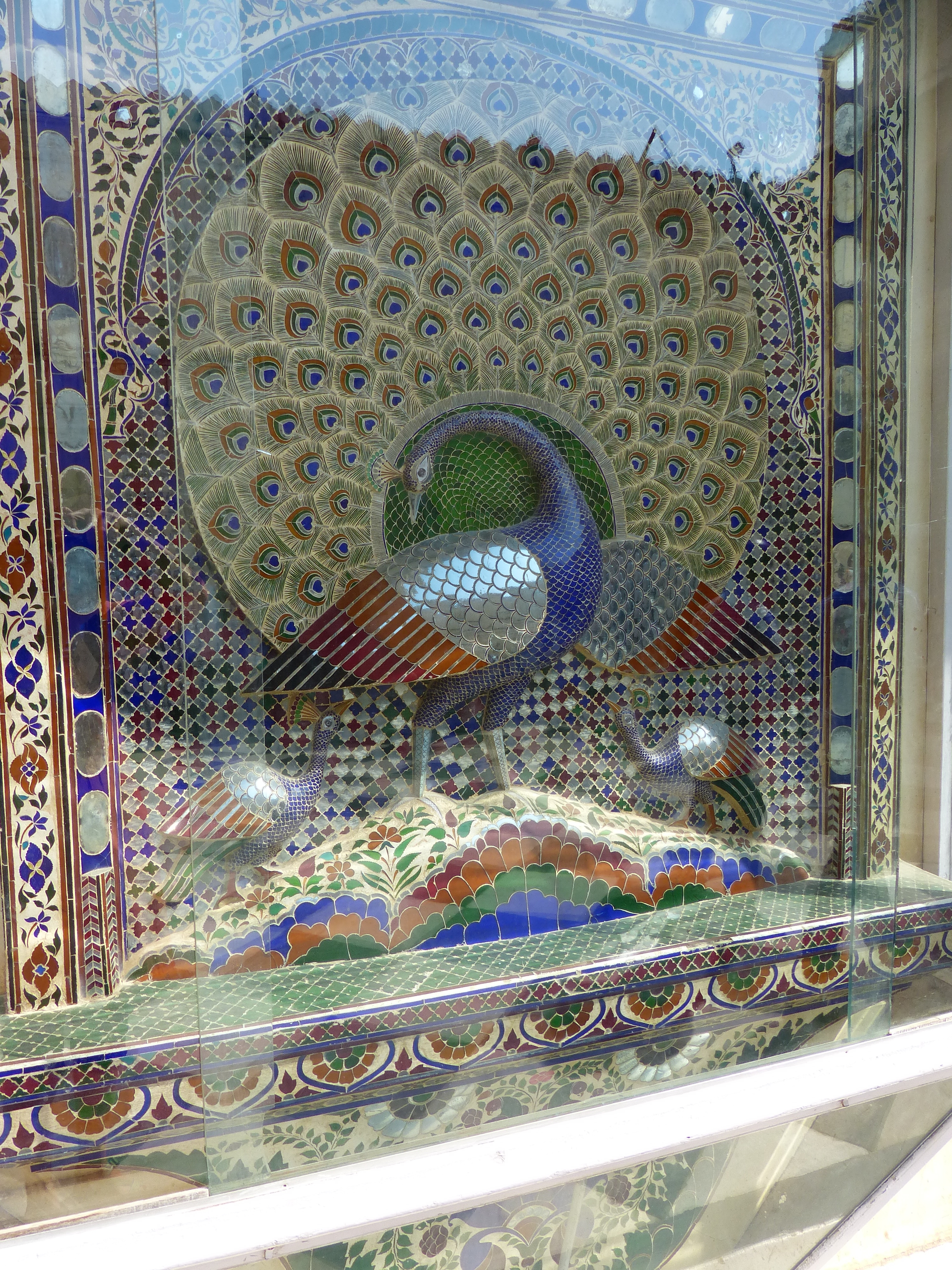
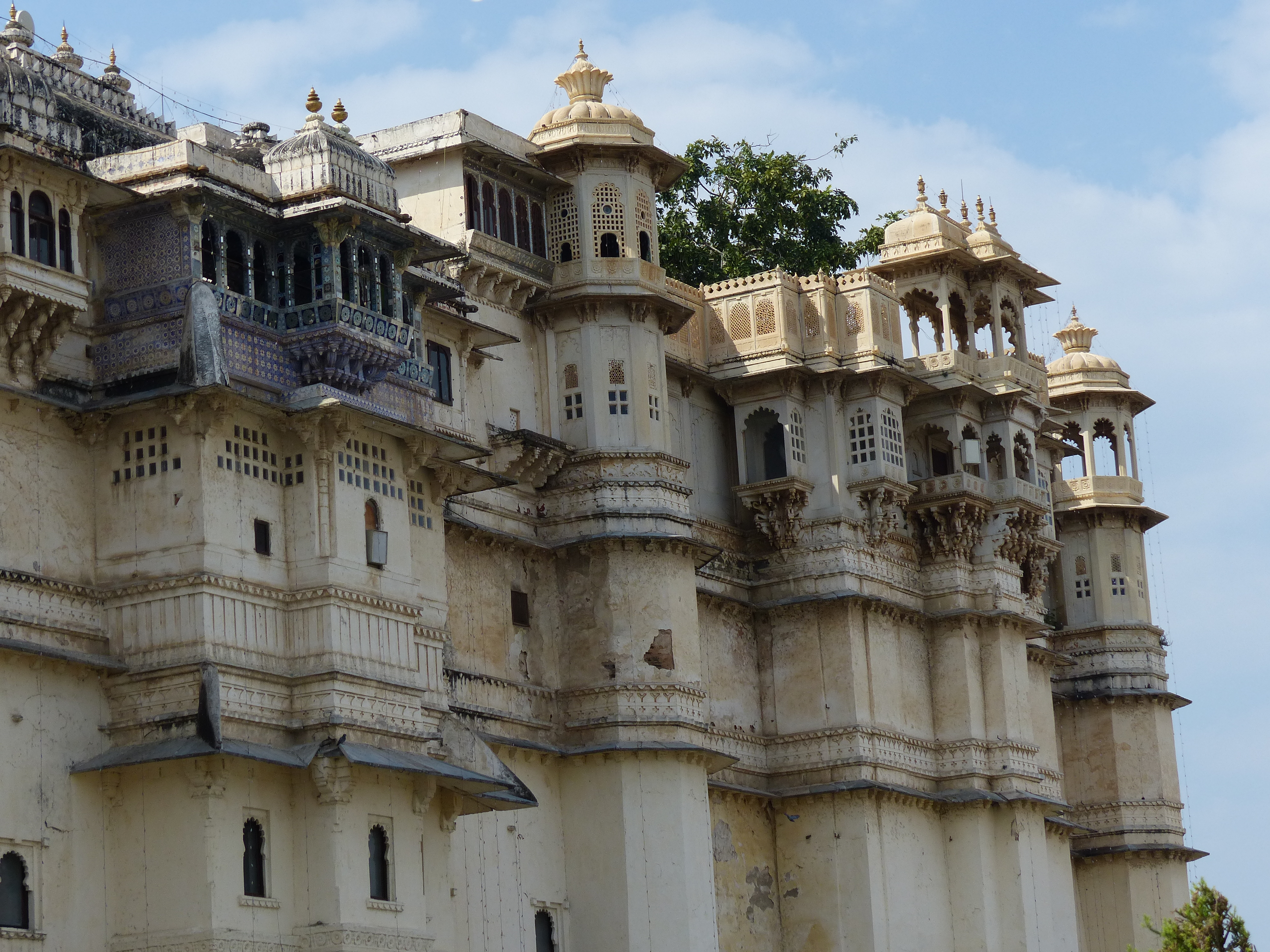
Built of granite and marble, the complex comprises 11 interconnected palaces that reflect European, Chinese, Rajasthani and Mughal architecture with cake-topper cupolas, multi-level balconies, carved lacy screens, gardens, terraces, colonnades, and fountains. A couple sections of the palace now operate as heritage hotels.

According to Wikipedia:

Once India got independence in 1947, the Mewar Kingdom, along with other princely states of Rajasthan, merged with the Democratic India, in 1949. The Mewar Kings subsequently also lost their special royal privileges and titles. However, the successor Maharanas have enjoyed the trust of their people and also retained their ownership of the palaces in Udaipur. They are now running the palaces by creating a trust, called the Mewar Trust, with the income generated from tourism and the heritage hotels that they have established in some of their palaces. With the fund so generated they are running charitable hospitals, educational institutions and promoting the cause of environmental preservation

P1050099

P1050104

P1050108

P1050111

P1050119

P1050120

P1050125

P1050127

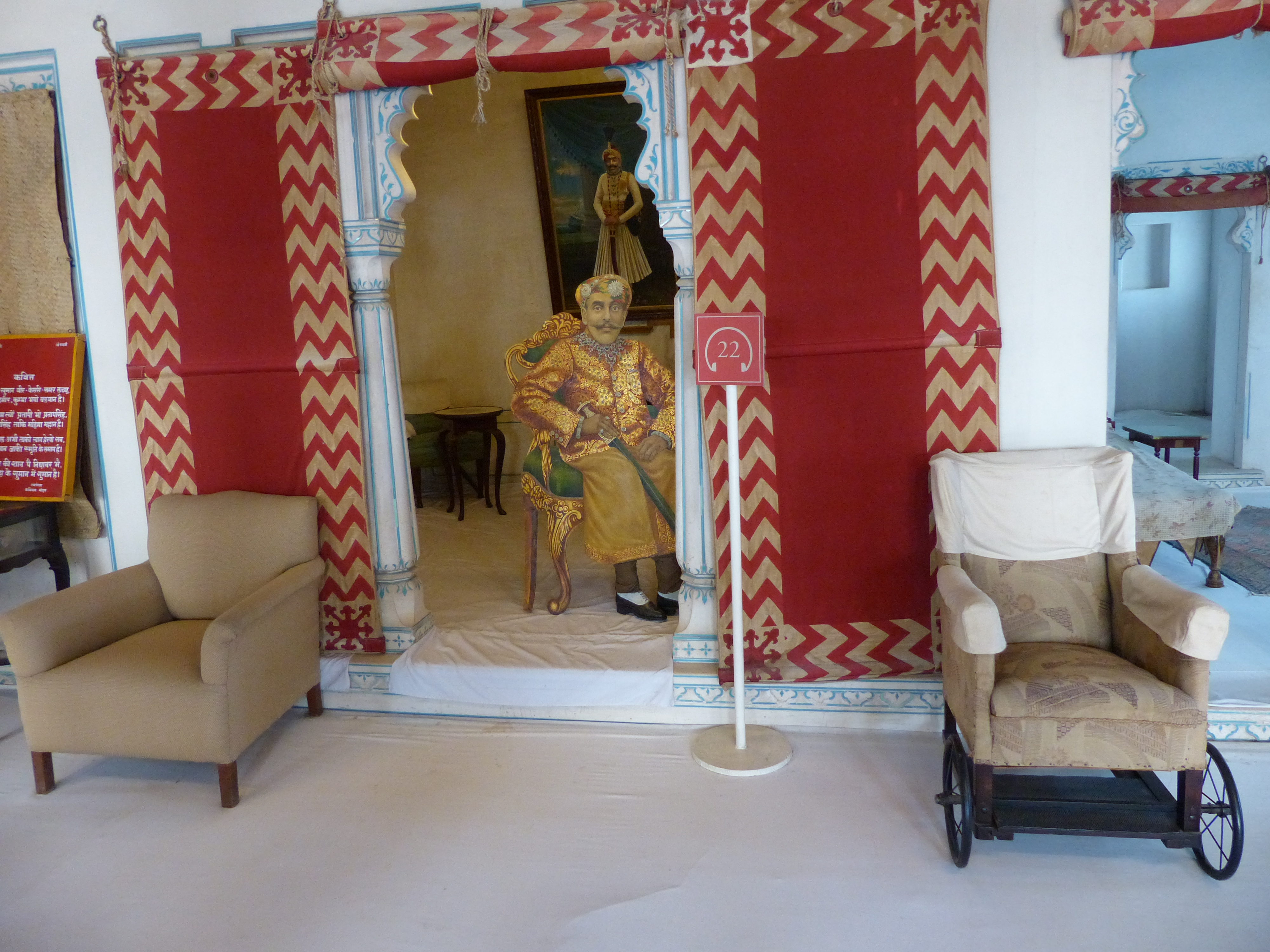
A cardboard cutout of Bhupal Singh, paralyzed at the age of 16, tells that he was the first Rajasthani ruler to sign an Instrument of Accession to join the new Union of India in 1948 and the last Mewar ruler to reside in the palace.
P1050135

P1050138

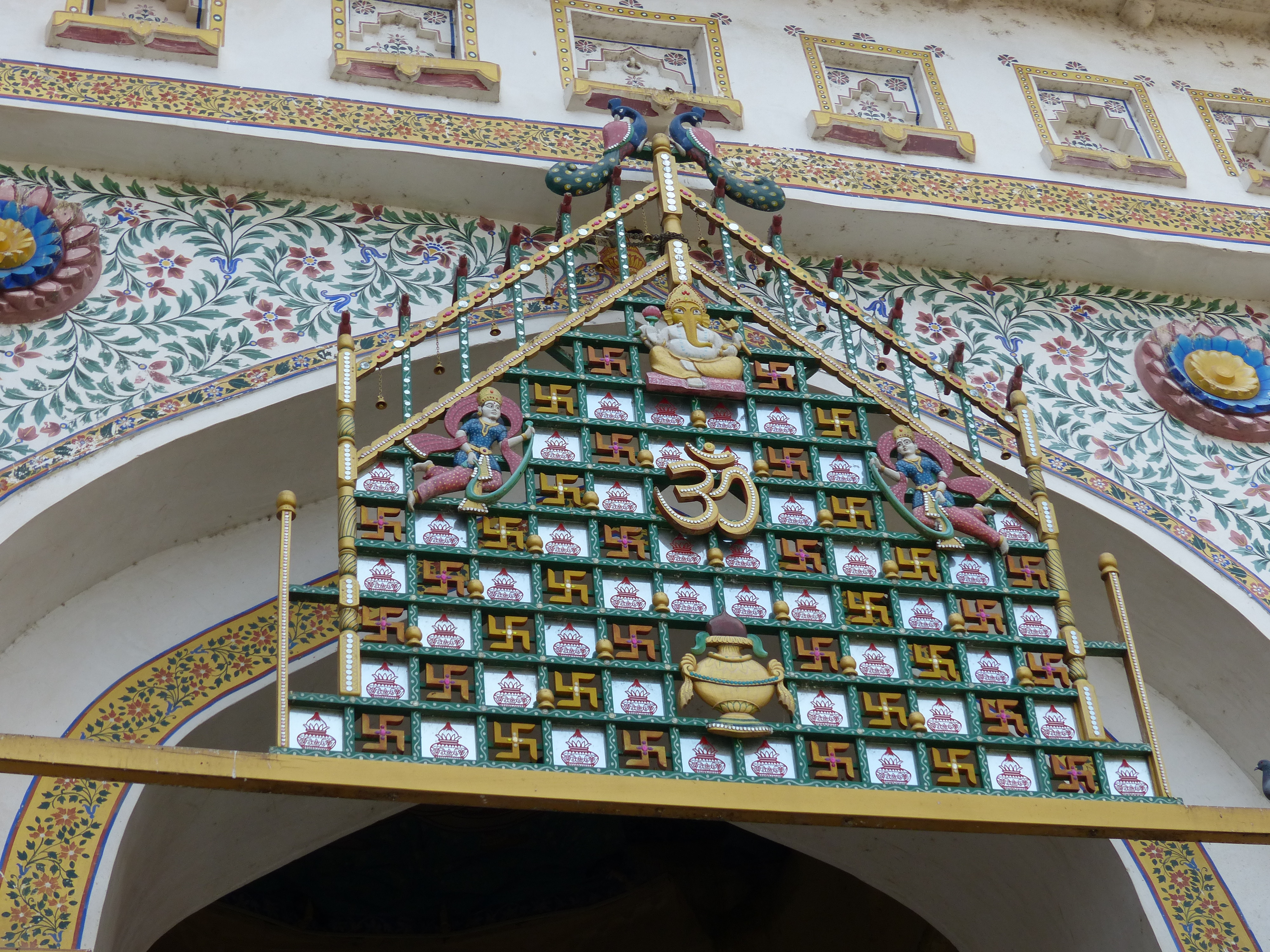
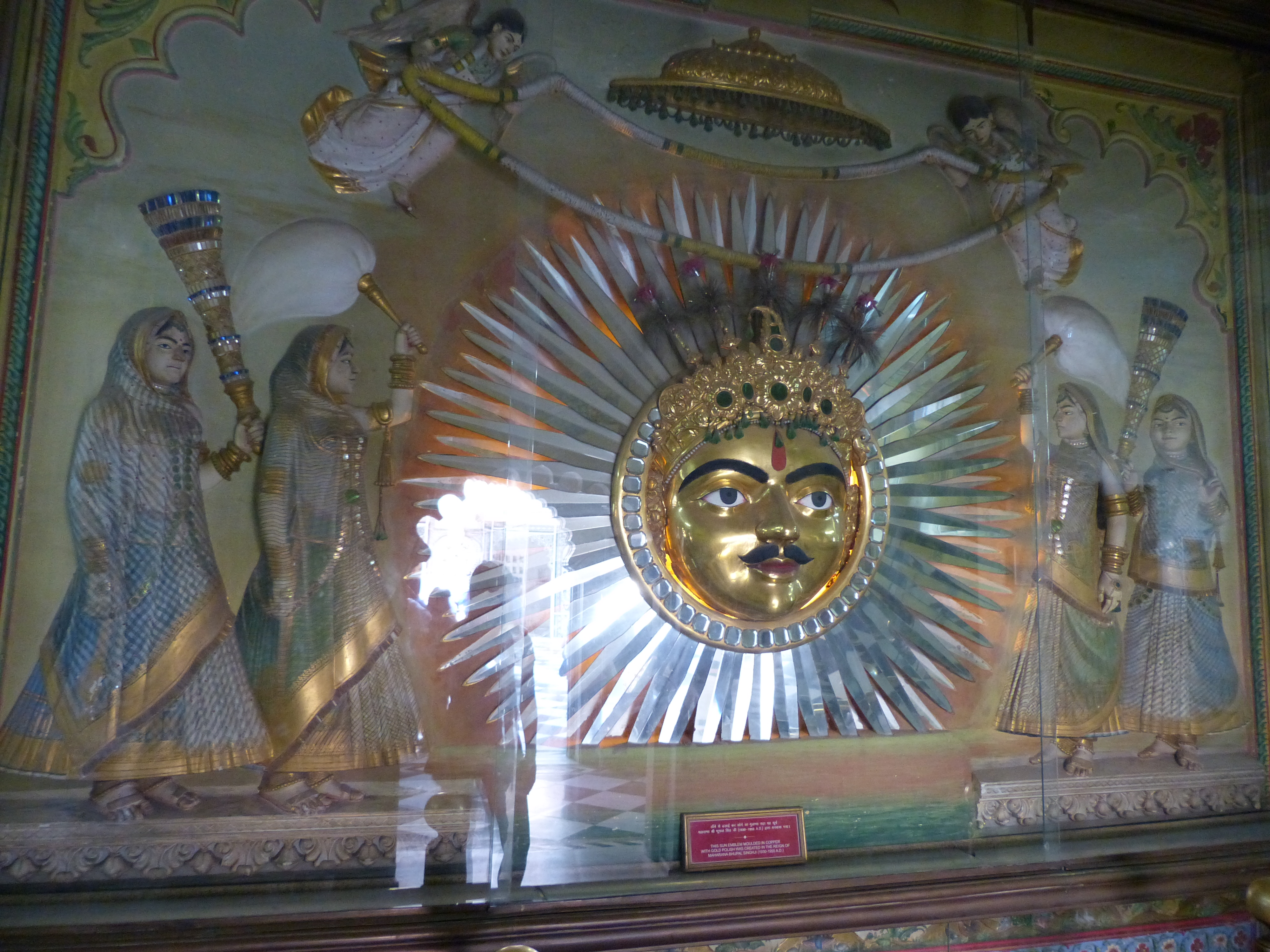
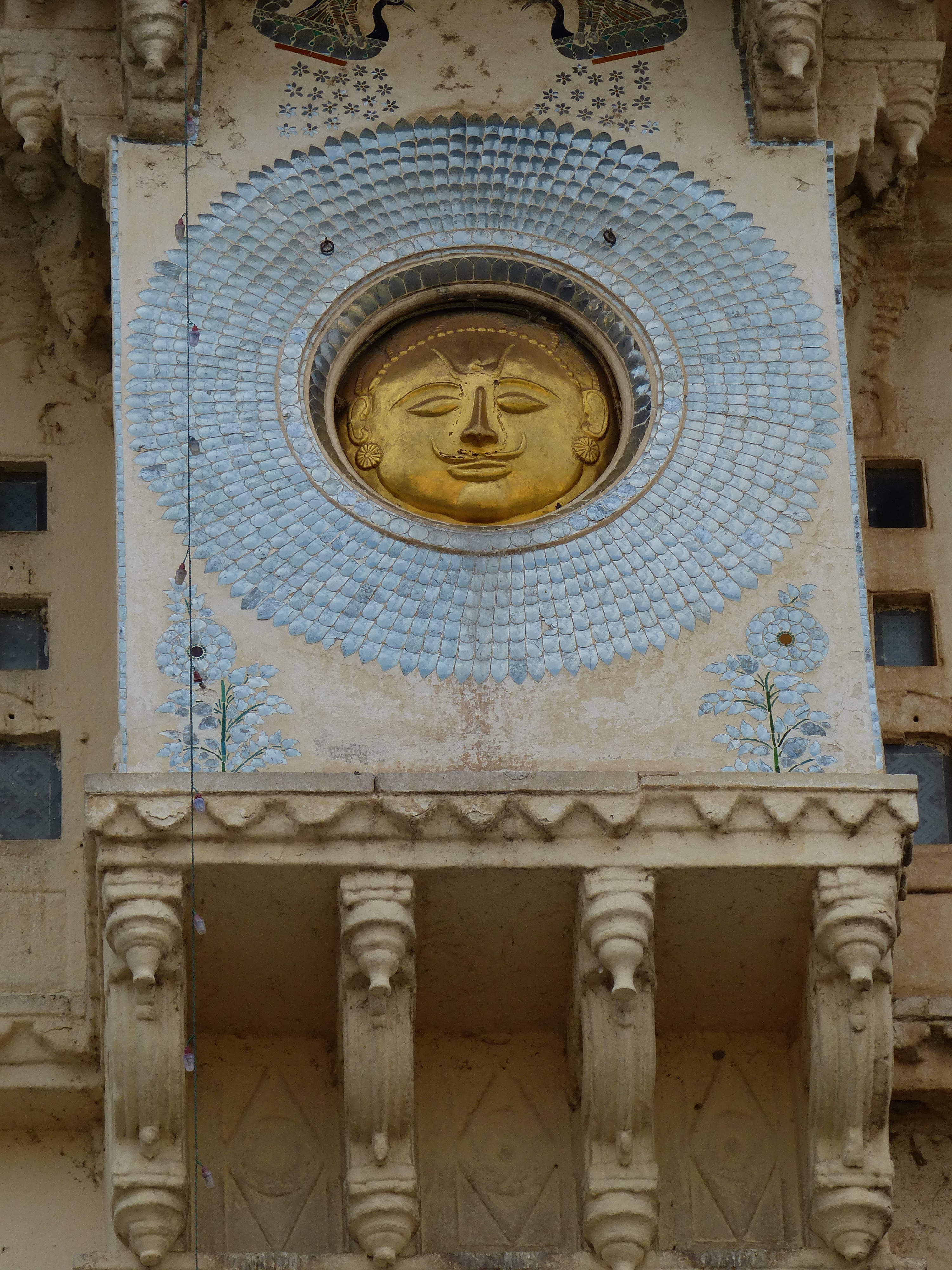
Mr. Singh pointed out that the Mewar people worshipped the Sun God, which explains the big suns displayed on the exterior and interior of the palace.
P1050136

P1050152

P1050143

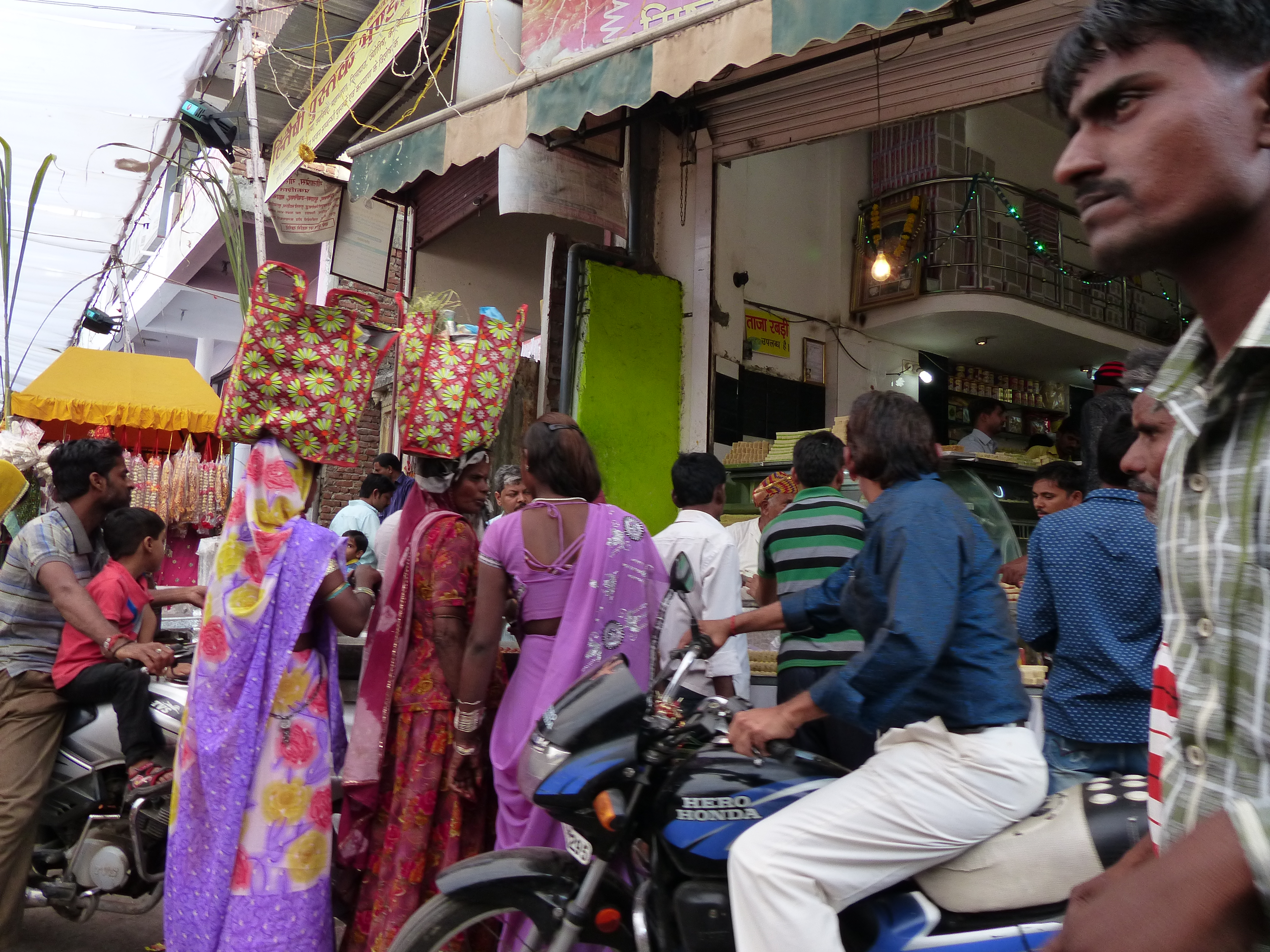
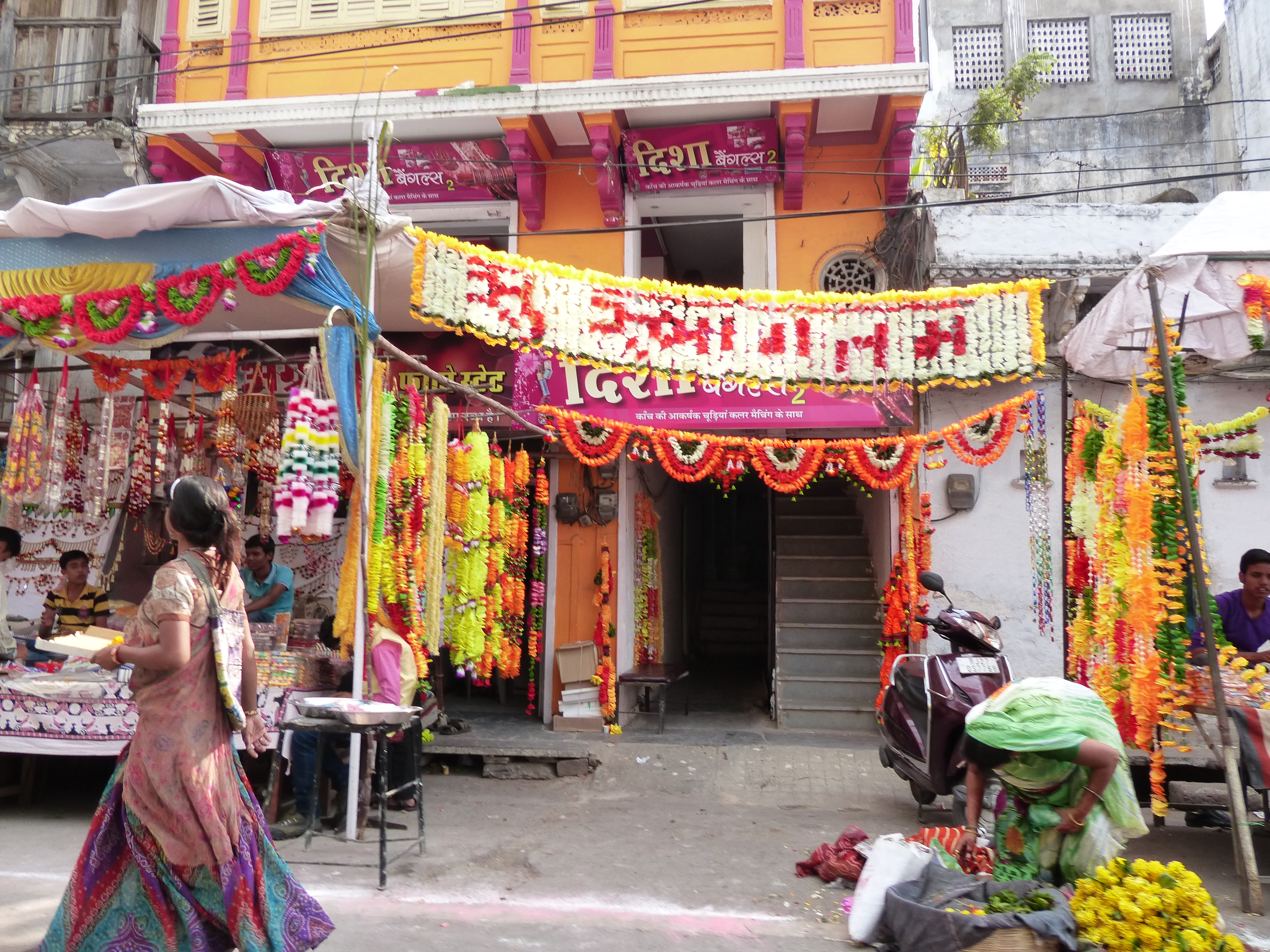
Following our tour, we met up with our tuk-tuk drivers and tried to find a shopping street promoted in several guidebooks. The city was bustling with Diwali shoppers and festival preparation.

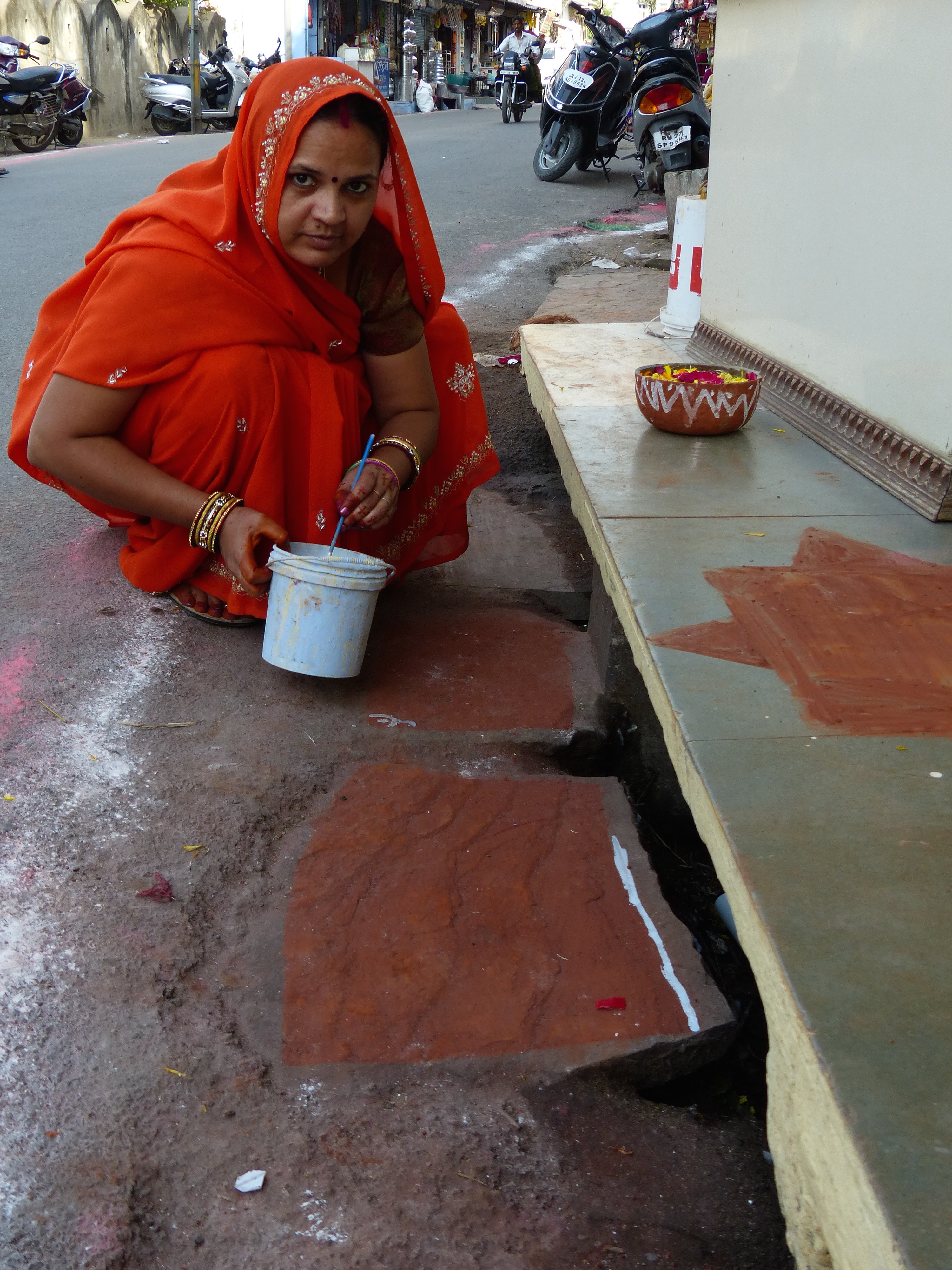
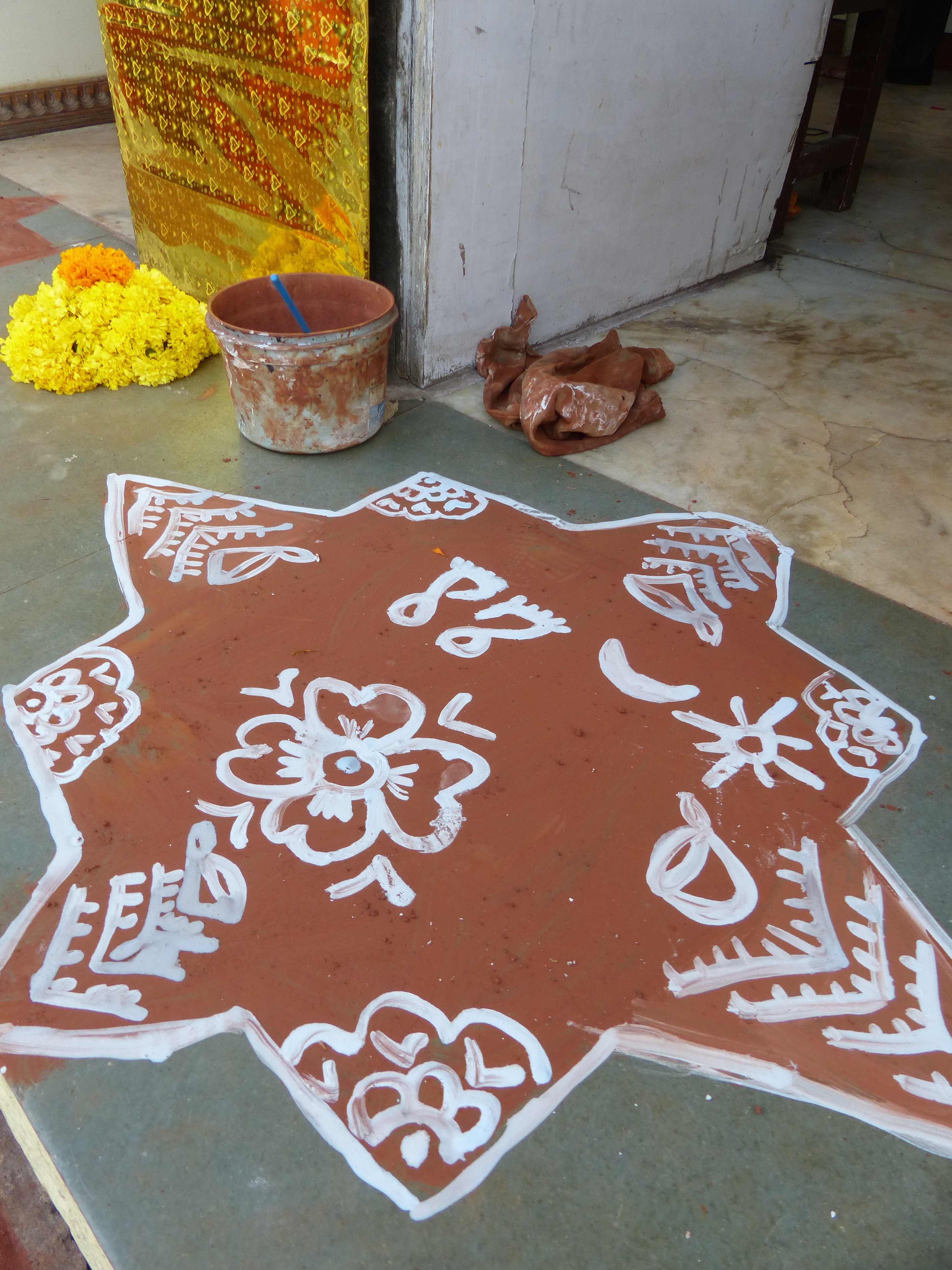
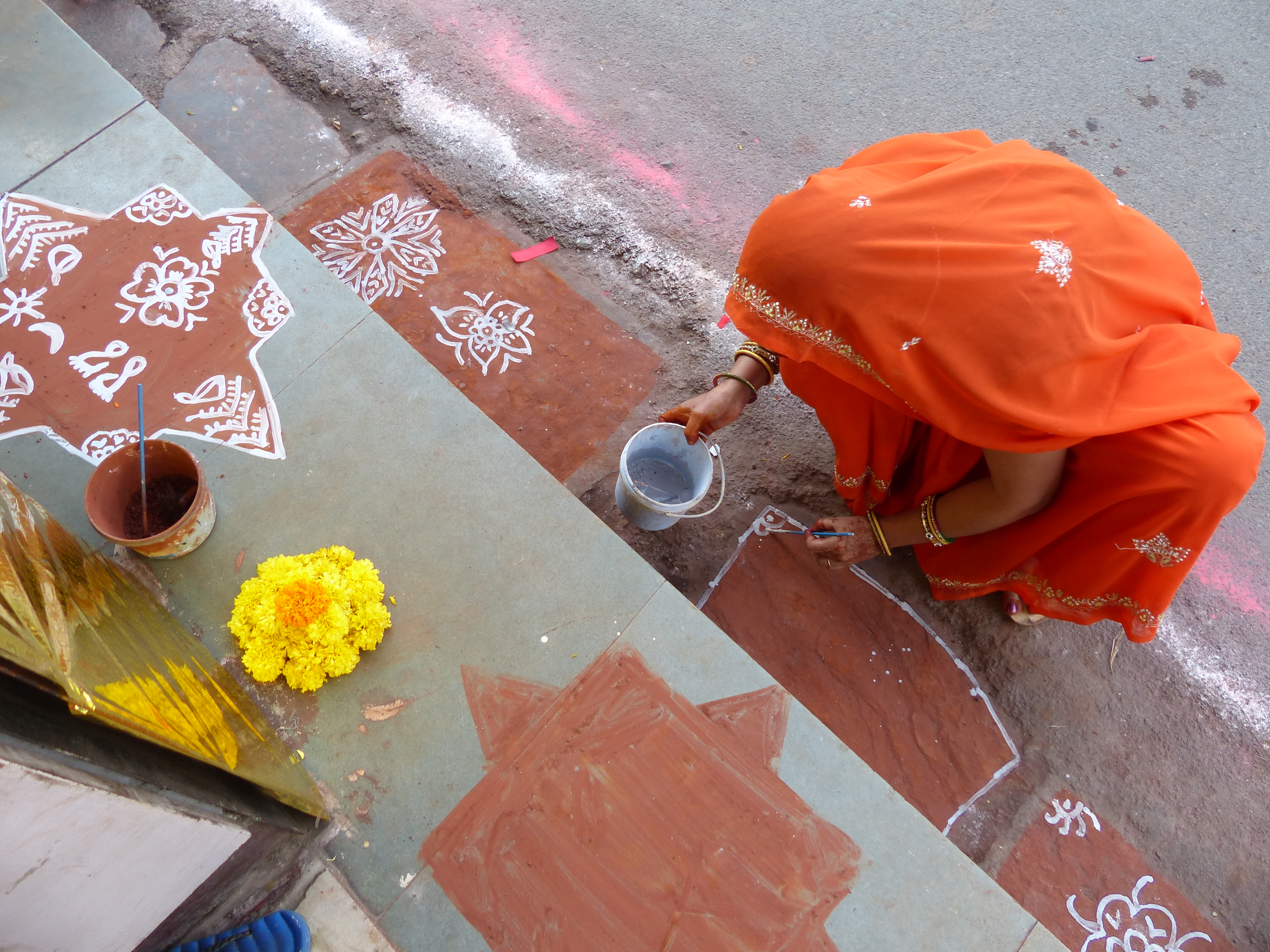
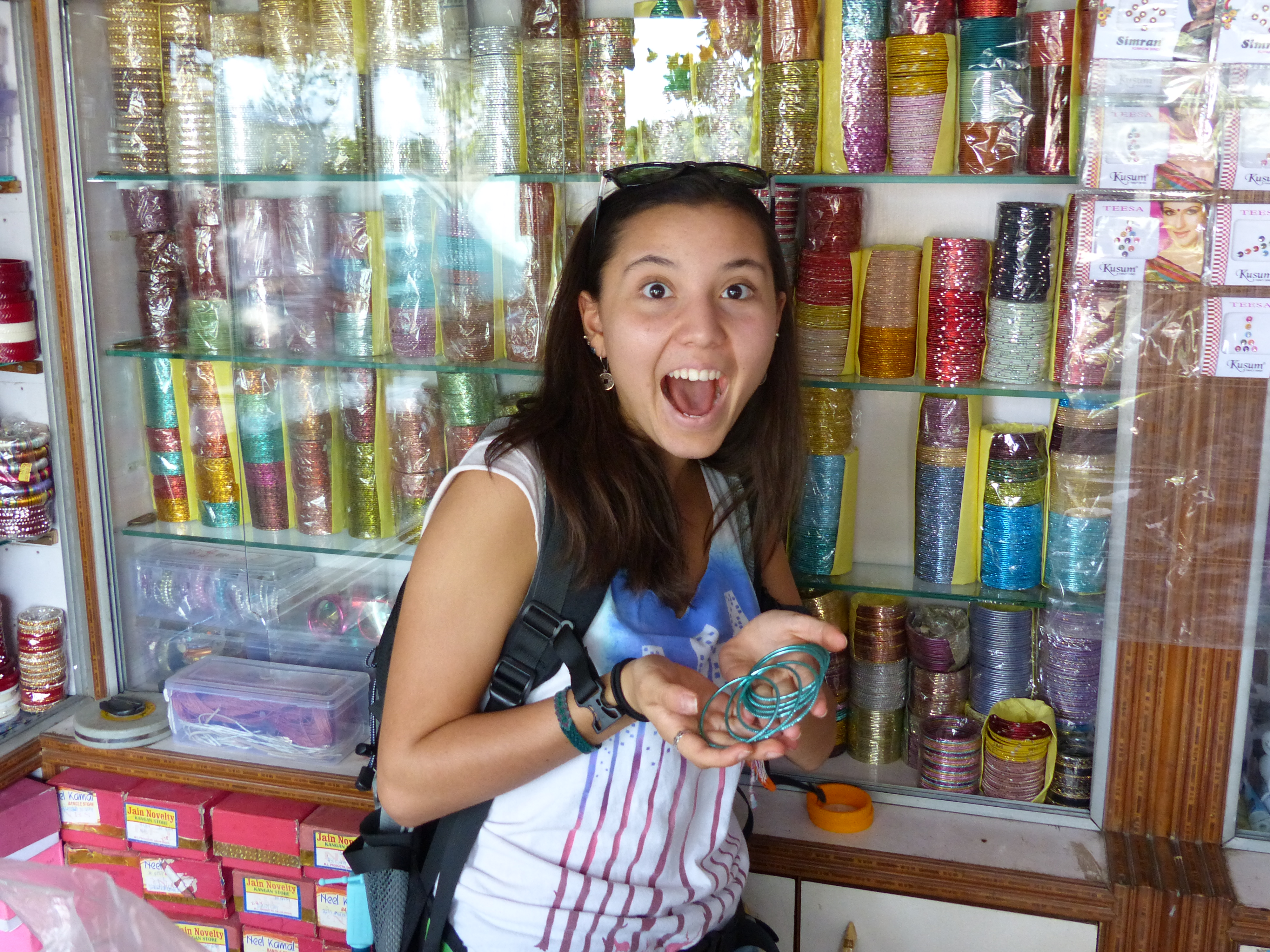
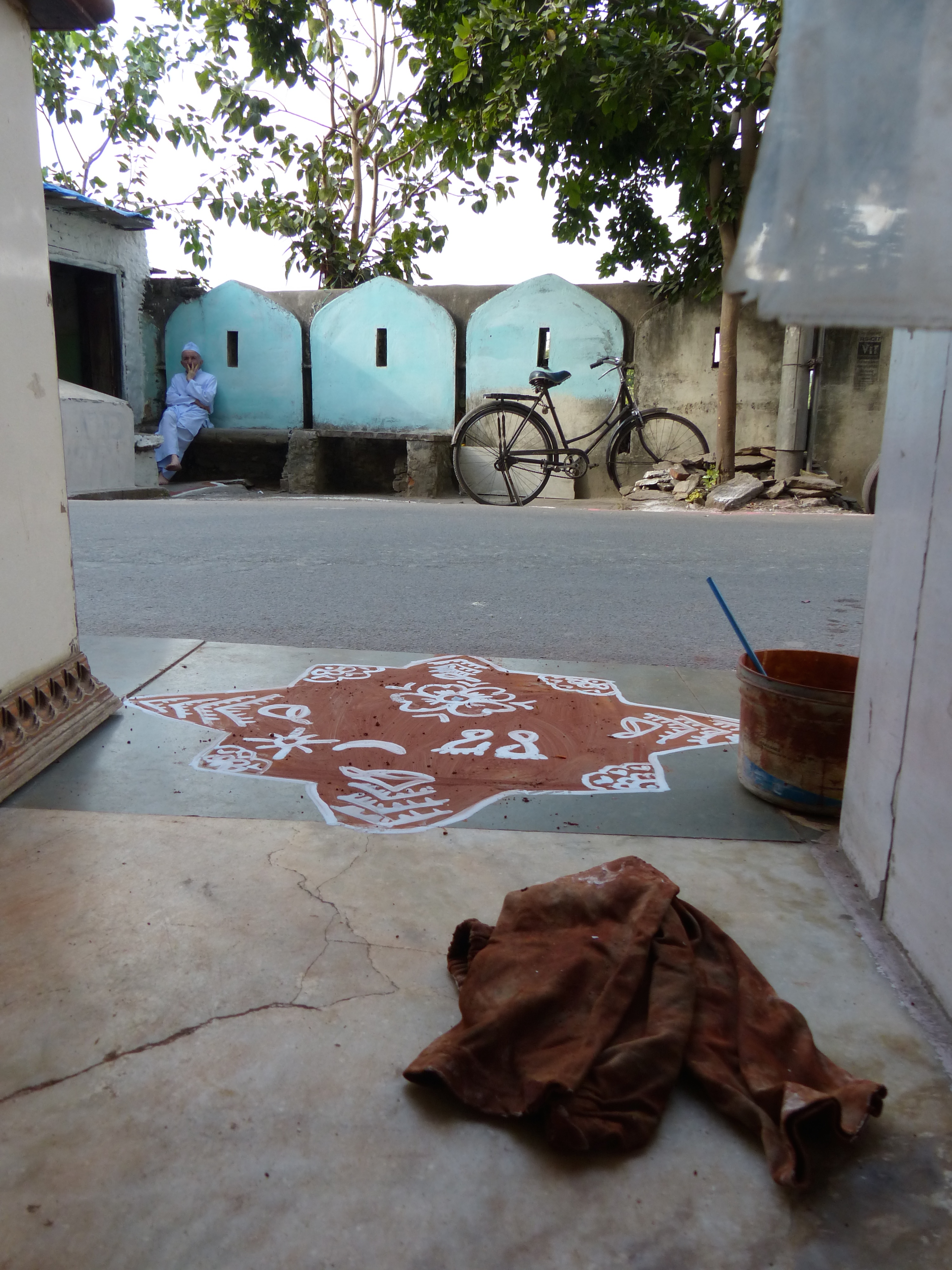
This lady was decorating the stoop in front of her bangle shop, where Brenna hit the jackpot.
P1050174

P1050175

P1050183

P1050178

P1050181

Holiday shoppers and honking vehicles filled the streets, sidewalks and markets. Amjan, one of the tuk-tuk drivers, stopped a few times to ask if we wanted to get out and walk around. No thanks!
P1050067

P1050158

P1050165

P1050170

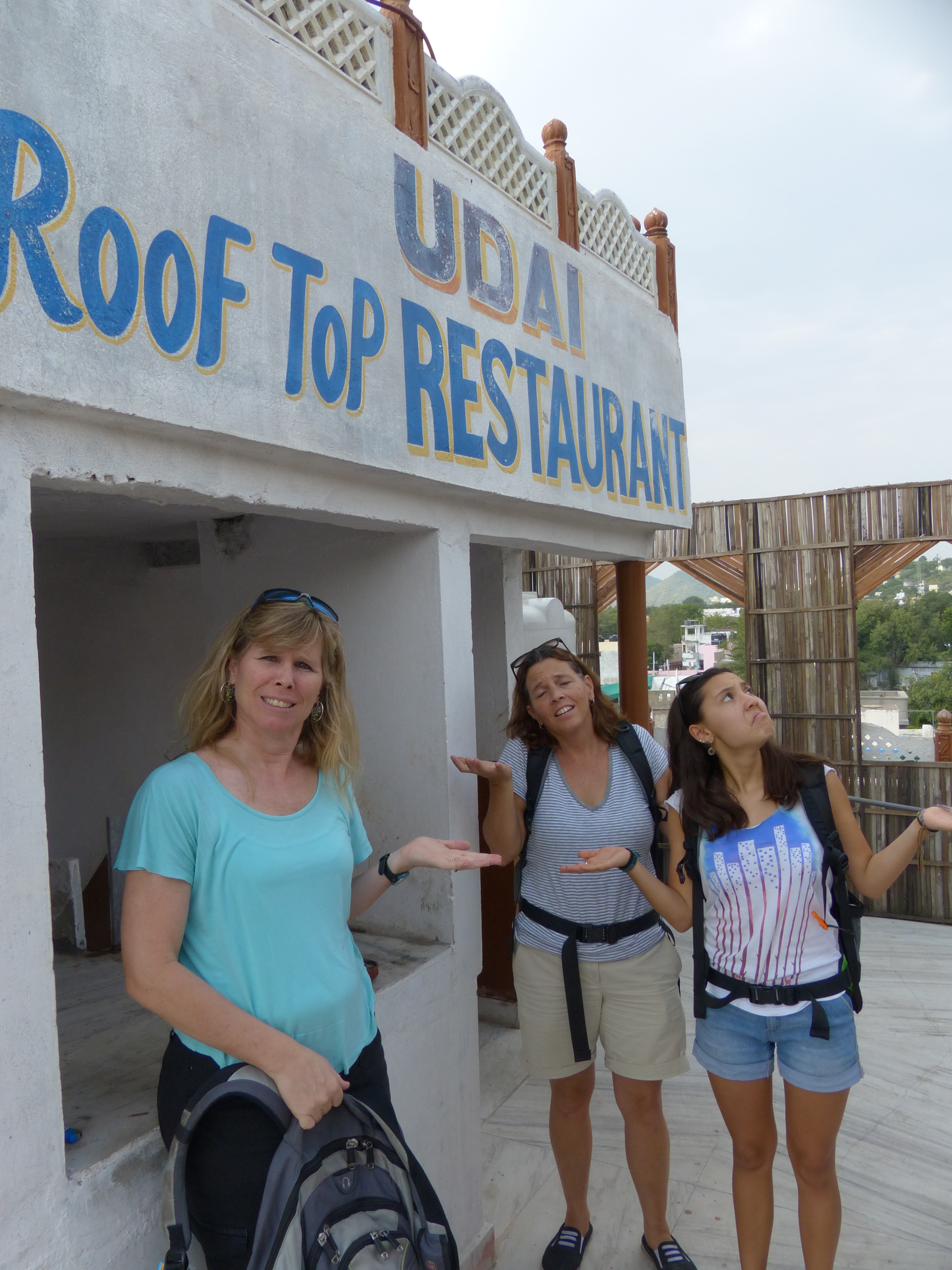
We saw a sign for “rooftop restaurant,” so we climbed about five flights of steep narrow stairs only to find ONE table at the very top! The owner offered us a menu, but it seemed a bit sketchy.
P1050188

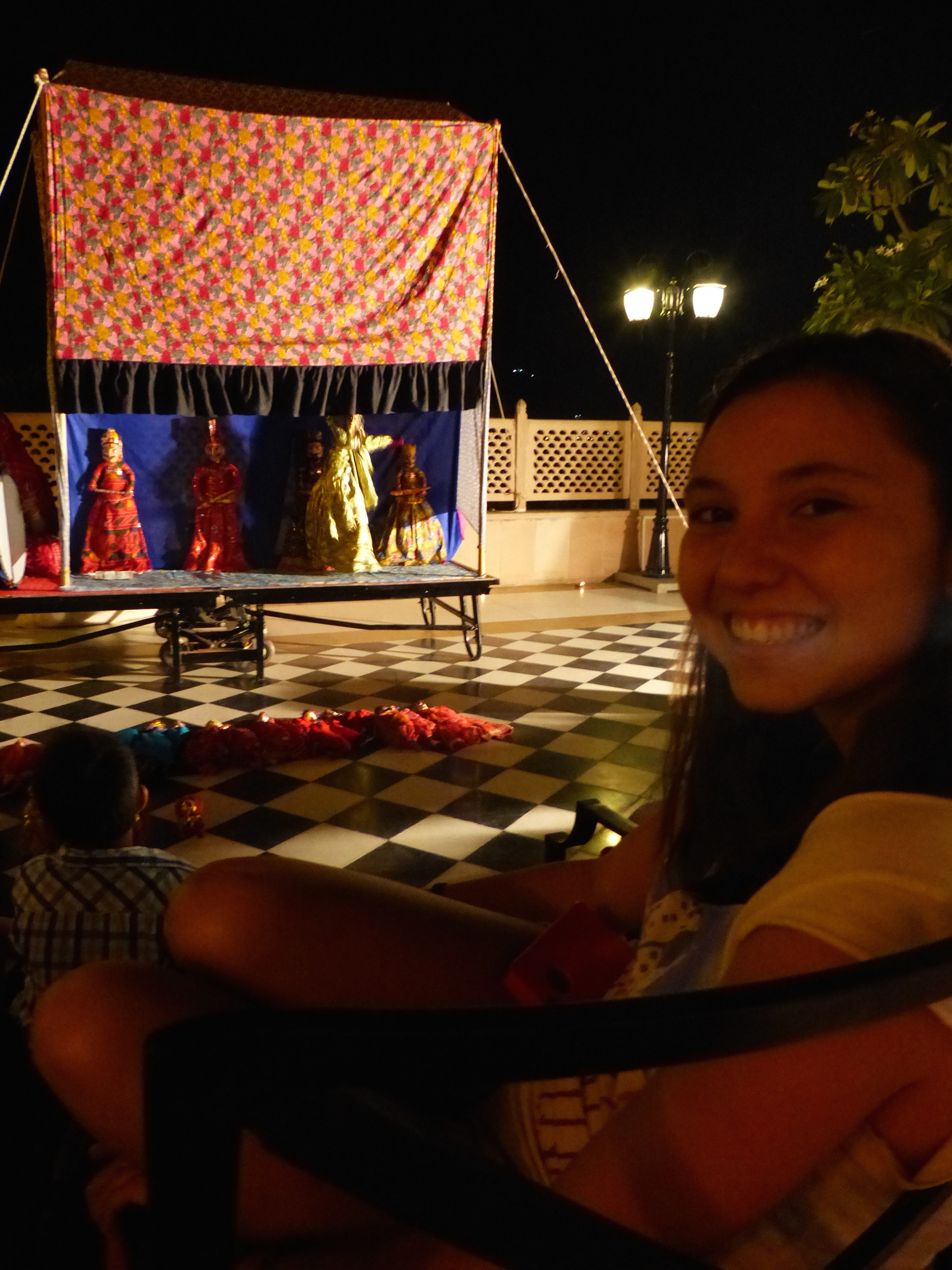
Poor Amjan. I could tell he was frustrated that we couldn’t decide what to do. The crowds were too daunting. We finally asked him to take us to an Indian restaurant, where we had a nice late lunch before heading back to the hotel for the rest of the evening. We hunkered down with cocktails and snacks on the hotel’s deck, but before we knew it, Diwali entertainers were setting up a puppet show. Halfway into the show, we realized we were the only adults in the front row.
P1050191

The style of puppetry is called “Kathputli,” an artform purported to be more than 1,000 years old. At our puppet show, a man climbed onto the platform and stayed hidden the whole time, manipulating the puppets, while a woman sat cross-legged next to the makeshift theater, drumming and singing along. I thought the puppeteer was playing tunes on a kazoo, but the website PuppetIndia.com illuminated me:

Rajasthan puppets have their own unique speciality. Puppeteers manipulate the puppets with a whistling, squeaking voice and are interpreted by a narrator who also provides the rhythms. The puppets have no legs and movements are free. Their bodies and limbs are made of mango wood and stuffed with cotton. A slight jerk of the string causes the puppets to produce movements of the hands, neck and shoulder. Many puppets hang on one rope: one string tied to the head and other to the waist. The puppeteer makes a loop around his fingers and manipulates the puppet. He takes ghungru (bells) in his hands and plays it according to rhythm. These puppets have a very limited vocabulary, so the movements play a very important part. Puppets are moved towards each other with speed and with swords in their hands in fighting postures. Greetings and salutations are done by bending the puppets and leaving their arms to hang loosely.

Our second day in Udaipur involved a lot of chilling out, followed by our cooking class with Shashi. We returned to Delhi Saturday morning so Col and Brenna catch their flight back to Hong Kong. Before they left, though, we spent a couple hours at a salon getting pampered.

For more photos from our get-away weekend, check out my flickr album: Udaipur.

Cooking with Shashi in Udaipur

It’s no secret that I’m hopeless in the kitchen. Still, I’ve discovered cooking classes provide unique cultural insights and bring a sense of humanity to any place I visit.

When Col and Brenna asked about a cooking class in India, I looked online and found Shashi’s Cooking Classes in Udaipur. It looked a bit amateurish (“For a mouth open dive into the marvelous flavors of Rajasthan…”), but she got good reviews on TripAdvisor.

After a couple confusing phone calls regarding the class time, a tuk-tuk picked us up around 2 p.m. for the short ride to Shashi’s home. Ronna and Ava stayed behind to enjoy the hotel spa (which, unfortunately, turned out to be less than enjoyable). We joined a group from Ireland, who were in good spirits despite getting whacked with Varanasi’s version of Delhi belly during their train journey to Udaipur. (The only thing worse that Delhi belly is Delhi belly on a train.)

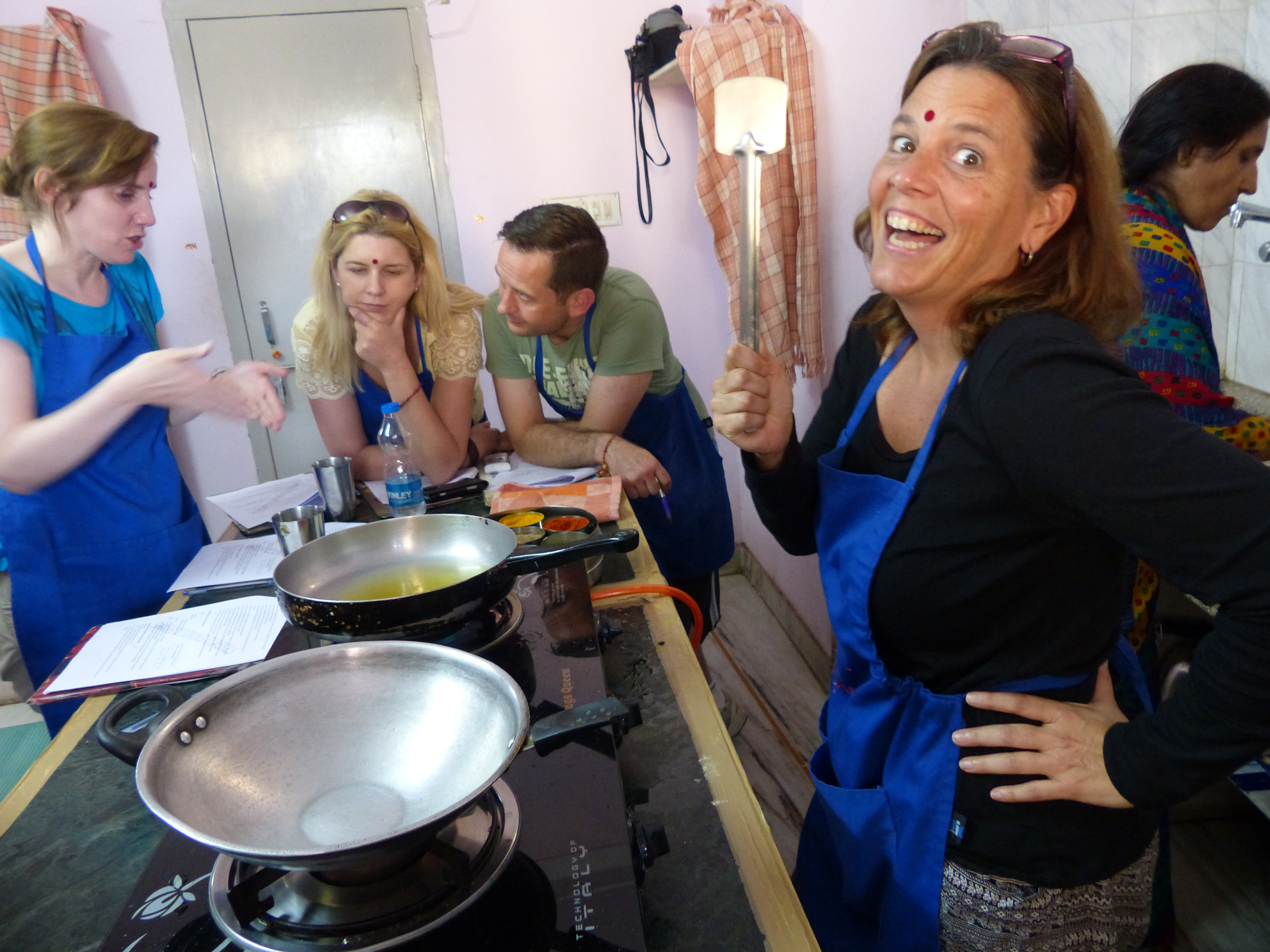
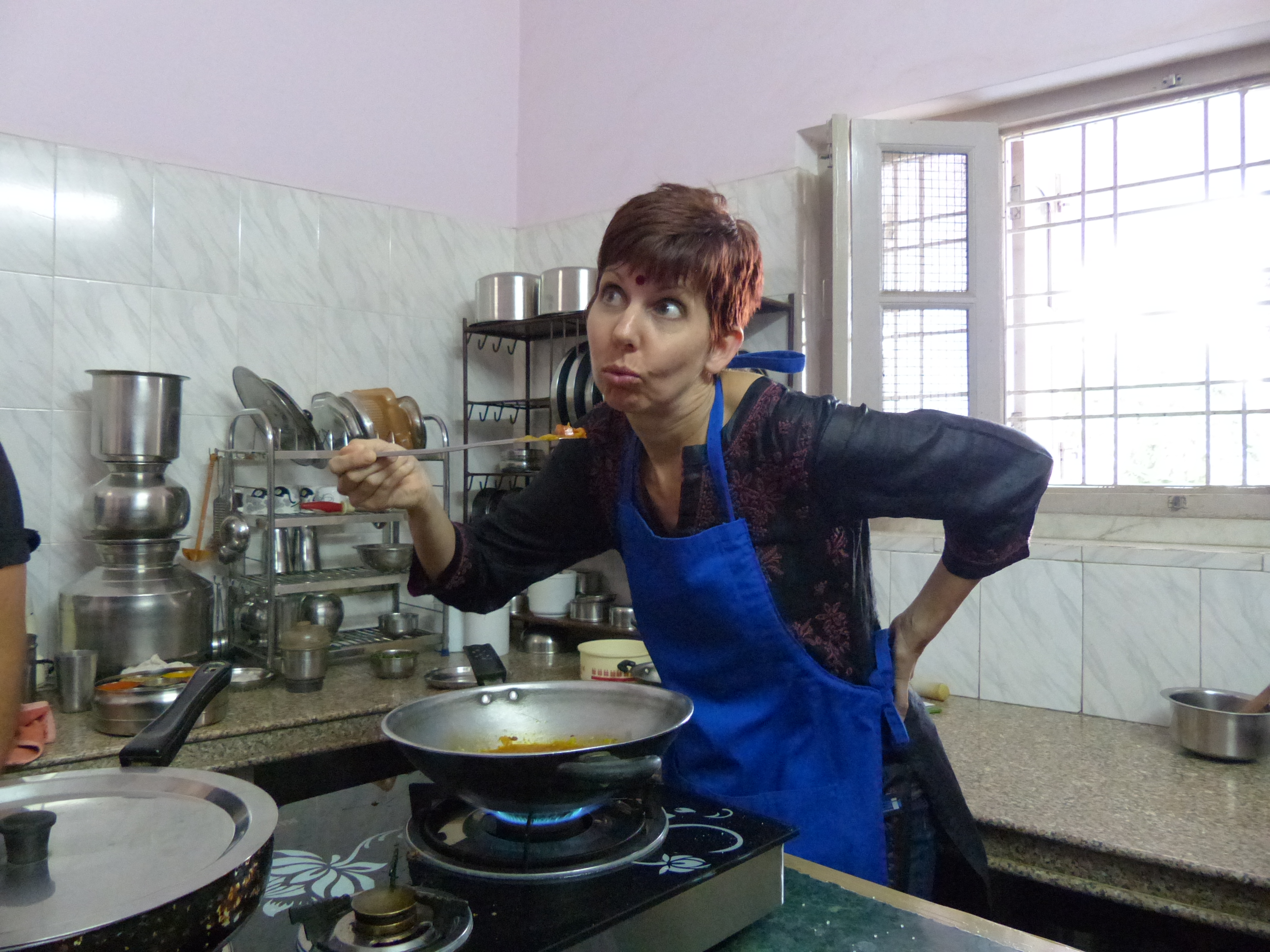
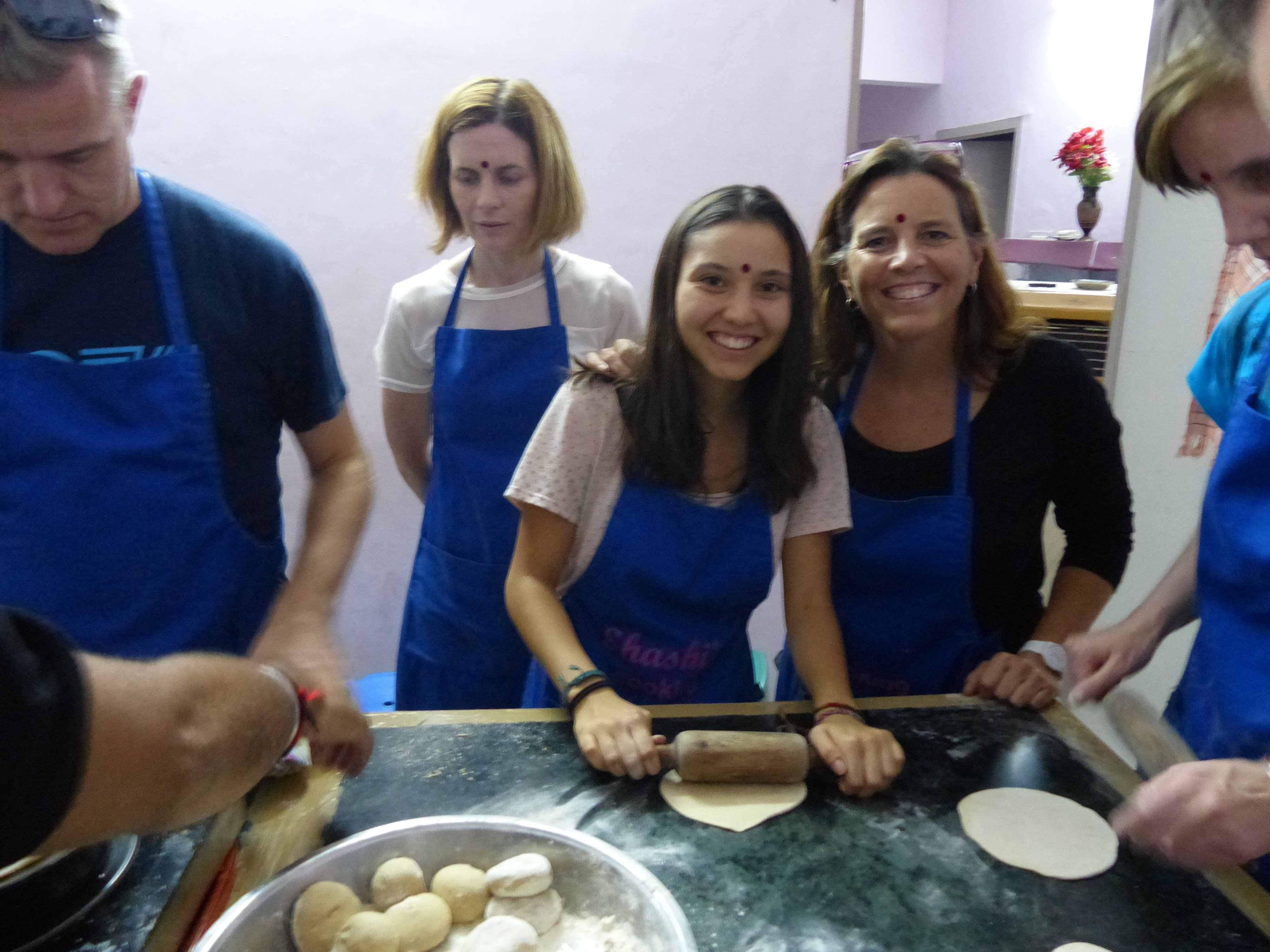
We all crowded into Shashi’s kitchen, where she demonstrated how to make masala chai and many delicious dishes. Following along in our photocopied recipe booklets, we stirred, sautéed, dipped veggies into pakora batter, rolled dough into chappatis and eventually sat down to eat it all. My favorites included the potato and onion pakora with mango chutney, aubergine and tomato masala, and the potato parantha. Yum!

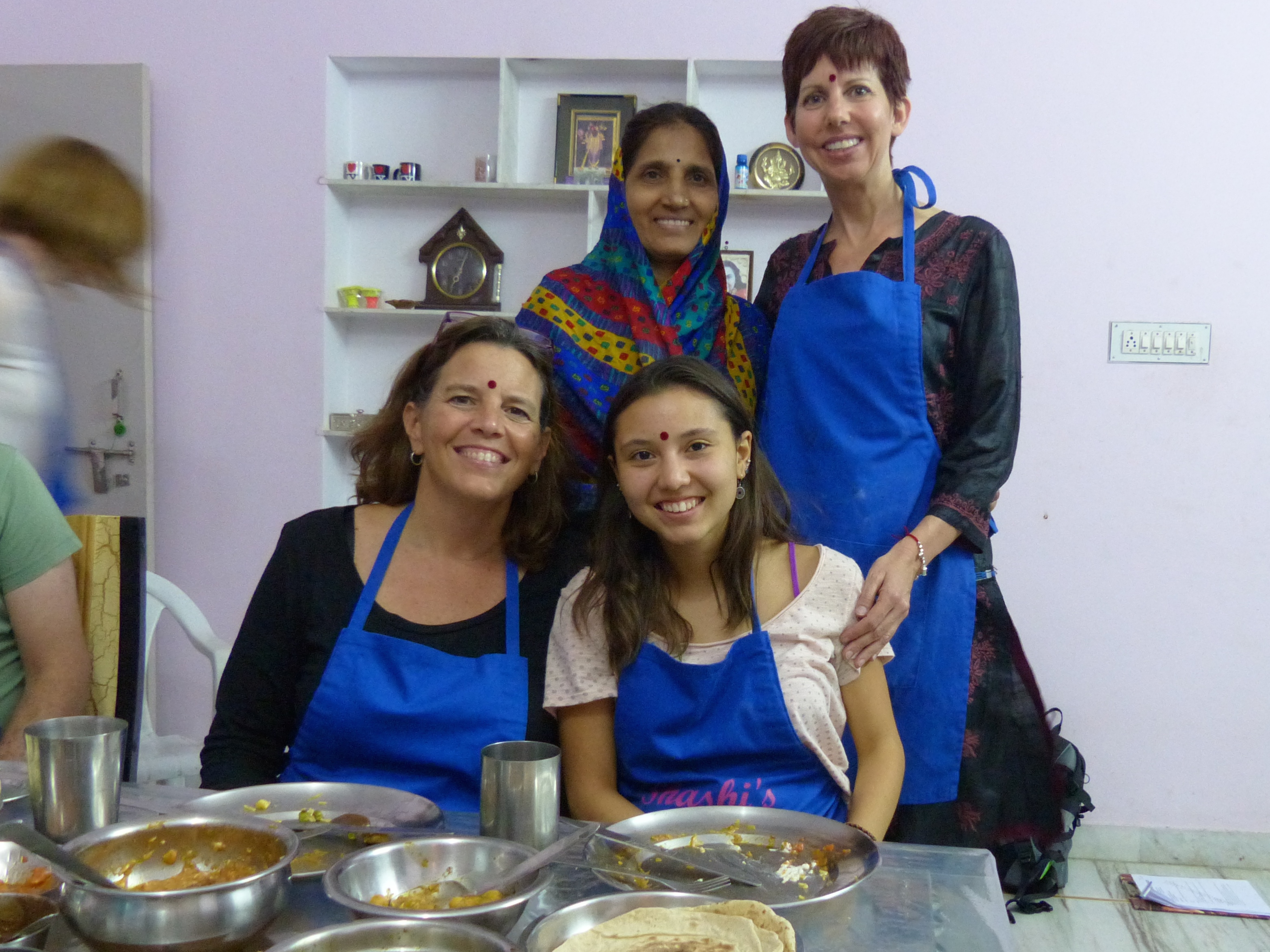
Shashi learned English through her interactions with tourists, and although she often pointed to the recipe on the page, she admitted she couldn’t read English. She simply memorized where each recipe was located in the packet! Her life had been hard, but her spirits were high. Growing up in a village, she had only ever cooked in clay pots over an open fire before her arranged marriage brought her to the city. When her husband was murdered by a business partner, she struggled to support herself and her children. Her cooking classes provided the emotional and financial boost she needed. Whereas touristy cooking classes usually wrap up and send participants home, Shashi seemed happy to hang out and chat as the evening wore on. We stayed till almost 7:30 p.m. and likely would have lingered longer, but we knew Ronna and Ava were waiting back at the hotel.

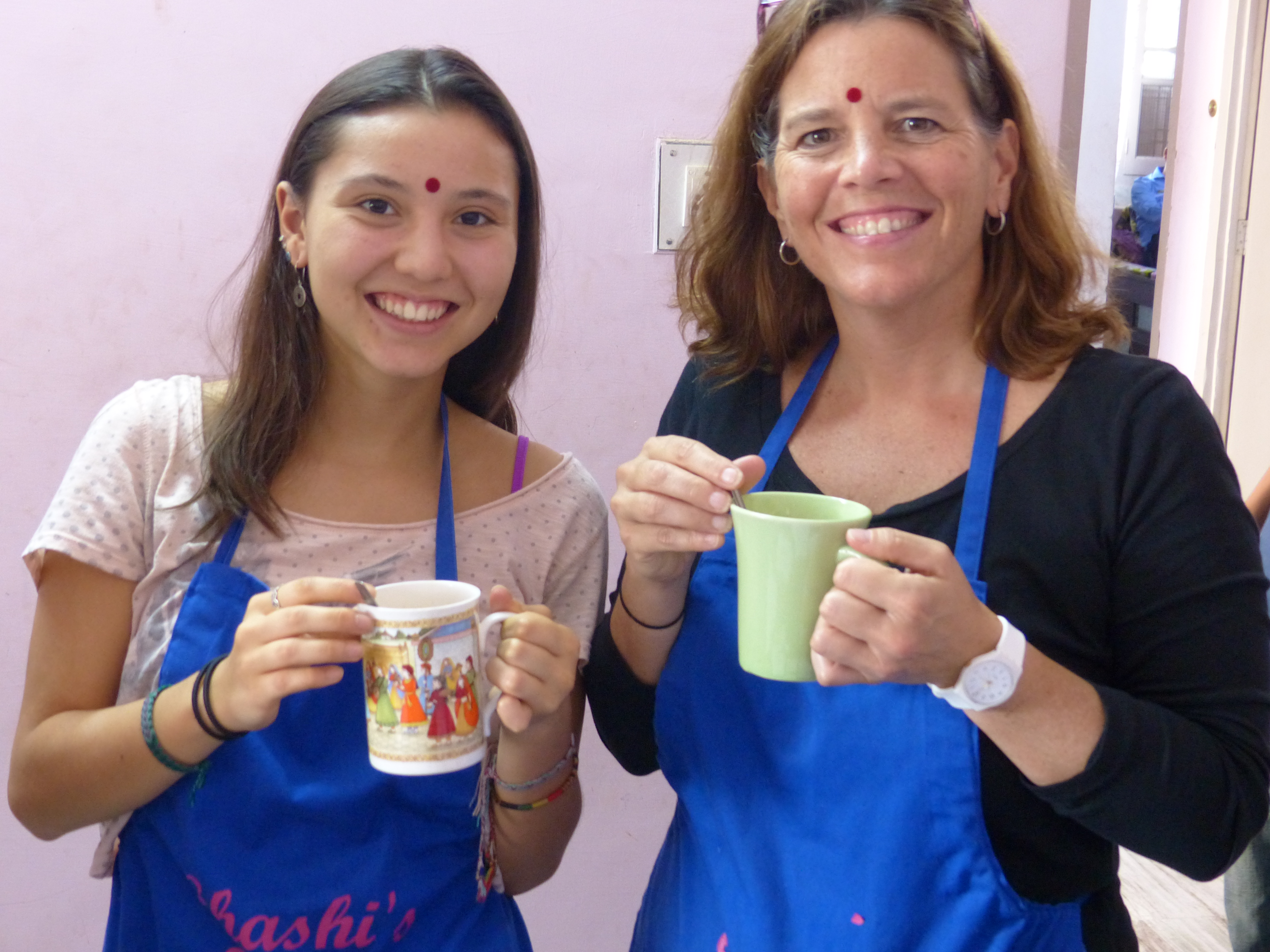
Brenna and Col enjoying their tea.
P1050197

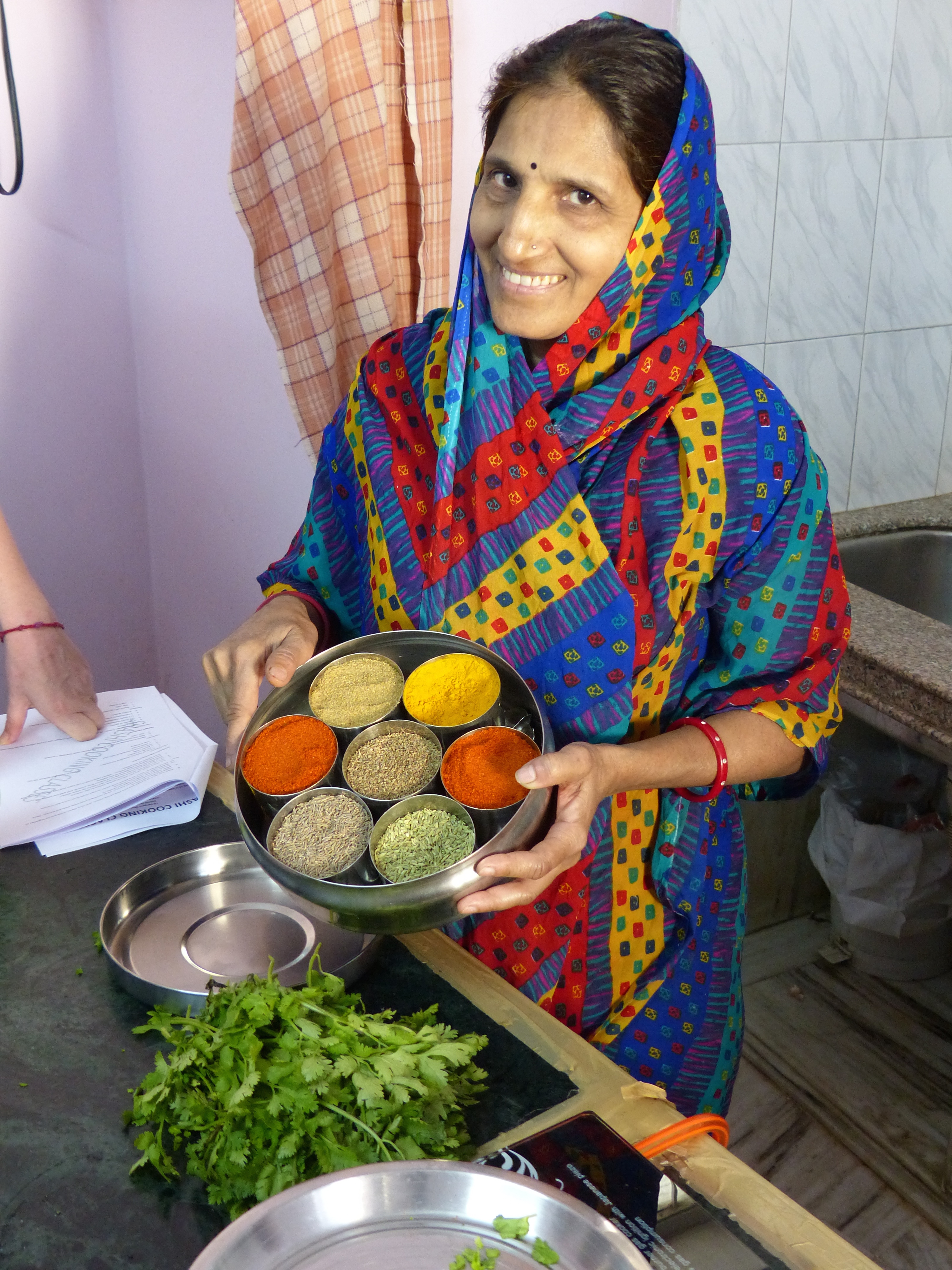
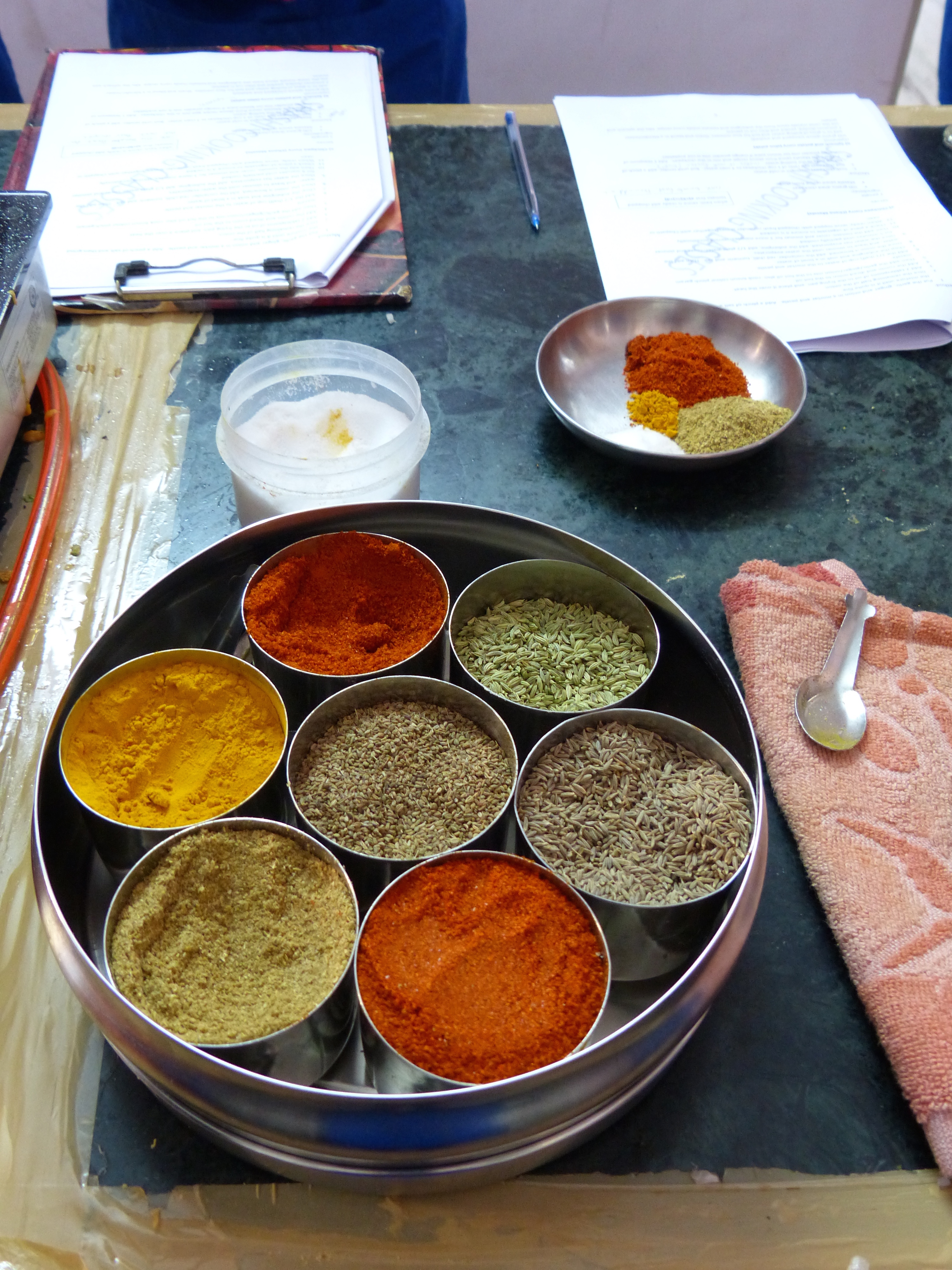
Shashi and her amazing box of spices.
P1050200

P1050211

Shiny gets ready to sauté some onions.
P1050205

I’m just here for the photo opps.
P1050213

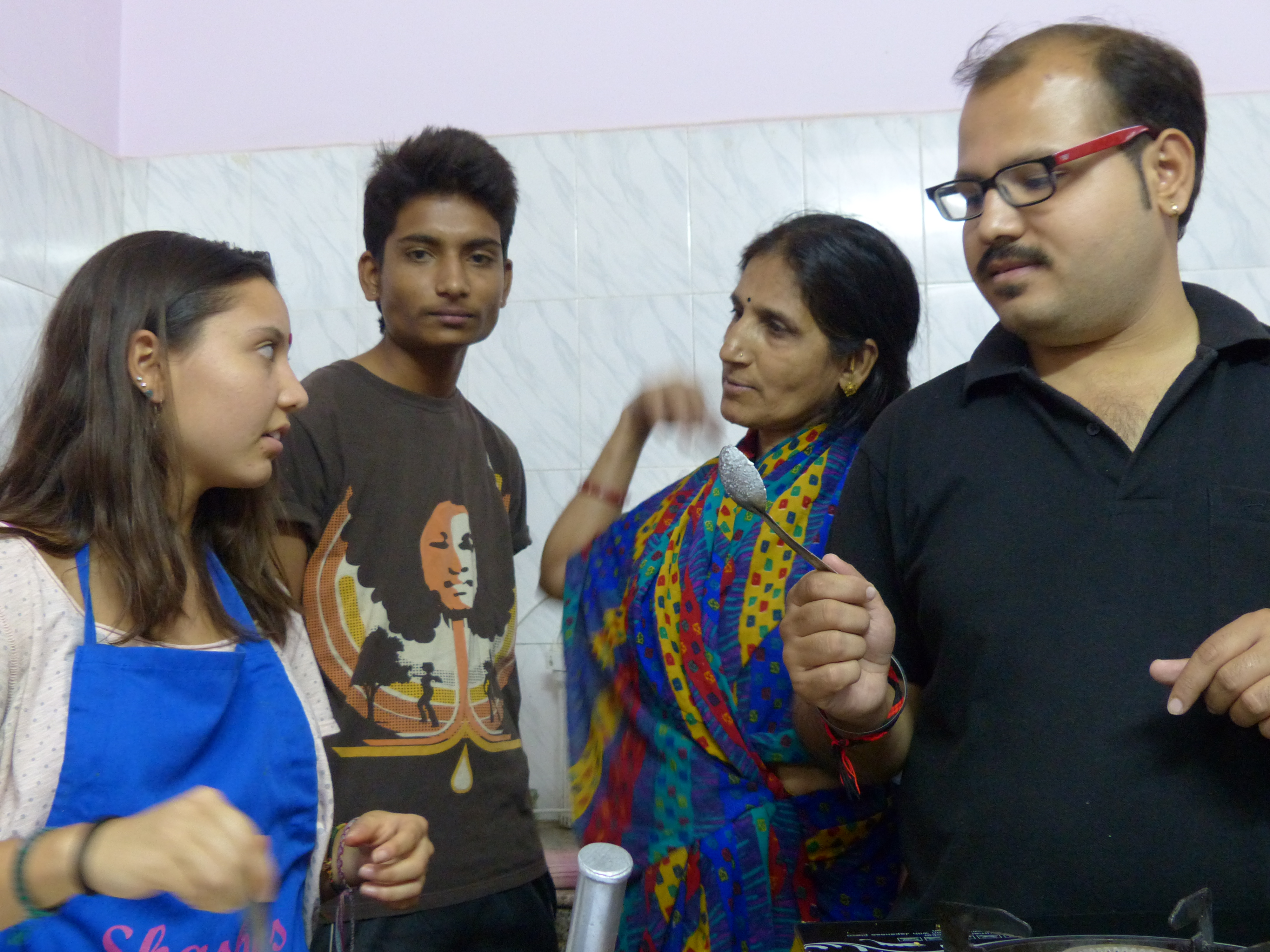
Shashi’s son, Ashish (right), is getting married soon, and there was some disconcerting talk about how Brenna was just the right size for Shashi’s nephew.
P1050234

Rolling chappatis (which are the same as rotis, in case you’re wondering).
P1050239

Full hearts and tummies.
P1050243

Here is Shashi’s masala chai recipe:
Serves 1 glass
Ingredients
* 1 glass of milk
* a quarter glass of water
* 2 heaped tablespoons of sugar
* 1 tablespoon of black tea (Indian Darjeeling tea is the best.)
Either
* a pinch of Masala Tea Powder (10 grams each of dry basil, nutmeg, dry ginger, cardamom and black pepper)
Or
* 2 pieces of cardamom
* 4 black peppercorns
* a fingernail of fresh ginger
Method
1. If using the fresh ingredients rather than the Masala Tea Powder, then grind the cardamom, black pepper and ginger roughly in a mortar and pestle.
2. Add all ingredients into a small saucepan and place on the stove.
3. Bring it to a boil, reduce the heat and simmer for approximately four minutes, stirring occasionally. The chai should start to turn a coffee brown color, and you should start to smell the cardamom and other flavors of the masala.
4. Once it is done, pour the tea into a glass through a strainer to remove the tea and other solid pieces left behind.

Summer flashback: weekend in Virginia

The first weekend of my visa run to Washington D.C., I caught the train to Williamsburg, VA, to hang out with a special friend and her family. Cami and I go way back. High school besties in Germany and college roommates in Kansas, we’ve maintained a close relationship ever since. She’s like the fourth Dickinson sister, and I claim a spot in her family, too. Failing at my traditional godmother duties, I was promoted to “fairy godmother” and more recently “zombie godmother,” and I love Cami’s two kids to the moon and back.

Here we are at church, where Quinn sang in the choir, Denison received a Bible and Cami got recognized for teaching Sunday School. Despite Cami’s dad’s prediction, lighting did not strike when I walked through the door. The lovely little Abingdon Episcopal Church was built in 1650 on land donated by George Washington’s grandfather.

At Busch Gardens for Quinn’s birthday, Cami and I tried to take a selfie with our KU Jayhawk. It took several attempts.

At the train station the next day, Quinn gave us a selfie lesson. She was clearly an expert.


I wish we could have spent more time together, but I’ll take what I can get.

Summer Flashback: Tony visits our Tibetan “godchild”

In 2012, I visited the Tibetan Children’s Village in Dharamsala and felt compelled to sponsor a student. We were assigned a little girl named Tenzin Nordon, who lives at another TCV campus in southern India.
Tenzin

Tenzin writes to us a few times a year, enclosing cute drawings and notes written in marker. Her letters used to start with “Dear Sponsor,” but lately she’s switched to “Dear Godmother,” which feels more than a bit misguided.

Tony and I talked for a year about visiting Tenzin, so we finally scheduled a long weekend get-away to Bylakuppe, home to thousands of exiled Tibetans in the Indian state of Karnataka. Our trip was scheduled for mid-May. We shopped for gifts, picking up a rubik’s cube, a couple board games, an art project and some clothes. Tony was remarkably savvy at shopping for a 12-year-old girl.

Unfortunately, I was sent to Washington D.C. that weekend to sort out my Indian work visa, so Tony had to make the trip alone. I’ll let Tony tell the story.

Me: Describe the journey.
Tony: We landed in Bangalore and a driver met me for a 7-hour ride to Kushalnagar (the nearest town to the TCV school). When I landed, I felt like I was in the desert. I looked around and things were pretty darn barren. The air was cleaner than in Delhi, but there was a quietness, a lifelessness. But by the time we got to Kushalnagar, I have never in life seen such fertile land.

There were fruit stands everywhere. There was no poverty like you see in Delhi. It seemed everyone had food and everyone was being used productively; everyone had a job. There were truckloads of mangoes everywhere, and everywhere you looked there were giant coffee plantations and bananas growing. Stall after stall of produce. There were mango stands with five or six or seven different kinds of mangoes, stacked up in pyramids.

I just kept thinking the wrong person had made it to this beautiful paradise; I knew how much you would love it. (Sharon’s comment: Mangoes are my favorite fruit, and Tony doesn’t even LIKE them! So unfair.) The cows were really healthy looking. Fat and clean and well fed. The women weren’t wearing western clothes. They were wearing Indian clothes and they were smiling and happy, and because the area was so busy, they were all carrying things on their heads. It was a long drive, but after about four hours, I saw a Kentucky Fried Chicken and Costa Coffee, so I had a KFC sandwich and French fries. It was out in the middle of nowhere. You couldn’t just drive past it.

I stayed at this amazing hotel – Amanvana Luxury Boutique Spa Resort – that had an Alice in Wonderland theme in every room. Every time you had tea or went to the spa, there were these little allusions to Through the Looking Glass. There were murals on the walls, and they left copies of the books around. It was me and groups of Indian women on holiday. They gave me a big Indian breakfast, and we had a Indian buffet at night. It was pretty darn spicy.

Me: So I booked a day of sight-seeing for us. Did you take advantage of it?
Tony: I went to some coffee plantations in the morning. They were huge, owned by Nestle. It was a holiday, so there wasn’t much going on. My guide and I got out and walked up and down the fields. He talked to some women who were working in the fields, and he told me some facts about how much coffee they produce. But the show they give to tourists didn’t happen, and there were no English speakers.
I also went to an elephant sanctuary, and I had to take a ferry ride across a river to get there.

They walked the elephants down to the river and bathed them and they let people who were so inclined bathe the elephants and interact with them. I was actually kind of sad because they were hobbled with big heavy chains, and some of the people in charge of the elephants were young boys and they weren’t gentle or kind. They didn’t have any compassion for the animals.

Everybody was there to see the elephants, and a lot of people were looking at me, too. I enjoyed seeing the people from all over India. I got to see all different styles of dress and mannerisms, and they didn’t sound the same as people from Delhi.

Me: Then did you go to the TCV school the next day?
Tony: I had a big breakfast and packed up the little presents for Tenzin. Mr. Dorji (the sponsorship secretary) showed me all over the school – the computer center, which they were really proud of; the dormitory, where all the girls stay; the preschool classrooms.

He introduced me to a preschool teacher and he said she had been HIS teacher when he was little. He had grown up at this campus.

I got to meet several of the secretaries and they told me the history of the school. An Englishman who died recently was the first head of the school in 1981. It impressed me that someone could do something like that and it would survive long after he was gone. I thought about the countless lives he improved.

I met Tenzin, and she seemed happy and popular and curious. She was very appreciative but very very shy. I got to say hello to a few of her friends, and I watched their morning assembly. I got to hear them sing their own national anthem and the Indian one.

Me: What stuck with you after touring the school?
Tony: The kids don’t have much stuff, and they have a limited amount of space. They have a few clothes and a few little personal things. I can tell that they never had any privacy. Yet they were happy and cheerful and laughing, and everything they did have was clean and nice. It made me happy to support this institution because I could tell they were taking good emotional care of the kids.

Me: Anything else?
Tony: I was just sad I didn’t have you there to share it with. That’s the emotion that pervaded the whole thing because I knew how much you would have enjoyed it.

Goan fisherman steal the show on ‘dolphin trip’

Early Friday morning, a longboat arrived at the beach in front of our bungalow. Similar to a large canoe, it featured an outboard motor and a wooden outrigger cobbled together with yellow rope. Marianna and I waded through the water to climb into the boat, and sat while the older fisherman and his young assistant remained in the water waiting for a break in the waves before pushing the boat back out to sea for our “dolphin trip.”

We motored to the edge of the bay, occasionally pausing to scan the sea for dolphins. A few fins surfaced. An arched back, a flip of a tail. Maybe five dolphins in all, including a baby. After the excitement of our dolphin encounter in the Maldives last year, this was rather anticlimactic.

Our captain maneuvered his little craft toward a larger boat, where men were hauling in a huge red net jumping with sardines. About ten skinny workers clad in underpants and tank tops clustered at the stern, pulling the net hand-over-hand, their upper bodies bowing jerkily up and down, brown legs tensing with the effort. They sang as they worked, a repetitive chorus in response to a leader’s verse. Our boatmen chuckled, and the younger man noted how singing makes work easier. I almost asked what the song meant, but I worried the lyrics might be embarrassing to translate. Instead, I asked how long it would take to finish the job. About one and a half hours, he replied.

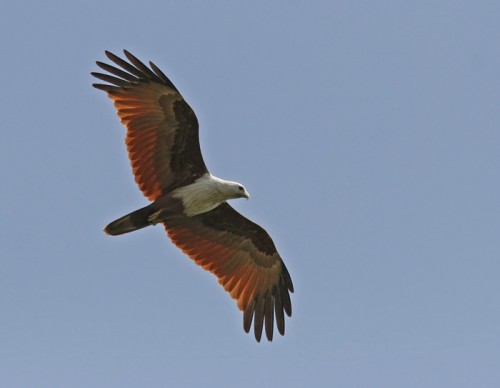
As the song continued, empty net piled at the fishermen’s feet and captive fish were forced into the remaining space at the sea’s surface. Trapped, the sardines leapt and splashed, some catapulting out of the net and back to freedom, some flipping into the claws of swooping brahminy kites. The brown-and-white birds circled the boat, stealing frantic fish – both at sea level and in the air. Near collisions and threatening shrieks resulted in surrender, fish falling from loosened claws, snatched from the sky by the aggressor.

I hadn’t brought my camera on our brief excursion, but the image would have made a brilliant photo. The paint-peeling fishing boat, bobbing in a jade sea, dark bodies bent over crimson nets, small orange buoys evenly spaced along the net’s edge floating amorphously around the boat, a blazing neon sun rising over the forested hills that jut up from the beach, and birds of prey suspended like a mobile overhead.

Here’s a photo of a brahminy kite taken by Johan Stenlund and posted on his website, Birds in India/Goa. Now imagine scores of them circling the fishing boat!
brahminy kite

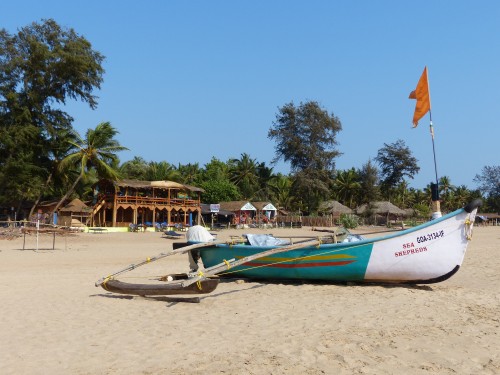
Here’s a photo of a fishing boat at our beach, similar to the one that took us on our “dolphin trip.”
P1040254

Goa-geous spring break!

After countless vacations at the various baby-powder beaches of Thailand, I have developed a serious case of Beach Snobitis. I have high expectations for cleanliness of sand and sea, pleasant water temperatures, spectacular panoramas, and local flavor. I also have little tolerance for drunken backpackers, cigarette butts, and loud late-night music. Stranded in India until certain visa issues get resolved, I grudgingly agreed to Spring Break on the beach in Goa with my friend Marianna. Generally an optimist, I was, nevertheless, prepared for disappointment.

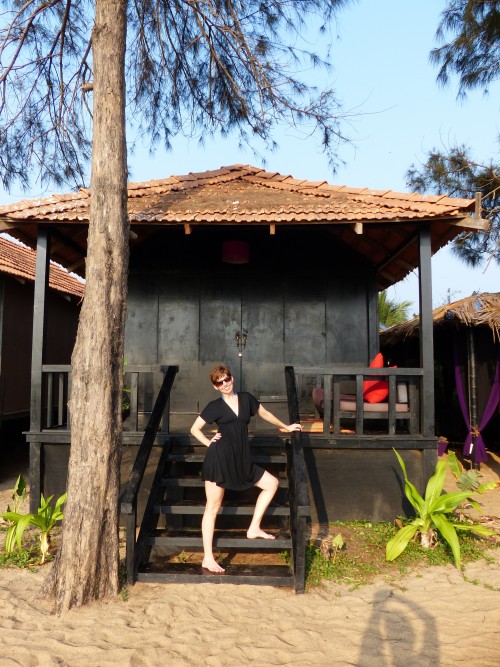
We arrived Tuesday afternoon at H2O Agonda for five nights in a beachfront bungalow. Realizing our hut abutted the thatch-roofed restaurant, I immediately protested. Most beach hotels cater to the party crowd, and I am too old for that. Insomnia is my constant companion; I don’t need help from the hotel bar. Unfortunately, no other bungalows were available, so we moved in to the space, which is equally split between a bedroom and an open-air bathroom.

I’ll spare you the suspense: This place is wonderful! The loudest sound is the crashing surf. Aside from an occasional cow patty, the sandy beach is clean and mostly litter-free. At one end, boulders rise up in clusters, begging to be climbed. I splashed into the warm sea this morning to find turbulent water and powerful breakers, perfect for body surfing. Eventually worn out, I sat at the edge of the tide, drizzling wet sand onto my legs and letting the waves wash over me.

I guess I can handle this for a few more days.
H2O Agonda

Wrapping up winter break at Koh Chang

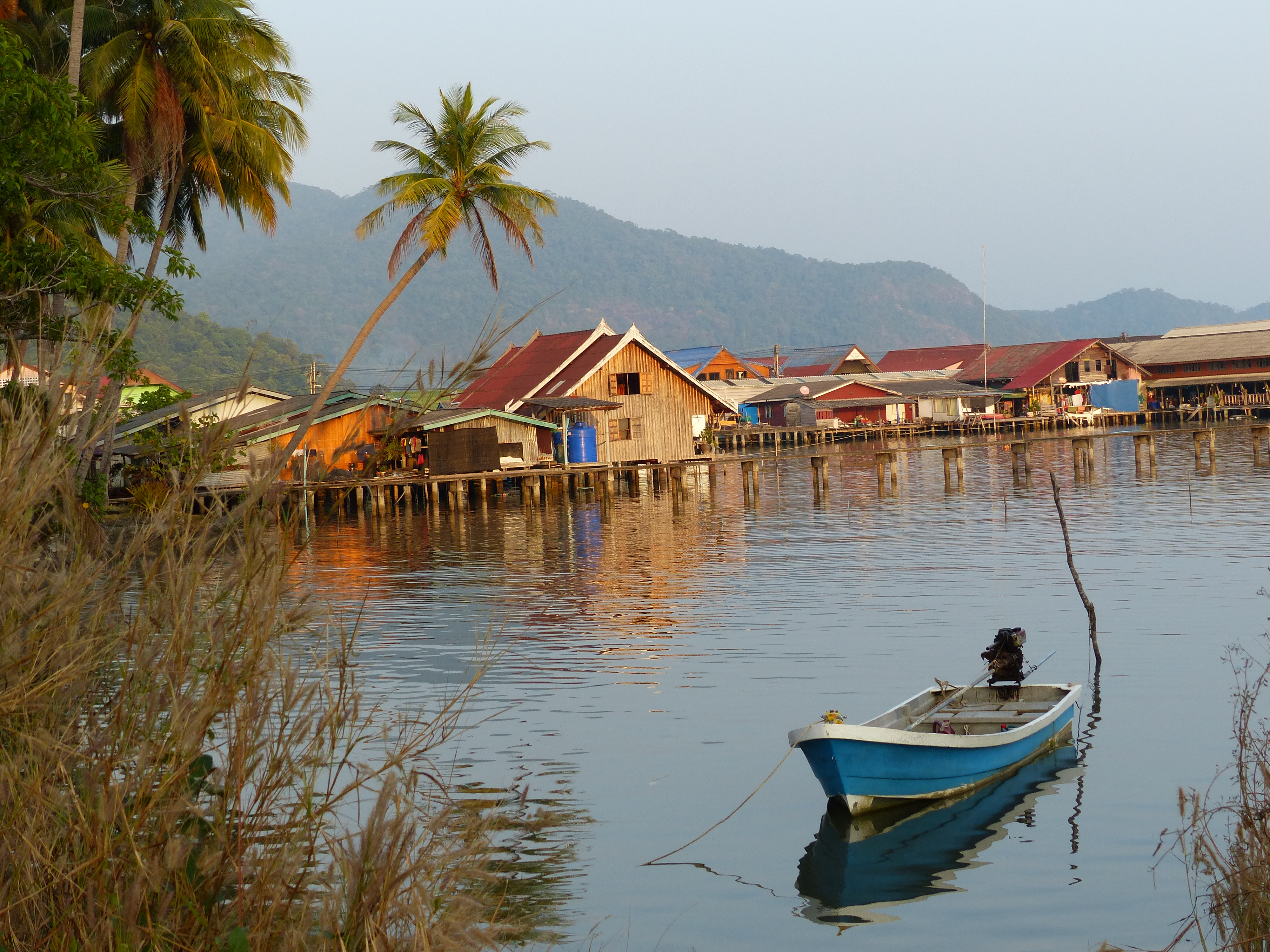
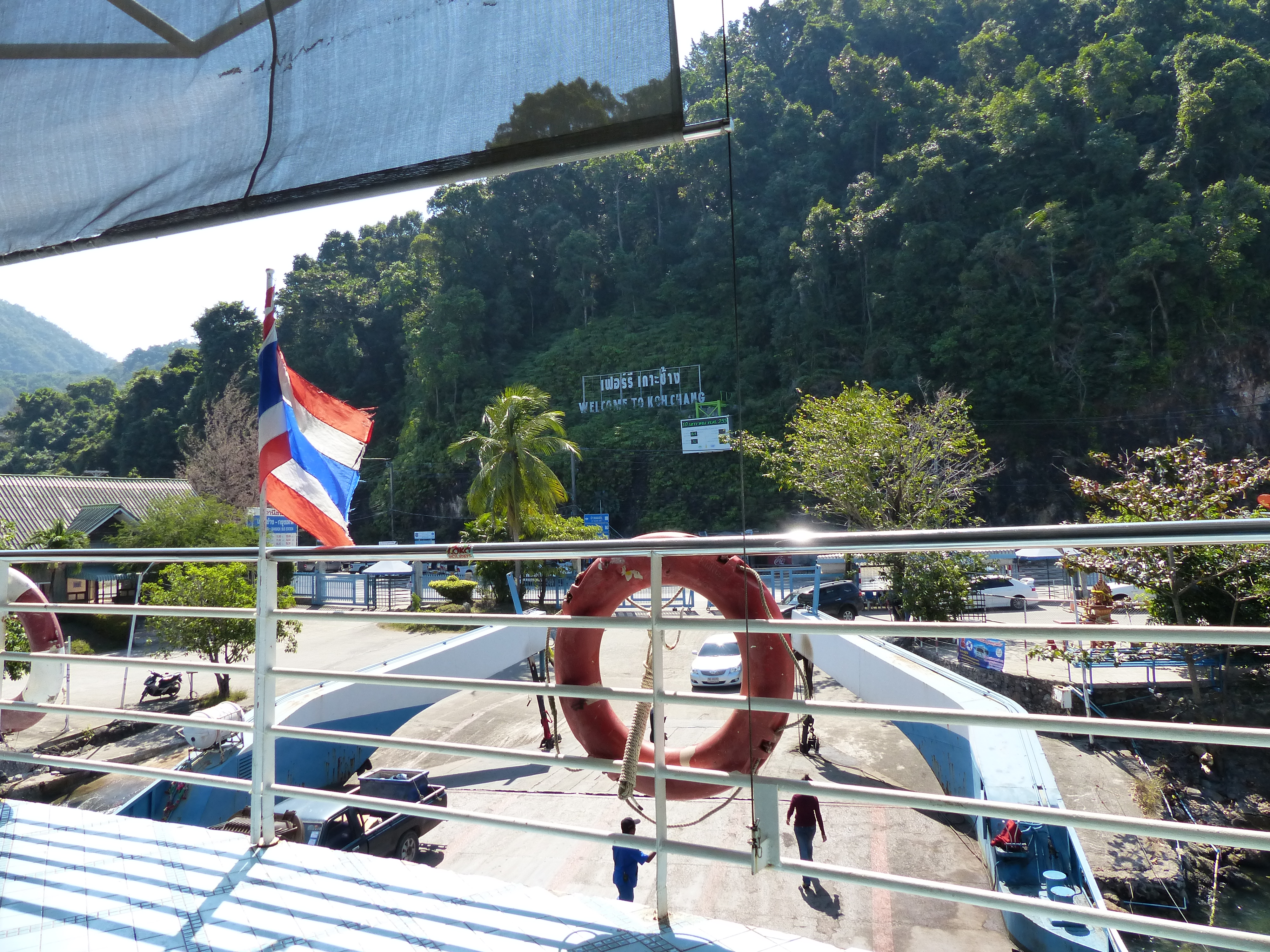
For the last week of our semester break, Tony and I flew from Korea to Thailand. We decided to splurge on a luxury resort on the island of Koh Chang, which is located southeast of the mainland. On this map, our hotel’s pin is letter A.

View Larger Map

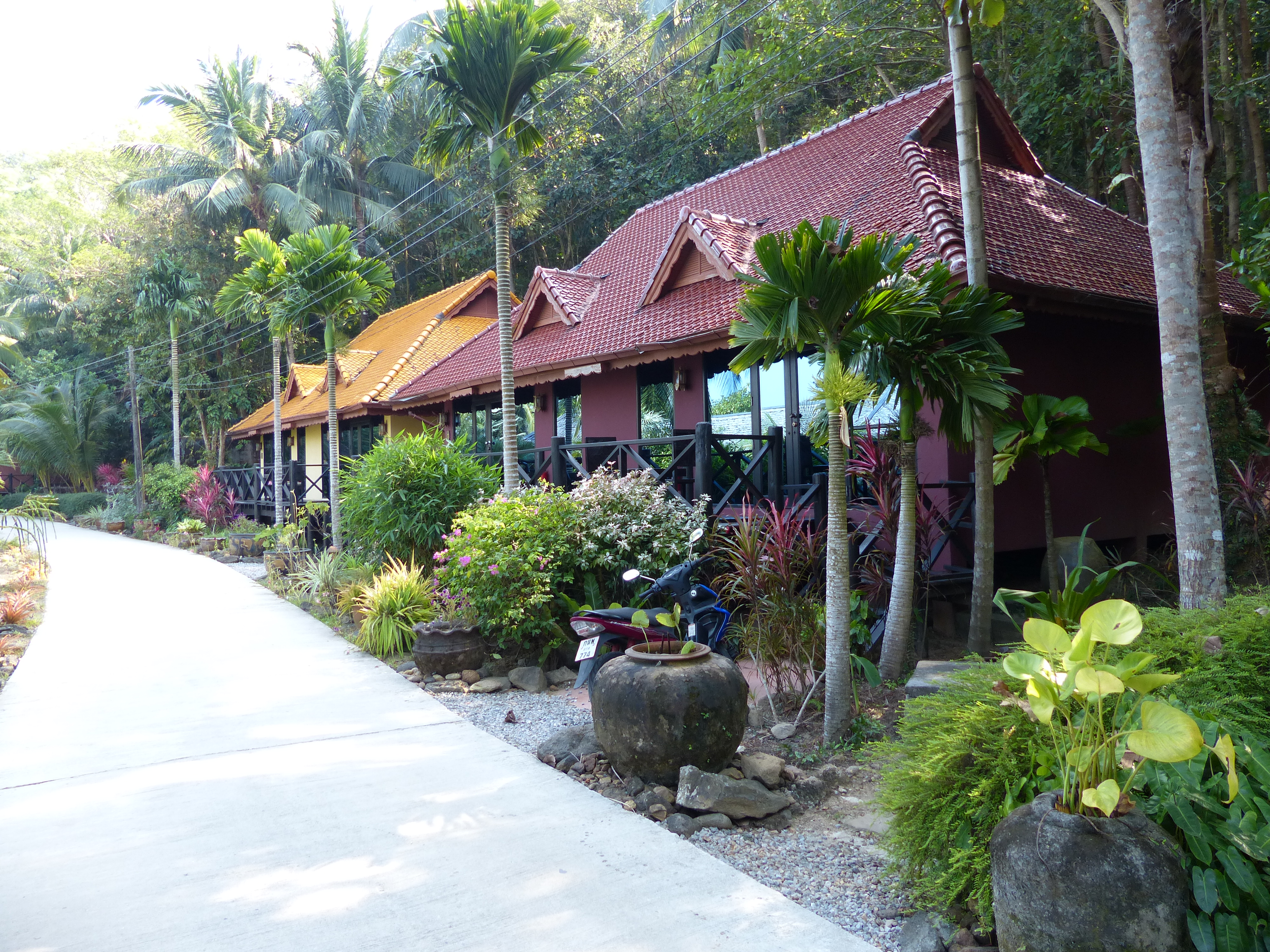
If you check out our hotel’s website, you’ll think “Nirvana” was an appropriate name. Well, let’s just say it should have been called “Not Nirvana.” It may have been luxurious at one time, but alas, those days are over. No worries. Thailand is always amazing, and our week was filled with sunshine, great food, fresh air and stunning scenery. Other than one crappy day of killer seasickness – or a mild flu? – we had a great time.

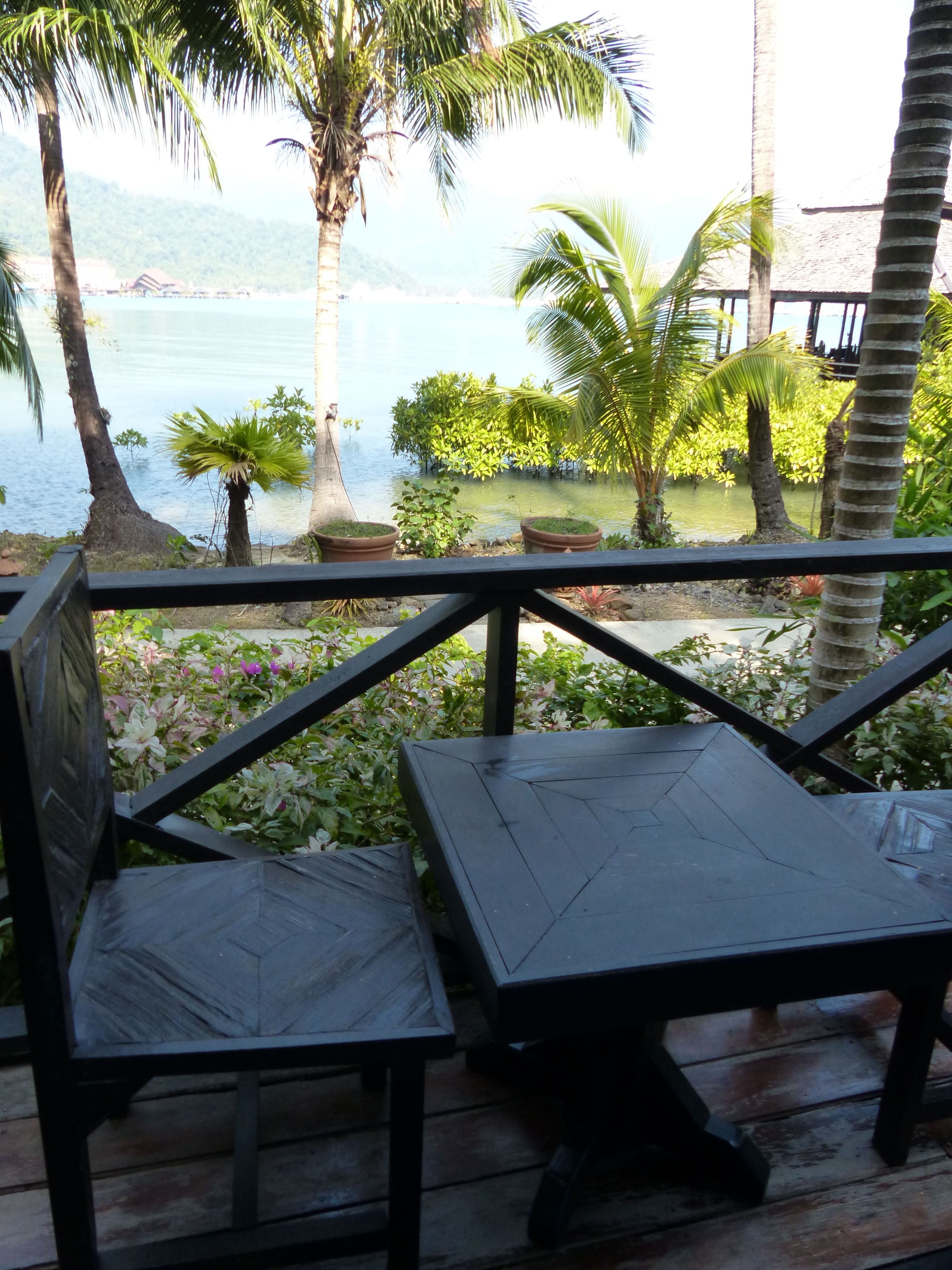
Our home away from home. I know, it LOOKS like Nirvana. Just trust me.
P1030865

This is the railing from which a monkey tried to steal my bikini top. It’s also the railing where a monkey picked bugs off another monkey while straddling Tony’s shirt that was drying there. Ewww! We didn’t want to sit out here because of all the nasty monkeys.
P1030863

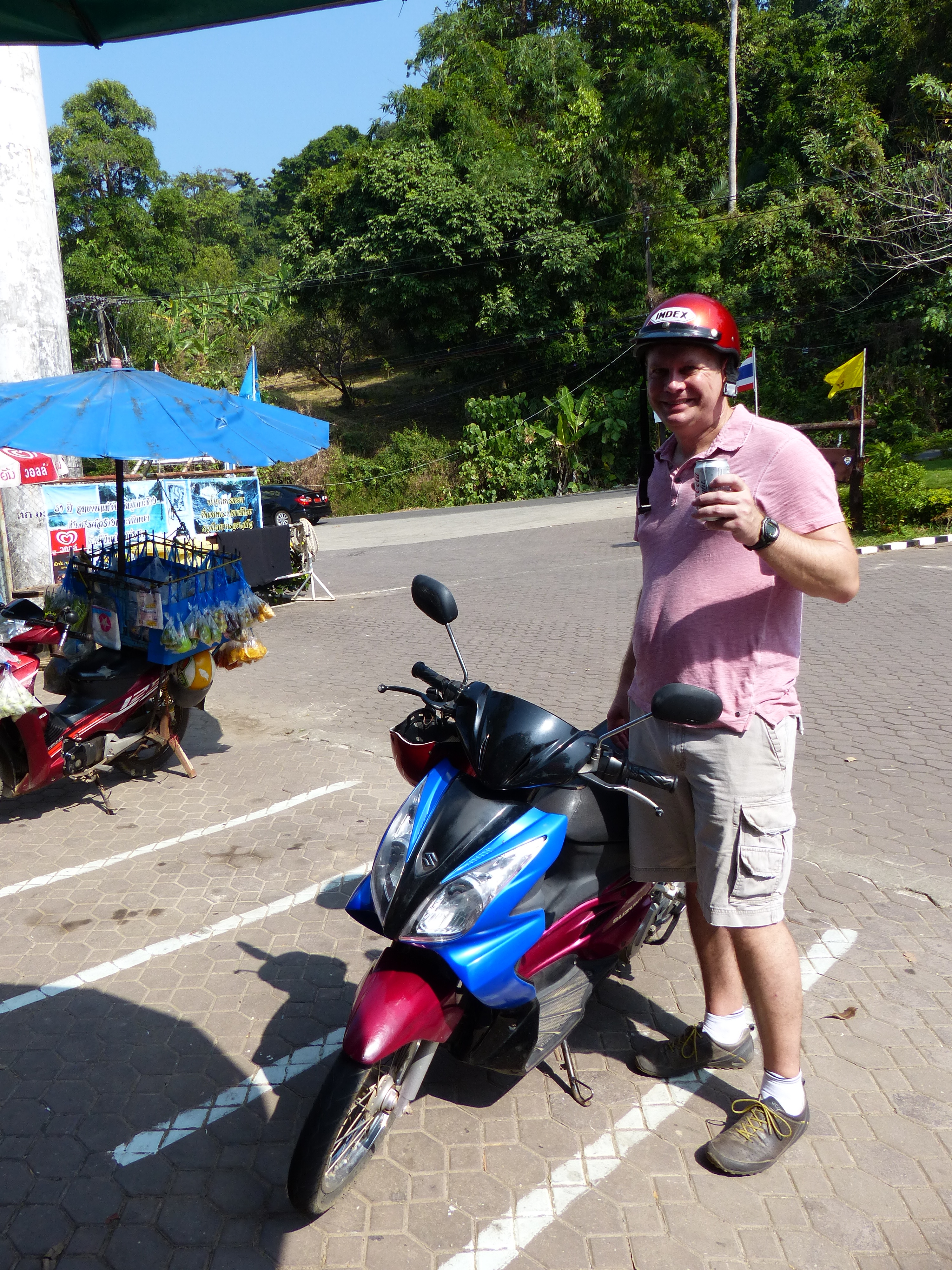
Tony rented a scooter to shuttle us around the island. We’ve done that before in other parts of Thailand, but Koh Chang presented bigger challenges. It was way hillier with hairpin curves, poorly maintained roads and lots of seemingly drunken backpackers trying out scooters for the first time. After two years with only a motorbike for transportation when we lived in Laos, Tony became an expert scooter driver, and I felt safe the whole time.
P1030854

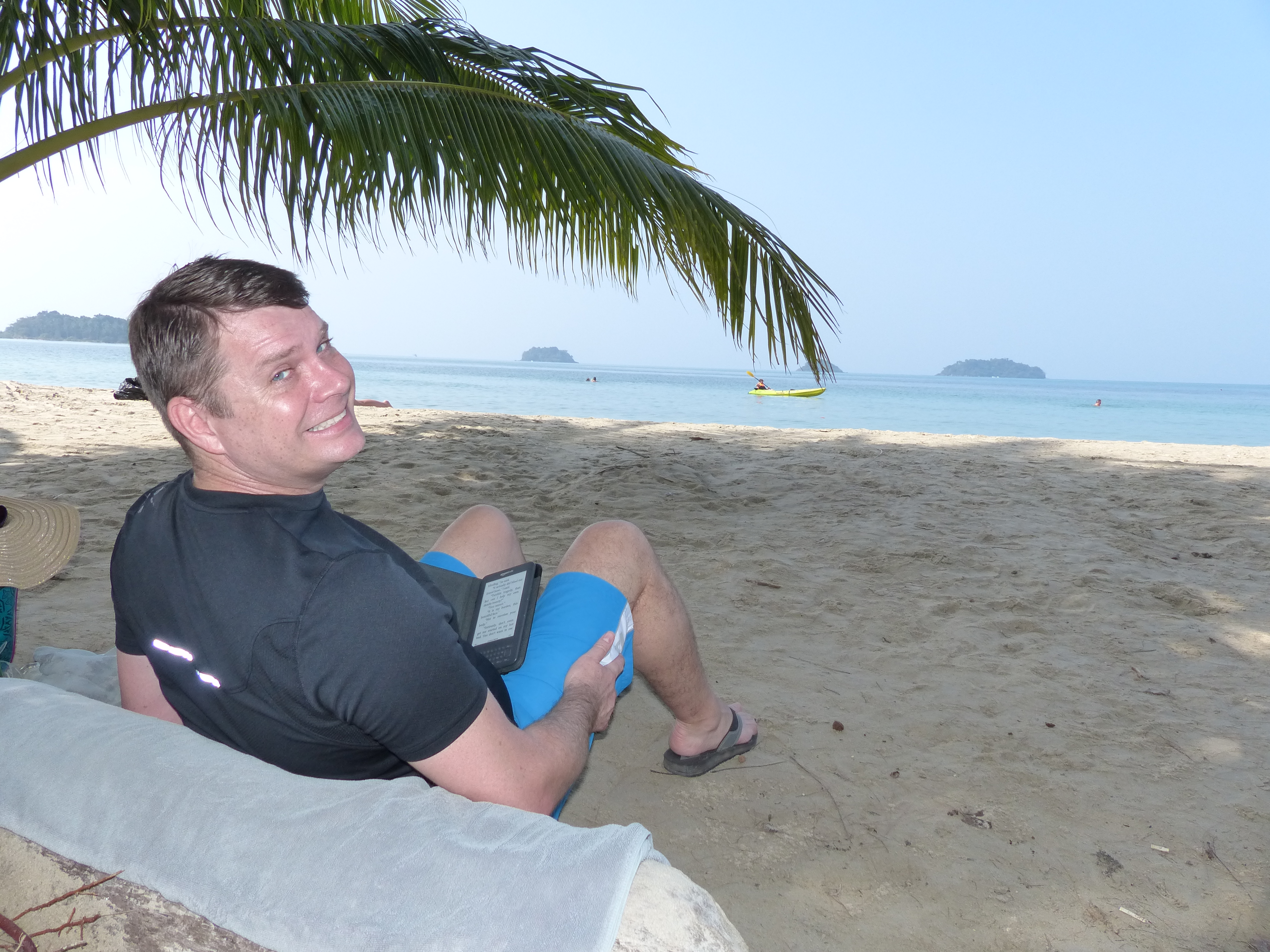
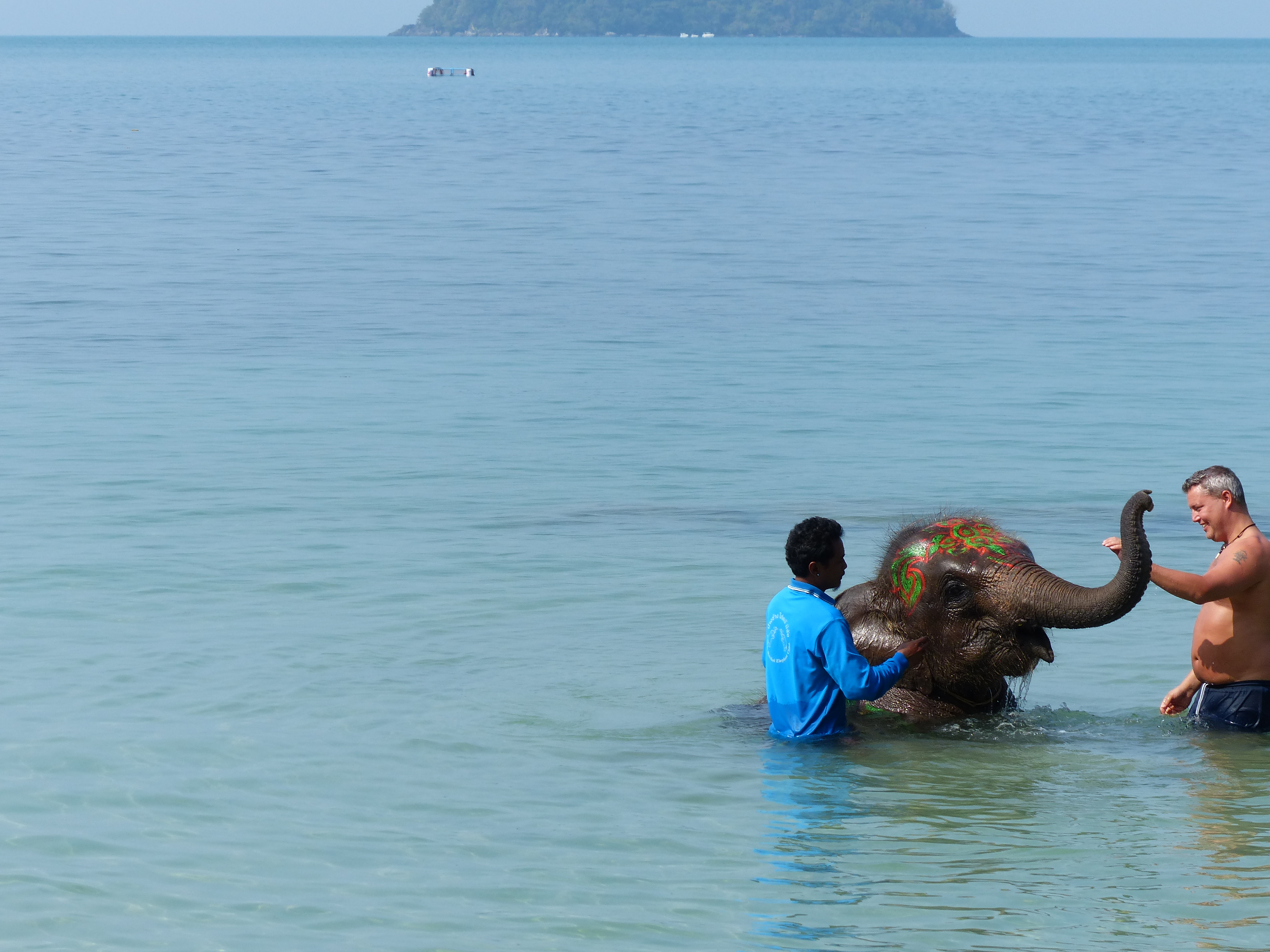
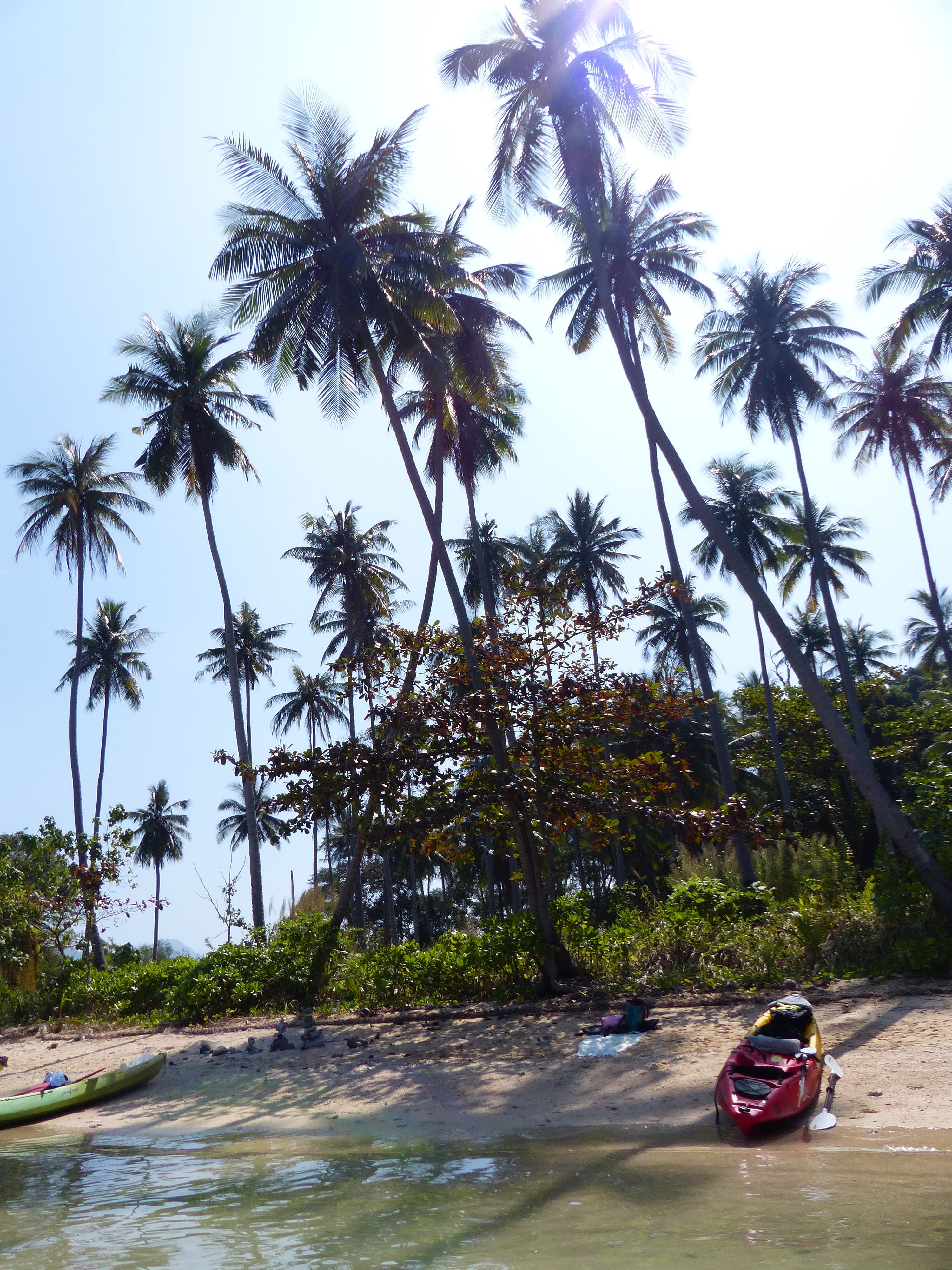
Twice, we scootered north to Kai Bae Beach. The first time, we just played in the water, watched tourists frolicking with baby elephants and hung out in the shade of a big palm tree.
P1030888

P1030885

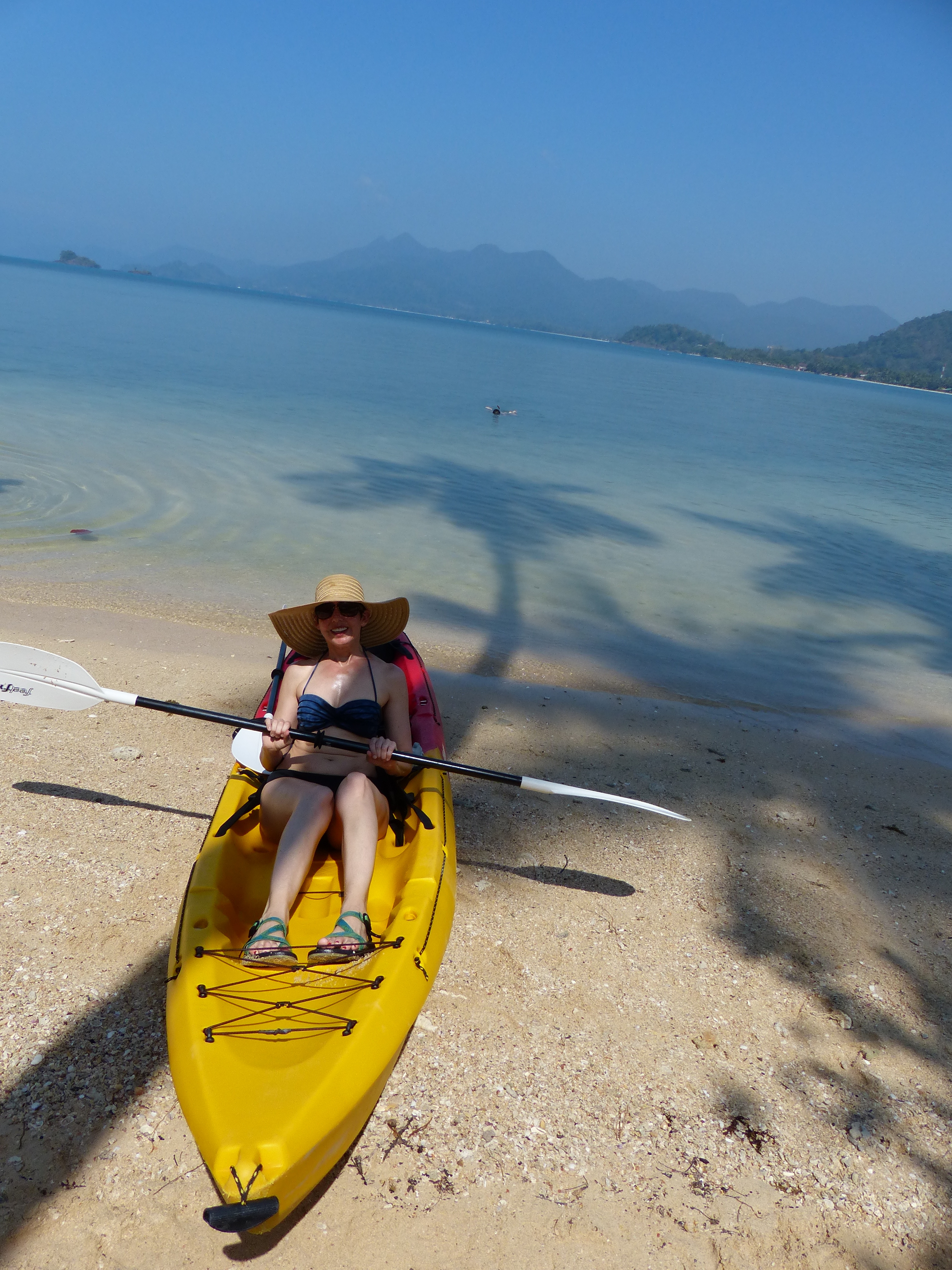
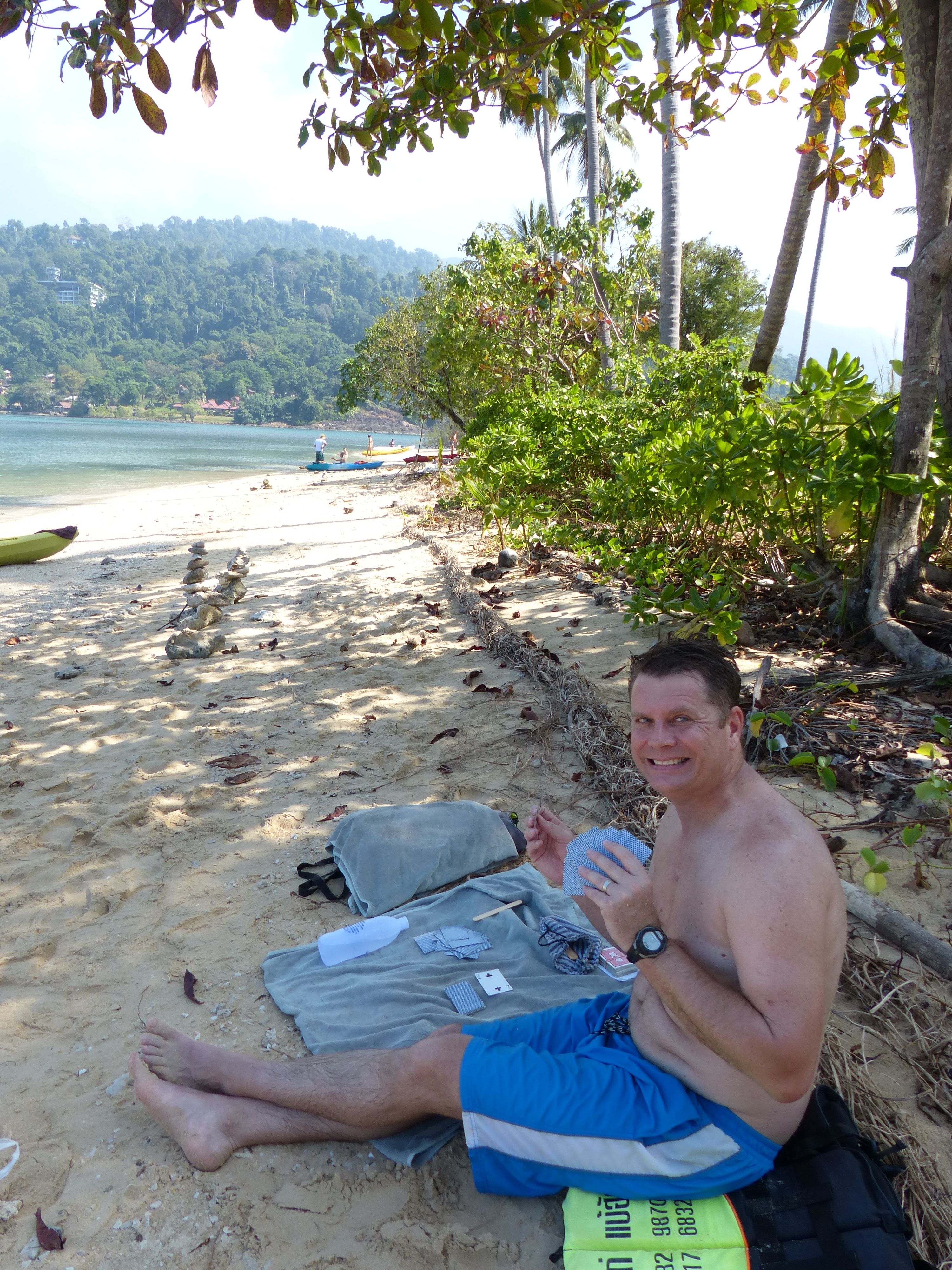
The second time, we rented a kayak and rowed to a smaller island, where we swam, played cards and enjoyed the serenity.
P1030951

P1030950

P1030953

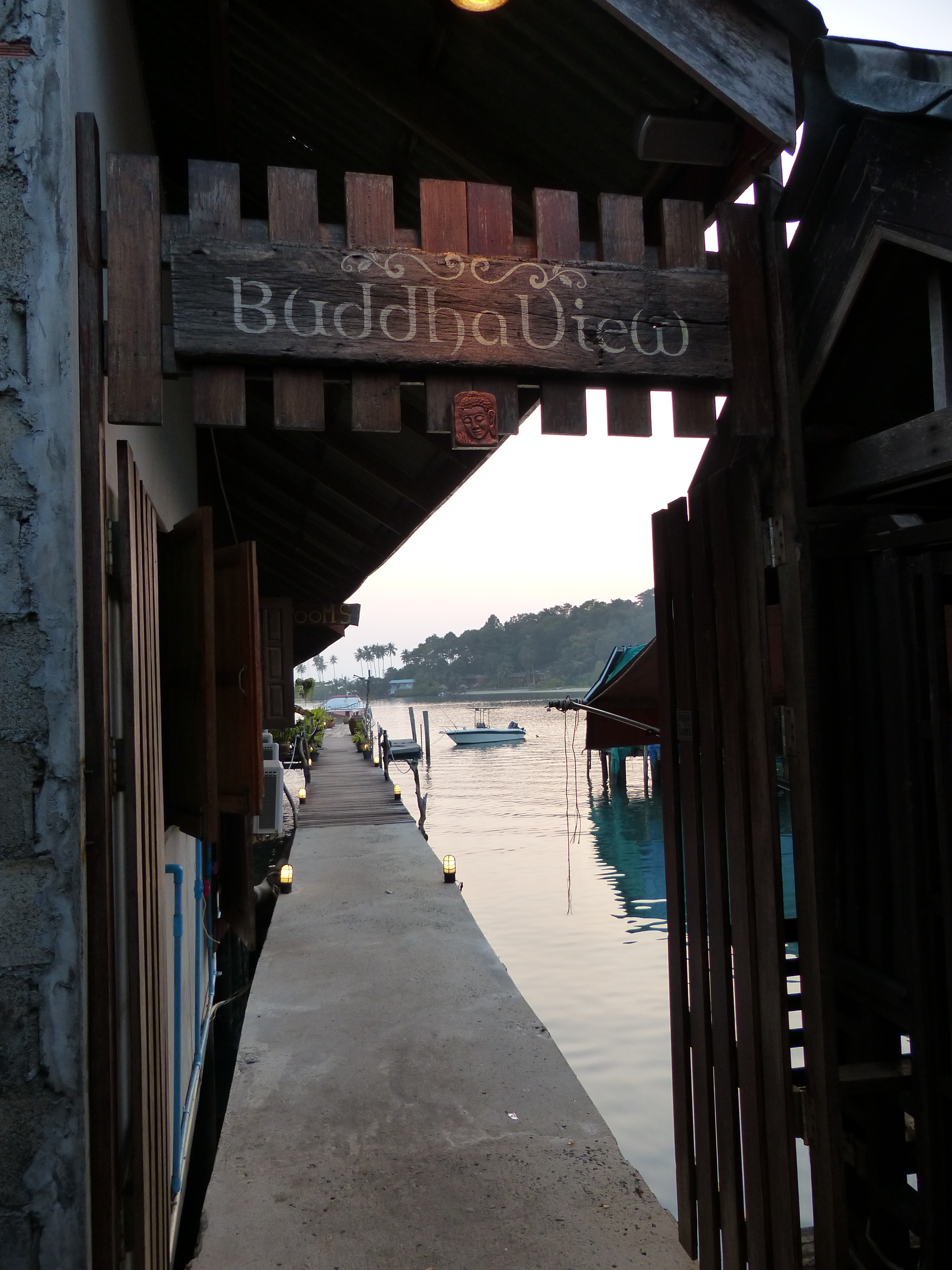
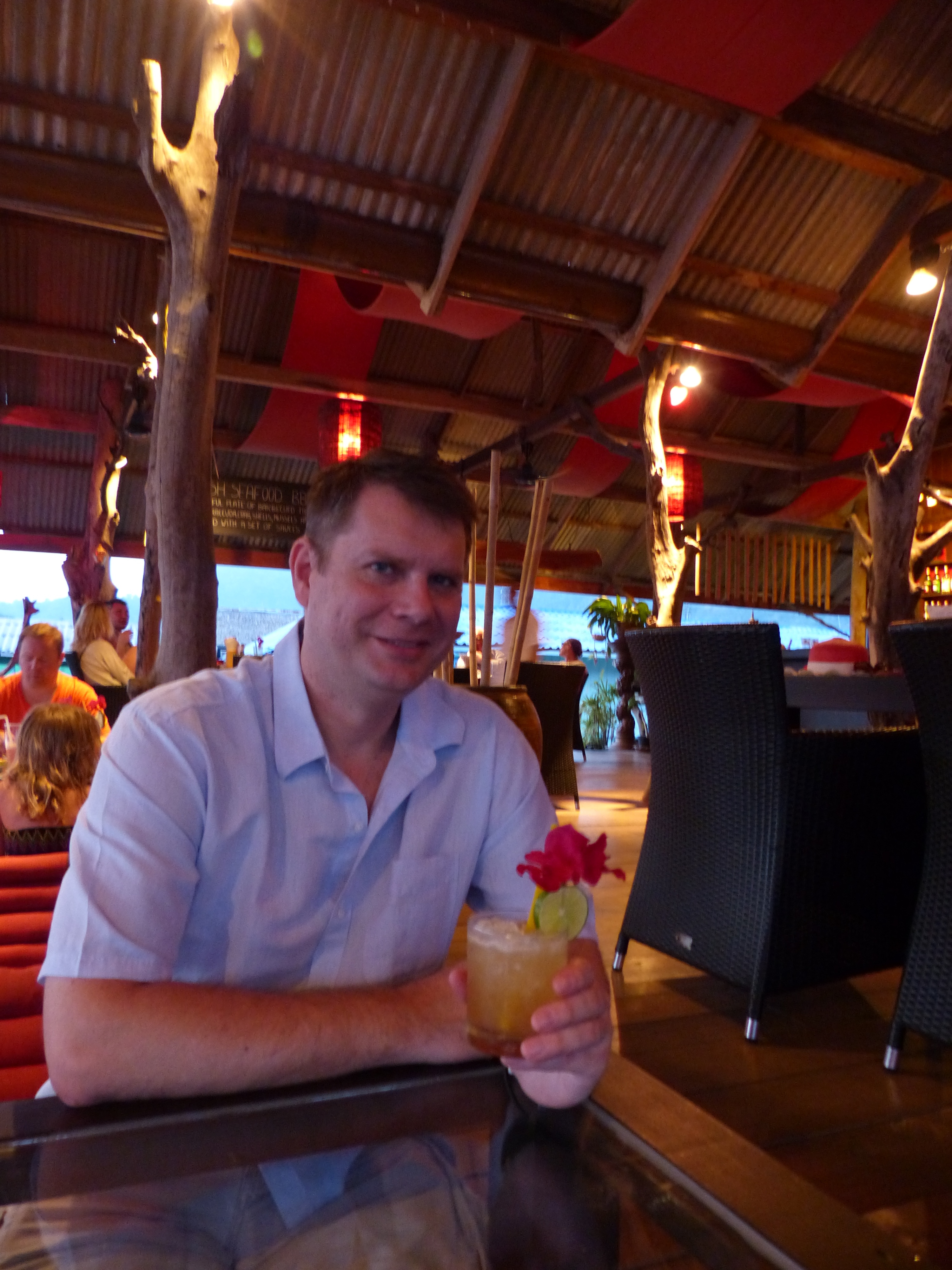
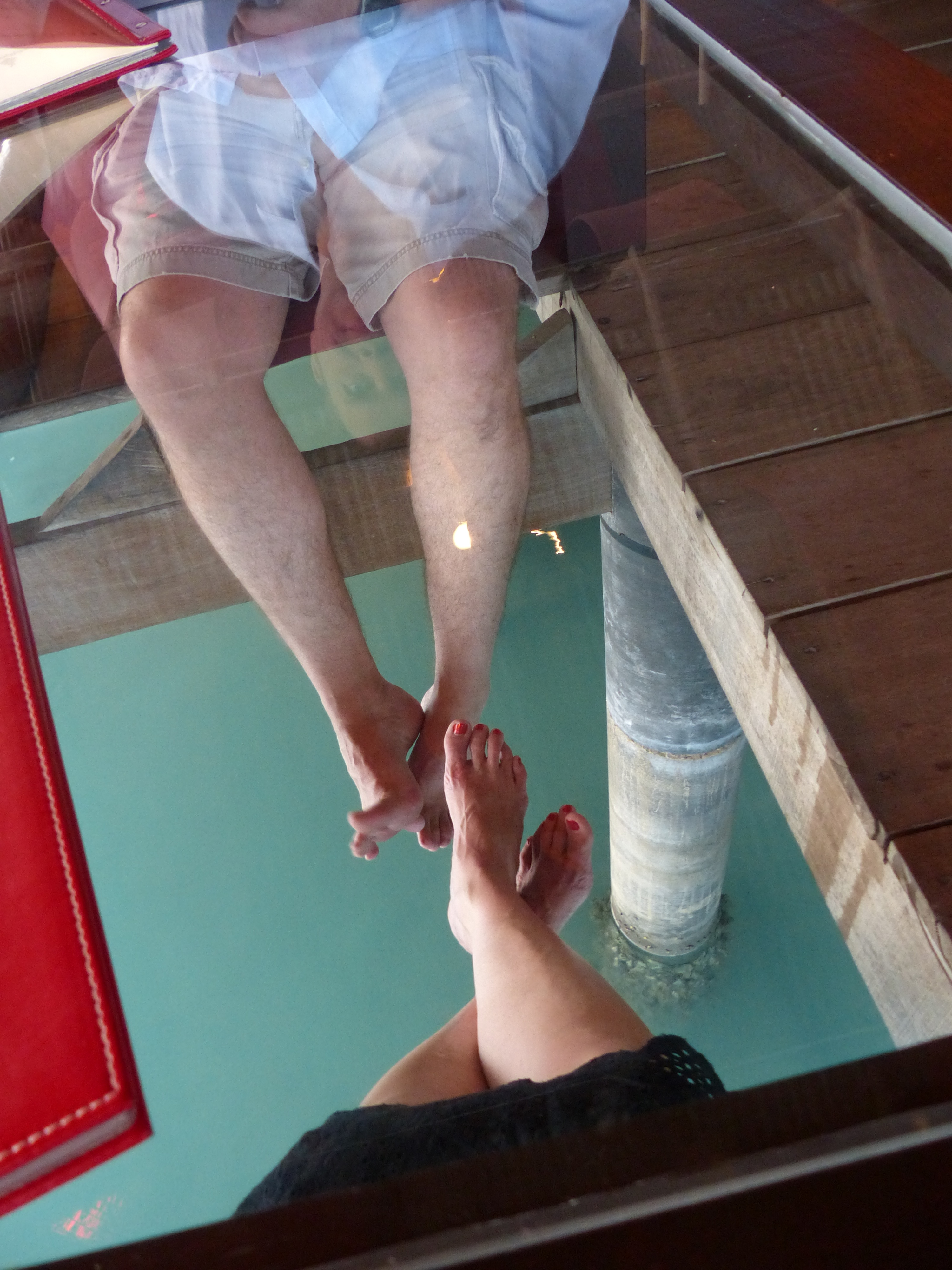
We kept returning to Buddha View Restaurant in Bang Bao, a short walk or ride from our hotel. Delicious Thai food and lovely views! One time, we sat at a table with the floor cut out, so our legs dangled over the water.
P1030879

P1030883

P1030880

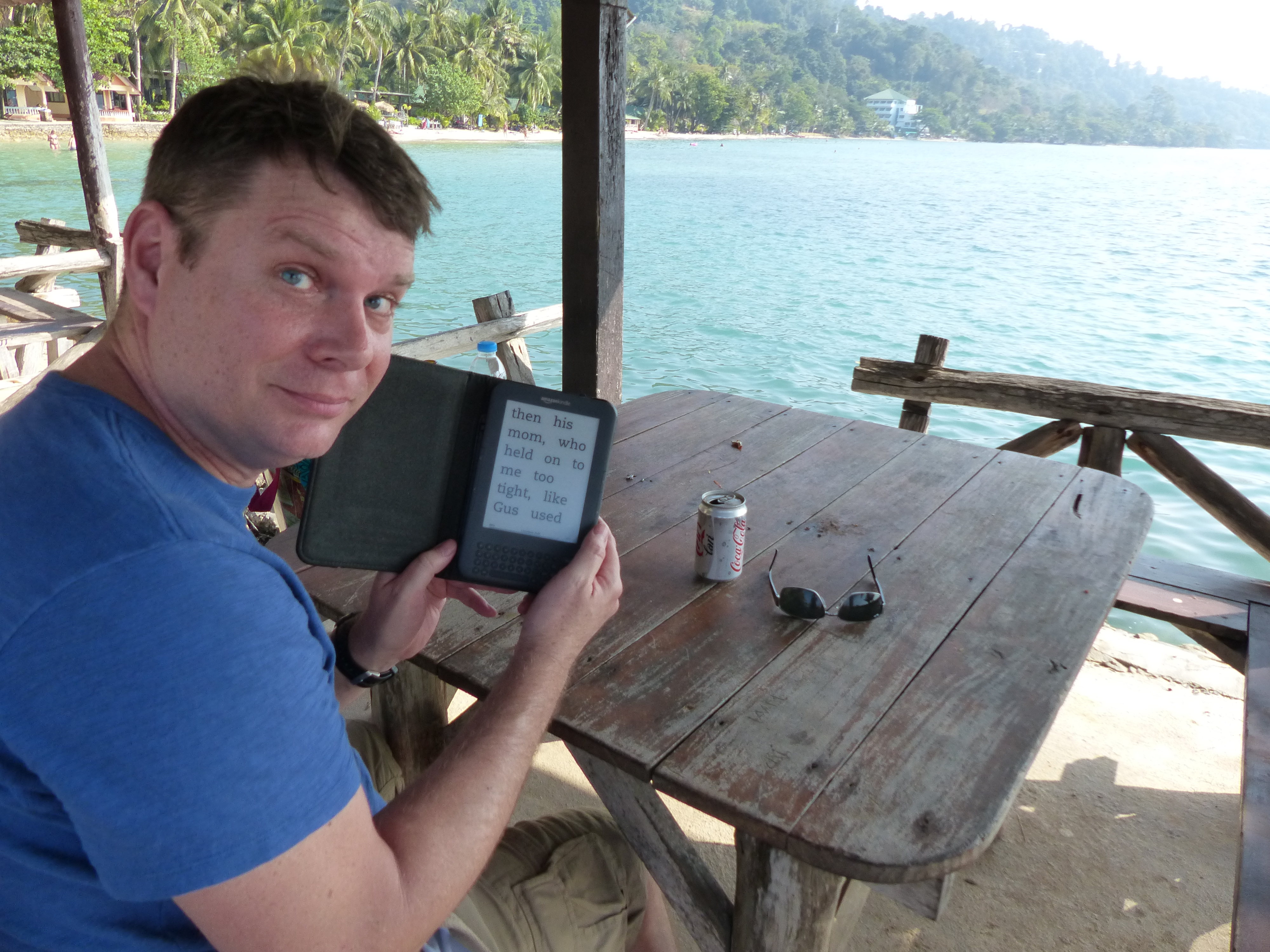
Poor Tony. While putting his shoes on at the restaurant entrance, he bent over and dropped his reading glasses in the sea. For the rest of our trip, he had to jack up his kindle font to read his book.
P1030915

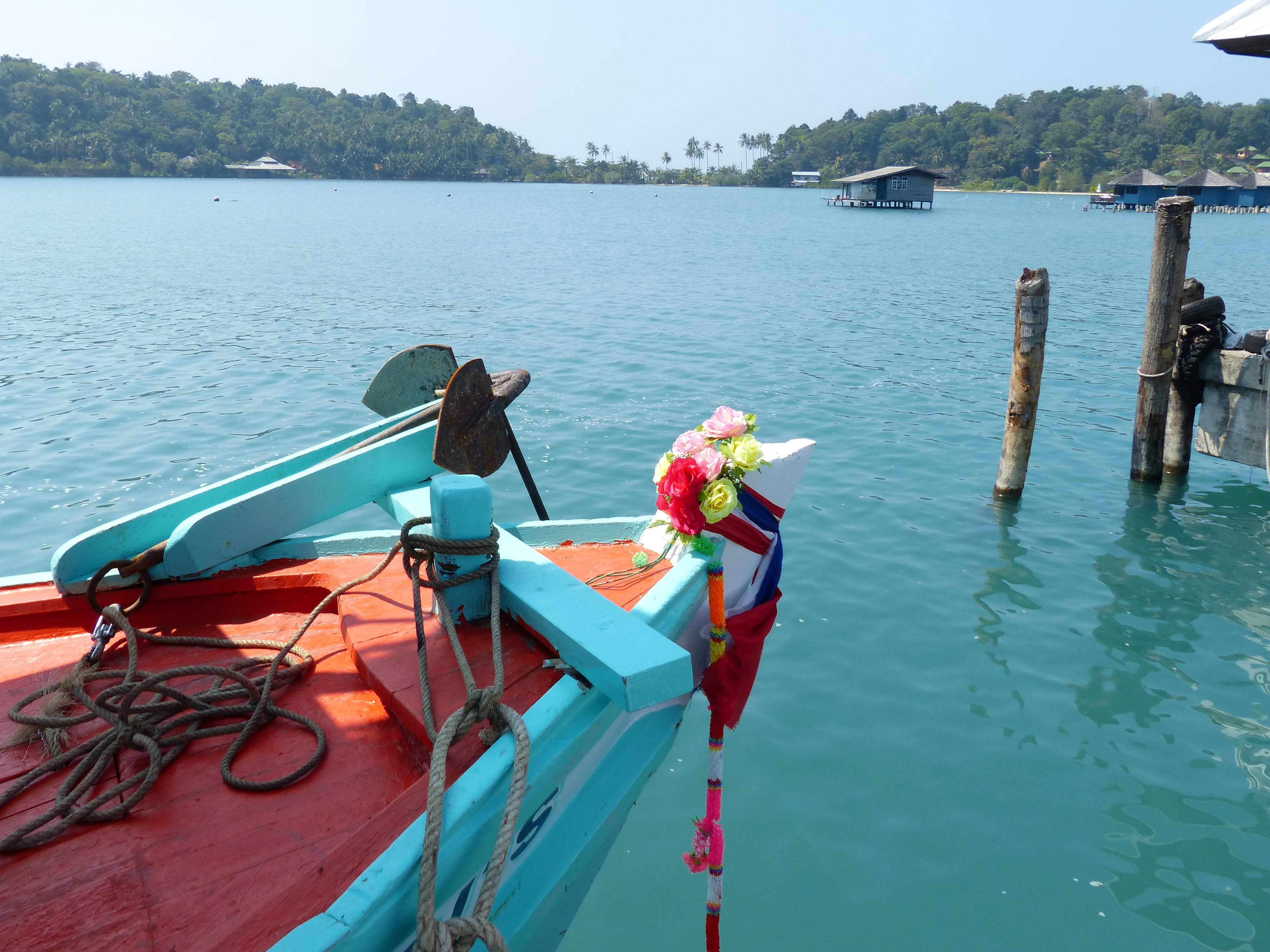
The restaurant was part of the “fisherman’s village,” which was one of the attractions for me when I was booking our hotel. However, it’s really a collection of touristy shops and restaurants and the launching point for all the dive boats. Ah well, it was still interesting and offered some nice photo opps.
P1030849

P1030871

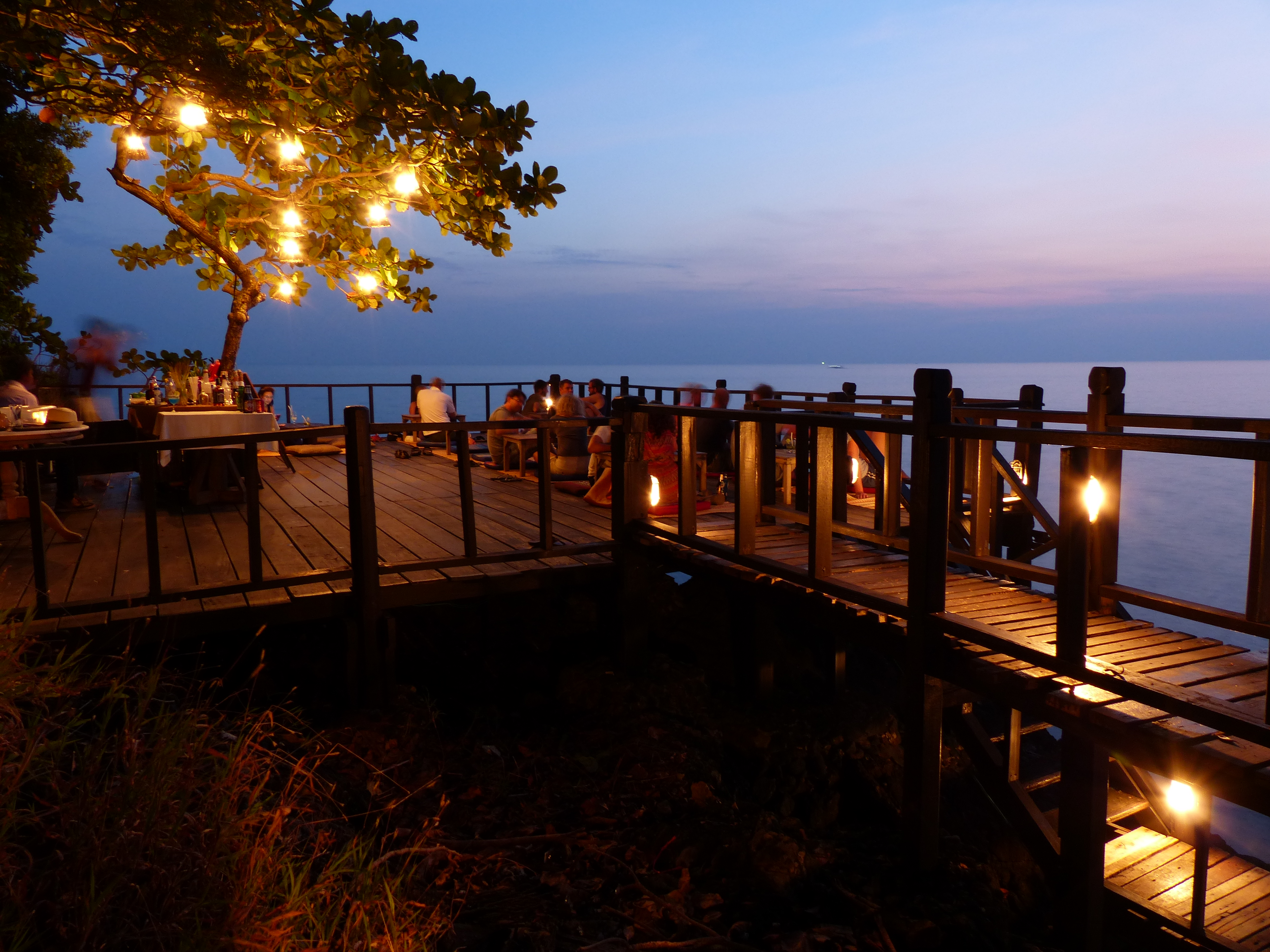
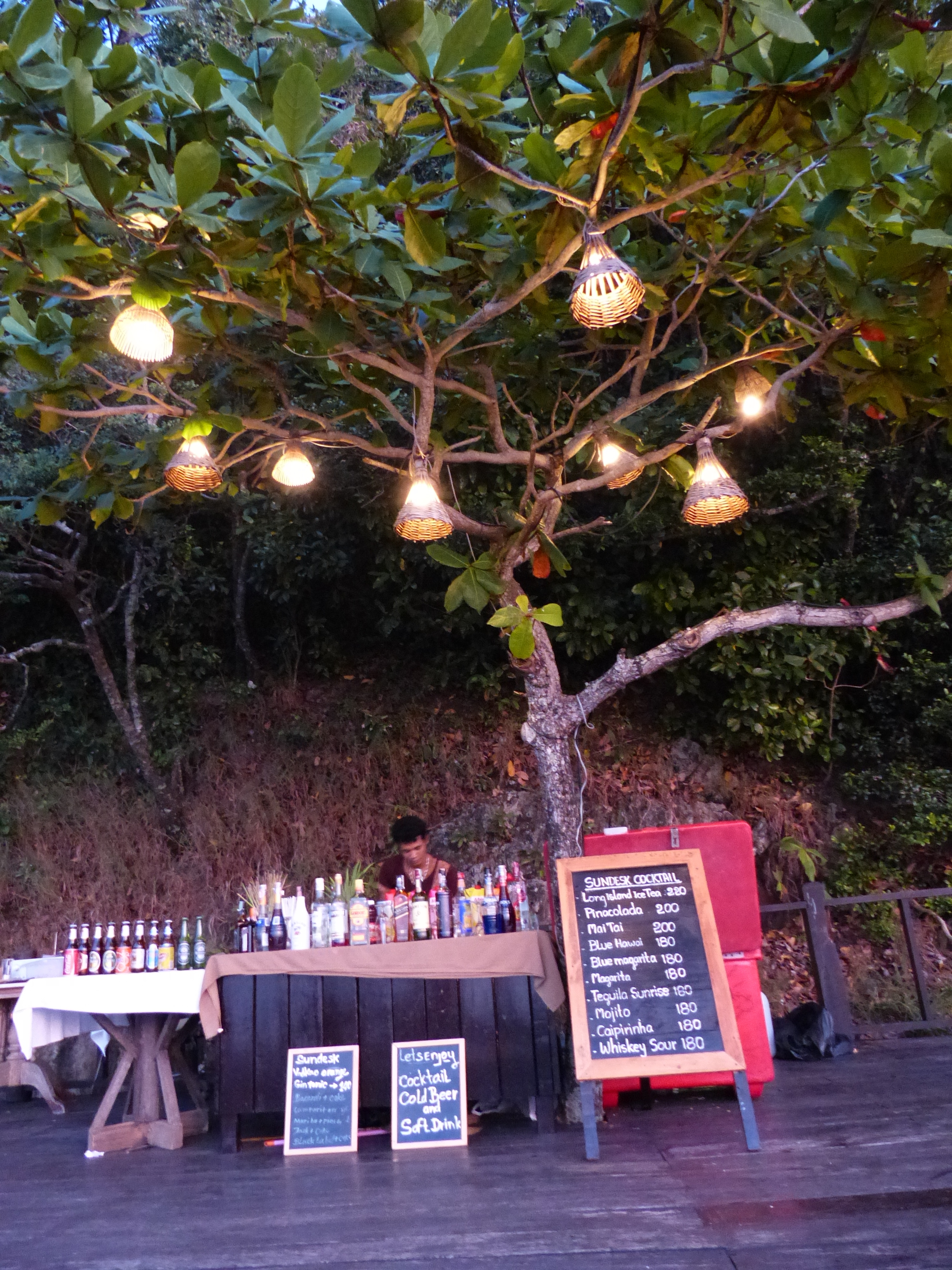
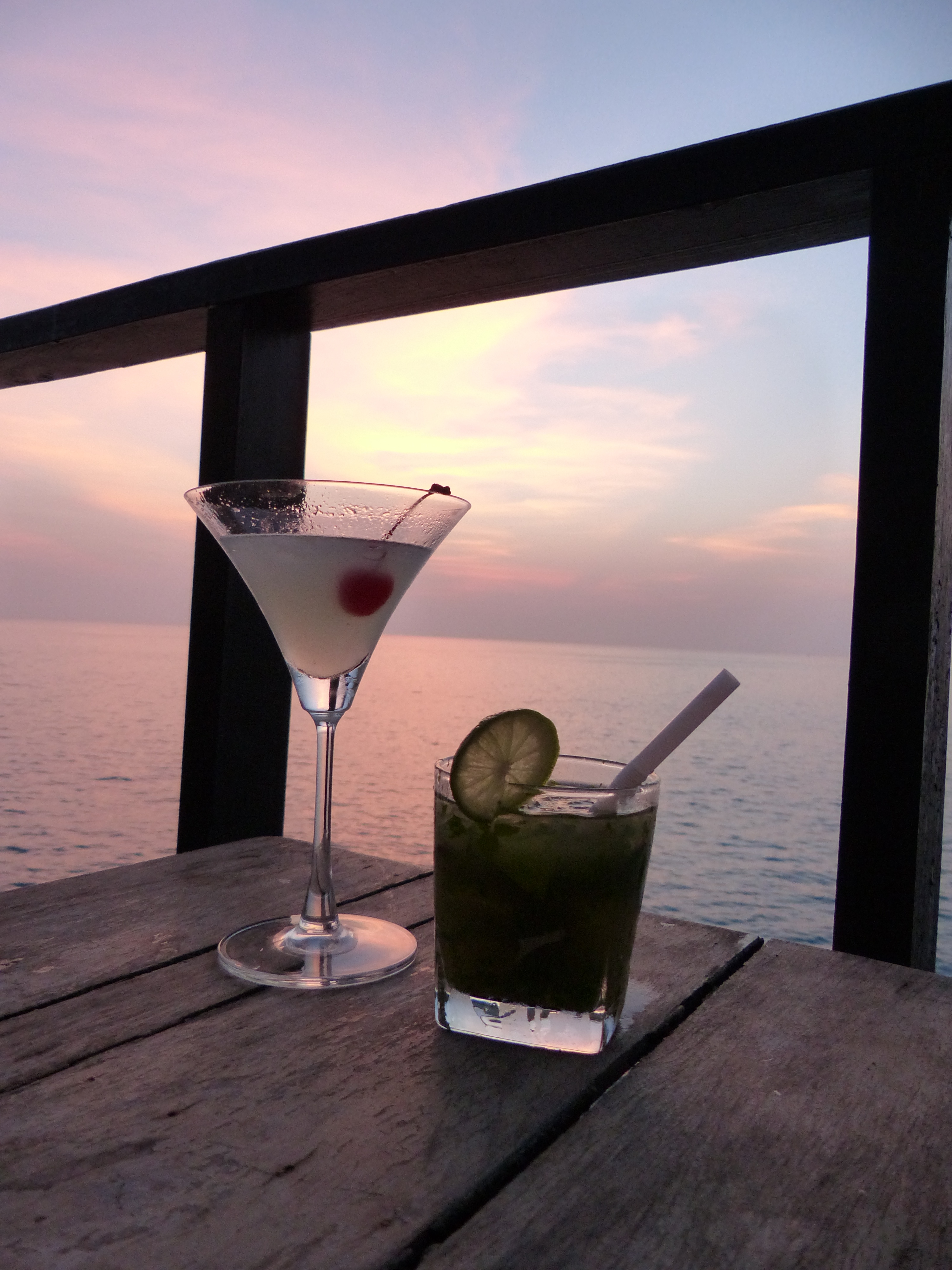
One evening, we watched the sunset from our hotel’s Rock Walk makeshift bar. Very romantic.
P1030938

P1030943

P1030942

P1030941

Well, that’s it. Back to reality tomorrow! It’s always hard to leave Thailand, even when Nirvana is Not Nirvana.
P1030959

Check out my Koh Chang flickr set for more photos.