Our Friday tour didn’t start till after lunch, so Tony and I looked forward to sleeping in and relaxing for a while. Except that we suck at that.
Instead of sleeping in, I got up and went to yoga at 6:30 a.m., which was dreamy. See yesterday’s post about it here.
After breakfast, we chilled in our room, looking out at the intermittent pouring rain. We read our books, wasted some time on Twitter and Facebook, and finally succumbed to the lure of Netflix to watch “Guardians of the Galaxy.” Finally, it was time to meet our tour, so we eagerly donned our raincoats and headed out.
Today’s itinerary included a guided walk at the Arenal Volcano and an evening of soaking in hot springs.
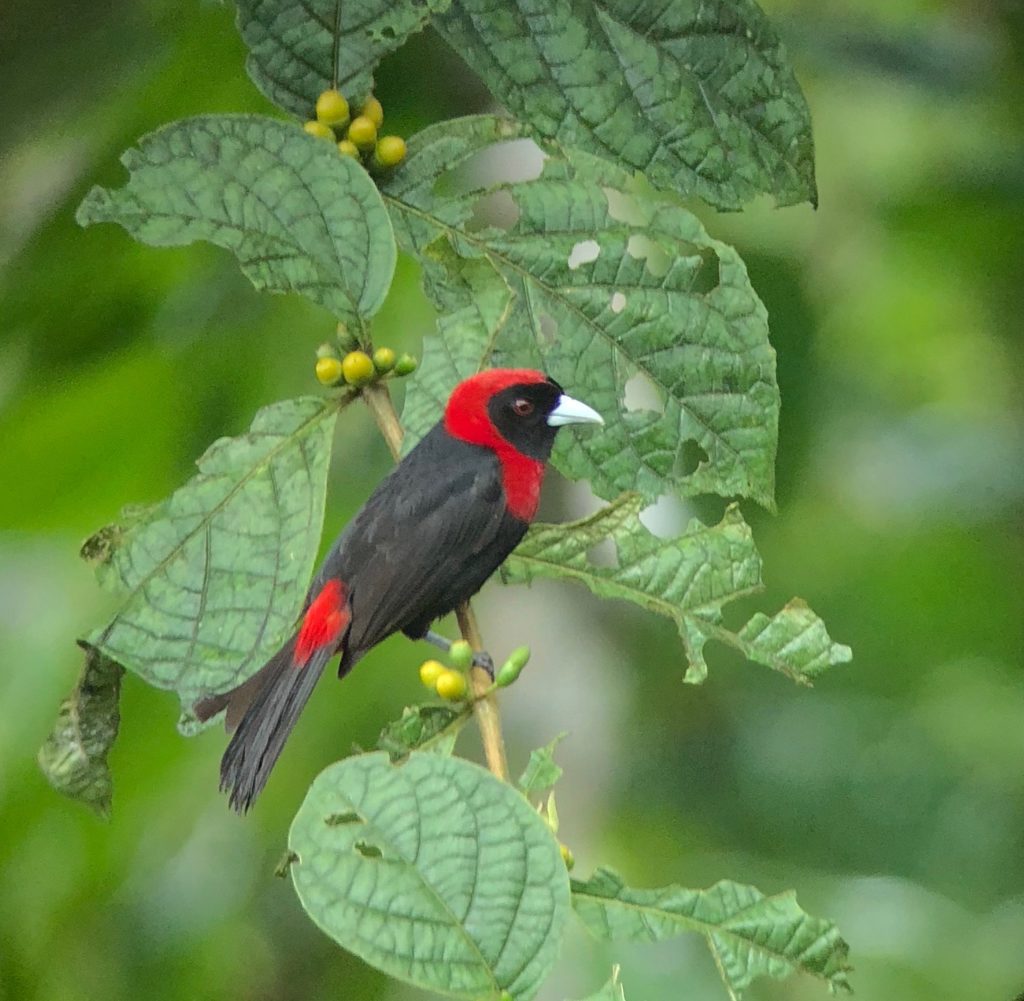
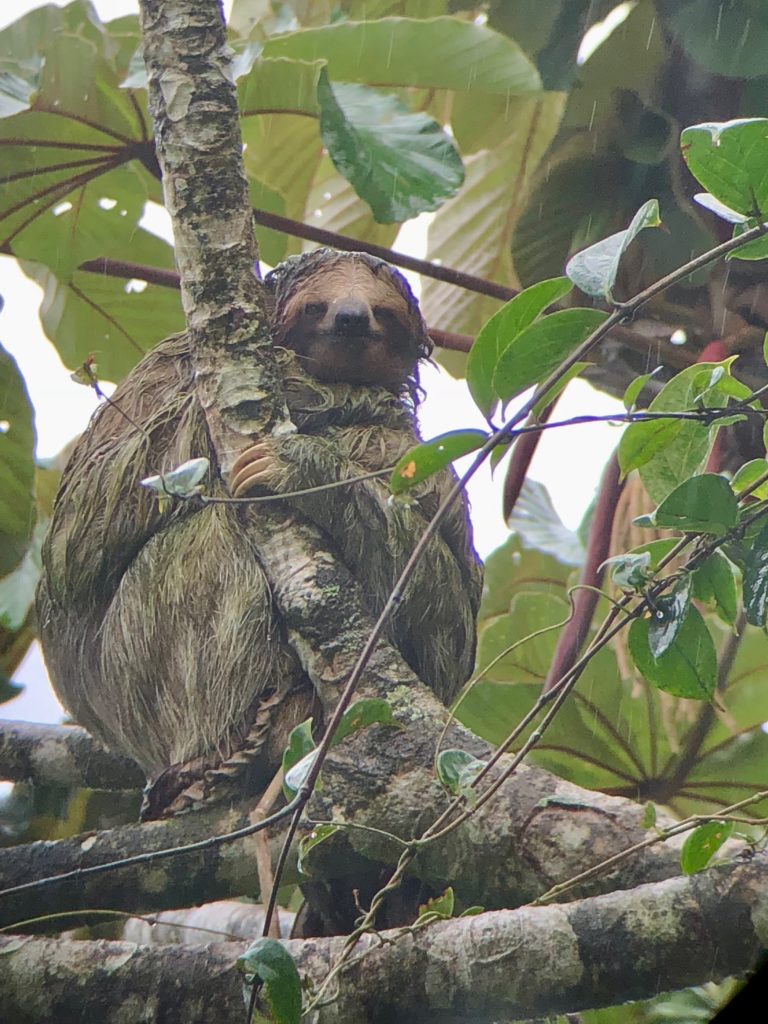
We met our guide, Carlos, and had barely left our hotel when we drove by a group looking up at a tree. Sure enough, it was a sloth. Our driver, Minor, parked the van, and Carlos quickly set up his scope. The sloth was curled in a ball, breathing rhythmically. Based on some lighter-colored fur poking out from the ball, Carlos said it was likely she was wrapped around a baby. No matter how much I pleaded, mama would not let me see the baby (much less play with it). Suddenly, Carlos got really excited about activity near the sloth tree. A fruit-laden bush had attracted about a gazillion birds. This one, a crimson-collared tanager is a rare sight, Carlos said.
Before reaching the trail, Carlos spotted another three-toed sloth sitting in a tree above the road. This one was also curled up with its head tucked. After setting up his scope, Carlos used a piece of torn plastic to make a loud whistling sound. The sloth raised its head, and Carlos snapped a few photos. Eventually, the sloth must have realized we posed no real danger, so it tucked its head back down for a snooze.
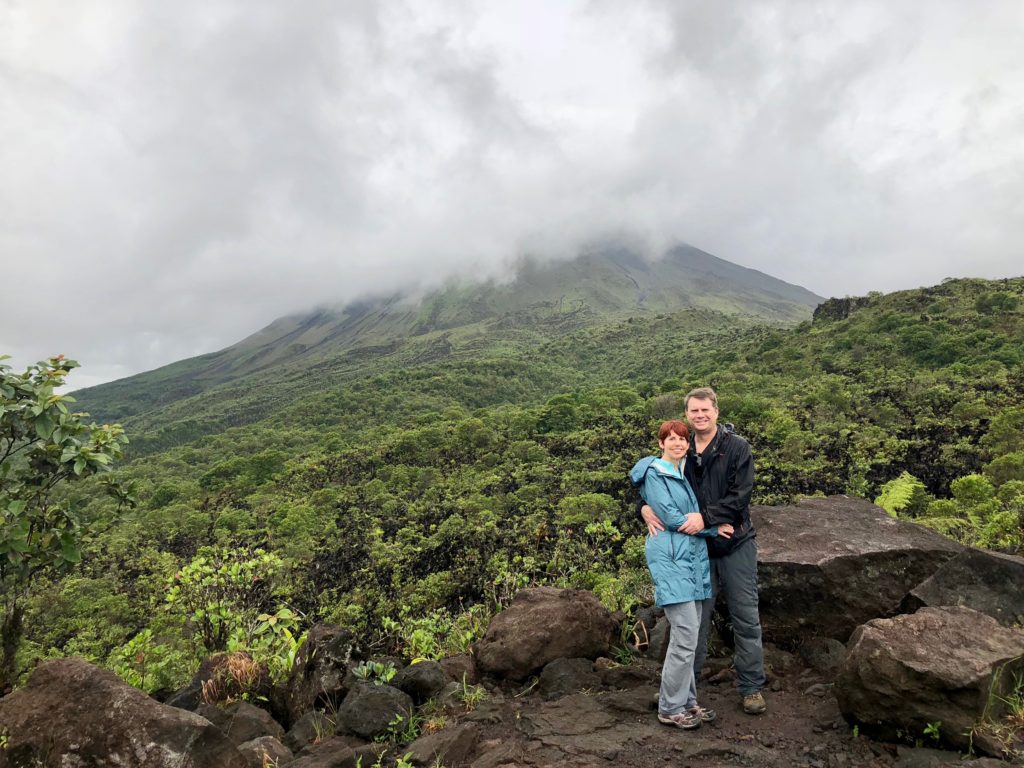
At the El Silencio Reserve, we headed up the Lava Trail of 1968. Hiking to the volcano crater is illegal, so the trails are at the base of the 5,300-foot (1,633-meter) volcano, weaving through rainforest and more desolate old lava flow. Carlos pointed out Arenal is a stratovolcano, which is a conical volcano created by layers erupted materials.
For centuries, the Arenal Volcano was a nearly perfect cone-shaped, rainforest blanketed volcanic mountain considered by many to be extinct. However, at roughly 7:30 a.m. on Monday, July 29, 1968, the dormant Arenal Volcano suddenly and violently erupted with a tremendous explosion. Extreme eruptions continued unabated for several days, burying over 15 square kilometers with rocks, lava and ash. When it was finally over, the eruptions had killed 87 people and destroyed three small villages – Tabacón, Pueblo Nuevo and San Luís – affecting more than 232 square kilometers of land. It was a difficult time for the people of Arenal. Crops, property and forest were damaged, and livestock died.
At the height of the eruption, Arenal Volcano was spewing out massive amounts of lava and ash and tossing giant rocks for distances of up to a kilometer at speeds of some 600 meters per second.
For 42 years, Arenal Volcano was Costa Rica’s most active volcano with flowing lava and pyroclastic surges that blasted huge rocks and cauliflower-shaped ash clouds into the air. Explosions were often accompanied by loud rumblings, which would wake tourists up at night.
The last big explosions occurred on August 25, 2001; March 2007; September 18, 2008; March 2, 2009; and May 24, 2010. None, however, compared to that of 1968. Since 2010, Arenal Volcano has been in a resting phase with very little activity, a process that is natural for active volcanoes. In 2012, Arenal Volcano revived a little, spewing columns of water vapor and gases into the air from the summit. These emissions can still occasionally be seen.
Unfortunately, the volcano refused to emerge from its cloud cover during our visit.
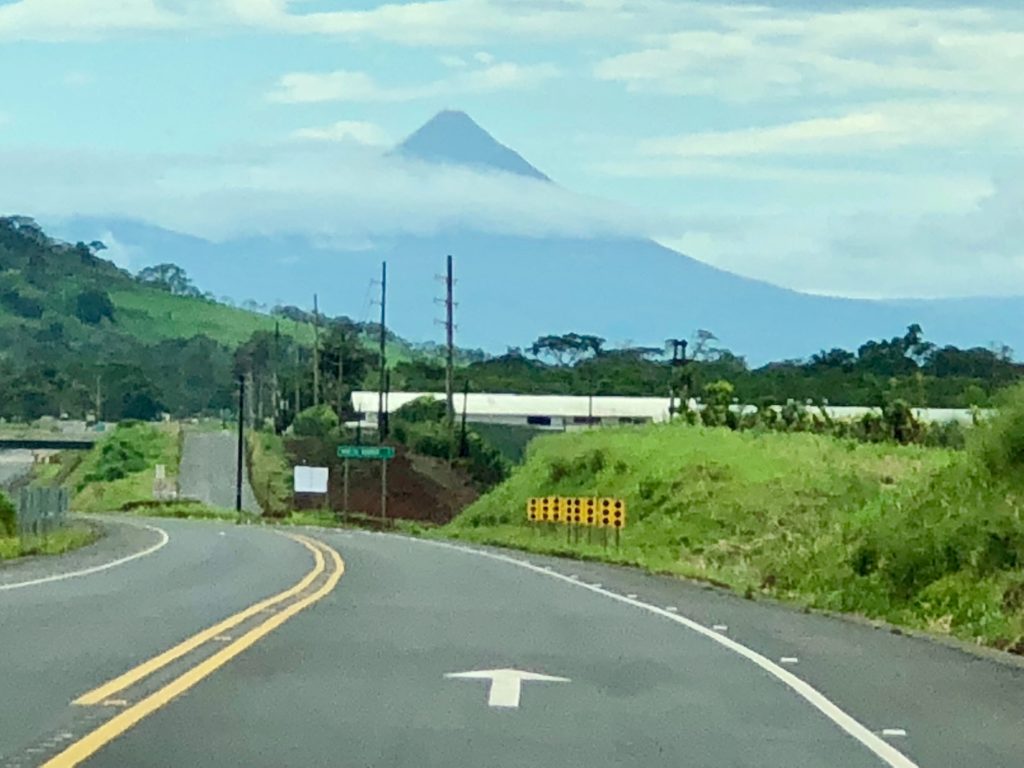
Fortunately, we had a glimpse of it when we arrived to town the other day.
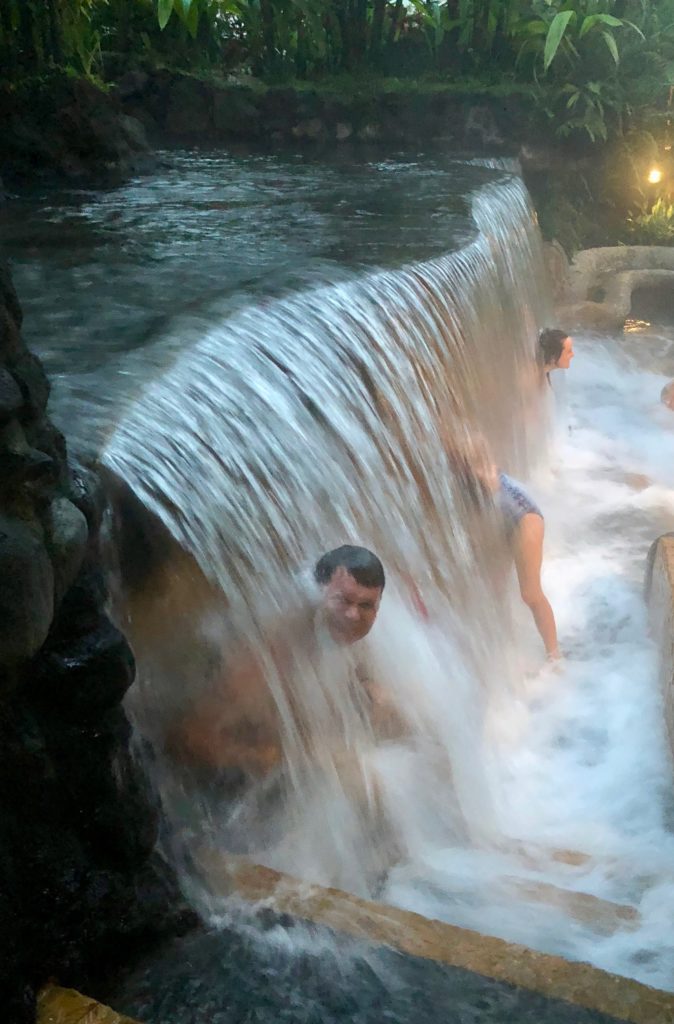
Tony and I spent the evening at Tabacon Hot Springs. The volcanic thermal waters flow over elegant stone waterfalls, cascading into warm pools that are surrounded by lush tropical gardens. That said, it was a little anticlimactic, considering we didn’t really need to leave our own resort to get to some hot springs, and it was also hard to find a private spot in the pools without loud talkers or splashy children. Still, we had fun, especially sitting on the stone bench behind this powerful wall of water.
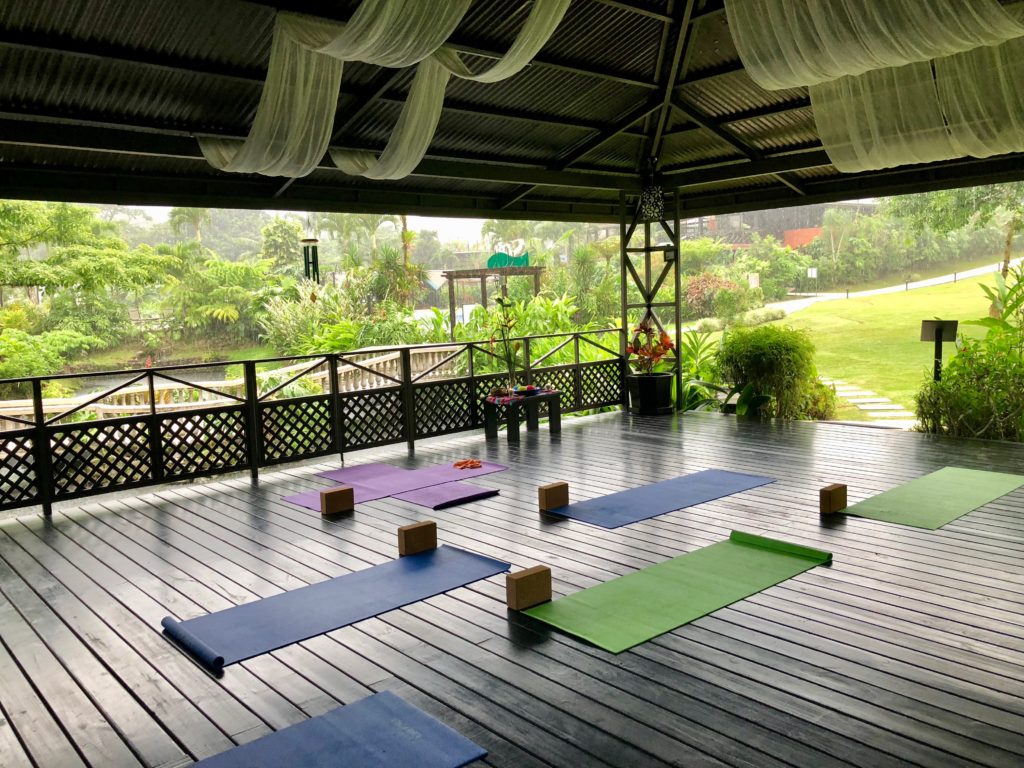
I woke up this morning with my calves in knots (bounding up 500 steps will do that to you). I dragged myself out of bed, waited for a break in the rain, and walked to the yoga deck for a 6:30 a.m. class. Although not quite awake, I couldn’t help but appreciate the peaceful setting, and I looked forward to loosening up my tight muscles and stiff joints.
In nearly every asana, I noticed something special.
Standing in a wide-legged forward fold, I turned my upside-down focus to the blooming plants surrounding the spacious gazebo. I watched a hummingbird hover and sip at a huge persimmon-colored trumpet blossom before zipping away. The light rain tip-tapped on the metal roof. Back upright, I looked out at the heavy fog blanketing the Arenal Volcano. Moving into a balancing pose, I fixed my gaze on a fountain in the garden, steadily pouring water into a small pond. By the time we reached savasana, resting pose, torrential rain obscured the view and drowned out the gentle voice of our instructor, Griselda. Lying on my back, I smiled up at the draped white fabric and ornamental lamps hanging from the dark wood rafters before closing my eyes, taking a deep breath, and letting the downpour provide a backdrop for deep relaxation.
At the end of the class, we all enjoyed a cup of tea while waiting for a relatively rain-free moment to head out. Eventually, the deluge dwindled to a drizzle, and I jogged the short distance to meet Tony for breakfast, ready for another Costa Rican adventure.
We are feeling pretty lucky about our full day in Tortuguera, cruising along the river under partly cloudy skies. When we got up the next day, the rain was so heavy we couldn’t see beyond the edge of our restaurant terrace. Our hotel’s water taxi took us back to La Pavona, where the downpour paused long enough for us to get our rental car out of the parking lot.
After about three hours, we reached La Fortuna, a tourist town full of hostels, souvenir shops, and restaurants. We drove through the town and then turned off the main road to reach our hotel. Following the signs to Arenal Springs Resort & Spa, I started to get anxious. The signs themselves looked dated, and they pointed us up a hill to an unimpressive entrance with a gatehouse and a bunch of people loitering about. “This looks dodgy,” I said. Once we passed through the gate, however, it was like Walt Disney himself waved a magic wand to make this glorious place appear in the rainforest. We checked in and drove to our room, which is really half a duplex, and like all the guests here, we have a view of the Arenal Volcano (although presently it’s shrouded in clouds).
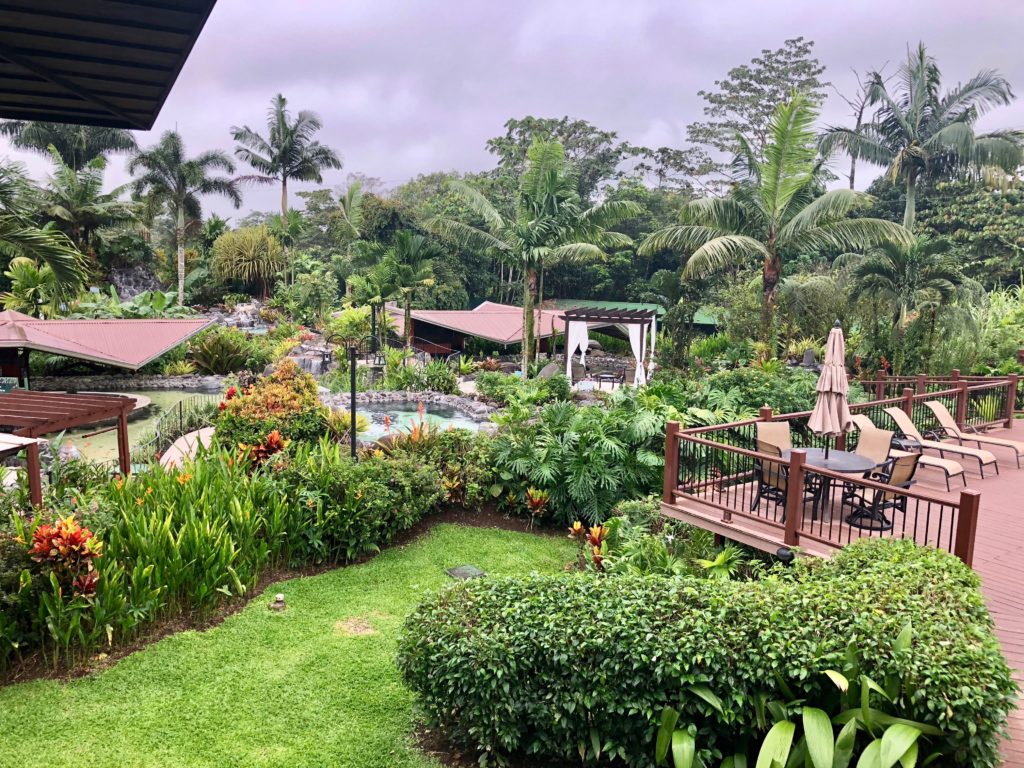
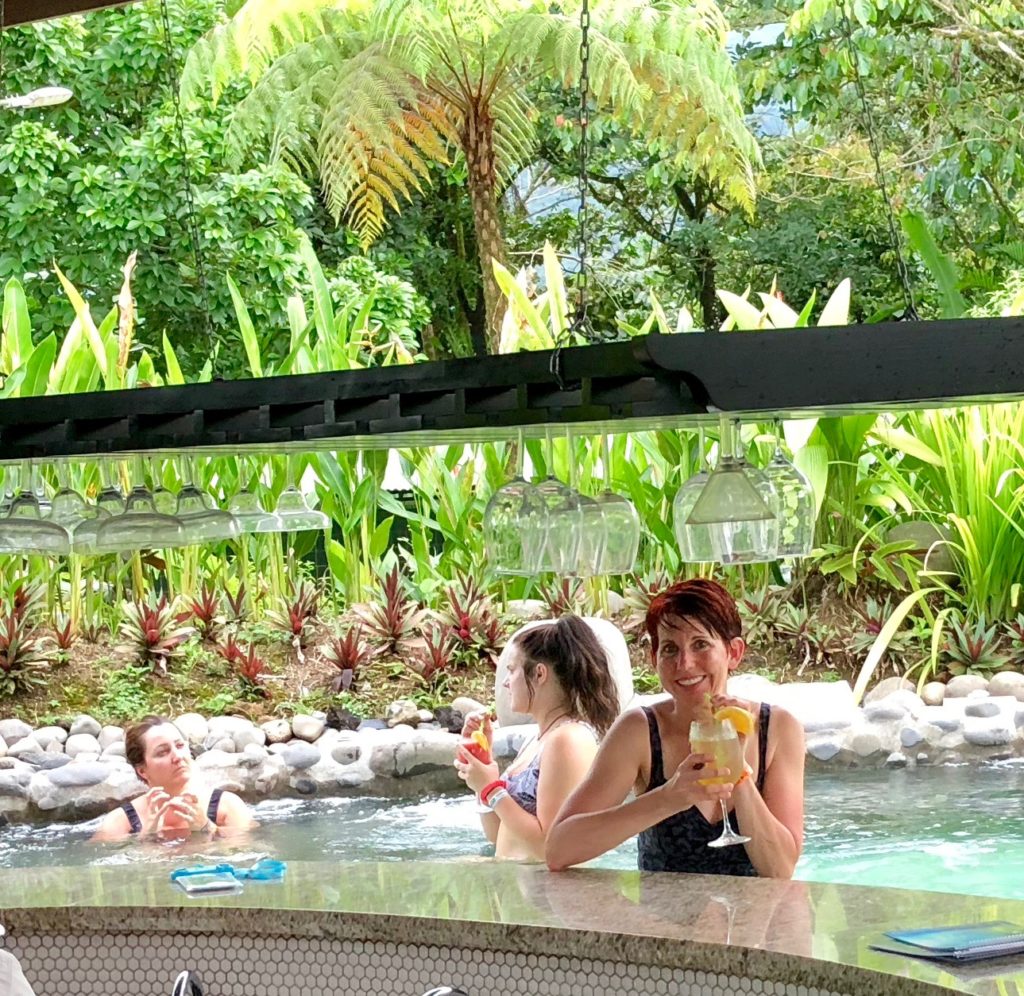
After a quick lunch, Tony and I changed into swimsuits and walked to the pool complex, which includes two pool bars, a sushi bar, and four thermal pool ranging from 93° to 104° F (34° to 39°C). This is from the hotel website:
Our hot springs have been created to give you the feeling that you are in natural thermal river in the middle of the rainforest. Tropical gardens surround the river to add to the sensation. The floor of the pools is made from limestone which adds to the soothing atmosphere. The light color allows you to see your feet and verify the cleanliness of the waters.
The thermal water is naturally heated by the Arenal Volcano and its underground rivers. The water reaches our thermal pools taking advantage of the force of gravity without the need for pumping or drilling. The minerals naturally found in the water, such as calcium, magnesium, sodium bicarbonate, and chloride contribute to a complete relaxation of mind and body, promote circulation, and help to balance pH levels, liberate free radicals, soften both skin and hair, and promote better sleep. We have also created special features like carefully chosen river rocks to form the bar stools of the wet bar, waterfalls to offer you a relaxing hydro-massage, and a soothing jacuzzi.
We hung out at the pool for a while and then ventured in to town for dinner at Restaurante Don Rufino. I had charged Tony with picking a restaurant, and he chose well. (It was a bit pricey, so we pretended we were celebrating our anniversary.) I discovered my new favorite thing: guaro, which is liquor made from sugar cane. Yum!
The history of Mistico Park, where you can find Costa Rica’s famous hanging bridges, began at the beginning of the 20th century. Spouses Landelina Rodríguez Sánchez and Adrian Castillo, who were natives of La Fortuna, San Carlos, dedicated their time to working the land they had inherited from their parents in the foothills of the Arenal Volcano.
In those times, this incredibly rich natural land was ignored as it was far from the city and difficult to access. However, the Castillo Rodriguez family had great vision, as they knew the true value of their land could be found in its natural resources. Thus, they made the decision to keep this wooded portion of the mountain intact.
At the beginning of the 21st century, the family decided to open this natural forest sanctuary to the public, and they hired a company in order to develop the Hanging Bridges of Arenal eco-tourism project, which would allow thousands of people to enjoy the forest’s beauty comfortably and safely.
Twelve years later, as per the initial agreement, the development company returned the project to its owners, and the family’s third generation currently manages the nature reserve.
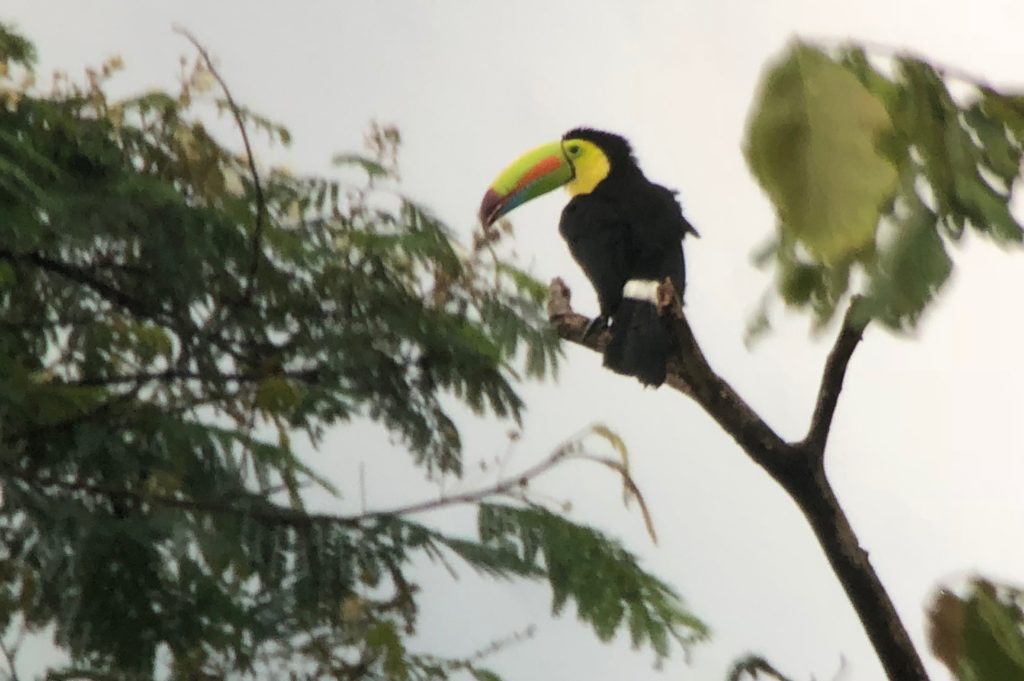
Tony, the guide (who I will call TG from now on to differentiate him from Tony Dent), had a brilliant sense for spotting wildlife, and he shared fascinating facts about the rainforest. He also used my phone to take photos from his telescope. Before we reached the park, TG told the driver to pull over. He jumped out of the van and quickly set up a tripod to show us this, a rainbow toucan.
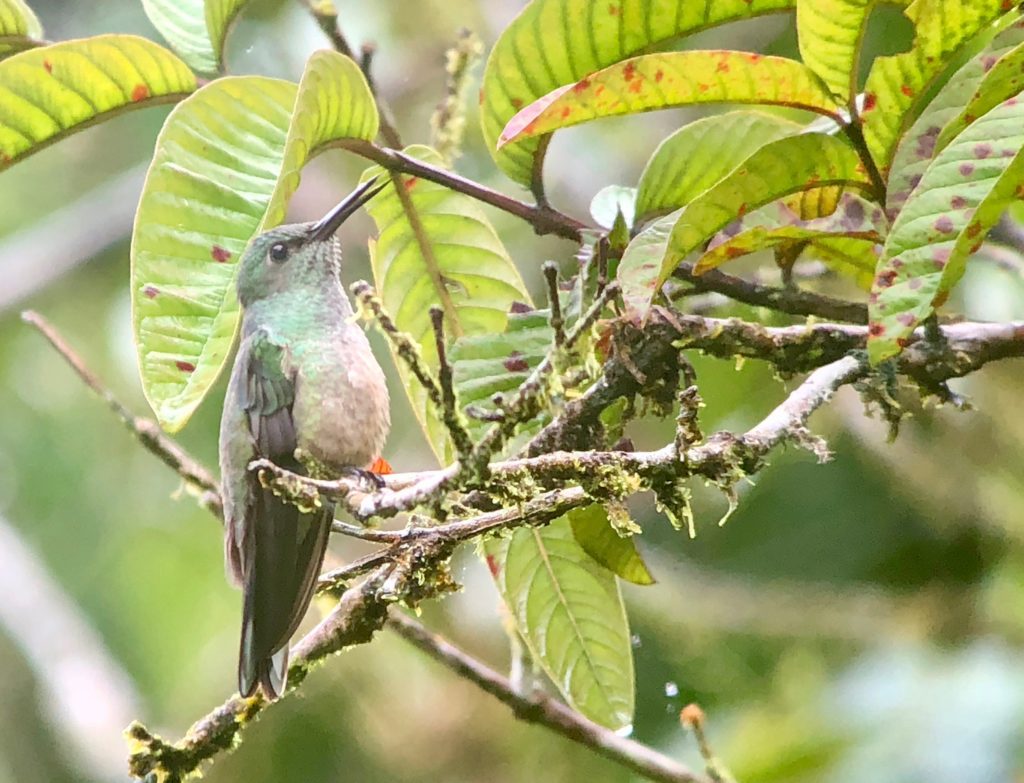
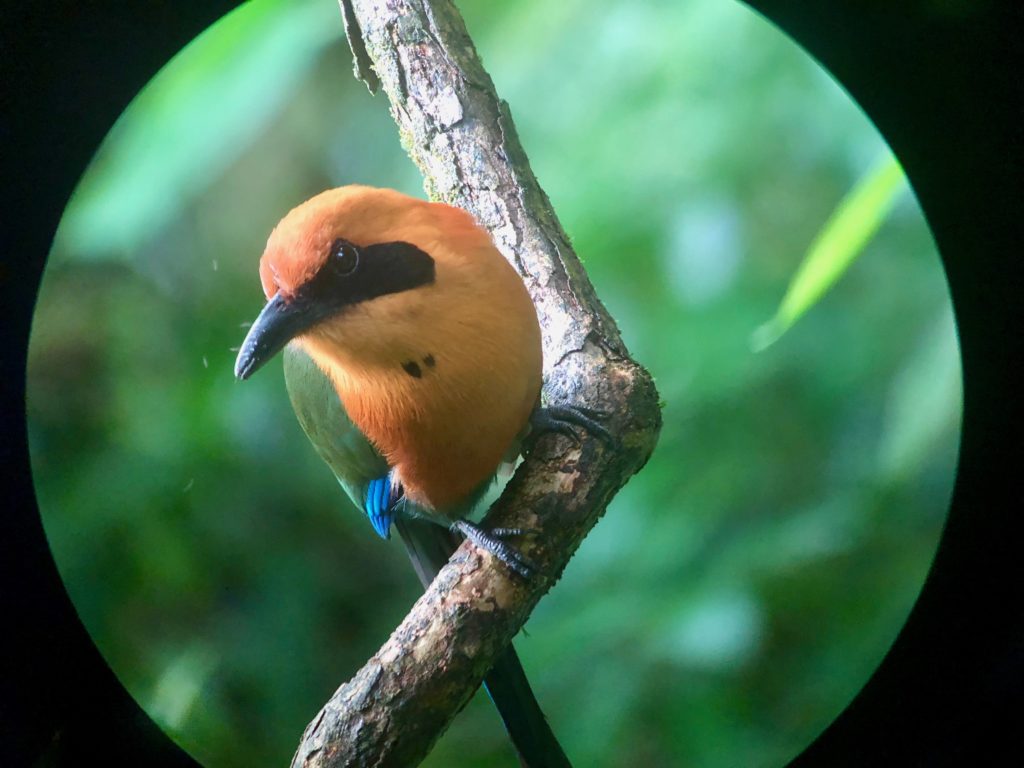
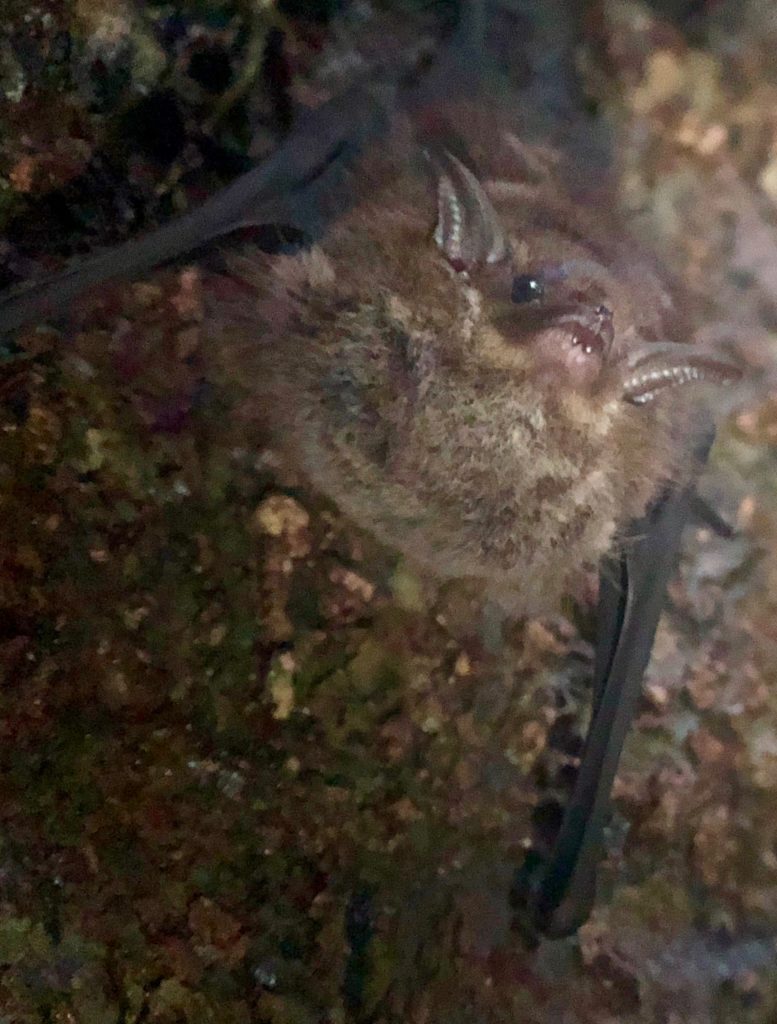
At the park, TG spotted quite a few other interesting critters:
a scaly-breasted hummingbird
a howler monkey enjoying a snack (That’s TG making the howling sound, fyi.)
a rufous motmot
a greater white-lined bat
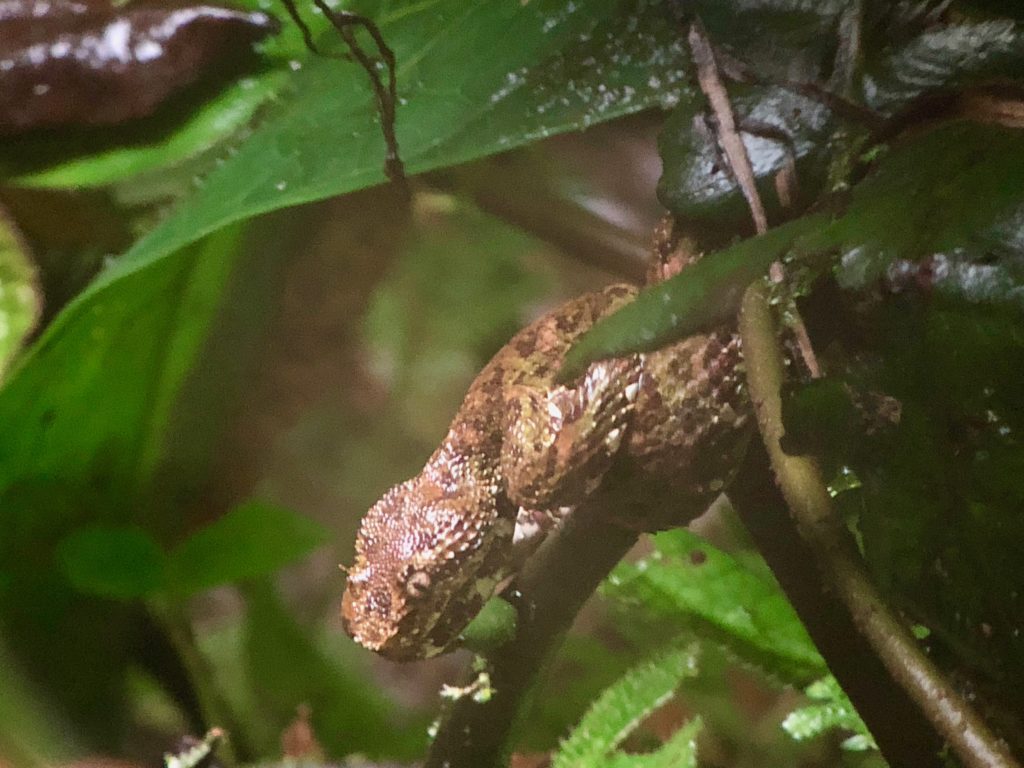
an eyelash viper (This guy – whose bite can be fatal – was actually pretty small, but he was just a few feet from the path.)
a couple blue jeans poison dart frogs, croaking at each other
We also saw a tarantula guarding its egg sac inside a small hole in the side of the hill. I couldn’t get a photo of her.
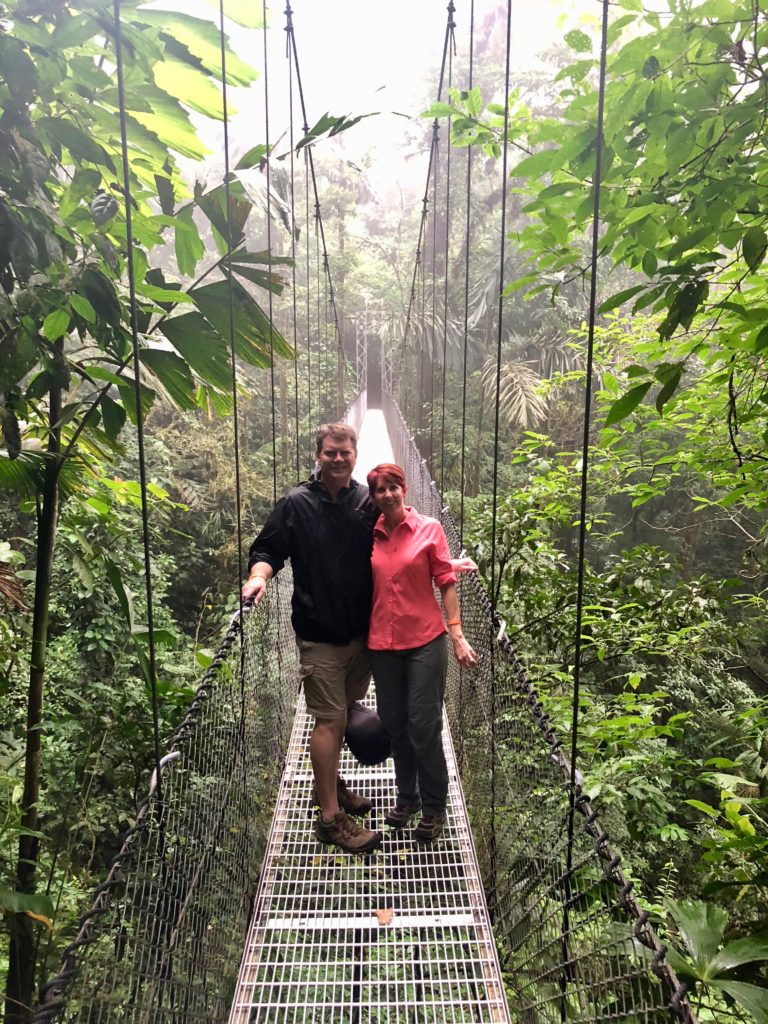
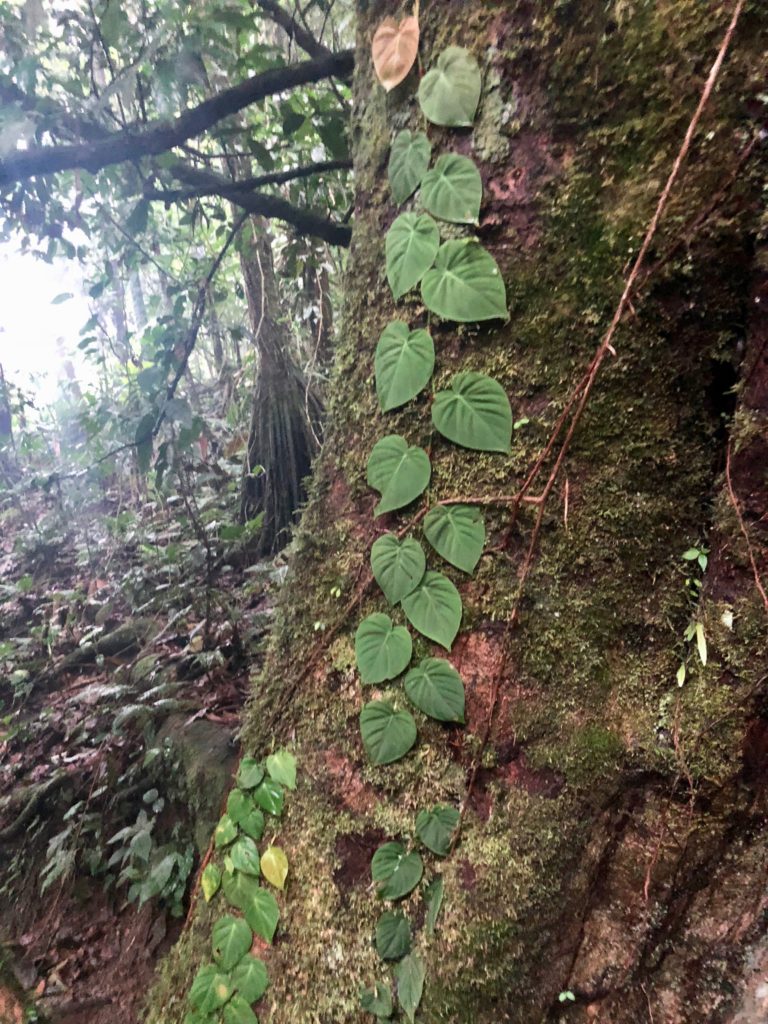
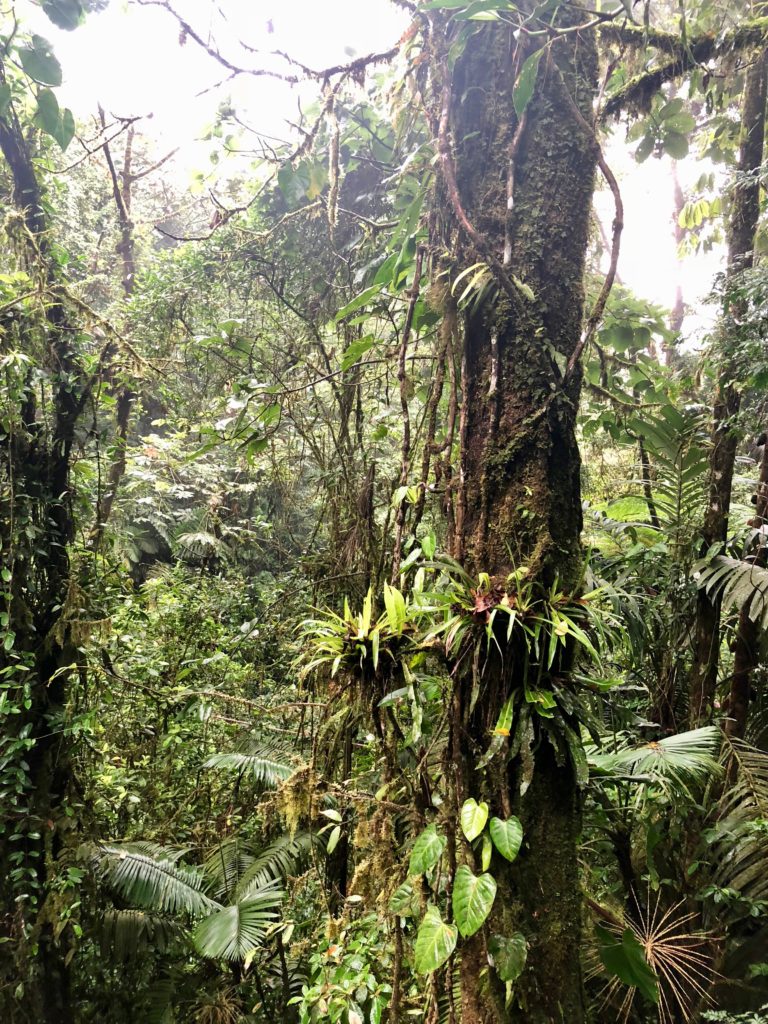
The animals were not the only attraction in this park. During our 2-mile walk, we crossed 16 bridges, including a suspension bridge 318 feet (97 meters) off the ground. From there, we could see nature’s battle for survival. TG had explained that 60 percent of rainforest plants do not grow from the ground up but rather grow on other plants. Our bird’s eye view revealed trees whose trunks were completely overtaken by other plants, such as ficus, moss, and ferns that had won the race for sunlight in the canopy.
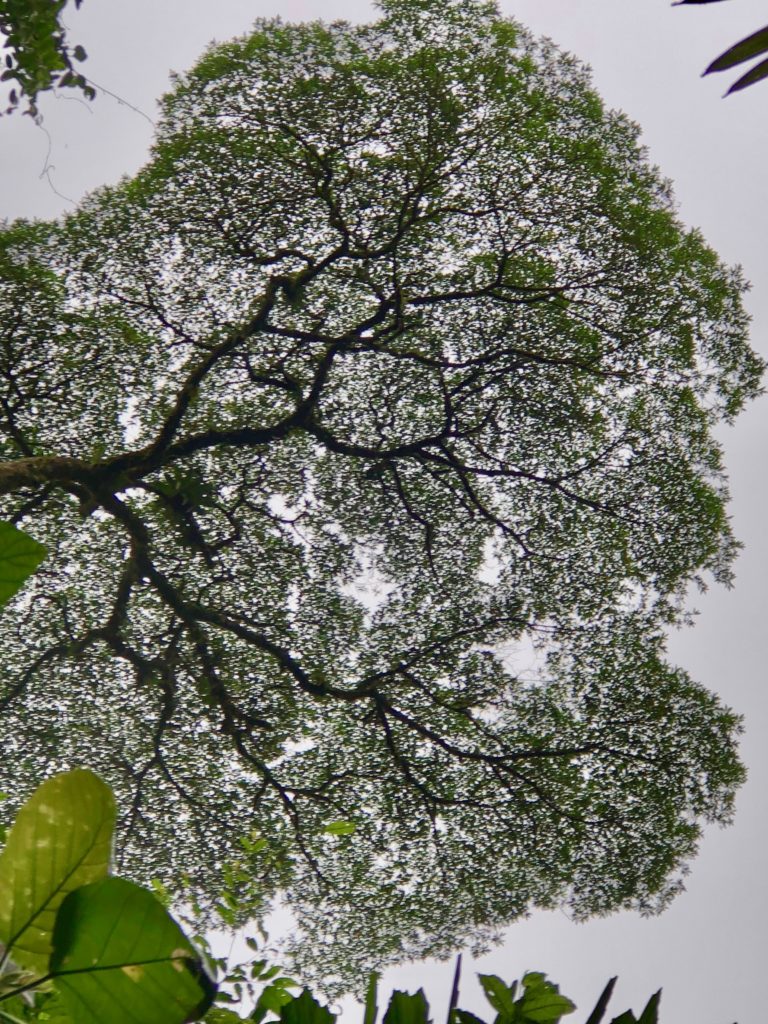
TG called this a “broccoli tree.”
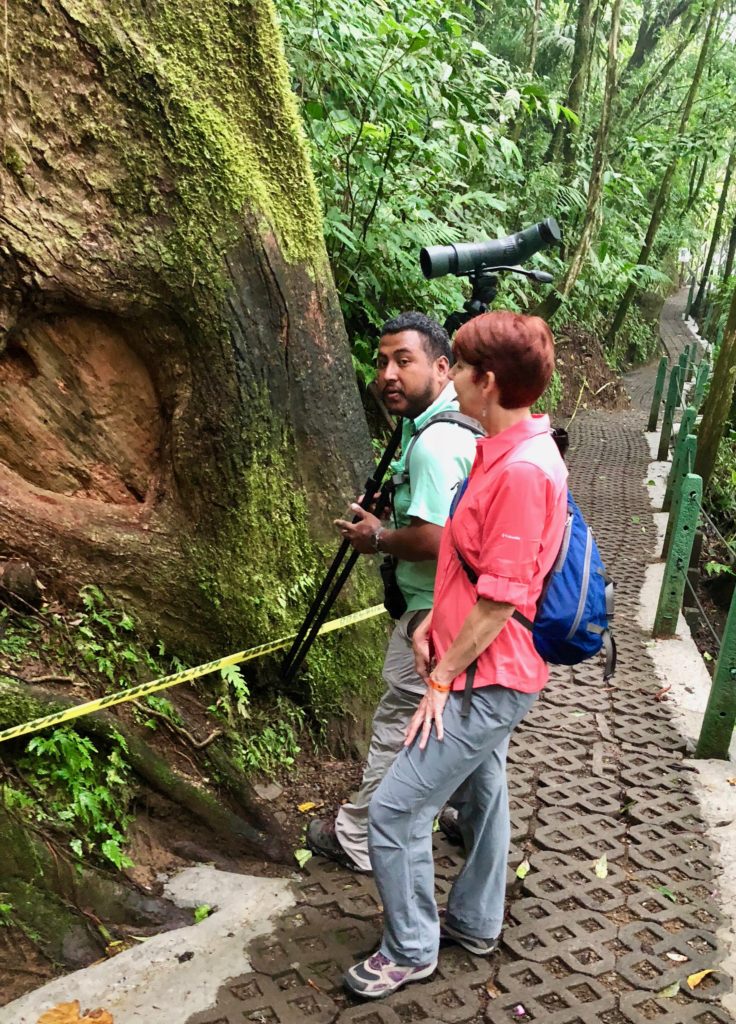
Guide hogging while TG points out some tiny bees with a hive in this tree.
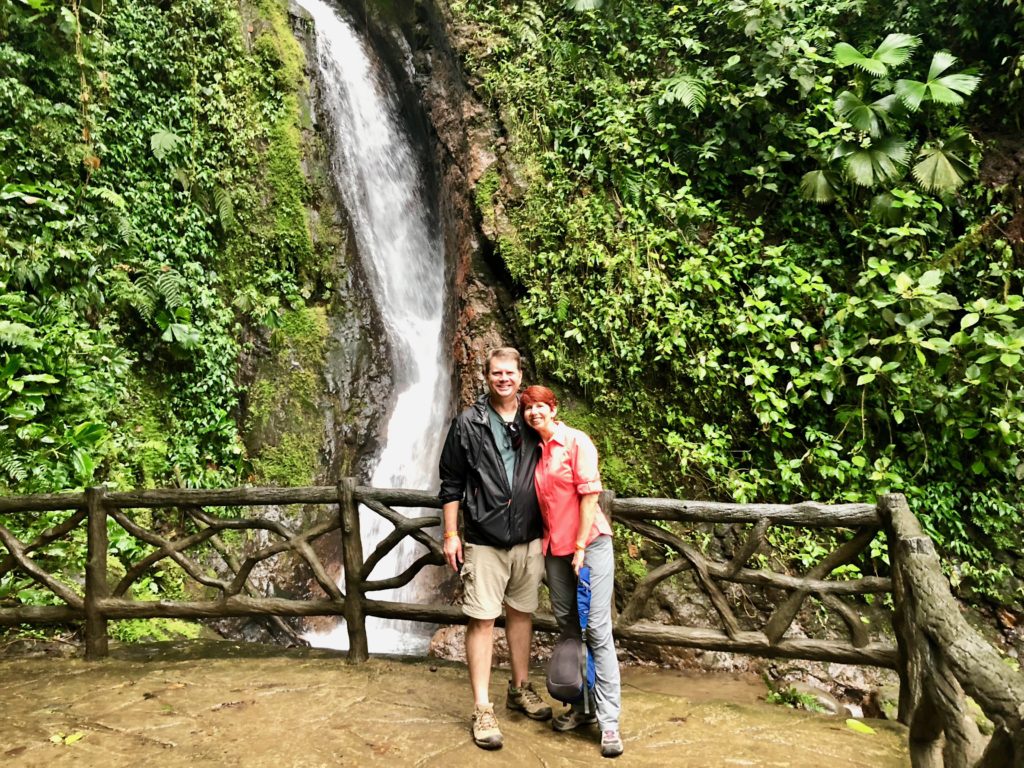
Posing by a little waterfall.
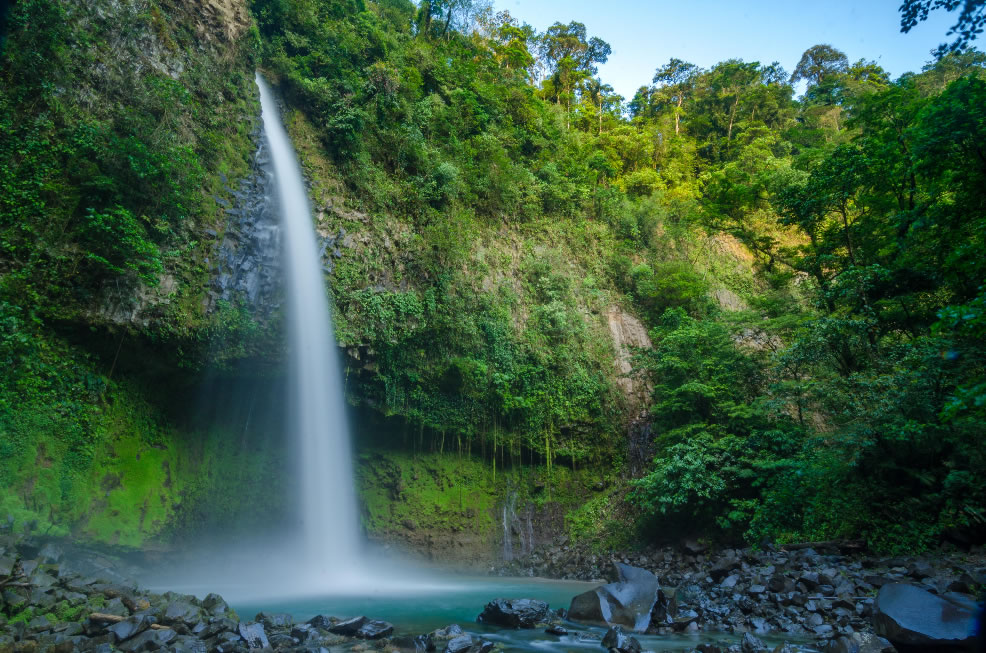
After leaving the park, we drove to the La Fortuna Waterfall. I left my phone in the van, which was a bummer because the place was stunning. We walked down 530 steps to the spot where the 230-foot (70-meter) waterfall crashed into a churning pool of chilly water. I snagged this photo from the Catarata Río Fortuna website.
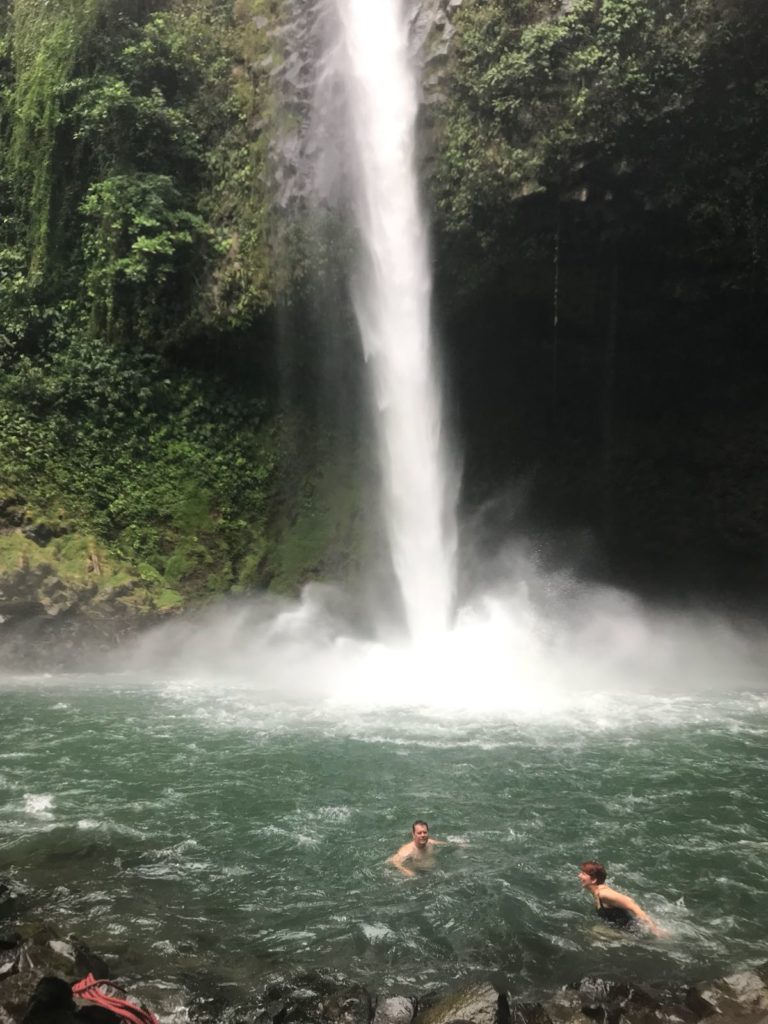
Another member of our little tour group took this shot for us.
I loved getting in that water and soaking up the scenery, but it was dang cold and the force of the waterfall created waves that nearly thrashed us to death against the rocks. Sooo… it was a short but fabulous swim.
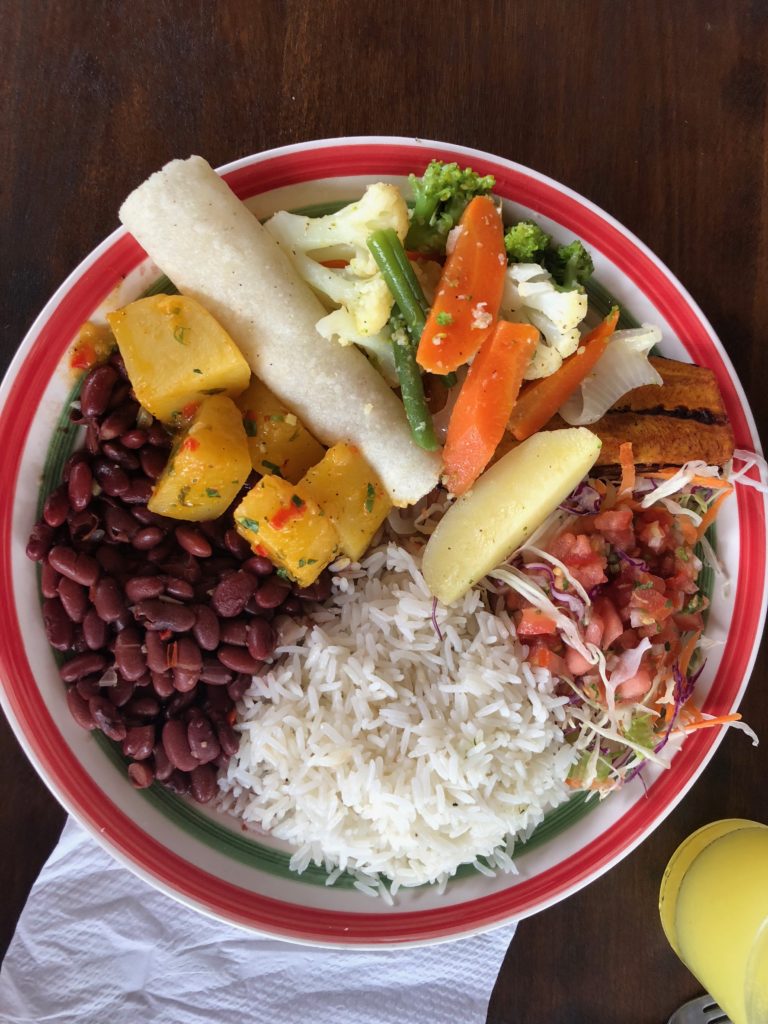
Our tour wrapped up with a traditional casado lunch at a family’s covered pavilion in a riverside village. So simple, and yet, so delicious!
Tomorrow, we’re hiking on the volcano. Can’t wait!
Although our airline debacle had sucked away a whole day of our vacation, Tony and I were ready to kick it into gear. We spent the night in San Jose (with our luggage and our rental car!) and got up early to drive to the Caribbean coast. Two quick notes: The traditional Costa Rican breakfast is like a little Latin party in my mouth. Black beans and rice with fried plantains? Yes, please! Also, our rental car is a Suzuki Jimmy, which looks like a small SUV in pictures but is, in fact, a moped wearing an SUV costume.
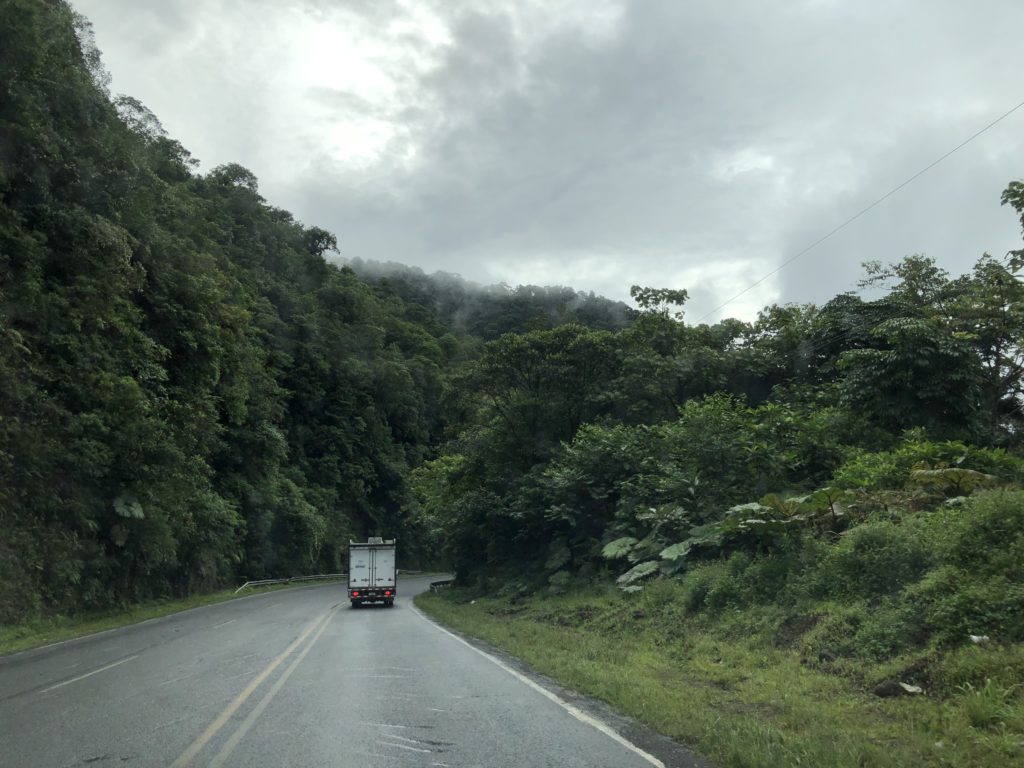
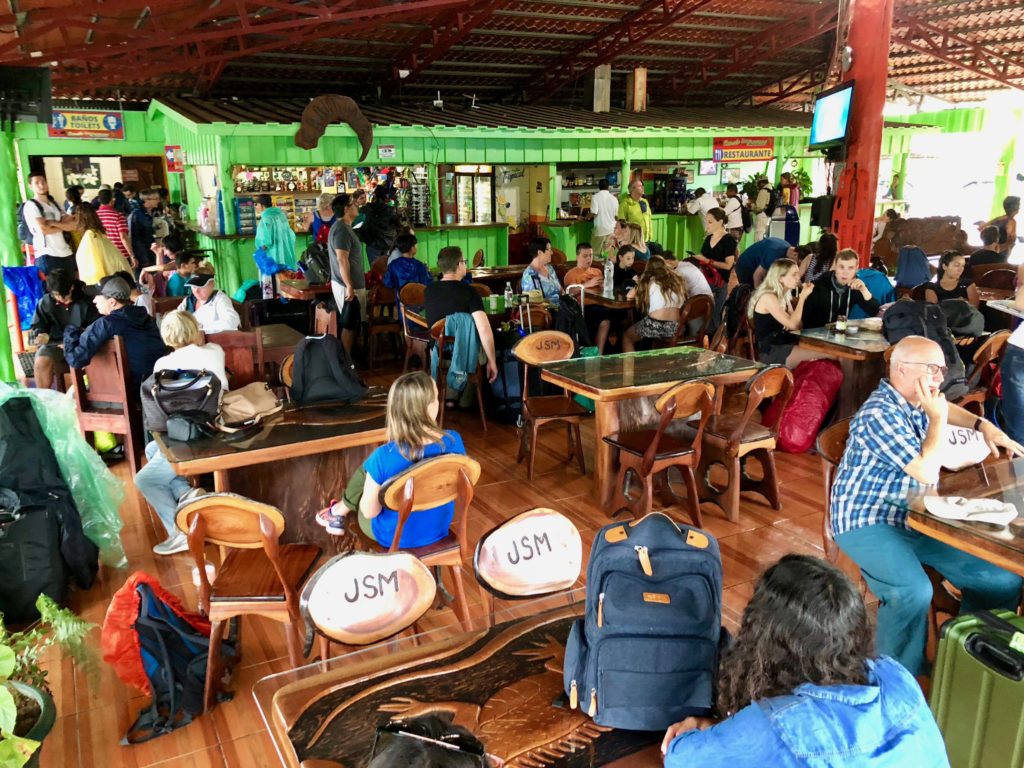
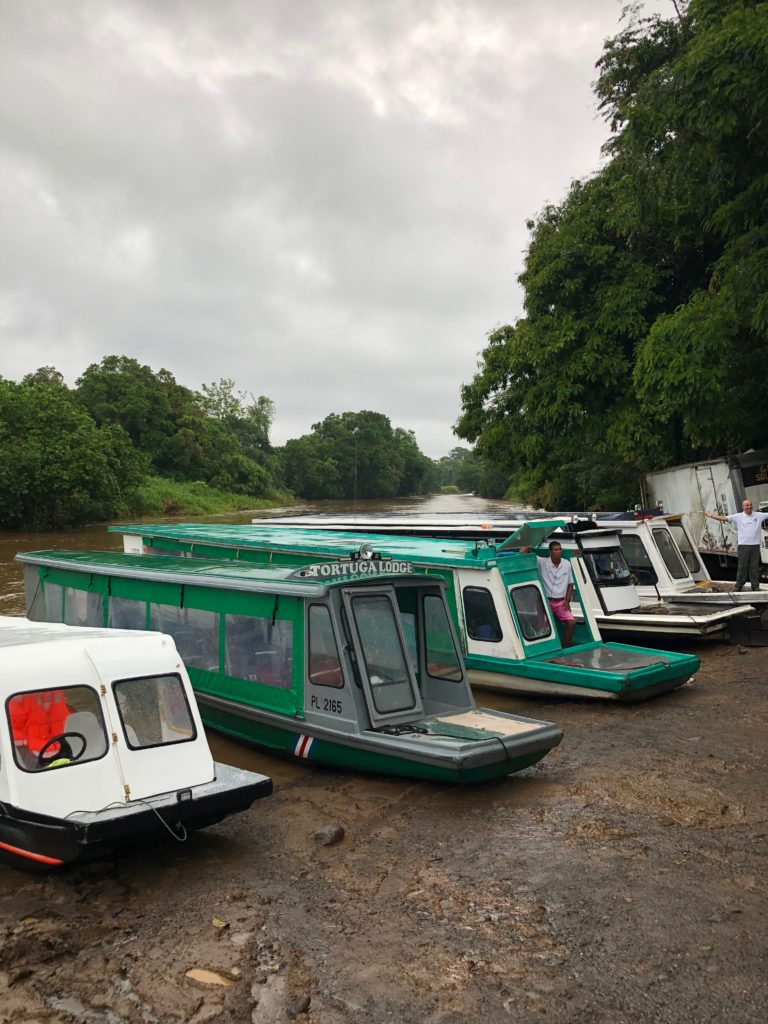
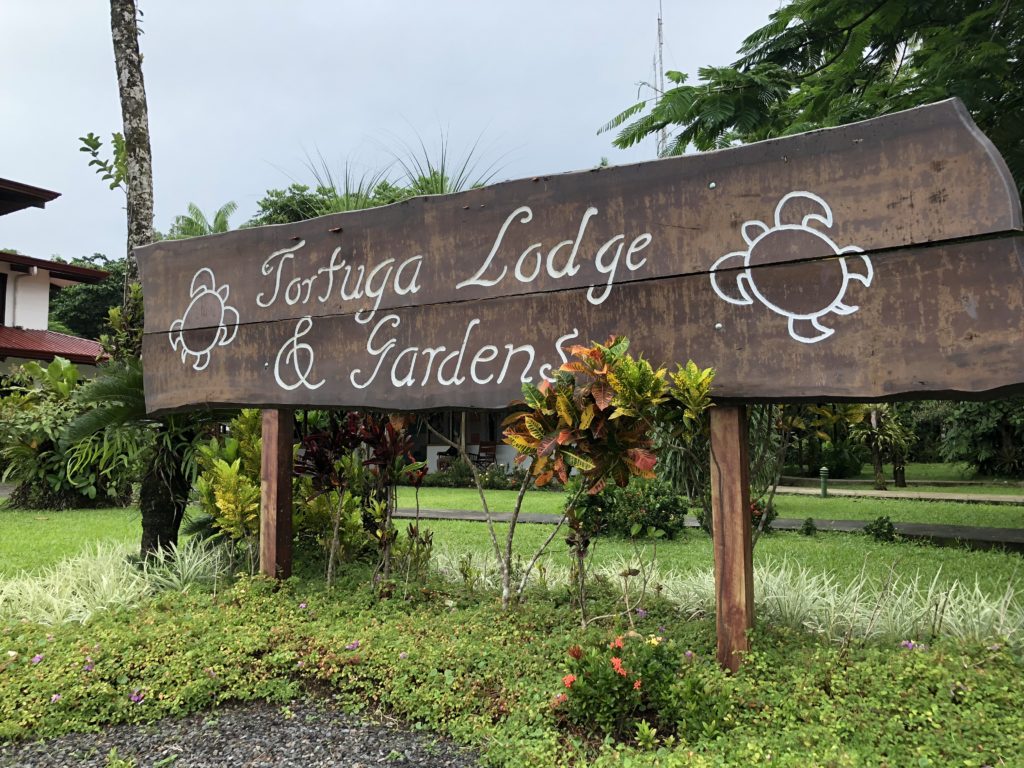
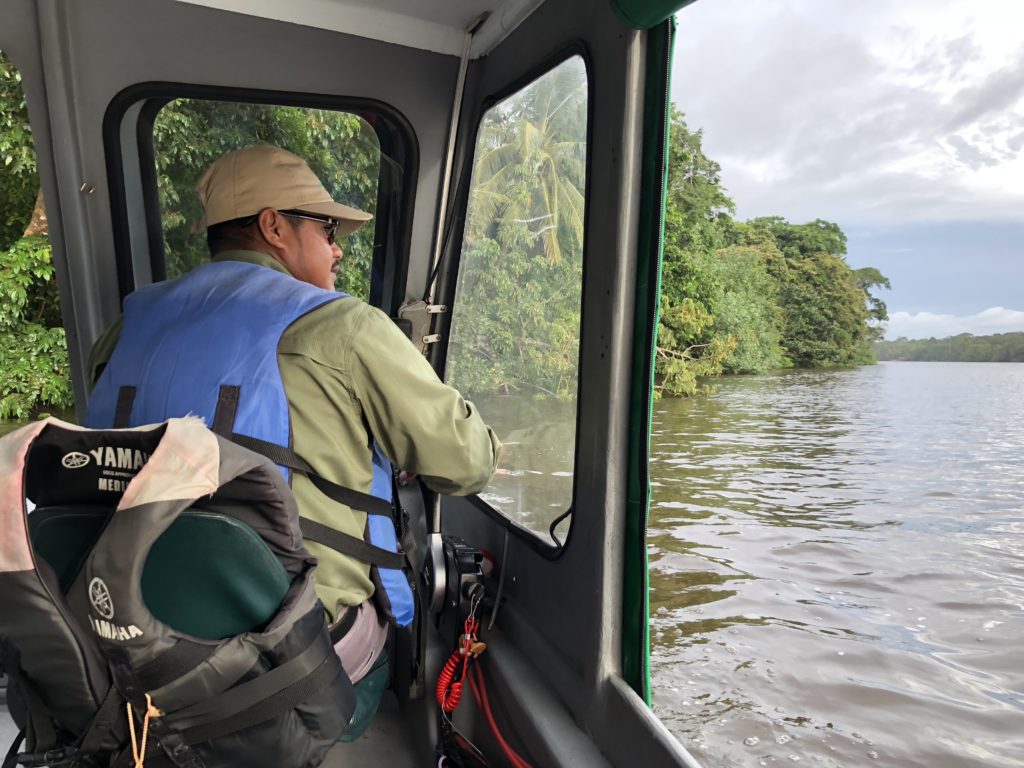
Our drive to Puerto La Pavona took about 3.5 hours, including convoluted city traffic, misty mountainous curves in the Braulio Carrillo National Park, and country roads that passed through quiet villages. We arrived at the riverfront during a torrential downpour and hauled our luggage into the expansive waiting area, along with other waterlogged tourists waiting for buses and water taxis. Eventually a guide from Tortuga Lodge and Gardens arrived and led us to a small boat for a one-hour cruise to our hotel.
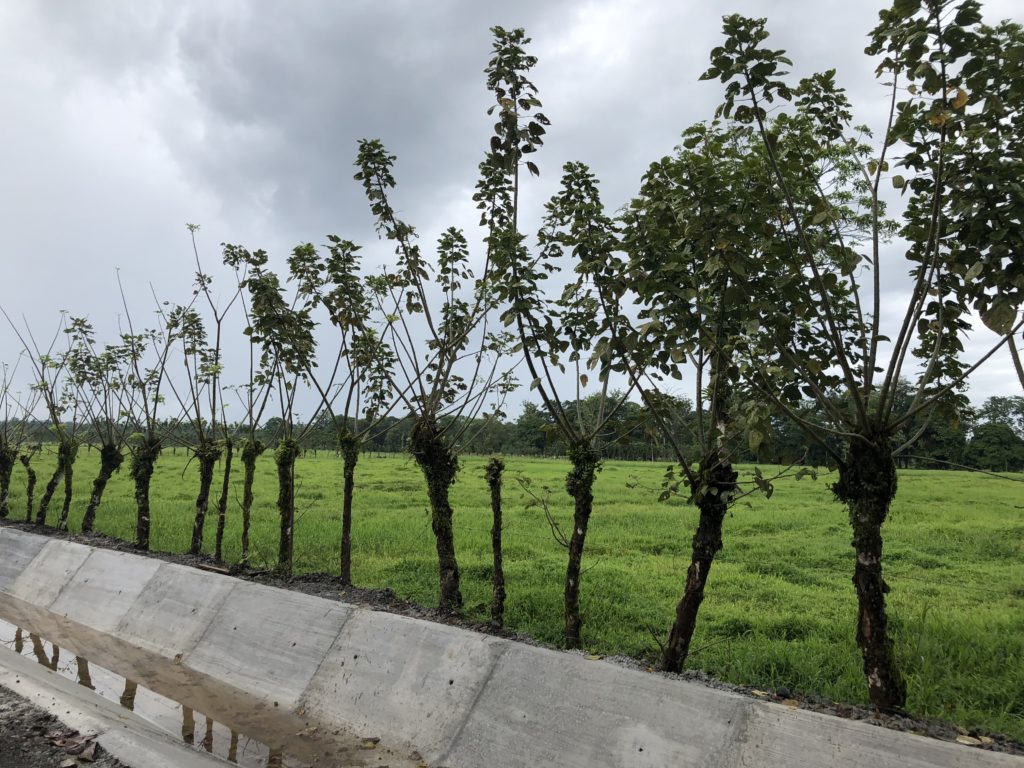
Tony and I are both reading a book by Jack Ewing, an American who came to Costa Rica as a cattleman and ended up a naturalist. The book, Monkeys are Made of Chocolate, creates the perfect backdrop for our journey with heaps of information about wildlife and conservation efforts. We learned about “living fences” from reading the book, and on our road trip, we saw many of them. Fence posts that can’t help but burst into life in this rich, lush ecosystem.
The waiting area at La Pavona.
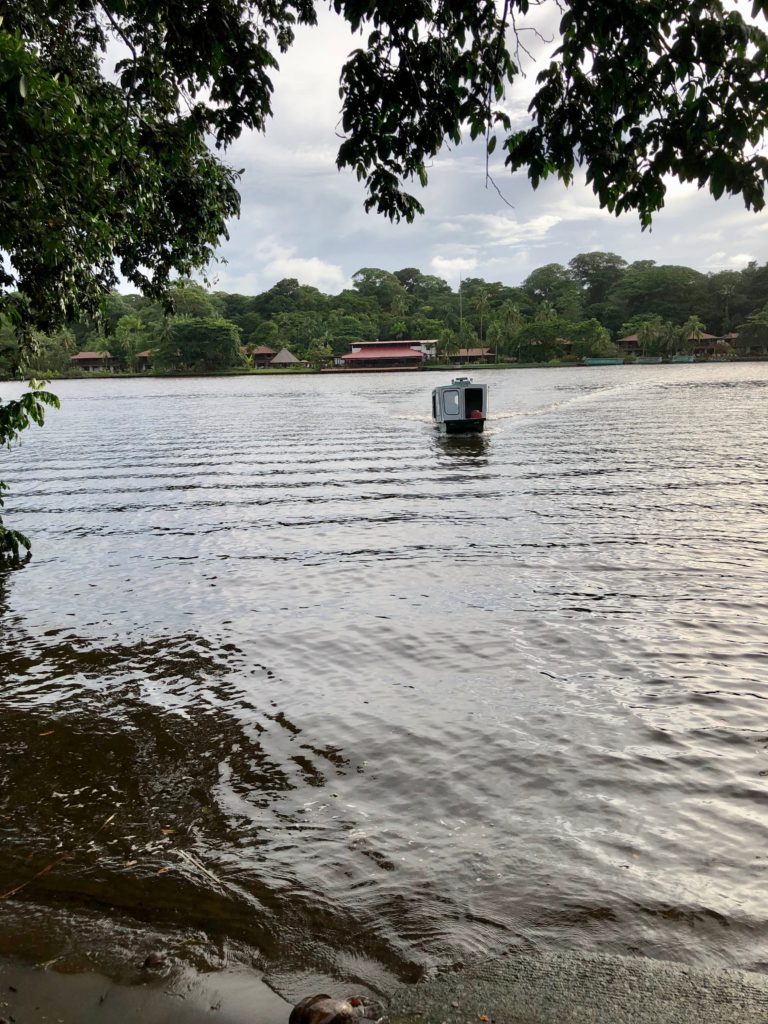
Our boat puttered along the Río la Suerte (Lucky River) until it merged with the Tortuguero River and ultimately fed into Penitencia Lagoon. Our lodge sat on the banks of the lagoon, accessible only by boat or plane. Across the water, another stretch of land provided views of dense foliage and macaws nesting in the tall tress, and just beyond those trees was the volcanic sand beach of the Caribbean Sea.
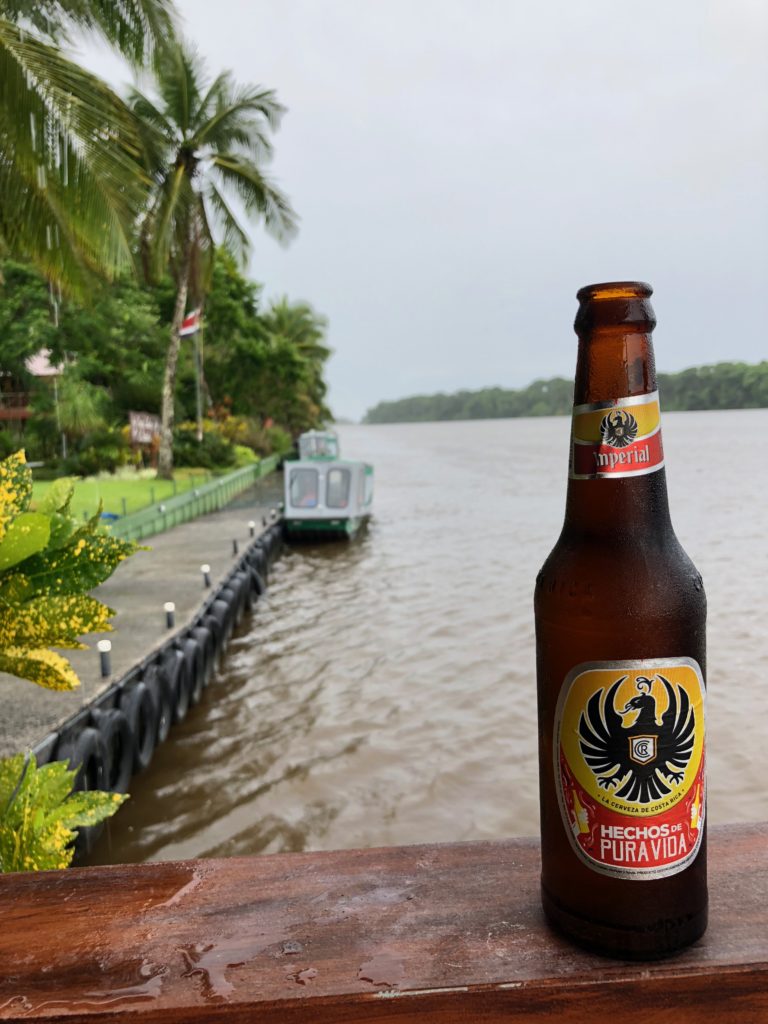
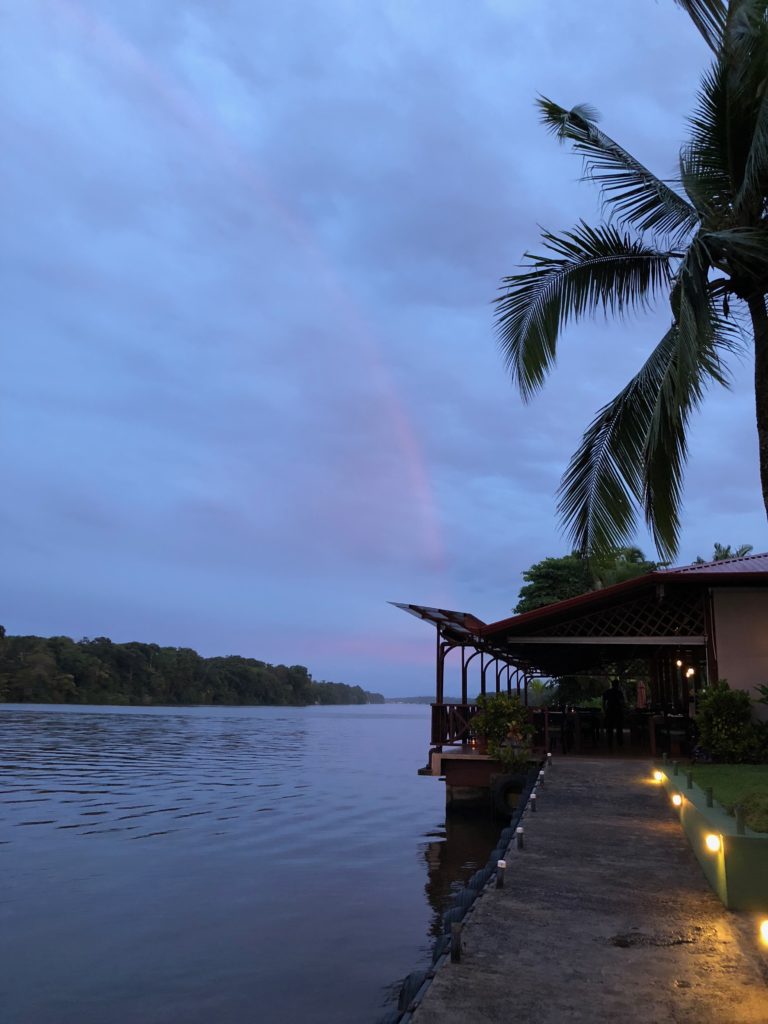
Our first afternoon at the lodge, we mostly pottered about, checking out the premises, reading our books in the terrace restaurant.
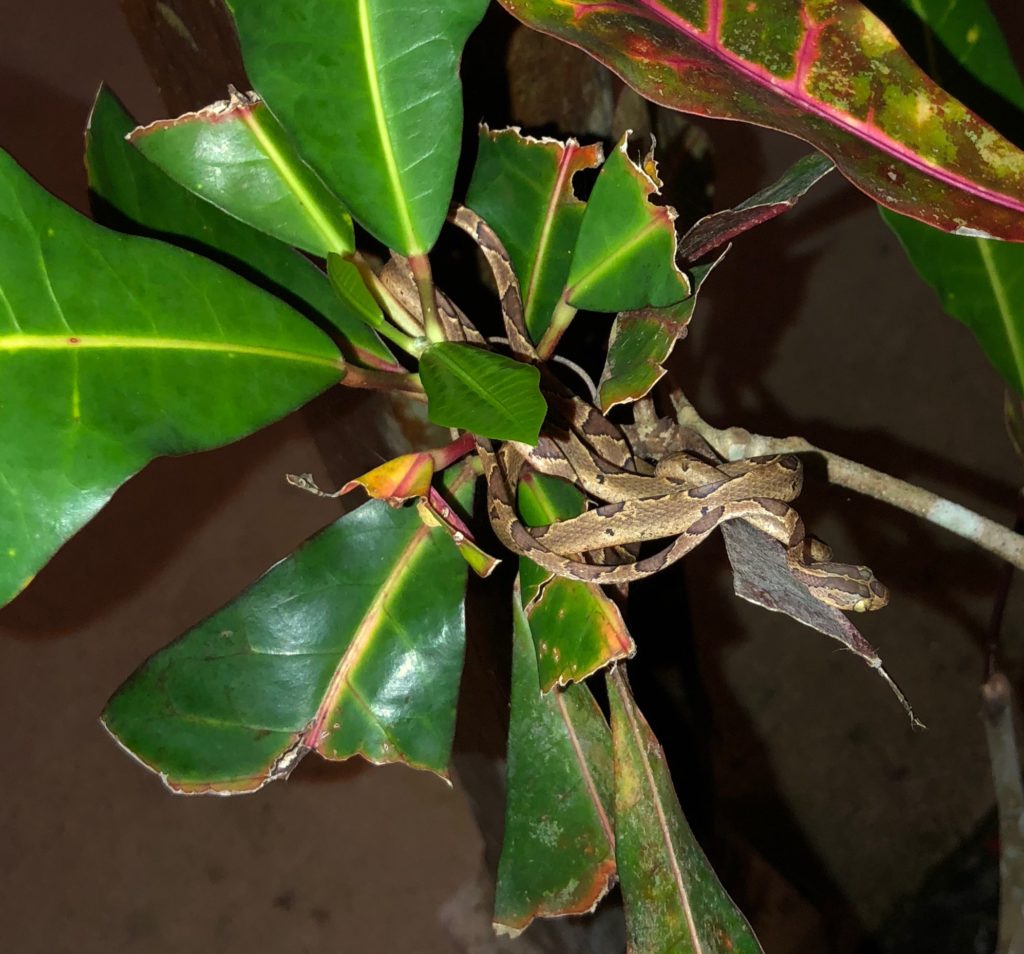
One of the guides pointed out a tiny leptodeira “cat-eye” snake, which was wound around the branches of a small bush.
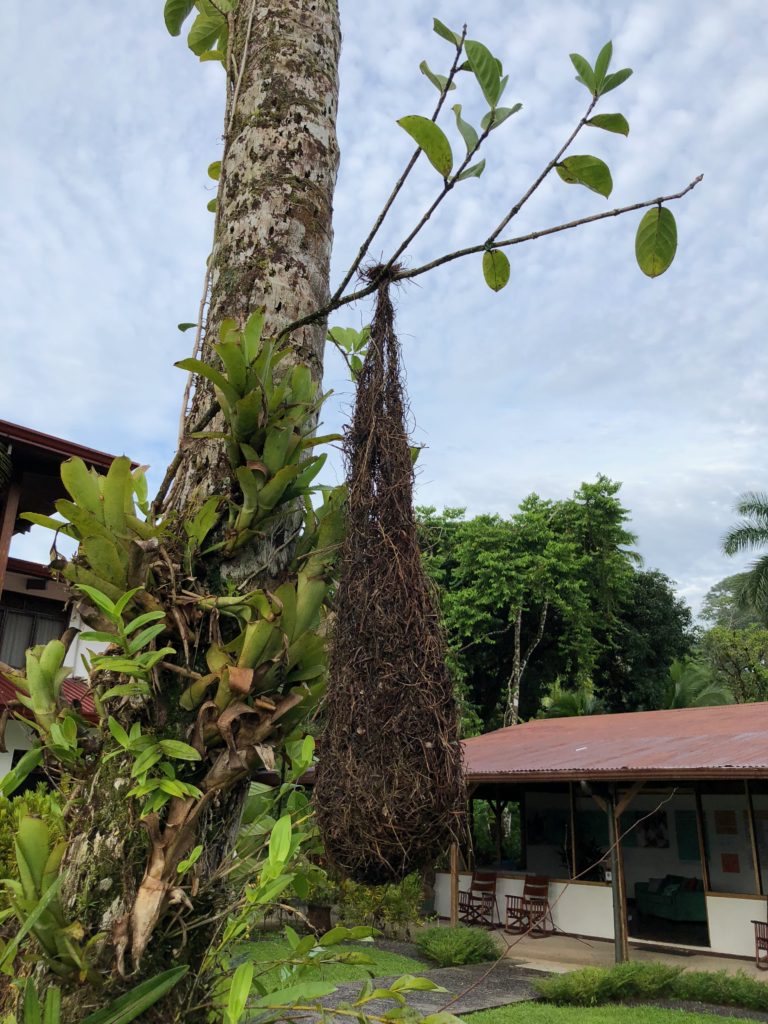
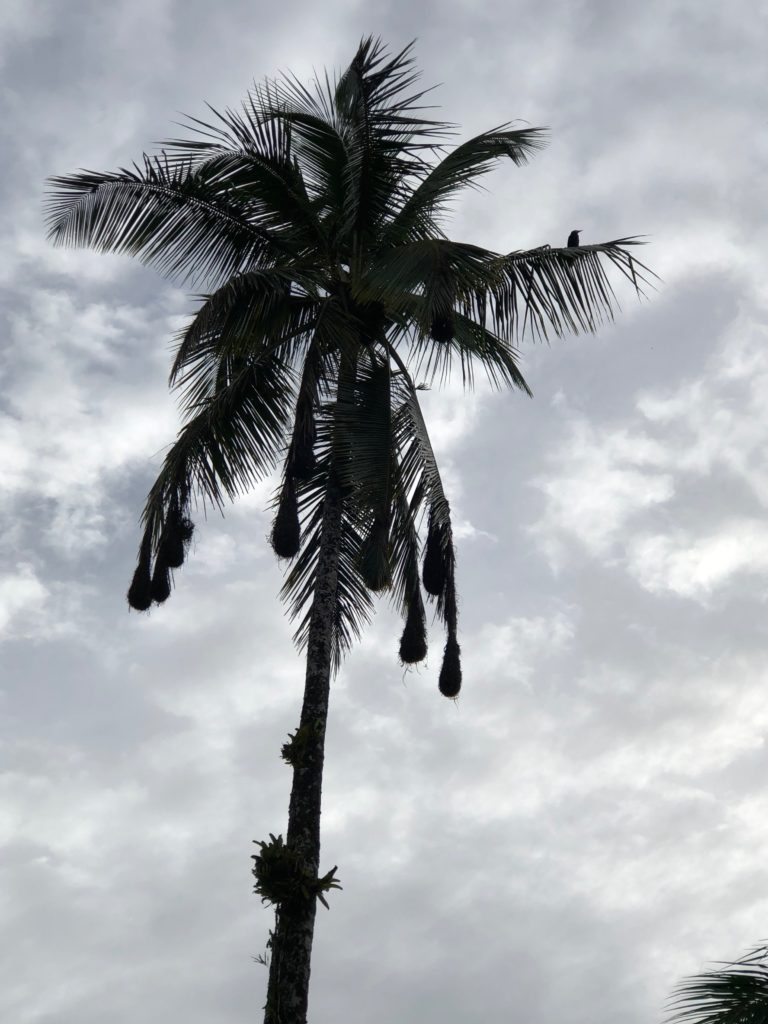
I became a bit obsessed with the montezuma oropendula bird, which builds suspended nests and has a gurgling call like an old-fashioned bicycle bell. This tall palm in front of the reception area featured many nests, including one uninhabited one for visitors to see up-close.
I’ve spent some time on the website BirdNote and learned that this cool bird is a colonial breeder, so the male (which is, by the way, twice the size of the female) maintains a little harem of ladies, who weave the incredible nests.
You would think that taking a plane to a city, then a car to the country, then a boat to a reclusive lodge would land you in the quietest place on earth. But, guess what? Nature is freakin’ loud! In a good way. The rooms at our lodge have open screened windows, so we felt like one with the rainforest. At bedtime, we could hear crashing waves, humming cicadas, chirping geckos, croaking frogs, occasional bird calls, and as the night wore on, it sounded like a freight train was about to crash into our room – rain. We lived in Laos and India, so I’m no stranger to monsoons. But this was a crazy amount of rain in a short amount of time. Around 4 a.m., I woke to a roaring animal in the garden behind our room. I would have thought it was a big cat dry heaving and hacking up a fur ball, but we had been warned about the howler monkeys. For much of the morning, they belted out their throaty howls, which can be heard for more than three miles. We loved it, but Tony pondered whether the locals ever dreamed of moving to the big city to escape the noise.
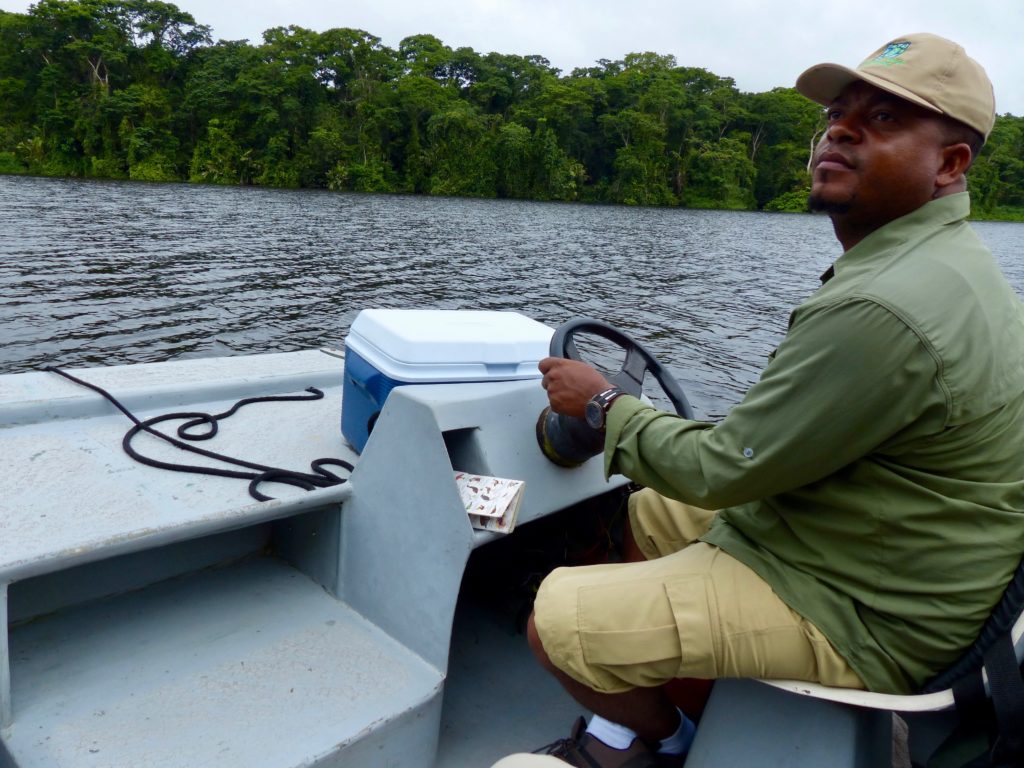
I chose gallo pinto for breakfast again and was not disappointed. Afterwards, we met up with Willis and a few other guests for a boat tour in the Tortuguera National Park. Before floating far from the lodge, Willis – with help from Tony, who has a superpower for spotting camouflaged critters – had already pointed out these attractions:
* a three-toed sloth,
* a two-toed sloth,
* a female anhinga (a water bird),
* a vulture,
* all three of the most common kingfishers in the area, including several Amazon and ringed kingfishers, and a tiny green kingfisher, which speared a fish and gobbled it up for our entertainment,
* many green macaws,
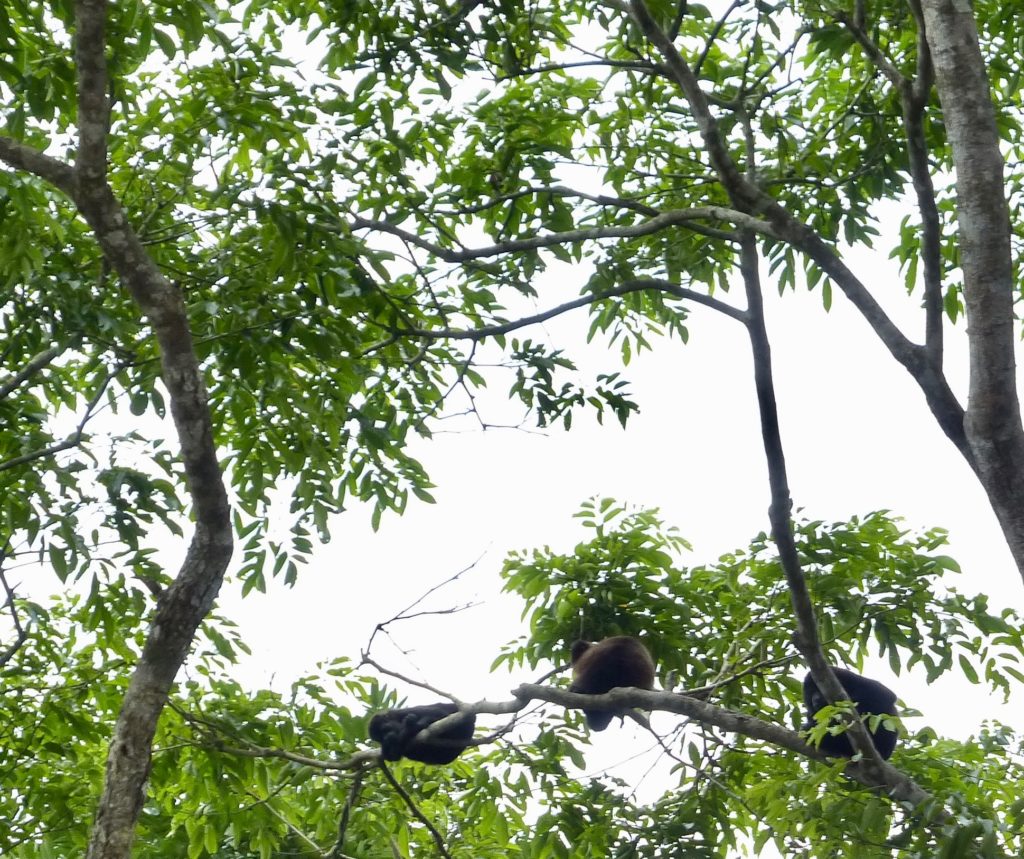
* howler monkeys, which looked exhausted from all that early morning howling and lounged lackadaisically with their prehensile tails wrapped around the branch for stability,
* collared aracari toucans, which have colorful bodies but plain beaks (unlike the Froot Loops mascot), and
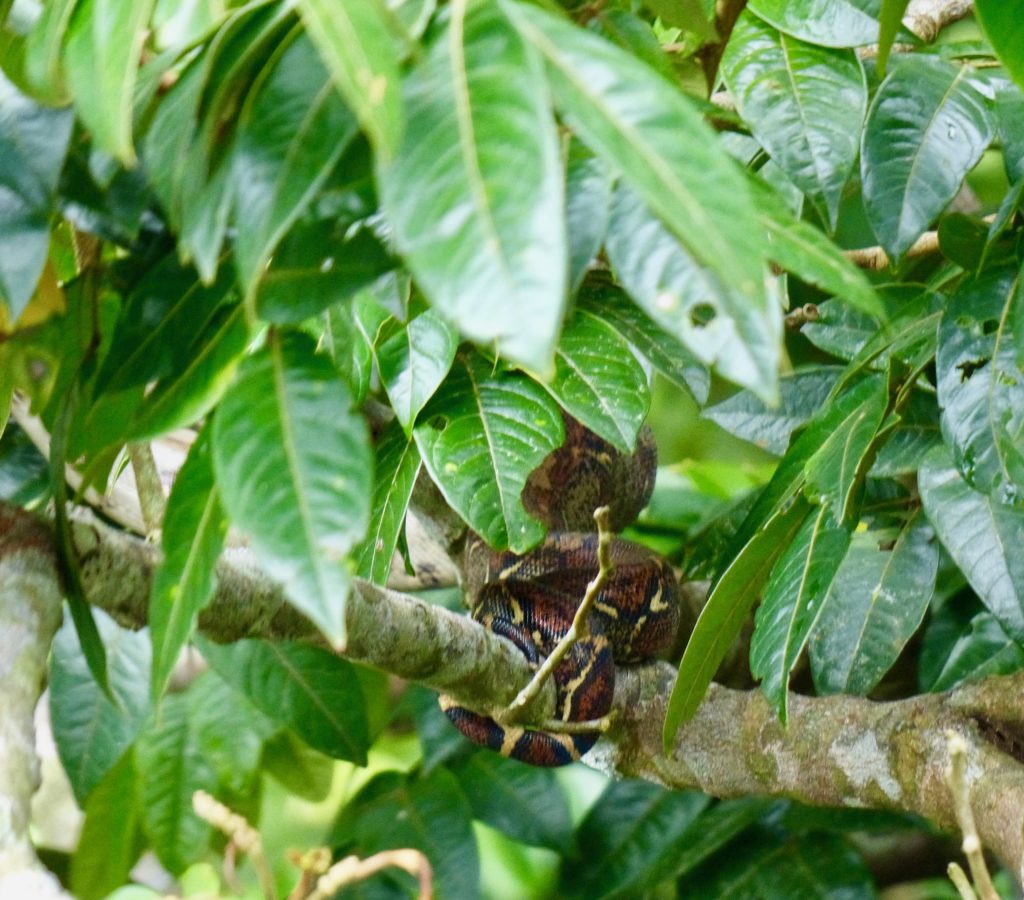
* a boa constrictor that was about 4 feet long and so tangled up in a bush that we couldn’t find its face.
Unfortunately, I didn’t get any good photos. (a) Camouflage really works, and (b) these guys were not posers.
Here’s Willis, our guide. He said his great-grandfather came to Tortuguera to hunt turtles and other game. His grandfather followed suit, and his father also became a hunter until conservation became popular, and then he started working as a guide. Willis remembers riding in his dad’s boat and learning how to spot wildlife by sight, sound, and smell. He is the first generation not to carry a gun or knife, he said, and only to work in the interest of the ecosystem.
The snoozy howler monkeys.
The shy boa.
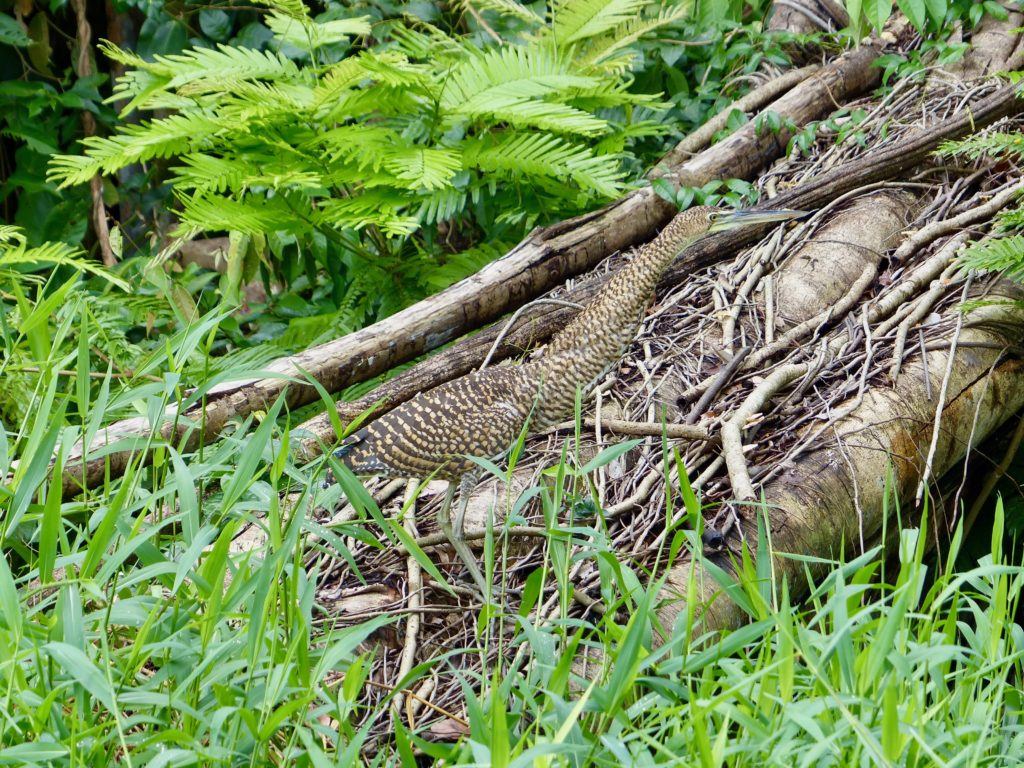
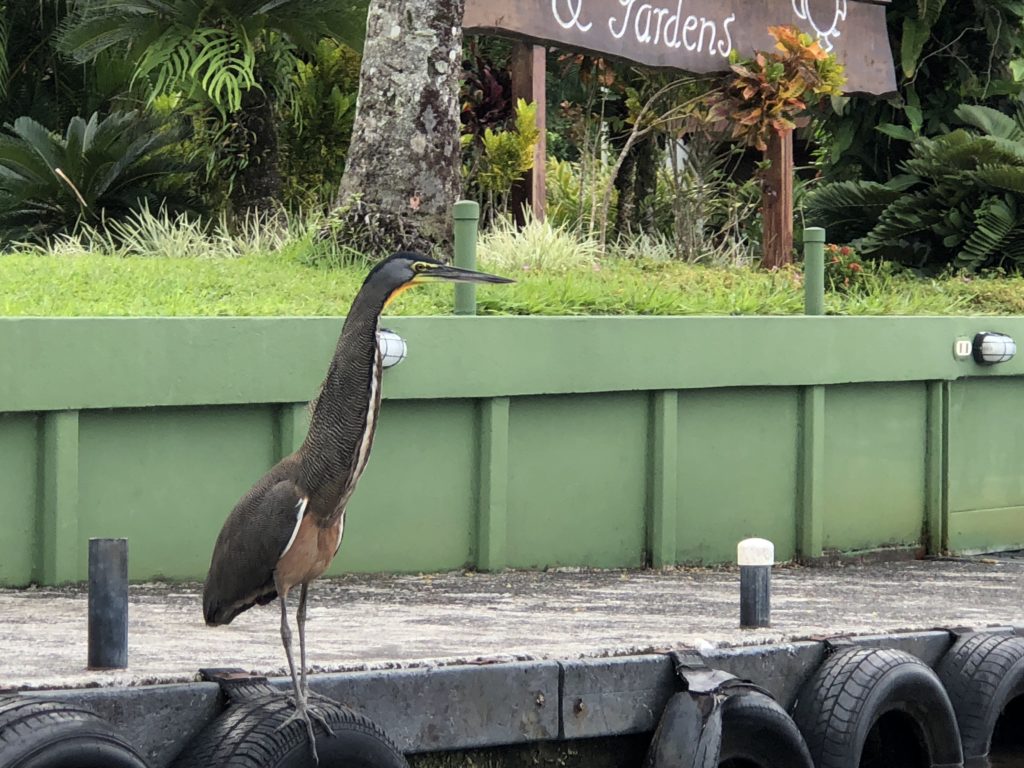
The nearly invisible tiger heron.
The wildlife extravaganza continued after our boat entered the national park. We saw:
* several bare-throated tiger herons,
* many blue morpho butterflies, which have wings that are brilliant iridescent blue when open and dull brown when closed,
* a male anhinga,
* two green herons,
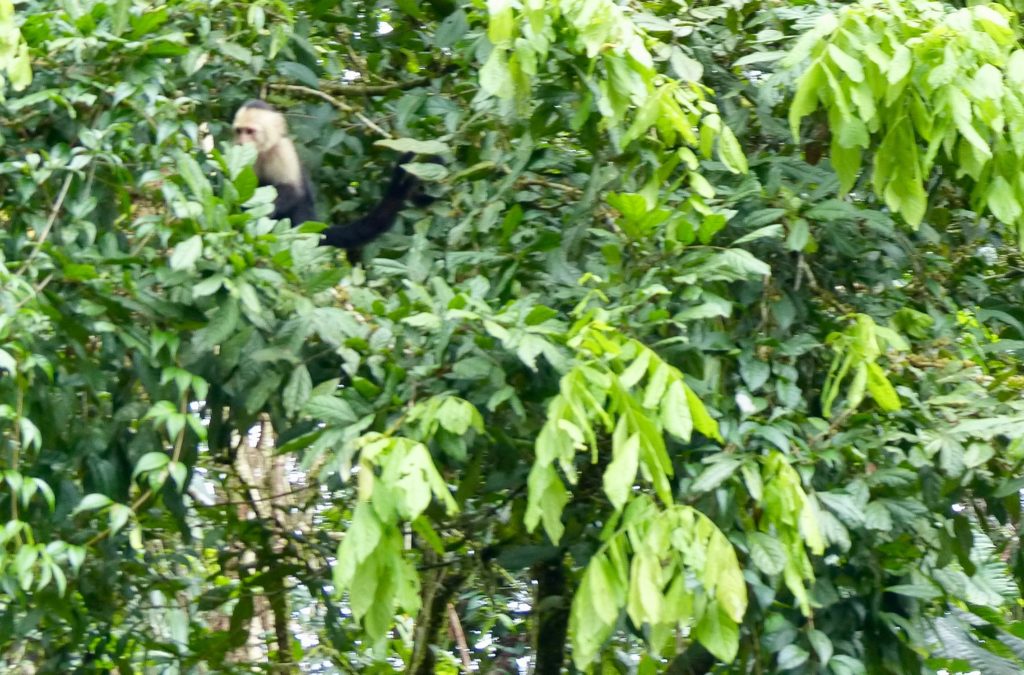
* several white-faced capuchin monkeys,
* a few spider monkeys,
* a great curassow, which Willis called a turkey, hopping up a tree from branch to branch,
* two northern jacana birds foraging in the water lillies, and
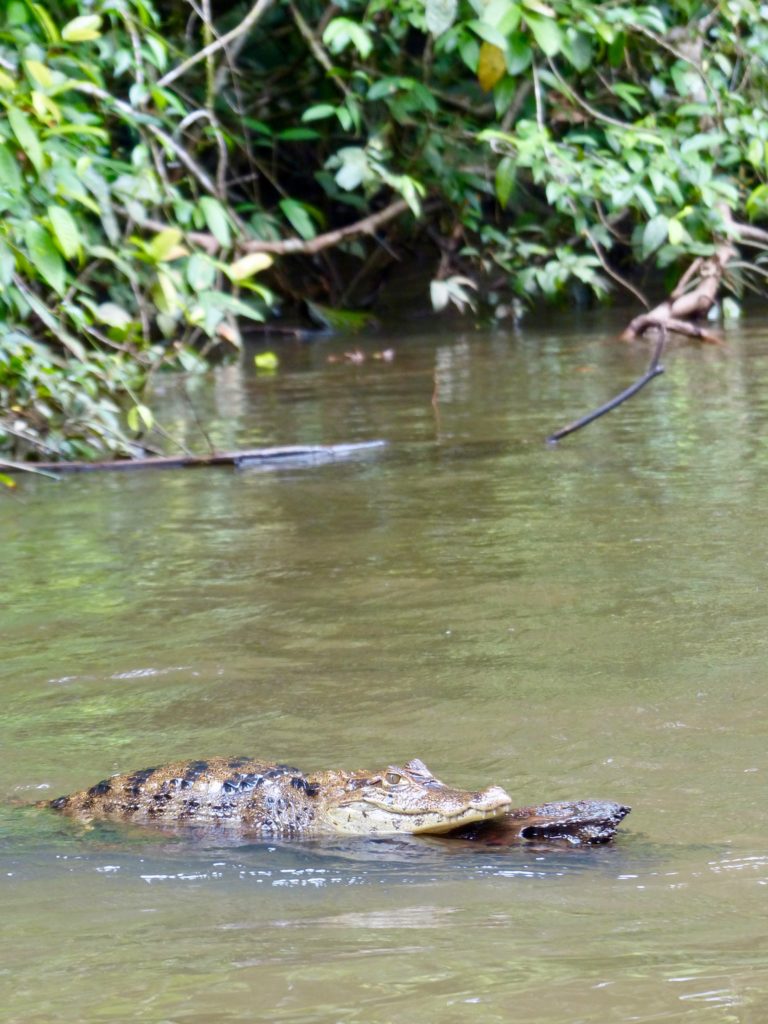
* several caimans, a smaller cousin of the crocodile.
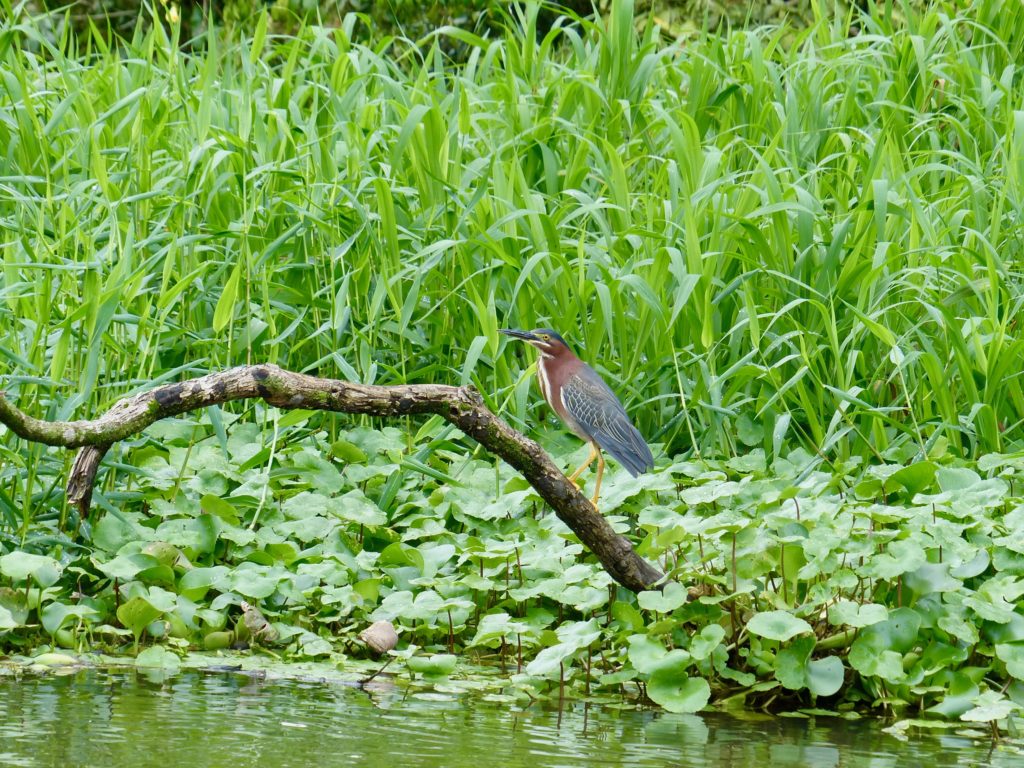
Green heron.
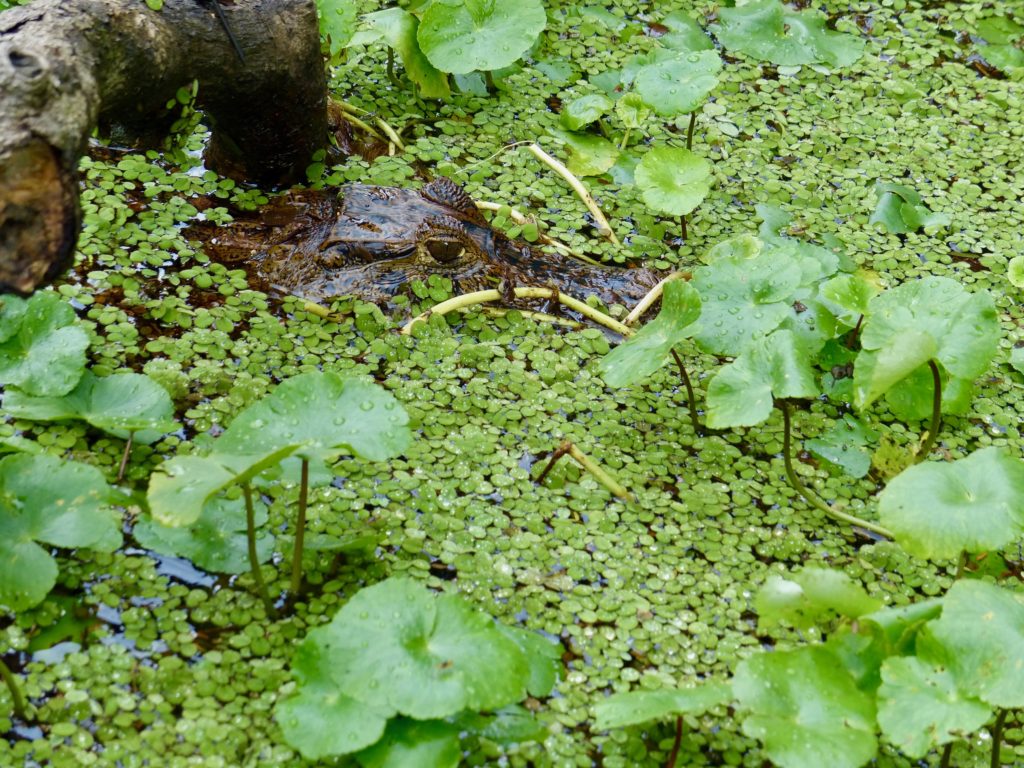
Caiman #1.
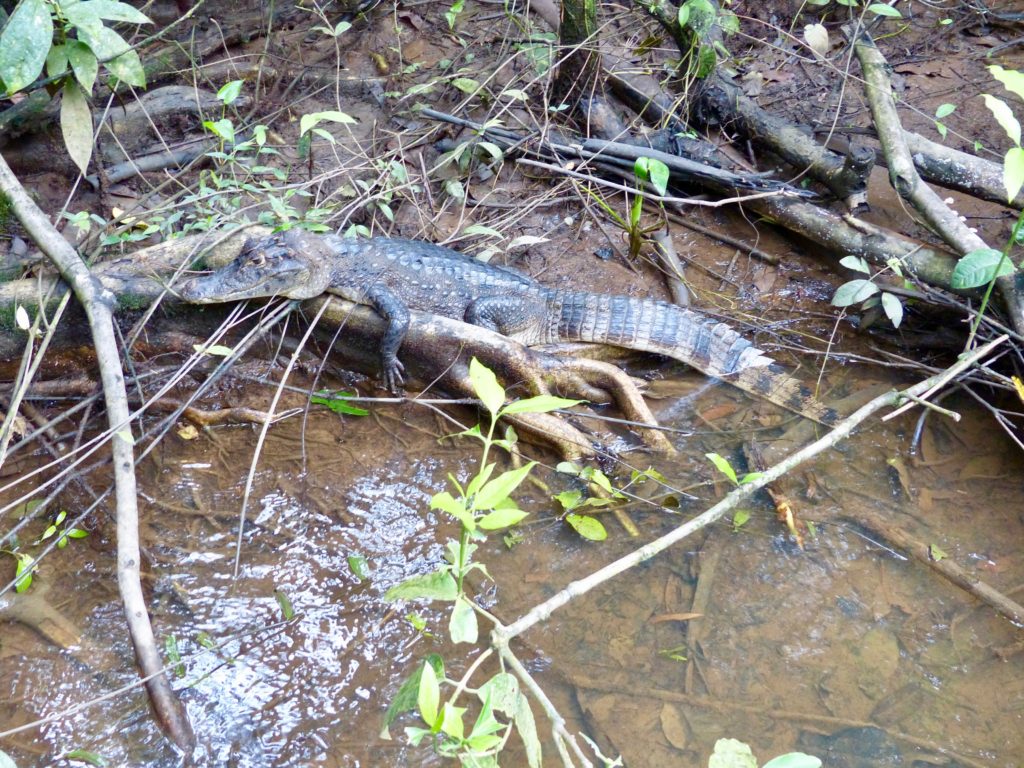
Caiman #2.
Caiman #3.
At one point, Willis spotted a Jesus Christ lizard. The bright green crested lizard got its name from its ability to run across water, something we got to see in action. Willis reached down out of the boat to splash water on the lizard, and it leapt off the stump and dashed across the water in to the jungle. At the same time, caiman #1 raised its head out of the water and settled mostly submerged and still.
After marveling at the caiman for awhile, we motored a short distance away to watch a white-faced capuchin monkey feeding in a tree. Suddenly, caiman #3 started swimming toward us. Tony saw him first and later said it looked like a cartoon, with only his eyes poking up out of the water as he drifted toward our boat. I couldn’t decide what to focus on: the monkey or the caiman! Eventually, the monkey swung out of view and the caiman found a sunny spot to rest, so we moved on.
Caiman #3 started swimming toward us at the same time this guy was jumping around in the branches of a tree.
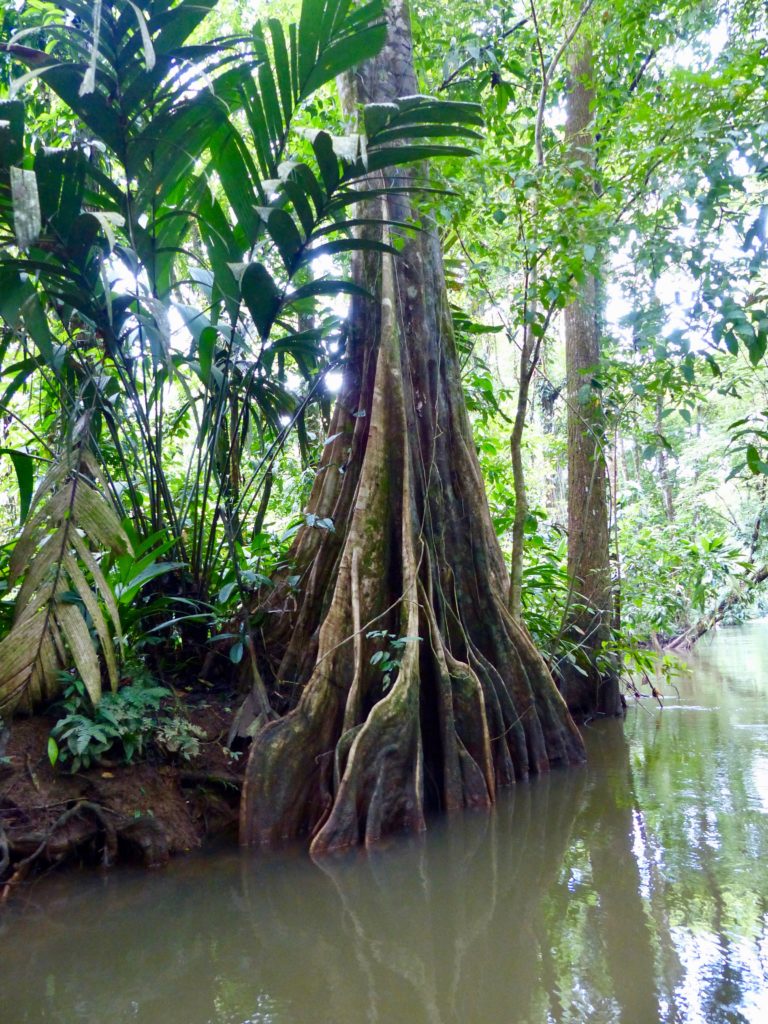
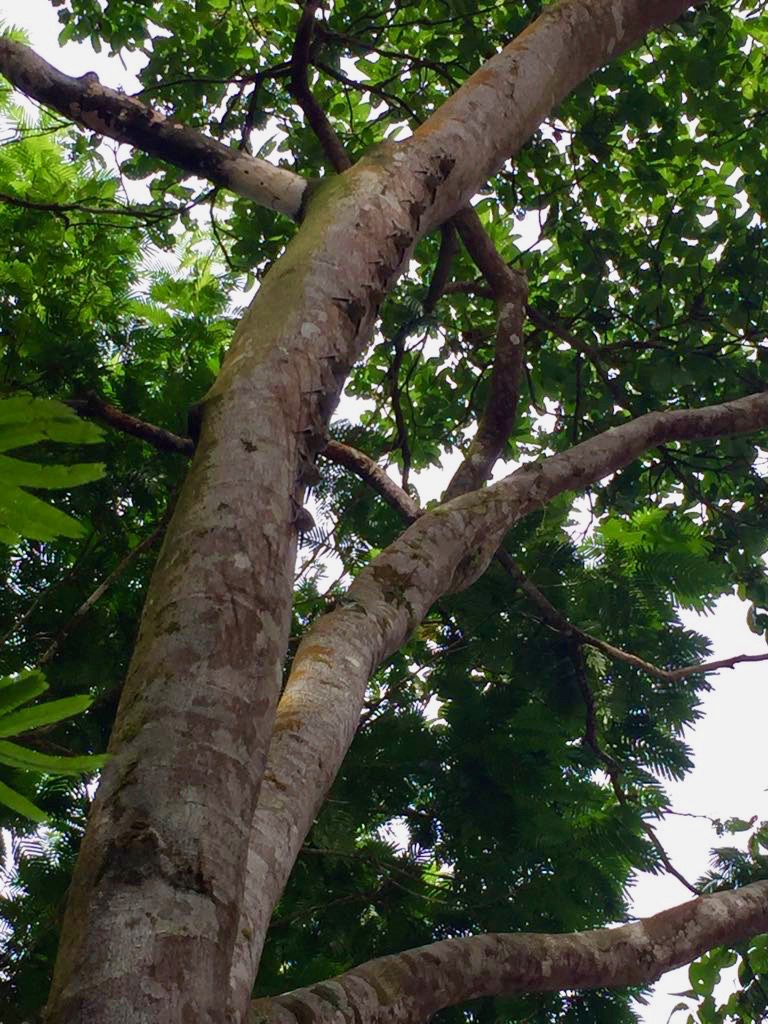
Many rainforest trees have incredible buttress roots.
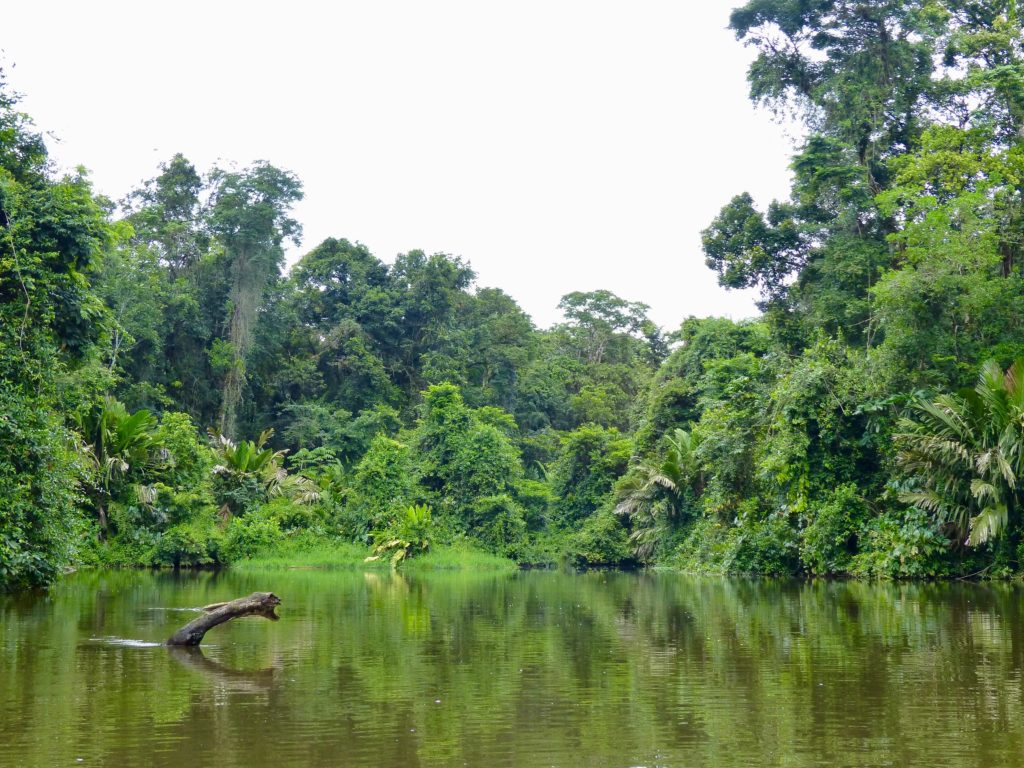
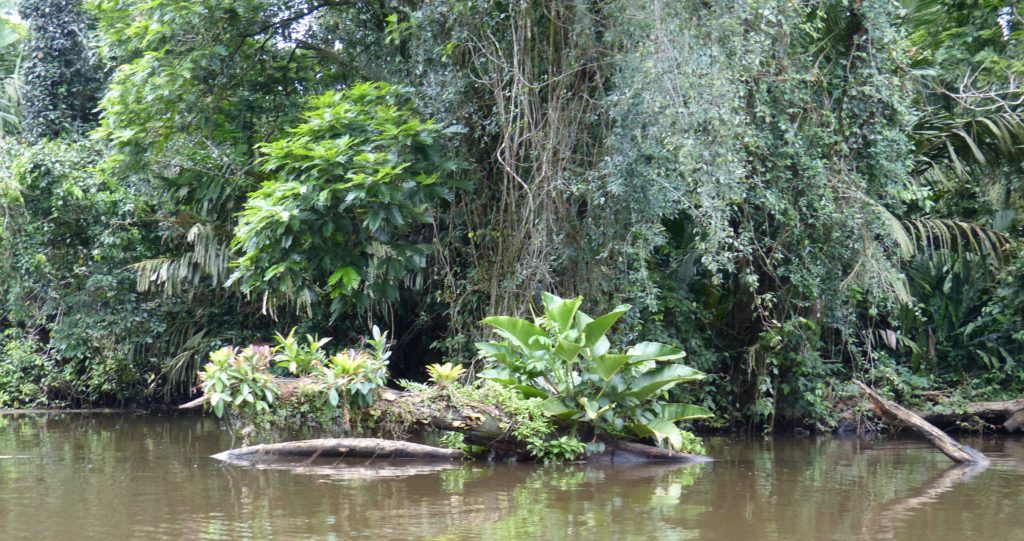
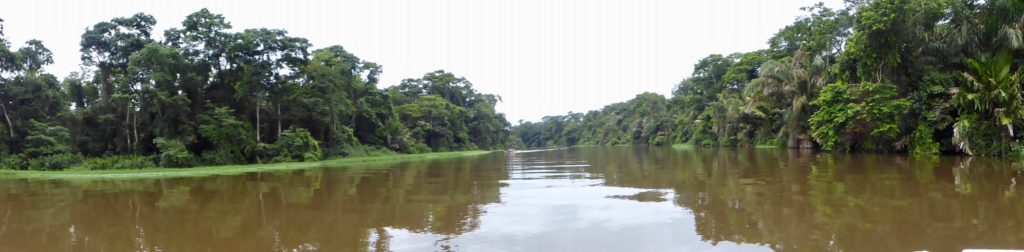
Pretty scenes from our boat trip.
On the way back to the lodge, Willis took a detour to show us the nesting area for green sea turtles. According to Lonely Planet:
Female turtles return every two to three years to lay their eggs on the exact same beach where they were born. These behemoth animals average about 120 cm and weigh as much as 150 kg, so seeing one in person at such close range is a truly spectacular experience. Each female turtle lays eggs six times during the nesting season, and researchers discovered 18,000 nests along Tortuguero’s coast in 2015 alone.
Maybe we’ll return during nesting season some day.
Back at the lodge, we enjoyed a tasty lunch and then met up with Norton for a guided walk around the gardens. He took us to the southernmost point on the back of the property and set up a telescope, aimed at a tree across a small stream. “There was a sloth here earlier … oh good! He’s still here,” Norton said.
Sure enough, the two-toed sloth was hanging upside down and scratching his arms with his long curved claws. “Sloths have a lot of fleas,” Norton pointed out. I love the way the Costa Rica Experts website explains it:
The fur of a sloth is actually an entire ecosystem in and of itself with colonies of algae, fungi, moths, mites, and the like. The ecosystem serves as a sort of symbiotic relationship with the sloth as it gives them a green tint that allows them to hide from predators and also serves to make them rather unappetizing.
Sounds gross, but that sloth was freakin’ adorable. I could see his sweet little face plain as day as he slowly scratched his itchy armpits.
Norton walked around to a tree and pointed up. “Have you seen the bats?” he asked. I looked and looked and could not see them. “How can you not see them? There are 9, 10, 11, 12 of them,” Norton said, counting the invisible bats. Finally, Tony pointed out that they were lined up on the branch and blended in almost perfectly. Little bitty bats in a row. Norton noted they look like a snake when they sleep like that, and if they sense danger, they move along the branch one at a time to give the appearance of a slithering snake. How crazy is nature?!
Don’t worry … I won’t shame you if you can’t see the bats.
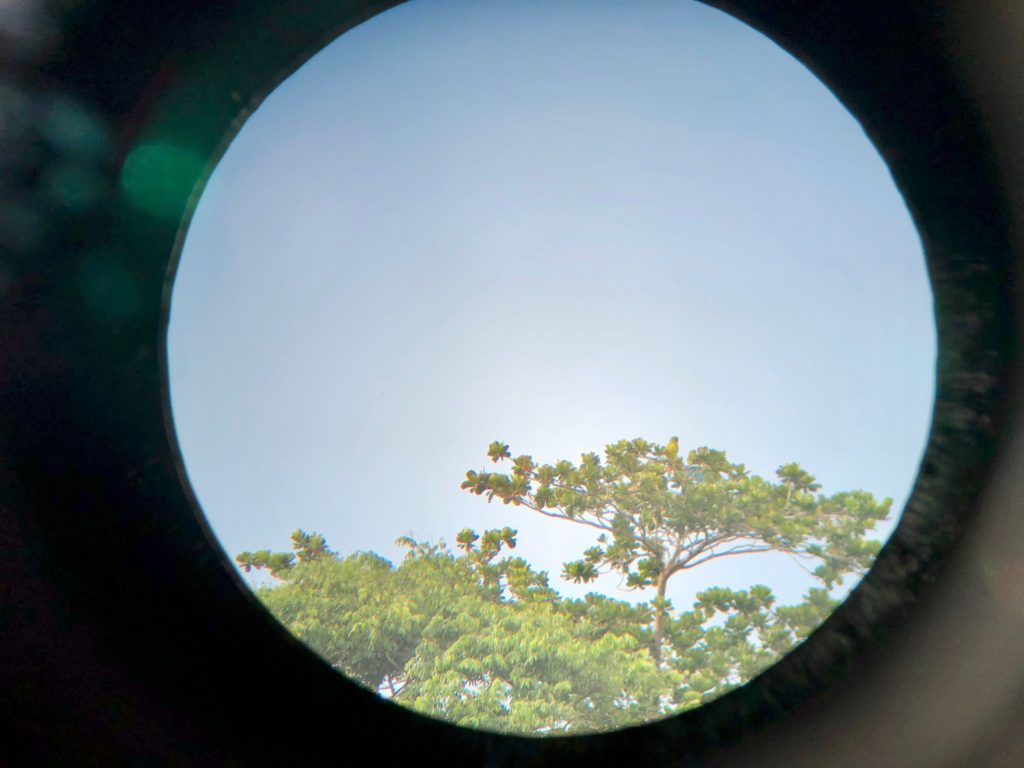
Next, we walked through the lodge’s back yard, learning about different plants and their medicinal value. Norton pointed out two bright red tiny tree frogs, a baby hummingbird in the smallest nest you ever saw, a ylang-ylang tree with blossoms that smell like heaven, and finally, he aimed his telescope across the lagoon to a tree full of green macaws. What a treat!
Hmmm… taking a photo with your phone of an image on a telescope does not work well. Plus, the dang macaws had mostly taken off by the time I got it to focus.
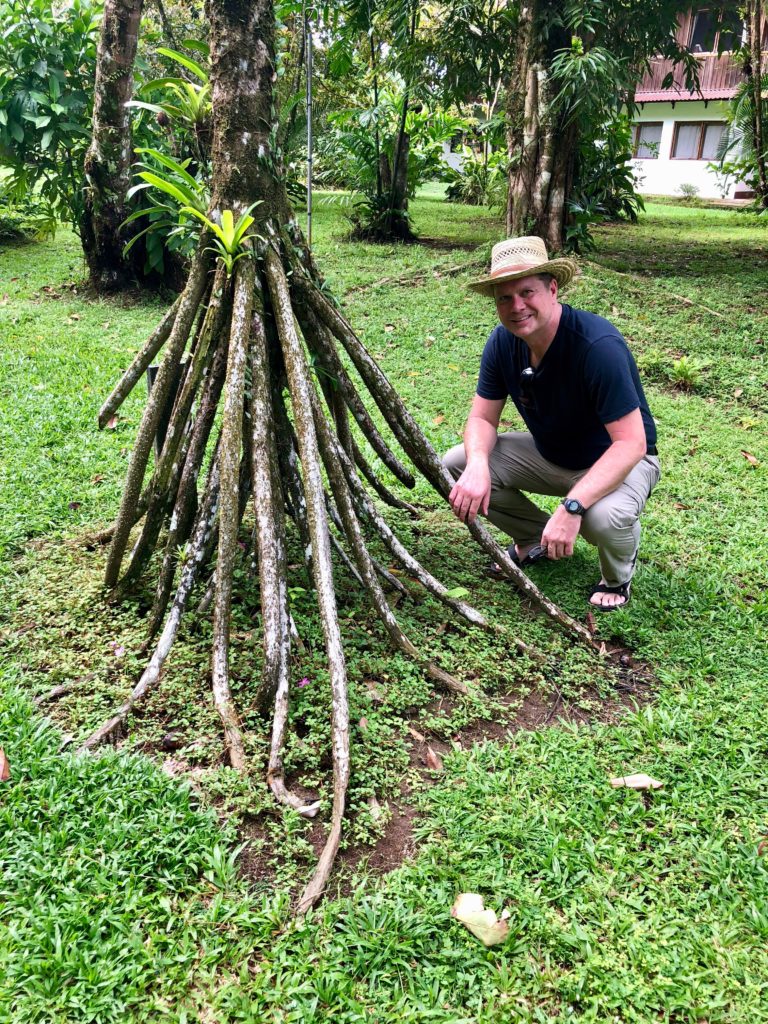
Tony poses with the “walking palm.” Can you say “Lord of the Rings”??? Norton explained that the palm follows the sun, so the “legs” dry up if they no longer support the tree, which gives the illusion that it’s walking.
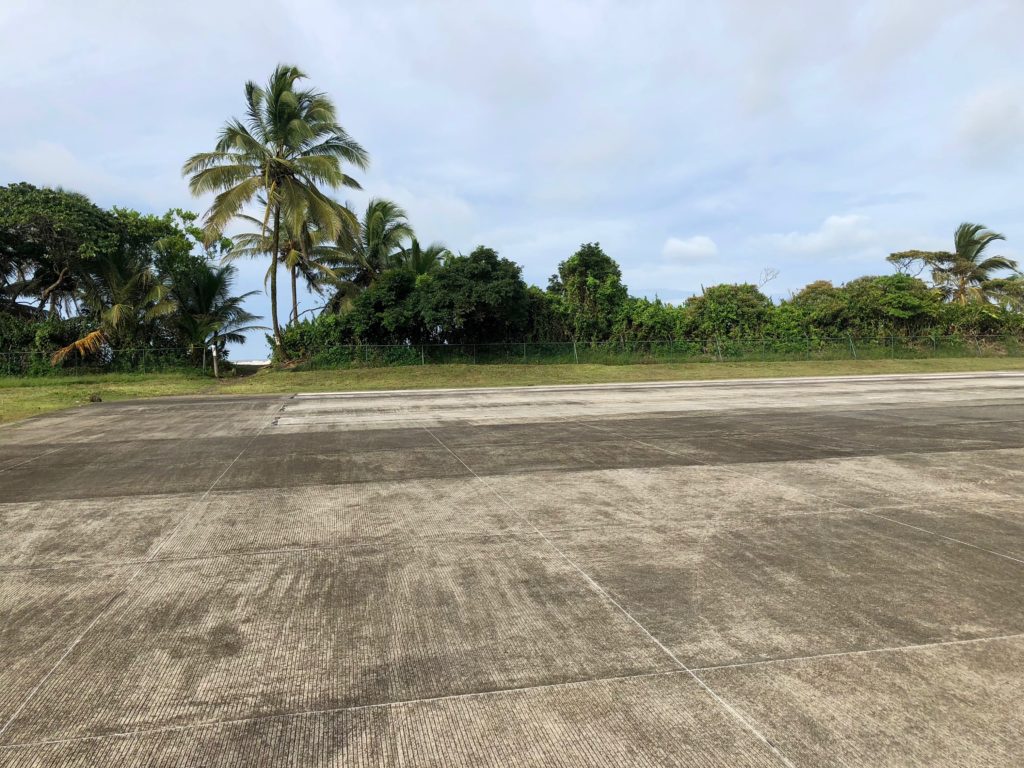
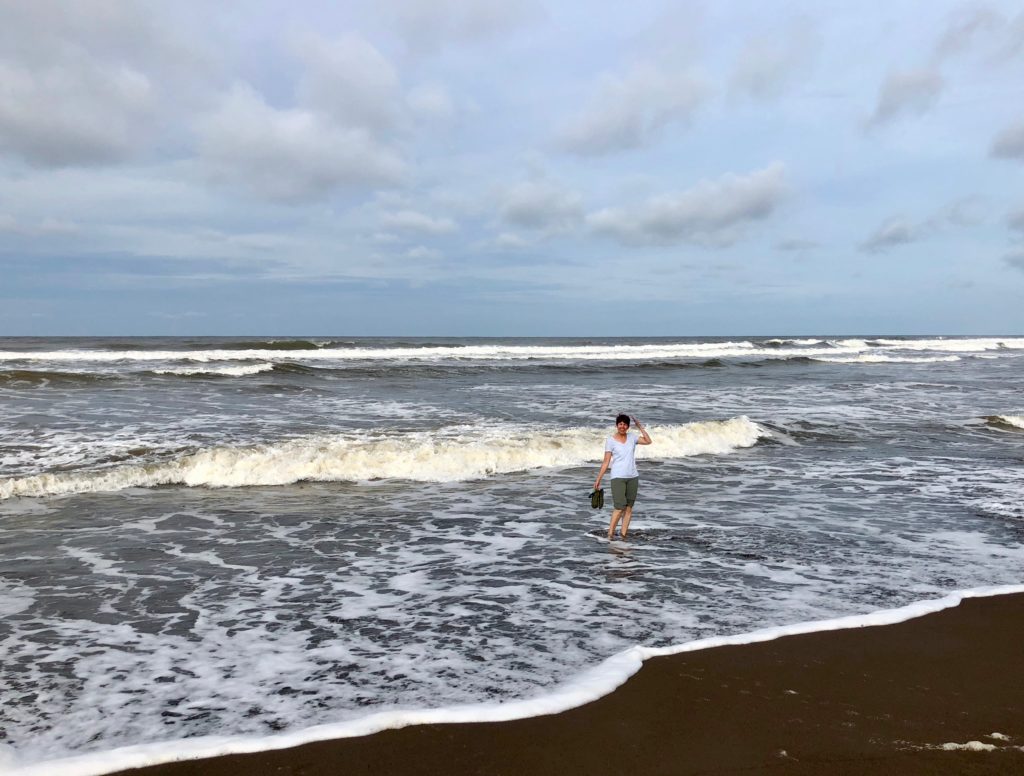
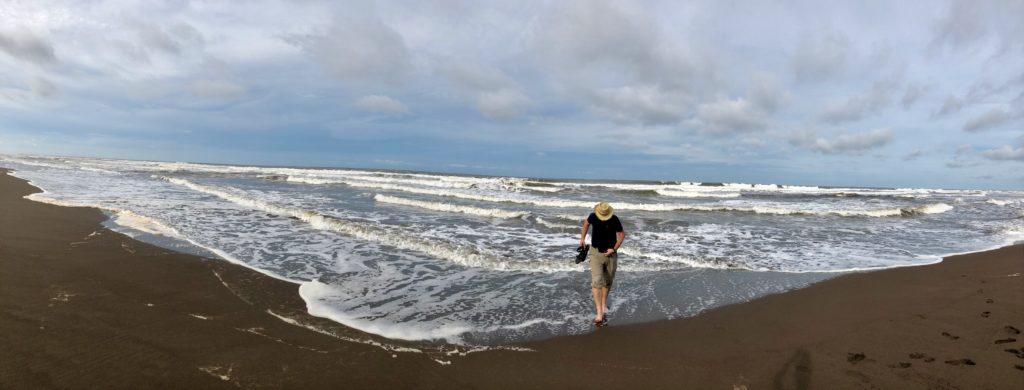
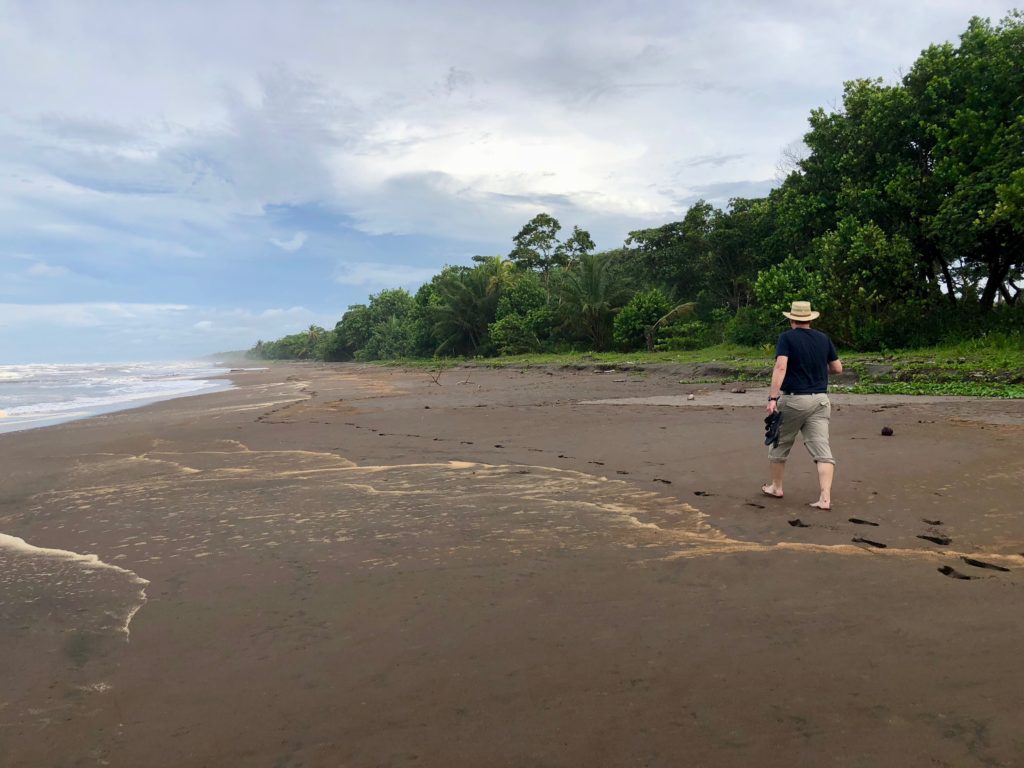
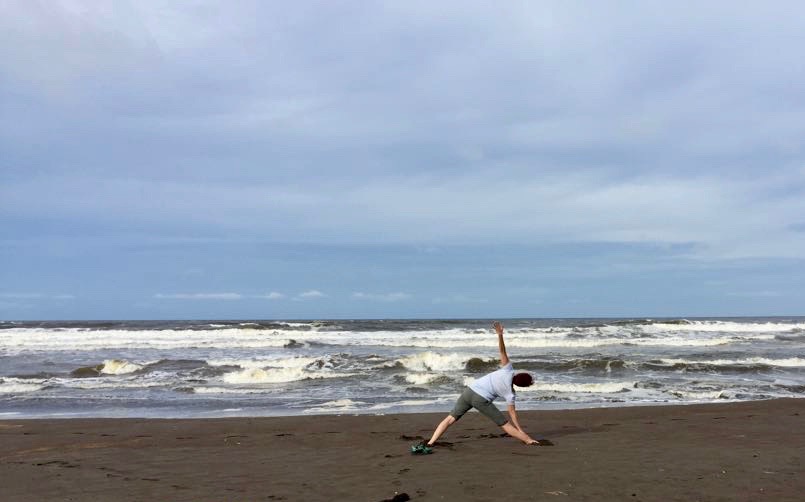
Because our visit here was cut short by Latam Airlines, every minute counted. So after our garden walk, we hitched a ride on the lodge’s water ferry to the beach across the lagoon. We climbed out of the boat, walked across the air strip (which felt a little dangerous), and through a break in the trees. The beach was completely deserted except for one other family from our hotel. I immediately kicked off my shoes and ran into the warm surf. We walked up the beach for about 30 minutes. I practiced a few yoga asanas while Tony poked around for shells. And in one magical moment, a huge flock of macaws buzzed our heads and swooped in a circle before landing on some beachfront trees.
We had been warned about staying too long. That’s because the only way to get back to the lodge was to stand at the shore and wave your arms frantically until somebody saw you and sent a boat. They told us if we waited too long, it would get dark and they wouldn’t see us. Sure enough, someone spotted me gesticulating and came to get us.
Look who was waiting for us.
After a dip in the saltwater infinity pool, we hunkered down for a little break. Right on cue, the rains started up again. Perfect timing.
I can’t believe how much we did in one day. Tomorrow, we’re off to Fortuna. Stay tuned!
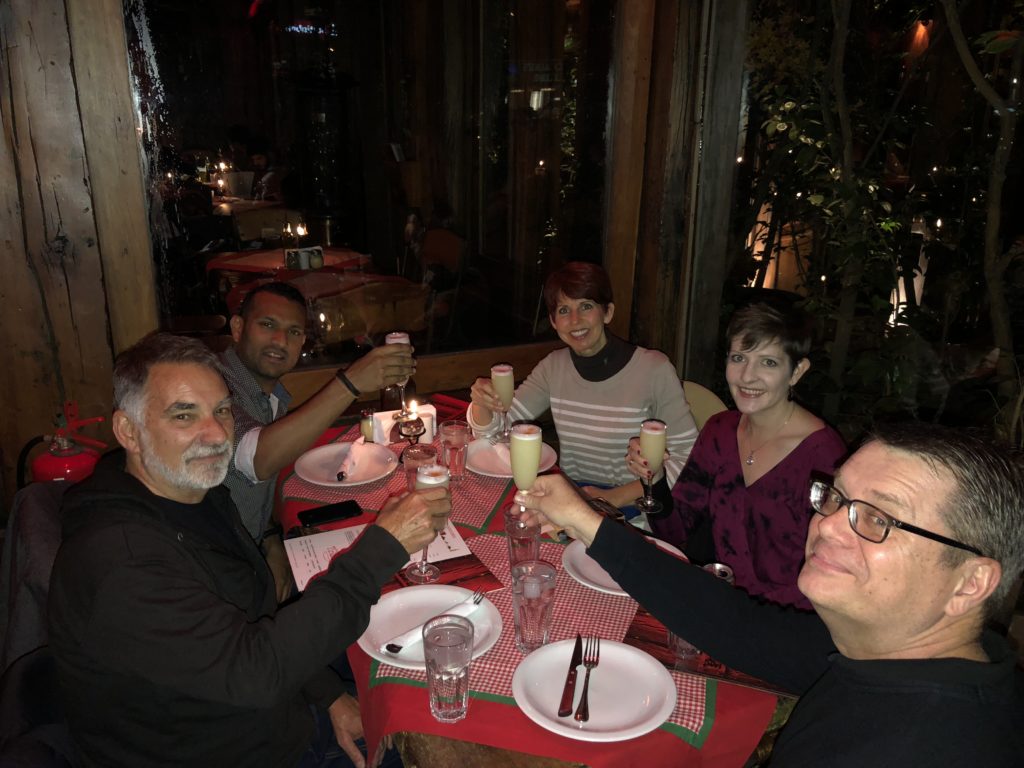
I was truly bursting with excitement about our upcoming trip to Costa Rica. This girl needed a dose of nature. George, our latest pet sitter for Ella (from trustedhousesitters.com), arrived on Friday, so we took him to Tiramisu for our now traditional pisco sour toast.
Awwww… here we are, feeling all optimistic that things would go as planned. (counterclockwise, Tony’s giant face, our friend Lisa from Nido, me, our visiting friend Brian who worked with us in Delhi and now works at our old school in Shanghai, our petsitter George)
Tony and I hit the road on Saturday morning at the crack of dawn.
And then it all went to custard.
We called an Uber at 5 a.m., but when it arrived, the driver refused to take us to the airport. Another Uber answered my call, but he also refused. I later found out an Uber driver had been shot by police at the airport the other day, so I understand their trepidation. Still, we were stressed. Our concierge called a taxi for us, and we got the airport with plenty of time to spare.
As it turned out, we had way too much time to spare. Our 8 a.m. flight was delayed. And delayed again. Until eventually it became clear that we would miss our connection in Lima, Peru. I was determined to get to Costa Rica on time so that we could kick off my amazing itinerary and head straight to Tortuga Lodge and Gardens. Check it out. Can you see why I felt eager to get there?
We had already planned to spend one night in San Jose, Costa Rica, and then drive to La Pavona on Sunday to catch a boat to the lodge. However, if we got stuck in Lima, we wouldn’t be able to get to that paradise till Monday. Maniacally, I researched flights and thought I found a solution: We would book on another airline.
So we finally boarded our Latam Airlines flight from Santiago to Lima. The plane had to have been from the Wright Brothers era. I mean, our seats felt like they were made from plywood, and our armrests had ashtrays! I started watching “Pitch Perfect 2” on the in-flight entertainment, but the system broke down about halfway through the movie and never recovered.
When we arrived in Lima, our luggage didn’t. We were among about 20 people who had missed connections and whose luggage had gone AWOL. We waited at the luggage carousel for about 30 minutes while a Latam representative calmly and kindly kept reassuring us that they would find our bags. Finally, she gave us vouchers for a hotel in Lima. It was Novotel, which I know to be a lovely and fairly upscale hotel chain. Unfortunately, it turned out to be mediocre. Tony called it the “No Votel.” But, whatever, they gave us three free meals.
I continued to research alternate flights to Costa Rica, but we couldn’t do anything until our suitcases surfaced. Dang it.
I’ve been doing a 7-day gratitude challenge on an app called Calm, and today the meditation was all about feeling gratitude in the face of adversity. F**K that. I was cranky.
I washed my underwear in the sink, and Tony ventured out to find toothbrushes and toothpaste. (Yes, yes, we’ve been traveling for umpty million years and we should know to pack a change of underwear and toothbrushes in our carry-on. Please don’t lecture.)
We were so exhausted that we crashed at 7:30 p.m. and slept all night. In the morning, I checked with the hotel’s front desk. No call from Latam. No luggage. Tony thought he was so funny with his jokes like, “What are you going to wear today?” and “We have to leave in 30 minutes and we still haven’t packed!”
We headed back to the airport at 8 a.m. The Latam lady said our bags were still lost. She asked us to check back in an hour. We wandered around the airport until the designated time, at which point she told us to come back in 30 minutes. So we did. Still no news. She gave us a voucher for lunch at the food court. After our greasy lunch, we wandered back to the Latam counter, where she told us our luggage had been found! It was put on our flight to San Jose. Hooray!
We walked buoyantly to our gate, feeling like FINALLY we were kicking off this vacation. We hunkered down to wait for our flight to Costa Rica. I had come to grips with the fact that we were going to miss one day at Tortuga Lodge. I was disappointed, but more than anything, I just wanted to get there.
Suddenly, a crabby Latam Airlines lady invaded our tranquility to ask for our yellow fever paperwork. We were like, “What?” She asked if we had stayed in Peru … because apparently you need a yellow fever shot if you travel from Peru to Costa Rica. “Well, yes, we did stay one night here because Latam lost our luggage,” I told her. She huffed and stomped away with our passports. Another passenger, a British guy who we now call Tony’s doppelganger because they looked freakily alike, overheard our conversation. He had also missed his connection to Costa Rica and stayed at our same hotel the night before. Apparently, the airline had warned him that he might encounter some problems because of his lack of yellow fever certification.
Eventually, crabby lady brought our passports back with “OK” scribbled on our boarding passes.
When we arrived in San Jose, we hustled to the immigration line, sweating about whether we would be asked about the yellow fever thing. The doppelganger was a couple people ahead of us in line. We watched him with bated breath and sighed with relief when he got his passport stamp without any drama. When it was our turn, our guy was pretty friendly and chatty. He didn’t balk at the fluorescent pink Peru stamps in our passports, but simply asked us about our professions, made a little small talk, and then found a spot to plant that coveted Costa Rica stamp. Whew!
We proceeded to the baggage claim, where – hallelujah! – our suitcases actually plopped on to the carousel with a smug sense of accomplishment. We got local SIM cards for our phones and cash in the local currency (colón), which is confusingly .0018 to the dollar. Then we caught the shuttle to the rental car agency, picked up our Suzuki Jimmy, and headed to a nearby hotel for the night. Tomorrow morning, bright and early (because we found out there will be a protest about some proposed tax), we’ll head to Tortuga Lodge.
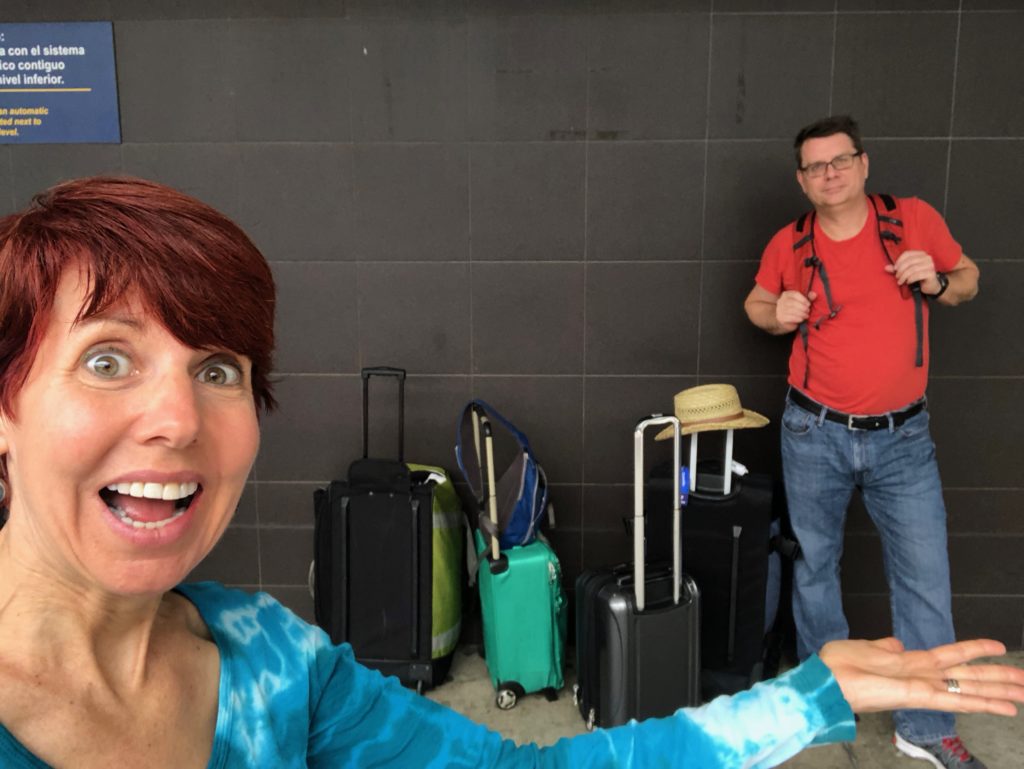
Here we are, all stinky and greasy and relieved to finally get our luggage.
For my husband, teaching is so much more than a job. Sure, he teaches high school students critical thinking skills as they analyze and write about literature, and he spends many weekend hours grading papers and writing lesson plans. However, he cares about more than his students’ scores on the International Baccalaureate exam. He cares about more than their future plans and whether they get accepted at top-tier universities.
He cares about them. As people.
I felt so proud when I heard that the senior class at International School Nido de Aguilas had voted for him to speak at their graduation ceremony. I felt even prouder when I heard his speech at the ceremony last night. He delivered his remarks in the same style he teaches his classes – with passion, conviction, and no small amount of sarcasm. I loved seeing the reactions on the faces of his students, especially when they shared an inside joke.
I actually enjoyed the whole ceremony, which included speeches in both Spanish and English (with written translations on the screens). The two student speakers were eloquent and poised with powerful messages for their peers. Seniors represented more than 30 countries and spoke about 14 languages. Their accomplishments at Nido, their bright futures, and their big smiles filled me with optimism. It’s such a cliché, but I feel like they really might make the world a better place.
Here’s a video of Tony’s speech, complete with Spanish subtitles.
And here’s the text.
Thank you.
I am truly honored to be speaking to you today. But, before I begin my speech, I would like to say something to Nido’s graduating class of 2018 that is actually important.
Simply put, I care about you. I’m fond of you. I’m proud of you. You’ve earned my utmost respect. And when you are gone, I will think about you. I’ll remember you, and I’ll miss you.
Starting Monday, when you definitely should be gone.
OK… the speech.
I feel like the youth of today isn’t ready for, or capable of, tackling the problems of tomorrow. I weep and fear for the future.
Socrates expressed these thoughts more than 2400 years ago. Fool. He was wrong then. He is wrong today. Getting to know these students, as I have over the last two years, has instilled in me a sense of hope and optimism for the future.
Actually, it isn’t really like me to speak ill of Socrates. When I was about your age, I learned two important things from him that have shaped me and made me the man I am today.
Socrates teaches us that “the unexamined life is not worth living.” I literally agree. One of Nido’s most important values is to cultivate a desire to be lifelong learners. I see that in these students; they have adopted this value, not as a mandate, but as a blessing and a virtue.
The other thing that Socrates teaches us is that “Wonder is the beginning of knowledge.” When Socrates says “wonder,” he doesn’t mean it like, I wonder what’s for dinner? He means it the way men in the Bible wondered at the angels, or small children wonder at their first rainbow or snowstorm. The way the Romantic poets wondered at Nature or the way Moses wondered at the burning bush.
Forget everything else. If you leave this place valuing learning and looking at the world with joy, enthusiasm and wonder, then your lives will be full and complete.
Nowadays, I prefer more optimistic philosophers, like Thomas Aquinas, Cicero, Franco, and Arturo Paz. Men who seem to know the secrets of what it means to be a good person and men who find happiness and joy in this world.
Earlier this year I forced many of these students to read the French play No Exit by Jean-Paul Sartre.
It is a fun play about a group of people trapped in a room in hell together. A metaphor for my class? Perhaps.
Now, before I could teach this play, I had to teach Sartre’s most core belief. You see, Sartre was an existentialist, and so Sartre believed that who we are, our essence, is a product of what we say, what we think, and what we do… and nothing else. You are the choices you make. That’s it.
And if you want to know something about me, I wholeheartedly agree.
These philosophical beliefs– I call them Truths– are why I teach English literature. I have done so my entire adult life because I know that the study of literature in any language has always been a study of what it means to be a human being.
Great authors and poets reflect truths about humanity, and the very greatest authors, from Shakespeare to Cervantes, define what it means to be a human being.
From my life of teaching and studies of literature, I have discovered one universal truth that hangs in the aether above everything else: Your character is your fate.
Who you are defines what will become of you. Everything I’ve ever read, from the Bible to Waiting for Godot, confirms this.
Sometimes, when teachers forget to write a lesson plan, we guide students in a ridiculous argument about fate vs. free will. Was Oedipus fated to kills his own father or did his choices lead to. . .
We were just messing with you… just killing 22 minutes. We know that Macbeth’s or Willy Loman’s or Harry Potter’s character is what leads to their eventual fates.
The same is true for us.
You see, whom you choose to be defines what will become of you. Thus, your character is your fate.
And knowing you, Nido’s class of 2018, like I do, your futures will be glorious.
Tomorrow is standing before you all; it is bright, like the sun.
That said, life isn’t always easy. I’m not sure if anyone has ever told you this before, but our lives are only a collection of days . . . and all of those days are valuable. A few of those days will be filled with sorrow and loss, but those days will be balanced with times of joy and blessings.
Many of your days will be filled with work. Not quite so many if you are a teacher, but please don’t do that to yourselves.
In your darkest hour you may wonder if life is worth living. You may wonder if it is noble to “suffer the slings and arrows of outrageous fortune” as Hamlet asks.
Hamlet . . . poor Hamlet. He failed to see what Shakespeare knew and taught so well: life is precious. It is not a philosophical question! Being is better than not being. Every tragedy I’ve ever taught you, indeed every tragedy ever written, confirms this point.
The French philosopher Albert Camus, despite being the voice of nihilism, agrees with me. During World War II, Camus wrote his most famous work about the ancient myth of Sisyphus. In this philosophical treatise, Camus sought to answer the question: How should we confront the absurdity of life? How can we make our lives both meaningful and joyful? His answer guides me, and so I want to share it with you.
Sisyphus was punished by the Gods for his hubris and deceitfulness. He was forced to roll an immense boulder up a steep hill, only for it to roll back down the instant he reached the top, and maddeningly, Sisyphus was forced to then take a new batch of know-nothing 9th graders and once again start pushing them back up the hill.
What we are celebrating here today is the fact that you have just pushed a really big rock up a really big hill.
In a half hour, everyone will take your picture as you toss your hats into the air.
Those pictures never come out, by the way.
Go head, celebrate, hoop and holler, and be happy. But a few minutes later, as you are crawling around trying to find your mortar board because you forgot to take the tassel off before you threw it, remember…
You’re a freshman again… off to push another rock up another hill.
And don’t go thinking that college is the greatest or last boulder of them all.
Sisyphus’s punishment was eternal: mortgages, marriage, children, businesses, jobs, taxes, owning a cat. Life never ends … until it does.
Camus, knowing that Sisyphus is a symbol for us all, concluded his work writing:
“The struggle itself towards the heights is enough to fill a man’s heart. One must imagine Sisyphus happy.”
Camus and Sartre teach us that we can choose to be happy.
Sure, Sisyphus’s life was a never-ending series of challenges and frustrations, which is not so hard for a teacher to imagine, but imagine a man full of joy despite this daily toil. Imagine Sisyphus smiling.
My profound hope and prayer for you all is that you will be happy.
And so, in my last words to you, I want to share with you what I’ve discovered about happiness.
First, I hope you all live in the moment.
Forgive the circular reasoning, but to be happy, you have to be happy. You can’t schedule your happiness for later. You can’t spend your whole life saying: “I’ll be happy when school is over, or when it’s the weekend, or when my child finally goes away to college.”
Be happy now! Choose it for yourself. Make it part of your character and let that define your fate.
Also, you need to understand the secret of happiness.
Happiness is beyond the grasps of the shallow, the selfish or the spoiled. True happiness is a paradox. It belongs to those who care about others more than themselves.
You can have everything. Why you could even be The President of the United States of America, but if you only care about yourself, you can not be happy.
If you are unhappy, work to make others happy, and you will find happiness for yourself.
Lastly, forgiveness. It is the most noble of all human traits. These are pessimistic times. Fight it. Make your lives meaningful. See the best in people. Choose to let go of anger, wrath, envy and pride.
As I close, I need to give you your two homework assignments:
Number 1: Change the world and make it better. It is what we prepared you for, and it’s what is expected of you.
Number 2: Love your neighbor because it is both a guarantee of your own happiness and the path to a blessed life.
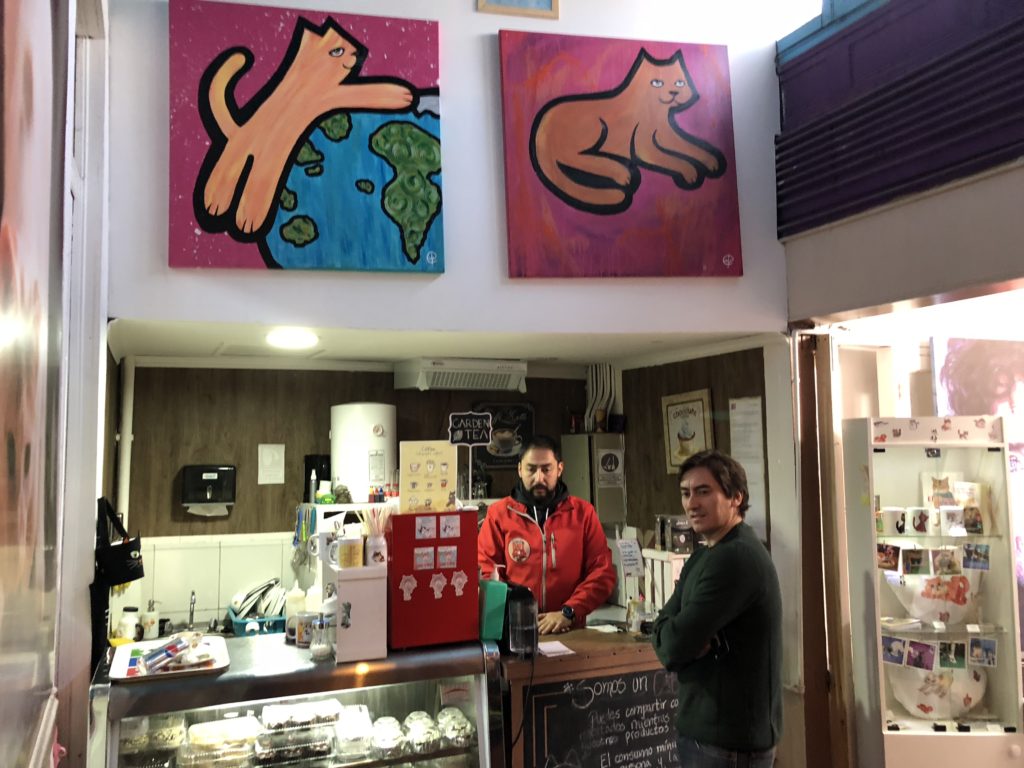
Three of my favorite things came together today in a couple of joyful hours at El Mundo de Dali, a cat café in Santiago.
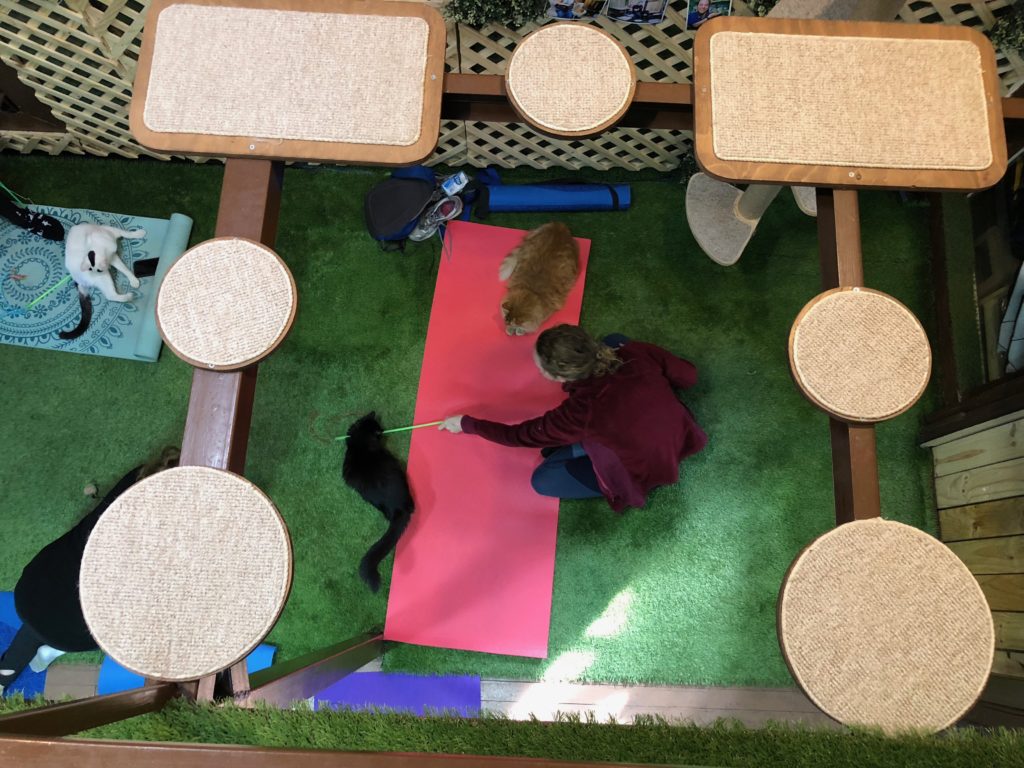
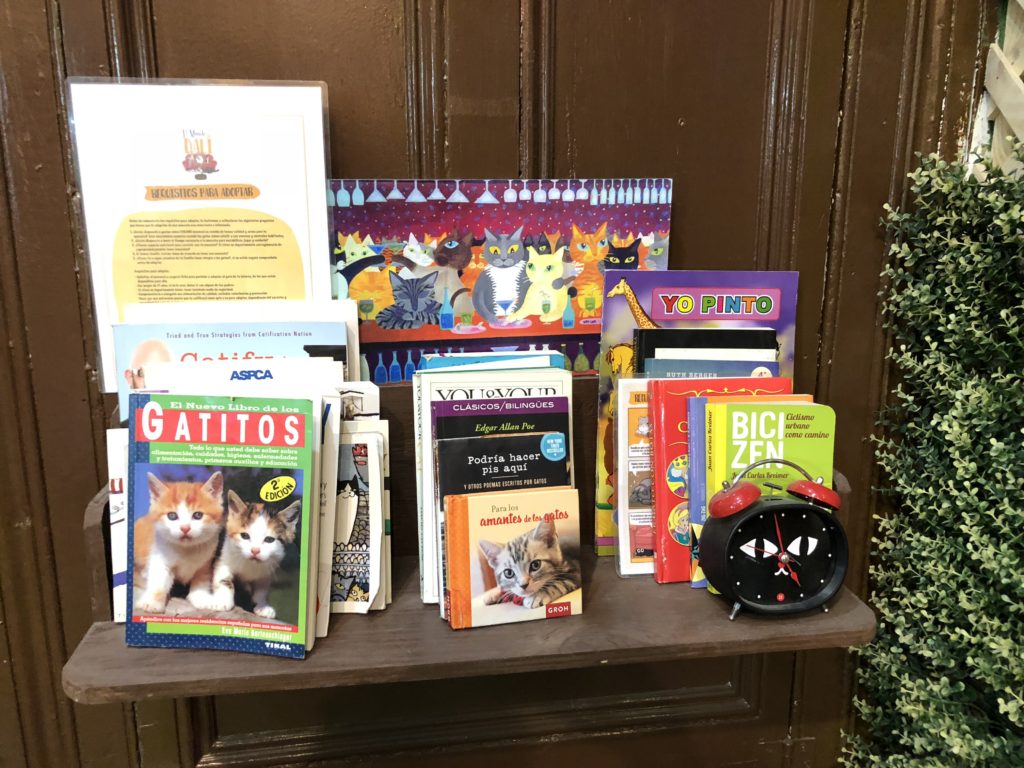
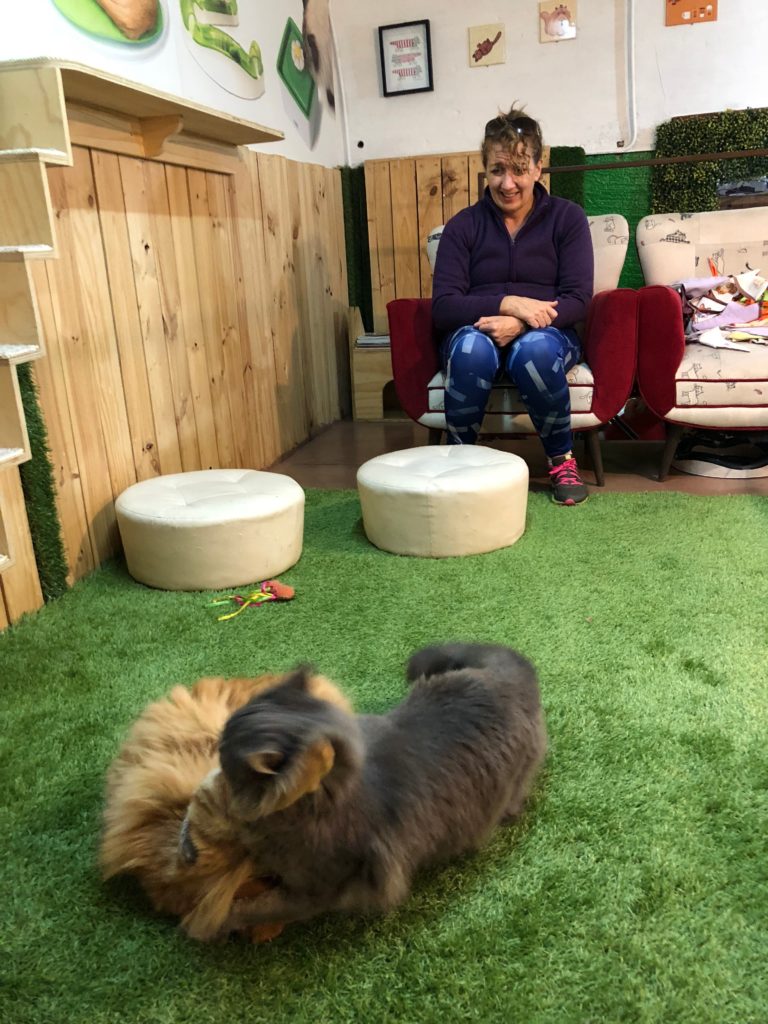
The café features a two-story cat playground, complete with towers, hammocks, scratching posts, observation platforms, toys, and furniture, all for the pleasure of the 10 or so furry friends who presently call the place home. Rescue cats are dewormed, sterilized, vaccinated and offered up for adoption. In the meantime, they live in a feline fantasy world.
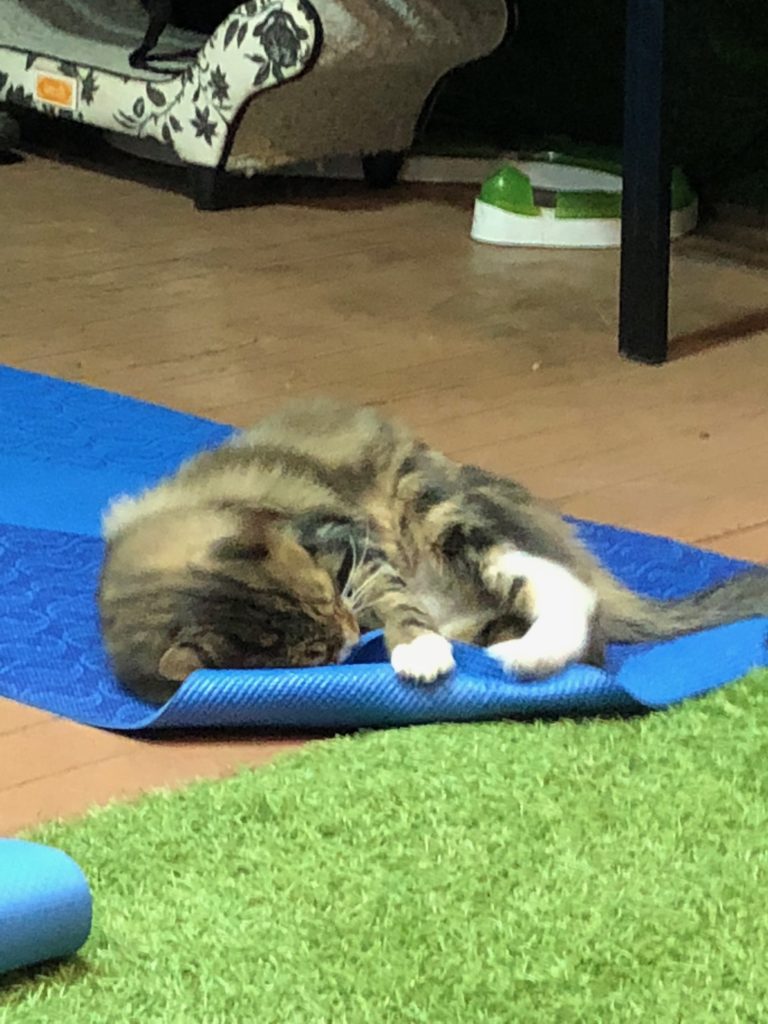
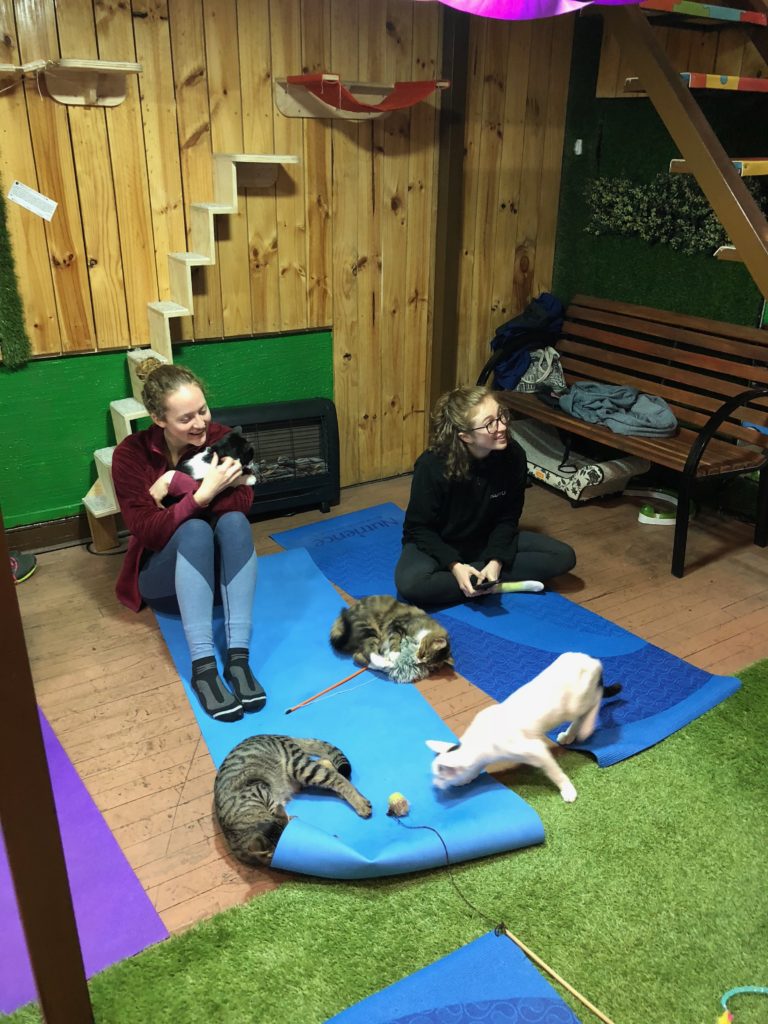
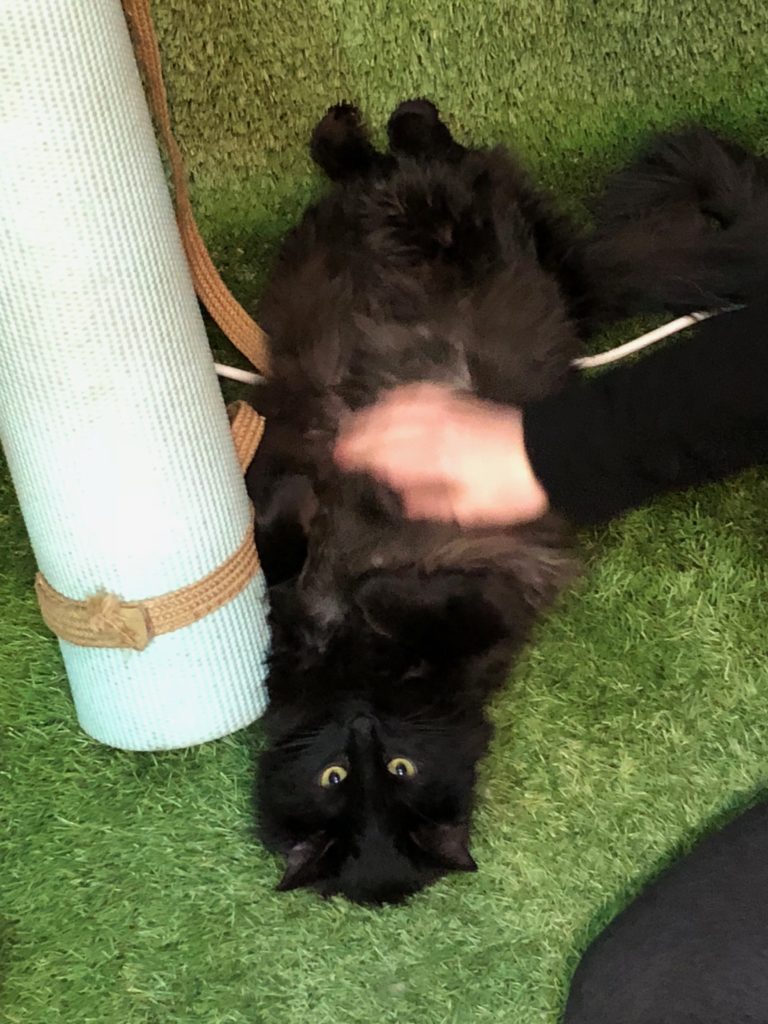
After rubbing hand sanitizer on our hands and disinfecting our shoes, we entered through the café into the cat casa, where the kitties were ready for some play time. Some planted themselves demurely on a mat and watched the action while others chased toys or attacked our shoe laces. A few immediately moved in for some cuddles. A spritz of catnip spray on our mats made some cats wild with ecstacy (but led to collateral damage evidenced by chunks of rubber scattered about).
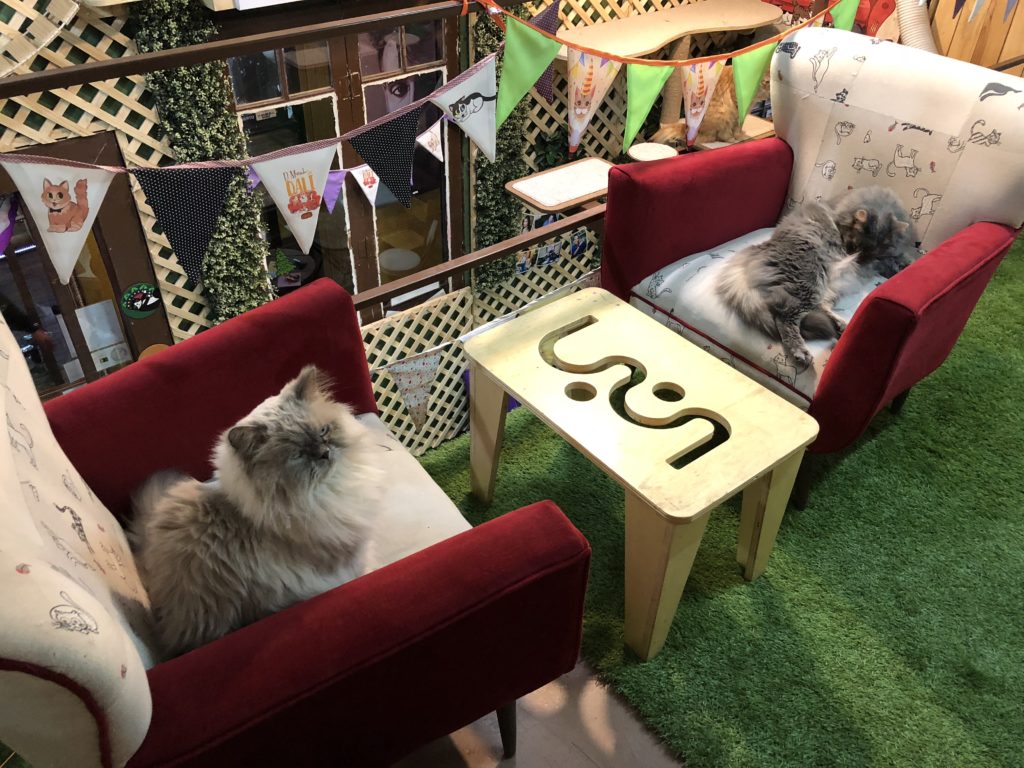
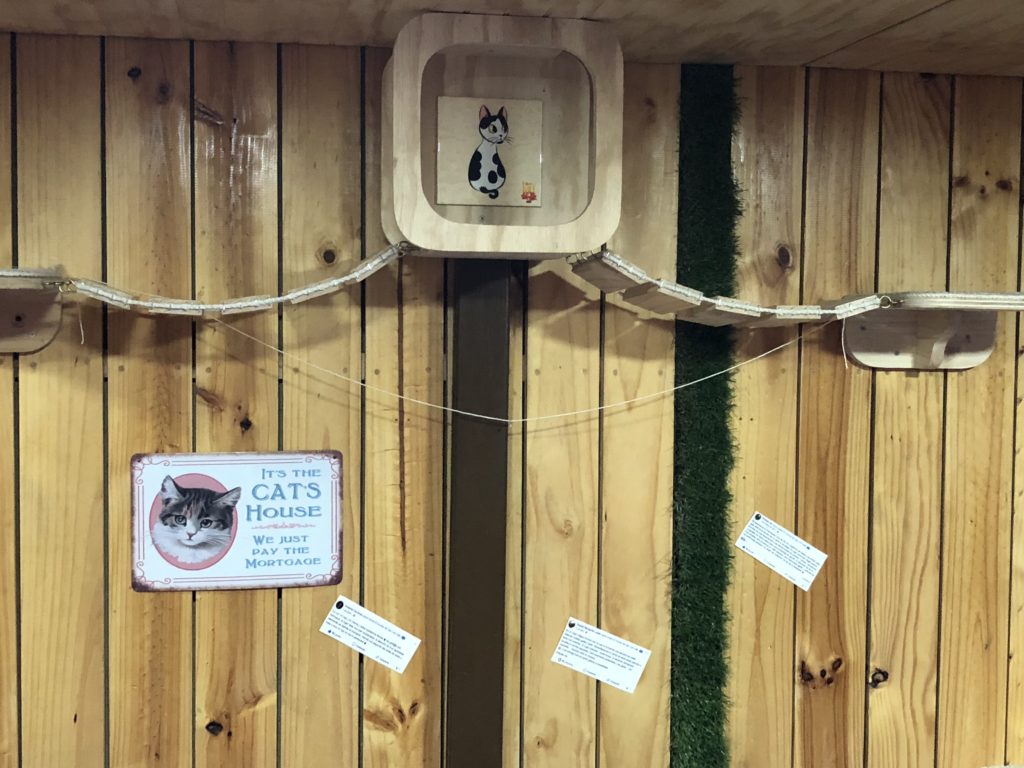
The upstairs loft space includes these platforms for cats to check out the action below.
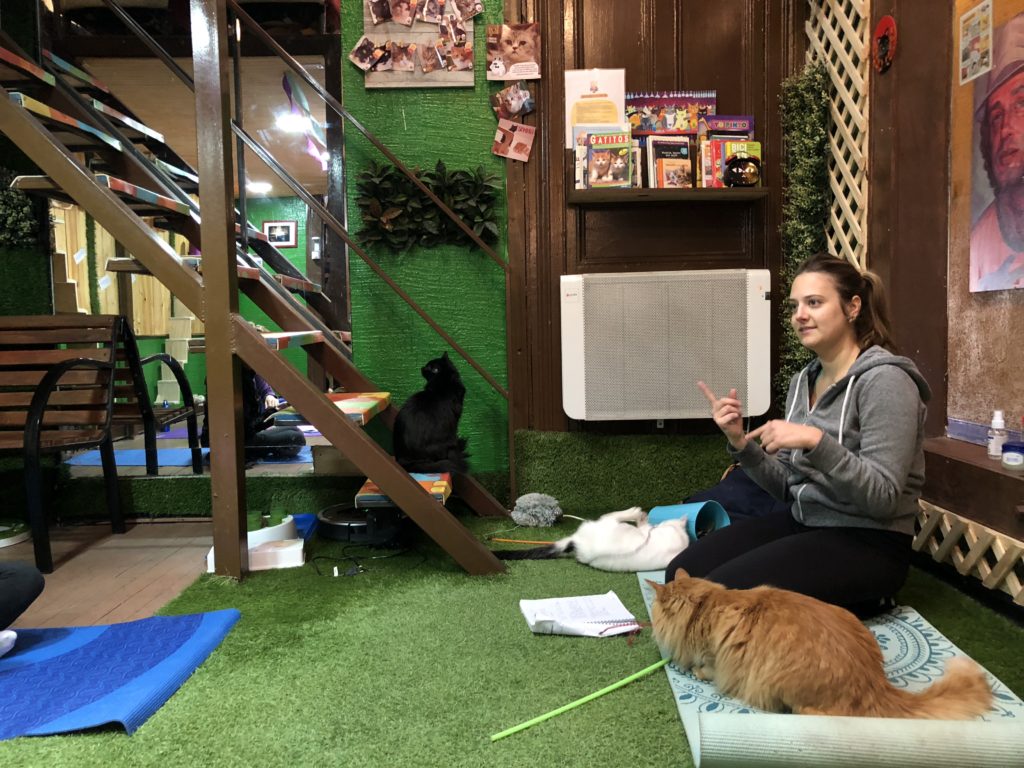
This brilliant event is the brainchild of Kristen VanderVoort, an expat and certified yoga teacher living in Santiago. She led a chill vinyasa class interrupted only occasionally by cat interference.
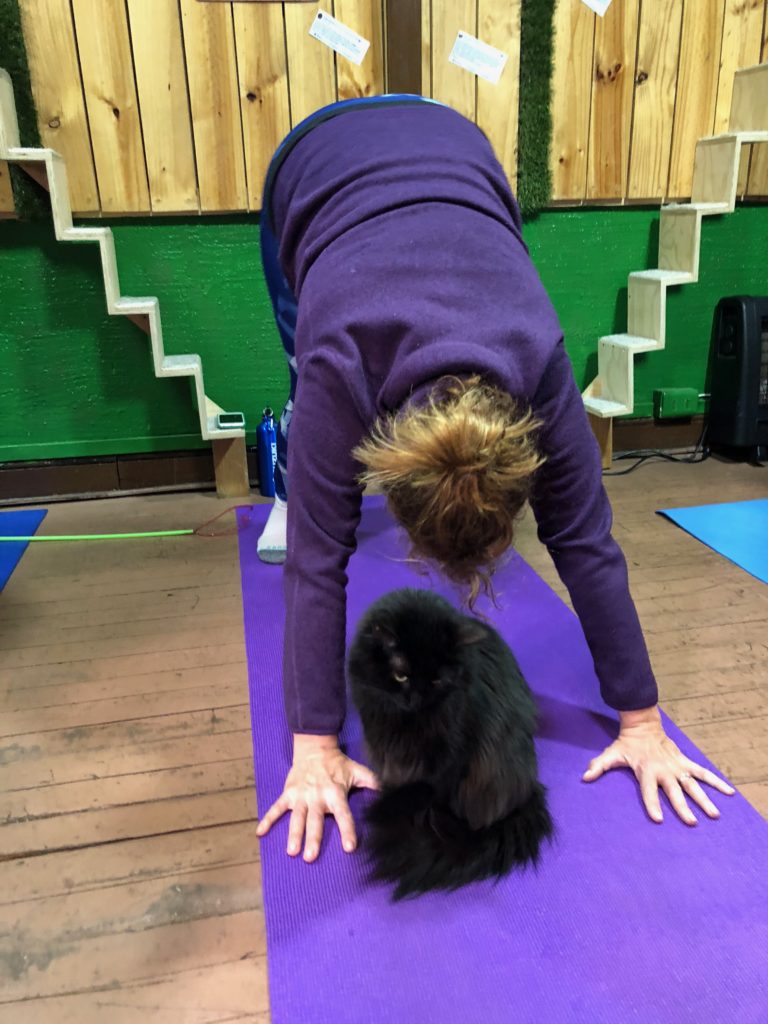
One black-and-white sweetie named Chaplin (for his iconic little mustache) alternated between dashing, flipping, spinning around to chase the teaser toys and then hunkering down in someone’s folded jacket or even on one girl’s legs during “up dog.” Nina, a spitfire and a bit of a bully to the other cats, was nosing around my bag during a vinyasa, but when I lowered into “chaturanga,” she launched herself claws-out onto my head. “Ouch!” I exclaimed with surprise, but really Nina was adorable, so I didn’t mind. Sombra posed on Nancy’s mat as she pushed back into “downward facing dog.”
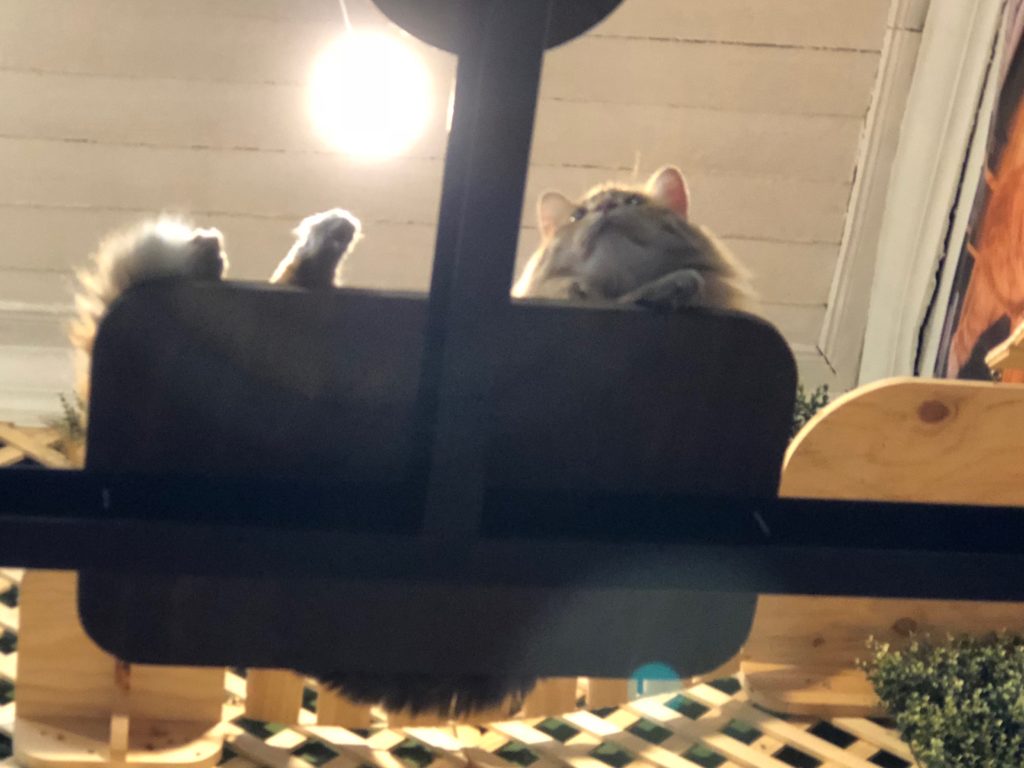
Lying on our backs for some final twists, this was my view. Martin, a permanent resident of the café, had a great seat for watching the yoga class.
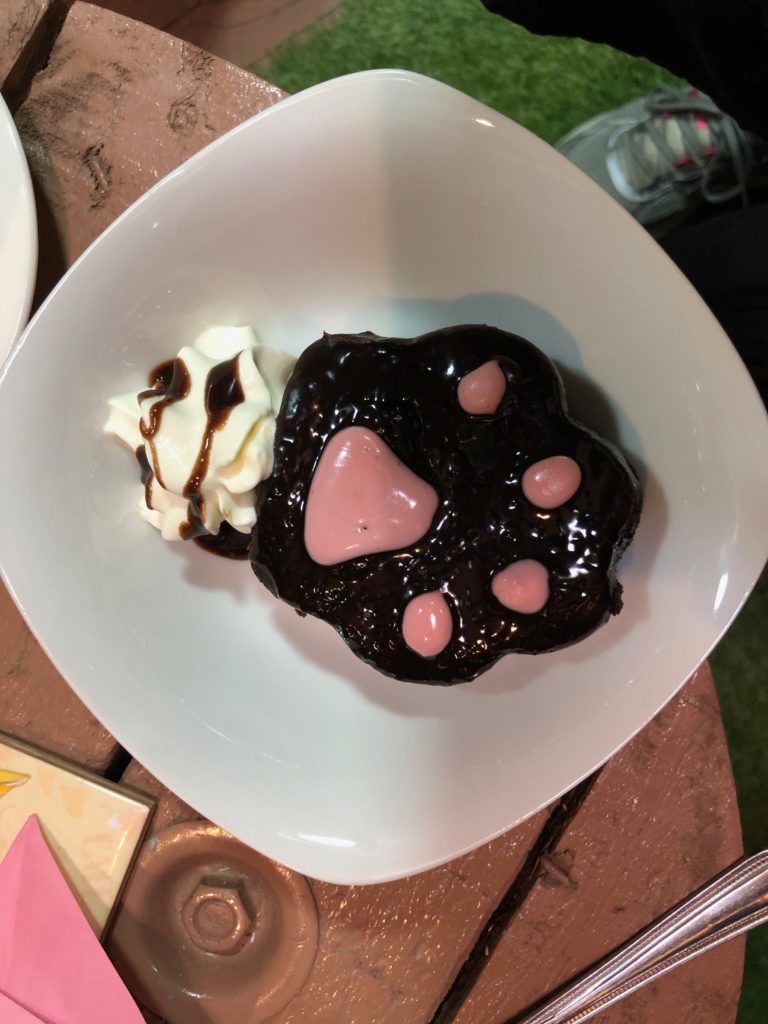
After yoga, the café workers brought in stools and low tables for coffee and cat-themed treats.
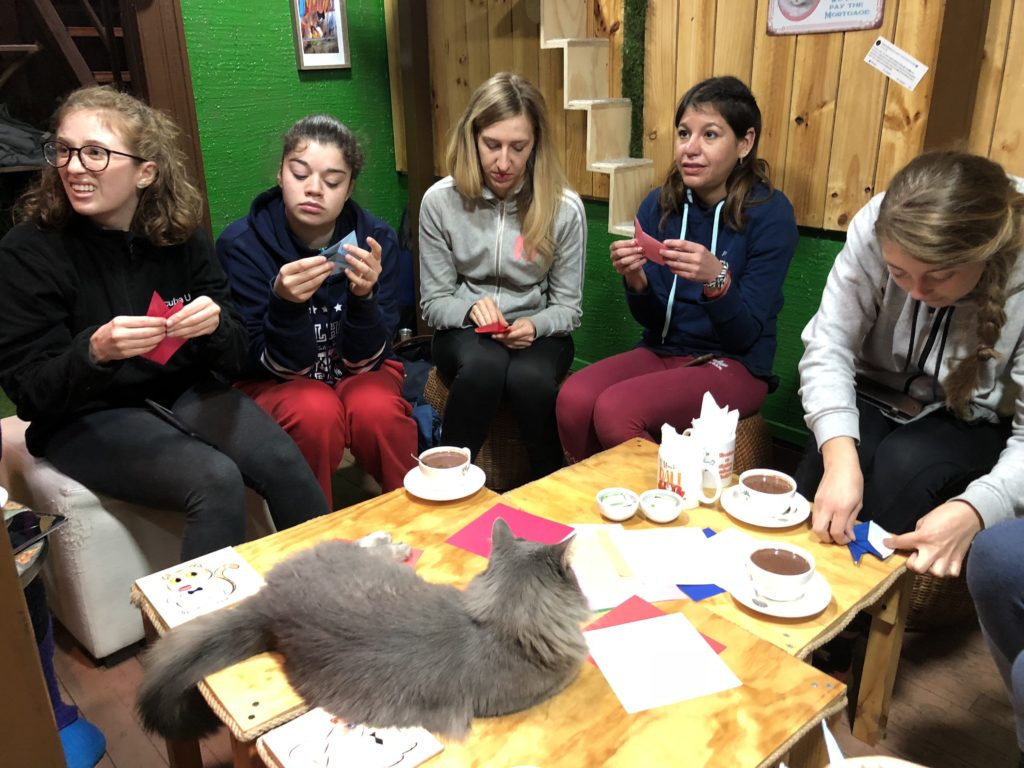
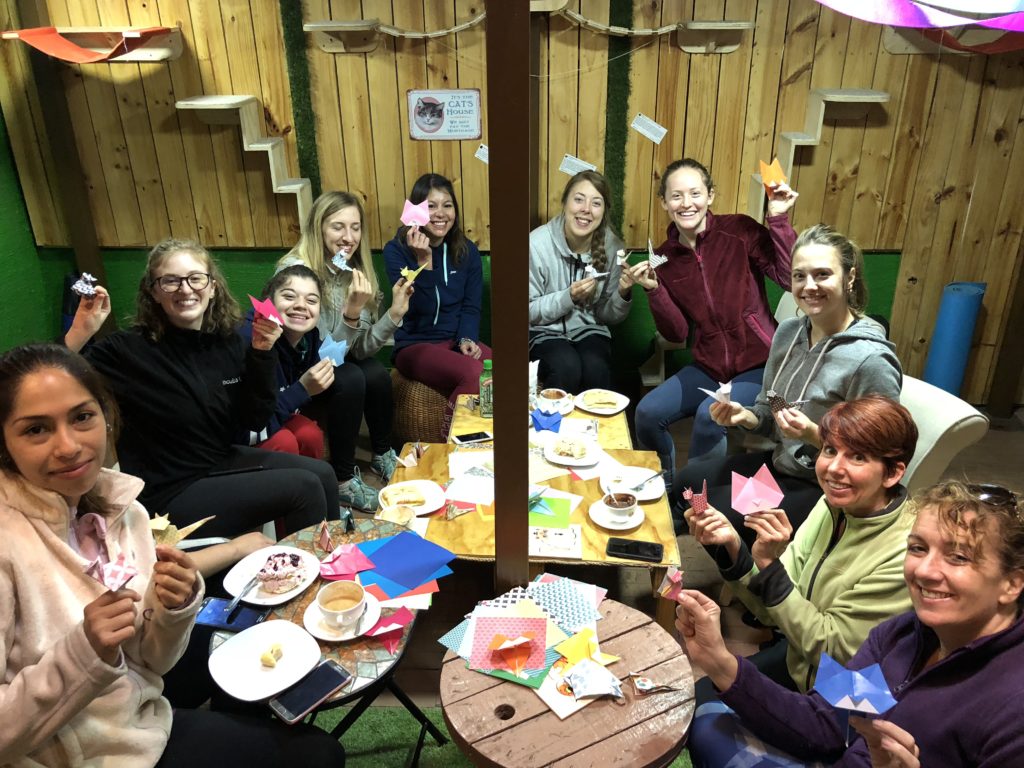
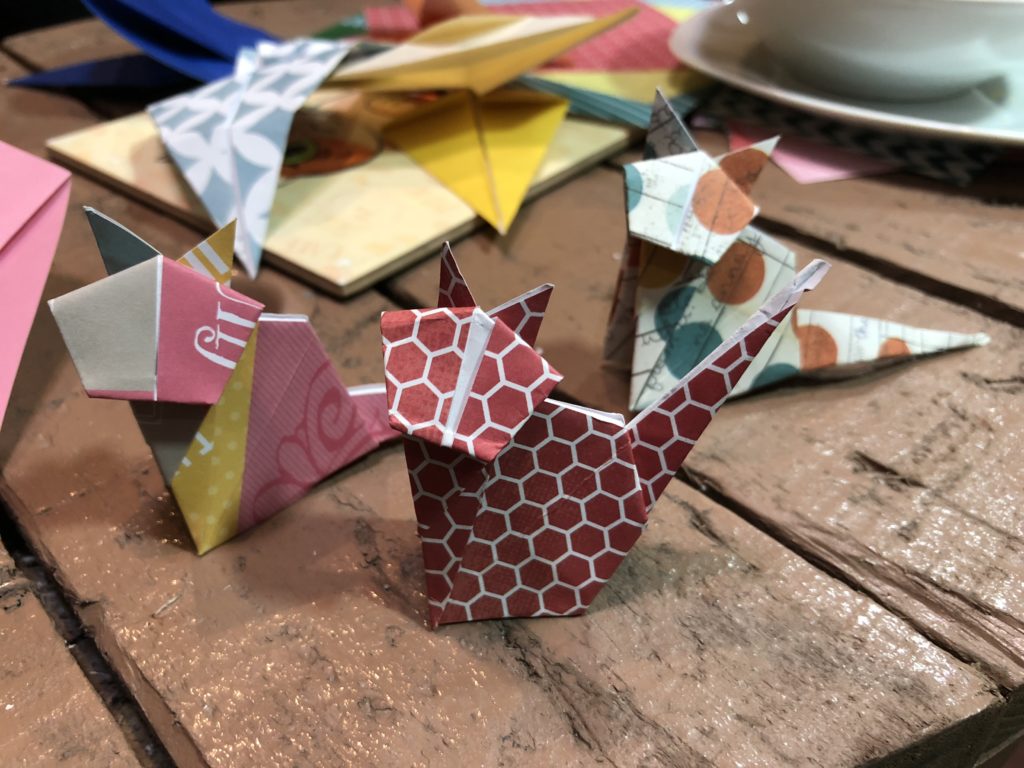
Then we had a little lesson on making origami cats. Cheesy but fun.
As the event wound down, I went up to the loft and hung out a bit with these two lovelies.
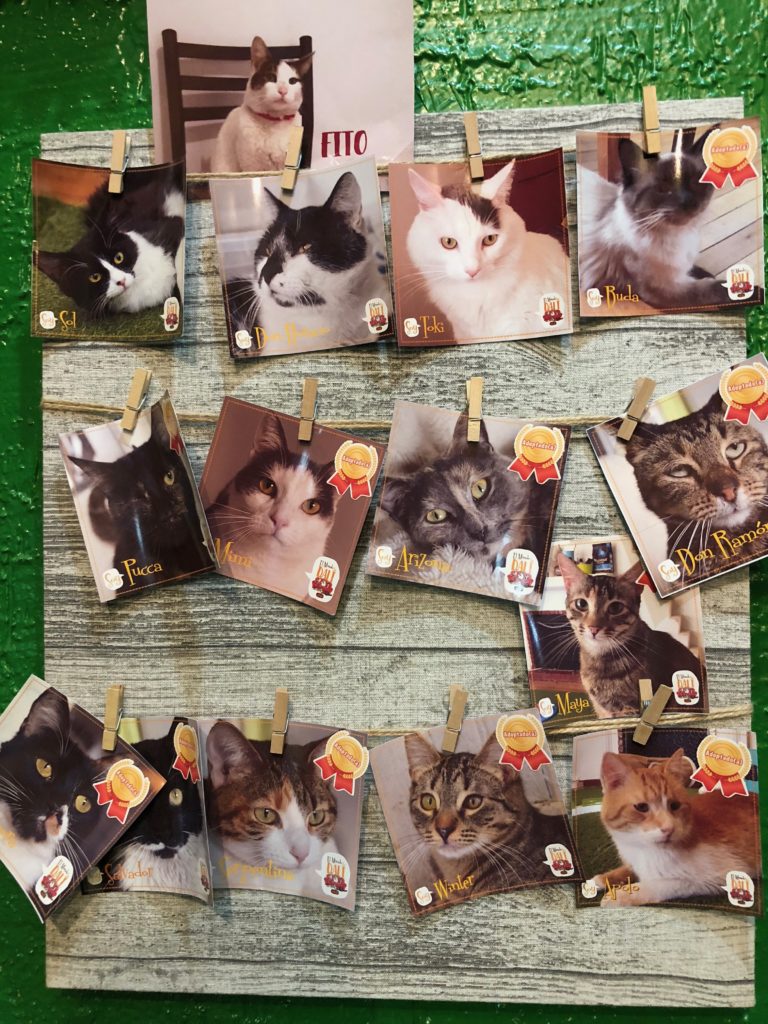
Café cats who’ve been adopted.
Other shots from our visit.
Play time! Hard to know where Martin ends and Moise starts.
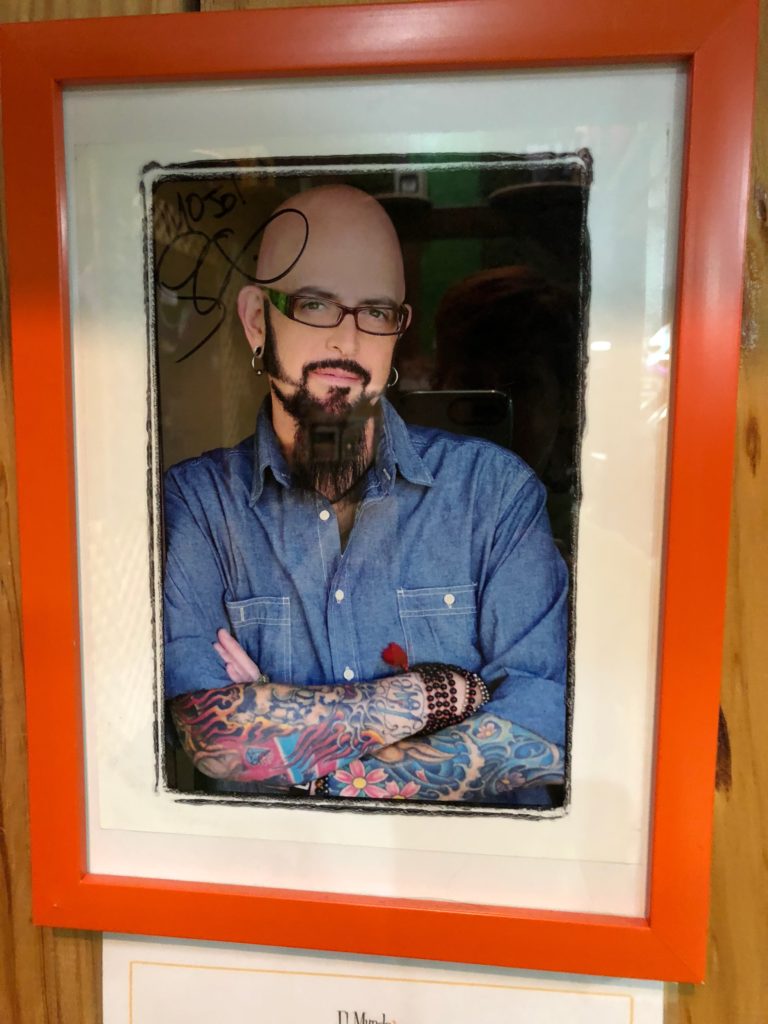
A photo of Jackson Galaxy, a big celebrity in cat lady circles. Check out his youtube channel.
When I got home, Ella sniffed my yoga mat, gave me the stink-eye and walked around the house with her tail fluffed up for a while. It took a while to convince her that she’s the only cat for me.
Still, I can’t wait for the next Yoga, Cats, and Coffee!