Although a 5000-year-old Indian scripture refers to a city located in modern-day Delhi, archaeologists will have to keep digging to find proof. Sites unearthed so far have found signs of Delhi’s urban dwellers in seven successive ancient cities dating to around 1060. New Delhi, as we know it, is considered the eighth. Yesterday, we visited the ruins of Delhi’s first ancient city – Qila Rai Pithora, which extended the citadel of Lal Kot, constructing a walled city with 13 gates.
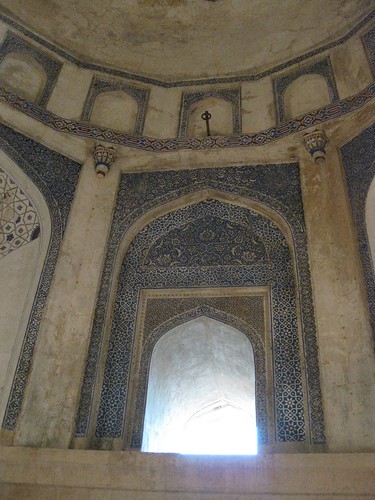
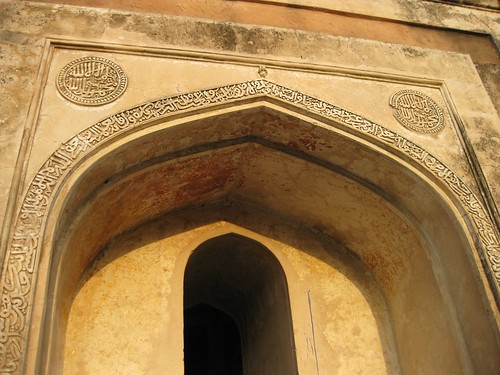
I had heard the name “Surekha” from several sources, so I got in touch with the founder of Delhi Metro Walks and signed up a group of 11 teachers to join her Saturday tour. We all met at a busy street corner and walked to the Mehrauli Archaeological Park with a brief stop at a square domed tomb, which recently underwent renovation. We veered off the sidewalk onto a dirt path that wound up a hill. No wonder British soldiers used to picnic at this spot; even today the view is lovely. Back then, the forest and hunting lodge must have been a welcome refuge from city life. Inside the mausoleum, intricate finials and traditional patterns decorated the walls. According to an article in The Hindu (India’s national newspaper), the resident of the tomb is up for debate. The tomb’s caretakers migrated to Karachi after Partition forced Pakistani nationals to leave India (and vice versa). “No one remains to help unravel the mystery of the mausoleum,” the article says.
Climbing up to the tomb.

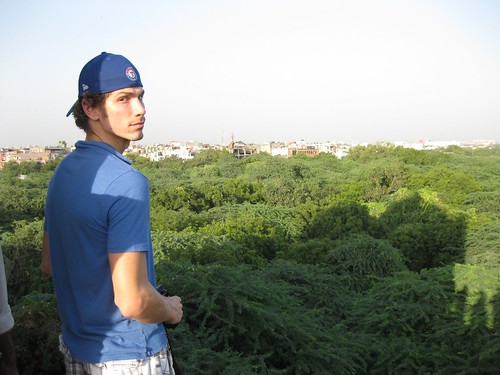
Isaac checks out the view.
Inside the mausoleum.
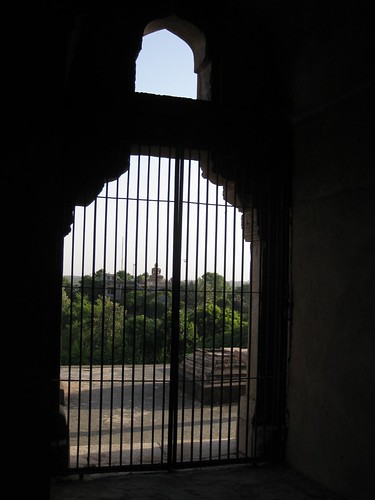
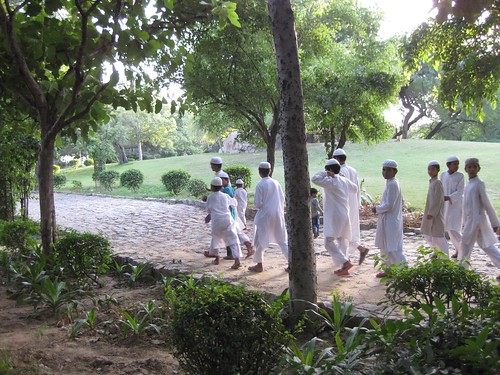
After back-tracking to the sidewalk, crossing a busy street, and cutting through the debris of a recently relocated flower market, we entered the Mehrauli Archaeological Park. Suddenly the honking and shouting faded, and we found ourselves amidst sun-dappled trees, rolling lawns and a newly planted rose garden. We exchanged curious looks with this little group.
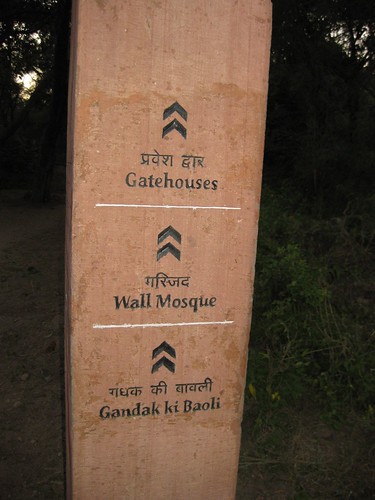
Starting in 1997, the Indian National Trust for Art and Cultural Heritage (INTACH), with funding from the Delhi Tourism Development Corporation (DTDC), has been identifying, excavating, renovating and conserving 42 of the buildings (which represent nearly every era in Delhi’s history) in this 100-acre park. In addition, According to the INTACH website:
50 trail markers, 40 monument description boards, 150 benches and project description boards, together with 2 km of heritage trails were laid down. Both signage and pathways have been built of natural materials such as sandstone and the local quartzite stone employing traditional workmanship thereby contributing to the unique natural and historic character of the area.
Here are some highlights of our tour.
Sir Thomas Metcalfe, who was the East India Company’s resident at the Mughal Court, constructed his 19th-century country house right over the 17th-century mausoleum of Muhammad Quli Khan (an attendant to the Mughal emperor Akbar and stepson of Akbar’s wet nurse). Metcalfe’s dining room was apparently directly over Khan’s tomb, and he further embellished the area with pavilions, a dovecote and a waterway to bring visitors to the estate by boat.
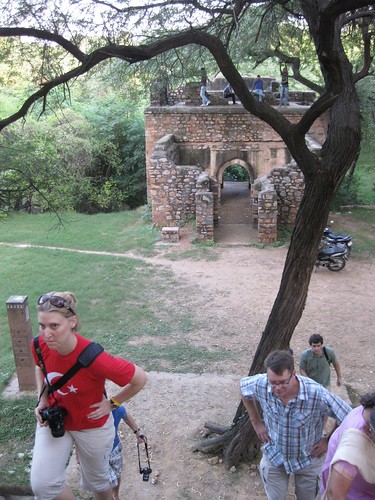
The motorbikes are parked in what would have been the canal. The building was a boathouse, and we walked up the steep steps to the site of the former tomb/country estate.
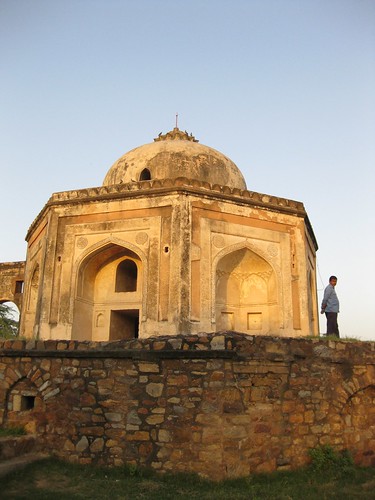
Work is underway to restore the building to its original state – as a mausoleum, not as a weekend get-away.
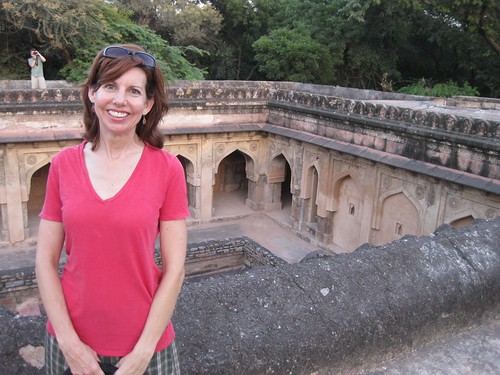
The Rajon Ki Baoli is a three-storey stepwell built in 1516.
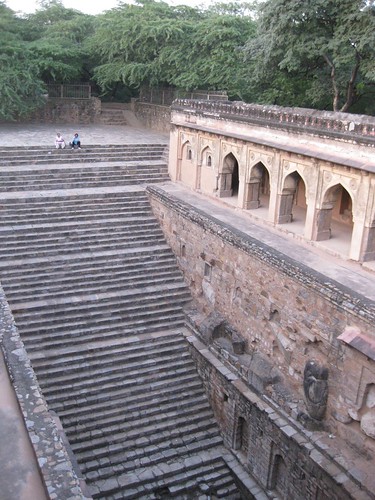
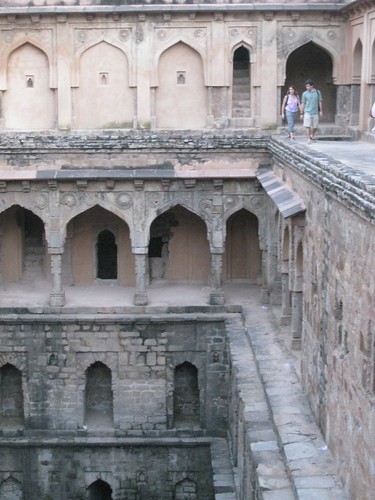
Many walls, gates, foundations and buildings remain unidentified and overgrown with weeds and trees. The sign marking this one just said “wall” or something like that.
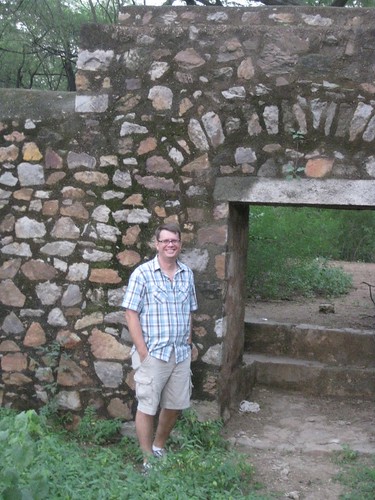
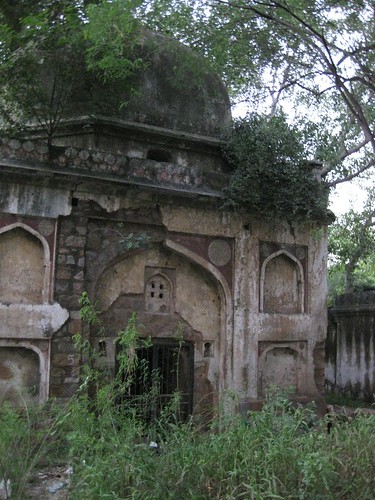
Surekha walks through an archway.
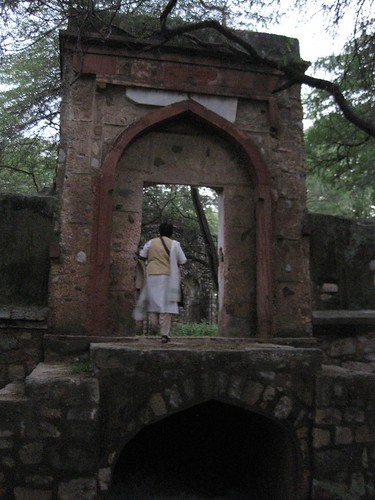
Near the entrance of another tomb.
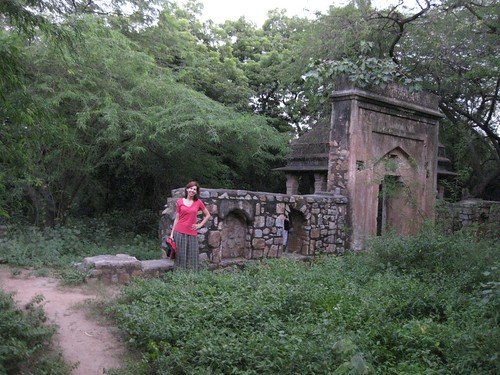
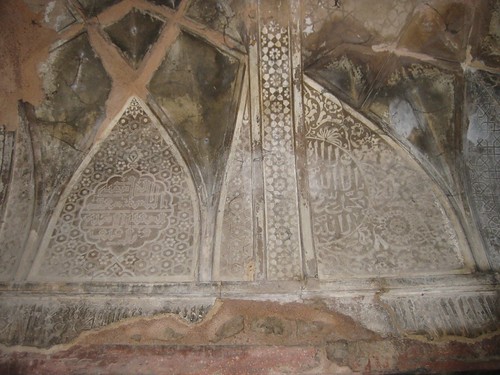
Inside the mausoleum of Shahid Kahn (son of Sultan Balban, see below), Surekha pointed out the “scrafitti” on the ceiling. I had never heard that word before!
The sun was setting as we approached the tomb of Ghiyas-ud-din Balban, who reigned from 1265-87. Surekha explained that this building is believed to be the first in India constructed with “true” arches. The Speaking Arch is an interesting article that clarifies architectural significance of that arch.
Surekha saved the best for last, but it was pitch black by the time a caretaker unlocked the gate to the Jamali-Kamali mausoleum. Inside the tiny building, we used the flashes on our cameras to light up the colorful, ornate space.
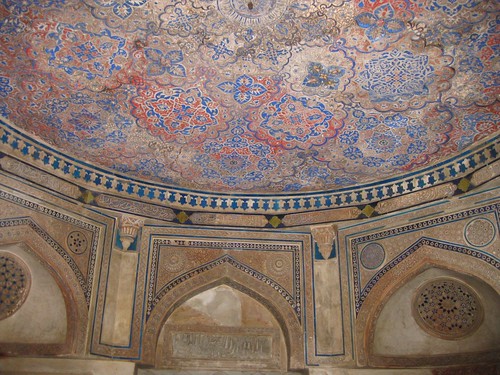
It was so dark, I couldn’t see what I was shooting. When I opened up the pictures on my computer, I decided not to crop out the heads in the interest of perspective.
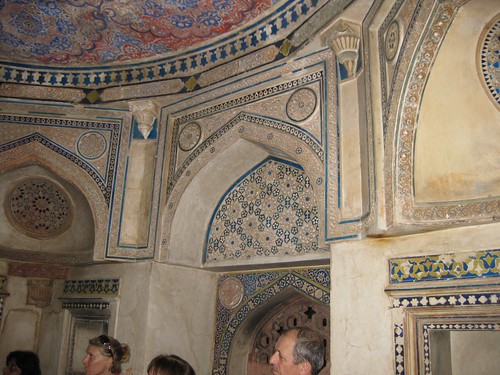
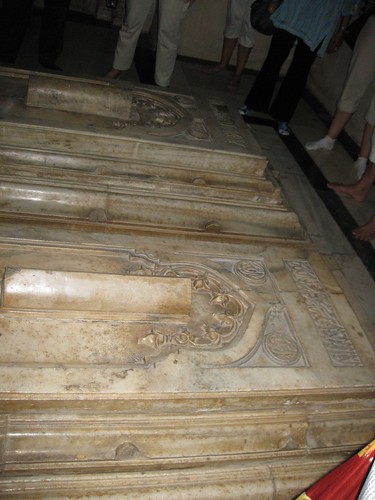
The tomb of Dervish Shaikh Jamali, a Sufi saint who died in 1536, lies next to that of Kamali, who is assumed to be an associate of the saint’s family.
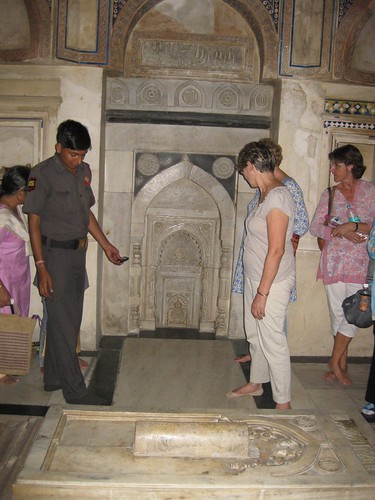
The mihrab is a nook that indicates the direction of Mecca.
After leaving the Jamali-Kamali tomb, we walked in darkness back to the starting point and – with some help from Surekha – rounded up some tuktuks for a short ride to dinner. We invited our wonderful tour guide to join us, but she had another busy day planned for Sunday and needed to rest.
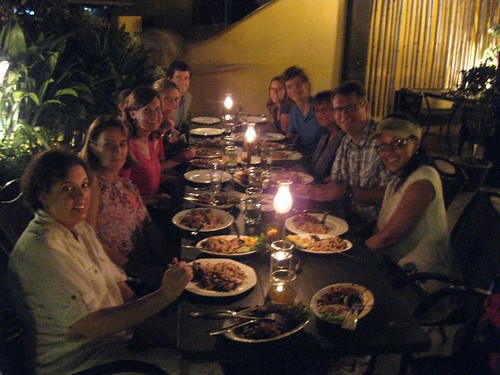
Our group met up at Thai High restaurant and enjoyed a delicious dinner on the rooftop terrace.