Hangin’ with the djinns at Kotla Firuz Shah

Homebound with a bad cold this weekend, I am devouring my kindle. This morning, I clicked on City of Djinns: A Year in Delhi, by William Dalrymple, a book I’ve been meaning to read since moving here. The first line hooked me: “It was in the citadel of Feroz Shah Kotla that I met my first Sufi.”

I was just AT the Feroz Shah Kotla!

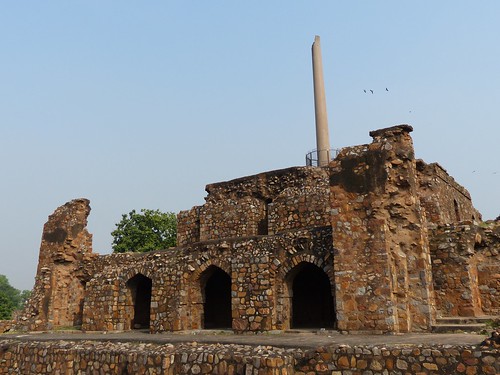
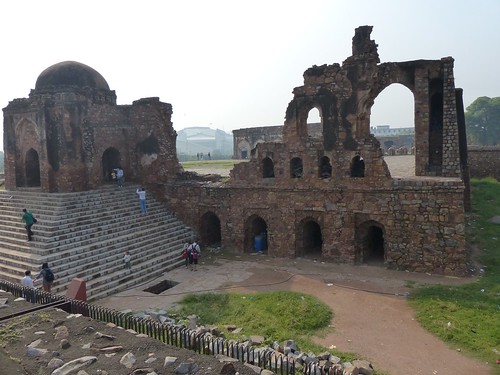
I visited the 14th-century capital city of Firuzabad with newbie teachers Jenna and Kaye on a tour with Delhi Heritage Walks. Our guide, Kanika, introduced us to the resident djinns at the ruins, but Dalrymple’s mystic told of their origin: “He said that when the world was new and Allah had created mankind from clay, he also made another race, like us in all things, but fashioned from fire. The djinns were spirits, invisible to the naked eye; to see them you had to fast and pray.”

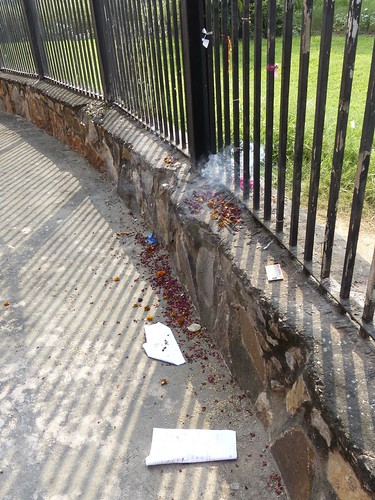
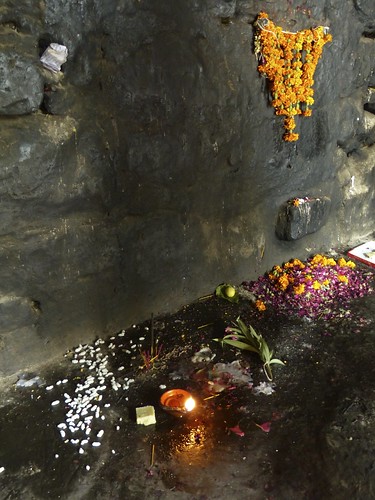
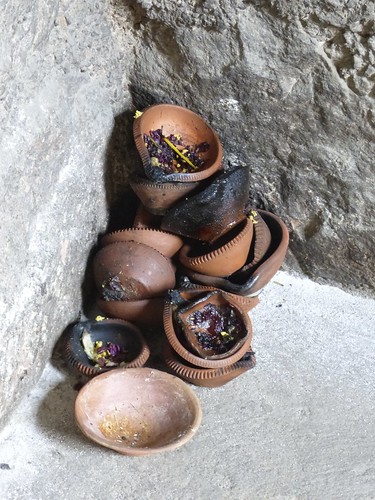
The 5-Rupee entrance fee (8 cents) for Indians is waived on Thursdays, so locals come in droves to leave offerings and petitions for the djinns. Wedged into cracks or left on the ground next to burning incense, flowers, puffed rice and lighted oil lamps, sheets of white paper pleaded for the djinns to do everything from curing illnesses to fixing a cricket match, Kanika said.
Untitled

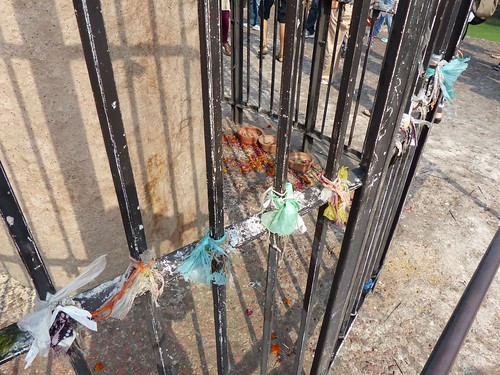
Some pilgrims tied ribbons, threads or strips of plastic to mark their prayer requests, especially on the fence surrounding the “Lat Baba.” The Ashokan pillar, moved from another location by Tughluq Emporer Firuz Shah, is reputedly home to the most powerful djinns, so its monument was rife with offerings.
Untitled

Untitled

Untitled

The pillar itself was fascinating. I had initially dismissed it as another concrete smokestack or unfinished construction project.
Untitled

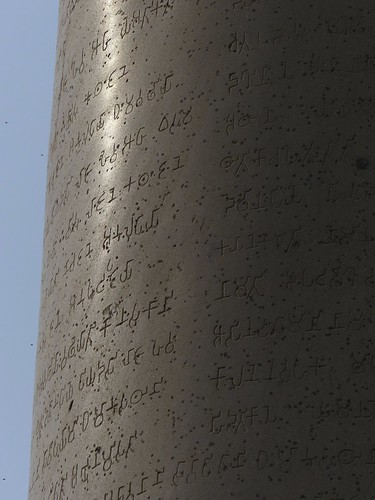
Up close, you could see its inscriptions, which were unfamiliar to Firuz Shah but compelling enough for him to move the 27-ton monolith to his capital city. The pillar was one of many inscribed with edicts from the third emperor of the Mauryan Empire, King Ashoka, during the 3rd century BCE, promoting nonviolence and early Buddhist teachings.
Untitled

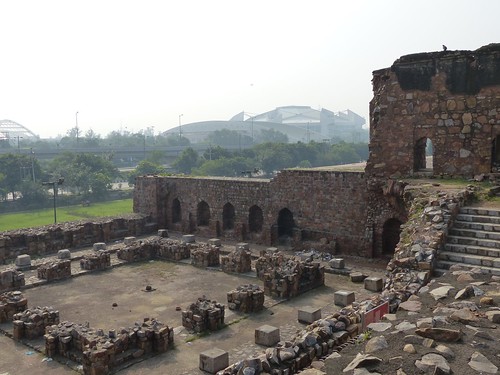
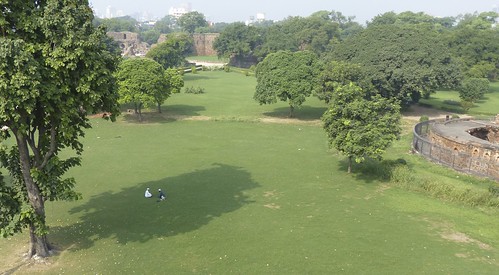
From the roof of the pillar’s monument, we could see the ruins juxtaposed with modern East Delhi. In 1354, Feroz Shah would have walked down a flight of stairs to the banks of the Yamuna River, but the river has since changed course and Delhi’s congested Ring Road now runs parallel to the ancient citadel.
Untitled

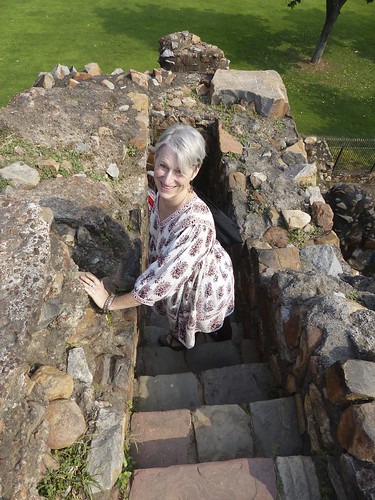
Kaye climbs back down.
Untitled

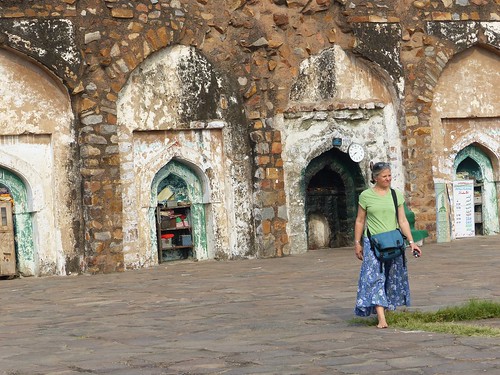
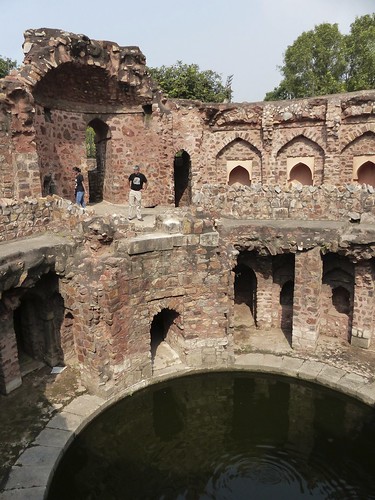
Other highlights of our visit included the remains of a mosque, which is still being used today, and a three-story circular “baoli,” or step well.
The entrance to the mosque.
Untitled

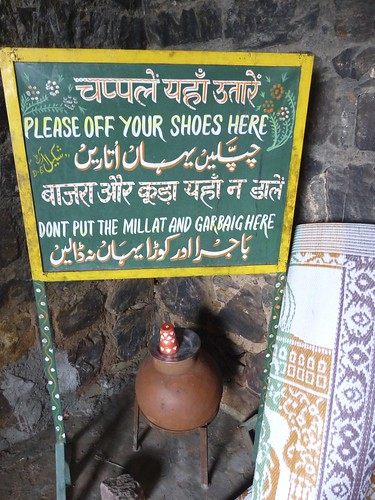
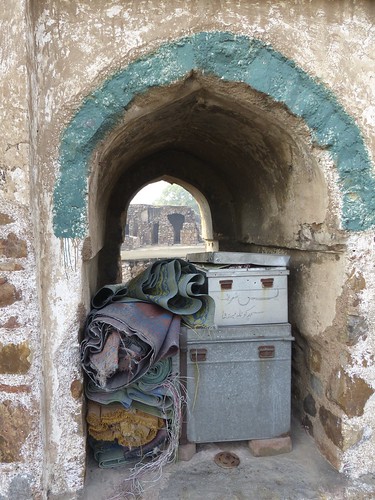
Prayer mats were stored in the niches.
Untitled

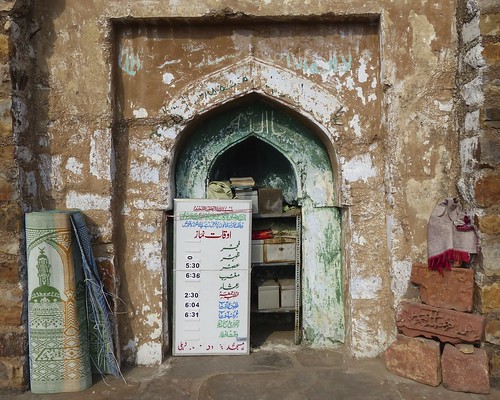
Schedule of prayer services.
Untitled

Jenna exploring the mosque.
Untitled

Untitled

We climbed down a dark stone stairwell full of bats to reach the step well’s water level.
Untitled

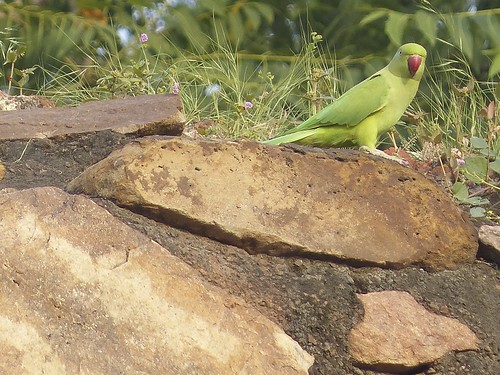
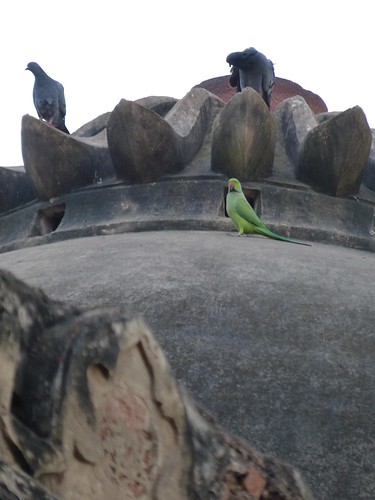
Although this would have been a bustling city in its day, I appreciated the early morning tranquility. Parakeets soared overhead as Kanika relayed her stories, and shadows shrank as the sun rose high in the hazy humid sky. We were parched and peckish by the time the tour finished, but before heading off to lunch we accepted the tour company’s offer of fresh limeade “salty sweet.”
Untitled

Untitled

Untitled

I had planned to write more about this tour, but Kanika did such a beautiful job on the Delhi Heritage Walks website. Check it out!

Here’s a link to a World Monument Funds brochure, also pretty cool.

This e-book, Delhi: Ancient History, edited by Upinder Singh, features interesting anecdotes about the Ashokan pillar. Scroll to page 207.

Anyone know a good cat exorcist? Evil djinns possess newly spayed kittens

I took my kittens Ella and Khushi to get spayed Friday, but I’m pretty sure the vet misunderstood and instead performed a brain-switching operation with some local djinns. I learned about djinns on my recent walking tour of the Kotla Firoz Shah ruins, where people leave offerings and prayers for the resident djinns – spiritual creatures that can be benevolent or evil.

Clearly, the vet brain-switched some evil djinns with my cats.

Tony and I picked up the girls at the vet after school and were surprised to see their bellies mummy-wrapped. If we know anything about cats, it’s that they HATE that. We used to torture our old cat Ketta (may she rest in relative peace) by putting a loose hair scrunchie around her tummy and laughing hysterically as she wobbled around like a pissed-off drunk, taking a few steps and then tipping over. Clearly, the belly band messes with cats’ center of gravity.

Fortunately, Ella and Khushi were catatonic from the anesthesia, so when we got home, we left them in their roomy carrier while we popped some popcorn, poured a little wine and curled up on the bed to watch “Arrested Development” on Netflix. Around 8 p.m., Tony said, “Let’s open the cage door so they can come out when they’re ready.”

If only we’d known what hell we were unleashing.

I took the door off the cage, and Khushi’s limp head rolled out. I gently pulled her out of the cage and scratched behind her ears for a moment. Suddenly, the cage began crashing and jumping around the room. That is, Ella – either channeling Linda Blair in “The Exorcist” or suddenly overcome by her new evil djinn brain – began leaping and howling INSIDE the cage. Soon, she escaped and, with no control over the back half of her body, Cirque du Soleil’ed through the air, up on to the bed, and into the bookshelf, screaming like a ninja the entire time.

Meanwhile, Khushi had been resting peacefully outside the cage but was frightened out of her stupor and did a 3-foot vertical leap, landing on her newly stitched incision.

Tony tried to grab Ella, but her maniacal biting and scratching deterred him. I threw myself on top of the hysterical kitten and scooped her up. My gentle baby immediately sank her fangs into my arm and embedded her back claws in the soft pocket of skin between my thumb and finger. Somehow I held on long enough to toss her back in the carrier. I draped my bloody body over the crate and spoke soothingly to Ella until she relaxed and burrowed into the bunched-up towel inside.

When I phoned the vet to report this incident, she told me to bring Ella in right away. I did, and she gave Ella a sedative, saying it would last all night. (It did not last all night.)

We sequestered the cats in two separate bathrooms, equipped with litter, food, water and a comfy towel. Then we tried to lay down for a little sleep. Tony, already punch drunk and exhausted from a full day of parent-teacher conferences, was not coping well with this drama. He struggled with seeing the kittens in pain and hearing their cries. I’m trying to say this diplomatically, but the fact is: I was on my own.

Around 11 p.m., Ella began howling again. So much for the sedative.

I had been frantically texting my friend Nancy all evening. She went through this process with two cats here in Delhi. Finally, she texted back, “Are you OK?” No, I wasn’t OK! Nancy said her cat Annie (the mother of our kittens) also went berserk over the bandage. “She ripped it off before we got her home,” Nancy said, “but she never tried to pull out her stitches.”

With that in mind, I cut the bandage off Ella, second-guessing this decision the entire time. Ella calmed down right away, so I went to bed, certain that I would open the bathroom door in the morning to find her in a pool of blood.

Poor Khushi. I basically neglected her all night as I dealt with Ella’s djinn.

After dozing fitfully for a couple hours, I got up to treat my throbbing puncture wounds and check on the girls. Tony was already awake, trying to distract himself with YouTube videos on his iPad. I peeked in on Khushi, who was curled on a towel on the bathroom floor. She hadn’t touched her food, and she gave a sad little mew as I stroked her head. Ella, on the other hand, was rarin’ to go. She meowed happily, rubbed up against my legs and circled her empty bowl when I opened her bathroom door.

Although the monsoon season supposedly ended last week, heavy rain lashed our windows all day Saturday. We had to take the kittens for a follow-up vet visit, but we stalled, waiting for a break in the weather. It never happened. After borrowing a second carrier from Nancy in the late afternoon, we finally dashed through the downpour to put the cats in the car and drive the short distance to the clinic. Driving in Delhi is crazy under the best of circumstances, but driving in Delhi at dusk during monsoon rains is masochistic. Other drivers, attempting to avoid pooled water, swerved into my lane full-speed, with their brights on. Literally driving blind, I stayed in second gear for much of the trip, praying I wouldn’t hit a holy cow or stall out in the deep water. As if we needed more stress.

We begged the vet to remove Khushi’s bandage, hoping it would snap her out of her funk the way it did for Ella. He complied and gave both girls an antibiotic.

Back on the road, I was just starting to moan about the oncoming bright lights when Tony pointed out there were people in the road. An accident? No, it was a long procession, hundreds of ladies in colorful rain-soaked saris carrying jars of flowers on their heads. Why? Who knows? But it reminded us that we were in India, and for a moment, we felt grateful for that beautiful cultural distraction.

Tony took this shot out the car window.
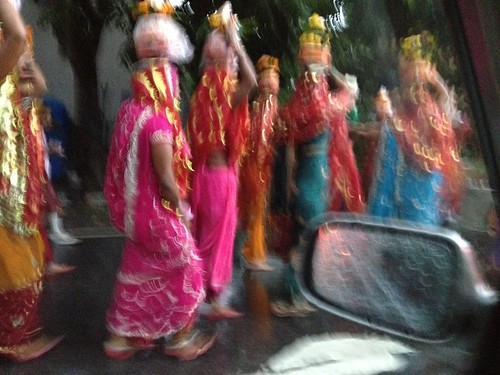
photo (1)

I speculated that part of Khushi’s problem was missing her sister, so I had planned to reunite the girls when we got home. Ella totally supported that idea, seemingly free of her evil djinn. She approached Khushi, who surprisingly fluffed up and hissed. Seems her djinn needed a bit more recuperation time.

Another night of sequestration in their respective bathrooms. Fortunately, the humans got some sleep this time.

It’s now Sunday morning, and Khushi is still sulking. Well, I hope she’s just sulking and not suffering too much. I hope her djinn is wallowing in self-pity rather than pain.

Weirdly, Ella has been the stand-offish cat up to now. Always just out of reach when you want to pet her, watching us with disdain. Khushi always greets us at the door like a dog, eager for love, purring uncontrollably, begging for cuddles. Now, Ella follows me around the house with her purr machine on full blast. She can’t get enough petting. Khushi remains huddled on her towel, unfazed by my presence.

Maybe there were no djinns. Maybe the vet simply switched the cats’ brains. Regardless, I’ll be relieved when they both feel good enough to climb the curtains once again.

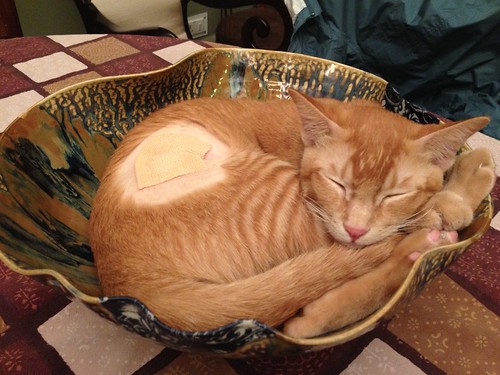
Would YOU kick out this poor post-op kitty from YOUR one-of-a-kind hand-made bowl that YOU bought directly from the artist in Jingdezhen, China?
photo

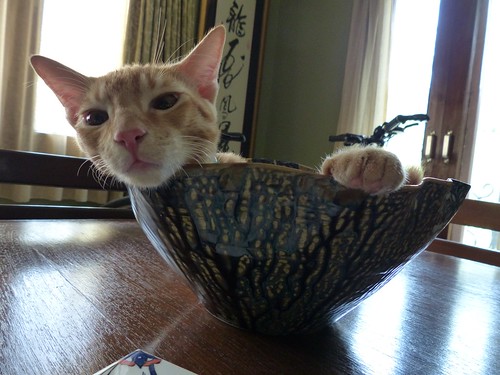
Clearly, we are pussy-whipped (by the pussy CATS, geez). We let Ella sleep in the bowl even when she’s NOT fresh out of surgery.
Untitled

Delhi Heritage Walks – getting the lowdown on Lodi Garden

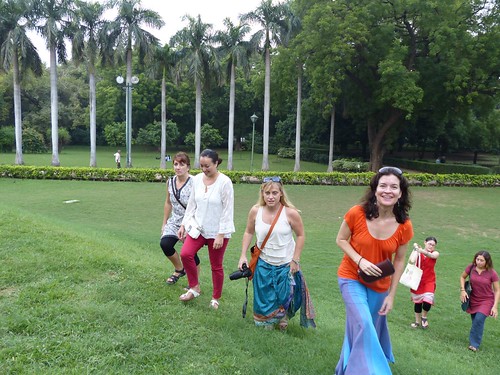
Sweethearts, joggers, picnickers, playgroups, families and tourists all seem to find what they’re looking for at Lodi Garden, Delhi’s 90-acre premier park sprinkled with 15th- and 16th-century monuments. Saturday, a group of us met there for a steamy tail-end-of-monsoon-season tour with Moby, of Delhi Heritage Walks.

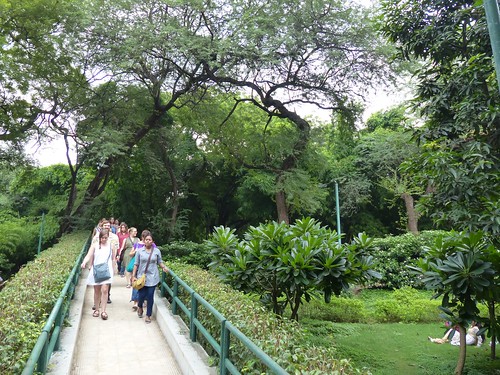
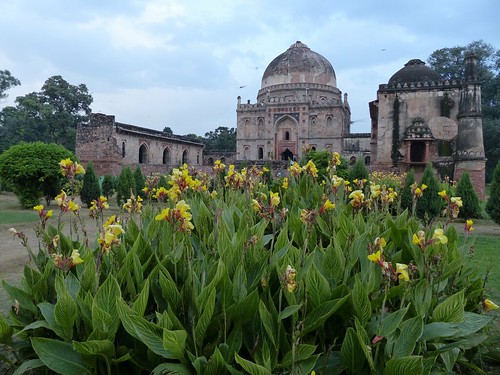
I can’t believe I haven’t visited this spot before now. It’s about 15 minutes from our house, and its grassy slopes, thick trees, ubiquitous flowers, swarms of yellow dragonflies and soaring parakeets created a surprising oasis.
Untitled

Bottle palms imported from Cuba line the path.
Untitled

Wikipedia offers this background:

Under the Mughals major renovations would often take place depending on what occasions they would use the gardens for, under Akbar the Great the garden was used as an observatory and to keep records in a purpose built library. In the centuries, after the 15th century Sayyid and Lodi dynasties, two villages grew around the monuments, but the villagers were relocated in 1936 in order to create the gardens. During British Raj, it was landscaped by Lady Willingdon, wife of Governor-General of India, Marquess of Willingdon, and hence named the ‘Lady Willingdon Park’ upon its inauguration on April 9, 1936, and in 1947, after Independence, it was given its present name, Lodi Gardens.
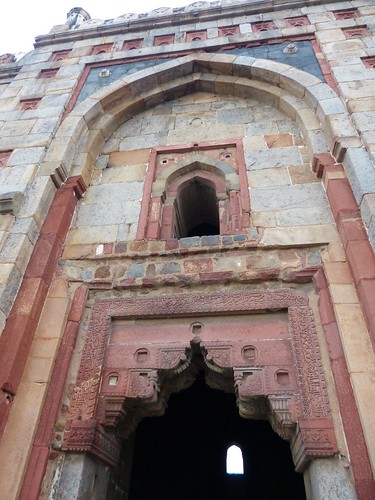
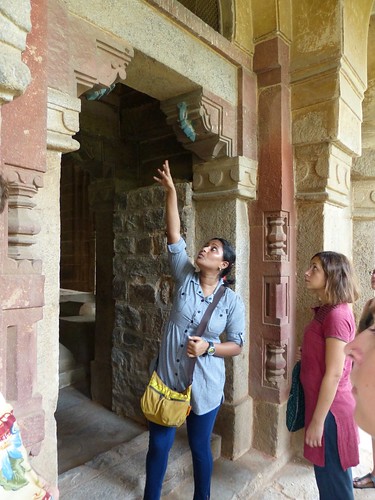
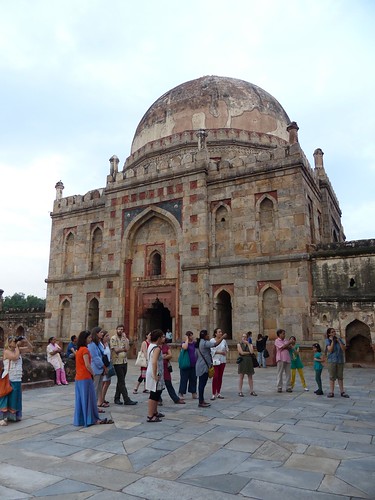
Moby had an excellent understanding of Delhi’s history and shared interesting anecdotes and facts about the park’s design and architecture. She explained that most of the tombs in the park dated from the short-lived Sayyid Dynasty, which ruled from 1414 to 1451. Not much remains from that dynasty, she said, so these monuments are under the protection of the Archaeological Survey of India.

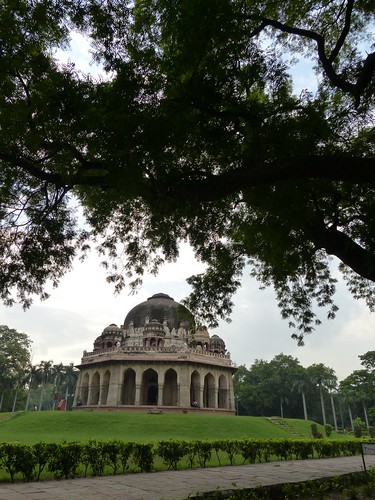
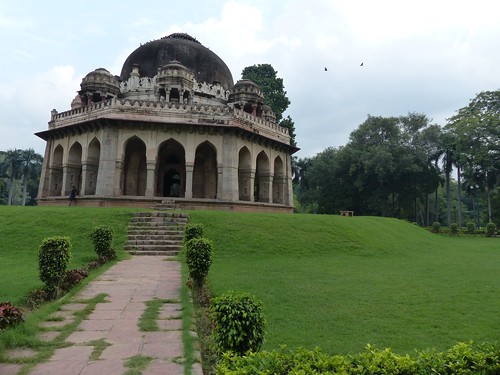
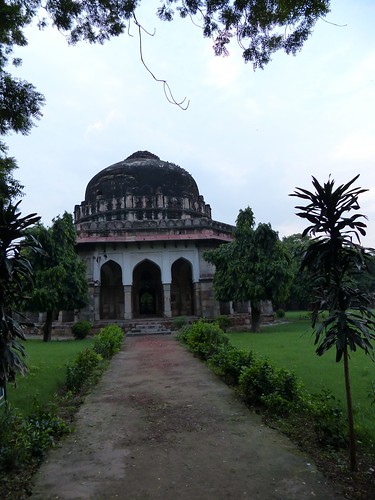
The tomb of Mohammed Shah, the last of the Sayyid dynasty rulers, was built in 1444.
Untitled

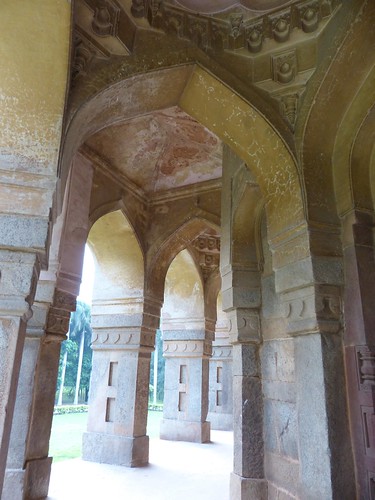
Arches were a new architectural feature of this era, Moby told us. Traditional Hindu architecture featured doorways with decorative beams, which couldn’t support towering domes.
Untitled

Untitled

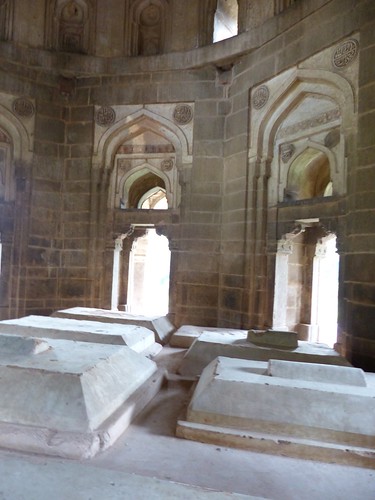
Graves inside the tomb.
Untitled

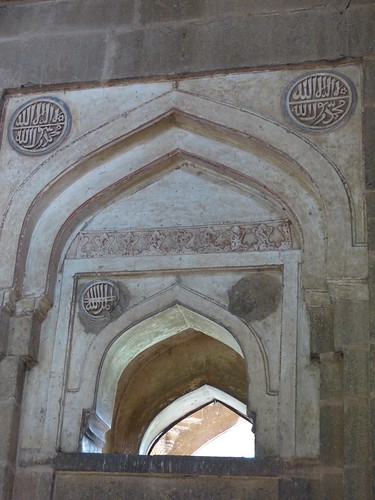
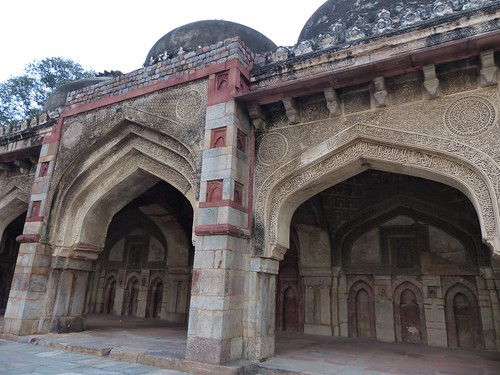
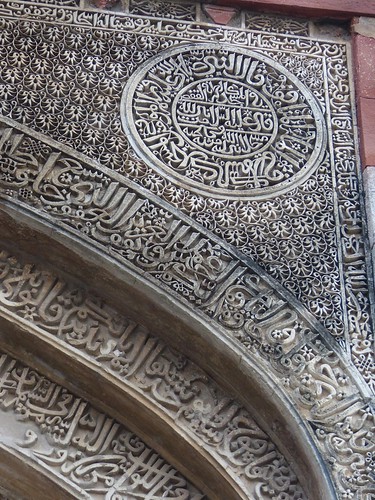
The stone used for construction was impossible to carve, so builders used limestone plaster to carve ornamental designs and inscriptions from the Qur’an.
Untitled

Untitled

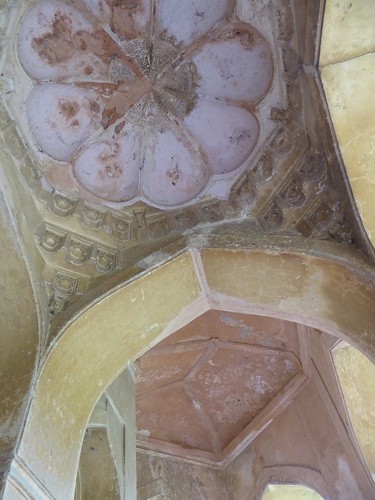
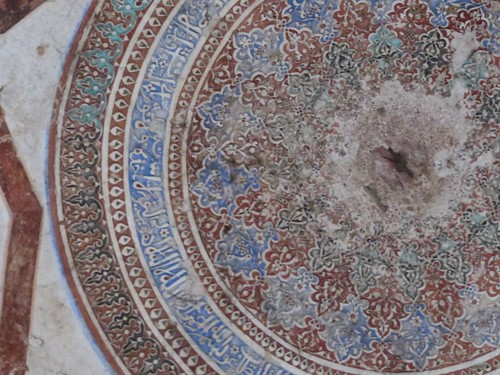
The ceiling must have been stunning back then.
Untitled

Untitled

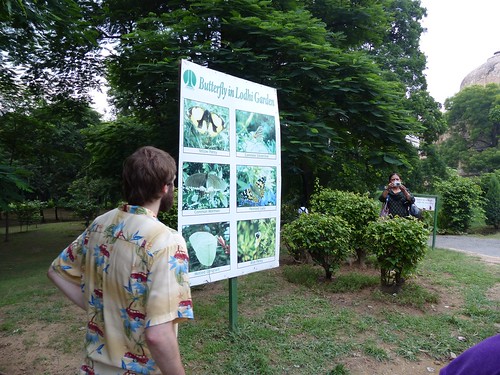
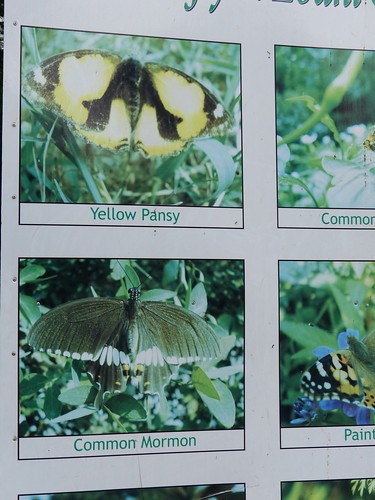
Signs help with identification of the garden’s many species of butterflies, migratory birds, trees and plants.
Untitled

We saw lots of common Hindus, but we didn’t spot any Common Mormons.
Untitled

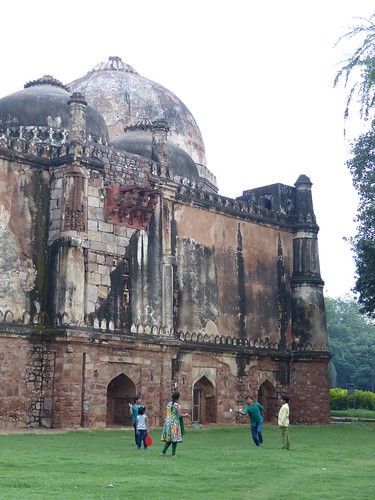
I never tire of seeing daily life in the shadow of ancient monuments. This group played badminton next to the Bada Gumbad Mosque. An inscription inside dates the mosque to 1494.
Untitled

Untitled

More carved limestone plaster. So fancy!
Untitled

The Bada Gumbud building is believed to be a gateway and dates to the Lodi Dynasty, which ruled from 1451 to 1526.
Untitled

Untitled

Untitled

Untitled

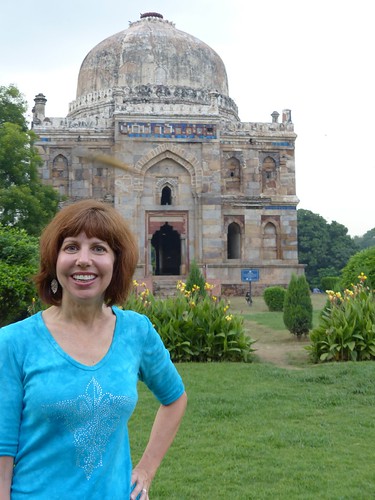
This Lodi Dynasty-era tomb is called Shish Gumbad. We thought that name might stem from the very steep steps, which make you say, “Sheeesh!” It turns out the name actually means “dome of glass” and refers to its glazed tiles. There are several graves inside, but nobody knows who they are.
Untitled

At one point, the sky filled with kites. Not the colorful attached-to-strings kind, but the forked-tail birds-of-prey kind. Very cool.
Untitled

Moby encouraged us to pick up the pace or risk getting locked out of the last monument. Sure enough, when we arrived at Sikandar Lodi’s tomb, the gate was padlocked.
Untitled

A kind guard let us in “for five minutes.” By now, it was getting dark, and we couldn’t really see the painting or carving work inside the tomb. Sikandar Lodi’s son built the tomb but then went on to lose a battle that ended his dynasty and brought the Mughal Empire to power.
Untitled

On our way out, Moby showed us another tower that may or may not be the oldest building in the park. To be honest, I was too peckish to pay attention anymore. In fact, we were all sweaty, tired and hungry. Good thing we had a reservation at The Garden Restaurant attached to the park. Good food and good company!
Untitled

Back in the saddle – Horseback riding in New Delhi

One morning during water aerobics, our instructor Sherry said, “Wow, I’m so sore from riding yesterday.” I assumed she meant bike riding, so this was my inner monologue: “Mmmm… I sure miss my bike … I especially miss riding my bike in Laos. Sure wish I could do that here, but too many potholes, cows, cars, and the air pollution would kick my butt. Dang, I just can’t cope…”

Sherry’s voice interrupted. “… so we kept trotting for a really long time.”

(Insert sound effect of screeching needle on a record.)

Wait. Trotting? Maybe Sherry hadn’t been on a bike, after all. “When you say ‘riding,’ do you mean HORSEBACK riding?” I asked her. Sure enough. Sherry leases a horse at a nearby stable. For about $200 a month, you can LEASE a horse! A handler feeds it, grooms it and exercises it every day. If you decide to go for a ride, the handler saddles up your horse and then sticks around to put everything away and give the horse a bath after your ride. All of the fun and none of the work? Where do I sign?

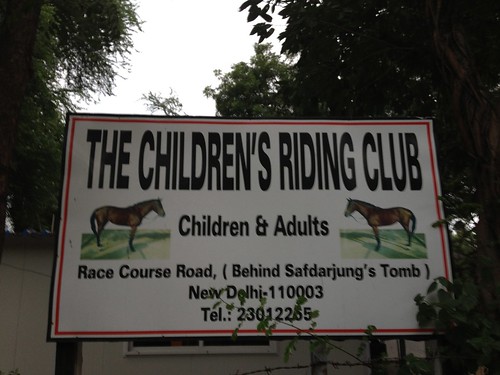
Friend and fellow water-aerobicizer, Holli, also expressed enthusiasm for horse leasing, so we joined Sherry at the stable a few days later. Side note: The stable is located in a district called Race Course, but Holli and I mistakenly went to the ACTUAL race course, which is a creepy place full of desperate men and absolutely no women … other than us. We quickly realized we were in the wrong place and jumped back in the car for the short drive to the Children’s Riding Club.
Untitled

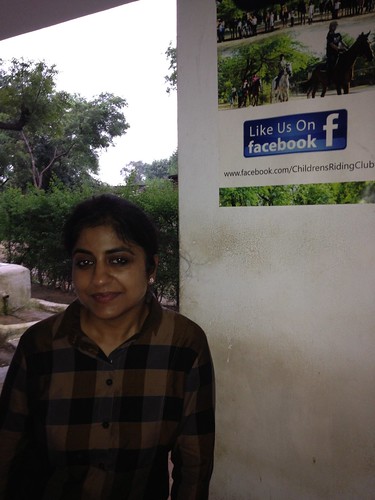
That’s right. The CHILDREN’S Riding Club.

Holli and I inquired about leasing horses, but ultimately decided to take lessons instead (on borrowed horses). We clipped on our new black velvet helmets and joined the line-up at the mounting block. Sherry, Holli and I joined about 6 youngsters in the arena for a riding lesson. The youngest, atop a white pony, appeared to be around 5 years old.

I’m pretty sure my assigned horse, Magic, rolled his eyes when he saw me coming. Despite years of lessons and horse ownership in my pre-teen years, I flopped around like a fish in the saddle. The stirrup straps pinched my flailing calves, and my girl parts took a beating. Even more humiliating, a handler held Magic’s bridle, walking and jogging alongside until I smiled and asked, “What’s your name?” He muttered, “Arif,” and hastily dashed away. “Thank you, Arif,” I called out. Maybe he thought I was dismissing him, but really I just wanted to express my appreciation. I completed the lesson without Arif and, thankfully, without incident.

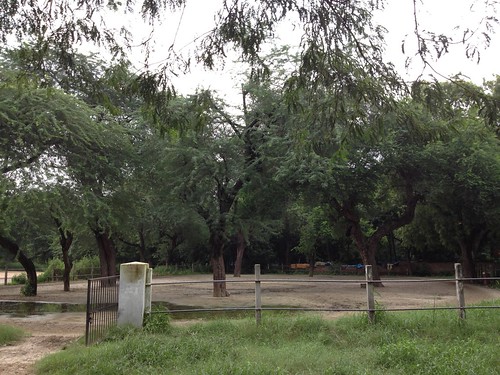
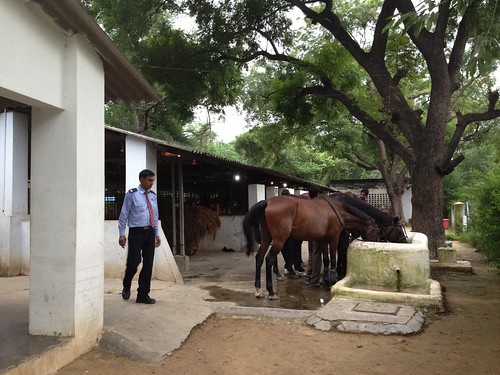
There was no denying we were still in India. To reach the arena, we walked past what appeared to be an ancient ruin, but large dumpsters overflowing with garbage blotted the landscape. Dogs and dog-sized crows rummaged through the rubbish while we breathed through our mouths. However, the riding club itself was clean and well-maintained with scrubbed concrete stalls and small smokey fires to deter the nasty biting flies. The horses – all retired race horses! – seemed healthy with shiny coats and high spirits. The arena was smallish but served the purpose, despite several large trees springing out of the middle (anyone else foresee a cartoon-like distracted rider trotting along, looking backwards just in time to get smacked off her horse by a tree branch?). A large pool of mosquito-breeding water worried me in this season of dengue fever, but it was filled with fresh dirt within a week.
Untitled

The riding school director, Anu, was a small no-nonsense woman who stood in the middle of the arena barking out instructions and correcting our form. At times, she got frustrated with the children who lazily let their horses call the shots, but I appreciated her genuine love and concern for the horses.
Untitled

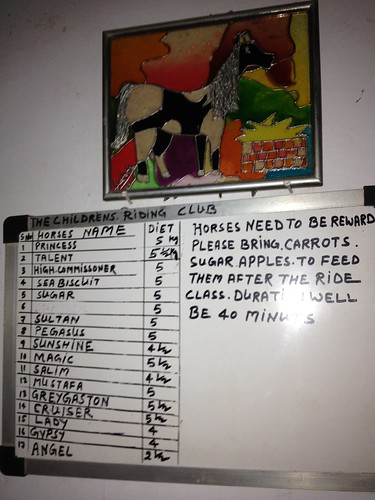
Look at this cute little sign she posted at the entrance.
Untitled

Happy Holli at the end of our first ride.
Untitled

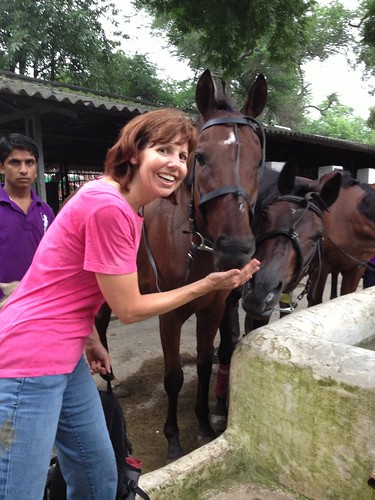
Me feeding a carrot to Magic while Arif glares at me.
Untitled

Untitled

On our second visit, the handler saddled up a large gelding named Grey Gaston for me. The monsoon season brings out some nasty flies, which were driving the horse insane. When we were moving, he was compliant, but whenever we stopped to hear Anu’s lesson, he kicked, twisted and writhed around to elude the flies so much I thought he might toss me.

At one point, Anu shouted, “Check your diagonals!” Hmmm… diagonals? That sounded familiar, but my brain must have locked up all my horse vernacular with the rest of my junior-high wisdom (maybe in a cerebral box titled “Braces and Home Perms”). Fortunately, Anu explained: Diagonals refer to your posting position when the horse trots. When the horse’s inside leg is forward, you come up out of the saddle, and when the outside leg is forward, you sit back down. Right! I knew that!

Back in the day, my horse Princess threw me countless times. Scrapes, nasty bruises and concussions were a regular part of my adolescent life. These days, I know my body would not recover quickly from a fall, so that fear lingers. But by the end of our second lesson with Anu, I was starting to feel more confident. She provided some guidance that kept me from flopping around so much, and I could feel myself panicking less and enjoying the experience. It was all coming back… The more I can relax my mind, the more I can dredge up that junior-high understanding of horses and the beauty they can bring to my life.