Gotta love a gala: Korean National Ballet’s Gala in India

Korean children comprise about 30 percent of our elementary school’s student population, and quite a few of them study English as an additional language with me. They were excited to hear that Tony and I will travel to Korea for Christmas this year, and one little girl even made a one-page Korean phrasebook for me. At a parent-teacher conference for one of my students last week, I received a ticket to the Korean National Ballet’s Gala in India.

To celebrate 40 years of diplomatic relations between Korea and India, Korea sent its most famous orchestra, ballet and martial art troupes to tour India this year. What a treat to see the ballet with my friend Nancy and new friend Elizabeth.

At the Siri Fort Auditorium Sunday night, a cranky Korean lady stormed down the aisle shouting, “This section for LG employee only! If you don’t LG employee, please move your seat!” Some people sheepishly got up, but we stayed put. We had been told to sit there by an usher, and by then, the auditorium had filled. We didn’t get to the venue an hour early for nothing! Approached again by the seat police, Elizabeth brazenly uttered, “Embassy,” and that was it. We were cool. (Elizabeth’s husband works for the Embassy of Denmark, so it wasn’t a total lie.)

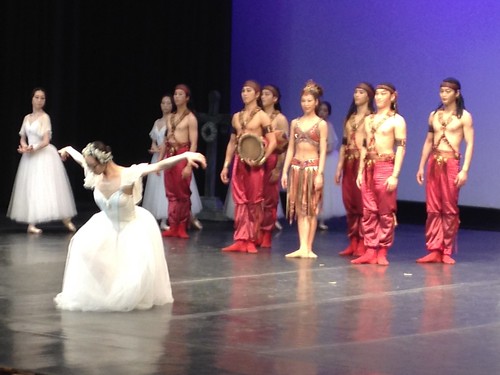
Dancers performed scenes from “Prince Hodong,” a Korean legend about nation, war, love, betrayal and death; “Don Quixote,” in which the ballerina coyly waved her fan and turned 32 times; “La Bayadere,” a story of love and betrayal set in an Indian temple; and “Giselle” with its “willis” – “mysterious creatures, conveyers of the ideal; the illusion of their immateriality is accentuated by the ethereal tutus, the slow fluid gestures and the use of points.”

(Full disclosure from pathetically uninformed ballet plebes: Nancy and I couldn’t figure out what the emcee was saying when she referred to the “willis.” We thought she was having language-interference pronunciation issues. When a dancer emerged holding an armful of flowers, I leaned over to Nancy and said, “Ohhhh… LILIES!” and we barely stifled our snickers. It wasn’t until I read the program later that night that I realized the ghostly characters were called “willis.”)

Although the emcee encouraged people to cheer and whistle for impressive dance moves, I still found the performances beautiful and evocative. I also appreciated how many Korean families brought their children – girls and boys – to see the show. Sitting in the LG section, I shouldn’t have been surprised at how many people filmed and photographed the gala (despite the emcee’s stern order to turn off our phones). I finally decided, if you can’t beat ’em, join ’em. But I only snapped a few shots during the curtain call.
Untitled

May these events galvanize the spirit of friendship between our two peoples, helping our two countries become each other’s best friend in the days to come.” – Korean Ambassador Joon-gyu Lee
Mundane but thought-provoking: A typical week in Delhi

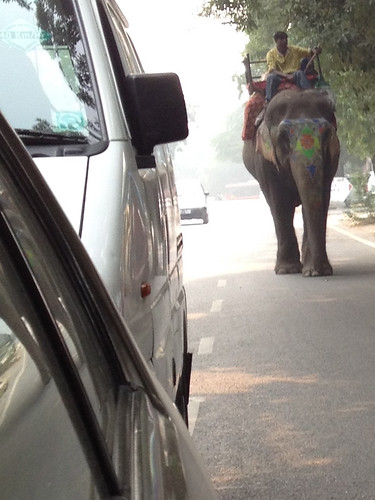
Sometimes daily life seems so mundane. Then you drive past an elephant in your neighborhood, and it makes you think.
Sure, we go to work early and come home late. Sure, we play with our cats, watch TV and go to bed.
But we also drive past elephants.
Mundane? Maybe for India.
May I never pass an elephant without recognizing how truly weird and special that is.
(photo by Tony)
IMG_0345

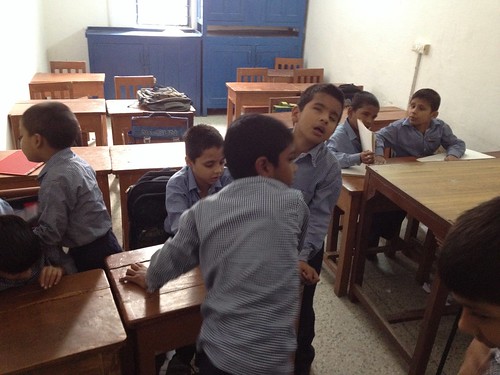
What else happened in my mundane week? Well, Nancy and I visited the Blind School Diwali Mela, where you can find everything gilded and sparkly one needs for a proper Diwali celebration while helping to support the local school. The bazaar is called the “Blind School Diwali Mela,” but I guess I never really processed the fact that it takes place on the campus of the BLIND SCHOOL. When Nancy and I sought a restroom, we wandered into part of the school where kids were hanging out in tiny austere classrooms.
Untitled

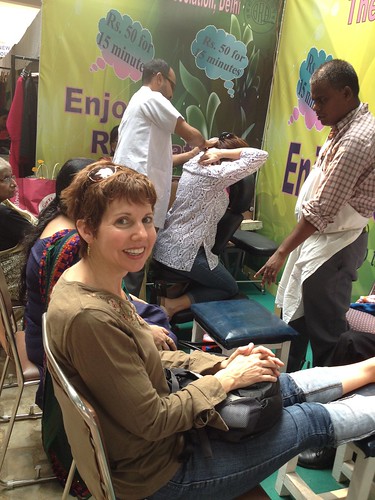
While shopping, we paused for a coconut thirst quencher, a 15-minute massage (less than $1) and a tarot card reading.
Mundane? Maybe for India.
May I never tire of glimpses behind the scenes, exotic treats, cheap foot rubs and dabbling in the occult.
Untitled

Untitled

Untitled

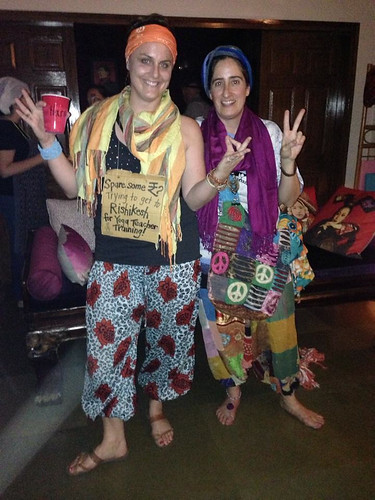
Some friends hosted a Halloween party Friday night. I dressed as the Air Quality Indicator, a timely costume as the air pollution skyrocketed off the chart that day. There were a few zombies, but India-centric costumes at the party also included a gone-native Delhi tourist, a backpacker on her way to a yoga course, a Diwali diya (oil lamp), an elephant, a covered-up tuk-tuk meter, a belly dancer and a worker at our campus coffee shop.
Mundane? Maybe for India.
May I always surround myself with friends who treasure the inside stories of our host country.
(Photo by Marina)
backpackers

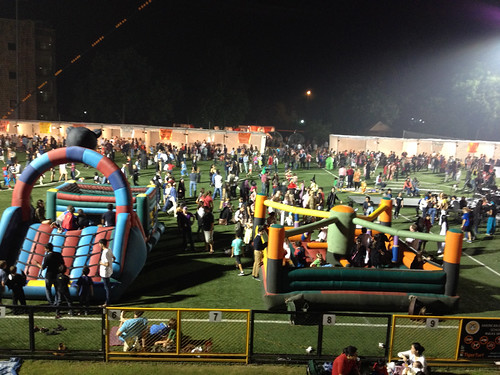
Fall Fiesta, our school’s Halloween-themed fund-raiser for high school activities, took place Saturday night. I volunteered selling wristbands for kids to play the homemade “arcade games,” which were split into Big Camp for youngsters over 7 and Small Camp for the little ones. Tony volunteered at the Small Camp tricycle races. I bought 48 raffle tickets and won an emerald bracelet, but my favorite part of the night was hearing, “Hi, Mrs. Dent!” from current and former students, including a French Canadian Dracula and his older sister zombie, a Japanese cat, a Kuwaiti princess, an Australian strawberry, an American bride, and a collection of monsters, skeletons and creepy characters from around the world.
Mundane? Maybe for India.
May I always value the global perspective of a diverse classroom.
IMG_0342

Another typical event in our New Delhi lives: The cats discover endless ways to trash our home. Here, Ella’s face is a blur as she maniacally shreds a roll of toilet paper.
Mundane? Yes.
And there’s no lesson to be learned. It just makes me laugh.
IMG_0340

Child beggar plays mind games at Delhi intersection

Earlier today, I read an article on Slate magazine online about the damage tourists do by contributing money or food to child beggars. (My colleague, Eric Johnson, took the accompanying photo!)

I already knew much of the information the article imparted. For example:

In India, roughly 60,000 children disappear each year, according to official statistics. (Some human rights groups estimate that the actual number is much higher than that.) Many of these children are kidnapped and forced to work as beggars for organized, mafia-like criminal groups. According to UNICEF, Human Rights Watch, and the U.S. State Department, these children aren’t allowed to keep their earnings or go to school, and are often starved so that they will look gaunt and cry, thereby eliciting more sympathy—and donations—from tourists. And since disabled child beggars get more money than healthy ones, criminal groups often increase their profits by cutting out a child’s eyes, scarring his face with acid, or amputating a limb.

We encounter beggars every time we leave the house. Some actually live in the medians near our neighborhood, taking shelter under the overpass. As soon as we stop at a red light, they descend. Some tap on our windows and gesture at their mouths or bellies, playing on our guilt. Some youngsters with drawn-on mustaches and other silly body paint perform flips or cartwheels, bang drums, sing and otherwise attempt to earn a few coins. Some sell individual flowers.

Usually the adults handle the intersection commerce. They drift through the captive cars, carrying stacks of books and magazines, phone chargers, toys, bouquets of flowers, steering wheel covers, balloons shaped like electric guitars, peacock feathers, tissue boxes and seasonal items, such as fireworks at Diwali or colorful powders at Holi.

We have had some amusing interactions with the street sellers. Once we were giving my friend Nancy a ride home on the last day of school after she had received two massive flower arrangements from students. She and I sat in the backseat, unable to see each other through the enormous bouquets. Stopped at an intersection, we pushed aside the flowers to look out the window. A flower seller leaned down to look in my car and rapped on the window. He gestured at Nancy’s flowers and then at his own with an expectant smile. We laughed and said, “Obviously we don’t need any flowers!” He tried repeatedly to convince us otherwise. Another time, a hawker sidled up to my car with a tower of tissue boxes. I responded to his window knock by holding up the TWO boxes of tissues we had in the car. Unfazed, he pointed out that Britney Spears was featured on his boxes. Sometimes it’s just too surreal.

Neither Nancy nor I have ever bought anything from the street sellers, although it’s frequently tempting as we sit, stuck in traffic, bored, watching the parade of hawkers.

“I’ve really been wanting one of the peacock-feather fans,” Nancy said. “But I’m scared to open the window. What if they all come running over to sell me stuff?”

Exactly.

This holiday afternoon, Nancy and I were heading home after lunch at a nearby restaurant when we stopped at a red light. A man selling books walked by, and Nancy spotted The Lowland by Jhumpa Lahiri, most likely our next book club book.

“Isn’t that the book I need?” she asked.

“It is,” I answered, apathetically as I’ll buy it on my kindle.

“I’m gonna get it!” she said, rolling down the window.

By the time she had made the transaction, a young girl selling flowers came slinking over to my car. Excited to cross “buy something at a Delhi intersection” off her bucket list, Nancy didn’t close the window fast enough, and the girl tossed in a small cellophane-wrapped bouquet of three roses, which wedged between Nancy’s seat and the door. As Nancy fumbled around trying to find the flowers, the girl leaned on my car hood, staring at us with an expression of total contempt. Slowly, she lifted one windshield wiper up, making eye contact the entire time.

Nancy found the flowers and tried to hand them back to the girl through the open window. The girl ignored her, so Nancy flipped them onto the hood within her reach. Apparently the girl was fed up with noncompliant customers, so she waited – hip jutted out, insolent expression on her face – until just before the light turned green. And then she extended my other windshield wiper.

There was no time to jump out and push the wipers down. Other drivers were already honking at me. So off we went, like a ridiculous taupe metallic insect in this concrete jungle of Delhi, wobbly antennae leading the way.

I know it’s not politically correct to laugh about this, but Nancy and I were in hysterics. One minute, we feel oppressive expat guilt driving past the desperately poor children, half naked and dirty, begging for money. The next minute, that little girl – who really should be in school, probably fourth grade – dumps all her frustration on us, and we had to admit she was pretty badass. We were laughing at ourselves, with a tinge of disbelief, and sending some respect and hope out into the universe for that scrappy kid.