Bolivia Bound, Part 2 – La Paz (Dieciocho 2019)

During our quick visit to Bolivia, we only scratched the surface of La Paz. Fortunately, another Nido friend was also in town. Misti had lived in La Paz for two years, and she was back visiting friends, so she served as tour guide for our one full day in the city.

Ian booked our hotels, which is why we ended up staying at a place with the slogan “easy, fun, social.” You have to check out the website to fully appreciate my apprehension: Loki Hostel. Fortunately, it did not live up to the hype. It was housed in a gorgeous old building with high ceilings, parquet floors, French doors, and other lovely architectural features. With a little redecorating, it could have been a swanky upscale boutique hotel. After our long drive from Lake Titicaca, we checked in and ate a late lunch in the hotel restaurant (which also surpassed my expectations).

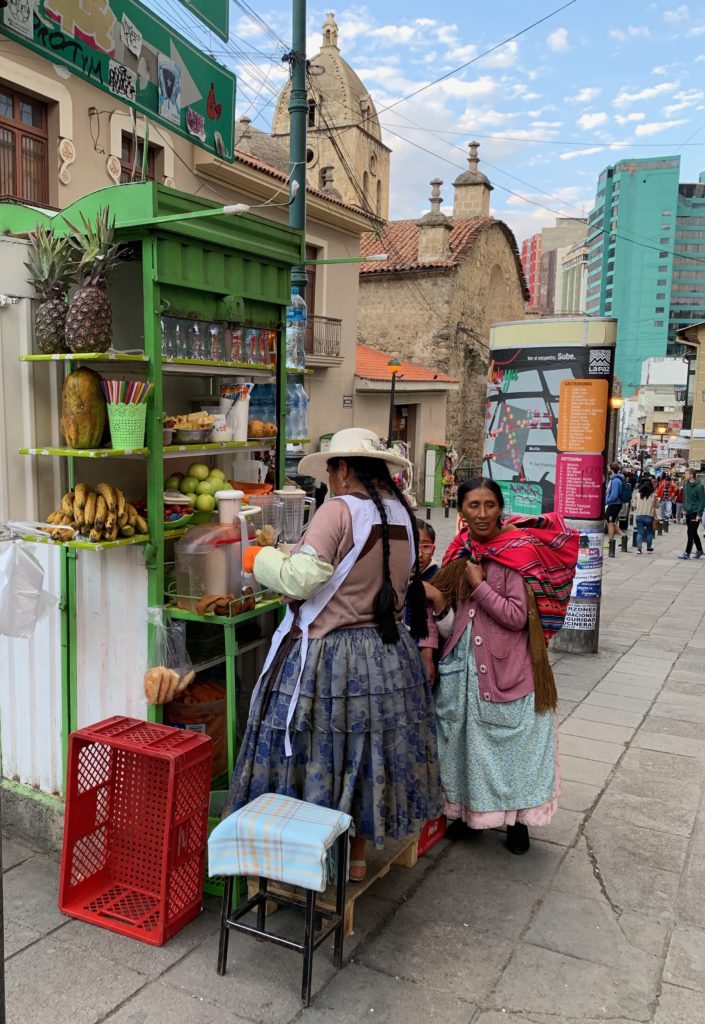
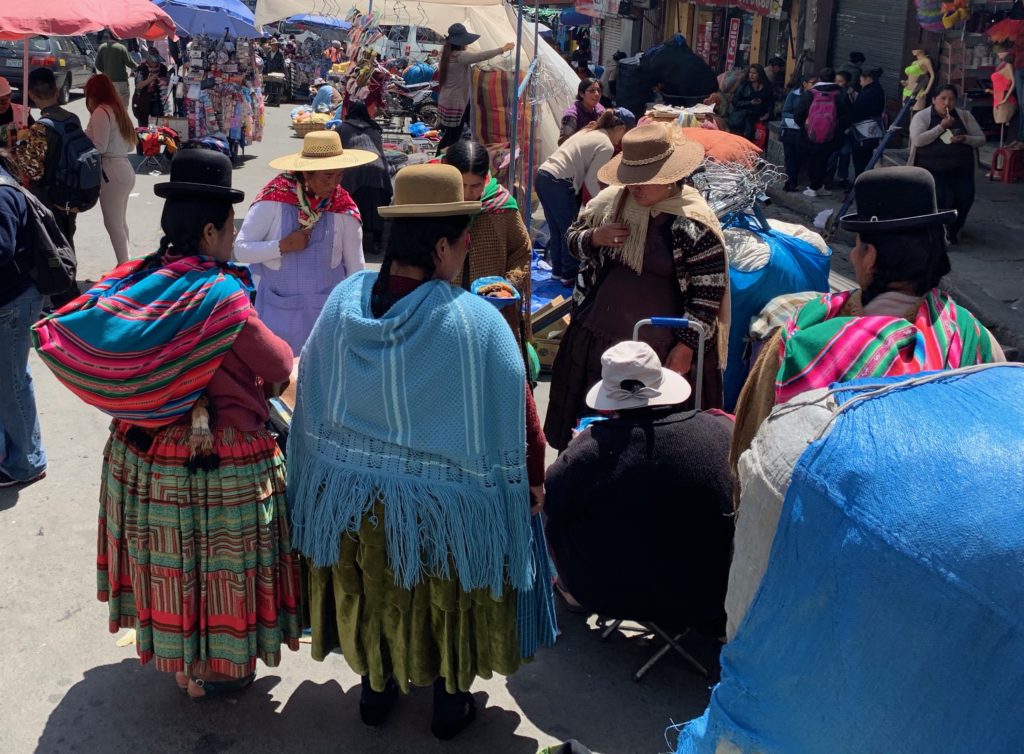
With no real plans, we wandered toward Murillo Square and found ourselves in front of the Catedral Basílica de Nuestra Señora de La Paz (known as the La Paz Cathedral in English). The crowd mesmerized us with its diversity: global tourists, businessmen in suits on their cellphones, trendy Bolivians in jeans and sweaters, cholitas (indigenous women dressed in traditional layered skirts and bowler hats), university students studying in the sunshine, and hawkers selling everything from prayer candles to tours.
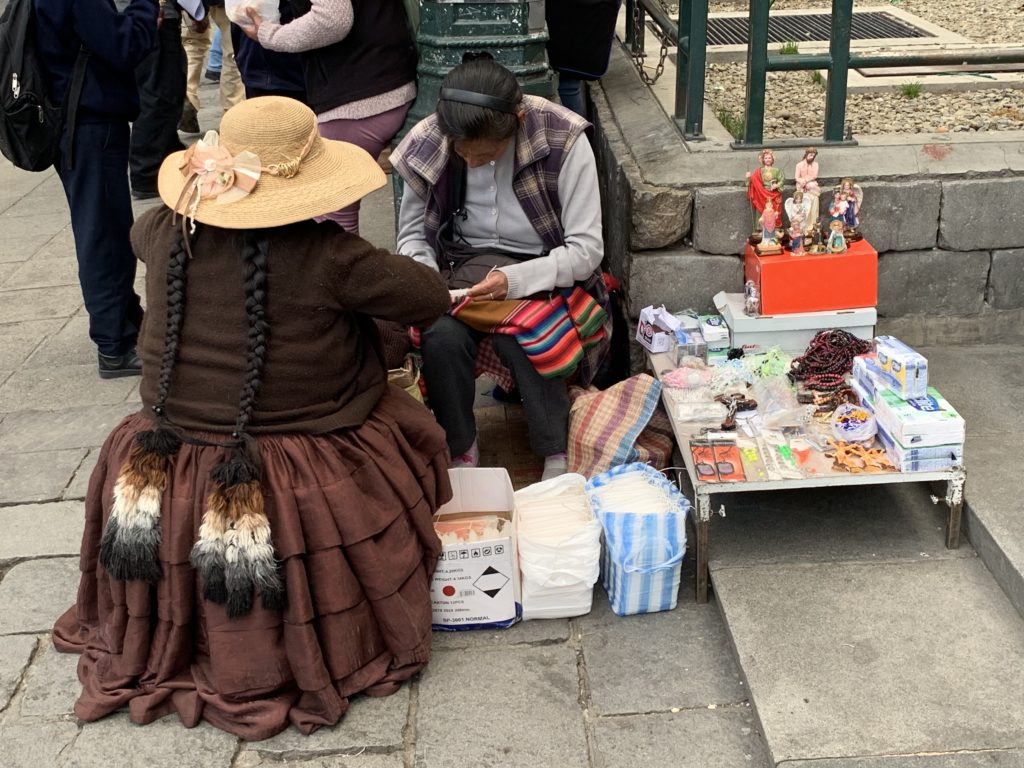
This vendor was etching a prayer onto a candle for the cholita.
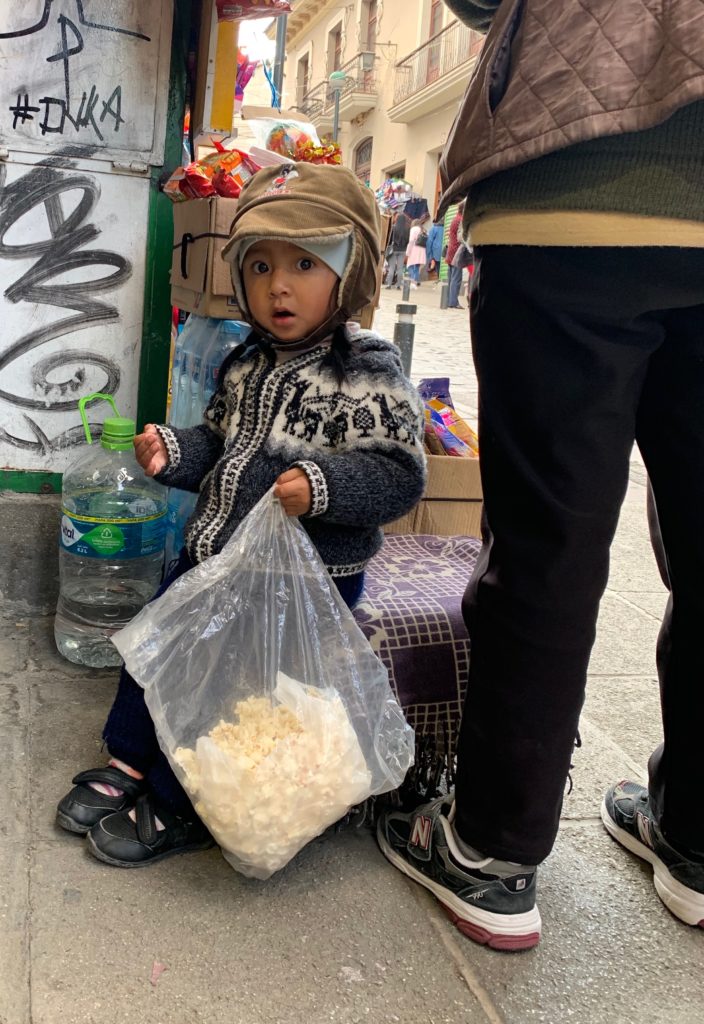
Cutie eating popcorn at his parent’s little shop.

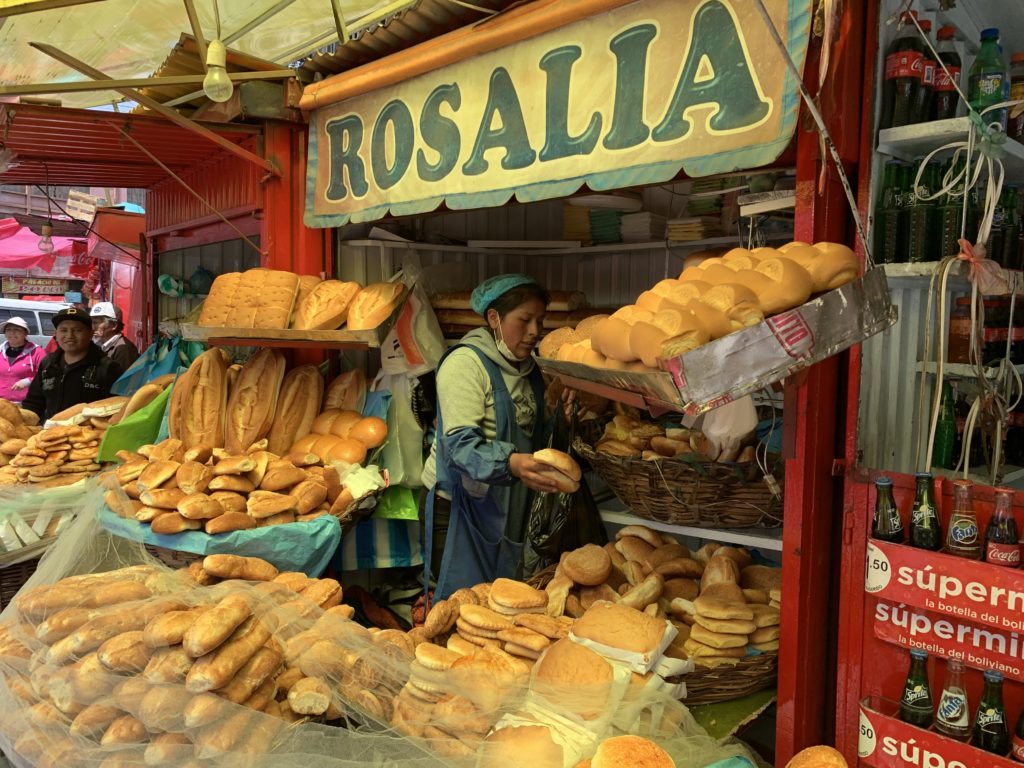
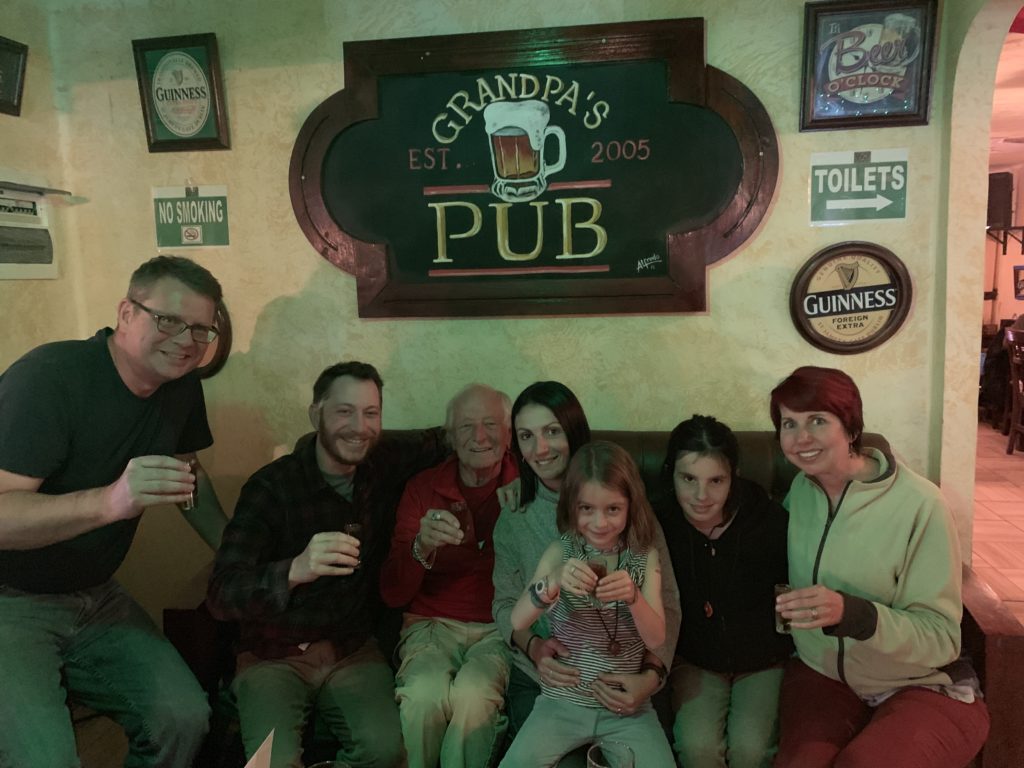
Strolling around the neighborhood, we stumbled upon the textile market. Everything was stunning. It took all my restraint not to buy every bag, poncho, sweater, table runner, pillowcase, and aguayo (the traditional blanket for carrying babies and other items on your back). Eventually, we popped in to an Irish pub for happy hour and then headed to a Mexican restaurant for dinner. Veggie tacos and margaritas – yum!
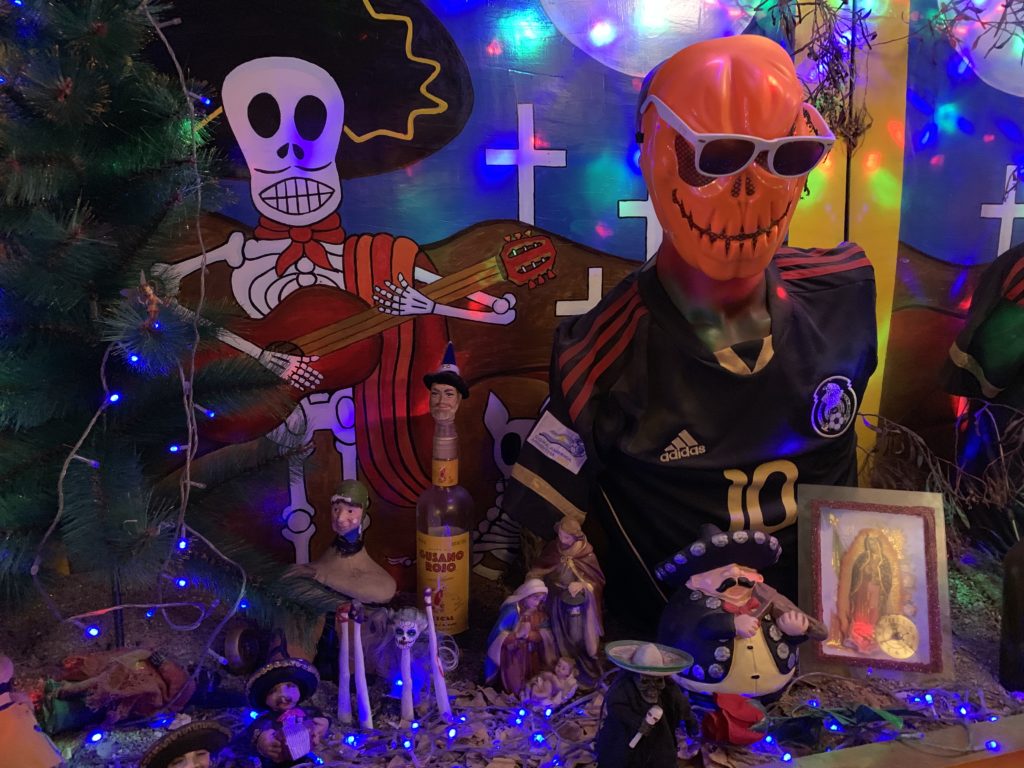
In the morning, we met Misti and poked around the Witches Market. We had already seen those shops during yesterday’s exploration, but we didn’t realize what they were. Misti said it’s become much more touristy since she lived here 5 years ago. They had lots of herbs and coco leaves, objects to place on your shrine, very voodoo-y bibs and bobs, but the most interesting were the llama fetuses, which are supposed to bring good luck. Apparently, they are placed in the foundation of a new construction as a blessing. 
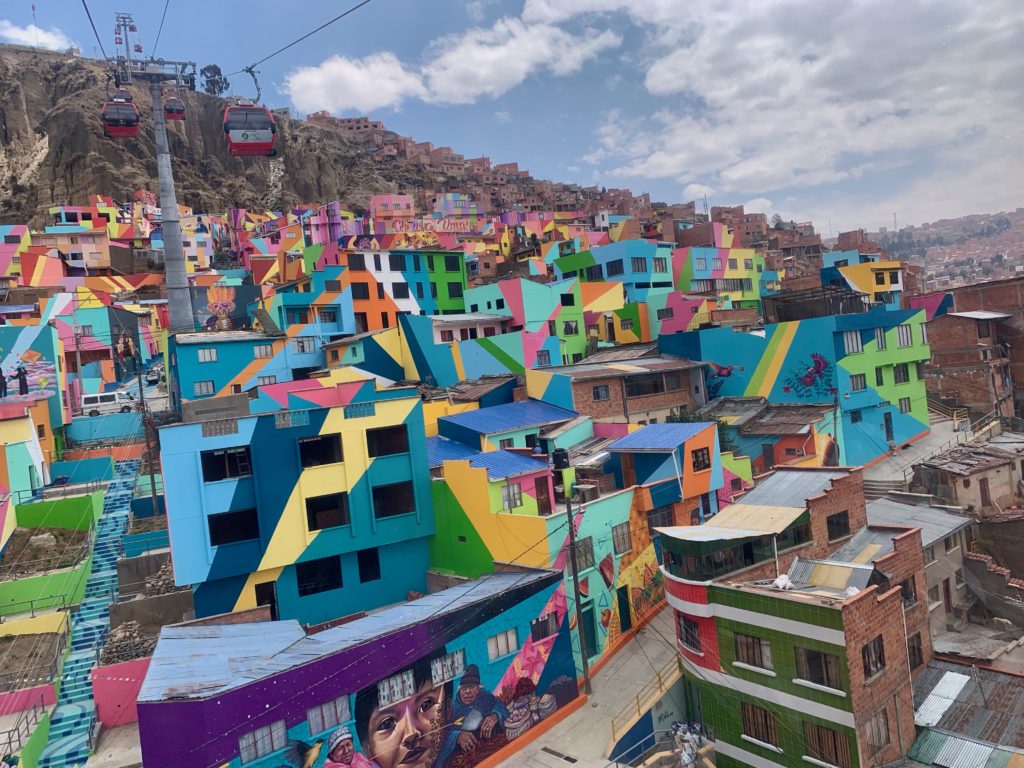
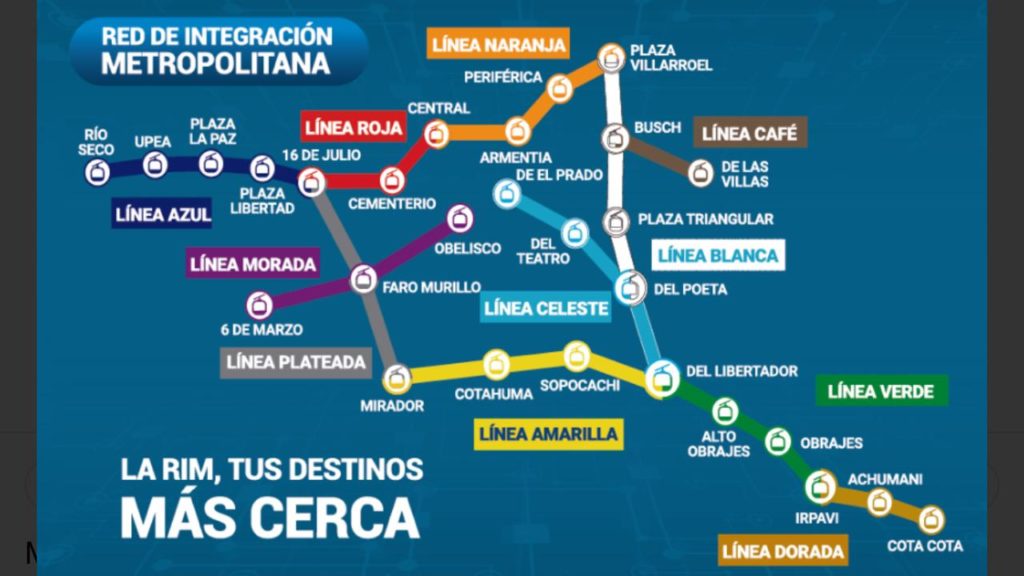
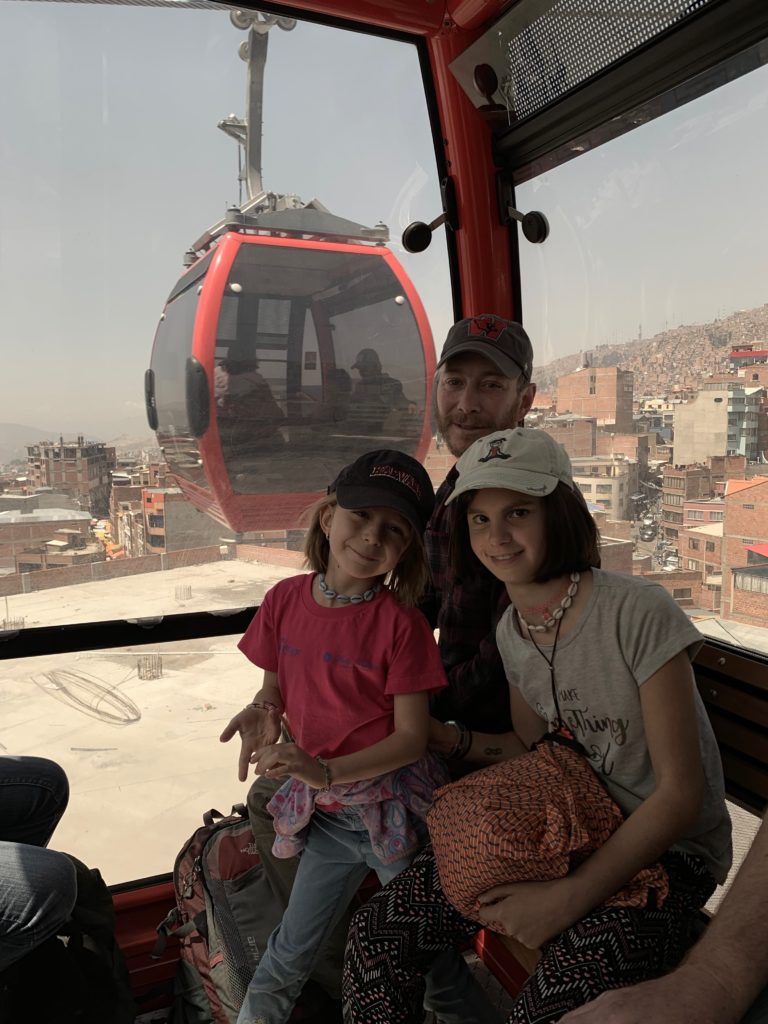
From there, we walked to the teleferico. La Paz has the world’s largest high-altitude urban cable car system, according to an article on The Telegraph website. We took the Red Line up to El Alto, the city at the top of the basin, and then we transferred to the Silver Line, which gave us an interesting perspective on the perimeter of the city.
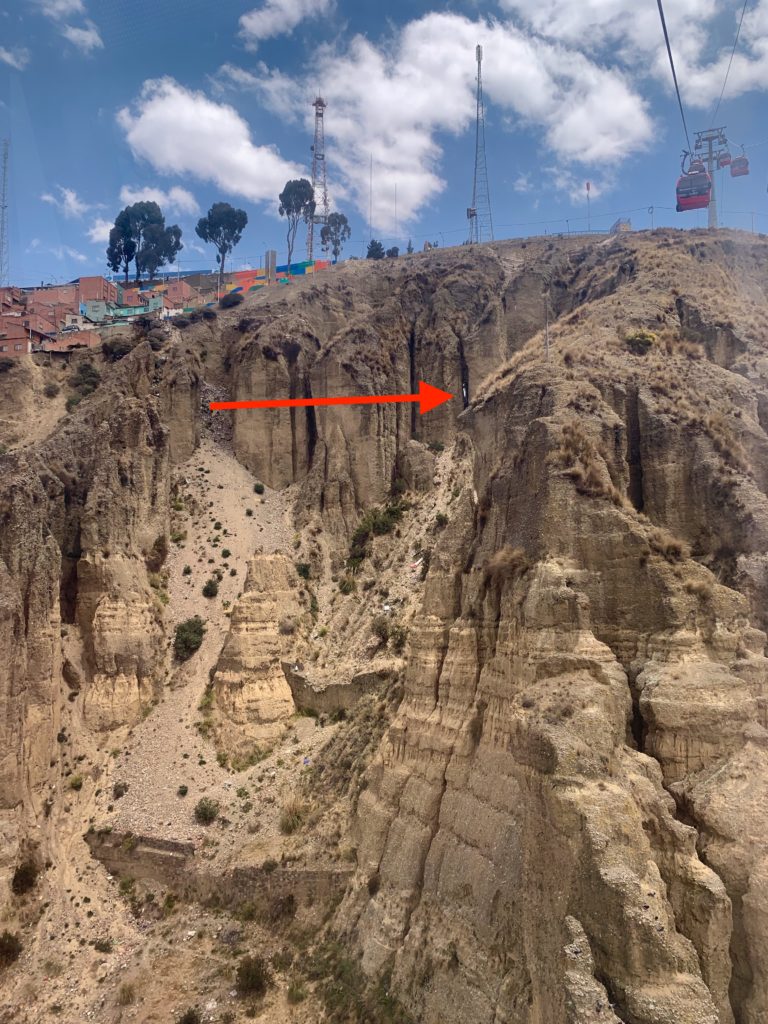
We returned to the city on the red line but not before getting a good look at a car stuck in a chasm on the hillside. (I have spent hours online trying to figure out how it got there, and the only semi-reliable information I found is from Reuters. Apparently a taxi driver lost control of his vehicle and drove off the cliff in 2011. Three people died, and three were rescued.)
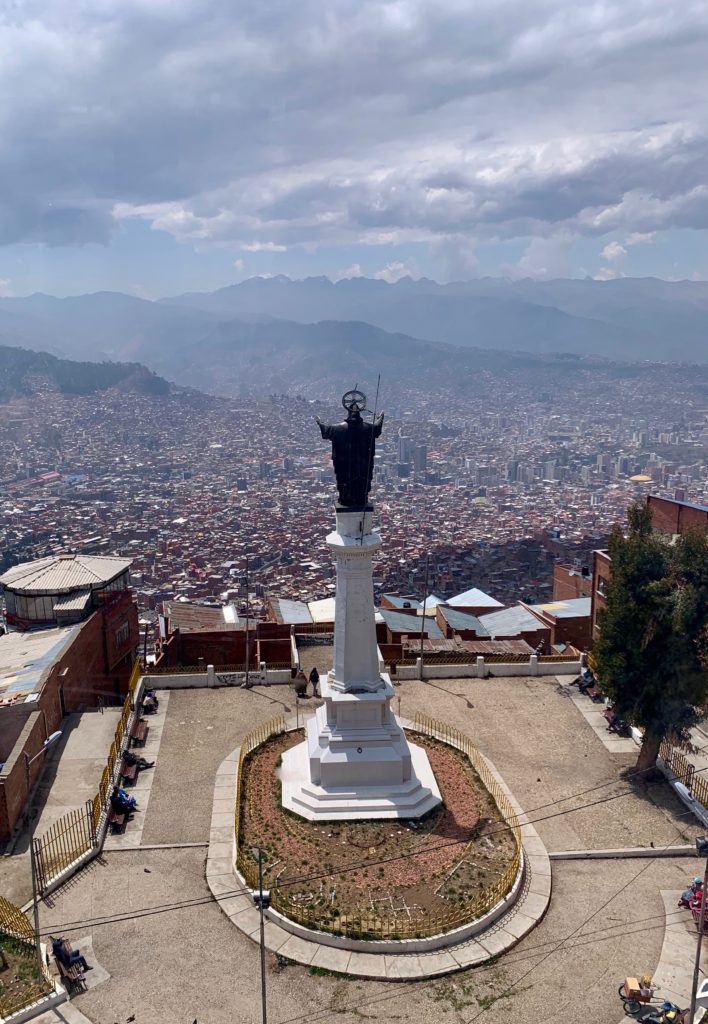
We parted ways with Stella’s family, and Misti continued our tour for the rest of the afternoon, hiking up and down the steep streets of La Paz and pausing occasionally to share stories about the city’s wacky history. One of the most bizarre stories put the San Pedro Prison at center stage. Located smack dab in the middle of a nice part of town, the prison looks innocuous from the outside, not even like a prison. Inside, it’s a city within a city, where inmates run the show. This story about the prison on the Architectural Review website is fascinating.

Misti took us to one of her favorite restaurants, Namas Té, an artsy little vegan place. Such a cool vibe, and the food was fabulous.

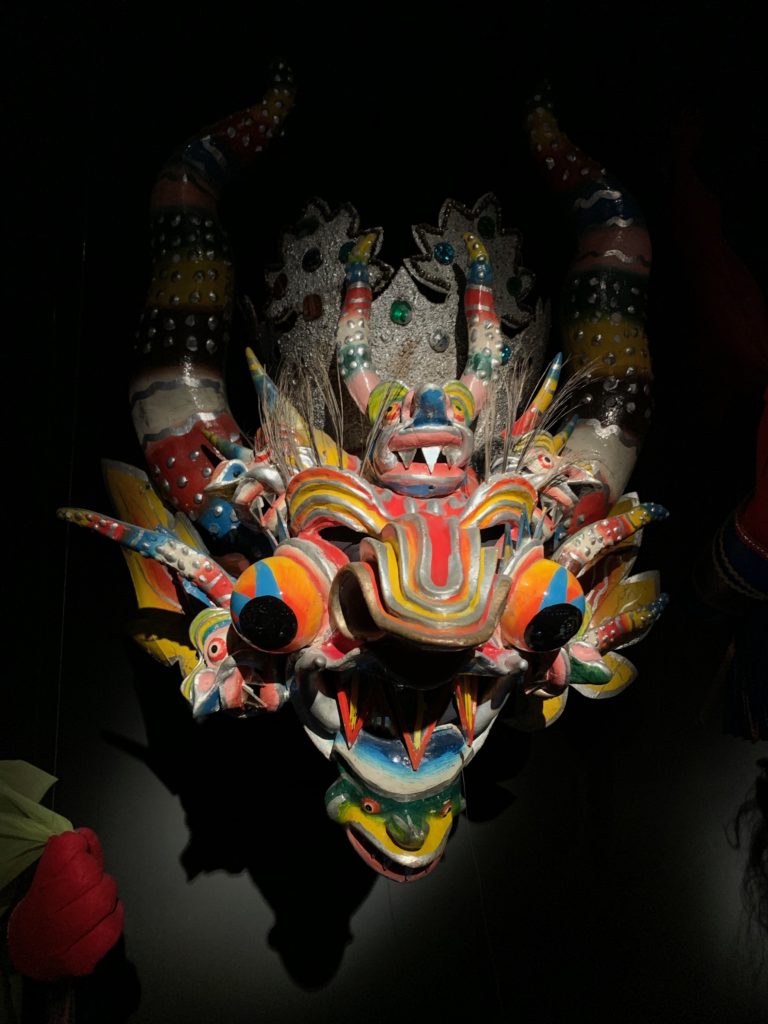
Another highlight of our walking tour was MUSEF, the Museo Nacional de Etnografía y Folklore. Housed in the colonial Marquis de Villa Verde Palace, which was built in 1730, the small museum offers fantastic collections: pottery, textiles, masks, feather art, and traditional clothing. I didn’t take many photos inside, but I loved it all!
We hung out at the museum’s coffee shop for awhile, chatting about the museum and Bolivian culture, before bidding farewell to Misti and heading back to our hotel. For dinner, we met up with our group and walked to The Local Dish. Another great choice!
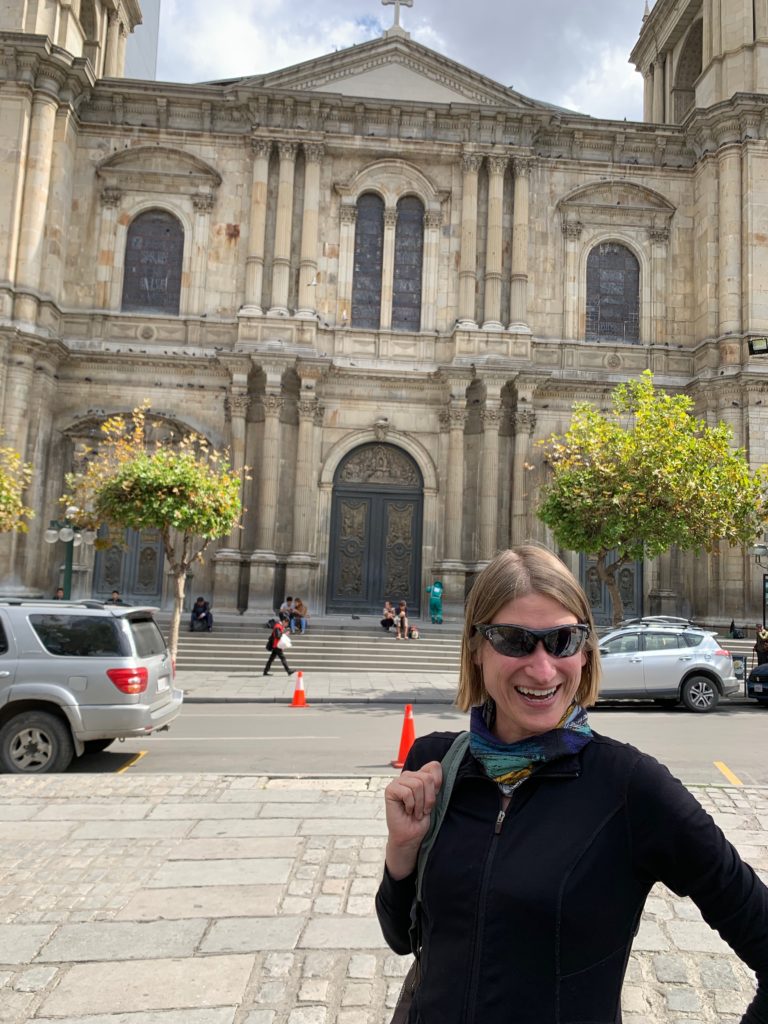

Our fabulous tour guide!

Bolivia Bound, Part 1 – Lake Titicaca (Dieciocho 2019)

With a week off school in honor of Chile’s Dieciocho holiday, we headed north to check out Bolivia with our traveling companions, Ian and Stella; their two daughters, Mane and Berlin; and Ian’s dad, Peter. Tony and I started popping Diamox earlier in the week in anticipation of La Paz’s famously brutal altitude.

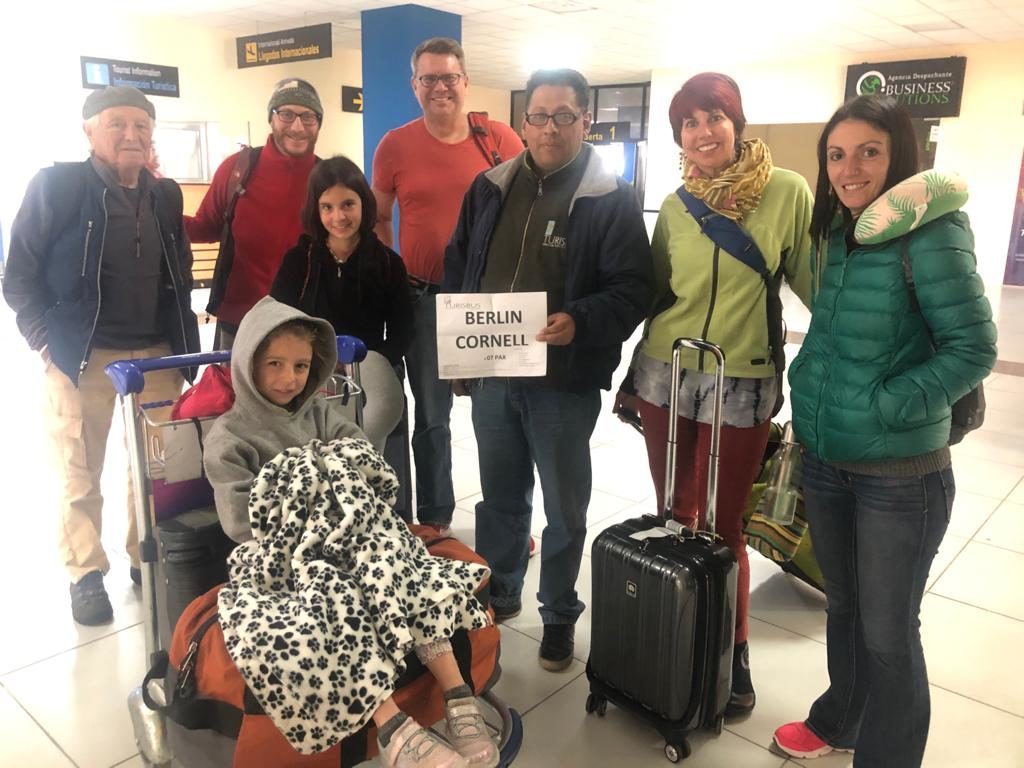
Upon landing, Tony and I were among the first to get through immigration, so we waited at baggage claim for the rest of the gang. Ian finally showed up to tell us that poor little Berlin was the first casualty of the altitude. At 13,323 feet (4,061 meters) El Alto International Airport is the highest international airport in the world. Officials had recognized Berlin’s pallid complexion and whisked her off for a dose of oxygen.

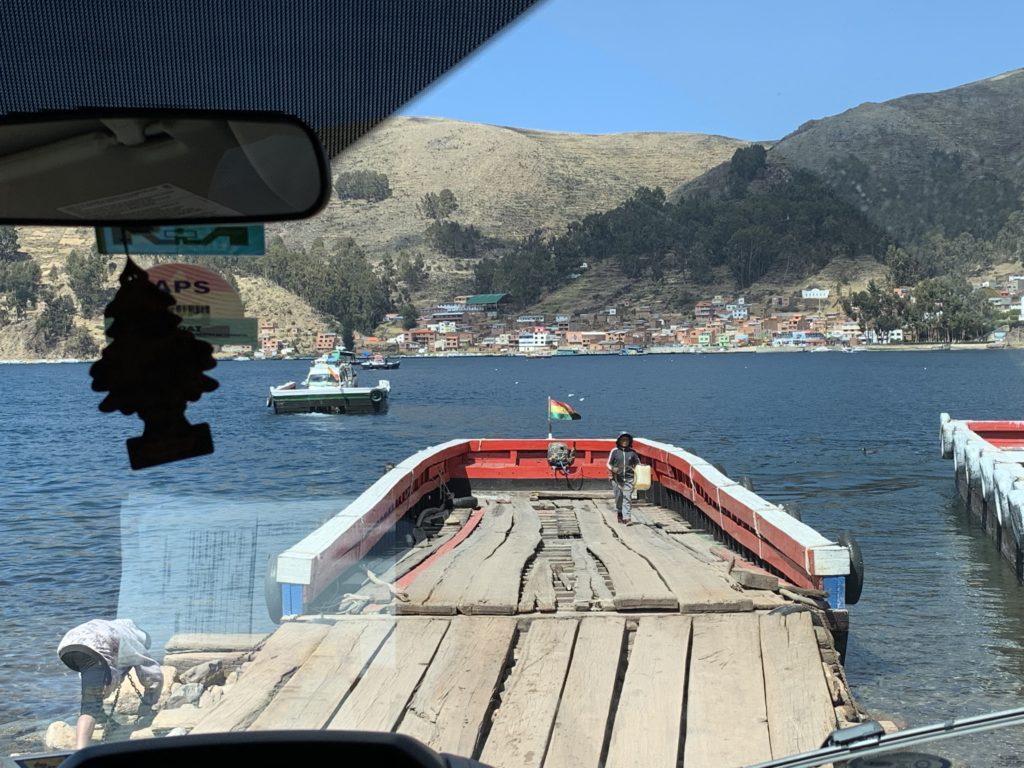
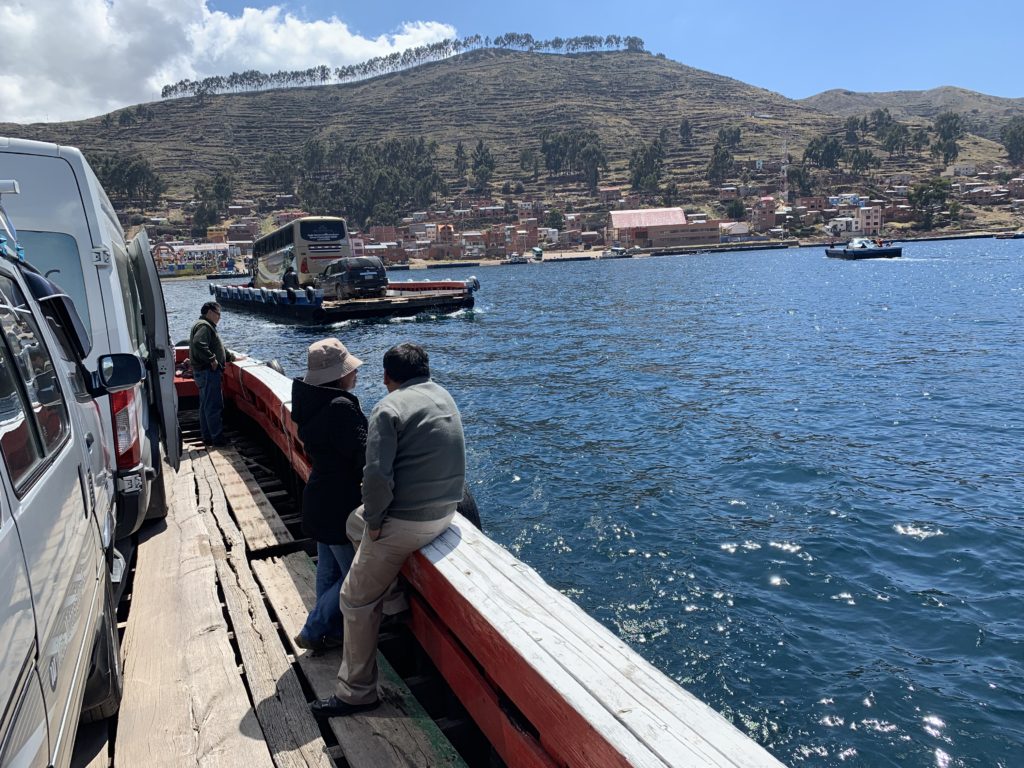
Soon, we found our driver and crowded into the van for a 3.5-hour journey to Copacabana, a touristy hamlet on the shores of Lake Titicaca. The drive included some interesting moments, such as this little makeshift ferry across the narrow Strait of Tiquina.

Waiting for the ferry.
Driving on to the “ferry.”
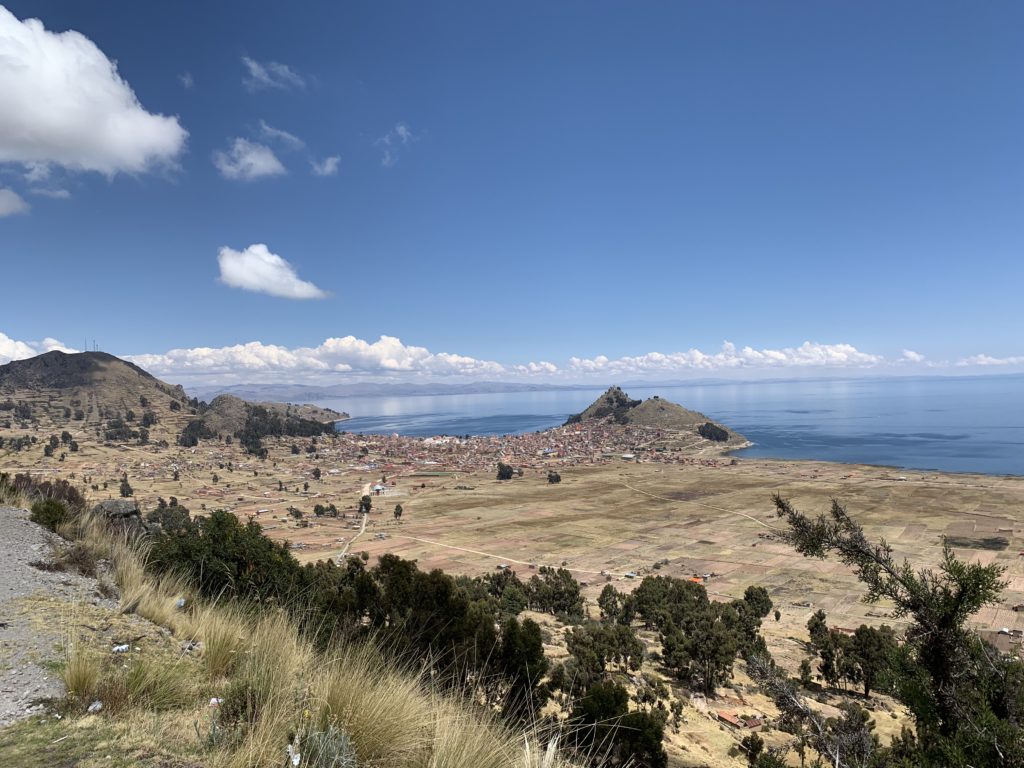
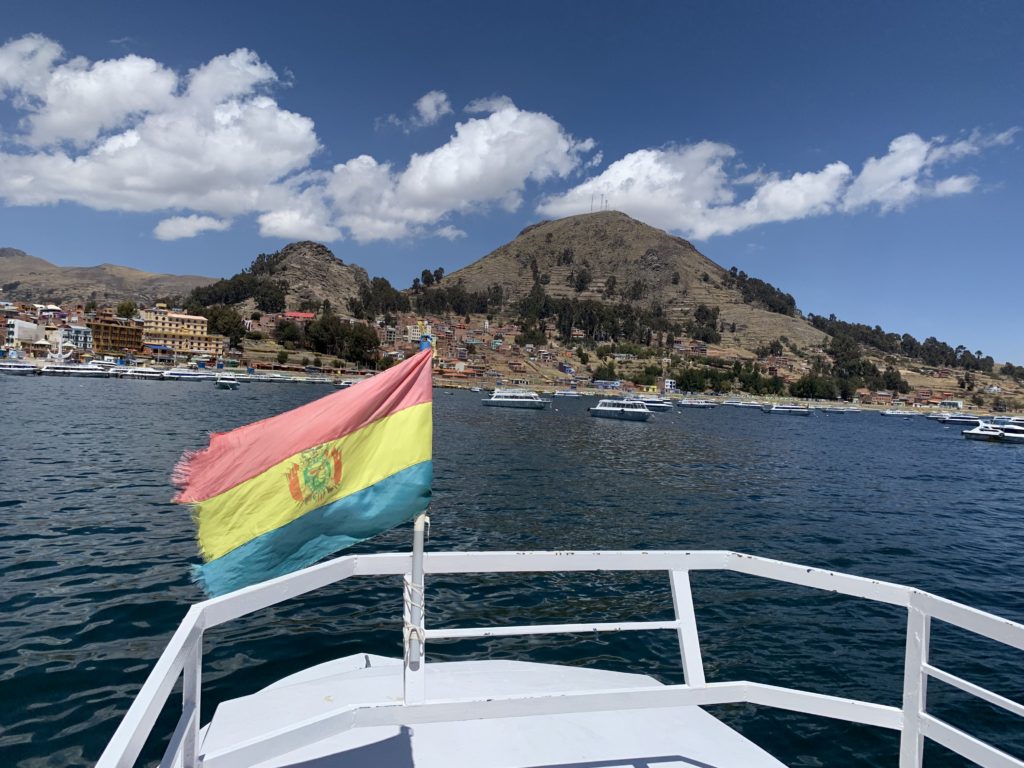
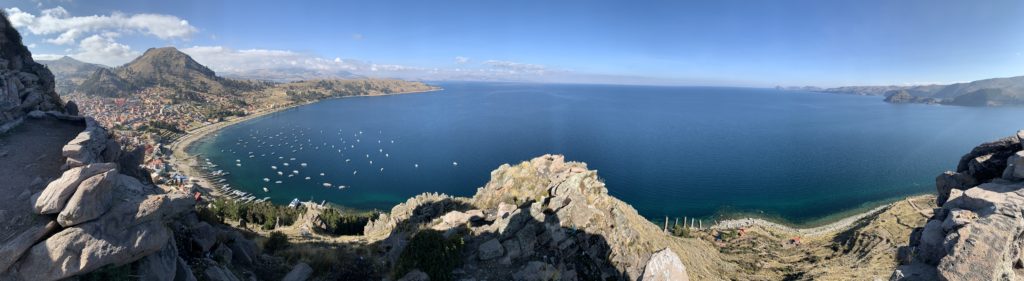
First view of Copacabana.

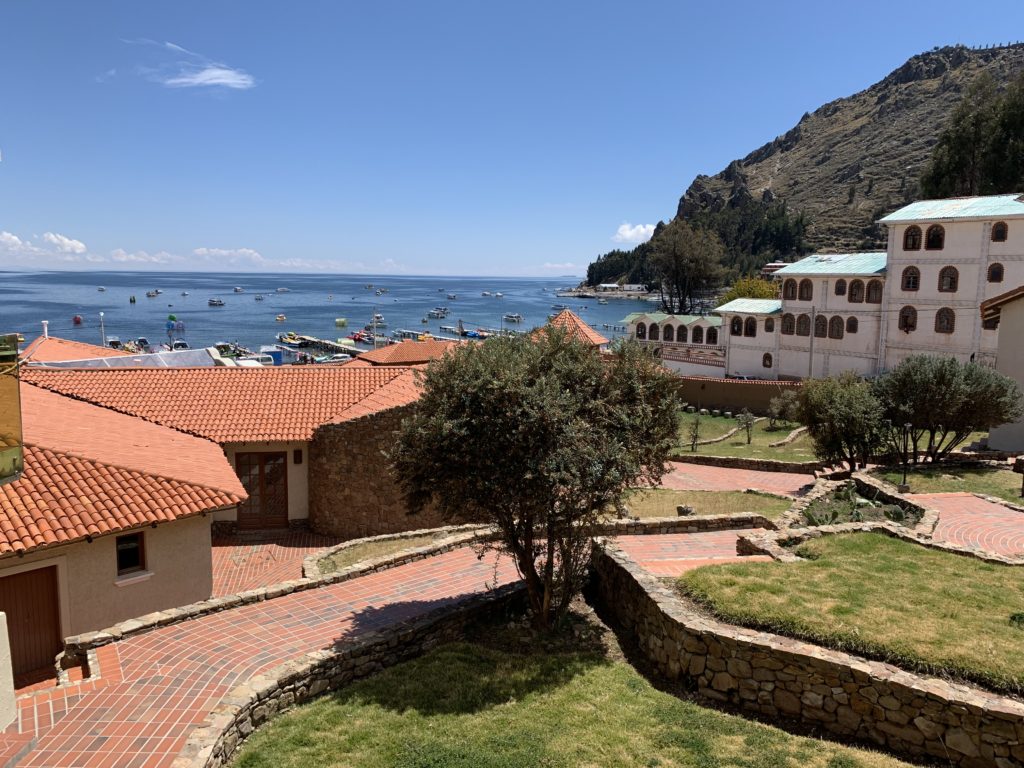
We checked in to Hotel Rosario and lounged around, feeling lazy and sluggish in the thin air. Eventually, we wandered around town while Ian took the girls to the lake to roll around on the water in a big inflatable hamster ball.

The view from our hotel room.
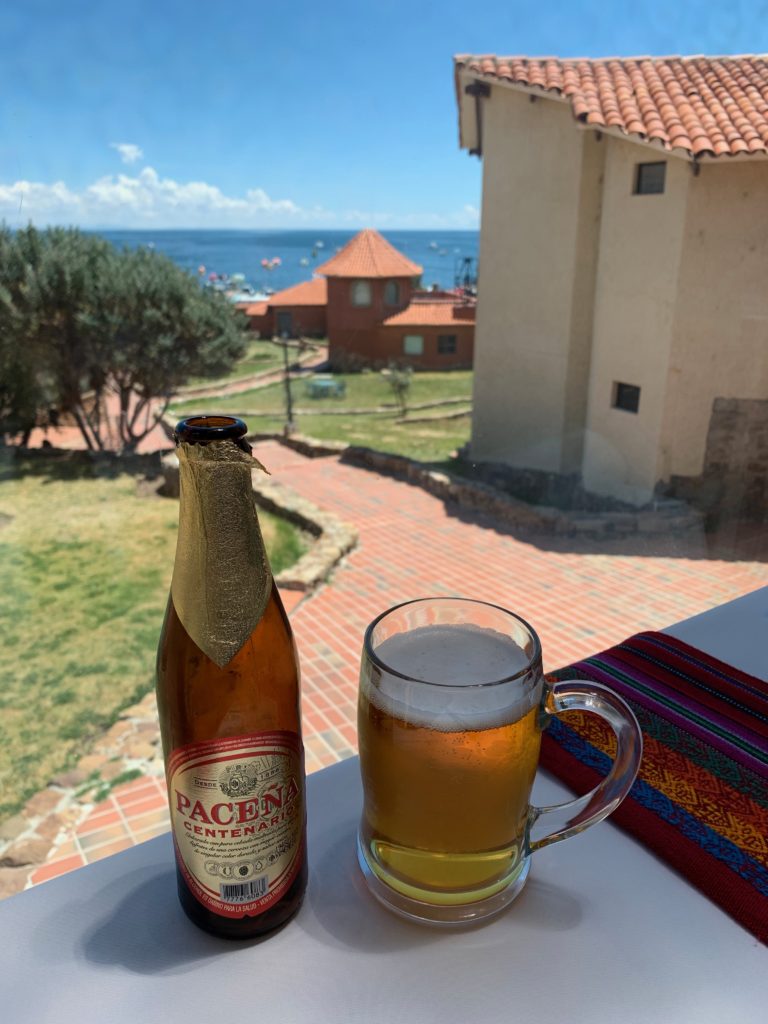
The local beer, usually served warmish.
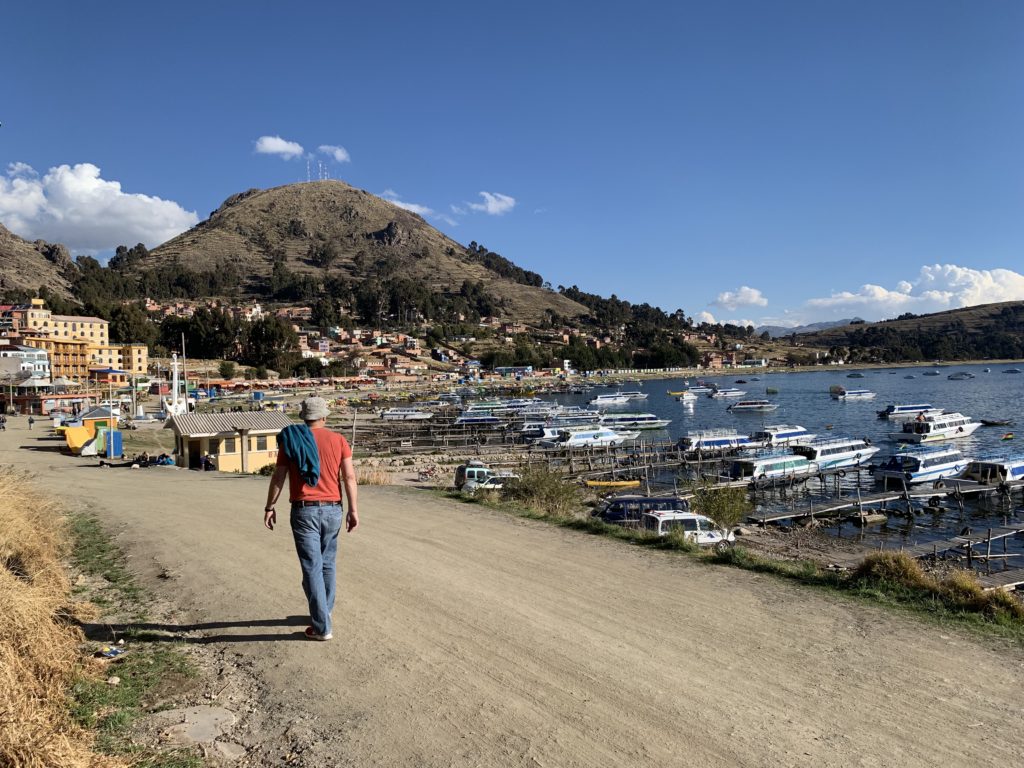
Walking along the waterfront.

Later, we met up for dinner, indecisively checking out the myriad backpacker cafés and dodgy beer bars. Stella pointed to a Thai restaurant, noting that it was listed among the top 10 restaurants of Copacabana on TripAdvisor. “Really, we’re going to get Thai food in Bolivia?” Ian mocked. “This seems like a bad idea.” There was no real ambiance; there was only one guy working so service was super slow; and they were playing a gory nature show on a big screen TV. After about 15 minutes of watching a snake stalk a mouse, we finally witnessed the kill. I asked the waiter to change the channel after the mouse was ripped into bloody chunks. As we were the only ones in the restaurant by then, he put on the old Pink Panther cartoons, which pleased the girls. Our food was shockingly delicious. I got a tofu green curry, which was flavorful and spicy. Living in Chile, we had forgotten what spicy food tastes like. Everyone loved their meals. Berlin ordered Buffalo wings, and after awhile, we realized she thought it was going to be buffalo meat. She kept saying, “When are my buffalos coming?” She was disappointed to find out they were chicken.

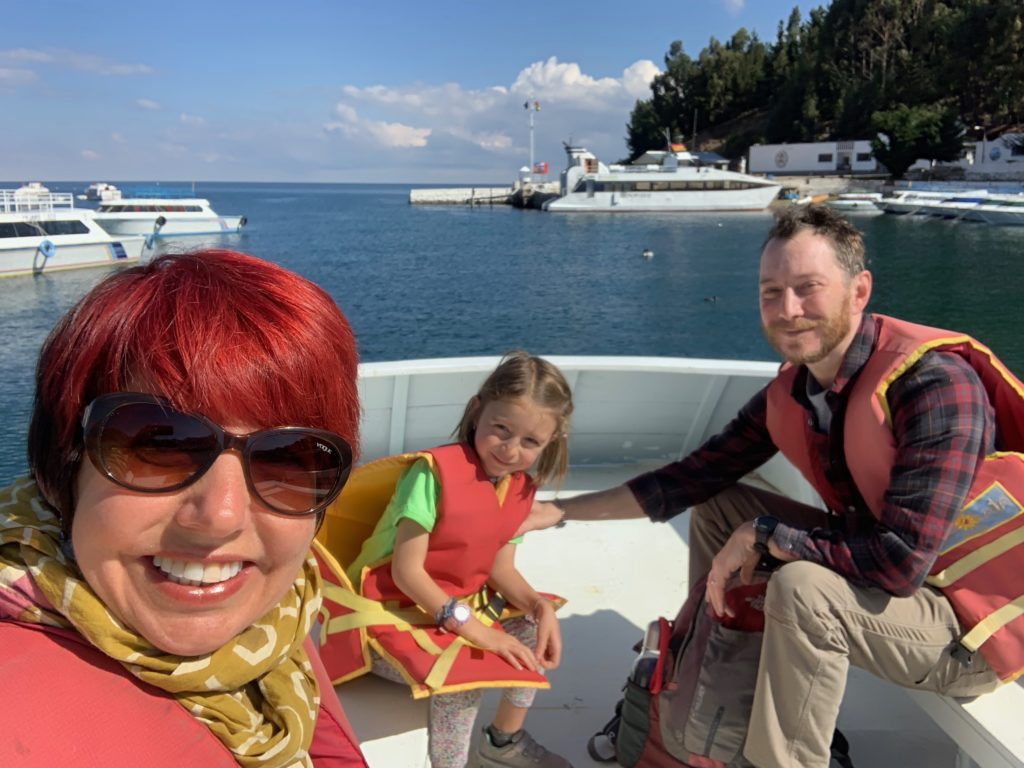
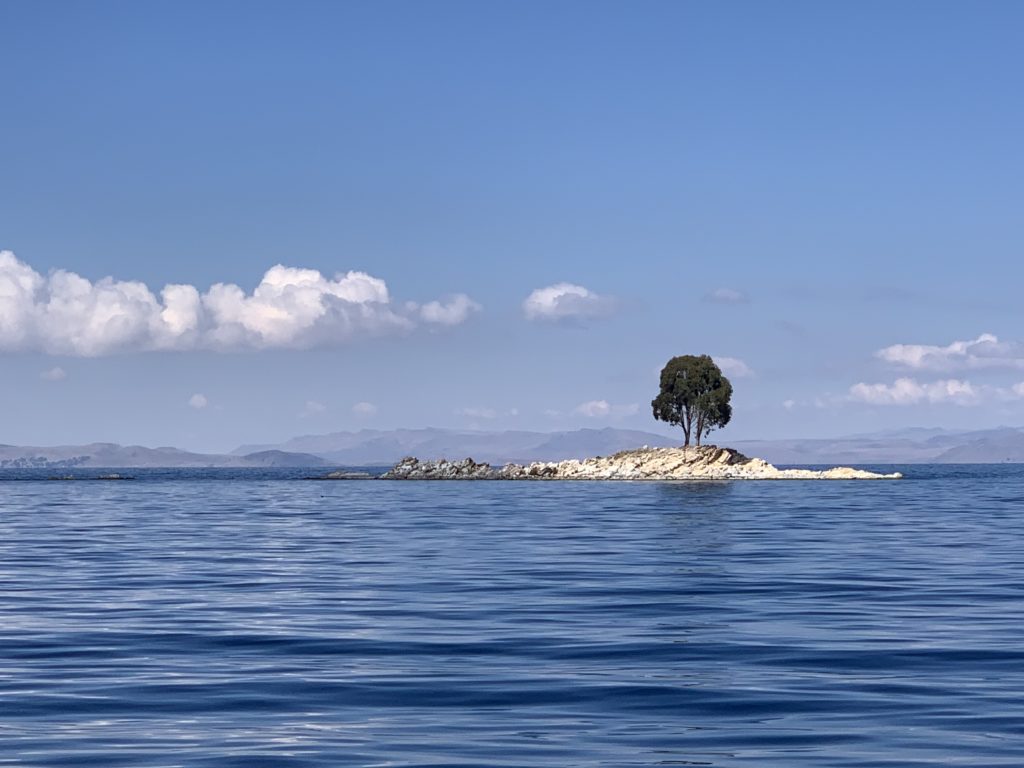
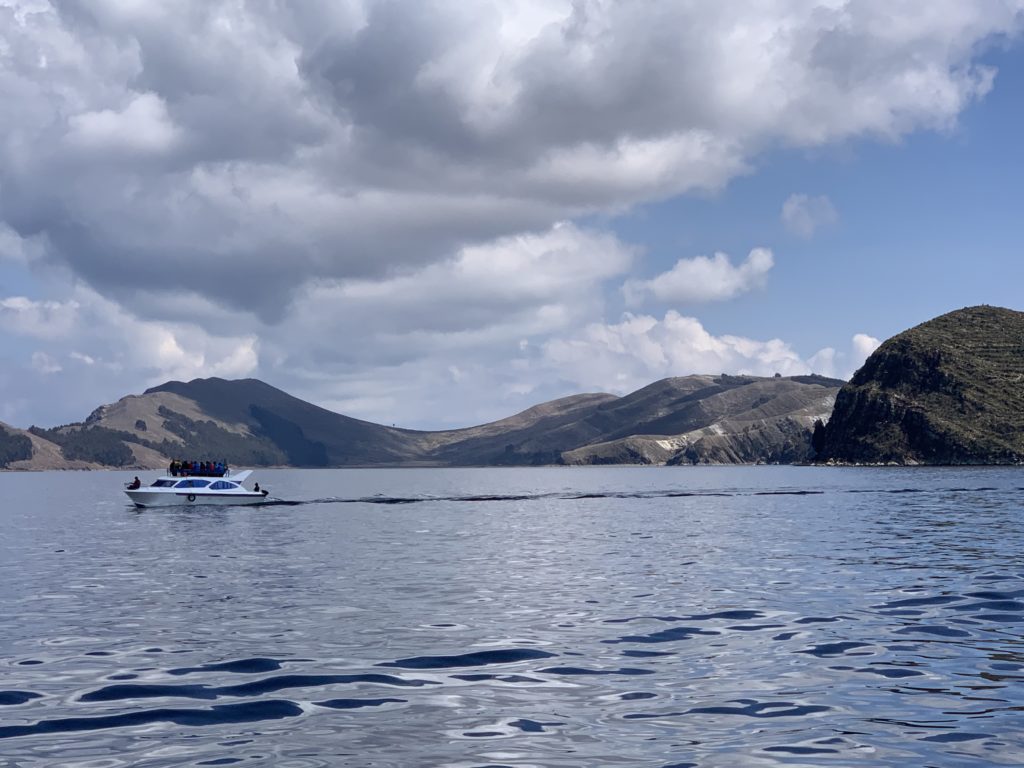
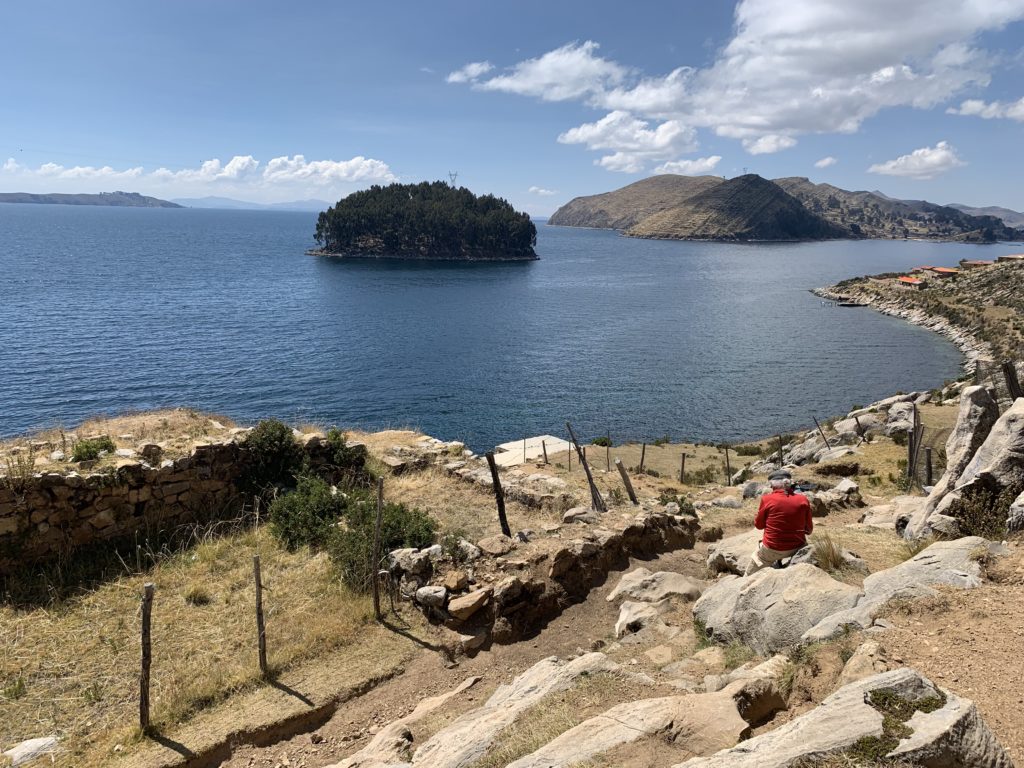
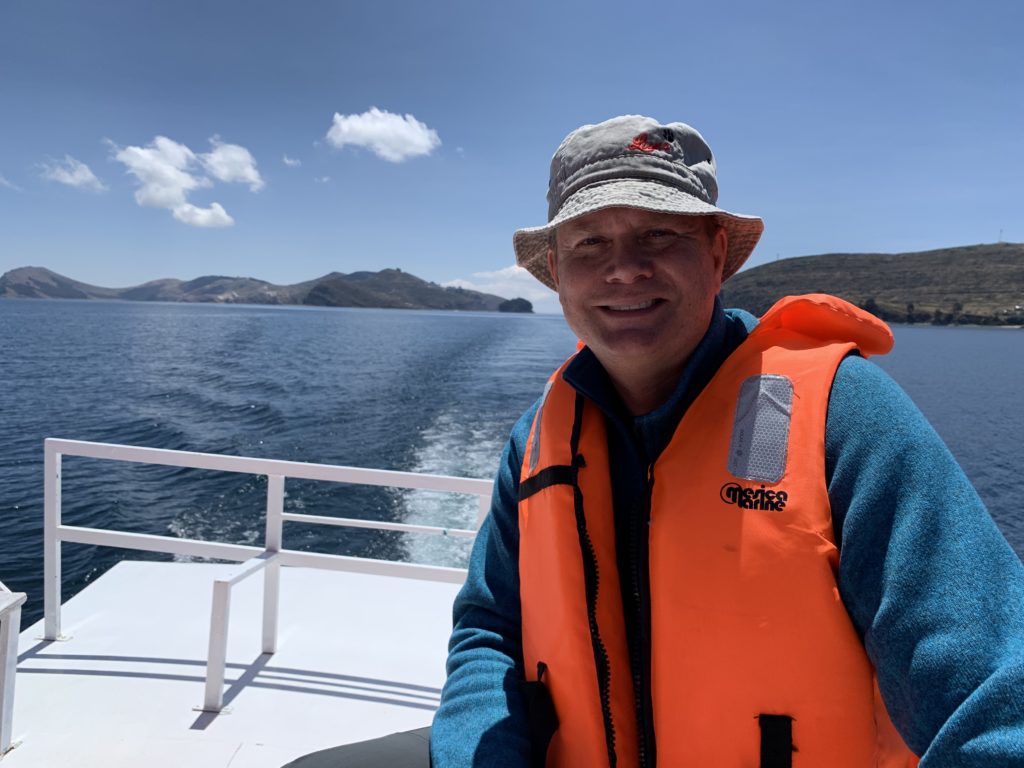
The next day, Stella and Mane hung back at the hotel for a little down time while the rest of us took a boat ride to Isla del Sol (Island of the Sun). We sat up on the rooftop of the boat under gorgeous blue skies. Looking out at the lake, we couldn’t see where it ended. It felt more like an ocean with Peru to the east and Bolivia to the west.

In fact, the highest navigable lake in the world actually was once part of an even more massive body of water that covered most of the Altiplano (the high-altitude plateau that stretches across 40,000 square miles in South America). Much of that mega-lake evaporated over time, but Lake Titicaca continues to fill with precipitation and run-off from surrounding glaciers.

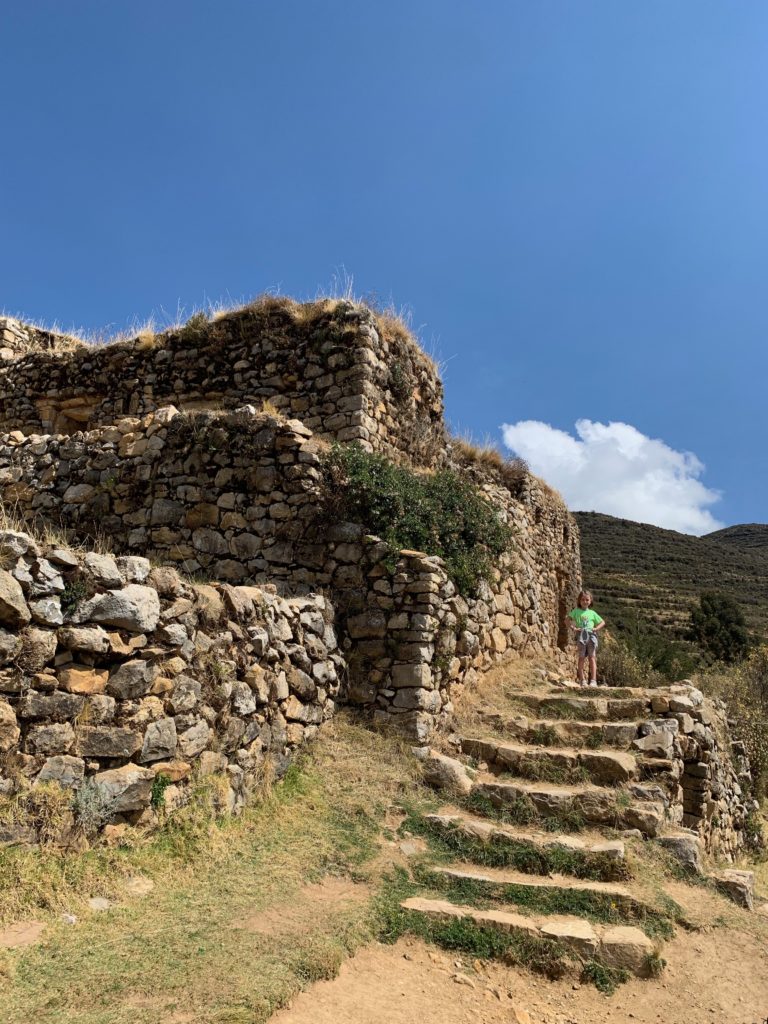
At the southern tip of Isla del Sol, our guide, Rudy, led us up a short path to a small stone building. Berlin stood impatiently at the top, hands on hips, while we panted and slowly climbed the stairs. “Come ON!” she shouted. “I could have done cartwheels all the way up this little hill!”

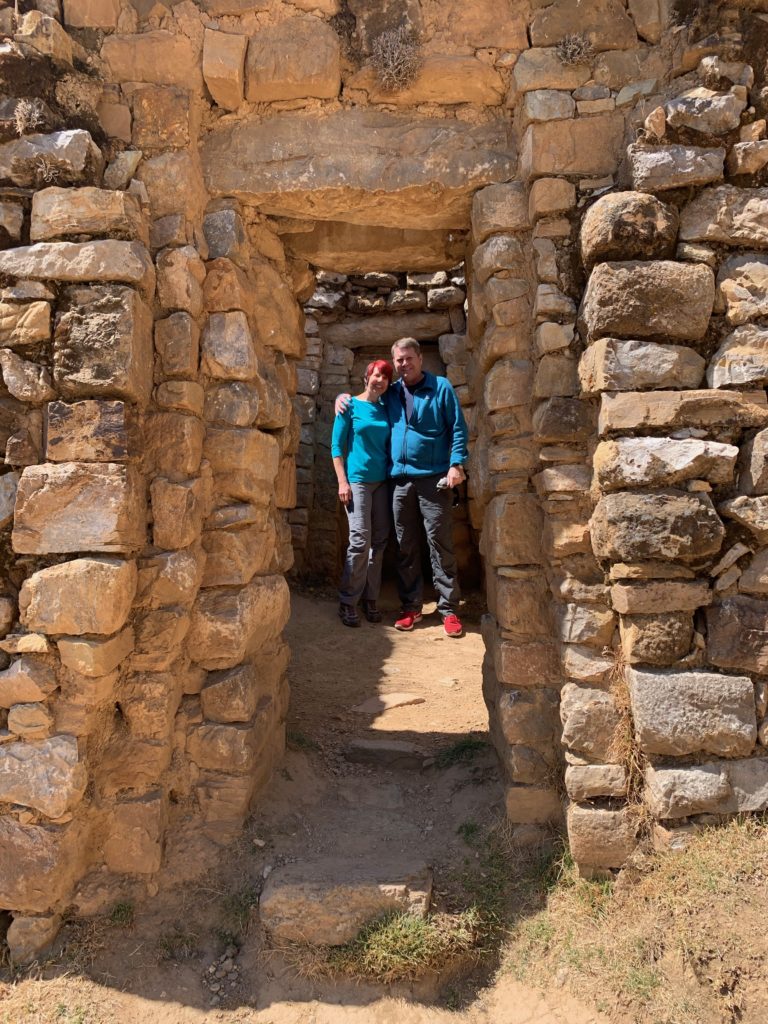
Turns out the site was Pilko Kaina (Temple of the Sun), among the best preserved Incan complexes in the region, Rudy said. It included the two-story Palacio del Inca, a temple believed to have been constructed by Incan emperor, Túpac Inca Yupanqui. Rudy told us the building would have been much grander, but Spanish invaders tore down the top layer, looking for gold. He explained the site featured typical Incan symbolism, such as trapezoidal doorways facing Isla de la Luna (Island of the Moon) and three layers of bricks representing the three levels of existence.

Many researchers refer to Lake Titicaca as the “cradle of the region’s ancient civilizations.” According to the website Ancient Origins:

There are a number of islands on Lake Titicaca, some of which play an important part in Inca mythology. The Isla del Sol (Sun Island), for instance, is believed to be the home of the Incan sun god, Inti. Additionally, this is the birth place, according to one Incan legend, of Manco Capac, the founder of the first Incan dynasty . In this legend, Manco Capac was brought up from the depths of Lake Titicaca by Inti. Manco Capac and his siblings were sent up to the earth by the sun god, and emerged from the cave of Pacaritambo (or the waters of Lake Titicaca, according to another version of the legend). Manco Capac was carrying a golden staff, and was instructed to build a Temple of the Sun on the spot where the staff sank into the earth. Using underground caves, the siblings travelled to Cusco, where they built a temple in honor of their father, Inti.

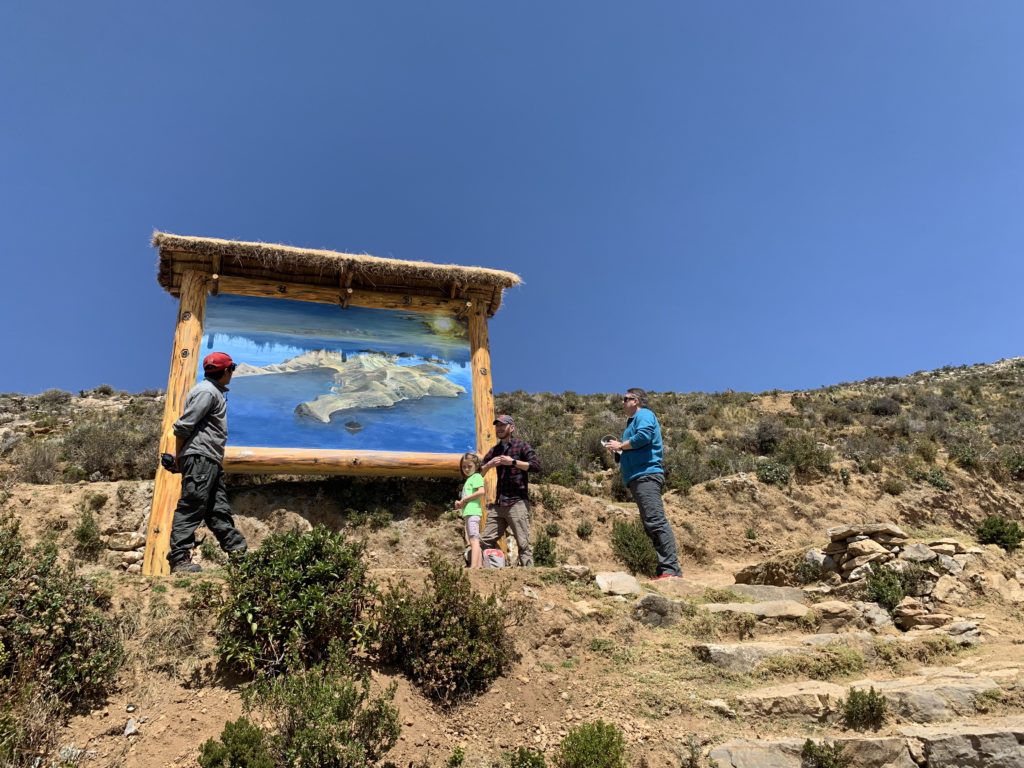
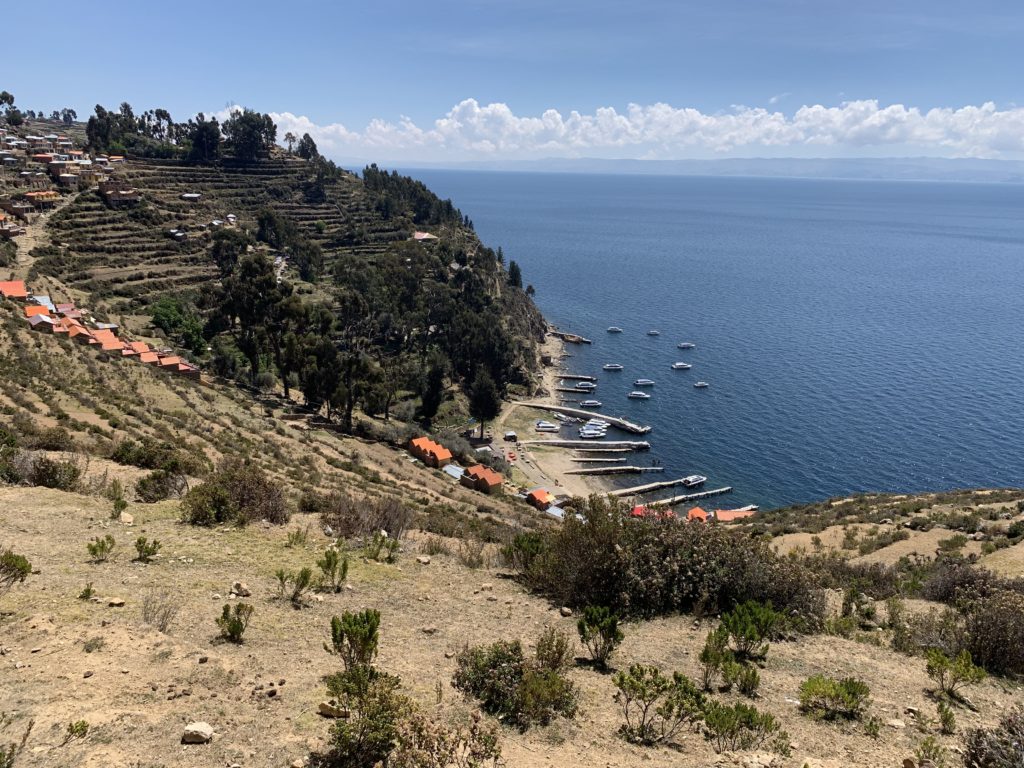
After checking out a big map of the island near the ruins, we walked another two kilometers along a path, chatting with Rudy about the area’s history and current events. He pointed out repeatedly how hard the people worked on this island with its steep terraced farms and lack of easy access to modern amenities.

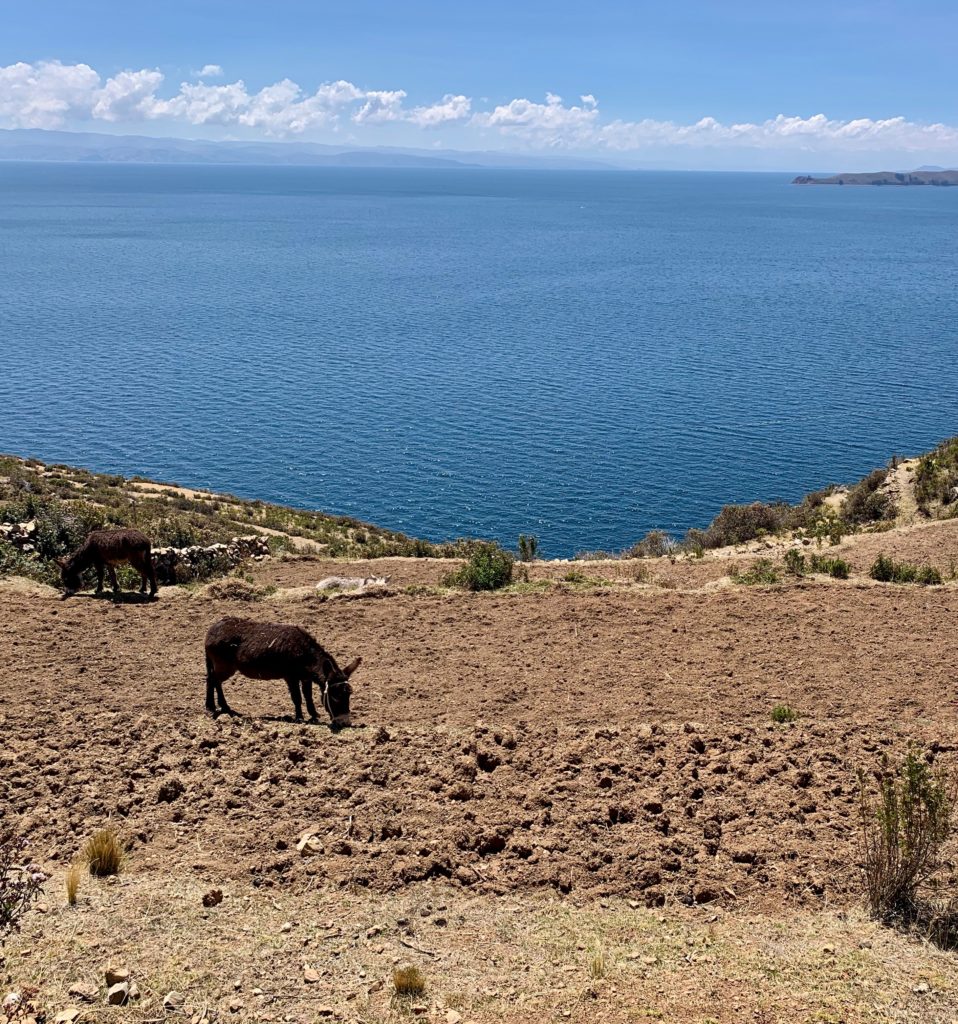
“Do you know what those are?” Rudy asked Berlin, pointing to some burros.

She nodded.

“Do you know what you call baby burros in Spanish?” he asked.

She shook her head shyly.

“Burritos!” he laughed.

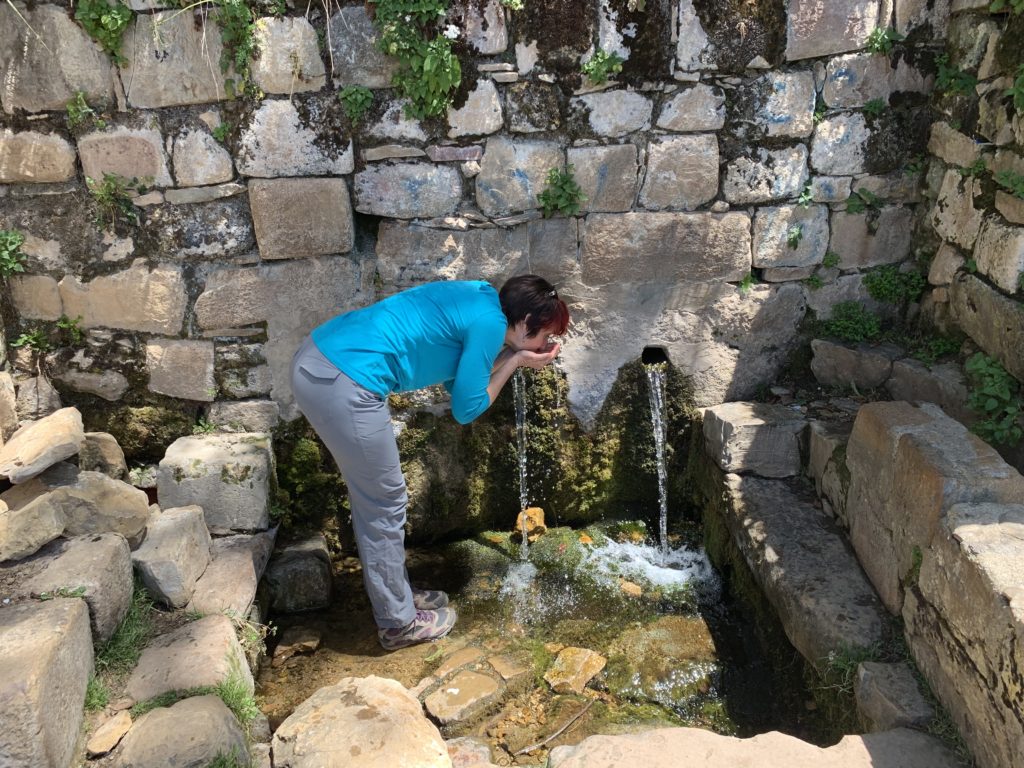
Heading down to the port, we paused to buy a few souvenirs from a local woman. Partway down the shady path, Rudy showed us the “Fountain of Youth,” an Incan fountain with three spouts. Water poured from two of the spouts and down rivulets to the lake. The third spout was blocked and the water rerouted to a big tank, where it gets pumped up to the village at the top of the hill. Rudy said nobody really knows the source of this fresh water, but apparently the Incans figured it out. He told us the spouts represented three Incan values: don’t lie, don’t steal, and don’t be lazy.

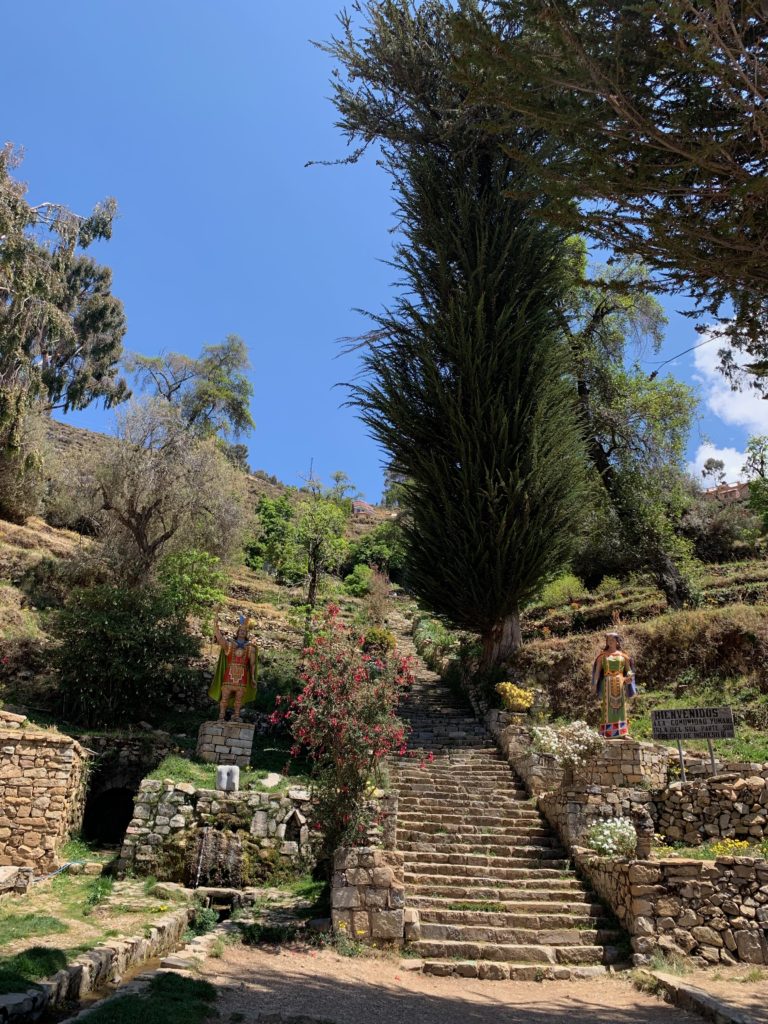
The water runs down rivulets on either side of the Escalera de Las Incas (the Incan Steps), a very steep rock staircase with about 200 steps leading down to the lake. At the bottom are statues of Manco Capac and Mama Ocllo, the legendary first Incan people, which the website Bolivian Life calls “the Adam and Eve of the Andes.”

Stella at happy hour.
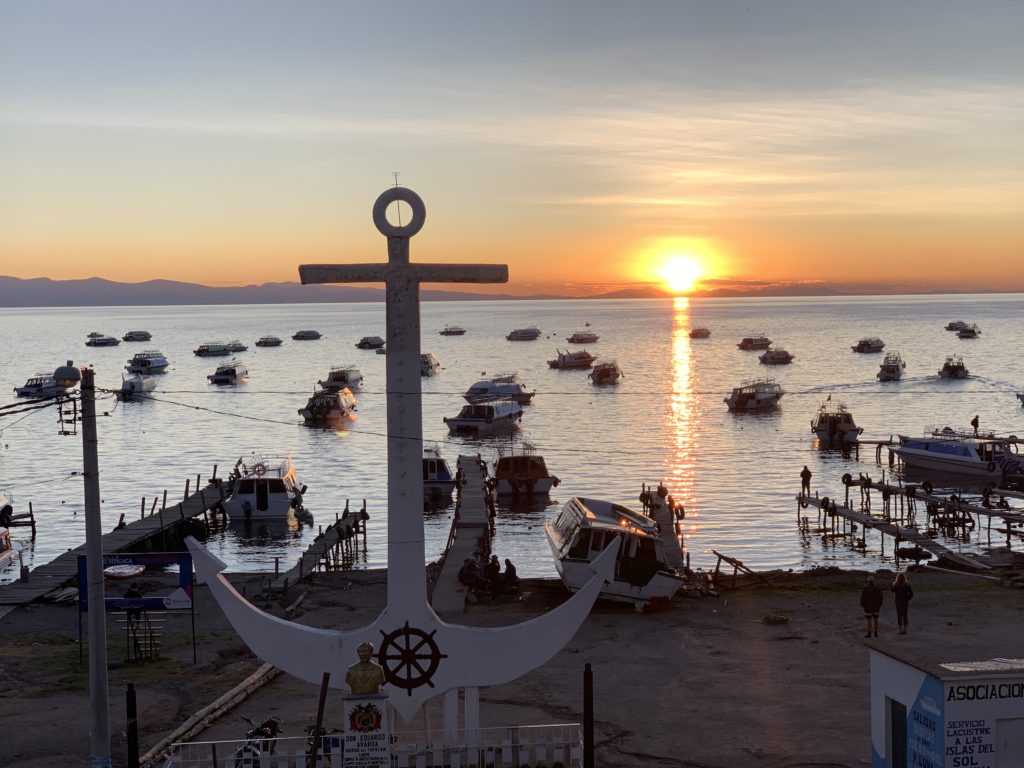
Beachfront bar sunset.

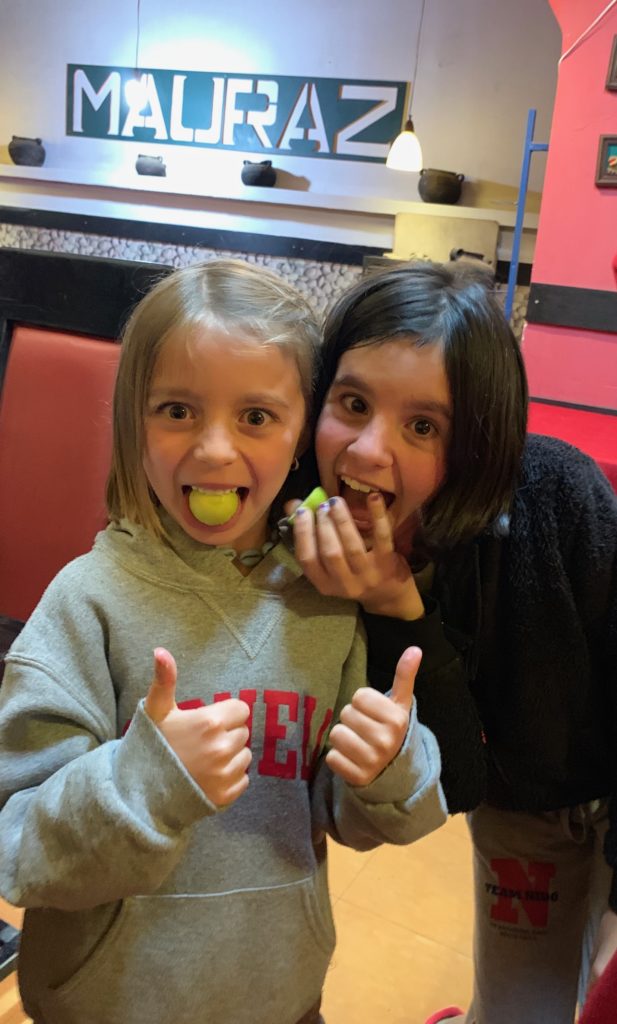
That night, we had dinner at a little family-owned joint called Maura’z. I’m still drooling over my trout with garlic sauce. Que rico! While warm beer was the norm in Bolivia, this place served it icy cold.

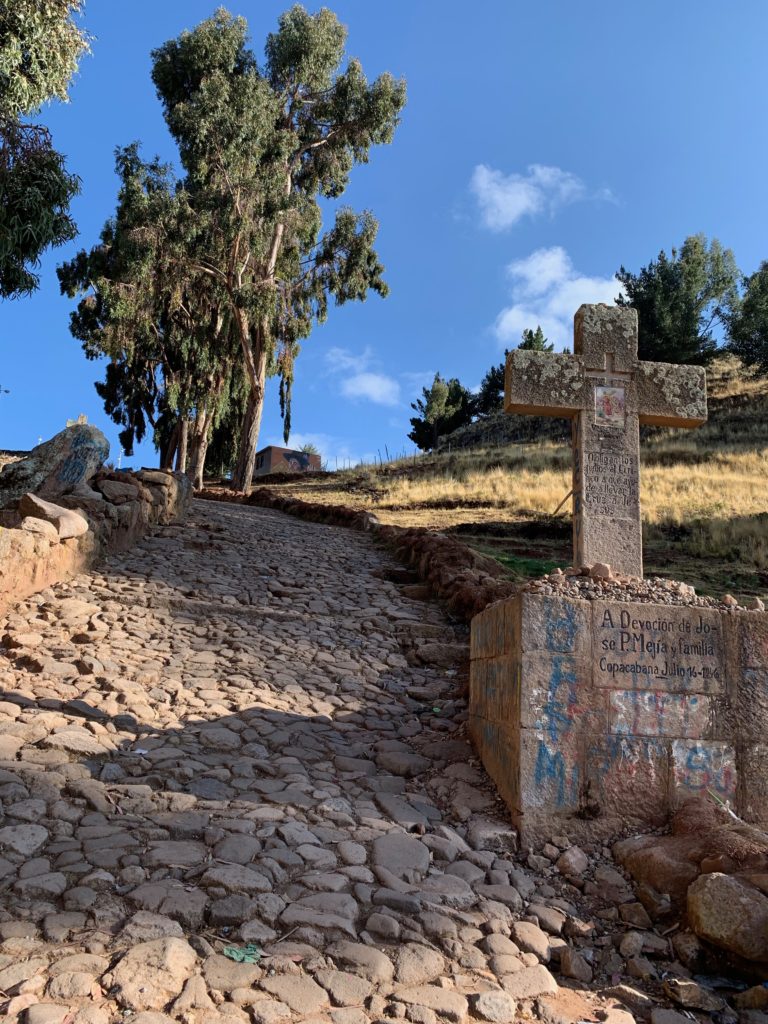
Knowing we were heading back to La Paz at 11 a.m. the next morning, Tony and I made plans to fit in one more local attraction. Despite our altitude-induced listlessness, we forced ourselves to eat an early breakfast and then asked the hotel concierge how to reach Cerro el Calvario (Calvary Hill). He gave us a map and told us it would take about an hour to hike to the top. “Even for old, fat people?” I asked. In fact, we did it in 30 minutes! It was very steep at parts, and we had to pause a lot to catch our breath. Luckily, a sweet black and white terrier came along to show us the way. He would bound up the steps and then double back to wait for us, over and over. Once we got to the top, he took off, presumably to help some other pilgrims find the sacred site.

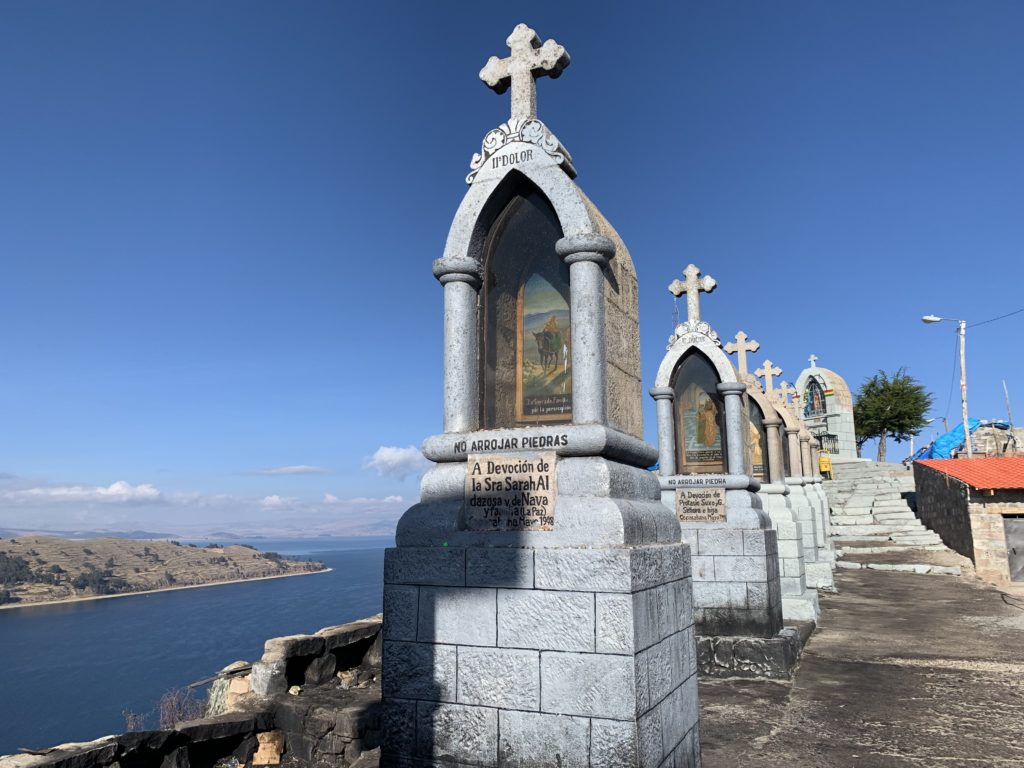
The path is lined with monuments representing the 14 Stations of the Cross, which depict events leading to Christ’s crucifixion. The top of the hill features a row of memorials, ostensibly those of big donors, mostly dating from the 1940s.

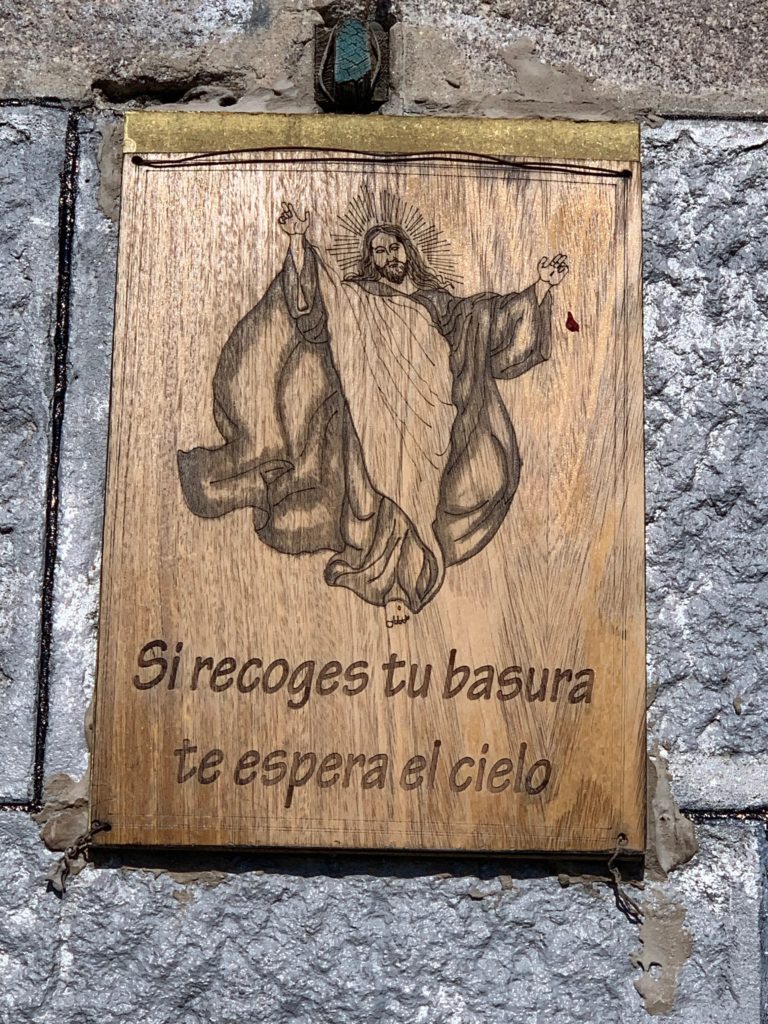
This sign cracked me up: If you pick up your garbage, heaven awaits you.

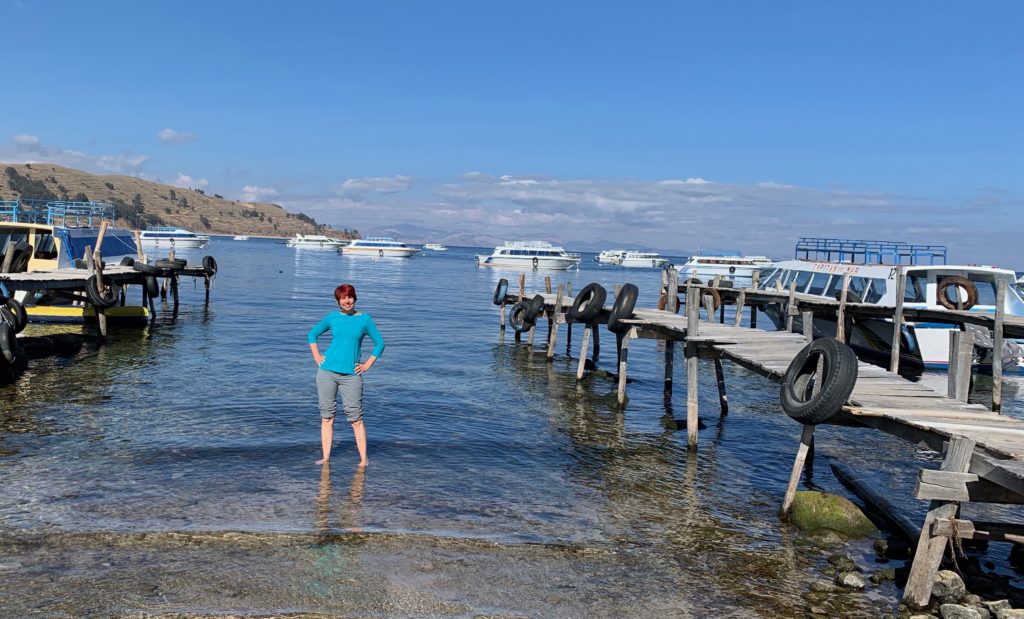
We lingered and enjoyed the views for a few minutes. Unfortunately, the area featured quite a bit of trash and graffiti. I’m guessing it’s a backpacker party destination. Too bad. While I was staring down at the lake, I realized I hadn’t actually touched the water. I almost left this place without dipping my toes in Lake Titicaca! We walked down to the beach, where I kicked off my shoes and socks and waded into the icy cold water. So worth it.