Summer flashback: weekend in Virginia

The first weekend of my visa run to Washington D.C., I caught the train to Williamsburg, VA, to hang out with a special friend and her family. Cami and I go way back. High school besties in Germany and college roommates in Kansas, we’ve maintained a close relationship ever since. She’s like the fourth Dickinson sister, and I claim a spot in her family, too. Failing at my traditional godmother duties, I was promoted to “fairy godmother” and more recently “zombie godmother,” and I love Cami’s two kids to the moon and back.

Here we are at church, where Quinn sang in the choir, Denison received a Bible and Cami got recognized for teaching Sunday School. Despite Cami’s dad’s prediction, lighting did not strike when I walked through the door. The lovely little Abingdon Episcopal Church was built in 1650 on land donated by George Washington’s grandfather.

At Busch Gardens for Quinn’s birthday, Cami and I tried to take a selfie with our KU Jayhawk. It took several attempts.

At the train station the next day, Quinn gave us a selfie lesson. She was clearly an expert.


I wish we could have spent more time together, but I’ll take what I can get.

Summer Flashback: Tony visits our Tibetan “godchild”

In 2012, I visited the Tibetan Children’s Village in Dharamsala and felt compelled to sponsor a student. We were assigned a little girl named Tenzin Nordon, who lives at another TCV campus in southern India.
Tenzin

Tenzin writes to us a few times a year, enclosing cute drawings and notes written in marker. Her letters used to start with “Dear Sponsor,” but lately she’s switched to “Dear Godmother,” which feels more than a bit misguided.

Tony and I talked for a year about visiting Tenzin, so we finally scheduled a long weekend get-away to Bylakuppe, home to thousands of exiled Tibetans in the Indian state of Karnataka. Our trip was scheduled for mid-May. We shopped for gifts, picking up a rubik’s cube, a couple board games, an art project and some clothes. Tony was remarkably savvy at shopping for a 12-year-old girl.

Unfortunately, I was sent to Washington D.C. that weekend to sort out my Indian work visa, so Tony had to make the trip alone. I’ll let Tony tell the story.

Me: Describe the journey.
Tony: We landed in Bangalore and a driver met me for a 7-hour ride to Kushalnagar (the nearest town to the TCV school). When I landed, I felt like I was in the desert. I looked around and things were pretty darn barren. The air was cleaner than in Delhi, but there was a quietness, a lifelessness. But by the time we got to Kushalnagar, I have never in life seen such fertile land.

There were fruit stands everywhere. There was no poverty like you see in Delhi. It seemed everyone had food and everyone was being used productively; everyone had a job. There were truckloads of mangoes everywhere, and everywhere you looked there were giant coffee plantations and bananas growing. Stall after stall of produce. There were mango stands with five or six or seven different kinds of mangoes, stacked up in pyramids.

I just kept thinking the wrong person had made it to this beautiful paradise; I knew how much you would love it. (Sharon’s comment: Mangoes are my favorite fruit, and Tony doesn’t even LIKE them! So unfair.) The cows were really healthy looking. Fat and clean and well fed. The women weren’t wearing western clothes. They were wearing Indian clothes and they were smiling and happy, and because the area was so busy, they were all carrying things on their heads. It was a long drive, but after about four hours, I saw a Kentucky Fried Chicken and Costa Coffee, so I had a KFC sandwich and French fries. It was out in the middle of nowhere. You couldn’t just drive past it.

I stayed at this amazing hotel – Amanvana Luxury Boutique Spa Resort – that had an Alice in Wonderland theme in every room. Every time you had tea or went to the spa, there were these little allusions to Through the Looking Glass. There were murals on the walls, and they left copies of the books around. It was me and groups of Indian women on holiday. They gave me a big Indian breakfast, and we had a Indian buffet at night. It was pretty darn spicy.

Me: So I booked a day of sight-seeing for us. Did you take advantage of it?
Tony: I went to some coffee plantations in the morning. They were huge, owned by Nestle. It was a holiday, so there wasn’t much going on. My guide and I got out and walked up and down the fields. He talked to some women who were working in the fields, and he told me some facts about how much coffee they produce. But the show they give to tourists didn’t happen, and there were no English speakers.
I also went to an elephant sanctuary, and I had to take a ferry ride across a river to get there.

They walked the elephants down to the river and bathed them and they let people who were so inclined bathe the elephants and interact with them. I was actually kind of sad because they were hobbled with big heavy chains, and some of the people in charge of the elephants were young boys and they weren’t gentle or kind. They didn’t have any compassion for the animals.

Everybody was there to see the elephants, and a lot of people were looking at me, too. I enjoyed seeing the people from all over India. I got to see all different styles of dress and mannerisms, and they didn’t sound the same as people from Delhi.

Me: Then did you go to the TCV school the next day?
Tony: I had a big breakfast and packed up the little presents for Tenzin. Mr. Dorji (the sponsorship secretary) showed me all over the school – the computer center, which they were really proud of; the dormitory, where all the girls stay; the preschool classrooms.

He introduced me to a preschool teacher and he said she had been HIS teacher when he was little. He had grown up at this campus.

I got to meet several of the secretaries and they told me the history of the school. An Englishman who died recently was the first head of the school in 1981. It impressed me that someone could do something like that and it would survive long after he was gone. I thought about the countless lives he improved.

I met Tenzin, and she seemed happy and popular and curious. She was very appreciative but very very shy. I got to say hello to a few of her friends, and I watched their morning assembly. I got to hear them sing their own national anthem and the Indian one.

Me: What stuck with you after touring the school?
Tony: The kids don’t have much stuff, and they have a limited amount of space. They have a few clothes and a few little personal things. I can tell that they never had any privacy. Yet they were happy and cheerful and laughing, and everything they did have was clean and nice. It made me happy to support this institution because I could tell they were taking good emotional care of the kids.

Me: Anything else?
Tony: I was just sad I didn’t have you there to share it with. That’s the emotion that pervaded the whole thing because I knew how much you would have enjoyed it.

Getting over it

Sometimes the only way I can remember what has happened in my life is to read over past posts on this blog. Using that strategy, it would appear I entered the witness protection program in March as I have written nothing since then. In fact, I’ve just been in a funk. I don’t think I realized how much of a funk it was until now. The 2013-14 school year brought a number of changes and surprises. Nothing tragic. But stressful nonetheless. Ever transient, many international friends and colleagues moved on, leaving a void and the inevitable melancholy that comes with realizing you didn’t know how good it was till it was gone. As I awaited a change in my visa status, I was limited to domestic travel in India, and although I hadn’t planned a vacation abroad, the restriction felt like a noose around my neck. Resentment and general crankiness washed over me. Once in Michigan for our summer break, we looked forward to quickly wrapping up our lakehouse renovation. In fact, we had arranged for the painters to complete the interior, exterior and deck restoration before we even left India. Mother Nature refused to cooperate, however, dumping week after week of rain and delaying the painting (which delayed the carpeting and the furniture delivery and the decorating) until the end of June. In addition, we had to cram a year’s worth of home maintenance into two months, including plumbing repairs, installation of a new water heater, rebuilding a broken fence, troubleshooting the sprinkler system, and so on. We spent about five weeks tethered to the unfinished house, waiting to find out whether and when contractors would arrive. By the time we felt relaxed enough to sit on the deck, beer in hand, contractor-free, only two weeks remained before our return flight to Delhi. Writing this, I realize how silly it all sounds. Back when I was a journalist, I would have scoffed to hear such whining. Yet now I know. International teaching – maybe ALL teaching (you tell me, Stateside teachers) – exhausts every ounce of your mental and physical energy. By the end of the school year, you feel fulfilled – but depleted. Rather than releasing me from the school year’s stress, our summer responsibilities tightened the knots in my shoulders. I yearned to spend mindless hours biking on the woodsy trails, taking yoga classes, shopping, paddling in the lake with my nephews, hanging out with my parents, taking day trips to explore our new home state, reading in the shade of a deck umbrella, catching up with old friends, and otherwise finding my balance. Finally, our annual trip to Stratford, Ontario, approached. “We can’t go!” I moaned. “I’m too stressed out. I just want to sit and do nothing!” But we went. And weirdly, as we drove over the Port Huron Bridge, we both felt our anxiety lift. Oh Canada! Just getting away from our house for a few days helped us regain perspective. Laughing with special friends from our Shanghai days, seeing a few plays at the Shakespeare Festival, chatting with the bed and breakfast owners, and walking, walking, walking. Finally, we could breathe again. Back in Michigan, we ate dinner outside every night. I played and cuddled with my nephews as much as possible. I ate pie and homemade ice-cream and fed the ducks and entertained a few visitors. Then it was time to pack up, store the paddleboat, roll up the carpets and head to the airport. So here I am, in New Delhi, ready to face another school year with a happy heart.

Goan fisherman steal the show on ‘dolphin trip’

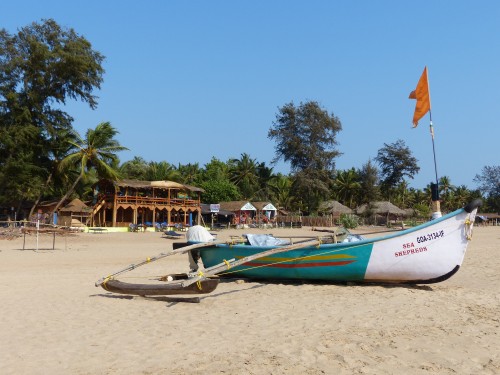
Early Friday morning, a longboat arrived at the beach in front of our bungalow. Similar to a large canoe, it featured an outboard motor and a wooden outrigger cobbled together with yellow rope. Marianna and I waded through the water to climb into the boat, and sat while the older fisherman and his young assistant remained in the water waiting for a break in the waves before pushing the boat back out to sea for our “dolphin trip.”

We motored to the edge of the bay, occasionally pausing to scan the sea for dolphins. A few fins surfaced. An arched back, a flip of a tail. Maybe five dolphins in all, including a baby. After the excitement of our dolphin encounter in the Maldives last year, this was rather anticlimactic.

Our captain maneuvered his little craft toward a larger boat, where men were hauling in a huge red net jumping with sardines. About ten skinny workers clad in underpants and tank tops clustered at the stern, pulling the net hand-over-hand, their upper bodies bowing jerkily up and down, brown legs tensing with the effort. They sang as they worked, a repetitive chorus in response to a leader’s verse. Our boatmen chuckled, and the younger man noted how singing makes work easier. I almost asked what the song meant, but I worried the lyrics might be embarrassing to translate. Instead, I asked how long it would take to finish the job. About one and a half hours, he replied.

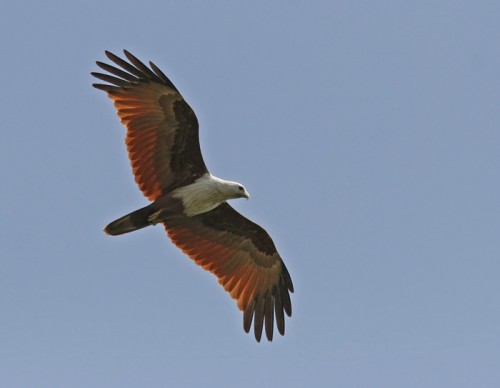
As the song continued, empty net piled at the fishermen’s feet and captive fish were forced into the remaining space at the sea’s surface. Trapped, the sardines leapt and splashed, some catapulting out of the net and back to freedom, some flipping into the claws of swooping brahminy kites. The brown-and-white birds circled the boat, stealing frantic fish – both at sea level and in the air. Near collisions and threatening shrieks resulted in surrender, fish falling from loosened claws, snatched from the sky by the aggressor.

I hadn’t brought my camera on our brief excursion, but the image would have made a brilliant photo. The paint-peeling fishing boat, bobbing in a jade sea, dark bodies bent over crimson nets, small orange buoys evenly spaced along the net’s edge floating amorphously around the boat, a blazing neon sun rising over the forested hills that jut up from the beach, and birds of prey suspended like a mobile overhead.

Here’s a photo of a brahminy kite taken by Johan Stenlund and posted on his website, Birds in India/Goa. Now imagine scores of them circling the fishing boat!
brahminy kite

Here’s a photo of a fishing boat at our beach, similar to the one that took us on our “dolphin trip.”
P1040254

Goa-geous spring break!

After countless vacations at the various baby-powder beaches of Thailand, I have developed a serious case of Beach Snobitis. I have high expectations for cleanliness of sand and sea, pleasant water temperatures, spectacular panoramas, and local flavor. I also have little tolerance for drunken backpackers, cigarette butts, and loud late-night music. Stranded in India until certain visa issues get resolved, I grudgingly agreed to Spring Break on the beach in Goa with my friend Marianna. Generally an optimist, I was, nevertheless, prepared for disappointment.

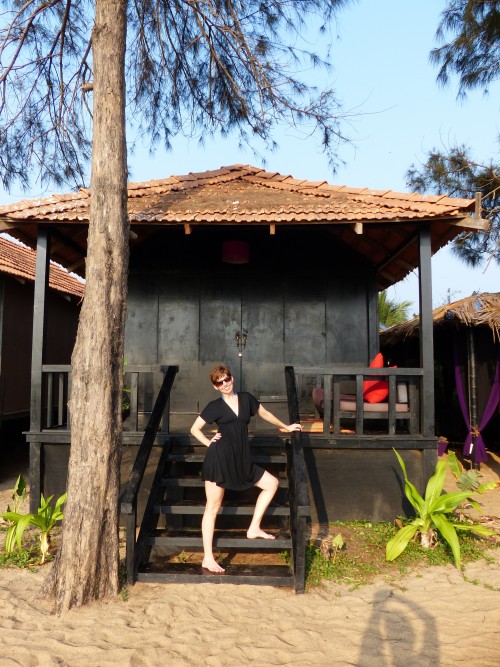
We arrived Tuesday afternoon at H2O Agonda for five nights in a beachfront bungalow. Realizing our hut abutted the thatch-roofed restaurant, I immediately protested. Most beach hotels cater to the party crowd, and I am too old for that. Insomnia is my constant companion; I don’t need help from the hotel bar. Unfortunately, no other bungalows were available, so we moved in to the space, which is equally split between a bedroom and an open-air bathroom.

I’ll spare you the suspense: This place is wonderful! The loudest sound is the crashing surf. Aside from an occasional cow patty, the sandy beach is clean and mostly litter-free. At one end, boulders rise up in clusters, begging to be climbed. I splashed into the warm sea this morning to find turbulent water and powerful breakers, perfect for body surfing. Eventually worn out, I sat at the edge of the tide, drizzling wet sand onto my legs and letting the waves wash over me.

I guess I can handle this for a few more days.
H2O Agonda

Sari School wraps up my birthday

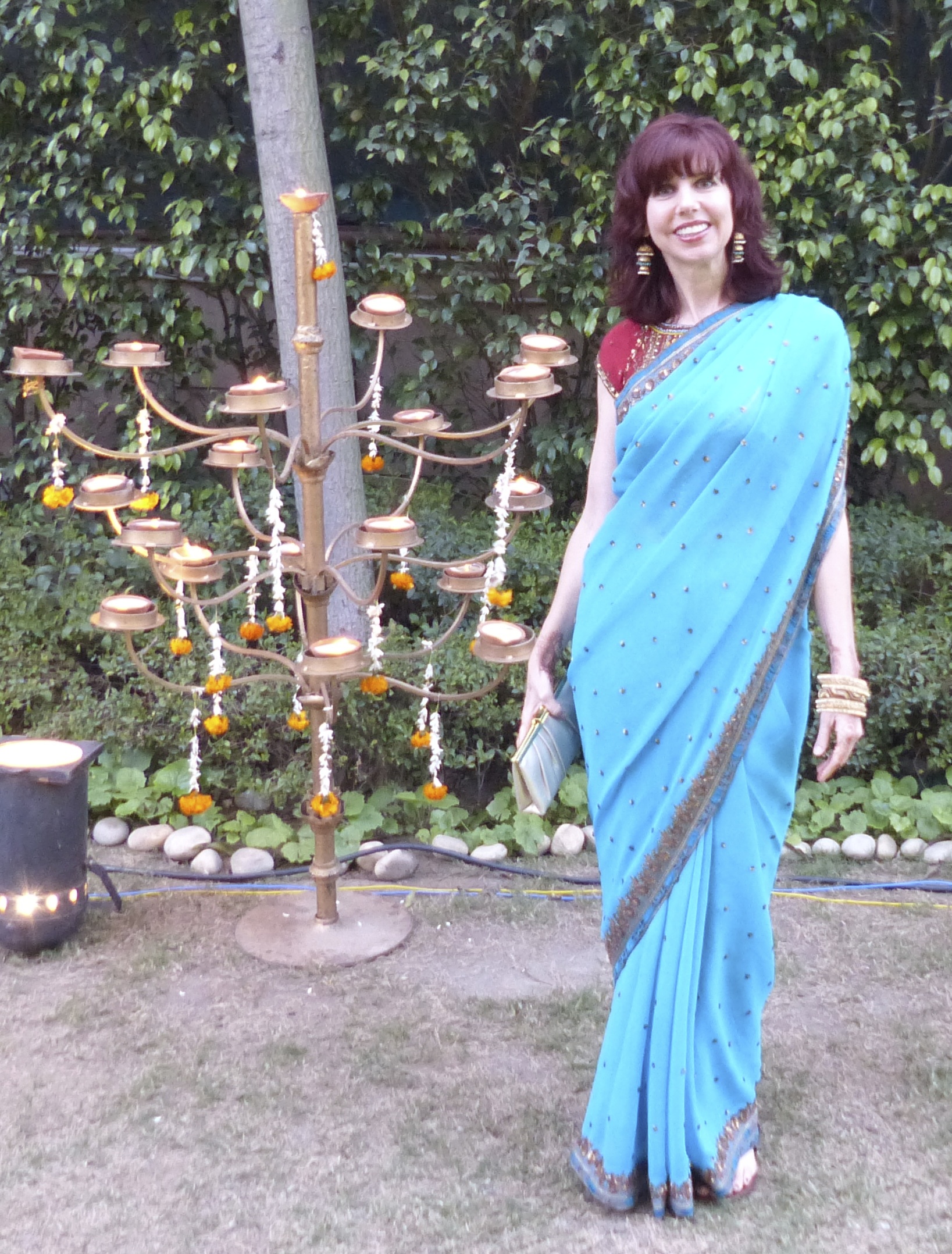
In my closet here in New Delhi, I have a stunning lehenga with a long full skirt of gold and a low-back fitted top heavy with beads. The sheer saffron dupatta adds an extra touch of glamour. When elegant occasions (or fabulous photo opps with friends) arise, it’s my go-to garment. Other ladies opt for the sari, but my one experience draped in six yards of slippery chiffon filled me with anxiety. Sure, several large safety pins held it securely in place, but I spent the evening worried I or someone else would step on the hem and bring the whole mess down around my ankles.

Sari stress.
P1000987

The thing is, my lehenga is almost too fabulous. It’s actually a tad over the top. I feel a tiny competitive urge to understand the sari and its appeal to Indian ladies. Women from all walks of life wear it effortlessly – riding sidesaddle on the back of a motorcycle, swishing through a crowded cocktail party, balancing a basket of bricks atop their heads at a construction site, strolling arm-in-arm with friends, shopping, dancing, driving. I’ve seen young girls playing volleyball in their saris. What’s to fear?

A group of us from AES spent my birthday afternoon learning more about India’s sari tradition and experimenting with several styles. Textile scholar Rta Kapur Chishti has published several books about saris, including Saris of India: Tradition and Beyond, and her label TAANBAAN promotes the revival of hand spinning and hand weaving in India. She launched The Sari School in 2009 to promote and celebrate “the unstitched garment.”

“We have great backsides in India,” Chishti said. “We have great backsides and great busts. But we don’t reveal them. We drape them.”

With that, she kicked off her fascinating – and cheeky – presentation. Her slides took us on a tour with photos and facts about saris in most of the Indian states. The white saris of Kerala were traditionally splashed with turmeric or vermillion for a wedding, but the new bride would wash it clean again for daily use. Many Chinese artisans settled in Gujarat, explaining the heavily embroidered saris there. Madya Pradesh is known for its 9-yard sari and double-color borders. Ladies in Andara pleat their saris in the back. And so on. She explained the science behind the sari; for example, the fabric is woven more loosely in the middle and with tighter density along the borders and free ends to better stand up to wear and tear.

The choli, a short, tight blouse, is believed to be a relatively recent addition to the sari ensemble, especially in the south. Chishti told an anecdote about a government official trying to impose western-style modesty before the arrival of a British leader. He passed out cholis to the ladies in town, who turned out for the procession with their bosoms exposed and blouses worn on their heads like colorful caps.

After the slideshow, we practiced wrapping ourselves in the provided saris. (Unfortunately, I wore jeans and a long-sleeved shirt, which looked ridiculous under the saris. Bad choice.) During a break, I was treated to a little birthday celebration with cupcakes baked by my friend Skye.

First, we learned the Mohiniattam style from Kerala, which gathers up nine yards of fabric to create a dainty look with a little apron of pleats in the front. Mine wasn’t so dainty.

Next, we learned two Bengali styles: Nadia, which seemed more stereotypical with the free end of the sari (pallu) draped over the head, and the Dhokna Jalpaiguri style, a one-shouldered drape with the pallu wrapped around back and tied in the front. Very funky!

Finally, we looped the sari through our legs for the Odissi Dance style from Orissa, which was basically a pantsuit.

Nancy and I browsed through the TAANBAAN items for sale, and I bought an eye-popping orange cotton sari. I need to get the blouse made, but then I’ll give the complicated “unstitched garmet” another shot.

Chishti’s one admonition: no pins! Yikes, I’m not sure if I’m ready for that.

You can see more photos at my flickr.com set Sari School.

Birthday Girl Book Club

“You’re only as old as you feel.”

Well, to be honest, I’ve been feeling pretty stinkin’ old lately. Consumed by work, I feel too tired to kick back and have some fun. You know what they say about all work and no play. It makes Sharon feel like an old lady.

When my friend Mary Catherine suggested taking our book club out to a restaurant to celebrate my birthday, I retorted that it would have to be close to my house. However, she already had a place in mind. She knew a chef with a pasta restaurant in Gurgaon. If you don’t live in Delhi, then you won’t appreciate the impact of hearing that you have to leave work on a Friday afternoon and drive to Gurgaon, technically a Delhi suburb but far enough out that it considers itself a separate city. I had only been there once before and my strongest memory was of sitting in bumper-to-bumper traffic for hours. I swore I would never again go to Gurgaon. And yet, that’s where I found myself on my birthday eve.

Mary Catherine had booked a van for most of the group, but some of them were delayed at school by parent-teacher conferences, so my friend Nancy and I headed out a bit early in my car. Despite the gloomy prognostications, my driver Gilbert found the restaurant in about 45 minutes. It was a BYOB joint, so Nancy and I popped across the street to the pompously named Galleria outdoor market to buy some wine. We asked the shopkeeper to chill a few bottles while we killed time poking around the shops.

When we spotted the Disney princess party hats, we knew we had stumbled upon Birthday Mecca. Inside, we found everything a birthday girl could ever want: tiaras, boas, sashes, chunky plastic jewelry, you name it. We settled on sparkly hats with marabou feathers. Mine featured a big taffeta rose and a ruffled button proclaiming “Birthday Girl.” The man, who was much too serious to work in this kind of store, pulled out a selection of white, pale pink and magenta hats, telling us, “Also have red for boys,” which made Nancy and me collapse in giggles because what boy wouldn’t feel much more masculine if his bedazzled party hat were RED instead of PINK? After buying hats for all the book club ladies, we were about to leave when Nancy spotted a fart machine. “Batteries not included,” said the deadpan shopkeeper, inducing another round of hysterics.

Strolling through the Galleria, we decided to spread some birthday joy.

First, we convinced the momowallahs to don party hats for a photo.

Then I wedged in between these two guys for another shot.

We picked up our chilled wine (and posed for a few more photos), and then walked back to the Pasta Bowl Company to meet up with the rest of our gang.

The Birthday Book Club

Mary Catherine with Chef Om and his lovely wife, Aditiy.

Chef Om and Aditiy treated us like royalty, even though we were quite loud and silly. From the various bruschetta appetizers to the perfectly tossed salads to the beautiful main courses, everything was deliciously fresh. While many Italian restaurants feature the same boring fare with the same gluey sauces, Chef Om’s creations clearly reflected his creativity and commitment to quality. Mary Catherine had ordered a chocolate cake with the inscription, “Happy birthday to our beautiful Sharon!” (awwwwww…), which we followed with mouth-watering tiramisu and a little banafee pie.

The evening was filled with so much laughter. We talked about our book for about five minutes (The Flamethrowers by Rachel Kushner … snore) and then moved on to more interesting topics.

Mary Catherine brought wine and paper cups from school in case the restaurant didn’t have wine glasses (which they did).

Chef Om mixed up some scrumptious salads.

Of course I had to help … and ended up spilling olive oil all over the place.

Cheese and wine – my two favorite food groups.

This was my dinner. A pumpkin-y ravioli with chorizo on top. I nearly licked my plate.

I blew out the candles AND blew cocoa powder all over myself and the surrounding area.

Swag! (Olive oil and a bag of pasta – so nice!)

One of the bench dwellers from our earlier market photo shoot had said good-bye with that classic line: “You’re only as old as you feel!” and his words stuck with me all night. It’s such a cliché and yet so true! A few hours of hilarity snapped me out of my funk and made me feel years younger than this newly acquired and meaningless 47. Happy birthday to me!

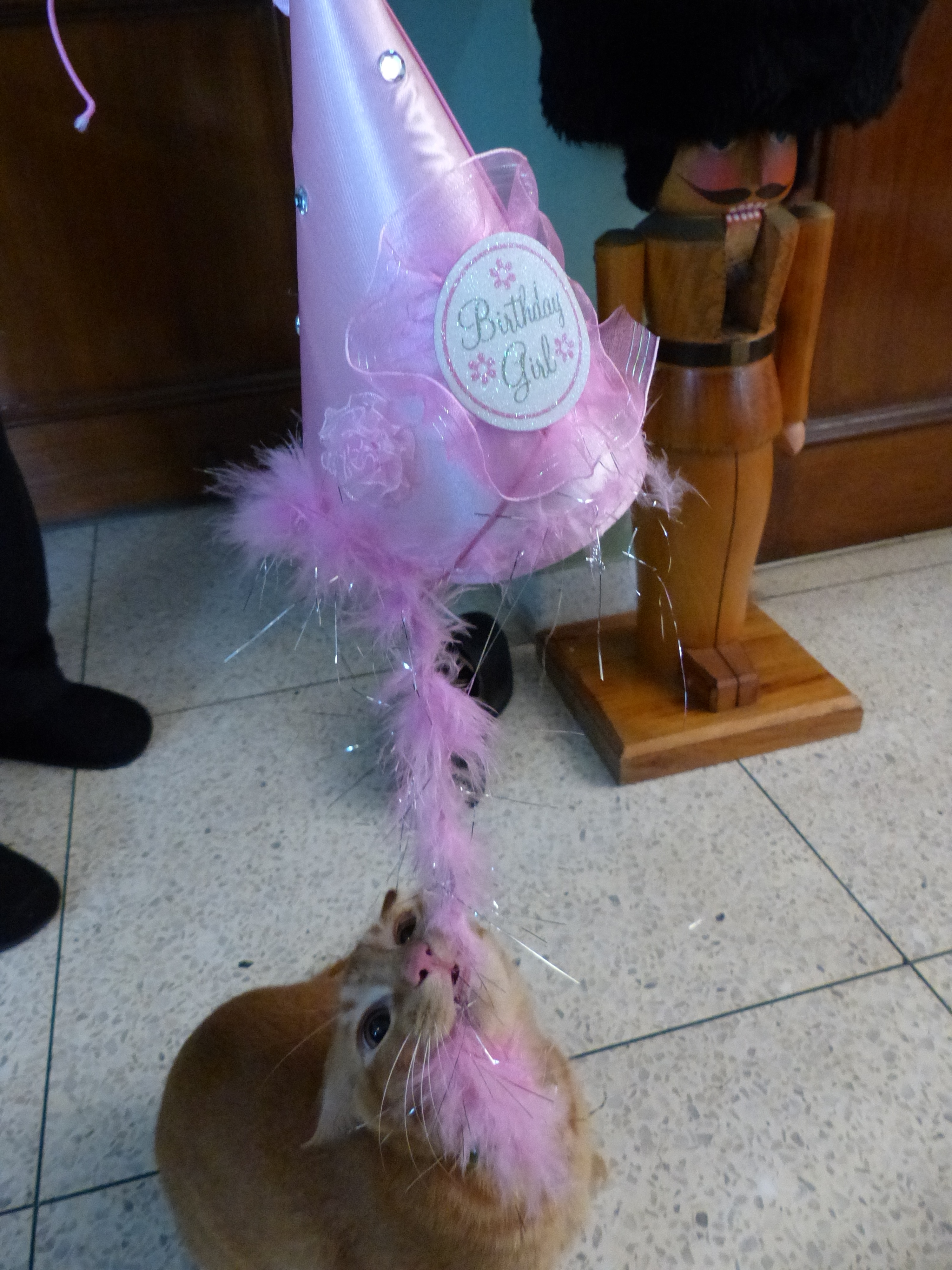
Postscript: Guess who loved my party hat even more than I did?

P1040064

Wrapping up winter break at Koh Chang

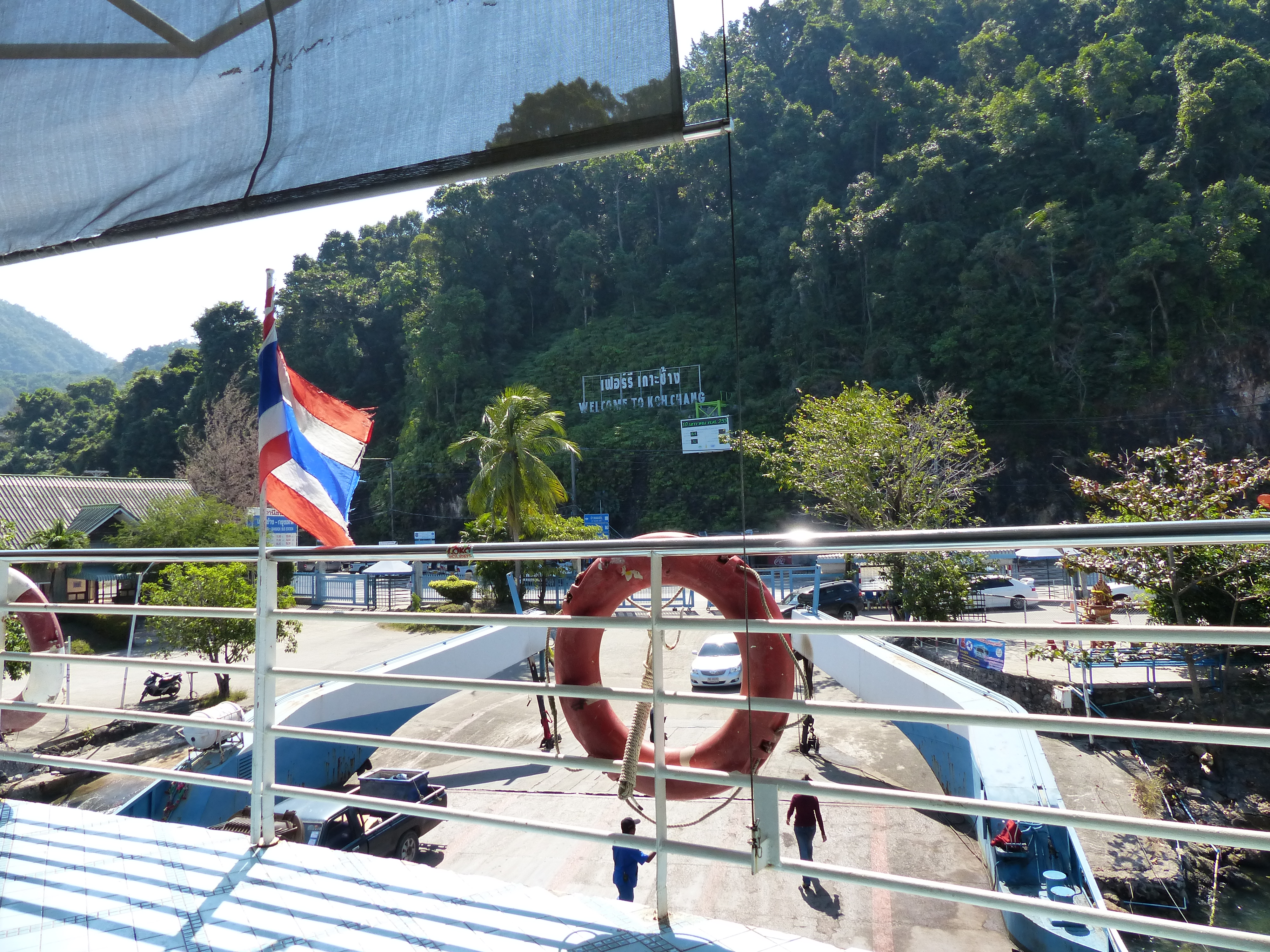
For the last week of our semester break, Tony and I flew from Korea to Thailand. We decided to splurge on a luxury resort on the island of Koh Chang, which is located southeast of the mainland. On this map, our hotel’s pin is letter A.

View Larger Map

If you check out our hotel’s website, you’ll think “Nirvana” was an appropriate name. Well, let’s just say it should have been called “Not Nirvana.” It may have been luxurious at one time, but alas, those days are over. No worries. Thailand is always amazing, and our week was filled with sunshine, great food, fresh air and stunning scenery. Other than one crappy day of killer seasickness – or a mild flu? – we had a great time.

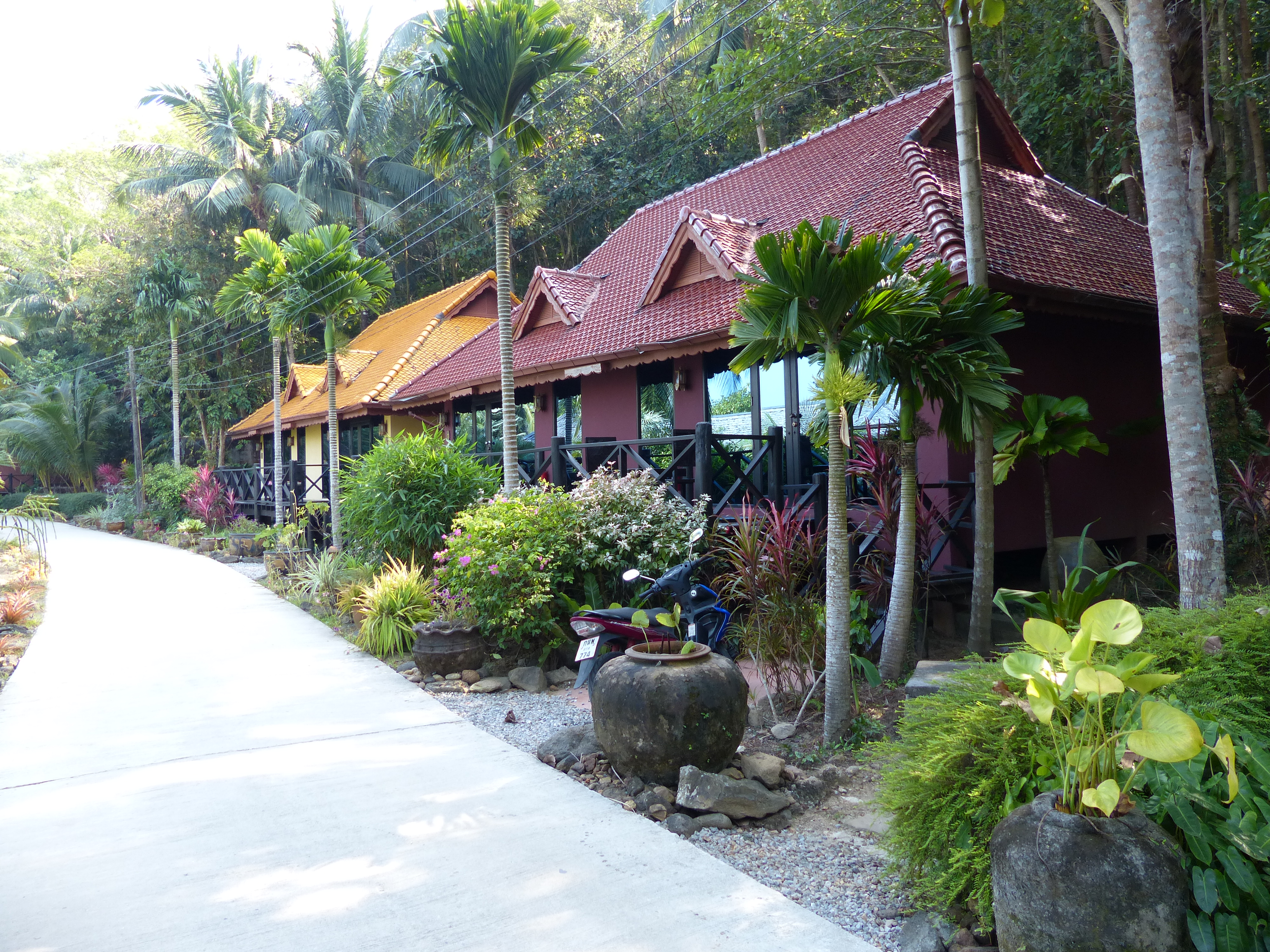
Our home away from home. I know, it LOOKS like Nirvana. Just trust me.
P1030865

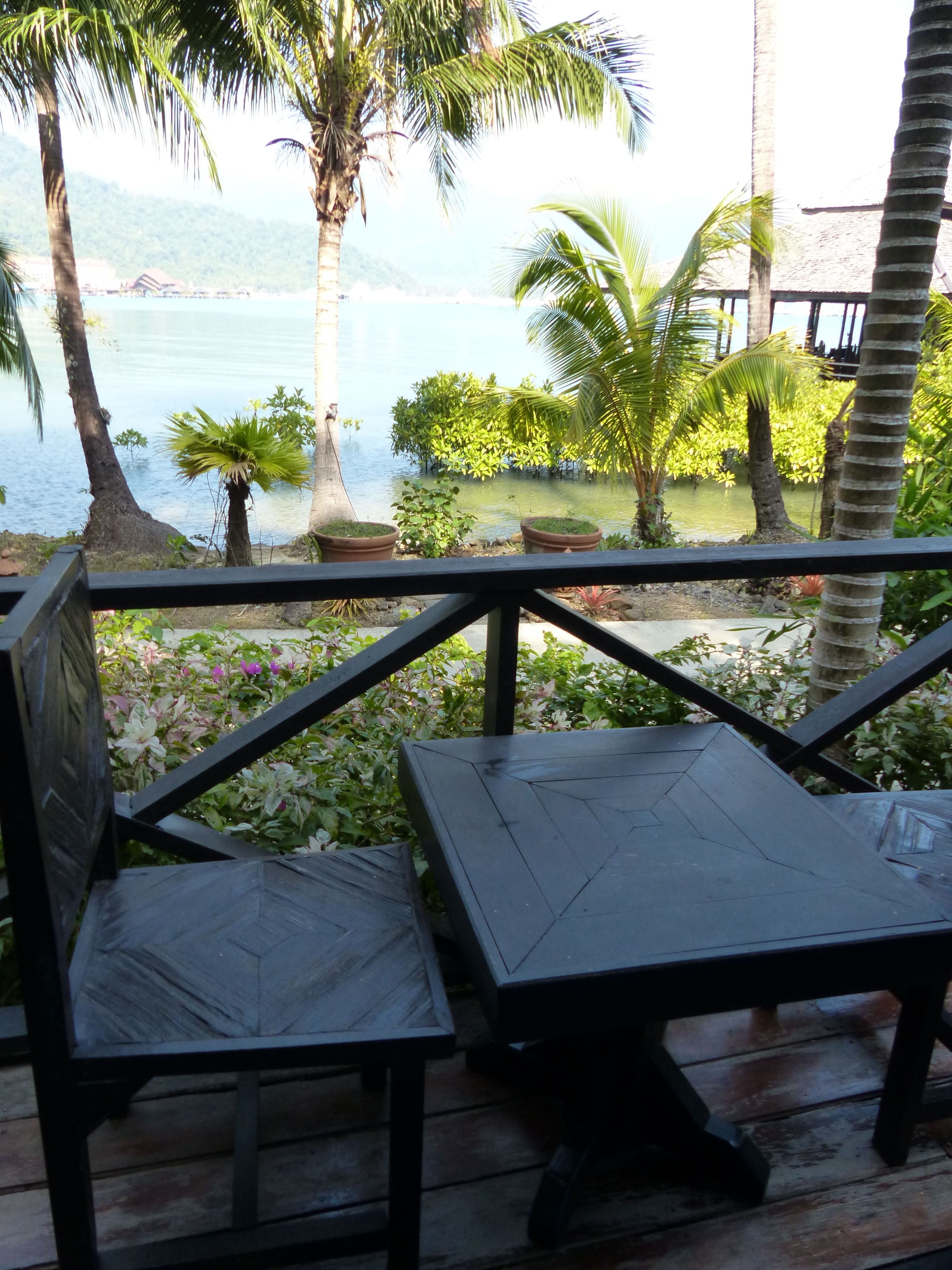
This is the railing from which a monkey tried to steal my bikini top. It’s also the railing where a monkey picked bugs off another monkey while straddling Tony’s shirt that was drying there. Ewww! We didn’t want to sit out here because of all the nasty monkeys.
P1030863

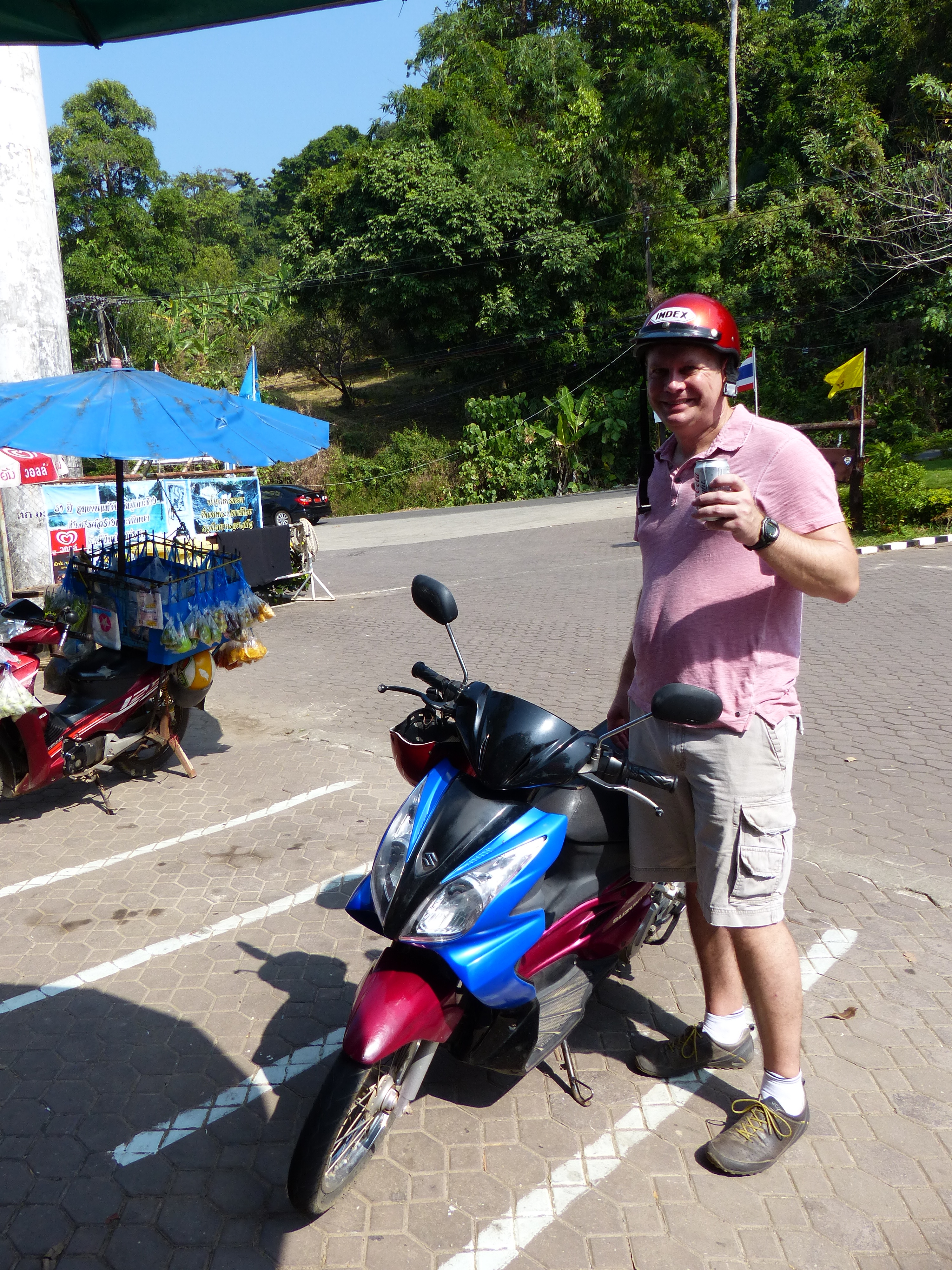
Tony rented a scooter to shuttle us around the island. We’ve done that before in other parts of Thailand, but Koh Chang presented bigger challenges. It was way hillier with hairpin curves, poorly maintained roads and lots of seemingly drunken backpackers trying out scooters for the first time. After two years with only a motorbike for transportation when we lived in Laos, Tony became an expert scooter driver, and I felt safe the whole time.
P1030854

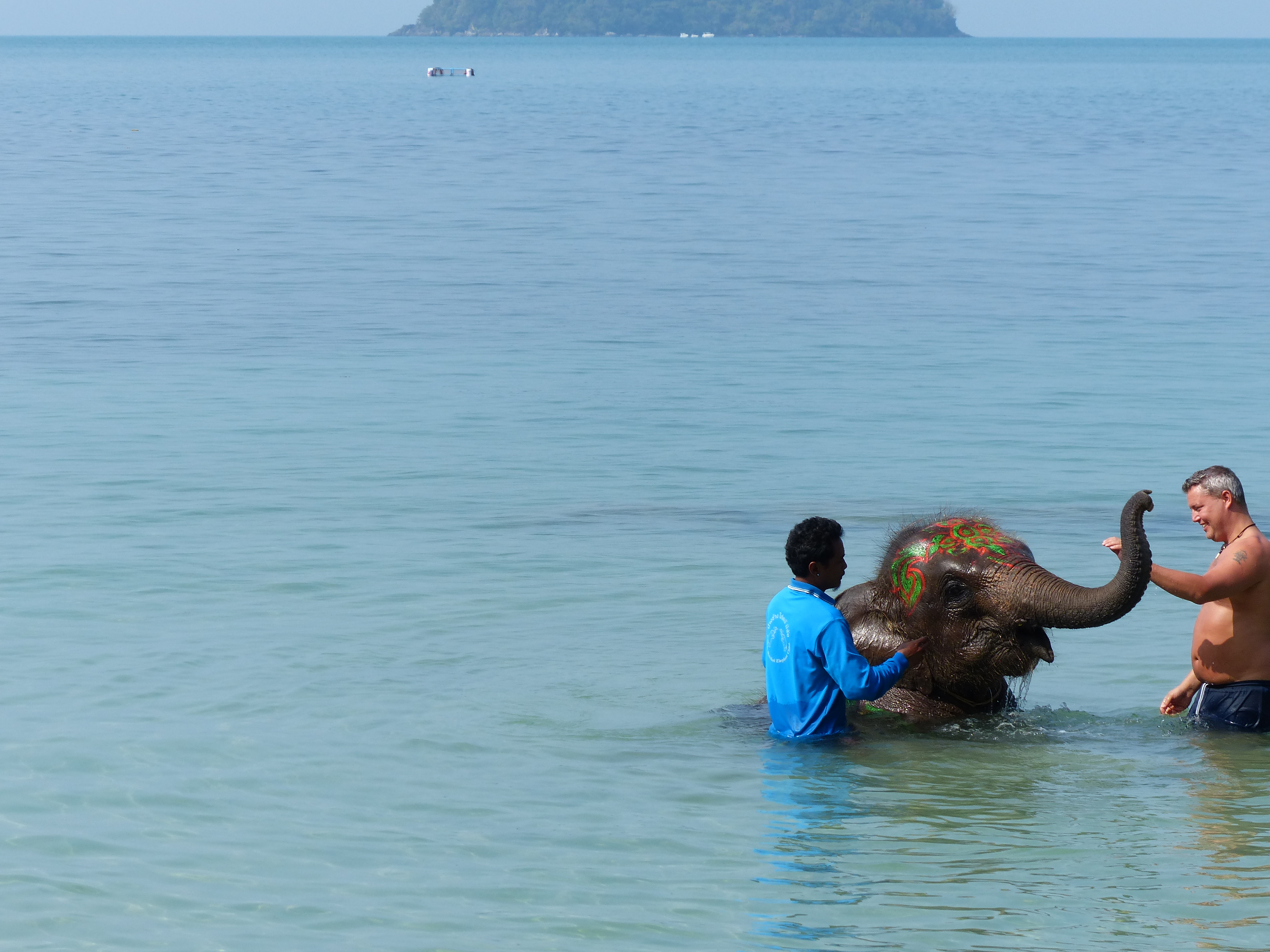
Twice, we scootered north to Kai Bae Beach. The first time, we just played in the water, watched tourists frolicking with baby elephants and hung out in the shade of a big palm tree.
P1030888

P1030885

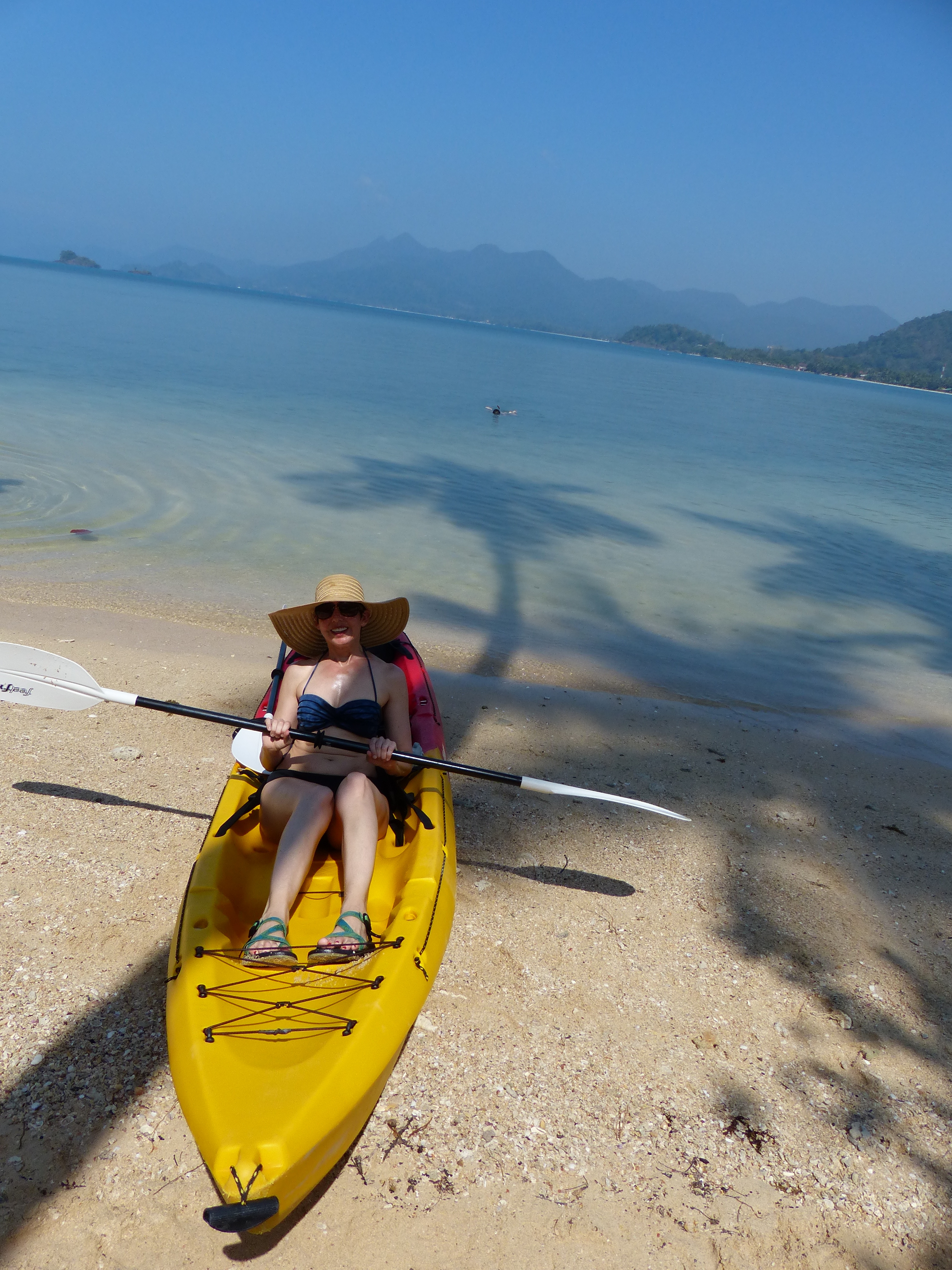
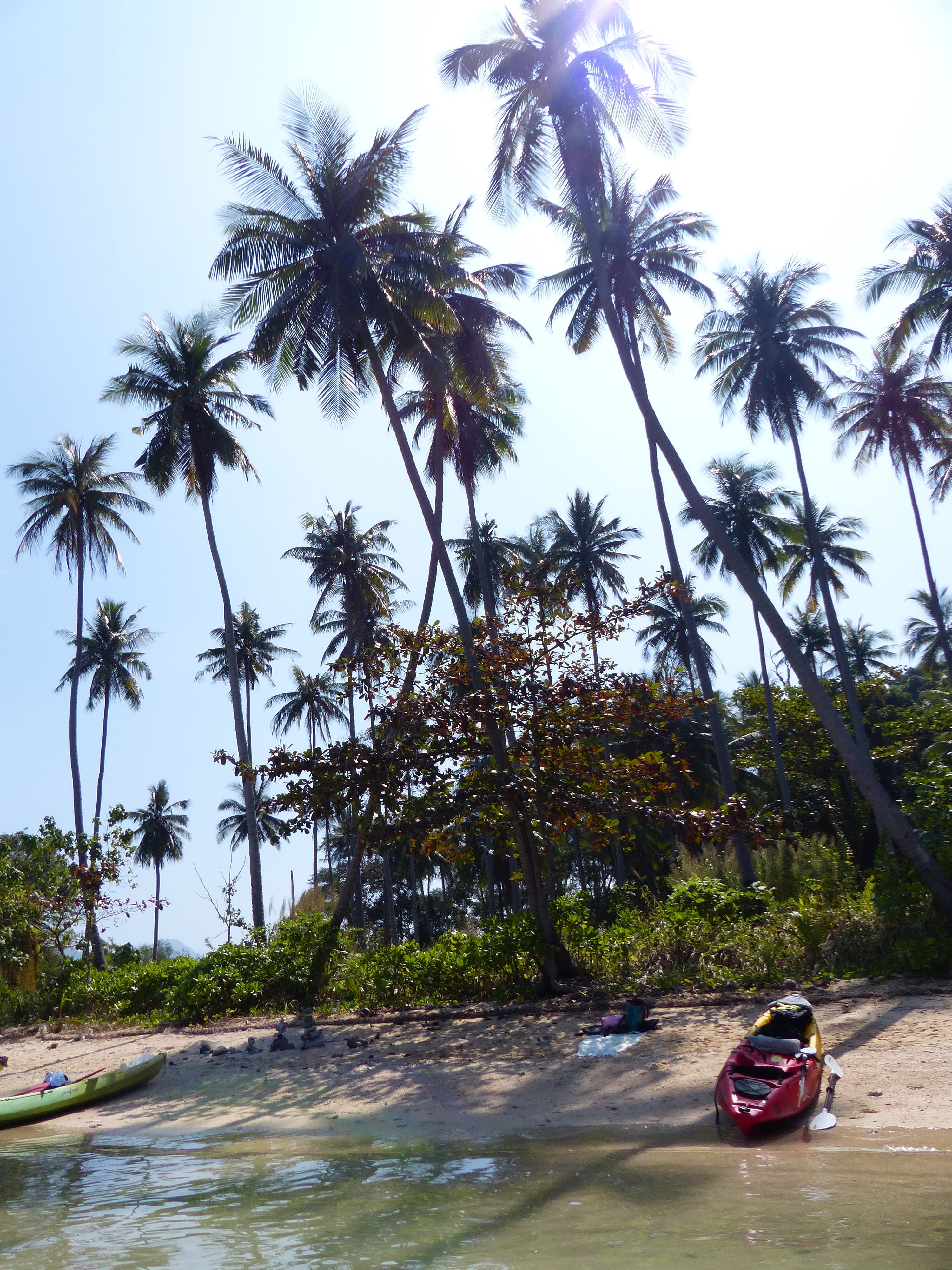
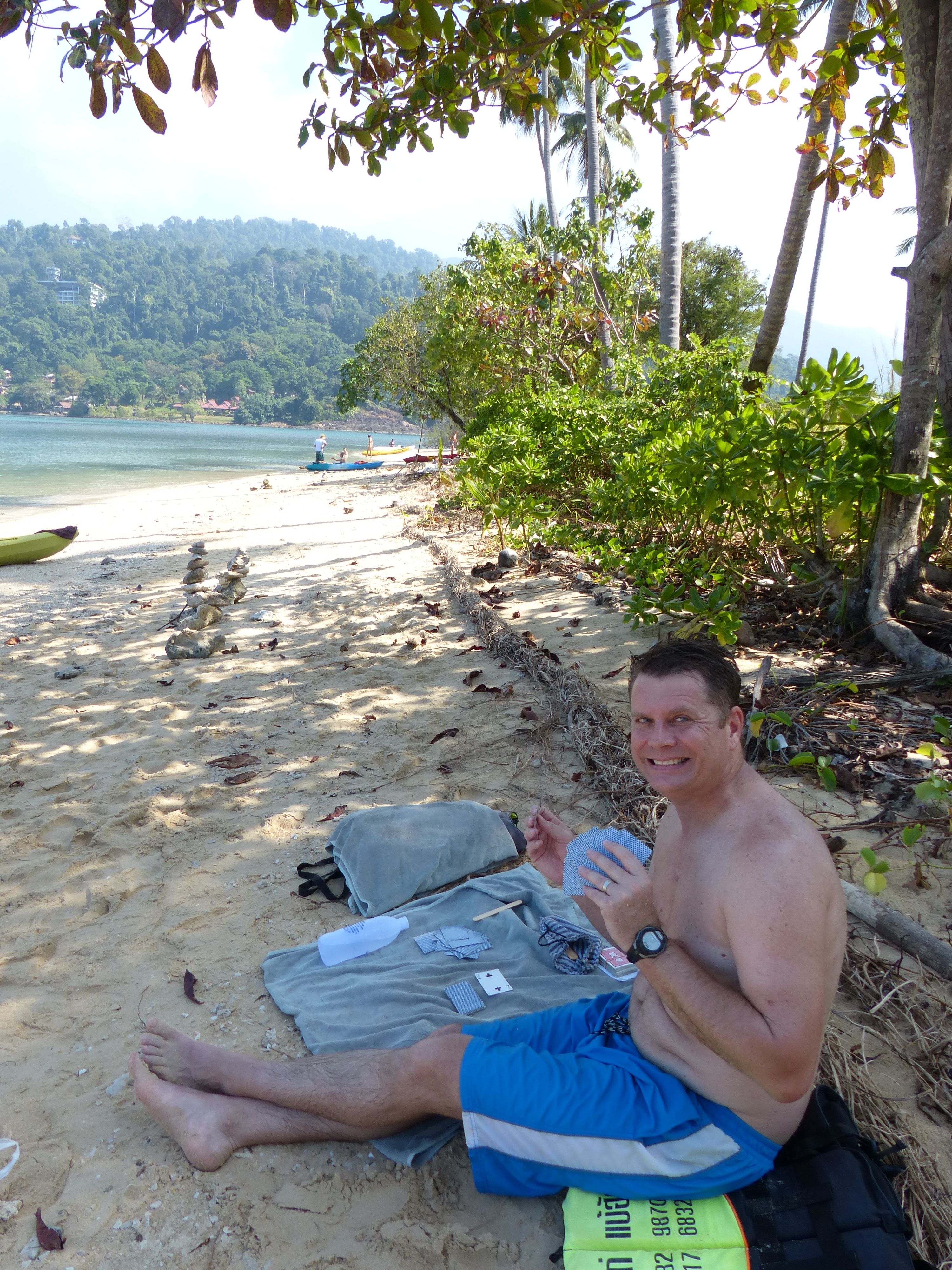
The second time, we rented a kayak and rowed to a smaller island, where we swam, played cards and enjoyed the serenity.
P1030951

P1030950

P1030953

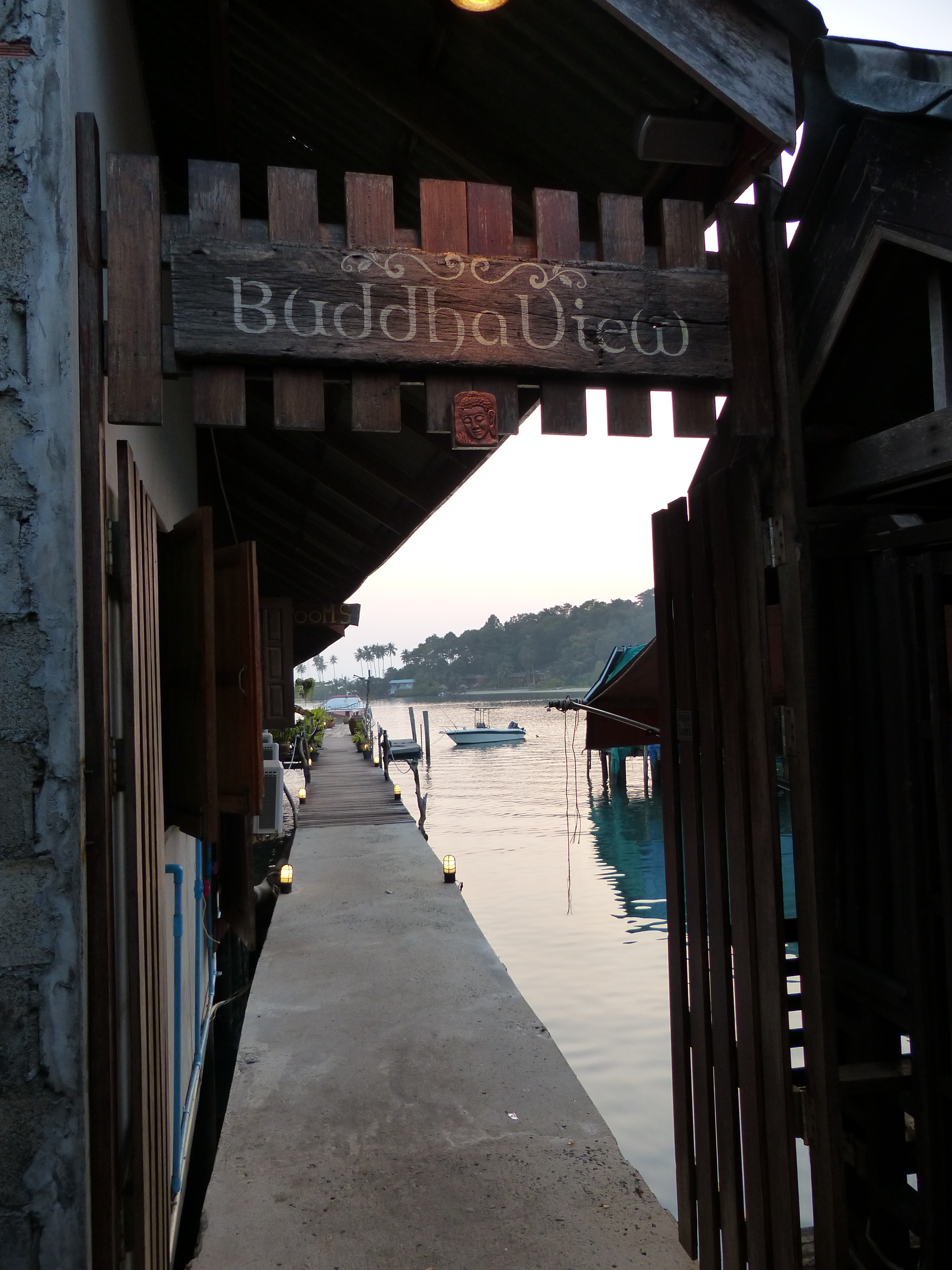
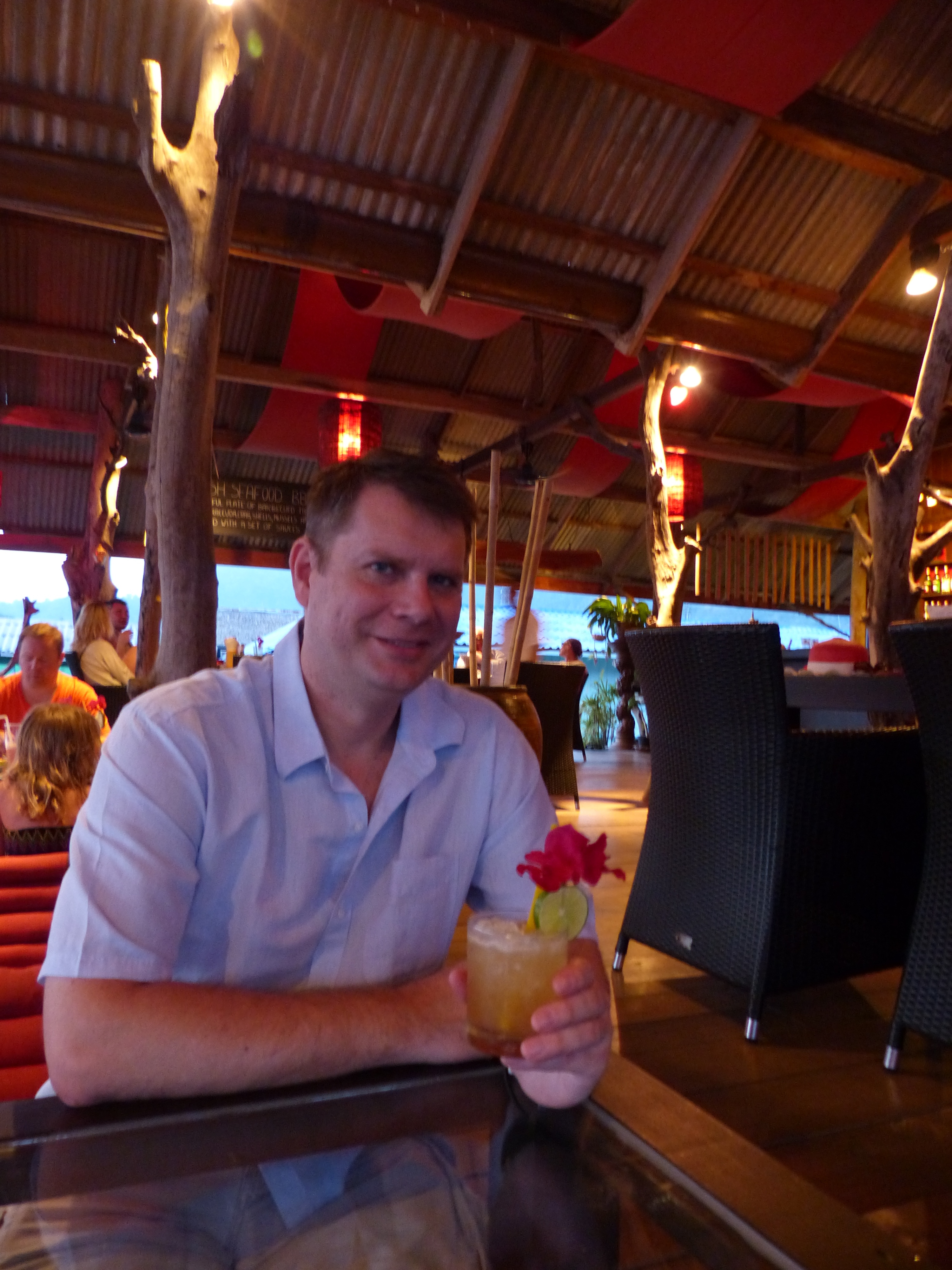
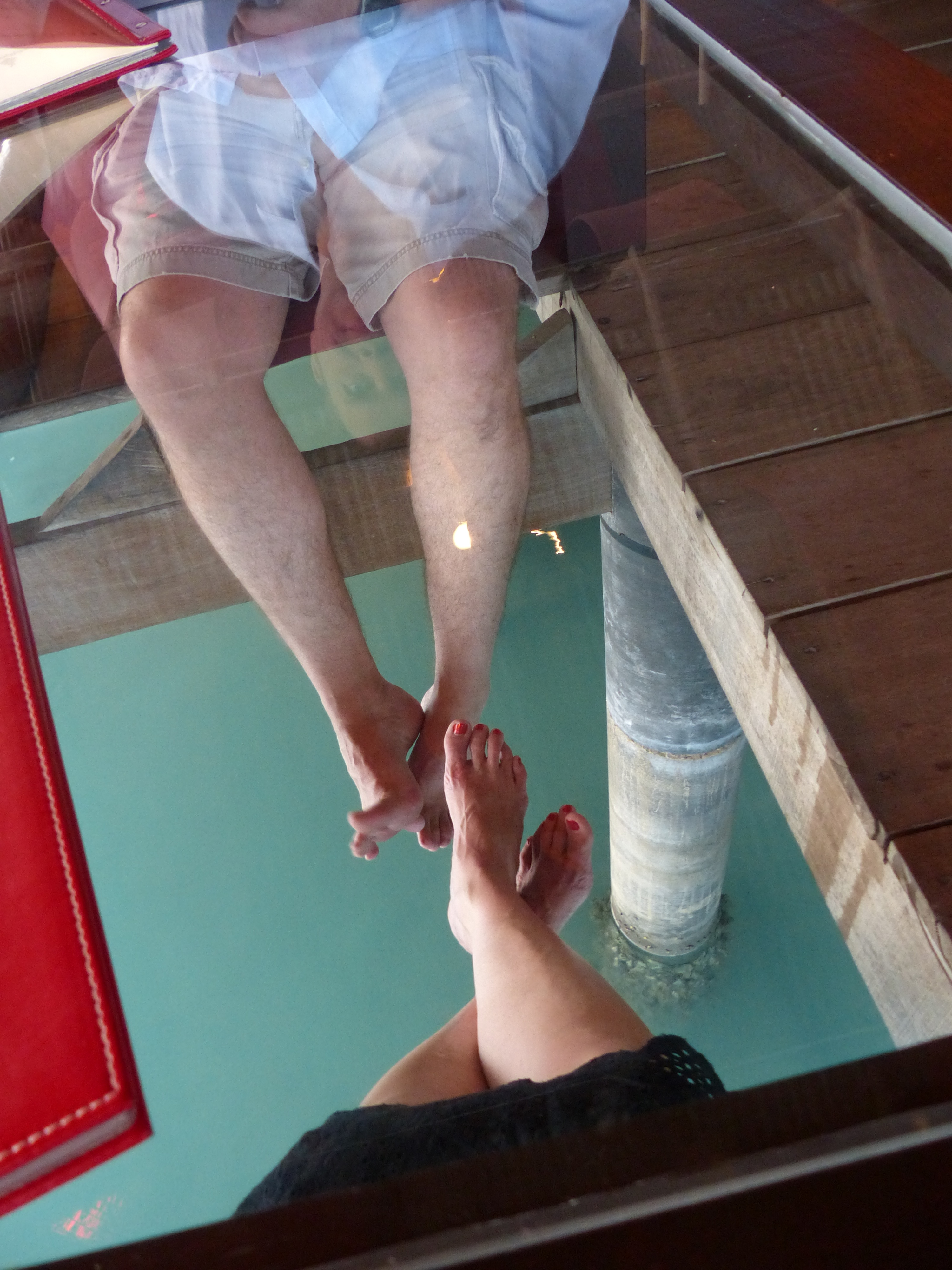
We kept returning to Buddha View Restaurant in Bang Bao, a short walk or ride from our hotel. Delicious Thai food and lovely views! One time, we sat at a table with the floor cut out, so our legs dangled over the water.
P1030879

P1030883

P1030880

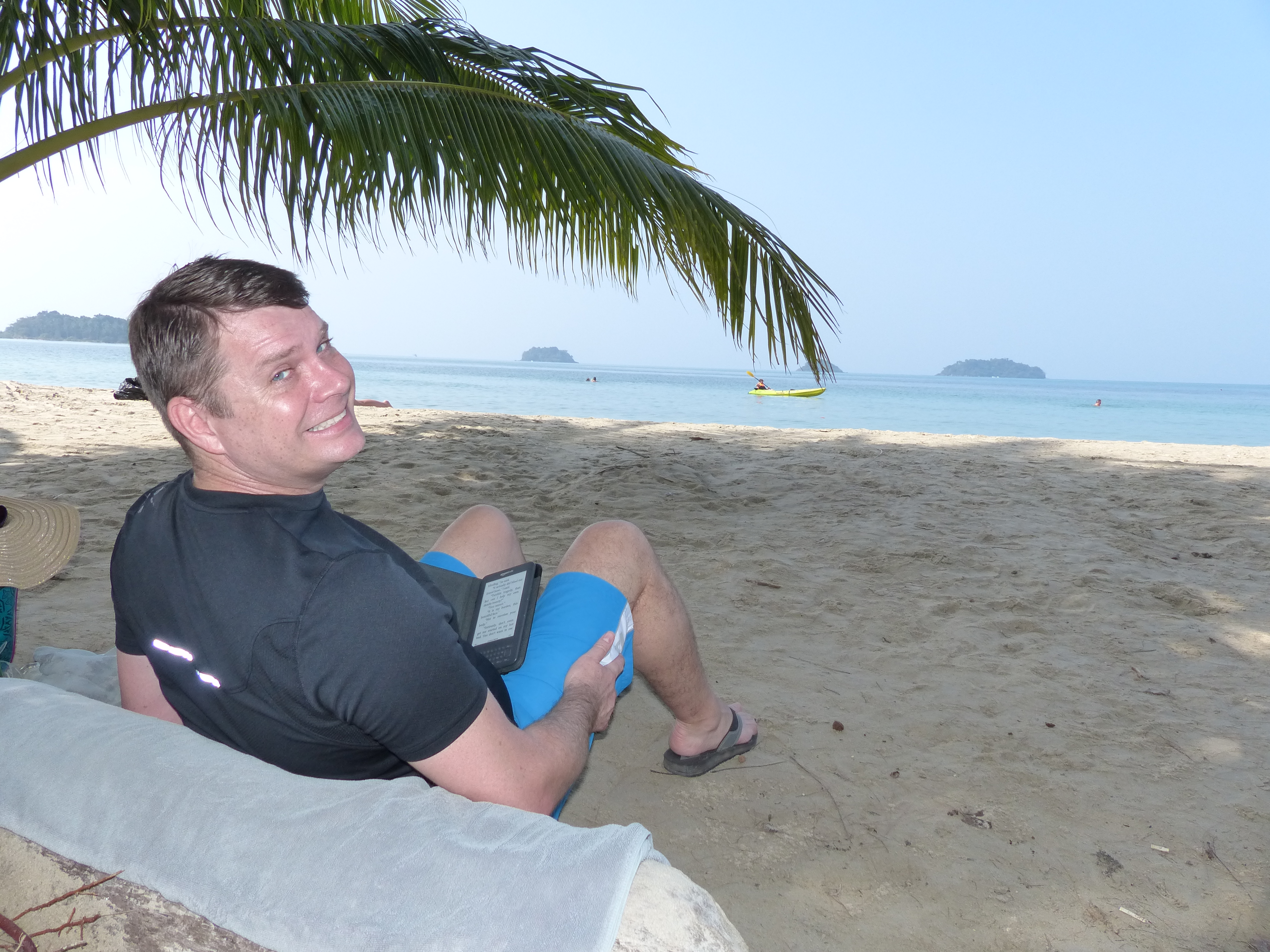
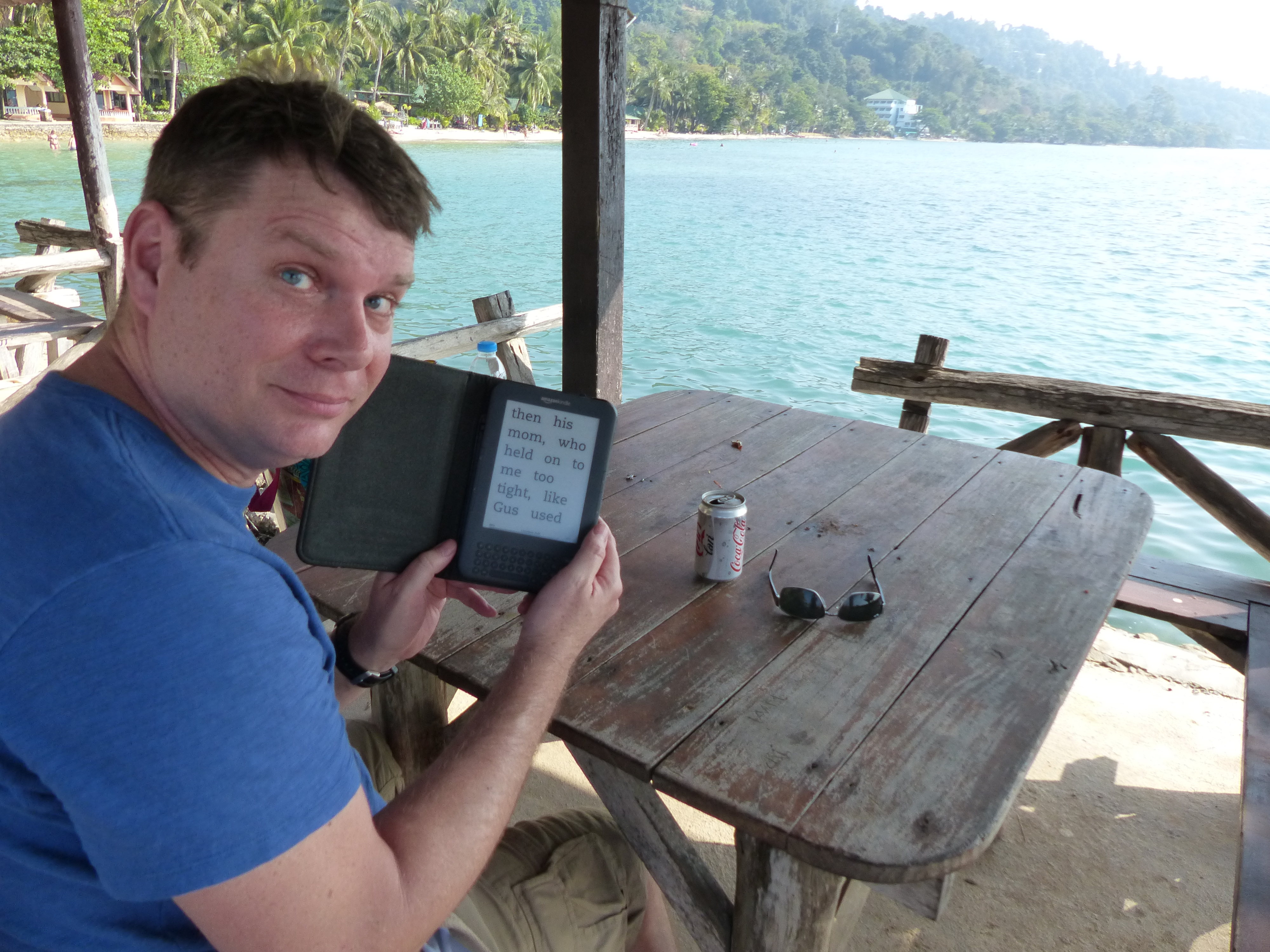
Poor Tony. While putting his shoes on at the restaurant entrance, he bent over and dropped his reading glasses in the sea. For the rest of our trip, he had to jack up his kindle font to read his book.
P1030915

The restaurant was part of the “fisherman’s village,” which was one of the attractions for me when I was booking our hotel. However, it’s really a collection of touristy shops and restaurants and the launching point for all the dive boats. Ah well, it was still interesting and offered some nice photo opps.
P1030849

P1030871

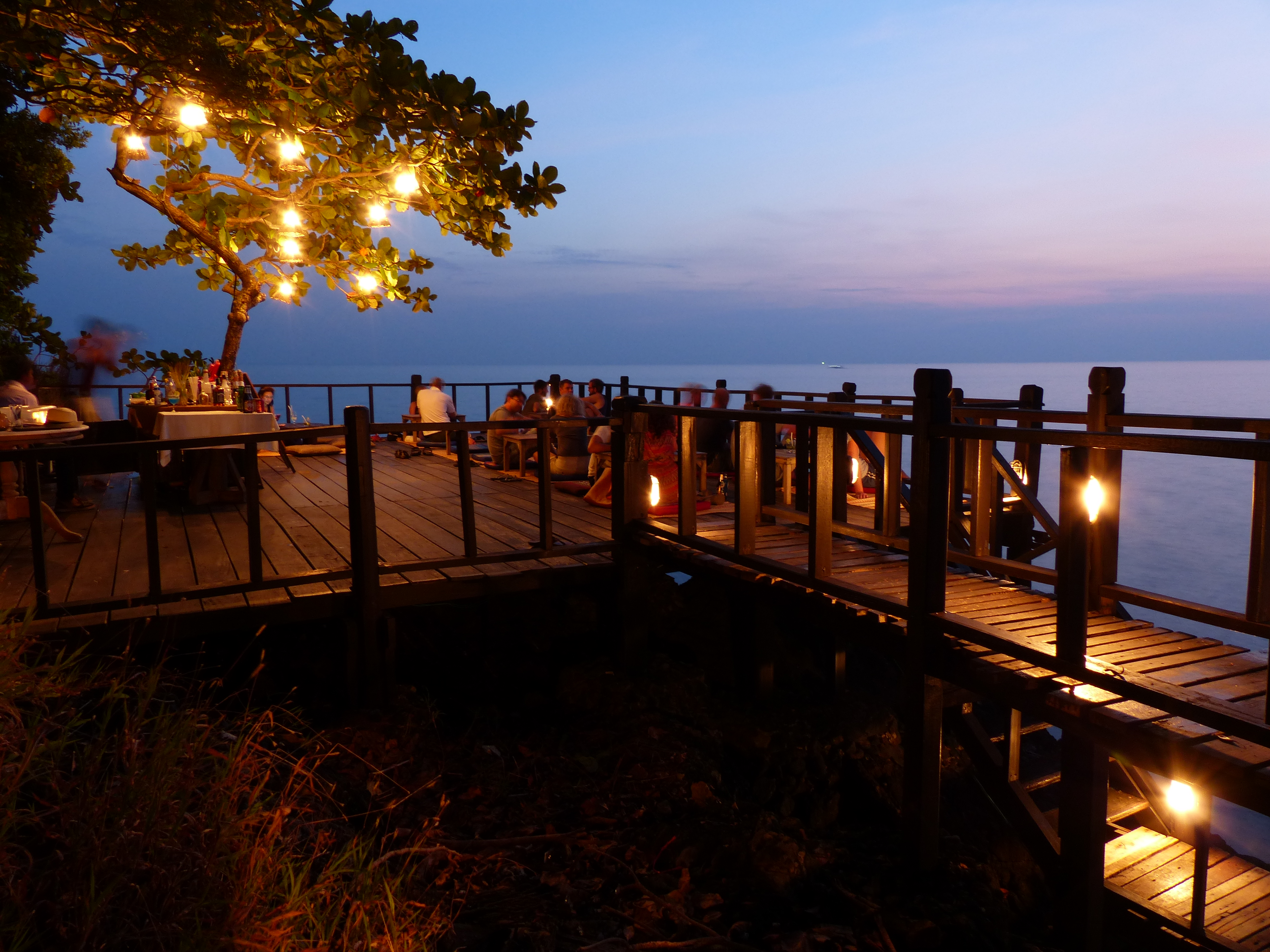
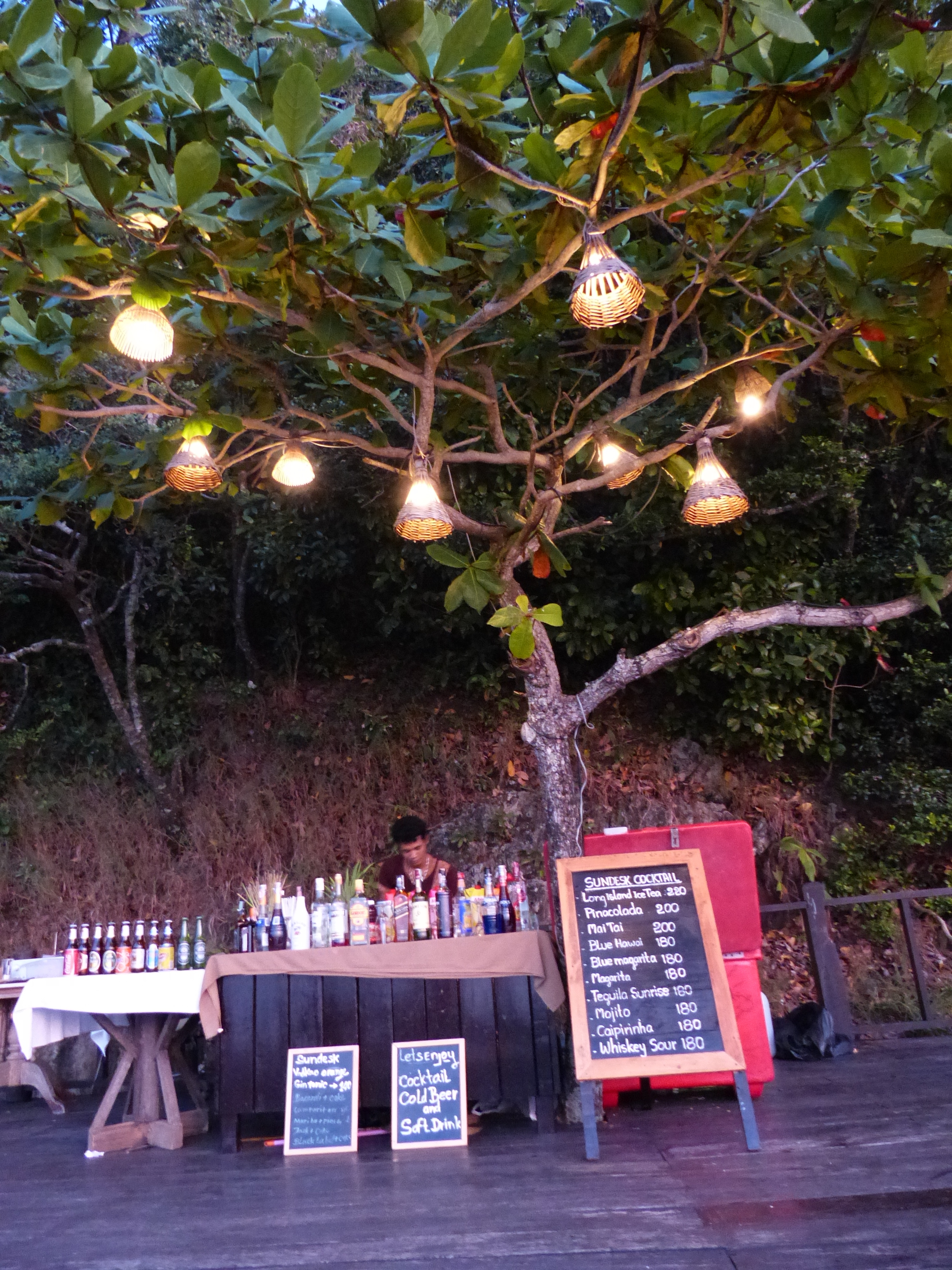
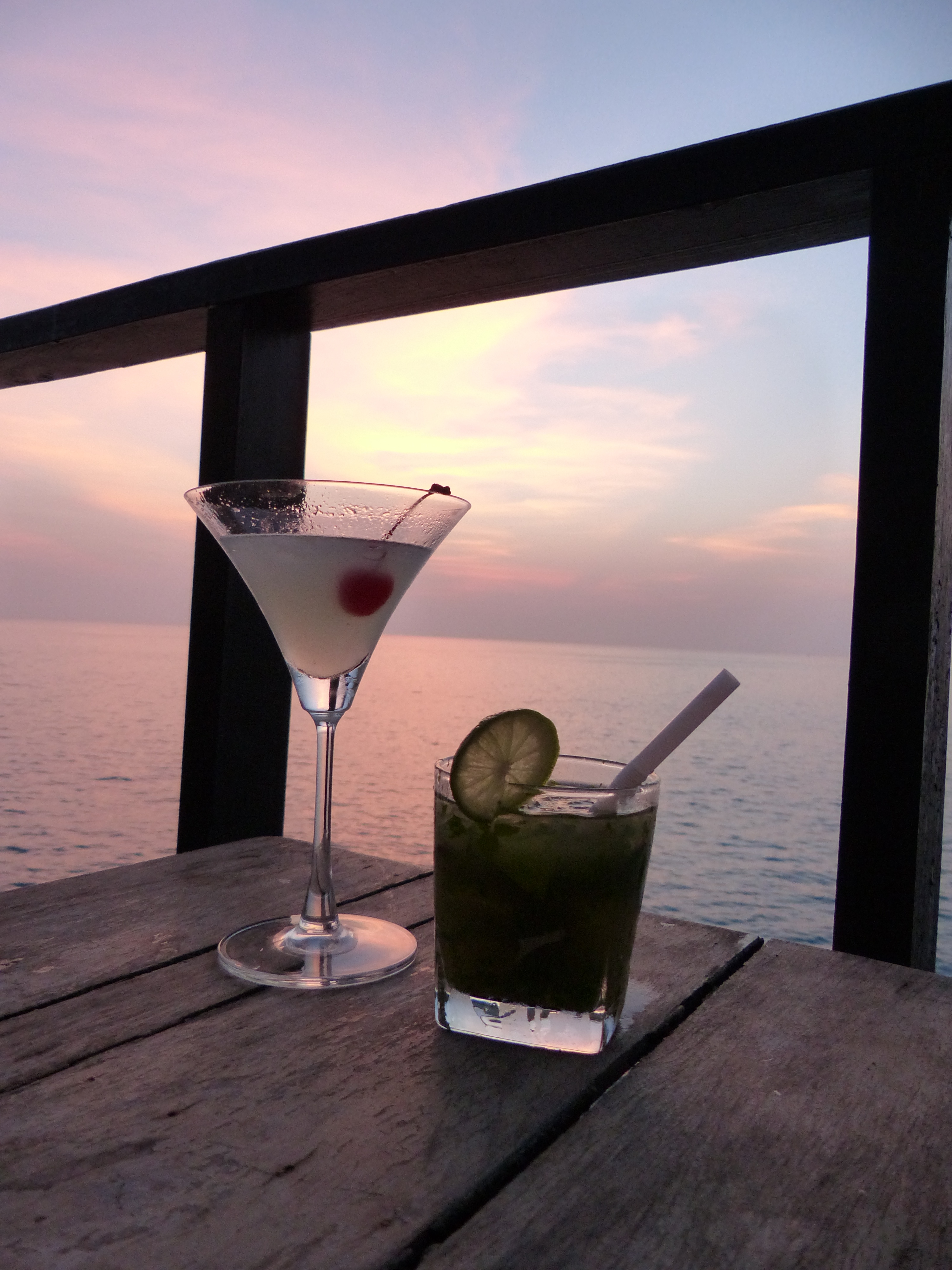
One evening, we watched the sunset from our hotel’s Rock Walk makeshift bar. Very romantic.
P1030938

P1030943

P1030942

P1030941

Well, that’s it. Back to reality tomorrow! It’s always hard to leave Thailand, even when Nirvana is Not Nirvana.
P1030959

Check out my Koh Chang flickr set for more photos.

SCUBA: Seasickness Can’t Undermine Beauty and Amazement

“I feel kind of blech-y,” I said to Tony Tuesday morning. “I can’t really put my finger on it, but I just don’t feel right.”

I didn’t have a stuffy head or that ubiquitous Delhi cough. I didn’t feel nauseous or suffer any other symptoms of food poisoning. I just felt blech-y. Oh well. It was our scuba day, so suck it up, buttercup.

Dive Adventure sent a pick-up truck taxi to collect us at our hotel. After picking out shorty wetsuits and fins, we walked down the pier to the boat and settled in for our cruise to the dive site. Our divemaster, Özay, was Turkish, so we chatted about living in Istanbul, diving in the Mediterranean and the chaos of Turkish politics. We were very impressed with Özay and the rest of the Dive Adventure crew. They seemed to care about safety and ocean conservation, values that are sometimes missing with other dive shops.

The first stop was a wreck, but only divers with their Advanced Open Water certification were qualified to explore the deep. A risk taker on land, I play it safe in the ocean, so we chose to snorkel around the wreck site while more experienced divers explored the sunken boat. Tony swam down to touch the mast, but that was the highlight of our snorkeling experience.

Climbing back aboard the dive boat, I felt extremely queasy. I stumbled to the bow, poured myself a cup of cold water and sat down to get my bearings. Prone to motion sickness, I know the drill. Stare out at the horizon, stay hydrated, don’t let the rolling boat mess with your head. But the weird thing was the boat wasn’t rolling. The clear turquoise sea was still and smooth as glass. I leaned over the railing and projectile puked up all my breakfast. Nice.

Soon, the boat was back on the move. We reached our destination in just a few minutes, but I was barely able to stand. Tony hooked up my gear, and I just had to trust that he knew what he was doing. “Please don’t let me die down there,” I said weakly.

At the last minute, we spotted a tube of toothpaste and recalled advice from our last dive experience when I had struggled to keep my mask from fogging up. Tony handed me the toothpaste, and I squeezed a blob into my mask, smushed it around and rinsed it in the seawater. A terrible dive buddy, I only half-heartedly toothpasted Tony’s mask, and then checked his weights, BCD and air before letting him jump in. I quickly goose-stepped in after him. Once in the water, I felt a bit better.

Özay, Tony and I, and three other divers let the air out of our BCDs and slowly sank down to explore the Hin Rap Koh Chang reef. A fairly shallow dive, the visibility was fantastic (and my mask stayed perfectly clear the whole time!). We didn’t see any big or unusual sea life, but I often found myself completely surrounded, morphing into the cloud of tiny rainbow fish. Swimming around the coral reef felt magical, but I couldn’t shake my blechy-ness.

Unfortunately, we had to get back on the boat. I wriggled out of my gear and crumpled on a bench. Tony dismantled everything, rinsed our masks and re-connected our BCDs to new tanks in preparation for the next dive. The boat crew set up a Thai buffet, but I could barely choke down a few bites of plain rice. Fortunately, we soon reached our next dive site: Hin Riha Thek, which translates to “broken boat reef”. The rock barely jutted out from the water. We could see how easily a boat might crash into it.

Özay led the pack with Tony and me right behind him. The water was so murky we could barely see him. I thought my mask was fogging up, but when I pulled it off to clean it, I realized the toothpaste was still working. So it wasn’t the most scenic dive ever. My favorite sight was a shallow barrel coral, pale purple with a scalloped top. Inside several bright orange fish darted about. White coral snaked from the sand into the barrel like tubing. For a moment, it tricked my woozy mind into thinking it was a typical fishpond like people keep in their backyards. I had a little underwater laugh when I snapped out of it.

Back on the boat, I barfed up the rice.

I slumped at the back of the boat, too humiliated to socialize, for the trip back to shore. After disembarking, getting Özay to stamp my dive log, and bidding farewell to our fellow divers, we popped into 7-11 to get Gatorade and some M&Ms and then walked the short distance back to our hotel. Although I felt sure the motion sickness would abate quickly, I assured Tony I was done for the day. I showered and rolled into bed; he took the scooter and zipped off to get some dinner. While he was gone, the Gatorade and M&Ms made an encore appearance. Let’s just say the motion sickness did NOT abate quickly. I slept – fitfully – for almost 20 hours, completely losing one whole day of my holiday.

I’m still not sure whether I was sick when I got on the boat, or if the boat made me sick. Regardless, I’m not ready to give up scuba diving, but maybe I’ll search for a resort with a house reef – and skip the boat ride – for our next vacation.

The Korean Folk Village brings Joseon Dynasty to life

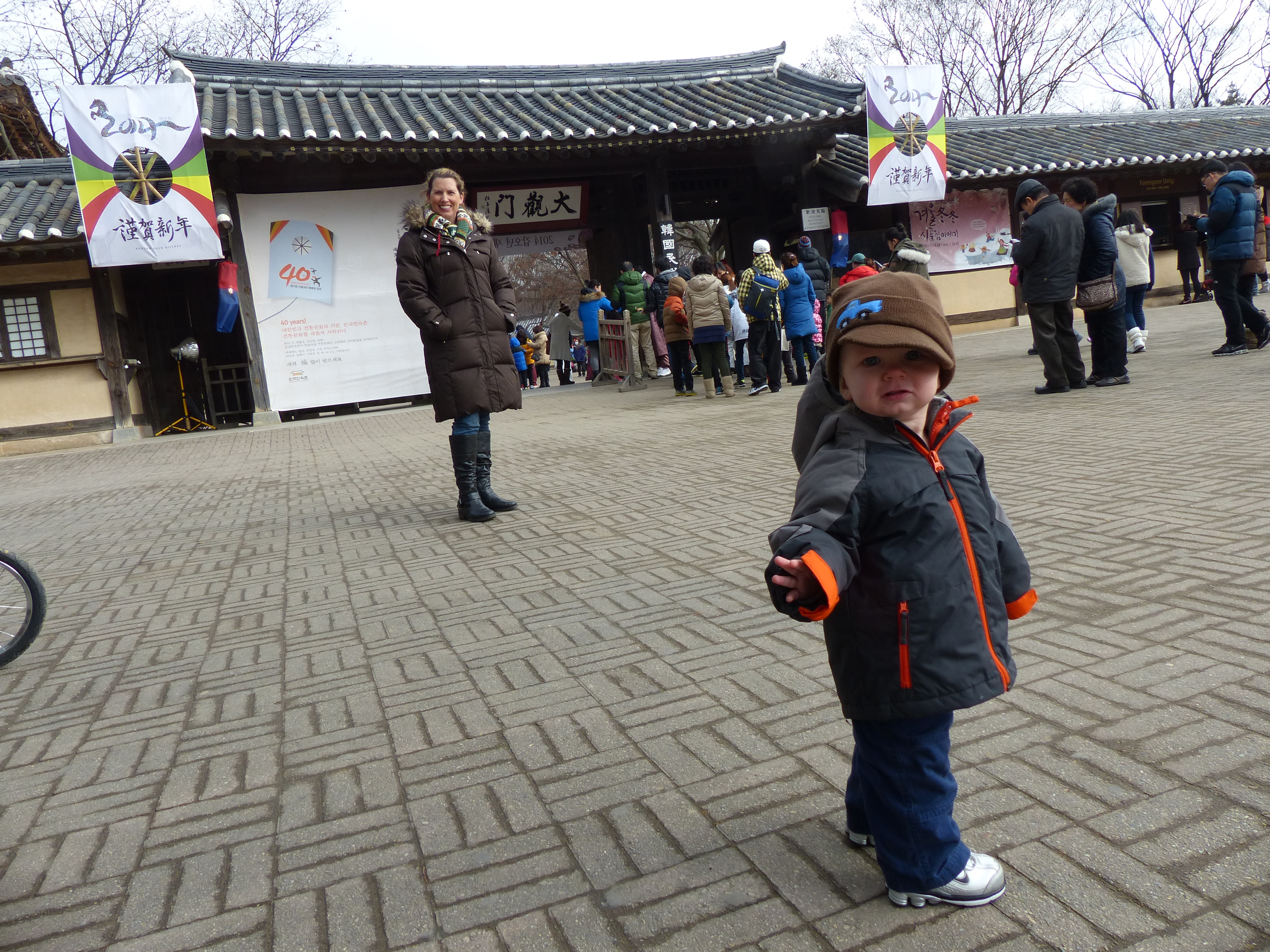
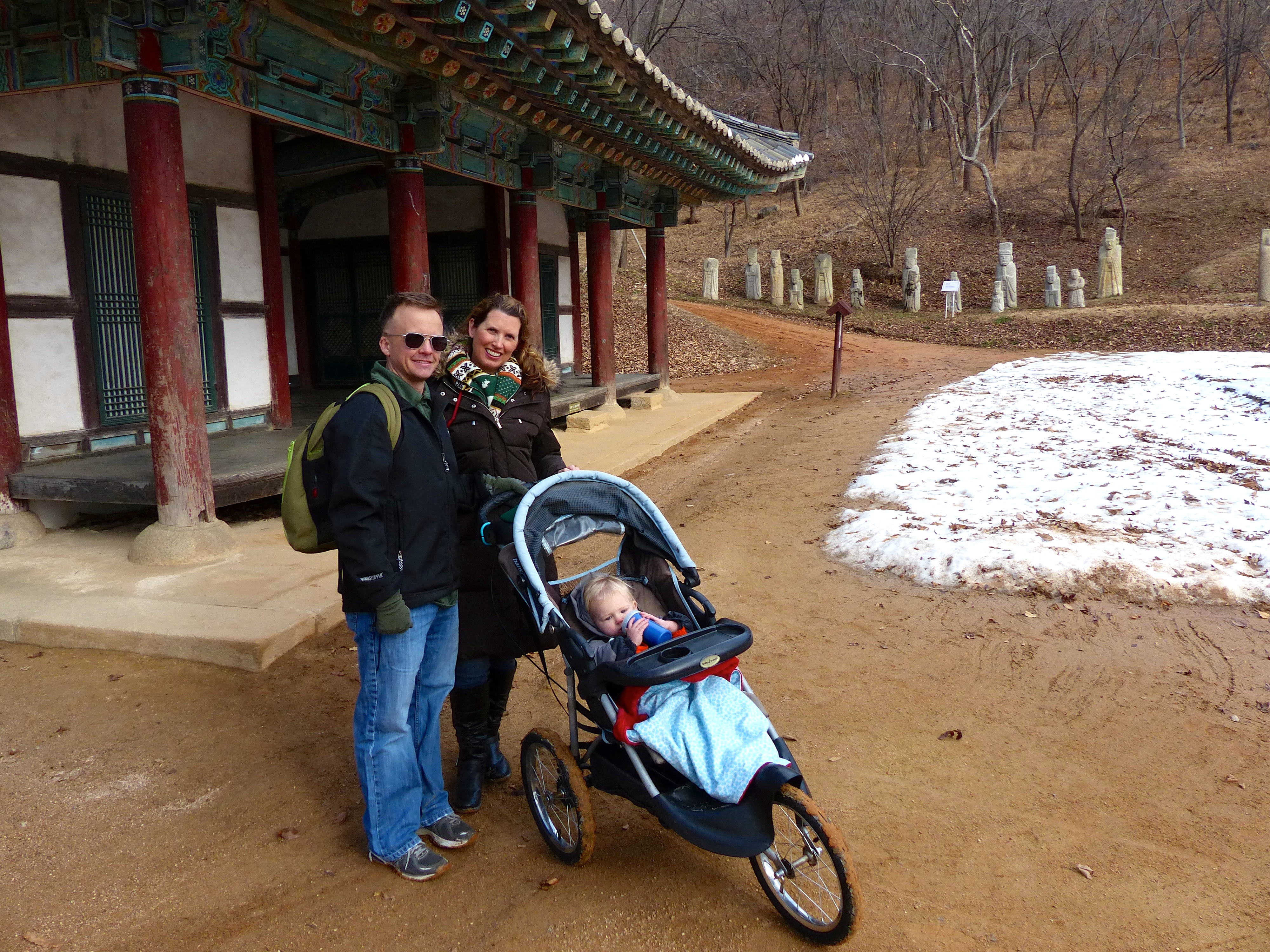
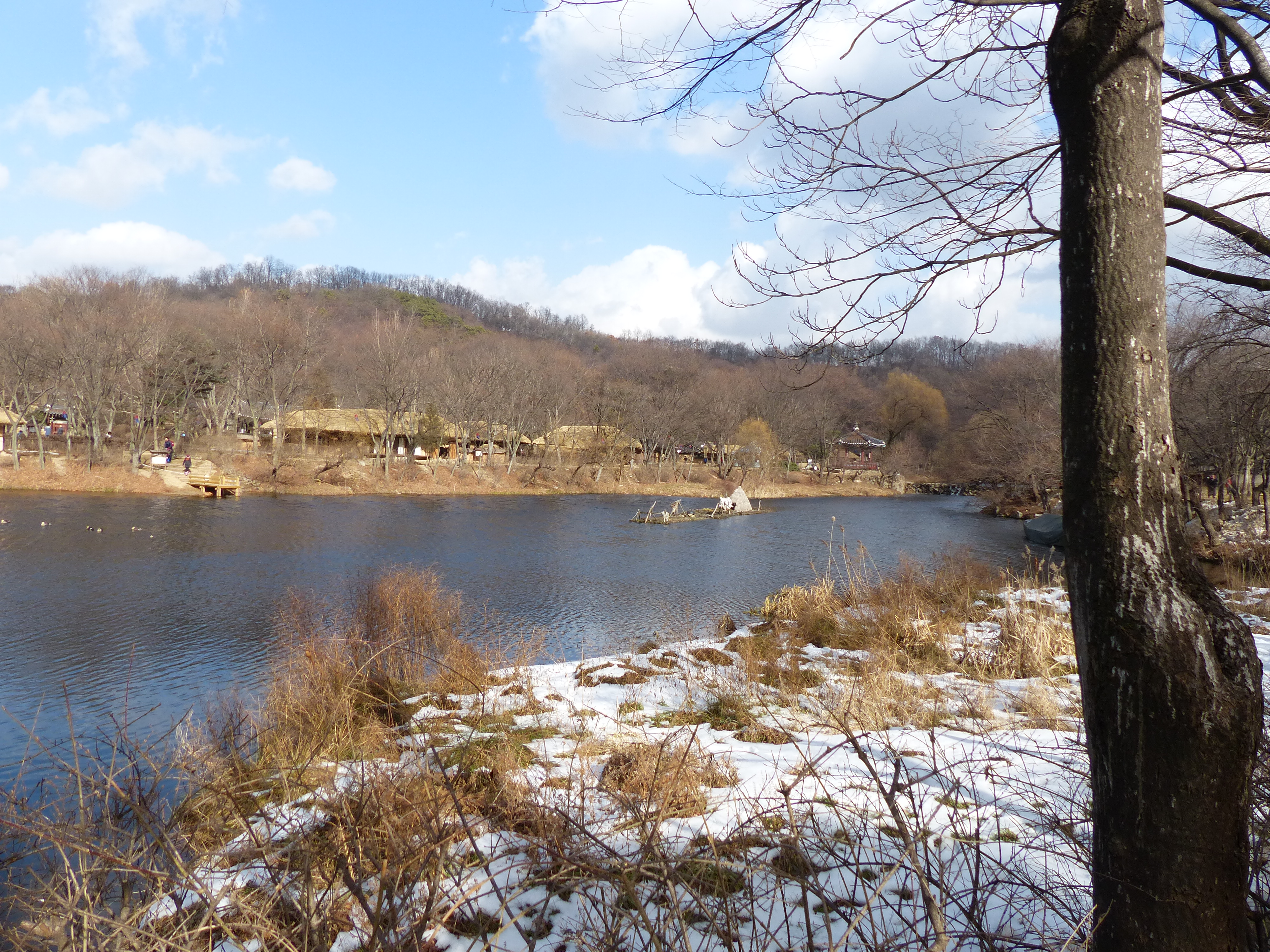
Before heading to Seoul, the Dents and the Warrens visited one final cultural attraction: The Korean Folk Village. It’s called THE Korean Folk Village, but I’ve heard there are many. The brochure says, “Happy coexistence with pleasant tradition!”

P1030618

Kind of the like the Korean version of Colonial Williamsburg, this village featured historical interpreters demonstrating what life was like in a bygone era. Here, Korea’s last imperial dynasty – the Joseon period – has been recreated “on a 243-acre site regarded as a propitious location according to the principles of feng shui, with a river flowing in front of it and a mountain behind it,” the brochure explains.

Here’s a rundown of the Joseon era, from Wikipedia:

Joseon (Korean: 조선; Hanja: 朝鮮; also Chosŏn, Choson, Chosun, Cho-sen), was a Korean state founded by Taejo Yi Seong-gye that lasted for approximately five centuries, from July 1392 to October 1897. It was founded following the aftermath of the overthrow of the Goryeo Dynasty in what is today the city of Kaesong. Early on, Korea was retitled and the capital was relocated to modern-day Seoul. The kingdom’s northernmost borders were expanded to the natural boundaries at the Amnok and Duman rivers through the subjugation of the Jurchens. Joseon was the last dynasty of Korean history and the longest-ruling Confucian dynasty.
During its reign, Joseon consolidated its effective rule over the territory of current Korea, encouraged the entrenchment of Korean Confucian ideals and doctrines in Korean society, imported and adapted Chinese culture, and saw the height of classical Korean culture, trade, science, literature, and technology. However, the dynasty was severely weakened during the late 16th and early 17th centuries, when invasions by the neighboring states of Japan and Qing nearly overran the peninsula, leading to an increasingly harsh isolationist policy for which the country became known as the Hermit Kingdom. After the end of invasions from Manchuria, Joseon experienced a nearly 200-year period of peace.
However, whatever power the kingdom recovered during its isolation further waned as the 18th century came to a close, and faced with internal strife, power struggles, international pressure and rebellions at home, the Joseon Dynasty declined rapidly in the late 19th century.
The Joseon period has left a substantial legacy to modern Korea; much of modern Korean etiquette, cultural norms, societal attitudes towards current issues, and the modern Korean language and its dialects derive from the culture and traditions of Joseon.
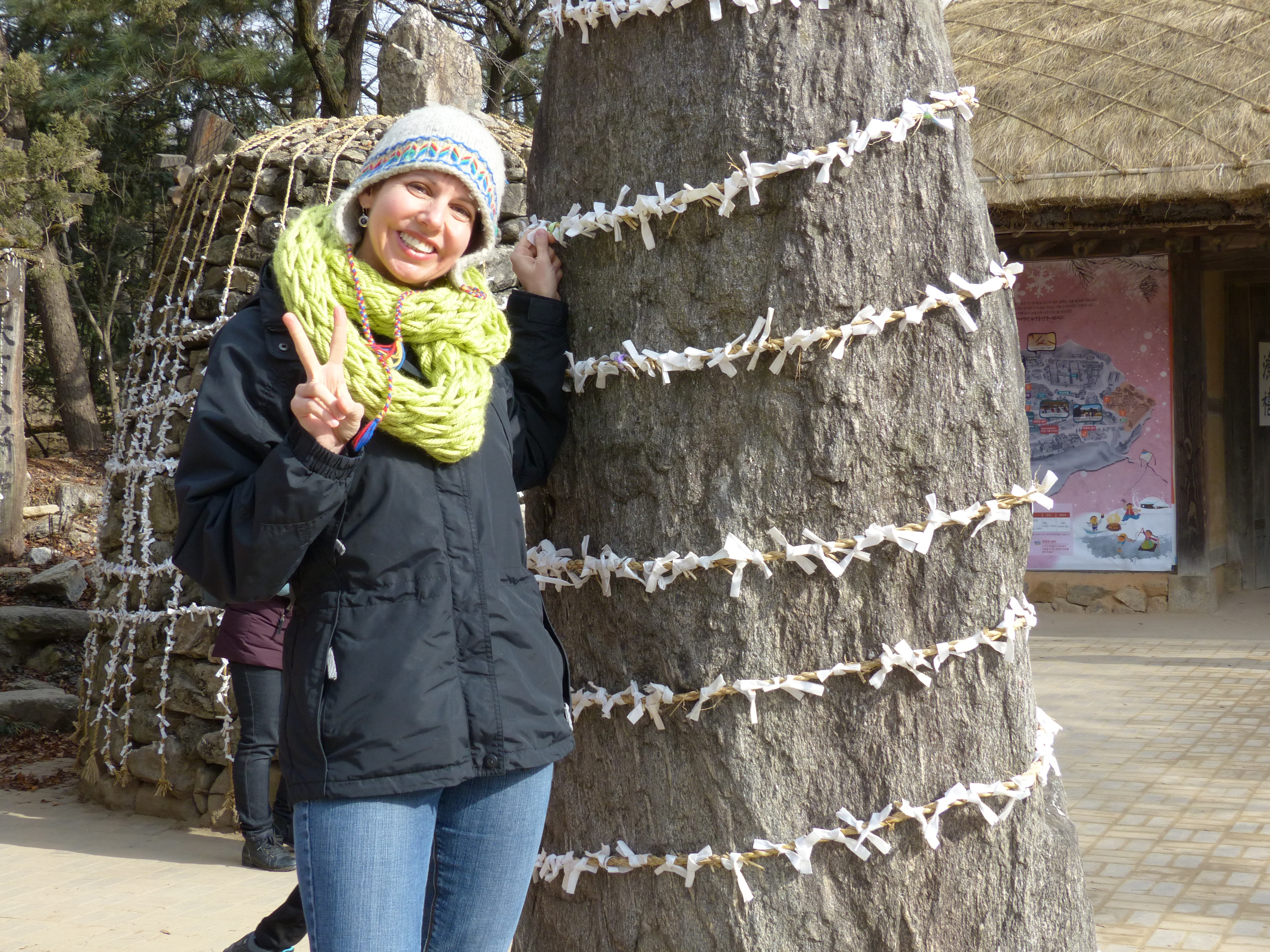
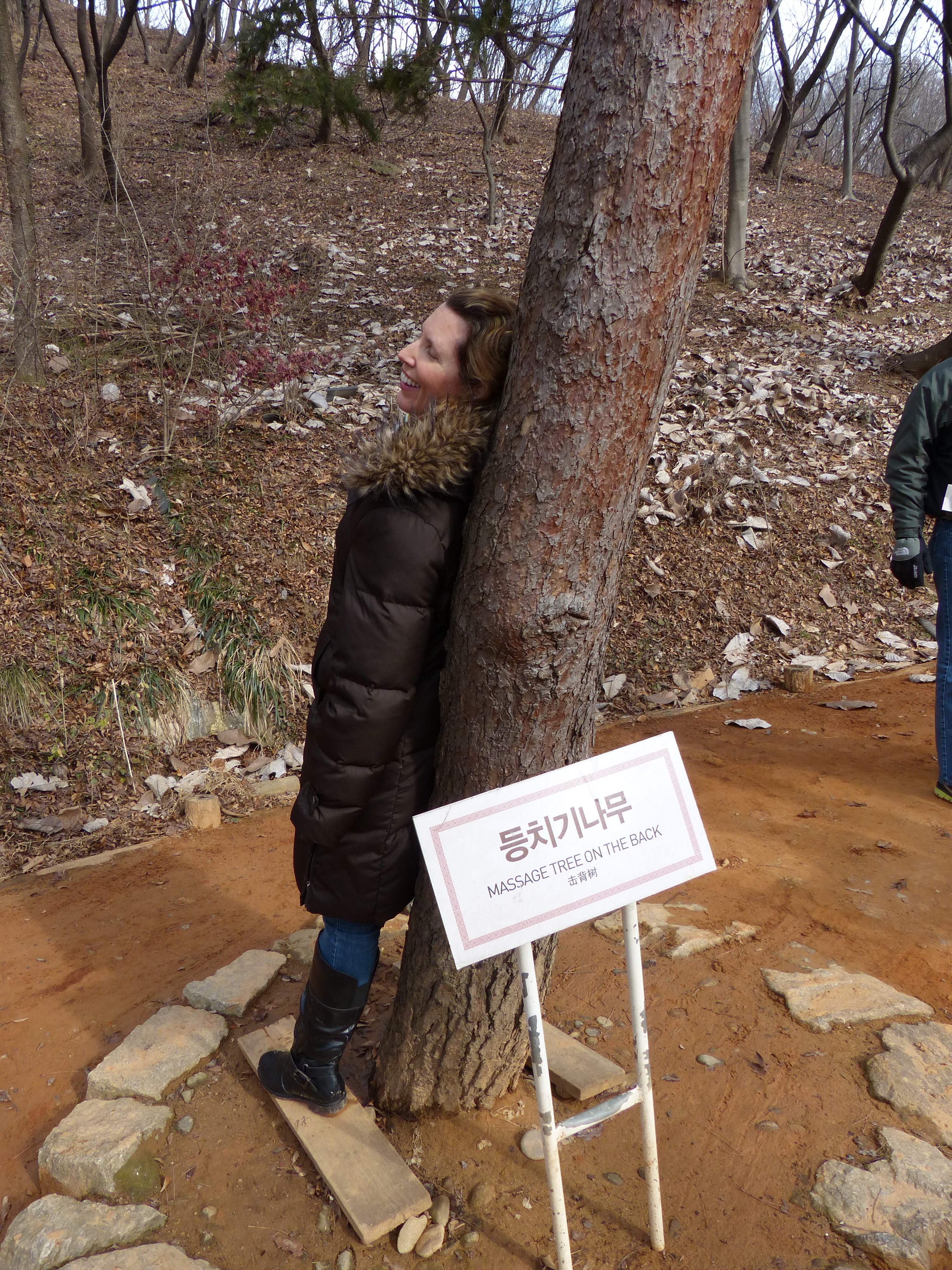
Strolling through the village on New Year’s Eve, I joined the crowd offering up wishes for 2014. The sign said: “Tie your wishes onto the elaborately piled up stone tower. The wishes hung from the straw rope are burnt along with sheaves of rice (Dalh-jib) for the first full moon of the new year and go up to the sky.”
P1030630

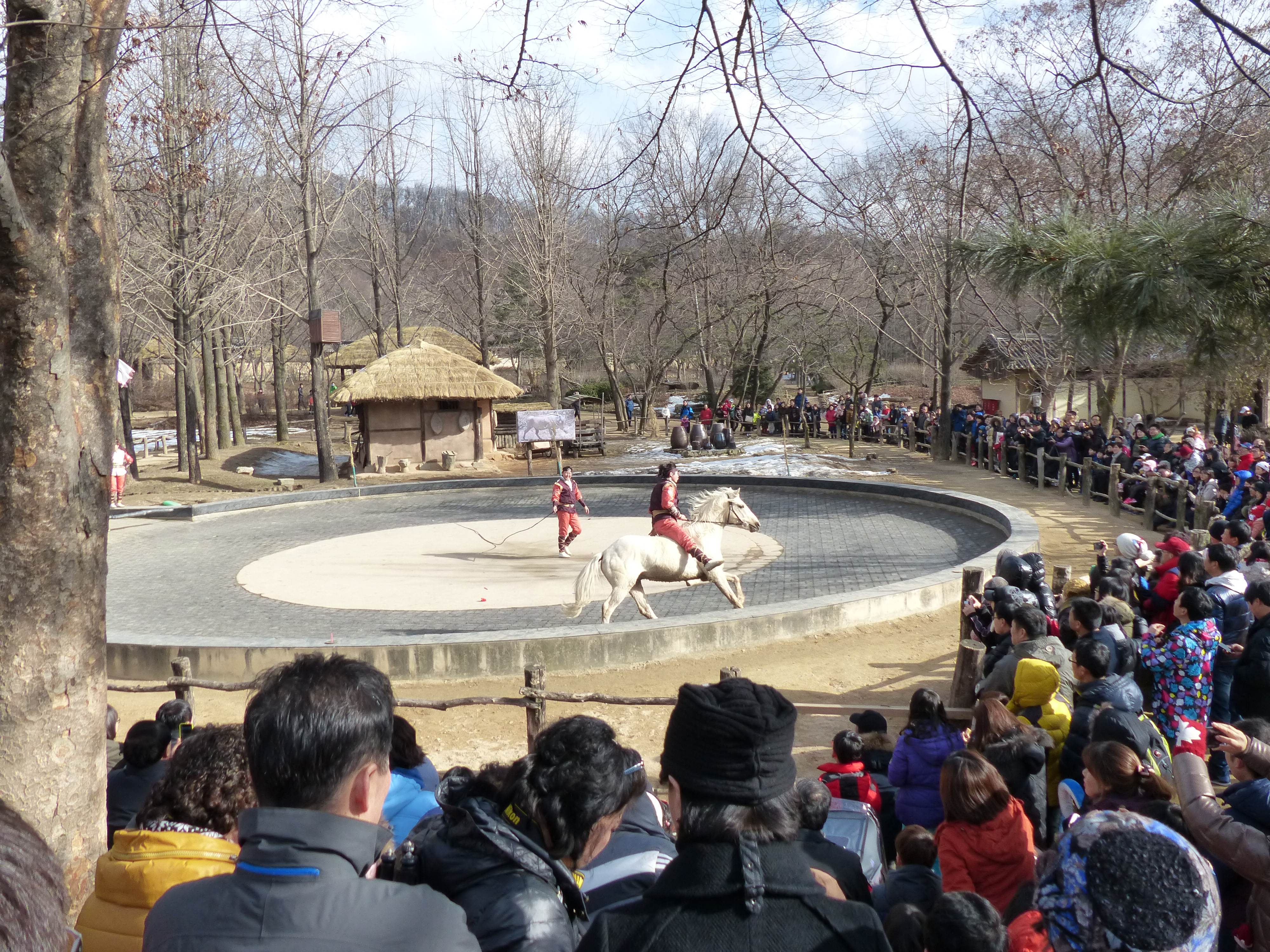
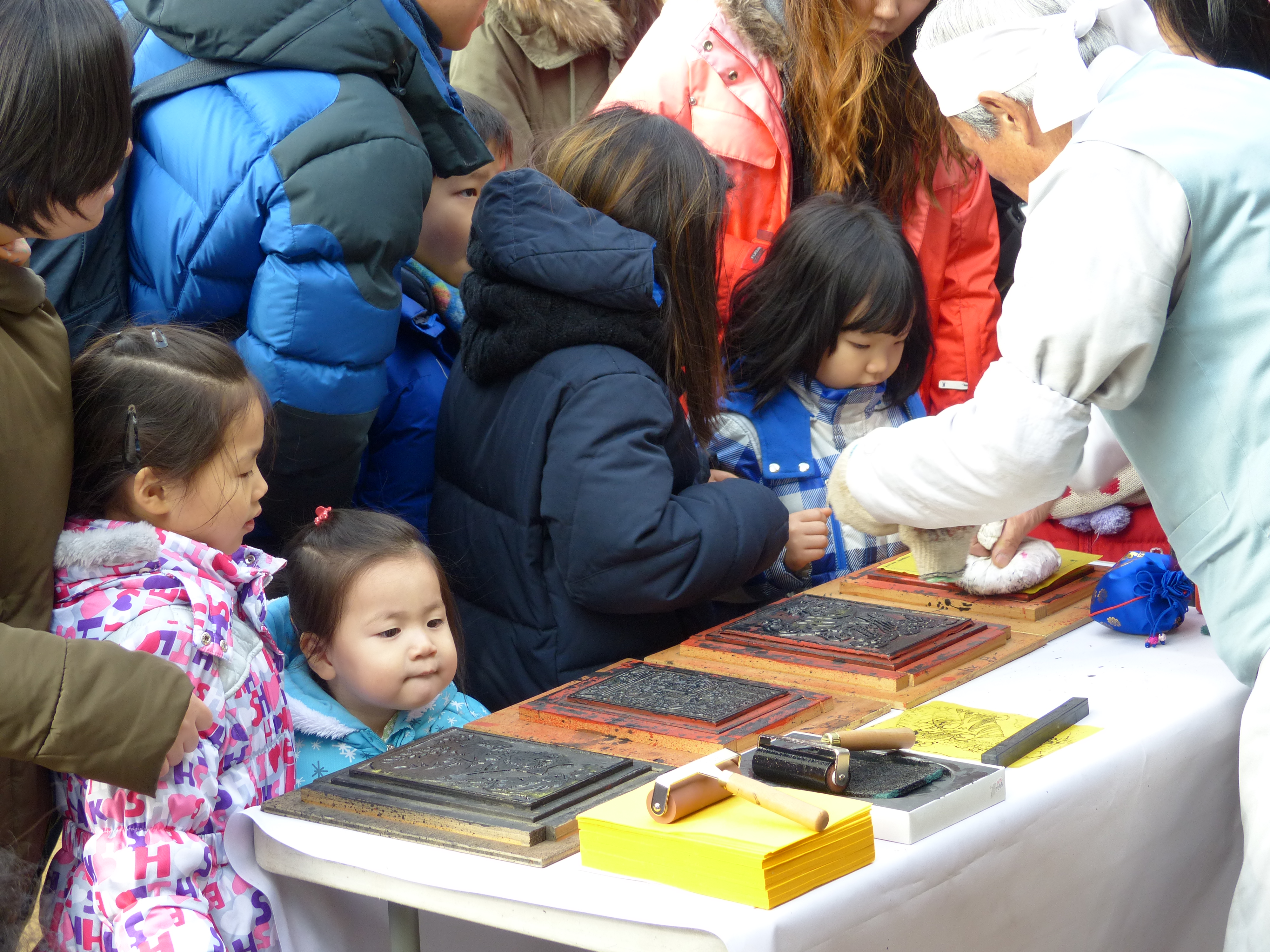
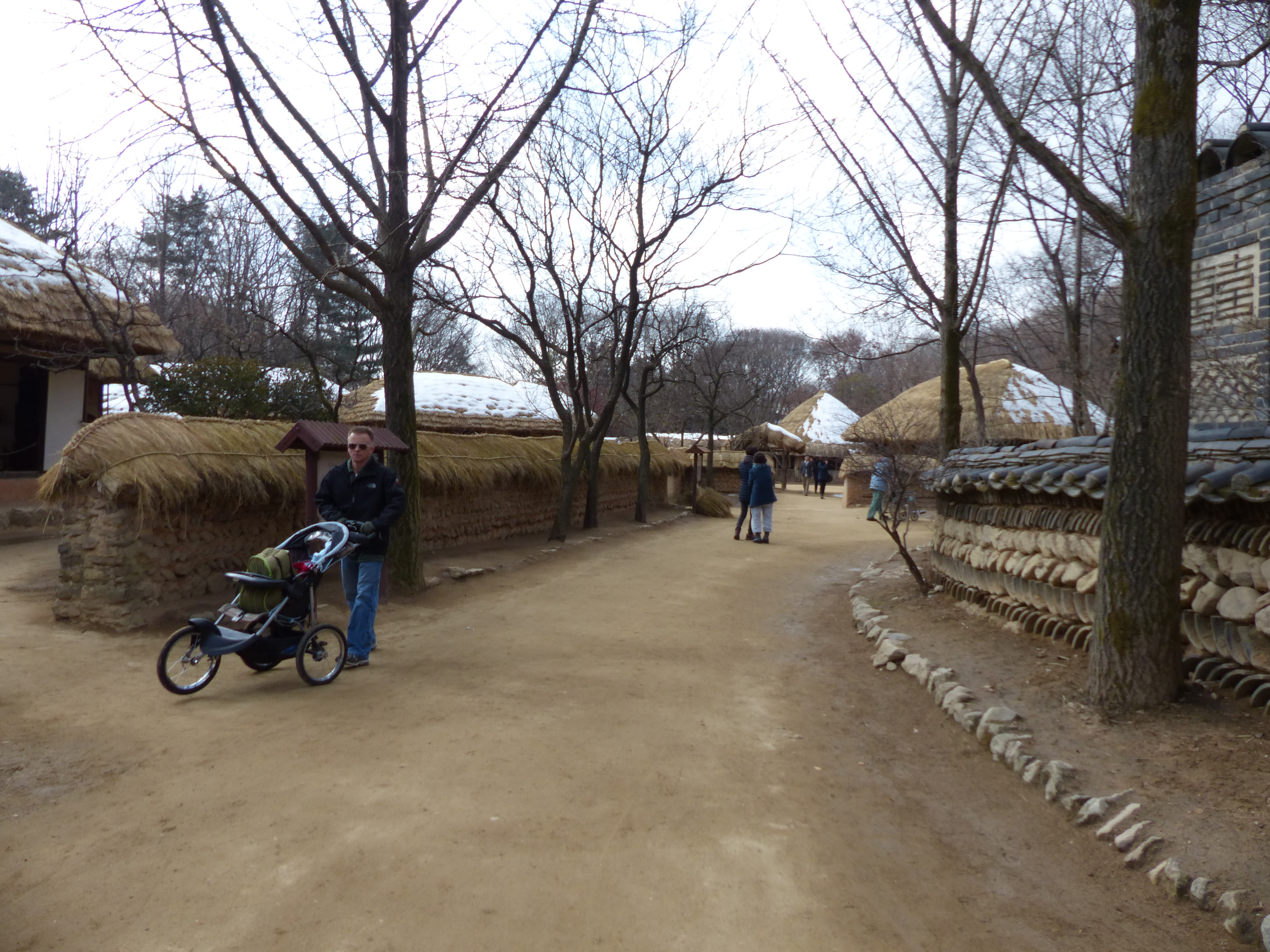
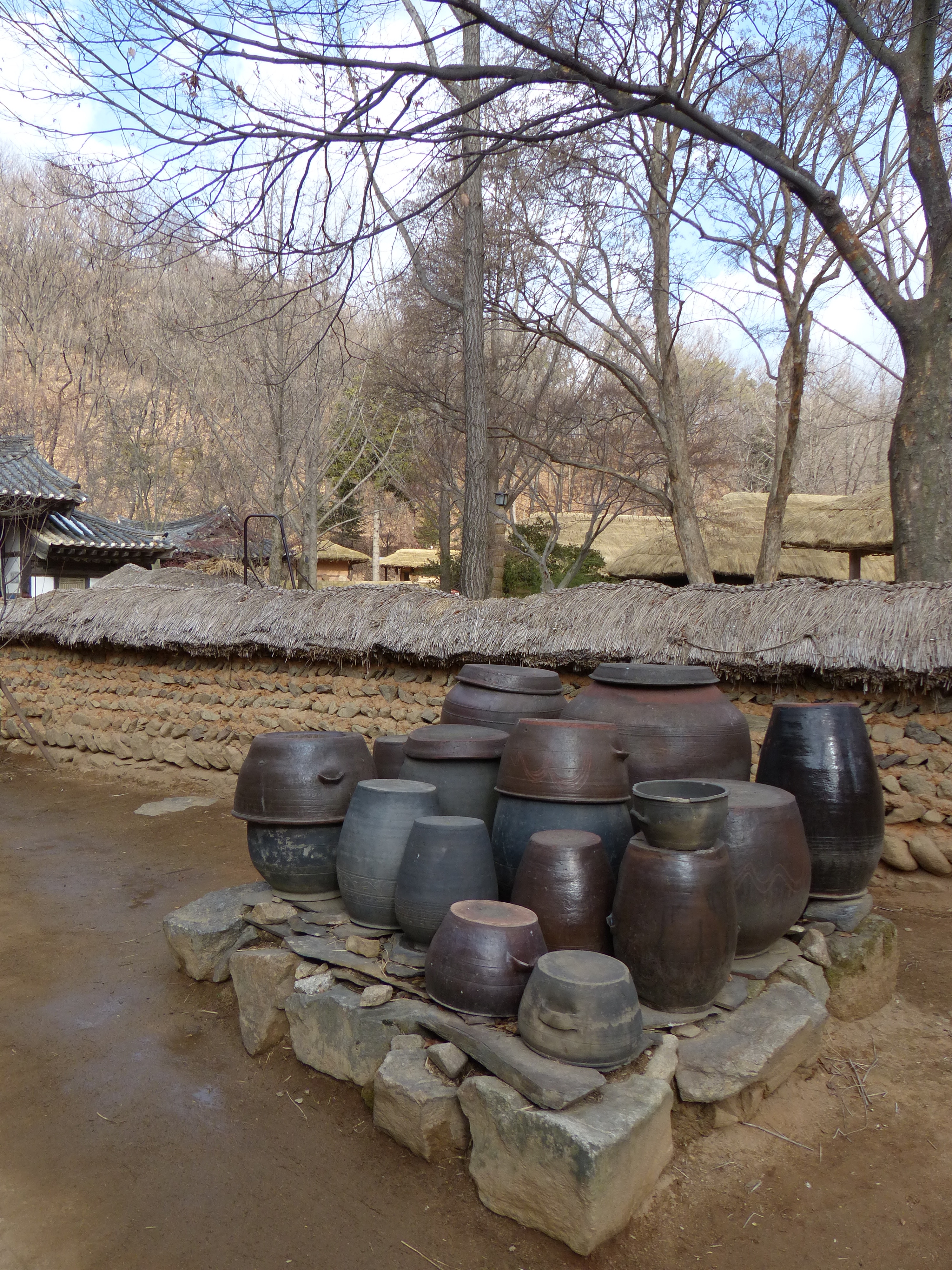
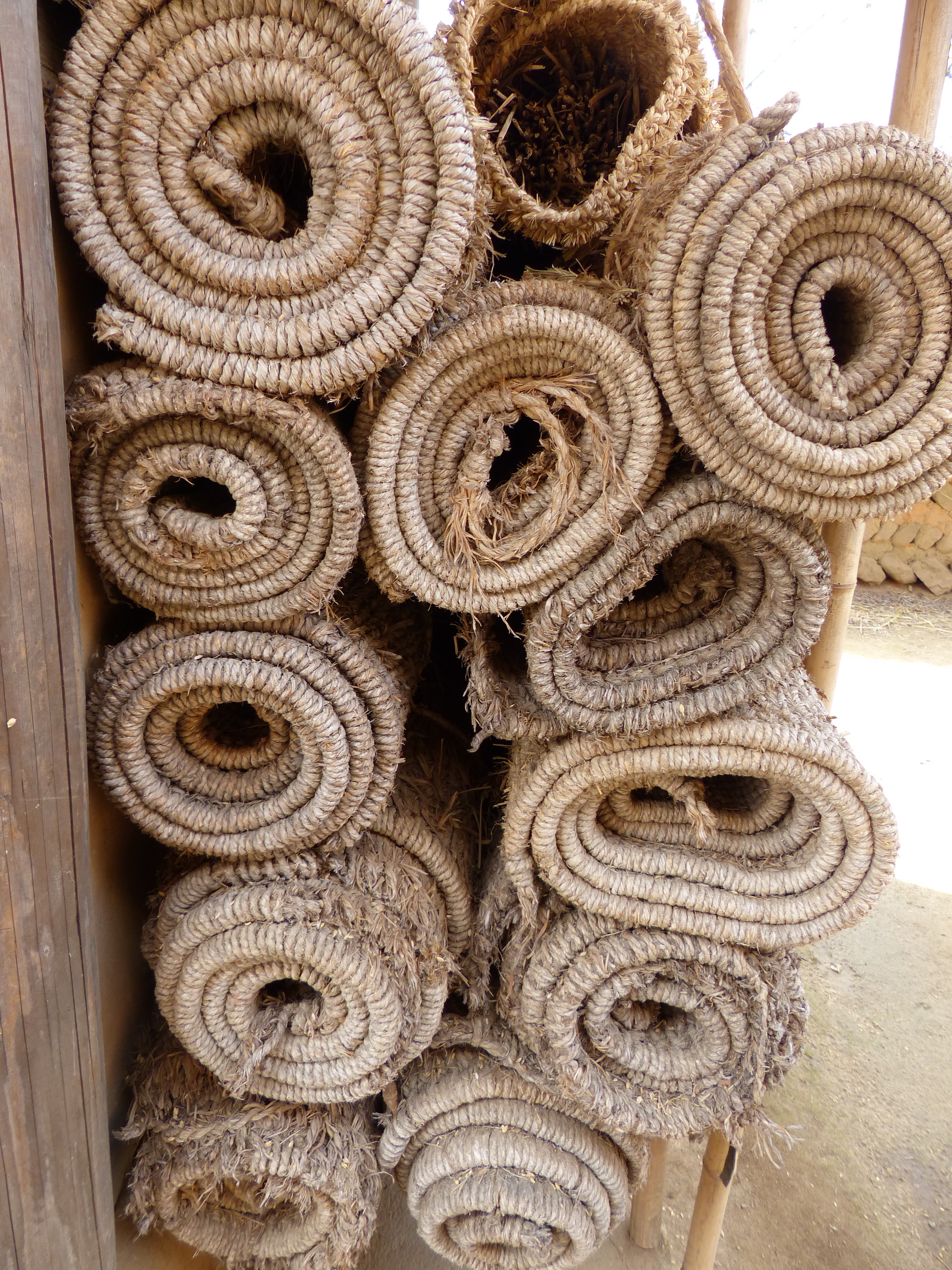
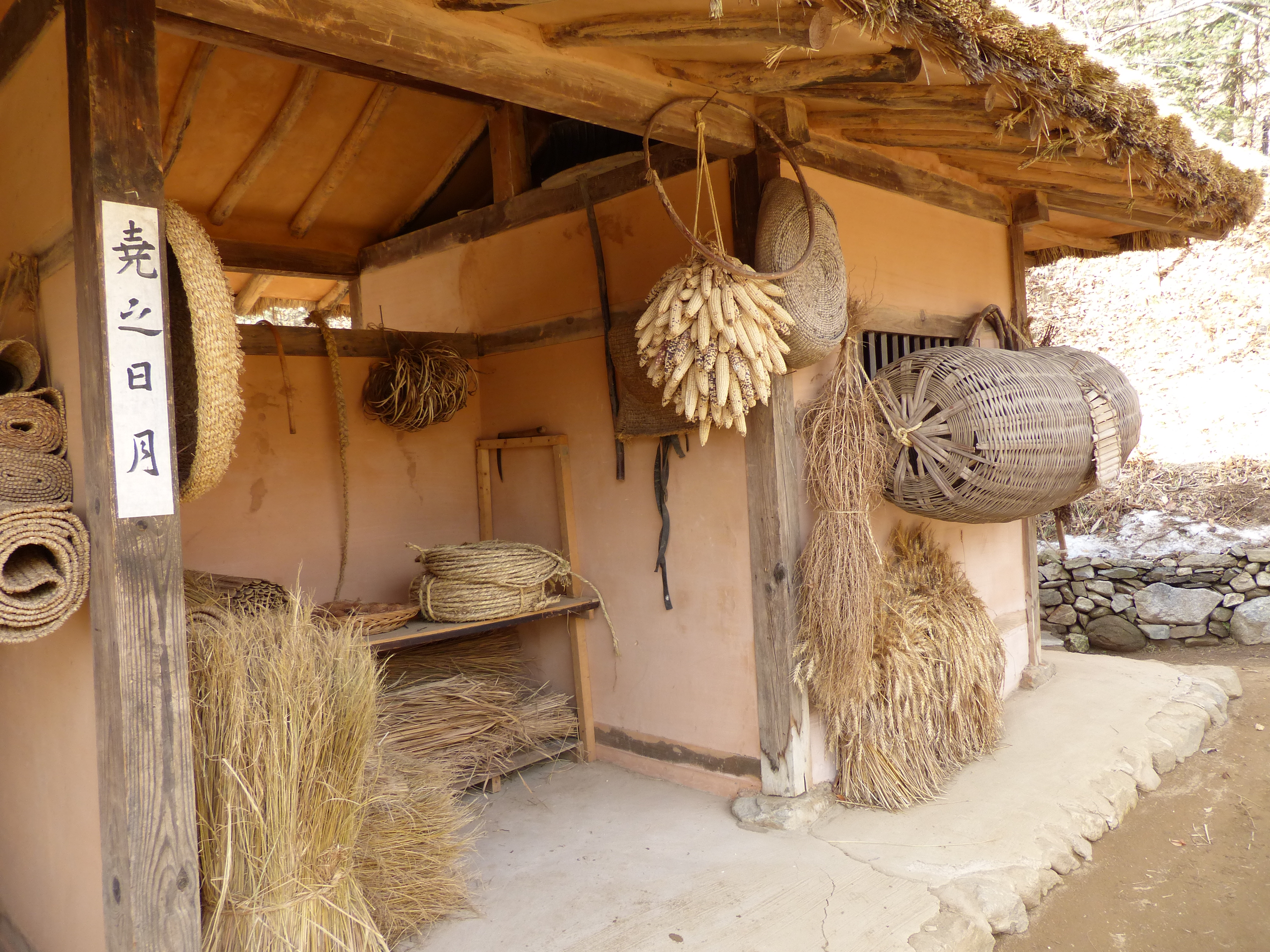
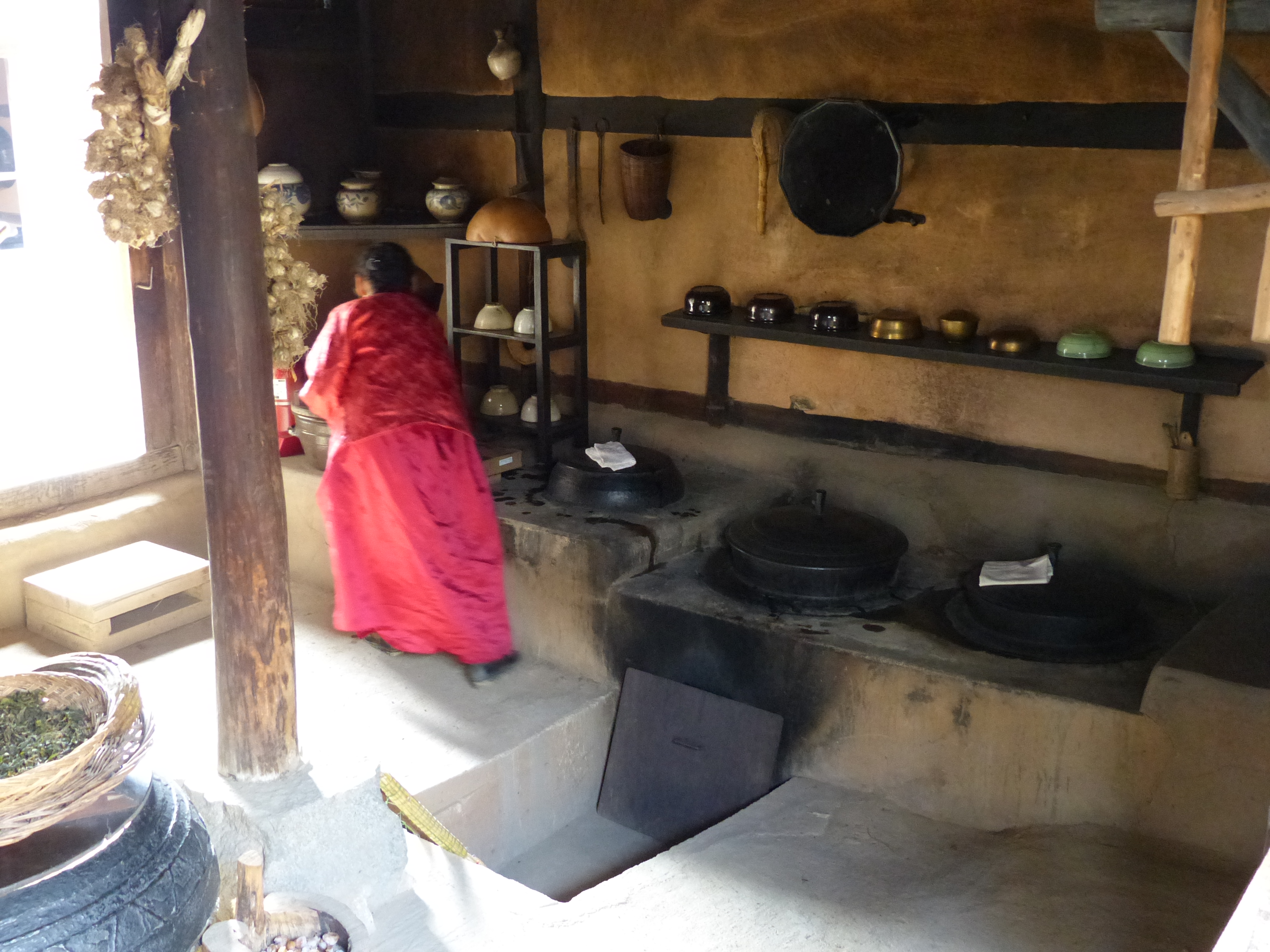
The village comprises 260 traditional houses relocated from various regions of Korea. There were opportunities to weave shoes out of straw, operate a millstone, create a silkscreened print, make a kite or fan, and participate in many other workshops, including the “experience of government office implementation of punishment,” which we missed, unfortunately.

P1030664

P1030655

P1030636

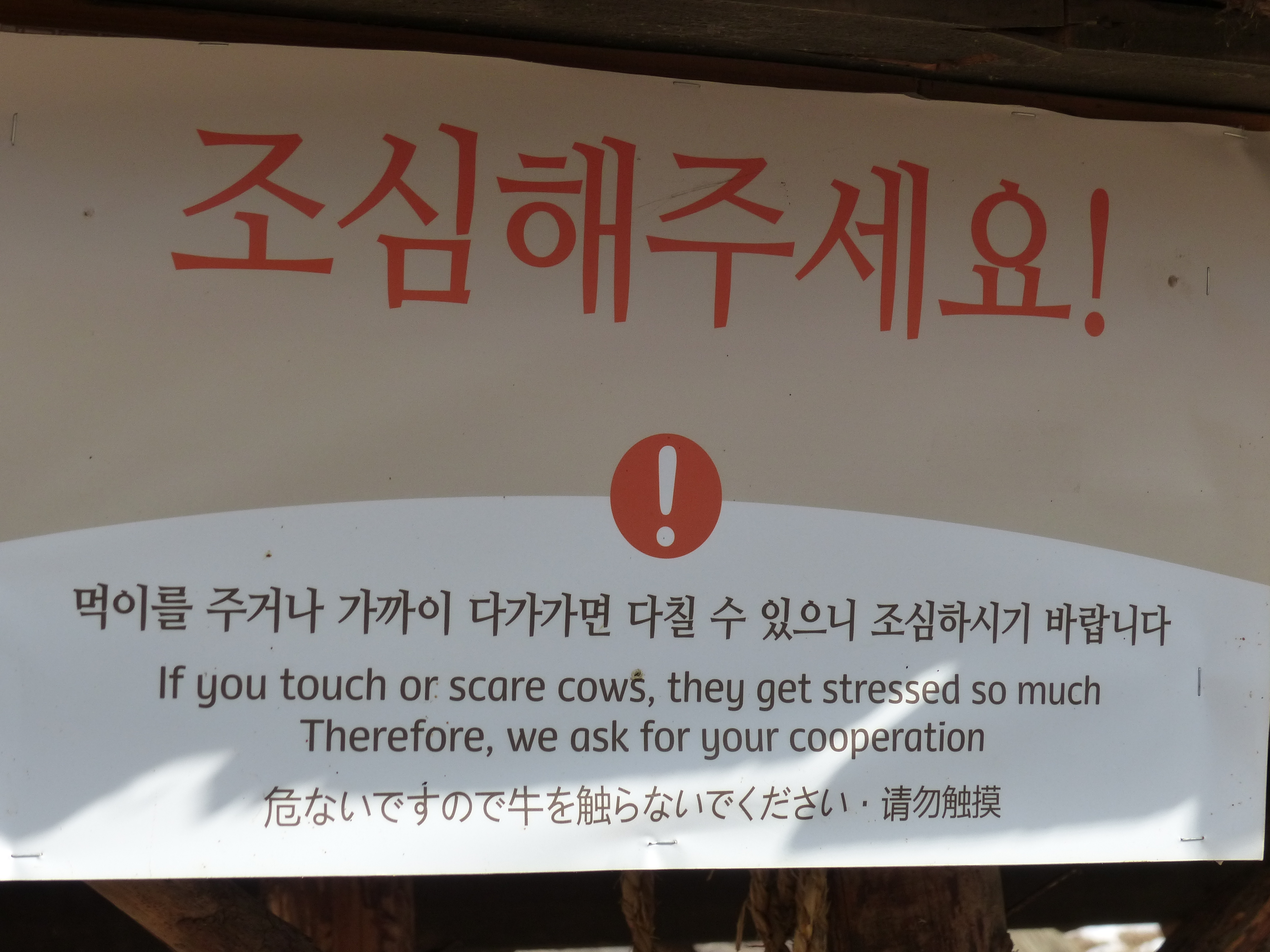
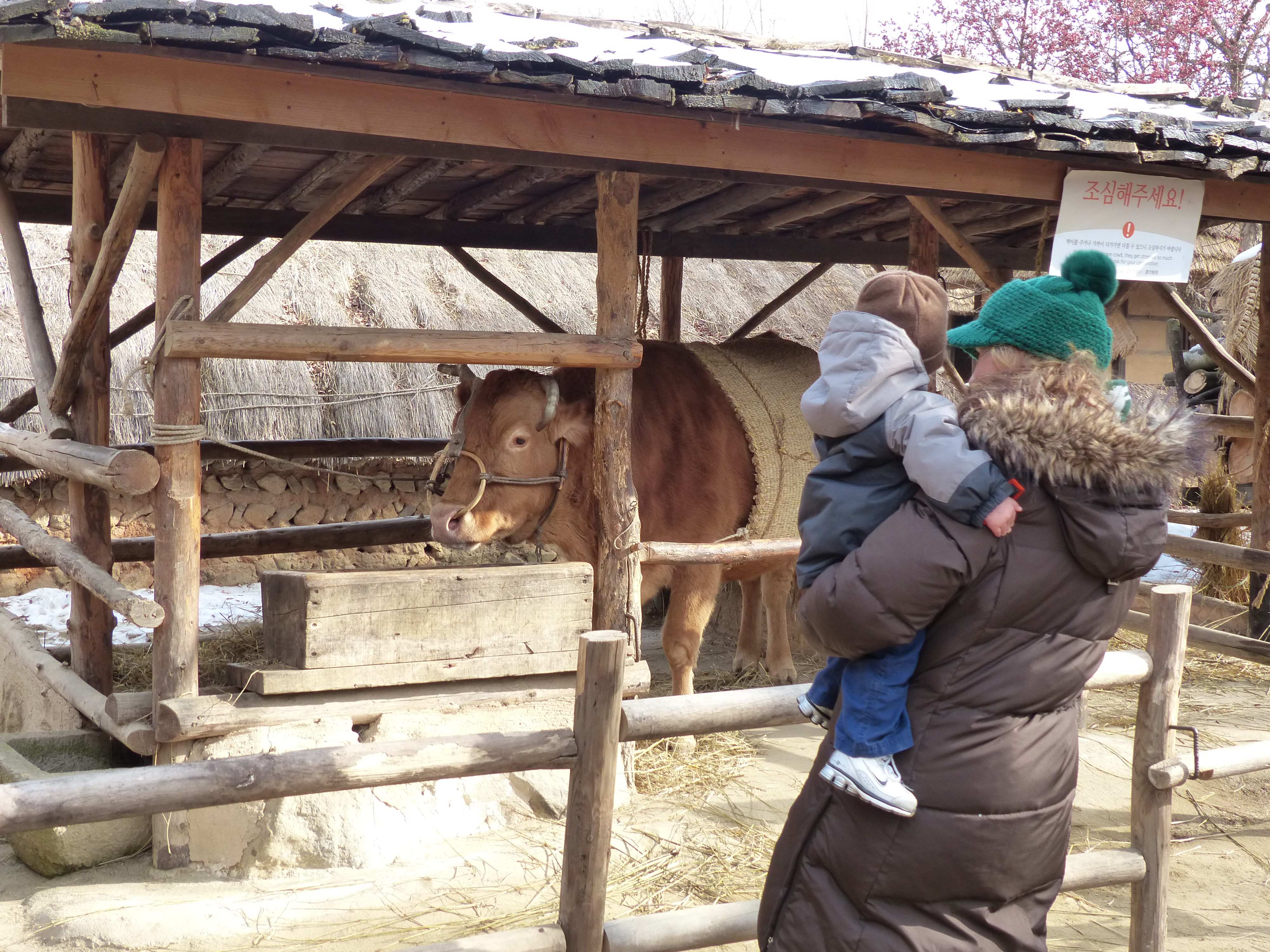
We were encouraging Will to say “moo” to the cow, while a Korean family was coaching their baby to say “oo-may.” No wonder the cow wasn’t looking at Will! It didn’t speak English.
P1030639

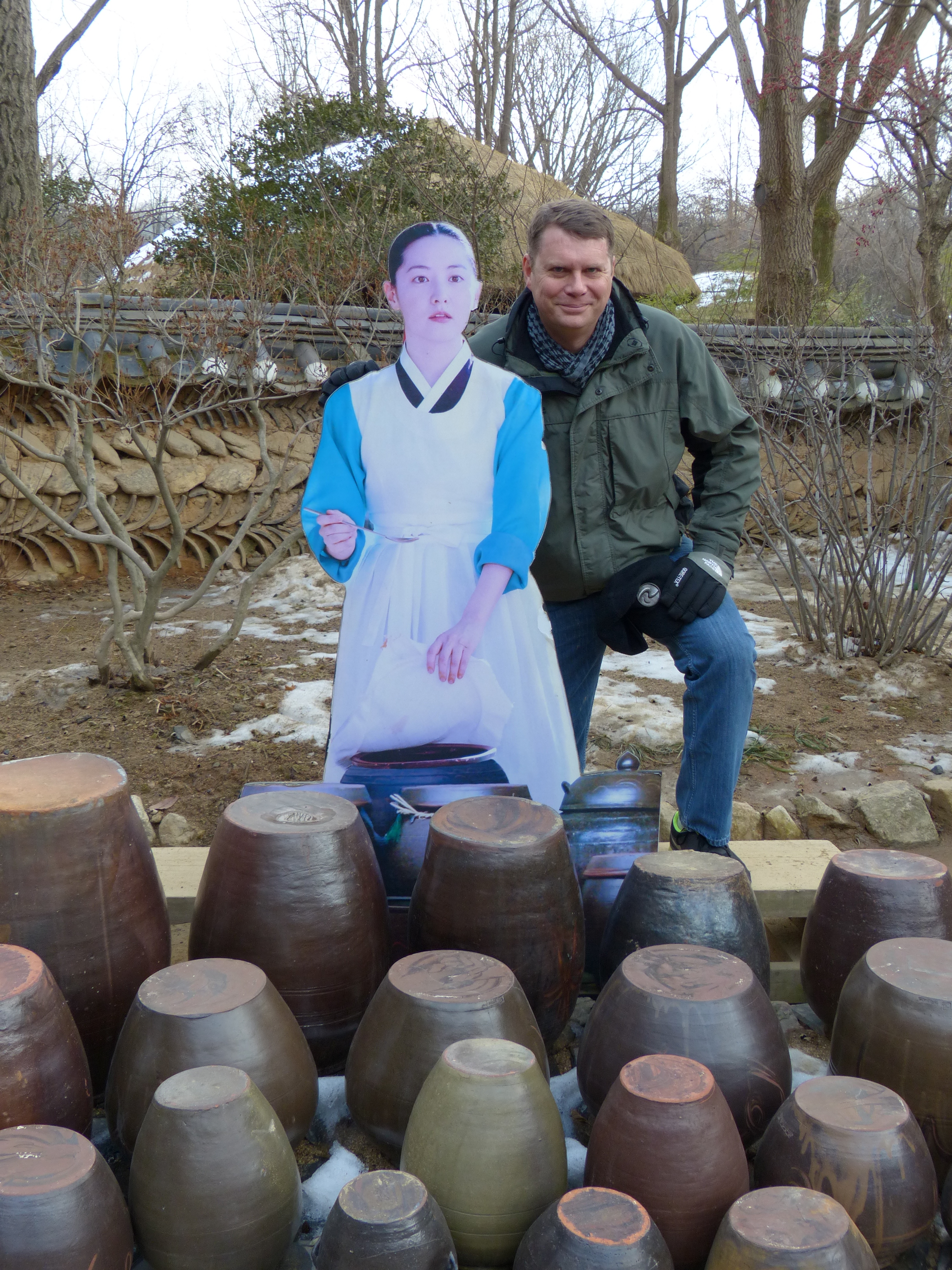
The Korean Folk Village has also served as a shooting location for popular TV dramas, so many visitors come as part of their “Han Ryu” (Korean Wave) cultural tour. I had never heard of this Korean Wave phenomenon, but apparently it’s a reference to the popularity of South Korean culture (such as K-Pop music videos) and the tourism that follows it. Here’s Tony, joining the Korean Wave and posing with Jang Geum from the K-Drama “Jewel in the Palace.”
P1030657

According to the DramaFever website:

Jewel In the Palace is arguably the first successful historical feminist drama, retelling Jang Geum’s rice-to-riches story during the Chosun Dynasty 500 years ago. Jewel is the real story of Jang Geum, a young girl who is the first woman to become the King’s supreme royal physician in a male-dominated society. Behind her child-like eyes lies an ambitious working girl with a 21st century mindset. See how Jang Geum goes from being a virtually abandoned child to becoming the King’s doctor. This unforgettable drama of epic proportions tells the touching and tear-jerking story of a true underdog.

Random shots of the folk village.
P1030644

P1030645

P1030646

P1030652

P1030660

P1030678

P1030681

P1030700

Check out my flickr set if you want to see more photos!

Well, it’s no secret that I love this kind of stuff. If I could quit my real job, dress up in period costume and play act all day, I would do it! Not sure what role I would play at The Korean Folk Village. Any ideas?

Adventures in Teaching and Travel