Mackinac Island Lilac-less Festival

After just a week in Michigan, Tony and I hit the road for a little romantic get-away. We loaded our bikes on the rental car and drove about four hours north to Mackinaw City, where we parked the car and rolled our bikes onto a ferry. The short ride treated us to views of Lake Michigan to the west and Lake Huron to the east.
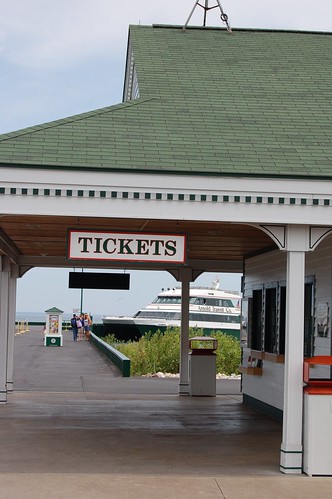
At the ferry dock.
DSC_0857

Waiting to board.
DSC_0858

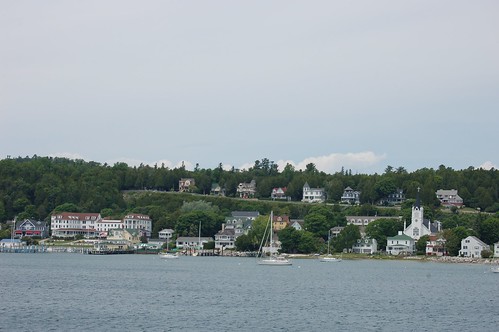
Approaching Mackinac Island.
DSC_0862

Disembarking on the island was like stepping back in time … or maybe more accurately, stepping in to a studio lot for a movie about horse-loving, bike-riding fudge makers. Our hotel’s porter greeted us at the boat and transported our bag to the hotel. We hopped on our bikes for the short ride along the harbor to our quaint weekend home, the Inn on Mackinac.
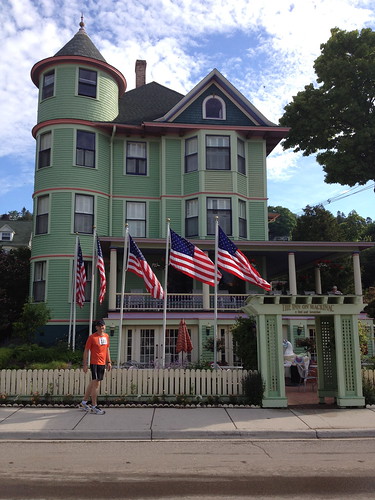
IMG_0019

After settling in, we walked back to Main Street for an alfresco lunch at the Pink Pony, followed by a stroll through the neighborhood.

Lunch at the Pink Pony. We liked this place so much, we ate here again the next day.
DSC_0866

Automobile-free since 1898, Mackinac Island has retained its turn-of-the-century charm. Juxtaposed against modern suburban developments and their cookie-cutter houses, the island’s homes range from dainty cottages with lace curtains and window boxes of red geraniums to elegant Victorian-style mansions – all turrets, verandas and stained glass. Horse-drawn carriages line the street awaiting fares, and tourists get around on rented bikes.

Home to a flourishing fur trade in the 1820s and later a commercial fishing hub, Mackinac Island’s biggest industry these days seems to be fudge. Since the first “Candy Kitchen” opened in 1889, fudge has been a popular souvenir. We popped in to several shops for samples. My favorite: dark chocolate with cherries and walnuts. (You can join a “fudge crawl” to the 14 candy stores, but that just sounded nauseating to me.)

Tony on Main Street.
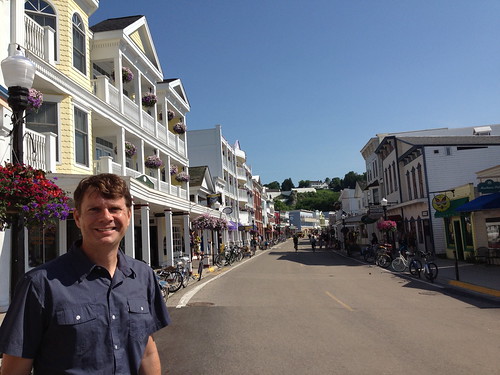
IMG_0054

We specifically picked this weekend to visit Mackinac Island for the Lilac Festival. Someone forgot to tell the lilacs, though. They had already bloomed and dropped their blossoms by the time the festival rolled around. Bummer.

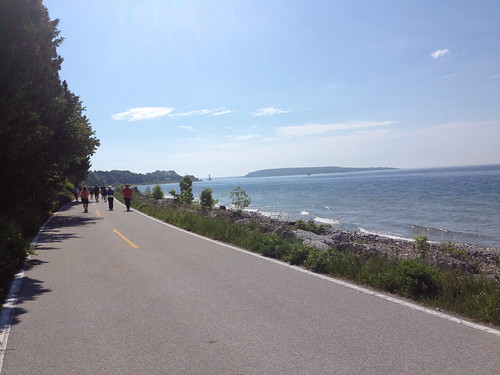
Tony and I were registered for the Lilac Festival 10K on Saturday morning. Fit and raring to go, Tony was looking forward to the run. Flabby and nursing a wonky neck, I was contemplating a big breakfast instead. That morning, however, I decided to do a 10-kilometer STROLL, stopping frequently to take photos and relishing the bright blue sky, fresh pine-scented air, and forest and waterfront trails. About 10 minutes into my walk and after snapping a few pictures, my reclusive competitive spirit suddenly surfaced and I felt the overpowering urge to kick everyone’s butts in this race. Totally out of shape, I knew I couldn’t run, but I speed-walked like a lunatic. By the time I loped across the finish line, I had pulled every muscle from the arch in my foot to my already-debilitated cervical spine.

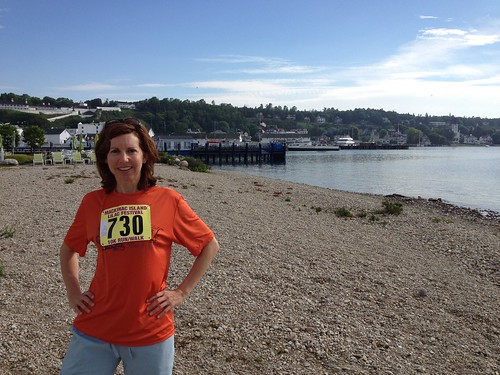
At the beach before the race.

IMG_0022

IMG_0023

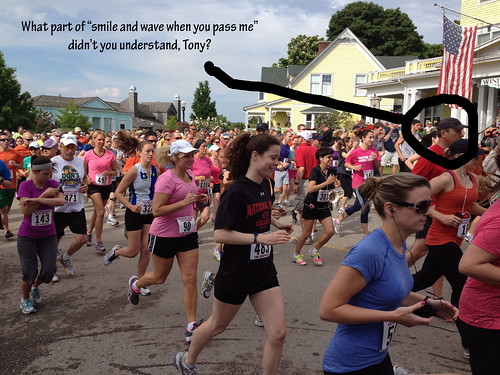
The runners got a head-start on the walkers.
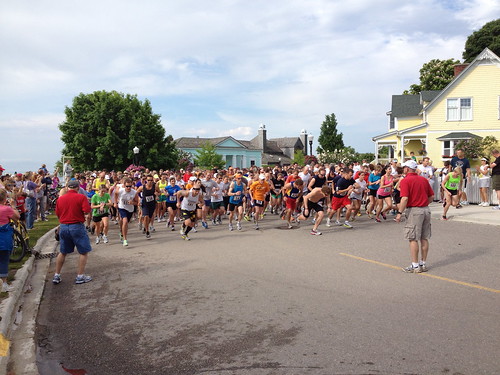
IMG_0027

IMG_0028

The walkers take off like a herd of turtles.
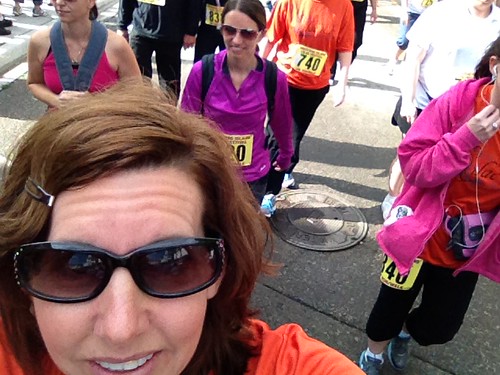
IMG_0029

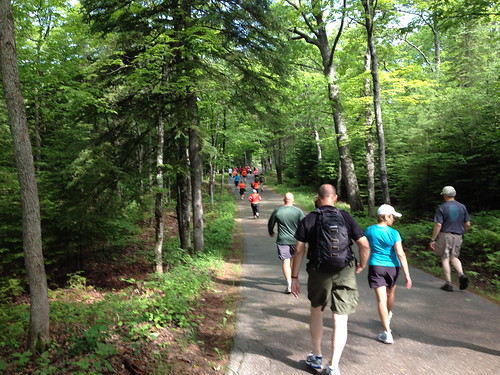
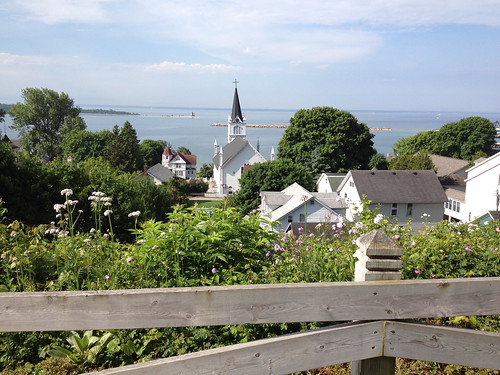
Photos I took while I was still “strolling.”
IMG_0030

IMG_0031

IMG_0032

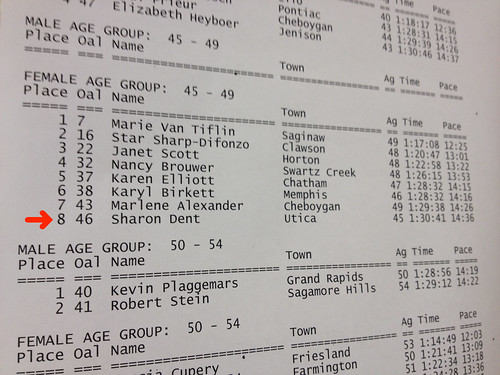
Not too shabby.
sharon's results

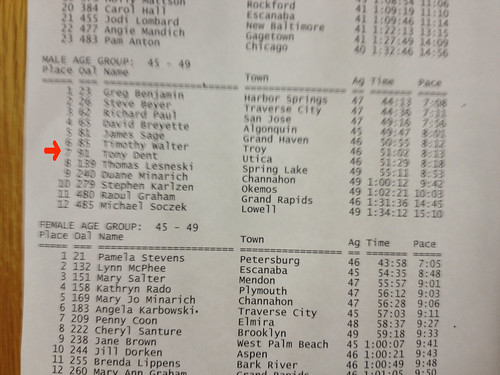
Tony was happy with his time, too. (I dropped a cookie and spilled my water on someone trying to get this shot, so it’s a bit blurry.)
tony's results

Much to Tony’s chagrin, I couldn’t possibly visit Mackinac Island and NOT take a carriage tour. So that’s what we did. It turned out to be quite interesting and informative. The island’s recorded history dates to 1,000 B.C., when Native Americans fished there for trout, pike, sturgeon, herring and whitefish. Early French settlers in the region named the hump-backed island Michilimackinac, which allegedly means “place of the great turtle.” The name was eventually shorted to Mackinac (pronounced Mack-in-aw). A French military outpost on the mainland was moved to Mackinac Island in 1761 when British soldiers took control. The fort and island became U.S. territory after the American Revolution, but the British recaptured the fort during the War of 1812. Peace negotiators restored the island and Fort Mackinac to the United States two years later.

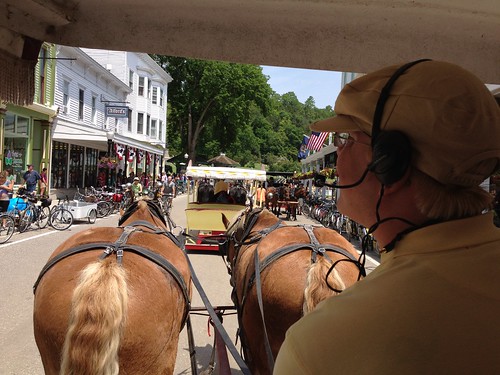
Starting the tour in town.
IMG_0036

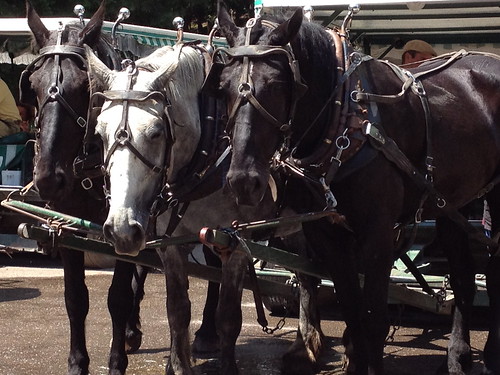
We switched to a different carriage to tour Mackinac Island State Park (which covers 80 percent of the island), as well as some historical and natural landmarks.
IMG_0041

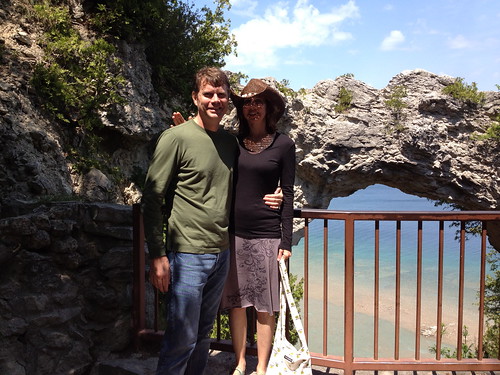
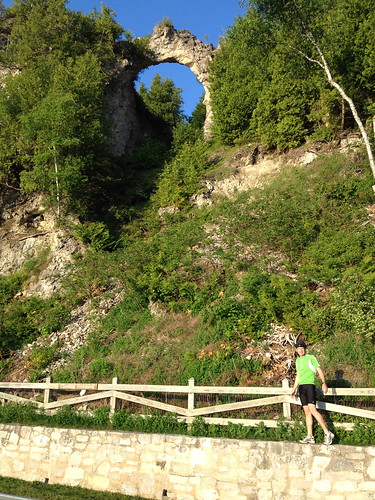
At Arch Rock.
IMG_0042

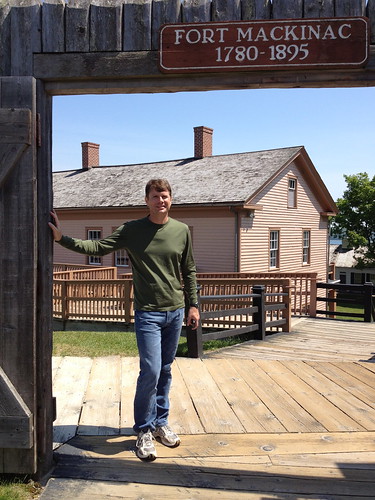
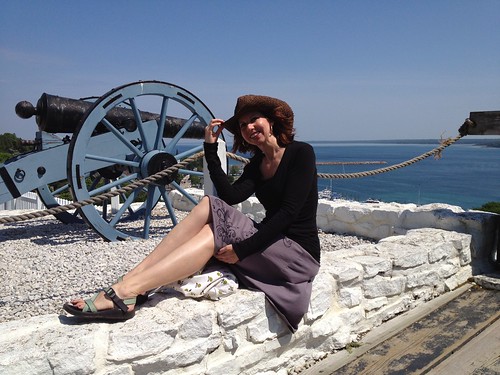
We opted to end our tour at the fort, which I LOVED! It sounds crazy, I know, but almost any military fort reminds me of my upbringing. The various buildings featured excellent interpretive displays with plenty of photographs, artifacts and stories from the 1800s. We visited the one-room schoolhouse, soldiers’ barracks, officers’ quarters, the quartermaster’s storehouse, the post hospital and the post bathhouse, which was constructed in 1885 during a “hygiene fever.” The post doctor implemented a revolutionary policy requiring soldiers to bathe at least once a week in the cast iron bath tubs.
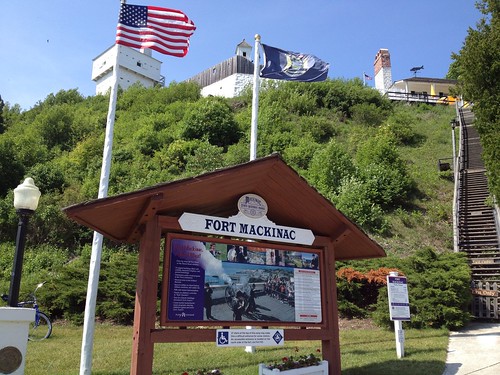
IMG_0020

IMG_0043

IMG_0019

I am more than a little fascinated with medical history, so one of my favorite characters from Fort Mackinac lore is Dr. William Beaumont. Here’s the story, well told on Wikipedia:

On June 6, 1822, an employee of the American Fur Company on Mackinac Island, named Alexis St. Martin, was accidentally shot in the stomach by a discharge of a shotgun loaded with a duck shot from close range that injured his ribs and his stomach. Dr. Beaumont treated his wound, but expected St. Martin to die from his injuries. Despite this dire prediction, St. Martin survived – but with a hole, or fistula, in his stomach that never fully healed. Unable to continue work for the American Fur Company, he was hired as a handyman by Dr. Beaumont.
By August 1825, Beaumont had been relocated to Fort Niagara in New York, and Alexis St. Martin had come with him. Beaumont recognized that he had in St. Martin the unique opportunity to observe digestive processes. Dr. Beaumont began to perform experiments on digestion using the stomach of St. Martin. Most of the experiments were conducted by tying a piece of food to a string and inserting it through the hole into St. Martin’s stomach. Every few hours, Beaumont would remove the food and observe how well it had been digested. Beaumont also extracted a sample of gastric acid from St. Martin’s stomach for analysis. …Beaumont used samples of stomach acid taken out of St. Martin to “digest” bits of food in cups. This led to the important discovery that the stomach acid, and not solely the mashing, pounding and squeezing of the stomach, digests the food into nutrients the stomach can use; in other words, digestion was primarily a chemical process and not a mechanical one.
In early 1831, Dr. Beaumont conducted another set of experiments on St. Martin’s stomach, ranging from the simple observation of normal digestion to the effects that temperature, exercise and even emotions have on the digestive process.
Beaumont published the account of his experiments in 1838, as Experiments and Observations on the Gastric Juice, and the Physiology of Digestion. He and St. Martin parted ways, with Beaumont eventually going to St. Louis, Missouri, and St. Martin to his home in Quebec province, Canada. Off and on for the next twenty years, Beaumont tried to get St. Martin to move to St. Louis, but the move never occurred. Beaumont died in 1853 as a result of slipping on ice-covered steps.

Sunday morning, we rose with the sun for a bike ride on Mackinac Island’s perimeter highway M-185.
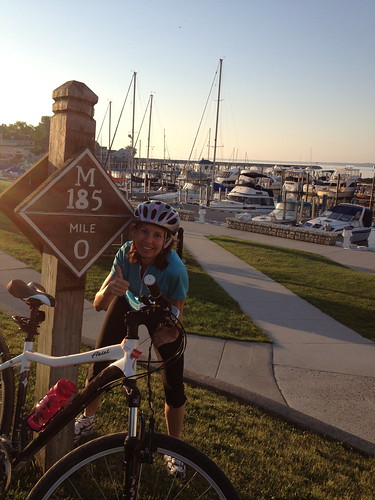
IMG_0046

Here’s Arch Rock again.
IMG_0047

Whew! We rode around the ENTIRE ISLAND!!!
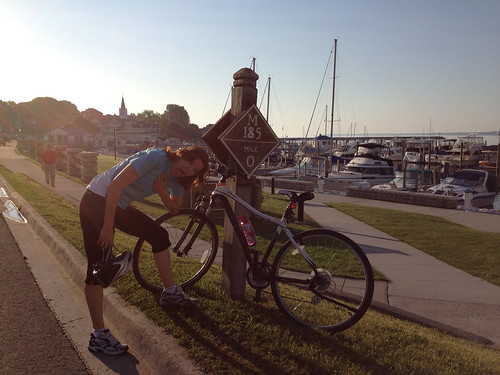
IMG_0049

(OK, the “entire island” is only eight miles…)

After breakfast, we put on our grown-up clothes and walked to the Grand Hotel. Built in 1887 for summer visitors, the hotel exudes posh nostalgia (especially if you squint enough to blur the bored teens with saggy jeans and dads with bellies hanging over their cargo shorts). The movie “Somewhere in Time” was filmed at the Grand. Remember? Christopher Reeve’s character goes back in time and meets the woman of his dreams, played by Jane Seymour, but then he finds a modern-day penny in the pocket of his 1912 pants and is transported back to the 1970s. Of course, I felt compelled to re-enact the penny scene for Tony more than once. He loved it. Not really.
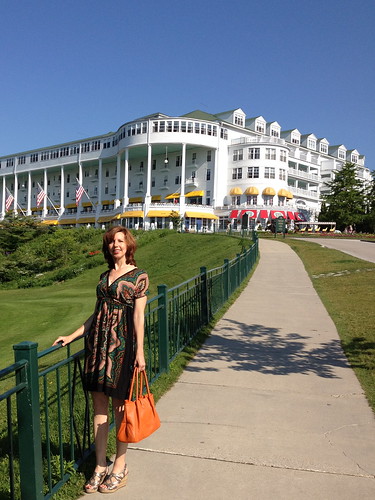
IMG_0051

After our visit to the Grand, we decided to head back to reality on the next ferry. Maybe we’ll try to catch the lilacs in bloom next summer.
Home

Every day in India is an adventure of emotions. That’s not hyperbole. Some adventures are small and giggly, like riding home from a restaurant in a tuk-tuk with hot pink vinyl upholstery, disco lights and “Who Let the Dogs Out” blaring from the stereo. Some adventures are vast and spiritual, like strolling the prayer path around the Dalai Lama’s residence or standing in line with ecstatic Sikh pilgrims at the Golden Temple. Some adventures are ongoing and frustrating, like explaining to the plumber that he is nuts to think the lack of hot water is because the water has to come from far, far away and cools off along the journey (right, Nancy?). Some adventures are gut-wrenching despite their predictability, like shaking your head at tiny, dirty street children with outstretched hands. Some adventures are mesmerizing in their outlandish implausibility, like smearing psychedelic colors on your friends for Holi or watching a two-story effigy of Ravana explode in fireworks on Dussehra, or really anything that happens on any Indian holiday.

That’s all to say that Tony and I are quite content to spend a few weeks in a relative adventure-free zone. Although we love our international adventures, we also really, really, really love coming back to Michigan for summer vacation and …

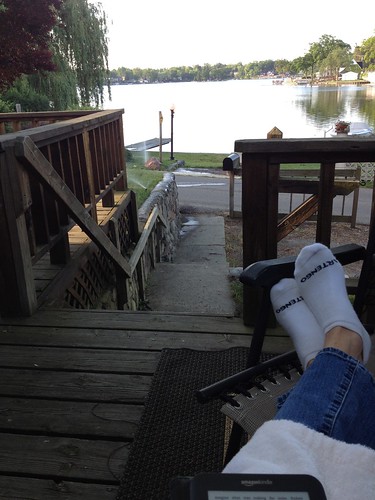
… chilling on our deck, overlooking Lake Orion,
IMG_0010

riding bikes on the myriad nature trails,
IMG_0014

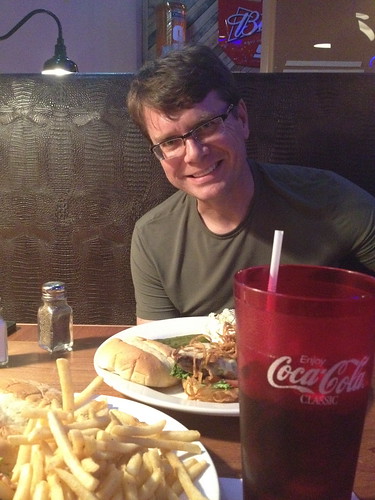
eating insane quantities of American delicacies (I had a bacon cheeseburger with avocado at this restaurant),
IMG_0017

and hanging out with my wacky family!
IMG_0007

So bring on summer vacation!

A muse on my commute

I’ve had a couple glasses of wine, and you know what that means! My creative juices are flowing. Tonight, I’m writing about an unusual moment from today’s commute…

Prose first, then poetry? OK, then.
Driving home from physical therapy tonight, my taxi got trapped in Delhi’s usual snarl. I scooted across the back seat to avoid the scorching sun, but 110° F will bake you no matter where you sit. Waiting at a traffic light, I watched the regular beggars on the median. They were wilting in the heat, but desperation forced them off the curb. They circulated through stalled traffic, knocking on car windows and crying out, “Madaaaam! Madaaaam!” In an effort to affirm their humanity, I always make eye contact, smile and mouth, “No, thank you.” Today, there was a minor but interesting twist. A woman shuffled toward my taxi, carrying a drooping little girl. She approached with the usual appeal for money; her knocks on the taxi window inspired the baby, who gripped a coin. The youngster tentatively stretched out her skinny arm and tapped on the taxi window. Its “ting” jolted her out of heat-induced lethargy, her eyebrows shooting up in surprise. As her mother obliviously continued with exhausted moaning, the child smiled at me, conspiratorially. I couldn’t help but wonder how much longer a coin’s musical tapping would amuse her. Her time on the hip was winding down, and soon the window rapping would turn ominously purposeful.
Same story, poet’s eyes.
Balanced precariously on her mother’s hip,
bobbling with every sudden noise, so many sounds,
eyes momentarily unfocused on the tangled traffic,
skin peeling – no, simply patchy with sweat and dust.
Her mother, hand turned backwards,
raps with knotty knuckles on the window,
dink dink dink.
Her sequined sari limply draped across her face to block the sun,
Her thumb and fingers meet, gesturing at a hungry mouth.
Her silver ring makes contact,
tink tink tink.
This metal-on-glass melody startles.
The baby’s eyes glisten, suddenly alert, curious.
A precious one-rupee coin clenched in a tiny wet fist stretches out.
tink tink tink.
An innocent smile. A bounce.
A giggle of accomplishment.
A grimace from her mother, whose practiced pleas lose power in the presence of a gleeful child.
tink tink tink.
How soon before the coin’s music loses its magic?

Tibetan Children’s Village

With only two weeks left before SUMMER break, I’m finally writing my last post about SPRING break.

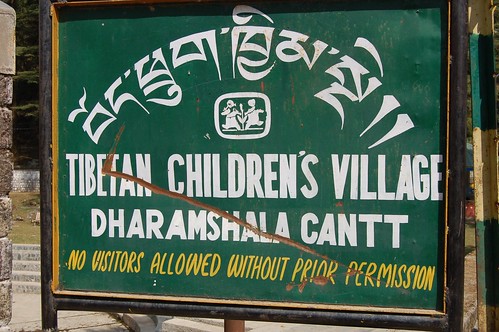
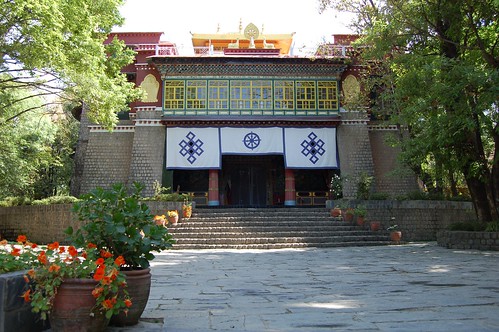
Theresa had read about the Tibetan Children’s Village, and my principal had mentioned that our school was a strong supporter, but I didn’t know what to expect when we decided to check it out on April 3. Oops, we hadn’t asked for prior permission to visit.
Untitled

Nevertheless, we walked up a short hill and entered a big play area, where young children in blue uniforms were eating snacks and running around. Unsure of what to do next, we found some shade and watched the youngsters until a woman pointed to the office and told us we needed to check in. Up a couple flights of stairs, we were greeted by a man who took us into the office of someone important looking. I told him that I worked at the American Embassy School and that we were interested in visiting his school. He immediately expressed gratitude for all AES has done to support the work of TCV and sent us off with a tour guide. We joined a Belgian family for a walk around the village.

Tenzin Tseten was born in India after his parents fled Tibet in the 1950s. He explained that the 1959 Chinese occupation of Tibet and ensuing protests led to more than a million Tibetan deaths and a mass exodus of survivors to India. Concerned for the thousands of children orphaned or left destitute, the Dalai Lama proposed a special center for them. The Nursery for Tibetan Refugee Children was founded in 1960 and eventually developed into the Tibetan Children’s Villages, which now manages five children’s villages and many schools, day care centers and other educational programs.
Untitled

According to a TCV brochure, more than 35,000 children have received education and family-style support.

Even with so much progress, there is still much work to be done as Tibetans continue to flee the persecution in their homeland. Parents still feel compelled to give up their children by the pervasive sense of hopelessness in Tibet, where educational opportunities for Tibetan children are extremely poor. There the school system is used to suppress the cultural identity of Tibetan children by teaching in Chinese and denigrating the Tibetan language and culture.
Tenzin said parents in Tibet often face the worst of decisions: (a) bring up their children in an increasingly oppressive political climate, where their traditional lifestyle is under attack, or (b) send their children away to the TCV, illegally and permanently, for immersion in the Tibetan way of life and greater hope for future opportunities. Families pay exorbitant amounts of money for smugglers to sneak their youngsters – even infants – over the Himalayas, through Nepal and into India, often during the winter when the chance of apprehension by Chinese authorities is less likely, he said.

We toured one of the “khimtsang” or group homes, where children live as brothers and sisters with their foster parents.
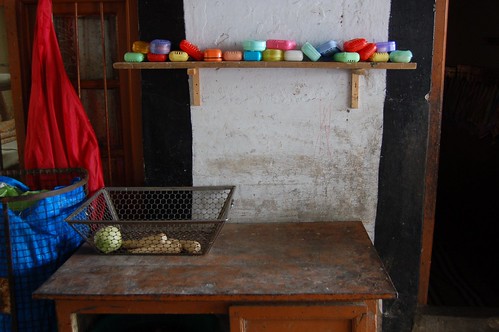
Toothbrushes and soap boxes.
Untitled

Untitled

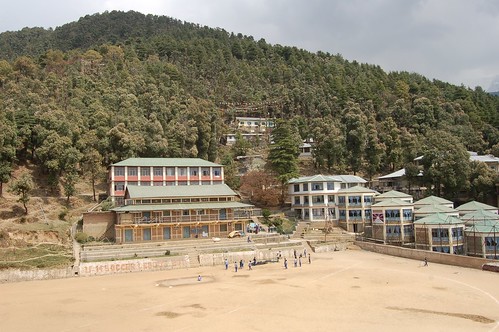
The high school field and classroom facilities.
Untitled

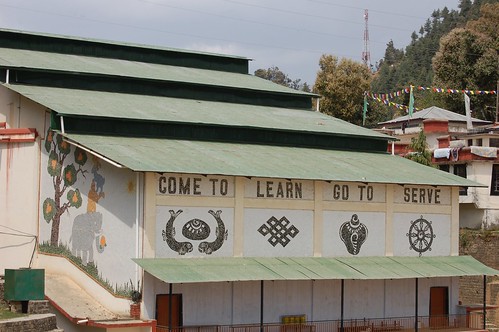
Darn close to our own school’s motto: “Enter to learn, leave to serve.”
Untitled

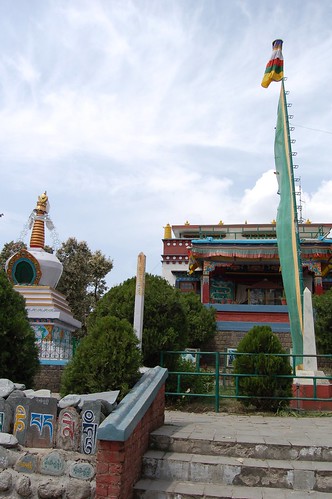
Temple on campus.
Untitled

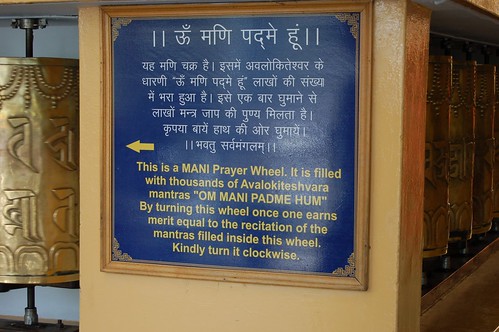
Om mani padme hum, a mantra in Tibetan Buddhism to invoke the attention and blessings of Chenrezig, the embodiment of compassion.
Untitled

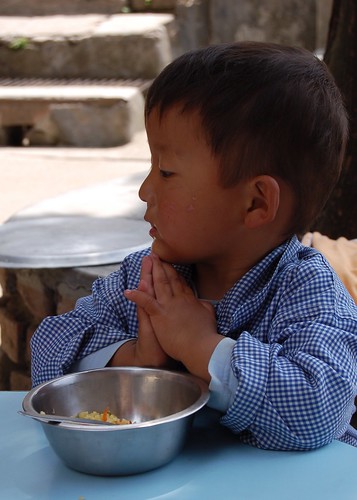
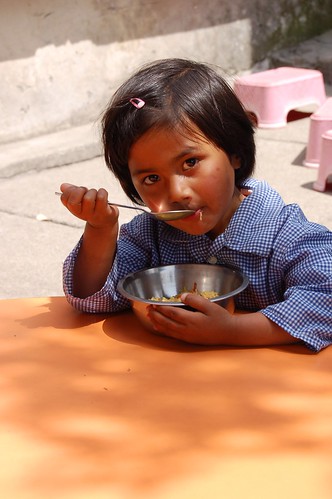
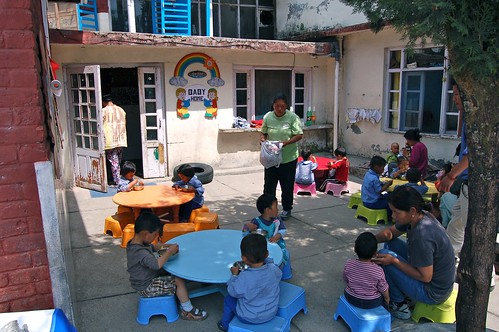
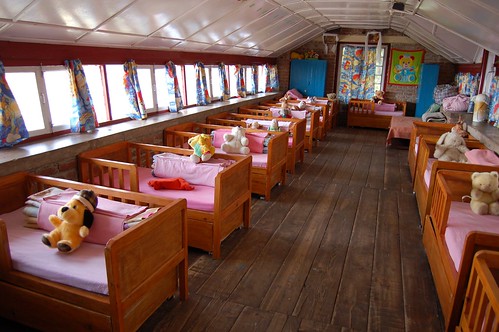
“Do you want to see the baby home?” Tenzin asked, leading us to the TCV nursery. We didn’t see any actual babies, but the toddlers were having lunch on the patio. They washed their hands at a row of sinks and then took their seats at small plastic tables with their hands folded. When everyone had been served, the teacher gave a signal and they recited a Tibetan prayer in unison before digging into their lunch.
Untitled

Untitled

Untitled

Untitled

Baby dorm.
Untitled

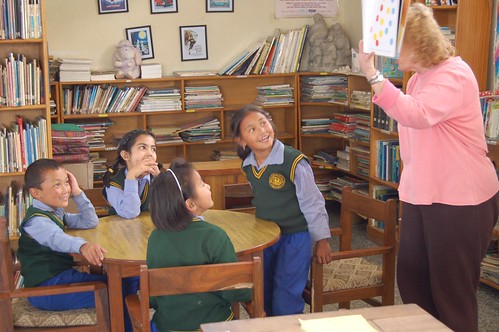
Knowing the American Embassy School had donated thousands of books to TCV, I wanted to check out the library. Tenzin introduced us to Nancy Corliss, a retired teacher from New York, who volunteers in the TCV library twice a year for two months at a time. When she’s back in the States, she promotes the TCV’s work through speaking engagements. We arrived at the library just in time to watch Nancy read Press Here, requiring the youngsters to interact with the book. You can see in the photos that some young boys are already studying to be monks; the others wear TCV school uniforms.
Untitled

Untitled

A sign on the library.
Untitled

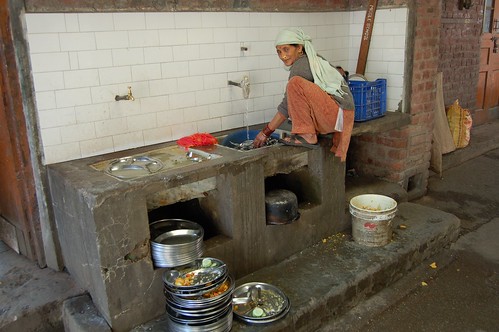
When we asked Nancy to recommend a restaurant for lunch, she quickly sought permission to treat us in the staff canteen. After a nice chat and tasty Tibetan food, we carried our metal plates to the dish washer. At AES, we do that, too, but the “dish washer” is actually a “dishwasher.” Here, the dish washer was a petite lady with a big gold nose ring and a friendly smile, perched on the edge of the sink.
Untitled

In addition to helping Tibetan refugees, the TCV also accepts other children whose parents want the Tibetan education. Theresa and I met a family in a Dharamsala cafe who live in Delhi but are thinking about sending their two kids to the TCV, specifically for the Tibetan Buddhism schooling. Here they are having a treat.
Untitled

I still feel conflicted emotions from our time in Dharamsala. Having visited Tibet (in 2009) and seen firsthand the Chinese oppression of the Tibetan people, I grieve for the parents who send their children away in a desperate attempt to provide a brighter future and salvage their Tibetan identity. I feel a sense of hopelessness for these people, who most likely will never see their homeland again. I feel angry than I was allowed to tour Lhasa, a place of profound spiritual symbolism for Tibetan Buddhists, but my TCV guide can only dream of such a journey. Still, this town is uplifting in that it promotes Tibetan culture while providing safety and security for the Dalai Lama and other Tibetan refugees.

After describing the TCV to Tony, we decided this was a cause worth supporting. We recently committed to sponsoring a child and were assigned a 10-year-old girl named Tenzin Nordon, whose father escorted her to Lhasa before sending her on to India with a group of other Tibetans. She attends the TCV school in Bylakuppe, India. A letter from the school says she misses her parents terribly but is happy to have two cousins at the school with her.
Tenzin

If you’d like to become a TCV sponsor, contact Nyima Thakchoe at nyima@tcv.org.in. And tell her I sent you!

Chillin’ at the Dalai Lama’s residence

For the love of Peter Rabbit, as my Nana used to say, why am I still blogging about spring break?! It’s been more than a month.

Well, here’s why: With less than four weeks before we head Stateside for the summer, life is crazy busy. My calendar is packed with the usual stuff in addition to report card writing, physical therapy appointments for my wonky neck, rehearsals for the elementary school play, professional development workshops, summer travel planning, end-of-year social functions, and meetings, meetings, meetings. It seems I rarely have time to think, much less think about what I did over spring break.
Nevertheless, it’s time to wrap it up. So, make those Scooby Doo arm-waving gestures and doodly-doo sounds to take yourself back to April 4.

Theresa and I were hanging out in McLeod Ganj up in the mountain state of Himachal Pradesh.

Walking around town, I kept feeling an odd mash-up of deja vu and country-confusion. I KNEW I was in northern India, of course, but I kept seeing people, architecture, clothing and food reminiscent of my visit to Tibet in 2009, as well as market stalls stocked with Chinese-made souvenirs like so many I had seen and purchased while living in Shanghai. Sometimes I actually had to remind myself: You are in India, dummy.

The town has a distinctly Tibetan vibe because it is home to the Dalai Lama, Buddhist spiritual leader and, until recently, political leader of the Tibetan government-in-exile. (Last August, the Dalai Lama handed over his political responsibilities to Tibet’s first democratically elected prime minister, Lobsang Sangay.) This excerpt from a BBC profile of the Dalai Lama explains how this Indian town became a Tibetan settlement:

The 14th Dalai Lama was born on 6 July 1935, in a small village just outside the current boundaries of Tibet. His parents, who named him Lhamo Dhondub, were farmers with several other children. When he was two years old, a search party of Buddhist officials recognised him as the reincarnation of the 13 previous Dalai Lamas and he was enthroned before he turned four. He was educated at a monastery and went on to achieve the Geshe Lharampa Degree, a doctorate of Buddhist philosophy. But in 1950, when he was 15, the troops of Mao Tse-tung’s newly-installed Communist government marched into Tibet. As soldiers poured into the country, the Dalai Lama – his title means Ocean of Wisdom – assumed full power as head of state. In May 1951, China drew up a 17-point agreement legitimising Tibet’s incorporation into China. When Tibetans took to the streets in 1959 demanding an end to Chinese rule, troops crushed the revolt and thousands of protesters were killed. The Dalai Lama fled to India on foot and settled in Dharamsala, in the north of the country, which is now home to the Tibetan government-in-exile. He was followed into exile by about 80,000 Tibetans, most of whom settled in the same area.

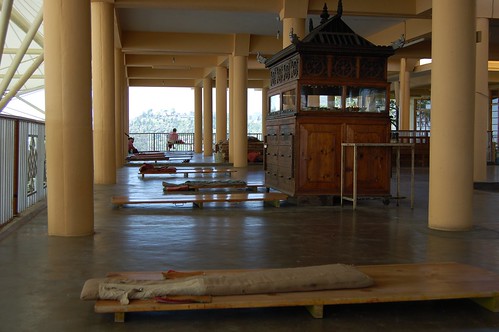
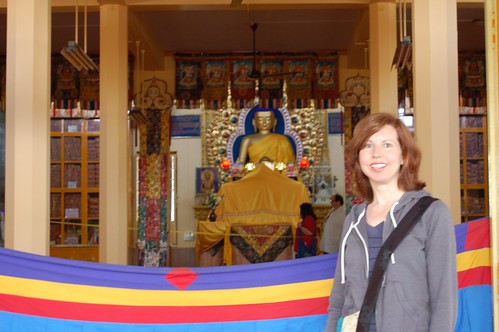
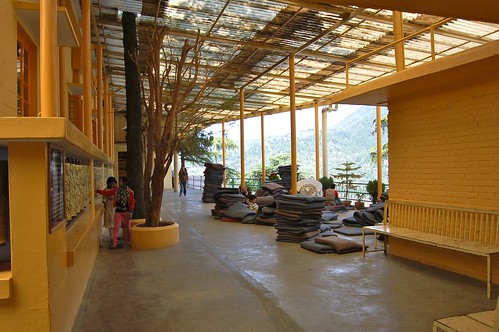
The Dalai Lama’s residence and Tsug Lakhang Temple are simple and unassuming, painted mustard yellow. White sails rise up from the temple, similar to those at the Denver airport, providing cover but plenty of natural light. Wooden platforms with sliding handrests and knee pads lined the area in front of the Buddha shrine for prostrating pilgrims. I only saw a couple people use them; it seemed to be a quiet day in the temple.

Untitled

Untitled

Untitled

Monks were mending those cushions on the right.
Untitled

We learned later that the Dalai Lama had been teaching at a nearby monastery. One of my colleagues, Sue, had tickets to hear him speak, but she said the audience was too thick to see him and the FM radio that was supposed to transmit his talk in English malfunctioned. Still, she said she enjoyed his soothing voice, even if she couldn’t understand the words. We regretted not doing our homework and thus missing his talk, but then again, I’m not a fan of crowds.

A sign next the prayers wheels.
Untitled

Untitled

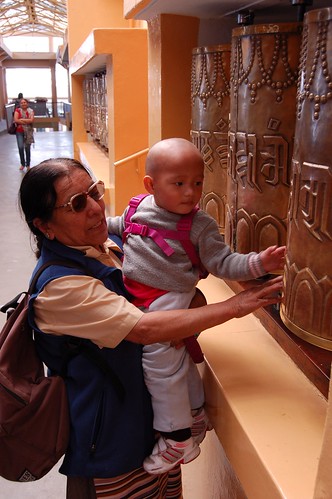
Multi-generational blessings.
Untitled

Theresa gets in on the prayer wheel action.
Untitled

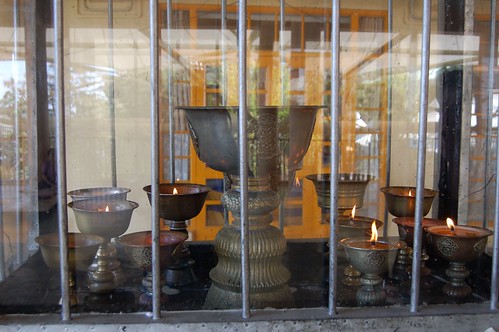
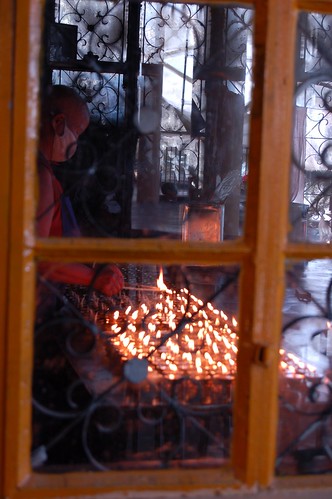
A monk was lighting candles in this small sanctuary.
Untitled

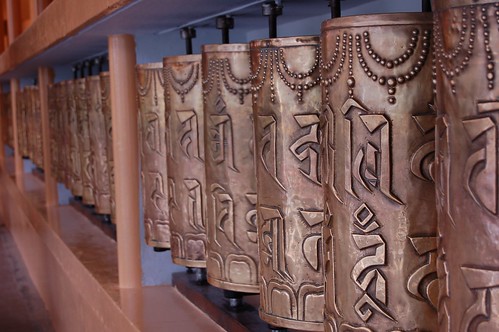
After turning all the prayer wheels in the temple, we headed outside to the “kora,” the circumambulation path. Buddhists walk the path clockwise in meditation. Trees along the path were draped with prayer flags, and other visitors had left colorful flat stones painted with Buddhist mantras. Benefactors funded sections of prayer wheels, marked with plaques explaining the blessings. The most common mantra was “om mani padme hum,” which calls forth blessings from the god of compassion. To learn more about the mantra, visit this excellent website: Om Mani Padme Hum – the Meaning of the Mantra in Tibetan Buddhism.

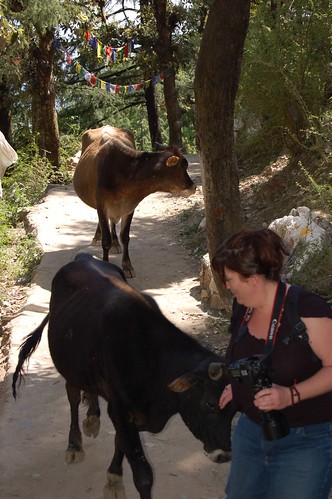
Cows numbered among the pilgrims on the path. Theresa tried to pose with them, but one poked her in the belly with its horn.
Untitled

I made a little movie so you could take a virtual walk on the kora! I love practicing yoga to the music of Deva Premal, and this recording of her chanting Om Mani Padme Hum is one of my favorites.

If you want to know more about the Dalai Lama, check out his website: His Holiness the 14th Dalai Lama of Tibet.

Sightseeing in Himachal Pradesh

I don’t know why it was so hard to get out of bed each morning in McLeod Ganj! Was it the cool temperatures? Fresh air? Altitude? Tranquility? In New Delhi, we never escape the sounds of people and vehicles, but only chirping birds disturbed the total silence at our cottage here. On the morning of April 5, Theresa and I rolled out of bed, ate a quick breakfast in the Glenmoor’s dining area, and took off for some sightseeing. Our driver, Sanju, carefully maneuvered his little taxi on the rubble-strewn mountain roads, deftly zipping through hairpin curves and patiently yielding to other cars when two lanes suddenly and frequently became one, as we explored the Kangra Valley in the north Indian state of Himachal Pradesh.

First stop – Norbulingka Institute
The Norbulingka Institute is dedicated to the preservation of Tibetan art and culture. Passing through the archway, we entered a shady terraced garden with stone paths and narrow waterways.
Untitled

We eventually meandered to the Deden Tsuglagkhang, a temple housing a 14-foot gilded copper Buddha and many stunning paintings created by the institute’s artists. The temple’s rooftop offered excellent views of the town and mountains.
Untitled

Sipping a lemon soda at the café, I watched fuzzy seeds rain down from the trees and relished the peace created by gurgling fountains, greenery and omnipresent prayer flags. Here are some more shots from our visit to Norbulingka.

I like this quote by the Dalai Lama on Norbulingka (lifted from the institute’s website):

Buddhism changed the whole Tibetan way of life, giving rise to a more compassionate community, in which there is a more peaceful attitude towards ourselves, towards our fellow human beings, towards animals and towards the environment. In today’s world there’s a lot of talk about peace and non-violence, but the real factor in creating genuine peace is compassion, not just education and technology. Where there is compassion, a sense of community, a sense of respect for others’ rights is automatic. In order to promote compassion, it is not sufficient just to talk; it needs to be spread through example. I believe that our peaceful and compassionate Tibetan society is such an example; that’s why it is worth preserving, and I am pleased to see that in its work to keep Tibetan culture alive, the Norbulingka Institute is actively contributing to that task.

Next stop – Kangra Fort
Unsure of other sightseeing options in the area, we asked Sanju, our taxi driver for tips. He suggested a visit to Kangra Fort, so that’s what we did.
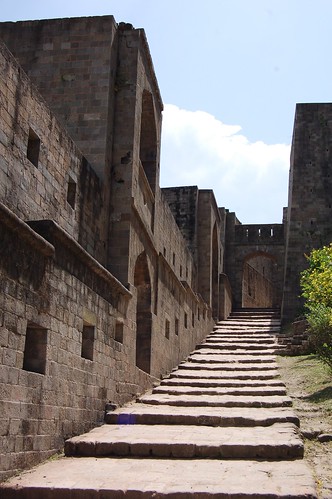
Believed to be the oldest fort in India, it was referenced by Alexander the Great in his war records from 326 B.C. and other accounts of wars dating back 3,500 years. Equipped with a surprisingly informative audio tour and headphones, Theresa and I trekked around the fort in the scorching sun. We climbed steep stairs, pausing in the shade of massive rock walls or flowering trees to listen to the fort’s bloody history.
Untitled

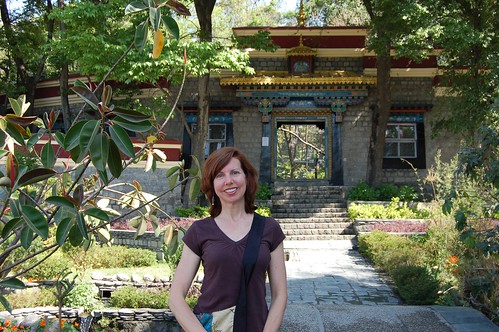
Posing at the entrance to the fort.
Untitled

At the top of these stairs …
Untitled

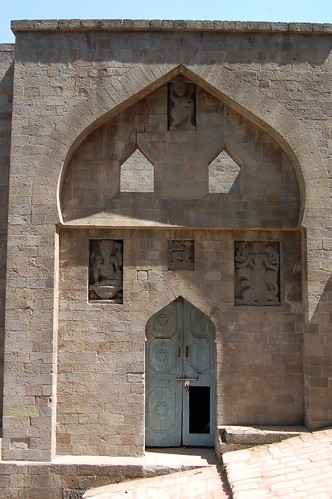
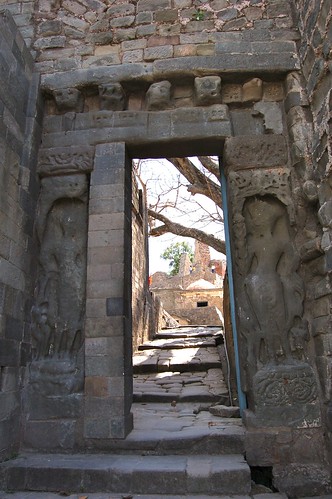
… there were some interesting carvings …
Untitled

… including this one of Ganesha, the elephant-headed Hindu god.
Untitled

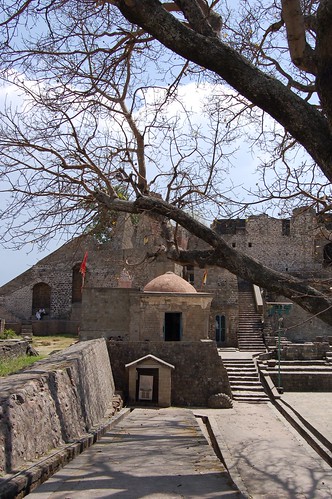
Darshani Darwaza, a doorway leading to a shady courtyard, toppled pillars and a couple small temples.
Untitled

Untitled

Inside the tiny temple.
Untitled

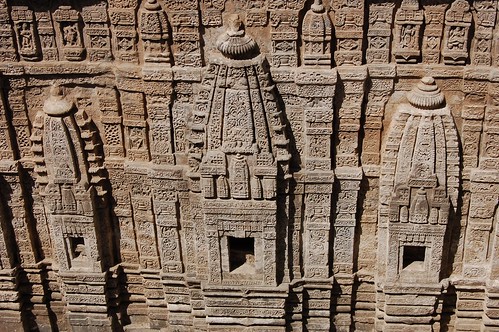
This carved wall reminded me of Angkor Wat in Cambodia, but the rest of the Kangra Fort’s ornate palace was destroyed in an earthquake.
Untitled

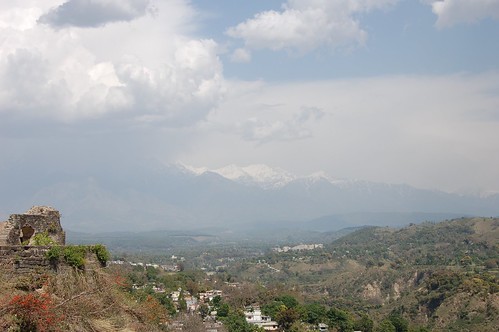
View of the river valley and the Himalayas.
Untitled

Here are a few more shots from our visit to the Kangra Fort.

The Indifest travel blog has a nice write-up of Kangra Fort, including this interesting statement.

This fort has the unique distinction of being ruled by great Hindu Kings, Muslim Invaders, Sikh Maharaja and Christian Rulers of British empire.

Back in McLeod Ganj, we asked Sanju to drop us off for a little shopping. Minutes after we exited the taxi, the sky burst open, blasting the market with hail and freezing rain. We stood under a market stall awning, hoping the storm would blow over quickly. When it didn’t, we called Sanju back to drive us the short distance to the McLlo Restaurant. Everyone and their mother had the same idea, so we crammed into a corner table and watched the poor suckers stuck in the rain outside.
Untitled

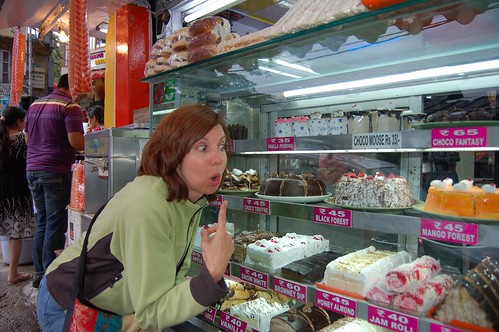
After a delicious dinner, we bought cakes to enjoy back at our cottage. They looked better than they tasted, but cake is always a good way to end a fun day!
Untitled

An ode to Glenmoor Cottages

Unless you live in a neighborhood that backs up to a noisy slum where residents frequently engage in late-night drumming and children play ball well after dark and clanking clunking construction continues by lamplight and cows announce their bedtime and dogs bark messages from house to house and traffic screeches and honks …
unless your daily life is fraught with ambient chaos …
then you simply cannot fully appreciate
the tranquility
of mountainside yoga
on a sunporch
with only bird songs
and pine
wafting in through open windows.

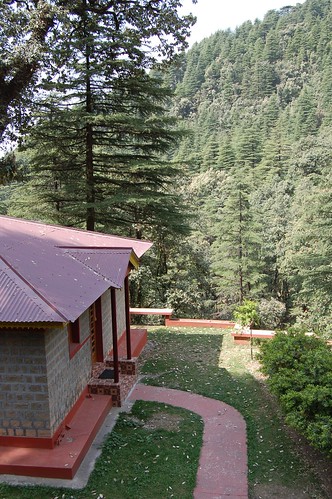
That is my spur-of-the-moment tribute to Glenmoor Cottages, a genuine place of peace in McLeod Ganj, an upper Dharamsala hill station in the Himalaya Mountains. The owner, Mr. Singh, is genteel and unwaveringly helpful. He relaxed with us in the yard over a cup of tea, chatting about Indian fiction and politics and pointing out a lake in the valley known for its migratory bird population.

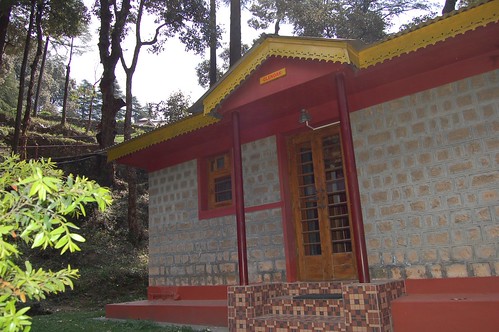
Theresa and I arrived here on April 2 and happily threw open the windows of our little cottage overlooking the forest. At 6,300 feet above sea level, we found ourselves gasping for breath after the short trek up to reception. Too lazy to pursue food in town, we ordered tea and later a simple dinner delivered to our porch. We finally crashed at 8:30 and slept for 12 hours!

In Delhi, I feel pretty confident playing tour guide, but this was my first time to McLeod Ganj. For the last few months, Theresa had sent me emails with some of the sights she wanted to see here, so I left the trip planning to her. Unfortunately, she left her notes in a bag back at my house in Delhi. Without internet access at our cottage and lacking a good guidebook, we were pathetically disorganized. Still, we managed to see and do quite a bit during our three-day stay. At the end of each busy day, we both expressed such relief at coming “home” to our little cottage.
Untitled

Untitled

Amritsar on the half shell

Tony and I enjoyed Amritsar so much last fall that we decided to share it with our guests. The four of us took the train on April 1 for six hours to the state of Punjab. At the Amritsar train station, a young taxi driver approached us. Sunny gave us a ride to our hotel, and we liked him so much we hired him for our whole visit.
Untitled

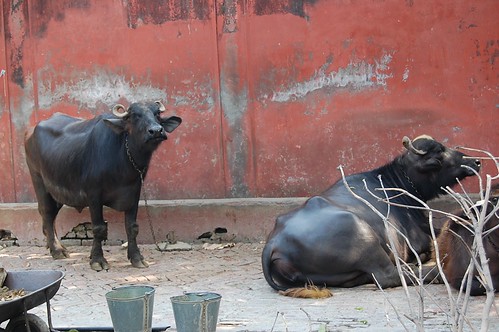
At the recommendation of our school’s travel agent, we stayed at Mrs. Bhandari’s Guesthouse, which featured a pool, outdoor eating area, garden, courtyard with water buffalo and a humble collection of rooms. Liz snapped this shot of our fellow guesthouse residents.
Untitled

We checked in, grabbed a quick snack, and took off for the Wagah Border-Closing Ceremony at the Pakistan-India border, about 45 minutes out of town.

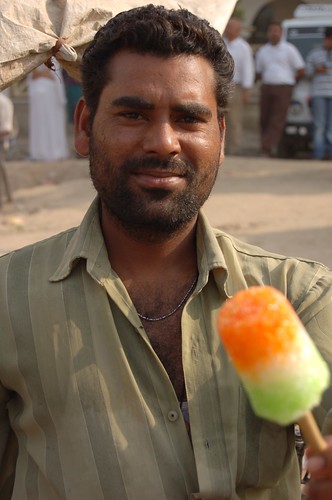
Just like our last visit, food and drink vendors lined the path approaching the stadium. I loved this papaya seller with his papaya-colored shirt and turban. Theresa got the shot.
Untitled

Sno-cones made on the spot with the Indian flag colors!
Untitled

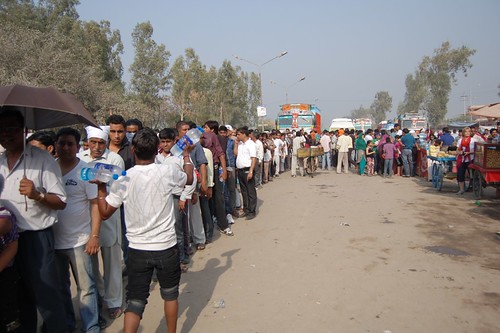
A water boy wisely targeting the men in line. This may be the only place on the planet where the women’s line moves faster!
Untitled

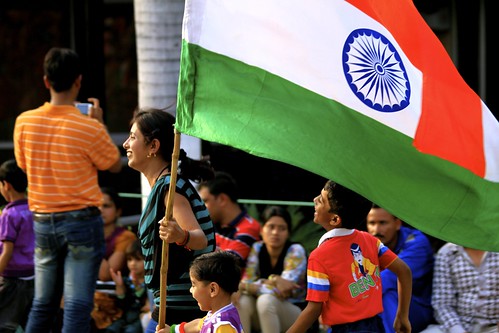
After passing through VIP security, we took our seats in the Foreigners Gallery and watched the bedlam. A full Bollywood street party was followed by people actually LINING UP to run a short distance with the Indian flag.
Untitled

Untitled

Great shot by Theresa:
Untitled

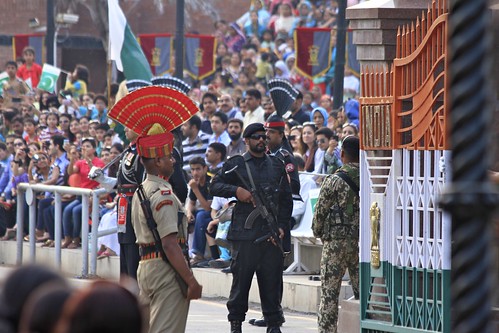
Eventually the hollering, high-stepping, gate-slamming, foot-stomping, thumb-gesturing, hat-straightening, mustache-twisting, anthem-singing, flag-lowering antics came to a close. I took so many pictures on our last visit. This time I just watched. Check out the Pakistani guard (black beret and shades) who Theresa photographed. You do NOT want to mess with him.
Untitled

Returning from the border ceremony, Sunny eagerly asked if we knew the story of Ganesha. I did, only because I had heard it at school during India Week. However, Sunny told the tale with such exuberance and joy that I just let him run with it. Here’s the story, fyi. (This is NOT how Sunny told it. His rendition featured generic nouns slapped with unconjugated verbs in an unintelligible but joyous English soup.) From the website religionfacts.com:

Incensed by the refusal of her husband to respect her privacy, to the extent of entering her private chambers even while she was having her bath, Parvati decided to settle matters once and for all. Before going for her bath the next time, she rubbed off the sandalwood paste on her body and out of it created the figure of a young boy. She infused life into the figure and told him he was her son and should guard the entrance while she bathed.
Soon after, Shiva (Lord of destruction and husband of Parvati) came to see Parvati but the young boy blocked his way and would not let him in. Shiva, unaware that this lad was his son, became furious and in great anger fought with this boy whose head got severed from his body in the ensuing battle. Parvati, returning from her bath, saw her headless son and threatened in her rage to destroy the heavens and the earth, so great was her sorrow.
Shiva pacified her and instructed his followers (known as ganas) to bring the head of the first living being they encounter. The first creature they encountered was an elephant. They thus cut off its head and placed it on the body of Parvati’s son and breathed life into him. Thus overjoyed, Parvati embraced her son.

Theresa took this great shot of the dashboard decor in Sunny’s car: Ganesha in a Clam Shell. I love it so much! No, I don’t know why this Hindu elephant god is resting on a mollusk, but there’s no denying that it’s awe inspiring.
Untitled

Basically re-creating our first Amritsar visit, we took Liz and Theresa to Kesar da Dhaba for dinner. Everyone seemed happy with their food, and the restaurant owner remembered me from November! We bought dinner for Sunny, who tried to have a philosophical discussion with Tony about the Sikh religion.

Liz being a BIG risk taker!
Untitled

After dinner, Sunny drove us to the Golden Temple. It was not the peaceful oasis we remembered from five months ago! It was a mob scene … a happy, spiritual, family-oriented mob scene, but a mob scene nonetheless. I was trying to take a photo of Tony and Liz in front of the temple when this family crowded in to the shot. Okayyyy.
Untitled

Another family shoved a baby into Liz’s arms, which she confusedly cuddled until the mother realized its absence and abruptly yanked it back. Craziness! I liked this calm lady who was chilling and enjoying the glowing temple.
Untitled

The next morning, Liz and Tony ventured back to the temple and the Jalianwallah Bagh Memorial. Apparently, they hung out with this guy.
Untitled

Theresa and I lazed around the guesthouse, taking photos of the colorful garden.
Untitled

Untitled

Untitled

For more details on the places we visited, check out my old posts about Amritsar.

On April 2, it was time to head our separate ways. Tony and Liz returned to Delhi and later took a daytrip to Agra. Theresa and I drove to McLeod Ganj, a hill station in the Himalayas and home of the exiled Dalai Lama. That story is coming up next!

Everything old is new again … Old Delhi through the eyes of visitors

Tony’s sister Liz arrived March 30 and hit the ground running! No time for jetlag…

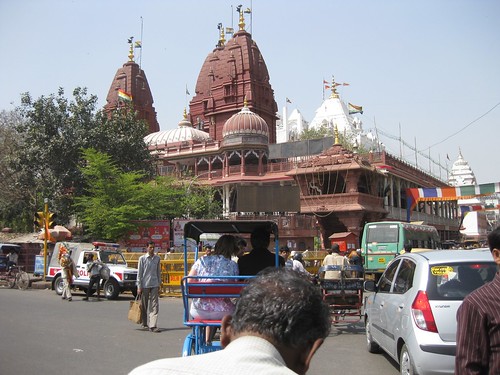
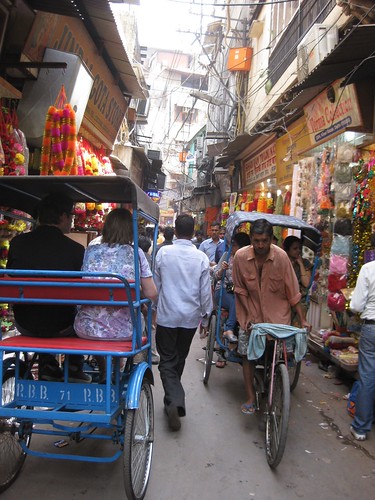
Although Old Delhi is a must-see attraction, it can be pretty intimidating. A bicycle rickshaw tour is marginally safer and less scary, so that’s how we kicked off Liz’s India tour. Theresa, Tony, Liz and I climbed aboard two rickshaws, disembarking to visit the spice market, Jain Temple and sari market, essentially following in the same footsteps as our first Delhi rickshaw tour.

Ratan gets ready to chauffeur Tony and Liz.
Untitled

Off we go, straight into traffic.
Untitled

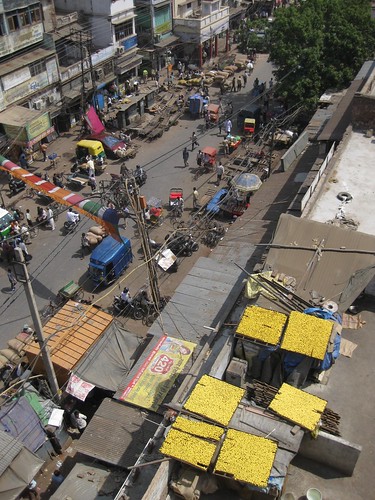
A view from the top of the spice market. I’m not sure what those yellow things are drying in the sun.
Untitled

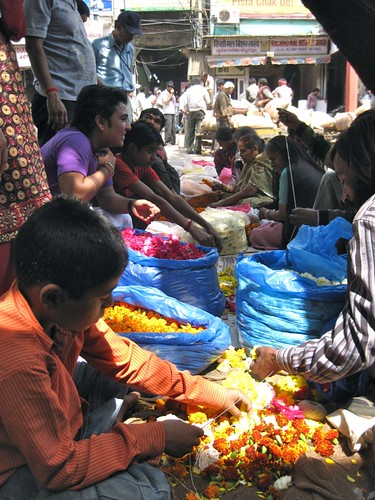
Stringing streetside flower garlands.
Untitled

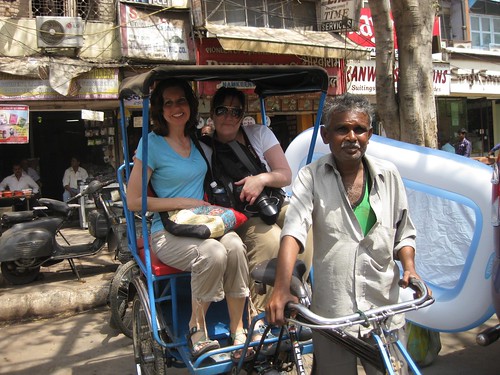
Theresa and me. Dang, I forgot our driver’s name!
Untitled

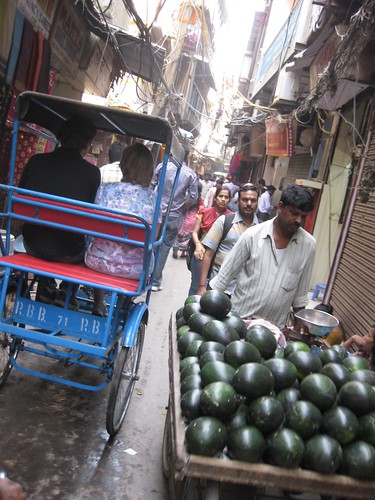
Barely squeaking by a watermelon salesman.
Untitled

Driving through the wedding market.
Untitled

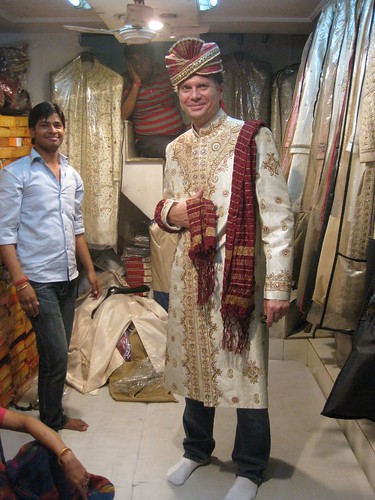
That’s my handsome groom!
Untitled

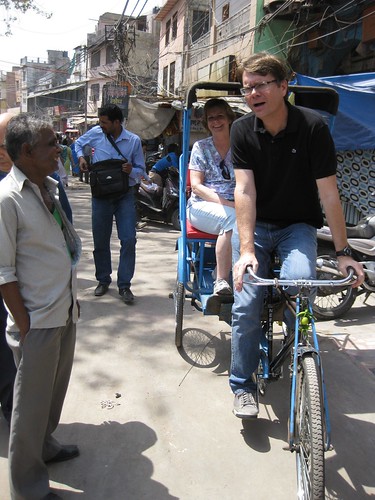
Tony takes the wheel (handlebars?).
Untitled

Following lunch at McDonald’s (Theresa got the McVeggie, a paneer patty), we walked to the Red Fort.
Untitled

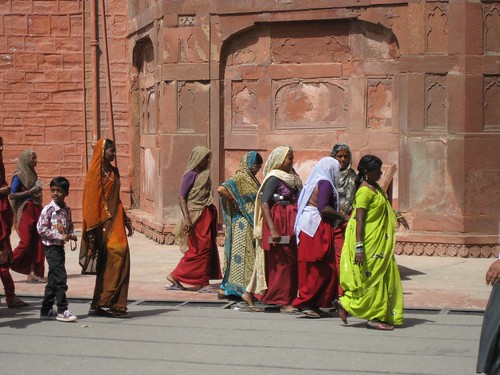
A colorful crowd heads in to the fort.
Untitled

Emperor Shah Jahan (the same guy who built the Taj Mahal) constructed this fort starting in 1638 after he moved his capital from Agra to Shahjahanabad, in what is now Delhi. (Remember when Theresa and I visited the FIRST city in Delhi? This was the SEVENTH!) It served as the Mughal Empire capital until a failed uprising against the British in 1857. At one point, up to 3,000 people lived in the fort complex.

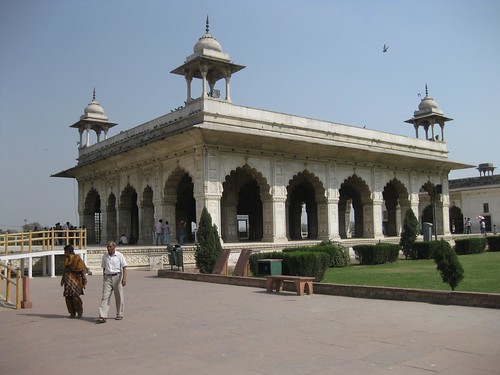
Love those Mughal-style archways! This was the Diwan-i-Aam, a pavilion for public audiences with the emperor.
Untitled

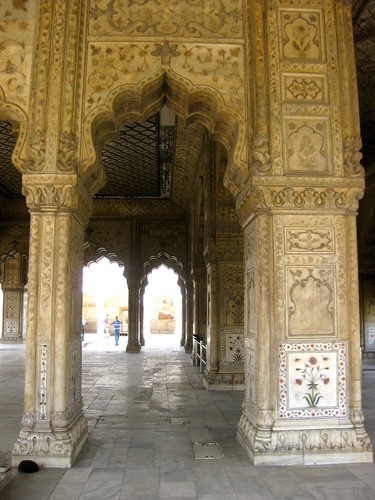
The Diwan-i-Khas was used for private audiences with the emperor.
Untitled

Untitled

Untitled

Yes, yes, we know … we’re fabulous. But how many photos of sweaty foreigners do you really need?
Untitled

Adventures in Teaching and Travel