Qutub Complex – strolling through ancient Delhi

For Theresa’s first full day in Delhi (March 26), it only made sense to visit the first city of Delhi: Lalkot, which dates to around 1060. Here, Delhi’s first sultan, Aibak, imposed Muslim rule and began construction of a mosque and tower that would proclaim Islam’s victory and domination. So why can you see Hindu architectural designs in the buildings? Watch this short UNESCO World Heritage video to find out!

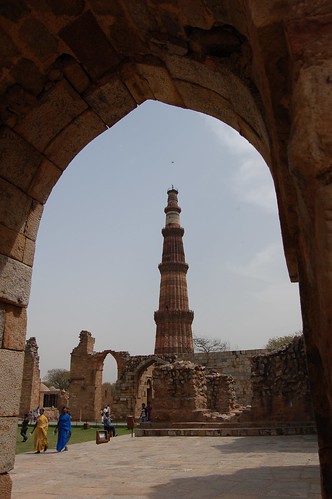
The Qutub Minar, which stands about 238 feet high, is the main attraction at the Qutub Complex. Here are some interesting facts about the mosque and minaret, from the UNESCO website:

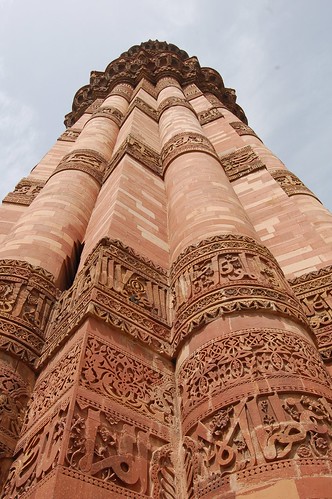
The Quwwatu’l-Islam mosque consists of a courtyard, cloisters, and a prayer hall. The high arched screen facing the prayer hall was added in the 14th century. The Qutb Minar is a column built from red and buff sandstone blocks rising to a height of 72.5 m, tapering from 2.75 m diameter at the top to 14.32 m at the base, making it the highest stone tower in India. In addition to its traditional use for calling the faithful to prayer, it also has a monumental purpose, since a later Nagari inscription calls it Alauld-Din’s ‘victory monument’ (Vijava-stambha). In its present form it consists of five storeys, the topmost of the original four storeys having been replaced by two storeys during the reign of Firuz Shah Tughluq. Each storey is separated from the next by highly decorated balconies, with pendentives and inscribed bands. The three earlier storeys are each decorated differently, the lowest being of alternating angular and rounded flutings, the second with rounded flutings alone, and the third with angular flutings alone; the same vertical alignment continues, however, through all three storeys. The whole structure was originally surmounted by a cupola, which fell during an earthquake and was replaced by a new cupola in late Mughal style in the early 19th century. This was so incongruous that it was removed in 1848 and now stands on the lawns to the south-east of the minaret.
Untitled

Untitled

Untitled

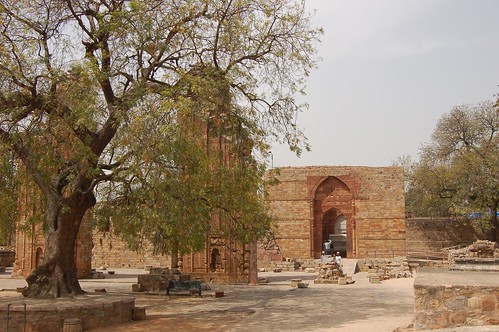
This shot was taken from inside the mosque courtyard.
Untitled

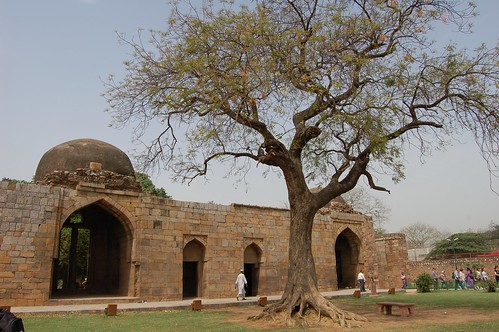
I enjoyed strolling around the complex with its manicured gardens, pockets of shady trees, pathways and historical markers. There was a sense of organization and peace, despite the big tour groups.
Untitled

Untitled

Untitled

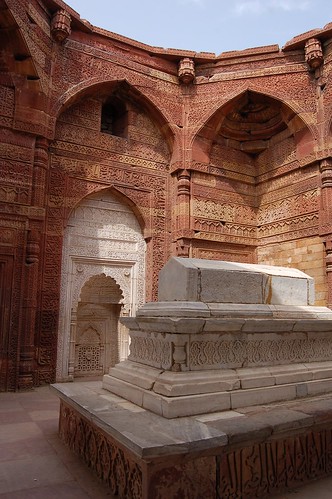
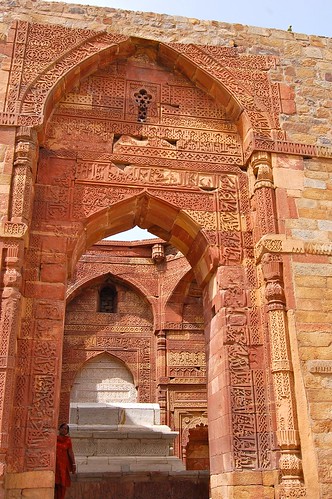
The tomb of Iltutmish, Aibak’s successor, was especially impressive with its elaborate Islamic carvings.
Untitled

Untitled

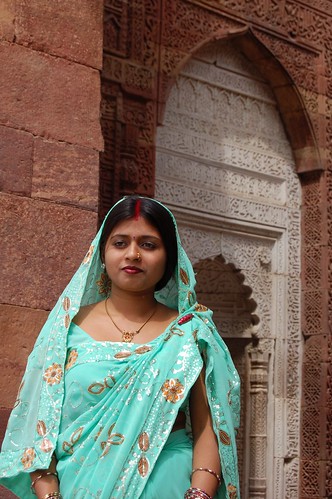
A pretty visitor to the tomb.
Untitled

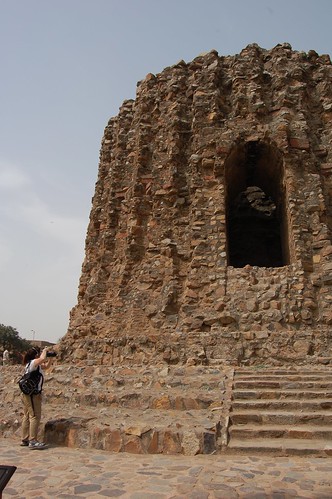
The Alai Minar was meant to be even taller than the Qutub Minar, but it was never finished.
Untitled

Theresa and I paid a bit extra for an excellent audio tour of the complex. At designated historical spots along the path, we stopped, punched in the corresponding number, hit “play” and listened to detailed stories of life 800 years ago. I wish I could remember some of them…
Untitled

Three visitors, two weeks, too much to say!

Yikes, I just looked at that little calendar over there to the right of this post. See it? Whenever I post something, the date changes to brown. Until today, April had no brown dates. I haven’t written a single post this month!

Sometimes a dry spell stems from ennui. Work, home, sleep, work, home, sleep … my usual schedule often lacks substance worthy of a blog post. The last few weeks, however, blurred with activity and left little time to capture it all in writing. Faced with a few free hours for the first time this month, I am ready to make up for my excessive blog neglect.

In the weeks preceding our spring break, we made arrangements for three visitors:
* Tony’s sister Liz,
* Theresa, a friend from my old journalism days, and
* Flat William, a paper version of a friend’s son.

Liz had never traveled outside the U.S., and I worried that India might make her climb under the covers and refuse to leave the house. Theresa was a seasoned traveler, but her emails suggested an overbooked itinerary and I stressed that we would run ourselves ragged. But, surprisingly, Flat William was the most high-maintenance guest of all.

He never made any demands or complained about getting squashed in my backpack, but I felt a codependent, obsessive need to photograph him everywhere I went. Unfortunately, because of his reticence, he would sometimes stay buried in my bag while we toured an Indian hotspot, making me smack my forehead with frustration later when the realization hit. I entrusted him to Theresa’s care on her Rajasthan side trip, but I experienced three days of anxiety that she would lose him or forget to take pictures with him. (I had nightmares of the time my mom fed a Flat Friend through the paper shredder on accident.) Theresa did forget to snap him in front of the Taj Mahal, but at least he got to see it. I sent him home with Liz, who informed me yesterday that he was returned safely to his family. Whew!

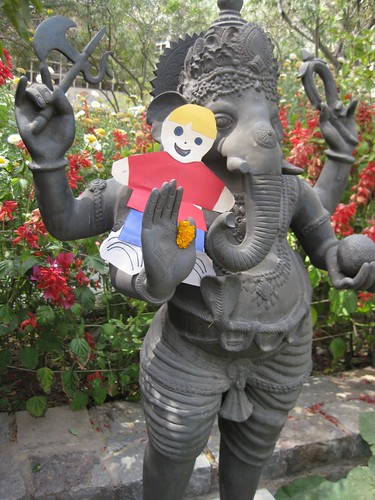
Flat William hanging out with Ganesh at the American Embassy School, New Delhi.
Untitled

For years, Tony has dreamed of his family visiting us overseas. Finally, he convinced his sister Liz to make the trip to India. When I told people this would be her first international journey, the incredulous responses often sounded something like this: “She lives in KANSAS? And she’s never been out of AMERICA? And she’s coming to INDIA?” I began to panic. I carefully crafted a list of “Delhi Light” sight-seeing excursions. In the weeks leading up to her visit, Tony and I often found ourselves in the midst of an oppressive Delhi crowd, glancing at each other nervously and saying, “OK, we won’t bring Liz HERE.” However, from the moment she stepped off the plane, Liz amazed and inspired me with her willingness to take risks, move far out of her comfort zone and reflect on the sensory overload of India. She barely rested during her week here, dragging Tony all over town to see the sights, making observations that were acute and full of compassion. Tony and I both feel deeply grateful for this time with Liz, and we’ll never underestimate her again!

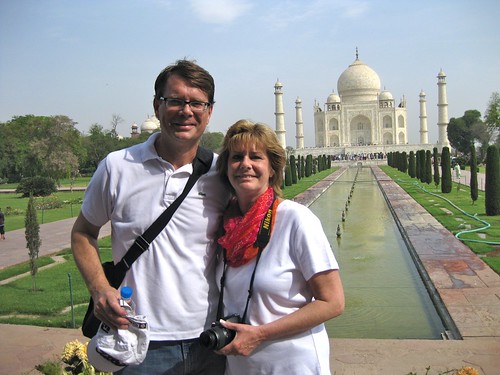
Tony and Liz at the Taj Mahal.
Untitled

Theresa and I worked at the American Academy of Family Physicians in Kansas City way back before I made the career switch to teaching. We hadn’t kept in touch much over the years, except through occasional emails, Face Book updates, and links to online photo albums. When she turned 40, she emailed and said she wanted to celebrate with an international vacation. We were living in Laos at the time, and although I do love that country, I felt compelled to say, “If you’re only going to take one big trip every 40 years, maybe you should pick a country with more on offer…” When Tony and I moved to India, she quickly proposed a visit. There’s no denying Incredible India has more on offer … maybe too much! As Theresa and I planned her trip via email, the biggest challenge was picking the places to go. Knowing Theresa was eager to see the Himalyas, I met with our travel agent at school, who pointed out certain destinations would still be blanketed with snow and unprepared for tourists in April. We finally settled on Dharamsala, home of the exiled Dalai Lama. Theresa packed a crazy amount of sight-seeing into her two-week visit and took about 47 million fabulous photos. Although whacked with a mysterious illness on the flight back to the States, she certainly made good use of her time here!

Theresa on the rooftop of Ashoka restaurant in McLeod Ganj with the Himalayas in the background.
Untitled

It’s going to take me awhile to post everything we did during the last few weeks! But stay tuned…

Sucking on a stick

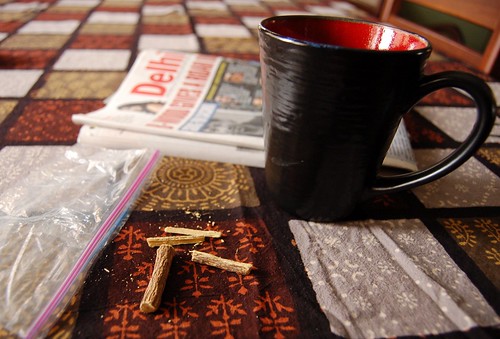
As I write this, I’m sucking on a twig. I have no idea what it is, but my landlady (and downstairs neighbor) says it will help restore my voice. As we were leaving for Night Under the Stars, Alka greeted us and discovered my laryngitis. She quickly ran back into her house and returned with a baggie full of little sticks, some kind of Indian herb. A university professor, she said, “You know, my voice is my livelihood, so I have used this many times! Just suck on one until it loses flavor, and then start another.” I worried that the sticks might not mix well with red wine, so I saved them till this morning. So far – and I’m only only stick number one – I can attest to a soothing quality of the mild liquorice-flavor. Still no voice, though.
Breakfast of champions.

You know I couldn’t just suck on a stick without researching it first, right? Well, I actually started sucking and THEN started researching, but look what I found! As I suspected, the wood chip under my tongue is liquorice root, called “mulethi” here in India. According to the Speedy Remedies website, this little stick can cure just about anything, from bad breath to genital herpes. Laryngitis? We shall see.

Nuts for NUTS

Jangling bangles, swirling skirts, glittering bindis and big smiles set the stage for a gala evening yesterday at Night Under the Stars, an annual fundraiser staged by our school’s PTA. Indian drummers greeted guests on a candle-lit path past a pink-draped tent photo-opp and down to the AES field, where sponsors’ booths ringed the dinner tables and Mughal Empire-themed props set the mood.

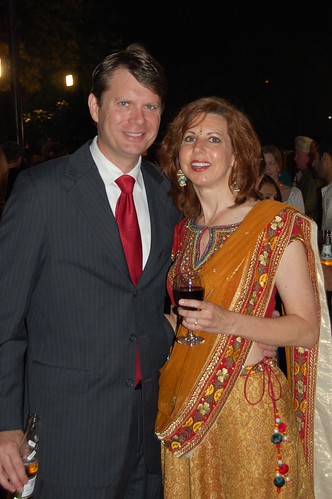
As we lingered in the courtyard next to the field, a school employee quickly pushed me away from a dia that threatened to send my lehenga up in flames. The little traditional candles posed a serious fire hazard to those of us dressed in floor-grazing elegance! However, it was hard to focus on fire prevention while gawking at everyone arriving at the party. Just one formally clad mannequin in a store window here can take your breath away; imagine hundreds of people sashaying by in an unimaginable range of silken styles and colors. The men, in general, wore interesting but understated costumes or suits, but the women stole the show. Rhinestone-encrusted tops and full heavy skirts. Glimpses of skin under carefully draped shimmering saris. Bare-backed anarkalis with fitted bodices that flared into golden trim. Dramatic make-up and hair ornaments dripping with jewels. Delicate dupatta scarves tossed over shoulders. We kept telling each other, “You look so beautiful!” because everyone honestly did.

The visual feast served as a great distraction from my lingering cold and laryngitis. We mingled, enjoyed a nice dinner and even got Tony out on the dance floor. Truly a special night.

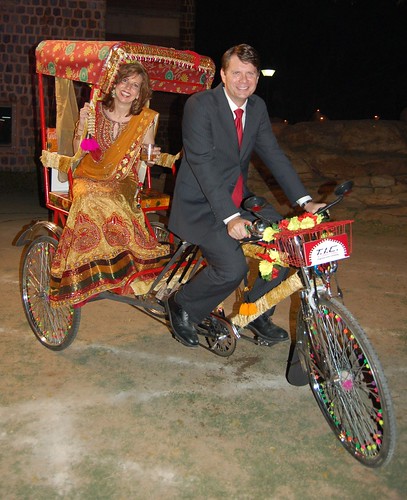
This is how we got to the party. No, not really.

AES Director Bob Hetzel gets thronged by the ladies.

Tony shunned a turban for his suit, but you know I love to break out the fancy costumes!

That’s our table in the foreground.

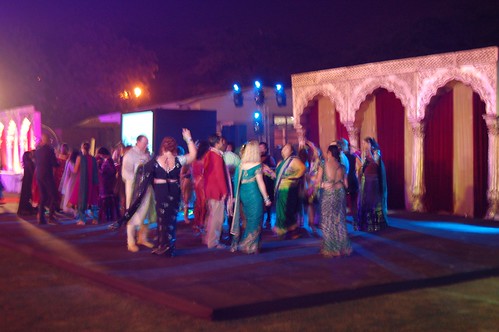
It is NOT easy to dance in these clothes.

Prop du jour: cowboy hat, courtesy of Laura Pitale, another AES teacher.

More shots from NUTS.

Taxi epiphany

For our date-night dinner Thursday, Tony and I went to a wonderful restaurant in the historic Mehrauli District. We called a taxi from our neighborhood stand and got picked up by Mr. Kapoor (not to be confused with the Kapoor who drives us to school every day). As we inched along in traffic, Mr. Kapoor couldn’t resist judging us.
“Most people go out on Friday or Saturday,” he said.
“That’s true,” I admitted.
“This restaurant is very far. Are you meeting people there?” asked Mr. Kapoor.
“No, it’s just us,” Tony answered.
Did we really have to justify our mid-week excursion to a taxi driver? Did he really want to hear that we have made a commitment to spending time together on a school night once a week? It was funny but also annoying.

I had felt a cold coming on, and sure enough, during our date my voice went from normal … to Kim Carnes-esque sultry … to gone. Within two hours, I had completely lost my voice. I contemplated texting in sick on Friday, but I knew several of my colleagues were out, and substitute teachers are hot commodities. I showed up, skipped my in-class support lessons and taught a whispery EAL class before taking off early. Outside the school gate, I walked the short distance to a taxi stand and climbed into a taxi van. The driver called out my address, which was a relief since I couldn’t speak. (We take taxis home every day, so most of these drivers know where we live.) About halfway home, I spotted something that snapped me out of my head-cold haze.

The dashboard components had been ripped out, and wiring hung down around the driver’s feet.

Devoid of needles, the gauges were useless. I was riding in the equivalent of a motorized tin can.

When we arrived at my house, I made several universal gestures of confusion – shrugged shoulders, hands outstretched, crunched up forehead and questioning smile – and then swept my arm toward the dangling wires.
“Why?” I asked.
“Why,” he replied.

I decided to interpret his answer as a powerful commentary on our life choices. Rather than assume the obvious (that the driver didn’t speak English), I am choosing to believe it was a sign.

Why? Why, indeed?
Why do we put up with this silliness? Why worry so much about transportation? Why panic when I can’t find a taxi to take me home after school? Why ride in a bone-rattling death trap? Why wonder if the driver is drunk, crazy or simply reckless? Why stress about getting stranded somewhere?

So that was a long, convoluted way of announcing … we bought a car!

We won’t take possession till the end of the school year (the seller is a departing AES teacher), but I already feel a sense of relief. Even better, we are hiring the driver who works for the car’s current owner.

Ahhhh … freedom.

Holy Holi!

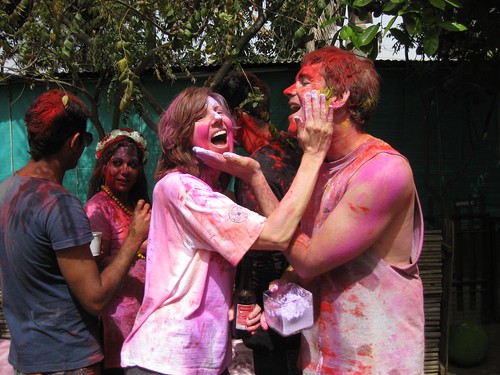
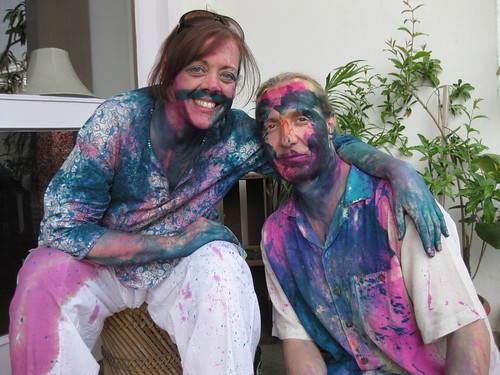
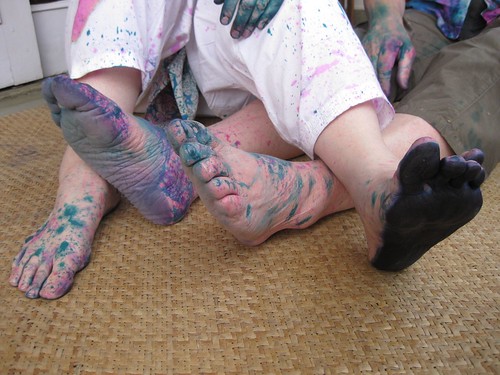
Today is Holi, the Hindu Festival of Colors that celebrates the start of spring with a daylong lifting of social taboos and a rainbow of revelry.

The Times of India delivered these messages from the nation’s leaders.

President Pratibha Patil and Prime Minister Manmohan Singh greeted the nation on the occasion of the festival.
“Holi is a festival of colours that heralds joy, hope and fulfilment in our lives… May this festival bring together all the colours of India’s diversity in a rainbow of unity,” Patil said in her message.
“Let the spontaneity and liveliness of this spring festival yet again affirm the togetherness of our multi-cultural nation,” the Prime Minister wished.

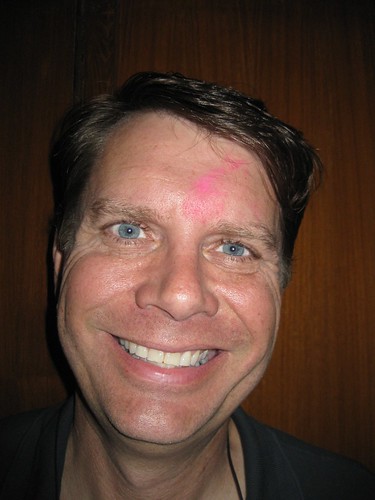
Tony came home Wednesday afternoon with a pink tikka between his eyes, courtesy of high school administrative assistant, Maggie. “That’s good enough for me,” he said. “I feel like I experienced Holi.”

As for me, the long list of advice for protecting our skin, hair and dignity on this day (“wear dental caps to prevent unwanted stains” and “avoid getting attacked by hooligans” were my favorite tips), made me consider hunkering down in bed with a good book for the day. However, I can’t resist an authentic encounter with the local culture. Fortunately, a couple friends got invited to a Holi party, so I tagged along!

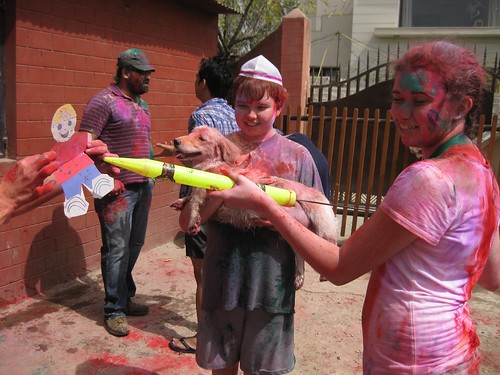
The hostess, Sonya, owns a dog kennel not far from my neighborhood, and she welcomed both human and canine celebrants. Our contingent included Nancy, her two kids and their dog, The Dread Pirate Wesley Crusher (Wesley, for short), as well as Drew, Andi and me. When we arrived, there were just a few other guests with their dogs. After receiving some gentle smears of color and “happy holi” wishes, we tentatively dipped into the powder pots and pinched color to brush on each other.

As more people and pets arrived, the party got gradually more raucous. We discovered “tentatively” is not a common adverb on Holi.

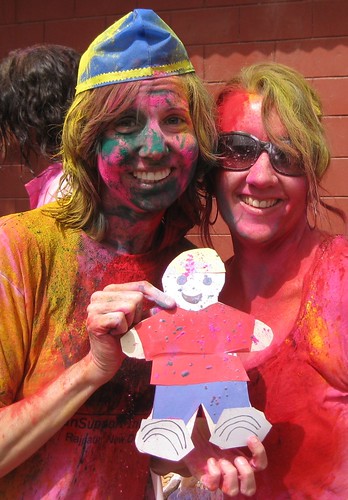
I had brought a special guest, Flat William, who is visiting from Kansas. He got powdered, but I saved him from the water gun. (Confused? Google the Flat Stanley Project.)

Tables were laid with tasty treats, but we had been forewarned. Sure enough, platters of marijuana balls (“bhang golis”) made the rounds, along with the traditional Holi drink, “bhang,” a cannabis-milk concoction.

Soon, a pattern emerged.
(a) Allow random strangers to paint you with brightly colored powder.
(b) Get a bucket of pink water (drawn from the pool) dumped on your head OR get doused by water guns OR get tossed in the pool, effectively washing off much of your powder.
(c) Repeat a and b ad infinitum.

When I sensed a plot was under foot to pitch me in the pink pool, I grabbed my friends and made a quick escape. Our taxi pulled up to Nancy’s house, where a group of locals greeted us with purple paste and more hugs. They may or may not have been friends and family of Nancy’s housekeeper.

We left the kids at home and walked to my street, after stopping to visit Cindy and Cyril, who had spent the morning at a different Holi party.

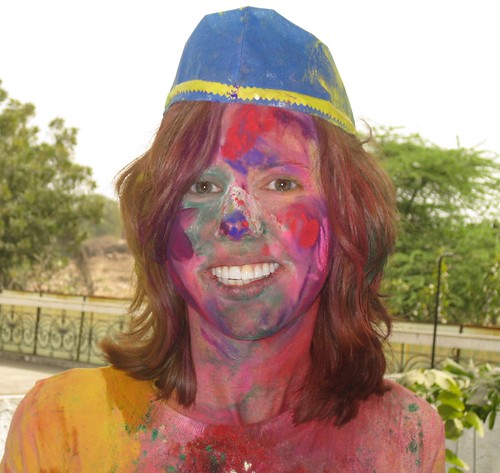
Happy Holi!! (I was told to wear this “traditional” hat, but I’m not convinced that wasn’t a classic mislead-the-clueless-foreigner trick.)

This slideshow features other shots from the party.

Wikipedia has a solid article about Holi that explains its cultural significance.

Aravalli Biodiversity Park – a diamond in the rough

When we first moved to New Delhi, someone mentioned a biodiversity park near our house. Tony and I wandered over to the park entrance to check it out, but the seedy-looking men hanging around the gate deterred us. Picturing a big open area with scrubby bushes and sleeping vagrants, we figured we weren’t missing much.

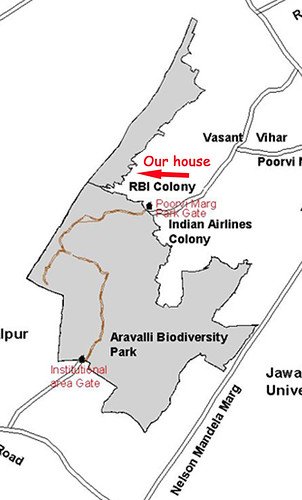
Last week, the subject came up again. Another neighborhood resident insisted it was a nice place to walk and escape from city smells and sounds. Saturday morning, Tony and I gave it another shot. This time, we strolled boldly past the seedy crowd (who actually look normal to us now) and found a single path that wound through real nature for about 2.5 kilometers. With the New Delhi airport a stone’s throw away, planes roared overhead, but otherwise the park proved to be a genuine oasis literally in our backyard!
Biodiversity Park Map2

According to the Biodiversity Parks website, Aravalli Biodiversity Park – or ABP, as we locals call it – comprises 692 acres on the South-Central Ridge of the Aravalli Mountain Range. Its undulating landscape resulted from years of pit mining, which left deep valleys, ridges and hillocks. Conservationists are re-introducing indigenous plants, developing a deciduous forest, and removing invasive trees introduced during the British Raj. The park features a “fernary” with Aravalli ferns (including a few threatened species), an “orchidarium” with about 70 orchid species, a butterfly garden with up to 40 species, 150 acres of grasslands and woodlands, a conservatory for native medicinal plants and a rich wetland ecosystem.

Teeming with wildlife, the park attracts birders and other nature enthusiasts. Excited about our new discovery, Tony went for a run here on Sunday and saw about 50 peacocks!

Environmental consciousness is difficult to foster in a developing country with such glaring poverty. How can you keep people from chopping down trees for cooking fires? How can you stop the killing of wild animals when people are starving? How can you justify spending thousands of dollars to plant flowers when the park backs up to a slum? So often, municipalities take action that provides a short-term solution to escalating problems. I feel optimistic that Delhi has acknowledged the long-term value of protecting and nurturing its green spaces. For Tony and me, the park has already taken our quality of life up a notch. I hope it will do the same for generations of Delhiwallas.

Sariously?!

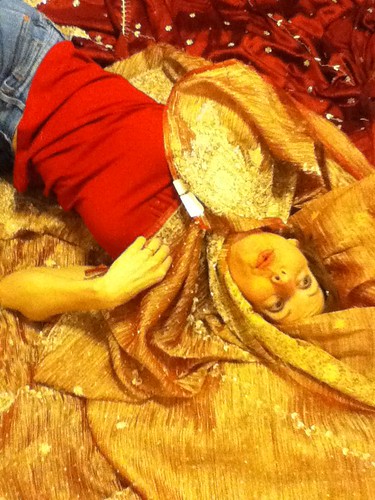
Why must fabrics in India be so pretty?! How can a girl resist?
420699_10150578446841906_614196905_9116093_2003555686_n

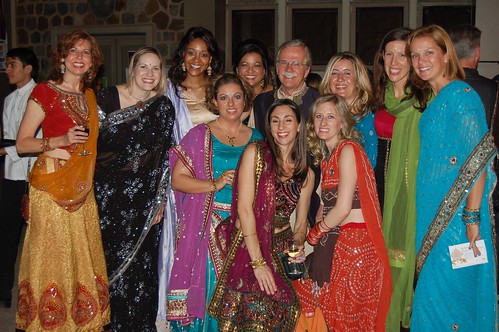
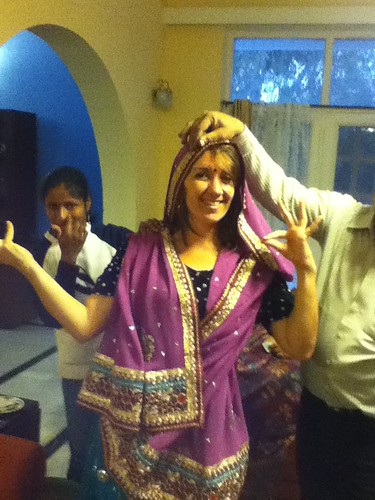
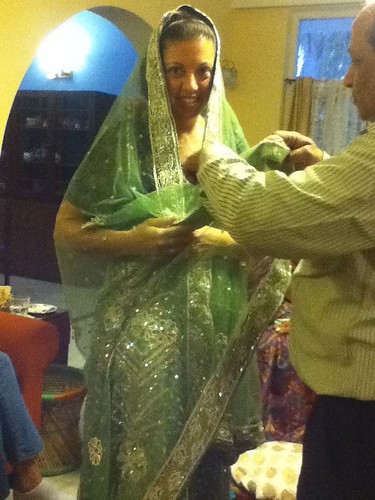
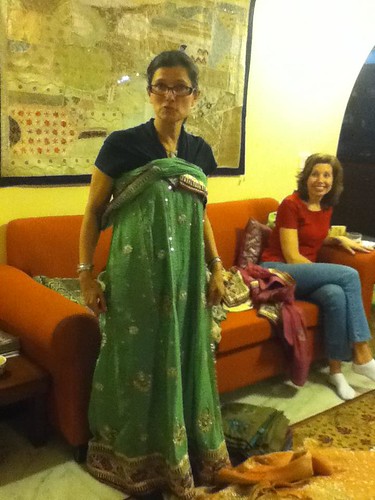
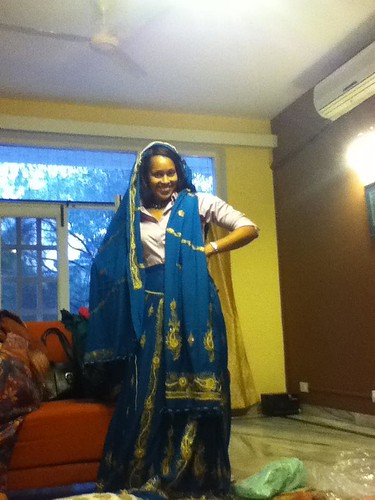
My friend Nancy played host for a little sari party last night. A man, whose name I failed to get in my bling-induced fervor, brought heaps of fabric, saris, lehengas (a long full skirt with belly top), and embroidered salwar kameez suits (long blousy top with Hammer pants).

Nancy took these photos with her phone, mostly with hands shaking from laughter.

This is one of my favorite moments of the evening, when Nancy’s maid, Sonu, took the bindi off her own face and stuck it on Nancy for the full effect.
65780_10150578448271906_1529823265_n

Andi looks like a fairy princess in this lehenga. She wins the prize for best adjective: “bedazz-erific.”
425523_10150578448861906_614196905_9116106_51887272_n

Sandra couldn’t be bothered with asking Sari Man to wrap her properly.
430561_10150578449236906_614196905_9116108_617253018_n

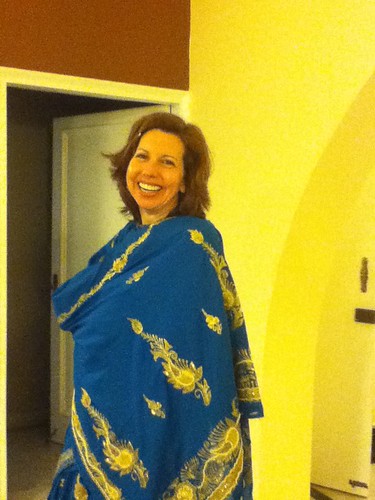
Katrina tried this lehenga on first, but then I tackled her and stole it. Because a girl can’t have too many lehengas … and because my other lehenga is gold and red, and my Chinese feng shui horoscope said I should be wearing more blue to counter my “pitta” fire element. See? I can justify ANY purchase.
430729_10150578447451906_614196905_9116096_1728686604_n

425396_10150578450121906_614196905_9116114_1926801855_n

A walk in the park

After three months of moaning about the cold and smog, I parted the drapes Sunday morning to find blue skies!

Our little park across the street suddenly burst into color with patches of flowers, so I forced my sleestak of a husband to leave the house and stroll through the gardens.

Grass doesn’t seem to interest anyone here, and whoever planted the flowers clearly hasn’t researched what to plant where. For example, marigolds ringed a huge tree, blooming on the sunny side and withering on the shady side, as would be expected. True, too, for the vast stretches of poppies lining the fence.

If we’ve learned anything as global residents, though, it’s that not everyone does things the way WE do things. And that’s OK. And I should stop judging and enjoy the park.

Blue skies!

See, it’s a GOOD thing they don’t cultivate the grass because these cricket-playing kids would just mess it up.

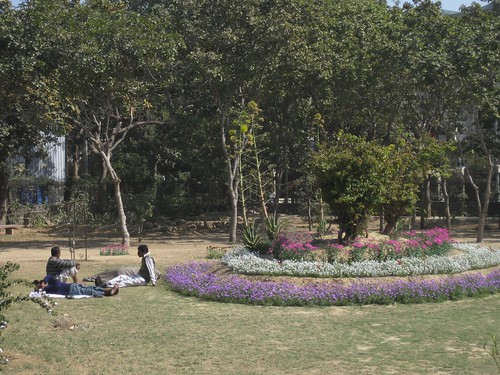
Napping in the sunshine.

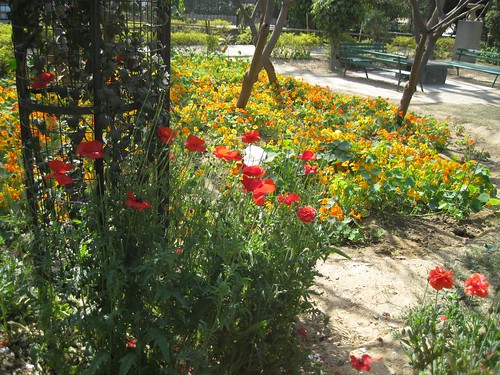
Poppies! Beautiful poppies! (Admit it: You can’t say “poppies” without using your Wicked Witch of the West voice. It’s OK. We all do it.)

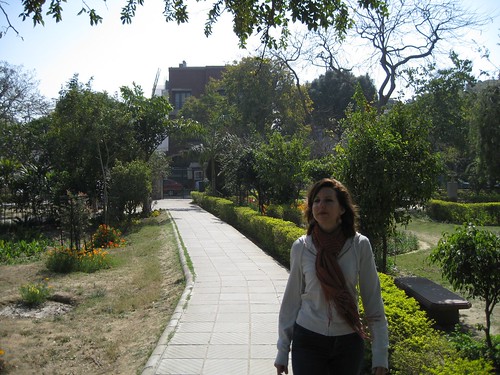
Ahhh, fresh-ish air!

So much strolling is hard on us senior citizens.

City Slickers in Udaipur

Tony just left for the Marwari Safari, an Indian take on “City Slickers.” He’ll spend five days at the Krishna Ranch near Udaipur, which is southwest of New Delhi, learning horsemanship and exploring the Arravali mountains on horseback … with 19 high school students. His trip is one of several mini-courses offered this week to students at the American Embassy School in New Delhi. They are so lucky!

Never mind that the last time we went horse-back riding, Tony dropped the reins and let his horse eat grass while I cantered in circles around him.

Tony, another teacher, and the kids will ride to Tiger Lake, rural villages, a wildlife sanctuary and several agricultural areas. He may come home a little saddle-sore, but I bet he’ll have some wonderful stories.

Check out the Krishna Ranch website. It looks amazing!

Adventures in Teaching and Travel