Today is Holi, the Hindu Festival of Colors that celebrates the start of spring with a daylong lifting of social taboos and a rainbow of revelry.
The Times of India delivered these messages from the nation’s leaders.
President Pratibha Patil and Prime Minister Manmohan Singh greeted the nation on the occasion of the festival.
“Holi is a festival of colours that heralds joy, hope and fulfilment in our lives… May this festival bring together all the colours of India’s diversity in a rainbow of unity,” Patil said in her message.
“Let the spontaneity and liveliness of this spring festival yet again affirm the togetherness of our multi-cultural nation,” the Prime Minister wished.
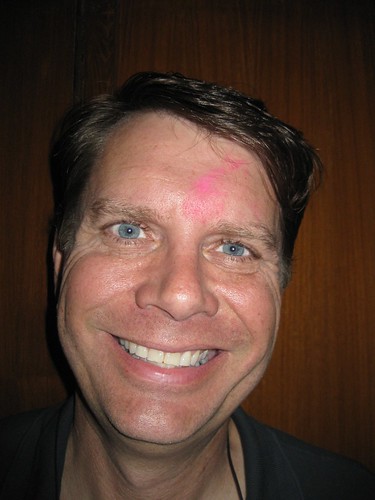
Tony came home Wednesday afternoon with a pink tikka between his eyes, courtesy of high school administrative assistant, Maggie. “That’s good enough for me,” he said. “I feel like I experienced Holi.”
As for me, the long list of advice for protecting our skin, hair and dignity on this day (“wear dental caps to prevent unwanted stains” and “avoid getting attacked by hooligans” were my favorite tips), made me consider hunkering down in bed with a good book for the day. However, I can’t resist an authentic encounter with the local culture. Fortunately, a couple friends got invited to a Holi party, so I tagged along!
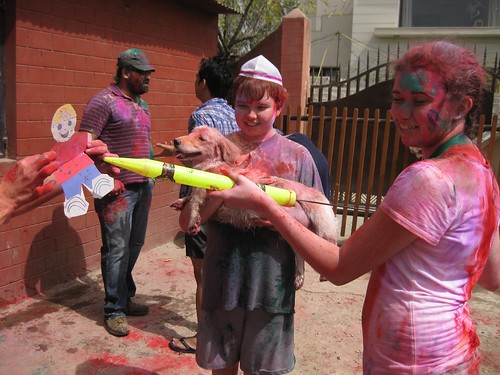
The hostess, Sonya, owns a dog kennel not far from my neighborhood, and she welcomed both human and canine celebrants. Our contingent included Nancy, her two kids and their dog, The Dread Pirate Wesley Crusher (Wesley, for short), as well as Drew, Andi and me. When we arrived, there were just a few other guests with their dogs. After receiving some gentle smears of color and “happy holi” wishes, we tentatively dipped into the powder pots and pinched color to brush on each other.

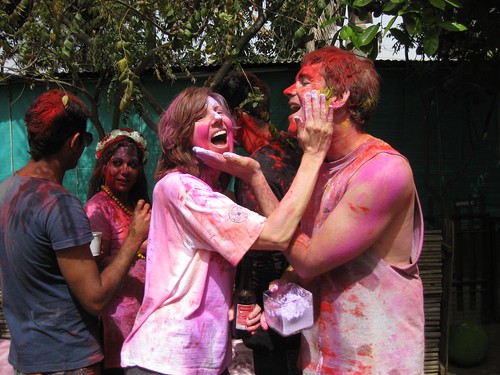
As more people and pets arrived, the party got gradually more raucous. We discovered “tentatively” is not a common adverb on Holi.

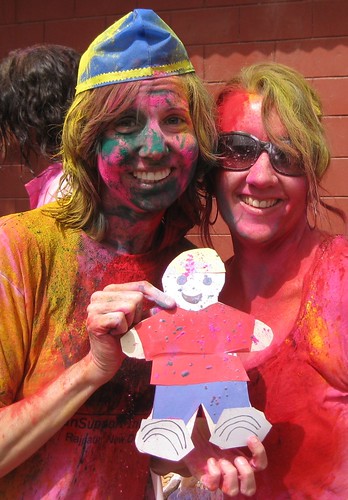
I had brought a special guest, Flat William, who is visiting from Kansas. He got powdered, but I saved him from the water gun. (Confused? Google the Flat Stanley Project.)
Tables were laid with tasty treats, but we had been forewarned. Sure enough, platters of marijuana balls (“bhang golis”) made the rounds, along with the traditional Holi drink, “bhang,” a cannabis-milk concoction.
Soon, a pattern emerged.
(a) Allow random strangers to paint you with brightly colored powder.
(b) Get a bucket of pink water (drawn from the pool) dumped on your head OR get doused by water guns OR get tossed in the pool, effectively washing off much of your powder.
(c) Repeat a and b ad infinitum.
When I sensed a plot was under foot to pitch me in the pink pool, I grabbed my friends and made a quick escape. Our taxi pulled up to Nancy’s house, where a group of locals greeted us with purple paste and more hugs. They may or may not have been friends and family of Nancy’s housekeeper.

We left the kids at home and walked to my street, after stopping to visit Cindy and Cyril, who had spent the morning at a different Holi party.
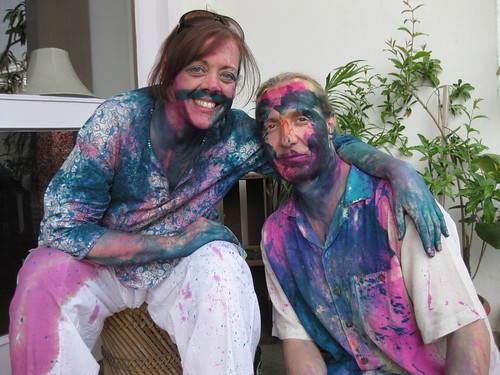
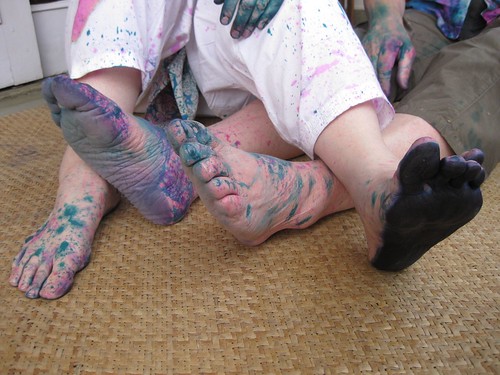
Happy Holi!! (I was told to wear this “traditional” hat, but I’m not convinced that wasn’t a classic mislead-the-clueless-foreigner trick.)
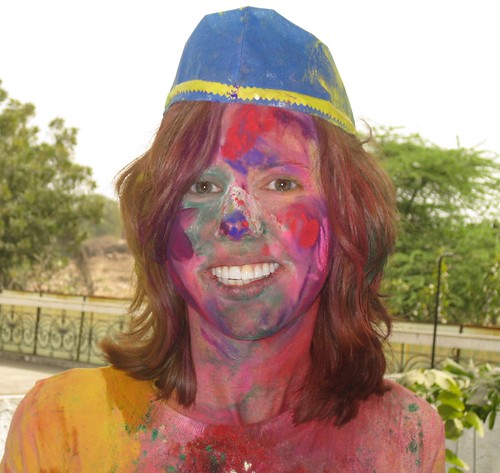
This slideshow features other shots from the party.
Wikipedia has a solid article about Holi that explains its cultural significance.