Sightseeing in Himachal Pradesh

I don’t know why it was so hard to get out of bed each morning in McLeod Ganj! Was it the cool temperatures? Fresh air? Altitude? Tranquility? In New Delhi, we never escape the sounds of people and vehicles, but only chirping birds disturbed the total silence at our cottage here. On the morning of April 5, Theresa and I rolled out of bed, ate a quick breakfast in the Glenmoor’s dining area, and took off for some sightseeing. Our driver, Sanju, carefully maneuvered his little taxi on the rubble-strewn mountain roads, deftly zipping through hairpin curves and patiently yielding to other cars when two lanes suddenly and frequently became one, as we explored the Kangra Valley in the north Indian state of Himachal Pradesh.

First stop – Norbulingka Institute
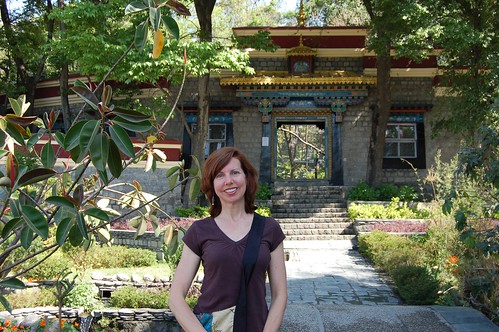
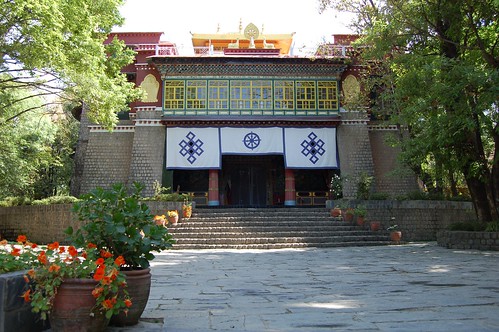
The Norbulingka Institute is dedicated to the preservation of Tibetan art and culture. Passing through the archway, we entered a shady terraced garden with stone paths and narrow waterways.
Untitled

We eventually meandered to the Deden Tsuglagkhang, a temple housing a 14-foot gilded copper Buddha and many stunning paintings created by the institute’s artists. The temple’s rooftop offered excellent views of the town and mountains.
Untitled

Sipping a lemon soda at the café, I watched fuzzy seeds rain down from the trees and relished the peace created by gurgling fountains, greenery and omnipresent prayer flags. Here are some more shots from our visit to Norbulingka.

I like this quote by the Dalai Lama on Norbulingka (lifted from the institute’s website):

Buddhism changed the whole Tibetan way of life, giving rise to a more compassionate community, in which there is a more peaceful attitude towards ourselves, towards our fellow human beings, towards animals and towards the environment. In today’s world there’s a lot of talk about peace and non-violence, but the real factor in creating genuine peace is compassion, not just education and technology. Where there is compassion, a sense of community, a sense of respect for others’ rights is automatic. In order to promote compassion, it is not sufficient just to talk; it needs to be spread through example. I believe that our peaceful and compassionate Tibetan society is such an example; that’s why it is worth preserving, and I am pleased to see that in its work to keep Tibetan culture alive, the Norbulingka Institute is actively contributing to that task.

Next stop – Kangra Fort
Unsure of other sightseeing options in the area, we asked Sanju, our taxi driver for tips. He suggested a visit to Kangra Fort, so that’s what we did.
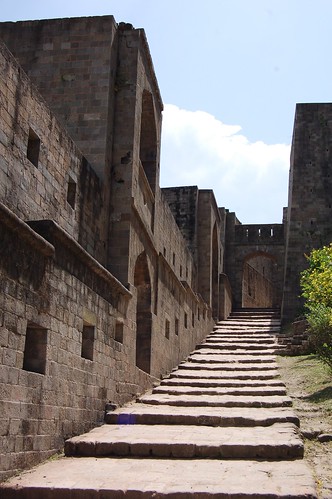
Believed to be the oldest fort in India, it was referenced by Alexander the Great in his war records from 326 B.C. and other accounts of wars dating back 3,500 years. Equipped with a surprisingly informative audio tour and headphones, Theresa and I trekked around the fort in the scorching sun. We climbed steep stairs, pausing in the shade of massive rock walls or flowering trees to listen to the fort’s bloody history.
Untitled

Posing at the entrance to the fort.
Untitled

At the top of these stairs …
Untitled

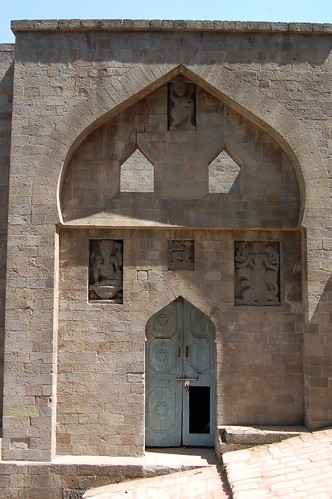
… there were some interesting carvings …
Untitled

… including this one of Ganesha, the elephant-headed Hindu god.
Untitled

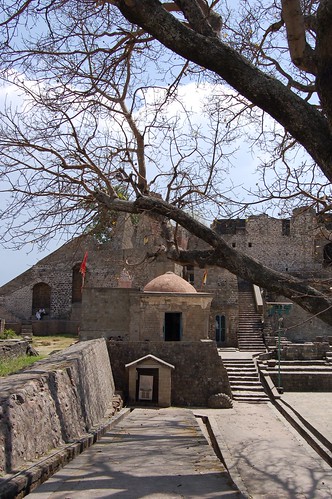
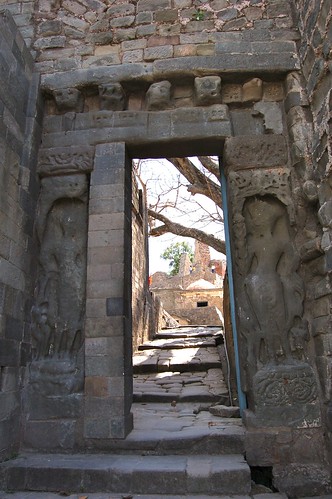
Darshani Darwaza, a doorway leading to a shady courtyard, toppled pillars and a couple small temples.
Untitled

Untitled

Inside the tiny temple.
Untitled

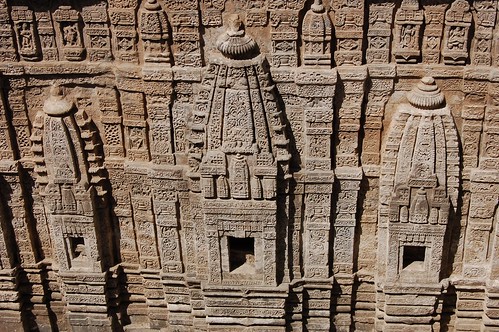
This carved wall reminded me of Angkor Wat in Cambodia, but the rest of the Kangra Fort’s ornate palace was destroyed in an earthquake.
Untitled

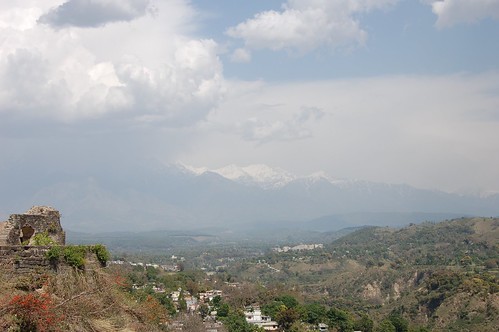
View of the river valley and the Himalayas.
Untitled

Here are a few more shots from our visit to the Kangra Fort.

The Indifest travel blog has a nice write-up of Kangra Fort, including this interesting statement.

This fort has the unique distinction of being ruled by great Hindu Kings, Muslim Invaders, Sikh Maharaja and Christian Rulers of British empire.

Back in McLeod Ganj, we asked Sanju to drop us off for a little shopping. Minutes after we exited the taxi, the sky burst open, blasting the market with hail and freezing rain. We stood under a market stall awning, hoping the storm would blow over quickly. When it didn’t, we called Sanju back to drive us the short distance to the McLlo Restaurant. Everyone and their mother had the same idea, so we crammed into a corner table and watched the poor suckers stuck in the rain outside.
Untitled

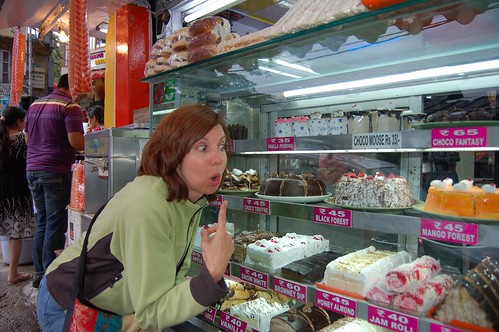
After a delicious dinner, we bought cakes to enjoy back at our cottage. They looked better than they tasted, but cake is always a good way to end a fun day!
Untitled

An ode to Glenmoor Cottages

Unless you live in a neighborhood that backs up to a noisy slum where residents frequently engage in late-night drumming and children play ball well after dark and clanking clunking construction continues by lamplight and cows announce their bedtime and dogs bark messages from house to house and traffic screeches and honks …
unless your daily life is fraught with ambient chaos …
then you simply cannot fully appreciate
the tranquility
of mountainside yoga
on a sunporch
with only bird songs
and pine
wafting in through open windows.

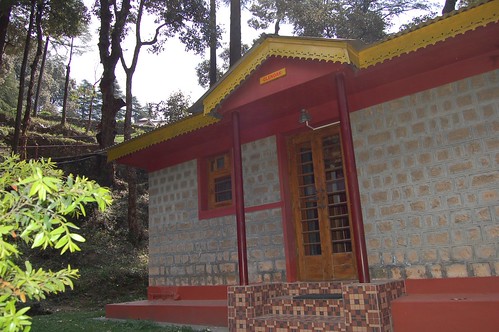
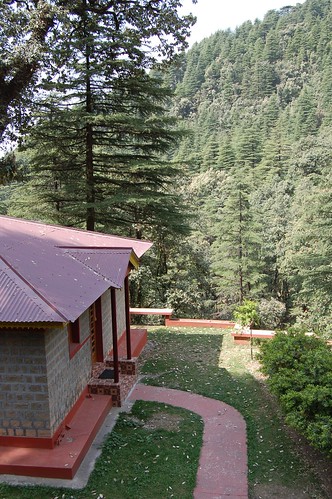
That is my spur-of-the-moment tribute to Glenmoor Cottages, a genuine place of peace in McLeod Ganj, an upper Dharamsala hill station in the Himalaya Mountains. The owner, Mr. Singh, is genteel and unwaveringly helpful. He relaxed with us in the yard over a cup of tea, chatting about Indian fiction and politics and pointing out a lake in the valley known for its migratory bird population.

Theresa and I arrived here on April 2 and happily threw open the windows of our little cottage overlooking the forest. At 6,300 feet above sea level, we found ourselves gasping for breath after the short trek up to reception. Too lazy to pursue food in town, we ordered tea and later a simple dinner delivered to our porch. We finally crashed at 8:30 and slept for 12 hours!

In Delhi, I feel pretty confident playing tour guide, but this was my first time to McLeod Ganj. For the last few months, Theresa had sent me emails with some of the sights she wanted to see here, so I left the trip planning to her. Unfortunately, she left her notes in a bag back at my house in Delhi. Without internet access at our cottage and lacking a good guidebook, we were pathetically disorganized. Still, we managed to see and do quite a bit during our three-day stay. At the end of each busy day, we both expressed such relief at coming “home” to our little cottage.
Untitled

Untitled

Amritsar on the half shell

Tony and I enjoyed Amritsar so much last fall that we decided to share it with our guests. The four of us took the train on April 1 for six hours to the state of Punjab. At the Amritsar train station, a young taxi driver approached us. Sunny gave us a ride to our hotel, and we liked him so much we hired him for our whole visit.
Untitled

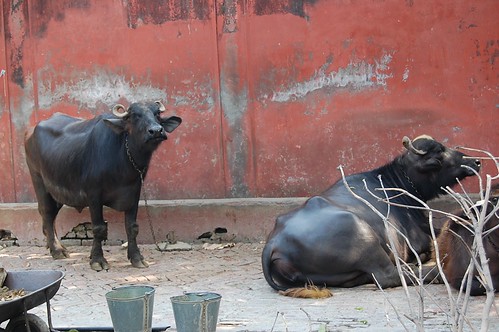
At the recommendation of our school’s travel agent, we stayed at Mrs. Bhandari’s Guesthouse, which featured a pool, outdoor eating area, garden, courtyard with water buffalo and a humble collection of rooms. Liz snapped this shot of our fellow guesthouse residents.
Untitled

We checked in, grabbed a quick snack, and took off for the Wagah Border-Closing Ceremony at the Pakistan-India border, about 45 minutes out of town.

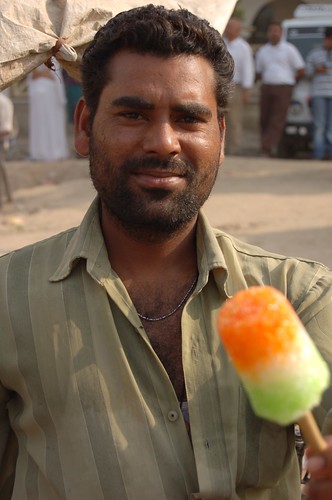
Just like our last visit, food and drink vendors lined the path approaching the stadium. I loved this papaya seller with his papaya-colored shirt and turban. Theresa got the shot.
Untitled

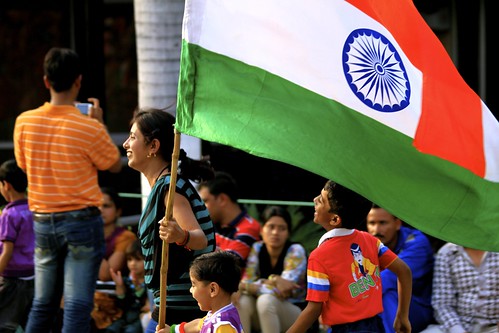
Sno-cones made on the spot with the Indian flag colors!
Untitled

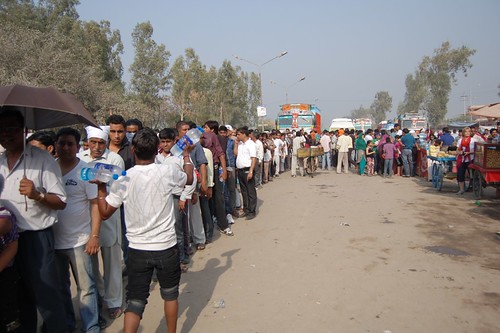
A water boy wisely targeting the men in line. This may be the only place on the planet where the women’s line moves faster!
Untitled

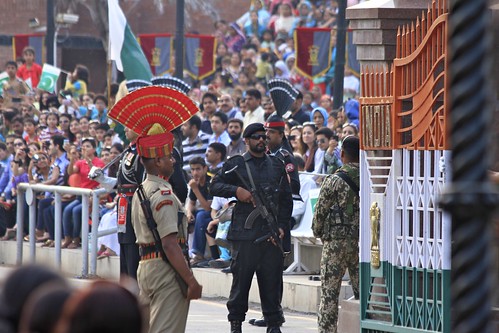
After passing through VIP security, we took our seats in the Foreigners Gallery and watched the bedlam. A full Bollywood street party was followed by people actually LINING UP to run a short distance with the Indian flag.
Untitled

Untitled

Great shot by Theresa:
Untitled

Eventually the hollering, high-stepping, gate-slamming, foot-stomping, thumb-gesturing, hat-straightening, mustache-twisting, anthem-singing, flag-lowering antics came to a close. I took so many pictures on our last visit. This time I just watched. Check out the Pakistani guard (black beret and shades) who Theresa photographed. You do NOT want to mess with him.
Untitled

Returning from the border ceremony, Sunny eagerly asked if we knew the story of Ganesha. I did, only because I had heard it at school during India Week. However, Sunny told the tale with such exuberance and joy that I just let him run with it. Here’s the story, fyi. (This is NOT how Sunny told it. His rendition featured generic nouns slapped with unconjugated verbs in an unintelligible but joyous English soup.) From the website religionfacts.com:

Incensed by the refusal of her husband to respect her privacy, to the extent of entering her private chambers even while she was having her bath, Parvati decided to settle matters once and for all. Before going for her bath the next time, she rubbed off the sandalwood paste on her body and out of it created the figure of a young boy. She infused life into the figure and told him he was her son and should guard the entrance while she bathed.
Soon after, Shiva (Lord of destruction and husband of Parvati) came to see Parvati but the young boy blocked his way and would not let him in. Shiva, unaware that this lad was his son, became furious and in great anger fought with this boy whose head got severed from his body in the ensuing battle. Parvati, returning from her bath, saw her headless son and threatened in her rage to destroy the heavens and the earth, so great was her sorrow.
Shiva pacified her and instructed his followers (known as ganas) to bring the head of the first living being they encounter. The first creature they encountered was an elephant. They thus cut off its head and placed it on the body of Parvati’s son and breathed life into him. Thus overjoyed, Parvati embraced her son.

Theresa took this great shot of the dashboard decor in Sunny’s car: Ganesha in a Clam Shell. I love it so much! No, I don’t know why this Hindu elephant god is resting on a mollusk, but there’s no denying that it’s awe inspiring.
Untitled

Basically re-creating our first Amritsar visit, we took Liz and Theresa to Kesar da Dhaba for dinner. Everyone seemed happy with their food, and the restaurant owner remembered me from November! We bought dinner for Sunny, who tried to have a philosophical discussion with Tony about the Sikh religion.

Liz being a BIG risk taker!
Untitled

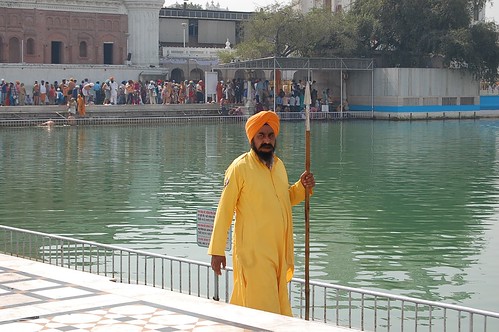
After dinner, Sunny drove us to the Golden Temple. It was not the peaceful oasis we remembered from five months ago! It was a mob scene … a happy, spiritual, family-oriented mob scene, but a mob scene nonetheless. I was trying to take a photo of Tony and Liz in front of the temple when this family crowded in to the shot. Okayyyy.
Untitled

Another family shoved a baby into Liz’s arms, which she confusedly cuddled until the mother realized its absence and abruptly yanked it back. Craziness! I liked this calm lady who was chilling and enjoying the glowing temple.
Untitled

The next morning, Liz and Tony ventured back to the temple and the Jalianwallah Bagh Memorial. Apparently, they hung out with this guy.
Untitled

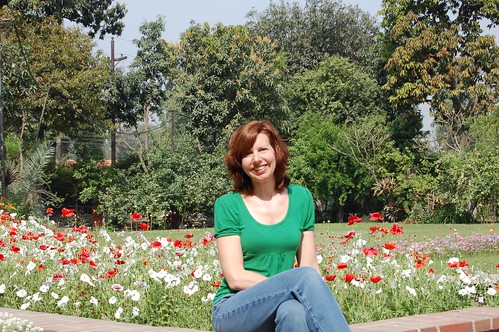
Theresa and I lazed around the guesthouse, taking photos of the colorful garden.
Untitled

Untitled

Untitled

For more details on the places we visited, check out my old posts about Amritsar.

On April 2, it was time to head our separate ways. Tony and Liz returned to Delhi and later took a daytrip to Agra. Theresa and I drove to McLeod Ganj, a hill station in the Himalayas and home of the exiled Dalai Lama. That story is coming up next!

Everything old is new again … Old Delhi through the eyes of visitors

Tony’s sister Liz arrived March 30 and hit the ground running! No time for jetlag…

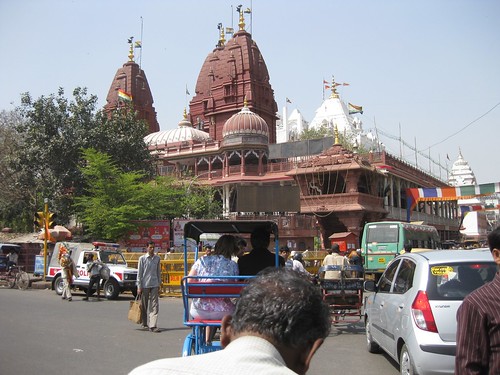
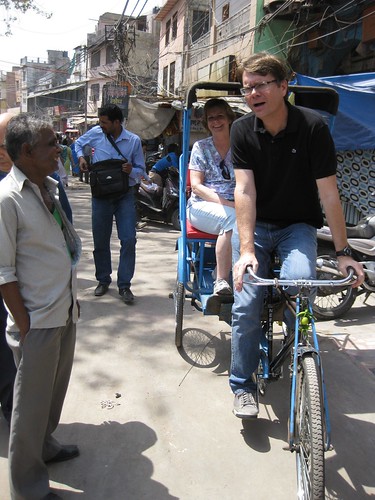
Although Old Delhi is a must-see attraction, it can be pretty intimidating. A bicycle rickshaw tour is marginally safer and less scary, so that’s how we kicked off Liz’s India tour. Theresa, Tony, Liz and I climbed aboard two rickshaws, disembarking to visit the spice market, Jain Temple and sari market, essentially following in the same footsteps as our first Delhi rickshaw tour.

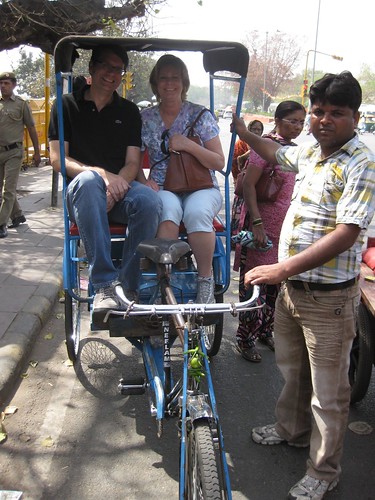
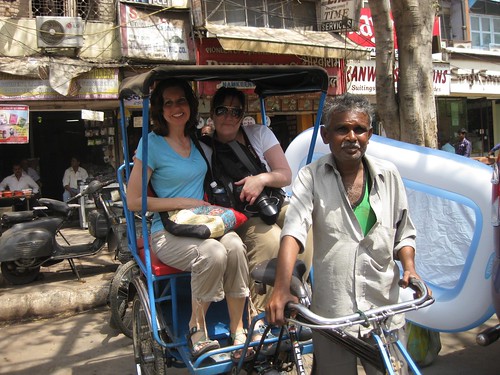
Ratan gets ready to chauffeur Tony and Liz.
Untitled

Off we go, straight into traffic.
Untitled

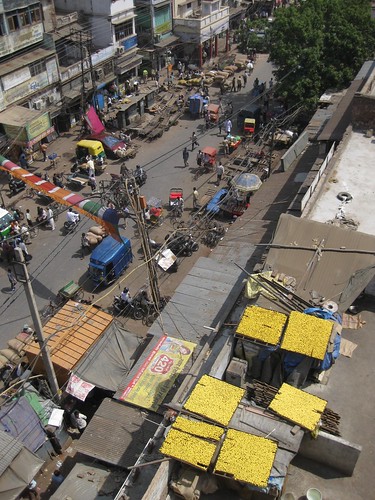
A view from the top of the spice market. I’m not sure what those yellow things are drying in the sun.
Untitled

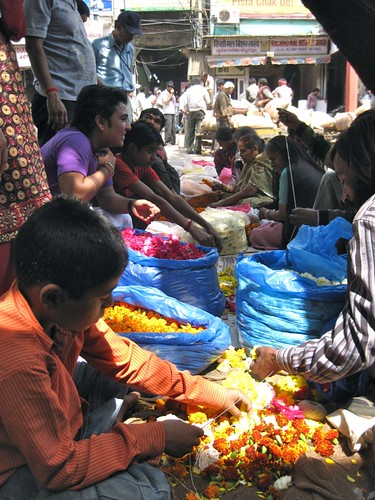
Stringing streetside flower garlands.
Untitled

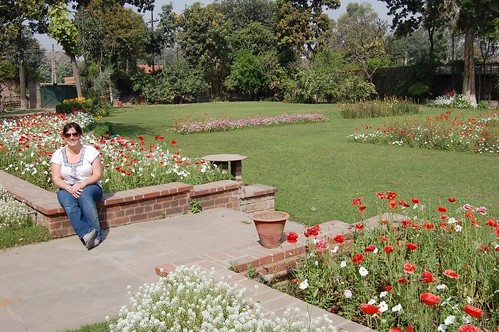
Theresa and me. Dang, I forgot our driver’s name!
Untitled

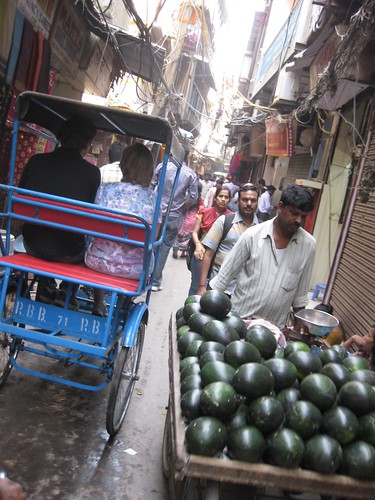
Barely squeaking by a watermelon salesman.
Untitled

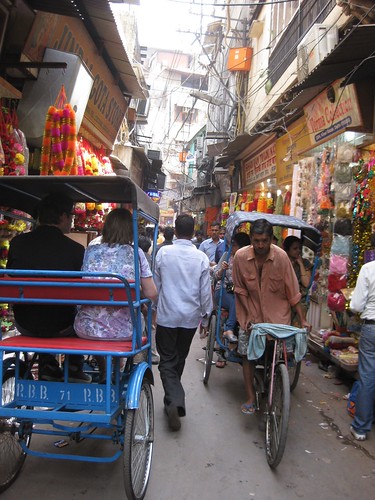
Driving through the wedding market.
Untitled

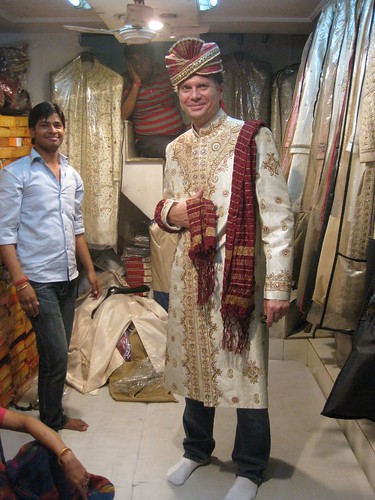
That’s my handsome groom!
Untitled

Tony takes the wheel (handlebars?).
Untitled

Following lunch at McDonald’s (Theresa got the McVeggie, a paneer patty), we walked to the Red Fort.
Untitled

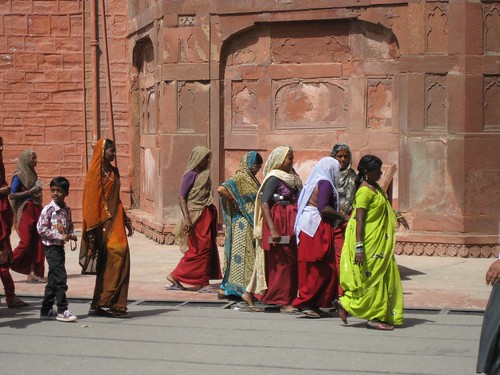
A colorful crowd heads in to the fort.
Untitled

Emperor Shah Jahan (the same guy who built the Taj Mahal) constructed this fort starting in 1638 after he moved his capital from Agra to Shahjahanabad, in what is now Delhi. (Remember when Theresa and I visited the FIRST city in Delhi? This was the SEVENTH!) It served as the Mughal Empire capital until a failed uprising against the British in 1857. At one point, up to 3,000 people lived in the fort complex.

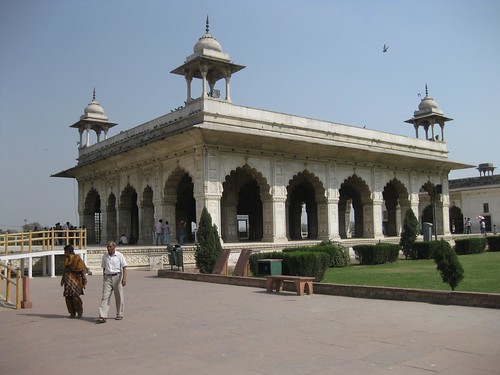
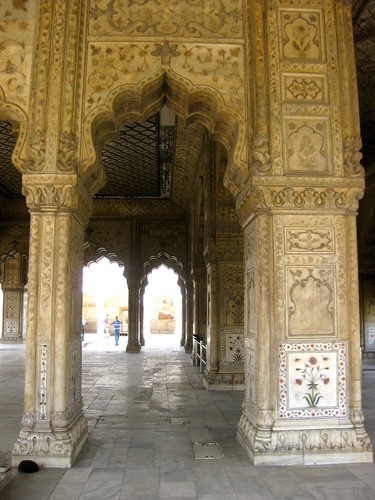
Love those Mughal-style archways! This was the Diwan-i-Aam, a pavilion for public audiences with the emperor.
Untitled

The Diwan-i-Khas was used for private audiences with the emperor.
Untitled

Untitled

Untitled

Yes, yes, we know … we’re fabulous. But how many photos of sweaty foreigners do you really need?
Untitled

Qutub Complex – strolling through ancient Delhi

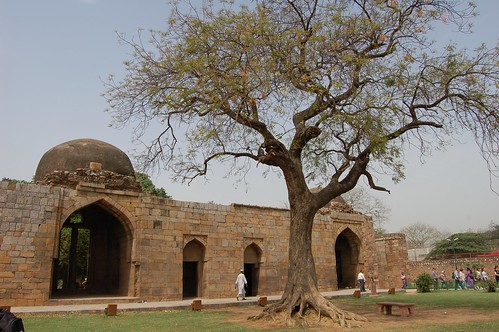
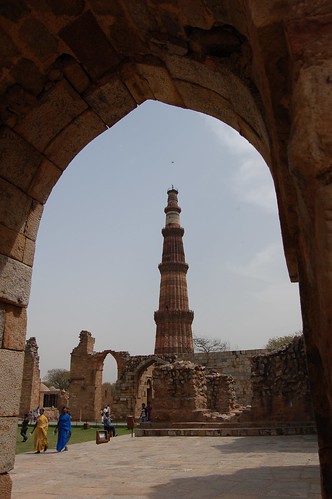
For Theresa’s first full day in Delhi (March 26), it only made sense to visit the first city of Delhi: Lalkot, which dates to around 1060. Here, Delhi’s first sultan, Aibak, imposed Muslim rule and began construction of a mosque and tower that would proclaim Islam’s victory and domination. So why can you see Hindu architectural designs in the buildings? Watch this short UNESCO World Heritage video to find out!

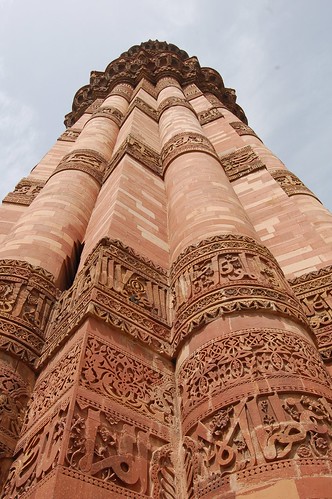
The Qutub Minar, which stands about 238 feet high, is the main attraction at the Qutub Complex. Here are some interesting facts about the mosque and minaret, from the UNESCO website:

The Quwwatu’l-Islam mosque consists of a courtyard, cloisters, and a prayer hall. The high arched screen facing the prayer hall was added in the 14th century. The Qutb Minar is a column built from red and buff sandstone blocks rising to a height of 72.5 m, tapering from 2.75 m diameter at the top to 14.32 m at the base, making it the highest stone tower in India. In addition to its traditional use for calling the faithful to prayer, it also has a monumental purpose, since a later Nagari inscription calls it Alauld-Din’s ‘victory monument’ (Vijava-stambha). In its present form it consists of five storeys, the topmost of the original four storeys having been replaced by two storeys during the reign of Firuz Shah Tughluq. Each storey is separated from the next by highly decorated balconies, with pendentives and inscribed bands. The three earlier storeys are each decorated differently, the lowest being of alternating angular and rounded flutings, the second with rounded flutings alone, and the third with angular flutings alone; the same vertical alignment continues, however, through all three storeys. The whole structure was originally surmounted by a cupola, which fell during an earthquake and was replaced by a new cupola in late Mughal style in the early 19th century. This was so incongruous that it was removed in 1848 and now stands on the lawns to the south-east of the minaret.

Untitled

Untitled

Untitled

This shot was taken from inside the mosque courtyard.
Untitled

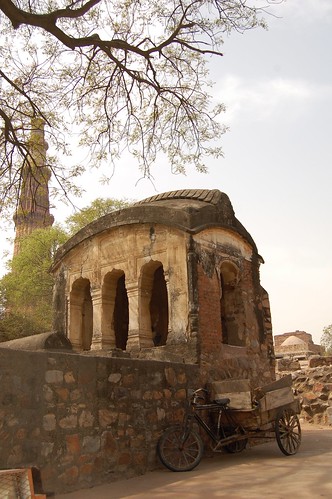
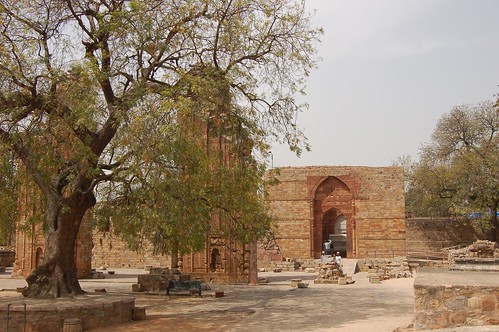
I enjoyed strolling around the complex with its manicured gardens, pockets of shady trees, pathways and historical markers. There was a sense of organization and peace, despite the big tour groups.
Untitled

Untitled

Untitled

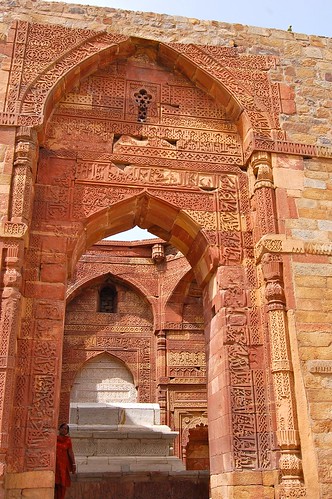
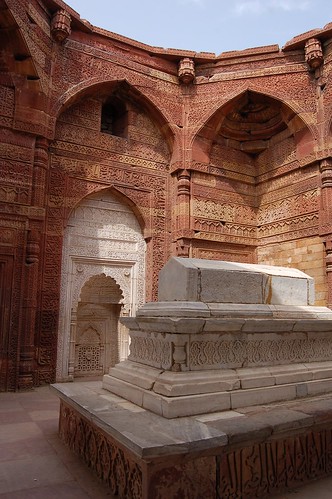
The tomb of Iltutmish, Aibak’s successor, was especially impressive with its elaborate Islamic carvings.
Untitled

Untitled

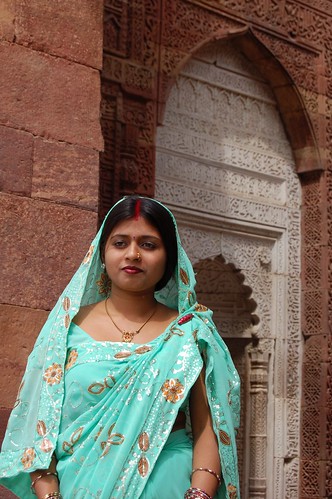
A pretty visitor to the tomb.
Untitled

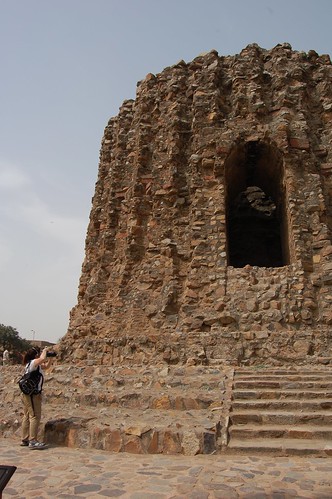
The Alai Minar was meant to be even taller than the Qutub Minar, but it was never finished.
Untitled

Theresa and I paid a bit extra for an excellent audio tour of the complex. At designated historical spots along the path, we stopped, punched in the corresponding number, hit “play” and listened to detailed stories of life 800 years ago. I wish I could remember some of them…
Untitled

Three visitors, two weeks, too much to say!
Yikes, I just looked at that little calendar over there to the right of this post. See it? Whenever I post something, the date changes to brown. Until today, April had no brown dates. I haven’t written a single post this month!

Sometimes a dry spell stems from ennui. Work, home, sleep, work, home, sleep … my usual schedule often lacks substance worthy of a blog post. The last few weeks, however, blurred with activity and left little time to capture it all in writing. Faced with a few free hours for the first time this month, I am ready to make up for my excessive blog neglect.

In the weeks preceding our spring break, we made arrangements for three visitors:
* Tony’s sister Liz,
* Theresa, a friend from my old journalism days, and
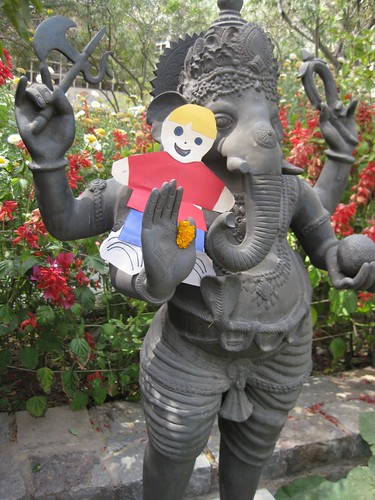
* Flat William, a paper version of a friend’s son.

Liz had never traveled outside the U.S., and I worried that India might make her climb under the covers and refuse to leave the house. Theresa was a seasoned traveler, but her emails suggested an overbooked itinerary and I stressed that we would run ourselves ragged. But, surprisingly, Flat William was the most high-maintenance guest of all.

He never made any demands or complained about getting squashed in my backpack, but I felt a codependent, obsessive need to photograph him everywhere I went. Unfortunately, because of his reticence, he would sometimes stay buried in my bag while we toured an Indian hotspot, making me smack my forehead with frustration later when the realization hit. I entrusted him to Theresa’s care on her Rajasthan side trip, but I experienced three days of anxiety that she would lose him or forget to take pictures with him. (I had nightmares of the time my mom fed a Flat Friend through the paper shredder on accident.) Theresa did forget to snap him in front of the Taj Mahal, but at least he got to see it. I sent him home with Liz, who informed me yesterday that he was returned safely to his family. Whew!

Flat William hanging out with Ganesh at the American Embassy School, New Delhi.
Untitled

For years, Tony has dreamed of his family visiting us overseas. Finally, he convinced his sister Liz to make the trip to India. When I told people this would be her first international journey, the incredulous responses often sounded something like this: “She lives in KANSAS? And she’s never been out of AMERICA? And she’s coming to INDIA?” I began to panic. I carefully crafted a list of “Delhi Light” sight-seeing excursions. In the weeks leading up to her visit, Tony and I often found ourselves in the midst of an oppressive Delhi crowd, glancing at each other nervously and saying, “OK, we won’t bring Liz HERE.” However, from the moment she stepped off the plane, Liz amazed and inspired me with her willingness to take risks, move far out of her comfort zone and reflect on the sensory overload of India. She barely rested during her week here, dragging Tony all over town to see the sights, making observations that were acute and full of compassion. Tony and I both feel deeply grateful for this time with Liz, and we’ll never underestimate her again!

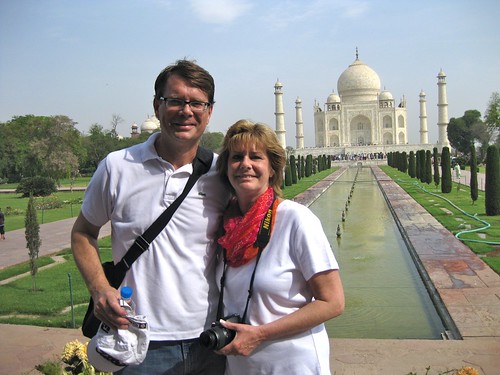
Tony and Liz at the Taj Mahal.
Untitled

Theresa and I worked at the American Academy of Family Physicians in Kansas City way back before I made the career switch to teaching. We hadn’t kept in touch much over the years, except through occasional emails, Face Book updates, and links to online photo albums. When she turned 40, she emailed and said she wanted to celebrate with an international vacation. We were living in Laos at the time, and although I do love that country, I felt compelled to say, “If you’re only going to take one big trip every 40 years, maybe you should pick a country with more on offer…” When Tony and I moved to India, she quickly proposed a visit. There’s no denying Incredible India has more on offer … maybe too much! As Theresa and I planned her trip via email, the biggest challenge was picking the places to go. Knowing Theresa was eager to see the Himalyas, I met with our travel agent at school, who pointed out certain destinations would still be blanketed with snow and unprepared for tourists in April. We finally settled on Dharamsala, home of the exiled Dalai Lama. Theresa packed a crazy amount of sight-seeing into her two-week visit and took about 47 million fabulous photos. Although whacked with a mysterious illness on the flight back to the States, she certainly made good use of her time here!

Theresa on the rooftop of Ashoka restaurant in McLeod Ganj with the Himalayas in the background.
Untitled

It’s going to take me awhile to post everything we did during the last few weeks! But stay tuned…