Everything old is new again … Old Delhi through the eyes of visitors

Tony’s sister Liz arrived March 30 and hit the ground running! No time for jetlag…

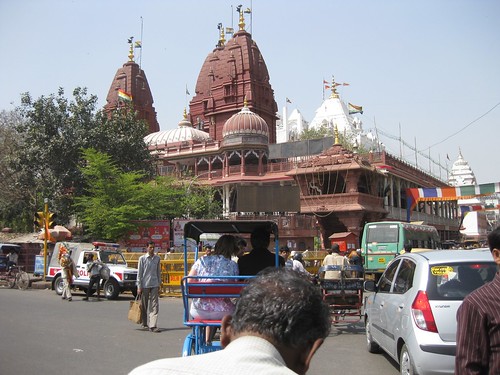
Although Old Delhi is a must-see attraction, it can be pretty intimidating. A bicycle rickshaw tour is marginally safer and less scary, so that’s how we kicked off Liz’s India tour. Theresa, Tony, Liz and I climbed aboard two rickshaws, disembarking to visit the spice market, Jain Temple and sari market, essentially following in the same footsteps as our first Delhi rickshaw tour.

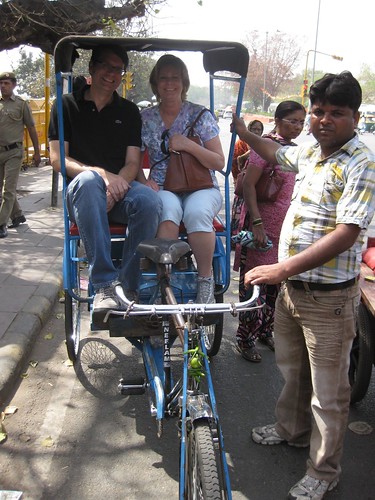
Ratan gets ready to chauffeur Tony and Liz.
Untitled

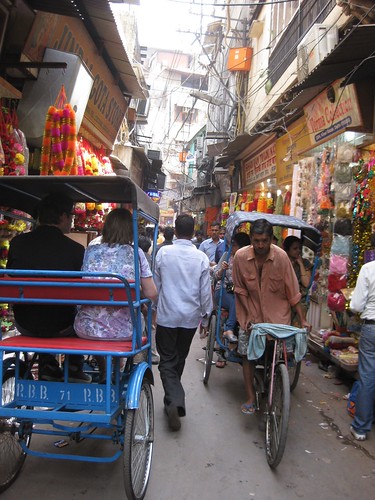
Off we go, straight into traffic.
Untitled

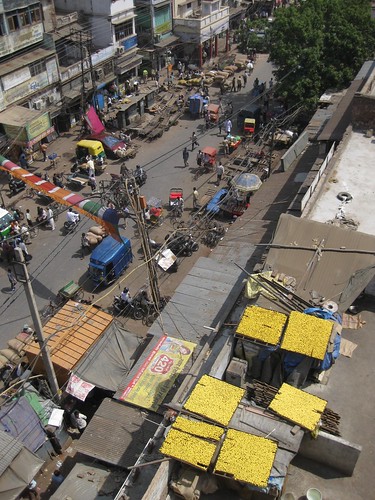
A view from the top of the spice market. I’m not sure what those yellow things are drying in the sun.
Untitled

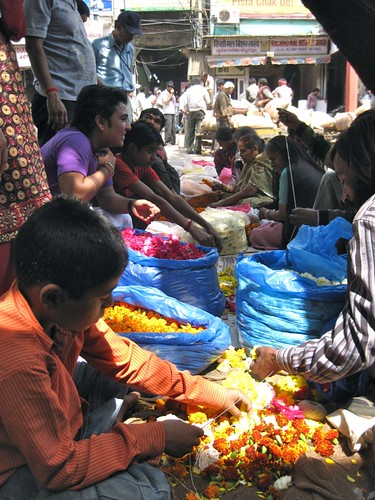
Stringing streetside flower garlands.
Untitled

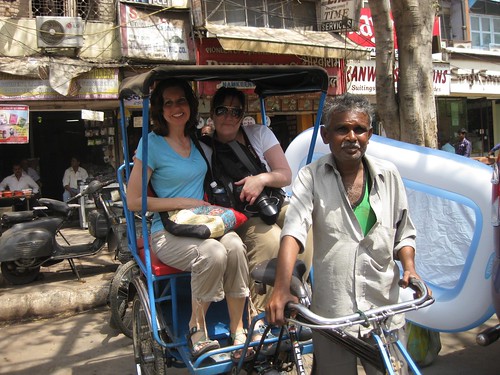
Theresa and me. Dang, I forgot our driver’s name!
Untitled

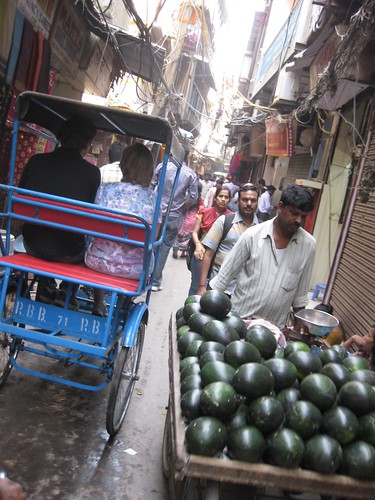
Barely squeaking by a watermelon salesman.
Untitled

Driving through the wedding market.
Untitled

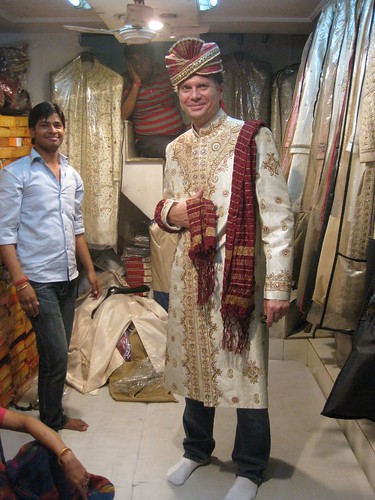
That’s my handsome groom!
Untitled

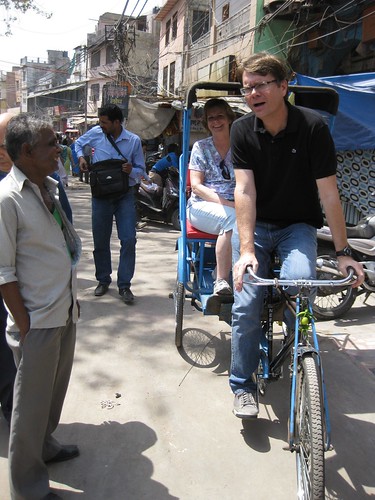
Tony takes the wheel (handlebars?).
Untitled

Following lunch at McDonald’s (Theresa got the McVeggie, a paneer patty), we walked to the Red Fort.
Untitled

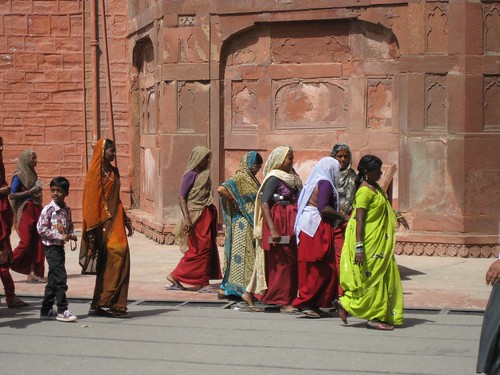
A colorful crowd heads in to the fort.
Untitled

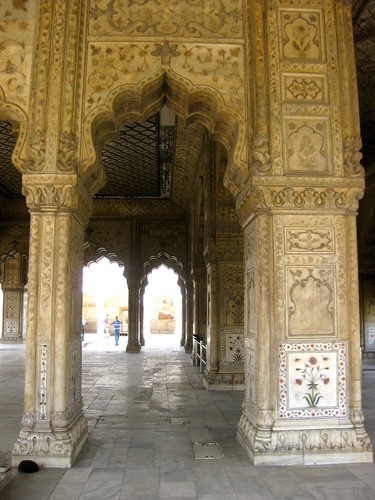
Emperor Shah Jahan (the same guy who built the Taj Mahal) constructed this fort starting in 1638 after he moved his capital from Agra to Shahjahanabad, in what is now Delhi. (Remember when Theresa and I visited the FIRST city in Delhi? This was the SEVENTH!) It served as the Mughal Empire capital until a failed uprising against the British in 1857. At one point, up to 3,000 people lived in the fort complex.

Love those Mughal-style archways! This was the Diwan-i-Aam, a pavilion for public audiences with the emperor.
Untitled

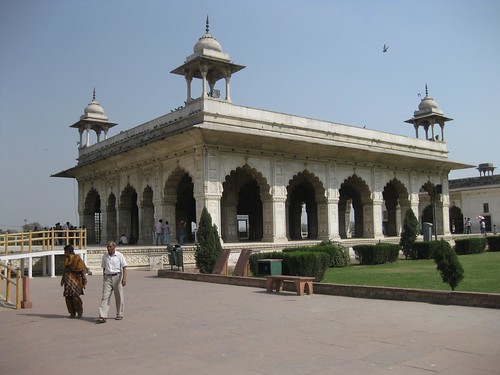
The Diwan-i-Khas was used for private audiences with the emperor.
Untitled

Untitled

Untitled

Yes, yes, we know … we’re fabulous. But how many photos of sweaty foreigners do you really need?
Untitled

Qutub Complex – strolling through ancient Delhi

For Theresa’s first full day in Delhi (March 26), it only made sense to visit the first city of Delhi: Lalkot, which dates to around 1060. Here, Delhi’s first sultan, Aibak, imposed Muslim rule and began construction of a mosque and tower that would proclaim Islam’s victory and domination. So why can you see Hindu architectural designs in the buildings? Watch this short UNESCO World Heritage video to find out!

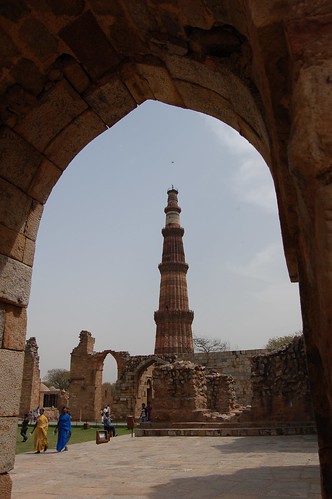
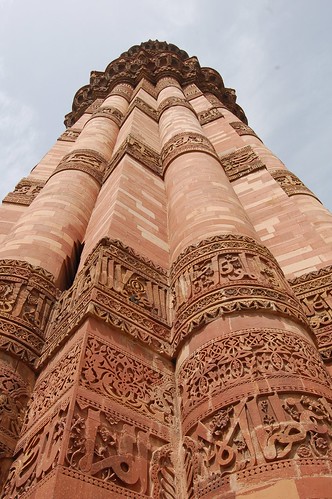
The Qutub Minar, which stands about 238 feet high, is the main attraction at the Qutub Complex. Here are some interesting facts about the mosque and minaret, from the UNESCO website:

The Quwwatu’l-Islam mosque consists of a courtyard, cloisters, and a prayer hall. The high arched screen facing the prayer hall was added in the 14th century. The Qutb Minar is a column built from red and buff sandstone blocks rising to a height of 72.5 m, tapering from 2.75 m diameter at the top to 14.32 m at the base, making it the highest stone tower in India. In addition to its traditional use for calling the faithful to prayer, it also has a monumental purpose, since a later Nagari inscription calls it Alauld-Din’s ‘victory monument’ (Vijava-stambha). In its present form it consists of five storeys, the topmost of the original four storeys having been replaced by two storeys during the reign of Firuz Shah Tughluq. Each storey is separated from the next by highly decorated balconies, with pendentives and inscribed bands. The three earlier storeys are each decorated differently, the lowest being of alternating angular and rounded flutings, the second with rounded flutings alone, and the third with angular flutings alone; the same vertical alignment continues, however, through all three storeys. The whole structure was originally surmounted by a cupola, which fell during an earthquake and was replaced by a new cupola in late Mughal style in the early 19th century. This was so incongruous that it was removed in 1848 and now stands on the lawns to the south-east of the minaret.

Untitled

Untitled

Untitled

This shot was taken from inside the mosque courtyard.
Untitled

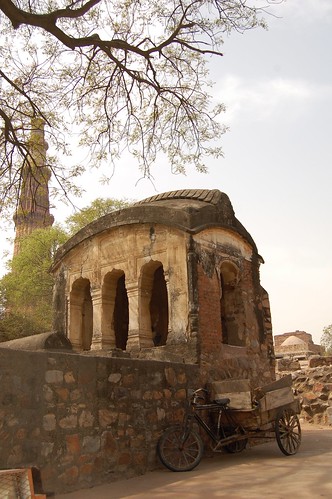
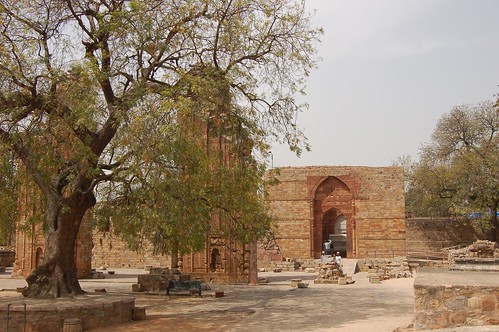
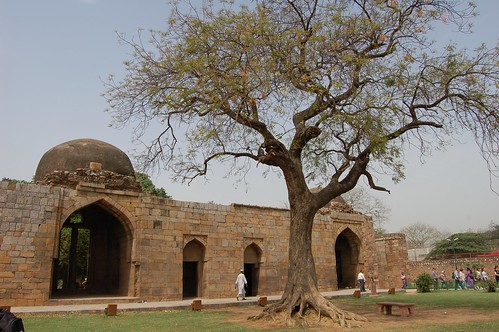
I enjoyed strolling around the complex with its manicured gardens, pockets of shady trees, pathways and historical markers. There was a sense of organization and peace, despite the big tour groups.
Untitled

Untitled

Untitled

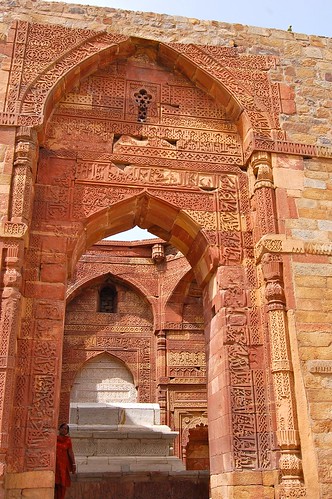
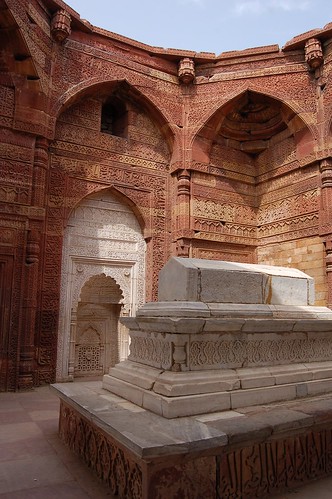
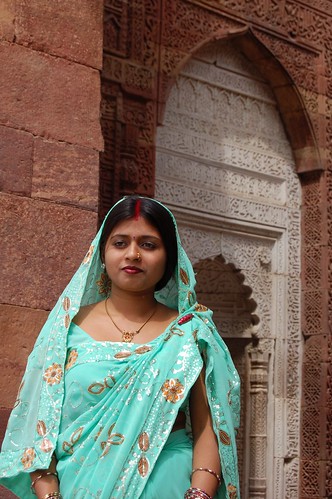
The tomb of Iltutmish, Aibak’s successor, was especially impressive with its elaborate Islamic carvings.
Untitled

Untitled

A pretty visitor to the tomb.
Untitled

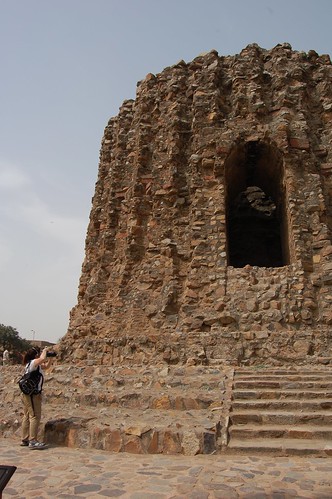
The Alai Minar was meant to be even taller than the Qutub Minar, but it was never finished.
Untitled

Theresa and I paid a bit extra for an excellent audio tour of the complex. At designated historical spots along the path, we stopped, punched in the corresponding number, hit “play” and listened to detailed stories of life 800 years ago. I wish I could remember some of them…
Untitled