Dengue Fever – no dang fun

This is the (insert string of expletives here) type of mosquito that infected me with Dengue Fever and made the last two weeks so miserable.

Aedes_aegypti

Check out the World Health Organization fact sheet on dengue for lots of fascinating facts, like these: The Aedes aegypti mosquito lives in urban habitats and breeds mostly in man-made containers. Unlike other mosquitoes Ae. aegypti is a daytime feeder; its peak biting periods are early in the morning and in the evening before dusk. Female Ae. aegypti bites multiple people during each feeding period.

I know exactly where and when the little bastard got me. I was just sitting down to dinner with two girlfriends at one of my favorite little restaurants in the funky Hauz Khas neighborhood when I felt the suspicious itch of a new mosquito bite on my ankle. Just as predicted by WHO, symptoms started about a week later. As usual, I had doused myself in mosquito repellant, joking that I was statistically more likely to get DEET poisoning than any mosquito-borne tropical illness. I double-jinxed myself with the stupid quip that dengue would make a cool blog post. Let me make it clear up front that the opportunity to share my first-hand account of dengue in NO WAY redeems the experience.

Here’s how it played out.
Sunday, Oct. 14, I was goofing around at my computer, when suddenly, my back felt like someone had just bashed it with a lead pipe. It came on that fast. One second, I was sitting up tall, feeling fine. The next second, I was crumpled on the bed. Dengue is sometimes called “broken bone disease,” and now I know why. If any part of my body made contact with any surface, the pain was unbearable. I couldn’t lie down or even sit in a cushy chair, but I didn’t have the strength to hold myself upright. It truly felt like all my bones were broken. That lasted for two days.

My temperature hovered around 102 degrees for several days, but I thought I was well enough by Thursday, Oct. 18, to attend parent conferences at school. I muddled through four meetings and then conceded I wasn’t strong enough to return for the next day’s conferences. I contacted Martin, the phlebotomist recommended by our school, who came to my house to take blood for the dengue test. It came back negative, and another test two days later also returned a negative report. Our school doctor suggested I might just have some random virus.

On Friday, a couple new symptoms started. A rash blanketed my chest and back but didn’t bother me too much. However, the palms of my hands felt like electrical worms were burrowing around, causing spastic jolts of intense burning. Ice packs provided the only relief, but you can’t just cling to ice. It gets too cold, and you have to take a break. But the minute I would let go, the stabs of fire would start again. Even if I held on for dear life, the ice eventually melted, and I had to get out of bed to put the packs back in the freezer. I spent two sleepless nights sobbing with fiery hands.

The middle school play took my mind off my symptoms for a few hours on Friday and Saturday. I had organized the make-up crew, but because of my illness I had missed the dress rehearsal. I know they would have been just fine without me, but I couldn’t stand to skip the shows. Friday, I helped the make-up crew set up their supplies, and I stuck around till the curtain call to supervise their work and clean-up. By Saturday, I knew I wasn’t up for a repeat performance. I trudged in for the matinee, got the group started and then headed home before intermission. From all accounts it went fine, but I felt so frustrated not to participate 100 percent.

A week after the symptoms started, I dragged myself out of the house for a second opinion. I visited the office of Dr. Chawla, a gentle Sikh physician, who gave me hard-core antihistamines to stop the electric worms and administered another blood test, which came back positive for dengue. He phoned me later and warned that my blood platelets were low, so I returned to his office on Monday for more blood work. Fortunately, that test showed my platelets rebounding.

During the first 10 days or so, I couldn’t even sit up in bed. I couldn’t read. I couldn’t check my email. I tried to FaceTime and Skype with friends and family, but I couldn’t hold up the iPad for more than a few minutes, and the constant headache behind my eyes made conversation uncomfortable. I had to force myself to eat and drink. At one point, I slept for about 18 hours. Tony came home from work and had trouble rousing me.

Now, two weeks later, I have minor burning in my hands and my energy level is nearly nonexistent. I can’t imagine how I’ll get up for school tomorrow after missing two weeks. The crazy thing is I had a fairly MILD case of dengue! We have friends here and in Laos who suffered far, far worse symptoms than I had. My parents had a driver in Saudi Arabia, whose young daughter died of dengue in Sri Lanka. I escaped relatively unscathed.

As of yesterday, New Delhi had reported 835 cases of dengue, including two deaths, this year so far. The “dengue season” generally extends from the end of the monsoon in September, when standing water provides prime mosquito breeding areas, until temperatures drop enough to discourage mosquito reproduction, which should be in the next few weeks.

There is no vaccine or cure, although Indians offer plenty of ayurvedic treatments for the symptoms. For example, I am drinking liquified papaya tree leaves each morning in the hopes it will restore my strength. It’s worth a shot!
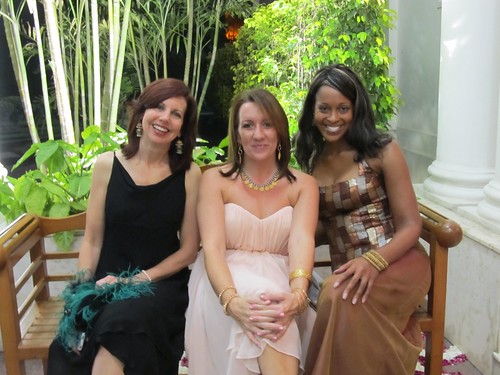
You can dress her up, but you can’t take her out

The last fun experience I had (before dengue smacked me down) combined two of my favorite things: Canadians and Thanksgiving!
Untitled

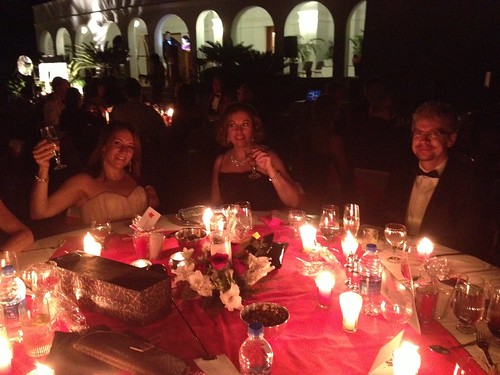
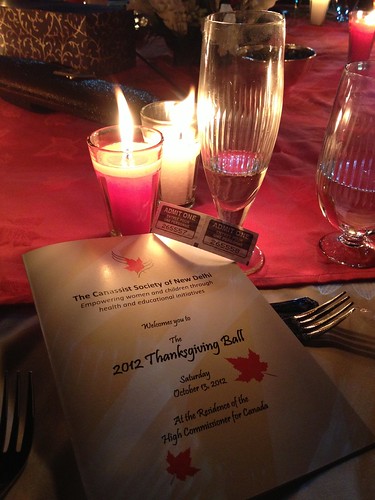
The 2012 Canadian Thanksgiving Ball took place Oct. 13 at the home of the Canadian High Commissioner in New Delhi. The annual event raises money for CanAssist, a local fundraising society that supports organizations and groups working to promote the self-sufficiency of women and children through health and educational initiatives.

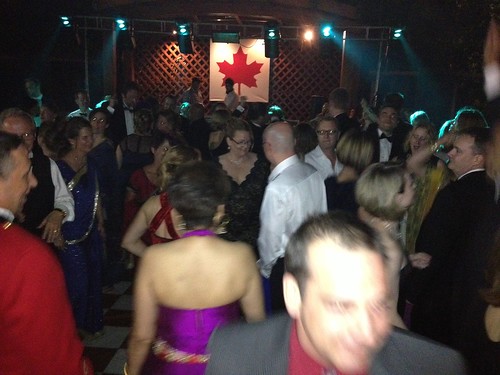
Despite a bruised toe that prompted a last-minute exchange of my stunning 5-inch Steve Maddens for a pair of bejeweled flats, I still enjoyed puttin’ on the ritz. Formal events in India get eclectic with western-style gowns mixed with elegant saris, tuxedos mingling with beaded kurtas. An occasional kilt and/or red dinner jacket lent a true Canadian vibe.
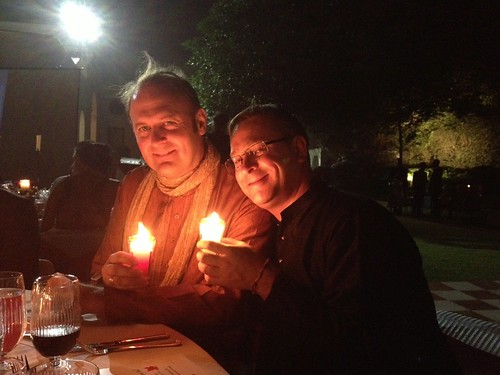
Posers at the entrance.
Untitled
So elegant.
Untitled
Token Canadians at our table.
Untitled
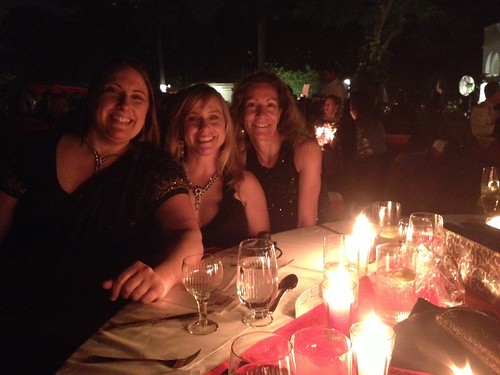
Lovely ladies.
Untitled
Bustin’ a move.
Untitled

I did learn a valuable lesson on this night. Well, it’s a lesson I’ve “learned” many times but haven’t seemed to actually internalize. Here it is: You can’t slam glass after glass of champagne, eat everything on the buffet table (including all six desserts) and then immediately pounce out to the dance floor to flaunt your most spectacular moves in front of a massive fan to AC/DC’s “You Shook Me All Night Long.” Especially when you’re wearing heavy Indian earrings.

Unfortunately, the belly bouncing took its toll, so I headed home, nauseated and with very sore earlobes, well before midnight. I could blame Dengue Fever, which hit me with full force the following afternoon, but I’m sure it was the second piece of pumpkin pie. Or maybe the chocolate torte.

Happy Thanksgiving, Canada!

Wacky wall painting brings smiles to all who enter

This is the first time I’ve sat up at my computer for more than 10 minutes since I was smacked in the face with Dengue Fever. I’ll write more about that experience later, but I figure I’ve got the strength to crank out one post, and I want to show you our spectacular wall painting.

Browsing at the Surajkund Mela last February, I enjoyed everything the handicrafts fair had to offer. I was especially attracted to Madhubani Painting, a colorful 2-dimensional folk art from the Indian state of Bihar. Many artists had their work on display, but I was drawn to the paintings of Sarita Devi, whose card listed a studio not far from our Delhi home.

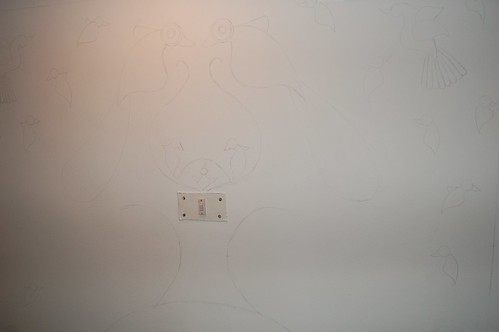
After the furniture delivery debacle that gouged up our foyer wall a few months ago, I dug out Sarita Devi’s card and wrote an email asking if she would be interested in painting our wall. Someone with broken English wrote back with a collection of paintings to consider. I picked my favorite parts of several different paintings and then invited the artist to visit our home.

Thinking Sarita Devi was coming, I was surprised to get a phone call from a young man asking, “Please tell me the landmark to find your house.” I tried to explain, but that phrase was apparently the extent of his English. Ultimately, I walked a couple blocks to meet him at a restaurant. Two men – early 20s, I guessed – approached me. “Are you …?” I didn’t want to plant the seed if these were just random men, but one of them finally finished my sentence. “We are from Mithila Madhubani Painting.” OK.
“So, are you the artist?” I asked one of the boys.
“Yes,” he said.
“Are you also an artist?” I asked the other.
“Yes,” he said.
I think I could have asked anything, and they would have said, “yes.”
“Umm… I thought Sarita Devi was coming,” I said.
“Yes, my mother,” said one of the boys, whose name was Neeraj.
At my house, Neeraj looked at the printouts of the paintings, and I showed him the wall to be painted.
Tony and I tried with minimal success to discuss the project with the two young men. We figured out Neeraj’s friend was along as a translator, but his English was only marginally better than my nonexistent Hindi. I couldn’t help wondering if these guys were actually just casing our apartment (expat paranoia often steps in to fill the void created by an insurmountable language barrier). Ultimately, we scheduled another visit for a time when my housekeeper Raji would be there. That visit turned out to be more fruitful. Raji clarified our expectations and helped create a schedule for the artists.

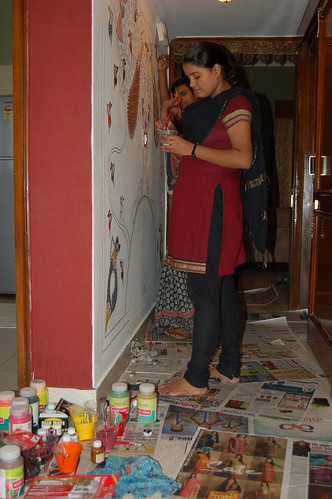
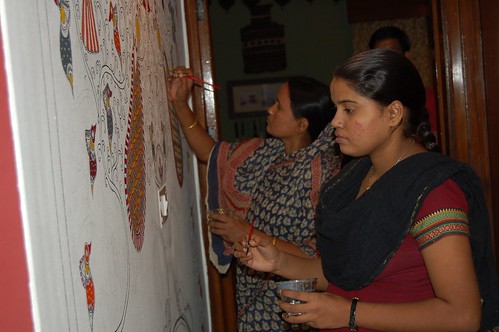
Sarita Devi, Neeraj, and usually two or three others crouched in our narrow foyer for up to 10 hours a day, sketching and painting the elaborate scene. One day I got an email from Neeraj asking if they could add some squirrels. Why not?

Tony and I loved coming home every day to see what they had accomplished. The whole painting took 10 days.
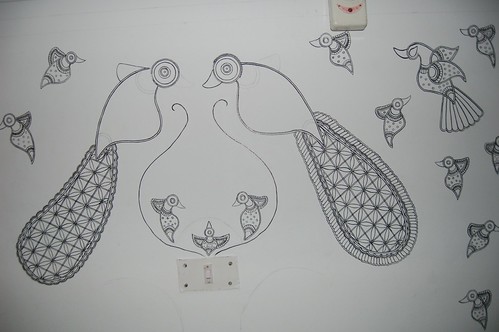
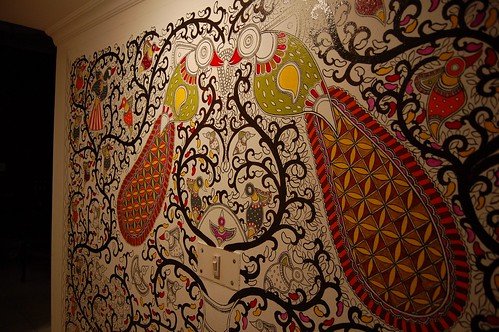
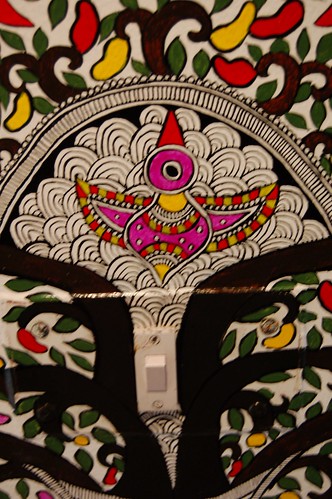
They did a great job working around this ugly light switch and the clunky doorbell.
Untitled

Untitled

Untitled

Untitled

That’s Sarita Devi in the back, painting with her daughter.
Untitled

Untitled

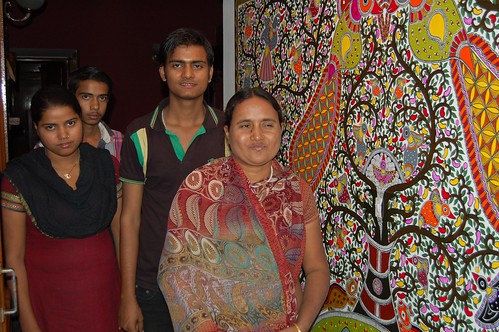
The artists pose with the finished wall. Sarita Devi with her three kids, Deepa, Ashish and Neeraj.
Untitled

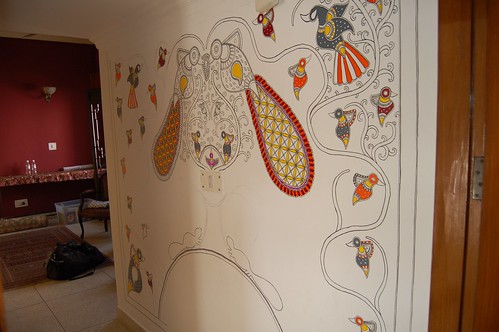
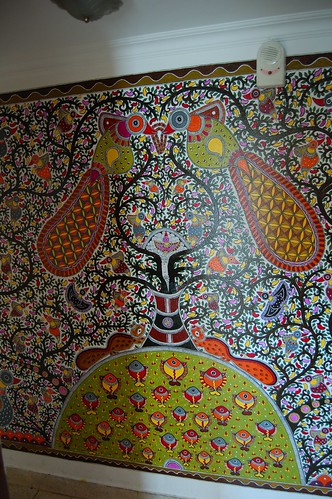
This is what you see when you walk in our front door.
Untitled

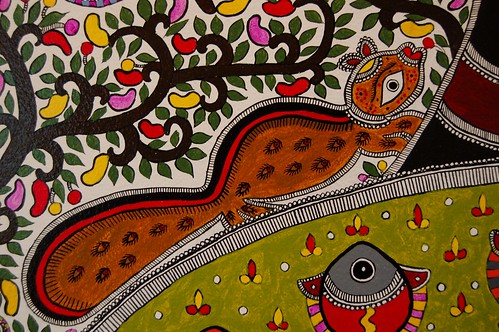
One of the squirrels. Ha!
Untitled

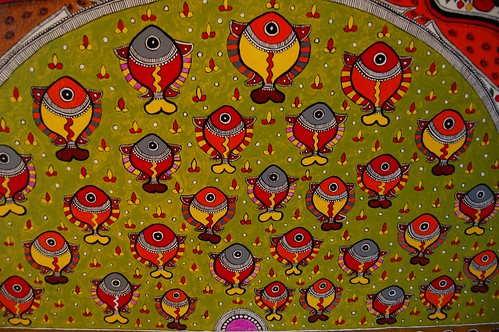
Love the fish.
Untitled

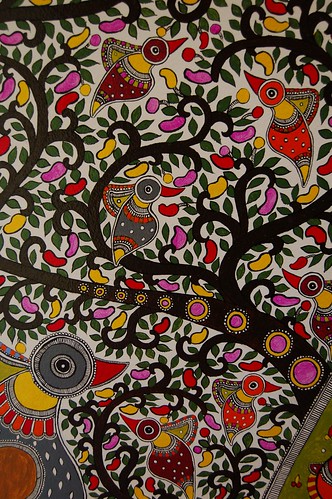
The pink circles are nests, and the jellybeans are actually mangoes. “It’s a mango tree,” Neeraj explained.
Untitled

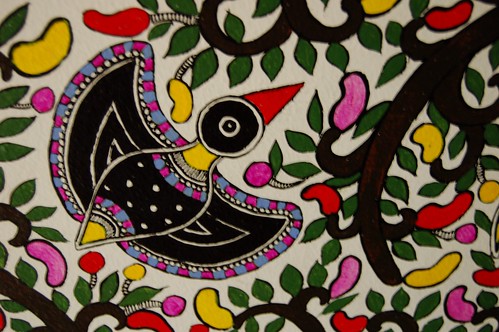
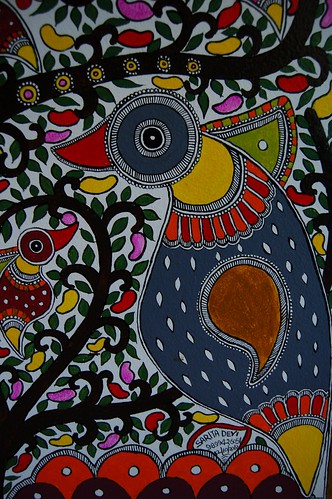
He pointed to this black bird and said, “Crow.” Pointing to the two fancy birds in the middle, he said, “Peacock.” When I asked about all the other birds, he pointed to each one and said, “Bird, bird, bird.” Ohhhhh … duh.
Untitled

The light switch practically disappeared into the scene!
Untitled

Sarita Devi signed the wall with her name, the date and … phone number.
Untitled

We know we can’t take this artwork with us when we leave India (although we have the mock-up painting on paper). However, every time we come home to our Delhi apartment, that crazy wall of whimsy makes us smile.

Celebrating 20 years with an imperial anniversary

In an unprecedented splurge, Tony and I celebrated our 20th wedding anniversary this weekend with two nights at the Imperial Hotel in New Delhi. We relaxed, soaked up the decadence, and ate and ate and ate. I actually gained two kilos in two days.

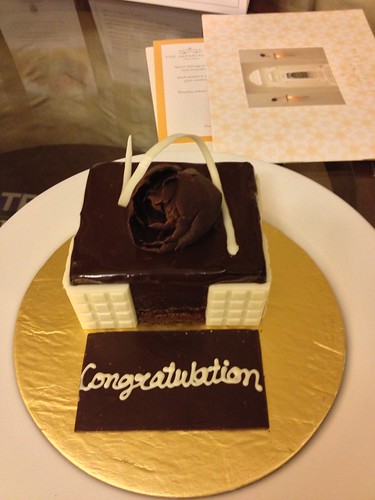
The hotel brought a little cake to our room, but I never even took a bite. There were too many other yummy temptations!
Untitled

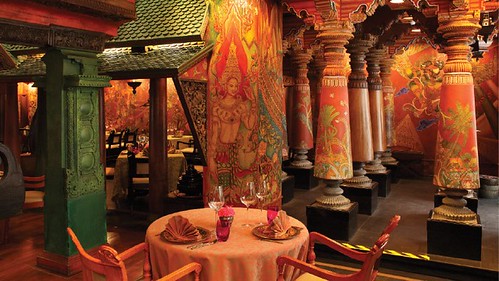
Friday night, we dined at Spice Route. It was named one one of the top 10 restaurants in the world by Condé Nast Traveler. All I know is the meal ranks among the top 10 in my life. Here’s the description from the hotel’s website. I really couldn’t say it any better:

Heralded as one of the top ten restaurants in the world by Condé Nast Traveler, The Spice Route is poetry in design. The renowned restaurant mesmerizes all your senses enrapturing you with its sensuous exotica. Designed by Rajeev Sethi, the celebrated cultural czar of India, The Spice Route reflects the journey of spices from the Malabar Coast in Kerala through Sri Lanka, Myanmar, Malaysia, and Indonesia to Thailand and Vietnam. The restaurant is an overwhelming visual depiction of the art and culture that travelled with the spices through these regions, presented in a folk, religious and cultural fantasy of the Orient. The Restaurant, that was seven years in the making, is completely hand painted with vegetable and flower dyes by mural painters brought in especially from a temple in Guruvayur in Kerala with a tradition dating back to 3000 years. Designed on the principles of Feng Shui, The Spice Route is a treasure trove of antiques and is divided into nine different sections, each depicting part of the journey of life. Besides the stunning décor, The Spice Route boasts a menu that ensnares the taste buds of a seasoned food connoisseur. The Spice Route Courtyard transports the guests to the wonderful world of Southeast Asia. Adorned with traditional Thai sculptures from the Chiang Mai region in northern Thailand, the Courtyard is a visual spectacle. A picture perfect water body with floating candles and thoughtfully strewn petals forms the center of the Courtyard. The far end of the pavilion has traditional Khantok seating for six under an Oriental pagoda.

I tried to take photos, but it was too dark. This photo is from the hotel’s website.
spice route

Here’s a pic of the set menu we enjoyed. Can you spot the typo? Doh!
Untitled

On Saturday, we gorged at the stunning buffet breakfast. I was still so full from our late dinner that I couldn’t fully take advantage of all the delicacies on display. I skipped the fresh bread, soft cheeses and thinly sliced meats altogether! That’s not like me. To avoid a repeat of this poor performance, we planned our day accordingly. No lunch. Late afternoon high tea. No dinner.

In a vain attempt to burn some calories, we went for a walk around the neighborhood and stumbled on the Jantar Mantar. The name rang a bell, but I had no idea it was a collection of structures used as astronomy instruments in the 1700s. So fascinating! Right in the heart of the city. I love this kind of stuff.

Here’s the scoop on Jantar Mantar from the website Delhi Capital.

Jantar Mantar is also called Delhi Observatory. It is maintained by the Jaipur government because it was built by Maharaja Sawai Jai Singh II of Jaipur (in 1727). It is a remarkable structure which consists of fourteen geometric devices used for measuring time, forecasting weather changes, predicting behaviour of planets and finding extraterrestrial altitude. All these devices are fixed structures and point to a specific direction. The largest device or instrument is the Samrat Jantar which is 90 feet high and its shadow is plotted in such a manner so that is shows the exact time of the day. Any weather change or the onset of monsoons can be ascertained by the Hindu Chhatri, which is a small domed structure. The whole structure is made of stone and marble with each of then having an engraved astronomical scale. Jantar Mantar finally got the status of a national monument in 1948. It has always attracted architects, historians and scientists from all over the world. Maharaja Jai Singh was a fanatical astronomer himself who studied various works from Hindu, Muslim and European astronomy. He had the perception that the tables used by the pundits were deceptive and the actual planetary changes and predictions of eclipses would not have been possible through these measuring parameters. So he thought that he would find an improved and efficient means through which exact prediction could be made. It was his own inspiration and foresightedness that gave shape to such an instrument. He built other observatories at Jaipur, Ujjain, Benares and Mathura to have an exact calculation. It took almost seven years before the whole structure was fully operational because he wanted to be fully satisfied with the accuracy of the instruments at Jantar Mantar.

I also found an interesting pdf compiled by a Cornell University professor. You can link to it here.

I had to skip out for a few hours and snap back to reality: Middle School play practice. I’m one of the make-up crew coordinators, so I drove to school, did my part, and then zipped back to the Imperial, where the formally clad doorman with a handlebar mustache greeted me: “Welcome home, madam.” I wish.

Delhi’s temperatures continue to climb into the mid-90s, so Tony and I took a refreshing dip in the expansive blue-tiled pool. Lounging in the shade, we watched weary tourists climb out of their buses to snap photos of our historic hotel, making us feel even more grateful for the opportunity to stay there.

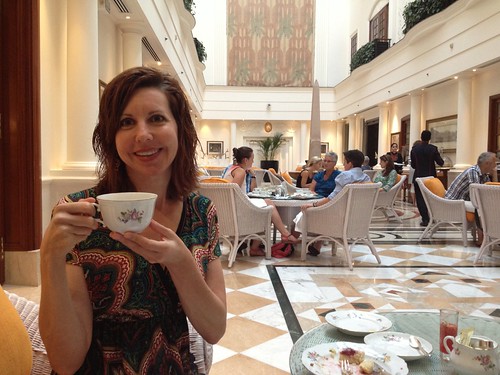
High tea was a highlight of the weekend. Sunlight flooded the hotel’s atrium, where we sat on wicker chairs with thick orange cushions and sipped sea from fine china. Elegant white vases with a single bird-of-paradise graced each table. The buffet featured mini muffins, scones with jam and clotted cream and typical teatime treats, but we also loaded up our plates with goat cheese samosas, bruschetta with prosciutto ham and artichoke hearts, mini sandwiches with chorizo, and other savories.
Untitled

Sunday morning’s breakfast buffet was bittersweet. We lingered as long as we could, but there was no denying the end of our fairytale weekend. Lately we’ve spent a lot of time pondering our 20-plus years together and marveling at all we have done and seen. Sometimes we start to reminisce about an adventure and it takes both our memories to fully reconstruct the experience. There have been countless ridiculous inside jokes, so much laughter, but also tears as we have leaned on each other in times of unfathomable heartache. Our travels have brought us closer together and oftentimes pushed us apart, but we always find our way home. I treasure our history together, and I happily add this Imperial weekend to my scrapbook of memories.

Juggling juxtapositions in Hauz Khas Village

Time Out Delhi, a weekly magazine about the goings-on around town, ran a small story this week on a new gelato truck that parks in one of my favorite neighborhoods – Hauz Khas Village. I already enjoy poking around the HKV shops and checking out the trendy restaurants. Now there’s a gelato truck? Say no more. I had a plan for my Sunday afternoon.

After memorizing the google map, I felt confident I could drive there. (It’s just 15 minutes and two left turns from my ‘hood.) Katrina and Tony patiently rode along, gently encouraging me for the most part. Only HKV residents can park in the community, so we found a spot on the street and walked uphill into the jumbled mess of trendiness. I searched in vain for the gelato truck. I knew I shouldn’t have gotten my hopes up!

At first glance, HKV looks more like a crumbling slum than one of Delhi’s most affluent, artsy, hipster destinations. Like mismatched stacked legos, the buildings rise up precariously and jut out into the path at odd angles. Electrical wires snake across the outer walls, meet in massive tangled balls and trail off in various directions. Tiny retail spaces wedge into dark alleys with haute couture boutiques side-by-side with ramshackle kitschy knick-knack shops.

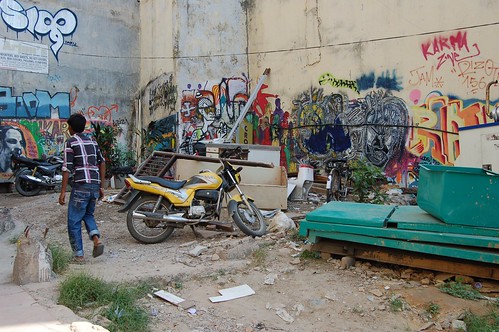
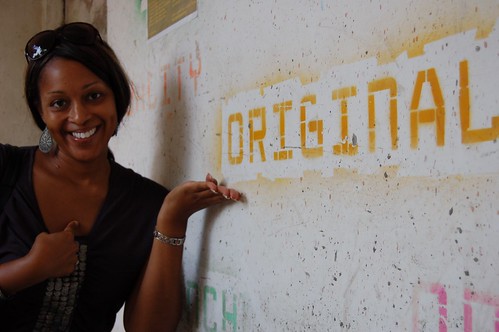
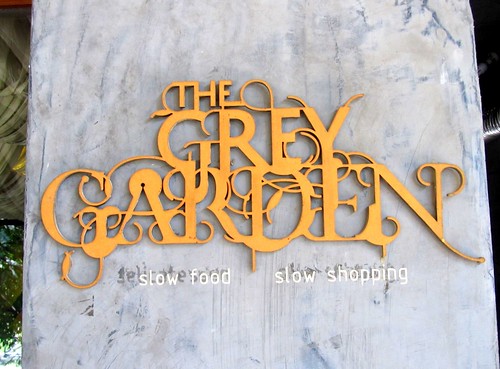
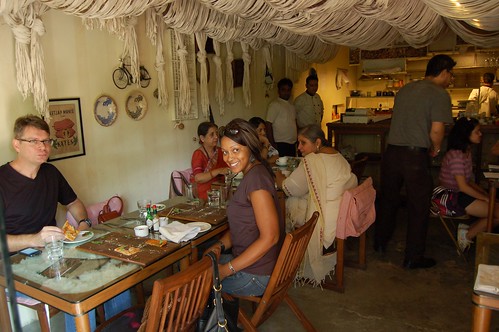
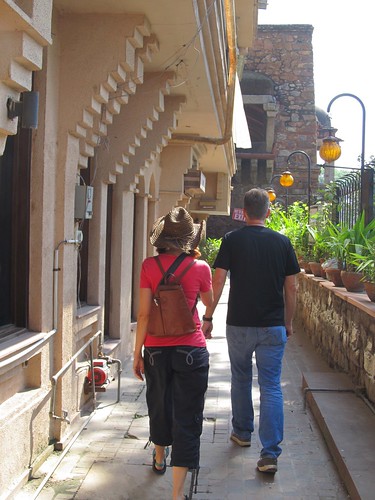
Walking from the car to the restaurant, we passed the flagship store for one of India’s premier designers; tentatively hopped over a stream of sewage; trekked down a steep path lined with art galleries and hobbit-sized shops selling hand-made paper products, high-end baby clothes, jewelry, antique furniture and Bollywood posters; admired the graffiti in an empty lot full of broken glass and scrap metal; sidestepped a pile of dog doo (which some good Samaritan later covered with a piece of plywood); cringed when water dripped on us from above (… just assume it’s from at air conditioner …); and finally stepped in to the Grey Garden, a teeny eatery with room for 12 patrons and a little kitchen. Hard to believe such a nasty path could lead to such a cool spot.
Untitled

Untitled

Untitled

Untitled

After a refreshing summer salad, thin-crust pizza and lemonade, we set our sights on some Hauz Khas history.
Untitled

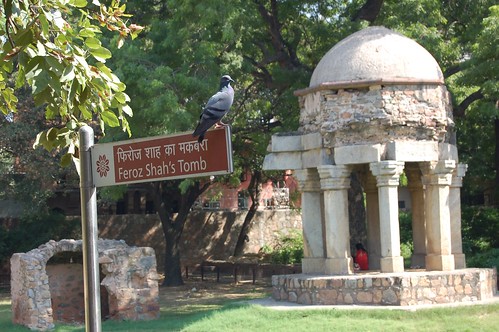
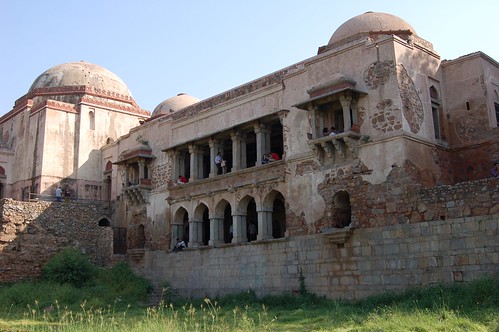
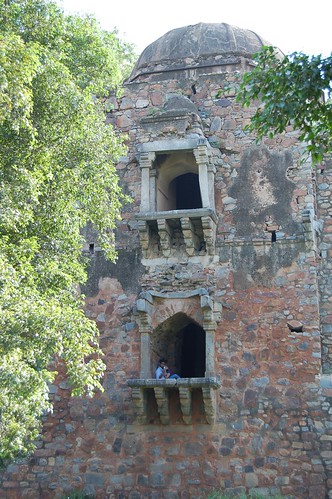
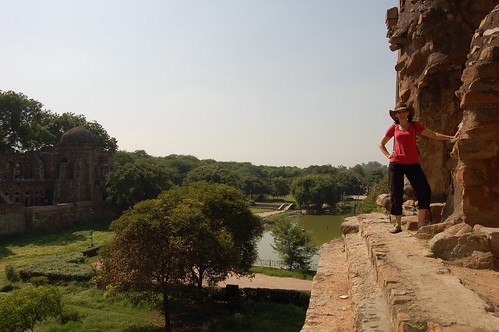
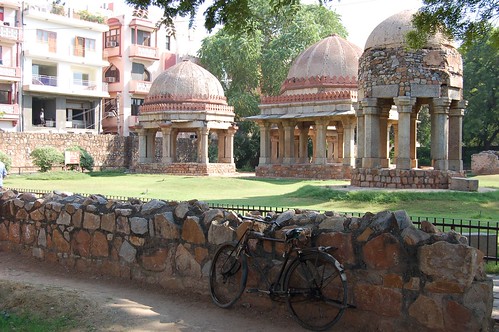
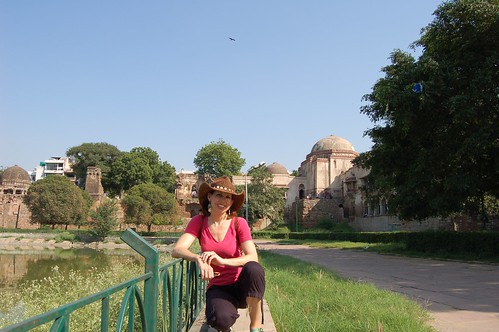
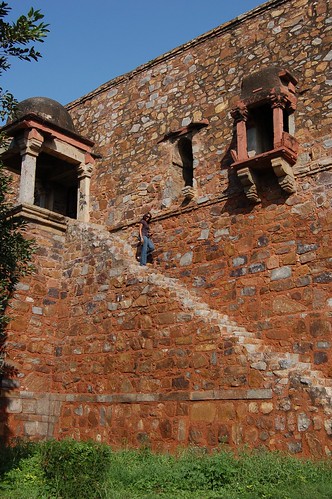
Indeed, this funky metropolis overlooks the ruins of a medieval city. The area’s name – “Hauz Khas” in Urdu – translates to “royal reservoir” and stems from the large water tank first dug in the 13th century. It eventually dried up but was rebuilt by 14th-century Emperor Feroz Shah Tughlaq, who is also buried here.
Untitled

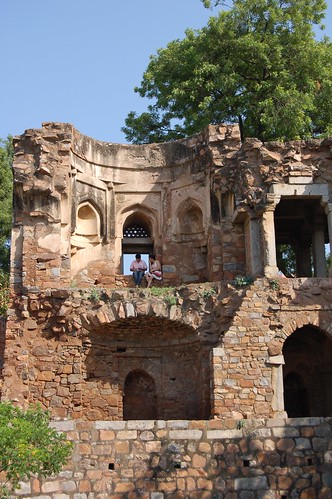
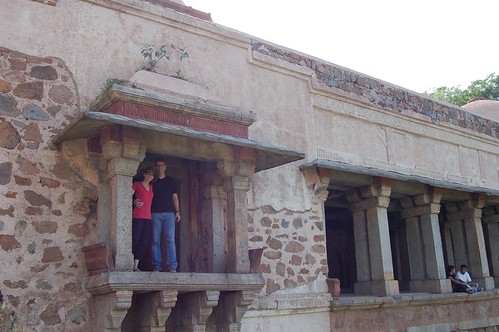
In 1352, Feroz Shah established a “madrasa” or Islamic university, which was staffed with “scholars of note” and attracted the brightest students. Today, students continue to flock here, but mostly just to canoodle in the ancient doorways overlooking the lake.
Untitled

Untitled

Untitled

Tony was too nervous to canoodle when he saw the drop-off.
Untitled

Climbing around above the reservoir.
Untitled

Untitled

Untitled

Katrina and I wanted to stroll lakeside a bit to see the ruins from below. To reach the reservoir, we could have jumped off a high stone wall and then climbed over a spiked gate (like many of the locals) or walked a little out of the way to an access path. We chose the latter plan, although it meant we had to edge along a narrow wall to avoid stepping in the sewage stream. Down by the water, we shot a few photos, dodged a few monkeys and then climbed back up the hill to meet Tony.
Untitled

Untitled

Untitled

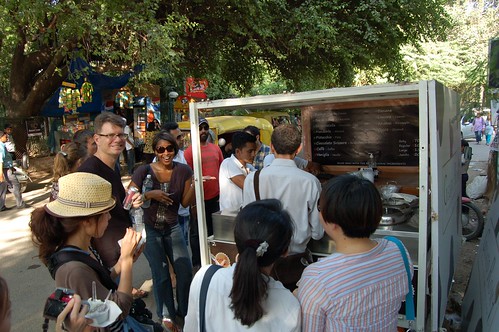
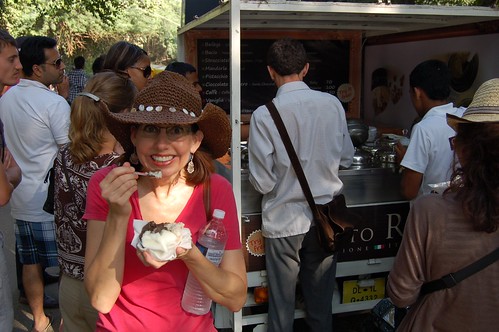
After reuniting with Tony, we were heading to the car when something caught my eye and made me jump with glee. The gelato truck! We met Michael, the genius Italian guy behind Gelato Roma, and expressed our enthusiasm for his new business. We eagerly picked out our flavors – I had chocolate, roasted almond and lemon sorbet.
Untitled

Untitled

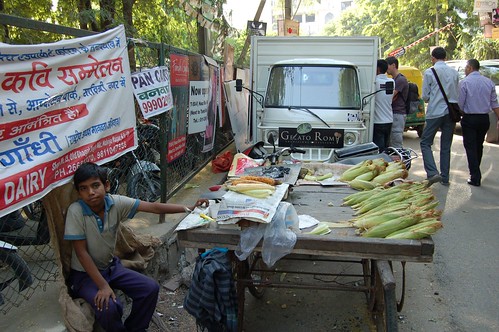
Parked next to the gelato truck was another snack stand: corn. Ummm … no, thank you. I’m pretty sure this kid is saying, “Stupid gelato truck, stealing all my business.”
Untitled

For more info on HKV, check out these articles.
New York Times Travel, 2011
CNN-GO, 2011
Wikipedia’s take on the ruins