Bumbling through Bollywood

When it comes to dance, I have neither skill nor inhibitions, which explains my tendency to get stupid on the dance floor. I’m happy to settle for laughs if admiration is out of the question. My first Bollywood dance lesson Saturday afternoon was no exception. Dizzy from spinning and unable to keep my lotus fingers pointing in the right direction, I took excessive water breaks and offered encouraging words to my fellow participants.

Gina Shah, a lovely young dancer from Atlanta, is studying classical Indian dance and visiting her sister (whose husband is stationed here with the U.S. Embassy) for the next couple weeks. She accompanied her sister to Nancy’s Zumba class a few times and offered to repay the favor with a private lesson. We met at Nancy’s house and tried to follow Gina’s lead. As you can see here, she’s pretty fantastic!

The other ladies wouldn’t let me post a video with us in the frame. Maybe after a LOT more practice!

Even standing still, my fingers look wonky.
Me and Cristi in the back; Katrina, Gina and Nancy in the front.
(Disclaimer: Nancy is making me point out that she is not pregnant. Her funky harem pants and blouse are just loose and billowy.)

Sari Saturday

Picture this: A teaching assistant on playground duty intercepts a wayward soccer ball, picks it up and hefts it back to the players. Did you picture her in an aqua-colored sari, the skirt swishing around her feet, the loose end tossed over her shoulder and flapping in the breeze? Probably not, but that’s what she was wearing!

Even after seven months in India, I remain entranced by the prevalence of women – from all walks of life – dressed in saris. The long flowing sari seems so cumbersome to me, but Indian women carry it off effortlessly and elegantly.

A sari is a long swath of fabric – up to 9 yards! – wrapped in a specific way without zippers or buttons or pins. Ladies wear a petticoat underneath with a midriff-baring top called a “choli.” Every region of India seems to have its own style of sari, not to mention all the fashion trends and myriad designers. As a foreigner who likely won’t need more than a couple saris, how will I ever choose?

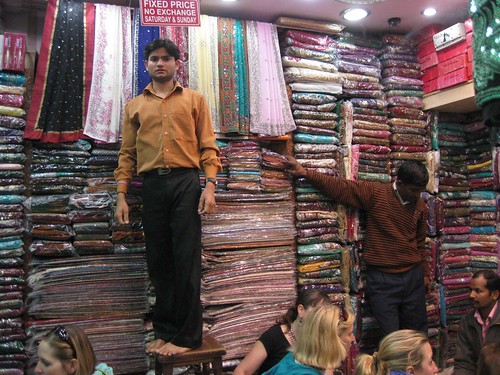
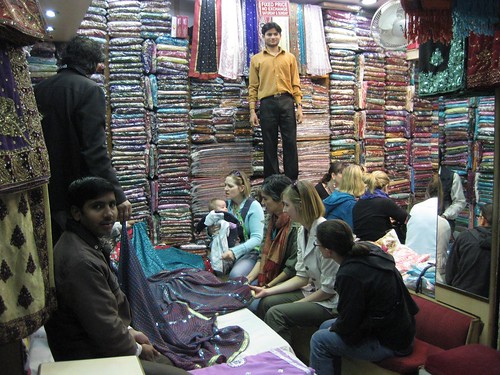
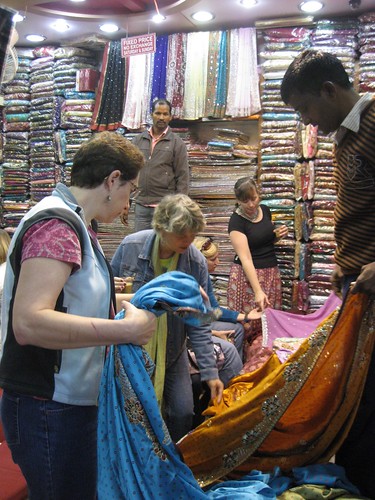
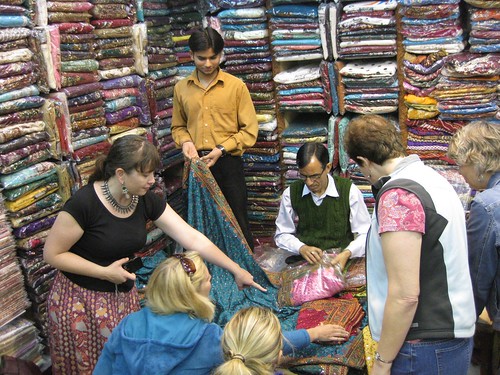
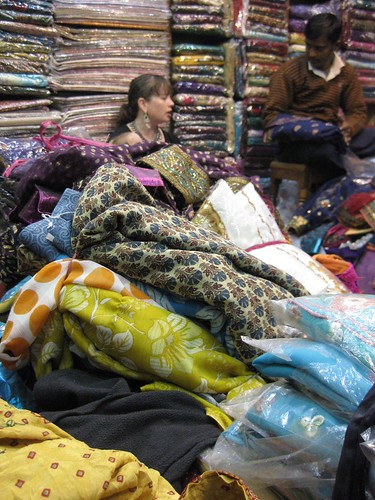
Enter Skye Sanford, elementary music teacher, who has lived here for six years. Saturday morning she led 10 of us on a sari expedition to Babu Market, a section of the popular Sarojini Market. We filed in to Harish Kumar’s shop, sat on the benches and watched as the salesmen slowly pulled sari after sari off the shelves and out of their cellophane bags, unfurling miles of stunning fabric. A sari collector, Skye explained what we were seeing and steered us away from poor quality or unfortunate fashion trends (such as saris made of tulle).

Based on my experience in Turkish carpet shops (flash back to emotional meltdowns and street fights with Tony), I needed to scope out the sari scene a couple times before I buy. I was happy to watch, learn and snap some photos, but I will definitely go back. Who wants to join me?

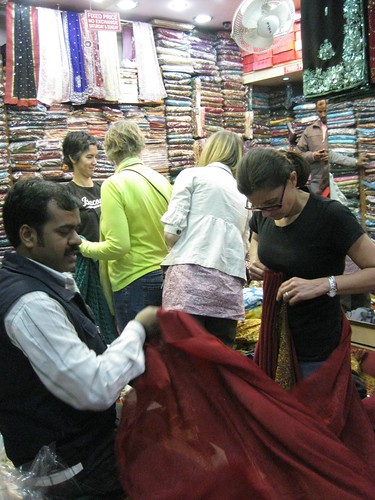
Salesman at the ready.

The show begins.

Picking favorites.

Skye added two more saris to her collection!

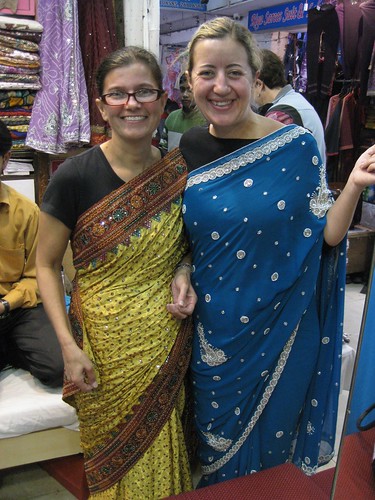
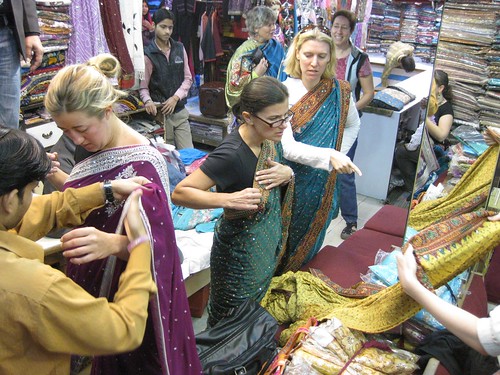
Sandra and Alicia get wrapped.

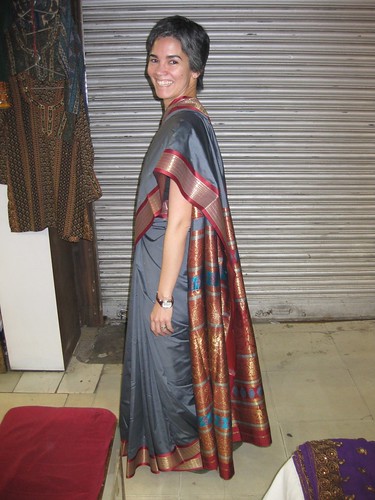
Eva looks lovely in gray … but I think she bought this style in blue.

Sandra tries on another sari. You can’t do it by yourself!

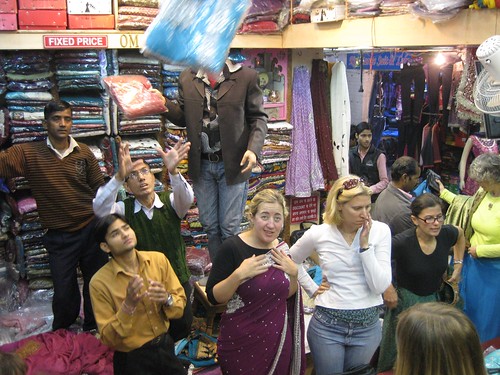
Decisions, decisions!

The salesmen tossed saris back and forth across the shop.

Sari pile.

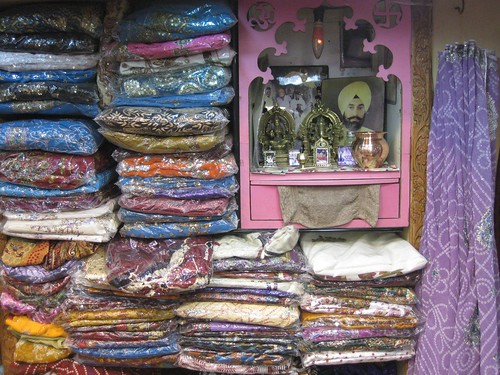
A little shrine in the shop.

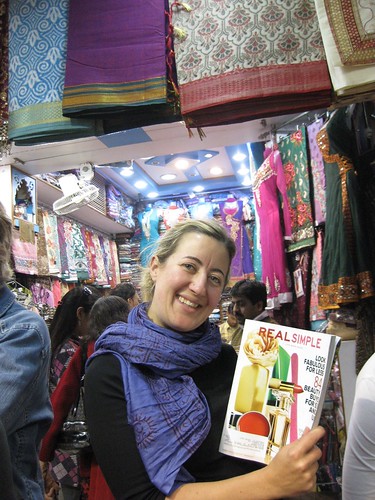
Alicia ironically pulled out “Real Simple” from her bag …

… at the same time Mr. Kumar tallied the bill.

Discover India Week at AES

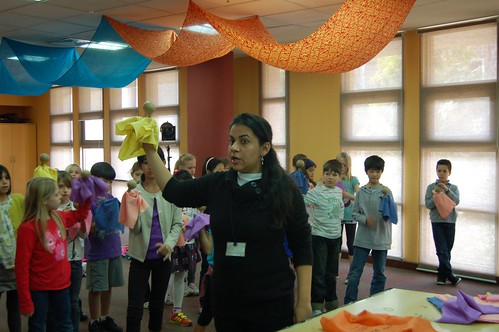
Discover India Week, Jan. 27-Feb. 3, was my favorite week so far at the American Embassy School here in New Delhi! Every morning started with dancers and musicians at the school gates. The hallways burst with color as students and teachers dressed in their Indian clothes. Children tried their hand at block-printing, pottery, traditional construction methods and other cultural pursuits. Everything felt so … Indian!

Each grade level focused on a specific aspect of Indian culture across the curriculum. I teach third graders, who explored Indian Folktales and Stories Showing Courage. They learned about India’s visual storytelling tradition with demonstrations by Sharon Lowen, the head of Indian Studies at AES. She visited their classrooms with story scrolls and a wooden box that opened to reveal hinged panels painted with beloved tales of Hindu gods.

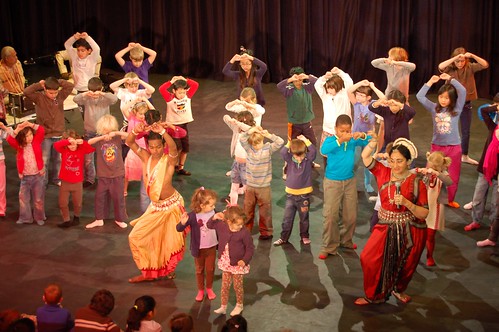
Lowen, a renowned expert in three forms of classical Indian dance, also demonstrated storytelling through Odissi dance movements. She brought some of the kids up on stage for a workshop.

Students met puppeteer Anurupa Roy, who taught them how to transfer the nuances of physicality from their own bodies to the puppets on their hands.

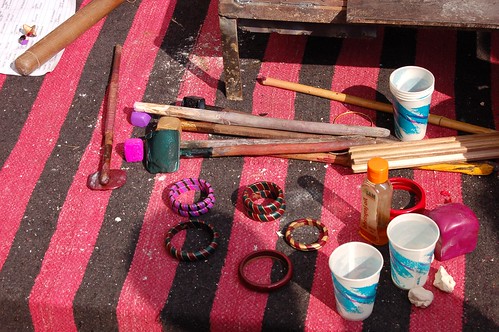
Many artisans spent the week at our school, demonstrating their crafts and selling the products. I was most fascinated by this guy, who made “lac” bangles. They are quite expensive, and I never understood why. Now I do! The craftsman makes the bracelets from “lac,” a type of tree resin by warming it over hot coals until it’s pliable. Then he twists and works the resin, using a mold to distribute it evenly. Very interesting!

Other artisans demonstrated glass blowing, kite construction, traditional toy making, weaving, and wooden puppet carving. Here’s a slideshow.

Walk for Life – we suffer so cancer patients won’t have to

Deep sigh.
I’ve avoided writing this post because (a) I’m trying to block out the experience, and (b) because it’s mean and probably unlucky to write a snarky post about an organization that provides care for cancer patients, right? Right.
So, here goes.

CanSupport, a local organization that provides services for cancer patients, recently set up a registration booth for its annual Walk for Life in the school courtyard where I often eat lunch. I figured, “Sure! I’ll pay $6 to benefit this worthy cause and participate in a blog-worthy event.” An all-staff email encouraged participants to walk together with the AES banner. I looked forward to meeting some colleagues and chatting along the route.

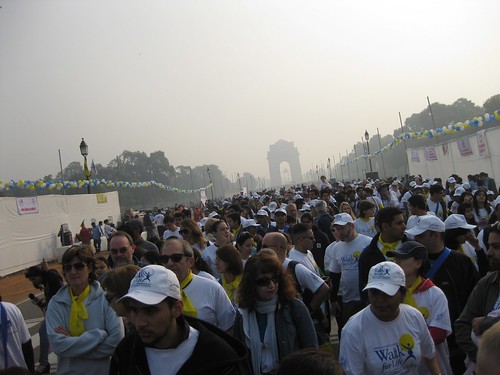
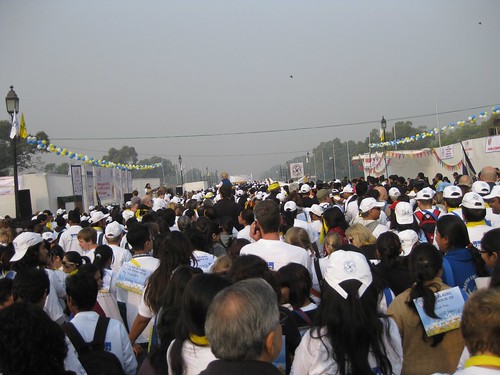
On the morning of Feb. 5, I rode to the Walk for Life with a few other teachers, and we tried in vain to hook up with the rest of the AES group. The starting line was literally mobbed with an estimated 8,000 walkers, and the groups with banners stood on the other side of the mob and past some security tape. How were we supposed to get over there? We never did figure it out.
Security at the entrance.

I wanted a photo of our little group with the sign, but before I could stop them, some clowns jumped in the picture. I’m not a huge fan of clowns.

Waiting with the mob: John, me, Katrina and Lea Carol.

The 4-kilometer walk followed Rajpath, (“King’s Road” in Hindi) a street that runs from Delhi’s iconic India Gate to the president’s house. The India Gate was shrouded in smog, but I appreciated it nonetheless.

Mrs. Gursharan Kaur, wife of the Prime Minister of India, waved the flag to kick off the walk, and we ever so slowly shuffled forward.
And they’re off! Like a herd of turtles.

I discovered that Delhiwallas walk just like they drive: sprint forward quickly, then stop, turn, move on the diagonal, pause, back up, clump together, push others out of your way, and yell a lot. Many walkers brought their dogs. One canine participant left a steaming souvenir right in the path. Luckily, it happened while there was a gap in front of my group, so we saw and dodged the poo bomb. I’m sure others packed in behind us were not so lucky. Groups of school children shrieked the names of their schools over and over … and over … and over. Individuals spotted acquaintances in the distance and screamed out to them repeatedly, despite the obvious sound-drowning effect of the school kids.

At one point, we passed our AES group after a turn-around point. I could have jumped over the security tape that separated the two paths, but I didn’t want to literally cut corners and cheat myself out of doing the whole walk.

To redeem myself for the self-righteous, culturally insensitive, judgmental nature of this post, I will now provide the link to CanSupport and a heartfelt solicitation for your support. It really is an important organization that brings information, comfort, palliative care, medication and equipment subsidies, and counseling to cancer patients and their families.

The best part is there is a “Donate” button so you never ever have to participate in the Walk for Life again. (Unless you have a crowd/dog poo/high-pitched noise/chaos void you need to fill.)

Gond Tribal Artist encounter

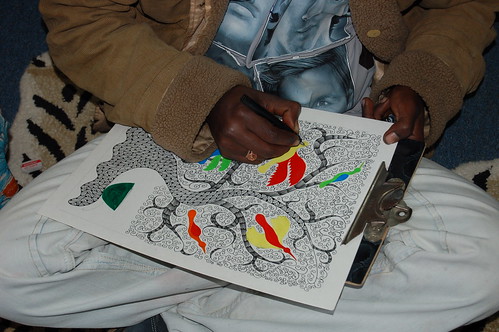
A newcomer to India’s art culture, I can only say I love it ALL! Textiles, furniture, paintings, sculpture … every piece I’ve seen bursts with symbolism or cultural nuances that beg for interpretation. With a tradition of visual storytelling, generations of Indians have passed on religious stories, myths, folktales and morality lessons through art. When I heard a visiting artist was sharing his Gond Tribal Art (“Bhiti Chitra” – Wall Art – in Hindi) with elementary school students, I eagerly dashed up two flights of stairs to meet him.

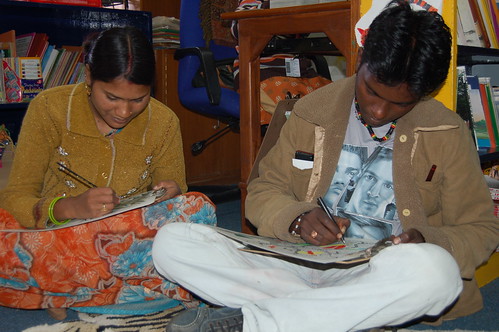
I found Sunil Dhurvey sitting cross-legged on the floor with a painting on a clipboard in his lap and a ink pen in his hand. He looked up and shyly returned my exuberant “Namaste.”
DSC_0375

DSC_0376

Having used up my Hindi, I gratefully engaged Kanika Roy, art teaching assistant, and Rupa Samaria, a Delhi artist and substitute teacher, to translate during my interview.

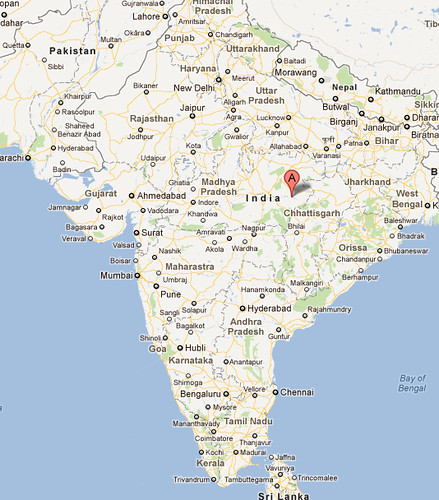
They explained that Sunil and his wife, Santoshi, had traveled for two days by bus and train from their home in Dindori Village, Madhya Pradesh.
Screen Shot 2012-02-11 at 4.54.09 PM

I wondered if Dindori Village was a hotbed of artists, but Sunil said most of the 400 residents – including himself – are farmers. “Sometimes people ask me, ‘Why do you spend so much time on art? Why don’t you go and work in the field?'” he said. His answer? “I love it.”

Sunil informally learned the techniques of Gond Tribal Art from a young age by watching his mother paint the designs on walls and floors of village buildings, especially for festivals, weddings and other celebrations.

According to an article by Venus Vinod Upadhayaya on the LifePositive website,

Originally done with four-coloured mud found in the forest, the Gond tribal paintings were drawn on the walls of the houses and were an integral part of the tribal festivity, rituals, and day-to-day living. … Gonds believe that (the) Narmada (river) was once a woman and was married to the Sonmura river. During the marriage rituals, the turmeric from her body fell down on the earth and created the yellow mud. The black mud was collected from within the tribal village whereas the white had to be fetched from another forest nearby. Both men and women would paint on the walls. The original drawings on the cowdung-smeared walls were scenes from the forest and its creatures, and depictions of traditional dances and tribal deities.

By the age of 12, Sunil said, he was creating his own art. I asked if he would be a mentor to younger aspiring artists, but he shook his head. Kanika elaborated, “Usually in the villages they don’t teach young ones how to paint this type of art. They just watch and they learn. If they are painting on a building, they think about what would go with that type of building. For example, if they are painting the storage building for grain, they might paint birds or mice because those animals are likely to be found there.”

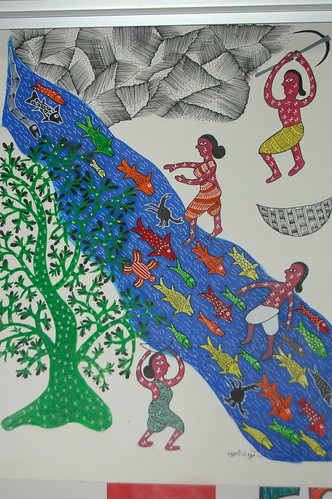
Sunil displayed small paintings on cardstock and larger ones on canvas. He said the Gond Tribal Art style is known for its depictions of stories about nature (especially the Narmada River), mythological characters and gods, and daily life. Rupa pointed to one of his paintings, hanging on the classroom whiteboard, and said, “This is a typical village scene with the women fishing and the men cutting the rock. The rocks are used to create a trap in the river. They catch fish and put them in the baskets.”
DSC_0373

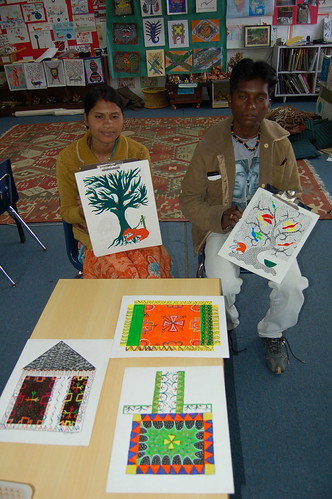
In this photo, Santoshi and Sunil show some of their works. Santoshi painted the ones on the table, and she said they represent the kinds of work she does on village buildings. I wish I had taken a second shot as Sunil really has a lovely smile! Sunil’s mother still paints, and he even brought one of her pieces (but it had already sold by the time I met him).
DSC_0374

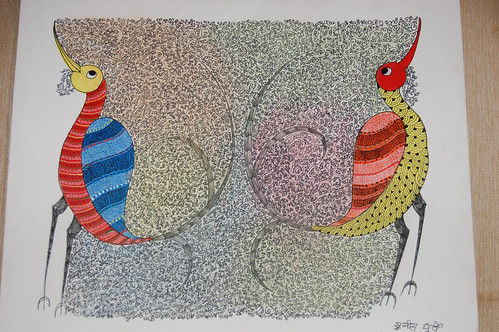
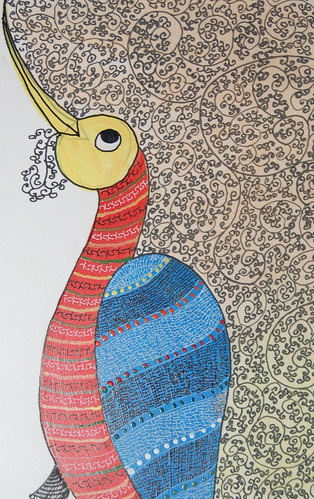
I bought these two peacock paintings from Sunil for about $10 each, but the wonderful experience of getting to know the artist before buying his work was priceless.
DSC_0381

DSC_0377

Such fun detail!
DSC_0379

If you are in India, speak Hindi and want to see Sunil’s work, give him a call: 0-88894-08539

Indian Catwalk

“Discover India Week” just wrapped up at the American Embassy School, and what an incredible week it was!

My favorite event was the Indian Textile and Fashion Show, a flurry of swirling silks and sequins. With an Indian wedding theme, volunteers took on the roles of family members and guests at the party. I was originally slated to be the bride; however, I was demoted to “sister of the groom” when the organizer discovered we had a real bride in our midst. The fashion show became a lively dress rehearsal for Punam, an elementary school receptionist, and her fiance, Daniel, a first-grade teacher, who will tie the knot in April.

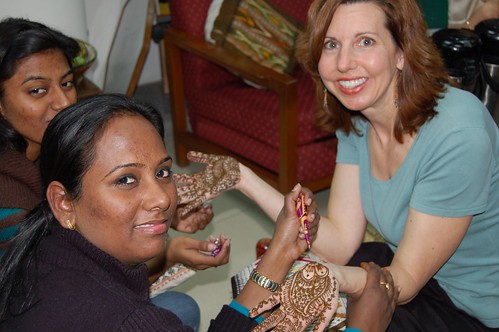
The day before the fashion show, participating ladies were invited to a “mehendi” party in the office of Sharon Lowen, head of Indian Studies at AES. Two young ladies sat on low stools with pillows on their laps to draw henna patterns on our hands. They use small bags, similar to cake decorating tubes, full of a substance the consistency of mud. The ladies finished their designs in about five minutes.

Wet and messy. The table was overflowing with fruit and samosas, but I couldn’t pick them up! Next time, I won’t rush to be first in line.

When the “mehendi” dried, it started flaking off all over my clothes. I carefully draped my backpack over one shoulder, caught an auto-rickshaw home, and put on a pair of old gloves. When it was time to get ready for bed, I brushed off the remaining mud, rubbed on some baby oil (the “mehendi” ladies said to use mustard oil, as if I would just have some in my cupboard), and slept with socks on my hands. This is what it looked like in the morning:

The fashion show gave me a reason to wear my fabulous lehenga, which had been stashed in my closet since Diwali.

Here is a slideshow of the fashion show participants. The bright lights washed out some details, but everyone looks smashing in Indian clothes!

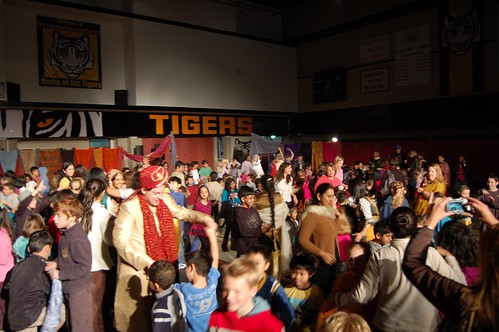
After the “bride” and “groom” made their appearance, dance music filled the gym.

Soon the bleachers emptied as a full-on dance party broke out with children and teachers twirling and shaking to the Hindi tunes. It seemed out of control, but students quickly responded when the assistant principal announced it was time to return to class. Amazing.

AES Faculty Musical – so many levels of special

As a new teacher at the American Embassy School last fall, I remember the stress of setting up our home, learning the ropes at my job, trying to make friends, budgeting in a strange currency, and otherwise wondering whether this place was a good match. Suffering from Sporty Gene Deficit Disorder and no longer a fan of late-night partying, I automatically excluded myself from several big social groups. Would I find a niche here? Then someone asked, “Are you auditioning for the staff musical?” Um, heck yeah!

I subscribe to Shakespeare’s quip that “All the world’s a stage, and all the men and women merely players.” Daily life, particularly in India, offers plenty of color and costumes, music and mayhem, dancing and drama. Yet I can’t deny this girl loves the stage and everything that goes with it. Since the first meeting of our community theatre guild, I knew I had found my niche. Maybe it’s cheesy, but participating in this silly play kept my spirits high and gave me opportunities to bond with people I wouldn’t have otherwise known. It felt like a place where I could fit in, and I loved every minute of it.

Beth Burrows, a third-grade teacher at AES, started the theatre guild and pours her passion into it year after year. It’s a hobby, but also a community service project. This year, “Beauty and the Beast” ticket sales collected about $4,000 for the Salaam Balaak Trust, an organization that provides shelter, education, health care and mental health services for homeless children in New Delhi.

Tim Steadman, an AES spouse and professional photographer, volunteered to shoot our performances, and his photos are fantastic! I strung together a few in this short video. As Silly Girl 3, my part was fun, albeit small. I am wildly overrepresented in this video – but hey! – it’s my blog. In yet another horn-tooting comment, I’ll point out that I painted all the the cutlery and other kitchen objects on the white kurtas (Indian shirts) worn in the musical numbers “Be Our Guest” and “Human Again.” With a lot of guidance and confidence-building from Patricia Podorsek, I also painted on the Beast’s make-up each night. Although I have a teaching certification in theatre, it’s been years since I tapped that knowledge or those skills deep in the recesses of my mind. What a treat to discover I hadn’t lost it all!

And so, the curtain has closed. For now. Next year: “Annie.”
The sun will come out tomorrow …

Field-tripping through historic Delhi

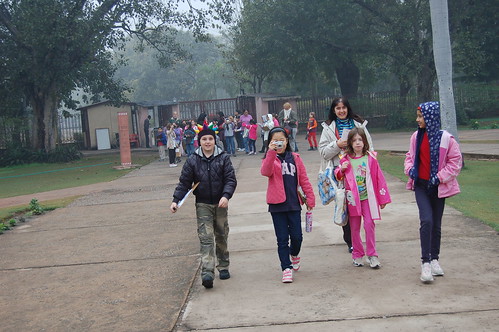
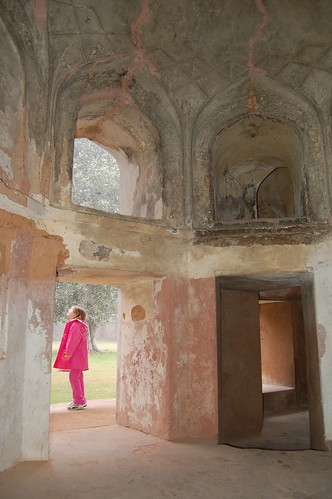
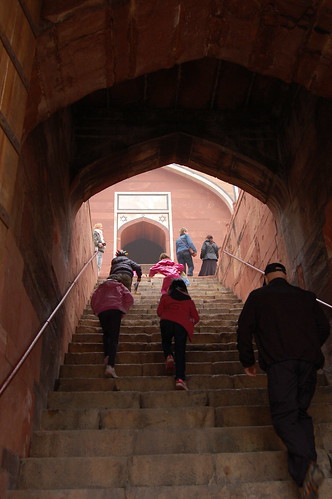
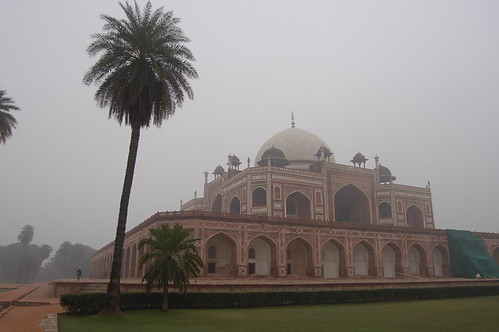
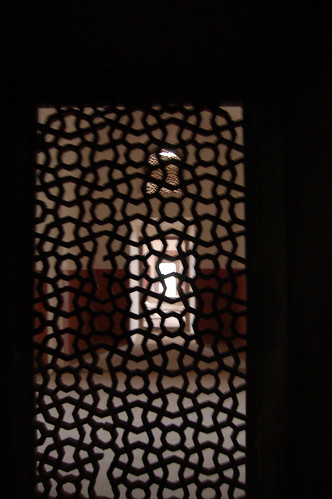
Last week, the whole third grade visited two historical sites – Humayun’s Tomb and Purana Qila – just a short drive from the American Embassy School. My group visited Humayun’s Tomb first, clipboards in hand to record notes in their “See-Think-Wonder” booklets. I was thrilled to meet Gayetri, a third-grader’s mom and a New Delhi native, who joined our group and shared her expertise on the two sites. As the kids sketched pictures inside the austere 450-year-old tomb, I looked up at the carved lattice screens and imagined veiled women standing on the balcony praying over the marble memorial of their fallen emperor. How fortunate are these students who get to walk in the footsteps of people they study in the classroom? How exciting to see the excavation and restoration first hand!

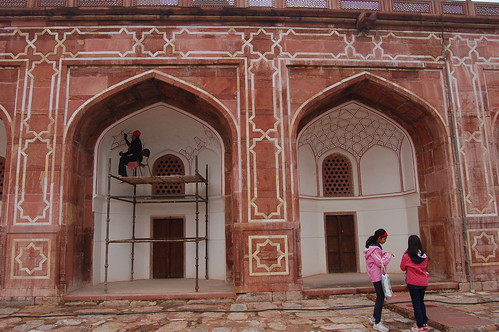
Construction on Humayun’s Tomb started in 1565, 14 years after his death. The second Mughal Emperor, he ruled present day Afghanistan, Pakistan, and parts of northern India from 1530–1540 and again from 1555–1556. (During the gap, the region came under the rule of Pashtun noble Sher Shah Suri, but Humayun’s army ultimately won back the territory.) His tomb was the first “paradise garden”-concept tomb on the Indian subcontinent and inspired many architectural innovations. Stone channels criss-cross the complex, providing water for irrigation. We strolled through the peaceful gardens, climbed steep steps to the terrace, and entered the 47-meter-high tomb. We all agreed the low-lying fog added to the tomb’s mystique. As we were leaving the UNESCO World Heritage Site, the children excitedly spotted a worker painting designs in a restored alcove.

DSC_0101

DSC_0103

DSC_0110

DSC_0114

DSC_0116

DSC_0119
DSC_0124

DSC_0129

If you’re interested in learning more about Humayun’s Tomb, Wikipedia has a nice page about it. The Aga Khan Development Network website explains the restoration work under way at the site.

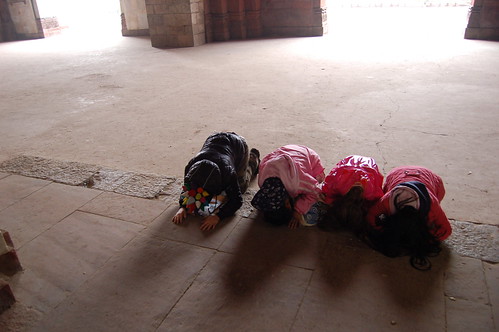
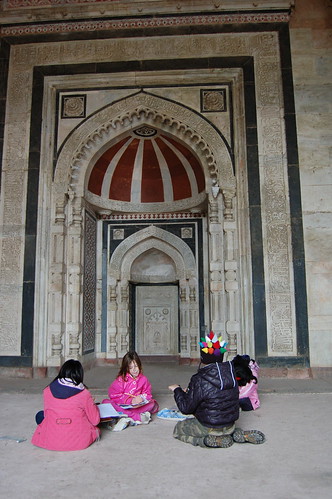
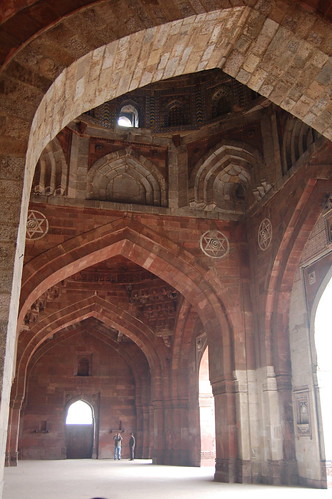
After a short bus ride, the kids piled out at Purana Qila. Emperor Humayun founded the city of Dina-panah (the sixth city to be located in what is now Delhi) in 1533, and Purana Qila was the city’s inner fort. Some highlights for the students and me included the ruins of a hamam that had cutting-edge steam rooms and running hot water (which is more than I can say for my New Delhi apartment); a baoli (well) with 89 steps leading down to the fort’s source of fresh water; and the Qila-i-Kuna Mosque, where our students hunkered down for a few moments of quiet. They even knelt in the mihrab, facing Mecca, to emulate Muslims praying here. I wasn’t sure whether that would be offensive to anyone, but the kids found it meaningful, so I just let it go.
DSC_0146

DSC_0148

DSC_0150

DSC_0140

DSC_0147

Another fascinating building at Purana Qila was the Sher Mandel, Humayun’s observatory and library. On Jan. 24, 1556, the emperor had been star gazing when he reportedly rushed down the stairs to evening prayers. Tripping over his long robe, he fell and died of his injuries two days later.
DSC_0141

Good ‘ol Wikipedia does a fine job reporting on Purana Qila, if you want to read more.

Seeing history unfold era by era is one of my favorite parts of exploring India. At both our field trip destinations, I was reminded of Humayun’s son, Akbar, and great-grandson, Shah Jahan. I visited some of their old stomping grounds – including the Taj Mahal – near Agra last August.

My posse and me.
DSC_0126

edible irony

When I was living in the States, I struggled to resist processed food products at the grocery store. The lure of quick, cheap, filling meals cannot be ignored. Day after day of craptastic frozen dinners infused my body with the salt, sugar, fat and empty calories it craved with little impact on my digestive system. A night out for Indian food, on the other hand, was likely to cause quite a rumbly in my tumbly.

Now I live in India and eat home-made (not by ME, silly!) Indian food almost every night, much to the pleasure of both my mouth and stomach. You know what gets my tummy in a twist these days? That’s right. You know it. Processed nature-free boxed food imposters.

Wednesday, I stayed at school till almost 9 p.m. for the staff musical rehearsal, which meant I had to scavenge my own dinner. There’s no better place than the American Embassy Commissary for quick, cheap, filling “food.” The place is stocked like a 7-11, and it’s right across the street from school.

Look what I ate for dinner. Gross.
DSC00155

Add a backstage beer, and you’ve got an unpredictable bubbly belly brew.
Lesson learned.

Oberammergau by B.A.

As I mentioned in my story about Oberammergau, my mother’s 1984 visit to this village was much longer than she had intended. She wrote a comment to flesh out the details, but I thought it merited its own post. Look, Mom, you’re a blogger!

Betty Ann reminisces…

Leaving Garmisch on a warm April day with pillows, blankets and toys in the cargo area of the station wagon, Megan (4) and Katy (5) leaped over the back seat and settled in for another fun family trip. Destination: Neuschwanstein Castle. Grammy, Grampy, and family friend, Kurt, were three abreast in the seat behind us. The scenery was spectacular, but only a few miles of the winding mountain road resulted in Megan’s predictable car-sickness. “Just drop us off in Oberammergau,” I suggested to Paul. “You should be back in two hours, right?” So it seemed. I glanced at the clock on the dashboard – a little after 10. Shorts and light jackets were a poor choice for a village in the Alps; we needed to get inside. Shops were stocked with delicate wood carvings, so a café seemed to be a better choice. Warmed by mugs of hot chocolate, which also soothed Megan’s unsettled tummy, we walked to the Passion Play Theater to check July’s availability of tickets for traveling friends. With little discussion, protest or explanation, we were ushered to three empty seats in the open-air theater. Although a roof covered the seating area, birds were flying through on a cool breeze. A German lady, sitting two rows behind us, brought up her mink coat to lay over the girls bare legs. The lines of the play were, of course, spoken in German. As we were seated, I remember several men on the stage in costume; one of them was Judas. At noon, the building emptied as cast members and the audience alike left for lunch. Unbelievable… We didn’t return for the second half of the play as I expected Paul to be waiting for us at the designated corner. He wasn’t there. Back in the café , we managed to be seated at the table nearest the window, in full view of the street. There, we drank countless cups of hot chocolate and ate big plates of fries and apple strudel while, at the same time, worrying that Paul had been in an accident. How would I be contacted? German restaurants will let you sit for as long as you like; our fraulein didn’t seem at all annoyed that we had camped out at her table for three hours. At last, after hours of shared look-out duty, several trips to the potty, and unexpressed worry, our Ford station wagon pulled up to the curb. It was 4:20. If only someone had already invented the cell phone … would I have wished I had bought one?

Adventures in Teaching and Travel