Costa Rica or Bust! Manuel Antonio/Quepos: Damas island mangrove tour

Over cocktails last night, Tony and I were trying to decide what to do for our last day in Manuel Antonio. Actually, Tony wasn’t even paying attention as I processed out loud: We could go to the beach. We could do another hike. We could hang around our B&B, walking in the forest and watching the wildlife from our terrace.

Tony stared blankly at me as I counted off all the cool creatures we’d seen on this trip: sloths, howler monkeys, snakes, birds I didn’t even know existed, freaky insects, giant rodents. “You know what I haven’t seen up close? Scarlet macaws,” I said. “I’ve seen a bunch fly by our B&B, but they never stop to give me a good look.”

As Tony sipped his happy hour drink, I googled “best place to see scarlet macaws in Manuel Antonio.” The answer? The mangrove forest. So, I impulsively searched Trip Advisor for a tour in the mangrove forest, got on my phone, and booked a boat trip for the morning with William of William Mangrove Tours.

Spoiler alert: No sense waiting till the end to tell you we didn’t see any dang scarlet macaws. As I write this on our B&B balcony, about 10 of those big red jerks have squawked and flown past, mostly hidden by branches, taunting me. But I digress…

William picked us up at 8 a.m. and took us to his home in Damas, a short distance north of Quepos. We met his wife, Mary, who prepared a delicious lunch for us after the tour, and his niece, Laura, who guided our boat ride. We joined about 10 other people for a journey through the estuaries of the mangrove forest.

I may not have seen a scarlet macaw, but I did become completely fascinated by mangroves and spent much of the afternoon reading about them. (Sometimes I can’t believe how much I don’t know. How did I get to be 51 without ever learning about mangroves?)

I love this opening line of an article called “Costa Rica’s Mysterious Mangroves – A Treasured and Exotic Habitat” by Richard Garrigues, a naturalist from the States who has lived in Costa Rica since 1981.

In the nebulous zone between high and low tide, where freshwater meets saltwater and the ground is neither liquid nor solid, grow the mangroves.

Mangroves grow in brackish water, that is, water from the ocean that merges with river water at high tide. They use filtration systems to tolerate the salty sea water, and their tangled, intertwined roots create protection against strong tidal currents.

And we’re off.

On our boat tour, we saw three different mangrove species:
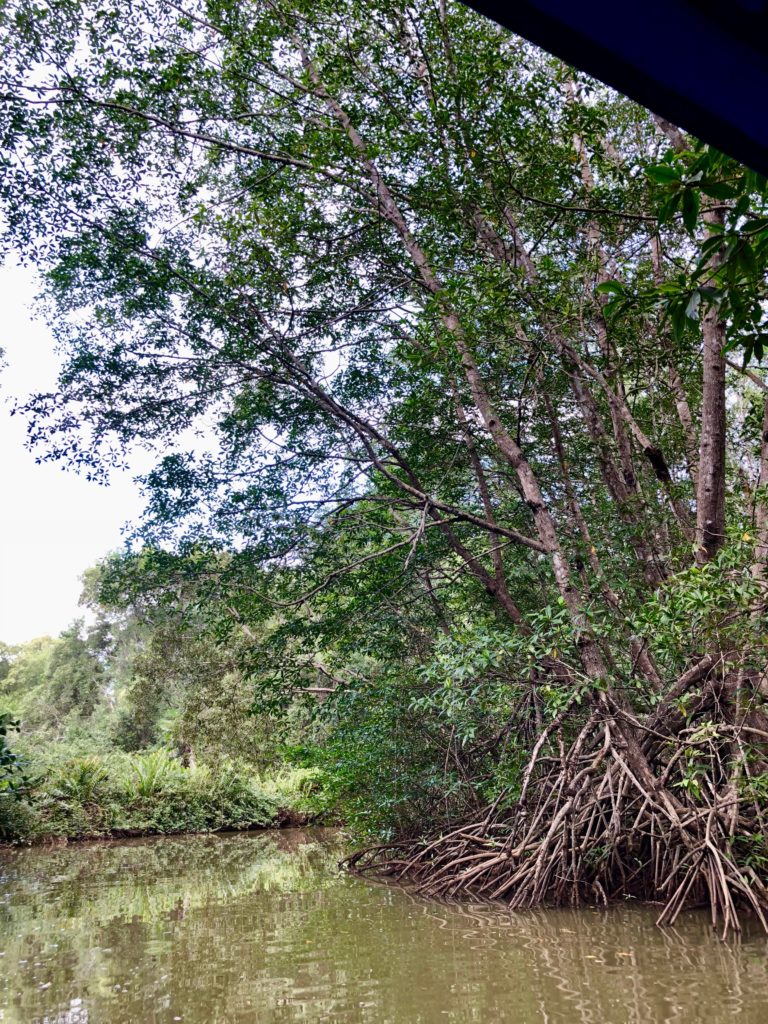
* The pineapple mangrove is the least tolerant to salt water and thrives upriver, where the salinity is lower. It sits on pyramid-shaped roots.
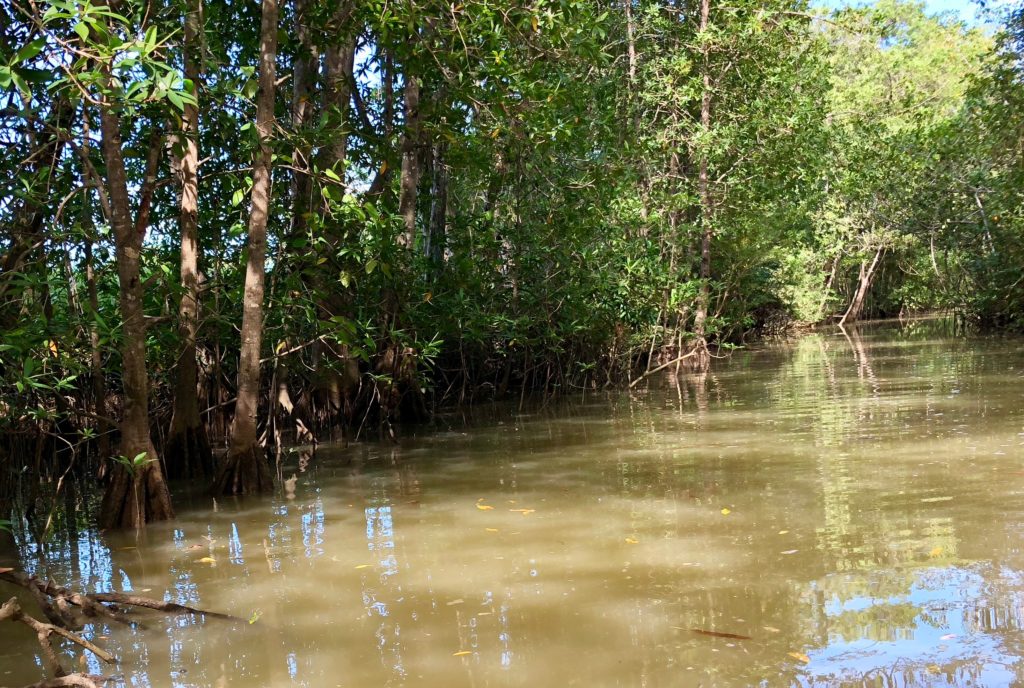
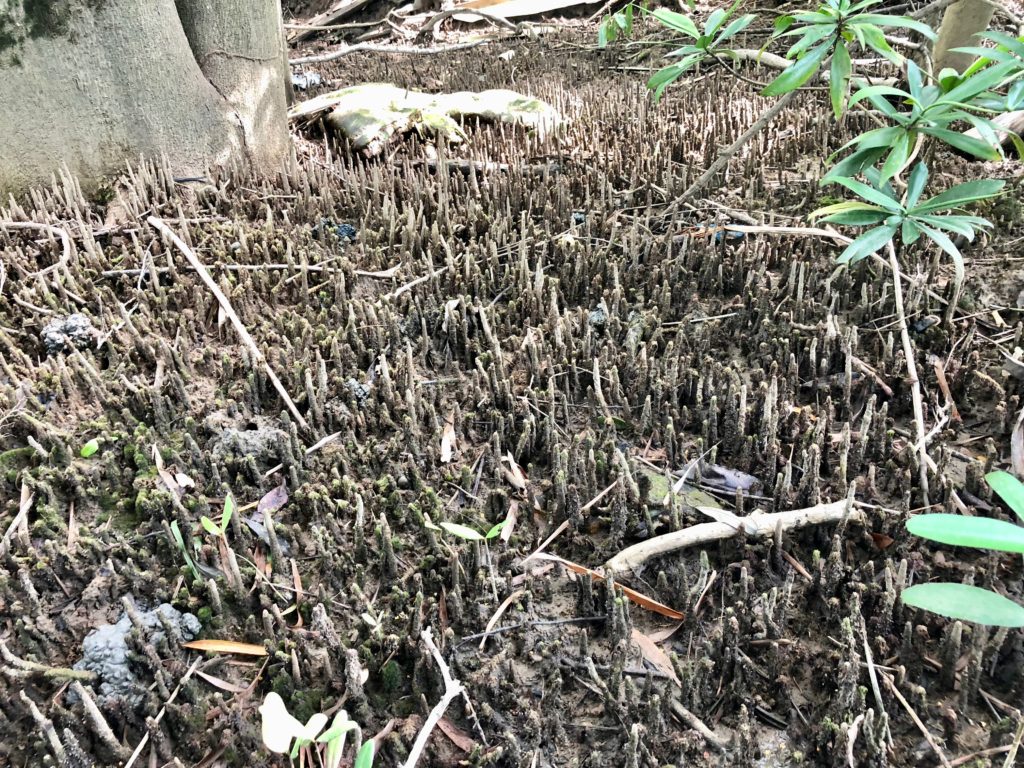
* The black mangrove is found a little closer to the mouth of the river, where the proportion of sea water is higher. This species has aerial roots that look like little straws sticking up out of the water. These pneumatophores allow the tree to breathe oxygen from the air instead of the salty soil, which is largely devoid of oxygen.
Pneumatophores look like sprouting plants, but they’re air filters!
* The red mangrove is the most tolerant of salt water and grows right up to the point where the ocean meets the river. It has prop roots, which branch off in various directions, arch above the water, and interlace with neighboring tree roots before anchoring in the salty mud. The red mango’s reproduction system is pretty wacky. Its seeds, called propagules, germinate and grow into new plants before they fall from the tree.

Capuchin monkey in a red mangrove tree.
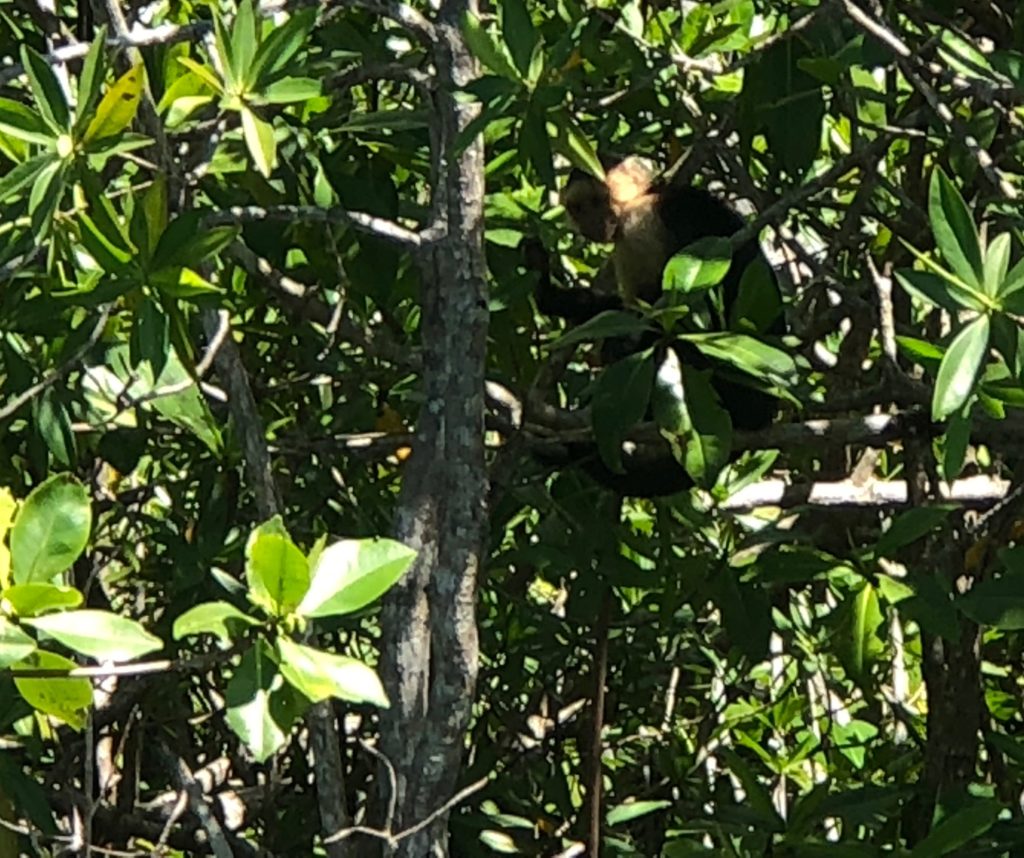
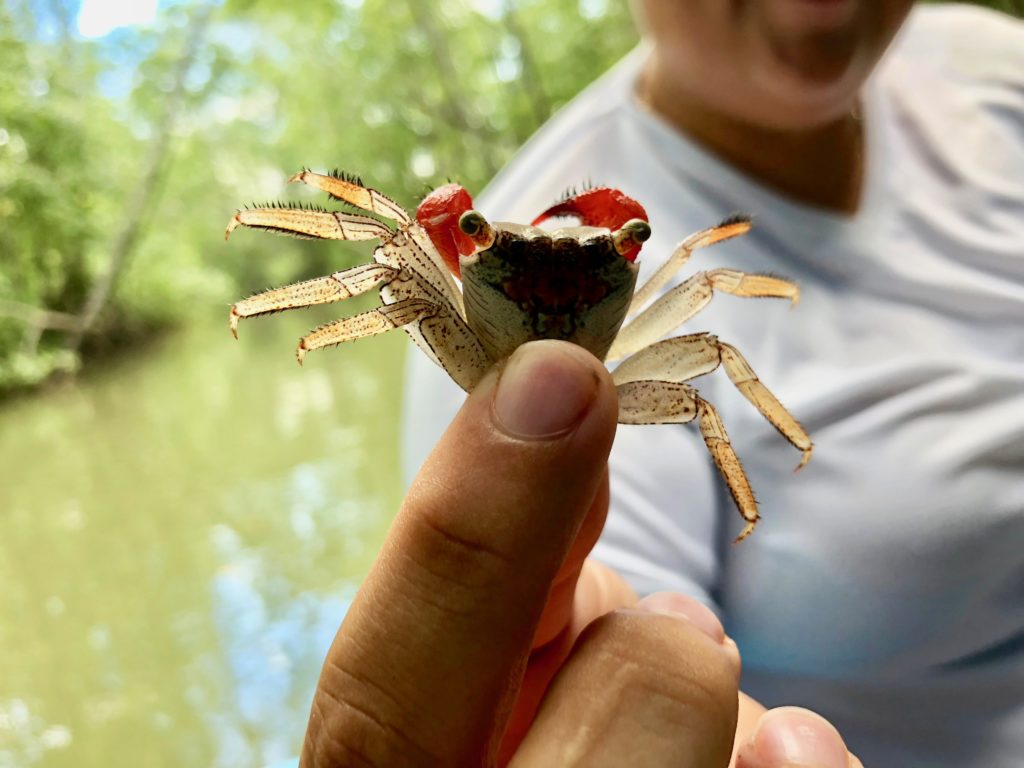
Although the mangrove forest is home to many animals, they were mostly hidden during our visit. We saw two capuchin monkeys, a rainbow boa constrictor, a few white ibis, heaps of iguanas and other lizards, a little blue heron, a tiger heron, a gajillion little crabs, and many huge termite nests that look like big black blobs on the tree trunks. Laura told us that 90% of animals in the mangrove forest eat termites.

Tiger-faced crab.
Sleeping rainbow boa.
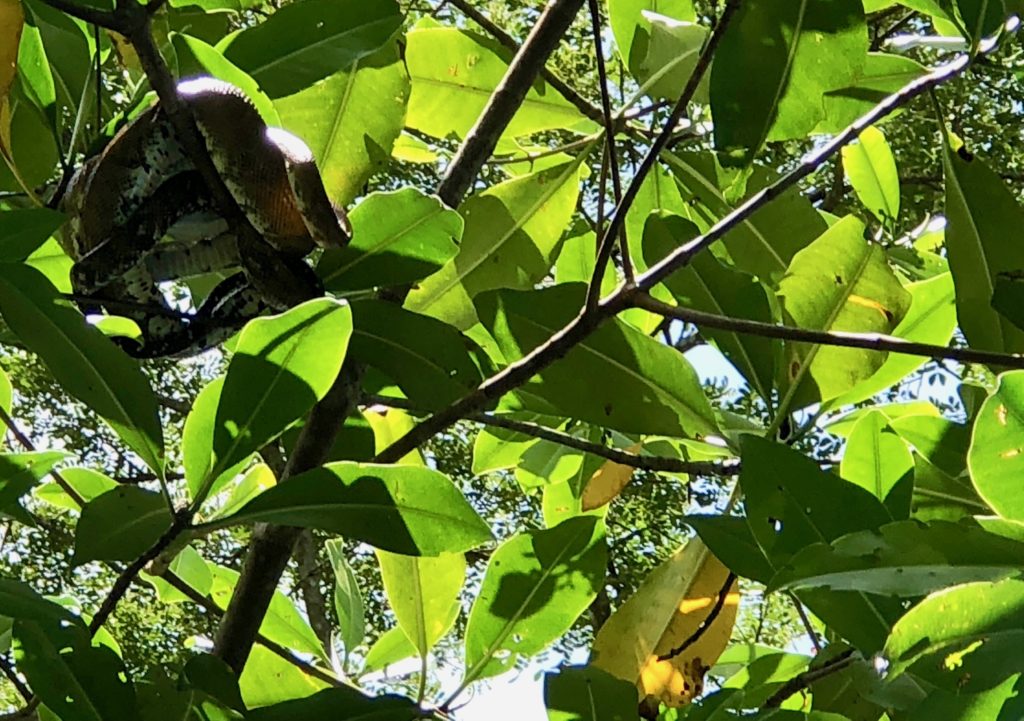
A massive termite nest.
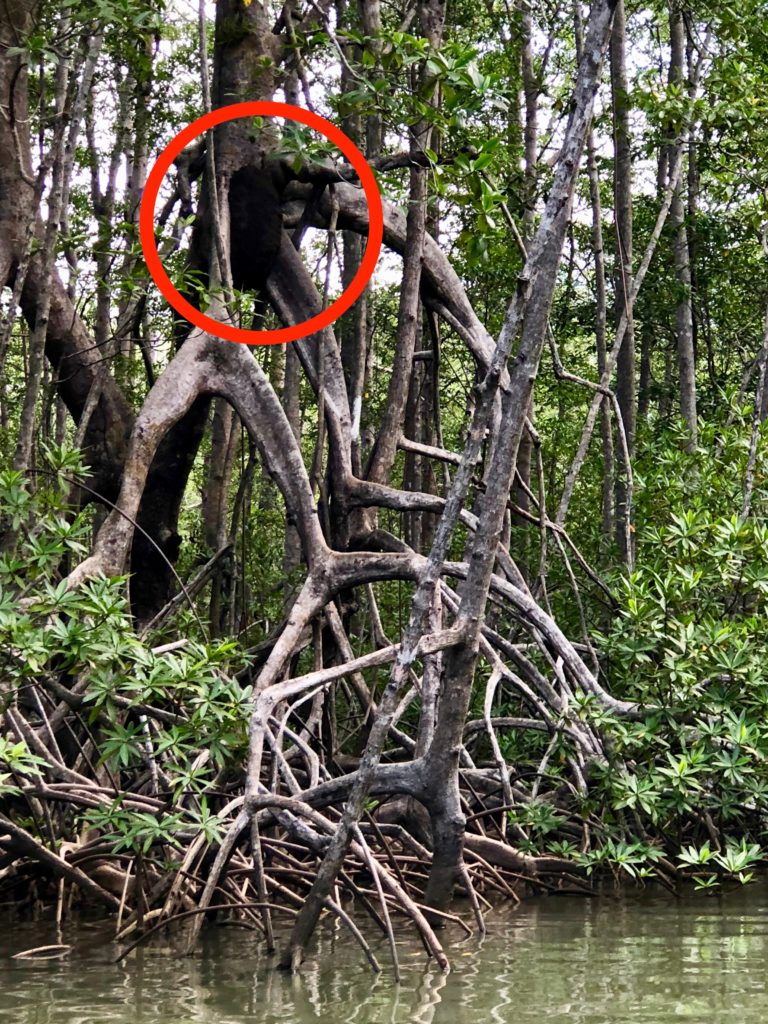
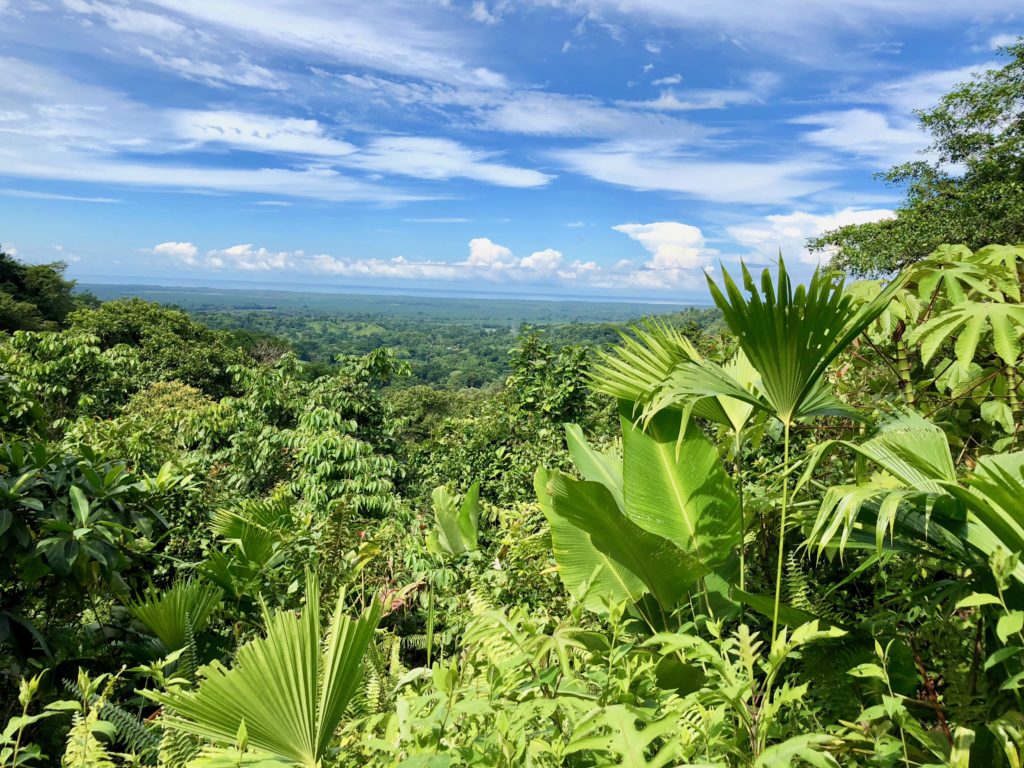
Sure, I would have like to see a scarlet macaw. But, hey, it’s hard to feel disappointed when you spend the day looking at views like this.

Costa Rica or Bust! Manuel Antonio/Quepos: Rainmaker Conservation Park

Maybe some people think, “Seen one rainforest, seen em’ all.”
Not me.

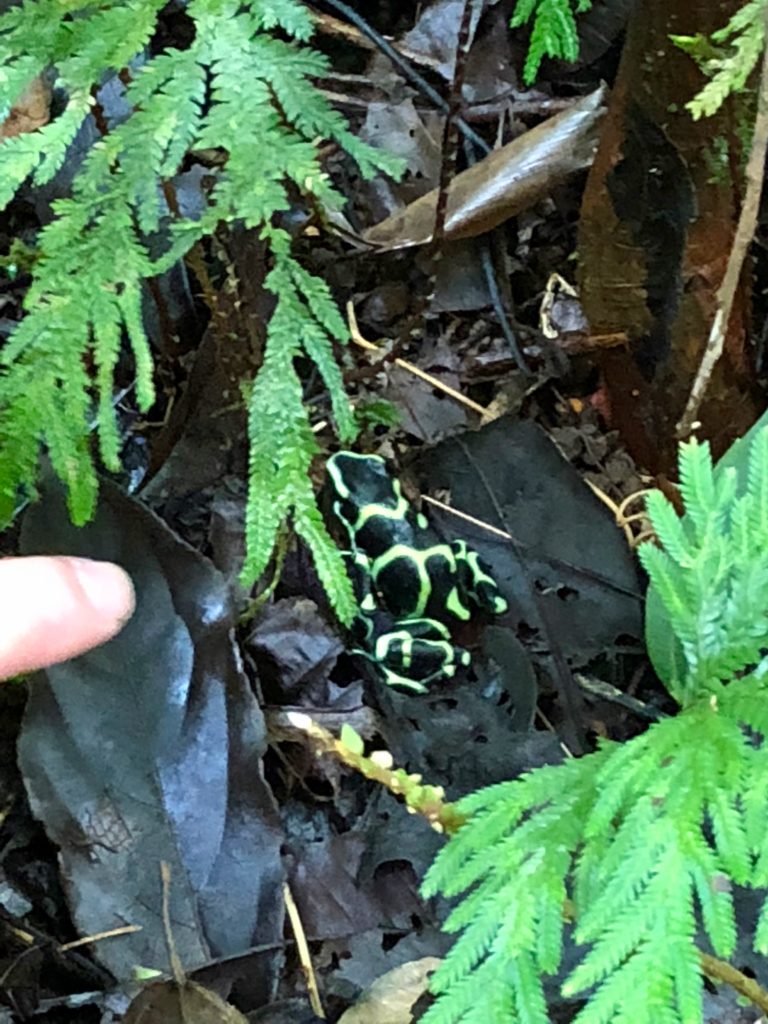
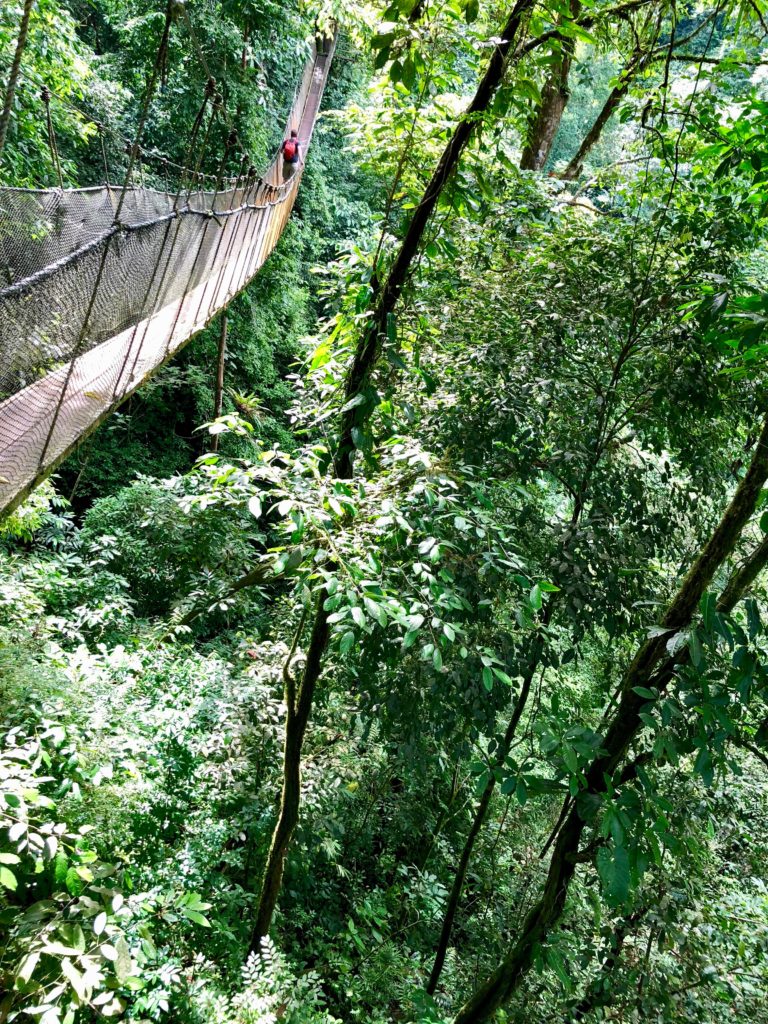
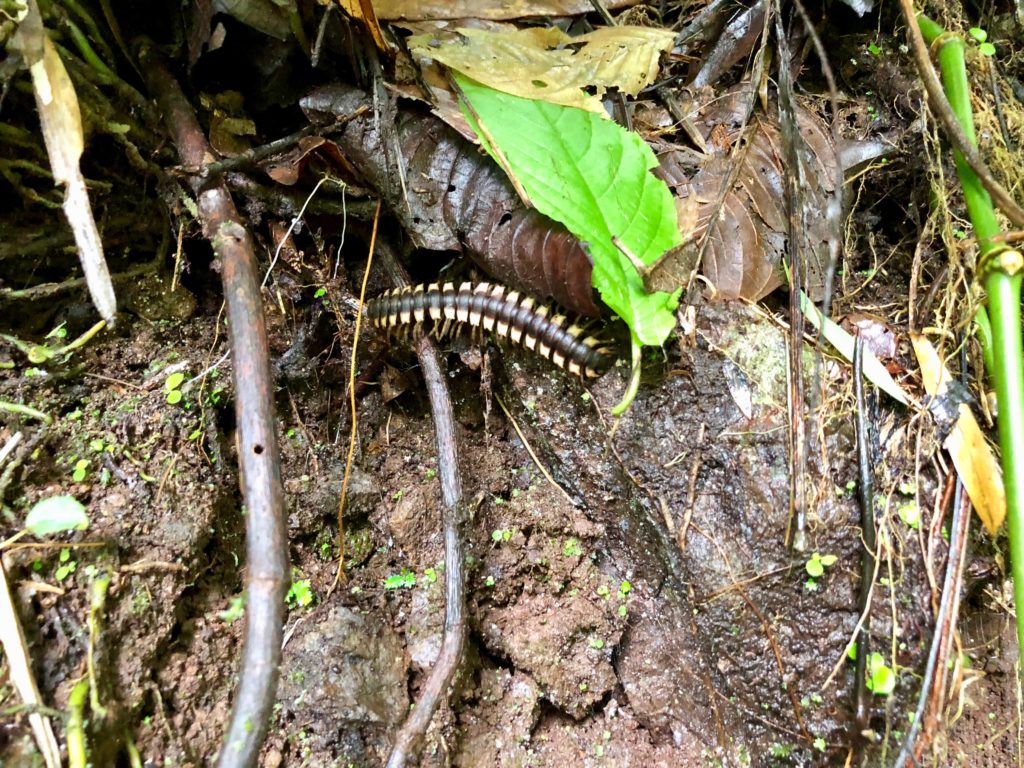
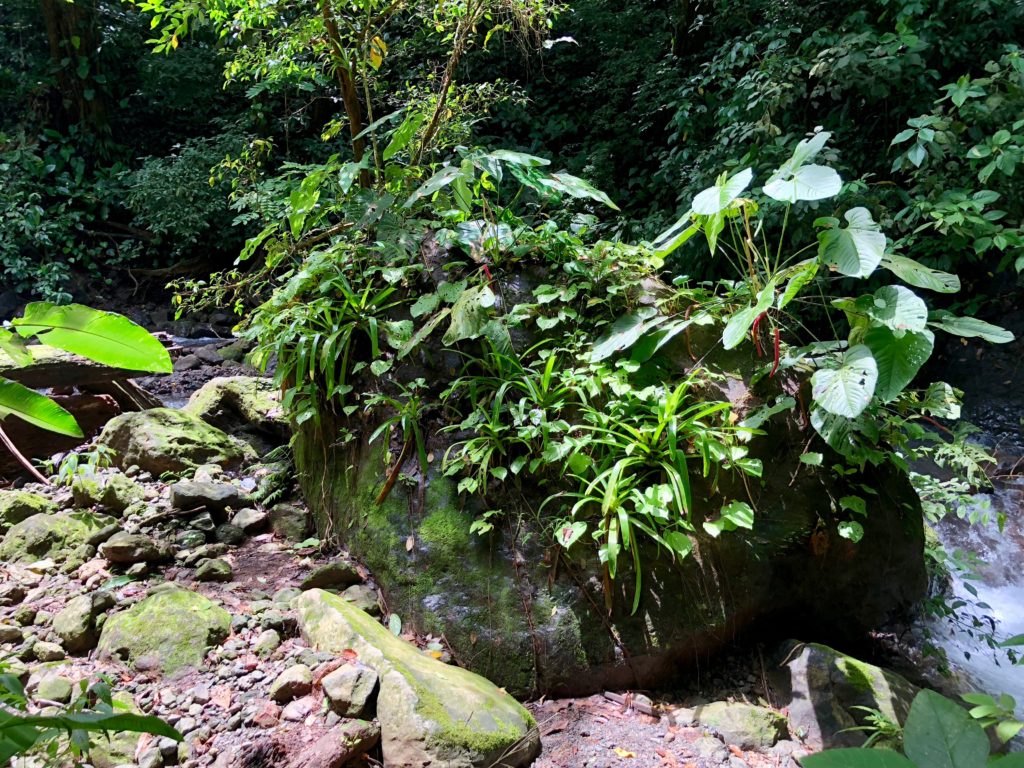
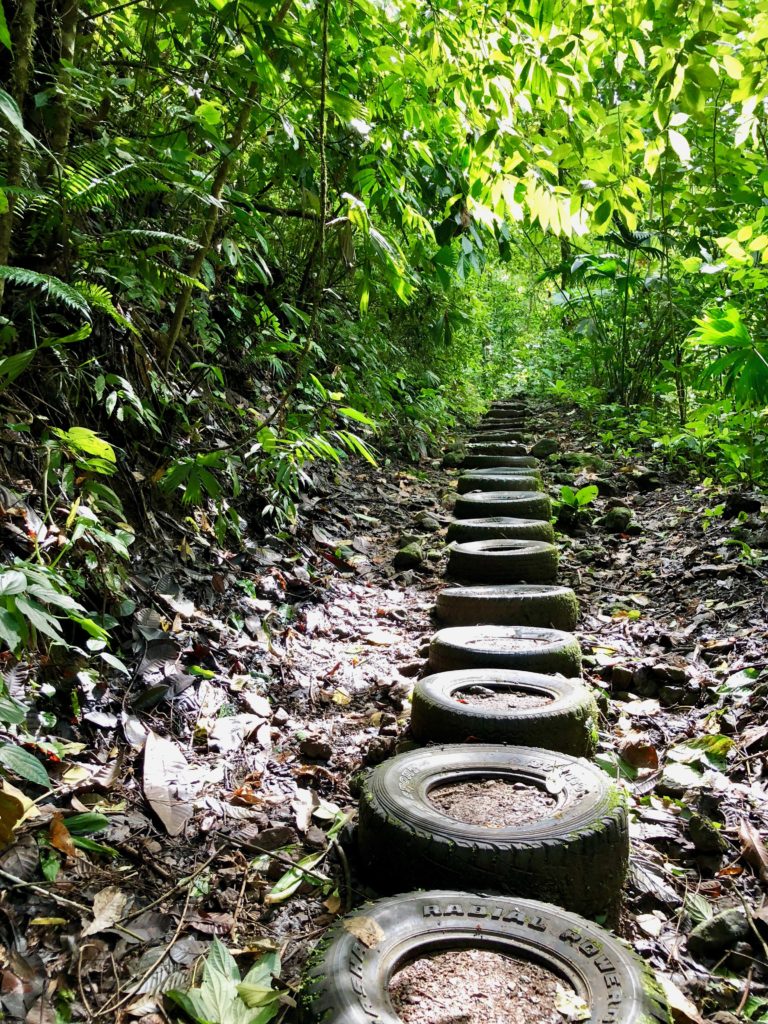
Even after traipsing around the forests of Costa Rica for the last two weeks, I continue to marvel at every unfurling fern, each denuded leaf and tell-tale trail of leafcutter ants, all the tenacious vines twisting and looping to reach the coveted sunlight, and any living creature, from millipedes to sloths. Today was no different. Tony and I drove to Rainmaker, a conservation park not far from Manuel Antonio. The trails and signage were less polished than the national park we toured yesterday, but we had the place almost to ourselves. We only saw one other couple while we were hiking.

The park has an interesting history, told succinctly on the travel blog Two Weeks in Costa Rica:

Sometime around 1990, a farmer named Don Victor Fallas needed some cash so was looking to sell a portion of his land near Parrita. A Costa Rican named Mauricio Gutierrez entered the picture and agreed to purchase 200 hectares (500 acres) on behalf of the company the Body Shop, which wanted the farmland to grow products for use in their cosmetics. Don Victor also owned a large amount of primary rainforest on a nearby mountain. Though he needed to sell it because of his debt, he wanted to find someone who would keep it preserved. Mauricio shared a similar vision and agreed to buy 2,000 hectares (5,000 acres) of the forest in his own name, thinking the pristine land could be valuable in a future tourism business.
Just as the paperwork was being finalized, Mauricio died tragically in an accident when he fell into a waterfall on the property while trying to save a child. With no buyer, the deal was about to fall through when Mauricio’s wife, Ann Gutierrez from the US, stepped in. She didn’t have the cash upfront but somehow got Don Victor to agree to a five-year mortgage. The only problem was that Don Victor wanted $100,000 as a down payment—and he wanted it in a week. The story then goes back to the Body Shop. Ann contacted Gordon Roddick, co-founder of the cosmetics giant, who agreed to lend her $100,000 for the down payment, and the deal went through.
Today the land is completely paid off and preserved. If it hadn’t been for Ann and her children Alessandra and Mick stepping in, the land probably would have been turned into a lumberyard. Apparently the bank that owned the property was in talks with a Japanese wood company that was set to buy the land if Don Victor defaulted on his loan. After visiting the property and seeing for ourselves how special it is, we can really appreciate Ann, Alessandra, and Mick’s efforts to keep Mauricio’s vision of conservation alive.

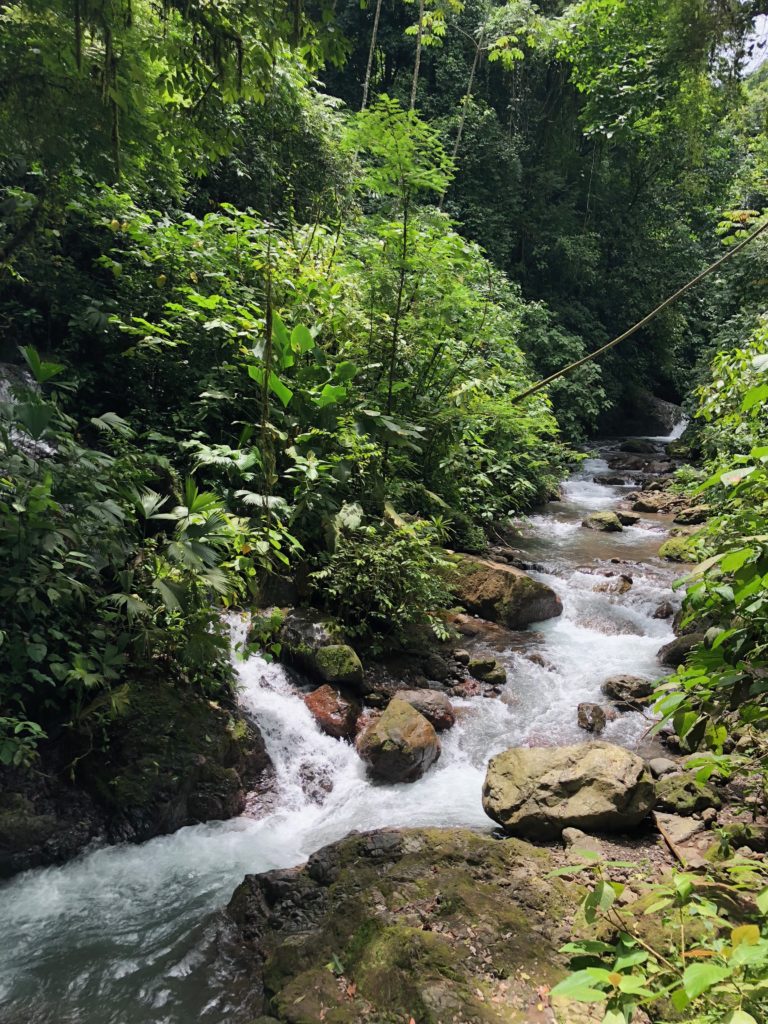
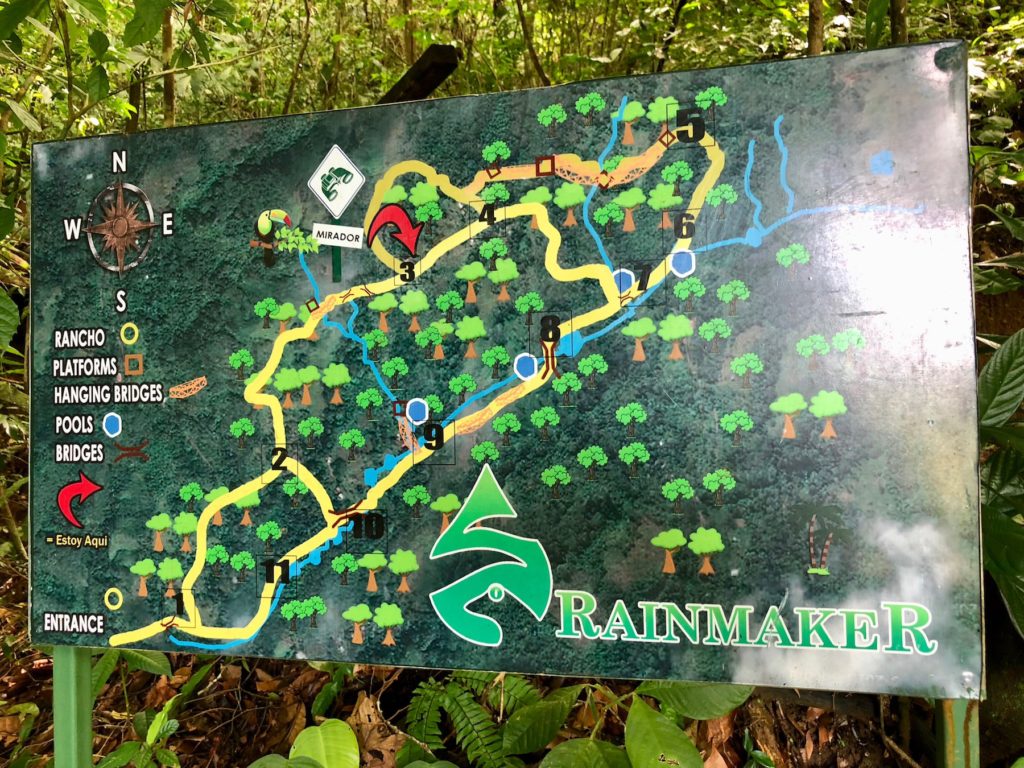
The ironically named Rio Seco (Dry River) rushes through the park, forming gorgeous pools and waterfalls. At the entrance, we were told the water level was dangerously high for swimming except at one spot: Pool 7. Fortunately, maps were posted throughout the park, so we knew when we got to the right place.

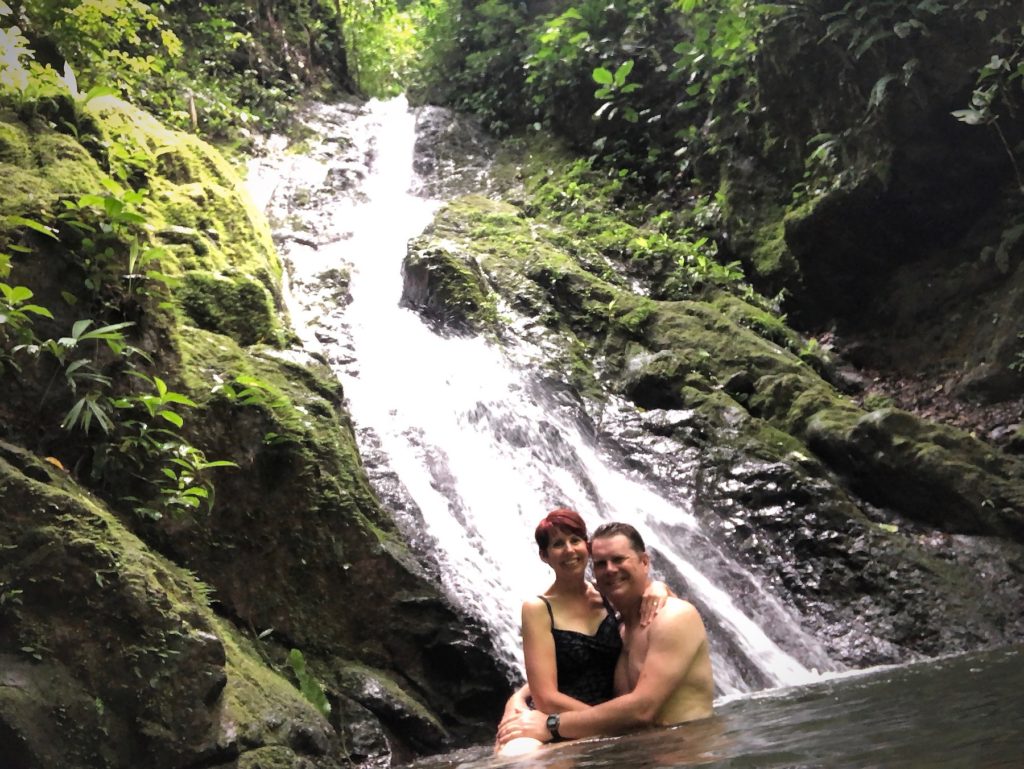
A lovely little waterfall fed the pool, which was set back a bit from the main path. We changed into swimsuits and stepped into cool, fresh water up to my neck at the deepest point. A little yellow bird sang as she built a nest in an overhanging tree. Butterflies swooped overhead. Beauty surrounded us.

I set my phone on timer and crossed my fingers that it wouldn’t fall into the pool!

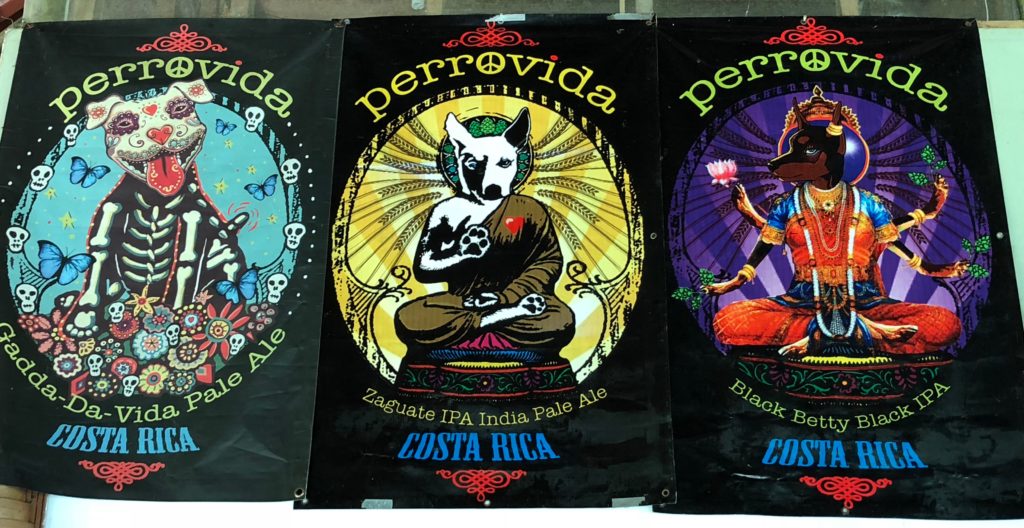
When we emerged from the forest, we enjoyed a casado lunch and a craft beer called Perrovida (Dog’s life), which is brewed down the road. I loved their promotional poster. I tried the beer in the middle.

Back in Quepos, we strolled along the waterfront and got some ice cream before heading to our B&B for the afternoon. I sat on our balcony writing for awhile, but my attention was quickly diverted by a party of squirrel monkeys. Unfortunately, they were moving so quickly through the canopy that I couldn’t get a clear photo or video. They were so funny to watch as they leapt from branch to branch, swinging their long tails, and grabbing on for dear life. Twice, I saw monkeys lie on their bellies on a branch with all four legs dangling, as if they were just plain tuckered out.

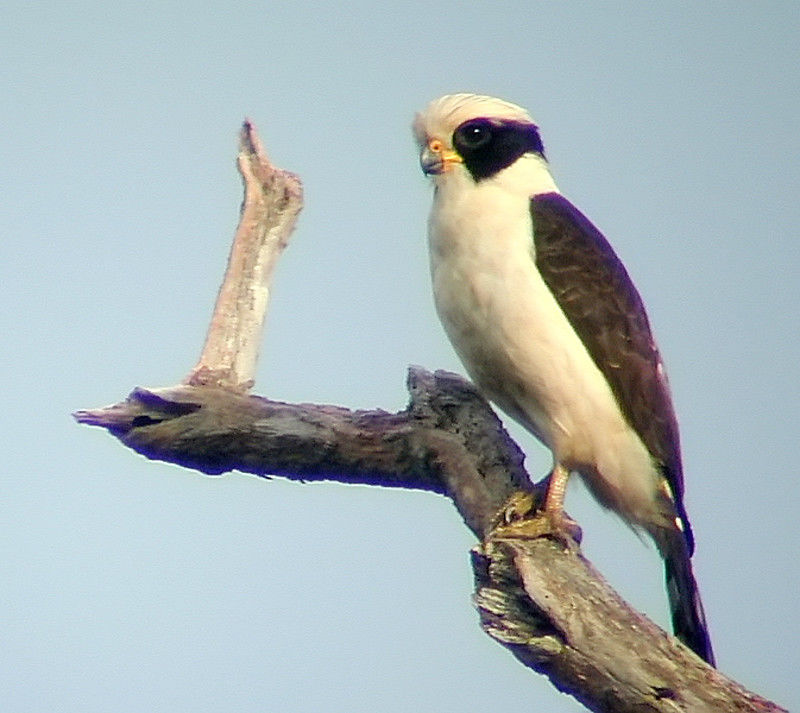
While focusing on the monkeys, I noticed something in the distance that looked like a huge bird sitting on a limb. Tony and I tried for probably 30 minutes to figure out what it was. We zoomed in with our phones, used our lame little binoculars, and googled like mad. I ran down to ask Carlos for better binoculars, but all he had was a telescope, which was too big for me to haul up all the steps. I thought it might be an owl, but it had a striped tail, and we couldn’t find any Costa Rican owls online with striped tails. Finally, somehow, Tony nailed it: a laughing falcon, known in Costa Rica as a “guaco” because it makes the sound “wah-coh!”

It was too far away for a clear shot, but here’s a photo of a laughing falcon from the Carnivora website. Pretty cool. We read that they often stay in the same spot for hours, eyes peeled for small reptiles.

Macagua rieur. Famille des Falconidés. Ordre : Falconiformes

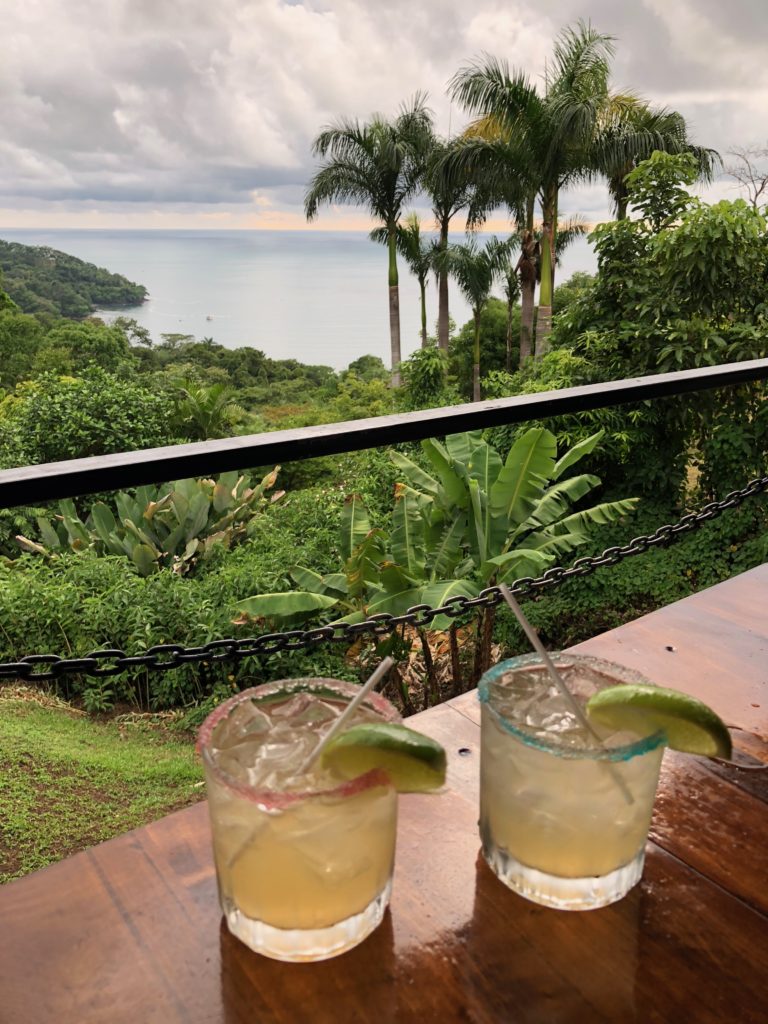
We wandered up the hill to Barba Roja for happy hour and a nice sunset view before dinner.

Another day in paradise!