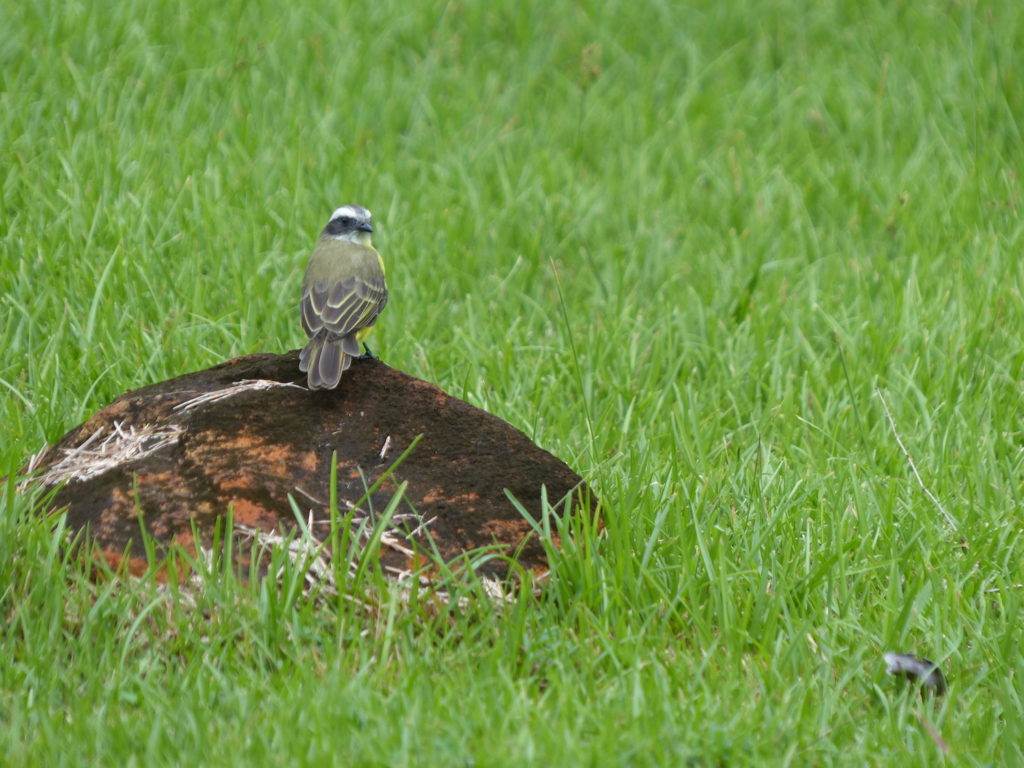
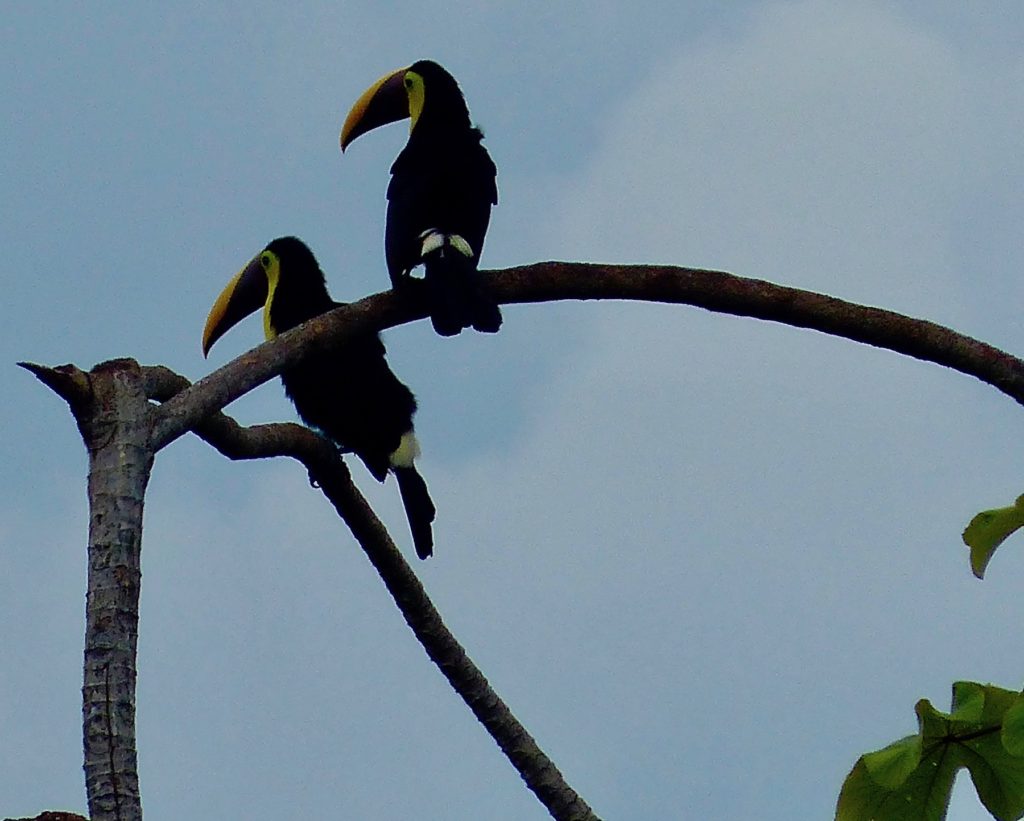
In preparation for this trip, Tony and I read Monkeys are Made of Chocolate, a wonderful collection of essays by an American who came to Costa Rica as a cattleman and became a naturalist. The author, Jack Ewing, shares fascinating and enlightening anecdotes about his encounters with wildlife on his property, which he gradually transformed from pastureland to a lush nature reserve called Hacienda Barú National Wildlife Refuge. The reserve encompasses 830 acres of protected area with a variety of habitats, including tropical rainforest, swamp forest, mangrove estuary, pastures, river banks, and beach front.
When we awoke to another overcast morning yesterday, we decided to ditch our beach plans and instead visit the place we knew so well from Ewing’s book. We reached Hacienda Barú in about half an hour and bought our day pass to the trails. Timidly, I asked if Ewing was available and was told he generally arrived at about 8:30 a.m. I seriously got giddy at the thought of meeting him.
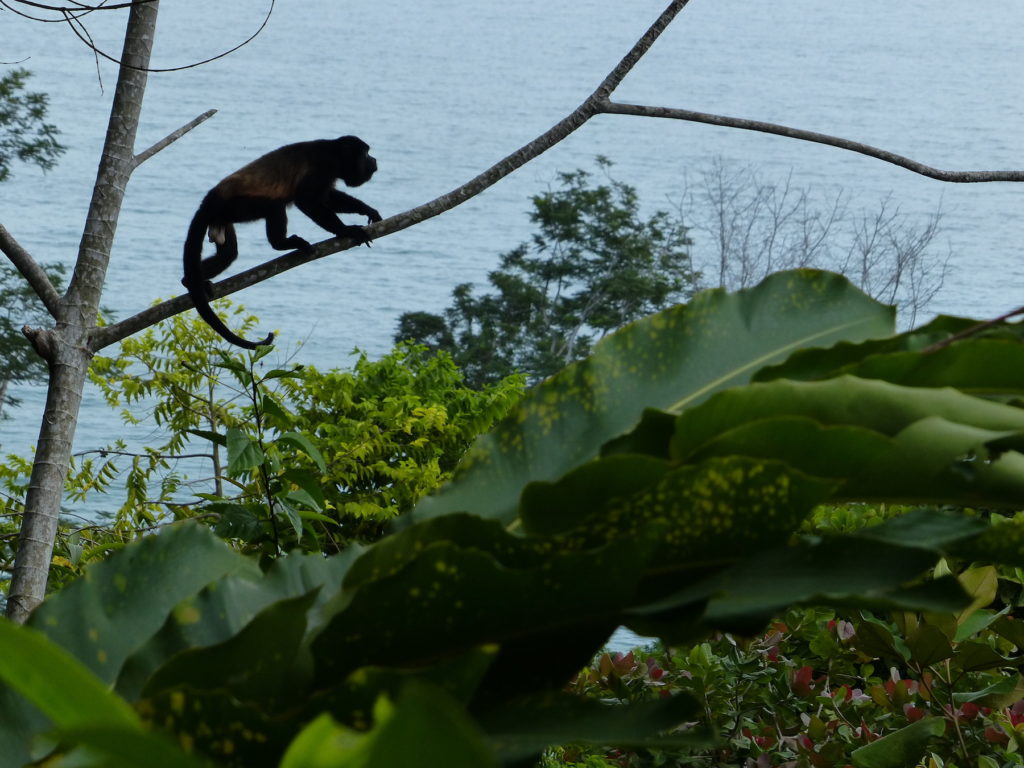
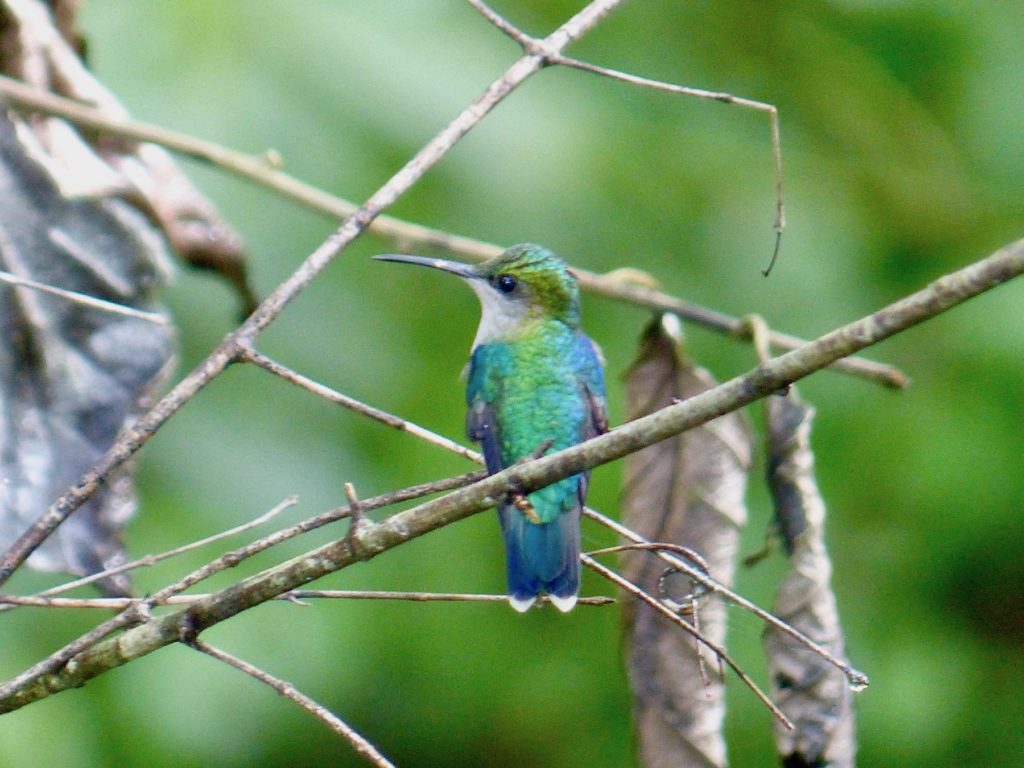
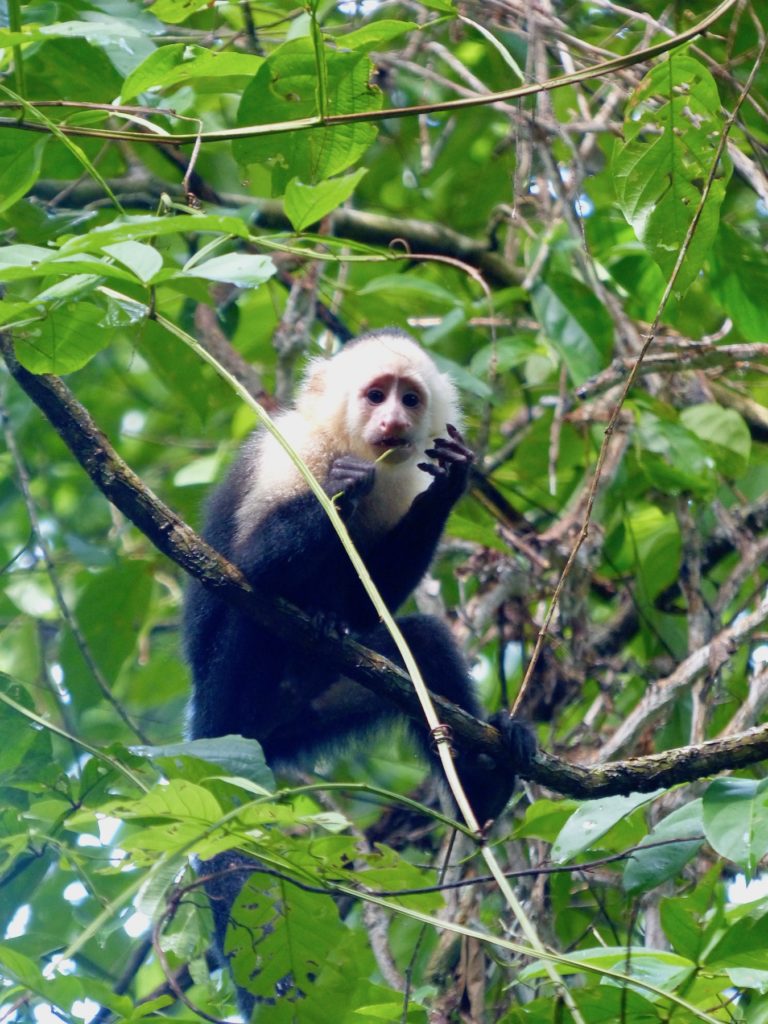
We hit the first trail, which was wide and flat. Right off the bat, we found a hummingbird, a small agouti (the oversized rodent), and some capuchin monkeys.
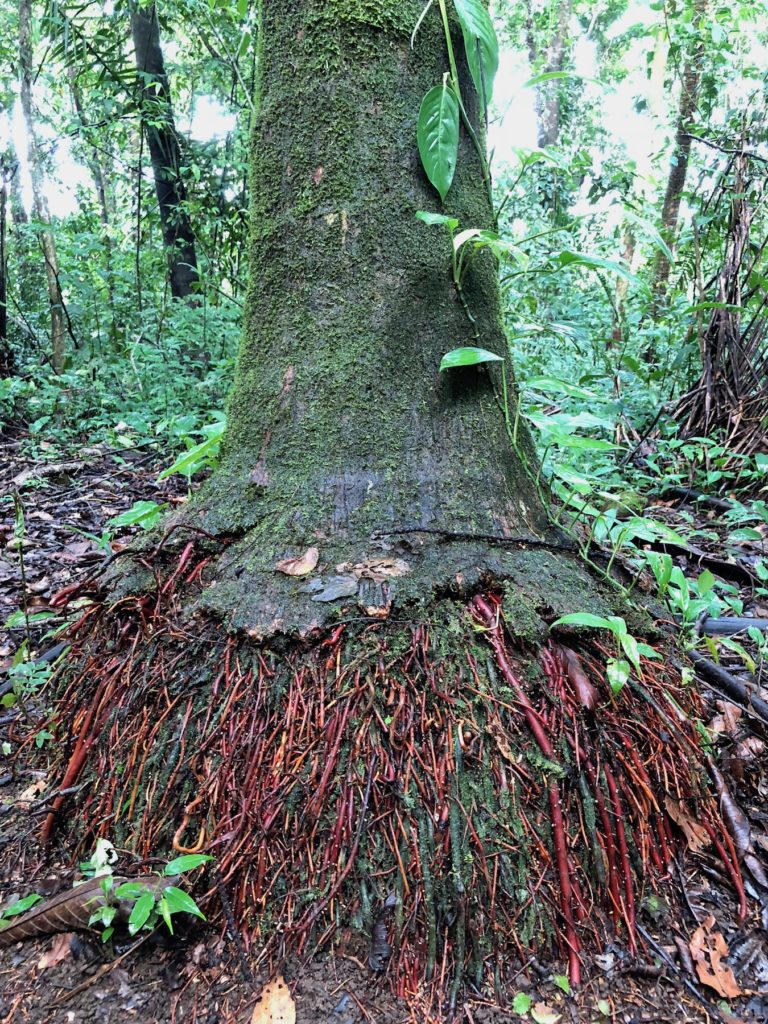
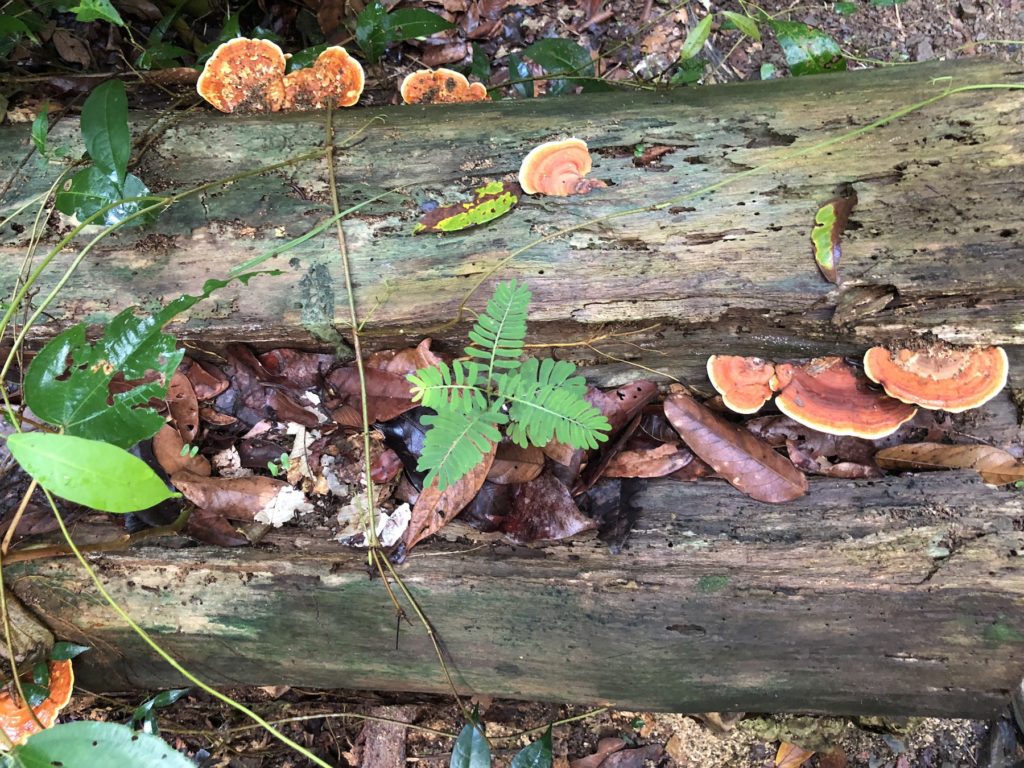
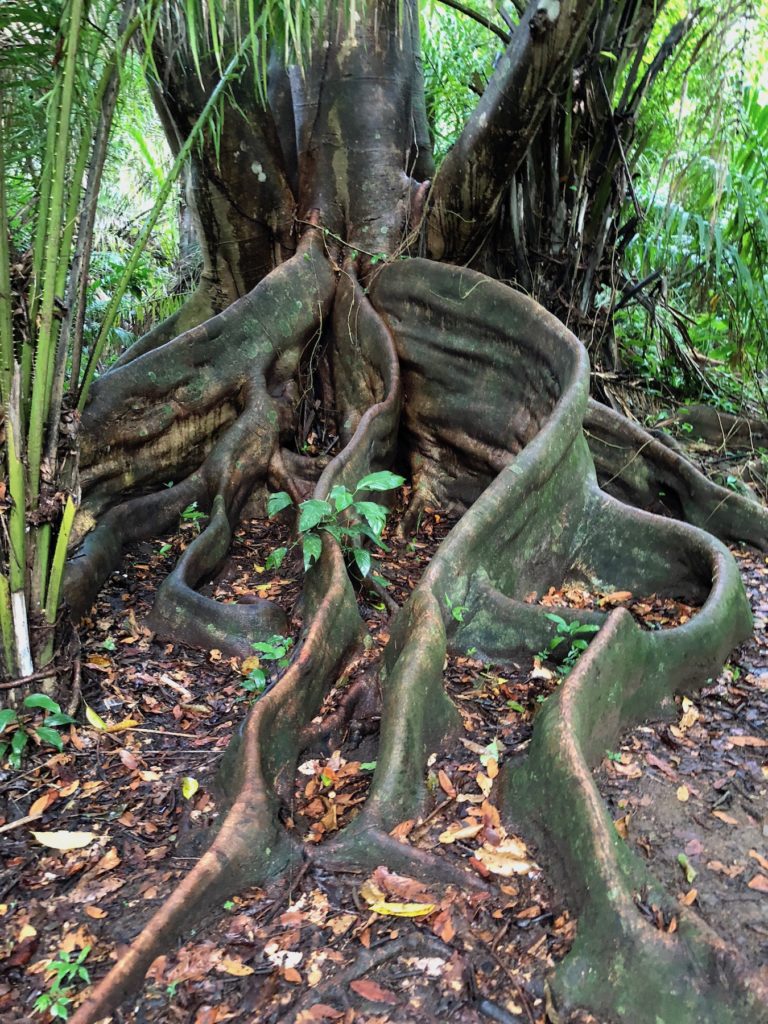
The easy path branched off and crossed the main road to lead up a hill to the Lookout Trail. No longer wide and flat, this trail was steep and muddy but amazing.
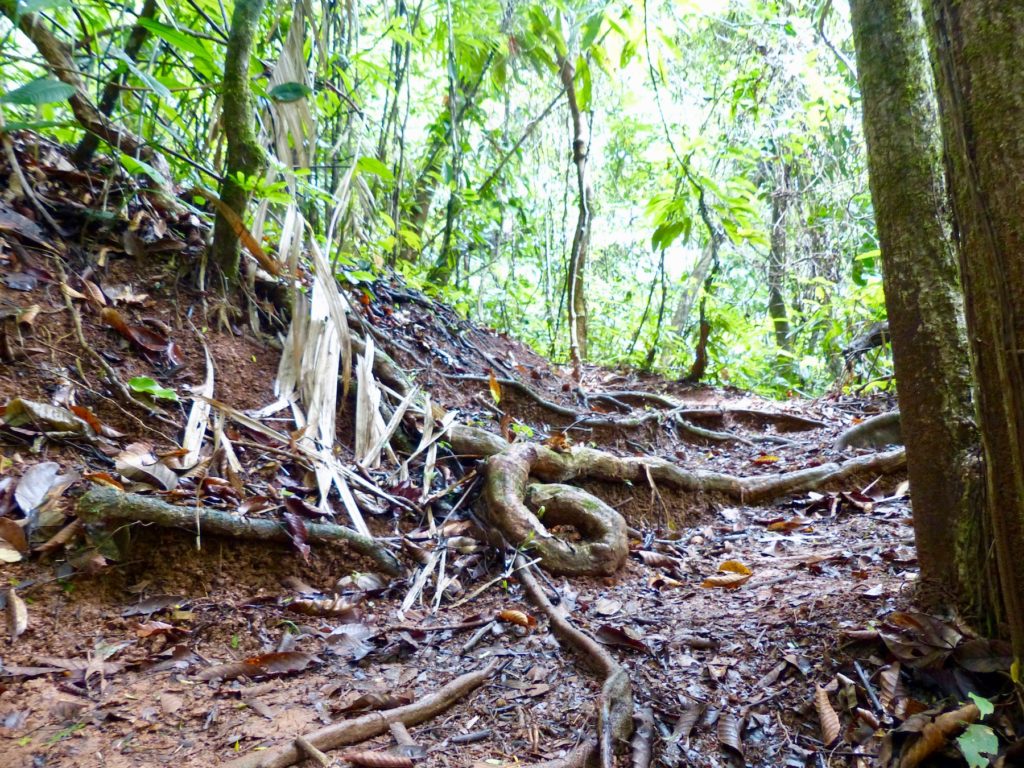
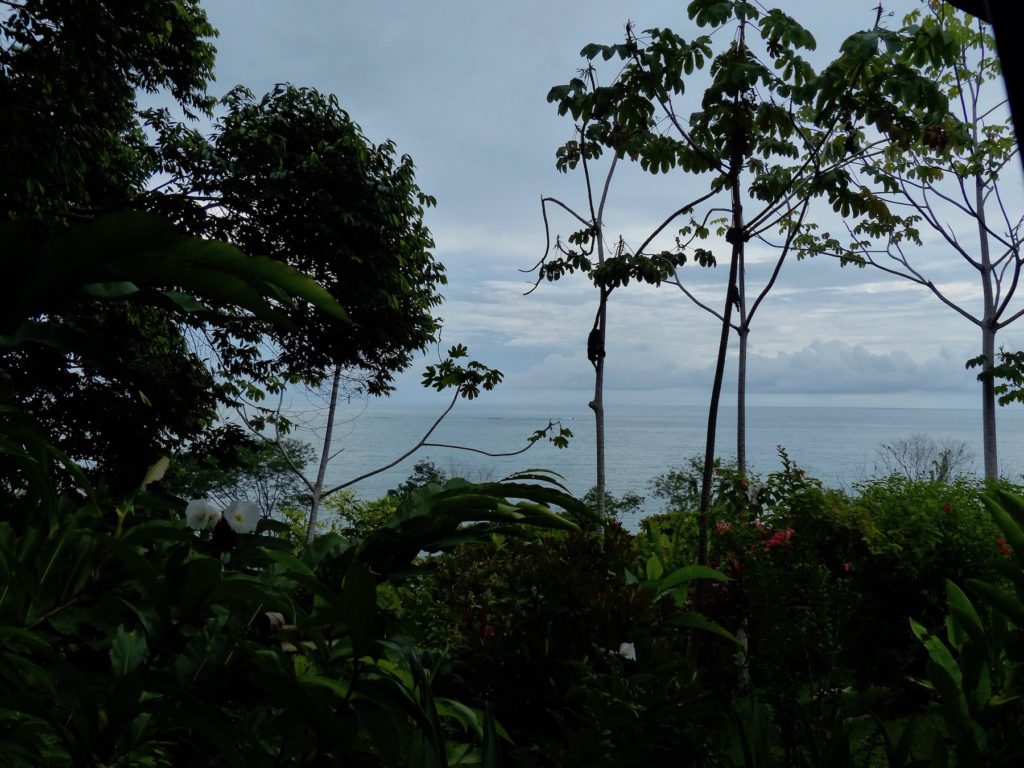
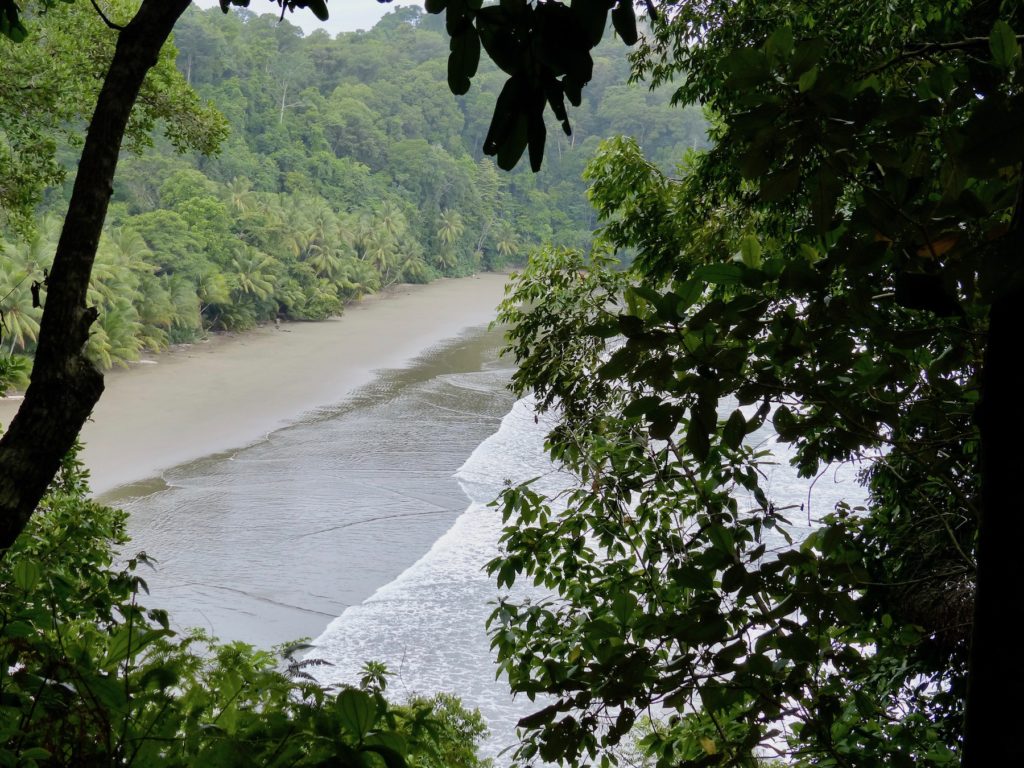
When we finally reached the top, we were drenched with sweat and panting to catch our breath. But this was the view, so …
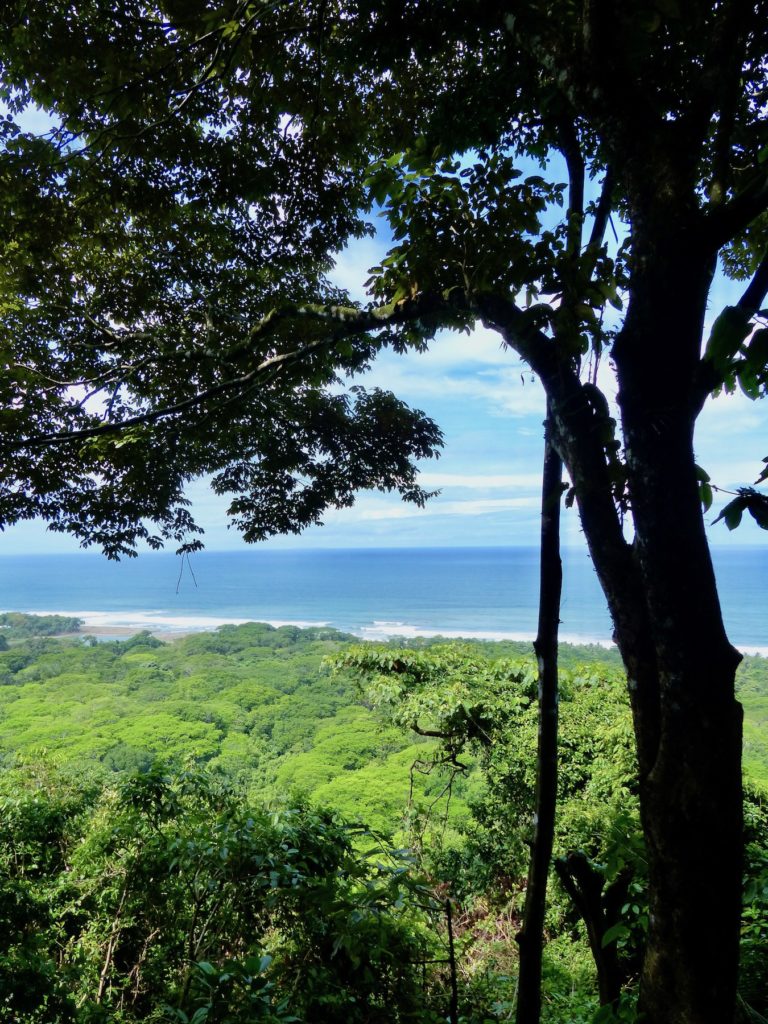
A sign at the top explained that the Lookout Trail passed through a section of Hacienda Barú that was the first to be restored back to its natural state after several decades of deforestation for crops and cattle pasture. A photo shows the barren hillside from 1979, when workers stopped chopping weeds on the hillside. Another picture, from 2015, illustrates the forest’s resilience with dense, mature vegetation, the way it looked for us on this day.
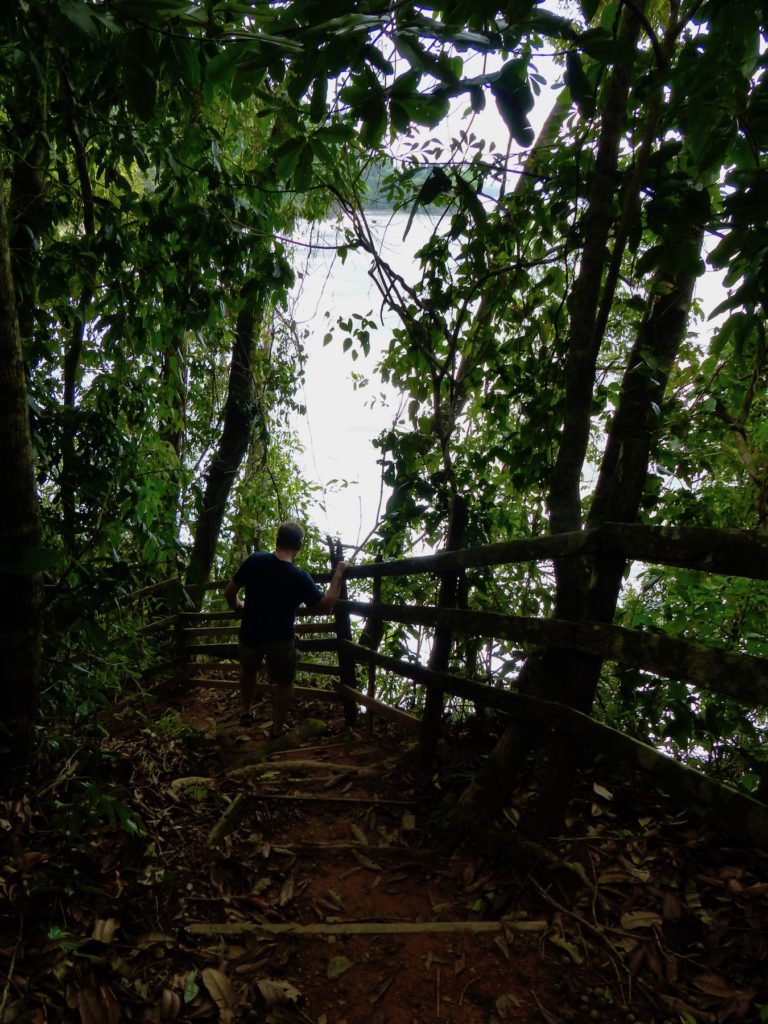
The challenging trail continued for about another half hour’s walk around the top of the hill, and then we headed back down. At the bottom, we met an old man who was chopping wood. He told us he’d been working on this hill for 25 years, helping to keep the trail accessible by cutting steps into the earth and reinforcing them with his wooden shingles and stakes. Although his work seemed tedious and hot, he wore a big smile and seemed genuinely happy to receive our appreciation.
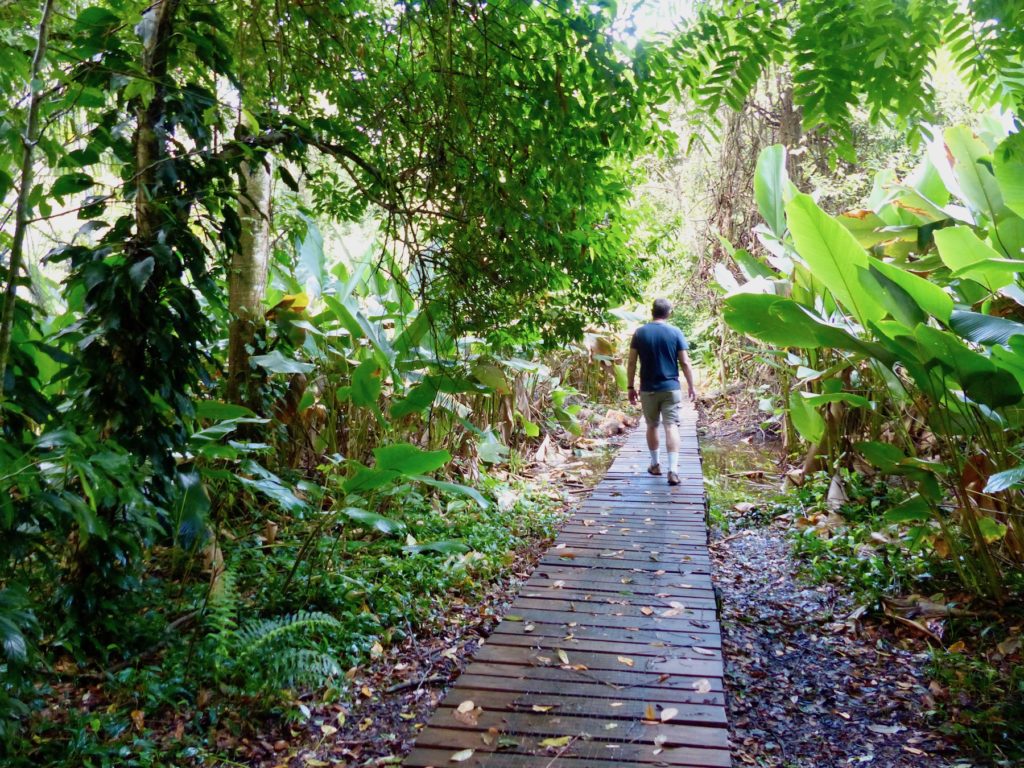
All of the trails we hiked featured informative signs about the flora and fauna, and some had nice little touches like sunken tree stumps or wooden sidewalks to help us pass the particularly wet or muddy sections.
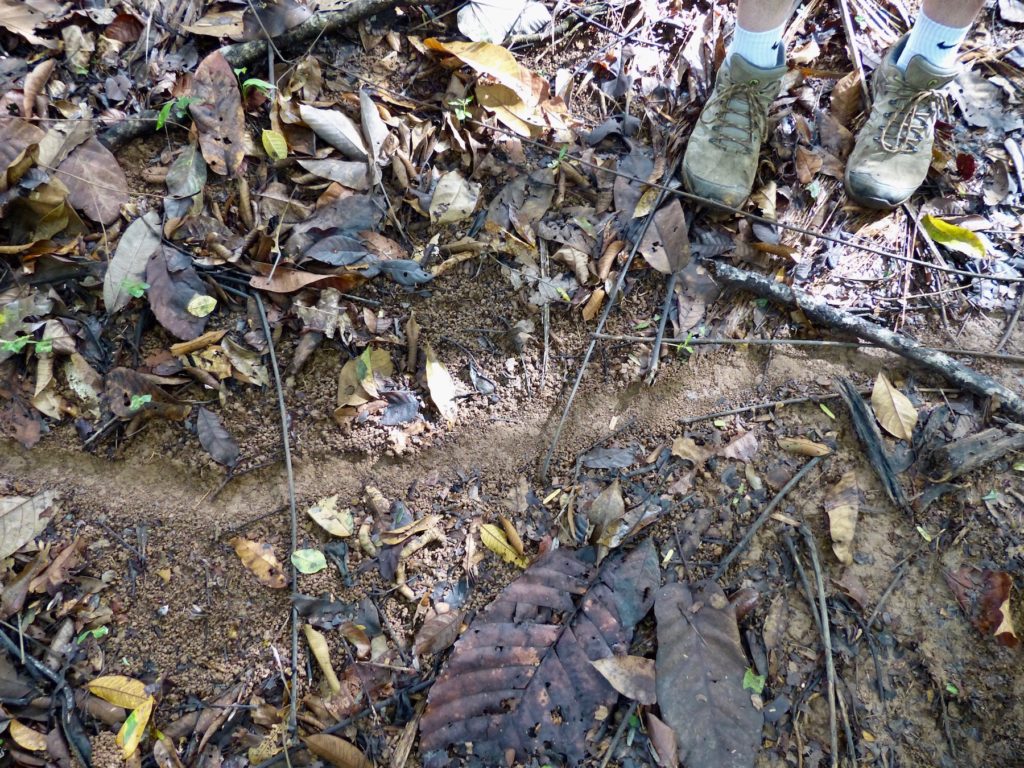
Possibly the most enthralling creature we encountered on this day (and frankly, on our whole trip) might be the smallest: the leafcutter ant. I mentioned it in a previous post, but at Hacienda Barú, we saw some mind-blowing ant trails. One sign said Ewing had followed a trail for more than half a kilometer between its source and its nest. Can you imagine the equivalent distance for an animal of our size? According to the BBC, a leafcutter ant can carry a piece of foliage 50 times its weight. That would be like me walking half a kilometer carrying a cow!
Check out this video. It’s insane!
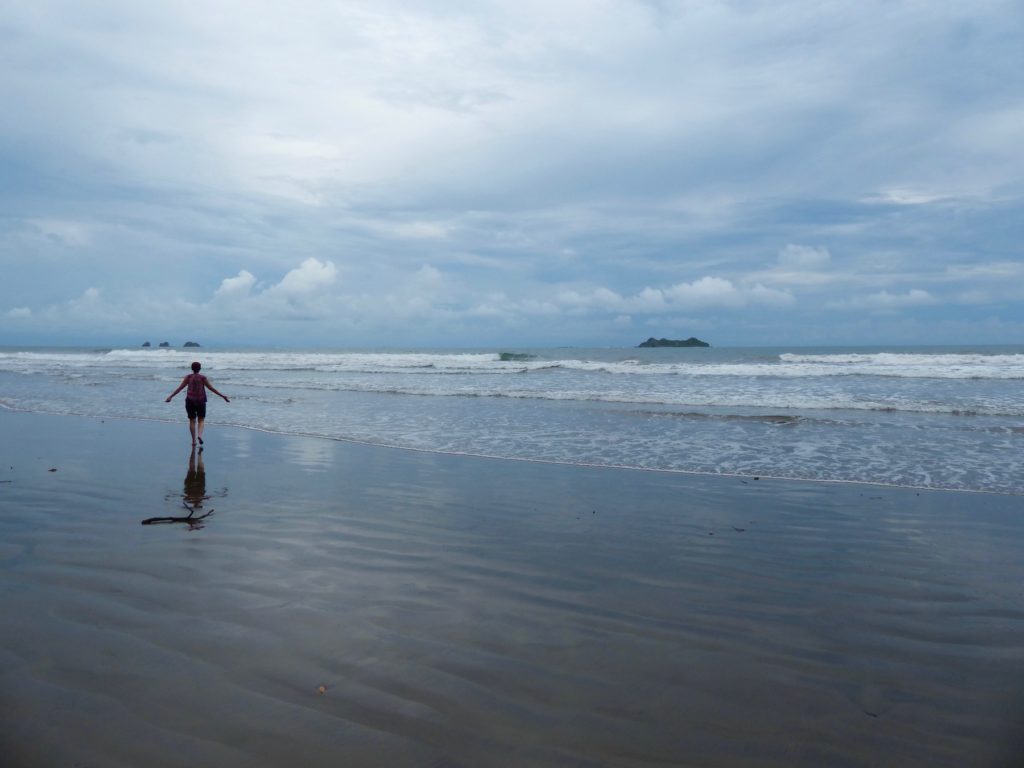
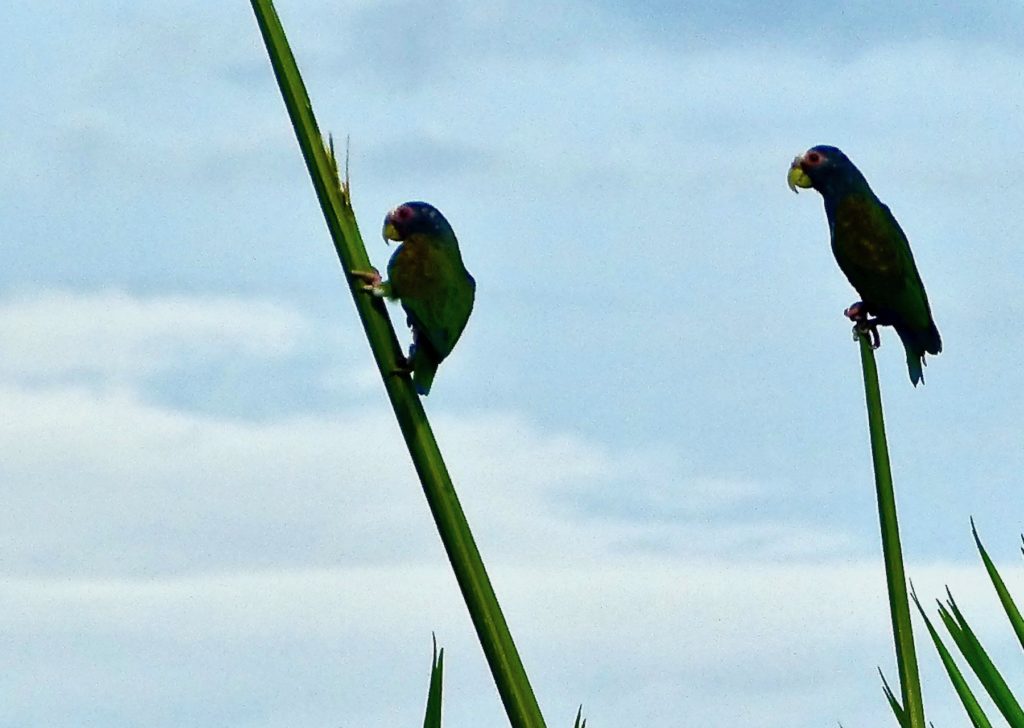
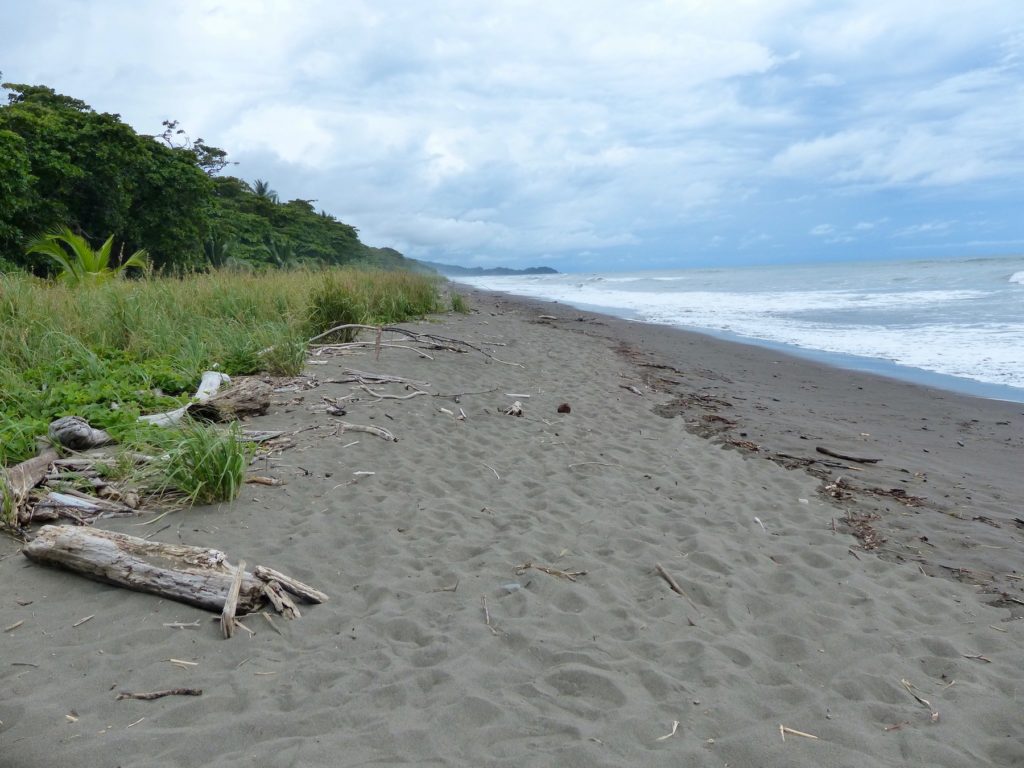
At the end of the trail, we followed the road down to the beach. Ewing writes about the importance of this coastal property on his website. It is one of a few areas along the coast with long stretches of Indian almond trees, which provide food for scarlet macaws, squirrels, capuchin monkeys, parrots and parakeets, he said.
The scarlet macaw disappeared from this area in the late 1960’s as a result of overhunting, deforestation of old growth forests that provide nesting sites and a marked decrease of the Indian almond tree from the beaches. Wherever people move to the seashore one of the first things they seem to do is destroy the almond trees and plant coconut palms. On shorelines where there is a thick natural stand of almonds with a healthy volunteer nursery of young trees underneath, the beach always remains intact. The thick tangle of roots holds the sand in place forming a natural barrier to the heavy wave action during stormy periods. There is a minimum of erosion of the line between beach and land. In contrast, where coconut palms have been planted the waves wash away the sand between trees and underneath the ball of palm roots causing them to fall over.
I couldn’t stop thinking about Jack Ewing’s legacy. By creating this nature reserve and launching his education, conservation, and research projects, he is helping to ensure future generations understand the importance of protecting this fragile ecosystem. His writing reflects a voice of compassionate intelligence with a little folksy self-deprecation, which made me worship him a bit.
When we wrapped up our hike, we popped in to the office to see if Ewing was there. He kindly came out to the reception desk to greet us, and I acted like a prepubescent girl meeting Justin Bieber (or whoever is cultishly cool now with that crowd). I gushed about how much I admired him, and I thanked him profusely for creating such a special experience for visitors. I blathered on about what a powerful impact he has made in the region. And, well, shoot, I don’t know what else I said, but I’m sure it was embarrassing. Anyway, we shook hands, and I skittered out of there without taking a photo, dang it!
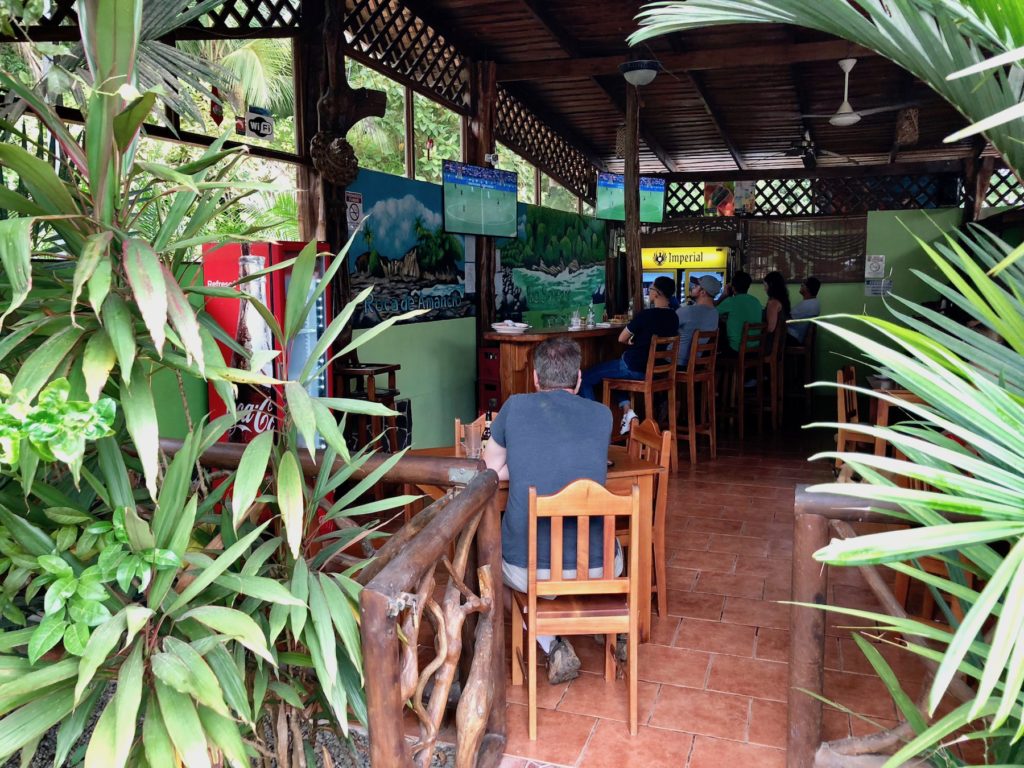
On our way back to the hotel, we stopped at a roadside restaurant where we had eaten delicious comidas typicas the other day. The place was packed with locals watching the World Cup match between England and Croatia, so we stuck around to see Croatia win in overtime.
This was one of my favorite days of the whole trip.